
Mirabile Reads Girl Books!
Getting lost in Barbara Kingsolver’s entertaining new novel, Flight Behavior, made me realize something is missing from my reading this year.
I’ve read classics by Balzac, Dickens, Tolstoy, D. H. Lawrence, and Virgil.
I’ve read Jonathan Lethem. One can never read too much Jonathan Lethem.
I’ve read Tom Wolfe and Peter Stothard, journalists who have turned respectively to fiction and history/memoir/travel.
I’ve been moved and saddened by Kent Haruf’s lovely novel, Benediction, put my head down in exhaustion over Dave Eggers’s very masculine novel, A Hologram for a King, relished Nick Hornby’s humorous masterpiece, Juliet, Naked, and been stunned by the gorgeous prose of Graham Joyce in The Silent Land.
What is missing?
Girl books!
You know exactly what I mean if you are a woman.
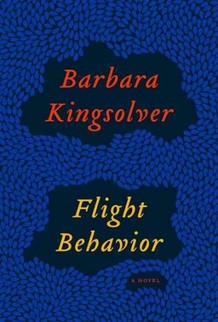 Barbara Kingsolver writes not just about climate change, but marriage, makeup, and hair. I very much enjoyed Dellarobia and Dovey’s shopping trip to the secondhand store, and think I recognize that emerald-green jacket.
It’s not that I’ve ignored girl books. I’ve loved Charlotte Bronte’s Villette (the book about the teacher who doesn’t get the man she loves), Harriet Beecher Stowe’s anti-slavery masterpiece, Uncle Tom’s Cabin, Elena Ferrante’s My Brilliant Year, the story of a girls’ friendship in the ’50s, and Barbara Pym’s Some Tame Gazelle, a novel about two unmarried sisters in their fifties. I have read more books by women than men this year, but my relief when I read about Dellarobia’s doing dishes and eating at the Dairy Prince made me realize I NEED to read about women’s lives.
So I intend to add a lot of women’s books to my summer TBR. Here is a list of 10, and please recommend others!
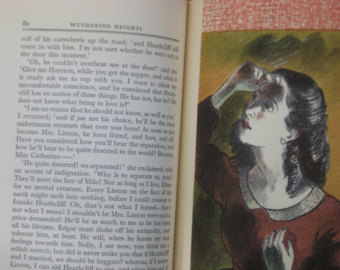
Wuthering Heights lithograph by Barnett Freedman
1. Emily Bronte’s Wuthering Heights. This is my favorite book! I’ve read it, reread it, reread it, reread it. When the doctor saw me sitting up in bed, eating Junior Mints and reading Wuthering Heights, he decided I could go home from the hospital. (He had not been impressed a few days earlier when he saw me reading Barbara Pym’s A Few Green Leaves.) I own a charming Heritage Press edition of WH with Barnett Freedman’s lithographs, but it seems a little fragile, so I’ll have to be careful with it. WH is the story of Catherine and Heathcliff, then Cathy and Hareton, narrated by Mr. Lockwood, a nondescript tenant who hallucinates when he stays overnight in Catherine’s room… The Brontes have bad taste in men, but Heathcliff seemed appealing when I was 20.
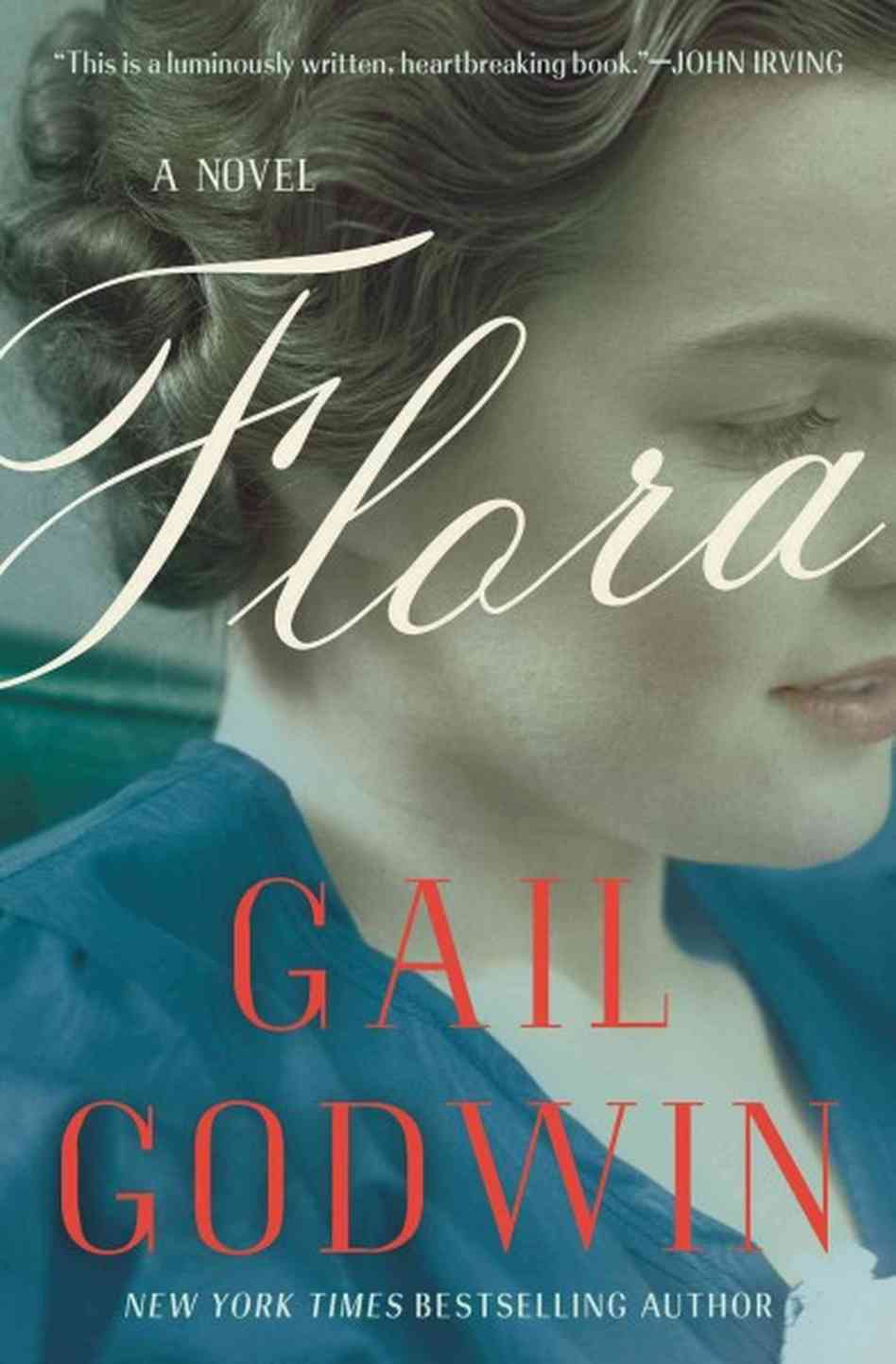 2. Gail Godwin’s Flora. “She’s supposed to be good,” one of my friends said vaguely of Gail Godwin: there was a display of her book in the window of Iowa Book and Supply. I loved The Odd Woman, her novel about a professor who is writing about George Gissing’s The Odd Women. Flora is supposed to be a variation on Henry James’s The Turn of the Screw.
3. Elizabeth Gilbert’s Eat, Pray, Love. Everybody else has read this, right? I finally got a copy. There was that birthday a couple of years ago when everybody refused to take me to the Julia Roberts movie, and I had to sit through a silly comedy about artificial insemination. But now I have the book, and can travel by armchair to Italy, India, and Bali…
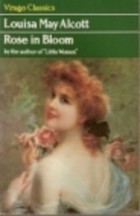 4. Louisa May Alcott’s Rose in Bloom. Alcott’s best novel by far is An Old-Fashioned Girl, but this summer I want to catch up on Rose in Bloom. In Eight Cousins, Rose Campbell is a teenage orphan, who loses her lady-like ways when her guardian, Uncle Alex, takes her to live among her male cousins. In the sequel, Rose in Bloom, she is in love with Mac, the bookworm. I was probably eight when I last read it.
5. Edna O’Brien’s Country Girl: A Memoir. I can’t wait to read this memoir: I loved her Country Girl trilogy, a lyrical coming-of-age story about Caithleen and Baba, two bickering, mischievous friends who contrive get expelled from a convent school and later move to Dublin and find love.
6. Sarah Waters’ The Little Stranger. I am looking forward to this postwar ghost story in which Dr. Faraday is called to a patient at lonely Hundreds Hall and…
 7. Margaret Atwood’s MaddAddam, the conclusion to her post-apocalyptic science fiction trilogy. I’ll have to get ready by digging out my copies of Oryx and Crake and The Year of the Flood and rereading them.
8. Nancy Mitford’s Frederick the Great. NYRB is reissuing it, and guess who has a hardcover edition in the back room? I loved her biography of Madame de Pompadour; maybe I’ll get around to Fred.
 9. Pamela Haines’ Tea at Gunter’s. It has the word tea in it; that’s enough for me. I have had good luck with the reprints in the Bloomsbury Reader ebooks series, and very much enjoyed Pamela Haines’s A Kind of War. On to another good middlebrow novel…
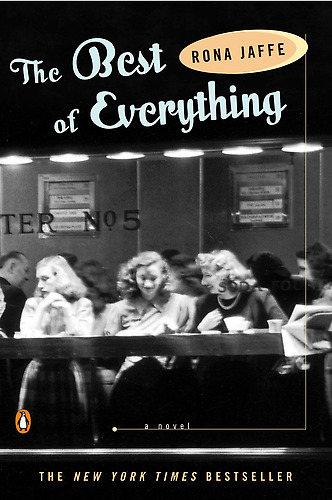
10. Rona Jaffe’s The Best of Everything. It may be trash, but this 1958 novel looks like exactly my kind of thing: about five women employees of a New York publishing company, their love lives and dreams.
Please recommend your favorites!
 mirabile dictu
Another Margaret Atwood, “The Blind Assassin”, is one of my favourite women books ever. Also Sylvia Plath’s “The Bell Jar”. And for pure female escapism, the wonderful Persephone book “Miss Pettigrew Lives For A Day” by Winifred Watson!
LikeLike
I love middlebrow women’s novels! Recently had a marathon Heyer re-read. The Little Stranger is a great, and creepy, book – am looking forward to your review. Two recent favourites are Stella Gibbons’ Nightingale Wood and Westwood. I really, really enjoyed them – they both have the right touch of melancholy to make them more than entertaining fluff (although I do enjoy fluff). Lynne Truss (I think) says in the introduction to Westwood that if Cold Comfort Farm is Gibbons’ Pride and Prejudice, then this is her Persuasion. Highly recommend them both!
LikeLike
I like your list. If you haven’t already read them I recommend Margaret Atwood’s The Handmaid’s Tale and Mary McCarthy’s The Group, also almost anything by Margaret Drabble. I have a dim memory of the Rona Jaffe book — trash yes, but fun.
LikeLike
Kaggy, I know we have the same taste, because I’ve read your recommendations! It has been years since I’ve read The Bell Jar, though, and maybe I should try it again.
Catherine, I’ve read Cold Comfort Farm but nothing else by Gibbon. Heyer is so much fun! I, too, am looking forward to Sarah Waters, though usually I avoid creepy books. All these sound like excellent vacation books.
SilverSeason, I have read The Handmaid’s Tale, but have fallen behind with many of Atwood’s other books. Periodically I look up the OTHER Margaret (Drabble) to see if she has a new book out. I feel like a character in a Margaret Drabble book, though I don’t honestly resemble one. Funny, isn’t it, how we feel we are soulmates with characters who really are not part of our lives?
LikeLike
I have been focusing on under-recognized women novelists (exclusively in the public domain) for an art piece I am working on. Some I have found particularly interesting are The Morgesons by Elizabeth Stoddard, The Wages of Sin and The History of Sir Richard Calmady by Lucas Malet, the Creators by May Sinclair, Red Pottage by Mary Cholmondeley, Passing by Nella Larsen, The story of a Modern Woman by Ella Hepworth Dixon, Cometh up as a Flower by Rhoda Broughton, George Mandeville’s Husband by Elizabeth Robins.
The last named is a strangely misunderstood book, mentioned by some feminist critics as anti-feminist but I don’t agree with that at all. And The Wages of Sin is thought by scholars to have directly influenced Jude the Obscure although Hardy never acknowledged it.
My TBR list is huge and I’m anxiously awaiting a scan of Amber Reeves’ A Lady and Her Husband, which I think I remember you mentioning in the past.
LikeLike
I hope you’ll tell us more about your art piece later, if that’s possible. What an amazing inspiration! You must have done so much research! My e-reader is supposed to be for reading books from the public domain, but I would not have heard of most of these writers without your comment.
Thank you so much.
LikeLike
I am so immersed in the process and problem solving stage that its hard to describe the piece at this point, but it involves specific acts of attention (typing out entire chapters of books as I read them) and how perception of value alters as a result of said attention.
But yes, I am giddy with research. There is actually quite alot of scholarship about some of these women writers but until recently most of the writers discussed in excellent books such as Ann Ardis’ “New Women, New Novels” or Jane Eldridge Miller’s “Rebel Women” were not readily available unless you happened to be connected to a University Library.
Do read the Morgesons after Rose in Bloom, the lack of sentimentality in The Morgesons, particularly in the relationship of the two sisters will be particularly striking.
LikeLike
It sounds fascinating! Typing a page from a book does make one see it in a different way, I know.
Perhaps I’ll come across one of the scholarly books you mention. I live primarily a “primary text” life, so it’s good for me to hear about secondary texts, and I should join some of those feminist groups you mention.
LikeLike