The Little Free Library

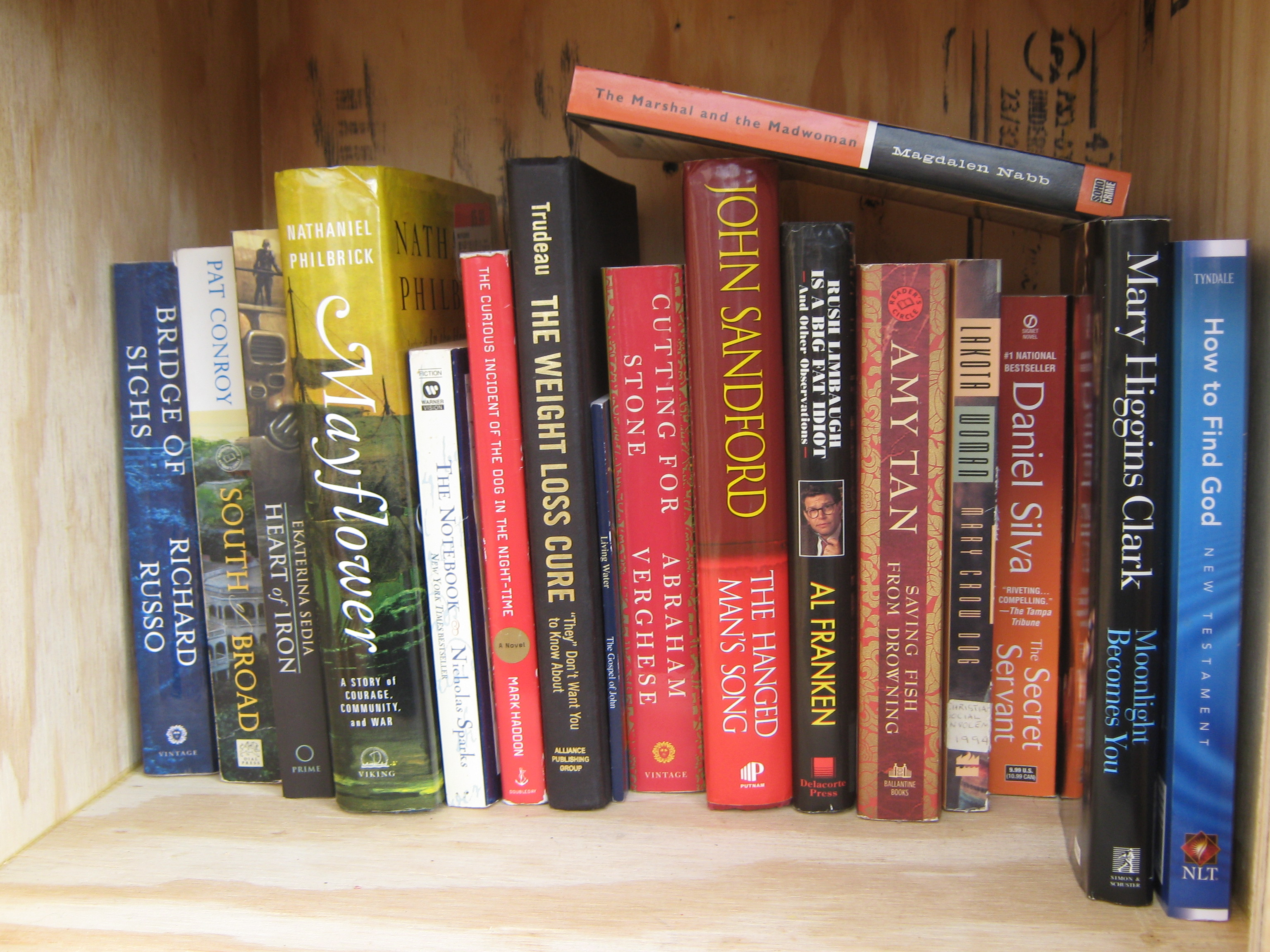
IMG_2760My husband spotted the Little Free Library as we were driving home.

It’s on our street.

‘Oh my God!”

I made him stop the car.

I raced out to look at the books.

The Little Free Library looks like a birdhouse on a stick.  Some are fancier than others:  I’ve seen a two-story LFL that looks like a tiny house.  Open the glass door of the shelf and you can browse, borrow, or take a book, and then return it or donate more.  I have given books to another Little Free Library in my neighborhood.  I can’t say my books go like a house a-fire:  the copy of D. H. Lawrence’s The Rainbow is still there, but Octavia Butler’s Parable of the Sower has been checked out twice.

In 2009 Todd Bol in Hudson, Wisconsin, built the first Little Free Library:  a bookshelf that was designed to look like a one-room schoolhouse, with a sign that said “Free Book Exchange.”

It caught on.

People told him they wanted to build their own and wanted to share their books.

Today there are 12,000 Little Free Libraries not just in the U.S. but in Ukraine, Italy, Japan, Pakistan, Brazil.  And the three I’ve seen in town don’t appear on the map, so apparently aren’t registered. At Bol’s website, Little Free Library, you can buy kits.  Or you can build your own.

Is our neighborhood hip?  Is that why we have one?  Not necessarily.  But this is a nice aspect of community.

People long to be connected, according to the Slow Movement.  And not necessarily by internet.   Well, I can’t say I’ve met anyone at a Little Free Library.  I’m always the only one there!  But it is a lovely  idea. It would make a very nice feature story to bang on the door and interview the owners about why they’ve started this.

There are readers in our neighborhood:  I know because every book from Amazon is automatically delivered to me.  Twice I’ve ripped them open, not noticing the address label is wrong.  Then I saunter off with an apology to the person who ordered the book. (Once Bill Bryson’s The Life and Times of the Thunderbolt Kid and another time a self-help book.)

IMG_2763The selection at the new LFL is not bad: Richard Russo’s Bridge of Sighs, Amy Tan’s Saving Fish from Drowning, Nathaniel Philbrick’s Mayflower, Abraham Verghese’s Cutting for Stone, and then the usual Mary Higgins Clark.

I borrowed Ruth Prawer Jhabvala’s Travelers.  Actually, I have a copy , but I wanted to borrow something.  She is one of my favorite writers, and, alas, she died earlier this year.

“That looks like someone dropped it in the toilet,” my husband said.

“It’s just a couple of crinkled pages,” I said indignantly.  “The rest are fine.”

But it did put me off a bit.  I think I’ll just find my old copy of Travelers and read that instead…

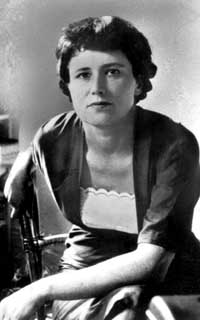
Doris Lessing

Doris Lessing

Doris Lessing

Doris Lessing died yesterday, age 94.

In her honor, I am re-posting this piece I wrote about her Children of Violence series.  (It appeared at my old blog in May  2012.)

Martha Quest, the heroine of Doris Lessing’s Children of Violence series, is my hero.  There are Martha Quest people, and there are non-Martha Quest people.  Even though millions of women were obviously reading Doris Lessing when I discovered her, I didn’t know any until a librarian walked into the bar where I worked and caught me surreptitiously reading A Proper Marriage.  “I LOVE  Martha Quest,” she said.

Instant bonding.  That often happens with reading.

Last August, I started rereading Lessing’s Children of Violence series, and hope some of you have enjoyed it, too. I began with the last novel, The Four-Gated City, a strange, labyrinthine masterpiece which has a distinct science fiction tone near the end, and then I backtracked to the other realistic novels in order, Martha Quest, A Proper Marriage, A Ripple from the Storm, and Landlocked.

I wrote about The Four-Gated City here and here.  I said:

Her analysis of 20th-century politics, history, class, and the socialization of women is so lucid that we apply it to ourselves and feel that we are reading about ourselves.

“The Four-Gated City is…a stunning portrait of a woman in her thirties, Martha Quest, who, leaves family, friends, and the Communist party to immigrate to England from Africa.  It is not just a personal portrait, though.  It also examines post-war London torn by the Cold War, persecutions of Communist Party members, fear of the McCarthy era, terror of war, women breaking down from pressures, and more.”

The five novels cover a lifetime–Martha from age 15 till old age.

I have just finished Landlocked, and I am sad because I will miss Martha Quest.  Landlocked is my favorite of these four and I will write a more detailed “review” at the end of this post, but first I will summarize the plots of the first three.

MARTHA QUEST, A PROPER MARRIAGE, AND A RIPPLE FROM THE STORM.  Set in Southern Africa on the verge of World War II, Lessing in  Martha Quest introduces the heroine as a furious teenager living on a farm on the veld.  Martha has dropped out of school to educate herself, and is desultorily reading Communist tracts, Freud, and other intellectual books lent by her friends, the Cohen brothers.  She longs to get off the farm, and knows from books there are other worlds.  She  hates her fastidious mother, who is neurotically jealous of Martha and fights with her about every detail of her life.  She gets along with her father,  but he is delicate and uninvolved with the family, shell-shocked during World War I and never recovered.  Meanwhile, stuck at home, Martha experiments with femininity:  making dresses her mother doesn’t approve of, going to dances, necking with boys she doesn’t like much, and trying to fit in with the people of different nationalities who have settled here. Eventually she finds a job in the city as a typist, where she attends sundowner parties and gets drunk every night, and  gets involved with all the wrong men.

In A Proper Marriage, Martha is married to Douglas Knowell, a successful, dull, hard-drinking young man with no political views, and she doesn’t quite know how she became married to him, except that everyone was getting married.  She has violated her principles and is doing all the conventional things young women do, as if she can’t help herself.  She gets pregnant, though she doesn’t want to and goes to a condescending doctor to get a Dutch cap (or was it a diaphragm?), and we hear his thoughts on how she will soon be pregnant if she is not already.  Martha simply cannot believe she is going to be a mother.  She has a child, Caroline, whom she doesn’t much love.  And she agonizes over how she sold out her socialist principles for a marriage she didn’t want, and her old friends the Cohens quietly sneer.  Martha longs to get involved with the commune one of them has formed.

In A Ripple from the Storm, set in the early 1940s, Martha has finally matured, is divorced from Douglas, and is very active in a Communist group.  This is a much more focused, energetic novel, because Martha is finally doing something she intended to do.  The novel describes her political activities during World War II–her social life revolves around lectures, study groups, and attempting to help the Africans. I found this utterly absorbing, and somehow understand when Martha makes her next mistake:  she marries a German “comrade,” Anton Hesse, a refugee who works as a clerk but puts all his energy into the Communist group.  She knows that there is something sexually wrong between them, and says she will not marry him.  But then she feels sorry for him, and suddenly they are married.

(Don’t you all know how this goes?  Marriages that everybody knows are doomed, but what can you do except go to the party and drink champagne?)

LANDLOCKED is my favorite after A Four-Gated City.  Set near the end of World War II and just after it, Landlocked centers on the disintegration of their Communist group, and describes Martha’s own feeling of being ripped apart and landlocked as she tries to compartmentalize her life:  she balances secretarial work (she becomes a freelance typist and makes more money), her work for the Communist group, her cold marriage to Anton, visiting her ill father, and having an affair with Thomas, while what she really wants to do is go to England.  She dreams again and again of the sea, dreams where she can’t get there.

Politics change rapidly at the end of the war as people try to cope with the realization that 40 million people have died.  The townspeople long for normalcy and need a scapegoat:  the  Communist group, which had been tolerated when everyone was pulling together during the war,  is execrated.  Even Mrs. Van, a popular, liberal activist who has served on the town council and in Parliament (not a communist), and Jack, a trade union leader and member of Parliament, are ostracized.  Jasmine, a sort of secretary of the group, goes to Johannesburg, and Martha is stuck in her place.  Athen, the earnest Greek member, prepares to go home, though Greece is in a civil war. Anton starts to lose control and becomes involved with a wealthy businessman’s family.  And the Africans believe the communist group is condescending.  Then the group begins to learn of the Russian persecutions and imprisonments.

Martha is still married to Anton, but they have decided they will get divorced at the end of the war, when he will be “naturalized.” They decide they can have affairs, but Anton is still in love with Martha, and she is incredulous.  It was the same with Douglas.  It’s as though neither knew there was anything sexually wrong.

Then she has an affair with Thomas, a member of the group, a Polish farmer, a Jew who escaped with his wife to Africa.  Thomas has had affairs with many women, always painfully thin women.  He falls “in love” with Martha when she is ill (later she has a fat phase and he tells her she looked better when he was with her).  It is the most sexual love affair of both their lives.  But love is far too inexact a word for these two Communists, who view personal lives with distance and don’t use that word.

Doris Lessing always steps away and lets us know what Martha, apart from her actions, is thinking and feeling.  And it is these original thoughts that make the reader look at a situation differently.  Lessing writes beautifully and intelligently, and Landlocked is a stunning novel in the tradition of the big, detailed, exhilarating bildungsromans of Thomas Mann and Henry Handel Richardson.

In the beginning of the novel, Martha is in a thin, blonde phase because she is so busy, and people respond to her looks.  The “real” Martha is cynical.

And besides, what was real in her, underneath these metamorphoses of style or shape or–even, apparently–personality, remained and intensified.  The continuity of Martha now was in a determination to survive–like everyone else in the world, these days, as she told herself; it was in a watchfulness, a tension of the will that was like a small flickering of light, like the perpetual tiny dance of lightning on the horizon from a storm so far over the earht’s curve it could only show reflected on the sky.  Martha was holding herself together–like everybody else.  She was a lighthouse of watchfulness; she was a being totally on the defensive.  This was her reality, not the ‘pretty’ or ‘attractive’ Martha Hesse, a blondish, dark-eyed young woman who smiled back at her from the mirror where she was becomingly set off in pink cotton that showed a dark shadow in the angle of her hips.”

Martha doesn’t get to England till the last book, and that is her “real” life.  But I understand the life she leads in Africa, wanting to leave, but stuck because of her relationships.


E-readers, Never Shop with a Man, & NANOWRIMO

The-eBook-e-Reader-Painting--95667Sometimes my e-reader is my friend, sometimes it isn’t.

Last week I had a solitary weekend.

Everyone I knew was out of town.

My husband was on a business trip and gave me several phone numbers I would never call.

Doesn’t everyone love a solitary weekend?

It was pretty much my e-reader and I.  We are  great friends since I deleted my email account and Twitter from the machine.  No more email alerts:  no more reading 10 pages, then checking 10 emails.  I feel about my e-reader the way the women in Sex and the City feel about their vibrators.

And so I spent the weekend reading Meg Wolitzer’s brilliant new novel, The Interestings, a long realistic masterpiece that pleased critics who underestimated her last book, The Uncoupling, a short, clever riff on Aristophanes’ Lysistrata.

As I said at my old blog, Wolitzer has a brilliant, distinctly American voice, slightly Nora Ephronish, with a twist of Dorothy Parker.

In The Interestings, she writes about a group of New Yorkers who meet in the ’70s at an arts camp.  Their friendship extends into middle age in the 21st century.

Read, read, read.  And then…

Oh, no.  A car in the driveway!

I hoped the person with hennaed hair and black clothes in the driveway was not the old friend with hennaed hair and black clothes I had last seen in a mental hospital after her bad trip at Woodstock II.  Normally I am happy to see anybody, but this was my weekend!

The person went away.  Wrong address apparently.

Meg Wolitzer’s The Interestings seemed to apply to the situation, though, as so often happens when you’re reading and living life.  She writes about mental health politics as well as other changes of the 20th and 21st centuries.  The pills do not necessarily work well.

The main character, Jules, a (female) social worker, is married to Dennis, who has depression.

Ever since he’d been taken off the MAOI five years earlier, Dennis had rarely returned to buoyancy.  Instead, he still struggled with what his pharmacologist variously referred to as “low-level depression,” “atypical depression,” and “dysthymia.” There were some people who were just very hard to treat, Dr. Brazil said.  They were able to live their lives, sometimes to a fairly full extent, but they never felt good.  Dennis’s atypical depression wasn’t making him break down, as it had in college, but it also wouldn’t go away.  He felt its presence like a speck in the eye or like a chronic, rattling cough.  Different drugs were tried, but nothing worked for very long, or if a drug did work, the side effects made it untenable.

By the way, I am so glad Obama’s health care plan will treat mental illness like a physical illness, with the same deductibles, etc.  Don’t let the insurance companies and the Republicans destroy our new national health care.

Hey!  Why didn't we look like that?

Hey! Why didn’t we look like that?

NEVER SHOP WITH A MAN.   I  went to the mall with a man.  What was I thinking?

I had to buy a few things that were too big to fit in the bike pannier.

He moodily paced behind me.  No smile, and he wondered why no clerk would help us.

Finally I caught the attention of  a clerk who showed me several bags I could use for a laptop that weren’t strictly laptop bags.

Later, the man was so tired and mall-phobic that he argued over whether we could spend 99 cents at Target.

The other men at the mall were behaving well, but their wives were clearly in charge.

I bought the 99-cent item.

You know the reggae:  Get up, stand up.

But it’s really easier to shop with your cousin.

THE SHORTEST NANOWRIMO EVER.   Every November people all over the world sign up for NANOWRIMO (National  Novel Writing Month) to write a 50,000-word novel in 30 days.

I’m not a fiction writer.

Nor do I want to write fiction.

Nor do I want to write 1,660 words a day.

But I love the idea of writing a novel in 30 days, so I planned to write a new version of Ovid’s tale of Daphne and Apollo.

Then I realized I’d rather read Ovid.

I wrote 32 words.

I lasted one minute this year!   I will not even PRETEND to write a novel.

That’s it!  I  promise never to sign up for NANOWRIMO again.

An Interview with D. J. Taylor

D. J. Taylor

D. J. Taylor

D. J. Taylor, the novelist, critic and biographer, kindly agreed to be interviewed by email.

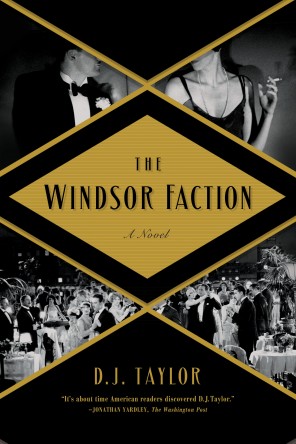
First, a few words about his book:  his brilliant new novel, The Windsor Faction, is one of our favorites of the year.  It poses the questions, What would happen if Edward VIII had not abdicated the throne because Wallis Simpson died  in 1936?  And what if he were a fascist sympathizer?

Billed as an “alternate history,” The Windsor Faction is also a fascinating literary novel, set in the late 1930s when England is on the verge of war and told in multiple forms:  the diary of Beverley Nichols, a journalist, who collaborates with the King on a speech on pacifism; a traditional third-person narrative about Cynthia Kirkpatrick, a bored young woman who works at a spy-ridden literary magazine in London; and newspaper articles and editorials about the death of Mrs. Simpson and the war.

MIRABILE DICTU:  Your novel has been called an “alternate history.”  What do you think of that term?

Windsor Faction d. j. taylorD. J. TAYLOR:  I’d describe it as ‘counter-factual history’. The analogy I usually use is that of chess board in which one of the pieces has been removed, meaning that the remaining 31, though unchanged, have to re-calibrate themselves in interesting ways. Keeping the reader on your side means that you can’t alter a great deal. In The Windsor Faction, for example, I was careful to employ the same politicians and the same public figures. Without this, I think the whole thing becomes less believable.

MIRABILE DICTU:   Did any writers influence you in the writing of The Windsor Faction?

D. J. TAYLOR: I wouldn’t say there were direct influences. But I have read fairly widely in the literature of World War II – Evelyn Waugh’s Sword of Honour trilogy, say, and the three war-time novels of Anthony Powell’s A Dance to the Music of Time, and I’m sure these raise their heads every now and again, particularly as one of my aims was to make it read and sound like an artefact written in the period in which it was set.

MIRABILE DICTU:    When and why did you begin to write?

D. J. TAYLOR: I started writing at a very early age. Even in my teens I was sending things – mostly chronically bad impersonations of J.R.R. Tolkien – off to publishers. I began to get things published in my early ’20s, but I think this was due merely to having served an apprenticeship at an age before most people get properly going

MIRABILE DICTU:   Do you prefer writing fiction or nonfiction?

D. J. TAYLOR: I like both, and find – encouragingly – that the one cross-fertilises the other. For example, the idea for my novel Ask Alice (2009), which is about an American-born British society hostess, grew out of non-fiction book called Bright Young People (2007) about the social circles that inspired Evelyn Waugh’s novels.

MIRABILE DICTU:  Who are your favorite writers and what are you reading now?

D. J. TAYLOR: My favourite writers are English classics  like Thackeray, George Gissing, Orwell, Powell, but I have a weakness for those sprawling early 20th American novels by people like Dreiser, Upton Sinclair, James T. Farrell, Steinbeck and Dos Passos. Among modern US writers, I very much enjoyed the memoir that Richard Russo published a couple of years ago, and my absolute favourite is Mary Gaitskill.

Thank you for the interview, David!

You can read more about D. J. Taylor at his website:  http://www.djtaylorwriter.co.uk/

Lo-Mein & Hardy-Lite

It is hard to write about books.

Hardy-lite!

Hardy-lite!

Especially after you’ve eaten Vegetable Lo Mein at the supermarket.

I’ve been a vegetarian since September and suddenly could not bear the thought of any more broccoli-cheese soup.

Let’s go to the Hy-Vee and eat salad! I said.

I was sure the salad bar had crab or lobster, or at least fake crab or fake lobster.  I wanted protein.

No, it was just a bunch of lettuce, broccoli, and pasta salad.

So I went for the Chinese Express.

Did they have anything vegetarian?

Only Vegetable Lo Mein. The noodles hid some cabbage and onion, no other vegetables.   I “borrowed” broccoli from my mate’s plate of Chicken with Broccoli.

And now I am full of carbohydrates and inspired to let you know what I’ve been reading.

I’ve fallen a little behind.

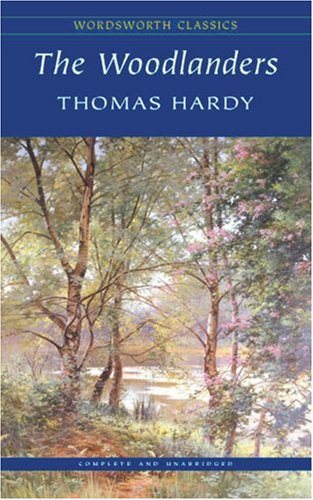
For instance, my book journal tells me I finished Thomas Hardy’s The Woodlanders on August 27.  The writing is gorgeous and lyrical,  but this is not Hardy at his best, and so I never wrote about it.

It’s Hardy-lite.

Hardy-lite is better than most writers at their deepest and darkest, but I cannot recommend that you read this unless you have first read Tess of the D’Urbervilles, The Mayor of Casterbridge, The Return of the Native, Far from the Madding Crowd and Jude the Obscure.

The Woodlanders simply lacks the passion of most of his work.

The usual themes are there.  Class matters.  And inter-class love does not work.  Somebody is bound to die.

The Woodlanders rambles: it is not architecturally structured like Hardy’s best.  There is a bit of a wobble.

We are introduced early in the novel to Marty South, a young woman who supports her ailing father by making wood spars for thatch–this involves working with  something called “a bill-hook” and “straight, smooth sticks called spar-gads”–and other things with wood.  At first we believe she is the heroine.  A barber pursues her from town; he wants to buy her hair for a lady in the neighborhood whose hair is the same shade.

Marty is not beautiful, and that should have told me she was not the heroine.

Her face had the usual fulness of expression which is developed by a life of solitude….In years she was no more than nineteen or twenty, but the necessity of taking thought at a too early period of life had forced the provisional curves of her childhood’s face to a premature finality.  thus she had but little pretension to beauty, save in one prominent particular–her hair.  Its abundance made it almost unmanageable; is color was, roughly speaking, and as seen here by firelight, brown, but careful notice, or an observation by day, would have revealed that its true shade was a rare and beautiful approximation to chestnut.

She reluctantly sells her hair,  like Jo in Little Women (remember that scene?), because she needs the money.

And then Hardy almost drops her from the plot, except when she emerges to write  some choice graffiti regarding Giles Winterborne.  She doesn’t have the hair, so, by Jove, she’s not the hair-o-win.

Poor Marty.  She is in love with Giles Winterborne, a woodsman, and certainly he is kind to her, but he  has long been in love with Grace Melbury, the daughter of George Melbury, the rich timber dealer.

George wants his daughter to marry Giles because he wronged Giles’ father long ago.  But when Grace comes home from finishing school, she is so well-educated, well-dressed, and glowing that she no longer really belongs in Little Hintock.   And when Fitzpiers, a handsome, heartless doctor courts her, she is flattered.

They marry, but soon wish for divorce.  Felice Charmond, the lady of the manor, knew Fitzpiers long ago.  They have an affair.

The characters, unfortunately, are not very well-drawn.  They’re likable, but anemic.  We don’t get terribly excited about what happens.  Hardy has written The Woodlanders elsewhere better.

This is definitely a grade “B” book.  Read it if, like me,  you’ve read all of Hardy’s other books.

Caveat Emptor!  Or should I say, Caveat Lector!

Who Is Dave?

Who is Dave?

Who is Dave?

At newspapers, even on book pages, the commenters are often snotty.

Bloggers are usually more nurturing of one another’s efforts.  At book blogs we  comment, “Great post!” or “I want to read this.”  There is a kind of  community.

Of course it is not always a love fest.  At my old blog, I occasionally disabled the comments feature, because I was unhappy with negative remarks.  And so I fled to Mirabile Dictu, my under-the-radar blog, where only three subjects cause dissension:  Jane Austen, Jane Eyre, and Angela Thirkell.

It’s nothing I can’t handle.

And I shouldn’t condemn the newspaper commenters, because I myself have come to no good commenting.  A couple of times I did at The Guardian.  You read so many odd comments that you think, Okay, I’ll join in. And then you regret it, because it is there forever.

The only good thing I can say is I wasn’t snotty.

Often when I read comments on book pages I think, Get a blog!  Bloggers think a little harder before they judge journalism or books.

The most annoying comments of all can be found in The Guardian’s “What You’re Saying” features,  which are made up entirely of comments from readers. What are the writers getting paid for?

Today I read one of the comment articles, which was titled: “Choose the best and worst 21st-century novels – open thread.”

In the very short body of the article, we are told we can disagree with Dave.  Who  is Dave?

Apparently there is something called  TV Channel Dave, where 2,000 people were recently polled about the best and worst books of the 21st century.

Dave’s best books are:

• Harry Potter and the Order of the Phoenix by JK Rowling 
• Life of Pi by Yann Martel 
• The Time Traveler’s Wife by Audrey Niffenegger 
• The Hunger Games by Suzanne Collins 
• Atonement by Ian McEwan 
• The Help by Kathryn Stockett 
• The Amber Spyglass by Philip Pullman
• We Need to Talk About Kevin by Lionel Shriver
• No Country for Old Men by Cormac McCarthy 
• Pompeii by Robert Harris

And the worst books are:

• Angel by Katie Price
• Fifty Shades Trilogy by EL James
• A Whole New World by Katie Price
• Learning to Fly by Victoria Beckham
• The Da Vinci Code by Dan Brown

I cannot say that “Dave” has very good taste.

The commenters mostly  talk about their own lists.  At least one of them mentioned Will Self’s Umbrella, which some agreed was difficult. One or two were annoyed by it.

In no particular order, here are a few of the comments I read.

It does get silly. People brush up on their obscure books list trying to trump everyone else’s obscure books. Should I mention here that my particular fave is my Sanskrit-English dictionary (Monier-Williams)?

And later:

doubt if many people have heard, let alone read, any on your best list. But thanks.  the enemy

And then:

You and TheEnemy shouldn’t be on here, you should be waltzing around spitting on the Mensa members for being cretins.

Where is the community of newspaper commenters?  More writing from The Guardian’s writers, please!

Ms. Mirabile on Jane Eyre, Intense Women, & Why We Like to Be Liked

Jane Eyre, with Orson Welles and Joan Fontaine (1943)

Jane Eyre, with Orson Welles and Joan Fontaine (1943)

Jane Eyre is serious.

That’s why we loved her when we first read the novel.  After I saw the old movie starring Orson Welles and Joan Fontaine at school,  I begged my mother to take me downtown immediately to buy the book.  (I still have my original 50-cent copy.)  I didn’t just read Jane Eyre, I was Jane Eyre.

Jane Eyre is intense.  Intense women readers all over the world are thrilled by Jane’s intensity.

Because intense women aren’t often taken seriously.

“Get shallow,” my husband used to say.

Hillary Clinton has been an intense First Lady, Senator of New York, and Secretary of State.  My mother hoped she’d be president.  She didn’t get to see a woman president in her lifetime. Is it because Hillary is too intense?   Clinton has supporters for the 2016 campaign, but are there other female candidates?

When Sally Field won her first Oscar in 1980 for her role in Norma Rae, she said, “You like me, right now, you like me!”  She’s a great actress, and of course we like her.  But perhaps intense women aren’t liked as much as they’d like to be liked.

Women writers are allowed to be intense, but they don’t win many awards.  Although Doris Lessing said “Oh, Christ,” when she stepped out of a cab and heard she’d won the Nobel, she was obviously very pleased. There have been only 13 female winners of the Nobel.

faceAnd so we still talk about Charlotte and Jane Eyre.  Things haven’t changed that much.

I loved Mr. Rochester, the dark, almost sadistically flirtatious character, and then in my thirties said, “Oh no, I’m done with that.”   The Byronic heroes are mad.

When Mr. Rochester says to Jane,

In about a month I hope to be a bridegroom….and in the interim, I shall myself look out for employment and an asylum for you.”

she is shattered.

His teasing hurts her very much.  She is in love with him.

Now we see significance in his use of the word “asylum,” with its double meaning of mental hospital and refuge.  Is Charlotte Bronte thinking of Rochester’s mad wife when she introduces this word?  The wife’s asylum is in the attic, but is it an asylum to a woman who bites men and sets fire to the house?

In Jean Rhys’s Wide Sargasso Sea, a sequel to Jane Eyre, we see Mr. Rochester from the point of view of Antoinette/Bertha, his mad wife.

Mr. Rochester is just another man with a mad wife who wants to get involved with a younger woman.

Nowadays the younger women would feel sorry for him.  Oh dear, the mad wife.  Then they’d forget her.

Poor Jane almost spirals into a depression before she knows that Rochester wants to marry her.  She passionately tells him,

I grieve to leave Thornfield!  I love Thornfield:  I love it, because I have lived in it a full and delightful life–momentarily at least.  I have not been trampled on.  I have not been petrified.  I have not been buried with inferior minds, and excluded from every glimpse of communion with what is bright and energetic and high….  I have known you, Mr. Rochester; and it strikes me with terror and anguish to know I must be torn from you forever.  I see the necessity of departure:  and it is like looking on the necessity of death.”

If we were Jane, we might well become a little mad:  she learns at her wedding that he has a wife.

It is a brilliant book, but in many ways it is a girls’ book.  If you want to read Charlotte Bronte at her best, you must read Villette, a more mature version of Jane Eyre.  The heroine, Lucy Snowe, wins affection, but it is not the affection she wants.   She is a teacher, and she remains a teacher.

The Brontes’ Men: Heathcliff & Mr. Rochester

true-novel-mizumuraAlthough I didn’t rush out and buy Joanna Trollope’s new novel, Sense and Sensibility, a modern version of Austen’s novel, or Ronald Frame’s Havisham, a retelling of the story of the misanthropic spinster of Great Expectations, I am very keen on retellings of Victorian novels.

And tomorrow a new one will be published, Minae Mizumura’s A True Novel, a modern Japanese version of Emily Bronte’s Wuthering Heights, translated by Julie Winters Carpenter.

Wuthering Heights used to be my favorite book, though for that reason I am a little reluctant to go near it again.

But I feel I should reread it before A Modern Novel.

On the other hand, I read it often in high school.

According to The New Yorker,  “like Emily Brontë’s classic story of stormy love, the events in Mizumura’s novel are relayed through layers of narrators….Mizumura, who moved to America with her family when she was a young girl, then moved back to Japan as an adult, injects elements of autobiography into the story’s primary voice, a novelist named Minae who grows up in New York. ”

It sounds fascinating.

wuthering-heights-emily-bronte-paperback-cover-artBut what does Bronte’s Wuthering Heights mean to a woman in her fifties?  I am no longer willing to fall in love with every dark, difficult, charming, tortured romantic character who comes my way.

Nor would Heathcliff be able to see me at my age. Cardigans and a string of pearls?  (Well, I’m working on the string of pearls thing.)  Gray hair?  I now belong in a Barbara Pym novel, flirting with curates.

And will Bronte’s prose stand up?

When I was 15, the year I lived with my father after my parents’ divorce, I read Wuthering Heights  several times.  He didn’t get it.  “Are you reading that again?”

Silence.

“That moldy thing?”

Silence.

“Shouldn’t you be out stealing cars or something?”

Silence.

That year, I probably rode in a car once.  I would never learn to drive. People didn’t think I was serious.  I was.

And though I did have some happy times with my father–once he bought me used ice skates at Novotny’s, and we had a happy day “skating” on the pond at City Park, i.e., my friend and my father held me up on the ice because my ankles weren’t strong– we were very different.  I belonged in a Bronte book; he belonged in an episode of Happy Days.

While he worked nights, I sat around the apartment and read. Charlotte and Emily were two of my favorite writers.  They had bad taste in men.  I just thought that’s the way it was.  My soulmate would be intense, ardent, and fierce.

Somehow I really wanted Heathcliff to dig up my grave.

When Catherine dies:

May she wake in torment!” he cried with frightful vehemence, stamping his foot, and groaning in a sudden paroxysm of ungovernable passion.  “Why, she’s a liar to the end!  Where is she?  Not there–not in Heaven–not perished–where?  Oh!  you said you cared nothing for my sufferings!  And I pray one prayer–I repeat it till my tongue stiffens–Catherine Earnshaw, may you not rest as long as I am living!  You said I killed you–haunt me, then!  The murdered do haunt their murderers! I know that ghosts have wandered on earth.   Be with me always–take any form–drive me mad!  only do not leave me in this abyss, where I cannot find you!  Oh, God!  it is unutterable!  I cannot live without my life!  I cannot live without my soul!”

Gorgeous writing!  But this would never happen to me.  Really, honey (talking to my younger self now), this isn’t your kind of thing.

In Charlotte Bronte’s Jane Eyre, a book I can no longer read, Mr. Rochester is a less emotional, slightly more believable version of Heathcliff.  When he falls in love with Jane, the governess, and tells her that beautiful Blanche, his guest, is “a strapping wench,” we are thrilled.  Though we don’t doubt Mr. Rochester should be in love with Jane, we’re appalled in retrospect by the mad wife in the attic and can’t help but think he was after Jane because he thought a young woman would tolerate this better than the Blanches of this world if it ever came out.

He was wrong.

I was always wildly in love with dark, moderately good-looking boys and men who unfortunately were somewhat unkind.  Once I borrowed a bike from a boy I was in love with, and when I did not lock it upon returning it–it had been unlocked, and I wanted to make sure he had the key before I locked it again–he berated me.  (By the way, this was just a lock and key, not a symbol.)

And, yes, some of my boyfriends later had a hard time celebrating my successes.

Did the Brontes influence us?  Or is this an archetypal cavewoman’s idea of men?

I will read Wuthering Heights today and let you know.

D. J. Taylor’s The Windsor Faction

Windsor Faction d. j. taylorD. J. Taylor’s The Windsor Faction, a brilliant, richly colored alternate history, is the kind of book some might call literary fantasy.  He poses the questions, What would happen if Edward VIII had not abdicated the throne because Wallis Simpson died  in 1936?  And what if he were a fascist sympathizer?

This is one of those un-put-downable novels that readers both of literary and genre fiction like.

The clarity and momentum of Taylor’s prose remind me of Connie Willis’s entertaining Hugo-winning historical science fiction novels,  Blackout and All Clear. Although Taylor’s book does not feature time travel (then it would be SF/fantasy), both writers describe the edgy atmosphere of English life in wartime.

The Windsor Faction might make my Best Books of 2013 List.

It has so much going for it.

It might have a shot at the Hugo.

It is absolutely brilliant, but I admit I didn’t absolutely love it.  And does a common reader need to love a brilliant book to count it as best?

Probably.

Taylor’s novel is told in multiple forms and from multiple points of view:  a traditional third-person narrative from the perspective of Cynthia Kirkpatrick, a bored young woman living in Colombo with her parents, who, when they return to England, works at a spy-ridden literary magazine in London; the diary of Beverley Nichols, a journalist (known for humorous gardening books like Merry Hall) who collaborates with the King on a speech he delivers on Christmas; newspaper articles and editorials about the death of Mrs. Simpson in 1936 and the beginnings of the war in 1939; and the notes of Johnson, a humdrum spy who attends fascist meetings to apprehend conspirators against the war.

Sometimes it’s difficult for us Americans to know what is English history and what is alternate history.  At first I thought, Beverley Nichols?  Not the garden writer!  But, by Jove, it is indeed.  I read the Author’s Note to clear things up.

Cynthia is my favorite character, and I much preferred the sections about her:  I like her questioning of the humdrum lives of her parents and her hope to do something fascinating in London.  When she visits the Bannisters, the family of her boyfriend/fiance, Harry, who died in the East, she feels a fraud.  She did not love him.  In Harry’s old room, she finds a draft of a letter to another girl.  She is surprised to learn that the girl had enormous breasts.

She looks at the boys’ stories and Loeb editions of Greek writers on his shelves.

The copies of The Liveliest Term at Templeton and The White House Boys stared back at her, and she thought that there were whole areas of English life that she had altogether failed to understand, that there was some vital qualification missing form her repertoire that would have enabled her to better comprehend Henry Bannister and his kind, to sympathize with them, and deal with them, and not be so discountenanced by their actions or the letters they wrote to anonymous girls, with (apparently) enormous breasts, that they left lying around in Loeb editions of Xenophon for people to stumble upon after their deaths.

Very enjoyable, though perhaps the suspense fizzles out a little bit at the end.

AND HERE IS WHY IT MIGHT MAKE MY BEST LIST.

Ms. Mirabile:  "You can do better, Ms. Mirabile!"

Ms. Mirabile: “But do I love it?”

Some will think it’s very silly to begin making my “Best of 2013 ” list now, but I just noticed there are only four books on my list that were published in 2013 (see sidebar).

They are brilliant books.

I also love them.

But this was the year I intended to read more contemporary books.

All right, I haven’t.  I have read more than 100 books, but only 13 books published this year. I do start a lot of new books and put them aside, like Colum McCann’s TransAtlantic.  I am picky, picky.   If I don’t like a contemporary book, which I seldom do, I reread War and Peace (which I’m doing now).

But I’d better get hopping if I want 10, or even five, new books on my Best of ’13 list.

I’ve just decided that Taylor’s book WILL make my list.  It’s brilliant, and that has to be enough.  I can’t love everything.

What new books do you recommend?

We’re not big readers of new books, are we?

An Interview with Peter Stothard

Peter Stothard

Peter Stothard

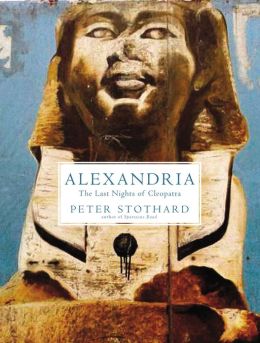
Peter Stothard, editor of the TLS, former editor of The London Times, and author of the brilliant new book,  Alexandria:  The Last Nights of Cleopatra, agreed to be interviewed by email.

His elegant memoir of his lifelong fascination with Cleopatra is part biography/history, part personal memoir, part travel, part examination of images of Cleopatra, and part reflections on the Eve of the Arab Spring in Alexandria.  He refers to it as a diary book.

MIRABILE DICTU:  As editor of the TLS and former editor of the Times, you are accustomed to keeping track of the threads of many stories, and in your book you weave elaborate threads of past and present as you write about Cleopatra.  What inspired you to leave the limits of journalism to write a diary book?

PETER STOTHARD:  Newspaper editors divide the world into stories, past and present, new and old. For a diarist all parts can fall together, ancient Rome and Alexandria, England in the 1950s and 1960s, Egypt on the eve of the short Arab Spring. That falling together was what happened to me in Italy in 2008 while on the Spartacus Road and on the Nile in 2011 while writing The Last Nights of Cleopatra.

MIRABILE DICTU:   Did any writers influence you in writing Alexandria?  And who are your favorite writers?

PETER STOTHARD: The classicist Mary Beard is big influence on how I see the ancient and modern now. Epicurus inspires me from long ago. I try not be influenced in how I write myself.

MIRABILE DICTU:   When and why did you begin writing?

PETER STOTHARD:  I began writing in my current preferred form after being told that I was about to die of cancer and fortunately escaping that fate. It took five years for the lesson to sink in but since then I have come to see storytelling in a totally different way. Before 2002, for twenty five years, I wrote news stories and rhetoric.

MIRABILE DICTU: The TLS reviews many books on classics.  Is this a longstanding tradition, or are you the advocate of classics?

PETER STOTHARD:  Mary Beard and I both ensure that the classics are fully covered at the TLS. There are some extraordinary minds on the subject today. We want to note, advance and celebrate them.

MIRABILE DICTU:   What are you reading now?

PETER STOTHARD:  Seneca’s De Beneficiis  and Sex on Show, Seeing the Erotic in Greece and Rome by our TLS contributor Caroline Vout.

Alexandria peter stothardThank you for the interview, Peter!

I wrote about Alexandria:  The Last Nights of Cleopatra,  my favorite book of the year,  here and here.

Stothard is also the author of Spartacus Road, a diary book that is part history of the escaped slave Spartacus, part memoir/travel, and part translations of Roman poetry and literature perstaining to Spartacus. (I wrote about it here.)  He also wrote the book, Thirty Days: An Inside Account of Tony Blair at War.