Freakishly Luddite & The Solar Eclipse

Solar Eclipse, Nov. 3, 2013

Solar Eclipse, Nov. 3, 2013

After freakishly checking Twitter every hour for news about Donna Tartt’s new novel (it was finally published), R.E.M. (Peter Buck was interviewed at Salon), and the specials at the local diner (chicken and noodles or vegetable omelet), I realized I wasn’t finding what I was looking for online.

Here’s what I wanted.

A solar eclipse.

I actually missed one on Sunday.

By then I had already quit Twitter, because I couldn’t decipher 140-character fragments.

Twitter was uneventful.

I wanted something that made me breathless.

I should have followed the solar eclipse.

How could I miss a solar eclipse?

Probably most of you were up bright and early, if that’s when it was.  You photographed it.

Well, I don’t live on the east coast, so I couldn’t have seen it anyway.

But I made a discovery about myself.

I got dozens of tweets and retweets every day, the screen was CLUTTERED with messages by literary people I’d never heard of (mostly retweeted by Tin House), and no mention of a solar eclipse anywhere.

Books are my favorite thing, and this is not to say you shouldn’t follow tweets by Ron Charles of The Washington Post, Sherman Alexie, Maud Newton, Amy Tan, or TLS, because you should.

But I should also have followed science.

ON HOW BLOGGING IS QUASI-LUDDITE.
I live in a slow city.

I live in a slow city.

I am so wildly quasi-Luddite (don’t drive, ride a bicycle, don’t have a food processor) that I need at least 250 words just to make an announcement.  I write (sort of) long.

Blogging is almost Luddite by today’s standards.  You plan it while you walk, or while you’re polishing the table.  You may not have time to polish the prose, but you write in sentences and paragraphs.

Perhaps my near-Luddite preferences are because I live in a very slow city.  There is no rush hour traffic.  We don’t stand in long lines at the supermarket.  We ride our bikes and only sail out in the car once a week.

Although I am not organized enough to commit to the sustainability issues of the Slow Movement, I am interested in the talk about  “time poverty.” According to the Slow Movement website, people are so disconnected that they are turning to organic food, Buddhism, and extended families.

We are searching for connection. We want connection to people – ourselves, our family, our community, our friends, – to food, to place (where we live), and to life. We want connection to all that it means to live – we want to live a connected life…

Recognising the disconnection and pace of our life as an unwanted state of affairs is an important first step in re-establishing the connections and slowing the pace. What we all want to know is how do we reconnect? How do we live slow, whilst at the same time meeting our most important responsibilities?

I recently turned to vegetarianism because the chemicals in meat made me sick.   (My husband didn’t notice I hadn’t fed him meat since September until I pointed it out today–now that’s success!)  Although I love my family, my connections to bloggers, book groups, and other online friends are very important.  I’m not looking for an extended family.

Is that connection or disconnection? What do you think?

Not Quite Writing on War and Peace

respect-your-readers readingThere are days when I goof around.

Not necessarily online.

I deleted the email feature from my Nook tablet. And I also closed my Twitter account.

I have a little more time now:  maybe an hour a day.

It was gray and gloomy and rainy today.

A good day to go online, you might say.

I took a walk, until it began to pour.  Then, drenched and drinking tea at home, I read.

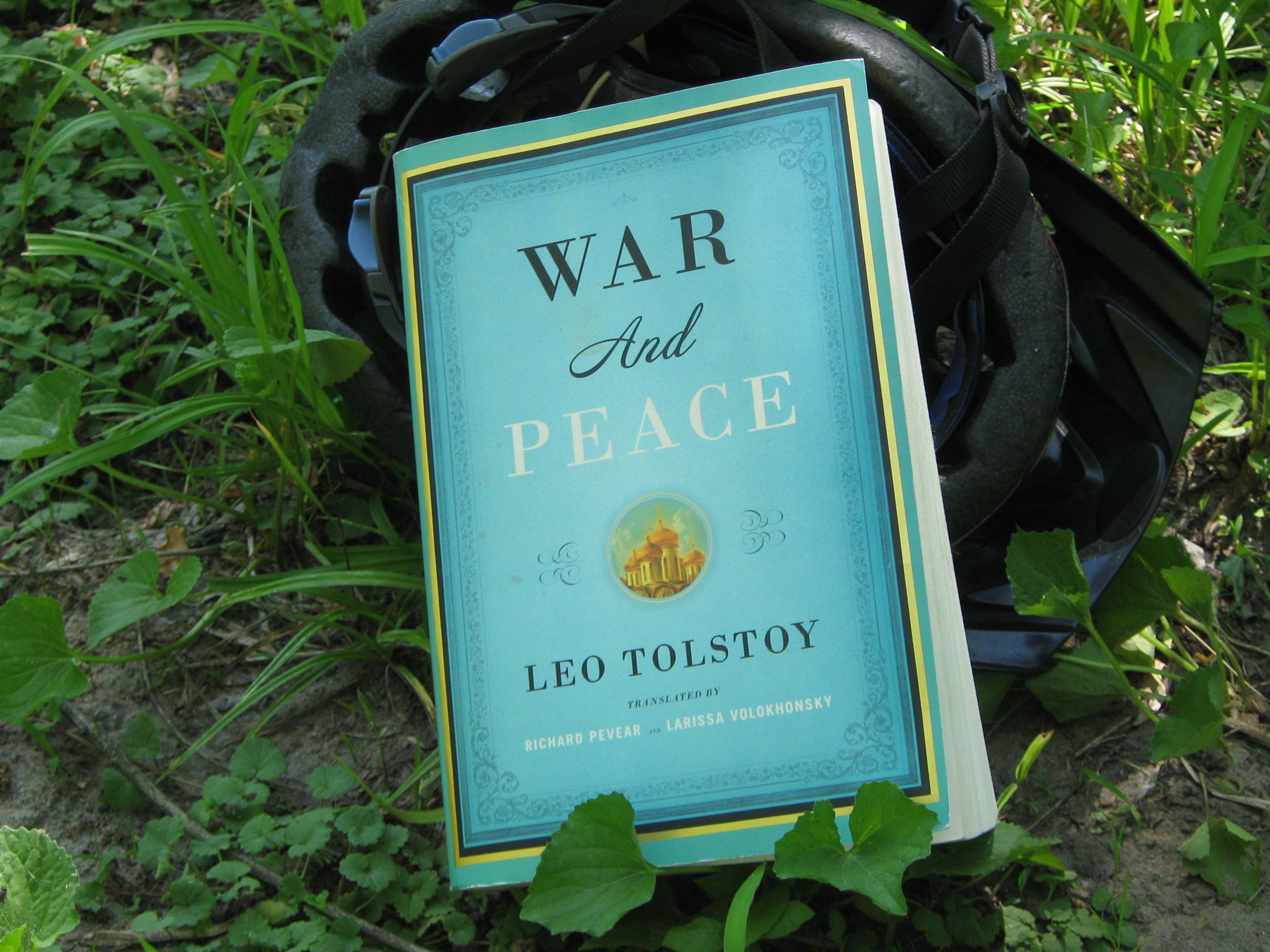
I am absorbed in War and Peace, which I reread last spring:  you cannot read it too often.  I have so many translations on my Nook that I can switch from one to the other if the language becomes a little awkward.  This time I am reading the Pevear-Volokhonsky translation.

I read for pleasure, obviously, and know Russian culture only from novels, but one doesn’t think about War and Peace as Russian, once one grasps that the upper classes often speak French.  in other ways it seems very 19th-century European.  I know the book so well that I can skip scenes, concentrating on one set of characters or another, though I usually read straight through.  It is very hard to put this down.

I prefer the peace scenes.

When I first read WAP many years ago, I identified with Pierre, because as a young woman I talked very seriously at parties. When I read the first chapter, where poor Anna Pavlovna Scherer, a maid of honour of the empress, tries to interrupt Pierre in his earnest conversations and  get  him to chat more lightly with the groups, I had to laugh.

War and Peace in my bicycle helmet one summer!

War and Peace in my bicycle helmet one summer!

These days I am a little weary of Pierre, especially during the Freemason scenes.  And so this reading, for the first time ever, I identify with Princess Marya Bolkonsky, who was based on Tolstoy’s mother.  It’s not that she and I are alike, because that isn’t quite how fiction readers identify:  it’s more that I understand why she is the way she is, and why I am the way I am.  She is not socially graceful, like Tolstoy’s more sympathetic heroine, Natasha, who sings, dances, and chatters happily until she goes though a love-related depression.

Marya grows up in a serious household of intellectual men, and doesn’t think about marriage, living in the country as she does.  Her raging father makes her do math and practice piano every day.  He intimidates her, though she loves and respects him.  She is deeply religious, almost Zen (well, Christian!) in her refusal to judge others, and is also very kind to the hangers-on who live with them, like her companion, Mlle. Bourrienne.

Her brother, Prince Andrei, a discontented man married to a woman he doesn’t respect, comes home to Bald Hills before the war to say good-bye and to leave his pregnant wife, Lise, with the family.  He sneers at Lise, and practical, generous Marya points out that we all have little weaknesses, and that Lise grew up in society, so expects a social life unavailable in the country.

He also detests Mademoiselle Bourrienne, her companion.  Marya’s long laudation of Mlle., and his short response, a defense of his sister who is so devoted to her cruel father, are characteristic of them.

Mary says,

Oh, no! She’s a very dear and kind, and, above all, a pitiful girl. She has nobody, nobody. To tell the truth, she’s not only unnecessary to me, she’s even an inconvenience. You know, I’ve always been a wild creature, and now more than ever. I like being alone … Mon père likes her very much. She and Mikhail Ivanovich are the two persons with whom he’s always gentle and kind, because he’s their benefactor. As Sterne says, ‘We love people not so much for the good they’ve done us, as for the good  we’ve done them.’ Mon père took her as an orphan sur le pavé, and she’s very kind. And mon père likes her way of reading. She reads aloud to him in the evenings. She reads beautifully.”

“Well, but in truth, Marie, I wonder if father’s character isn’t sometimes hard on you?” Prince Andrei asked suddenly.

Prince Andrei is right about her father, but she will not see it.  And Mademoiselle Bourienne is disloyal to Marya, as we see later:  she makes out with Prince Anatole, the man who has come to Bald HIlls to propose to Marya, and Marya catches them.

Fascinating characters, and it is very much a character- and plot-oriented book.  It is so difficult to explain why one loves a classic, and War and Peace is simply too big to do justice to unless one breaks it down.

But I do love reading it.

I simply can’t write about it.

Carrot Chips or Chocolate Chip Cookies?

Couldn't I have just one?

Couldn’t I have just one?

Give up cookies.

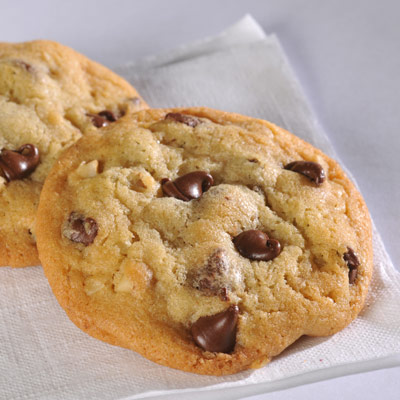
There are days when I’d die for a chocolate chip cookie.

We grew up on chocolate chip cookies.

We can’t eat them anymore.

It’s a family thing.  And it’s a med thing.  All the women in my family gain weight after a certain age.

If you’re on certain meds, you gain weight.  If you have hypothyroidism, you gain weight.

Me and Linda Ronstadt.

And all the women in my family.

And if you give up running before you turn 50,,,

If only I’d continued.

My doctor isn’t concerned.

My blood pressure is low.  It’s lower than yours, I guarantee.

But fatigue, weight gain, depression, increased sensitivity to cold… you can read all about the symptoms of hypothyroidism at the Mayo Clinic.  (They sound like symptoms of other things, too.)

Personally, I’d rather do anything than take pills.  My numbers were borderline, so I resisted for a long time.  But then there came a time…

Winter is coming.

It’s the hyper-hypo weight countdown. Every day without a cookie I get closer to my goal.  Which is not to gain 10 pounds by Valentine’s Day.

I have friends who gain 20 pounds every winter and lose it during the summer.

It’s the way we live now in the U.S.

Only my mother and I thought/think I’m perfect.  I do not see the woman in my ID picture, I swear.  My husband says it looks like me.  Thanks a lot!

When I visit my friend in the Big City, she and I will do Urban Things.  I only hope my black jeans will make me look svelte.  They will not, though.

The women of my family are on a permanent diet.  Except when they give up.

An apple for dinner is the solution.  I do have to feed my family though.

And so I have turned to…

curried_baked_carrot_chips_recipeBaked Curried Carrot Chips.

There are 76 calories in one serving of baked curried carrot chips.  There are 220 calories in a chocolate chip cookie.

The carrot chips are delicious.  I sampled them for the first time today.

But what is the recipe for diet chocolate chip cookies?

Here’s the recipe for Baked Curried Carrot Chips.  They really are good.

INGREDIENTS

2 large carrots, peeled
2 tsp. olive oil
1-2 tsp. sweet curry powder (stick with less for milder chips)
Fresh ground salt & pepper

INSTRUCTIONS

Preheat oven to 350 degrees. Spray a large baking sheet with olive oil or cooking spray.
Holding onto the small end of the carrot, used a Y-shaped peeler to peel paper thin carrot strips. Try your best to make them uniform in thickness. Peel consistently from the same side of the carrot so that the strips start to widen out.

Place carrot strips in large bowl. Toss with olive oil, curry powder, salt and pepper. Transfer strips to baking sheet in a single layer; the edges can be touching, as they’ll shrink when they bake, but don’t overlap them.

Bake for 10-12 minutes or until chips are just starting to brown. Place baking sheet on a wire rack and cool until chips are crisp, about 3 minutes. Carefully remove chips from baking sheet. Eat right away or store in airtight container for up to 5 days.
Recipe from Food Fitness Fresh Air

November, Wodehouse, & What I’m Looking for

Just what we need in November!

November.

Not enough light.

I went for a walk, sipping coffee.  I wore a light jacket; I shivered. I was cross and slightly sore from a very swift walk yesterday in sneakers with insufficient padding.

Piles of leaves, darkness, people in fleece jackets, and dogs. I stopped at the Little Free Library, which looks like a birdhouse on a stick, and is actually a bookshelf  with free books you can take or borrow.

I have contributed several of the few books left.

If you want to read D. H. Lawrence’s The Rainbow, a novel by Mary Wesley, or Octavia Butler’s Parable of the Sower (which has been checked out), I donated them.

I haven’t borrowed anything yet.

“One of these days you’ll find something you’ve been looking for for years,” my husband says.

What am I looking for in dark November?  I dislike the darkness.

More time in the real world?

Well, yes, but what will I do?  Sit under bright lights?

Less online time?

I have deleted the email feature from my Nook tablet and cut Twitter.

Cook a new Mollie Katzen recipe?

I
 don’t know what I’m hungry for/
I don’t know what I want anymore–“Bittersweet Me,” R.E.M.

Do I need a book?

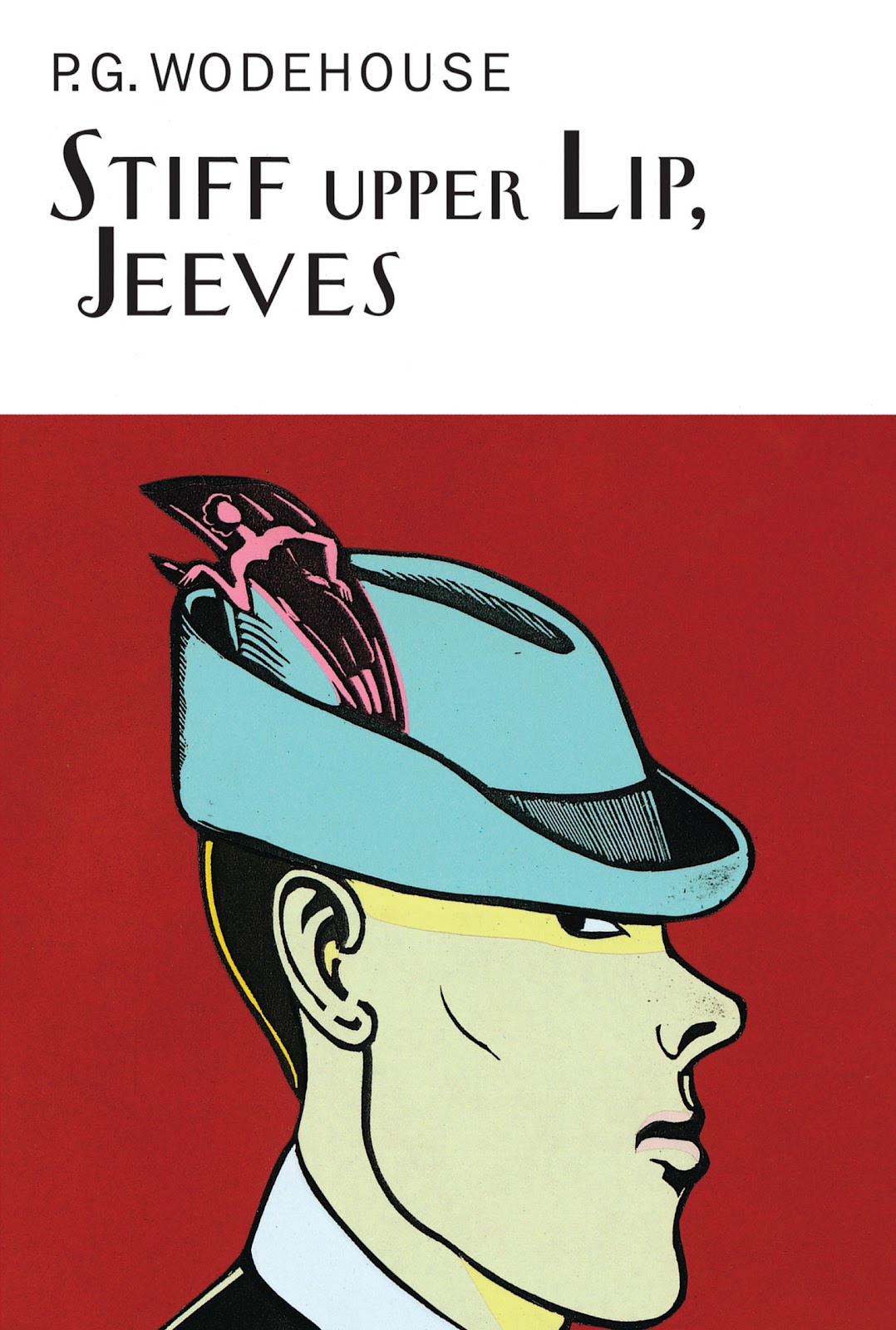
Maybe a book by P. G. Wodehouse.  In the Washington Post, Jonathan Yardley wrote a charming essay about the publication of The Collectors’ Edition of P. G. Wodehouse by Overlook and Everyman Classics.

He writes:

…what especially pleases me is that as the series nears completion, it gives no evidence of scraping the bottom of the barrel, indeed provides proof that Wodehouse’s barrel had no bottom. A couple of titles published earlier this year, “Mike and Psmith” and “The White Feather,” came out originally in the early 1900s and can be classified as apprentice work, but certainly cannot be dismissed as such because they are the work of a master in the making.

Sebastian Faulks, author of Birdsong, has written his own Bertie Wooster novel, Jeeves and the Wedding Bells. You can read the review in The Telegraph.

At the TLS, you can read Nicola Shulman’s humorous article, “Are People Getting Ruder?”, a review of Henry Hitchings’  SORRY!  The English and Their Manners. 

Her article is great fun to read.  Shulman begins:

I n the late 1960s I subscribed to a girls’ comic called Diana. It wasn’t as good as Bunty, but I remember an item it ran in the advice column, telling me how to exit the passenger door of my boyfriend’s sports car, when I was wearing my mini-skirt. This made a great impression on me despite the fact that I, like most Diana readers, was eight years old and therefore unlikely to be called on to execute this manoeuvre; and I can still pass it on. You close the legs at the knees and ankles, you raise your (bent) legs from the hips and you swivel until the whole of you is facing the pavement and your feet have cleared the base of the doorframe. Lower the legs to the pavement, lean forward, stand up.

Does this month depress you, too?  Are you reading comedies?

And here is R.E.M.’s video of “Bittersweet Me.”

Nice Women, Vamps, & Latin Poetry

Some women are nice.  Others are vamps.

I am nice.  My cousin is a vamp.

igiveandgive taintorI used to have a reputation for being not just a nice woman, but the nicest woman in the room.

That is flattering, but it is a little like being Princess Mary Bolkonskaya in War and Peace. She is so kind, religious, dutiful, and loving that she even comforts the French governess who makes out with her own blind date, Prince Anatole Kuragin.

And you have to drop everything to listen to people’s problems because for God’s sake you’re only reading.

I was rereading War and Peace and had just gotten to the chapter where Princess Mary, looking ridiculous in a fashionable dress and hair style contrived by her sister-in-law and the governess, first meets Prince Anatole Kuragin.

The phone rang.

I asked my cousin, “Aren’t you on your date?”

“Yes, but Kat, you have to come here.  I told him all about you.  ”

“He doesn’t need to know about me.

“Please, I need you.  I’m already in love.”

“I’m in my pajamas.”

“Get dressed.”

Click.

I realized that if she was talking about me to someone she had just met she was about to do something outrageous–something along the lines of good girl/bad girl, “compare and contrast,” right?–so I threw a sweater on over my pajamas/sweatpants and walked to the coffeehouse.

She rushed over radiantly when I came in the door.  “That’s him.  He’s a god.”

I stared.  “That’s not the guy in the picture!”

I had an urge to comb my hair.  That doesn’t come over me very often.

My friend Janet and I had gone through the match.com profiles for her and selected a date because she always chooses the wrong man.

“He has a Ph.D. in classics,” my cousin hissed.

I started laughing.  “No, he doesn’t.”

“Maybe not, but he has a master’s in classics.”

“No, he doesn’t.  Why am I here?”

“Because he mentioned Catullus and I don’t want to look stupid.”

I sat down at the table in my pajamas, hair uncombed.  It turned out he did know Latin, and had quoted the first couple of lines of Catullus’s “You will dine well if you bring your own” poem (in English), because he wanted to take my cousin to a cheap restaurant.

We talked a little about our old school, biscuits and gravy at Bruce’s, and the Jordan River, a small stream on our campus where everybody…

He was very slightly flirtatious in a respectful way.  “Are you sure you’re not my date?”

I beamed over my glasses.

He invited me to join his study group.  Each month somebody gives a paper, and they all read a lot of books. What could be more fun, right?

My cousin said she didn’t want to join a study group.  Wouldn’t he like to go dancing?  She looked daggers at me.

So I rose from the table, laughing.  “Well, I should get going.  So nice to meet you.”

And it was.  So polite!  So sweet!

I called my friend Janet immediately,  and we hope my cousin is nice to him, because if she isn’t, Janet wants to go out with him.

“God, I’m not answering my phone anymore,” I said.

And Janet agreed that might be wise.

Catullus 13. trans. by Leonard C. Smithers, 1894

You will feast well with me, my Fabullus, in a few days, if the gods favour you, provided you bring here with you a good and great feast, not forgetting a radiant girl and wine and wit and all kinds of laughter. Provided, I say, you bring them here, our charming friend, you will feast well: for your Catullus’ purse is full with cobwebs. But in return you will receive a pure love, or what is sweeter or more elegant: for I will give you an unguent which the Venuses and Cupids gave to my girl, which, when you smell it, you will entreat the gods to make you, Fabullus, all Nose!