

Lionel Shriver
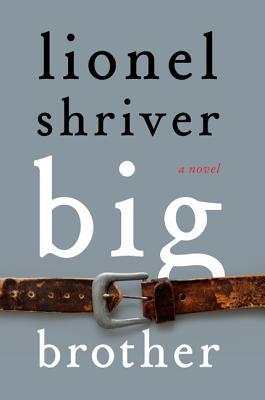
Lionel Shriver, the author of the brilliant novel, Big Brother, generously agreed to be interviewed by Mirabile Dictu via email.
First, a little background.
Shriver, who won the Orange Prize in 2005 for her novel, We Need to Talk about Kevin, garnered more praise last spring for her new book, Big Brother, a compelling novel centered on obesity and dieting she wrote after her obese brother’s death at 55 from complications from diabetes.
But this is not just a Fat novel; it is also the great Midwestern novel, with an extraordinary detail paid to the setting.
 Obesity is an epidemic in the Midwest: when a once-svelte relative showed up on my porch last year, I wondered with irritation who she was and then was overcome with love when I recognized her beautiful face within the new weight; perhaps she didn’t know who I was, either.
Big Brother, set in New Holland, Iowa, a fictitious town in the Iowa City-Cedar Rapids area, is the story of Pandora, the founder of a successful talking doll business, and her brother, Edison, a jazz musician. When Edison comes to visit, she is not prepared for his obesity: he used to be a handsome surfer-looking guy. After a prolonged visit, she decides to save him: they move into an apartment together and go on a diet.
And here is the interview.
MIRABILE DICTU: It must have been difficult to write a novel about obesity and eating disorders after your brother’s death.
LIONEL SHRIVER: The sorrow that initially spurred me to write the novel provided a kind of fuel. I missed my brother, of course, and I also wanted to craft, if not exactly a tribute, a marker. An object that recognized not only his death but his life. That said, the character of the brother, Edison, in the novel is quite distinct from my real brother.
What really made this book difficult was trying add something to a conversation about weight and food that we’ve been having in glossy magazines and on television ad nauseam. I had to find a way to add value, to deepen the discourse. It was especially challenging to write about being on a diet in a way that was true to the awful tedium of the experience but that didn’t bore the pants off my readers.
MIRABILE DICTU: I am fascinated by the Midwestern setting, and originally picked this up as a Midwestern novel. So many of the details are authentic that I raced through Big Brother, and then my husband read it, too. It is clear that you understand Midwestern politics, the politics of food, ethanol, etc. Did you spend time here, or was it all done from research? (Shriver is an American who lives in England.)
LIONEL SHRIVER: I did do some research in Iowa when I decided to set the novel there. However, I’ve been doing that research sporadically all my life. My maternal grandparents lived there (in Muscatine, and later Pella), my mother is from there, my aunt and uncle still live there, and for years I visited cousins there before they dispersed to other parts of the country. Most of all, my younger brother, to whom I am very close, lives in Coralville, near Iowa City. I go out to visit him and his family pretty much every summer. I have a lot of affection for the Midwest, Iowa in particular, and I hope that tenderness is apparent in the novel. I love the landscape and the light. I appreciate the way Iowans in everyday life are so open and eager to connect. I savor their lack of pretension. I admire a state that actually produces something of value (even if I’m dubious about the ethanol industry). And I’m impatient with the way coastal urbanites tend to write off the Midwest as nowheresville. As one character comments, “Iowa is somewhere, which is the most that anywhere can claim.”
MIRABILE DICTU: What writers, if any, influenced you in writing Big Brother?
LIONEL SHRIVER:I guess I would give some credit to Ian McEwan, since structurally my ending owes a debt to “Atonement.”
MIRABILE DICTU: When and why did you begin writing?
LIONEL SHRIVER: I began writing when I learned to read. From the start, I enjoyed the ability to create something from nothing, which in physics they tell you is impossible.
MIRABILE DICTU: Who are your favorite writers?
LIONEL SHRIVER: Richard Yates, Edith Wharton, Ernest Hemingway, Flannery O’Connor, TC Boyle … That a good start?
Yes!
And thank you very much for the interview, Lionel. I’m sure my fellow readers and bloggers will appreciate your thoughtful answers.


 mirabile dictu