Lo-Mein & Hardy-Lite

It is hard to write about books.
Hardy-lite!

Hardy-lite!

Especially after you’ve eaten Vegetable Lo Mein at the supermarket.

I’ve been a vegetarian since September and suddenly could not bear the thought of any more broccoli-cheese soup.

Let’s go to the Hy-Vee and eat salad! I said.

I was sure the salad bar had crab or lobster, or at least fake crab or fake lobster.  I wanted protein.

No, it was just a bunch of lettuce, broccoli, and pasta salad.

So I went for the Chinese Express.

Did they have anything vegetarian?

Only Vegetable Lo Mein. The noodles hid some cabbage and onion, no other vegetables.   I “borrowed” broccoli from my mate’s plate of Chicken with Broccoli.

And now I am full of carbohydrates and inspired to let you know what I’ve been reading.

I’ve fallen a little behind.

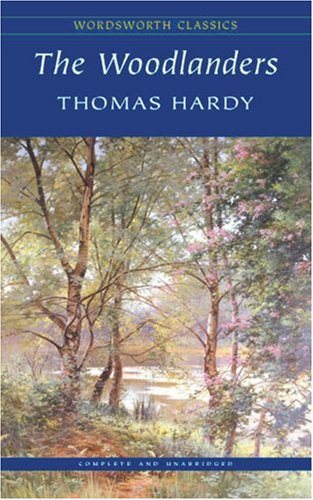
For instance, my book journal tells me I finished Thomas Hardy’s The Woodlanders on August 27.  The writing is gorgeous and lyrical,  but this is not Hardy at his best, and so I never wrote about it.

It’s Hardy-lite.

Hardy-lite is better than most writers at their deepest and darkest, but I cannot recommend that you read this unless you have first read Tess of the D’Urbervilles, The Mayor of Casterbridge, The Return of the Native, Far from the Madding Crowd and Jude the Obscure.

The Woodlanders simply lacks the passion of most of his work.

The usual themes are there.  Class matters.  And inter-class love does not work.  Somebody is bound to die.

The Woodlanders rambles: it is not architecturally structured like Hardy’s best.  There is a bit of a wobble.

We are introduced early in the novel to Marty South, a young woman who supports her ailing father by making wood spars for thatch–this involves working with  something called “a bill-hook” and “straight, smooth sticks called spar-gads”–and other things with wood.  At first we believe she is the heroine.  A barber pursues her from town; he wants to buy her hair for a lady in the neighborhood whose hair is the same shade.

Marty is not beautiful, and that should have told me she was not the heroine.

Her face had the usual fulness of expression which is developed by a life of solitude….In years she was no more than nineteen or twenty, but the necessity of taking thought at a too early period of life had forced the provisional curves of her childhood’s face to a premature finality.  thus she had but little pretension to beauty, save in one prominent particular–her hair.  Its abundance made it almost unmanageable; is color was, roughly speaking, and as seen here by firelight, brown, but careful notice, or an observation by day, would have revealed that its true shade was a rare and beautiful approximation to chestnut.

She reluctantly sells her hair,  like Jo in Little Women (remember that scene?), because she needs the money.

And then Hardy almost drops her from the plot, except when she emerges to write  some choice graffiti regarding Giles Winterborne.  She doesn’t have the hair, so, by Jove, she’s not the hair-o-win.

Poor Marty.  She is in love with Giles Winterborne, a woodsman, and certainly he is kind to her, but he  has long been in love with Grace Melbury, the daughter of George Melbury, the rich timber dealer.

George wants his daughter to marry Giles because he wronged Giles’ father long ago.  But when Grace comes home from finishing school, she is so well-educated, well-dressed, and glowing that she no longer really belongs in Little Hintock.   And when Fitzpiers, a handsome, heartless doctor courts her, she is flattered.

They marry, but soon wish for divorce.  Felice Charmond, the lady of the manor, knew Fitzpiers long ago.  They have an affair.

The characters, unfortunately, are not very well-drawn.  They’re likable, but anemic.  We don’t get terribly excited about what happens.  Hardy has written The Woodlanders elsewhere better.

This is definitely a grade “B” book.  Read it if, like me,  you’ve read all of Hardy’s other books.

Caveat Emptor!  Or should I say, Caveat Lector!
Who Is Dave?

Who is Dave?

Who is Dave?

At newspapers, even on book pages, the commenters are often snotty.

Bloggers are usually more nurturing of one another’s efforts.  At book blogs we  comment, “Great post!” or “I want to read this.”  There is a kind of  community.

Of course it is not always a love fest.  At my old blog, I occasionally disabled the comments feature, because I was unhappy with negative remarks.  And so I fled to Mirabile Dictu, my under-the-radar blog, where only three subjects cause dissension:  Jane Austen, Jane Eyre, and Angela Thirkell.

It’s nothing I can’t handle.

And I shouldn’t condemn the newspaper commenters, because I myself have come to no good commenting.  A couple of times I did at The Guardian.  You read so many odd comments that you think, Okay, I’ll join in. And then you regret it, because it is there forever.

The only good thing I can say is I wasn’t snotty.

Often when I read comments on book pages I think, Get a blog!  Bloggers think a little harder before they judge journalism or books.

The most annoying comments of all can be found in The Guardian’s “What You’re Saying” features,  which are made up entirely of comments from readers. What are the writers getting paid for?

Today I read one of the comment articles, which was titled: “Choose the best and worst 21st-century novels – open thread.”

In the very short body of the article, we are told we can disagree with Dave.  Who  is Dave?

Apparently there is something called  TV Channel Dave, where 2,000 people were recently polled about the best and worst books of the 21st century.

Dave’s best books are:

• Harry Potter and the Order of the Phoenix by JK Rowling 
• Life of Pi by Yann Martel 
• The Time Traveler’s Wife by Audrey Niffenegger 
• The Hunger Games by Suzanne Collins 
• Atonement by Ian McEwan 
• The Help by Kathryn Stockett 
• The Amber Spyglass by Philip Pullman
• We Need to Talk About Kevin by Lionel Shriver
• No Country for Old Men by Cormac McCarthy 
• Pompeii by Robert Harris

And the worst books are:

• Angel by Katie Price
• Fifty Shades Trilogy by EL James
• A Whole New World by Katie Price
• Learning to Fly by Victoria Beckham
• The Da Vinci Code by Dan Brown

I cannot say that “Dave” has very good taste.

The commenters mostly  talk about their own lists.  At least one of them mentioned Will Self’s Umbrella, which some agreed was difficult. One or two were annoyed by it.

In no particular order, here are a few of the comments I read.

It does get silly. People brush up on their obscure books list trying to trump everyone else’s obscure books. Should I mention here that my particular fave is my Sanskrit-English dictionary (Monier-Williams)?

And later:

doubt if many people have heard, let alone read, any on your best list. But thanks.  the enemy

And then:

You and TheEnemy shouldn’t be on here, you should be waltzing around spitting on the Mensa members for being cretins.

Where is the community of newspaper commenters?  More writing from The Guardian’s writers, please!

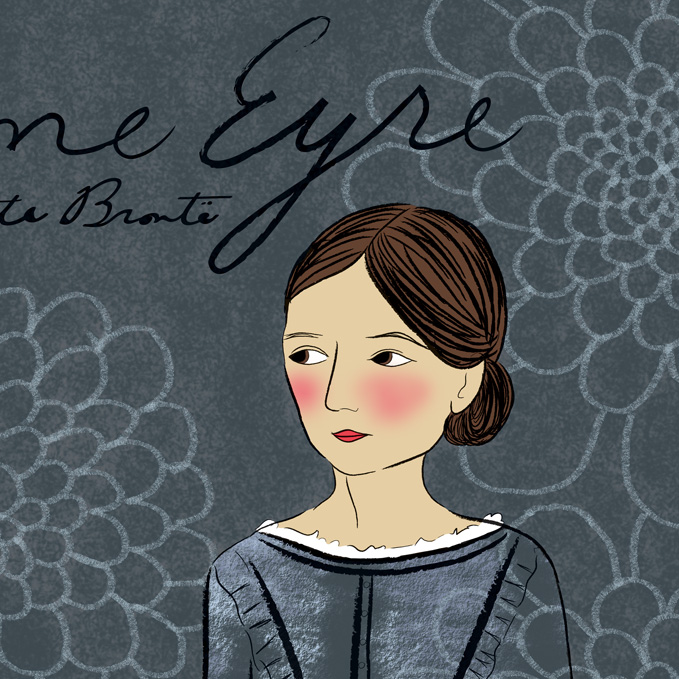
Ms. Mirabile on Jane Eyre, Intense Women, & Why We Like to Be Liked

Jane Eyre, with Orson Welles and Joan Fontaine (1943)

Jane Eyre, with Orson Welles and Joan Fontaine (1943)

Jane Eyre is serious.

That’s why we loved her when we first read the novel.  After I saw the old movie starring Orson Welles and Joan Fontaine at school,  I begged my mother to take me downtown immediately to buy the book.  (I still have my original 50-cent copy.)  I didn’t just read Jane Eyre, I was Jane Eyre.

Jane Eyre is intense.  Intense women readers all over the world are thrilled by Jane’s intensity.

Because intense women aren’t often taken seriously.

“Get shallow,” my husband used to say.

Hillary Clinton has been an intense First Lady, Senator of New York, and Secretary of State.  My mother hoped she’d be president.  She didn’t get to see a woman president in her lifetime. Is it because Hillary is too intense?   Clinton has supporters for the 2016 campaign, but are there other female candidates?

When Sally Field won her first Oscar in 1980 for her role in Norma Rae, she said, “You like me, right now, you like me!”  She’s a great actress, and of course we like her.  But perhaps intense women aren’t liked as much as they’d like to be liked.

Women writers are allowed to be intense, but they don’t win many awards.  Although Doris Lessing said “Oh, Christ,” when she stepped out of a cab and heard she’d won the Nobel, she was obviously very pleased. There have been only 13 female winners of the Nobel.

faceAnd so we still talk about Charlotte and Jane Eyre.  Things haven’t changed that much.

I loved Mr. Rochester, the dark, almost sadistically flirtatious character, and then in my thirties said, “Oh no, I’m done with that.”   The Byronic heroes are mad.

When Mr. Rochester says to Jane,

In about a month I hope to be a bridegroom….and in the interim, I shall myself look out for employment and an asylum for you.”

she is shattered.

His teasing hurts her very much.  She is in love with him.

Now we see significance in his use of the word “asylum,” with its double meaning of mental hospital and refuge.  Is Charlotte Bronte thinking of Rochester’s mad wife when she introduces this word?  The wife’s asylum is in the attic, but is it an asylum to a woman who bites men and sets fire to the house?

In Jean Rhys’s Wide Sargasso Sea, a sequel to Jane Eyre, we see Mr. Rochester from the point of view of Antoinette/Bertha, his mad wife.

Mr. Rochester is just another man with a mad wife who wants to get involved with a younger woman.

Nowadays the younger women would feel sorry for him.  Oh dear, the mad wife.  Then they’d forget her.

Poor Jane almost spirals into a depression before she knows that Rochester wants to marry her.  She passionately tells him,

I grieve to leave Thornfield!  I love Thornfield:  I love it, because I have lived in it a full and delightful life–momentarily at least.  I have not been trampled on.  I have not been petrified.  I have not been buried with inferior minds, and excluded from every glimpse of communion with what is bright and energetic and high….  I have known you, Mr. Rochester; and it strikes me with terror and anguish to know I must be torn from you forever.  I see the necessity of departure:  and it is like looking on the necessity of death.”

If we were Jane, we might well become a little mad:  she learns at her wedding that he has a wife.

It is a brilliant book, but in many ways it is a girls’ book.  If you want to read Charlotte Bronte at her best, you must read Villette, a more mature version of Jane Eyre.  The heroine, Lucy Snowe, wins affection, but it is not the affection she wants.   She is a teacher, and she remains a teacher.

The Brontes’ Men: Heathcliff & Mr. Rochester

true-novel-mizumuraAlthough I didn’t rush out and buy Joanna Trollope’s new novel, Sense and Sensibility, a modern version of Austen’s novel, or Ronald Frame’s Havisham, a retelling of the story of the misanthropic spinster of Great Expectations, I am very keen on retellings of Victorian novels.

And tomorrow a new one will be published, Minae Mizumura’s A True Novel, a modern Japanese version of Emily Bronte’s Wuthering Heights, translated by Julie Winters Carpenter.

Wuthering Heights used to be my favorite book, though for that reason I am a little reluctant to go near it again.

But I feel I should reread it before A Modern Novel.

On the other hand, I read it often in high school.

According to The New Yorker,  “like Emily Brontë’s classic story of stormy love, the events in Mizumura’s novel are relayed through layers of narrators….Mizumura, who moved to America with her family when she was a young girl, then moved back to Japan as an adult, injects elements of autobiography into the story’s primary voice, a novelist named Minae who grows up in New York. ”

It sounds fascinating.

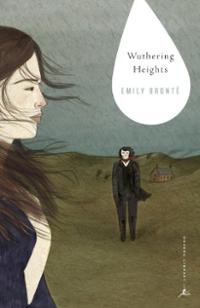
wuthering-heights-emily-bronte-paperback-cover-artBut what does Bronte’s Wuthering Heights mean to a woman in her fifties?  I am no longer willing to fall in love with every dark, difficult, charming, tortured romantic character who comes my way.

Nor would Heathcliff be able to see me at my age. Cardigans and a string of pearls?  (Well, I’m working on the string of pearls thing.)  Gray hair?  I now belong in a Barbara Pym novel, flirting with curates.

And will Bronte’s prose stand up?

When I was 15, the year I lived with my father after my parents’ divorce, I read Wuthering Heights  several times.  He didn’t get it.  “Are you reading that again?”

Silence.

“That moldy thing?”

Silence.

“Shouldn’t you be out stealing cars or something?”

Silence.

That year, I probably rode in a car once.  I would never learn to drive. People didn’t think I was serious.  I was.

And though I did have some happy times with my father–once he bought me used ice skates at Novotny’s, and we had a happy day “skating” on the pond at City Park, i.e., my friend and my father held me up on the ice because my ankles weren’t strong– we were very different.  I belonged in a Bronte book; he belonged in an episode of Happy Days.

While he worked nights, I sat around the apartment and read. Charlotte and Emily were two of my favorite writers.  They had bad taste in men.  I just thought that’s the way it was.  My soulmate would be intense, ardent, and fierce.

Somehow I really wanted Heathcliff to dig up my grave.

When Catherine dies:

May she wake in torment!” he cried with frightful vehemence, stamping his foot, and groaning in a sudden paroxysm of ungovernable passion.  “Why, she’s a liar to the end!  Where is she?  Not there–not in Heaven–not perished–where?  Oh!  you said you cared nothing for my sufferings!  And I pray one prayer–I repeat it till my tongue stiffens–Catherine Earnshaw, may you not rest as long as I am living!  You said I killed you–haunt me, then!  The murdered do haunt their murderers! I know that ghosts have wandered on earth.   Be with me always–take any form–drive me mad!  only do not leave me in this abyss, where I cannot find you!  Oh, God!  it is unutterable!  I cannot live without my life!  I cannot live without my soul!”

Gorgeous writing!  But this would never happen to me.  Really, honey (talking to my younger self now), this isn’t your kind of thing.

In Charlotte Bronte’s Jane Eyre, a book I can no longer read, Mr. Rochester is a less emotional, slightly more believable version of Heathcliff.  When he falls in love with Jane, the governess, and tells her that beautiful Blanche, his guest, is “a strapping wench,” we are thrilled.  Though we don’t doubt Mr. Rochester should be in love with Jane, we’re appalled in retrospect by the mad wife in the attic and can’t help but think he was after Jane because he thought a young woman would tolerate this better than the Blanches of this world if it ever came out.

He was wrong.

I was always wildly in love with dark, moderately good-looking boys and men who unfortunately were somewhat unkind.  Once I borrowed a bike from a boy I was in love with, and when I did not lock it upon returning it–it had been unlocked, and I wanted to make sure he had the key before I locked it again–he berated me.  (By the way, this was just a lock and key, not a symbol.)

And, yes, some of my boyfriends later had a hard time celebrating my successes.

Did the Brontes influence us?  Or is this an archetypal cavewoman’s idea of men?

I will read Wuthering Heights today and let you know.

D. J. Taylor’s The Windsor Faction

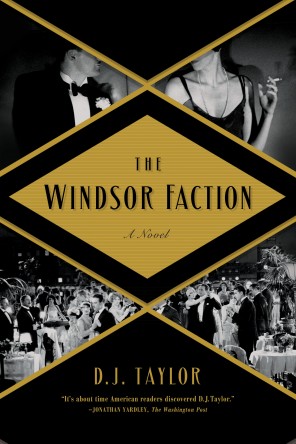
Windsor Faction d. j. taylorD. J. Taylor’s The Windsor Faction, a brilliant, richly colored alternate history, is the kind of book some might call literary fantasy.  He poses the questions, What would happen if Edward VIII had not abdicated the throne because Wallis Simpson died  in 1936?  And what if he were a fascist sympathizer?

This is one of those un-put-downable novels that readers both of literary and genre fiction like.

The clarity and momentum of Taylor’s prose remind me of Connie Willis’s entertaining Hugo-winning historical science fiction novels,  Blackout and All Clear. Although Taylor’s book does not feature time travel (then it would be SF/fantasy), both writers describe the edgy atmosphere of English life in wartime.

The Windsor Faction might make my Best Books of 2013 List.

It has so much going for it.

It might have a shot at the Hugo.

It is absolutely brilliant, but I admit I didn’t absolutely love it.  And does a common reader need to love a brilliant book to count it as best?

Probably.

Taylor’s novel is told in multiple forms and from multiple points of view:  a traditional third-person narrative from the perspective of Cynthia Kirkpatrick, a bored young woman living in Colombo with her parents, who, when they return to England, works at a spy-ridden literary magazine in London; the diary of Beverley Nichols, a journalist (known for humorous gardening books like Merry Hall) who collaborates with the King on a speech he delivers on Christmas; newspaper articles and editorials about the death of Mrs. Simpson in 1936 and the beginnings of the war in 1939; and the notes of Johnson, a humdrum spy who attends fascist meetings to apprehend conspirators against the war.

Sometimes it’s difficult for us Americans to know what is English history and what is alternate history.  At first I thought, Beverley Nichols?  Not the garden writer!  But, by Jove, it is indeed.  I read the Author’s Note to clear things up.

Cynthia is my favorite character, and I much preferred the sections about her:  I like her questioning of the humdrum lives of her parents and her hope to do something fascinating in London.  When she visits the Bannisters, the family of her boyfriend/fiance, Harry, who died in the East, she feels a fraud.  She did not love him.  In Harry’s old room, she finds a draft of a letter to another girl.  She is surprised to learn that the girl had enormous breasts.

She looks at the boys’ stories and Loeb editions of Greek writers on his shelves.

The copies of The Liveliest Term at Templeton and The White House Boys stared back at her, and she thought that there were whole areas of English life that she had altogether failed to understand, that there was some vital qualification missing form her repertoire that would have enabled her to better comprehend Henry Bannister and his kind, to sympathize with them, and deal with them, and not be so discountenanced by their actions or the letters they wrote to anonymous girls, with (apparently) enormous breasts, that they left lying around in Loeb editions of Xenophon for people to stumble upon after their deaths.

Very enjoyable, though perhaps the suspense fizzles out a little bit at the end.

AND HERE IS WHY IT MIGHT MAKE MY BEST LIST.

Ms. Mirabile:  "You can do better, Ms. Mirabile!"

Ms. Mirabile: “But do I love it?”

Some will think it’s very silly to begin making my “Best of 2013 ” list now, but I just noticed there are only four books on my list that were published in 2013 (see sidebar).

They are brilliant books.

I also love them.

But this was the year I intended to read more contemporary books.

All right, I haven’t.  I have read more than 100 books, but only 13 books published this year. I do start a lot of new books and put them aside, like Colum McCann’s TransAtlantic.  I am picky, picky.   If I don’t like a contemporary book, which I seldom do, I reread War and Peace (which I’m doing now).

But I’d better get hopping if I want 10, or even five, new books on my Best of ’13 list.

I’ve just decided that Taylor’s book WILL make my list.  It’s brilliant, and that has to be enough.  I can’t love everything.

What new books do you recommend?

We’re not big readers of new books, are we?

An Interview with Peter Stothard

Peter Stothard

Peter Stothard

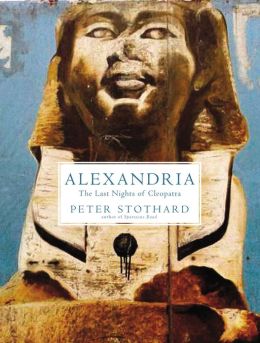
Peter Stothard, editor of the TLS, former editor of The London Times, and author of the brilliant new book,  Alexandria:  The Last Nights of Cleopatra, agreed to be interviewed by email.

His elegant memoir of his lifelong fascination with Cleopatra is part biography/history, part personal memoir, part travel, part examination of images of Cleopatra, and part reflections on the Eve of the Arab Spring in Alexandria.  He refers to it as a diary book.

MIRABILE DICTU:  As editor of the TLS and former editor of the Times, you are accustomed to keeping track of the threads of many stories, and in your book you weave elaborate threads of past and present as you write about Cleopatra.  What inspired you to leave the limits of journalism to write a diary book?

PETER STOTHARD:  Newspaper editors divide the world into stories, past and present, new and old. For a diarist all parts can fall together, ancient Rome and Alexandria, England in the 1950s and 1960s, Egypt on the eve of the short Arab Spring. That falling together was what happened to me in Italy in 2008 while on the Spartacus Road and on the Nile in 2011 while writing The Last Nights of Cleopatra.

MIRABILE DICTU:   Did any writers influence you in writing Alexandria?  And who are your favorite writers?

PETER STOTHARD: The classicist Mary Beard is big influence on how I see the ancient and modern now. Epicurus inspires me from long ago. I try not be influenced in how I write myself.

MIRABILE DICTU:   When and why did you begin writing?

PETER STOTHARD:  I began writing in my current preferred form after being told that I was about to die of cancer and fortunately escaping that fate. It took five years for the lesson to sink in but since then I have come to see storytelling in a totally different way. Before 2002, for twenty five years, I wrote news stories and rhetoric.

MIRABILE DICTU: The TLS reviews many books on classics.  Is this a longstanding tradition, or are you the advocate of classics?

PETER STOTHARD:  Mary Beard and I both ensure that the classics are fully covered at the TLS. There are some extraordinary minds on the subject today. We want to note, advance and celebrate them.

MIRABILE DICTU:   What are you reading now?

PETER STOTHARD:  Seneca’s De Beneficiis  and Sex on Show, Seeing the Erotic in Greece and Rome by our TLS contributor Caroline Vout.

Alexandria peter stothardThank you for the interview, Peter!

I wrote about Alexandria:  The Last Nights of Cleopatra,  my favorite book of the year,  here and here.

Stothard is also the author of Spartacus Road, a diary book that is part history of the escaped slave Spartacus, part memoir/travel, and part translations of Roman poetry and literature perstaining to Spartacus. (I wrote about it here.)  He also wrote the book, Thirty Days: An Inside Account of Tony Blair at War.

Freakishly Luddite & The Solar Eclipse

Solar Eclipse, Nov. 3, 2013

Solar Eclipse, Nov. 3, 2013

After freakishly checking Twitter every hour for news about Donna Tartt’s new novel (it was finally published), R.E.M. (Peter Buck was interviewed at Salon), and the specials at the local diner (chicken and noodles or vegetable omelet), I realized I wasn’t finding what I was looking for online.

Here’s what I wanted.

A solar eclipse.

I actually missed one on Sunday.

By then I had already quit Twitter, because I couldn’t decipher 140-character fragments.

Twitter was uneventful.

I wanted something that made me breathless.

I should have followed the solar eclipse.

How could I miss a solar eclipse?

Probably most of you were up bright and early, if that’s when it was.  You photographed it.

Well, I don’t live on the east coast, so I couldn’t have seen it anyway.

But I made a discovery about myself.

I got dozens of tweets and retweets every day, the screen was CLUTTERED with messages by literary people I’d never heard of (mostly retweeted by Tin House), and no mention of a solar eclipse anywhere.

Books are my favorite thing, and this is not to say you shouldn’t follow tweets by Ron Charles of The Washington Post, Sherman Alexie, Maud Newton, Amy Tan, or TLS, because you should.

But I should also have followed science.

ON HOW BLOGGING IS QUASI-LUDDITE.

I live in a slow city.

I live in a slow city.

I am so wildly quasi-Luddite (don’t drive, ride a bicycle, don’t have a food processor) that I need at least 250 words just to make an announcement.  I write (sort of) long.

Blogging is almost Luddite by today’s standards.  You plan it while you walk, or while you’re polishing the table.  You may not have time to polish the prose, but you write in sentences and paragraphs.

Perhaps my near-Luddite preferences are because I live in a very slow city.  There is no rush hour traffic.  We don’t stand in long lines at the supermarket.  We ride our bikes and only sail out in the car once a week.

Although I am not organized enough to commit to the sustainability issues of the Slow Movement, I am interested in the talk about  “time poverty.” According to the Slow Movement website, people are so disconnected that they are turning to organic food, Buddhism, and extended families.

We are searching for connection. We want connection to people – ourselves, our family, our community, our friends, – to food, to place (where we live), and to life. We want connection to all that it means to live – we want to live a connected life…

Recognising the disconnection and pace of our life as an unwanted state of affairs is an important first step in re-establishing the connections and slowing the pace. What we all want to know is how do we reconnect? How do we live slow, whilst at the same time meeting our most important responsibilities?

I recently turned to vegetarianism because the chemicals in meat made me sick.   (My husband didn’t notice I hadn’t fed him meat since September until I pointed it out today–now that’s success!)  Although I love my family, my connections to bloggers, book groups, and other online friends are very important.  I’m not looking for an extended family.

Is that connection or disconnection? What do you think?

Not Quite Writing on War and Peace

respect-your-readers readingThere are days when I goof around.

Not necessarily online.

I deleted the email feature from my Nook tablet. And I also closed my Twitter account.

I have a little more time now:  maybe an hour a day.

It was gray and gloomy and rainy today.

A good day to go online, you might say.

I took a walk, until it began to pour.  Then, drenched and drinking tea at home, I read.

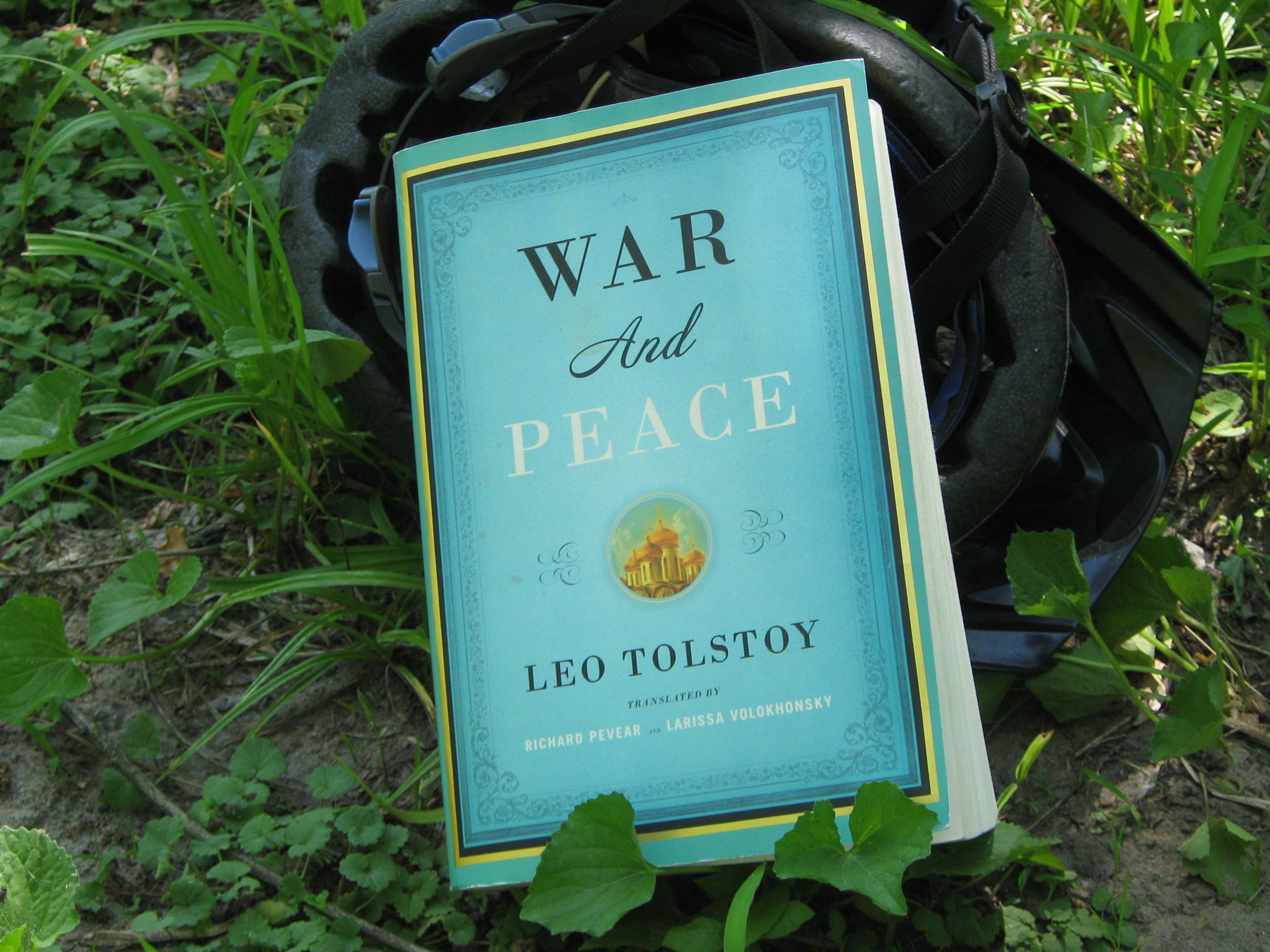
I am absorbed in War and Peace, which I reread last spring:  you cannot read it too often.  I have so many translations on my Nook that I can switch from one to the other if the language becomes a little awkward.  This time I am reading the Pevear-Volokhonsky translation.

I read for pleasure, obviously, and know Russian culture only from novels, but one doesn’t think about War and Peace as Russian, once one grasps that the upper classes often speak French.  in other ways it seems very 19th-century European.  I know the book so well that I can skip scenes, concentrating on one set of characters or another, though I usually read straight through.  It is very hard to put this down.

I prefer the peace scenes.

When I first read WAP many years ago, I identified with Pierre, because as a young woman I talked very seriously at parties. When I read the first chapter, where poor Anna Pavlovna Scherer, a maid of honour of the empress, tries to interrupt Pierre in his earnest conversations and  get  him to chat more lightly with the groups, I had to laugh.

War and Peace in my bicycle helmet one summer!

War and Peace in my bicycle helmet one summer!

These days I am a little weary of Pierre, especially during the Freemason scenes.  And so this reading, for the first time ever, I identify with Princess Marya Bolkonsky, who was based on Tolstoy’s mother.  It’s not that she and I are alike, because that isn’t quite how fiction readers identify:  it’s more that I understand why she is the way she is, and why I am the way I am.  She is not socially graceful, like Tolstoy’s more sympathetic heroine, Natasha, who sings, dances, and chatters happily until she goes though a love-related depression.

Marya grows up in a serious household of intellectual men, and doesn’t think about marriage, living in the country as she does.  Her raging father makes her do math and practice piano every day.  He intimidates her, though she loves and respects him.  She is deeply religious, almost Zen (well, Christian!) in her refusal to judge others, and is also very kind to the hangers-on who live with them, like her companion, Mlle. Bourrienne.

Her brother, Prince Andrei, a discontented man married to a woman he doesn’t respect, comes home to Bald Hills before the war to say good-bye and to leave his pregnant wife, Lise, with the family.  He sneers at Lise, and practical, generous Marya points out that we all have little weaknesses, and that Lise grew up in society, so expects a social life unavailable in the country.

He also detests Mademoiselle Bourrienne, her companion.  Marya’s long laudation of Mlle., and his short response, a defense of his sister who is so devoted to her cruel father, are characteristic of them.

Mary says,

Oh, no! She’s a very dear and kind, and, above all, a pitiful girl. She has nobody, nobody. To tell the truth, she’s not only unnecessary to me, she’s even an inconvenience. You know, I’ve always been a wild creature, and now more than ever. I like being alone … Mon père likes her very much. She and Mikhail Ivanovich are the two persons with whom he’s always gentle and kind, because he’s their benefactor. As Sterne says, ‘We love people not so much for the good they’ve done us, as for the good  we’ve done them.’ Mon père took her as an orphan sur le pavé, and she’s very kind. And mon père likes her way of reading. She reads aloud to him in the evenings. She reads beautifully.”

“Well, but in truth, Marie, I wonder if father’s character isn’t sometimes hard on you?” Prince Andrei asked suddenly.

Prince Andrei is right about her father, but she will not see it.  And Mademoiselle Bourienne is disloyal to Marya, as we see later:  she makes out with Prince Anatole, the man who has come to Bald HIlls to propose to Marya, and Marya catches them.

Fascinating characters, and it is very much a character- and plot-oriented book.  It is so difficult to explain why one loves a classic, and War and Peace is simply too big to do justice to unless one breaks it down.

But I do love reading it.

I simply can’t write about it.

Carrot Chips or Chocolate Chip Cookies?

Couldn't I have just one?

Couldn’t I have just one?

Give up cookies.

There are days when I’d die for a chocolate chip cookie.

We grew up on chocolate chip cookies.

We can’t eat them anymore.

It’s a family thing.  And it’s a med thing.  All the women in my family gain weight after a certain age.

If you’re on certain meds, you gain weight.  If you have hypothyroidism, you gain weight.

Me and Linda Ronstadt.

And all the women in my family.

And if you give up running before you turn 50,,,

If only I’d continued.

My doctor isn’t concerned.

My blood pressure is low.  It’s lower than yours, I guarantee.

But fatigue, weight gain, depression, increased sensitivity to cold… you can read all about the symptoms of hypothyroidism at the Mayo Clinic.  (They sound like symptoms of other things, too.)

Personally, I’d rather do anything than take pills.  My numbers were borderline, so I resisted for a long time.  But then there came a time…

Winter is coming.

It’s the hyper-hypo weight countdown. Every day without a cookie I get closer to my goal.  Which is not to gain 10 pounds by Valentine’s Day.

I have friends who gain 20 pounds every winter and lose it during the summer.

It’s the way we live now in the U.S.

Only my mother and I thought/think I’m perfect.  I do not see the woman in my ID picture, I swear.  My husband says it looks like me.  Thanks a lot!

When I visit my friend in the Big City, she and I will do Urban Things.  I only hope my black jeans will make me look svelte.  They will not, though.

The women of my family are on a permanent diet.  Except when they give up.

An apple for dinner is the solution.  I do have to feed my family though.

And so I have turned to…

curried_baked_carrot_chips_recipeBaked Curried Carrot Chips.

There are 76 calories in one serving of baked curried carrot chips.  There are 220 calories in a chocolate chip cookie.

The carrot chips are delicious.  I sampled them for the first time today.

But what is the recipe for diet chocolate chip cookies?

Here’s the recipe for Baked Curried Carrot Chips.  They really are good.

INGREDIENTS

2 large carrots, peeled
2 tsp. olive oil
1-2 tsp. sweet curry powder (stick with less for milder chips)
Fresh ground salt & pepper

INSTRUCTIONS

Preheat oven to 350 degrees. Spray a large baking sheet with olive oil or cooking spray.
Holding onto the small end of the carrot, used a Y-shaped peeler to peel paper thin carrot strips. Try your best to make them uniform in thickness. Peel consistently from the same side of the carrot so that the strips start to widen out.

Place carrot strips in large bowl. Toss with olive oil, curry powder, salt and pepper. Transfer strips to baking sheet in a single layer; the edges can be touching, as they’ll shrink when they bake, but don’t overlap them.

Bake for 10-12 minutes or until chips are just starting to brown. Place baking sheet on a wire rack and cool until chips are crisp, about 3 minutes. Carefully remove chips from baking sheet. Eat right away or store in airtight container for up to 5 days.
Recipe from Food Fitness Fresh Air

November, Wodehouse, & What I’m Looking for

Just what we need in November!

November.

Not enough light.

I went for a walk, sipping coffee.  I wore a light jacket; I shivered. I was cross and slightly sore from a very swift walk yesterday in sneakers with insufficient padding.

Piles of leaves, darkness, people in fleece jackets, and dogs. I stopped at the Little Free Library, which looks like a birdhouse on a stick, and is actually a bookshelf  with free books you can take or borrow.

I have contributed several of the few books left.

If you want to read D. H. Lawrence’s The Rainbow, a novel by Mary Wesley, or Octavia Butler’s Parable of the Sower (which has been checked out), I donated them.

I haven’t borrowed anything yet.

“One of these days you’ll find something you’ve been looking for for years,” my husband says.

What am I looking for in dark November?  I dislike the darkness.

More time in the real world?

Well, yes, but what will I do?  Sit under bright lights?

Less online time?

I have deleted the email feature from my Nook tablet and cut Twitter.

Cook a new Mollie Katzen recipe?

I
 don’t know what I’m hungry for/
I don’t know what I want anymore–“Bittersweet Me,” R.E.M.

Do I need a book?

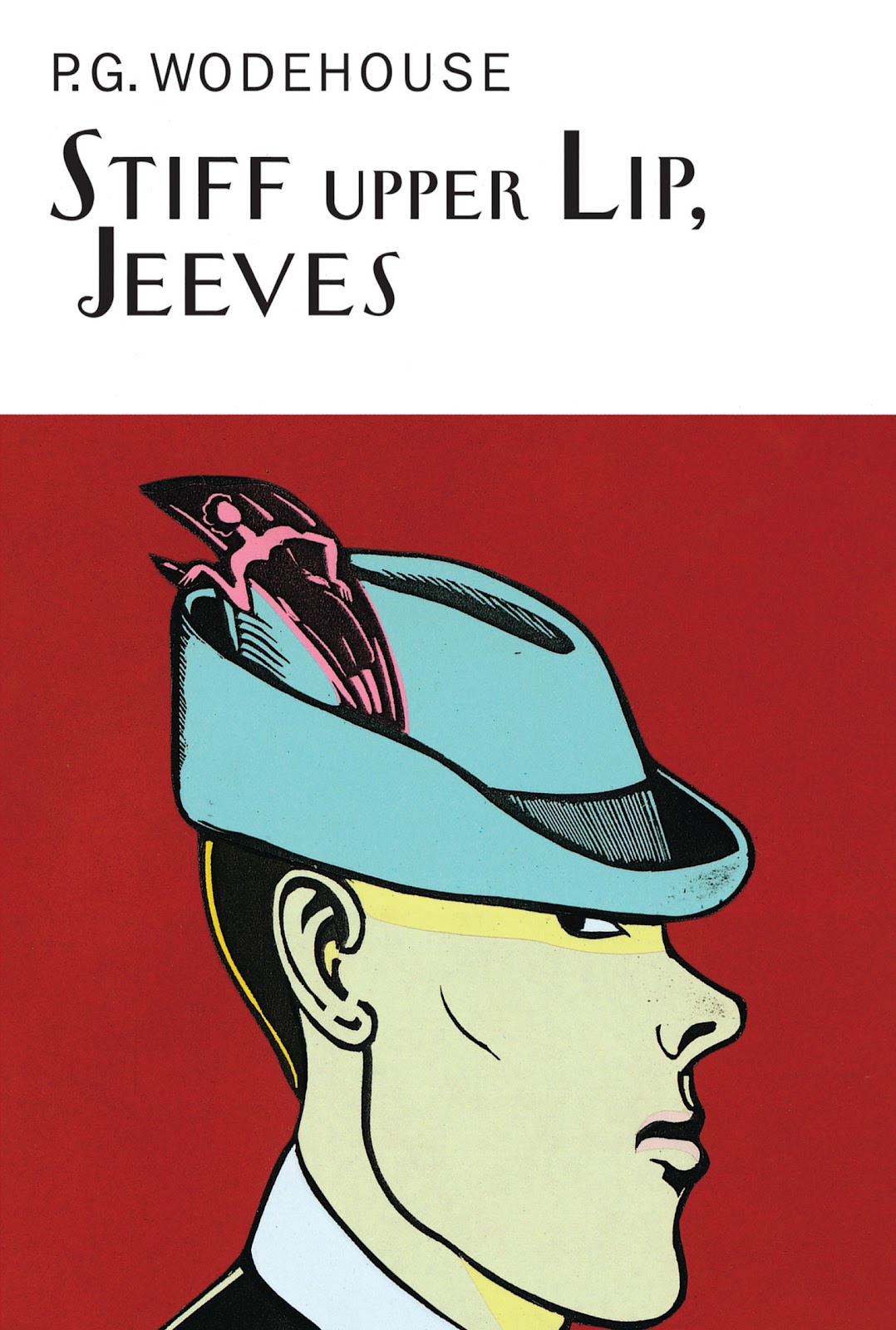
Maybe a book by P. G. Wodehouse.  In the Washington Post, Jonathan Yardley wrote a charming essay about the publication of The Collectors’ Edition of P. G. Wodehouse by Overlook and Everyman Classics.

He writes:

…what especially pleases me is that as the series nears completion, it gives no evidence of scraping the bottom of the barrel, indeed provides proof that Wodehouse’s barrel had no bottom. A couple of titles published earlier this year, “Mike and Psmith” and “The White Feather,” came out originally in the early 1900s and can be classified as apprentice work, but certainly cannot be dismissed as such because they are the work of a master in the making.

Sebastian Faulks, author of Birdsong, has written his own Bertie Wooster novel, Jeeves and the Wedding Bells. You can read the review in The Telegraph.

At the TLS, you can read Nicola Shulman’s humorous article, “Are People Getting Ruder?”, a review of Henry Hitchings’  SORRY!  The English and Their Manners. 

Her article is great fun to read.  Shulman begins:

I n the late 1960s I subscribed to a girls’ comic called Diana. It wasn’t as good as Bunty, but I remember an item it ran in the advice column, telling me how to exit the passenger door of my boyfriend’s sports car, when I was wearing my mini-skirt. This made a great impression on me despite the fact that I, like most Diana readers, was eight years old and therefore unlikely to be called on to execute this manoeuvre; and I can still pass it on. You close the legs at the knees and ankles, you raise your (bent) legs from the hips and you swivel until the whole of you is facing the pavement and your feet have cleared the base of the doorframe. Lower the legs to the pavement, lean forward, stand up.

Does this month depress you, too?  Are you reading comedies?

And here is R.E.M.’s video of “Bittersweet Me.”