On the Bus, Reading Maps, and Challenges

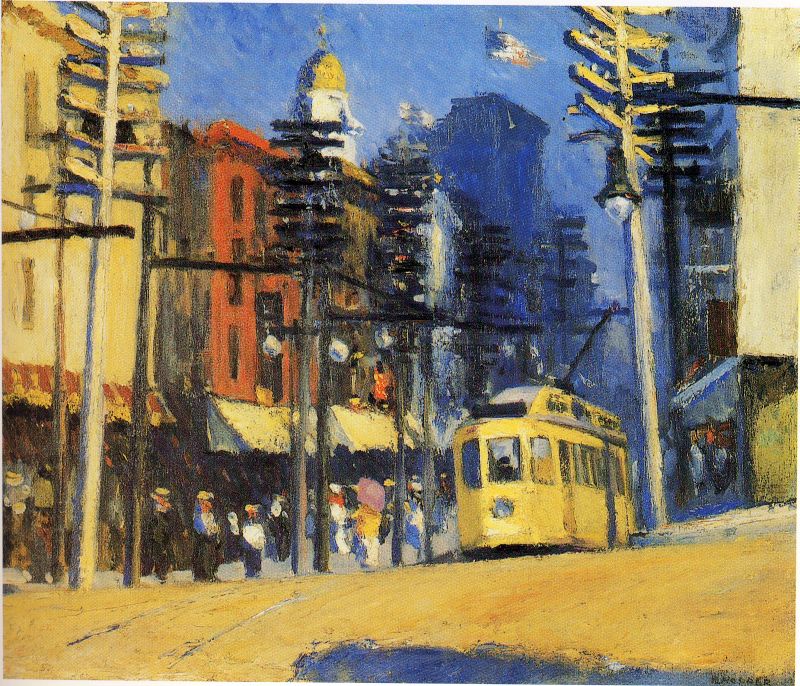
"Yonkers" by Edward Hopper

“Yonkers” by Edward Hopper

Last week I rode the bus.  I am very familiar with mass transit.  I’ve taken the bus or train in every city I’ve lived in or visited.  The 3, the 4, the 5, the 50, the 60, the Metro, the L, the subway, BART–you name it, I’ve ridden it.

I once interviewed people on a train about what they were reading.

Nobody reads much on the bus here.

And so I was on the bus reading a forgotten novel by Mary Renault, The Friendly Young Ladies, when the bus zoomed past the usual turn on 9th St.  We were in the dodgy neighborhood where my late mother’s nursing home is. I panicked:  Oh no, what bus am I on?

And then I realized it was my mother’s birthday.

I’d had no reason to return to this neighborhood since my mother’s death in August.  It is poor.  There have been shootings.  When I took my mother into the nursing home garden with its very high chain-link fence, she was disoriented.  “What do they need that fence for?” For a long time she didn’t understand that she was no longer in her (and my) hometown.

Last year on her birthday, it was mild.  I rode my bike, stopped to buy a cake, and then unfortunately got a flat tire.  I hopped on the bus.

It was a spooky walk from the bus stop, six long empty city blocks.  A deserted dairy, a block with nothing, finally the hospital, a McDonald’s, a convenience store.  It was safer to ride my bike.

Once I came out of McDonald’s with a cheeseburger for my mom, and a large man asked for money for the bus.

Yes, I know it’s for drugs, but sometimes I give anyway.

“Not in front here,” he said, scandalized. “It’s on video.  They’ll kick me out.”

I wasn’t going to go behind McDonald’s with him, so I stepped to the side of the door, gave him a couple of dollars, and got out of there.

I found my mother sitting in the dark with a towel on her head.

And so I felt a flash of grief.

And then, last week, on the bus it got worse.

I felt like my mom.

I didn’t know where I was.

The driver shot past the busy street where the bus shelters used to be.  The bus had been completely rerouted.

“The next stop is the terminal. You can ride back.”

At the terminal I got off the bus and walked.  I was a little bit west of where I thought it was, but I made my way to a street I knew.

And so I took care of some boring business, and on my way back stopped at a coffeehouse to study the map on the bus schedule.

Finally I found a street on the map I recognized.

And it was a deserted street, and I didn’t want to wait long.

After ten or fifteen minutes, I was ready to get on any bus.

“Do you go past…?”  I asked the driver of a bus.

“Sure,” he said.

It’s map-reading practice for my next vacation, right?

CHALLENGE.  Richard Lea at The Guardian has taken on the Goodreads Reading Challenge, which he thinks very silly.

More than 240,000 of Goodreads’ 25 million members have already committed to reading more than 14m books this year, pledging to get through them at an average of more than a book a week…

“The tickbox, cross-it-off-the-list mindset of the Goodreads Reading Challenge points right in the other direction. I’m all for books, for writers and for literary discussion, but if books become just another form of bookkeeping, if we start notching them off on the wall of our literary cell, we may find our “reads” aren’t so “good” after all.”

I couldn’t agree more.  I approve of book groups and readalongs, but challenges seem ridiculous to me.  Last year I wrote about challenges when I inadvertently did “the Europa challenge.”

Do you know what a Challenge is?

Here’s what you do.  You sign up at the sponsor blog.  Then you choose books to read from the challenge  “syllabus.”  And if you have a blog, you post your reviews, then post comments at the sponsor’s blog, then post links to your blog, and…

It’s confusing….

I think these “challenges” are sweet, but I do better with online book groups.  There is more discussion.

Time is too precious for me to participate in challenges.  I read what I want to read when I want to read it.

Perhaps the “challengers” are very young.  It is a way to belong to a  group where there is no real discussion.

How do you feel about challenges?
In Which I Am a “Daily Life Whore” and Read about Pliny’s Literary Life

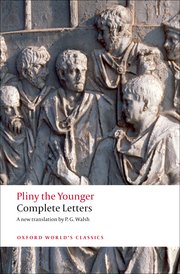
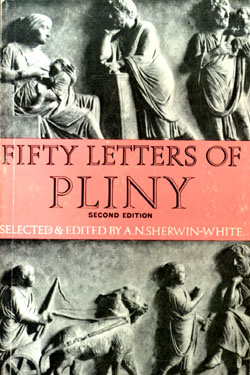
Fifty Letters of PlinyPliny the Younger (c. 61-113 A.D.) is a charming Roman writer whom few bother to read.  Was Pliny on our reading list?  I don’t think so.   Yet I took a course in Roman letters, greatly enjoyed Cicero’s self-absorbed outpourings, was fascinated by Seneca’s Stoic letters/essays, and delighted in Pliny’s personal letters. Pliny selected and published nine volumes of his personal letters, which are often spoken of as “artificial.”  Yes, they are polished and rhetorically shaped, but the sentences are short, simple, and readable.  The letters range in topic from his literary efforts to life in the country to the price of land to Trajan’s policies and politics.  Although most of the letters for the course were historically significant–“Pliny asks Trajan for instructions how to treat Christians in his province (XCVI)”; or “How Pliny the Elder perished in the eruption of Vesuvius (XVI)”– I love Pliny because you can glean gossipy information about daily life.

Historians are fascinated that Pliny wrote to the emperor Trajan.

I want to know if his friend Octavius Rufus published his poetry.

Pliny was a writer, lawyer, senator, and government official, so he had it all, but I am “a daily life history whore,” and  more interested in Octavius Rufus than Trajan.

In Volume 2, Letter 10, Pliny tells his friend Octavius Rufus that it’s time to publish his poetry. If he doesn’t, the few of his poems that have become publicly known are likely to be attributed to someone else.

Pliny letters oxfordBelow is a rough, literal translation of a few lines so you can see the vivid pictures his words create.  The elegant Latin is more economical than the English, and could also be translated more abstractly, but this is Latin 101…

“Some of your verses have become known and, though you are unwilling, they have broken their locks (broken out). Unless you drag these back into the main body, one day, as vagabonds, they will find someone else whose they will be said to be…..”  (Enotuerunt quidam tui versus, et invito te claustra sua refregerunt. Hos nisi retrahis in corpus, quandoque ut errones aliquem cuius dicantur invenient.)

Pliny goes on to say that giving public readings is the thing to do.

“And about publication, certainly [do] as you wish in the meantime, but anyhow give readings, so that you will feel more inclined to publish, and will finally feel the joy I have long anticipated for you not without reason.” (Et de editione quidem interim ut voles: recita saltem quo magis libeat emittere, utque tandem percipias gaudium, quod ego olim pro te non temere praesumo.)

Pliny loved giving readings himself and tells his friend what he may expect.  “For I imagine what crowds, what applause, what even of silence awaits; when I speak or read, I delight in silence not less than the applause, if it is a silence of close attention and desirous of hearing more.”  (Imaginor enim qui concursus, quae admiratio, te, qui clamor, quod etiam silentium maneat; quo ego, cum dico vel recito, non minus quam clamore delector, sit modo silentium acre et intentum, et cupidum ulteriora audiendi.)

I love readings so much that I thought briefly of organizing a vacation around a literary festival.  I got over that very quickly, though.

Still, if Octavius Rufus is giving a reading I’ll be there…

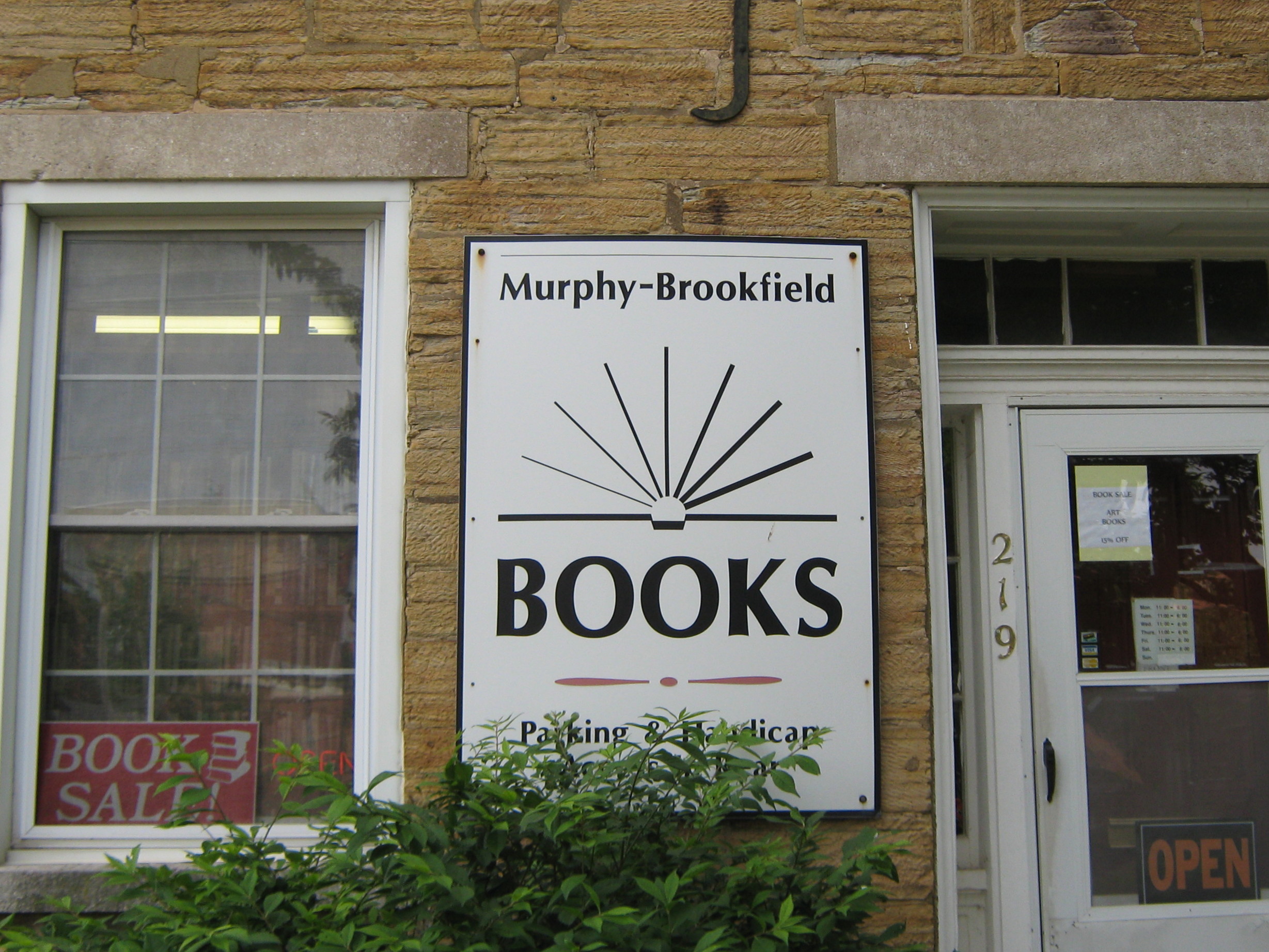
Murphy-Brookfield Books

Murphy-Brookfield Books

Murphy-Brookfield Books

I was very sad to learn that the 33-year-old Murphy-Brookfield Books, my favorite bookstore in Iowa City, closed last fall.  It sells books online at Abebooks and Alibris.

I posted yesterday on bookstores, and then idly looked up Murphy-Brookfield, which sells Viragos, books by Gilbert Highet about the classics, out-of-print classics, scholarly books, history, biographies, and more.

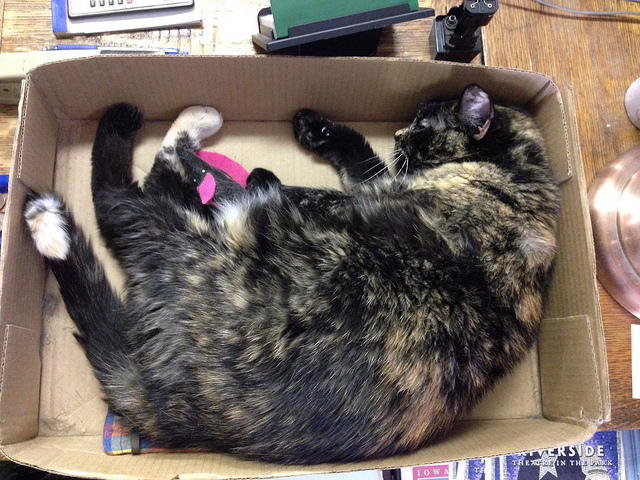
Martha the bookstore cat

Martha the bookstore cat

Mark Brookfield said in an Iowa City Press Citizen article, “It’ll be very hard to stop having a bookstore.”

And what was his favorite part of having a bookstore?  “Just working with the books, talking to the people.”

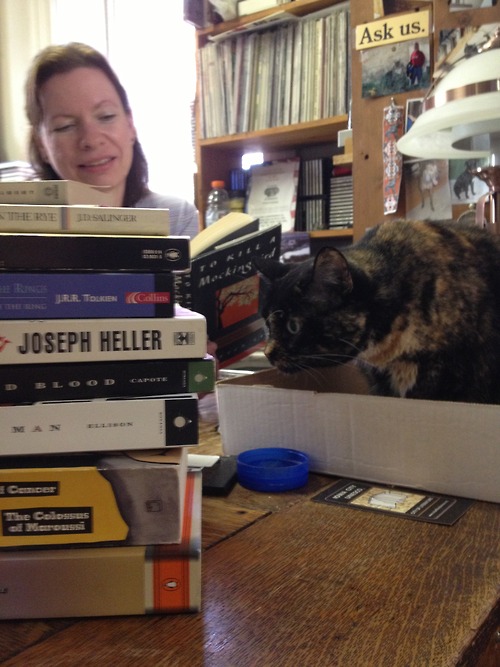
The bookstore cat, Martha, a tortoiseshell, helped out.  I would sit on a stool; she would sit on the stool.  I would crouch to look at books; she would look at books.

She hung out.

I loved Brookfield’s apparent policy of leaving people alone.  He was friendly, but didn’t try to “sell” books.

If a used bookstore cannot survive in Iowa City, a UNESCO City of Literature, it cannot survive anywhere.

Martha

Martha

The historic stone building has been sold to The Haunted Bookshop, another used bookstore.

You can see a video about the two bookstores here.

Tell me about any of your favorite bookstores that have closed.

Backlisted!

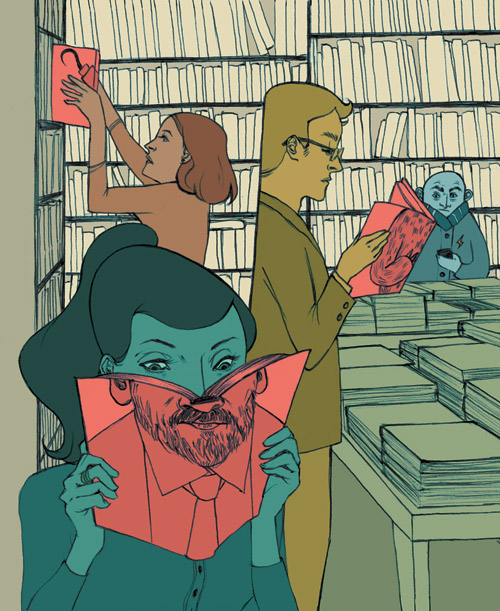
Illustration of bookstore from "Globe and Mail"

Illustration of bookstore from “Globe and Mail”

“If we take this money here…and put it here,” my cousin said, “it might work.”

“I don’t have the faintest idea,” I said.

And I don’t.

I’ve talked about it forever:  my ambition as a young girl to open a bookstore, and I spent Career Week shyly hanging around The Paper Place.  Then there was Cattleman’s Books:  just about the time I’d arranged everything, the Cattleman got sick and his relatives pulped the books.

When my husband said I should blog less, after a marathon of writing featurettes on the pros and cons of blogging, I wistfully came up with the idea of opening a bookstore called Backlisted!   I would carry no new books, only books on publishers’ backlists and used books.  I would order remainders and discount NYRB books. I would buy books at estates.  I would cozy up to writers who live in a 150-mile radius and insist they give readings, and get people to attend with promises of drugs (kidding) or champagne cake from that really good bakery.    I would have Cult Fiction week:  A Confederacy of Dunces , H. D., and Jane Gaskell’s Atlan fantasy quintet. To please the Persephone Junta  and the Virago Junta (and I’m joking: I’m a MEMBER of the Persephone and Virago juntas), I would wear a frilly apron over a skirt, twin set and fake pearls.  Not to mention Dalkey Archive week.  What a good small press that is!

I’ve been sidetracked from my bookstore plans by doing the expected thing:  I taught after being a T.A. in grad school (“You’re a born teacher,” my mom said-ha!), and later writing and editing for various publications (“You’re a good writer,” said a professor of mine gloomily; he didn’t otherwise think highly of my skills. I had to explain that my friend and I turned up at the Boethius lecture because we had read Boethius; heavens, why else would anyone go to anything so boring?).

There are drawbacks to opening a bookstore.  Fourteen or fifteen bookstores have gone bust here since the ’90s. What could I possibly do that they couldn’t? We have to drive 100 or more miles to Iowa City or Omaha to get to a good bookstore.  And even then I’m not sure the stores are thriving.

Here are three fun pluses of opening a bookstore.

1.  You can invent a whole new image of yourself.  New hair, new clothes, smart new glasses:  I see myself playing the intellectual and reciting speeches from the salons in War and Peace.  But I know how these things go.  I’m much more likely to look preppy and sound ditzy than intellectual (the new preppy ditz look!), and even though I’m not ditzy, I might be a little bit preppy, though it’s usually spoiled by a blouse coming untucked.

2.  You can have your own book group.  Naturally you make use of your connections or no one will come:  your cousin and her friends, your friend Janet who lives 200 miles away (“Why CAN’T you come?”) and her friends, and those truly horrible people in the Great Books club.

3.  Let everyone list their favorite books in a beautiful leather notebook and once a week post “So-and-So’s favorite book!” and a small display of one or two copies.   We’re not snobs.  Let it be what it is.  Wuthering Heights or Mistress of Mellyn.  It’s a book!

Minuses or Things to Avoid:

1.  Do not live in your store, microwave Italian dinners so the whole place smells like Stouffer’s, or tell anyone that  you shower at the neighborhood gym.  The very thought of your hanging around sitting on the floor because you can’t afford chairs, or using a box as your desk is enough to sadden anyone.

2.  You want a nice cat in your store, not an attack cat.  After years of loving every cat I met at bookstores (especially Martha at Brookfield-Murphy Books),  I finally met one at a used bookstore that jumped on my bare legs.  I never went back there.

If someone would give me a bookstore, I’d run it.  And, yes, if I don’t open a bookstore soon, I never will.

Amazon is the bookstore of the future.  Or the present.    Who knows what the future holds?  For now, only the online thing can make money, if it can, and I’m not sure of that.

What kind of bookstore would you open if you had a chance?

Carol Anshaw’s Lucky in the Corner & Where to Shop for Pillows in London

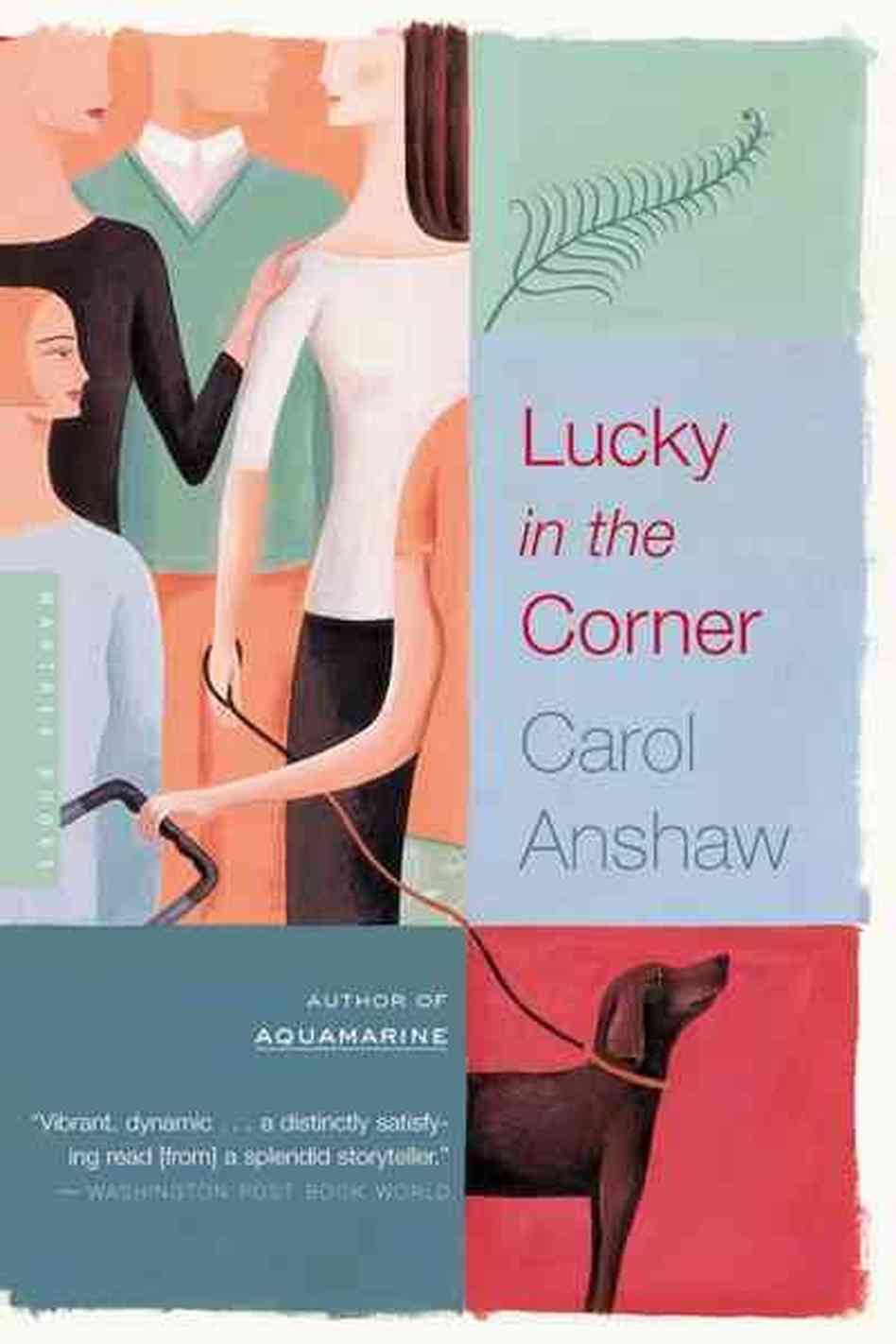
Lucky in the Corner carol anshaw Carol Anshaw’s Lucky in the Corner (2002) is the kind of domestic novel I read to make sense of modern life.  Such domestic fiction is rare these days. Publishing (from my limited perspective) seems to be about the big books rather than the small gems. The Man Booker Prize last year went to Eleanor Catton’s The Luminaries, an 884-page historical novel.  The National Book Award?  To James McBride’s The Sweet Bird Life, a 400-plus-page historical novel about John Brown.  The Pulitzer?  Adam Johnson’s The Orphan Master’s Son, a complicated big book set in totalitarian North Korea.  Do awards go to domestic fiction anymore?  Does anyone write it?  Well, of course they do but it doesn’t always get reviewed, as Jennifer Weiner tells us at her blog.

Anshaw’s novel is not only about family, it is also about gay life.  And, though I’m sure there are many gay novels, I must admit I haven’t read one  in a while.

In this gracefully-written novel, Nora, a lesbian, and her family are at an emotional crossroads:  Nora, the administrator of a Continuing Education program at a college, embarks on an illicit affair with Pam, a ceramics student who works as an independent contractor.  Nora’s partner, Jeanne, a Berlitz instructor who loves sentimental movies starring Lana Turner,  does not suspect Nora of cheating.  Nora’s daughter, Fern, a 21-year-old student who lives at home but prefers the company of her actor-and-sometimes-transvestite uncle Harold to that of her mother, realizes from  long experience that her mother is planning something.

Anshaw’s sketch of Nora’s desire is hyperrealistic.  Nora fantasizes in her office about Pam, and tries to puzzle out how to initiate a relationship without looking like a sexual harasser.  Later in the book we learn about Nora’s sexual history:  cheating on her husband with women, and before their marriage, secretly having an affair with a female editor at a fashion magazine where she had an internship.

Nora has been secure with Jeanne, and has chatted with Pam only twice, once at orientation, another time in her office.

Since then–nothing.  If there’s a next move, Nora is going to have to make it.  She sits inert at her desk, but within, she’s a Greek drama in an ancient amphitheater–foible and folly paving the way for tragic consequences.  She sat here last Tuesday night, watching this same play of bad judgment and horrible consequence, and ended up slinking home, grateful to Jeanne for her unwitting protection.

Anshaw has a gift for fabricating witty metaphors .

Nora eventually rushes off to Pam’s classroom with a clipboard to pretend she needs to ask her a few questions.

Anshaw is a master of the temporal flashback. The novel starts with the denouement, when Nora wakes up to find a driver has deliberately crashed into her car and totaled it, and from there goes back and forth in time, covering Nora and Fern’s lives from childhood on.

Anshaw also brilliantly portrays Fern.  When Fern learns that her bad-girl  best friend Tracy has freaked out over care of her sick and colicky baby, Vaughn, Fern and her new boyfriend take Vaughn away for weekends, and then permanently.  Nora and Jeanne also love the baby.

Although this last plot twist is unrealistic–how often do whole families embrace the care of someone else’s baby?–Anshaw is an unusually astute writer, her prose is lean, her dialogue pitch-perfect, and her handling of time worthy of Ian McEwan.

And Lucky, the dog, is the most likable character in the book.  What is it about dogs in books?  I’m not a dog person.  I love cats.  But the cats in books are seldom portrayed so charmingly.

I very much admired this novel–it gets better as it goes on.

PILLOWS!

Remember the days when you used to take your own pillow when you traveled?

“The secret of being comfortable on a Greyhound bus is your own pillow,” a friend once told me when I still traveled on Greyhound buses.

I always take a pillow in the car.  (Remember, I am a non-driver.)

But you can’t take your pillow on a  plane.  You can only take two pieces of carry-on luggage, and one of those is not a pillow.

“Ma’am, ma’am–you can’t take a purse and two other bags,” a stewardess told the woman in front of me in line a few months ago.

I can just imagine her saying the same about a pillow.

And can you check your pillow? 

I recently stayed in a hotel where there were 12 pillows  on the bed, and they were so luxurious that the bed became my desk as well as my bed. There was hardly any reason to get up unless I wanted to go to a museum, or get a bite to eat.

I am contemplating a trip to London and wonder what I’ll do if the hotel room doesn’t have the requisite number of pillows. Which is a dozen.

I’ll probably spend the first day wandering around buying two or five or six pillows.

The Tate Modern can wait.

Three “Literary” Women’s Blogs, Book Week, & Is Silas Marner a Classic?

Matisse, "Woman Reading with Tea"

Matisse, “Woman Reading with Tea”

Last week I wrote The Blogger Chronicles, a series on the pros and cons of blogging.

And so I am declaring this “Book Week” at Mirabile Dictu.  (“I have been reading” is my new motto.)

Before I move on, let me give you links to three literary women bloggers I neglected to mention.

1.  Mary Beard’s A Don’s Life appears at the TLS (my favorite book review publication and the only one I subscribe to).  Beard, a classicist, historian, professor at Cambridge, and TV celebrity, writes a blog about classics, her domestic life, travels, experiences on TV, and more.

Her latest post: “A 1950s childhood: 5 objects of nostalgia”

2.  Novelist Caroline Leavitt’s CAROLINELEAVITTVILLE. In her latest post, she writes about SheBooks, an e-book publisher of short stories and memoirs by women.

3.  Novelist Jennifer Weiner’s A Moment of Jen:  In her latest post, she writes about counting “the number of books reviewed that were written by women, and the number of women writers profiled in the Times, and then I grumble when those numbers turn out to be significantly lower than the number of male authors whose works and selves got that consideration.”

And now for BOOK WEEK.  First Book Post Up: Is Silas Marner a Classic? 

One of the disadvantages of taking a vacation in London is that the Nuneaton tour of George Eliot is apparently in Nuneaton. Perhaps I should go there?

Daniel Deronda is my favorite novel by Eliot, and possibly my favorite novel of all time, but instead of rereading it I have been catching up on her shorter works, because even her lesser works are better than most other novels.

silas-marner-weaver-raveloe-george-eliot-paperback-cover-artWhen my friends read Silas Marner at the public school, I was attending a hippie/lab school ($25 a year) and reading Middlemarch.  My school apparently couldn’t afford to buy books, so I took courses like Independent Reading (in which I read everything from Middlemarch to Sisterhood Is Powerful! to Richard Brautigan’s Revenge of the Lawn), and an English lit course where there were enough copies of Macbeth, but we had to choose between David Copperfield and Graham Greene’s A Burnt-Out Case (and  a few others I can’t remember) in the novel unit, probably because there weren’t enough books to go around.

Not everyone did a lot of reading, though there is much nostalgia for this school, which closed in the ’70s.  (There are still reunions, I think.)   One of my most vivid memories is of running a consciousness raising group in a classroom over the lunch hour.  I also recall the principal’s emerging from the office to stop two students from disrobing in the halls, an episode I had found unexpected and  intriguing.

I saw no need to read Silas Marner until I realized that I’d never read it.

If I were still at hippie school, I would doubtless have referred to it as “f—ing Silas Marner,” because it’s not very good, and that’s how we talked then.

The plot?  Silas Marner, a weaver, goes to chapel regularly. He is very religious, and very happy in Lantern Yard; but one day his friend sets him up for the theft of the church’s treasury.  Although his friend committed the robbery, Silas is blamed and prayed for; he moves to Raveloe to get away from his bad rep, and works as a weaver out of his home.  Ironically, “post-theft” he falls in love with gold.  He hides it under the floor and loves to count it.  But when someone steals the gold, Silas is devastated.  It turns out for the best, though, because shortly thereafter he sees the gold curls of a toddler (instead of gold!  yes, that’s how ungainly the structure is) whose opium-addicted mother has died in the snow. The little girl has wandered into his house, and, happily for all, he raises her and becomes a favorite of the villagers.

It is an extremely sentimental novel, rather too perfectly structured and clumsily put together, and exactly the kind of thing mediocre school teachers used to love to teach because there’s much symbolism, and it’s really no work for them (and so thank God for the hippie school, where we were left alone to learn).

Eliot is a wonderful writer, but this is the kind of writing we’re dealing with here:

…he had a dreamy feeling that this child was somehow a message come to him from that far-off life:  it stirred fibres that had never been moved in Raveloe–old quiverings of tenderness–old impressions of awe at the presentiment of some Power presiding over his life; for his imagination had not yet extricated itself from the sense of mystery in the child’s sudden presence, and had formed no conjectures of ordinary natural means by which the event could have been brought about.

“Somehow a message”–oh, please.

Not Eliot at her best.

But Terence Cave, the writer of the introduction to the Oxford edition of Silas Marner, says,

By thus placing Silas so precariously on the threshold of unconsciousness, George Eliot was also able to give imaginative form to the Comtean notion of a gradual evolution of human consciousness in human history.  Nineteenth-century German philosophers (Schopenhauer in particular) attributed the great movements of the history not to conscious decisions made by individuals, but to an unconscious collective will…

Read Middlemarch, Daniel Deronda, or The Mill on the Floss if you want to understand Eliot.  Silas Marner just isn’t as good.

Mirabile Does Middlebrow: J. B. Priestley’s Angel Pavement & Carrie Ryan’s The Dead-Tossed Waves

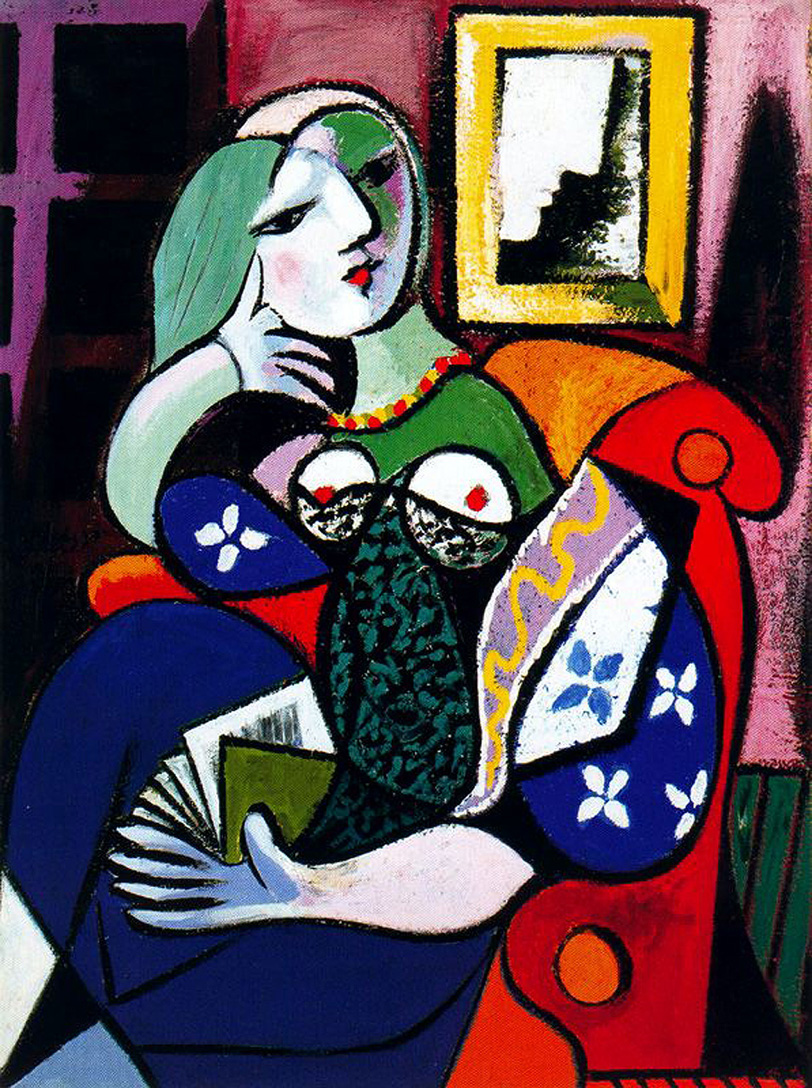
Picasso, "Woman with Book" (1932)

Picasso, “Woman with Book” (1932)

You may wonder what I’ve been reading.

I have been reading.

I have also spent a lot of time online.  I recently received a notification from my phone company that I am a “heavy user.”

Sounds vaguely as though I need Narcotics Anonymous.

The phone company wants me to upgrade my internet speed.

I don’t need it upgraded.  I need to go write in a journal or something.

Meanwhile, here is a look at the latest middlebrow novels I’ve been reading.

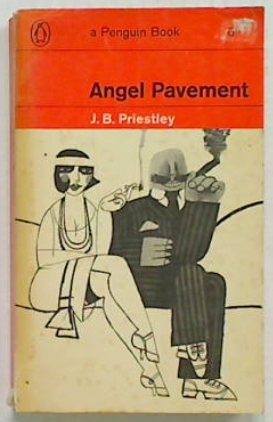
1.  J. B. Priestley’s Angel Pavement.  A few years ago I read J. B. Priestley’s Lost Empires, a charming, lively novel narrated by a watercolor artist who amusedly reminisces about his youth assisting his uncle in his magic act in music halls. Priestley’s style reminded me slightly of W. Somerset Maugham’s, and I wanted to read more of his books.

I got waylaid, as I so often do, because there is so much to read. Finally I found a very nice used paperback copy of Angel Pavement (1930), published by Phoenix/The University of Chicago Press. (The book is out of print, except for a Kindle edition with a very good introduction by D. J. Taylor. I don’t have a Kindle, but I read the sample.)

Angel Pavement j. b. priesleySet in London, Angel Pavement is the story of a group of sad, desperate people who work in an office, Twigg & Dersingham.  After Mr. Golspie, a middle-aged man with a get-rich-quick business plan, arrives mysteriously at the office at No. 8 Angel Pavement with a proposal to sell cheap wood veneers and inlays from the Baltic at a huge profit, the upturn in business temporarily pumps money into the impecunious firm.

It also changes the lives of the characters.

Priestley’s entertaining description of No. 8 Angel Pavement is slightly Dickensian and makes the street forever memorable.

No. 8, once a four-storey dwelling-house where some merchant-alderman lived snugly on East India dividends, is now a hive of commerce.  For the last few years, it has contrived to keep an old lady and a companion (unpaid) in reasonable comfort at The Palms Private Hotel, Torquay, and, in addition, to furnish the old lady’s youngest niece with an allowance of two pounds a week in order that she might continue to share a studio just off the Fulham Road and attempt to design scenery for plays that are always about to be produced at the Everyman Theater, Hampstead….  As for the tenants themselves, their names may be found on each side of the squat doorway.  The ground floor is occupied by the Kwik-Work Razor Blade Co., Ltd., the first floor by Twigg & Dersingham, and the upper floors by the Universal Hosiery Co. and the London and Counties Supply Stores, and, at the very top, keeping its eye on everybody, the National Mercantile Enquiry Agency, which seems to be content with the possession of a front attic.

If you’ve ever worked in an office, you will know these vividly-depicted characters.  Mr. Smeeth, the firm’s cashier, is very proud of his clerical job, adores calculations and bills, and supports his family in a snug little house.  Stanley, the office boy, likes to “shadder” people and pretend he is a detective.  Miss Matfield, the efficient, well-educated typist, is discontented and thinks of herself as only temporarily working in an office and living in a women’s club, but she is pushing 30 and beginning to feel a little desperate.  Mr. Dersingham, the owner, went to a minor public school, and concentrates on school functions and school ties rather than business.  Saddest of all is Turgis, the clerk, “a thinnish, awkward young man with a rather long neck, poor shoulders, and large, clumsy hand and feet.” Living alone in lodgings, he spends his weekends walking around London and hoping to find a girlfriend at tea shops or movies. He has no relationships with anyone, no friends.

Sex also arrives at No. 8 Angel Pavement with the advent of Mr. Golspie.  Turgis falls in love with Mr. Golspie’s pretty daughter, Lena, and his obsession reminds me of  Philip’s with trashy Mildred (who, as I recall, had green skin–very attractive!) in Maugham’s Of Human Bondage.  Mr. Golspie picks up Miss Matfield, who is finally ready to lose her virginity when… well, I won’t tell you, but she ends up considerably better off than poor Turgis.

I loved this book:  so much fun to read!  Not a classic, but a very good novel.

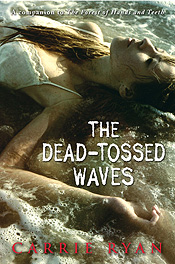
2.  And my cousin gave me a Y.A. zombie book for Christmas, Carrie Ryan’s The Dead-Tossed Waves.

The_Dead-Tossed_Waves_(book_cover) Ryan has a moody, unevenly poetic style, and I can see how this book would appeal to a teenage girl.  The premise, however, is terrifying.  Towns are fenced off so the zombies don’t break in and infect the residents, most towns and cities have been breached, and the world’s population has dwindled.  The heroine Gabry’s mother has to go out and kill zombies on the beach when the tide comes in.  One night Gabry and a group of teenagers climb over the fence to play in an old amusement park.  A zombie attacks, and most of her friends die or are banished into a kind of military service.

What I dislike most about these Y.A. books, though, is the passivity of the heroines.  Sure, eventually Gabry learns to take care of herself, but there’s a lot of whining and dependence.  Personally I very much enjoyed the Twilight books, but these other Y.A. books…I have to say no.

The Blogger Chronicles, Conclusion

Conclusion of a series on blogging.

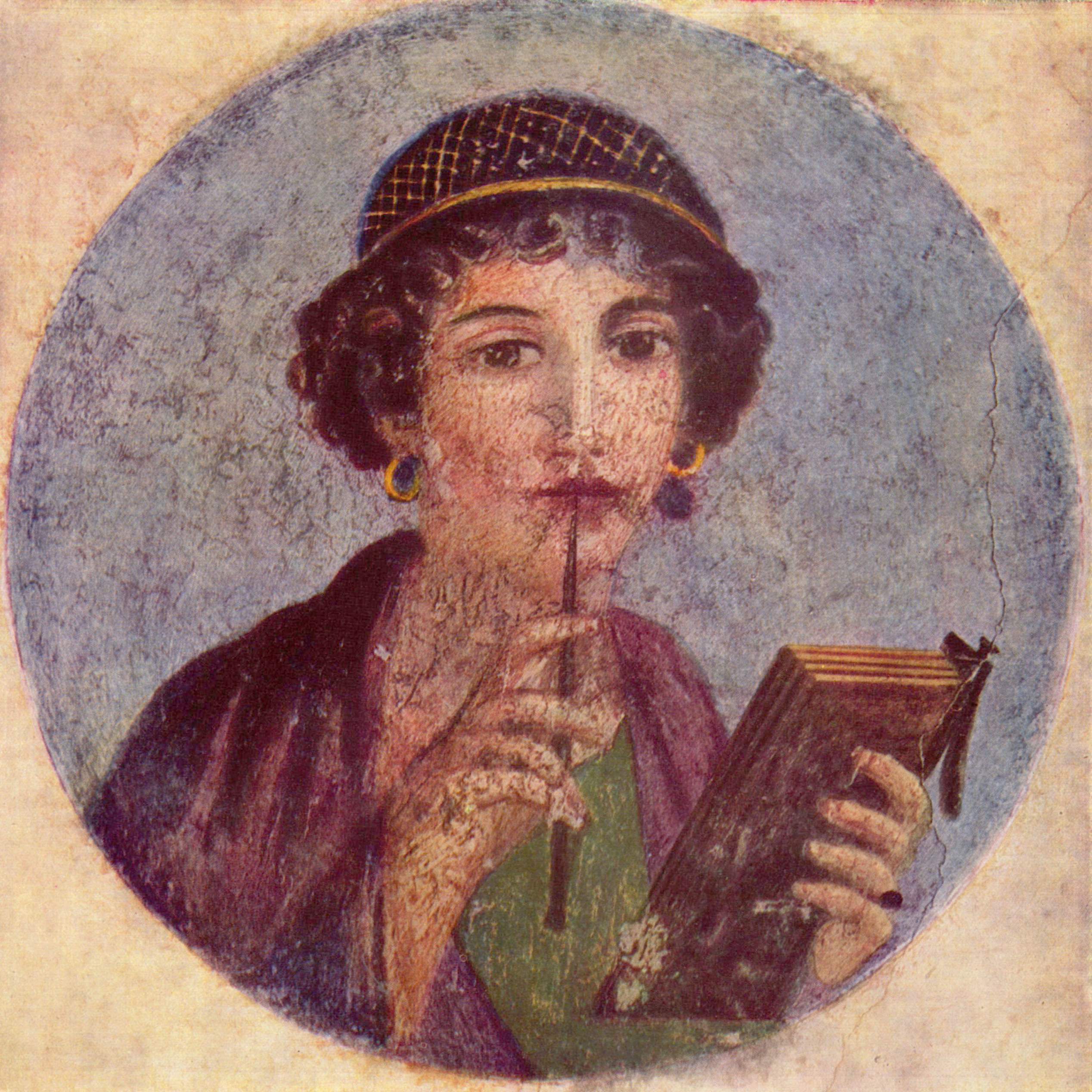
Roman woman writingMy husband is forbidding me screen time.

“This is taking you too long.”

Yes, indeed, it was.  It was sundown by the time I took my walk on Monday after an 8-hour marathon putting together some of the pieces for my series of “featurettes” on blogging.  I got a little faster/hastier as I went along, slapping quotes up on the screen and realizing that was enough for a blog. But it was tiring, my feature-writing skills were rusty, and, as my husband pointed out, “You aren’t getting paid.”

On the other hand, I learned an amazing amount about bloggers, writers, and critics from the questionnaires and interviews.

1.  Bloggers mean no harm.  Some write book journals, others write reviews.  We are writing for ourselves, or, in most cases, a small audience.   We try to write with integrity and are interested in reading other bloggers’ genuine opinions of books.   None of the bloggers I interviewed courts publicists and publishers (only two receive books from publishers regularly).  We are not interested in promoting books, or reading promotions of books determined by chance gifts from a publisher.

As Tony of Tony’s Book World said, “If a blogger likes everything, that’s not very helpful.”

And as Susan of Pages Turned said, “Anyway, at least I am totally over being used as a marketing tool…. I really wish everyone would just start writing about the books they really like so that we could all find the other bloggers who share our tastes, our sensibilities, instead of offering up yet another generic review on whatever’s being published this month because that’s what the marketers want.”

2.  Critics have a different process.  They polish their essays; they don’t post and run.  Their work is important, because where would we be without the thoughtful writers who analyze books in major book review publications, even if we disagree with their judgment?

3.  Novelists are not necessarily selling their books through blogs and Amazon reviews (as I had thought).   D. J. Taylor, a novelist, biographer and critic, Sherry Jones, a historical fiction writer, and Jo-Ann Mapson, an author of women’s fiction, have all had mixed experiences with online reviews, finding some thoughtful, others vacuous.  Some of Taylor’s online reviewers at Amazon UK expected Nazis to stomp through his counterfactual (or alternate) history, The Windsor Faction, though others understood his work; and, while Jones, the author of Four Sisters All Queens, appreciates what blogs have done for her books, she points out that most have only a few hundred followers, so it is “a drop in the proverbial bucket.”

As Mapson, author of Solomon’s Oak and Finding Casey, says, “Often I look at the 1 star reviews, click on what else they’ve reviewed, finding something unrelated such as vacuum cleaner bags.  But every day one site or another sends me reading suggestions, and I often do buy the book.”

The Blogger Chronicles, Part 4: Novelist Jo-Ann Mapson Speaks Out on Blogging

This is Part 4 of a series of “featurettes” about blogging & online reviews.  Today, meet novelist Jo-Ann Mapson.

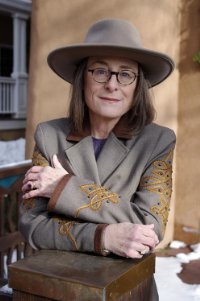
Jo-Ann Mapson

Jo-Ann Mapson

Jo-Ann Mapson, the author of 11 novels and a book of short stories, won the American Library Association’s RUSA Award for best women’s fiction in 2011 for her superb novel Solomon’s Oak (which I wrote about here at my old blog).  Her thoughtful, brave heroines, whose problems range from relationships to money to caring for rescue dogs to recovering from grief, help us look at life from a different point of view.  Her most recent book, Finding Casey (which I wrote about here), is the sequel to Solomon’s Oak.

In an e-mail interview, Jo-Ann says that blogs are important to readers and writers in different ways.  “Hardly anyone in mass media reviews books anymore.  Twenty years ago, NYTBR, Los Angeles Times, did lots of reviews, and those no doubt did sell books.”

When I mentioned that even bad reviews alert me to books I want to read, she said,

“Carolyn See massacred my first novel in the LATimes.  People clipped and sent me the review, not to be mean, but because they were so excited my first book had been reviewed.  That was big relief for me!  I know another writer whose first novel was torn to shreds and never wrote another novel because of the damage.

“Now we have Amazon.com and Barnes & Nobles’ reviews, and as many have agreed, giving the opportunity for people who are not reviewers the chance to say whatever they want about books.  Often I look at the 1 star reviews, click on what else they’ve reviewed, finding something unrelated such as vacuum cleaner bags. But every day one site or another sends me reading suggestions, and I often do buy the book.  There is no more bookstore to wander after the billions of chains drove out the independent bookstores, then fell flat on their own faces.  What’s left to browse?

“I consider myself an addicted reader.  One of my favorite blogs to read daily is Caroline Leavitt’s Leavittville.  First, I consider her probably the best blogger out there, and we have similar reading tastes.  She reviews/interviews daily.  And write a book a year!  Such a generous heart is rare, and she is happy to feature books she reads, which is the best reason to read a book, in my opinion. ”

Thank you, Jo-Ann, for this thoughtful interview!