February Giveaway: Two Viragos and a DESSIE

Marcella Mrs. Humphry WardI know that many of you like Viragos. I have a nice collection, but some I’ll never read again.

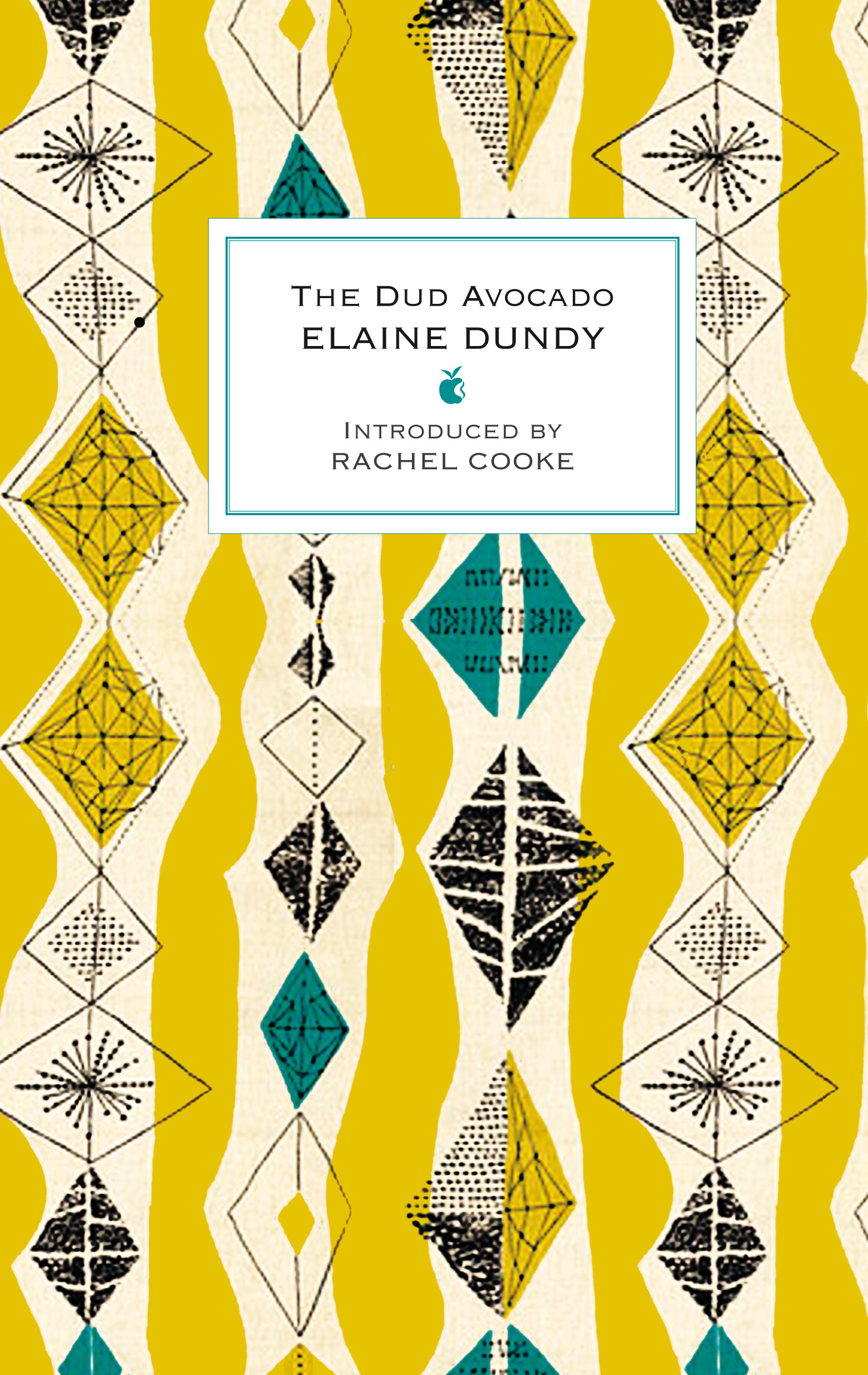
The Dud Avocado.indd

Not the cover: mine is a green Virago.

So I am giving away Mrs. Humphry Ward’s Marcella (which I loved and wrote about here) and Elaine Dundy’s The Dud Avocado about an American woman in Paris (many like this book, but I didn’t particularly;  it is also available in an NYRB edition).

I am also giving away D. E. Stevenson’s Miss Buncle, Married, a sequel to Miss Buncle’s Book.  This is a much-read large-print edition (read by a couple of generations, I would guess), with a slightly crooked spine, but it is a good reading copy. And  I know there are lots of Stevenson fans out there.

I can’t send them to the UK, alas, but the U.S. and Canada, yes.

Leave a comment if you’d like one of these.  Yes, the same people can win again and again.

I need more space for more books!

Ten Children’s Writers Who Also Wrote for Adults

Cat hanging out with books and Christmas cactus.

This cat prefers to read Heinrich Boll

The cat pictured is very fond of Heinrich Böll.

The others were raised on George MacDonald’s The Princess and Curdie. (I read them a couple of pages once.)

Lilith george McDonaldThe great thing about MacDonald is that he also wrote for adults.  I discovered Lilith when I was 12 in one of those Ballantine ’60s fantasy editions with the pretty covers.  Amazon says:  “First published in 1895 …, this is the story of the aptly named Mr. Vane, his magical house, and the journeys into another world into which it leads him.”

So I started thinking:  what other children’s writers also wrote for adults? After MacDonald I came up with:

2.  Madeleine L’Engle.  L’Engle’s A Wrinkle in Time is a classic, but she also wrote adult books.  I very much enjoyed her novel,  A Live Coal from the Sea, a sequel to her children’s book, Camilla.

a-live-coal-in-sea-madeleine-lengle-paperback-cover-artCamilla, now an old woman,  is an astronomer who has had a rich life as a college professor at her alma mater. She adored and was adored by her late husband, Mac, a minister.  Her children, Taxi and Frankie, and granddaughter, Raffi, are more complicated.  After Camilla wins an award for astronomy, Taxi, a neurotic actor, stirs things up.  He hints to Raffi that Camilla is not really her grandmother.  The narrative goes back and forth in time so we know what happened.

L’Engle fans may like this:  I’m not sure about anybody else.

kingfishers-catch-fire3.  Rumer Godden wrote many children’s books, among them A Doll’s House and An Episode of Sparrows.  But her adult novels are especially good:  my favorite is Kingfishers Catch Fire, an autobiographical “pre-hippie” novel in which Sophie, an impoverished young woman, moves with her two children to Kashmir to “live simply.” The misunderstandings between her and the villagers cause an unexpected crisis.

4.  Louisa May Alcott, author of Little Women, wrote some good adult books. Are you familiar with Hospital Sketches, her chronicle of her nursing in the Civil War?

5.  I enjoyed Penelope Farmer’s Charlotte Sometimes and The Summer Birds (now available from NYBR), and I hanker for her out-of-print but wildly overpriced adult novel, Glasshousees.  According to Amazon, it is “An intense novel of three characters, Grace, her husband Jas, and her young apprentice, set in the suggestive, obsessive milieu of a glassblowing workshop.”

6. I grew up on Eloise Mcgraw’s Mara Daughter of the Nile and The Golden Goblet.  She also wrote an adult novel, Pharaoh.  It’s going for $30-some at Amazon, so I’ll have to pass.

7.  Did you read Mary Norton’s The Borrowers books?  How about her adult fiction, The Bread and Butter Stories?  According to Amazon, these are period pieces about being an upper-middle-class woman in the 1940s and early 1950s.

8.  E. Nesbit was my favorite writer when I was a child.  Though I’ve found her adult books disappointing, The Red House, the story of a married couple who inherit a large house, is very funny–and the characters also meet the Bastables (characters in three of her children’s books).

9.  L. M. Montgomery, best known for Anne of Green Gables, wrote at least one adult book, The Blue Castle, about a 27-year-old spinster who rebels against her family.  I haven’t read it.

10.  John Wyndham’s The Day of the Triffids, a stunning science fiction novel, made me want to read more of his books.  I haven’t read The Chrysalids, available from NYBR, which is apparently a children’s novel .  The book description says;  “Like everyone else in the nuclear-wasted world he lives in, David is loyal to his kind and on the watch for anyone who deviates from the ideological or genetic norm. But what would happen if it were revealed that David himself was a mutant?”

It sounds interesting, doesn’t it?

What children’s writers do you know who wrote for adults?

Are any of them any good at it?

Glasses & Dover Books

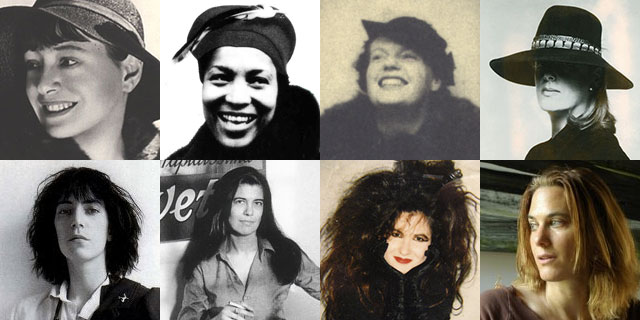
op row: Dorothy Parker, Zora Neale Hurston, Shirley Jackson, Gael Greene. Bottom row: Patti Smith, Susan Sontag, Tama Janowitz, Kate Christensen.

Dorothy Parker, Zora Neale Hurston, Shirley Jackson, Gael Greene, Patti Smith, Susan Sontag, Tama Janowitz, & Kate Christensen.

Where are these writers’ glasses?

Do you know any writers without glasses?

I have new glasses.

It’s liberating.

I was going for a professorial look.

My husband tells me I didn’t get it.

They’re bigger and rounder.

When I walk the wind doesn’t blow in my eyes as it did with my much smaller glasses.

In summer the bugs won’t fly in my eyes.  (This is a problem with bicycling.)

It was hard to find any glasses I liked.

I’ve worn wire-rimmed glasses since high school.  Well, most of the time.

It was time for a new look, I was told.

I tried on any number of Malcolm X glasses.  I didn’t realize they were Malcolm X glasses until I squinted at myself in the mirror.

Malcolm X

Malcolm X

Meg Ryan’s big glasses are adorable in When Harry Met Sally.  Perhaps they’re bigger than is fashionable today.

Meg Ryan in "When Harry Met Sally"

Meg Ryan in “When Harry Met Sally”

Diane Keaton’s glasses in Annie Hall are the best of all.

Diane Keaton in "Annie Hall"

Diane Keaton in “Annie Hall”

Too bad none of us looks like Meg Ryan or Diane Keaton.

I’ve been trying to find pictures of women writers with glasses. There aren’t many.  Here’s the Southern writer, Elizabeth Spencer.  She is usually photographed without glasses.

Elizabeth Spencer

Elizabeth Spencer

Here’s  Karen Thompson Walker, author of The Age of Miracles, a very good literary science fiction book.

Karen Thompson Walker with glasses

Karen Thompson Walker, author of The Age of Miracles

Here’s award-winning Barbara Kingsolver.  She is sometimes photographed with glasses:

Barbara Kingsolver

Barbara Kingsolver

Here’s Madeline Miller, author of The Song of Achilles and winner of the Orange Prize.

Madeline Miller

Madeline Miller

Dorothy Parker didn’t wear glasses in public.  “Men seldom make passes/At girls who wear glasses,” she wrote.

Dorothy Parker 01Who are your favorite women writers with glasses?

DOVER BOOKS.  I love book catalogues, and today we received the Dover Publications catalogue in the mail.

$5 off when you order $35 or more!

 The first six pages are devoted to Shakespeare.  (So cute!)  And since I’ve been thinking about reading Shakespeare this winter, I got out my Pelican edition.  I also have some little paperbacks that are easier to read.

Trollope’s Ralph the Heir is back in print.

What about The Riddle of the Sands?  (I have this, but my cat threw up on it.)

Cranford is $3.50.

But honestly I have my share of classics.

Still, I urge you to go to Dover.  Where would we be without them?

Ultimate Bitches & How Zola’s Nana Slept Her Way to the Top

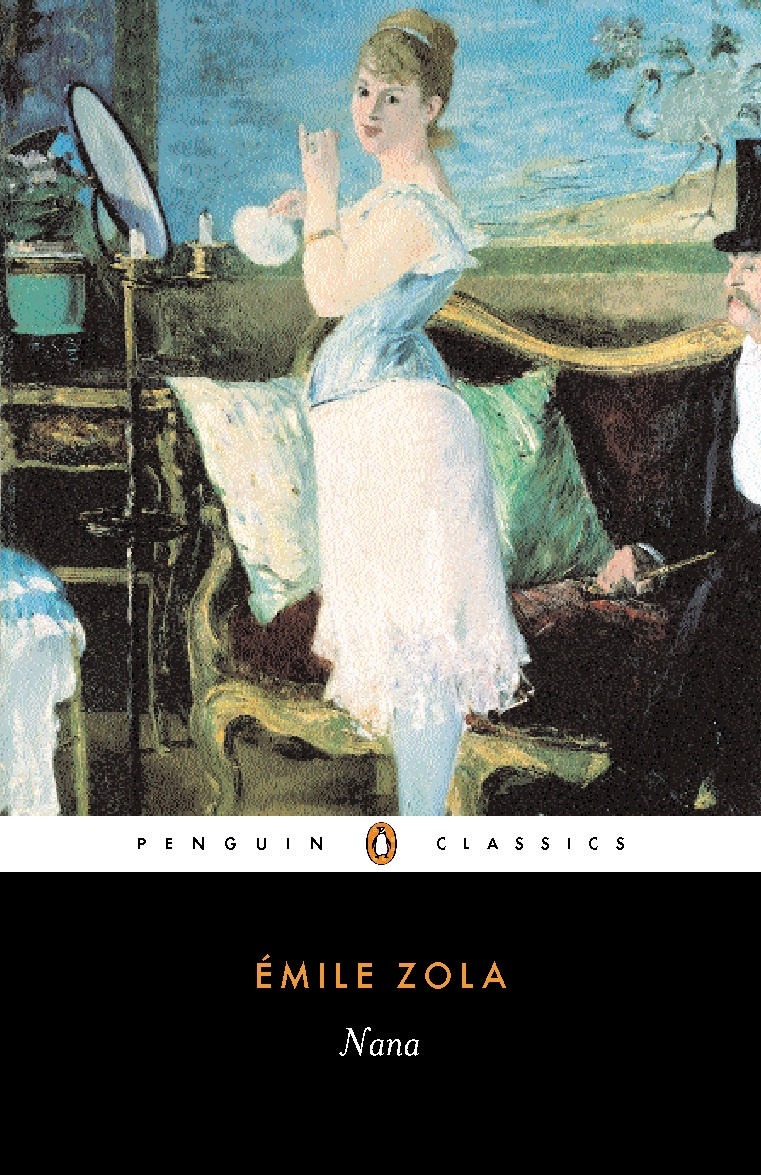
Nana by ZolaNice girls finish last.

Women who sleep their way to the top are the Ultimate Bitches.

In my field, originally Latin schoolmarmism, we never Slept Our Way to the Top.  There were very few women classics profs in my day, and they were our role models, respected for their Non-Whoreishness.  Perhaps Mary Beard, the ultimate celeb classicist, can vouch for the integrity of Latinists.  (Beard reminds me of a character in my favorite Margaret Drabble novel,  The Realms of Gold:  Frances is an archaeologist who sails effortlessly from success to success.)

So why are I so fascinated by the meretricious?

It is the depths to which one can sink, if, like Zola’s Nana, one is the daughter of alcoholic deadbeats in the slum.

In Zola’s Nana, one of my favorite books, a novel you must read to understand prostitution, the heroine Nana sleeps her way to the top.  After a career on the streets of Paris as a prostitute, she stars in an operetta, “The Blonde Venus.” She laughs at herself onstage and men find that irresistible.  They fall in love with her semi-nude body, draped only in veils, though she has zero talent.

At the theater before the show, the journalist, Fauchery, doesn’t know who Nana is and has low expectations.

Ever since this morning, everybody has been asking me about Nana.  I’ve met over a score of people, and it has been Nana here and Nana there.  What do they expect me to tell them?  Do I know all the girls in Paris?…  Nana is something invented by Bordenave.  I don’t need to say any more than that.”

And Bordenave, the producer and director, indeed refers to his theater as a brothel and invents Nana.

Nana rises quickly in the world:  bankers, counts, and handsome young men give her money.  She runs through it like water, and it is fascinating to see what she buys.  She has sex joyously with everybody, but doesn’t love anybody.  She spends several fortunes as a mistress/courtesan, and the men will do anything to keep her.  The theater is truly the setting for Nana, even after she retires from it:   thus the big beautiful house the Count gives her is decorated in bad, glittering, gaudy taste that reminds the reader of the theater.

Nana is a reader, and her opinion of a novel about prostitutes is surprising.

After that, Nana chatted with the four men like a charming hostess.  During the day she had read a novel which was causing a sensation at the time.  It was the story of a prostitute, and Nana inveighed against it, declaring that it was all untrue, and expressing an indignant revulsion against the sort of filthy literature which claimed to show life as it was–as if a writer could possibly describe everything, and as if novels weren’t supposed to be written  just to while away the time.  On the subject of books and plays Nana had very decided opinions:  she liked tender, high-minded works which would set her dreaming and uplift her soul.

Of course Zola was mocking himself, and what Nana might think of him.  He was writing for a serious purpose:  he intended in his twenty-novel series, The Rougan-Macquarts:  the Natural and Social History of a Family under the Second Empire, to explore the effect of heredity and environment on one family.

Nana is not a nice girl.  She is a bitch, but is very likable and enjoys life. Money means everything to her.  Sleeping with men doesn’t matter in the least; she can’t imagine why the prim middle-aged count who falls in love with her cares that she has sex with a woman friend from the slums, Satin, another prostitute.  She is able to convince him that none of it matters, even when he walks in on her with another man.

I adore Zola.  I devoured everything I could find in translation after  watching a BBC miniseries of Nana sometime in the ’70s.  I’ve even read some of them in a turn-of-the-last century translation, and they’re still powerful, though I prefer to go with something more modern.

I also love Balzac, Zola’s role model.

More on the French later!

Darling Blogger & The Wrong Reader

Anne taintor Stop Me Before I Volunteer vintageI love publicists.

They helped me set up interviews with writers last year, and perhaps will help me set up more later this year.

But, alas, I am usually the wrong reader for the free books they offer bloggers.

The email press releases go something like this:

Gibbon, Terrier, & Fowl has published a sensitive, pitch-perfect, passionate novel, An Alliance of Half-Wits, which is a romance and may win the Pulitzer Prize.   Ainsley Ames, a bigamist and ad man, flees from Morgantown, West Virginia, to Cannes and moves in with Lark, a screenwriter who wears a negligee and smokes marijuana in her Gothic castle. It is Anna Karenina crossed with Valley of the Dolls crossed with Gentlemen Prefer Blondes

Some bloggers love to write about free books from publishers.

At first it seems wildly exciting to receive a free book in the mail.

But, as my husband says, we have no room for books we’ll never read.  Last year I received a sports book. I think it was about basketball.  I would never read such a book.

And I still have five or six “free” first novels which I haven’t even looked at.  I do feel obligated to read at least one of them, though it’s probably too late to help the publicist.

In the last year I have read and written about books by Nancy Mitford, Ursula K. Le Guin, Jonathan Lethem, C. S. Lewis, Dickens, and Mrs. Humphrey Ward.

Does anything about this scream that I want to read An Alliance of Half-Wits?

Okay, I made that book up.

I am simply the wrong reader for many of these books.

AND NOW LET ME WRITE ABOUT A PRETTY GOOD BOOK FOR WHICH I AM THE WRONG READER.

Why Are You So Sad? by Jason PorterI recently read Jason Porter’s novel, Why Are You So Sad?, a gift from a publicist.  At first I thought I was being offered a self-help book, but then I read on, and, according to the blurb by Colum McCann, “Jason Porter could find a place on the shelf beside Richard Brautigan, George Saunders, and David Sedaris. This is a quick, odd, wonderful book, one that pinned me back on my heels and made me laugh.”

Despite the fact that I do not read books by Richard Brautigan, George Saunders, or David Sedaris, I thought it sounded pretty good.  I told the publicist to send it.

And, you know, it is pretty good.

This comical novel is about an obsessive depressive ilustrator of furniture-assembly manuals.  He writes and distributes a very funny survey he makes up to measure his co-workers’ sadness.  I know I would have laughed madly at this when I was 20 or 30.  It is well-written, and has many wittily surreal moments, but is not as funny, say, as Robert Irwin’s The Limits of Vision, a favorite novel about an obsessive housewife fighting dust and dirt.

The narrator of Porter’s book, Raymond Champ, is suicidally depressed, only in a droll way, and decorates his cubicle with dismal photos of a dying bull and a child soldier pointing an automatic weapon.  He is in traffic one morning when he decides he needs “an emotional Geiger counter that could objectively measure other people for sadness.”

I looked at the woman in the car next to me.  She was applying makeup during the stops, opening and closing her mouth like a feeding fish, staring at her red lips in the rearview mirror.  I imagined holding a Geiger counter to her forehead.  I would ask her a question about her children.  Were they an accident?  What dreams did they make impossible?  She would say, ‘They are the best thing I ever did,” and the readout would expose her lie with a pixelated frown.

And so he makes up his survey in the car.

Each chapter starts with an answer to one of the questions on his survey.  For instance,

If you were a day of the week, would you be Monday or Wednesday?

I would be a Wednesday, but in a week that went Wednesday, Wednesday, Wednesday, Wednesday, Wednesday, Wednesday, Wednesday, and repeat.

It is a bit like a literary version of the cartoon Dilbert.

He does have encounters with his co-workers, but most of it is in his head.

There is not much text on the page.

I  might like it if it were twice as long.

I am just the wrong reader.

There are some remarkable new books out there, but in general at my age you read War and Peace twice in a year and are also hooked on Zola’s Nana.

If anybody would like Why Am I So Sad?, I would be happy to send it on, because there is a “right” reader for it. Leave a comment if you want it, and if more than wants it, I’ll have a “drawing.”

Please take it!  I have too many books.