London Box # 2, What We’re Doing on the Internet, & R.E.M.’s Shiny Happy People

There’s a gap between the author and the reader, and a gap between the author and the book….The author is still there, the reader is still there, but the thing in the middle is starting to break”–Approximately what John Lanchester said on the LRB panel, “The Author in the Age of the Internet,” April 2010

IMG_2897

The London Box # 2

The London Box # 2 arrived.

It is smaller than the first London box.

Yes, a box of books from Skoob.

Virago fans will be interested to learn that I purchased Nina Bawden’s The Birds on the Trees, Zoe Fairbairns’ Stand We at Last, Aileen La Tourette’s Cry Wolf, and Dora Russell’s The Tamarisk Tree Vol. 1 and 3 (I missed Vol. 2, or perhaps they didn’t have it).  Though I am not as mad as some of you about Viragos, I had  never seen any of these in the U.S.

And Skoob also sent me a free tote bag.

It wasn’t until I saw the bag that I realized Skoob is Books written backwards.

It was a lovely spring day, much warmer than it has been, and though it isn’t green yet, it is a relief to go outside without the wind nearly blowing you down. When I returned from a bike ride, I found the box. I was relieved that my husband didn’t lecture me about it.   Often there is a Lucy–Ricky Ricardo thing going on, where I throw my Amazon box in the dryer so he  won’t know I’ve bought books.  And usually I turn the dryer on so he won’t be suspicious–no, I made that part up.   Books mysteriously leave the house–when I’m done with them I often give them to the Planned Parenthood sale–and new books come in.  My theory is that since the books always occupy the same space, he doesn’t realize they’re new.

Lucy and Ricky Ricardo

Lucy and Ricky Ricardo

He understands that my trip to London was partly about going to bookstores. Just think:  20 years ago we didn’t have to go to London to buy books.  We were still able to go to 10 or 12 independent bookstores even in our small city.  Then it all began to change, and as  I have mentioned, the chain bookstores are the only ones left here, except for a tiny bookstore that I regard as a club for preppy women.  (I’m preppy myself, but I can never find anything I want there.)

I consider myself a friend of the book.  A very good friend of the book.  But mostly of older books.

I read widely in the canon in my teens and twenties, and then, after I started freelancing,  I read mostly contemporary fiction for 20 years.  And then I spent a decade reading scarcely any of it.  Now I’m trying to fit in at least one new book a month.

PANEL ON THE INTERNET.  I listened at the LRB site to two parts of a panel discussion held in 2010, The Author in the Age of the Internet.  The writers are very positive, very careful about what they say.  Nobody rants.  The critic James Wood likes the diary form of blogs,  Colm Toibin thinks blogs are like Jonathan Swift’s pamphlets, Mary Kay Wilmers, a former editor of the LRB, has nothing against them, and Lanchester, a critic and novelist, likes video games.

Are they being polite, or do they mean what they say?  I can’t read the British…

They talked about changes in format and text, and said chain bookstores were responsible for some of this.  Lanchester mentioned David Foster Wallace, and how his books became shorter and more accessible after the publication of Infinite Jest (1996).  Since I’ve never read anything by David Foster Wallace, I can’t chime in here.

And for me, I love the internet, I hate the internet.  Mostly I love it.  Remember when I was cyber-addicted last fall and hated Twitter so much?  Well, Twitter is by far the stupidest feature I have yet seen. (I deleted my account.)  My cyber-addiction just ended one day, and my life went back to normal, just like that.  No idea why it started or why it ended.

Anyway, let me end this with a video of R.E.M.’s rehearsal of “Shiny Happy People.”  They sing it with unsmiling faces, with a sense of irony, and, after all, isn’t that all we get of happiness?  A rehearsal?  This is much better than the official video, where they’re smiling, laughing, and not seeming like R.E.M. at all.

Liver, the Internet, & Where Are the Online Literary Festivals?

IMG_2778

They love backpacks!

If there is anything grosser than sautéing liver in butter, I don’t know what it is.

We live with cats.  Many cats.

It is a multi-cat household.

I am a cat lady.

We want our thin “senior citizen” cats to bulk up.

I fried the liver for the cats.

One of them is bulked up.  She’s just like me.  She sees me eat;  she eats.  There is a symbiosis between us.

But if we put her on a diet, then the thin cats also go on a diet.  They want crunchies in the bowls at all times so they can eat on their own schedules. Cat one:  11:30.  Cat two:  2:00.  And so on.  And if the food is there, my overweight cat also eats it.  There is no solution to this problem.

“Bulk up,” we say to the thin cats.

Sometimes they’ll eat tuna in oil.  Lately no.  They wanted albacore tuna in water.  Now they’re tired of that.  Salmon.  No.  Absolutely not.

They’re tired of canned cat food.

In despair I searched the supermarket.  Would they eat cheap fish?  You never know.  The chicken liver is fattier, though.  You fry it up, you chop it in the blender, and voila!  Fat cat meat.

I fried it in butter so they would bulk up.

So far it seems that my twin, the cat who is just like me, will eat it.  But, alas, she’s not supposed to eat it.

The other cats look at it with no interest.

How can they not want fried liver?

Honestly, this generation of cats is so picky.  The first generation (’80s) and second generation (’90s) loved chicken, chicken livers, turkey, etc.  These 21st-century cats don’t like human food at all.  That tells us something about the hormones shot into the food.

What are you feeding your cats?  There are some raw meat recipes online for cats, but I don’t want them getting salmonella.

There must be something they’ll eat.

Okay, a couple of them are back on canned cat food.  Thank God!

THE INTERNET.  I have a love-hate relationship with the internet.  When I was in London, it was a relief to come home at the end of the day and write my blog.  The same people read it everyday; we keep under the radar, and no truly nasty cyberstalkers bother to leave comments anymore;  I’m trying not to offend prima donna bloggers (yes, occasionally I’m mocking, but I was brought up among the witty and sarcastic); and I enjoy keeping up with the blogs on my blogroll.   Blogging is not like writing for publication.  It is a performance for myself.

But I must admit that when I came home I went into internet shock.  There is good writing on the internet, and there is bad writing on the internet.  I was trying to find some well-written new blogs to read.  And if you read enough bad stuff, you really wonder what you’re doing.

My family doesn’t read my blog.  That, I think, is a good thing.   Partly it is because most of them write, and writers don’t always like other writers, especially when they’re in the same family.  I could tell this with my aunts, who wrote family histories and memoirs and self-published them at Kinko’s.  Neither ever mentioned the other’s work.

And so I’m not really surprised that they all think I’d be better off writing something else.

What, I wonder?  I’m not a fiction writer.  I’m not a poet.  I simply refuse to write any more articles about State Fair food.

Well, maybe I will.  Do you want to hear about turkey on a stick or bacon cupcakes?  Ugh.

I did recently find some wonderful blogs mentoned at AbeBooks Reading Copy, “20 Booksellers Who Blog.”  So  thank God!  I’ve found some good new blogs to read, and I’m justified in continuing Mirabile Dictu.

WHERE ARE THE ONLINE BOOK FESTIVALS?  As you know, I am an unregenerate literary fan.  No matter how bad the event, and that short story panel at Daunt Books was a huge disappointment, I will find another event to attend.  (N.B.   the writers on the short story panel, when I could hear what they said, were phoning it in from their  Creative Writing 101 classes.  Since I grew up in Iowa City, I thought, What?  And I’m sure some of the  other gray-haired fans in the audience were amazed, too.  Most of us were too old for the discussion taking place.

Since I missed the Oxford Literary Festival, I thought I’d check it out online, because I wanted something on a higher level.

But there are no videos, as far as I can see.

What a disappointment!

I did, however, find a video of a very interesting panel discussion sponsored by the London Review of Books in 2010, “The Author in the Age of the Internet,” with  John Lanchester, Nicholas Spice, Colm Tóibín, Mary-Kay Wilmers and James Wood.

I watched 30 minutes of it, and here’s a surprise:  Toibin is very funny.  I laughed aloud at much of waht he said, and some things that the others said.  They were all fairly positive about the internet in the first 30 minutes of the discussion.  Now I’m sure the gloom and doom part comes later–the discussion is divided into three parts–and so of course I want to see what develops.

I have been reading some fascinating books lately, if you want to know, and will shortly be telling you about them.  This is the week I catch up with award-winning literature.  Not The Luminaries, though.  That’s much too long.

Valete!

Ms. Mirabile on The London Box & Do We Like Writers?

IMG_2895

The London box:  Dickens’ Mrs. Lirriper, Jane Bowles’ Everything Is Nice, a D. J. Taylor omnibus, Compton Mackenzie’s The Adventures of Sylvia Scarlett, and Mavis Cheek’s The Lovers of Pound Hill.

The London box arrived.

Yes, I FedExed a box of books to myself from London.

Another stack from the London box:  Platanov's The Foundation Pit, Mishima's The Temple of Dawn, Penelope Fitzgerald's The Means of Escape, Olaf Stapledon's Last and First Men, Dicken's The Pickwick Papers, Robert Graves' The Golden Fleece & L. P. Hartley's My Fellow Devils

More from the London box: Platonov’s The Foundation Pit, Mishima’s The Temple of Dawn, Penelope Fitzgerald’s The Means of Escape, Olaf Stapledon’s Last and First Men, Dicken’s The Pickwick Papers, Robert Graves’ The Golden Fleece & L. P. Hartley’s My Fellow Devils

I wasn’t home to sign for it, so I begged my husband to take me to the FedEx store to pick it up.

“Couldn’t we get it on our bikes?”

“It’s huge.”

And in my mind it really WAS huge.

When he saw it, he couldn’t stop laughing.  It was the size of a slightly oversized Amazon box.

“We could have biked.”

“But it weighs 9 pounds.”

All I know is it was a struggle to lug a laptop bag and a tote bag of books into the taxi.

It’s satisfying to receive a box of books.  My husband wants Platonov’s The Foundation Pit.  We both are fans of Russian literature.

It is ridiculous that I bought a copy of The Pickwick Papers at the Dickens Museum, when I could have found it at home.

It was something about being in the Dickens Museum.  I wanted books I had bought at the Dickens Museum.

I also bought a copy of Dickens’ Mrs. Lirriper, which I have never seen anywhere except at the Dickens Museum.

And below is a scene from Hereafter, one of my favorite movies, in which Matt Damon visits the Dickens Museum.  Unfortunately there’s no sound, but you can see the museum.

.

Although I’m patting myself on the back for traveling cheaply, I am also relieved that my husband understands why I bought my Dickens at the Dickens Museum.

He is disappointed I didn’t go to the Sherlock Holmes Museum.

It didn’t occur to me because I was burning out, but next time.

I will return to London after I’ve read all my London books.

And I have a couple of more boxes coming, because at the end I was madly paying money for the bookstores to ship books to me.

I spent almost nothing!  Everything I did except the Dickens Museum was free.

My husband looked askance at my food bills from Tesco Express and Waitrose.  Five pounds?  All I can say is, it was a great deal cheaper than eating out.  And everything cost at least five pounds, except coffee!

Free things to do in London?  There are so many.

DO WE LIKE WRITERS?

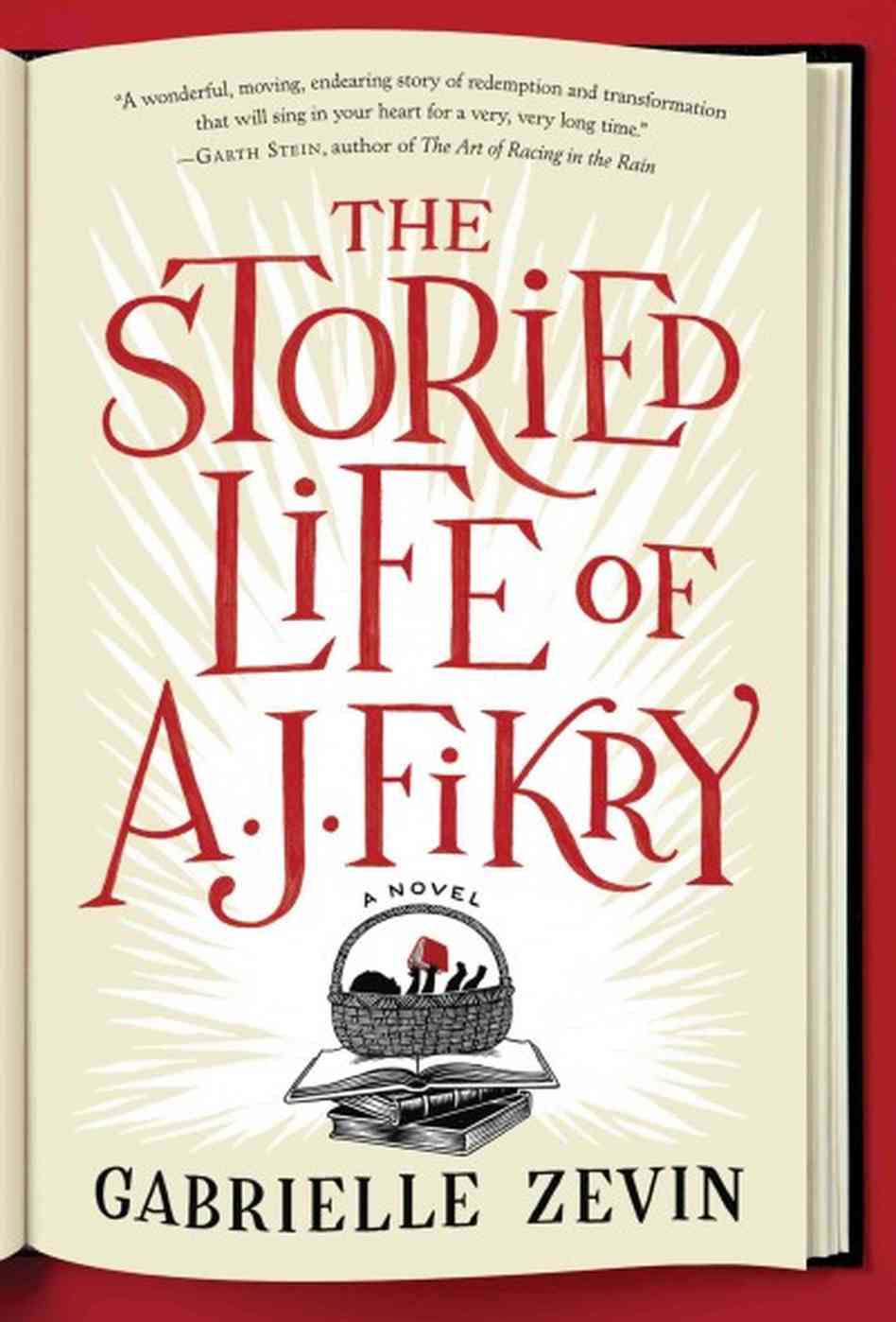
Storied Life of A. J. FikryI have just finished one of the most charming novels I’ve ever read, Gabrielle Zevins’ The Storied Life of A. J. Fikry. I couldn’t resist a novel about a bookseller, and it is very, very funny and smoothly written.

The main character, A. J., is a rather cranky bookstore owner.  He is lonely.  He is a widower.  He misses his wife.  He has poor social skills, so he doesn’t have a particularly strong customer base. It was his wife who did the PR and who sponsored the Vampire Ball.

Every chapter begins with a brief journal entry by A. J. about a short story, and he  loves short stories more than novels.

There are many things he doesn’t like, among them Y.A. vampire books.

He doesn’t like writers.

And the only writer event he hosts in the book is something of a bust from his point of view, but the customers love it.

A. J. says about writers:

Despite the fact that he loves books and owns a bookstore, A.J. does not particularly care for writers.  He finds them to be unkempt, narcissistic, silly, and generally unpleasant people.  He tries to avoid meeting the ones who’ve written books he loves for fear that they will ruin the books for him.

This made me burst out laughing, because I organized a series of readings for various bookstores and schools years ago.  (I was a fanatic about books, and did this pro bono.)  Most of the writers were very kind and charming, and some wanted to hang out with me.  (I was MUCH younger then, and I read their books.)  Very few people at these events have read the books.

There were a few difficult writers.  I won’t pretend there weren’t.  You want to stay away from prima donnas, if you know they’re prima donnas.  They are not better writers than the non-prima donnas, but they are picky about everything:  their flights, their food, their escorts, professors putting their arms around them (these particular professors put their arms around everyone, male or female), they want juice instead of water, they can’t eat anything at the restaurant, because they’re on a special diet of beef, and they make fun of the people at the reading.  Sometimes it really puts you off a writer.  In general, though, I found them to be very easy-going people.  Book touring is part of the job.  And they were getting paid an honorarium.

So overall, though I love books, I don’t need to meet writers, even if I would like to. I do wish I’d attended something at the Oxford Literary Festival, because their standards must be high (it’s Oxford!).

There are, however, a lot of readings in Iowa City, if I want to attend.  For instance, on Saturday Rachel Kushner, author of The Flamethrowers, will be in Iowa City for two events.  And she has been longlisted for the Bailey Women’s Prize.  I’m still jet-lagged, so I won’t be there.  But someone will be thrilled.

Usually attending readings makes me want to read more of the writers’ books.  It is very unusual for it to put me off.  If you don’t have to deal personally with the writers, it’s always a breeze.

But how do you feel about writers?  Do you like writers?  Do you want to meet them?  I’m sure some of you go to readings, and some do not.    Let us know your impressions!  What’s the best event you ever attended?

Wouldn’t you like to meet Dickens?

Traveling Alone & Helene Hanff’s The Duchess of Bloomsbury Street

Year after year I’d planned a pilgrimage to London, only to have it canceled at the last minute by some crisis, usually financial. This time it was different.  From the beginning, heaven seemed to favor the trip.”–Helene Hanff’s The Duchess of Bloomsbury Street

DuchessofBloomsburyCOVERI  am reading Helene Hanff’s The Duchess of Bloomsbury, a sequel to 84 Charing Cross Road, the story of her 20-year correspondence with the buyer of an antiquarian bookstore.  Hanff, an autodidact, was unable to find the books she needed in New York, so she ordered dozens from London.

After the publication of 84 Charing Cross Road, she finally traveled to London, though, alas, her friend the buyer had died and the bookstore closed.  The publishing company set up a mini-book tour for her (signings and interviews).  Though Helene was terrified by the flight, her many friends and fans made her comfortable in London:  a fan who worked for the airline whisked her through customs (“She’s a friend”), and then Nora from the store and her daughter Sheila drove her to the Kenilworth Hotel in Bloomsbury (at Russell Square near the British Museum.)

Her adventures at the hotel are very amusing.  Why is it so hard to be an American traveling in London?  It’s because we don’t know how to work the gadgets.

She is baffled by the shower.

The shower stall is a four-foot cubicle and it has only one spigot, nonadjustable, trained on the back corner.  You turn the spigot on and the water’s cold.  You keep turning, and by the time the water’s hot enough for the shower you’ve got the spigot turned to full blast. Then you climb in, crouch in the back corner and drown.  Dropped the soap at once and there went fifteen dollars worth of hairdresser down the drain, my shower cap was lifted clear off my head by the torrent.  Turned the spigot off and stepped thankfully out–into four feet of water.

I was similarly bemused by the shower. When I reported that only cold water came out of the spigot, the clerk explained one handle was for the temperature, the other for the pressure. Then I managed to get hot water (only hot water), which was preferable to cold.  Regulate the temperature?  Couldn’t be done.

Helene was constantly getting lost.  She couldn’t read a map.

Sallied forth with my map after breakfast and saw the sights of Bloomsbury.  Got lost several times; it seems a street can be on the left on your map without necessarily being Left of where you’re standing.  Various gents came out from under umbrellas to point me where I wanted to go.

I got lost, too.  It was easier after I figured out that if you’re not on the side of the street where the signs are you’ll never find your way.   And you never know whether the sign will be on the left or the right!.

Helene didn’t take the tube.  She walked, took cabs, and her fans sometimes picked her up in cars. The tube is much easier than cabs, I think.  The one time I called a cab (the black cab company recommended by the guidebook), I was waiting on the steps when a clerk came out to say I had a phone call.  The dispatcher told me there wasn’t a cab in the area. So even if all the others were rogue cabs, as my guidebook suggested, I could not lug my books to the shipping store on my own. The third company sent a cab.

IMG_2840By the way, after a bracing first night sleeping in jeans and sweaters, I  experimented with the white thing on the wall.  Fortunately it was a radiator.

And then there was blessed heat!

I’m an inexperienced traveler, as you can tell. I’m used to bicycling in the country.   But I loved London and hope I’ll go back someday.  My husband says he’ll go if I can find a boat.

Hanff’s book is a wonderful travel book, and I wish I’d read it before I left.  Nothing much has changed since the ’70s…  And I laugh at her adventures, because we are/were both inexperienced travelers.