
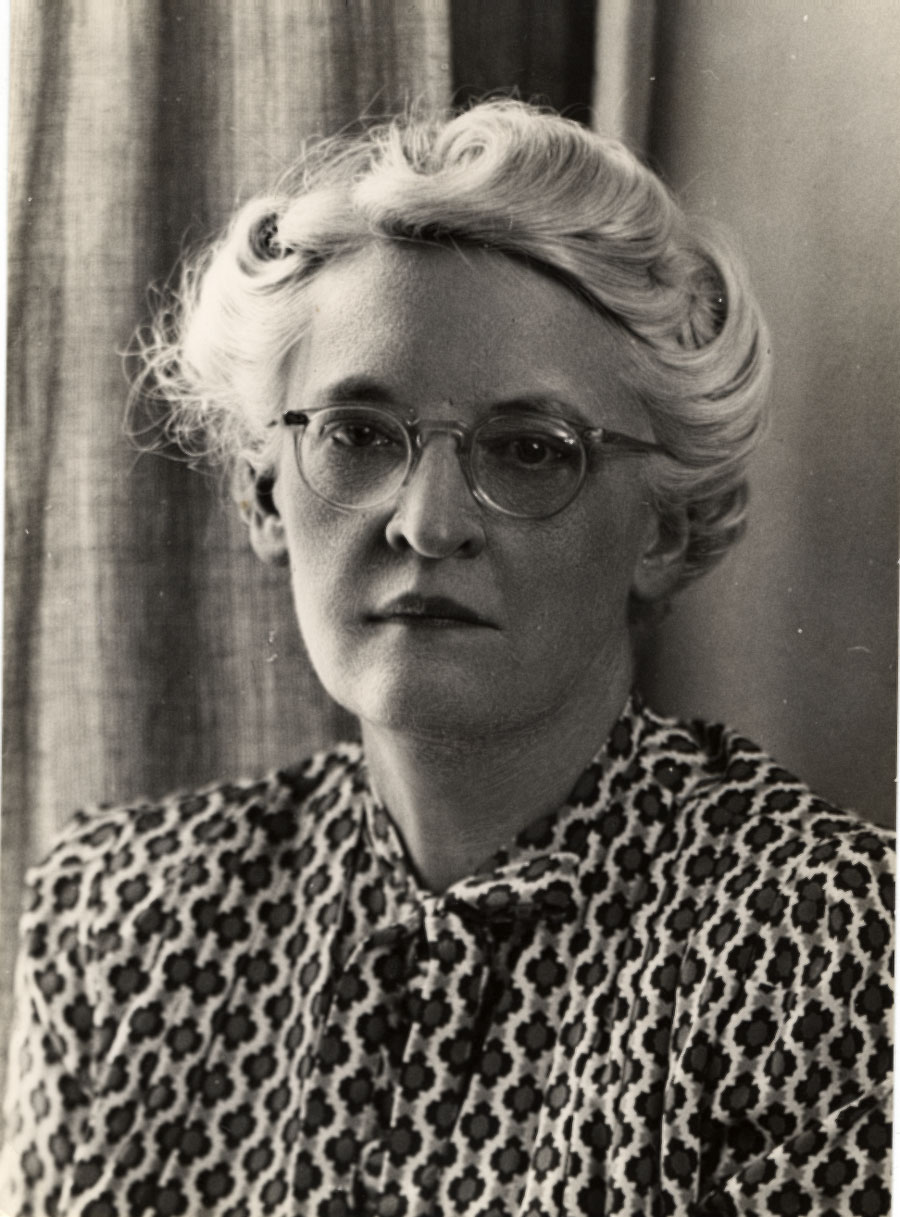
Ruth Suckow, Iowa writer
Fans of Ruth Suckow, an Iowa writer, will want to attend the annual meeting of the Ruth Suckow Memorial Association this Saturday, June 7, at 10 a.m., at the Cedar Falls Public Library in Cedar Falls, Iowa. The society will discuss business in the morning, and after lunch you can attend a free discussion of Ruth’s memoir, “Myself,” from her book, Some Others and Myself.
You can get more information from: lounsberry@gmail.com or cheriedargan@gmail.com
Because I love Suckow’s work, I am reposting an old entry about Suckow’s birthplace from my old blog.
Here it is.
Ruth Suckow’s Birthplace, Hawarden, Iowa
If you don’t live in the Midwest, you don’t know who Ruth Suckow is. If you do live in the Midwest, you don’t know who Ruth Suckow is.
So who is Ruth Suckow?
(a) A wealthy farmer who invented a hybrid corn in Hawarden, Iowa?
(b) A folk artist from Hawarden, Iowa?
(c) A writer of novels about small-town life in Iowa?
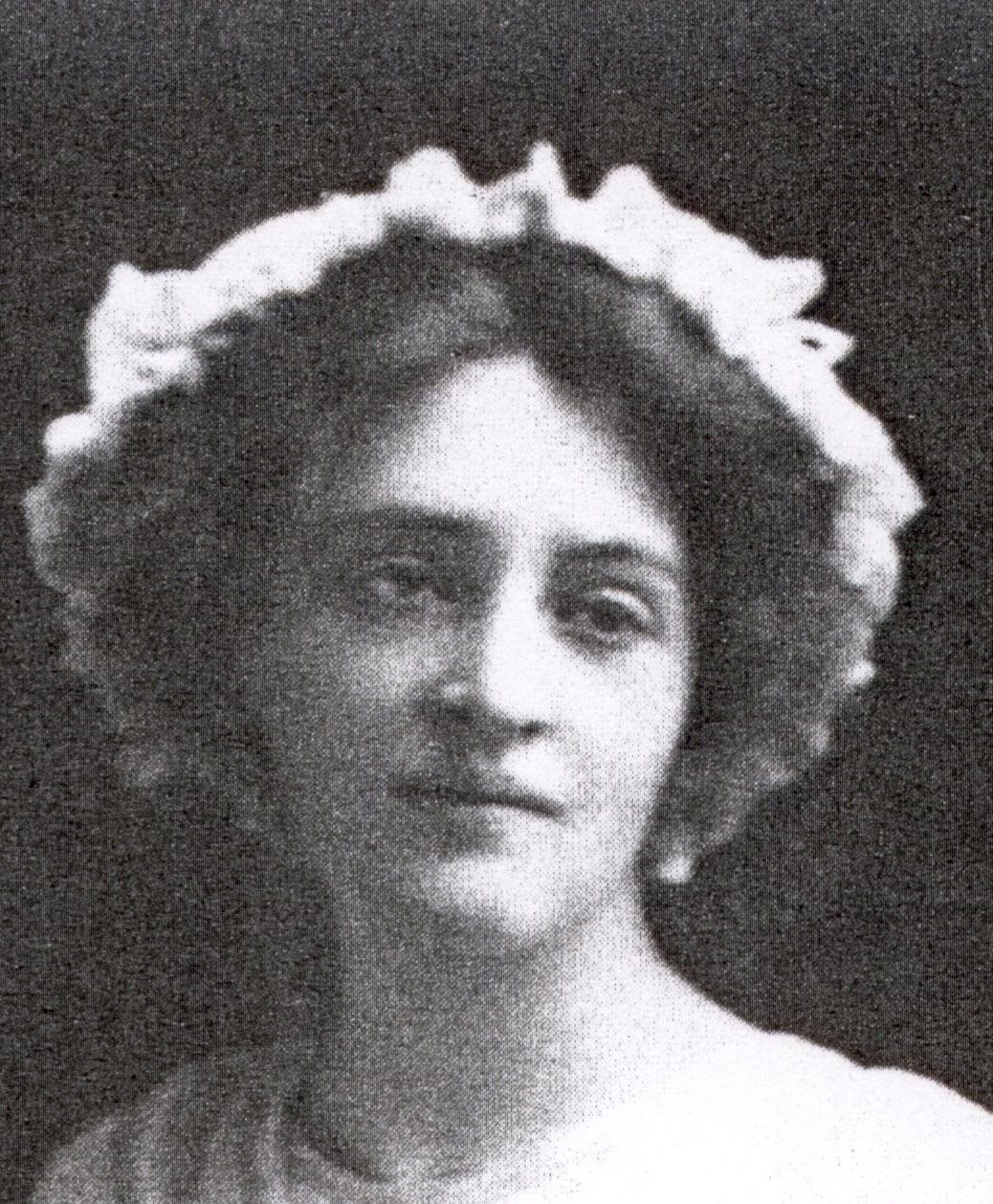
Ruth Suckow, Grinnell, Iowa, 1914
If you picked the last option, you are right. Suckow (1892-1960) was born in Hawarden, Iowa. She was a popular writer in the 1920s, ‘30s, and ‘40s. Her fictional chronicles of small-town Midwestern life are quiet, simple, and undramatic, yet astonishingly moving even today. If you like the fiction of Bess Streeter Aldrich and Maud Hart Lovelace, you will enjoy Suckow’s famous novels, The Folks and New Hope, both in print (University of Iowa Press).
I didn’t discover Ruth’s work till I moved back to Iowa and began to collect her books at book sales. I was charmed by her 1942 novel, New Hope, a fictional account of Hawarden at the turn of the century.

Ruth Suckow’s birthplace, Hawarden, Iowa
When I learned that Ruth Suckow’s house had been restored, I knew I had to take the tour. On the long drive to Hawarden, a lovely small town in the Missouri River valley near the Loess Hills, I read aloud parts of New Hope to my husband/driver.
Our kind guide, who wore a Ruth Suckow t-shirt and gave us a Ruth Suckow bookmark, told us she was reading New Hope in preparation for the book discussion at the 2012 Ruth Suckow Memorial Society meeting.
She said it had taken volunteers 20 years to restore the house, and they had just refinished the floors and hung the lace curtains from a thrift shop. It was the parsonage for the Congregationalist church, where Ruth’s father was the minister.
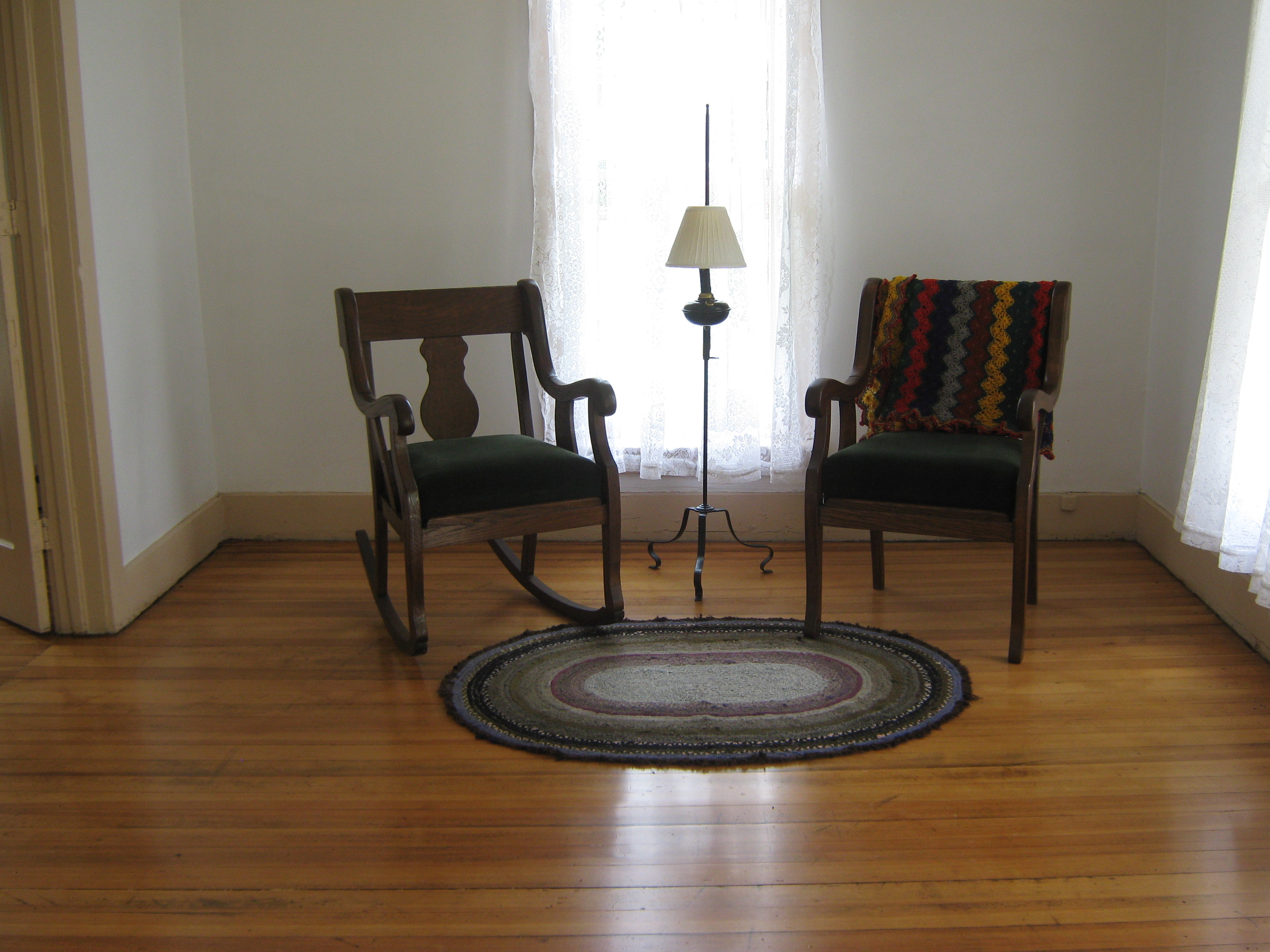
The front parlor
Ruth was an expert on church-centered social life in small towns. Her father’s work took the family to pastorates in Hawarden, Le Mars, Algona, Manchester, Grinnell, and Earlville. While her father wrote his sermons, she played in his study, where you can now see her typewriter and the desk her husband gave her.
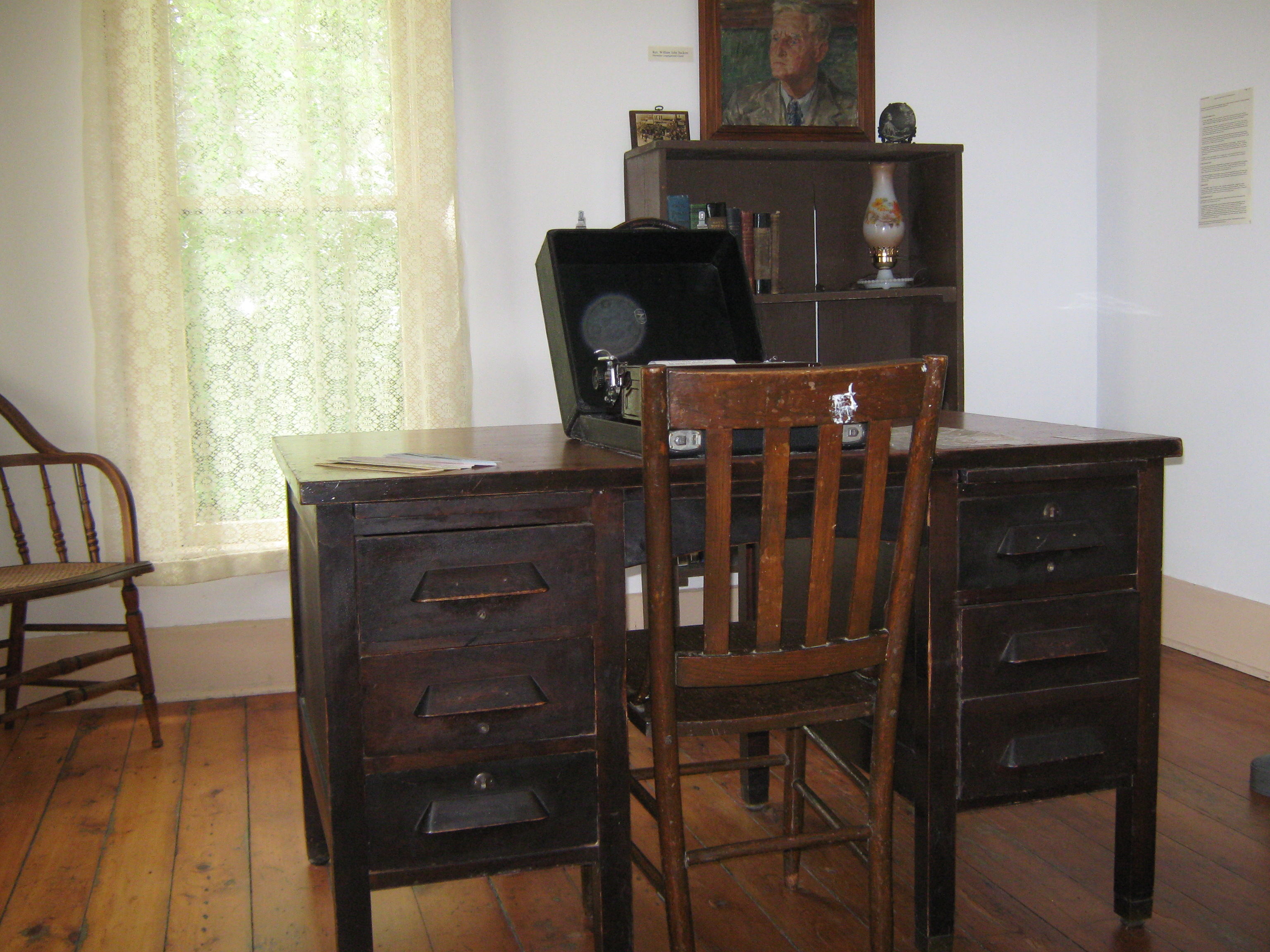
Desk and typewriter
You can also see Ruth’s father’s typewriter. On the sheet of paper is a poem. His own interest in writing may have influenced her.
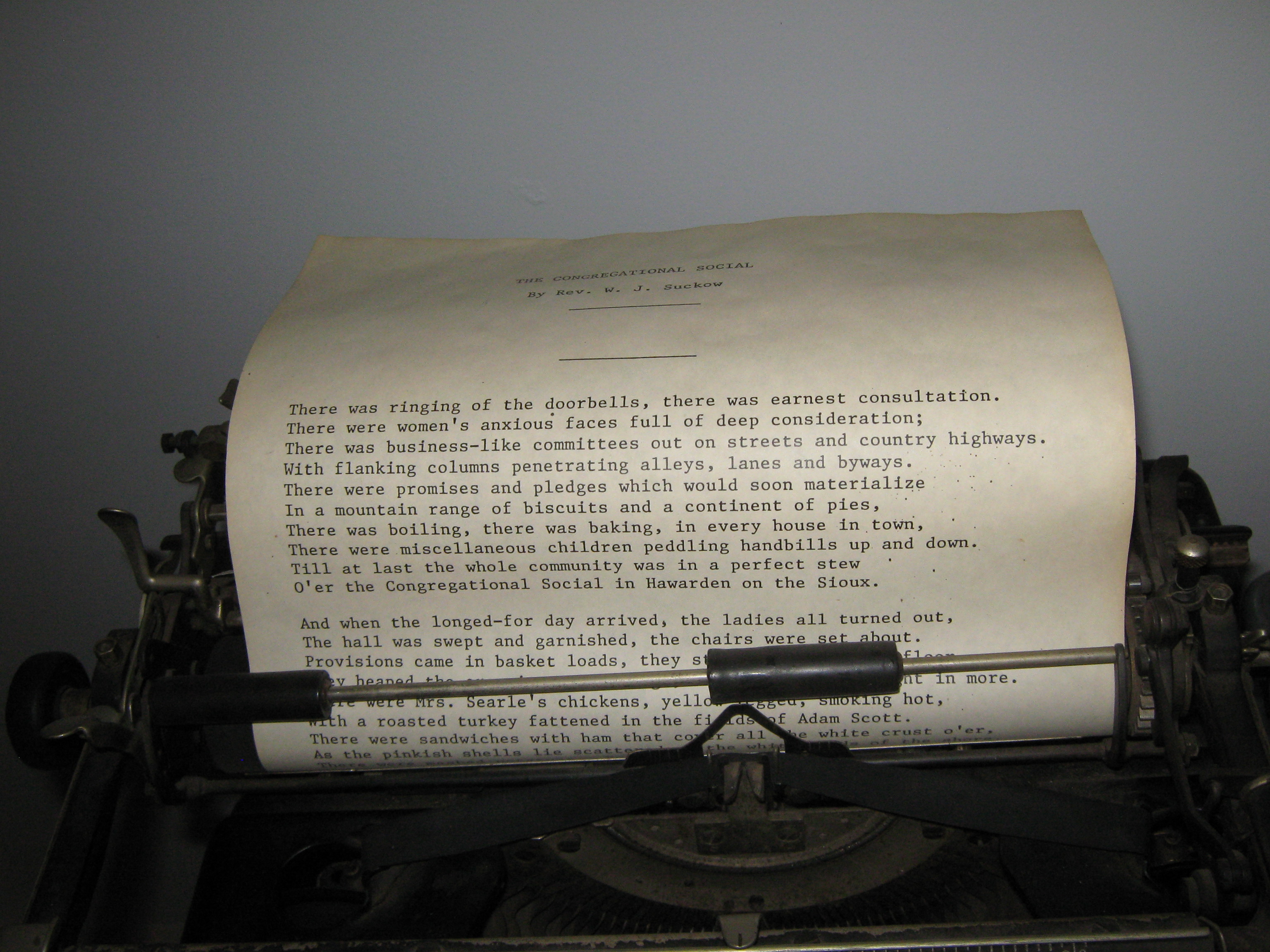
Ruth’s father’s typewriter and a poem
The six-room house is tiny from the outside, but inside it seems spacious. (We noticed this same phenomenon at Willa Cather’s house in Red Cloud, Nebraska.) There are high ceilings and lots of light from floor-to-ceiling windows. These days it is hard to believe a family could be comfortable here, but the quiet–no electronic diversions, no three-car garages, no expensive hobbies–may have nurtured creativity. How much easier to write when there are few distractions.
There are displays of her books, clippings and pictures…
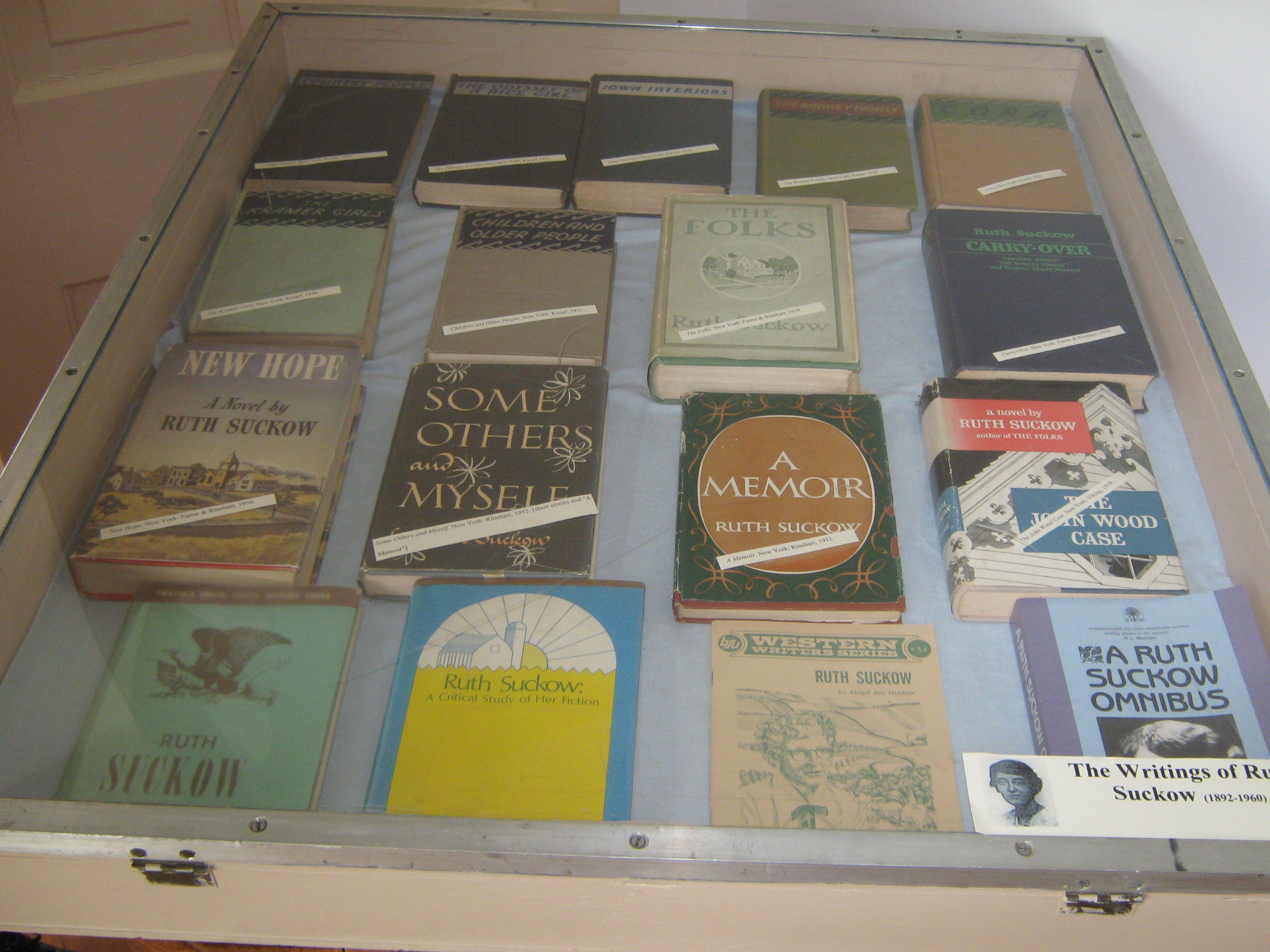
Ruth Suckow’s Books
We loved our visit there, and it is definitely worth the trip. There are no books or t-shirts for sale–it’s totally uncommercial. In some writers’ museum-houses–I don’t mean commercial places like Mark Twain’s house in Hannibal, or even Louisa May Alcott’s Orchard House in Concord–I often feel I get to know the writers.
 mirabile dictu
Thanks for reminding me of Ruth Suckow. Your post about her a couple of years ago inspired me to read a couple of her books.
LikeLike
Yes, we’re the Ruth Suckow fans, Nancy. The memoir is really good: starts out with what it’s like to be a minister’s daughter, and people’s expectations.
LikeLike