The Critic in Novels: Cultured or Caustic?

Critics have a bad rap.  We picture them as cruel little men (somehow not women) who savage the books and movies we love.  “I never agree with the critics,” my mother used to say.  I seldom do myself, but I read reviews and discover good books by reading between the lines.  Personally, I have never known a critic.  I have known book reviewers, who are a milder bunch. But suddenly, last month, critics kept cropping up as minor characters in the twentieth-century novels I was reading.

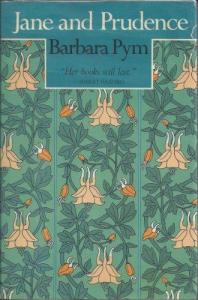
In general, they were an unpleasant bunch.  I chortled over a scene in Barbara Pym’s Jane and Prudence, set at a literary society meeting.   Jane, a middle-aged minister’s wife and writer of a collection of essays, attends the meeting to “absent herself from parish duties.”  Her old college friend, Barbara Bird, a novelist, chats about the good reviews of her latest novel.  She is pleased by the turn-out for the meeting.

“Better gathering than usual,” said Miss Bird; “quite a few critics.”

“Such mild-looking men,” said Jane, seeing one of them taking his seat near the front.  “Perhaps they compensate themselves for their gentle appearance by dipping their pens in vitriol.”

Later, Jane has an accidental encounter with a critic while conversing with Miss Bird.   “Oh, yes,’ agreed Jane enthusiastically, stepping backwards into a critic and causing him to upset his coffee over himself.”

Pym getting back at the critics?  But did Pym ever receive a bad reviews?
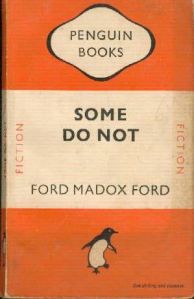
 

Critics are useful to writers, as we see in Some Do Not…, the first volume in Ford Madox Ford’s stunning tetralogy, Parade’s End.  Mrs. Wannop, a brilliant novelist and freelance writer, arrives unannounced at a brunch and immediately corners a critic.    “…Mrs. Wannop was a woman of business. If she heard of a reviewer within driving distance she called on him with eggs as a present.”  Ford is very comical about her, but, believe me, she needs the press, because she and her suffragette daughter are almost starving.
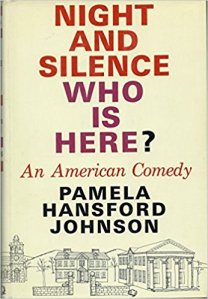
I am a great fan of Pamela Hansford Johnson, and recently reread the second in her Dorothy Merlin trilogy,  Night and Silence, Who Is Here?  Dorothy’s friend Matthew, an aristocratic playboy, is lionized by an American college after Dorothy bullies him into writing articles about her. “Since he mildly liked her work, he saw no reason why not to; and as her total oeuvre consisted of twenty shortish poems and four slim verse-dramas, the labor was not demanding. He had all the luck of those who find themselves, by accident, first in the field. He was immediately accepted as the world authority on Dorothy Merlin, because he was literally the only one.”
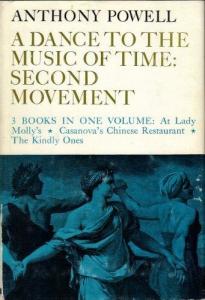
In A Dance to the Music of Time, Anthony Powell’s 12-novel masterpiece, the critics are difficult people, sometimes not quite of the writer/narrator Nick’s class.  He went to Oxford with Mark Members, a savvy social-climbing poet and critic.  In the fifth novel in the series, Casanova’s Chinese Restaurant, we meet Maclintick, a bad-tempered music critic. He is not entirely unsympathetic, but comes to a bad end.  Nick describes him as follows:

…Maclintick belonged to the solidly built musical type, a physical heaviness already threatening obesity in early middle age.  Broad-shouldered, yet somehow narrowing toward his lower extremities, his frontal elevation gave the impression of a large rectangular kite about to float away into the sky on the fumes of Irish whiskey, which, even above the endemic odors of the Mortimer and the superimposed insistence of Mr. Deacon’s eucalyptus, freely emanated from the quarter where he sat.  Maclintick’s calculatedly humdrum appearance seemed aimed at concealing bohemian affiliations.  The minute circular lenses of his gold-rimmed spectacles, set across the nose of a pug dog, made one think of caricatures of Thackeray or President Thiers, imposing on him the air of a bad-tempered doctor.

What is the source of these satiric portrayals of critics?  Why do we recognize them?  Perhaps I first read about a critic  in one of the novels of Aldous Huxley, Point Counter Point, or a satire by Evelyn Waugh?

I do remember a critic in Sebastian Faulk’s relatively recent novel, A Week In December, published in  2009.  I loved the large ensemble cast, and wrote in my book journal:

My favorite character is the terrible but funny Tranter, a book reviewer who lives to eviscerate novelists. He seems to be right out of the pages of Anthony Powell….   He lives off a number of freelance review assignments, combined with gigs running an upscale women’s book group and editing teachers’ comments on reports at a fancy private (or public, as they say in England) school.  Reading the newspaper, he focuses on the book review pages.

So do you know of any critics in novels? Who are your favorites? And why do they have such a bad reputation?
Confessions of a Book Award Junkie

There is always controversy over book awards.  Recently 30 publishers in the UK signed a letter to the organizers of the Man Booker Prize asking that the decision to include Americans  be overturned.  I’m neutral, though we do have plenty of American awards already.

So what better time to post “Confessions of a Book Award Junkie,” an essay I wrote in the 1990s?  Enjoy!

CONFESSIONS OF A BOOK AWARD JUNKIE

Those of us who grew up in the ’60s watching beauty pageants and the Oscars suspected early on that awards were arbitrary—a conjecture that never spoiled our enjoyment of the spectacle. My mother and I loved these shows. We huddled on the davenport and picked our favorites. Our criteria were self-evident and sound: Miss Alaska on the basis of cuteness! Julie Christie because of her British accent! The Sound of Music because we’d actually seen it! If the judges didn’t agree with our choices–and our odds were roughly as good as picking a winning horse in the trifecta–the evening was shot.

These days I lack interest in pageantry, and Hollywood glamour makes me cranky (the hair, the gowns, the shoes, the tearful speeches–where are the jeans-and-sweater types?).

No, my interest in awards is bookish. I confess, I am a book award junkie. I secretly wonder, Why can’t the National Book Awards and the Booker Prize do it up like the Oscars? Although I find book awards both silly and exciting (how can judges narrow the field to a single best?), I am enthralled each fall by the announcements of the winners. Even though I may not agree with the selections and sometimes dismiss them as politically motivated, it’s a good way to learn about the contenders on the literary scene. It is safe to give these books as Christmas gifts, because people are vaguely awed by awards, though many prize winners prove bloated disappointments, fated to be sold or traded at used bookstores.

In case you’re not an insider, the National Book Awards, sponsored by he National Book Foundation and selected by writer-judges for a single term, honor American works of fiction, non-fiction, poetry, and young people’s literature. There is often grumbling about the choices, and this year (1996) was no exception, as reported in a recent New York Times article. Barbara Grossman, a senior vice president and publisher at Viking Penguin, commented, “Do you think the judges take a perverse pleasure in picking authors that no one has ever heard of?” And Jonathan Galassi, editor in chief of Farrar Strauss & Giroux, called the list of finalists “almost willfully fugitive.”

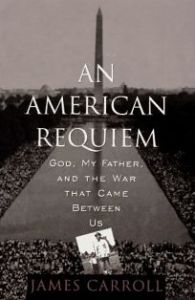
I admit, the choices are a bit strange. The fiction award went to Andrea Barrett’s workmanlike but uninspiring Ship Fever and Other Stories, a collection of short stories about scientists, several set in the 19th century, reminiscent of A. S. Byatt’s Angels and Insects, though without the brilliance and passion. In short, I was often bored. The other choices were also a bit obscure. For your Christmas shopping convenience, you may want to know them, though: they are Elizabeth McCracken’s overrated first novel, The Giant’s House, Ron Hansen’s Atticus, Steven Millhauser’s Martin Dressler: The Tale of an American Dreamer, and Janet Peery’s The River Beyond the World. I was more impressed by this year’s non-fiction winner, James Carroll’s An American Requiem: God, My Father, and the War That Came Between Us. This memoir about Carroll’s complicated relationship with is father is powerful, despite his dense style and tendency to pontificate. Carroll, a novelist, former priest, and the son of Lieutenant General Joseph F. Carroll, who directed the Defense Intelligence Agency during the Vietnam War, documents his struggles to assert his own identity as a priest and anti-war activist during political and philosophical clashes with his father. Did I love this book? No. Would I recommend it? Yes.

There are some award-winning books this years that I whole-heartedly recommend. The Booker Prize, Britain’s most prestigious literary prize, is a more reliable guide in terms of consistent quality and readability, perhaps because its field of contenders comprises English, Scottish, Irish, Canadian, Australian, South African, and the entire Commonwealth. In the 1990s, two of the more breathtaking winners have been Michael Ondaatje’s The English Patient and A. S. Byatt’s Possession. The 1996 Booker nominees are also stunners. The prize was awarded to Graham Swift’s Last Orders, a moving novel about four friends who come together after a friend’s death to scatter his ashes at the seaside. These working-class men, the central narrator being Ray, a good-humored man who frequents the racetrack, have complicated relationships with one another and their late friend. Their relationships are explored through flashbacks, tricky shifts of viewpoint, and Ray’s account of their trip to the seaside, marked by frequent stops and quarrels. This would make a wonderful Christmas gift.

Some of the runners-up, however, are easier reads. Margaret Atwood’s Alias Grace is a historical novel, impressively researched and beautifully-written. It tells the story of Grace Mark, a Canadian convicted of murder in 1843 at the age of 16, and her relationship with Dr. Jordan, a young psychoanalyst who arrives at the prison in in 1851 to extract the details of the crime. Atwood, whose range is breathtaking, doesn’t let you down, though I prefer her novels about contemporary women. Be on the lookout for her twists and turns of thought and language.

I also enjoyed Sheila Mackay’s The Orchard on Fire, a novel set mainly in Kent, England, during the narrator’s ’50’ s childhood. Eight-year-old April and her best friend, the daughter of an abusive pub owner, have sometimes happy, more often puzzling encounters with other adults. And their observations of the world around them are often comical and always perceptive. And here my recommendations stop. Although I am eager to read the remaining nominees, I did not receive from the publishers my copies of the two available in the U.S. in time to read them for this article. They are: Rohinton Mistry’s A Fine Balance, Beryl Bainbridge’s Every Man for Himself, and Seamus Deane’s Reading in the Dark.

So that’s the news on the award front, and I hope you can find the books!

The Things We Carried from Classics

Now that we’re older and smarter, wouldn’t it be fun to go back to graduate school?

Well, perhaps it would be fun to audit classes.

I had two careers as a graduate student. First, I earned a master’s in classics.  Later, I took graduate classes in English.  I loved classics, but English was more fun.

English wasn’t “real” graduate school for me.  I enjoyed my English classes thoroughly, and felt no pressure:  I took them while I was looking for a full-time  job. During my Marvell phase, I  dashed off papers on “Ovidian Influences in Marvell’s ‘The Garden,’ ‘Hortus,’ and ‘The Nymph Complaining for the Death of Her Fawn.’ ”  I compared Marvell’s “On a Drip of Dew” to “Ros,” his Latin version of the same poem.   (Marvell was an accomplished classicist.) When I dropped off my papers, the professor was enthusiastic and said (s)he looked forward all day to my papers. At first I thought (s)he was mocking me–there is a  very high sarcasm rate among classicists–but no, she was pleased to meet  a Latinist.  And the atmosphere was very different from classics–less uptight?

Back in print.

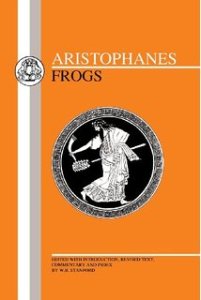
Classics was a much more arduous affair, requiring more commitment.  Over infinite cups of Oolong, with my charming cat batting at my pen and dipping her paw into yogurt, I  spent hours translating Cicero’s Somnium Scipionis (The Dream of Scipio), Horace’s odes (Nunc est bibendum), and Aristophanes’s The Frogs (Brekekekex koax koax).  Sometimes I had to work from grimy photocopied pages.  Our professor distributed Xeroxed copies of an out-of-print edition of  The Frogs.   An entire Survey of Greek literature class was taught off Xeroxes. Whether it violated copyright law, who cared?

Naturally, being a student was not just about books.  I  loved Bloomington:  it was like my hometown, only prettier. My boyfriend drove me to Bloomington, and we lugged my very few boxes up two flights of stairs into a one-room apartment above Howard’s Bookstore.  I settled in with my cat, dictionaries, grammars, novels, and Rolling Stones albums, and missed my boyfriend when he left.  (Could I have listened to “Miss You” more often?) Between bouts of homework, I went to Howard’s, the Runcible Spoon (a coffeehouse), and Caveat Emptor (a used bookstore).  Walking down Kirkwood towards campus, I was almost bowled over by roller skaters.   There was a kiosk where people rented roller skates.

Everybody in classics knew everybody: it was a small department.  The grad students were a genial group, but two of my friends dropped out the first year.  I was indignant that we lost them.  The culture of graduate school can be grueling:  the work load is ridiculously heavy, and you have to prioritize.  I read all the Greek and Latin literature, but was willing to gamble on skipping that learned  article on  Greek and Sanskrit  in the American Journal of Philology. And if you couldn’t skip a few steps, you’d have a nervous breakdown.  On the other hand, perhaps my friends dropped out because they didn’t like the bullshit.

Fortunately, there were some friendly survivors.  A charming Englishman was always up for a party, though I regret to say he didn’t carry a teddy bear like Sebastian in Brideshead Revisited.  A Uriah Heepish character  always lit the department chair’s cigarettes and pulled out chairs for women but then inexplicably failed the Ph.D. Latin exam.   The brightest student by far was a lovely, well-dressed, unpretentious linguist who shared my love of Masterpiece Theater and lent me her copy of Dorothy Sayers’ Peter Wimsey stories.

My boyfriend finally moved in with me.  Thank God!  Here is a description of young love:  we spent hours at the library, doing homework in a glassed-in smoking room, really a kind of porch.  We sat there mainly because there were no windows above the second floor, and the  carrels made me claustrophobic.  Things smelled different in those days:  we didn’t smoke, but everybody was used to smoke.  There were smells of smoke, beer, hamburgers everywhere.

How on earth did we live off our $2,900 stipends?  We got that and free tuition.  Well, we had very few expenses:  just housing and food.  No work wardrobe, you could walk or bicycle everywhere, and many cultural events were free.  When we found our first real jobs in a city, we seemed paradoxically to have less money.  For several years we struggled financially.

I took the literature, not the stress, from the grad school experience, and honestly, a master’s degree helps in the workplace.   But what a system!  Perhaps it is has been reformed; I don’t know anybody in that world now.

Our Winter of the Aeneid: The Trojan Diaspora & the Trojan Women Rebel in Books 3 & 5

Aeneas, Polydorus, and Leaving Crete

Yes, I’m late with our Aeneid readalong post this week!

People have written notes to say they’re behind in the reading, so I kicked back this week.  Today I’m writing about Books 3 and 5 together, because they are the neglected books of the Odyssean first half of  the Aeneid.

The language is less rich in Book 3, but the plot is fast-paced and spellbinding, and Virgil heightens our emotions by his descriptions of the Trojan diaspora.  I found myself grieving and increasingly distressed as Aeneas and his people attempted to find a new home in foreign countries, only to be routed again and again.

In Thrace Aeneas prepares to sacrifice to the gods–ironiically pious–when dark blood drips from a tree as he tries to cut greenery for a roof for an altar.  Virgil says,  horrendum et dictu video mirablile monstrum  (and horrendous to say I see a fearful monster [omen] ).

Virgil continues:

nam quae prima solo ruptis radicibus arbos
vellitur, huic atro liquuntur sanguine guttae
et terram tabo maculant.

“When the first stalk came torn/out of the earth, and the root network burst/Dark blood dripped down to soak and foul the soil.”  (Fitzgerald translation, p. 66)

It is Polydorus, a Trojan betrayed and killed by a king who took gold then buried Polydorus under a hedge of spears which took root.  Obviously the omen is bad and the Trojans cannot remain.

The C. Day Lewis translation

After holding a funeral for Polydorus, they sail to Delos and consult the oracle.  Aeneas, still unwilling to assume leadership, refers the portent to his father Anchises.  They must go their ancestors came.  Anchises says they should go to Crete (but they are fated to go to Italy).   So in Crete they begin to build a city, Pergamum (Little Troy), and are content and secure when the plague strikes.

It’s too much.  I kept picturing them fleeing from the smoke and fire of Troy, losing people in the flames, Aeneas losing his wife Creusa, having to build a fleet, then not knowing where to go, and there were so few of them that they did not dare go to populated areas where there might be war, and then to have to leave Thrace and Crete…

Their wanderings in Book III continue, and Anchises dies in Sicily.  Then in Book V, after leaving Dido in Carthage, they return to Sicily (the gods send the ships in that direction), where their friend Acestes (a Trojan) welcomes them.  It is a year since Anchises died, and Aeneas celebrates with games.

But while the men are participating in ship races, foot races, and archery contests, the Trojan women rebel, stirred up by Juno, who sends Iris to persuade them to burn the fleet. (Juno later also agitates the women in Italy , through Amata, the mother of the Italian woman whom Aeneas is fated to marry.)

Iris flies down from heaven and appears as Beroe, an old woman of noble birth.  She makes a long speech, and says to them (my rough and fast literal translation of part of it, so I don’t have to copy another translation):

“O wretched women, whom the Achaeans did not drag to death under the walls of our country! O unhappy people, for what death is Fortune keeping you?  Already it is the seventh year after the destruction of Troy, having traversed waters, lands, wild rocks and stars (weather) through the great sea  in the pursuit of  Italy, fleeing:  we  have been rolled (tumbled)  in the waves.  Here is the country of Eryx, Aeneas’ half-brother, and the host Acestes.  Who keeps us from building walls and giving our citizens a city?”

And Virgil seems slightly sympathetic,  as I am, though I know it’s the wrong side.  Yes, Aeneas is fated to go to Italy–and fight another war–and the women, incited by Iris, don’t want to go.  They wildly decide to burn the ships :   it makes no sense to keep sailing.   They are working against Aeneas’s heroic morale-building games.  Peace.  Home.

Aeneas and his men save the ships.  But staying is not a foolish idea.   Aeneas learns from Anchises’ ghost that it would be best to allow some to stay and go on with those who want to travel.

So Virgil has some sympathy for the women.  Aeneas leaves with a smaller number of mainly young men who want to fight.

Oh, poor, poor Aeneas.  But everything will become clear in Book VI when he meets his father in the underworld.

Writers, Backscratchers, and Truth Tellers

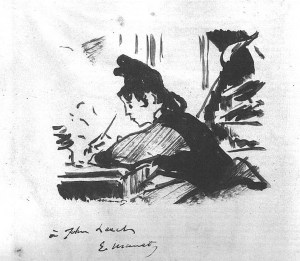
“Woman writing,” Edouard Monet

“Oh my God, I’d forgotten I ever knew X,” I said the other day when I was sorting through old letters.   X was a brilliant, little-known writer who encouraged his/her writing students.

I laughed when I read the letter, not because it was comical, but because it reminded me of the years when people said what they thought. I had sent X my review of Toni Morrison’s Beloved, but (s)he did not like Morrison’s work, which (s)he thought was influenced by Garcia Marquez, whose work (s)he thought overwritten.

X also asked if I’d seen a  letter to The New York Times about Morrison. Forty-eight black writers and critics had signed a letter saying it was disgraceful that Toni Morrison had not won a National Book Award or the Pulitzer Prize, which they said was  due to “oversight and harmful whimsy.”

X was impatient with such protests. (S)he wrote, “Too bad she didn’t think to head those backscratchers off.  Don’t they know, firstly, that awards kill; secondly, they don’t mean a damned thing; thirdly, it’s reverse racism; fourthly, she’s gotten plenty of awards, so what are they talking about?”

Trust me, X was not racist. (S)he liked only European writers!  American contemporary fiction did not interest him/her.

Reading X’s letter, which was perfectly acceptable in the context of knowing X,  a hyper-critical reader known for honesty, made me realize that (s)he could not express such opinions today.  (S)he  would  (a) be driven out of the Twittersphere, or whatever it is; (b)  be suspended from or lose his/her  job;  (c) have his/her work and legacy wiped out; and (d) have to apologize on Twitter after all that.

May I say that I love the writing of both Toni Morrison and X?   I once flew to Bloomington to hear Morrison speak!  And I think I’ll reread Beloved this weekend.

In every age there are backscratchers–it is how people get ahead–but there are also people who are honest at the wrong time.   And this is the wrong time!

Thank God we have our writers.  But you know we’re in trouble when everybody raves about the TV show The Handmaid’s Tale but then hisses Margaret Atwood on Twitter for talking about “due process.”  And so they prefer TV to writing?

I think I shall spend the weekend reading Morrison, X., and Atwood.   I need to get back to words that matter.  Words that make sense.

A Catch-Up Post: Mary Gordon, Pamela Hansford Johnson, and Marguerite Duras

Although this is a book blog, I do not write about every book I read.  Why not?  Well, it is my book journal.  Sometimes I transcribe notes from my handwritten diary, other times I prefer to muse on bookish topics like reading habits or unlikable characters.

But what happens when you have skipped critiques of so many books you have no option but to go back and look at your notes?  It is my obligation, isn’t it, to introduce you to the best books I’m reading?

And so this is a hasty catch-up post on three books I’ve meant to review.

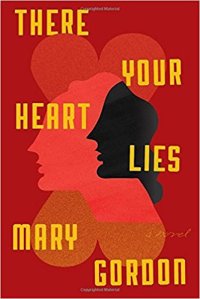
1  Mary Gordon’s stunning novel, There Your Heart Lies, published in 2017, is my favorite book by this award-winning Catholic writer.  I was so moved by it that I didn’t want to blog about it. You read it, you love it, you think about it–but it spoils the mood to explain.  I scrawled in my notebook:  A gorgeous novel, really a double narrative, set partly during the Spanish Civil War, partly in Rhode Island in 2009.  After Marian’s gay brother commits suicide in the 1930s, she rejects her wealthy family and marries her brother’s lover to accompany him to Spain. Gordon alternates chapters about Marian’s life in Spain in the ’30s and ’40s with Marian’s retelling of  the story to her granddaughter when she is in her eighties.   Often Marian repeats in conversation the same words Gordon used in the third-person narrative.  It is surprisingly effective.

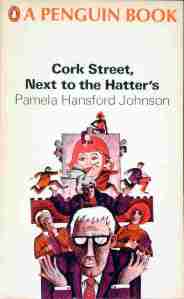
Pamela Hansford Johnson’s Cork Street, Next to the Hatter’s (1965).  Johnson’s satire of the writing life in the 1960s is hilarious.  The pretentious poet-playwright Dorothy Merlin is writing an “Anti-Verse play”; Pringle Milton has published her first novel but gets sidetracked posing for an artist’s photo for a milk ad;  Tom Hariot is determined to write a play so obscene that it can’t be produced (this proves impossible); and Dorothy’s  husband Cosmo reluctantly hosts a poetry reading at his bookstore.

Cork Street is the third in the Dorothy Merlin trilogy, three books loosely connected by the appearance of Dorothy and her friends. When I say these satires can be read as standalones, I mean it.  The plot elements don’t overlap.  Why didn’t I write about Cork Street before?  It is so witty that I wanted to give the book to everyone for Christmas so I wouldn’t have to write about it–but it’s out of print. And so I have to write about it.

And here is why Cosmo Hines is my favorite bookstore owner in literature:

Though it was commonly believed that Cosmo never opened a book, this was untrue. He was a passionate writer with positive tastes who could easily get through a dozen advance copies in a week; but what he liked best was novels about mad people, and through sheer personal enthusiasm had managed to sell thirty copies of one of these the previous Christmas. He also enjoyed books about drug addiction, but kept this to himself, since he had a clientele wholly uninterested in the subject.

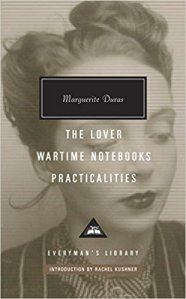
Marguerite Duras’s Wartime Notebooks (1943-1949).  These four small notebooks, written during the war, contain rough drafts of  stories and several alternate versions  of her novel The Lover.   The war stories are brutally effective: a woman tortures a collaborator (all the women leave the room in disgust, as would I have), and there is a powerful autobiographical account of waiting for her husband to be released from a concentration camp, and how she and a friend managed to save his life–he was a living corpse, unable to eat.  Later, when he is healthy at the beach, she laughs over the mriacle of his recovery.  This jumble of material is, I think,  more suited to someone who knows Duras’s work.  It is important work, but shouldn’t one first know the primary literarature?  And that’s why I put off writing about it.  It’s really not for me.

ARE THERE ANY BOOKS YOU ARE RELUCTANT OR TOO LAZY TO CHAT ABOUT?