Dare We Buy Informally “Banned” Books?

The other day, I went to a used bookstore. For once I was very well-organized: I was looking for books  for my science fiction project, and I was determined to buy only books on my checklist.  But alas, I found nothing:  they did not have Liu Cixin’s award-winning novel, The Three-Body Problem, nor could I find Samuel R. Delany’s Babel-17, nor Vonda N.  McIntyre’s The Exile Waiting.

I had ridden my bicycle, and it was so hot outside that the asphalt glittered and a steamy haze rose off the cars.  I couldn’t face leaving immediately, so I browsed in the literature section. There was nada–we already have tons of Jane Austen, Trollope, and T.C. Boyle–but finally I noticed a copy of Sherman Alexie’s memoir, You Don’t Have to Say You Love Me.

Some years ago, my husband and I were very amused by Alexie at a reading in Iowa City:  he is as witty as a stand-up comedian.  But the minute I took the book off the shelf, I began to sweat.  Perhaps I was dehydrated, but it was also nervous sweat.  And then I remembered that Alexie is under a cloud due to sexual harassment allegations. As I recall, they were of the “he-kissed-me-in-a-bar-without-consent” category, and one was actually “he-didn’t-help-me-publish-my-poetry.” I don’t consider those serious accusations,  but I decided not to buy Alexie’s  book,  because I was afraid the surly young clerk would humiliate me or call me out.

I usually don’t give a damn what anyone thinks.  But then I remembered the cause of this Alexie-rooted fear. A month or two ago a Millennial blogger (sorry, no idea who it was) expressed indignation because one of Alexie’s short stories appeared in an anthology. Good God! Forget talent, and forget “innocent until proven guilty.”  If it’s posted on Twitter or Facebook, it must be true, right?

The award-winning Alexie is a witty, brilliant chronicler of Native American life.  He grew up poor on a reservation, and writes about it. Whether or not he is a perfect man,  he has not, as I understand it, committed a crime.

If great writers had to be role models, we wouldn’t have any of either sex. Hemingway, F. Scott Fitzgerald, Zelda Fitzgerald, Edna St. Vincent Millay–all pretty much assholes.

I bought nothing at the store that day.

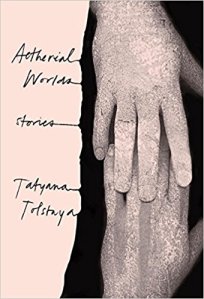
Aetherial Worlds by Tatyana Tolstaya

I prefer novels to short stories.  I love long, enthralling nineteenth-century novels with vividly imagined characters.  But I wonder if the short form is more accessible to today’s readers, as they become more engrossed in the minuscule worlds of tiny phones.

At any rate, the Russian writer Tatyana Tolstaya’s new collection of short stories, Aetherial Worlds, is my favorite new book of the year.  I have long admired Tolstaya, the granddaughter of the science fiction writer Aleksei Nikolaevich Tolstoy; she is a spellbinding writer of genre-crossing literature.  NYRB has published two of her books, The Slynx, a dystopian masterpiece, and White Walls, a collection of surreal and fantastic short stories.

Her new book, Aetherial Worlds, is a collection of elegant, wide-ranging stories, some realistic, some satiric, others surreal, still others fantasies.  In two of my favorite stories, the history of a house is central to the narrative.

In “The Invisible Maiden,” the narrator recalls childhood summers in the ramshackle dacha her mother fixed up, which was large enough to house seven children, the nanny, and two old women called “the grannies.” But the crazy unplanned house, she tells us, was built by “an imbecile” named Curly.

Curly’s stupidity manifested itself variously; for example, all the rooms on the first and second floors, save for one, faced north, and not a single ray of sunshine ever found its way to them. And so the house grew moldy and rotten, all the quicker because Curly, unable to refrain from stealing building materials, constructed the dacha with no foundation. In the faraway corner of the garden he erected a roomy Finnish outhouse with two seats—a two-holer—but as he absconded with the partition wall, an interesting opportunity presented itself: you could now visit the shitter in pairs. Curiously, no one ever took advantage of this.

The narrator describes not only their summers at the dacha but their fates as the years pass.  I especially love the character Aunty Lola,  an impoverished old woman who regards the dacha as her real home because she lives the rest of the year in a tiny converted janitor’s closet in a communal apartment.  The women of the older generation, including the nanny, have very different beliefs, habits, and histories from those of the younger generation. Tolstaya describes their experiences and eccentricities in detail.

The title story, “Aetherial Worlds,” is also the story of a house.  The narrator has moved from Russia to New Jersey to teach creative writing at a small college.  She buys a house near Princeton, “a long gray unfinished barn with a leaky roof, tucked away in the back of an overgrown plot in an unprestigious rural corner.”  Originally owned by an African American woman, the house has a gorgeous garden, and the narrator feels the ghost walking around the property.

She loves the house, which is entirely hidden by greenery in the summer, but teaching is a challenge.   Most of the students are lazy and cannot really read books.   When she asks an especially recalcitrant student to tell her what a story by Salinger or Hemingway is about, he answers, “I dunno.  I didn’t like it.”  She tries to be tactful when she criticizes them, because her job depends on student evaluations.  She learns the art of “psychological buffoonery” and to use simpler vocabulary. She explains,

And so the instructor must find more nurturing and beguiling ways to make the student realize he is a lazy ignoramus (if that is, indeed, what she wants him to realize), so that very student will be forced to admit it to himself and his friends will be able to corroborate it. Any earnest appeal to principles, to conscience, to exemplars worth aspiring to, or other such highfalutin crap that’s so popular in my homeland, doesn’t work here at all. Here one must provide nonstop entertainment for the group while simultaneously making each and every student feel they are number one, the subject of boundless and incessant care. All this without familiarity. And without fulsome praise. If a professor attempts to weasel their way into a student’s favor with too much fawning or too high a grade in the hopes of receiving a good evaluation, the student will only come to despise them and, upon getting the last word, shit all over them.

The years go by, and she does teach two brilliant student-writers, one of whom is autistic and believed by most to be mentally challenged.  (Later, he goes to the Iowa Writers’ Workshop.) But the fairy-tale house with its garden is at the center, until she decides she wants to live near the college and rents it to a young man who claims he wants “a sterile environment.”  And what happens next defines America for her in a nightmarish way.

Other stories are whimsical or satiric.    In “Without,” she speculates on a world without Italy.  “Greeks would be everywhere, there having been no Romans to conquer them–though that would, most likely, have been done, with great satisfaction, by the Persians once Alexander the Great died.”  In “The Window,” the character Shulgin learns that his neighbor is getting free appliances from a mysterious window in a Soviet building:  when the shutters swing open, regardless of whether they call out “coffee grinder” or “a package,” you must yell back, “Deal!”, or your life will become magically nightmarish.

Fabulous stories, of many different genres.

Bubble Tea, A Mystery Swap, and Cindy or Sandy?

My cousin and I are sitting on the porch on a windy day slurping bubble tea.  We’re wearing old paisley bandannas (circa 1970s) to keep the hair out of our eyes while we pore over books for our annual mystery swap. My pile has surplus copies of Dorothy Sayers’s Have His Carcase and Busman’s Holiday, while hers tends toward  Laura Lippman and Patricia Cornwell.  We’re opposites, but we both do love mysteries.

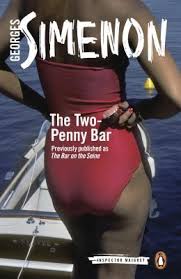
We agree to swap Simenons:  The Two-Penny Bar, a moderately enjoyable book in which Maigret learns from a condemned man about a murder committed six years ago, for Maigret and the Reluctant Witnesses, which my cousin (a librarian) stole from a discard pile at the library. Though I never understand the Maigret mystique–all Simenons are alike–at least they’re fast reads.

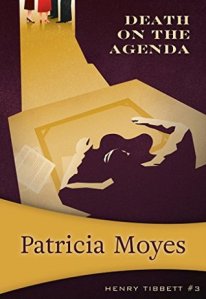
With some reluctance, I agree to part with one of my favorite Patricia Moyes books.  (“That isn’t in my pile; you’re cheating.”)  If you haven’t read Patricia Moyes, who wrote 19 books in the Inspector Henry Tibbets series from 1959 to 1993, I can affirm that they are utterly delightful.  In the third book, Death on the Agenda, Henry goes to Geneva to a police conference on devising ways to stop narcotics smuggling. Emmy, his wife, goes along to see friends and shop.  And Moyes, who once worked as an assistant editor at Vogue, describes fashions in detail:  I yearn for the peignoir Emmy buys, a “white chiffon peignoir scattered with embroidered roses and edged with lace.” But the day after a posh party,  Henry is accused of killing an American cop who’s suspected of leaking information to the drug dealers.  Emmy helps Henry investigate, and what a web of lies, sex, money, and crime they untangle!

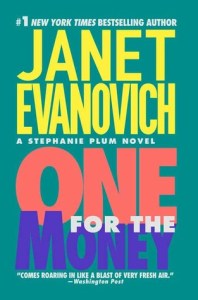
And so it’s philanthropy to part with a Moyes.  This is such a fun book!  But then we reach a crisis: should I trade my Janet Evanovich pile for her Laura Lippmans?  I love Evanovich’s heroine, Stephanie Plum, a doughnut-eating New Jersey bounty hunter, but the titles, which all have numbers (One for the Money, Four to Score), are interchangeable.  Which have I read?

“It doesn’t matter, because she eats doughnuts in every single book,” says my cousin practically.

We make the trade.

And then it happens.

A woman approaches.  With a clipboard.  That can’t be good.  And before we go inside, she is upon us.  She is campaigning for a candidate for the Democratic primary, and have I heard of Cindy?

“Which Cindy?” my cousin says.

The campaigner is startled.  “There’s only one.”

“I’m sure there are two.  Or is that Sandy?”

“I’m here for Cindy ___.  She’s concerned about Planned Parenthood, the environment, and mental health.”

I’m concerned about mental health,” my bipolar cousin says. “Does she know that a corporate psych hospital chain has been barred from moving in here, though the state has shut down five hospitals?  And that mental hospitals no longer allow the mentally ill to smoke, or take supervised breaks outdoors?”

Now the woman is rattled.  “Cindy wants to increase funds for mental health care facilities.”

Sandy wants to increase funds for research for psychotropic medications that will improve the lives of millions of people.”

“I do agree with Cindy on the environment,” I say, just to cut this short.  “I will vote for Cindy.”

The poor woman ticks off a bunch of boxes on her clipboard and thanks us.

“Now that,” I tell my cousin, “was outrageous.”

“I’m voting for Sandy.”

“Except there is no Sandy.”

Chill out and Dumb Down: Should I Throw out Georgette Heyer?

Vintage woman reading.

Chill out and dumb down.  We’re Americans in the summer of 2018.

I’m sitting in a hammock reading Balzac’s underrated classic,The Vicar of Tours, one of three stunning novellas in The Celibates, and at the same time wondering if an ice pack on my head would cool me off.  (It’s 95 degrees.) Then the landline rings and I step inside.

It’s my cousin the librarian, who calls 10 times a day from the reference desk.  “Look at The New York Times Book Review.”

“Why?”

“The summer reading issue,” she hissed.

I open my tablet.  And there it is.  In “73 Books to Read While the Sun Is Out and the Days Are Long,” there are no reviews of literary fiction.   None.  There are thrillers, true crime, cookbooks, and eight review-ettes of romance novels.  And, as you can imagine, it’s the latter that annoys me.  Should you want to read Wicked and the Wildflower, The Kiss Quotient, or Too Wilde to Wed, The New York Times is now the place for you.

“Who did this?” I ask.  Then we say in unison, “Pamela Paul!”

Since 2013 Pamela Paul has been the editor of The New York Times Book Review, and in 2016 she also became editor of the three daily book critics, who used to be in another department.   We don’t know what Paul’s credentials are (a book on parenthood? being a mom?) but things have taken a dramatic turn for the worse. The Times now has a romance columnist, has published two interviews with the best-selling Danielle Steel, and two of the daily critics have been “disappeared” (is this Argentina?).  No,  not really, but Michiko Kakutani and Jennifer Senior left last year.  Of the daily threesome, only the tough, incisive critic Dwight Garner remains, and he is almost warm and fuzzy now. There are two new critics who haven’t made much of an impression on me yet.

Is there a dumbness pollution in the newsroom?  Something’s amiss.

It kind of makes me want to throw out my Georgette Heyers.

SPECIAL ROMANTIC TREAT.  Here is the opening of one of the romances  reviewed, Eloisa James’s TOO WILDE TO WED.  It kills me that the NYT reviews this shit! It’s just not as good as Heyer.

Lord Roland Northbridge Wilde—known to his friends and family as North—had been taught at his governess’s knee that a gentleman defines himself by his respectful and decorous manner toward the fair sex. He did not ask indelicate questions, nor engage in boorish behavior.

Even, or perhaps especially, if the lady was his fiancée.

It never occurred to North that he might be tempted to behave otherwise. As a future duke, he confided it beneath his dignity to kneel while asking Miss Diana Belgrade for the honor of her hand in marriage, but he donned a coat that had been praised by the king himself. The ring he slid on his finger had belonged to his grandmother, the late duchess of Lindow.