The Lazy Blogger: Monopoly Money, Project Women’s Almost-Classics, & Should Novelists Be Paid More?

The lazy blogger...

The lazy blogger…

THE LAZY BLOGGER CRISIS. Usually I exhaust people with my blogging. “How can you write so much?” A friend recently pointed out that I have published hundreds more blog entries than she has short stories.  It’s a blog!  It’s not a short story!  It can take a lot of time, or it can take almost no time.

But blogging pales beside preparing for my trip to England.   Will my carry-on luggage fit on the plane?  (We used to stuff our clothes in garbage bags.)  And most fun of all?  What about “British money”?  Perhaps I’ll practice with Monopoly money.  I can cross out the $ sign and substitute a £ and play the  game until I know the money.  I am so good at Monopoly.  I own Park Avenue always.

AM I READING?  Yes.  I am working on my “Women’s Almost-Classics” project, compiling a list of North American women’s novels.  A few people have already made excellent recommendations, and I hope you, too, will note your favorite almost-classics.

Here’s the list so far.
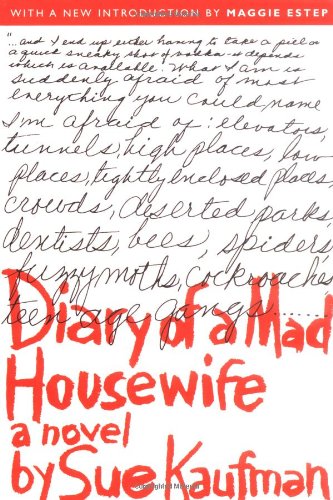
Diary of a Mad Housewife by Sue Kaufman1.  Diary of a Mad Housewife by Sue Kaufman.  An American almost-classic, still in print.  Here’s what I said on Sept. 22 at my blog (you can read the whole thing here.)  “It is a small masterpiece, a kind of female odyssey of the ’60s that ranks with early Philip Roth.  Like so many American women’s books of the ’60s, it literally is small:  306 pages, as opposed to the baggy monsters.  Tina, the narrator, a Smith graduate, housewife, and former aspiring artist, keeps a diary.  Her marriage is boring and…”

2.  Falling Bodies by Sue Kaufman.  An almost-classic, out-of-print.  Here’s what I said on (you can read the whole thing here):  “Her 1974 novel, Falling Bodies, is sad and often hysterically funny…  Emma has had a rough year.  Her mother has died of cancer, and she herself has been hospitalized for an FUO, a fever of unknown origin…  Slowly we go through Emma’s life from the time she gets out of the hospital and is so weak she can barely walk around the block…  and she has a family crisis.  Her husband and son have fallen apart during her illness.”
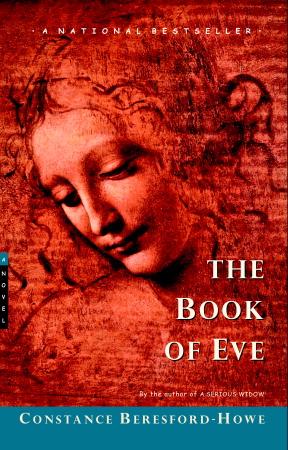
Book of Eve Constance Beresford-HOwe3.  Constance Bereford-Howe’s  The Book of Eve.  A Canadian almost-classic, in-print as an e-book.  The blogger Buried in Print recommended this novel, and I very much liked it.  (I will write about it soon.)  A 65-year-old woman leaves her grumpy invalid husband and rents a basement on the “wrong” side of Montreal.  She spends her days picking up broken items to sell to a pawnshop, and gradually develops relationships with the people who live in her house.  Her relationship with a younger Hungarian refugee seemed very real to me and made me smile.

4.  Winter Wheat by Mildred Walker.  Gina in Alabama recommended this, and I am very much looking forward to reading it.  The book description at Amazon:  “For this Bison Books edition, James Welch, the acclaimed author of Winter in the Blood (1986) and other novels, introduces Mildred Walker’s vivid heroine, Ellen Webb, who lives in the dryland wheat country of central Montana during the early 1940s. He writes, ‘It is a story about growing up, becoming a woman, mentally, emotionally, spiritually, within the space of a year and a half. But what a year and a half it is!'”

lantern_in_her_hand bess streeter aldrich5.  A Lantern in Her Hand by Bess Streeter Aldrich.  An American classic, in print.  I wrote on July 22, 2010, at my old blog, Frisbee:  A Book Journal:  “Although Aldrich’s mother, a pioneer herself in Cedar Falls, Iowa, told her family stories, Aldrich also interviewed early settlers in Nebraska and studied historical documents and letters before she began to write this superb novel. Her heroine, Abbie Mackenzie Deal, follows her husband, Will, a Civil War veteran, from Iowa to Nebraska, where he struggles to farm on the unforgiving prairie. Droughts, onslaughts of grasshoppers, and blizzards plague them. One year the prices of grain fall so low that the farmers burn corncobs rather than trade for coal at a loss. Abbie suffers the agony of the displaced and misses the amenities of civilization–Cedar Falls, Iowa, her home, is an “older” settlement.  It is a tragedy that she never gets to develop her singing talent. The endless wave of grasses get on her nerves.  Yet she struggles to educate her children and create small joyous moments for her family. Aldrich’s understated style in this engrossing novel matches Abbie’s endurance and sadness.  Her children and grandchildren never have a clue that she’s unhappy as she struggles to farm after Will’s death.  And as we see her age, we’re awed by her story.”

AND MANY MORE TO COME, I HOPE. PLEASE LEAVE YOUR RECOMMENDATIONS IN COMMENTS.

SHOULD NOVELISTS BE PAID MORE?  In this week’s column, “N.B.,” in the TLS, my favorite book publication, the semi-anonymous writer, D.H.  (a lot of initials here!), mocks an article in the Observer by Robert McCrum, “From bestseller to bust: is this the end of an author’s life?”

D.H. writes:

Remember the death of the novel?  Of course you do, it was all the rage from about the 1920s to at least the 1980s, from Walter Benjamin to Tom Wolfe.  Then everybody noticed that people kept on writing novels and other people kept on reading them….But what’s this, In the Observer Magazine (March 3), Robert McCrum asks, not if the novel is dead, but if the novelist is:  “Is this the end of an author’s life?”

D.H.  thinks McCrum is hilarious for worrying that novelists are getting smaller advances. McCrum interviews a writer who has had to give up his rented office space to write at home.  He has hired someone to renovate his attic.  D.H. points out that most of us should be so lucky, since renovation costs money.

My personal feeling? ALL  writers are getting paid less these days.  A freelancer friend wrote me a few years ago that the local newspaper was a “bloodbath” as people tried to hang onto their jobs.  (About half have been fired.)  The newspaper here  simply includes a section of USA Today to make up for all the writers it has fired.  As for freelancing?  It’s much harder to get these days, and they’re paying 1980s prices. And perhaps that’s why so many of us are blogging.

I love novels, and of course my favorite novelists should be well-paid, though I gather they are not. I don’t know anything about the book publishing business.   In the U.S. many writers teach, and in the Acknowledgements they’re always thanking this grant and that grant and writer’s retreats and so forth…

McCrum interviews Joann Kavenna, who blames the internet for some problems.

Like many in this community, she also worries about the surge in social media, the rise of Facebook, Twitter and the blogosphere, ie internet sites where anyone can put up “free content”, either for pleasure or self-promotion, or from a confused mixture of both instincts. Put these anxieties together and you have a picture of a way of life facing extinction. In summary, she says, “being a writer stopped being the way it had been for ages – the way I expected it to be – and became something different.”

Yup, we’re here, we’re (not) queer, and we’re not going away.   Is Mirabile Dictu changing publishing?   Or Goodreads (which I’m not familiar with)?  Yes, Amazon has changed everything, and it seems to me that every book gets only two or three stars , and I have no idea how much that influences bookselling.  I read between the lines, and a bad Amazon review or a bad professional review can often persuade me to buy a book if there are elements that appeal to me.  But if this problem is about marketers preying on amateurs, which I suspect is more widespread in the UK than the U.S., we need to hear it so we can address the problem. If marketers shape the way novelists write their books now based on online reviews,  this is a publishing problem.  Perhaps that’s why so many of us read classics or just plain “old” books.
Back to Book Blogging: Alice Thomas Ellis’s The Summer House

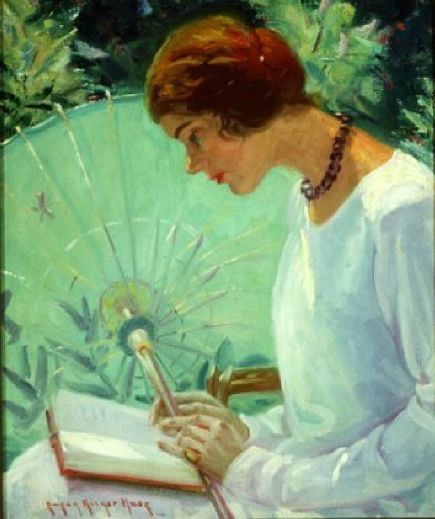
"Reading in the Garden," by Susan Ricker Knox

“Reading in the Garden,” by
Susan Ricker Knox

It is a gorgeous spring day.

And so I am writing outside.

I went for a long walk…had two cups of coffee…am  delighted to hear the birds sing…discovered that no one at the Free Little Library wants the books I’ve donated, a Dover edition of Edith Wharton’s short stories and an excellent “Darkover” book by Marion Zimmer Bradley….. and I found it is too puddly to take a bike ride.

With the warm spring day, I have renewed enthusiasm for book blogging:  those who come here strictly for the book chat will be gratified.  You may have wondered, What the f— , as I rambled about travel, the humanities, and other non-bookish topics.

But now I’m back.

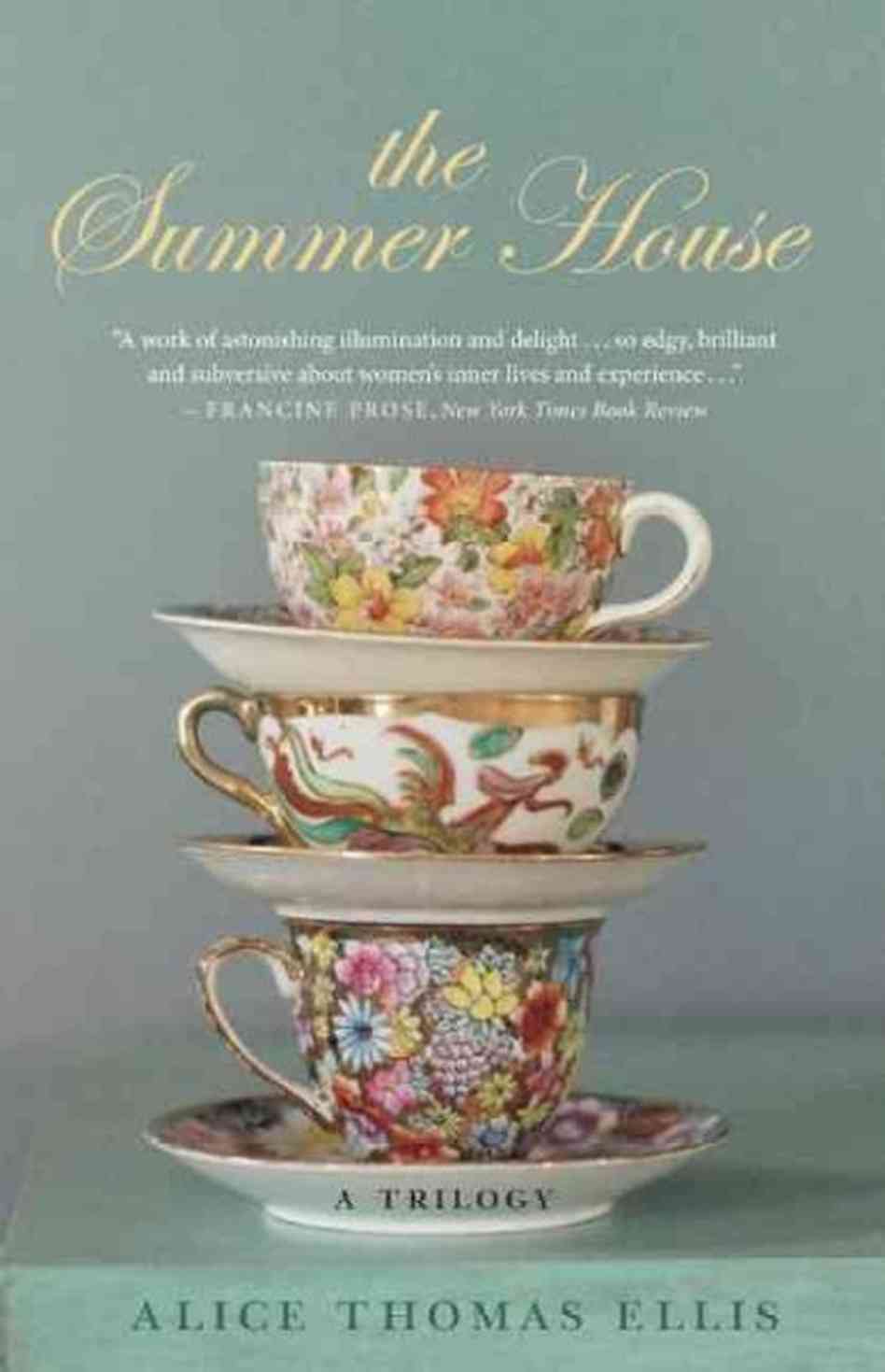
Summer Houe Alice Thomas EllisI can’t decide if ALICE THOMAS ELLIS’S’S gorgeous trilogy,  THE SUMMER HOUSE, is quite a classic, but it is very good indeed.  Ellis, a Catholic writer, has the relentless intelligence of Flannery O’Connor:  there is zero sentimentality in these bold, dazzling comedies of  sin, sacrifice, and redemption.

In each of three very short  novels, the same events before a wedding are observed by three different women (who form a kind of unholy female trinity).  In The Clothes in the Wardrobe, we meet the bride, Margaret, a passive young woman who has been stupefied into agreeing to marry Syl, a middle-aged Englishman, after a love affair in Egypt with a young man who commits a murder.   In The Skeleton in the Cupboard, Mrs. Monroe, Syl’s mother, has doubts about the impending wedding as Margaret’s lack of enthusiasm for her son becomes apparent.  And in The Fly in the Ointment, Lili, the Egyptian femme fatale at the center of the action, is admired, loved, and sometimes feared.  Lili, who identifies with Lilith, the mythic first wife of Adam in the Bible, is determined to help Margaret (and herself) by doing whatever it takes.

Ellis’s prose is wickedly superb as she sketches the portents against the wedding in brief, powerful sentences.  The wedding dress doesn’t fit; Syl embarrasses Margaret and her friends;  and her mother decides for her and Syl to cancel the honeymoon in Egypt because she thinks Margaret is ill.

Every observant phrase and word of dialogue fits Ellis’s spare prose as smoothly as Margaret’s wedding dress does not.

“It doesn’t fit,” I said with satisfaction.

My mother couldn’t deny it.  The wedding dress hung loosely on me and I appeared to myself, reflected in the cheval mirror, gratifying ridiculous.

“It looks silly,” I said more positively.

My mother irritatedly seized two handfuls of old brocade and dragged them behind my back.

“You’ve lost weight,” she observed in a tone which indicated she could have expected nothing else of me.  “It’ll have to be taken in at the seams.”

Already the tiny triumph had withered in me.  I thought the dead whiteness of the dress made me more of a corpse than a bride but hadn’t enough energy to infuriate my mother by telling her.

In the second book, the elderly Mrs. Monroe looks forward to Syl’s leaving home.  At the same time, she knows Margaret is even less suitable than Syl’s last fiancée.  And she dislikes Lili strongly, because she caught her late husband long ago having sex with Lili in the summer house.

There was nothing too terrible about my life, no need to turn away from it or pretend it was other than it was.  The truth is I was bored.  I had not been bred to suburbia.

And in the third book, we are both shocked and fascinated by Lili’s schemes.

I seemed to leave my body as a ginnee leaves a bottle and floats above all the people, invulnerable, omnipotent and–not to be trusted.  Everybody knows that the jann can’t be trusted.  They share with man the promise of salvation but they go round at night doing bad things.

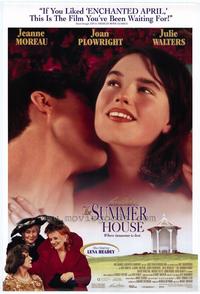
summer-house-movie-poster-1994-1010265552There is a kind of unholy female trinity, mother, daughter, and jinn.

It was a real pleasure to read this:  Alice Thomas Ellis is one of my favorite writers.

And there is a very good movie version of The Summer House, starring Jeanne Moreau, Joan Plowright, and Julie Walters.

How the Humanities Wrecked My Life (Not Really)

One of my Latin gigs...

One of my Latin gigs…

When I was a student, I fell in love with the humanities.  All I wanted to do was read, day in, day out.

“Such a cliche!  You should go into engineering.  There aren’t any women in engineering,” my friend said.

She was very bright, multi-talented, and loosely affiliated with many political groups; she eventually moved West.  (Almost everyone in the Midwest moves West.)  But what did I care if there were or weren’t women in engineering?  I didn’t know what engineers did, but I hated math and I didn’t like those guys with the pens in their shirt pockets.  Engineers, med students, dental students…they didn’t read books.  (Okay, I’ve known some VERY bright engineers.)

And so I continued to read.  Dorothy Richardson’s Dawn’s Left Hand (Xeroxed, because I couldn’t get the book), Faulkner’s Light in August, Bleak House (the best book I’ve ever read)…

Most readers have some hobbies…like drinking, drugs, or listening to Lou Reed….but not I.  I liked three things in school:  reading, reading, and reading.  If asked about my illustrious career as a classics student, I would say, “I’m going to be a Civil Liberties lawyer.”  I didn’t mean it, because I didn’t want any kind of job at all, but as long as I pretended, they left me alone.

It seemed very unlikely that I would become a lawyer since I could barely tear myself away from reading  long enough to grace such required classes as Archery and “Rocks for Jocks” with my presence.  (And, yes, I believe I still have bruises from where the bow hit my hyper-extended arm.)

Though I would have preferred to live in the beautiful university town after finishing my master’s, I had to get a job.

And so I did what every woman in classics does.  I taught.

All around me women in classics were having teaching breakdowns.  They had Ph.D.’s and a series of one- or two-year Visiting Professor  jobs.  They hated it at Muncie State or Wayne State.  They hated it at any school with “State” in the title.  They had written their dissertations on beautiful, obscure subjects that would never be mentioned by their bosses at these schools.  We had all enjoyed teaching Latin as grad students at a University of,  but somehow these one-year gigs at X States were horrific.

And then I had, not a teaching breakdown, but a teaching boredom.  Those of us with M.A.’s taught at private high schools.  We had no idea how boring it would be to teach teenagers.  They are not always mentally there in the classroom.  They’re writing notes to their boyfriends or girlfriends, or they have a hacky-sack at the back of the room.  (You can ignore the notes, though occasionally you must swoop upon the hacky-sacks.)  The most beautiful and patient of my classics friends hit a student on the head with a catalogue.   Another of my friends was reduced to tears by a heckling student.  I love Latin and was a very conscientious and commonsensical teacher, but I couldn’t wait till 3:30 so I could leave.

I simply imagined my way into other jobs because I couldn’t bear to spend my life teaching. But was I financially successful?  No, all the jobs I have liked have been marginal, and I have always preferred part-time jobs.  None of my friends in classics made money unless they went back to school for practical degrees.

Oh, I’m sure the success stories are out there, but I’m talking about MY friends.  Kind, quiet, very smart women who went to the APA meetings and published papers nobody cared about.

They married, Dear Reader.  Their husbands made money, and they did something else.

Or, they married, Dear Reader.  Their husbands didn’t make money, but they managed somehow.

I married too, Dear Reader.

Here’s the thing, Dear Reader: We are meant to be in the humanities.  And the ones who are not in the humanities should pay us to be in the humanities so we can be their intermediaries in the humanities and they’ll miss us when we’re gone…

I really think so.

A Literary Vacation

The Bobbsey Twins at Oxford, or Kat on vacation?

The Bobbsey Twins at Oxford, or Kat on vacation?

Since I am a bibliophile, I idly planned a “literary vacation” in London.  Will I go sight-seeing?  Well… maybe.  Buckingham Palace? No, no, no.  Westminster Abbey?  God, no. I saw the wedding of William and Kate, though.

No, I don’t do much of anything when I visit cities.  My plans? I’M AN AMERICAN ON VACATION.  I’m going shopping.  Then I’ll sit in a tearoom and rest my feet, like the middle-aged heroine of a Monica Dickens novel.

My other plans are literary.  There are a couple of bookish things to do:   Visit the Dickens Museum (£8.00). Go on a Dickens walk (£10.)  Go to a bookstore (God knows how many £.).

Now I did make one solid literary plan.  I excitedly decided to go to one event at the Oxford Literary Festival.  Why not?  I love literary festivals.  But here’s the thing:  in the U.S. literary festivals and readings are free.  In the UK you have to pay.

“And that’s why America is a better country,” my husband said.  “Literature is free.”

“Only in a literary sense.”  It didn’t make sense, but I said it.

Here’s the thing.  If you go to a reading at Prairie Lights, it’s free.  If you go to a book festival, it’s free.  We’ve seen (for free) over the years:  Borges, Updike, Jane Smiley, Sherman Alexie, Nathan Englander, Joy Williams, Joyce Carol Oates (twice), Toni Morrison (twice), Derek Walcott, Grace Paley, Karen Thompson Walker, David Malouf, Galway Kinnell, Tom Wolfe, Marge Piercy, Jill McCorkle, Susan Choi, Margaret Atwood, and…I can’t begin to list them.

So, all right, I spent £11 for a ticket to an event in Oxford, and getting there will be a hassle.  I’ll get up at dawn.  I never do anything at dawn, though. It will cost me £24.10 to get to Oxford on the train, and then “the station is a 20-minute walk or five-minute taxi-drive from the festival. There is a taxi rank at the station.”  OK, so the taxi will cost…

So I’m doing all that to hear a writer talk for one hour!

Suppose I go see two more writers (though I haven’t heard of most of them).  Well, okay, so then I’ll pay $55.22 if I go to three events.  But my mind wanders at readings and interviews, so is it worth it?  One minute I’m listening, and the next I’m wondering if I can find a really good cup of coffee (not something ghastly in an urn, as one so often gets at university events).

So I’ll be paying $100, more really, and I should probably be touring London instead.

Anyway, am I on the same wave length with anyone at Oxford?  Hell, no.  I’m a Big Ten School grad, and proud of it.  I got an excellent education.   To me Oxford is Brideshead Revisited.   Gorgeous place, but maybe not for my vacation. 🙂

What I’m Reading Now: Alice Hoffman’s The Museum of Extraordinary Things

I knew I was supposed to have sympathy for the main character, the orphaned Jane, who was near my age and all but friendless and whose name I took for myself on the nights I wandered off on my own.  Yet it was the madwoman locked in the attic who held my interest and compassion.–Alice Hoffman’s The Museum of Extraordinary Things

I haven’t been blogging much about reading lately.

One word:  reading.

I go through phases where I read and read and read.

My husband wonders why I don’t write my blog.  Who is that woman curled up on the couch with a book?  He thinks I should write something more important than a blog–like what?–but he knows this is my routine.

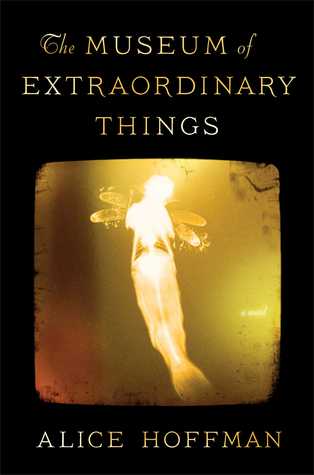
museum of extraordinary things HoffmanCall it winter.  All I want to do is read.  And I am reading what is surely a contemporary women’s classic, Alice Hoffman’s The Museum of Extraordinary Things.

Oddly, this got trashed in The New York Times Book Review. Katharine Weber, the author of Triangle, a novel about the Triangle Shirtwaist Factory fire in 1911, seems disgruntled by Hoffman’s fairy-tale-ish portrayal of the same events.

Weber writes:  “Hoffman’s depiction of the Triangle fire only vaguely conveys the pathos and urgency of that historic disaster, which took the lives of 146 garment workers in a matter of minutes.”

Hoffman has a dreamy, poetic style that is completely different from Weber’s solid realism–and I also admired Weber’s novel.    This is a strange instance, I think, of a bad pairing of a reviewer and a novel. How could there not be competitiveness here?

In The Museum of Extraordinary Things, Hoffman interweaves the stories of two protagonists, Coralie and Eddie, who eventually meet and fall in love.   Coralie is the daughter of the cruel owner of The Museum of Extraordinary Things, a museum of “freaks” (Siamese twins, dwarfs, giants, and the butterfly woman, who has no arms and fake wings attached) and gruesome artefacts he has collected or fabricated.  He forces Coralie, who has webbed hands, to swim long distances in the Hudson River to prepare for a mermaid act in a tank.  She is kept at home,  so she will keep his secrets.  The only people she knows are his employees; especially influential are the housekeeper who has raised her, Maureen, who has burns on her face from acid; and Maureen’s lover, the Wolf Man, a man born with hair all over his body, who was imprisoned for years in an attic by his family in Richmond, Virginia, and finally escaped, inspired by Jane Eyre.

The other protagonist is Eddie Cohen, a Russian refugee, tailor’s son, and ex-factory worker who becomes an artistic photographer.  He is also a photojournalist who pushes past the barriers when the Triangle factory is on fire and women trapped in a locked room jump from the windows.  He eerily photographs this tragic scene.

At first, the falling girls had seemed like birds.  Bright cardinals, bone-white doves, swooping blackbirds in velvet-collared coats.  But when they hit the cement, the terrible truth of the matter was revealed.  Their bodies were broken, dashed to their deaths right before those who stood by helpless.  A police officer near Eddie groaned and turned away, his head in his hands, for there was no way to save those who were already falling and no way to come to terms with the reality before them.  The life nets being held out were worthless; bodies soared right through the netting.  Many of the desperate leapers barreled onward, through the glass cellar lights embedded in the sidewalk, to the basements below.

Eddie and Coralie meet because of a drowned woman who was employed at the Triangle factory and mysteriously not among the survivors or the dead.  This is a kind of mystery, and I don’t want to give away too much.  (Anyway, I’m not finished with the book yet.)

At her best, Hoffman writes gorgeously.  The depth of her research about Coney Island and the Triangle factory, combined with her lyricism, makes this one of her most fascinating novels.  Before this, my favorite was Second Nature, about a suburban woman who rescues a man raised by wolves.

Don’t be surprised if this makes my Best of 2014 list (see sidebar).   It’s one of those occasions when picking up a best-seller is worth it.

Things I Haven’t Done Before My Trip to London

IMG_2837

Photo op: at the library

Things I Haven’t Done Before My Trip to London:

1.  I didn’t lose any weight. Go on Weight Watchers…lose five pounds…gain it back…lose five pounds…gain it back…lose five pounds…decide you can’t live on an apple at dinner, which is the only way you’ve lost five pounds…  Then cook a colossal dinner of Mollie Katzen’s macaroni with mushrooms and spinach for your thin husband, the only one in the house who has lost weight on your diet, and he informs you that you are not going to have a swimsuit photo op in London.   And so I’m back to cooking dinner again.  “Thank God for that!”  he says.

2.  I didn’t dye my hair.  I thought briefly of dyeing my hair.  Yes, I was going to be thin in London…with dyed hair.  When it came right down to it, all I could stand at the salon was having my hair trimmed.

3.  Read a lot of London bloggers so I can have contact with the London blogging community.  News flash: I read no London bloggers.  None!  How did this happen?  Fortunately all the American and English bloggers have been to London and have given me excellent advice about everything. .. especially bookstores.

Sebastian Barry

Sebastian Barry

4. Figure out how to go to the Oxford Literary Festival to see Sebastian Barry one day and Margaret Drabble on another day.  The festival goes on for a WE-E-E-E-KKKKK and I don’t see how I can possibly go both days. But, wait,  I just found out there is something called the Daunt Books Spring Festival right in London.  Perhaps I can buy tickets for BOTH LITERARY FESTIVALS  just in case.  CAVEAT: You’re not rich, and you’ve seen Borges, Toni Morrison, John Updike, Joyce Carol Oates, Tom Wolfe, Bobbie Ann Mason, Ann Beattie…for free in the U.S.

5.  I didn’t reread all of Dickens, or any Dickens.  I’m going on the Dickens tour, right?  Well, probably.  For some reason I am reading Trollope this winter.  I don’t think there’s a Trollope tour, though.  Too bad…

6.  Travel with unstained clothes.  See that lovely spring sweater (above:  photo of me at the library)?  I spilled coffee on it .  It was nice to have coffee at the library…and then it spilled and I had to rush to the restroom and apply soap on a wet paper towel.  I don’t see a stain, do you?  I caught it in time. But I may be turning into Enderby, the tea-stained hero of Anthony Burgess’s Enderby books.

AND NOW I NEED ADVICE. Where do I buy groceries, i.e., lots of vegetables in London?   Grocery stores?  Co-ops?  I know about the markets from my guide books, and I can always find Starbucks…  But it might be nice just to buy some stuff quickly at a store and make sandwiches.

Harriet the Spy’s 50th Anniversary, Nice Guys in Fiction, and More

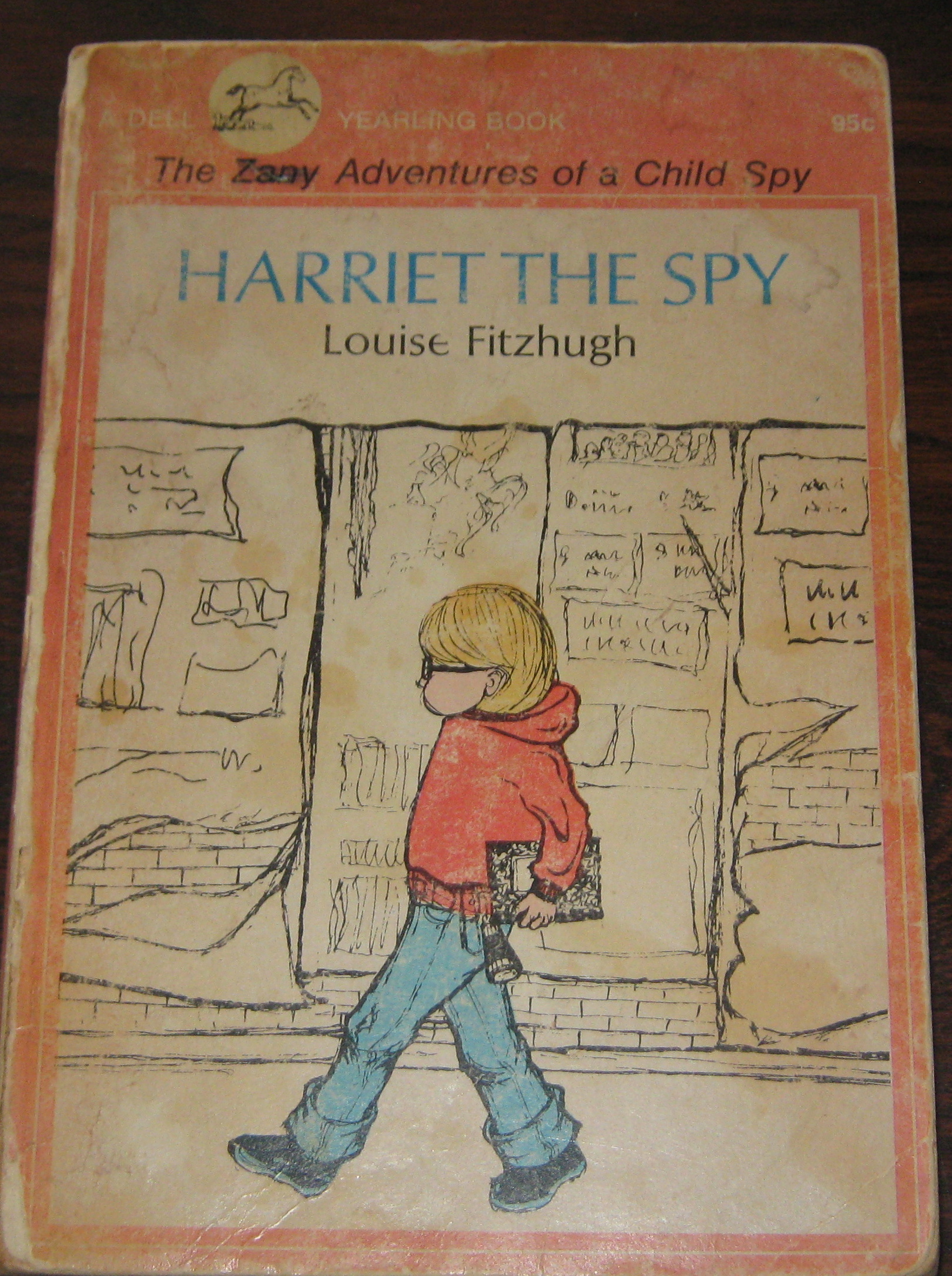
My original copy of Harriet the Spy.  N.B.  I crossed out "zany," knowing even then it was an insult.

My original copy of Harriet the Spy. N.B. I crossed out “zany” in the top line, knowing even then it was an insult.

Oh my God, girls!  Did you grow up on Louise Fitzhugh’s Harriet the Spy?

It is the 50th anniversary of Harriet –1964:  The Beatles on the Ed Sullivan Show and Harriet the Spy!–and you can now buy an anniversary edition of this children’s classic, which “includes tributes by Judy Blume, Meg Cabot, Lois Lowry, Rebecca Stead, and many more, as well as a map of Harriet’s New York City neighborhood and spy route…”

Harriet was my favorite heroine. As many of you know, she is a writer.  She takes her notebook with her everywhere and writes down exactly what she thinks about friends and enemies.

She writes of Pinky Whitehead, a pale, thin weak boy who annoys her:

MY MOTHER IS ALWAYS SAYING THAT PINKY WHITEHEAD’S WHOLE PROBLEM IS HIS MOTHER.  I BETTER ASK HER WHAT THAT MEANS OR I’LL NEVER FIND OUT.  DOES HIS MOTHER HATE HIM?  IF I HAD HIM I’D HATE HIM.

And of her friend Janie, who wants to blow up the world:

JANIE GETS STRANGER EVERY YEAR.  I THINK SHE MIGHT BLOW UP THE WORLD.

IMG_2833

The worse for wear…

When her classmates get ahold of her notebook at recess, they read it aloud and shun her.  How can she win them back?  She only said what she thought…

As you can see, my edition is rather tatty, but it is still readable.  This is one of my favorite children’s books, though I hadn’t thought of it in years.   I won’t buy the anniversary copy,   but I liked it so much as a child that I insisted on wearing boys’ sneakers like Harriet.

AND FOUR LINKS. 

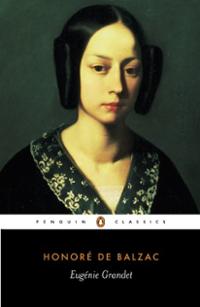
eugenie-grandet-honore-de-balzac-paperback-cover-art1.  At the Barnes and Noble Review, Heller McAlpin writes about Eugenie Grandet,  “Does anyone read Balzac for pleasure?” Well, yes, we do.  Here is the link to what I wrote about Eugenie Grandet last year.

2.  At The Huffington Post, Claire Fallon writes, “These ‘Nice Guy’ Book Characters Aren’t Really That Nice.”  My problem with this article:  Two of her 10 examples are from Jane Austen, and two more from Shakespeare.  Doesn’t she read any other books?

What do you think?  Are these characters nice or not?  (I think some of them really are.)

3.  Locus, a science fiction magazine, announces Karen Joy Fowler has been nominated for the PEN/Faulkner Award for her novel We Are All Completely Beside Ourselves.  Fowler, best known for The Jane Austen Book Club, is widely known for her science fiction.  Thumbs up to PEN/Faulkner for nominating this.

4.  And, finally, here are favorite paintings of women reading at The Sleepless Reader.

VIDA Stats

stack_of_books“Oh, for God’s sake!”  I said as I read the latest VIDA study of gender in book review publications.

In late middle age, I focus less on gender than I used to.  In fact, one of the nicest things about the post-menopausal period of life has been that I now think about gender mainly in terms of the depiction of women’s lives in literature.

But the 2013 VIDA statistics show a considerable gender gap at book review publications in the U.S. and UK.   Many more men than women still review books, and more books by men than women are reviewed.

As far as gender gaps go, we are not naive.  There are many more serious gender issues.

According to the U.S. Census Bureau, women earned only 77 cents for every dollar that men earned in 2012.  Studies show that women are paid less than men even when they have the same experience and same job.

And the gender gap at book reviews is not the only gap in publishing.  A study in the journal Nature showed that male scientists publish more research than women, and that researchers are more likely to cite papers written by men.

But back to book reviews: VIDA monitors prestigious publications like The New York Review of Books, The London Review of Books, and The New York Times Book Review, though my favorite American book review publication, The Washington Post Book World, was not “audited,” nor was The Guardian, which published a blog piece taunting the abysmal LRB stats.  VIDA pretty much ignores the Midwest:  there are women book review page editors at the Chicago Tribune, The Minneapolis Star-Tribune, and the St. Louis Dispatch.   Perhaps the Midwest is more equitable for reviewers.

I started my own freelance career as a book reviewer in the Midwest.  I submitted a review of a small-press book to a newspaper, and the editor liked it and began to give me assignments. I was one of those solid, reliable reviewers who could take on something, anything, fiction or nonfiction, at the last minute:  and if, whoops!, a prominent book had somehow been overlooked, I could dash off a review in 24 hours.

If there was a gender gap, I didn’t notice it.  At parties I milled and thronged with other reviewers, and even the male reviewers seemed biased in favor of women:  Elizabeth Bowen and Nancy Mitford were the favorite authors of one of my male reviewer friends.

These days I would rather read than review, and I am more concerned with the quality of reviews than the sex of reviewers.

This is not to say I don’t take the gender issues seriously, but surely the editors can add intelligent female reviewers into the mix without taking away work from the tried-and-true regulars (both male and female).  This is not a life-and-death issue.

In general, women’s issues seem not to be treated seriously in publishing.  A backlash against feminism is reflected in the promotion of  S/M romances jump-started by Fifty Shades of Grey, not to mention popular Y.A. novels like Twilight and its successors.  In both Fifty Shades and Twilight, clutzy, passive heroines are constantly in need of being rescued.   Sex with sadists and vampires (and, believe me, I’d prefer the gentleman vampire any day) can lead to bruises and breakages.

And so, VIDA?  Keep it in mind, but don’t make all the changes at once.

Classics & Trash, the Jean Plaidy Collection, & Giveaway of My Life in Middlemarch, a Virago & Miss Buncle Married

It's cold this winter!

It’s cold this winter!

I made it to the coffeehouse.  Whiskey Sour, I said.  It’s the name of a coffee, not a drink.

It was very quiet.  We talked about the weather.  We are all very, very sick of the weather.  It is the coldest winter since 2001.  It will be -11 tonight.

I remember the winter of 2001 very well:  ninety days of snow on the ground without a break. A hard-core bicyclist, I rode all through that winter.  I bicycled to the mall, to the library downtown, and once out to a lake with my husband:  we wandered down a snowy hill to the beach.

Last year I was bicycling regularly by March, but this year it’s nothing but ice, wearing Yaktrax on your shoes (cleats), and last time I went to the gym, I got sick.

And so I have been reading, reading, reading:  many kinds of books this winter, some classics, some trash.

Here is a stack of the literary books I’m reading or have been reading.

IMG_2820!.  Yes, I’m about to finish Mrs. Oliphant’s Miss Marjoribanks, which is a very, very amusing satire of small-town life in Carlingford, Mrs. Oliphant’s famous fictious town. When Miss Lucilla Marjoribanks, a doctor’s daughter, comes home from school and a trip abroad, she says she wants to make Papa’s life comfortable.  Instead, this powerful young woman rules society with her “Thursday evenings,” interferes in friends’ lives, usually for the good, and creatively achieves what is almost, not quite, equality to a man in a misogynistic society.    I love Lucilla dearly, and she’s a predecessor of Lucia (E. F. Benson’s books), though not as hyperbolically drawn.  If Benson didn’t read Miss Marjoribanks, I’ll eat my hat.

2. Rebecca Mead’s My Life in Middlemarch.  (AND I’M GIVING THIS AWAY, SO LEAVE A COMMENT IF YOU WANT IT.)  New Yorker writer Mead celebrates her love of the book Middlemarch, which she’s read over and over since she first studied for her Oxford exam (or perhaps  O-levels or A-levels:  I gave up Mead’s book a month ago).  I love Middlemarch, but honestly?  114 pages into My Life in Middlemarch, I find Mead’s prose disappointing and inelegant.

She worked as a young woman as a fact-checker for what she calls “a weekly magazine” (surely The New Yorker?).  This is an example of her lifeless prose:

Often we would be there until late at night, long after senior editorial staff had gone home, and we’d order dinner on expenses from the Italian restaurant across the street and make jokes at the expense of certain writers we worked with.  How lazy they were, we’d complain; how badly they wrote.  In truth, I was learning a lot from doing this work:  seeing how to build a story, discovering where to find a fact.  But still, I was eager for my chance to show I could do it better.

Part of my problem?  I have read two perfect books in this genre:  Robert Dessaix’s Twilight of Love:  Travels with Turgenev and Peter Stothard’s Alexandria:  The Last Nights of Cleopatra.

I have to say, I’ve given this a fair shot–usually I give up a book I don’t like after only 25 pages.

3.  Virginia Woolf’s Between the Acts.  I read it, loved it, haven’t written about it here, though I will.  It is a life-changing classic.  Who are we? Actors or audience?

4.  Constance Beresford-Howe’s The Book of Eve.  I’m searching for North American lost women’s classics this winter (any recommendations?) and am very much looking forward to reading The Book of Eve, highly recommended by the blogger Buried in Print.  The jacket says:  “When Eva Carroll walks out on her husband, it is an unplanned, completely spontaneous gesture.”  And apparently she finds happiness “on the wrong side of Montreal.”

5.  Jill Robinson’s Bed/Time/Story.  A popular novel from the ’70s, compared to Erica Jong, et al.  Some of these women’s pop book are good, some are bad; it may hold up, it may not.

6.  Nora Johnson’s The Two of Us.  Nora Johnson, author of The World of Henry Orient, Uncharted Places (an intriguing mess of a novel), and a stunning memoir, Coast to Coast:  A Family Romance, is always fascinating.  The first 50 pages or so of The Two of Us, a novel about identical twins, are a bit trashy:  Cassie, the twin who “married up” in Hollywood, enjoys shopping more than sex, and when her husband, who has affairs, says he wants to leave her, she ignores him.  Her twin, Celia, a New York photographer who has freelanced and now works for a magazine, has lived in a tiny rent-controlled apartment since her vicious lawyer husband left her nothing in a divorce, and now is having an affair with a married man.  I’m enjoying this:  parts are highly intelligent, parts a bit trashy:  The New York Times praised it, but so did Jackie Collins.  Perhaps it was Johnson’s shot at pop fiction?

AND NOW FOR THE JEAN PLAIDY COLLECTION.

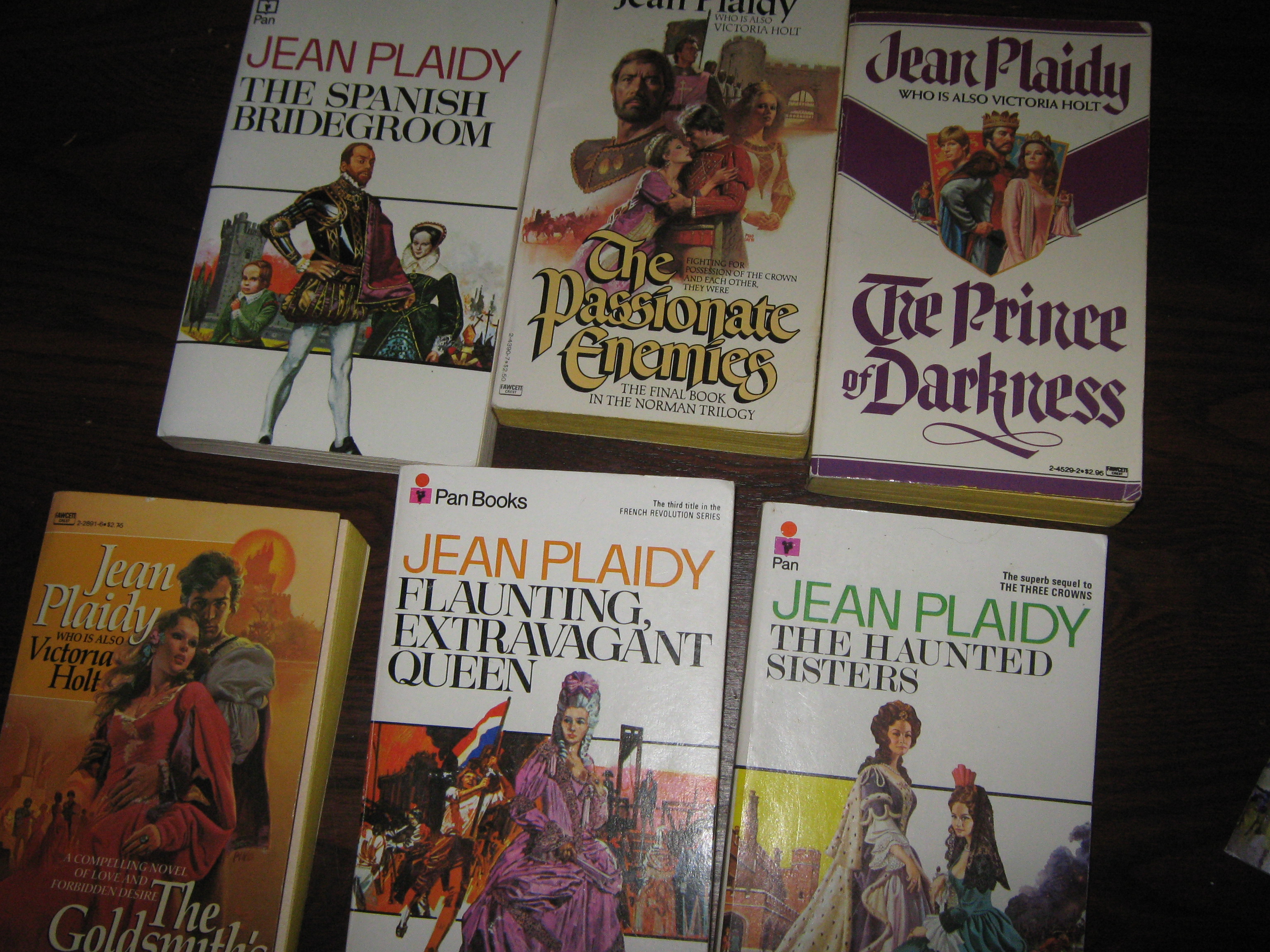
IMG_2823Yes!  We were at the library book sale and my husband found me copies of Jean Plaidy’s books.

“Is this one of your authors?”  He looked at me askance.  I am well-known for reading Plato, Katherine Anne Porter, and Jean Plaidy, and shelving them all together.

“I LO-O-O-O-VE JEAN PLAIDY,” I said to shock him.

And I do enjoy reading her historical novels late at night.  I read myself to sleep with genre books.  The writer Eleanor Hibbet wrote historical novels under the name Jean Plaidy, Gothic novels under the name Victoria Holt, and some other women’s fiction under the name Philippa Carr.

So aren’t you envious of these? Doesn’t this look like tremendous fun?  I’ll probably get through one a year.

IMG_2822

AND THE BIG GIVEAWAY!

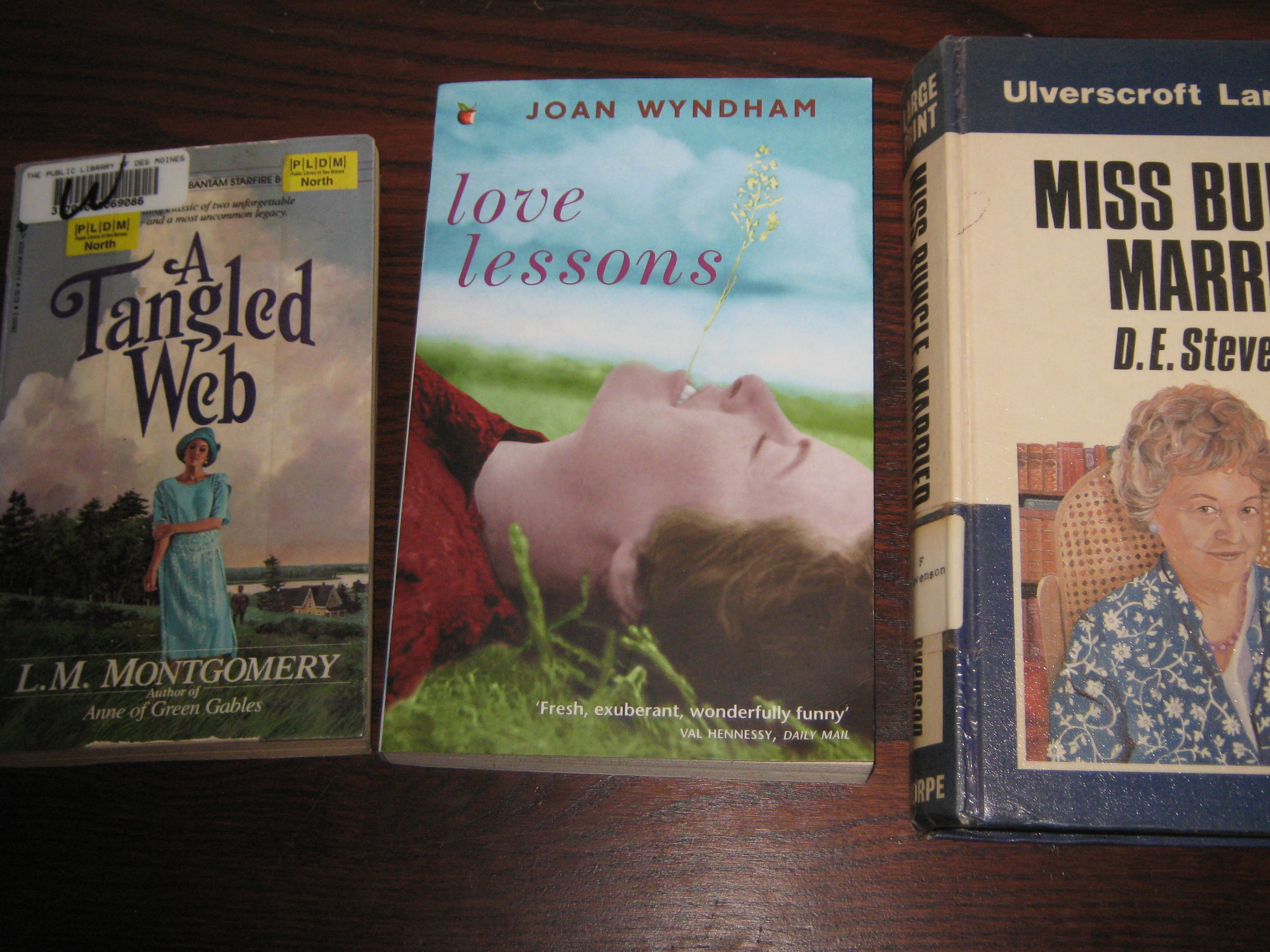
Would any of you like a copy of Rebecca Mead’s My Life in Middlemarch,  Joan Wyndham’s Love Lessons:  A Wartime Diary (Virago), D. E. Stevenson’s Miss Buncle Married, (a sequel to Miss Buncle’s Book) or L. M. Montgomery’s A Tangled Web (a romance by the author of Anne of Green Gables)?  Leave a comment.

IMG_2825Everything must go!

At the Mall

D’yeh do the Facebook thing?
–Wha’ d’yeh mean?
(
Roddy Doyle’s The Guts)

“I’m having a hair emergency,” I told the young woman.

Usually I stick something in my desperately-in-need-of-a-haircut before I go out, headband, barrettes (it hardly matters), but I’d hurried to catch the bus without bothering with my electric hair.

I went to the hair jewelry store.  I had never been in the hair jewelry store before.  It is called something like Hair Jewelry.  It is full of hair ruffles, headbands, cheap jewelry, and various plastic gaudies.

I chose a plastic headband, nothing with ruffles, and went to pay for it.

A mom and young daughter were at the counter in front of me.  The little girl tried to steal a pink thing with a flower.  Her mother made her put it back.

The clerk found them adorable.  There I am, less adorable.  Have I grown old overnight?  I think I have.

I smiled.  “Could you take the tag off this?”

She didn’t smile back.

The mall is a horrible place, but fortunately I didn’t spend much time there.  I rushed out to Barnes and Noble before the temperature dropped into the single digits again.  What a lovely day:  in the 30s, so the coat was open.

At B&N the barista asked my name when I ordered a latte.

“Kat.”

“Excuse me?”

“Kat.”

When I told my husband later, he said, “Your name isn’t Kat.”

“It was just for a latte.”

I thought it was hilarious. Yeah, my name isn’t really Kat.

And then I shopped for books.

I found a copy of Roddy Doyle’s The Guts,  a sequel to The Commitments.  We are big fans of The Commitments at our house.   I also bought Robert Harris’s new novel about the Dreyfuss affair for my husband.

And then I realized that I hadn’t picked out a book by a woman, and that oddly I have read more books by men than women this year, so I bought a novel about Edna St. Vincent Millay, Erika Robuck’s  Fallen Beauty, which I hadn’t heard of.

What am I reading right now? you may wonder.    Mrs. Oliphant’s Miss Marjoribanks, a predecessor of E. F. Benson’s Lucia books. The heroine, Miss Marjoribanks, is very, very funny.  And this is a Virago, for those of you who like them.

And so, you all, I’ve stocked up on books.  I haven’t told my husband yet, because he doesn’t like me to bring more books into the house. I’ll give him the books eventually.

And so I’m offline for the night.  This is a kind of faux Facebook entry.  I don’t have Facebook.

As Roddy Doyle says,

“Wha’ d’yeh mean?”