The 75 Greatest Living Female Authors

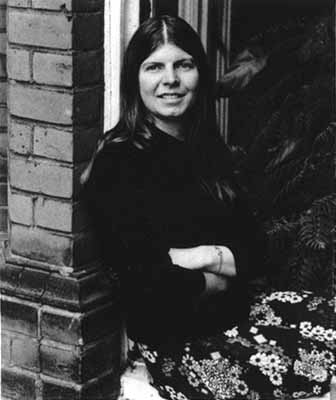
I'm adding Margaret Drabble to the list.

I’m adding Margaret Drabble to the list.

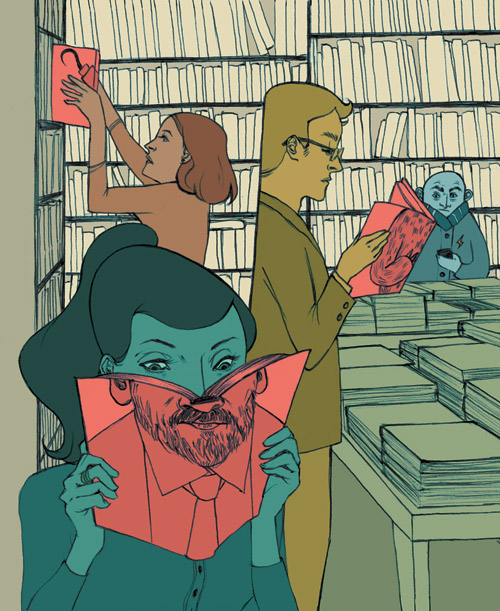
At Abebooks’ Reading Copy blog, the 75 greatest living female authors have been selected by a poll.  The top 10, according to Abebooks customers, are  J. K. Rowling, Margaret Atwood, Alice Munro, Toni Morrison, Joyce Carol Oates, Harper Lee, Joan Didion, Zadie Smith, Hilary Mantel, and Barbara Kingsolver.

After the first-place Rowling bolt from the blue, the next nine are pretty staid choices, all critically-acclaimed, prize-winning writers of best-selling literary novels and nonfiction.

Go further down the list and you’ll find popular writers Diana Gabaldon, Stephenie Meyer, Anne Rice, and Suzanne Collins sprinkled among divas like Marilynne Robinson and Louise Erdrich.

The list reflects our culture:  pop mixed with literary.

Is that a good thing?

Shouldn’t I be shocked that Rowling is in first place?  I very much liked A Casual Vacancy, but it isn’t great literature.  As for the Harry Potter books, they are not for my age group.

Why aren’t I surprised?

It’s because last fall I read about the “Dave TV” book poll in the UK on best books of the 21st century, and the top book was Harry Potter and the Order of the Phoenix.

Online life inures us to ridiculousness.

Who decides what is best?

You don’t have to be a literary critic, but you do want your listmaker to be able to distinguish between Harry Potter and Wolf Hall.

For instance, even though Dodie Smith’s I Capture the Castle is one of my favorite coming-of-age novels,  I’ve always known that George Eliot’s The Mill on the Floss, is more brilliant and innovative.  Today the edges between such books are blurred as academics search for fresh scholarly topics among pop fiction.  At first it’s fun:  you think, finally they’re acknowledging how good Dodie Smith is.  And then you realize that it’s something else altogether.

At least Abebooks customers can differentiate between books and TV.  One of my scholarly friends attended a conference on Buffy the Vampire Slayer.   Fascinating, but what on earth could it mean?

I’ve gone through periods of denial about my womanhood.

I’ve had eerie epiphanies lately where I see myself as a Very Competent Person rather than as a Woman.

I wish I agreed with A. S. Byatt that women don’t need their own literary prize.

It does seem necessary to me:  otherwise, the pop women writers rush off with all the laurels.

Doris Lessing’s Martha Quest was my role model, but if I hadn’t loved Clara Middleton, the heroine of  George Meredith’s The Egoist, would I have studied classics? (Well, yes, I’m being silly here.)

Anyway, good books by men, good books by women, I read them all.

I am very happy that the Orange Prize/Bailey Women’s Prize honors women, because we need something besides these polls to keep women’s literature in front of our eyes.

And I’m adding Margaret Drabble’s name to the Abebooks list.  I’m sure  you’ll all agree that she belongs there.
Library Books & London

She would need flannel pajamas more covers if she lived here.

She would need flannel pajamas & more covers if she lived here.

It is 3 degrees.

I should go to the gym.

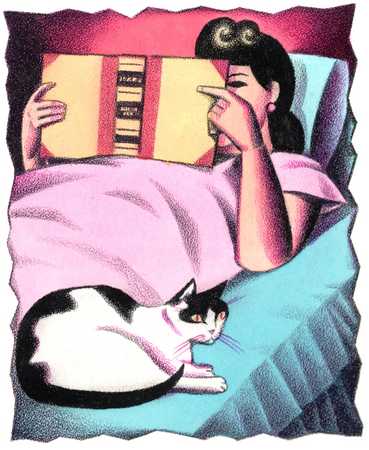
Instead, I am sitting in bed under 30 pounds or so of flannel sheets, blankets, comforters, quilts, and two cats.  When I get up to make a cup of tea, it is strenuous to get out from under the covers.  It equals, say, 5 minutes on the elliptical.

In weather like this, I love reading in bed.  Not any old thing. Library books.

Meaning books I like to read but will never buy.

I thought about walking to the library in several layers of modish coats, a muffler, ski mask,  and mittens, but I emailed my husband instead.

“Will you pick up mysteries by Robert Barnard for me?  Thanx!”  (I didn’t really write “thanx.”  I am making fun of the culture.)

My husband has a car and often stops by the library.  He picks up dozens of books for me.

When I go through a “library book” phase, I binge on good pop books. The thing about library books is that they’re “lite.”

Sometimes I want Golden Age mysteries. Sometimes I want out-of-print science fiction books by Pamela Sargent.

I have read and enjoyed Robert Barnard’s mysteries over the years, but I can’t remember which I’ve read.  I’m pretty sure I’ve read all the ones with “death” in the title.   Death of a Mystery Writer, Death of a Literary Widow, etc.

I convey this to him via email.

Hours later, he comes home with a stack.  “I got all the newest ones.  He’s written about 100.”

And here I am in bed, delighted with Barnard’s engrossing novel, A Murder in Mayfair, which my husband picked out because I am going to London, and Mayfair is in London… and that’s all we know about Mayfair and London.  Certainly I take note when the narrator goes to a Chinese restaurant near King’s Cross station, and the neighborhood is full of prostitutes.  He hopes it will change when the new British Library opens.  (Did it?)  “Don’t eat Chinese alone at King’s Cross,” I mentally note.   My guidebook already described the area as dicey.  But it’s not in Mayfair, is it?

It is going to be a bookish holiday. I don’t want to see the Changing of the Guards, the Tower of London, or Westminster Abbey.  I am much more interested in books, bookstores, and literary tours, and gasped when I realized that if only I had booked my vacation earlier I could have heard A. S. Byatt on March 1 at the LSE Space for Thought Literary Festival.

What a pity I won’t be there!

But there are doubtless other literary events, and I have booked one ticket for a reading, which  I may or may not go to, depending on whether I feel like getting on the train, and I very well may not.  (I may be doing my laundry that day and reading a book by the author instead.)  There  is something so charmingly boring about a good literary event.  Growing up in Iowa City, a UNESCO City of Literature,  prepared me for all manner of literary boredom.

And now excuse me, but having written 568 very silly words, I must go finish my library book.

And please tell me about your favorite library binge books and your favorite literary festivals.

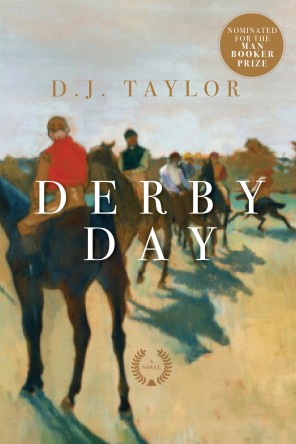
D. J. Taylor’s Derby Day

Derby Day Taylor AmericanI recently finished D. J. Taylor’s historical novel, Derby Day, which was nominated for the Man Booker Prize in 2011.

Set in Victorian England, this brilliant novel details the double dealings and crimes revolving around a horse favored for the Epsom Derby.

It is not a horse book; it is about the human beings involved with the horse, Tiberius.

Taylor deftly weaves history into a breakneck, thrilling narrative about an unsuitable marriage, theft, discounted bills, forgeries, bets, a surprisingly detailed jewel heist, and the horse race.  The moments of comedy are almost equal to the moments of suspense, and there are many allusions to Dickens’ Bleak House, Thackeray’s Vanity Fair, and other Victorian novels.

Taylor’s graceful style and irresistible, if crooked, characters make this intricately-plotted novel unique.

Among the more respectable characters is Rebecca Gresham (whom Taylor compares to Becky Sharp), an impassive woman whose aspirations differ from those of her dull social circle, and who is determined to marry George Happerton, a man of mysterious origins. The charming Happerton has some money, whether from speculation or the racetrack.  Rebecca’s father, Mr. Gresham, a well-to-do lawyer, is suspicious of him.

Taylor writes long, elegant paragraphs.  Here is an excerpt from a paragraph in which he describes the relationship of Rebecca and her father.

Mr. Gresham and his daughter fell into that category of people whose want of sympathy is made yet more flagrant by their inability to disguise it. They were not at ease with each other, and the civilities of the breakfast table only fuelled their displeasure. And so Mr. Gresham read what The Times had to say about Mr. Gladstone’s disposition of his Cabinet, and Miss Gresham spread marmalade on a fragment of toast and snapped at it crossly as if she thought it might get away from her, and neither of them, in the matter of temperamental unbending would give an inch.

There are many surprises in this novel.  After Happerton and Rebecca marry, he admits he does not understand her, and is almost shocked when she volunteers to help him acquire Tiberius.  “There was something in her tone that suggested she might be his ally, that she was not averse to her father’s money being spent–the idea of its being lent was a polite fiction–on a horse.”

And there are other memorable characters:  Captain Raff, a comical, if sleazy, friend runs errands for Mr. Happerton:  the two buy up the discounted bills (of debts) of Mr. Davenant, owner of Tiberius, to get the horse (and his house).  Mr. Davenant broods in Lincolnshire, while his daughter, Evie, an albino girl with what we would now call an “intellectual disability,” contributes to the gloomy atmosphere.  Her new governess, Miss Ellington, tells her imaginative stories, but eventually has to give up trying to teach Evie to read.  Mr. Pardew, a burglar and safe-cracker, is one of Taylor’s most vivid characters, and, oddly, I am rooting for him throughout the book, even though he is not the guy you’d want to live next door to.  And then there is Captain McTurk, a brilliant policeman, perhaps a little like Mr. Bucket in Bleak House.

I am not always keen on historical novels, but I also very much enjoyed Taylor’s The Windsor Faction, a counter-factual history in which Edward VIII does not abdicate because Wallis Simpson dies.  Taylor is an exceptionally skillful writer, and I see why Derby Day was a contender for the Booker.

It makes you want to bet on a horse.  I like the races:  Golden Soul, “my” horse, came in second at the Kentucky Derby last year.

Taylor is also a critic and biographer, and won the Whitbread Biography Award for his biography of George Orwell.

Writing in the Age of Writers’ Conferences

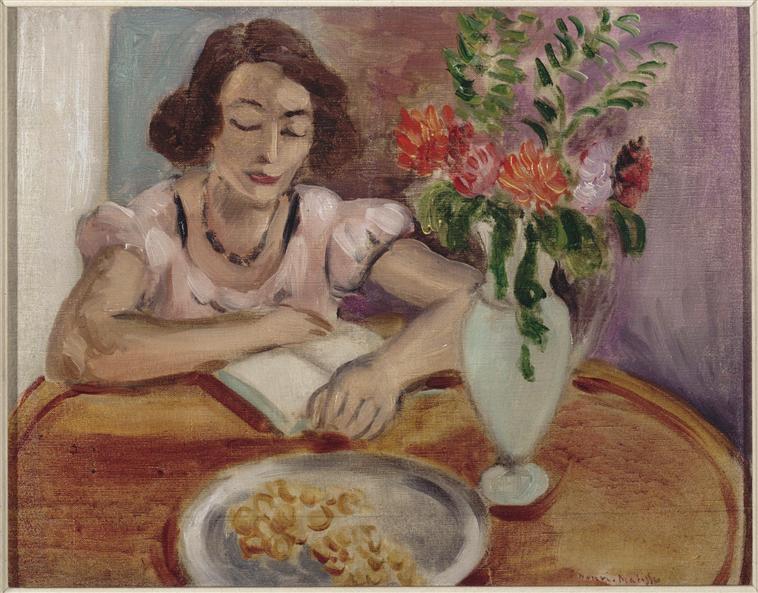
"Reading Girl," by Matisse

“Reading Girl,” by Matisse

I have revised my writing and improved it, and I have revised it and gone to hell.

Years ago an instructor at a writer’s conference advised us not to show our work to our family.  Family members, he pointed out, have already seen you naked.  Join a writers’ group.

The instructor was wrong on one count:  my husband very much liked the short story I’d submitted:  it was partly autobiographical, set in a poor urban neighborhood, and there was a scene where a family walked its pet goat down the street.  He recognized that scene.

When the instructor trashed the story in a private conference, I asked why I had been admitted to the workshop.  I did not realize then that writers’ conferences are a big business.  They are a place where one can learn to write, but more than one had been shocked by the instructor’s bluntness. He took us too seriously, and one can only hope at the next conference he loosened up.

He taught us to imitate his style.  No adverbs were allowed, sentences had to be short and simple, and  every story had to be quirky: my story “Suzanne’s” was set in an erotic bookshop, about a woman discontented (no!) with her life; there were drug dealers in another story; and in another a character had an affair with his sister-in-law.

Though the instructor was very good at spotting who would be published–a mystery writer, and a woman who wrote “issue” novels– he did not encourage anybody who wrote what I wanted to read.  Somehow the writers I though very good were never heard of again.

I did not write much fiction after the conference because I had no idea who my new characters were.  Quirky?  They were quirky, but in retrospect I would  have been better off writing for my own enjoyment about characters like myself.  I wasn’t writing for publication, and  I was shocked that my fellow students  already wanted to know how to get published. Most of us needed to work on our writing.

And now, all these years later, I have thrown out almost everything I wrote.

Here are a few lines of an autobiographical novel in verse I started writing some years back, about my friend L, who died at age 48 of complications from diabetes, and me.

Performance art
happened frequently
in our town
[when we were young].
Tree pods
nicked the lawn where we sat drinking coffee.
We caught one and said,
“What is this?”
We were supposed to be in math.
I hadn’t done homework since 1969.
We gathered pods and took them to the secretary’s office.
She smoked and shuffled papers.
She talked on the phone.  She looked at us.
“We need to xerox these,” we said.
“A project.”
“English.”
“Right.”
She absently waved us behind the gate.
She didn’t care.
She knew us well.
We were always in there for this or that.
We skipped class.
We stole the pink pad of passes from the office.
We were permanently excused from classes.
The college counselor called us into her office constantly.

We glued the xerox
onto someone’s locker.

We couldn’t stop laughing.

We liked the boy
whose locker we had adorned
with phallic art.

,,,,,!!!!  NO IDEA WHAT IS NEXT, BECAUSE I STOPPED WRITING IT.  VERSE IS NOT MY THING. 

See you tomorrow with another blog.

On the Bus, Reading Maps, and Challenges

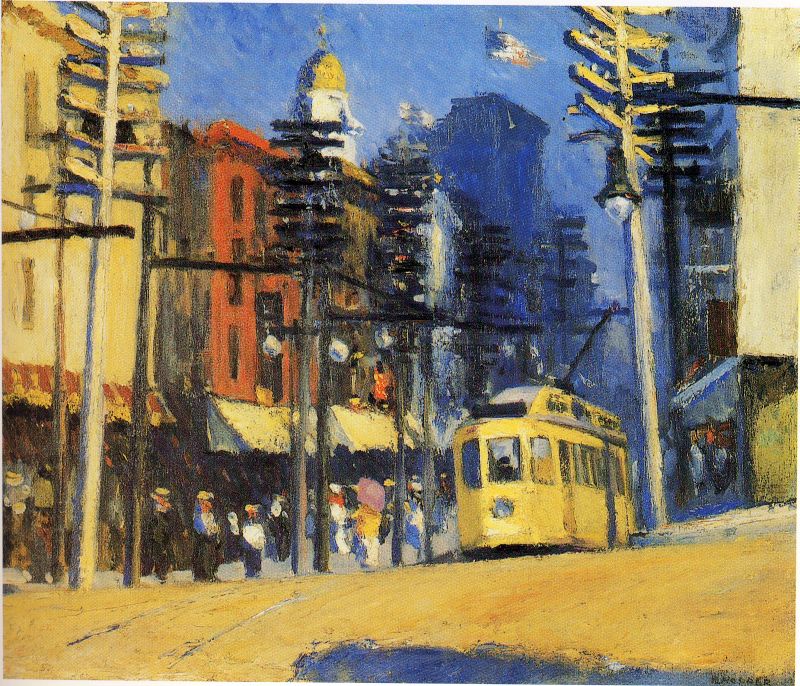
"Yonkers" by Edward Hopper

“Yonkers” by Edward Hopper

Last week I rode the bus.  I am very familiar with mass transit.  I’ve taken the bus or train in every city I’ve lived in or visited.  The 3, the 4, the 5, the 50, the 60, the Metro, the L, the subway, BART–you name it, I’ve ridden it.

I once interviewed people on a train about what they were reading.

Nobody reads much on the bus here.

And so I was on the bus reading a forgotten novel by Mary Renault, The Friendly Young Ladies, when the bus zoomed past the usual turn on 9th St.  We were in the dodgy neighborhood where my late mother’s nursing home is. I panicked:  Oh no, what bus am I on?

And then I realized it was my mother’s birthday.

I’d had no reason to return to this neighborhood since my mother’s death in August.  It is poor.  There have been shootings.  When I took my mother into the nursing home garden with its very high chain-link fence, she was disoriented.  “What do they need that fence for?” For a long time she didn’t understand that she was no longer in her (and my) hometown.

Last year on her birthday, it was mild.  I rode my bike, stopped to buy a cake, and then unfortunately got a flat tire.  I hopped on the bus.

It was a spooky walk from the bus stop, six long empty city blocks.  A deserted dairy, a block with nothing, finally the hospital, a McDonald’s, a convenience store.  It was safer to ride my bike.

Once I came out of McDonald’s with a cheeseburger for my mom, and a large man asked for money for the bus.

Yes, I know it’s for drugs, but sometimes I give anyway.

“Not in front here,” he said, scandalized. “It’s on video.  They’ll kick me out.”

I wasn’t going to go behind McDonald’s with him, so I stepped to the side of the door, gave him a couple of dollars, and got out of there.

I found my mother sitting in the dark with a towel on her head.

And so I felt a flash of grief.

And then, last week, on the bus it got worse.

I felt like my mom.

I didn’t know where I was.

The driver shot past the busy street where the bus shelters used to be.  The bus had been completely rerouted.

“The next stop is the terminal. You can ride back.”

At the terminal I got off the bus and walked.  I was a little bit west of where I thought it was, but I made my way to a street I knew.

And so I took care of some boring business, and on my way back stopped at a coffeehouse to study the map on the bus schedule.

Finally I found a street on the map I recognized.

And it was a deserted street, and I didn’t want to wait long.

After ten or fifteen minutes, I was ready to get on any bus.

“Do you go past…?”  I asked the driver of a bus.

“Sure,” he said.

It’s map-reading practice for my next vacation, right?

CHALLENGE.  Richard Lea at The Guardian has taken on the Goodreads Reading Challenge, which he thinks very silly.

More than 240,000 of Goodreads’ 25 million members have already committed to reading more than 14m books this year, pledging to get through them at an average of more than a book a week…

“The tickbox, cross-it-off-the-list mindset of the Goodreads Reading Challenge points right in the other direction. I’m all for books, for writers and for literary discussion, but if books become just another form of bookkeeping, if we start notching them off on the wall of our literary cell, we may find our “reads” aren’t so “good” after all.”

I couldn’t agree more.  I approve of book groups and readalongs, but challenges seem ridiculous to me.  Last year I wrote about challenges when I inadvertently did “the Europa challenge.”

Do you know what a Challenge is?

Here’s what you do.  You sign up at the sponsor blog.  Then you choose books to read from the challenge  “syllabus.”  And if you have a blog, you post your reviews, then post comments at the sponsor’s blog, then post links to your blog, and…

It’s confusing….

I think these “challenges” are sweet, but I do better with online book groups.  There is more discussion.

Time is too precious for me to participate in challenges.  I read what I want to read when I want to read it.

Perhaps the “challengers” are very young.  It is a way to belong to a  group where there is no real discussion.

How do you feel about challenges?

In Which I Am a “Daily Life Whore” and Read about Pliny’s Literary Life

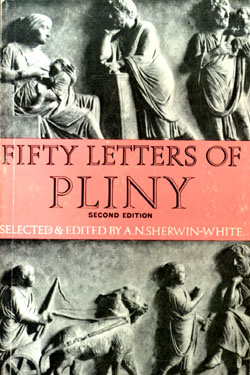
Fifty Letters of PlinyPliny the Younger (c. 61-113 A.D.) is a charming Roman writer whom few bother to read.  Was Pliny on our reading list?  I don’t think so.   Yet I took a course in Roman letters, greatly enjoyed Cicero’s self-absorbed outpourings, was fascinated by Seneca’s Stoic letters/essays, and delighted in Pliny’s personal letters. Pliny selected and published nine volumes of his personal letters, which are often spoken of as “artificial.”  Yes, they are polished and rhetorically shaped, but the sentences are short, simple, and readable.  The letters range in topic from his literary efforts to life in the country to the price of land to Trajan’s policies and politics.  Although most of the letters for the course were historically significant–“Pliny asks Trajan for instructions how to treat Christians in his province (XCVI)”; or “How Pliny the Elder perished in the eruption of Vesuvius (XVI)”– I love Pliny because you can glean gossipy information about daily life.

Historians are fascinated that Pliny wrote to the emperor Trajan.

I want to know if his friend Octavius Rufus published his poetry.

Pliny was a writer, lawyer, senator, and government official, so he had it all, but I am “a daily life history whore,” and  more interested in Octavius Rufus than Trajan.

In Volume 2, Letter 10, Pliny tells his friend Octavius Rufus that it’s time to publish his poetry. If he doesn’t, the few of his poems that have become publicly known are likely to be attributed to someone else.

Pliny letters oxfordBelow is a rough, literal translation of a few lines so you can see the vivid pictures his words create.  The elegant Latin is more economical than the English, and could also be translated more abstractly, but this is Latin 101…

“Some of your verses have become known and, though you are unwilling, they have broken their locks (broken out). Unless you drag these back into the main body, one day, as vagabonds, they will find someone else whose they will be said to be…..”  (Enotuerunt quidam tui versus, et invito te claustra sua refregerunt. Hos nisi retrahis in corpus, quandoque ut errones aliquem cuius dicantur invenient.)

Pliny goes on to say that giving public readings is the thing to do.

“And about publication, certainly [do] as you wish in the meantime, but anyhow give readings, so that you will feel more inclined to publish, and will finally feel the joy I have long anticipated for you not without reason.” (Et de editione quidem interim ut voles: recita saltem quo magis libeat emittere, utque tandem percipias gaudium, quod ego olim pro te non temere praesumo.)

Pliny loved giving readings himself and tells his friend what he may expect.  “For I imagine what crowds, what applause, what even of silence awaits; when I speak or read, I delight in silence not less than the applause, if it is a silence of close attention and desirous of hearing more.”  (Imaginor enim qui concursus, quae admiratio, te, qui clamor, quod etiam silentium maneat; quo ego, cum dico vel recito, non minus quam clamore delector, sit modo silentium acre et intentum, et cupidum ulteriora audiendi.)

I love readings so much that I thought briefly of organizing a vacation around a literary festival.  I got over that very quickly, though.

Still, if Octavius Rufus is giving a reading I’ll be there…

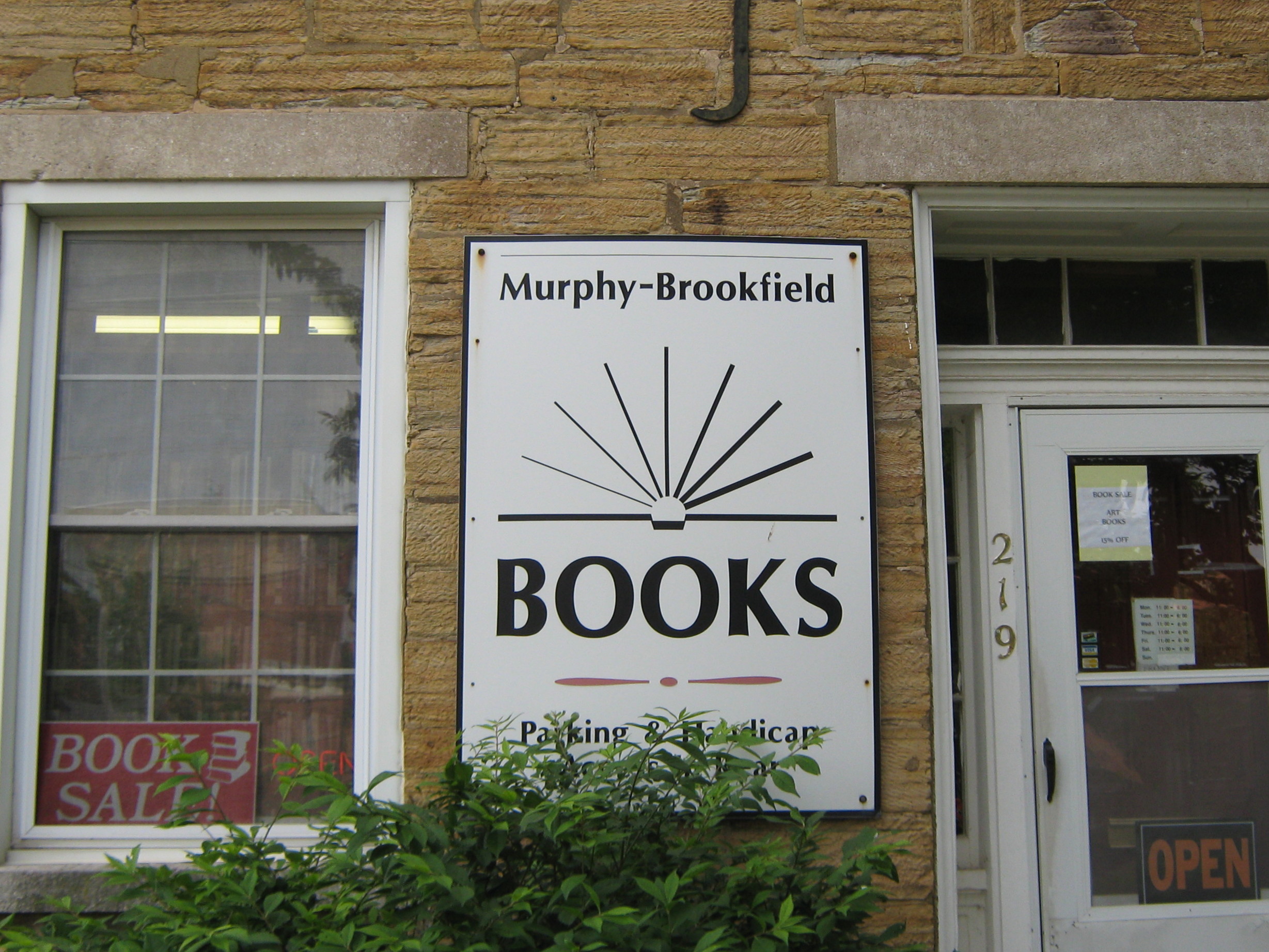
Murphy-Brookfield Books

Murphy-Brookfield Books

Murphy-Brookfield Books

I was very sad to learn that the 33-year-old Murphy-Brookfield Books, my favorite bookstore in Iowa City, closed last fall.  It sells books online at Abebooks and Alibris.

I posted yesterday on bookstores, and then idly looked up Murphy-Brookfield, which sells Viragos, books by Gilbert Highet about the classics, out-of-print classics, scholarly books, history, biographies, and more.

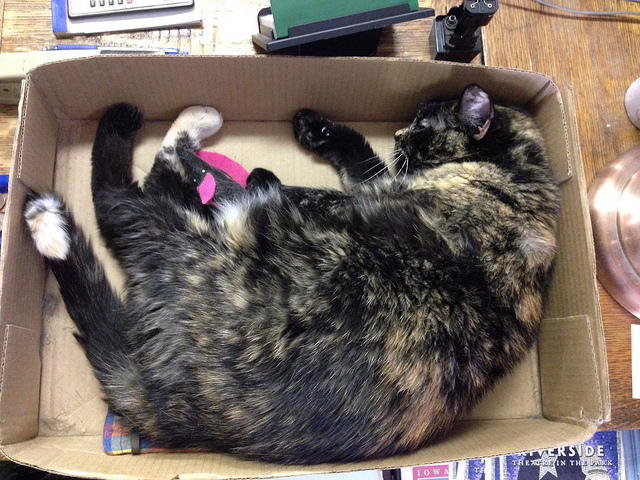
Martha the bookstore cat

Martha the bookstore cat

Mark Brookfield said in an Iowa City Press Citizen article, “It’ll be very hard to stop having a bookstore.”

And what was his favorite part of having a bookstore?  “Just working with the books, talking to the people.”

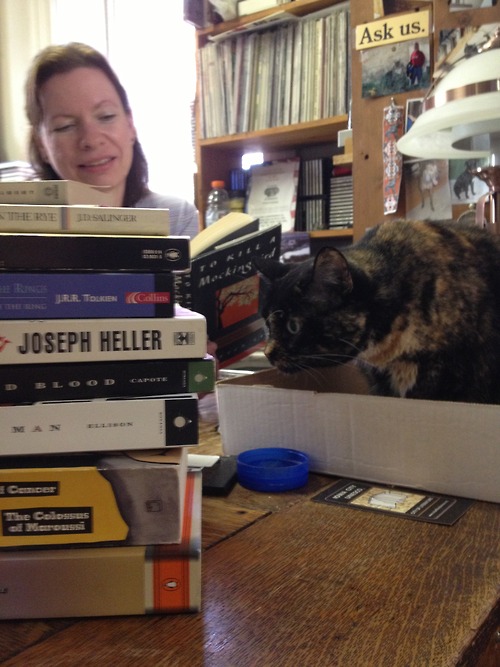
The bookstore cat, Martha, a tortoiseshell, helped out.  I would sit on a stool; she would sit on the stool.  I would crouch to look at books; she would look at books.

She hung out.

I loved Brookfield’s apparent policy of leaving people alone.  He was friendly, but didn’t try to “sell” books.

If a used bookstore cannot survive in Iowa City, a UNESCO City of Literature, it cannot survive anywhere.

Martha

Martha

The historic stone building has been sold to The Haunted Bookshop, another used bookstore.

You can see a video about the two bookstores here.

Tell me about any of your favorite bookstores that have closed.

Backlisted!

Illustration of bookstore from "Globe and Mail"

Illustration of bookstore from “Globe and Mail”

“If we take this money here…and put it here,” my cousin said, “it might work.”

“I don’t have the faintest idea,” I said.

And I don’t.

I’ve talked about it forever:  my ambition as a young girl to open a bookstore, and I spent Career Week shyly hanging around The Paper Place.  Then there was Cattleman’s Books:  just about the time I’d arranged everything, the Cattleman got sick and his relatives pulped the books.

When my husband said I should blog less, after a marathon of writing featurettes on the pros and cons of blogging, I wistfully came up with the idea of opening a bookstore called Backlisted!   I would carry no new books, only books on publishers’ backlists and used books.  I would order remainders and discount NYRB books. I would buy books at estates.  I would cozy up to writers who live in a 150-mile radius and insist they give readings, and get people to attend with promises of drugs (kidding) or champagne cake from that really good bakery.    I would have Cult Fiction week:  A Confederacy of Dunces , H. D., and Jane Gaskell’s Atlan fantasy quintet. To please the Persephone Junta  and the Virago Junta (and I’m joking: I’m a MEMBER of the Persephone and Virago juntas), I would wear a frilly apron over a skirt, twin set and fake pearls.  Not to mention Dalkey Archive week.  What a good small press that is!

I’ve been sidetracked from my bookstore plans by doing the expected thing:  I taught after being a T.A. in grad school (“You’re a born teacher,” my mom said-ha!), and later writing and editing for various publications (“You’re a good writer,” said a professor of mine gloomily; he didn’t otherwise think highly of my skills. I had to explain that my friend and I turned up at the Boethius lecture because we had read Boethius; heavens, why else would anyone go to anything so boring?).

There are drawbacks to opening a bookstore.  Fourteen or fifteen bookstores have gone bust here since the ’90s. What could I possibly do that they couldn’t? We have to drive 100 or more miles to Iowa City or Omaha to get to a good bookstore.  And even then I’m not sure the stores are thriving.

Here are three fun pluses of opening a bookstore.

1.  You can invent a whole new image of yourself.  New hair, new clothes, smart new glasses:  I see myself playing the intellectual and reciting speeches from the salons in War and Peace.  But I know how these things go.  I’m much more likely to look preppy and sound ditzy than intellectual (the new preppy ditz look!), and even though I’m not ditzy, I might be a little bit preppy, though it’s usually spoiled by a blouse coming untucked.

2.  You can have your own book group.  Naturally you make use of your connections or no one will come:  your cousin and her friends, your friend Janet who lives 200 miles away (“Why CAN’T you come?”) and her friends, and those truly horrible people in the Great Books club.

3.  Let everyone list their favorite books in a beautiful leather notebook and once a week post “So-and-So’s favorite book!” and a small display of one or two copies.   We’re not snobs.  Let it be what it is.  Wuthering Heights or Mistress of Mellyn.  It’s a book!

Minuses or Things to Avoid:

1.  Do not live in your store, microwave Italian dinners so the whole place smells like Stouffer’s, or tell anyone that  you shower at the neighborhood gym.  The very thought of your hanging around sitting on the floor because you can’t afford chairs, or using a box as your desk is enough to sadden anyone.

2.  You want a nice cat in your store, not an attack cat.  After years of loving every cat I met at bookstores (especially Martha at Brookfield-Murphy Books),  I finally met one at a used bookstore that jumped on my bare legs.  I never went back there.

If someone would give me a bookstore, I’d run it.  And, yes, if I don’t open a bookstore soon, I never will.

Amazon is the bookstore of the future.  Or the present.    Who knows what the future holds?  For now, only the online thing can make money, if it can, and I’m not sure of that.

What kind of bookstore would you open if you had a chance?

Carol Anshaw’s Lucky in the Corner & Where to Shop for Pillows in London

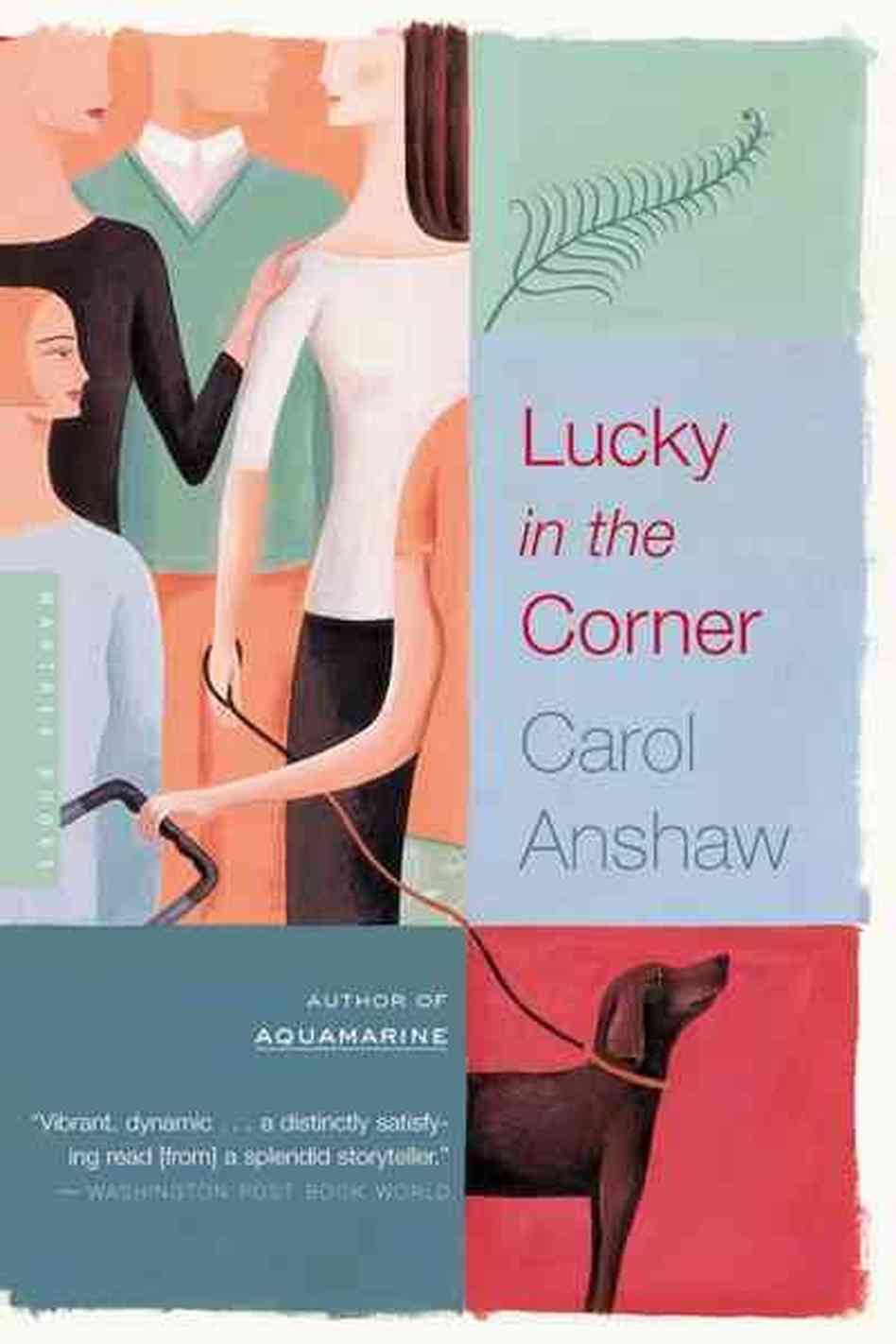
Lucky in the Corner carol anshaw Carol Anshaw’s Lucky in the Corner (2002) is the kind of domestic novel I read to make sense of modern life.  Such domestic fiction is rare these days. Publishing (from my limited perspective) seems to be about the big books rather than the small gems. The Man Booker Prize last year went to Eleanor Catton’s The Luminaries, an 884-page historical novel.  The National Book Award?  To James McBride’s The Sweet Bird Life, a 400-plus-page historical novel about John Brown.  The Pulitzer?  Adam Johnson’s The Orphan Master’s Son, a complicated big book set in totalitarian North Korea.  Do awards go to domestic fiction anymore?  Does anyone write it?  Well, of course they do but it doesn’t always get reviewed, as Jennifer Weiner tells us at her blog.

Anshaw’s novel is not only about family, it is also about gay life.  And, though I’m sure there are many gay novels, I must admit I haven’t read one  in a while.

In this gracefully-written novel, Nora, a lesbian, and her family are at an emotional crossroads:  Nora, the administrator of a Continuing Education program at a college, embarks on an illicit affair with Pam, a ceramics student who works as an independent contractor.  Nora’s partner, Jeanne, a Berlitz instructor who loves sentimental movies starring Lana Turner,  does not suspect Nora of cheating.  Nora’s daughter, Fern, a 21-year-old student who lives at home but prefers the company of her actor-and-sometimes-transvestite uncle Harold to that of her mother, realizes from  long experience that her mother is planning something.

Anshaw’s sketch of Nora’s desire is hyperrealistic.  Nora fantasizes in her office about Pam, and tries to puzzle out how to initiate a relationship without looking like a sexual harasser.  Later in the book we learn about Nora’s sexual history:  cheating on her husband with women, and before their marriage, secretly having an affair with a female editor at a fashion magazine where she had an internship.

Nora has been secure with Jeanne, and has chatted with Pam only twice, once at orientation, another time in her office.

Since then–nothing.  If there’s a next move, Nora is going to have to make it.  She sits inert at her desk, but within, she’s a Greek drama in an ancient amphitheater–foible and folly paving the way for tragic consequences.  She sat here last Tuesday night, watching this same play of bad judgment and horrible consequence, and ended up slinking home, grateful to Jeanne for her unwitting protection.

Anshaw has a gift for fabricating witty metaphors .

Nora eventually rushes off to Pam’s classroom with a clipboard to pretend she needs to ask her a few questions.

Anshaw is a master of the temporal flashback. The novel starts with the denouement, when Nora wakes up to find a driver has deliberately crashed into her car and totaled it, and from there goes back and forth in time, covering Nora and Fern’s lives from childhood on.

Anshaw also brilliantly portrays Fern.  When Fern learns that her bad-girl  best friend Tracy has freaked out over care of her sick and colicky baby, Vaughn, Fern and her new boyfriend take Vaughn away for weekends, and then permanently.  Nora and Jeanne also love the baby.

Although this last plot twist is unrealistic–how often do whole families embrace the care of someone else’s baby?–Anshaw is an unusually astute writer, her prose is lean, her dialogue pitch-perfect, and her handling of time worthy of Ian McEwan.

And Lucky, the dog, is the most likable character in the book.  What is it about dogs in books?  I’m not a dog person.  I love cats.  But the cats in books are seldom portrayed so charmingly.

I very much admired this novel–it gets better as it goes on.

PILLOWS!

Remember the days when you used to take your own pillow when you traveled?

“The secret of being comfortable on a Greyhound bus is your own pillow,” a friend once told me when I still traveled on Greyhound buses.

I always take a pillow in the car.  (Remember, I am a non-driver.)

But you can’t take your pillow on a  plane.  You can only take two pieces of carry-on luggage, and one of those is not a pillow.

“Ma’am, ma’am–you can’t take a purse and two other bags,” a stewardess told the woman in front of me in line a few months ago.

I can just imagine her saying the same about a pillow.

And can you check your pillow? 

I recently stayed in a hotel where there were 12 pillows  on the bed, and they were so luxurious that the bed became my desk as well as my bed. There was hardly any reason to get up unless I wanted to go to a museum, or get a bite to eat.

I am contemplating a trip to London and wonder what I’ll do if the hotel room doesn’t have the requisite number of pillows. Which is a dozen.

I’ll probably spend the first day wandering around buying two or five or six pillows.

The Tate Modern can wait.