Three “Literary” Women’s Blogs, Book Week, & Is Silas Marner a Classic?

Matisse, "Woman Reading with Tea"

Matisse, “Woman Reading with Tea”

Last week I wrote The Blogger Chronicles, a series on the pros and cons of blogging.

And so I am declaring this “Book Week” at Mirabile Dictu.  (“I have been reading” is my new motto.)

Before I move on, let me give you links to three literary women bloggers I neglected to mention.

1.  Mary Beard’s A Don’s Life appears at the TLS (my favorite book review publication and the only one I subscribe to).  Beard, a classicist, historian, professor at Cambridge, and TV celebrity, writes a blog about classics, her domestic life, travels, experiences on TV, and more.

Her latest post: “A 1950s childhood: 5 objects of nostalgia”

2.  Novelist Caroline Leavitt’s CAROLINELEAVITTVILLE. In her latest post, she writes about SheBooks, an e-book publisher of short stories and memoirs by women.

3.  Novelist Jennifer Weiner’s A Moment of Jen:  In her latest post, she writes about counting “the number of books reviewed that were written by women, and the number of women writers profiled in the Times, and then I grumble when those numbers turn out to be significantly lower than the number of male authors whose works and selves got that consideration.”

And now for BOOK WEEK.  First Book Post Up: Is Silas Marner a Classic? 

One of the disadvantages of taking a vacation in London is that the Nuneaton tour of George Eliot is apparently in Nuneaton. Perhaps I should go there?

Daniel Deronda is my favorite novel by Eliot, and possibly my favorite novel of all time, but instead of rereading it I have been catching up on her shorter works, because even her lesser works are better than most other novels.

silas-marner-weaver-raveloe-george-eliot-paperback-cover-artWhen my friends read Silas Marner at the public school, I was attending a hippie/lab school ($25 a year) and reading Middlemarch.  My school apparently couldn’t afford to buy books, so I took courses like Independent Reading (in which I read everything from Middlemarch to Sisterhood Is Powerful! to Richard Brautigan’s Revenge of the Lawn), and an English lit course where there were enough copies of Macbeth, but we had to choose between David Copperfield and Graham Greene’s A Burnt-Out Case (and  a few others I can’t remember) in the novel unit, probably because there weren’t enough books to go around.

Not everyone did a lot of reading, though there is much nostalgia for this school, which closed in the ’70s.  (There are still reunions, I think.)   One of my most vivid memories is of running a consciousness raising group in a classroom over the lunch hour.  I also recall the principal’s emerging from the office to stop two students from disrobing in the halls, an episode I had found unexpected and  intriguing.

I saw no need to read Silas Marner until I realized that I’d never read it.

If I were still at hippie school, I would doubtless have referred to it as “f—ing Silas Marner,” because it’s not very good, and that’s how we talked then.

The plot?  Silas Marner, a weaver, goes to chapel regularly. He is very religious, and very happy in Lantern Yard; but one day his friend sets him up for the theft of the church’s treasury.  Although his friend committed the robbery, Silas is blamed and prayed for; he moves to Raveloe to get away from his bad rep, and works as a weaver out of his home.  Ironically, “post-theft” he falls in love with gold.  He hides it under the floor and loves to count it.  But when someone steals the gold, Silas is devastated.  It turns out for the best, though, because shortly thereafter he sees the gold curls of a toddler (instead of gold!  yes, that’s how ungainly the structure is) whose opium-addicted mother has died in the snow. The little girl has wandered into his house, and, happily for all, he raises her and becomes a favorite of the villagers.

It is an extremely sentimental novel, rather too perfectly structured and clumsily put together, and exactly the kind of thing mediocre school teachers used to love to teach because there’s much symbolism, and it’s really no work for them (and so thank God for the hippie school, where we were left alone to learn).

Eliot is a wonderful writer, but this is the kind of writing we’re dealing with here:

…he had a dreamy feeling that this child was somehow a message come to him from that far-off life:  it stirred fibres that had never been moved in Raveloe–old quiverings of tenderness–old impressions of awe at the presentiment of some Power presiding over his life; for his imagination had not yet extricated itself from the sense of mystery in the child’s sudden presence, and had formed no conjectures of ordinary natural means by which the event could have been brought about.

“Somehow a message”–oh, please.

Not Eliot at her best.

But Terence Cave, the writer of the introduction to the Oxford edition of Silas Marner, says,

By thus placing Silas so precariously on the threshold of unconsciousness, George Eliot was also able to give imaginative form to the Comtean notion of a gradual evolution of human consciousness in human history.  Nineteenth-century German philosophers (Schopenhauer in particular) attributed the great movements of the history not to conscious decisions made by individuals, but to an unconscious collective will…

Read Middlemarch, Daniel Deronda, or The Mill on the Floss if you want to understand Eliot.  Silas Marner just isn’t as good.
Mirabile Does Middlebrow: J. B. Priestley’s Angel Pavement & Carrie Ryan’s The Dead-Tossed Waves

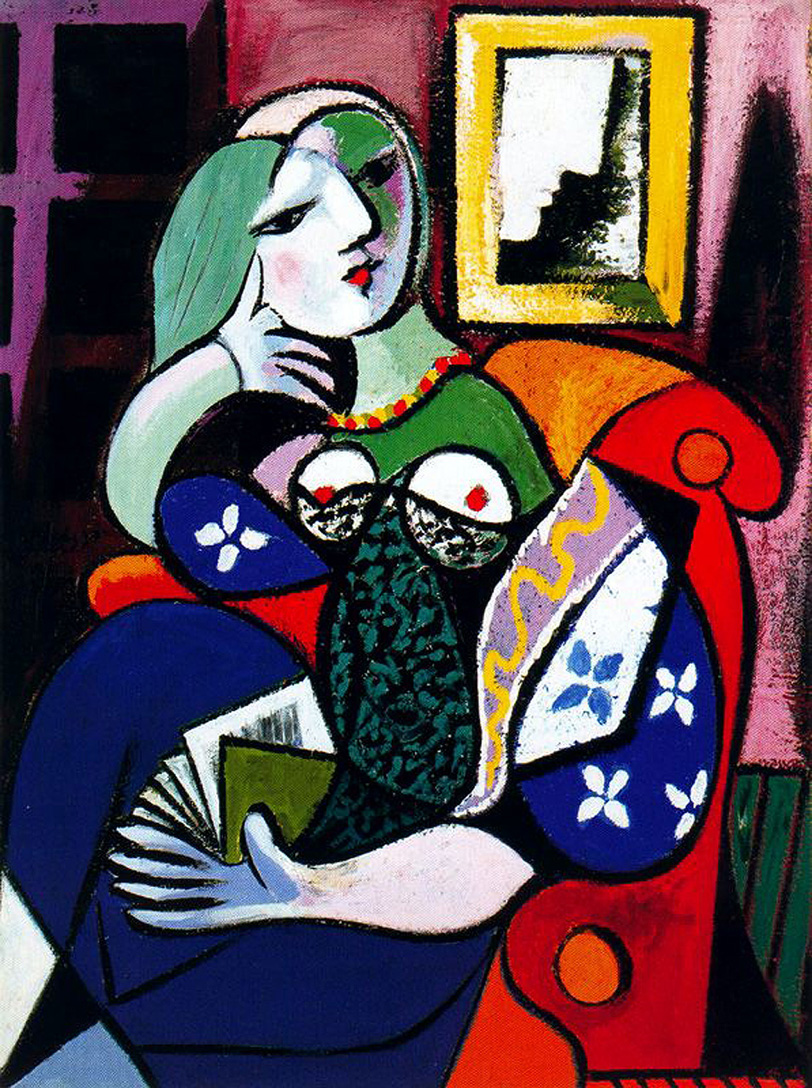
Picasso, "Woman with Book" (1932)

Picasso, “Woman with Book” (1932)

You may wonder what I’ve been reading.

I have been reading.

I have also spent a lot of time online.  I recently received a notification from my phone company that I am a “heavy user.”

Sounds vaguely as though I need Narcotics Anonymous.

The phone company wants me to upgrade my internet speed.

I don’t need it upgraded.  I need to go write in a journal or something.

Meanwhile, here is a look at the latest middlebrow novels I’ve been reading.

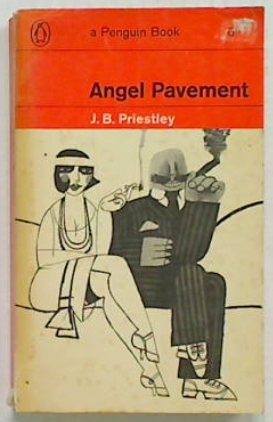
1.  J. B. Priestley’s Angel Pavement.  A few years ago I read J. B. Priestley’s Lost Empires, a charming, lively novel narrated by a watercolor artist who amusedly reminisces about his youth assisting his uncle in his magic act in music halls. Priestley’s style reminded me slightly of W. Somerset Maugham’s, and I wanted to read more of his books.

I got waylaid, as I so often do, because there is so much to read. Finally I found a very nice used paperback copy of Angel Pavement (1930), published by Phoenix/The University of Chicago Press. (The book is out of print, except for a Kindle edition with a very good introduction by D. J. Taylor. I don’t have a Kindle, but I read the sample.)

Angel Pavement j. b. priesleySet in London, Angel Pavement is the story of a group of sad, desperate people who work in an office, Twigg & Dersingham.  After Mr. Golspie, a middle-aged man with a get-rich-quick business plan, arrives mysteriously at the office at No. 8 Angel Pavement with a proposal to sell cheap wood veneers and inlays from the Baltic at a huge profit, the upturn in business temporarily pumps money into the impecunious firm.

It also changes the lives of the characters.

Priestley’s entertaining description of No. 8 Angel Pavement is slightly Dickensian and makes the street forever memorable.

No. 8, once a four-storey dwelling-house where some merchant-alderman lived snugly on East India dividends, is now a hive of commerce.  For the last few years, it has contrived to keep an old lady and a companion (unpaid) in reasonable comfort at The Palms Private Hotel, Torquay, and, in addition, to furnish the old lady’s youngest niece with an allowance of two pounds a week in order that she might continue to share a studio just off the Fulham Road and attempt to design scenery for plays that are always about to be produced at the Everyman Theater, Hampstead….  As for the tenants themselves, their names may be found on each side of the squat doorway.  The ground floor is occupied by the Kwik-Work Razor Blade Co., Ltd., the first floor by Twigg & Dersingham, and the upper floors by the Universal Hosiery Co. and the London and Counties Supply Stores, and, at the very top, keeping its eye on everybody, the National Mercantile Enquiry Agency, which seems to be content with the possession of a front attic.

If you’ve ever worked in an office, you will know these vividly-depicted characters.  Mr. Smeeth, the firm’s cashier, is very proud of his clerical job, adores calculations and bills, and supports his family in a snug little house.  Stanley, the office boy, likes to “shadder” people and pretend he is a detective.  Miss Matfield, the efficient, well-educated typist, is discontented and thinks of herself as only temporarily working in an office and living in a women’s club, but she is pushing 30 and beginning to feel a little desperate.  Mr. Dersingham, the owner, went to a minor public school, and concentrates on school functions and school ties rather than business.  Saddest of all is Turgis, the clerk, “a thinnish, awkward young man with a rather long neck, poor shoulders, and large, clumsy hand and feet.” Living alone in lodgings, he spends his weekends walking around London and hoping to find a girlfriend at tea shops or movies. He has no relationships with anyone, no friends.

Sex also arrives at No. 8 Angel Pavement with the advent of Mr. Golspie.  Turgis falls in love with Mr. Golspie’s pretty daughter, Lena, and his obsession reminds me of  Philip’s with trashy Mildred (who, as I recall, had green skin–very attractive!) in Maugham’s Of Human Bondage.  Mr. Golspie picks up Miss Matfield, who is finally ready to lose her virginity when… well, I won’t tell you, but she ends up considerably better off than poor Turgis.

I loved this book:  so much fun to read!  Not a classic, but a very good novel.

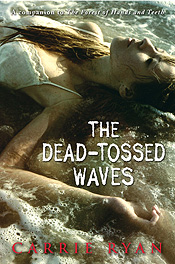
2.  And my cousin gave me a Y.A. zombie book for Christmas, Carrie Ryan’s The Dead-Tossed Waves.

The_Dead-Tossed_Waves_(book_cover) Ryan has a moody, unevenly poetic style, and I can see how this book would appeal to a teenage girl.  The premise, however, is terrifying.  Towns are fenced off so the zombies don’t break in and infect the residents, most towns and cities have been breached, and the world’s population has dwindled.  The heroine Gabry’s mother has to go out and kill zombies on the beach when the tide comes in.  One night Gabry and a group of teenagers climb over the fence to play in an old amusement park.  A zombie attacks, and most of her friends die or are banished into a kind of military service.

What I dislike most about these Y.A. books, though, is the passivity of the heroines.  Sure, eventually Gabry learns to take care of herself, but there’s a lot of whining and dependence.  Personally I very much enjoyed the Twilight books, but these other Y.A. books…I have to say no.

The Blogger Chronicles, Conclusion

Conclusion of a series on blogging.

Roman woman writingMy husband is forbidding me screen time.

“This is taking you too long.”

Yes, indeed, it was.  It was sundown by the time I took my walk on Monday after an 8-hour marathon putting together some of the pieces for my series of “featurettes” on blogging.  I got a little faster/hastier as I went along, slapping quotes up on the screen and realizing that was enough for a blog. But it was tiring, my feature-writing skills were rusty, and, as my husband pointed out, “You aren’t getting paid.”

On the other hand, I learned an amazing amount about bloggers, writers, and critics from the questionnaires and interviews.

1.  Bloggers mean no harm.  Some write book journals, others write reviews.  We are writing for ourselves, or, in most cases, a small audience.   We try to write with integrity and are interested in reading other bloggers’ genuine opinions of books.   None of the bloggers I interviewed courts publicists and publishers (only two receive books from publishers regularly).  We are not interested in promoting books, or reading promotions of books determined by chance gifts from a publisher.

As Tony of Tony’s Book World said, “If a blogger likes everything, that’s not very helpful.”

And as Susan of Pages Turned said, “Anyway, at least I am totally over being used as a marketing tool…. I really wish everyone would just start writing about the books they really like so that we could all find the other bloggers who share our tastes, our sensibilities, instead of offering up yet another generic review on whatever’s being published this month because that’s what the marketers want.”

2.  Critics have a different process.  They polish their essays; they don’t post and run.  Their work is important, because where would we be without the thoughtful writers who analyze books in major book review publications, even if we disagree with their judgment?

3.  Novelists are not necessarily selling their books through blogs and Amazon reviews (as I had thought).   D. J. Taylor, a novelist, biographer and critic, Sherry Jones, a historical fiction writer, and Jo-Ann Mapson, an author of women’s fiction, have all had mixed experiences with online reviews, finding some thoughtful, others vacuous.  Some of Taylor’s online reviewers at Amazon UK expected Nazis to stomp through his counterfactual (or alternate) history, The Windsor Faction, though others understood his work; and, while Jones, the author of Four Sisters All Queens, appreciates what blogs have done for her books, she points out that most have only a few hundred followers, so it is “a drop in the proverbial bucket.”

As Mapson, author of Solomon’s Oak and Finding Casey, says, “Often I look at the 1 star reviews, click on what else they’ve reviewed, finding something unrelated such as vacuum cleaner bags.  But every day one site or another sends me reading suggestions, and I often do buy the book.”

The Blogger Chronicles, Part 4: Novelist Jo-Ann Mapson Speaks Out on Blogging

This is Part 4 of a series of “featurettes” about blogging & online reviews.  Today, meet novelist Jo-Ann Mapson.

Jo-Ann Mapson

Jo-Ann Mapson

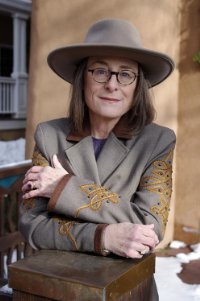
Jo-Ann Mapson, the author of 11 novels and a book of short stories, won the American Library Association’s RUSA Award for best women’s fiction in 2011 for her superb novel Solomon’s Oak (which I wrote about here at my old blog).  Her thoughtful, brave heroines, whose problems range from relationships to money to caring for rescue dogs to recovering from grief, help us look at life from a different point of view.  Her most recent book, Finding Casey (which I wrote about here), is the sequel to Solomon’s Oak.

In an e-mail interview, Jo-Ann says that blogs are important to readers and writers in different ways.  “Hardly anyone in mass media reviews books anymore.  Twenty years ago, NYTBR, Los Angeles Times, did lots of reviews, and those no doubt did sell books.”

When I mentioned that even bad reviews alert me to books I want to read, she said,

“Carolyn See massacred my first novel in the LATimes.  People clipped and sent me the review, not to be mean, but because they were so excited my first book had been reviewed.  That was big relief for me!  I know another writer whose first novel was torn to shreds and never wrote another novel because of the damage.

“Now we have Amazon.com and Barnes & Nobles’ reviews, and as many have agreed, giving the opportunity for people who are not reviewers the chance to say whatever they want about books.  Often I look at the 1 star reviews, click on what else they’ve reviewed, finding something unrelated such as vacuum cleaner bags. But every day one site or another sends me reading suggestions, and I often do buy the book.  There is no more bookstore to wander after the billions of chains drove out the independent bookstores, then fell flat on their own faces.  What’s left to browse?

“I consider myself an addicted reader.  One of my favorite blogs to read daily is Caroline Leavitt’s Leavittville.  First, I consider her probably the best blogger out there, and we have similar reading tastes.  She reviews/interviews daily.  And write a book a year!  Such a generous heart is rare, and she is happy to feature books she reads, which is the best reason to read a book, in my opinion. ”

Thank you, Jo-Ann, for this thoughtful interview!

Giveaways: Norah Hoult, Violet Trefusis, David Lindsay, & Margery Sharp

I have too many books!  We have three boxes of books from the Planned Parenthood Sale I am trying to consolidate into one.  Leave a comment if you’re interested in any of the five titles below (or more than one) and, if more than one person “volunteers,” I’ll draw a name.  Otherwise I trot them down to the Little Free Library, where my Dover book of Edith Wharton’s stories and D. H. Lawrence’s The Rainbow still languish.

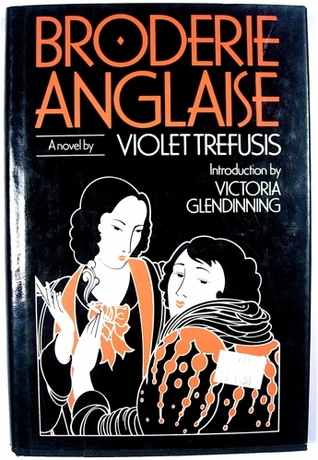
Broderie Anglaise by violet Trefusis1.  Violet Trefusis’s Broderie Anglaise, translated from the French by Barbara Bray.  I read this one last fall and loved it.  The 37-year-old heroine, Alexa, a novelist who lives in Oxford, is having an affair with handsome 29-year-old Lord John Shorne.  When he tells her he is going to Rome, she knows it is “to see that Pamela.” He wishes she would restrain her feelings, because it’s dull for him to deal with them.  He says,…the least of your heroines is so much cleverer than you.”

“They’re my own portrait touched up,” she answers.

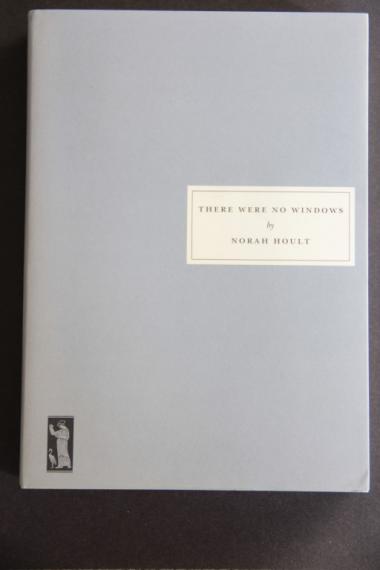
There Were No Windows2.   Norah Hoult’s There Were No Windows (Persephone).  Some Persephones I keep forever;  this one I enjoyed, but it needs a new reader   According to Persephone:  This 1944 novel is about memory loss and is the only book we know of, apart from Iris about Iris Murdoch (and arguably There Were No Windows is wittier and more profound), on this subject. Based on the last years of the writer Violet Hunt, a once-glamorous woman living in Kensington during the Blitz who is now losing her memory…

voyage to arcturus3.  David Lindsay’s A Voyage to Arcturus.   A fantasy novel described by Loren Eisley as:  “The book is an amalgam of strange philosophies clothed in weird exterior forms that have taken shape in weird exterior forms that have taken shape in a fantastically gifted if somewhat elusive mind.”

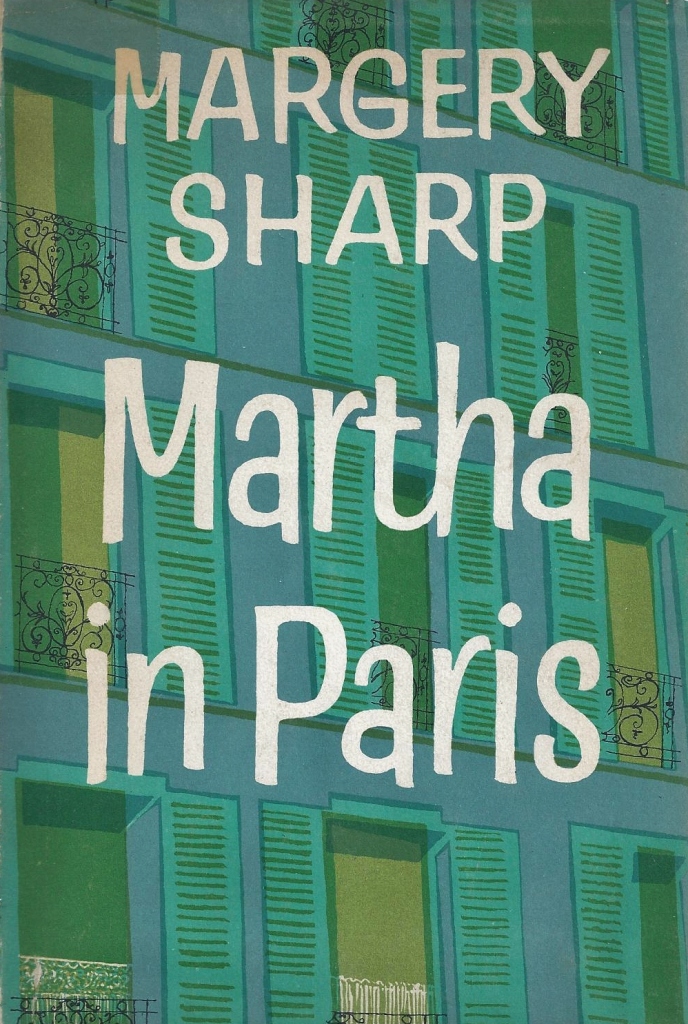
martha-in-paris-margery-sharp-0014.  Margery Sharp’s Martha in Paris.  A feather-light to-be-read-once novel.  Last fall I said, “Sharp takes our image of fat women and throws it in our face.   Art matters, not fat, and Martha is a fat artist.    A sexual experience jeopardizes Martha’s aspirations, but she overcomes it, despite pregnancy.”

5.  Margery Sharp’s In Pious Memory.  Another feather-light novel.  Mrs. Prelude, the wife of a famous financier, survives a plane crash, but her husband does not.  Later, she is unsure if she has correctly identified his body; and she and her youngest daughter, Lydia, fantasize that he is still alive.  Lydia and her cousin set off on a bicycle trip to look for her father in France.  It is funny, though a bit Disneyish.  Perfect plane reading. Not very good, but entertaining.

“Blogiography”: A List of Blogs Recommended by Book Bloggers

Links without links.

Links without links.

By popular demand, here is a list of blogs and other sites recommended by the bloggers I recently interviewed.  (I am not providing links because it’s so much work.:))

Tony recommends:  The Complete Review

Ellen recommends:  Judy Geater’s Movie Classics, The Daily Blague, and Naked Capitalism

Karen recommends:  Stuck in a Book, Heaven-Ali

Luisa recommends:  http://www.theomnivore.com/

Nancy recommends:  Following Pulitzer, Louisa May Alcott Is My Passion

Belle recommends:  Cornflower, Stuck in a Book, LifeontheCutoff, A Work in Progress, Shelf Love, The Captive Reader, Uncluttered, and Zen Habits

N.B.  All the bloggers recommend the blogs on their blogrolls.  You can find links to their blogs in two previous posts, The Blogger Chronicles, Part 1 and 2.

The Blogger Chronicles, Part 3: Critic Michael Dirda and Novelists D. J. Taylor & Sherry Jones Speak Out on Blogs

Roman woman writingThis is the third in a series of “featurettes” about blogging.  Today, meet Michael Dirda, a Pulitzer Prize-winning critic at the Washington Post; D. J. Taylor, an award-winning biographer, novelist, and critic; and Sherry Jones, an award-winning author of historical novels.

In a scene in D. E. Stevenson’s light, humorous novel, The Two Mrs. Abbots (1943), Janetta Walters, a romantic novelist, meets an air force pilot who dislikes her books.

She was aware that the English-speaking world contained people who did not care for her work, but never before had she met one of these people in the flesh–not so far as she knew.  Reviewers were sometimes unkind, but reviewers were different…

Novelists, reviewers, and bloggers often have confusing encounters.  Everybody is a click away by email (two or three clicks if you go through PR people), and bloggers can happily chat with famous writers, or, in this case, interview them.

Because so many of the bloggers I recently interviewed like to read classics and older books, I approached Michael Dirda, a Pulitzer-Prize-winning critic at The Washington Post and author of Readings, Bound to Please, and Classics for Pleasure. Not only is he an outstanding writer, but he sometimes reviews classics, reissued editions of out-of-print novels, reference books, poetry, science fiction, and other less well-known books. * (see note)

He kindly agreed to an email interview on the subject of critics and bloggers.

Although he does not read blogs regularly, he enjoys “specialized sites about everything from the classic ghost story (All-Hallows) to the Golden Age Mystery (The Passing Tramp) to the course of popular fiction over the past 100 or so years (the restricted discussion group called fictionmags).”

He is happy with the quality of some blogs, not so happy with others.

He writes:

“China’s Cultural Revolution proclaimed: “Let a thousand flowers blossom”–and, while I’m no Maoist, I do think the proliferation of reader comment and discussion online is to be welcome. Besides, it’s inevitable, even if there are losses. My own caveats are pretty familiar by now.  People gravitate to specialized blogs or tailor their data consumption–to use the lingo–to a narrow band of material. Common knowledge–the stuff that everyone knew about because it came to you in the daily paper or from big-name magazines and book reviews–is being eroded. We can now learn an incredible amount about quite specialized areas of interest: Unfortunately, more and more people  know everything about the strategy of League of Legends yet are unable to name the Secretary of State. And not care.”

He cautions readers about believing everything they read online, since few sites have fact checkers and copy editors.  He can identify bloggers who know their stuff, but thinks “the flashy and the crowd-pleasing sites are often the ones that receive all the hits and make the big numbers.”

He says that when critics and journalists talk about bloggers, it is “mainly to lament their own loss of power and influence.” There is no equivalent of the supportive community of bloggers or online book groups among critics.  They spend a lot of time alone.

He writes, “To read a book well or appreciate a work of art requires a focused act of attention. You need quiet and minimal interruption, both of which are hard to achieve if you’re constantly updating your Facebook page. Addictive twittering is even worse. Personally, I prefer to talk with my friends, truly face to face, over dinner and a glass of Guinness.”

D. J. Taylor is a critic, biographer, and Man Booker Prize-nominated author of the novel, Derby Day.  His brilliant new novel, The Windsor Faction, was one of my favorite books of 2013 (I wrote about it here) and I very much enjoyed his non-fiction book, Bright Young People: The Lost Generation of London’s Jazz Age (I wrote about it here; It can also be used as a reference book about such Bright Young People as Evelyn Waugh, Nancy Mitford, and  Cecil Beaton).

Like all writers, he has had good and bad experiences online.  He said by e-mail:

Blogs are like every other form of reader response in the publishing process, from newspaper reviews to Amazon critiques – helpful and instructive if well done (and by this I don’t merely mean favourable to the author), a waste of time if not. My instinctive feeling is that the Americans are better at this than the Brits. I have been very impressed in recent years by specialist non-fiction sites which have been useful for promoting my own stuff –  a blog called Cocktails with Elvira was particularly helpful with my Bright Young People book. With The Windsor Faction blogs such as The Common Reader and your own site have offered a welcome counterblast to various on-line reviewers who will insist that an alternative history novel set in World War II has to be full of stampeding Nazis and derring do.

Sherry Jones, a former journalist and the author of two historical novels, Four Sisters All Queens and The Jewel of Medina, has had good and bad experiences, too.  (I wrote  here about Four Sisters All Queens, a well-researched, fascinating novel about the four daughters of savvy Beatrice of Savoy in Provence.)  She said in an email interview:

“How readers find out about new books is a mystery to me. As an historical fiction author, I’m very grateful to the bloggers who’ve taken the time to read and review the novels I’ve written, but I’m also aware that their impact on my readership is very limited. Most bloggers have only a few hundred followers at most — a drop in the proverbial bucket. Some, alas, can barely spell. And yet they offer us exposure, both on their blogs and on the social media where they promote their posts…”

She appreciates reviews online, but says they can be helpful or harmful.

“My only concern about blog reviewers is that, too often, they write authoritatively as literary critics despite having no schooling or even basic knowledge of the art of criticism. In the online world, anyone can post whatever they desire about a book and be taken seriously, even if the person writing is no “serious” critic or even educated in literature and literary history (a must for context, if for nothing else).”

She belongs to two book groups, and says word of mouth or the review of a trusted blogger are often the best ways to learn about good books.  When her new book, THE SHARP HOOK OF LOVE, is released in October, she will be “writing to as many bloggers as I can find, soliciting reviews and interviews, and offering to write guest posts….  Bloggers, unlike critics, tend to be unpretentious, and quite approachable.”

She thanks bloggers for writing.  “Believe me when I say that we’re all infinitely grateful for what you and other book bloggers do. Please don’t stop!”

Thank you, Michael, David, and Sherry for agreeing to be interviewed!

* Note:  In recent years, Dirda has written about a reissue of Frank Baker’s 1936 novel The Birds (a kind of predecessor to Daphne du Maurier’s The Birds), Persian poetry, an annotated version of Dickens’ A Christmas Carol, a fantasy novel by Gavriel Guy Kay, an appreciation of Ray Bradbury on the occasion of his death, and a reissue of H. G. Wells’ The History of Mr. Polly.

The Book Blog Culture: Blogger Chronicles, Part 2

Part 2 of a series of featurettes about blogging.  Meet Karen of Kaggsy’s Bookish Rambles, Nancy of Silver Threads, Kevin of Interpolations, Belle of Belle, Book, and Candle, and Luisa of Fantastica.

Book bloggers sometimes have more power than they think.

Roman woman writingAlthough few bloggers write formal book reviews, they are members of the “book review culture,” even if their intention is to write book journals or informal musings.  Publishers and writers sometimes read blogs these days. The bloggers I interviewed say publicists occasionally offer free books:  the two English bloggers say they receive books from publishers, while the Americans and one Canadian say they seldom do (many write about dead authors).  Perhaps the publishing culture differs in the U.S. and the UK:  are bloggers more influential in the UK?

Most, but not all, are concerned when journalists or critics complain that blogs are too unpolished and amateurish.  Most regard blogging as a different genre.

Of the 11 bloggers (including myself) who returned the questionnaire about the pros and cons of blogging, four  say we often read book reviews and book review publications and are influenced by them.  Three say they do not read book reviews at all, and one very seldom does.   Four say they are more influenced by blogs than book reviews. All are influenced by a variety of sources of information about books, among them reviews, blogs, library sales, bookstores, etc.

Karen of Kaggsysbookishsramblings in the UK, who writes a blog about classics and 20th-century literature, says she doesn’t read many book reviews.  They simply don’t apply to the dead writers she reads.

There are several [blogs] I read regularly and whose opinions I trust and I’m much more influenced by them than any reviews. In fact, the sort of books I read often aren’t reviewed in printed publications. Sometimes the ‘inkies’ (as we call papers like the Guardian and Independent) will come up with good recommendations – but I lost faith in most of them several years back, when the Saturday edition of the Times stopped doing its book review supplement (which I *did* like a lot). So now I rely on blogs.

She created her own blog 18 months ago during a “readalong” of Elizabeth Taylor’s novels at the LibraryThing Virago Modern Classics group, and when she was asked to  guest-post on another blog, “I figured that it might make sense to have a blog of my own. I’d got so much from the book blogs I was reading and I kind of wanted to give something back by sharing my own thoughts on bookish topics.”

She enjoys the social aspects–“You meet a lot of nice like-minded people”–and the creative outlet.

Is her family supportive?  “It’s a slight elephant in the room, really. They accept I do this because they don’t want to listen to me rabbitting on about books all the time, though I do get occasional grumbles from OH about spending all that time blogging.  But he does actually recognise that I have review copies or whatever to deal with, so it’s not really a problem.”

Nancy of Silver Threads started her blog five years ago when she was actively commenting at a site called Book and Reader.  She says she does not review books, but rather records her thoughts on books. “I try to post twice a week but my average is a probably more like seven a month. I always open a post What I Read and add to it all month, meanwhile writing posts of books or subjects that particularly interest me.”

Nancy reads a variety of classics, literary fiction, and nonfiction.  Among books she read in 2013 are Fielding’s Tom Jones, Barbara Kingsolver’s The Lacuna, Garcia Marquez’s A Hundred Years of Solitude, and Euripides’ Medea.  She also recently wrote a fascinating piece about the movie Nebraska.

What does she think of critics criticizing blogs? “I am annoyed when their statements suggest that they think all blogs are the same. Are these critics qualified to assume that all bloggers are ignorant or misinformed? I note, by the way, that many very respectable publications maintain blogs.”

Kevin Neilson of Interpolations, who writes about literary fiction and classics, started his first blog, Between the Lines, in 2009.  It consisted of interviews with readers.

Bookish people love reading about other bookish people. It’s good fun, you see. But bookish people like me often tire of depending on others for content. So I shuttered Between the Lines about a year later and started blogging at Interpolations, mainly for selfish reasons. When I read a novel, especially a good one, I suffer it like an illness and have to retch up a few observations before returning to health. That, and I hope one or two readers find something useful in my writing.

He has met people from all over the world through blogging and says it helped refine his “appreciation for works I didn’t like at first blush, as was the case with Foe and Vanity Fair. It’s uncovered some gems I wouldn’t have otherwise read like Embers and The Leopard.”

He is not especially influenced by book reviews or blogs in choosing his reading.

“In general, my reading appetite is dictated by some mysterious source in my head. I submit to it when it tells me what to read next. But I suppose I’m slightly more influenced by blogs than by book reviews in newspaper or magazine pubs, when I’m influenced at all.”

And if book reviewers or critics belittle blogs, he is not concerned.  “No, not at all. Their criticisms are either valid or not. If valid, they help improve the form. If not, they help improve our thinking as we defend and evolve the form. So it’s really a win-win and hence a non issue.”

Belle at Belle, Book, and Candle started her blog in January 2012. “The title for the blog came to me early one morning while I was in bed resting in that dreamy state between waking and sleeping. It is a play on the title of the movie Bell, Book, and Candle starring James Stewart and  Kim Novak. It has always been one of my favorites.”

Belle posts on a variety of bookish topics, from Angela Thirkell’s novels to Donald E. Westlake’s mysteries, to starting her own card catalogue at home to Chats with Southern Writers on C-Span.

Her self-imposed schedule of writing every day can be a pressure because it takes her away from reading, but she enjoys it.

Well, having a blog does give me a creative outlet. (Although I am a freelance writer and editor so it does seem as if I am writing and editing All The Time!) It has been exciting to ‘meet’ other readers through their comments on BB&C and through my reading other book blogs.

Luisa, who writes in English and Spanish at Fantastica,  is a blogging pioneer who tried out Blogger in 1999 when it was new.  Then in 2001

I formally started a daily online journal as therapy. I had just broken up a long-term relationship, I was out of a job, penniless and back at my parent’s house at the ripe old age of 28.
The blog helped me get out of bed, practice a style of writing that was completely new because I knew it was ‘public’ but I wrote like it wasn’t and I liked the feeling of being found out. When I finally started to have readers and comments it was a shocking thing and very addictive.
It was a mixture of personal anecdotes, plus music reviews. I also had a podcast.

She blogged daily till 2008 and now blogs occasionally at Tumblr.  She writes about the dangers of winter (chocolate and agoraphobia), listening to music, how glad she is that she grew up without streaming music service, and preparing to leave for her husband’s sabbatical.

She has made an impressive list of pros and cons for blogging:

Pros,
*If you’re a writer with “too much on your head” you can quickly get everything out, it’s automatically organized and you can push that organization to your heart’s content with categories, taxonomies, tags, etc..
*You can develop a small community of like-minded people.
*You can personalize it as much as you want….
* It helps you to keep a certain writing discipline (this was my case and my biggest regret when I closed my main blog. My writing got very scattered.)

Cons

*Difficult to “not care” who’s reading…. I hate it when I’m happily blogging and suddenly I get traffic and it changes the way I blog. It’s involuntary, it’s ego.
*Readers are less forgiving these days; we forget there is a human being putting themselves out there. Blogging these days requires a strong backbone.
*The blog format is starting to seem outdated. There are so many publishing platforms to test and try and it’s almost as if there is one for each style of writing and one for each style of reading.
One thing is certain, people read less on the computer, more on mobile and attention is too scattered.

These fascinating observations are a great contribution to this featurette!  Thanks, Luisa!

Thanks to all the bloggers who participated in this!

Tomorrow the novelists and a critic speak out on blogs.

The Blogger Chronicles, Part One: Origins and Politics

This is the first in a series of articles about blogging.  Meet Tom of A Common Reader, Ellen of Ellen and Jim Have a Blog Two, Melody of Redeeming Qualities, and Tony of Tony’s Book World.

Roman woman writingIn 1994, Justin Hall, a Swarthmore student, created the first blog, a web diary (links.net).

By 2004, blogging was so mainstream that Merriam-Webster Dictionary named “blog” the word of the year.

In 2014, it makes sense to analyze the influence of blogs.

The blog may be an outgrowth of a postmodern trend of equating self-expression with art and pop with literary culture.  If  the diaries of my grandmother on the prairie are judged equal to the letters of Willa Cather, no wonder the proliferation of blogs:  everybody finds an audience online, whether at blogs or social media.

In 2006, Nielsen, a market research company,  reported that it tracked 36 million blogs around the world.  In 2012, it tracked over 181 million blogs.

There are vast numbers of book bloggers, of varying talents, reviewing everything from chick lit to literary fiction to history to cookbooks to science books to science fiction.

If, like me, you romantically imagined that the book bloggers were postmodernist rebels, artists, slam poets, and musicians who wrote online as a political gesture to support the premise that personal writing is as valuable as traditionally published work, you will be disappointed.

Of the ten bloggers (eleven counting myself) who completed a questionnaire I sent out about the pros and cons of blogging, not one of us is a postmodernist rebel.  We range in age from the 20s to 80s.  Six are over 50, three are under 50, and one did not report his/her age.  Eight  are women and three men.  Two are English, eight American, and one Canadian.

Our common ground is love of books.   All believe writing about books in this hectic culture of book review publications going bust is important.  Perhaps it is political, perhaps it is not.

Tom Cunliffe, the author of the book review blog, A Common Reader, in the UK, does not consider his blog “really” political, but focuses partly on European books in translation that few professional reviewers or bloggers tackle.  In the U.S. and UK, only three percent of the books published are books in translation, and even fewer are reviewed.

Tom loves “self-publishing, the tekkie stuff, the putting down of my thoughts, the fact that someone actually reads my stuff, the sheer look of the site.”

“But it can be very demanding of time and resources.  No time to follow up comments properly – I am very bad at this.”

In this age of shrinking print media and a dwindling number of professional book reviews published, he asserts that he has seen the difference blogs make.

I find that my posts are often right at the top of the Google lists when searching for a book, so blogs do matter.  Newspapers have all cut book review space in recent years and most publicists recognise the value of a blog.  I also copy my reviews to Amazon where I am UK reviewer #28 so they seem to want me to review their books.

Ellen Moody, scholar, adjunct professor and author of the book, Trollope on the Net, agrees that blogs are an influential genre.  At her three blogs, Ellen and Jim Have A Blog Two, Reveries Under the Sign of Austen, and Under the Sign of Sylvia Two, she writes about literature, movies, BBC adaptations of novels, opera, plays, her personal life, and politics.   Active in Yahoo literature discussion groups since the ’90s, she started her first blog in 2000 because she wanted  to branch out and write at greater length about literature and other topics than she could at listservs.  The first blog fizzled out, but a few years later she and her husband, Jim, created the successful Ellen and Jim Have A Blog.

Ellen says,

The idea of a diary I would be sharing with others appealed as I thought I would really keep it going and keep it nice if others were to see it.

Are blogs political?  She says one of her blogs is specifically political.  “I comment on political issues of the day: I do it for the others too if the topic warrants it. All art is propaganda Orwell said and he was right.”

She agrees that it may be political in providing a platform “for many who might not get into traditional hard copy print. What people can read has increased 100 fold — that’s why books and published magazines and newspapers are hurting so badly.”

At her blog Under the Sign of Sylvia Two, she kept a very moving diary last year about her husband’s last months dying from cancer.  She also analyzes “the politics of cancer” and the way the medical profession profits from painful treatments and surgeries that did not, in Jim’s case, help.

Politics did not motivate Melody, who began writing her blog, Redeeming Qualities,  about late 19th- and early 20th-century best-sellers  in “spring 2007, after I recounted the plot of one book to, like, three people over the course of a week. I wanted to tell people about what I was reading, but no one I knew wanted to listen.”

Many books she writes about are out of print, but all are available free at Project Gutenberg.   She has written about such obscure novels as Frances Hodgson Burnett’s A Lady of Quality (most of you will know Burnett as author of The Secret Garden), Owen Wister’s The Virginian, Samuel Hopkins Adams’ Wanted:  A Husband, and Carolyn Wells’ Patty Fairfield series.

As to whether her blog is political, it may be in a sense.

Not exactly — all the authors I write about are dead — but in a different sense, yes? I think it’s important that the classics aren’t the only books we bring with us from past eras, and I feel pretty good about taking stuff that’s almost invisible to people and making it more visible.

She says the pros and cons are

Two sides of the same coin: getting to say things without having had to identify a listener first/seeing how many of the people who visit my blog don’t bother commenting. Having it be a completely open-ended hobby that makes no demands/not having anything pushing me to post as often as I’d like.

Tony of Tony’s Book World, a blog about contemporary literature, does not think blogging “is a political act necessarily, since people with all political views have them.”

But he takes his responsibility very seriously. He does not read at random.  He reviews literary fiction.

I read both critics and bloggers.  I use extreme care in choosing my next book, and usually by reading several reviews and blogs, I can determine if this is something I want to read or not.  Professional critics I like are the Guardian, LA Times, Washington Post.

Tony’s  favorite blog, the Complete Review, is the only other blog from which “I automatically take their recommendations.”

He respects many bloggers, but

If a blogger likes everything, that’s not very helpful.  The negative reviews give me the best idea of the quality of a reviewer or a blog.

TUNE IN TOMORROW FOR PART TWO OF THE BLOGGER CHRONICLES.

The Blogger Chronicles, Introduction

This is the first in a series of “featurettes” about blogging, in which I have interviewed book bloggers, novelists, and critics.  I will begin with a brief post about my own relationship with the blog.

pompeifresco-278x208 roman writerI am always behind in online life.

As late as 2005, I didn’t understand what a blog was.  A friend recommended a few blogs, I muttered a few polite words, and thought they were trite.

“Oh, they have their own websites,” I said.

“That’s not it.”

I didn’t know what “it” was.

This is essentially how I have reacted to online life since the beginning.  When I joined AOL in the ’90s, much of it seemed trivial, but eventually I found some very good book discussions and made friends with some of the group members.

Long before I started blogging, I freelanced.  And I wrote bits of “Oprahish” novels for a couple of years.  I have since given up any intention of writing a novel.  Plots were not my strong point.  Woman finds husband with other woman and departs with no money or skills but spunkily gets a waitress job… and presumably would find love and money if I’d finished writing the book.  Since I had no sense of plot, not much happened.

I like to write, but I prefer to read, if you see what I mean.

When I finally discovered blogs,  I found a wonderful platform for keeping a book journal.  And soon I found many other bloggers whose work I liked.

A blog is defined as a “web-log.” Web-log?  I do not think of this as a “web-log.”

According to New York Magazine, the first blog was founded in 1994 by Swarthmore College student Justin Hall, links.net.

I’ll take their word for it.

Three of the 10  bloggers I’ve interviewed so far (including myself) say they began blogging as an offshoot of participating in online book groups.  Ellen Moody’s Trollope19thCStudies group at Yahoo inspired me, and I loved her brilliant blog, Ellen and Jim Have a Blog (now Ellen and Jim Have a Blog Two), so much that I began my own.

Although I enjoy blogs, I am still a member of the “book review culture.”  It is a treat to buy a copy of the Sunday New York Times with the book review section.  Online we also have access to many book review publications:  The Washington Post Book World, TLS, The Guardian, etc.

Reviews of new books are not always relevant to what I read.    I read mainly “old” books and classics.

Still, it gives me pleasure to know what is being published, and book reviews are my favorite journalism.

I read bloggers for their inimitable voices more than for their book recommendations.  Some bloggers are very talented writers, and I love them dearly, but their taste does not coincide with mine.  Of course others read the “old” books I love.   I keep a list of suggestions, but rarely go out and buy the books.

Pros of blogging:  Bloggers are usually supportive of other bloggers, and that is one aspect I very much like.

Con:  Perhaps I have experienced greater isolation online, because I now spend much less time with online book groups.

It all measures out in the end.