Travel, Cats, & the Holiday Cookie Sitcom

??????????????????????????????????????????????????Nobody in my family likes it when I travel.  They wonder why I’m not in the hotel room at 7 and why the hotel guy won’t give them a phone number.  I wonder, What phone number?  It’s probably an extension.  My plane was late and I couldn’t call them from the airport:  the cell phone I’d borrowed didn’t work.  Plus every time I punched a number it felt as though I was being electrocuted.

Before I took the trip in November, I hadn’t been out of the Midwest since 2001.  On vacations I’ve bicycled, stayed in cabins, and even slept in tents twice.

So you can imagine how thrilled I was.  City streets!  Culture!  My friend Ellen and I went to an opera workshop at the Kennedy Center.  I was in the same room as Rene Fleming.  At first that didn’t seem right, because I hadn’t seen any famous people in years (except writers, and they hardly count, because they’re almost like us), but by the second day I had adjusted and expected talented people to perform for me.

Then I came home to chaos before Thanksgiving.

Somehow the cats just didn’t think it was right that I’d been away.  Where were the cats?  They didn’t greet me.  Usually they rush to the door when I come home.  I am their cat mom.

“Don’t you remember me?” I called.

Soon we were doing the same stuff, all hanging out together, playing with Christmas ornament balls, their permanent all-year toy, and then at dinner time they gathered around me and stared until I fed them.

Then I made an error with feeding the human beings.

I didn’t buy a turkey for Thanksgiving.  I’d been assured that nobody minded eating mushroom macaroni from Mollie Katzen’s cookbook, The Heart of the Plate. (I’ve been a vegetarian since September.)   It turns out that turkey is the only thing anybody liked about Thanksgiving.  Roast turkey had held the family together.

Here’s what’s supposed to happen.  They go to the turkey trot.  I stay home and baste the turkey.  They come home and do what they do.  I baste the turkey.  They go on a walk.  I baste the turkey.

Good God, who am I?  Martha Stewart?

Imagine my surprise when I was the only one who wanted to eat a sweet potato in front of the TV for dinner.  They ate pizza.

On Christmas I don’t want to go through that again, so I’m roasting a turkey.

Then today I heard more about Christmas.

What about cookies?

Bloody, bloody hell and then some.

I do have a cookie press.  I used it once.  I don’t remember how it works.

I’m not very good at the roll-out sugar cookies.  I wait for the neighbors to come by with the sugar cookies.

I can make chocolate chip cookies and banana oatmeal cookies, but they’re not very Christmasy.

Funfetti cookies

Funfetti cookies

So I found a recipe online.  All it takes is a cake mix, oil, and eggs.  I’m in love with the idea.

Well, it’s supposed to be a Pillsbury Funfetti cake mix.  I hope I can find it.

Wish me luck.  I’m going to pretend I made them myself (not from a mix!). It’s kind of a cool thing to pretend I’m in a sitcom.

Ingredients
1  pkg. Pillsbury® Moist Supreme® Funfetti® Cake Mix
1/3 cup oil
2 eggs
1/2 (15.6-oz.) can Pillsbury® Creamy Supreme® Funfetti® Vanilla Frosting

1 Heat oven to 375°F. In large bowl, combine cake mix, oil and eggs; stir with spoon until thoroughly moistened. Shape dough into 1-inch balls; place 2 inches apart on ungreased cookie sheets. With bottom of glass dipped in flour, flatten to 1/4-inch thickness.

2 Bake at 375°F. for 6 to 8 minutes or until edges are light golden brown. Cool 1 minute; remove from cookie sheets.

3 Spread frosting over warm cookies. Immediately sprinkle each with candy bits from frosting. Let frosting set before storing. Store in tightly covered container.
R-E-S-P-E-C-T

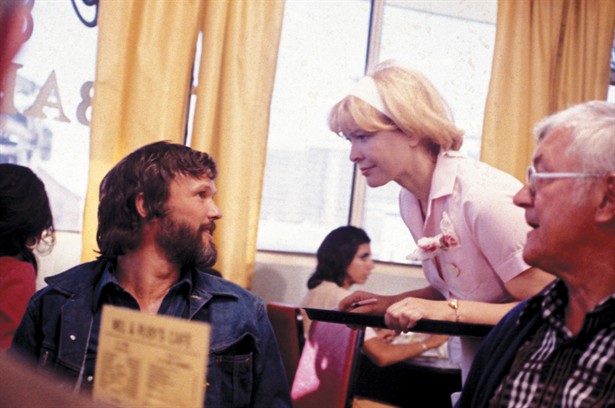
We listened to Aretha when I was a waitress.  Her version of “Respect” was better than Otis Redding’s, we thought.

We thought a lot about respect.  None of us was really getting it.

Ellen Burstyn and Chris Christopherson in "Alice Doesn't Live Here Any More.

Ellen Burstyn and Chris Christopherson in “Alice Doesn’t Live Here Any More.

I was a bad waitress.  I was too intent on reading Doris Lessing to pay attention to my customers.  I once dropped a plate of spaghetti on somebody’s lap.  He left a huge tip because I was so embarrassed.

Once a group of 30 Amish people came in and ordered milkshakes.  We had one milkshake machine.  We served them.

But we didn’t get respect.

We didn’t really expect it.

In the Midwest, even if you’re smart, you don’t get respect.  You’re not allowed to brag about your achievements.  You are not allowed to brag in Indiana, Illinois, Iowa, Wisconsin, Nebraska, or Minnesota.

If you’re a waitress, your achievements are minimal.

If you’ve won a prize, it’s hard to work it into the conversation.

If a friend stops speaking to you when you’ve won a prize he or she expected to win, that’s another reason not to brag.

When bloggers congratulate themselves and boast about their achievements, I’m always thinking, They can’t be serious.  Sometimes I think English bloggers get more respect than Americans.  But then I can think of more star English bloggers than American bloggers.  Who ARE the star American bloggers?

So now I’ll congratulate myself.  I have been blogging here for exactly a year.  When I started Mirabile Dictu on Dec. 11 last year, I wasn’t looking for respect.  I simply needed to do better.

I was tired of reading critics in The New York Times, Slate, Salon, The Guardian (and if I’ve missed anybody, let me know) who said that blogs, Twitter, and other social media were too “nice” and ruining criticism.

Well, fuck, I thought.  Don’t they know we could do better?

I liked some of these critics; some of them I liked less.  I dismissed what they said.  We were not writing essays; how could they mistake us?   But I was also a little worried.  Were reactions on Goodreads changing the way editors edited books? I hoped not.

If they are, that’s too bad.

Karen Thompson Walker, author of The Age of Miracles, used to be an editor.  When she said at a reading that she knew what people liked to read, something clicked in my brain that said, Uh oh.  I like her book very much, but when people think they know what we like to read…no, that’s not good.

Anyway, I didn’t start this blog to get respect or figure out what people like to read.  I just  decided to do (marginally) better at keeping a book journal that is also my diary.

So what have I accomplished this year?

1.  I  intended to write more punctiliously and less often than I did at my old blog.  I still write very, very often. Possibly more often than I used to.

2.  I intended to be more tactful.  I have been marginally.  I lost a reader over Jane Austen, though.

2.  This year 58% of the books I’ve read so far are by women and 42% by men.   Last year my book journal stats were so out of whack in favor of women that I tried to correct them.

3.  I have (I think) written about more contemporary writers this year than last.

4.  I continue to read a lot of classics and reprints.  I have read fewer Viragos. I hope more will turn up at the Planned Parenthood sale.  I haven’t read any Persephones this year.  I recommend Enid Bagnold’s The Squire (which is one of Persephone’s present offerings):   I read it a few years ago.  I need to read more books by small presses.

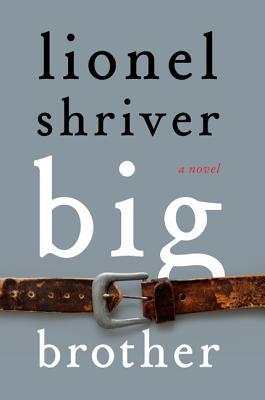
5,  I interviewed five of my “Best of 2013 So Far” writers (see sidebar): Peter Stothard, author of Alexandria:  The Last Nights of Cleopatra,  Steve Yarbrough, author of The Realm of Last Chances, Karen E. Bender, author of A Town of Empty Rooms, D. J. Taylor, author of The Windsor Faction, and Lionel Shriver, author of Big Brother.

SO WHAT IS MY GOAL AS A BLOGGER?

It is about writing for myself, being honest about books (a book can be brilliant even if it’s not absolutely to my taste), trying not to over-explain, and amusing myself  with semi-personal essays.

WHAT DO I INTEND TO DO NEXT YEAR?

Interview bloggers about blogging.

WHAT IS THE FUTURE OF BLOGGING?  I do need to find out about more blogs.  Some seem to have burned out.  I recently weeded several from my blogroll, not because they were bad, but because I never visited them.  Please recommend your favorites.

Doris Lessing’s The Four-Gated City

Doris Lessing

Doris Lessing

I don’t see any point in writing any more–what point has there ever been?  To whom?  What for?”–Mark Coldridge in the dystopian science fiction appendix to Doris Lessing’s The Four-Gated City

When I was 15, my best friend’s mother gave me a copy of Doris Lessing’s The Golden Notebook, an exhilarating novel that expressed, or at least imagined, my own point of view as a young feminist who had recently discovered through polemical works that marriage was not my only option.

As a tribute to Lessing, the Nobel Prize winner who died November 16, I reread The Four-Gated City, the best of her Children of Violence series (I have written at length about this series here), and the best of  her experimental novels.

In this dazzling, urgent, neglected masterpiece, Lessing maturely shapes the themes she explored in The Golden Notebook:  breakdown of personality, sex, politics, madness, raising children, and the almost random quality of thoughts in different times and political eras.

And there is a remarkable science fiction appendix, which brilliantly comments on the first 616 realistic pages of the novel.

In the first four realistic novels of the series, set in “Zambesia” (which Lessing describes as “a composite of various parts of white-dominated Africa”), Martha struggles with Communist politics and with her personality as a woman who is rebellious but nevertheless keeps marrying and making bad choices.

It is only in the fifth of these novels, The Four-Gated City, that Martha comes into her own after she comes to London.  This superb women’s odyssey follows Martha from age 30 to her death in the late 1990s.  It can be read as a stand-alone novel.

In London, Martha feels free to experiment with personality:  she  longs to become her real self, not just an actor who tries to please; she also wants to be “the watcher,” a part of her personality that she later knows would make psychiatrists think her schizophrenic.    During a very long opening sequence when she walks through London, Lessing writes in rhythmic long paragraphs, sometimes longer than a page, and we feel the rhythmic intensity of the streets as she tries to figure out what she wants to do.

She was walking along a long low street with dark trees along it, and low pools of yellowish light at intervals, consciously bracing herself against depression, when she understood that in fact that part of her mind whose intimations she courted had spread, was swallowing the rest:  she was on the verge of a sensation–no, wrong word, but what words were right?–a state then, that had been in fact the surprise of her being in London, its real gift to her.  She had learned that if she walked long enough, slept slightly enough to be conscious of her dreams, ate at random, was struck by new experience throughout the day, then her whole self cleared, lightened.  She became active and light and aware.

four-gated-city-doris-lessing-paperback-cover-artAs the book goes on, Martha needs her “self cleared”often.  She works for Mark, a writer and factory owner, as a secretary and housekeeper, and after personal tragedies, they imagine together a mythical city where human beings could live intelligently and happily. Mark writes a novel about it.

Mark, whose wife, Lynda, is in and out of mental hospitals and  lives in the basement, and whose brother, Colin, a scientist who shared information with other countries, has been labelled a traitor and fled to Russia, doesn’t “want to be split,” as he tells Martha.  He maps politics, wars, and disasters in his study, sometimes adding personal data from the writings of his wife’s roommate, Dorothy.

Lessing has a Laingian view of madness: In the basement, Lynda and Dorothy struggle with mental illness, but actually “know” things others don’t.  Martha gradually realizes that Lynda has special abilities, that if she were not held down by pills (given to her first as a girl when she admitted she heard voices), she might have been able to communicate very important things about the doomed, poisoned future of England.

When Martha first breaks down, when she realizes her mother plans to visit her in London, she visits Lynda and Dorothy.  Lynda advises her not to go to a psychiatrist, that you get “hooked in.”

You had better keep out of their hands,” said Lynda.  “That’s my advice.”

“But don’t they help–psychiatrists?”

Lynda smiled, watching Martha from large eyes surrounded by bruised flesh.  “Well,” she said.

Later in the novel, Martha deliberately breaks down when Lynda breaks down and tries not to take pills, and the two come to an understanding about the people whose “machinery has gone wrong,” due to psychiatric treatment.

So much of this novel is about illness:  I don’t share Lessing’s views on madness, but they fit in very well with the novel, and with the tragic science fiction appendix.

Lessing has so much to say about madness, wars, environmental poison, and disasters.

This is a tragic novel–I was moved to tears by the post-apocalyptic ending–and I was dismayed by Martha’s death, though she lives to old age.  I love Martha Quest.  I want to spend more time with her.  Of course I can reread.

I cannot possibly cover everything in this astonishing novel.   I may write more about it someday; on  the other hand, maybe this is enough.

An Interview with Lionel Shriver

Lionel Shriver

Lionel Shriver

Lionel Shriver, the author of the brilliant novel, Big Brother,  generously agreed to be interviewed by Mirabile Dictu via email.

First, a little background.

Shriver, who won the Orange Prize in 2005 for her novel, We Need to Talk about Kevin, garnered more praise last spring for her new book, Big Brother, a compelling novel centered on obesity and dieting she wrote after her obese brother’s death at 55 from complications from diabetes.

But this is not just a Fat novel; it is also the great Midwestern novel, with an extraordinary detail paid to the setting.

Big Brother Lionel ShriverObesity is an epidemic in the Midwest:  when a once-svelte relative showed up on my porch last year, I wondered with irritation who she was and then was overcome with love when I recognized her beautiful face within the new weight; perhaps she didn’t know who I was, either.

Big Brother, set in New Holland, Iowa, a fictitious town in the Iowa City-Cedar Rapids area, is the story of Pandora, the founder of a successful talking doll business, and her brother, Edison, a jazz musician.  When Edison comes to visit, she is not prepared for his obesity:  he used to be a handsome surfer-looking guy.  After a prolonged visit, she decides to save him:  they move into an apartment together and go on a  diet.

And here is the interview.

MIRABILE DICTU:   It must have been difficult to write a novel about obesity and eating disorders after your brother’s death.

LIONEL SHRIVER: The sorrow that initially spurred me to write the novel provided a kind of fuel.  I missed my brother, of course, and I also wanted to craft, if not exactly a tribute, a marker.  An object that recognized not only his death but his life.  That said, the character of the brother, Edison, in the novel is quite distinct from my real brother.

What really made this book difficult was trying add something to a conversation about weight and food that we’ve been having in glossy magazines and on television ad nauseam.  I had to find a way to add value, to deepen the discourse.  It was especially challenging to write about being on a diet in a way that was true to the awful tedium of the experience but that didn’t bore the pants off my readers.

MIRABILE DICTU:  I am fascinated by the Midwestern setting, and originally picked this up as a Midwestern novel.  So many of the details are authentic that I raced through Big Brother, and then my husband read it, too.  It is clear that you understand Midwestern politics, the politics of food, ethanol, etc.  Did you spend time here, or was it all done from research?  (Shriver is an American who lives in England.)

LIONEL SHRIVER: I did do some research in Iowa when I decided to set the novel there.  However, I’ve been doing that research sporadically all my life.  My maternal grandparents lived there (in Muscatine, and later Pella), my mother is from there, my aunt and uncle still live there, and for years I visited cousins there before they dispersed to other parts of the country.  Most of all, my younger brother, to whom I am very close, lives in Coralville, near Iowa City.  I go out to visit him and his family pretty much every summer.  I have a lot of affection for the Midwest, Iowa in particular, and I hope that tenderness is apparent in the novel.  I love the landscape and the light.  I appreciate the way Iowans in everyday life are so open and eager to connect.  I savor their lack of pretension.  I admire a state that actually produces something of value (even if I’m dubious about the ethanol industry).  And I’m impatient with the way coastal urbanites tend to write off the Midwest as nowheresville.  As one character comments, “Iowa is somewhere, which is the most that anywhere can claim.”

MIRABILE DICTU: What writers, if any, influenced you in writing Big Brother?

LIONEL SHRIVER:I guess I would give some credit to Ian McEwan, since structurally my ending owes a debt to “Atonement.”

MIRABILE DICTU:  When and why did you begin writing?

LIONEL SHRIVER:  I began writing when I learned to read.  From the start, I enjoyed the ability to create something from nothing, which in physics they tell you is impossible.

MIRABILE DICTU:  Who are your favorite writers?

LIONEL SHRIVER:  Richard Yates, Edith Wharton, Ernest Hemingway, Flannery O’Connor, TC Boyle …  That a good start?

Yes!

And thank you very much for the interview, Lionel.  I’m sure my fellow readers and bloggers will appreciate your thoughtful answers.

Zombie Books & Ethics

But perhaps not medicated enough?

But maybe not medicated enough?

My cousin announced that she intended to quit her job. “I hate books.”  She is very bored lately at her very good quasi-librarian job.

“No, you don’t.”

“No, I do.  I want to get out of the profession.”

“You don’t have to read at work,” I pointed out.  She doesn’t, as a matter of fact, read much at work.  Most of the time she sits at an island and answers patrons’ questions.

“Sometimes I do.”

Then she told me what had happened.  She had written a short review of a zombie novel for an online zombie book review publication–perhaps it’s called ZOMBEEEEZ.com, or animatedcorpse.net–but hadn’t bothered to finish the book first. The editor found a massive mistake in her review.   She has been blacklisted, if you can be blacklisted by an editor who works out of her home in pajamas editing a webpage which pays nothing and which nobody has ever heard of except a few zombie fans.

“Idiot!” I said, half-affectionately.

I think it is fair to say half of the people I know are mad.

It would never occur to me to review a book I hadn’t finished, but people do this and even boast about it.  Years ago, when I thought book reviews were the holy grail, an acquaintance boasted that he never finished the books he reviewed.  He employed a review formula that was popular at a particular small newspaper (which you haven’t heard of:  don’t worry, it’s not The New York Times), plugged in clichés at the appropriate points, and enjoyed deceiving the editor.  He claimed that the books were so bad that it didn’t matter whether or not he finished them.  They were “glib” and “poorly-written” whether he read the last page or not.

What a sophist!  Perhaps his story wasn’t true:  I don’t know.  I crossed him off my list of to-have-coffee-with friends, because it’s confusing to try to figure out what what is true or false in hyperbolic stories told by  someone who doesn’t know truth from lies.

My cousin does not have to review zombie books.  She actually likes zombie books.  I thought this was a fun thing for her.  Nobody at work knows she reviewed zombie books, so this idiotic thing won’t affect her career.

Is the sky falling, Chicken Little?  You say you’ll review it, you read it. You put at least that much into it, if nothing else.

It’s sitcom-funny, but not funny.

Where are her ethics?

She is forever pushing boundaries.

And  it is that mad time of year, Christmas.

She needs to make some decisions.

Like whether she really likes zombie books after all.

Like whether she f—ed up like this because she wants to read better books.

Maybe–though I doubt it–even this will turn out to have been a good thing.

forsan et haec olim meminisse iuvabit. (Virgil, Aeneid, Book I).

“Perhaps someday it will please us even to remember this.”

Though I doubt it.

Disorder, Victorian Houses, & Bowing Out of a Scene

Summit Street Victorian house

I’d love to live in this Victorian house in my hometown.

When I was growing up, I thought I would someday live in a Victorian house.

I didn’t realize that the Victorian house was a money pit.

I didn’t realize that my freelance-writing career would barely pay the rent let alone a mortgage.

I didn’t realize that I would eventually be a housewife, living in a bungalow.

Owning a house is not as much fun as you think.

It is, as my aunt, a consumer economist, once told me, actually much cheaper to rent.  Even if you pay off your mortgage, you will constantly be paying for upkeep and repairs.

Why is home ownership so much work?

We’ve painted it twice, we’ve patched the roof, and the kitchen needs remodeling.

Today I reluctantly accompanied my mate to a hardware superstore to help pick out a light fixture.

As I walked the aisles, inexplicably carrying the light fixture because he’d claimed we wouldn’t need a cart, I stopped and asked, “Why am I carrying this?”

“We’ll get a cart then.”

I silently exchanged the light fixture I was carrying for the fluorescent light bulb he was carrying.

But the light bulb was the wrong size.  He bought this because a young woman (inept, but flirtatious) led him to the fluorescent light section, and, leaning over, butt up in the air, whined,  “Oh, dear, we only have …!”

“We’ll take it,” he said.

I realize that this light bulb scene sounds obscene, and it was. Reality is not just stranger but worse than fiction.

Two white-haired men in superstore logo shirts chatted at the end of the aisle, and my instinct was to go back and ask them about fluorescent lights:  in fact, I would have asked them, not the girl, in the first place.  But this is my husband’s turf.  In this horrible concrete superstore, I realized that not only was I not needed to pick out a light fixture and a light bulb, but I didn’t need to be in any way a part of this humiliating scene.

We women know how to shop. He’ll never get around to taking back the lightbulb–it’s too far away–and he’s not much of a shopper. But surely that money would have bought me a paperback at Barnes and Noble!

Why was I there?

Never again.  I swear.

Mirabile Does Middlebrow: Mary Renault

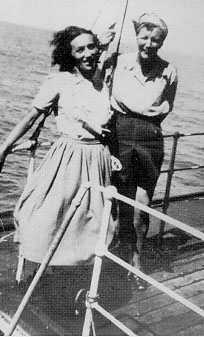
Mary Renault (right) and partner Julie Mullard

Mary Renault (right) and her partner Julie Mullard

It is one of the oddities of being born female, that if we want to read novels by women, we often end up reading middlebrow fiction.  Women’s literary fiction does not always thrive, men and women do not necessarily like the same novels, and men’s and women’s books are marketed differently.  In our household, “he” reads Dave Eggers; I read Karen E. Bender.  “He” reads Graham Greene; I read Elizabeth Taylor.  Although I also read Eggers and Greene, I guarantee that “he” will not read Bender or Taylor unless they are reviewed in The New Yorker.  Bender’s book was not widely reviewed; and there was no mention in The New Yorker of the novelist Elizabeth Taylor’s centenary in 2012, though her stories were published there in the ’50s and ’60s.

Women’s novels often straddle a thin line between the personal and the political.   The personal is political, as we used to say in the ’70s, though I’m not entirely sure what that means.  Eggers is political, in the way that Dreiser was political; Greene is political, in the way that Joseph Conrad was.  Often we read out-of-print women’s novels or Virago reissues, which are important in women’s history, if not quite classics.  Are Pamela Frankau’s complex novels about men’s and women’s lives and gender issues classics?  Yes, some of them are. How about Rumer Godden’s  Kingfishers Catch Fire?  Yes, this story of a British pre-hippie woman trying to live simply in colonial Kashmir without understanding the racial issues meets my criteria. How about Mary Renault?  I’m not sure yet.

Mary Renault Fire from HeavenThe TLS recently published two articles on Mary Renault, whom I have avoided over the years, because I am not a keen reader of historical fiction.  In Daniel Mendelsohn’s “Moral Conqueror:  Mary Renault in the grip of Alexander the Great” (available only to subscribers), he writes fascinatingly about her Alexander the Great trilogy, and made me reconsider my judgment of Renault as a pop writer. And so I am devouring Fire from Heaven, the first in the trilogy.  It is  pop fiction, but it is pop in a “high” middlebrow way.

Mendelsohn, a classicist who has written for The New Yorker (and every other publication with “New York” in the title”), grabs you from the beginning in his spirited article about Renault.

‘I have never studied anything so interesting.’ So the historical novelist Mary Renault in a 1969 letter to a friend, summing up her lifelong fascination with Alexander the Great–the back-country prince who, in a scant twelve years, took possession of the world, and in so doing seized the imagination of its inhabitants for ever after; the historical subject with whom, thirty years after her death, Renault remains most closely identified.

Renault is a great storyteller, and I am very much enjoying this coming-of-age of Alexander novel, though it seems a little too obviously divided into “scenes”:  the gripping opening scene in which Alexander wakes up to find a snake wrapped around him, and creeps through the palace to return it to his witch mother, only to find that it  has come to him because he is an ancestor of Herakles.  His father, King Philip, has only one eye, and he compares him to Polyphemus the Cyclops. Would I have caught these allusions as a teenager when I read Renault?  No, my experimental school had us play simulation games and do “independent reading” instead of studying history, mythology, or  literature.  I wasn’t interested in classics until I was at the university.

Renault’s retelling of  Alexander’s acquiring the huge, at first terrifying, terrified horse Boukephalos is moving and compelling, if perhaps a bit sentimental.  (I find myself thinking, “Go, horse!” as I do in every horse story, from Black Beauty to Jane Smiley’s Horse Heaven.)  Boukephalos, originally called Thunder by Renault, has been offered explensively to Philip, Alexander’s father, by a trader, but everyone can see the horse is crazed and dangerous.

The royal trainer walked round to the front of the horse, making cheerful soothing sounds.  It backed, stamped and rolled its eyes.  He clicked his tongue, saying firmly, ‘Thunder, boy, hey, Thunder.’  At the sound of its name it seemed to quiver all over with suspicion and rage.  Jason returned to noises.  ‘Keep his head till I’m up,’ he told the groom ‘that looks like one man’s work.’  He approached the horse’s side, ready to reach for the roots of the mane; the only means, unless a man had a spear to vault on, of getting up.  The saddlecloth, had it been on, would have offered comfort and show, but no kind of foothold.  A hoist was for the elderly, and Persians, who were notoriously soft.

Alexander speaks up when Philip refuses to buy him, and  bets that  he can handle him.  If he can, he gets the horse; if he can’t he buys it for Philip.  And since he has figured out the nature of the horse’s fear, he is able to mount it and ride safely.  He calls the horse Boukephalos, or Oxhead.

Renault is not in the class of Hilary Mantel, but I can’t stop reading this captivating novel.  My Nook has to be recharged, though.  E-readers aren’t perfect.

The TLS also ran a review of Mary Renault’s The Charioteer, a 1953 gay novel, recently reissued by Virago.  In Jonathan Keate’s “Mary Renault’s Chariots of Ire,” he explains that this novel about a gay relationship is set during Blitz in World War Ii.  Mary Renault was gay, and met her lover while training as a nurse.

In The Charioteer, Renault recaptures this atmosphere by setting her narrative against the same hospital background in which she and Mullard had first met as trainee nurses. Much of the novel’s action takes place in the wards of a London infirmary during the Blitz, where surgeons are expected to deal with incendiary bombs and ward sisters double as military police. An overwhelming air of the transient, of relationships snapped in two by peremptory circumstance, of emotionally fraught lives among bedpans, sutures and sedatives, lends an urgent authenticity to the novel.

If I had bought this on Monday, when I downloaded a sample, I could have had the e-book for $2.99.  Not understanding that it was a CyberMonday opportunity, I missed my chance.

Still, one of these days it will turn up at the library.

The Importance of Lists, Interviewing Writers, & A Self-Interview

Audrey Hepburn reading.

Audrey Hepburn reading.

We bloggers read what we want to read.

We know we’re supposed to want to read Donna Tartt’s The Goldfinch, the favorite of so many writers and critics on  “Best of 2013” lists.

But I read classics and 19th- and 20th-century novels.  I am usually ten to 2,000 years behind the times.

If one is patient and willing to sift through some dreadful junk, one finds very good contemporary writing being published.  By browsing at bookstores and reading reviews, I discovered several (well, six!) brilliant new books this year.

Presumably book blogs help readers discover books:  some days the stats here are exclusively about reading Doris Lessing; and other days people only want to read about my trip to Washington, D.C.

But what about interviews?

When I was sorting through my papers last summer and throwing a lot of things out, I discovered a quite good interview I did with James Dickey some years ago.

And a very literary online friend used to have a very good blog at which he interviewed writers.

And so I decided to experiment with short-short interviews with writers at my blog, because I was starting to intuit that the writers I like were what used to be called “writers’ writers,” meaning not as widely read as the other writers, i.e.,  Janet Evanovich.

My five-question format falls cryptically between chat and interview and looks as though it belongs in a rock and roll magazine for people with short attention spans.  (And I LIKE rock publications!)

This year four of my six favorite writers (see sidebar) of 2013 generously agreed to be interviewed by email:  Peter Stothard, author of Alexandria:  The Last Nights of Cleopatra, Steve Yarbrough, author of The Realm of Last Chances, Karen E. Bender, author of A Town of Empty Rooms, and D. J. Taylor, author of The Windsor Faction.

Oddly, none of these four remarkable writers has made the New York Times Book Review 100 Notable Books of the Year list.  Their books have been well reviewed, and they may very well be on other “Best of” lists.

I know the importance of lists.  I know people who only read books on these lists.

I am often impatient with these lists.

But what can we do?

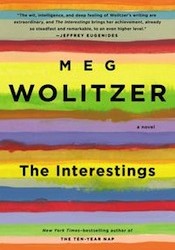
There are two other writers on my “Best of 2013 So Far” list:  Meg Wolitzer, author of The Interestings, made the NYTBR 100 Notable Books list and several other lists; and Susan Choi’s My Education was widely reviewed, though it has not, as far as I know, appeared on the “Best of 2013”  lists.

I have emailed their PR people and will try to schedule interviews, though I’ve waited rather late in the year, because I temporarily forgot about interviewing my “best of”s.

Meanwhile, here is a fascinating interview with KAT of  MIRABILE DICTU by KAT of  MIRABILE DICTU Yes, it’s a self-interview.  I have decided to answer every question you’ve ever wanted to ask me.

MIRABILE DICTU:  When did you start reading and why?

Kat: I couldn’t stop.  It was the most wonderful thing I ever learned to do.  I borrowed the “Dick and Jane” book from school and read ahead.  I read every morning before school and after dinner.  I read Little Women, Half Magic, Harriet the Spy, and Elizabeth Goudge’s Linnets and Valerians. I loved the Scholastic Book Club at school.  We would order books, and then our teachers would distribute them, and it was so exciting:  The Secret Language by Ursula Nordstrom, Homer Price by Robert McCloskey,  Emil and the Detectives

MIRABILE DICTU:  Where do you like to read?

Kat:  Lounging, sprawling on the couch!

MIRABILE DICTU:  Where do you get your books?

Kat:  Mostly at bookstores.  I like to own my books.

MIRABILE DICTU:  What is your favorite book?

Kat:  Too many favorite books!  I could say Doris Lessing’s The Four-Gated City, a bildungsroman that follows the heroine Martha Quest from age 30 through old age, from postwar London to post-apocalypse. I could say Jonathan Lethem’s eerie and very funny masterpiece Chronic City, whose Perkus Tooth, a pop culture critic, I will never forget.  I could say Margaret Drabble’s The Realms of Gold, a brilliant novel about an archaeologist, her family, and England in the 1970s, which I have read nine or ten times. I could say Peter Stothard’s Alexandria:  The Last Days of Cleopatra, because he has a lyrical style and unique perspective on the classics and history and made me look (briefly getting it) at what he sees (and I don’t).  Or  Charlotte Bronte’s Villette, Dickens’ Our Mutual Friend, Ovid’s Metamorphoses.

MIRABILE DICTU:   What are you reading now?

Kat:  Doris Lessing’s The Four-Gated City, a great neglected classic, the fifth of the Martha Quest series, but so unusual that it can stand alone.

Thanks, Kat!

You’re welcome, Kat!

Meg Wolitzer’s The Interestings

The_Interestings_Meg_Wolitzer-175x250In Meg Wolitzer’s stunning novel, The Interestings, the heroine, Jules Jacobson, attends a summer arts camp as a teenager in the ’70s and dreams of being a comedic actress.  Later, after she is told in New York that she has no talent and will never make it as a character actress, she pursues her interest in psychology and becomes a clinical social worker.   Her clients consider her “funny and encouraging,” but she wryly realizes that being funny is not altogether a good thing.  She is anxious about money: health insurance pays for less therapy for her patients every year, and she and her therapist friends share space to keep costs down.

Wolitzer describes a day during the Christmas season, when Jules is irritated by the Christmas music, the crowds, and the anticipation of her rich best friends’ annual Christmas newsletter.  Though she doesn’t let on to her patients, she is jangled.

Today, in Janice Kling’s session, Janice was talking about a familiar theme, loneliness, and perhaps because it was Christmas season the conversation had a desperate charge. Janice said that she had no idea how people went on year after year, not being touched or spoken to intimately. ‘How do they do it, Jules?’ she asked.  ‘How do I do it?  I should go to an intimacy prostituted.’  She paused, and then looked up with a sharply smiling face. “Maybe I do go to one,’ she said, pointing.

‘Well, if I’m an intimacy prostitute,’ Jules said lightly, ‘then I should charge you much, much more.”

In this gracefully-written, ambitious novel, Wolitzer describes the changes in American life from the 1970s to the present as she follows the trajectory of the lives of several friends who first meet as teens at a summer arts camp. Politics, the economy, religion, the mental health system, the arts, and the exploitation of third-world workers are some of the subjects she explores.

Meg Wolitzer

Meg Wolitzer

Although Jules is at the center of the novel, she is only one of a precocious group of friends at camp dubbed “the Interestings” by Ethan, who becomes a rich and famous animator with an internationally known cartoon show.  Jules, who has never been popular, is excited to be a member of the group.  Ethan, who loves her humor and unexpected turns of phrase, more than once over the years makes a pass at her, but she is not only not attracted, but is repulsed by this sweet, charming man. (Wolitzer’s description of the adolescent Ethan perfectly evokes the repulsive teenage boy she always sees:   “thick bodied, unusually ugly, his features appearing a little bit flattened, as if pressed against a mime’s invisible glass wall…”)

After Ethan marries her best friend, the talented, beautiful Ash Wolf, Jules is jealous.  She is furiously convinced Ash would not have made it as a theater director had she not married Ethan, and she is probably right.  She loves Ethan and Ash, but there is lots of anger.  Everything is very difficult for Jules and her family.

Ash and Ethan are the golden ones:  the others have more problems and suffer more.  Ash’s brother, the handsome Goodman, flees the country after his ex-girlfriend Cathy, a dancer, accuses him of rape.  (Wolitzer gently drops Cathy from the novel, but the truly horrible Goodman turns up occasionally). Then there is Jonah, the son of a famous folk singer, who denies his talent for music after a musician friend of his mother exploits him, repeatedly giving him LSD.  Jonah is gay, and in the age of AIDS, repeatedly loses friends.

All of Wolitzer’s characters are fascinating, but for most of the novel we are focused on Jules’ anger and envy, often a very uncomfortable, but very real, place to be.  At home Jules  worries about finances.  She and her depressed husband Dennis have not been lucky:  Dennis had a small stroke after he ate something contraindicated by his MAOI antidepressant; then he lost his job as an ultrasound technician for betraying emotion over an image of a patient’s cancer.  No antidepressant has worked for him in years, so he stays home to raise their boisterous, funny daughter, Aurora.  While their friends are upwardly mobile, they are barely able to pay for rent and food.

This brilliant, graceful, funny, sad, moving novel is quintessentially American: people of different classes come together and attempt to bridge gaps.  It is an American struggling-to-get-by story, a talent-transmogrified-to-riches story, a learning-that-talent-isn’t-everything story, and a turning-one’s-back-on-talent story.  Wolitzer also reminds us that our best friends may hate us.

One of the best American writers, Wolitzer has finally caught the attention of critics with this “big” book.  Let’s hope people will go back and read her brilliant spare earlier work, like The Uncoupled, a riff on Lysistrata, or The Wife, a comedy with a twist about a woman who at 64 decides to leave her husband, a famous award-winning novelist.

Pills & This Is Dedicated to My Mom

idolatrysticker black fridayI do not shop on Black Friday.  I get depressed after Thanksgiving and stay that way till after Christmas.  It’s partly the holidays, but it’s more the dark and cold.

This is the season when, if you have pills, take them.  If you don’t have them, get them.

You can buy St. John’s Wort and other alternative antidepressants at the health food store. Or you can get prescription drugs.  As far as I can tell, anybody can get prescription antidepressants.  One tenth of adults in the U.S. take antidepressants, according to the CDC.

The holiday depression is partly because of my mother’s recent death.

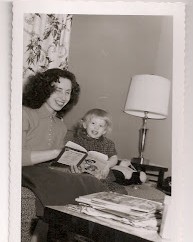
Mom and me.

Mom and me.

Last year I bought her a tall hideous stuffed snowman at Walgreen’s, the kind of thing she very much liked.  My sibling moved it into a corner out of sight.  “He said it might catch on fire from the radiator,” my mother said.  We both laughed very hard.

Poor Mom.

Poor me.

The truth is I didn’t see enough of her.  Every time I went to the nursing home I came home and bathed, washed my hair, and washed all my clothes because it stank.  Doris Lessing writes of the smell of incontinence and old age in Diary of a Good Neighbor.  She writes,

 I was full of revulsion.  The sour, dirty smell was in my clothes and in my hair.  I bathed and washed my hair and did myself up…

I knew exactly what she was talking about.

So I was a good enough daughter, but not good enough if you know what I mean.

In many ways, my mother was the last person who loved me. I don’t mean  “likes,” but actually loves.   Mothers may dislike us as young women, but they approve of us after a certain age.  We wearily look each other over and know who is who, what is what.

Unlike me, she made very good Christmases.  “Gifts are fun.”  One year she gave me a beautiful patent leather billfold. “Where did you get that?” everyone asks.   And before her house was dismantled, I found two boxes with the same billfold, bought for and rejected by her grandchildren. It was one of her many sorrows, that she couldn’t give them anything they liked.

For years she sent me warm clothes–some I couldn’t possibly wear, like the white sweater with the faux fur collar–but the meaning was M-o-m  l-o-o-o-v-v-v-es  K-a-t-h-y!  So you’ll still see me in the fleece jacket with the reindeer design.  No, I wouldn’t have bought it for myself!

Stay married, she always advised during the holiday season. (She got divorced the week before Christmas, poor woman.)  You don’t want to break up over Christmas.  No, indeed.  But it can be a slippery slope:  your mate may turn into a serpent, a Minotaur, a griffin, or far worse. He won’t be giving you a patent leather billfold or a white sweater with a faux fur collar, now will he?  (And now let me put several emoticons here so you won’t take me too seriously:  🙂 🙂 🙂 )

Just listen to a LOT of rock music over the holidays because it makes everything easier.  Although I can’t say “Because the Night,” written by Patti Smith and Bruce Springsteen, is appropriate for the season, it should distract everyone and put him or her in a more affectionate mood.

Here is a video version with Bruce Springsteen and Michael Stipe.  Totally different styles, but it’s great to see them together.   Intense  Springsteen and his band do what I call “the Trojan horse” movements onstage.  (It always looks to me as if rock bands are forming a horse; don’t ask me why.)  Stipe has a different elegance.  I love Bruce’s sweat and Stipes’ dancing!