Ms. Mirabile Goes Earth Mother: Shopping & Bulgur with Savory Greens

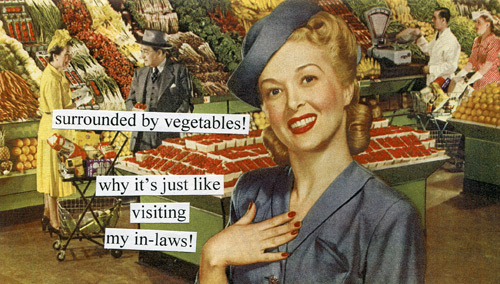
Surrounded by vegetables clear copyMy blood pressure is so low I’m almost not here.

“So long as you feel all right,” the doctor said, startled.

I can’t explain; they can’t explain.  It’s always been low, but perhaps my new vegetarian diet has lowered it a few millimeters.

I switched from once-a-week meat to an all-vegetarian diet in September.  Although I certainly can’t see having Thanksgiving without turkey, I became repulsed by chemical chicken and meat.

You know the chicken?  The kind that’s all shot up with hormones and has a funny taste?

And we can’t afford free-range chicken.

My whole book budget would go.

So I have gone vegetarian, because vegetables and grains are cheaper and more nutritious, and though I allow my husband to eat meat in theory, I am throwing out his “bad-choice” prepared foods like Ramen noodles and Campbell’s soup.

“There’s not that much sodium in it.”  He yearns to eat Ramen noodles and Campbell’s soup, but his blood pressure is not as low as mine.

“No, we need to make homemade vegetable soup on the weekends,” I said.

I can’t imagine why I said that.  I don’t make week-long batches of vegetable soup on the weekends.  I’m not an Earth Mother.  On the other hand, I am no longer going on the crazy long bike rides, getting lost on the prairie while he speeds a dozen miles ahead, and having no idea which direction to turn, since I don’t know the name of the town where I’m headed.   “Umm, sir/ma’am?  Is there a town nearby to the north, south, east, or west?”  (N.B.  Wives don’t have to do this stuff.  It’s for chippies and chumps.  Why didn’t I realize that earlier?)

Yesterday I hopped on my bike and rode to Whole Foods.

We usually shop at the Hy-Vee.  It  is closer and cheaper.  Plus I grew up going to the Hy-Vee.

Whole Foods

Whole Foods

But Whole Foods has better produce, and the organic is the same price as organic at Hy-Vee.  Both stores sell the same brand of strawberries, but  they’re ripe at Whole Foods, never ripe at Hy-Vee.

So Whole Foods for me is about produce, though naturally I look at everything else, too.  I desperately wanted a new “organic” lipstick, as opposed to my lipstick with all the metals in it, but I said to myself:

“WHOLE FOODS IS ABOUT FOOD.  Got it, Kat?”

I wandered around and thought of buying coconut milk yogurt, but I’m not a vegan. Anyway, shouldn’t I make my yogurt at home?  Where is my yogurt maker?

I considered goat cheese, but is there an advantage to goat cheese?  Is goat cheese dairy?

The baguettes were slightly too big for my backpack.

I have concluded brown lentils don’t exist, because I couldn’t find them and my husband says they don’t have them at the Hy-Vee.  And yet one of my cookbooks specifically says “brown” lentils.  Does it matter what color they are?  Help!

Anyway, I rode home and made a delicious dinner.  Really, I’m so proud of myself.  I’m an Earth Mother now.   We had Bulgur with Savory Greens, one of our favorite meals.   Here’s the recipe from Moosewood Restaurant Low-Fat Cookbook:

2 1/2 cups chopped onions
4 garlic cloves
1 tbls olive oil
1 pound Swiss chard or escarole, chopped
2 tbls fresh lemon juice
1 1/2 cups bulgur
1 tsp salt
2 1/2 cups water

ground black pepper to taste
lemon wedges (optional)
fresh mint leaves (optional)

In a large skillet saute the onions and garlic in the oil for about 8 minutes, until the onions are clear. Add the greens and lemon juice, cover, and cook until the greens have just wilted. Stir in the bulgur and salt. Add the water, cover, and cook on med-low heat for about 15 minutes, until the bulgur is tender and most of the water has been absorbed. Sprinkle with pepper and add more lemon juice to taste. Serve garnished with lemon wedges and mint and sprinkle with vinegar if desired.
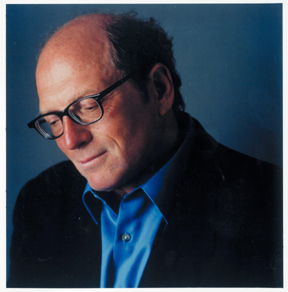
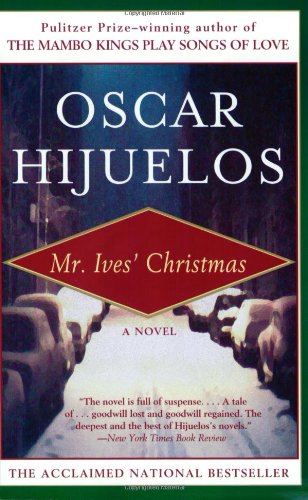
Pulitzer Prize Winner Oscar Hijuelos Died Saturday & My 1995 Interview with Him

Oscar Hijuelos

Oscar Hijuelos:  “I consider myself a hip kind of guy with old-fashioned values.”

Oscar Hijuelos, winner of the Pulitzer for The Mambo Kings Play Songs of Love (1989), died at age 62 on Saturday.

When I interviewed him in 1995 during his book tour to promote his novel, Mr. Ives’ Christmas, I found him charming, kind, generous, and intense.

Here is the interview.

It’s 4:30 in the afternoon and Oscar Hijuelos hasn’t had lunch.  Passing through town on a tour to promote his novel, Mr. Ives’ Christmas, the Pulitzer Prize-winning author skipped lunch to tour the Rock and Roll Hall of Fame and Museum.

“A good friend of mine is the singer Lou Reed,” he says.  “I hang out with him every now and then.  I just saw a bunch of photos at the rock hall.  He looks like such an innocent in his photos.”

Hijuelos, who won the Pulitzer in 1990 for The Mambo Kings Sing Songs of Love, talks nonstop as he pores over a room service menu in his hotel suite.

With Mr. Ives’ Christmas, “I wanted to write a book that was a meditation, partly on the meaning of the holiday through the filter of one character’s consciousness.  The very same people that get teary-eyed over A Christmas Carol sometimes have a very cold outlook in the underprivileged of the world.  That made me think it would be really nice to do a book about New York here and now at Christmas.”

This quiet novel may surprise those who expect the rapid-fire action of Mambo Kings. Mr. Ives’ Christmas is largely a reflective work, focusing on the hero Edward Ives’ crisis in religious faith.

Mr. Ives' Christmas by Oscar Hijuelos In the novel, a Catholic printer adopts Ives from a foundling home and he is transformed into a middle-class, all-American boy.  He becomes a successful advertising illustrator, and meets his wife, Annie MacGuire, a substitute teacher who loves the books of Dickens and D. H. Lawrence, in a drawing class.  After a passionate courtship, they settle down to raise two children.

But when their teenage son Robert is gunned down after choir practice in the streets of New York, Ives suffers a religious crisis.  His healing comes about through a meditation on past Christmases and attempts to forgive his son’s murderer.

This novel is a homage to Dickens.

“I really wanted Dickens to be a quiet presence in the book and, in fact, in an earlier version I actually have this apparition of Dickens appearing, but I decided it was a little much.”

He also tried to draw a parallel between Dickens’ London and contemporary New York.

“A lot of people walk around feeling frightened and contemptuous of the poor,” he says.  “In fact we are living in Dickens’ London with certain updates–like we’re much more technological, as with the Rock and Roll Hall of Fame.  I think Dickens would have fainted if he saw that museum.”

The son of Cuban immigrants in Manhattan, Hijuelos grew up a devout Catholic.  Although he knows it’s not fashionable to write about religion, he has considered the possibility for several years.  He has read extensively about world religions, in part because his mother mixed Afro-Cuban spiritualism with her practice of Catholicism.

Hijuelos explains that to this day his mother practices the laying on of hands when he is sick.

“She does this thing with her hands”–he flutters them up and down–“if I’m not feeling well.  It’s like she makes me start to feel better and it’s like a spiritual energy thing.  It probably psychologically works because your mother cares about you.  So I grew up in a wildly improvisational kind of household in terms of religiosity.”

This improvisational quality of religiosity is reflected in Ives’ visions in the novel:  he sees God on Madison Ave., for instance, and dreams of his dead son.  Hijuelos thinks that believers like Ives were perhaps more common in the “Ozzie and Harriet” era of the 1950s and ’60s during which much of the novel is set.

“I just wanted to capture an era of devoutness I grew up around and also try to say something about certain questions that are pretty eternal and constant…I somehow got this idea of writing about [religion] directly, which no one really does anymore.”

HIjuelos says he is very different from Ives.  Although Hijuelos, like Ives, worked in an advertising agency for eight years, he is single and has no children.

“I consider myself kind of a hip guy with old-fashioned values.  I believe in God, but I don’t always believe in the official proclamations of the churches.  Ives is nobler than I am, he’s better than I am, but he’s as troubled as I am in many ways.  He’s a filter through which I could tap into energies that normally, as Oscar walking down the street, do not have access to.”

Hijuelos has undergone some transformations in recent years.  He boldly left his advertising job in 1984 to write on meager grants and fellowships.  Since winning the Pulitzer in 1990, he has gone from living on $7,000 a year to a life of financial security and international fame.

It was at the end of a British tour to promote Mambo Kings that he learned he had won the Pulitzer.

“It was like being shot out of a cannon.  Suddenly I had more friends than I ever knew I had, but many of them false friends, I might say.”

He wishes that his father, a cook at the Biltmore Hotel in Manhattan, had been alive to see him win the prize.  His mother, however, is enormously proud:  she recently took a bow for him at church when the priest plugged his book at Mass.

Although HIjuelos’ mother tells reporters that he wrote as a child, he says he didn’t start writing until his early 20s.  He earned a master’s degree in writing at City College of New York, where he studied with Donald Barthelme and other writers.  He wrote his first novel, Our House in the Last World, before and after hours at the advertising firm.

He realizes that the Pulitzer was a definitive moment in his career.  It was also “like having a wall of bricks fall on you” in terms of the pressure to achieve, he says.

But friends, family, and religion keep him grounded.

“I don’t do readings for money.  I only do them for charity.  I always try to do the right thing.  You don’t change as much when you win the Pulitzer as people around you change toward you.”

Waiting till Midnight for Bridget Jones

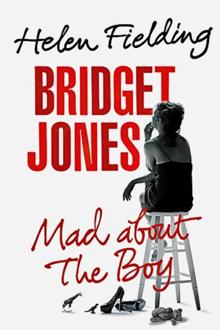
Helen fielding bridget jones mad about the boyI am fiftysomething.  I’ve been married 20 years.

I never dated my husband.   We just hung out at my apartment.

All right, I’ve been married two, maybe three, times.  But I assure you we didn’t date first.  We hung out.

I am, however, an expert on dating because I went on one date in 1992. I walked out on him after he said, “There sure are a lot of Jews around here, aren’t they?”

It wasn’t polite of me.  I know.  I just couldn’t stand it.

So I know how you feel if you’re stuck with somebody like that, even for half an hour.

And in your fifties it’s worse.  It’s bound to be.

And so I’m looking forward to Helen Fielding’s Bridget Jones:  Mad About the Boy, her third book in the series (the publication date is tomorrow).   Reviewers are no longer keen on Bridget, now a 51-year-old widow.  And I wonder if they dislike the book because they are uncomfortable about Bridget’s sexual activity in middle age.  She dates a man of 30.

In your fifties, if you’re single, you should at the very least  be like Bridget Jones, I say.  Or perhaps like Lea in Colette’s Cheri and The End of Cheri, who also dated a younger man.   And how about the sixtysomething narrator of Emma Tennant’s Confessions of a Sugar Mummy, who wanted to “date” a 40-year-old?

Reviewers expect Bridget to be less shallow.  They think she should be more interested in her children than her sex life.

Christ.

They don’t expect this of men.

Here’s Janet Maslin of The New York Times:

Bridget Jones, R.I.P. You’re not dead yet, but you might as well be. In “Mad About the Boy,” Helen Fielding’s latest installment in this once-lovable series, there is a page that lists the things that have mattered to Bridget, now 51 and struggling mightily to take an interest in her two young children. They are: her weight, her number of Twitter followers, the number of texts she has exchanged, her difficulties writing a screenplay, a household infestation of lice and a head count of her boyfriends. The only conceivable reason to read about all this is that old habits die hard.

I share all Bridget’s interests.  Sure, I would rather not know my weight; sure, I have no Twitter followers; sure, I don’t do texts; sure I don’t write screenplays; sure, I don’t have lice in my household; sure, I don’t have boyfriends.

But other than that, we’re just the same.

So here was my plan for today.

  1. Read Bridget Jones:  Mad About the Boy.
  2. Hope I  find Bridget entertaining, because I liked the first book.
  3. Hope I find her dating life entertaining, because I’m not prim at all.
  4. Hope I don’t hate it that her boyfriend is 30.
  5. Point out that 50-year-old men often date women who are 30.
  6. Post about it.
Helen Fielding, age 55

Helen Fielding, age 55

The publication date is tomorrow, so I have to wait till midnight.

I have read five reviews, because editors no longer bother to wait till the book is published to publish reviews.

The Washington Post review was even stuffier than The New York Times. Jen Chaney in The Washington Post called Bridget

a self-involved flake. Is Bridget’s experience supposed to be relatable, as it was in “Bridget Jones’s Diary,” a book that critiqued society’s expectations of women as much as it fell prey to female stereotypes? Or is her ability to have sleepovers with a hot guy while relying on a nanny to scoot the kids off to school and day care supposed to serve as a form of chick-lit escapism for today’s working moms? It’s never clear.

Oh, please. Boyfriends/girlfriends are important at any age, and if she were a lesbian would reviewers react this way?  Who wouldn’t let a nanny take care of her kids so you could have a sleepover with a hot guy?

Do you have to be puritanical because you’re 51?

I’ll find out at midnight when I read the book.

I’m an Art Geek!

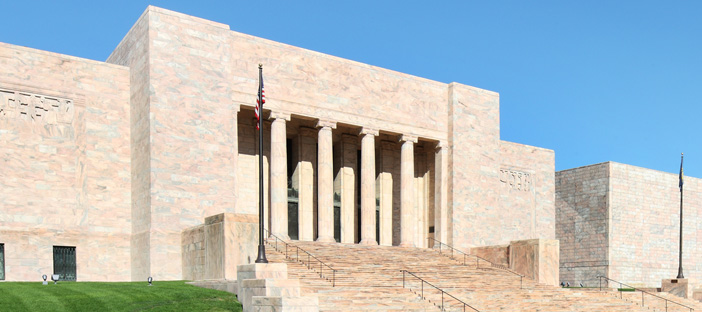
Joslyn Art Museum, Omaha (we have to go to Nebraska for art)

Joslyn Art Museum, Omaha (we have to go to Nebraska for art)

Iowa is 10 years behind in fashion and urban sprawl.  (We consider both good things.)

We have bicycle trails (2,000 miles of), viable downtowns in Iowa City, Des Moines, and Ames, organic farms, the writer Ruth Suckow’s birthplace, the Raptor Resource Project (eagle cams), the Bix Biederbecke Jazz Festival, Paglai’s Pizza Palace (an institution in Iowa City and Des Moines), the State Fair, and the World Food Prize.

It is a lovely place to live.  I was raised in Iowa City, a university town.  I grew up chatting to artists, poets, radical feminists, co-op organizers, anti-war protestors, professors, linguists, waitresses, janitors, Renaissance men and women, and “hippies.”

When we moved back to Iowa, we were delighted by the calm and quiet of daily life.

But is there art?

Not much.

Yes, I’m an art geek. Sort of.

This weekend we wanted to be art geeks.  So we went to the Joslyn Art Museum in Omaha (we have to go to Nebraska for art), where we saw a wonderful exhibition, “Legacy: the Emily Landau Collection.”Landau gave her collection of post-war American art to the Whitney Museum of American Art in 2010, and part of it is traveling around the country.

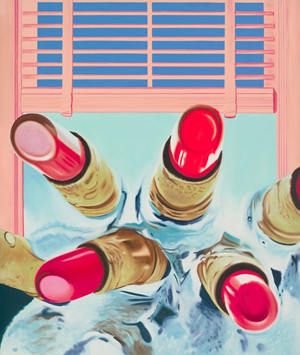
Detail, "House of Fire II," by James Rosenquist

Detail, “House of Fire II,” by James Rosenquit

I particularly liked James Rosenquist’s “House of Fire II,” a mural-size work in which lipsticks fly like missiles through a window with pink Venetian blinds.  On the left, a tan glove rests above cans and fruit.  On the right, cogs of a wheel turn.  The placard says it reflects Rosenquist’s “anxiety over American obsession with consumerism.”

It certainly made me realize I had forgotten to wear lipstick (or any other makeup).

“Oh, God, where is my lipstick?”

But it is supposed to make us hate consumerism.

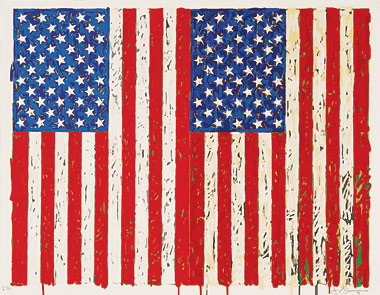
If you like Jasper Johns, you’re in luck.  From the 410 pieces of the Landau Collection, somebody picked several of Jasper Johns screenprints.  “Flags I” is a screenprint of two flags side-by-side, and “Flags II” shows the same image in black.

Jasper Johns, Flags I

Jasper Johns, Flags I

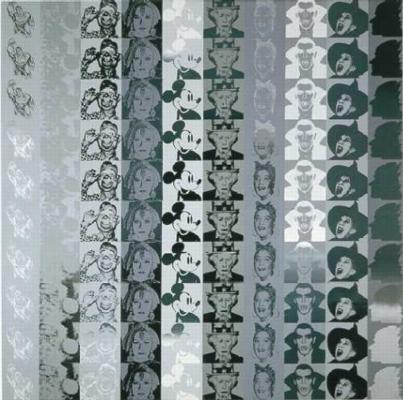
Andy Warhol’s “Myths,” synthetic polymer and screenprint ink on canvas, shows vertical rows of photos of American myths  (we couldn’t identify all of them, but we tried):

  1. The Man of Steel
  2. Howdy Doody
  3. actress playing Cleopatra (we’re not sure)
  4. Mickey Mouse
  5. Uncle Sam
  6. Aunt Jemima (we’re not sure
  7. Dracula
  8. Wicked Witch of the West
Andy Warhol, "Myths," 1981

Andy Warhol, “Myths,” 1981

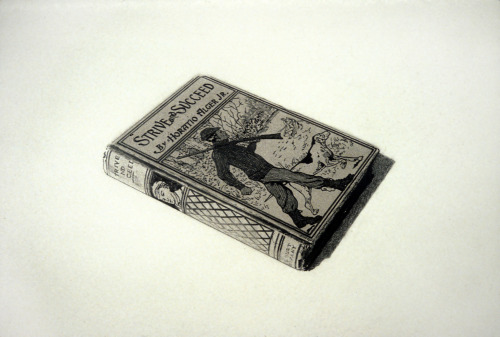
Feeling bookish?  See Allen Ruppersberg’s drawing, “The Gift of the Inheritance (Strike and Succeed by Horatio Alger).”

Allen Ruppersberg, "Gift of Inheritance (Strike and Succeed)"

Allen Ruppersberg, “Gift of Inheritance (Strike and Succeed)”

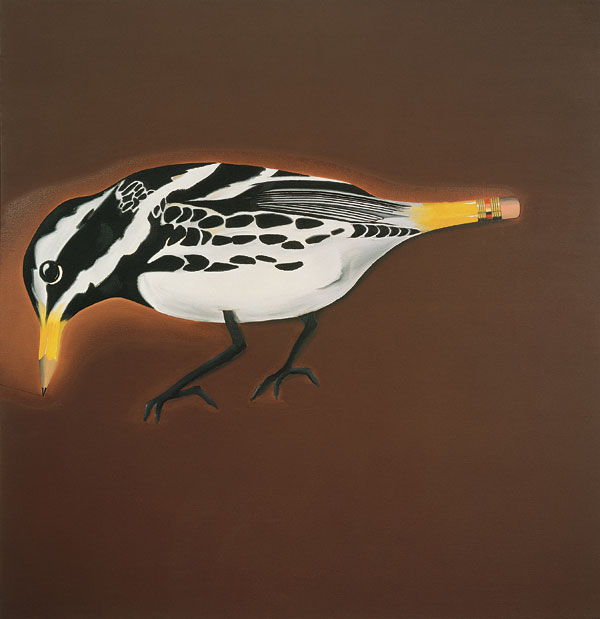
We very much enjoyed Ed Ruscha’s “Give Him Anything and He’ll Sign It,” which I call the pencil bird.

Ed Ruscha, "Give Him Anything and He'll Sign It"

Ed Ruscha, “Give Him Anything and He’ll Sign It”

There was also a lot of word art.  Take Barbara Kruger’s “Untitled Pledge.”

Barbara Kruger, "Untitled Pledge"

Barbara Kruger, “Untitled Pledge”

The placards gave minimal information, which was disappointing, because usually they’re very thorough at the Joslyn.

And there were very few works by women.

It’s fun to be an art geek for a day, though, and I highly recommend the exhibit.

Afterwards:  Starbucks, The Bookworm, and Jackson Street Booksellers.

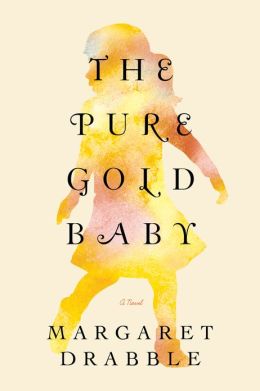
Margaret Drabble’s The Pure Gold Baby & My In-Between Non-Motherhood Gen

Drabble The Pure Gold BAbyI am a member of the In-Between Leftist Non-Motherhood Gen.

For a few, very few, years in the ’70s it  was acceptable for women not to have children.  By the mid-1980s  women were barraged with cruel greeting cards with the slogan, “I forgot to have children.” By the time I even considered having children, I was peri-menopausal and said, No, thank you, to infertility pills.

I ordinarily run miles from a novel about motherhood, but Margaret Drabble’s new novel, The Pure Gold Baby, intelligently, if obliquely, portrays a group of mothers in North London from the ’60s to the present.

The novel revolves around Jess Speight, an unmarried anthropologist whose child, Anna, has developmental problems. After Anna’s birth, Jess switches her focus in anthropology from Africa to England and embarks on a career of freelance journalism so she can care for Anna at home.

The novel is narrated by Nellie, a friend of Jess’s who is not an altogether reliable narrator, as we learn when she admits that parts of the narrative are constructed from her own imagination.

Who is the heroine?  Is the novel about Jess or Nellie?

Nellie is fascinated by Jess’s refusal to tell her married lover, an anthropology professor, about Anna, if indeed he is her lover, because Nellie is not sure whether he exists or whether Jess made him up.  Anna is an easy baby, always happy.  But when her developmental difficulties become evident and Jess must take counsel from a doctor, we are reminded of Drabble’s early novel, The Millstone, in which the unmarried narrator, a scholar, has a baby who needs surgery, and she must navigate the health system, eventually playing the upper-class card so her baby will get good care.

Drabble beautifully captures Jess’s sadness on her trip to the doctor’s office, but Nellie deviously confuses us about the point-of-view of the narration, beginning in the first-person plural and then switching to first person singular:

When we look back, we simplify, we forget the sloughs and doubts and backward motions, and see only the shining curve of the story we told ourselves in order to keep ourselves alive and hopeful, that bright curve that led us on to the future.  The radiant way.  But Jess, that cold morning, was near despair.  She did not tell us about this then, but of course it must have been so.  I picture her now, walking along the patched and pockmarked London pavement, with its manhole covers and broken paving stones, its runic symbols of water and electricity and gas, its thunderbolts and fag ends and sweet wrappings and patters of chewed and hardened gum, and I know that she faltered.

We see so much here:  the shining curve, the bright curve, the radiant way, contrasted with Jess’ despair, the pockmarked pavement, the broken stones, the trash.

And Drabble chooses to follow the radiant way, alluding to her 1987 novel,  The Radiant Way, which was the first in Drabble’s brilliant trilogy, including A Natural Curiosity and The Gates of Ivory.  There is darkness but much hope.

Jess has a normal life, despite her responsibility for Anna.  She marries Bob, an anthropologist-photographer, and later has relationships with three men who, not uncoincidentally, have mental health problems: first Steve, a poet, then Zain, a gorgeous man coveted by many, and finally she has a serious friendship with Raoul, who recovers and becomes a famous neurologist. All three of these men live briefly in an exclusive progressive mental health community.   Drabble charts the changes in the mental health system over the decades, ranging from Laing to homelessness.  Steve was unable to thrive after the demise of the community.

Shimmering throughout the novel are Jess’s memories of a group of children in Africa, who had a rare condition, lobster-claw syndrome, their fingers or toes fused.  These children were indifferent to their deformity, and Jess loved watching them.  Her feeling toward Anna is similar; she loves her child’s good nature: her inability to read or write does not matter to her, as it might to some intellectual parents.  At the end of the novel, Jess, now old,  and Anna, middle-aged, go to Africa, and the novel comes back full-circle.

Rodin's The Helmet-Maker's Once Beautiful Wife

Rodin’s The Helmet-Maker’s Once Beautiful Wife

Drabble is particularly good on portraying aging as the decades fly by.  Nellie, the narrator, is fascinated by art depicting aging women.  She describes Rodin’s “The Helmet Maker’s Once Beautiful Wife,” which has fascinated her since a school trip to Paris.

I was unprepared for the shock of the woman’s naked body.  The old woman of Rodin lacks all dignity.  Her image wounds, insults, reduces.  I stood, transfixed, appalled and undefended….

She is old, and scraggy, and ugly.  She is a memento mori.  She is worse than a memento mori, for in comparison with this condition, death were welcome.   She is, I suppose, witch-like, but she lacks the malevolence and the energy of the three weird sisters from Macbeth…  She is passive.  She is a passive recipient of the battery, the assault of time, and of the contempt of men.  Her breasts are dry and dangle, her ribs stand out, her skin hands in folds from her withering frame her back is bowed in submission.

This stunning novel is both dense and disturbing, and those of you who, like me, particularly like Drabble’s complicated novels of the ’70s and ’80s, will admire this dark exploration of family, heredity, and women’s lives in the late 20th century and the third millennium.

This book bears rereading, and I will reread it soon.

Women of Margaret Drabble’s generation had children.  Most women of mine did, too, but there was that small window of opportunity for women of my age to be childless without guilt.

Drabble thinks these disabled children contribute to the culture, and we will be worse off when we have no Downs Syndrome children.

Although I personally could not have cared for a child like Anna, because my energy is limited and my freelancing certainly didn’t pay as well as Jess’s, I find Drabble’s ideas interesting.  On the other hand, I am very much in favor of abortion rights.

Your choice.

The Planned Parenthood Book Sale & the Jane Gaskell Giveaway

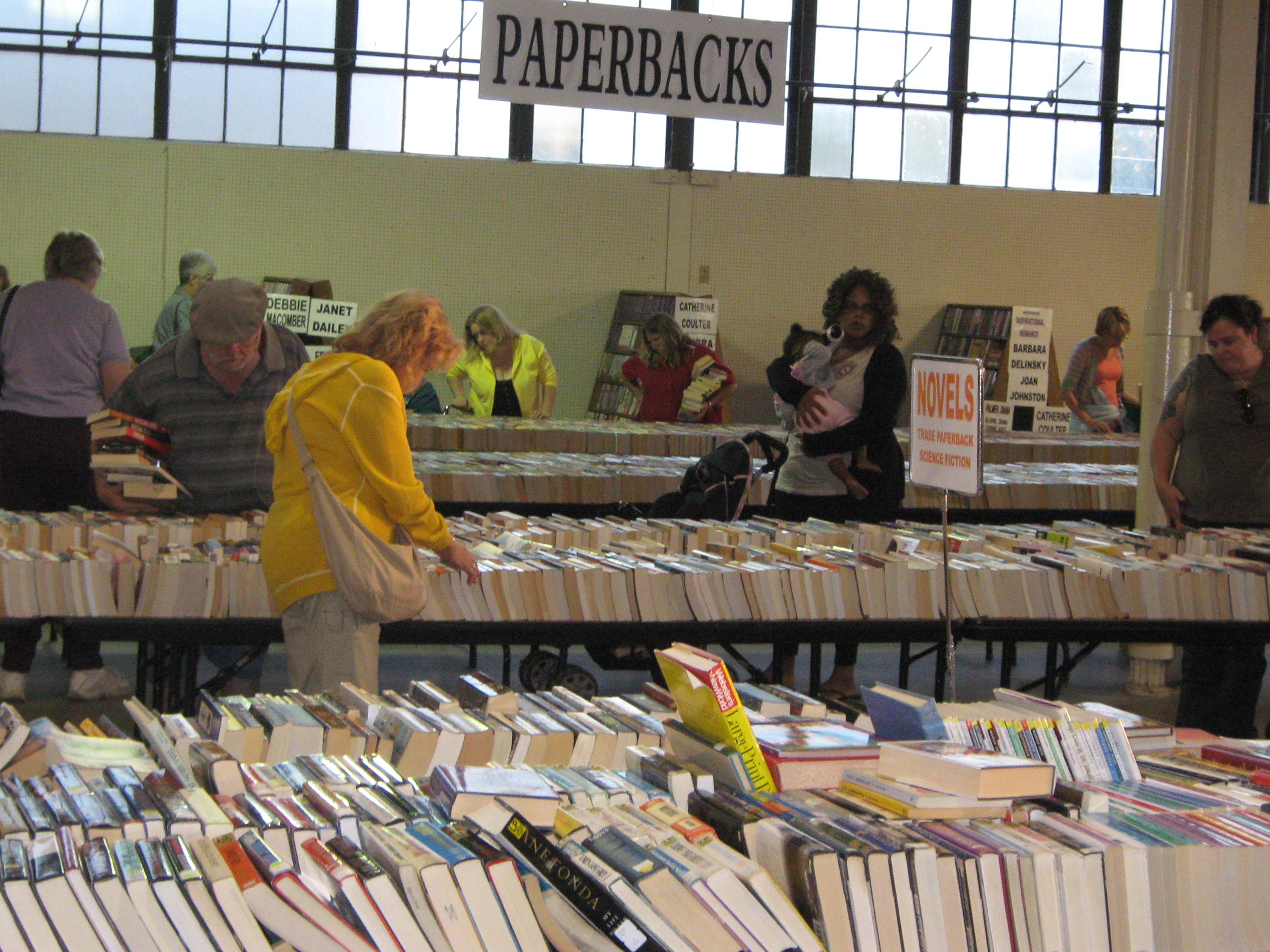
The Planned Parenthood Book Sale

The Planned Parenthood Book Sale

The first Planned Parenthood Book Sale in Des Moines was held in 1961.  My grandmother patronized it in the late ’60s and early ’70s.

Now my cousin and I patronize it.

In its 52nd year, it takes place this weekend, Oct. 10-14, at the Iowa State Fairground, 4-H Building, in Des Moines.  You can spend hours browsing the 600,000 books, CDs, DVDs, records, VHS tapes, games, puzzles, posters and collectibles.

This kind of history makes me wish I were a Des Moines native.

We went to the sale on Opening Night.  My “role model cousin” (whom I haven’t written about before) was volunteering. I should volunteer, but I don’t.  I can’t add, so I can’t be a cashier, and I’m not particularly good at carrying boxes. No, I know myself. I am the chatty kind of volunteer who stands around and tries to persuade customers to read Jane Gaskell’s comical Atlan fantasy quintet instead of, or as well as, The Complete Works of George Orwell.  Far better for me to push a cart slowly through the aisles, load it up with books, and spend $50-$100.

Last night I found many of John O’Hara’s books.  My husband came over to tell me John O’Hara is terrible. He didn’t think I should waste my time on John O’Hara.  I loved Butterfield 8, and have been looking for O’Hara’s books for years.  I said I intend to read nothing but John O’Hara for the next year. At least I wasn’t buying Georgette Heyer’s romances.  Not that I don’t enjoy these.

I struck out on Viragos.  Somebody must have beat me to them.

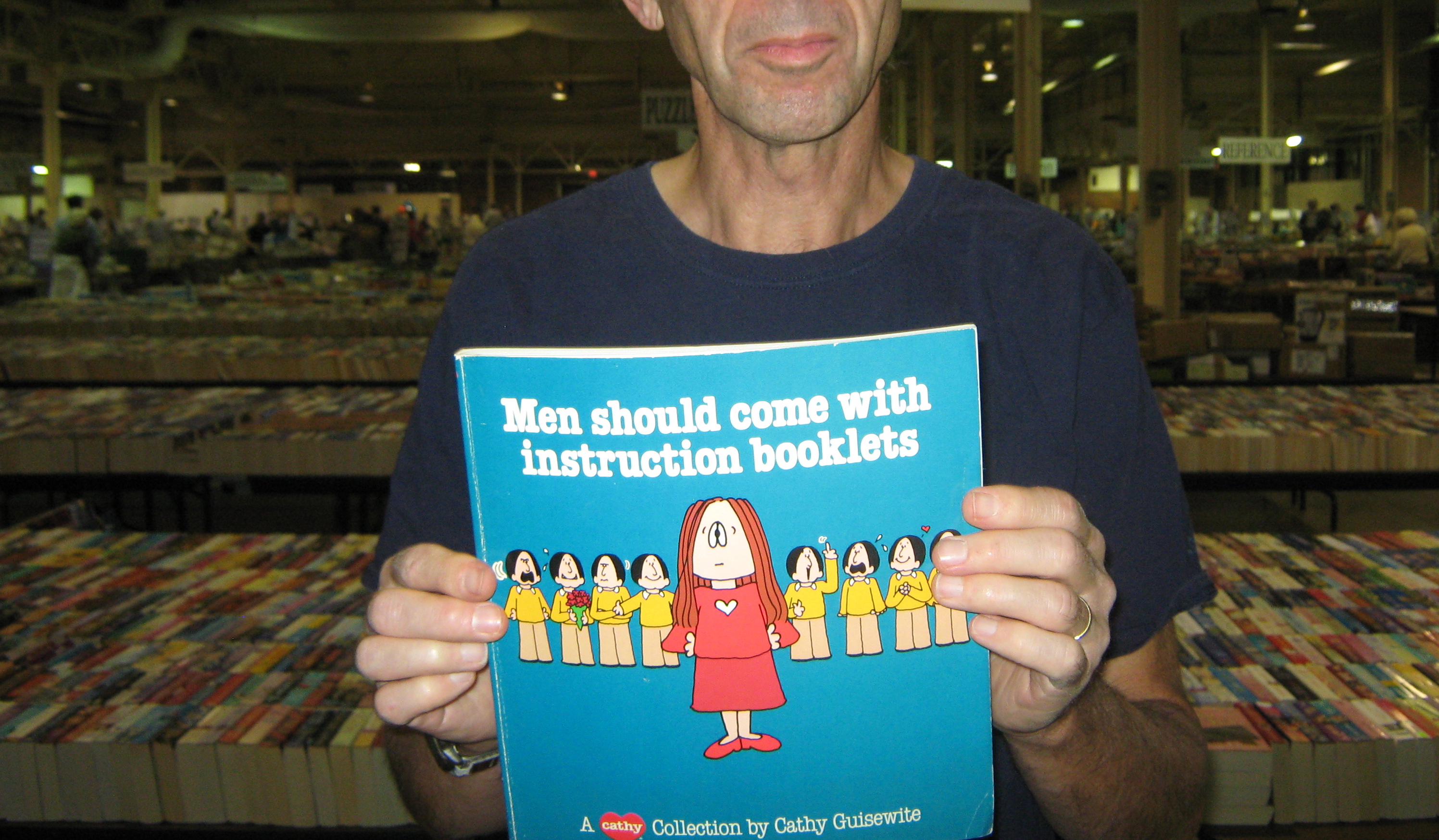
I  couldn’t find any new Cathy cartoon books either.  We apparently have all the Cathy books. Here my husband poses (insisting that I cut his head off) holding my favorite Cathy book:

IMG_2727

Please!  Why don’t they (come with instruction booklets)?

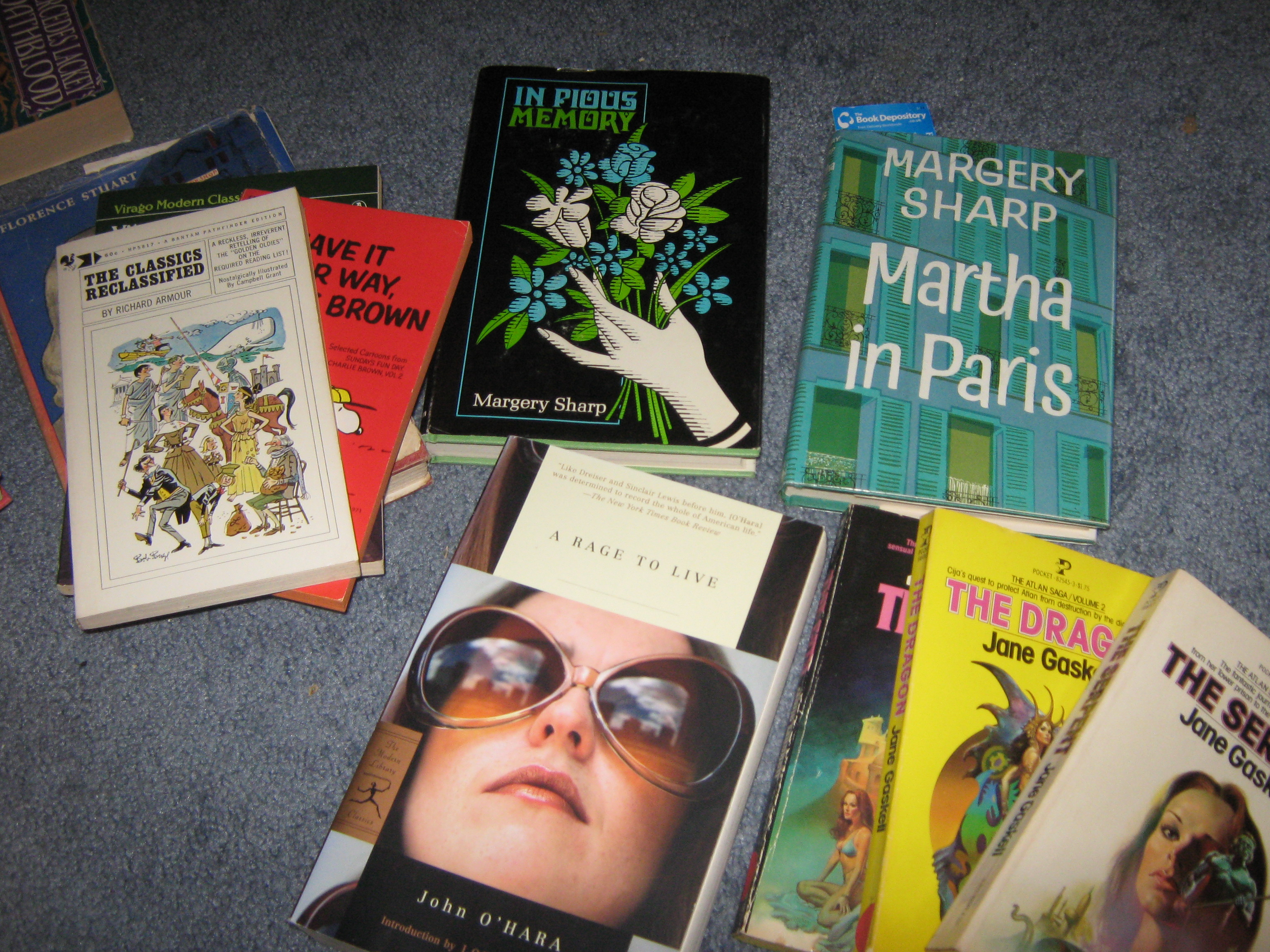
Here is a picture of some of my books (and, honestly, this selection is not as good as last spring’s, though I’m still pleased):

IMG_2732Margery Sharp’s In Pious Memory  (she wrote super-light novels, some of which are available in Viragos)

Margery Sharp’s Martha in Paris  (about a fat girl artist:  I’m adoring it)

John O’Hara’s A Rage to Live

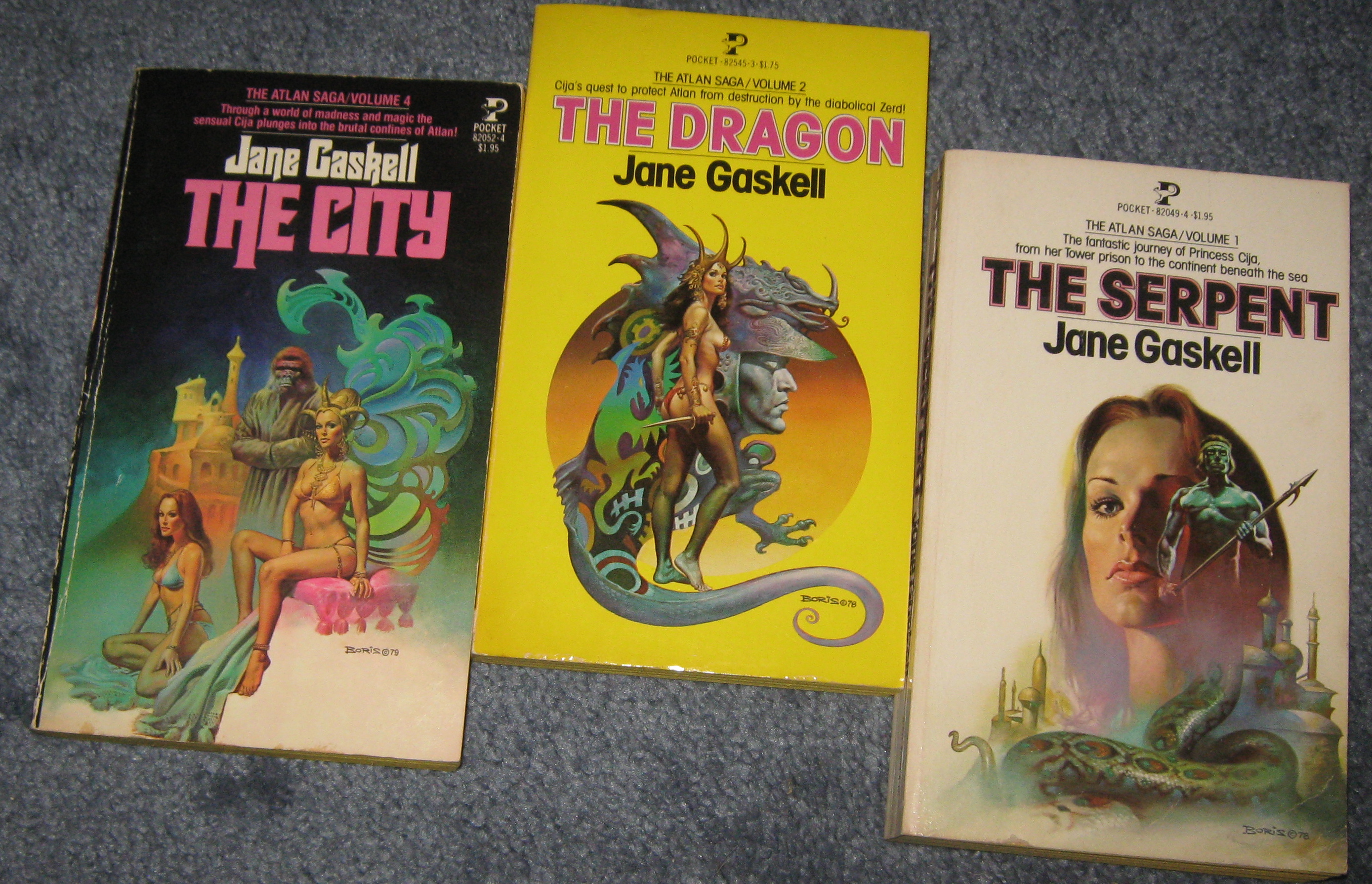
Three of Jane Gaskell’s Atlan quintet (which, by the way, I’m giving away:  see bottom of post).

Richard Amour’s The Classics Reclassified (a humor book we think is very funny at our house)

Have It Your Way, Charlie Brown (to read over breakfast, when I am too bleary-eyed to face the paper)

Vita Sackville-West’s Seducers in Ecuador and The Heir (my sole Virago)

Charles Williams’s The Place of the Lion  (he’s a C. S. Lewis type)

Kind of an odd night:  in the classics section I found mainstream Steinbeck, Fitzgerald, and many, many copies of Anna Karenina instead of the odd Ruth Suckow, Gogol, Bess Streeter Aldrich, Trollope, or George Meredith I go to collect.

I didn’t make it to the non-fiction section(s),

At one point I laughed at a Great Books set: I was kicked out of Junior Great Books for not reading Treasure Island, and my husband also shudders at his memories of this earnest book group.

IMG_2734And now for the JANE GASKELL PROVE-YOU’RE-A-GIRL GIVEAWAY.   This comical, charming, sometimes erotic, feminist fantasy series was recommended by Ms. magazine in the ’70s, and if you want to win this series, you must prove to me that you’re female (and of course I already know many of you are, so you don’t have to prove it).  The heroine,  Cija,a princess in a tower, has been told men don’t exist. When her mother suddenly recants and tells her she must flirt with and then assassinate, General Zerd, a blue scaly man whom you will find sexy, she is in a dilemma.  How does one flirt anyway?  She has lots of funny, exciting adventures:   I found three of the five books and knew some of you would like these:  The Serpent (Vol. 1), The Dragon, (Vol. 2) and The City (Vol. 3).   If you would like one or all of the books, leave a comment.  I adore these, and they’re hard to find.

ADDENDUM.  If you decide to come to the sale this weekend, here are a few other things to do in Des Moines:  Gusto Pizza, The Dairy Zone (a good soft-serve ice cream stand), the Neal Smith Trail (bicycle and hiking), the Clive Trail, the houses on Kingman Blvd. (not too fancy, but still exactly where you’d want to grow up), Friedrich’s Coffee, the Highland Park Bakery (champagne cake, doughnuts), Smokey Row (David Byrne wrote about it when he was here), and Grey’s Lake (I don’t see the attraction of this man-made lake, but it is a Des Moines institution).

Shiny Happy People Holding Hands (on Twitter)

R.E.M. "Shiny Happy People"

R.E.M. “Shiny Happy People”

Meet me in the crowd, people, people
Throw your love around, love me, love me–R.E.M., “Shiny Happy People”

When I check Twitter, an activity I limit to once a day, because otherwise it becomes one giant game of Mother, May I?, in which I jump from link to link to link, I am reminded of  R.E.M.’s  joyous but gently mocking song, “Shiny Happy People.”

In the effervescent “Shiny Happy People” video, Michael Stipe and Kate Pierson (of the B-52s) aerobically wave their arms and over-smile: they’re having fun but there is a hint of irony in their gesturing.  By the time everybody joins the dance at the end, it’s clear that hyperbolic happiness has temporarily won out over facetiousness.  They jump, wave and twirl and, though they know it won’t last, over and over they sing,

Shiny happy people holding hands
Shiny happy people laughing

We want to be those shiny happy people!   On Twitter,  some very shiny happy people (some really do need and get that oxygen) tweet, i.e., wave for attention, in the shiny happy Twitterverse.

I’m not a Twitter person.  I have sent out 11 tweets altogether, none of the shiny happy people variety.  I do so much of the love me, love me here at Mirabile Dictu that no other electronic colloquy is necessary.  I write long, as I told a charming blogger/tweeter friend who writes short.  I like to snap my laptop shut and go outside.  Naturally there are some witty twitterers, but Twitter has not rocked my world.

Although we rather thought everyone was aware that the NSA and other spies scrutinize social media for information (they are particularly interested, I’ve heard, in what Mirabile Dictu is reading now), Dave Eggers’ new novel, The Circle, a satire of social media, has triggered a stream of solemn online confabulation about the dangers of Twitter.  Apparently our brain capacity is so small from Twitter  that we have forgotten that Gary Shtyengart also satirized the dangers of social media in 2010 in his dystopian comedy, Super Sad True Love Story.  In other words, this isn’t new.

Twitter seems relatively harmless, as these things go, because there’s only so much you can say in 140 characters. Being a book nerd, I use Twitter to “stalk/follow”  book review publications, which is not exciting, I assure you.  The TLS conservatively raps out two perfect haiku tweets a day (perhaps they have a Department of the Tweet), while  Ron Charles, editor of the Washington Post Book World, tweets nonstop, doing what it takes to sell his book page (and I hope it’s working).  After I’ve decided The Telegraph tweets too much for me even to click on one link, I get offline.

Although I can’t imagine how they do this, apparently some souls carry on their entire social lives in 140-character tweets.  In Michele Filgate’s poorly written, if heartrending and terrifying, article at Salon, “Dave Eggers Made Me Quit Twitter,” she implies that her day was one long tweet before Dave Eggers’ The Circle inspired her to take a break from social media. And though she stayed away for some absurdly short amount of time like a week, she had made some rules for herself.

No tweeting while walking. No checking the phone on the subway. No TweetDeck. It’s far better to check Twitter on the actual website instead of having it open and taunting me all day long. The biggest thing I’ve realized is that I can’t have social media open while I’m writing. I don’t want to become like Mae, sacrificing real-life friendships for the allure of the screen. I want to be aware of the world around me. I want to write about that world. I want to feel more alive, even if that means being lonelier in the process. It’s a book that connected me with myself again — just as books have always done, and always will do.

Filgate’s vocabulary is disyllabic, her prose social-media-esque,  and her reasoning simple, but this is a tragic statement about how (youngish?) Americans are living their lives today.

Twitter has also made the news because of bomb threats against British women journalists and celebrities.  Mary Beard, the classicist, author, and blogger, is quite breezy about the abuse she has taken. In “Why Tweet?” at her TLS blog,  A Don’s Life, she explains why she won’t be driven off Twitter.

There is nothing inherently the matter with the medium itself; it’s us the users, and the uses to which it is put (and, to some extent, the moderation and reporting mechanisms provided by the company concerned). A few years ago we were hailing Twitter as the catalyst of the “Arab Spring” (the ‘Twitter revolution” we called it, remember?). Now we are slamming it as one of the forces of sexism and misogyny. It is and was, of course, neither.

I, meanwhile, am busy listening to “Shiny Happy People,” and realizing the blog is a better medium for wordy me.

An Interview with Steve Yarbrough

Steve Yarbrough

Steve Yarbrough

I found Steve Yarbrough’s novel, The Realm of Last Chances, by serendipity.

His was the only book in the Y’s and I loved the title and the first paragraph:

They were both fifty when they moved to Massachusetts, settling in a small town a few miles north of Boston.  Like a lot of people around the country over the last few years, they’d recently experienced a run of bad luck.

Being in my fifties and seldom finding novels with middle-aged protagonists, I bought this book and rushed home and read it in one sitting.  It is powerful and moving, my favorite novel of the year.

And Steve Yarbrough, an award-winning novelist and a Professor of the Department of Writing, Literature and Publishing at Emerson College, generously agreed to be interviewed here.

Mirabile Dictu:  Your stunning new novel, The Realm of Last Chances, addresses the issue of dislocation in middle age.  Did you set out to explore this theme?   Or did it just come together?

Steve Yarbrough:  I consciously wanted to explore dislocation.  My wife and I had moved from one coast to the other twice: from east to west in 1988 and from west to east in 2009.  Both times, we wanted to make the move, and this last move in particular has led to great happiness, because we love New England.  But during the economic downturn a lot of people were uprooted against their will, and I wanted to see what it might be like for a couple like that.  The other themes, though, came to me during the writing process.  It’s always that way for me.  I find my path by groping in the darkness.

Mirabile Dictu:  How long did it take you to write the book?

Steve Yarbrough:  Well, from start to finish, about eighteen months.  But before I figured out what I wanted to write, I floundered for about a year.  That happens to me again and again.

Mirabile Dictu:   Which of your books is your favorite (besides Realm)?

Steve Yarbrough:  I guess I’d have to say my other favorite is probably Safe from the Neighbors–though, truly, I am fond of all my books, to varying degrees. They represented the best I had in me when I wrote them.

Mirabile Dictu:  Do you write on paper or a computer?

Steve Yarbrough:  I wrote my first book on paper and then typed it.  All the others have been written on the computer.

Mirabile: Who are your favorite authors?

Steve Yarbrough:  The list is long.  Here are a few names: James Salter, William Trevor, Alice Munro, Richard Yates, Elizabeth Spencer, Milan Kundera, Sandor Marai, Tolstoy, Faulkner, Chekhov, Austen, Graham Greene.

Mirabile Dictu:  Thank you for the fabulous interview!

And here are a few facts about Steve Yarbrough.

He is the son of Mississippi Delta farmers.

He is a Professor of Department of Writing, Literature and Publishing at Emerson College.

His novel Prisoners of War was a finalist for the 2005 PEN/Faulkner Award,  his 1999 novel The Oxygen Man  won the California Book Award, the Mississippi Institute of Arts and Letters Award for Fiction, and the Mississippi Authors Award.  In 2010, he won the Richard Wright Award for Literary Excellence.

His website is http://steveyarbrough.net/

And you can read my review of The Realm of Last Chances here.

The Bicycling Thing & The Emma Thing

On the trail in July.

On the trail in July.

I felt bleary-eyed after a rainy Sunday.

I would ride my bike today, I resolved.

I jumped into jeans and a gray cardigan. I have a lot of black and gray cardigans.  Everything matches black and gray.  But if you don’t wear a lot of makeup, it washes you out and makes you look like a nun.  Today I applied eyeliner UNDER the tear line, because the smudgey look cancels out the nun look.

Before I left the house I ate brown rice with raisins.  I was afraid otherwise I would stop for a Big Bopper.

Relax, you say.  Have a Big Bopper.

A Big Bopper is a Martini with…  Heavens, no, it is a 490-calorie ice cream sandwich.

To be honest, I haven’t had a Big Bopper this year.  I’m off the milk, off the ice cream.  But even bicyclists can’t risk eating Big Boppers.  You can bike 40 miles after a Big Bopper and still gain five pounds.

I would not eat a Big Bopper, I vowed.  I would go to a coffeehouse.  I would:

  • Drink coffee and eat a raspberry-white-chocolate scone (270 calories).
  • Write in my diary. (I never write in my diary, but I carry it around in case I’m inspired.)
  • Finish Nick Harkaway’s witty SF thriller, Angelmaker, which has accompanied me on bike rides for the last two months.

Attainable goals, right? I eat my scone and drink coffee, but as usual have nothing to write in my diary.  I open Angelmaker on my e-reader.  It turns out I am only on page 200 so I can’t finish Angelmaker.  I really should sit down and read ir, but I only allow myself to read it late at night.

Then it turns out that my e-reader is hooked up to WiFi so I check my email.

PART TWO.

And it is a good thing I do, because I am inundated by email from match.com

I encouraged my cousin, who was driving me mad, and to whom I had already introduced all the men I know,  to sign up at match.com.  She wouldn’t sign up unless  I signed up.  That didn’t make sense since I am married, but what the hell?

I paid them no money, so I am not a member.

And my profile consists of one sentence:  “Emma is my favorite book.”

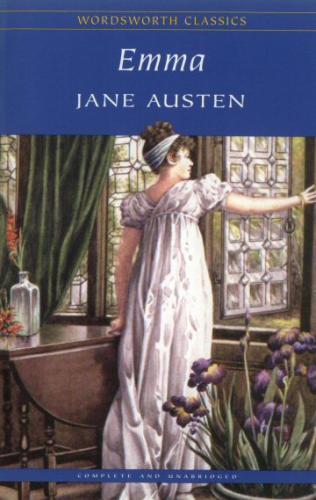
emma jane austenOne bloody sentence, no picture, and  I am deluged with emails saying I “voted” for some guys in my “daily matches”  (how did I do that?) and “they’re so interested, they took the time to email you.”  I doubt they exist, because no one has ever been crazy about my saying that Emma is my favorite book.  (Ask my husband.  He has never read Emma.)

For one thing, Emma is the unlikable Austen heroine.  Right?  I like her, but lots of Austen fans do not.

Austen wrote, “I am going to take a heroine whom no one but myself will much like.”

As I said here on May 29:

Emma is smart.  Emma says what she thinks.  She doesn’t want to marry, and she prefers the lively Harriet to the rigid Jane Fairfax.  Emma would destroy society in a moment, if Knightley weren’t there to criticize.

It is a slow day at match.com if indeed someone is fascinated  that I like Emma.

I must delete my profile.  Now what’s my password?  I hope I wrote it down…

Jen Lancaster & Imaginary Friends

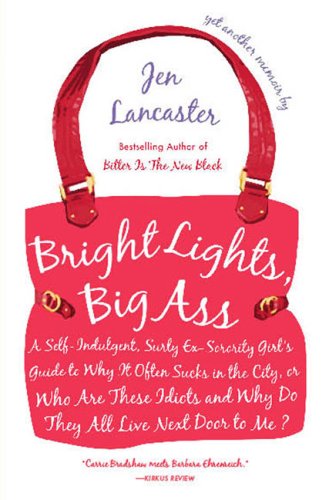
Bright Lights, Big Ass Jen Lancester“Did you get my email?”

“Hm?”  I was reading Jen Lancaster’s Bright Lights, Big Ass, which was so funny I hadn’t checked my email in two hours.

“I said I’d read Proust with you.”

Huh? How could I think about Proust when I was reading Lancaster?

“Did you comment at my blog?”  I teased. (I recently invited people to read Proust with me.)

“I’m too shy to comment.”

No, why go online?  I’ll read his email later.  Lancaster is just too funny.

Bright Lights, Big Ass begins with a letter to Carrie Bradshaw (“from the desk of Miss Jennifer A. Lancaster).

Dear Carrie Bradshaw,

You are a fucking liar.

And for that matter, so are Jay McInerney, Bret Easton Ellis, and everyone else who’s ever claimed city life to be nothing but a magical, mythical, all-around transcendent experience chock-full of beautiful, morally ambiguous people lounging around at fabulous parties, clad in stilettos, and offering up free piles of blow….

No one’s ever offered me anything more provocative than a cough drop or a hug in my ten years here in Chicago.

Nor where I live, Jen.  There are no fabulous parties here, except political fundraisers and barbecues where people in jeans and hoodies mill around the back yard drinking beer and listening to Johnny Cash.  And though I’m sure there are coke-induced all-nighters at clubs, the houses on my street are dark at 10 p.m.

in Lancaster’s hilarious collection of essays, e-mails, lists, and logs, she describes working as a temp, riding the bus, her husband’s meat loaf, a visit to the OB/GYN, and the bureaucracy of the public library.

I laughed over her horror of women’s wellness exams. The nurse, who doesn’t take well to Jen’s jokes about weight gain, provides her with a paper, not a cloth, gown, and  Jen thinks this is because she is fat.

Nurse Ratched advises me to strip completely, and as I undress I wonder if “completely” includes my socks.  Erring on the side of caution, I toss them aside first, pleased with having the foresight to give myself a fresh pedicure.  Earlier this morning, I also brushed my teeth a second time and flossed.  Fletch noted my excellent dental hygiene and asked,”Is that the end they’re going to examine?”

In another essay, when Jen gets bored writing at home and tries to distract her husband, he suggests that she go talk to her “imaginary online friends.”

They aren’t make-believe.  Besides, I’ve already done that.”

Carrie Bradshaw

Carrie Bradshaw

I certainly have my share of “imaginary” friends, and Jen is one of them.  Jen is a Roseanne-cum-Carrie-Bradshaw Everywoman who has gained 50 pounds since her sorority days, is funny and “mouthy” (a word my mother used to use), and doesn’t care for “hippie vegans.” (Okay, I’m almost in the hippie vegan category ). Her politics are horribly conservative (she rarely mentions them, thank God).  I very much enjoy her humor, though.

Carrie Bradshaw is another imaginary friend, a kind, gentle, liberal soul with whom I have little in common:  I am not much of a shopper, and so much of Sex and the City is about shopping.  I have never worn high heels–they cripple the feet–and Carrie’s tutu doesn’t come in my size.  I also prefer her jazz musician boyfriend to Mr. Big.

But in Sex and the City, I recognize the importance of the support network of Carrie, Miranda, Samantha, and Charlotte.  In real life, women do get together and talk unselfconsciously about taboo subjects, and though Samantha may be the only character in a sitcom to return a vibrator and loudly advise other women in the store on the effectiveness of the different “massagers,” there is an underlying wholesomeness and empowerment of unmarried women in these episodes.

We are not Jen Lancaster or Carrie Bradshaw, but we write about our lives, real or imaginary, with details slightly changed “to protect the innocent and keep the neighbors from egging my house,” as Jen Lancaster says.

Here’s to imaginary friends and online life!