Mirabile Does Laurie Colwin’s Roast Chicken

Housewife and husband eating illustrationAfter a long bicycle ride, sweating and smudged with dead bugs that flew into your sun block, you don’t feel like going to a good restaurant.

You dash into a fast food place hoping no one will notice your frizzy freak flag hair flying.

A McWrap.   Coffee and a cookie at a coffeehouse.  Anything at a downscale restaurant not actually run by Norman Bates.

Good food is for home.

So tonight I made Laurie Colwin’s roast chicken.

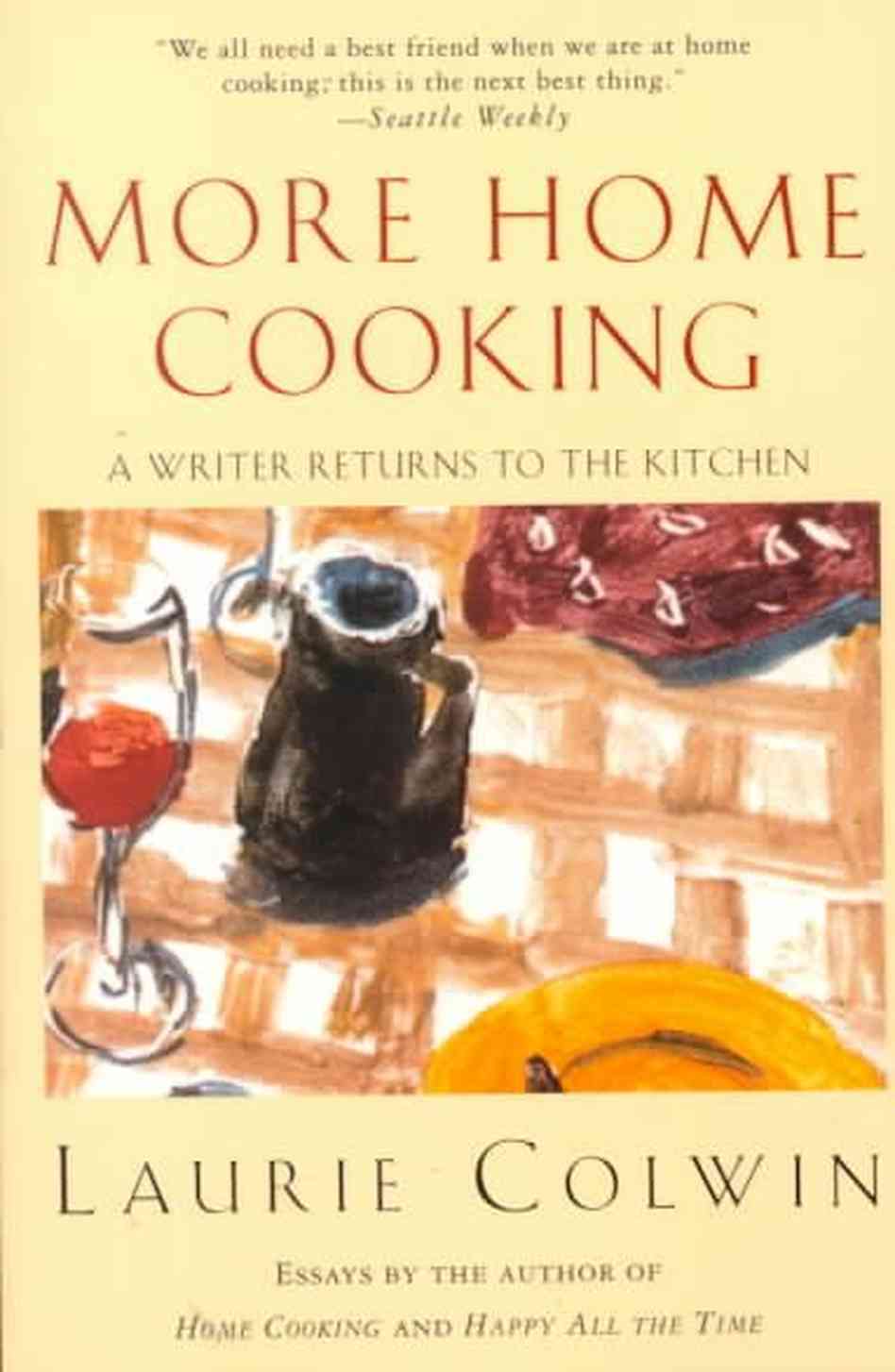
More Home cooking colwinColwin, a novelist and short story writer whose Happy Families is one of my favorite books, wrote Home Cooking and More Home Cooking, collections of her entertaining food columns written for  Gourmet magazine.

Her roast chicken is foolproof.

I can’t find the cookbook, but the recipe is something like this:

Stuff whole chicken with half a lemon.  Sprinkle chicken with paprika (I tend almost to coat it.)   Roast chicken at 325 degrees and baste (with chicken broth, in my case) every 10 minutes.  It should be done in three hours or so.  Keep an eye on it.

It is delicious.

Usually we eat it with rice and a salad, but the cupboard is so bare we had side of plain spaghetti sprinkled with  parmesan.

Eat in front of movie, Cedar Rapids, with Ed Helms, Anne Heche, and John C. Reilly.  An insurance agent heads to an insurance convention in Cedar Rapids after the kinky death of a colleague.  Very funny.

Here is the trailer:

City Park Underwater

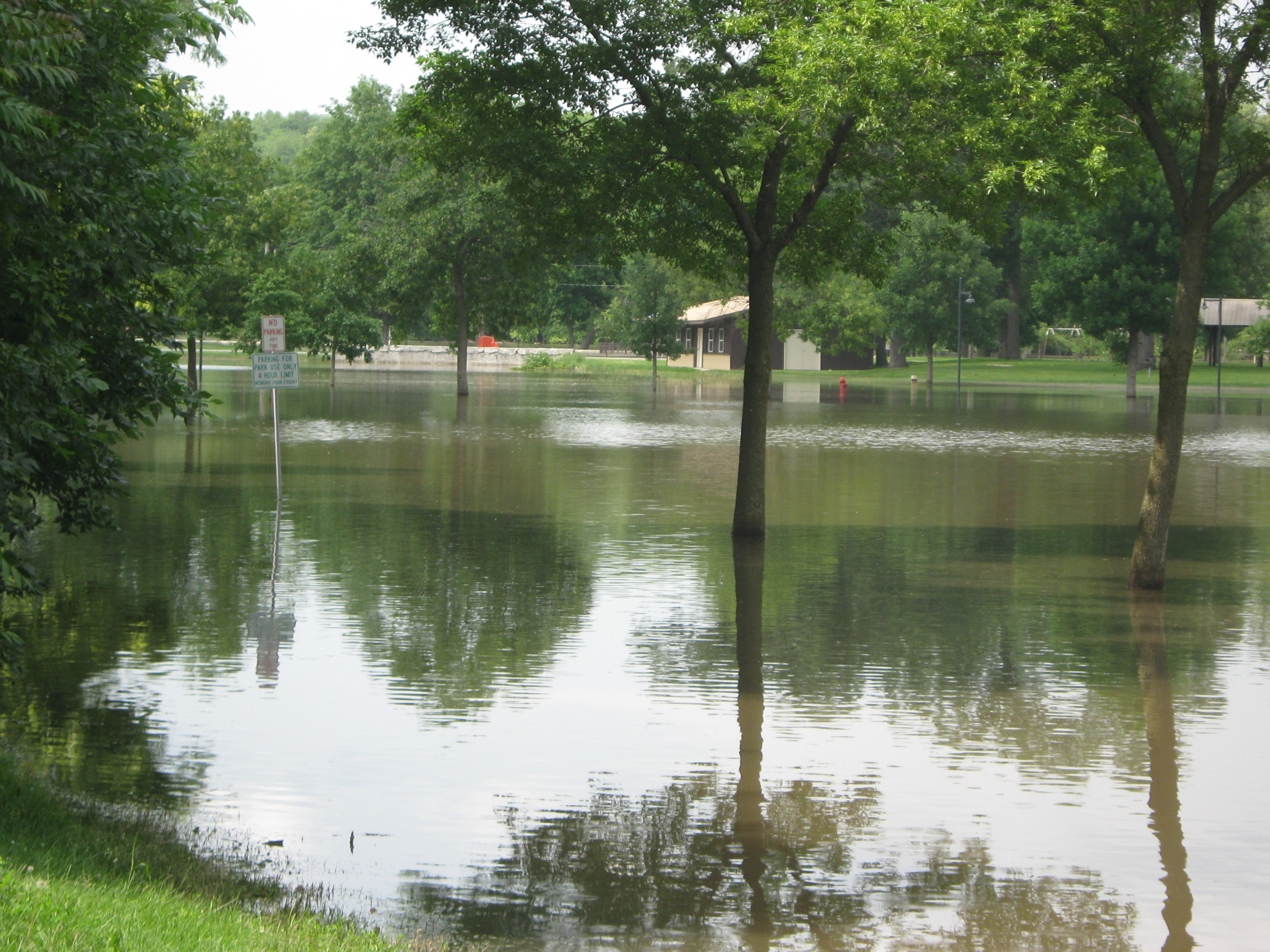
City Park in Iowa City underwater.

City Park in Iowa City is underwater.

My husband and I intended to walk by the Iowa River.

I love the river.  My defunct high school, now the site of the Iowa Center for the Book, is on the river. The University of Iowa Library is on the river.  The English-Philosophy Building where I took so many classes is on the river.

The Russian professor used to walk by the river in his Gogolian Overcoat and tall fur hat.

My kind T.A., T. Coraghessan Boyle, whose class I illicitly took as a freshman (sophomore status was required]), and who had recently published a story about Lassie in Esquire, used to walk by the river.  (Did he say, “Friends call me T,” or have I misremembered?)

Three of the five of us in Age of Cicero met in the Wheel Room in the Union on the river twice a week to celebrate having made no mistakes in the presence of our mocking professor.

We have come back to Iowa City over the years to visit my mother, go to bookstores, and walk by the river.

The river is flooded again.

The first flood was in 1993.  The second was in 2008.  Iowa City was declared a federal disaster area.

And now it is flooding again, and what happens may depend on the rains in Northern Iowa and how the rivers swell that run downstream into the Iowa River.  A Disaster Preparedness Fair, part of the “Living with Floods” program, will be held Saturday, 2 p.m to 3:30 p.m., at The Center.

The water is as high as the bridge at Dubuque and Park.  Construction workers flocked on the bridge, but I don’t know what they were doing.  The Upper Level of City Park is open, but we walked down a closed trail to take a closer look at the flooded lower level of the park, almost entirely underwater.

City Park

City Park

This is usually roads, picnic tables, and baseball diamonds.  It is hard to take in that this disaster area is where I grew up, where nothing ever happened, thank God.

I remember riding my bicycle to the park (at 11?  12?) with my copy of Harriet the Spy and my notebook.  Harriet wrote down everything in her notebook, until her friends got hold of it, and there were repercussions.  Didn’t we all love Harriet the Spy?  Didn’t we all want to write everything down?

It was kind of a dull park, not where I usually spent time, but my husband and I occasionally walked here when we were students.  And we did attend a company picnic here once.  I can’t remember whose company it was.

Obviously Shakespeare at the Riverside Theatre will not he held in the park this summer.  It will be at West High School Auditorium instead.

Another park picture.

Another park picture.

On June 13, 2013, it is especially a shock to see Normandy Drive, a tony street near City Park, sandbagged and flooding.  As Donnarae MacCann, who rebuilt her house after the flood of 2008, told Iowa Public Radio, “I remember people saying to me, it’s so risky how can you stay, but I say how can you leave? It’s the most beautiful place on the planet.”

Such a beautiful quote, and I do know what she means.  This is her home.  You stay as long as you can.

swander the girls on the roofRecommended flood reading:  Mary Swander’s The Girls on the Roof, a poetic novella about the Flood of 1993.  Set in Pompeii (pronounced Pom-pee), Iowa, the poem tells the story of Maggie and Pearl, a mother and daughter who get stuck on the roof of Crazy Eddy’s Cafe during the flood. And when the corpse of Mike Fink from the junkyard washes up, they realize he was the lover of both mother and daughter.

Here is a description of Maggie in a cottonwood tree:

She dangled above the flat roof of Crazy Eddy’s,
the flood waters gurgling below.
Why me? she wailed to the wind,
the leaves and twigs brushing her face.

Our motto is:  WE’RE HERE TO HELP!  List your flood literature here.

Peter Stothard’s Alexandria: The Last Nights of Cleopatra

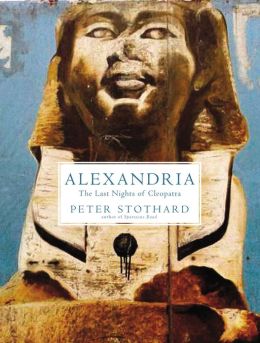
Peter Stothard, a classicist, the editor of the TLS, and a former editor of The London Times, has written a brilliant memoir, Alexandria:  The Last Nights of Cleopatra, centered on his lifelong fascination with Cleopatra.

Alexandria peter stothardStothard traveled to Alexandria in 2011 when an ice storm prevented his flight to South Africa. He wanted to finish a book about Cleopatra; he had made seven attempts to write about her over the last 50 years.  He rents a room at the Metropole Hotel in Alexandria.  It is so small that he stands up to write in his notebook.

He looks over the  yellowed old papers he has brought with him and explains “the first efforts [were] of an Essex schoolboy; the latest from the 1980s from a classicist finding some sort of success as a journalist.  Between these beginnings and ends, which show uneven patterns of progress, there are pages written in Oxford between 1969 and 1971 and at an oil company desk in 1976, and in the Calthorpe Arms, a crepuscular pub beside what were the offices of The Times.”

Much of his writing about Cleopatra is lost, but he feels confident that he can fill in the lacunae by writing a diary in Alexandria.  Much of the history of Cleopatra has been lost, too, though recently something new has been found, the ginestho papyrus.  Cleopatra had written, ginestho , “Let it happen,” in Greek, approving Mark Antony’s general’s export of 300 tonnes of wheat  and 130,000 litres of wine without taxation.

Stothard arrived in Alexandria on the eve of the Arab Spring.  There is a bombing, and everyone is jittery.  He spends time with two Egyptians, who befriend him, take him sightseeing, decide what he can and can’t see, and speculate about the terrorists.

Stothard writes about what is happening in Egypt, but doesn’t report on it.  He brilliantly zeroes in on bits of his life that are connected to Cleopatra.

Much of the book is a memoir of his classical education and his working life as a journalist.

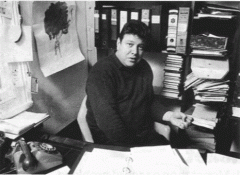
Peter Stothard

Peter Stothard

He grew up in Essex, the son of a radar engineer:   Stothard adds ironically that his father was “a designer of military machines that made us safe.”   There were only five books in the house, one of them the Loeb edition of Virgil’s Aeneid, Books VII-XII. (This is the only book he has brought with him to Alexandria.)  Stothard’s first attempt to write about Cleopatra was when he was nine,  a story, “Professor Rame and the Egyptian Queen.”

He studied Greek and Latin in the ’60s at Brentwood School in Essex, and then studied classics at Oxford.  Many of his teachers at Brentwood were war veterans, some unstable.  Miss Leake, the headmistress of his first school, idealized Brentwood: she thought the teachers were “earnest, slender, slightly socialist young men who visited her from time to time, asking if she had anyone who might excel at soccer or Cicero.  This was an honest mistake.  Behind Brentwood’s Martyr’s Memorial many eccentric instructors lay hidden including Mr. G, an ex-soldier of cement-mixer voice and stature, a survivor of a war which had been unkinder, it seemed, than the one experience by my father and his floating radar engineers.”

Stothard got a great education at Brentwood, but the students also paid a price for some teachers’ post-traumatic stress disorder.  One teacher  beat them with a rubber hose.  One of Stothard’s  lifelong friends, Maurice, had to sit cramped under the teacher’s desk with another boy for some infraction of the rules; a friend at another school, an outspoken girl called V, thought the punishments so horrifying that they ought to revolt.  Yet Peter and his friend take the punishments for granted.  It is a part of their boys’ school world.  (One hopes such schools have improved since the ’60s, but most men I know who have gone to boys’ schools have told such stories).

Stothard also writes about Oxford, and I thought of Brideshead Revisited, which Stothard mentions in passing. It is the late ’60s and early ’70s, so less glamorous, presumably, than Waugh’s Oxford, but there are many fascinating, eccentric characters, and  his old friend Maurice, who turns out to be gay, asks him to write a play about Cleopatra in which Maurice can play all the parts. (Cleopatra is to be deconstructed.)  They end up instead putting on a short version of Aristophanes’ The Frogs.

Stothard’s writing is both fast-paced and lyrical, his voice tough and often humorous, and it often reads like fiction, which is the highest compliment I can pay.  I still have 100 pages to go:  his hilarious description of his work for an in-house oil magazine reminds me a bit of the office scenes in William Cooper’s Scenes from Metropolitan Life.

I will write more about this book later, because there is much more.  I, too, had a classical education, and am thrilled by his unique perspective on history and the classics.

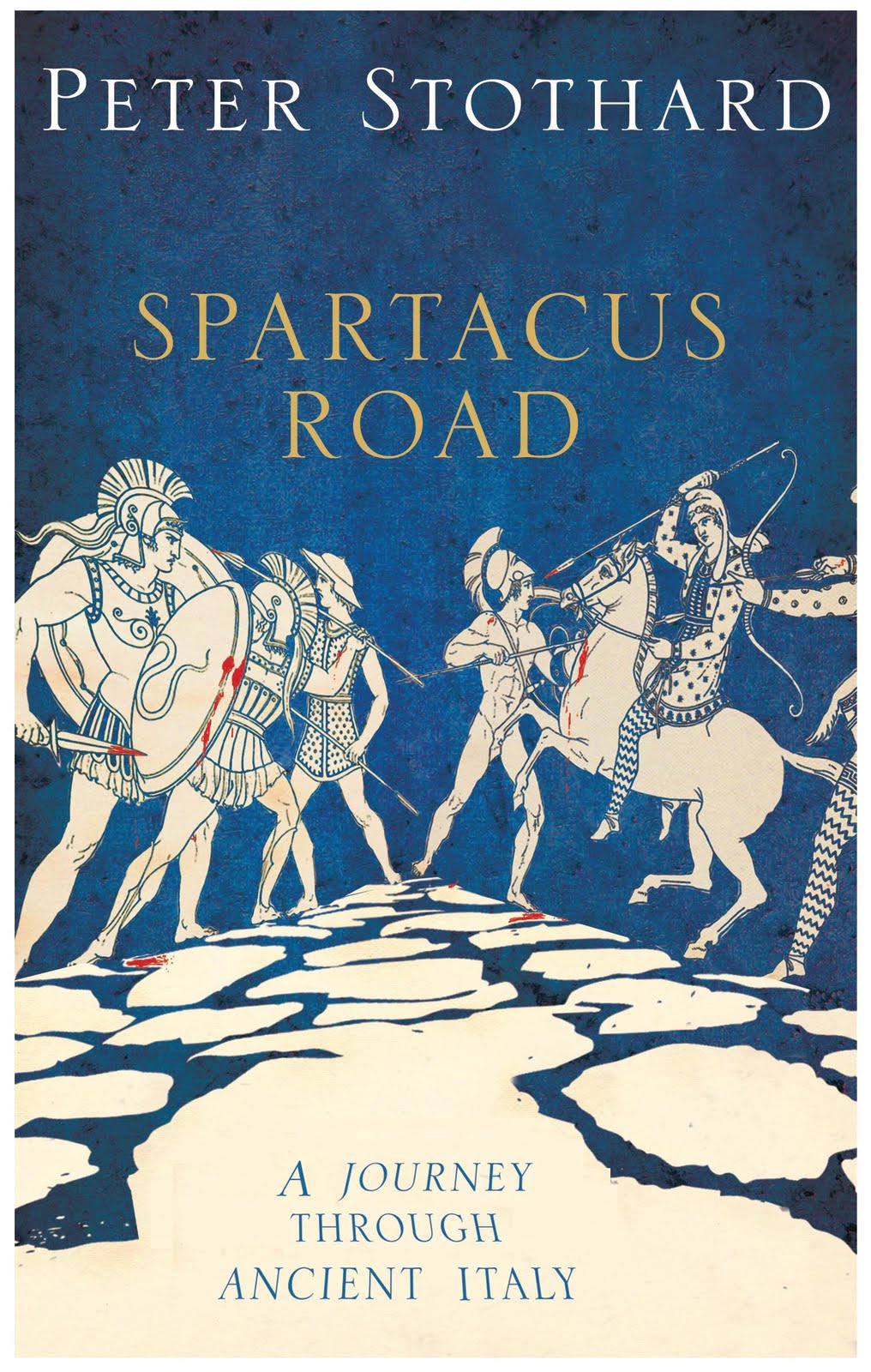
Spartacus Road A Journey Through Ancient ItalyIn April I read his remarkable book, Spartacus Road:  A Personal Journey through Ancient Italy.  In it he fuses journalism, history, memoir, travel, biography, and reflections on the classics as he travels the Spartacus Road, the route Spartacus and his slave army traveled when they escaped from the gladiator school near Capua.

A great writer:  this is literary nonfiction.

Summer Reading

Is it time to reread Emma?

Is it time to reread Emma?

I mock Summer Reading articles.  I don’t know why I do.

The lists are usually of good new books.  This year Alan Cheuse at NPR has recommended poetry for summer reading: three books by Robert Pinsky, Sharon Olds, and W. S. Merwin, and two by poets I don’t know, Brenda Shaughnessy and David Rakoff.

Janet Maslin at The New York Times goes pop with Stephen King’s Joyland and Carl Hiassen’s Bad Monkey, but also includes books I’ve never heard of, Rebecca Lee’s Bobcat, a collection of stories, and Wilton Barnhardt’s Lookaway, Lookaway, “a novel about a status-conscious North Carolina family.”

I never particularly want to read the summer reading books.  Some are good, some are bad, most reviewed aren’t as good as they say.

I prefer to choose my own books.  I’m sure most of you know what I mean.

This vacation I am doing my share of summer reading.  We bicycle in the rain every day because this is it, summer, and when else can we take long trips?  But I find that when we arrive at the diner,  I cannot read Anna Karenina.  I finished it at home.  Short books are best for the road.

And so here is a little bit about my Summer Reading.

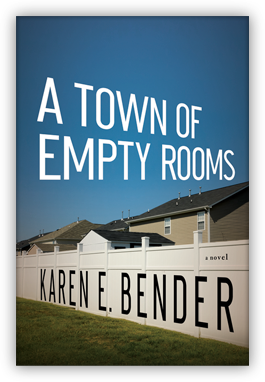
book-atownofemptyrooms Karen E. BenderI finished a wonderful Southern novel,  Karen E. Bender’s A Town of Empty Rooms, which I found by chance at Barnes and Noble (and that’s why we need bookstores:  I read no reviews of this book).   Bender, who teaches creative writing at The University of North Carolina at Wilmington, has won two Pushcart prizes for her short stories.  There is a rich texture to her observant, intense, lyrical writing.

If you liked Kent Haruf’s Benediction, you will probably enjoy A Town of Empty Rooms.  It’s not that the plots are the same, but they are both stylishly written, with intelligence.

Bender’s poignant novel about a Jewish family who moves to a small town in the South begins:

She did not intend to steal anything that day.  Serena Hirsch was walking through midtown Manhattan on her lunch break; it was one week since her father had died, and it was her first day back at work.  It was a bright April afternoon, and people were gathered in loose, happy groups outside, sitting on concrete walls and benches, turning faces to the cool pale lights.  Others seemed relieved, released from the confines of winter, certain of the damp promise of spring.  Serena walked with the crowd marching down the sidewalk, hoping she would feel she was one of them again, but now the clear sunlight, the blaring cabs, and the groups gathered on the sidewalks all seemed to exist in some world that she did not inhabit.  Her father was not part of this world anymore…

Her father had moved with his family from Berlin to the U.S. in 1936 when he was six:  he told her she should always have something she could sell:  he gives her jewelry. After her death she has a mini-breakdown and steals $8,000 worth of jewelry on her boss’s corporate charge card.

Fired from her job in marketing from PepsiCo and blacklisted, she moves with her husband, Dan, and two children to Waring, North Carolina.  Everywhere there are signs like:  If God Is Your Co-Pilot, Switch Seats.

They are one of 100 or so Jewish families in town, and Serena is drawn to religion when she drives by the Temple.  But Dan, who doesn’t want to be viewed as Jewish, longs to be accepted and won’t go ro Temple.  He becomes a Boy Scout leader.

Things are crazy in the South for everyone.  Their next-door neighbor, Forrest, a fulltime Boy Scout director, has quarreled with everyone in the neighborhood.  Suddenly he becomes obsessed with their tree.  There is nothing wrong with the tree, but he insists it is about to fall on his shed.  And Dan is so worried about being ostracized and driven out of town that he cuts down the tree while Serena is at work.

At the temple things are crazy, too.  The Rabbi, who is a mesmerizing speaker and wonderful to have on your side when Forrest starts a Bring Back Christmas to the Schools campaign, is also slightly manic, and alienates many of the old women in the congregation.

This beautifully-written novel is a pageturner, but it is also painful.  Most of the characters are emotionally crippled in some way.  One is sorry for the eccentricities that hurt them.  One also realizes the life-affirming power of religion (for some, not for all).

Another new novel I’d like to recommend is Laura Lee Smith’s Heart of Palm.  I wrote about it here.

Blogger Gets Back on Her Bicycle

Back on the bike.

Back on the bike.

We got back on our bicycles.

We rode 38 miles today, 20 in the rain.

We sang rain songs.

“If the rain comes they run and hide their heads/They might as well be dead if the rain comes.” (The Beatles)

We aren’t dead.

We made up our own lyrics.

All the bicyclists disappeared.

We found the depot in a small town.

We kept going.

We stopped here to get out of the rain.

We stopped here to get out of the rain.

We stopped at the Mars Dairy Bar.

We ordered milkshakes.

Only one size.

$3.89.

We shared.

He wanted to get going because of the rain.

I said, “It’s not so bad.”

I was wrong.

We left the dairy bar and rode through the town.

We got on the trail.

It rained harder.

We were in the country.

There was no shelter.

A soapy water appeared strangely on my sandals and my toes turned brown.

Our hair was wet and our glasses were wet.

An ink stain spread on my favorite shirt.

My sweatshirt weighed five pounds with rain.

We got to a small town and I didn’t feel I could go on.

I huddled under a pine tree.

I sat on a wet bench.

My husband stood.

He said he could ride to the car and come back for me.

“I’ll keep going.”

We rode on.

I felt genuinely sick.

I’m genuinely tough.

We got home.

Hot baths and scrambled eggs.

I read nothing today.

Off to read.

Nursing Home Lit: From B. S. Johnson to Clyde Edgerton

B. S. Johnson:  Not a Likely Candidate for Nursing Home Lit

B. S. Johnson: Not a Likely Candidate for Nursing Home Lit

As Baby Boomers explore “eldercare” options and help their parents move into assisted living facilities and nursing homes, some have written novels about the lives of the elderly.

Nonfiction is crucial for research, but fiction helps us emotionally understand the hidden culture of old age.

I felt the need to read about others’ experiences after a relative nearly died twice in two months in an assisted living facility.

And somehow I began to collect fiction about old age.  There is quite a lot of it.  Here are a few titles.

1.    Pre-Baby Boomer Nursing Home lit:   B. S. Johnson’s 1971 experimental novel, House Mother Normal.
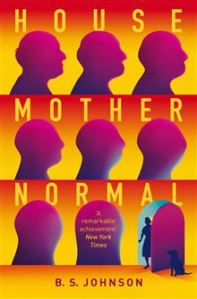
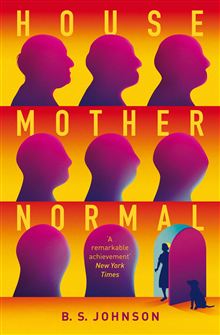
house-mother-normal-  b. s. johnsonI read about this reissued novel recently in the TLS (part of my self-improvement program is to read literary criticism:  actually, the TLS is  fun to read, or I wouldn’t bother).

Johnson’s House Mother Normal consists of  interior monologues by the eight residents of a charity home for the elderly and the house mother.

The book is very short, and can be read in a couple of hours.  If you like Beckett or Joyce, you’re in luck.

But honestly this is a very easy “experimental” read.  Although the residents’ accounts of a  Social Evening at the home at first seem fantastic, their memories of the past are realistic.

You know things are not as they should be at the home, but it takes a while to put it all together.

Each monologue begins with some stats from the patient’s file.

Sarah, a 71-year-old widow, one of the most agile and alert of the residents, is concerned about the strange work assignments and the games organized by the house mother.  After dinner Sarah is put to work scraping labels off bottles, while some of the others roll paper to make Christmas crackers.

Sarah thinks,

“Good deed indeed, she must make something out
of all this, though it’s not sweated labour by
any manner or means, I will say that for her, it’s
not arduous, and she can’t get much for
these Christmas crackers they make…”

They are forced to play games.  When they play Pass the Parcel and the parcel is opened, Sarah tells us it’s shit.  You think, What is it really?  It can’t be shit, can it?

Then they play a game where the mobile residents push the ones in wheelchairs and they have a “tourney” with mops.

You keep thinking, Wait, this can’t be right.

What’s going on?

Charlie, a 78-year-od pianist, has been told after dinner to pour some liquid into bottles.  He thinks:

“Suppose this must be liquor of some sort.  My sense
of smell is nearly gone.”

He wonders if the house mother is selling it to clubs.

A few of the residents are so bewildered that their monologues are blank pages or only a few words on a page.

The abusive house mother’s monologue brings everything together.

“They are fed, they are my friends.  Is this not enough?”

The horrors of this home are endless.  The residents’ perceptions are surprisingly accurate.

But it ends with a metafiction.

Excellent novel, but now back to the traditional.

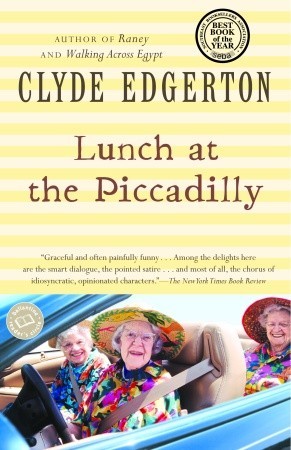
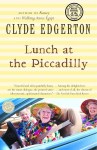
2..  At the heart of Clyde Edgerton’s  Lunch at the Piccadilly, a humorous, moving novel about residents in a nursing home, is Carl, the kind, dutiful, unexciting, unmarried nephew who visits Aunt Lil and drives her and her cronies to the Piccadilly for lunch.  Driving represents freedom for the residents, who are otherwise stuck gossiping on the porch. Lil hopes one day to drive home to her apartment.
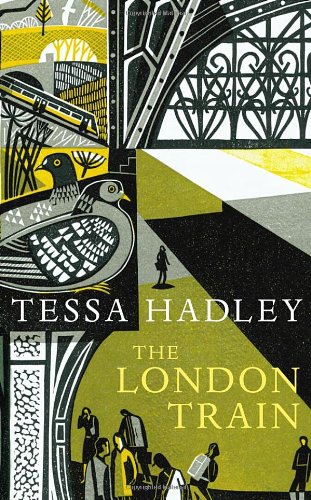
lunch-at-the-piccadilly-edgerton3.  Tessa Hadley’s stunning novel, The London Train, begins with the death of  Paul’s mother in a nursing home.  He mourns her, but is relieved that her life in the home was not prolonged.  The administrator explained she had wandered out into the garden on the night of her death, making “one of her bids for freedom,” and was found 20 minutes later. The death seemed unrelated to the escapade.  (It is not nursing home fiction per se, but it is on my list anyway.)

london train tessa hadley4.  Jill McCorkle’s new novel, Life After Life, tops my Nursing Home Lit TBR list.  The description says it is about the residents, staffers, and neighbors of a retirement home.

Let me know if you have other recommendations for Nursing Home Lit.

John Mellencamp’s Rain on the Scarecrow

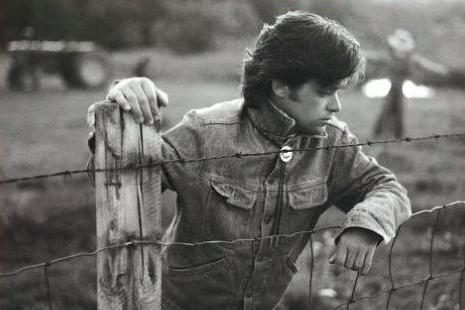
John Mellencamp

John Mellencamp

When you take away a man’s dignity he can’t work his fields and cows
There’ll be blood on the scarecrow–Mellencamp’s Rain on the Scarecrow

It has been a joy to rediscover the songs of John Mellencamp. His lovely, rather earnest songs record Midwestern daily life, the history of small towns, and the death of the family farm.

Many years ago, when we lived in Bloomington, his drummer helped us move a desk we bought at a garage sale,  and we helped him move a chair.  I remember being surprised that a rock band lived in Bloomington, but in retrospect I am  surprised that more bands don’t live in Bloomington, one of the most beautiful towns in the U.S.

The clarity and plainness of Mellencamp’s lyrics remind me of the simple diction of Bess Streeter Aldrich, Booth Tarkington, and Ruth Suckow, three Midwestern novelists in the early 20th century who wrote about small Midwestern towns and farms.

Here is a video of “Rain on the Scarecrow,” and below the video are the lyrics. (I copied the lyrics off the internet, and the spacing doesn’t look right, but oh well.)

Scarecrow on a wooden cross, blackbird in the barn
Four hundred empty acres that used to be my farm
I grew up like my daddy did, my grandpa cleared this land
When I was five I walked the fence while Grandpa held my hand
CHORUS
Rain on the scarecrow, blood on the plow
This land fed a nation, this land made me proud
And son I’m just sorry there’s no legacy for you now
Rain on the scarecrow, blood on the plow
The crops we grew last summer weren’t enough to pay the loan
Couldn’t buy the seed to plant this spring and the Farmers Bank foreclosed
Called my old friend Schepman up to auction off the land
He said John it’s just my job and I hope you understand
Well calling it your job ol’ hoss sure don’t make it right
But if you want me to I’ll say a prayer for your soul tonight
And Grandma’s on the front porch with a Bible in her hand
Sometimes i hear her singing, “Take me to the Promised Land.”
When you take away a man’s dignity he can’t work his fields and cows
There’ll be blood on the scarecrow, blood on the plow
Blood on the scarecrow, blood on the plow
Well there’s ninety-seven crosses planted in the courthouse yard
Ninety-seven families who lost ninety-seven farms
I think about my grandpa and my neighbors and my name
And some nights I feel like dyin’ like that scarecrow in the rain
Rain on the scarecrow, blood on the plow
This land fed a nation, this land made me proud
And son I’m just sorry they’re just memories for you now
Rain on the scarecrow, blood on the plow
THis land fed a nationk this land made me proud
And son I’m just sorry they’re just memories for you now
Rain on the scarecrow, blood on the plow

Break-ups and Infidelity: Knitting for Couples

We’ve all been through it. Break-ups and infidelity.

I wandered blindly... woman breaking up romanceAt first it’s hard to take in.  You’ve got the job, you’re winning awards, you’re happy.  You had no idea your husband or boyfriend would ever cheat on you.  He loves you so much.   He never looks at another woman, ever.

Then it happens.  It’s sometimes a midlife thing.  It starts in one’s thirties, a doctor once told me.  You can read some statistics about infidelity at The Huffington Post.  According to data in The Normal Bar, a study of romantic relationships by Chrisanna Northrup, Pepper Schwartz, and James Witte, 33% of men and 19% of women said they were unfaithful.

I know the scenarios.  He sleeps with that woman in the office.  Or maybe he has an affair with that very good friend of yours who kept bringing food to the house while you were ill.

Someone always tells you, and you deal with it in different ways at different times of life.  When you’re young  you lose your looks because you cry all the time, sometimes for months.  And then you get divorced and all the single guys are either 20 or 80.  All the married men suddenly want to go out with you.  No, no, and no.

My cousin was in love with a man who cheated on her.  Now she’s alone.

Booze no longer allows her to sleep.

I tell her to go to a doctor and get antidepressants or Ambien, anything to help her sleep.  When she sleeps, she’ll feel better.  Sleep can be her new lover.

I tell her my stories.

I threw a bagel at him. He ducked.  It was a lot like the time Bush ducked the shoe.

I double-locked the door and told him to go to a motel.

I flew to Veracruz.

Twice divorced, and of course I’m MARRIED.  These experiences are a part of life.

She pulls out an adult education schedule.  She wants me to take a “Knitting for Couples” class with her.

It’s a class where you work on a knitting project with another person.  You decide what you want to knit, maybe a big blanket or an ottoman, and you have eight weeks to knit it.  It’s supposed to be therapeutic.  You learn how to work together, and you talk about it in class.

I will do anything I can to get out of a knitting class, so I tell her, “We’re not a couple.”

“I checked on that.  She said I could bring a friend.”

I only like adult ed when I’m the teacher.  I took a knitting class and learned nothing because I couldn’t see the teacher.  (I needed new glasses). I taught an adult ed Latin class for a while, and it was fun, a nice group, and  most of them obviously wanted to meet people, so I tried to structure things accordingly.

I know that this Knitting for Couples isn’t a good idea for her.  She needs to take something with people who aren’t in couples.

Maybe a cooking class.  Didn’t I see that in Hereafter?  (But it didn’t work out for Matt Damon.)

My cousin is used to getting her way, but she doesn’t seem too surprised when I say no.

“Maybe I’ll get him back,” she says.

I’m so glad I didn’t trash him, because maybe she will.

Anyway, I don’t have to take the knitting class.

Blogger Gets off Her Bicycle: The Guardian Book Page, Bloggers, & Borrowings

Disheveled blogger gets off bicycle to say, "Criticism is dead!"

Blogger gets off her bicycle.

Critics and journalists often suggest that blogs are not worth reading.

So let me pose a similar question.

The Guardian book page:  is it worth reading?

The reviews are fast and sloppy, barely more than plot summaries.

Don’t get me started on the reader reviews.

Then there are the staff writers.

Alison Flood, who used to write amusing articles about her middlebrow reading taste, now does cut-and-pastes from other journalists’ writing.

And Robert McCrum cannot be quiet about blogs.

What is it about him and online writing?  He was editor in chief at Faber and Faber, is an associate editor of The Observer, and the author of a biography of P. G. Wodehouse.  In a recent article, he aligned himself with Orwell and Jonathan Swift (and I can only say, “Really?”) and wrote about the “abuse and impoverishment of English in blogs and emails.”  He writes:

Some while ago, with reference to Orwell’s essay on “Politics and the English language”, I addressed the language of the internet, an issue that stubbornly refuses to go away. Perhaps now, more than ever, we need to consider afresh what’s happening to English prose in cyberspace.

To paraphrase Orwell, the English of the world wide web – loose, informal, and distressingly dyspeptic – is not really the kind people want to read in a book, a magazine, or even a newspaper. But there’s an assumption that, because it’s part of the all-conquering internet, we cannot do a thing about it.

Doesn’t he understand that hundreds of thousands of people love to write? If you have ever gone to a writers’ conference–I did in 1984; does that make me George Orwell?–you will discover that doctors, waitresses, counselors, professors, lawyers, salespeople, plumbers, housewives, and painters are writing books in their free time.  And they pay $300 to $1,000 to spend a week or two writing and attending workshops where their writing is analyzed (usually constructively).

The blogosphere is like a huge writers’ conference: one or two people are very good, but the others all love to write, too.  Bloggers are writing for themselves, a few readers, and the bots.  Oh, and our husbands.

No matter the quality, our blogs are not going to be praised by conventional journalists.

My friend Ellen suggested that the FBI is reading our blogs.  God forbid!

And now for Lynne Sharon Schwartz’s “borrowing”

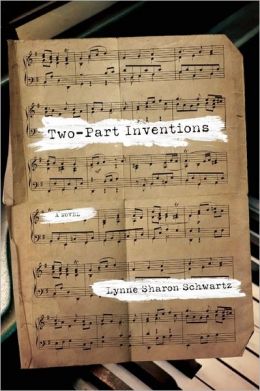
Two-Part Inventions SchwartzIn her not very good new novel, Two-Part Inventions, a novel about musical plagiarism, Lynne Sharon Schwartz includes a scene that is surprisingly similar to something I wrote at my old blog.

In an essay about trying to get ice for my mother’s iced tea at the nursing home (I went to the nurses’ station, and was told to go back and push the call button), I said that you could push but not  too hard because you didn’t want anyone to hold it against the the patients.  I added a few lines about my  mother’s former pushiness when I was in fourth grade:

It’s like the time in fourth grade when she complained to my teacher when I got a B instead of an A in geography.  For the rest of the year, the teacher humiliated me by asking,  “Are your grades good enough for your mother?”

In Schwartz’s novel:

Her quarterly report card gave him nothing to reproach her with.  Until, in the fourth grade, she presented a report card to him as usual for his signature…  He gave the report card a cursory glance, a small folded four-sided document on stiff paper that attempted to look official.  He was searching for his fountain pen, when he noticed the B+ in geography.

Schwartz’s scene is better-developed, and the  father makes his daughter confront the teacher herself.  But it is similar.

What are the odds?  I mean, B’s in  fourth-grade geography?  A parent displeased?  Why not change the subject and grade?

At my old blog I highly praised Schwartz’s novel, The Writing on the Wal, and she probably continued to read my blog.

Is this kind of borrowing “plagiarism?”  Or is it something else?

She thanks a lot of people in the Author’s Note, but my name isn’t mentioned.

I would really like to say to her, “Get out!” like Elaine in Seinfeld or “Get the f___ out!!” like Susie Essman in Curb Your Enthusiasm.

I don’t want writers “borrowing” from my blog.

Another Giveaway: Laura Lee Smith’s Heart of Palm

Heart of Palm laura lee smithI absolutely loved Laura Lee Smith’s Heart of Palm, a “high middlebrow”  Southern novel about a “redneck” family:  the father’s a redneck, the mother’s more or less an “aristocrat,”  the boys are wild, and the daughter has OCD.  The novel is a comedy, but the family is bound by tragedy,  and it follows Arla and Frank and their children through 40-odd years.   (I wrote about it here.)

We have 5,000 double-shelved books and are running out of room.

Leave a comment if you’d like this book.

I truly recommend it.