The winner is Tony.
Congratulations!
Send me your address at mirabiledictu.org@gmail.com
The book is as good as in the mail.

The winner is Tony.
Congratulations!
Send me your address at mirabiledictu.org@gmail.com
The book is as good as in the mail.
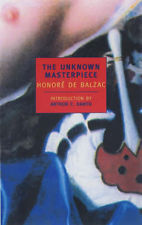 I am giving away a copy of Balzac’s The Unknown Masterpiece (NYBR), which consists of two short stories, “The Unknown Masterpiece” and “Gambara.” The former is about artists, the latter about a musician.
If you would like the book, leave a comment. If more than one is interested, I’ll have a drawing.:)
The new translation by Richard Howard is very good, but I won’t reread this. (N.B. I hope Howard will translate some of Balzac’s novels.)
My only criticism? The introduction by Arthur C. Danto is entirely about “The Unknown Masterpiece.” It doesn’t mention “Gambara,” which was the more interesting of the two stories.
You may think differently.
Leave a comment if you want it. And if you’d consider sending me stamps to cover the postage after I mail it, I’d appreciate it.
But I’m weeding and you can have it anyway.:)
Balzac mania.
Others have had it, never I.
I prefer Zola to Balzac and have read many of Zola’s 20 Rougon-Macquart novels.
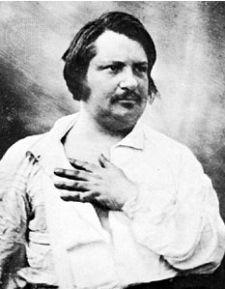
Balzac, my new hero.
Of course I’ve also read Balzac over the years, and I love Cousin Bette. But Balzac is choppy. He includes too much background at the beginning of his novels. Once you get to the true starting point of his books, however, they are remarkable.
Last week I read and fell in love with Pere Goriot.
There are 90 novels, novellas, and short stories in Balzac’s La Comedie Humaine (The Human Comedy), a series in which Balzac portrays French society during the 19th century period of Restoration and July Monarchy.
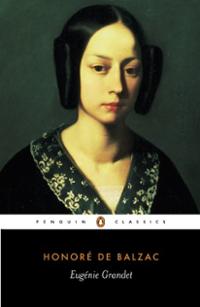
And I just finished Eugenie Grandet (1833), a realistic novel about miserliness. Like the other hundreds of my favorite books, it is a stunning, richly-colored novel. It has been compared to the dramas of the 17th century, and Balzac himself was thinking of Moliere’s Harpagon in the play, The Miser, when he conceived the character of Grandet.
Set in a small country town, it is the story of a miser, Grandet, and the effect of his inability to love on the fate of his wife, Madame Grandet, and daughter, Eugenie. When his brother commits suicide, he is equally unable to care for his nephew. And it is this, in the end, that ruins lives.
 Grandet, a master cooper, owner of vineyards, and financier, began to make his millions “when the French Republic put the Confiscated lands of the Church up for sale.”
His isolated wife, Madame Grandet, and daughter, Eugenie, are accustomed to living penuriously: the house is cold–fires are allowed only Nov. 1-March 31–and they are half-starved, because Grandet doles out the food and provisions to their maid, Nanon.
Grandet keeps the women sewing full-time, keeping the linen in good condition. Grande is so strict that if Eugenie wants to embroider a collar for her mother, she must do it late at night.
And if not for Nanon, the quality of life for the Grandet women would decline: although Nanon, whom no one except Grandet would hire because of her ugliness, accepts his ways, she calculates how to make the food go further, warms them with her brazier on cold days, and often schemes to help her favorite, Eugenie. Madame Grandet and Eugenie are meek.
The novel begins with a description of the gloomy houses in a quarter of the country town, Saumer. The stark setting of the houses reflects Grandet’s severity.
In some country towns there exist houses whose appearance weighs as heavily upon the spirits as the gloomiest cloister, the most dismal ruin, or the dreariest stretch of barren land. These houses may combine the cloister’s silence with the arid desolation of the waste and the sepulchral melancholy of ruins. Life makes so little stir that a stranger believes them to be uninhabited until he suddenly meets the cold listless glance of some motionless human being, shoes face, austere as a monk’s, peers above the windowsill at the sound of a stranger’s footfall.”
Once Balzac finshes the exposition, the plot of the novel fascinates. Whom will Eugenie marry? That’s what the people of Saumer want to know. On Eugenie’s 23rd birthday, the Grandets entertain two families, the Cruchots and the des Grassins, each with a young men who wants to marry Eugenie.
 Monsieur Cruchot, a notary, and Abbe Cruchot, an official of the church, have a self-confident, successful nephew, a magistrate and president of the court. Madame des Grassin and her husband, a banker, hope their 23-year-old son, Adolphe, a law student, will prevail.
The townspeople gossip and are divided in their opinion about who will marry Eugenie, but most reckon without the presence of Charles, Grandet’s nephew.
That night, Charles arrives at the party uninvited, because his father, a Parisian millionaire, has sent him to stay with his uncle for a few months. Having been told Grandet is rich, Charles has had a manicure, bought rich new clothes, and arrived in style in a beautiful carriage. When he sees the starkness of the house, he believes his father must have been mistaken about the money.
Grandet is displeased to see him. The women, on the other hand, have never seen anyone as beautiful as Charles and welcome him. Eugenie does everything she can to make his room nice, even sending Nanon to a store to buy a wax candle (they use tallow, because they’re cheaper).
This could have turned out to be a comedy of errors.
Instead, it is a tragedy, because Charles’ father lost his money, sent Charles away, and then committed suicide. Grandet will not help Charles, and sends him away to the Indies with only money for his fare.
When Grandet finds out that Eugenie gave her birthday money to Charles, he is furious. And this causes a falling-out with the women that changes their future.
The incredible detail with which Balzac describes Grandets’ household, in particular the lives of the three women, makes for a striking, vivid social history.
Balzac does some moralizing. He believed immorality and materialism were rampant in post-revolutionary France. He lets us know that Paris corrupted Charles. When Charles tries to make money, he deals in slaves, because it is the most profitable. He cares only for money when he goes back to Paris. He has no compassion for people.
To see things as they are, there, means to believe in nothing: in no affection, in no man, not even in events–for events can be falsified or manufactured. To see things as they are you must weigh your friend’s purse every morning, know the proper moment to intervene or twist whatever may turn up to your profit, suspend your judgement and be in no hurry to admire either a work of art or a fine achievement, in every action look for the motive of self-interest.”
Honestly, are things so different in contemporary America?
Fabulous book!
I feel like going to my hometown to look at my mother’s house.
It was sold a couple of years ago.
 Last summer we coasted by in our car, and saw a couple of young men there.
It is a small ’50s brick ranch-style house.
Our whole family somehow squashed into this tiny house in the ’60s. Every inch was defined by my mother’s personality. She loved decorating. There were knickknacks everywhere. Somehow the decorating got obsessive in the late ’60s. She decorated the way I buy books.
Much of life in the ’60s was spent in the “finished basement.”
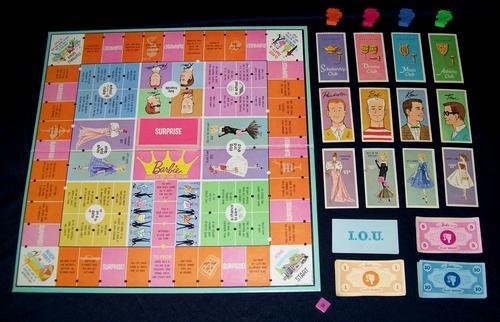
Barbie Queen of the Prom
We played Barbie Queen of the Prom (one of the main objects of the board game was not to get stuck at the prom with Poindexter, the nerdy guy!), played hide-and-seek with our Tammy and Pepper dolls by taking apart the cardboard dollhouse furniture (a ping pong table, a couch, and a soda fountain) and hiding the dolls inside, listened to Herman’s Hermits (“Mrs. Brown you’ve got a lovely daughter”), and made troll sleeping bags from those little cloth Chiclet gum bags.
We walked across the Summit Street bridge to the little grocery store to stock up on Chiclets.
Sometimes we went down by the tracks, and one brave friend hopped on a train. (I was uncoolly scared for her.)
When the popsicle man came, my mother paid for the whole neighborhood (the other mothers made themselves scarce).
I had slumber parties and Beatles records.
I was chauffeured to Iowa Book and Supply to buy E. Nesbit books and Jane Eyre.
It is fair to say I was a lee-tle spoiled.
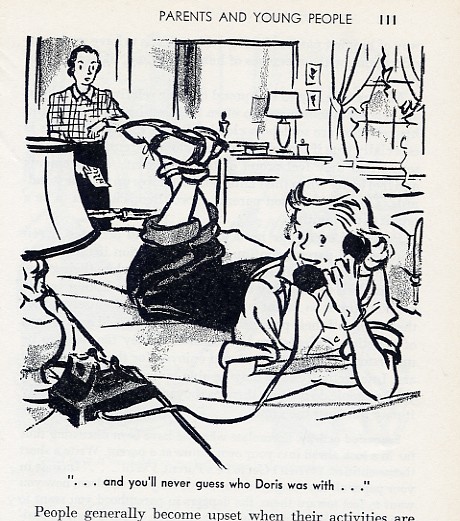 In my teens I spent a lot of time on the phone.
I had a Peter Max poster in my bedroom.
We rode our bicycles.
When the snow melted and we couldn’t bear to stay inside another minute, we played H-O-R-S-E on the basketball court in the back yard. (My father had poured the cement and scavenged a pole to which he nailed the basket.)
We camped (illegally) in the woods at Hickory Hill Park and felt sweaty and uncomfortable getting up in the morning dew.
We hitchhiked to a rock concert, knitted, and read Hermann Hesse.
I wanted to move into a beautiful Victorian house on Summit Street.
“No, we like it here,” my mother would sigh.
It didn’t occur to me that houses cost different amounts of money. Unless they were mansions, of course.
We tried to break up a fight behind the co-op where we volunteered. Two women were fighting, one pulling the long hair of the other so that her head was at an uncomfortable angle, and all I could think to do was to hold the hair so there was less tension and weep, “Stop, stop, stop.” Finally an adult came along and broke up the fight.
The years passed, we were gone, my mother stayed on. The house was Dickensian. She kept herself busy.
Then one day all the meaning was taken out of her house.
We sat in a freezing air-conditioned room waiting for the cardiologist. “I’m cold,” she complained over and over. She was wearing a hooded long-sleeved top, and I told her to put the hood up. I asked the nurse to turn down the AC, but you know how these things go… there’s a system.
Old people are always cold. Never go anywhere without a jacket.
I didn’t know that then.
The doctor was tactless. “Her heart condition will not improve.” This was the first I’d heard of it. My mother just smiled. He recommended various kinds of care and made it sound as though death were imminent.
She is still alive.
But when I went back to her house that night, knowing she would never live in it again, her “cozy eccentric” style seemed meaningless without her. I swept dozens of refrigerator magnets and odd bric-a-brac into bags so I could sit in the kitchen without thinking of her. The whole house felt so sad.
It is amazing how little meaning objects have without their people.
She still has some of her bric-a-brac where she lives now.
I kept the photo albums, nothing else.
In January I said “Mirabile Does Middlebrow” would become a regular feature.
You may wonder, Where did it go?
I was waiting for recommendations.
When the women in my family get together, we often chat about light books: cat mysteries, Cyril Hare’s Golden Age Detective Fiction, Ruth Suckow’s Iowa novels, and Robert Jordan’s Wheel of Time.
My intellectual aunt, the only one with a Ph.D., used to pretend she didn’t read classics, and I took my cue from her. In my teens she gave me Charlotte Bronte’s Villette, J. Sheridan Le Fanu’s Uncle Silas, and George MacDonald’s Lilith, but she pointed out they were “minor” classics, so I could mention them without sounding snobbish.
This great tactician explained that middlebrow books are of universal interest. If you haven’t read E. L. James (don’t!) or Suzanne Collins’ The Hunger Games (do!), look interested and say you intend to. I can truthfully say that I’ve read and love Maeve Binchy.
I took a lot of crap from my skewed mixed-class family when I went to grad school to study classics, and even more when, during periods of poverty, I taught Latin to eke out my wages.
Gran: “I thought it was dead. Where does she get this from?”
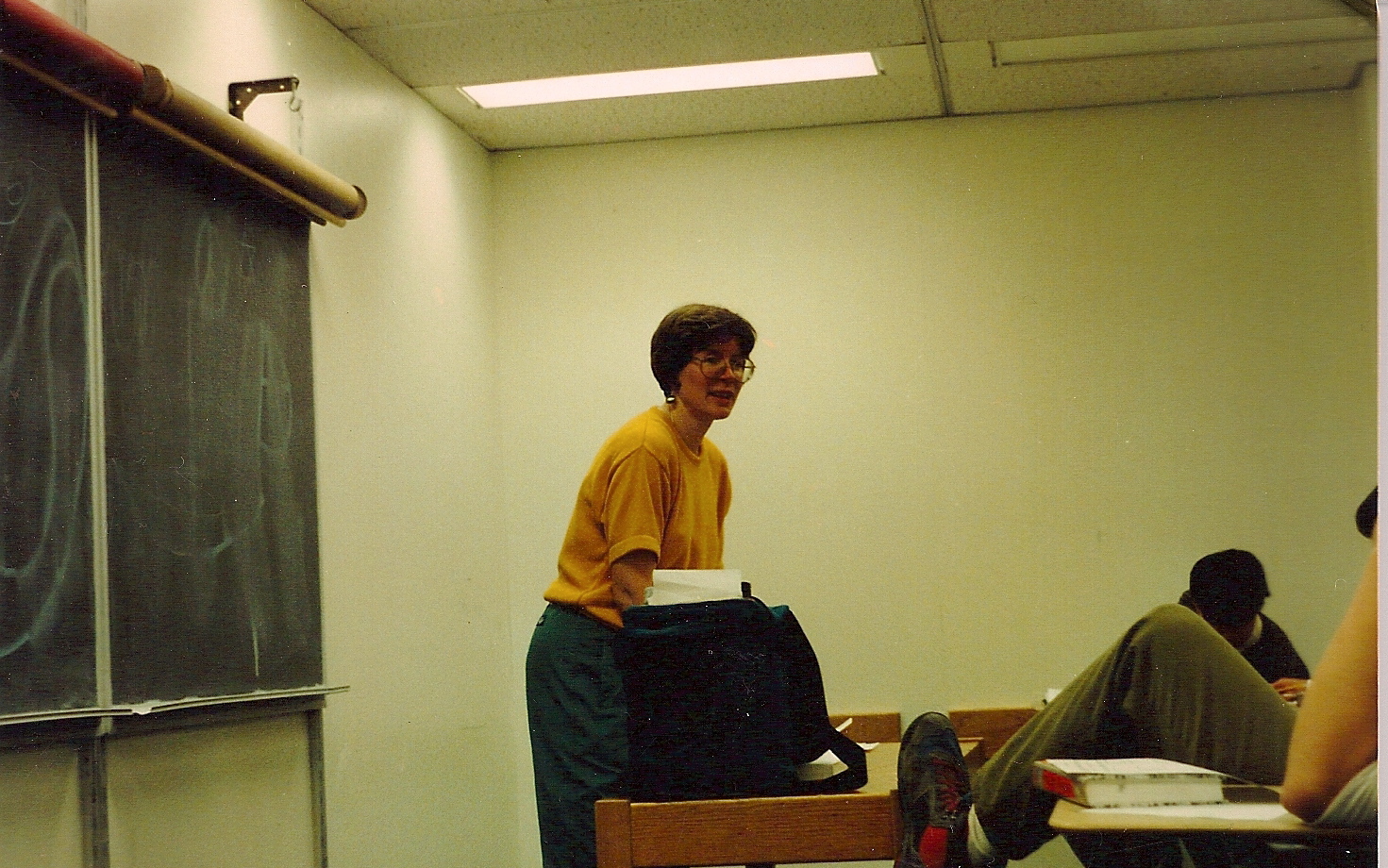
Schoolmarming under fluorescent lights.
Parent bellowing: “Did Miss ___ (from the one-room schoolhouse) teach us Latin?”
Aunt: “She may have.”
As you can see from this picture of me in action during an Ovid class, I didn’t care if my students put their feet up so long as they read their Latin. Are classics teachers snobs? I hardly do think so.
So here it is March, and it’s time for me to get away from Dickens, Balzac, and Virgil and “do” middlebrow.
Here’s what I’ve been reading.
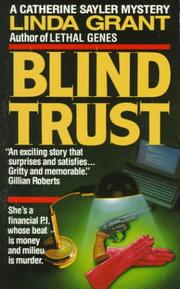 1. Linda Grant’s Blind Trust. Published in 1990, this wonderful page-turner of a mystery, set in San Francisco, is the second of a series about witty, down-to-earth private investigator, Catherine Saylor. When Catherine accepts a risky assignment to track down a bank employee on the lam, she knows the odds are against her finding him quickly. Daniel Martin, a vice president of First Central Bank, believes Jim Mendoza intends to exploit a computer flaw and steal five million dollars in the next 14 days. Since Catherine’s company’s cash flow is down, she negotiates a deal that will be win-win if she can maintain secrecy; she sets her employees doing background checks, interviewing people, and working undercover at the bank. She finds a web of racial prejudice, Viet Nam war secrets, and loyalty among Mendoza’s family and friends. And the more she learns, the more dangerous it gets.
The narrator’s voice is charming and funny, the other characters are vivid, and this should appeal to fans of Sue Grafton, Sara Paretsky, Linda Barnes, or Julie Smith.
The opening lines:
“Makeup can do a lot for a woman, but it cannot cover a black eye. Thirty minutes of concentrated effort and a small fortune in cosmetics and I still looked like I’d gotten my eye shadow on upside down.”
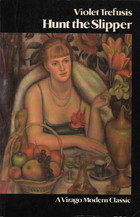 2. Violet Trefusis’s Hunt the Slipper. Violet Trefusis is best known for having been Vita Sackville-West’s lover: she was also a character in Sackville-West’s novel, Challenge, and in Virginia Woolf’s Oralndo. Trefusis was a novelist, and Hunt the Slipper, a romantic comedy with a twist, is charming, if not particularly well-written. It is the story of the ups and downs of a middle-aged man’s affair with a twentyish woman, and his knowledge that it can’t last.
Forty-nine-year-old Nigel Benson lives with his sister, Molly, at Ambush, the perfect, beautifully-furnished house. Although he is more interested in art, houses, and decoration than relationships, no, Nigel isn’t gay. He occasionally has affairs with women.
When Molly persuades him to go with her to visit Sir Anthony Crome to see his new painting, she makes him promise to be nice to Sir Anthony’s new wife, Caroline.
He says of Caroline’s family:
You can’t imagine what they’ve done to their Elizabethan home. I once lunched there years ago; it looked as if Christabel Pankhurst and d’Annunzio had set up house together. Tea-cups and tracts battled for supremacy with peacocks’ feathers and leopard-skins. It was so alarming that I fled.”
Did that sound a bit Oscar Wildeian?Nigel doesn’t sound quite like a heterosexual male, and indeed John Phillips says in the foreword of the Virago edition that the character of Nigel is based on Violet and the house Ambush on her house. The information about Trefusis’s life certainly helped make the character seem more believable. I assume it was almost impossible in 1937 for her to write and publish a lesbian novel.
Caroline is rude to Nigel when they first meet, but later they meet in Paris and she is like a different person. She has fallen in love with a South American dandy, and her husband is oblivious. After Anthony returns to England alone, her new boyfriend drops her, and she suffers from depression and a cold. Nigel comforts her, and he falls desperately in love with her, but tries to hide it.
Their affair is funny and sweet, but when Caroline wants to run away with Nigel, he is shocked. He doesn’t want to hurt her husband in any way, but unconventional Caroline is adamant. Nigel points out that Anthony has allowed their friendship.
“But don’t you see that’s why we must run away?… Don’t you see that his being consciously or unconsciously so complaisant is making things too easy for us? It’s taking the wind out of our sails. Don’t you see that we are all muffled up in Anthony’s kindness…?”
I very much enjoyed this book, and it is blessedly short.

“Post Balzac,” a sculpture by Judith Shea (1990)
It is a truth universally acknowledged that everybody photographs everybody else standing beside Judith Shea’s sculpture, “Post Balzac,” at the sculpture park in Des Moines.
Shea’s sculpture is based on Rodin’s 1898 “Monument to Balzac,” but they are very different. While Rodin shows Balzac wrapped in his coat, Shea reveals an empty coat.
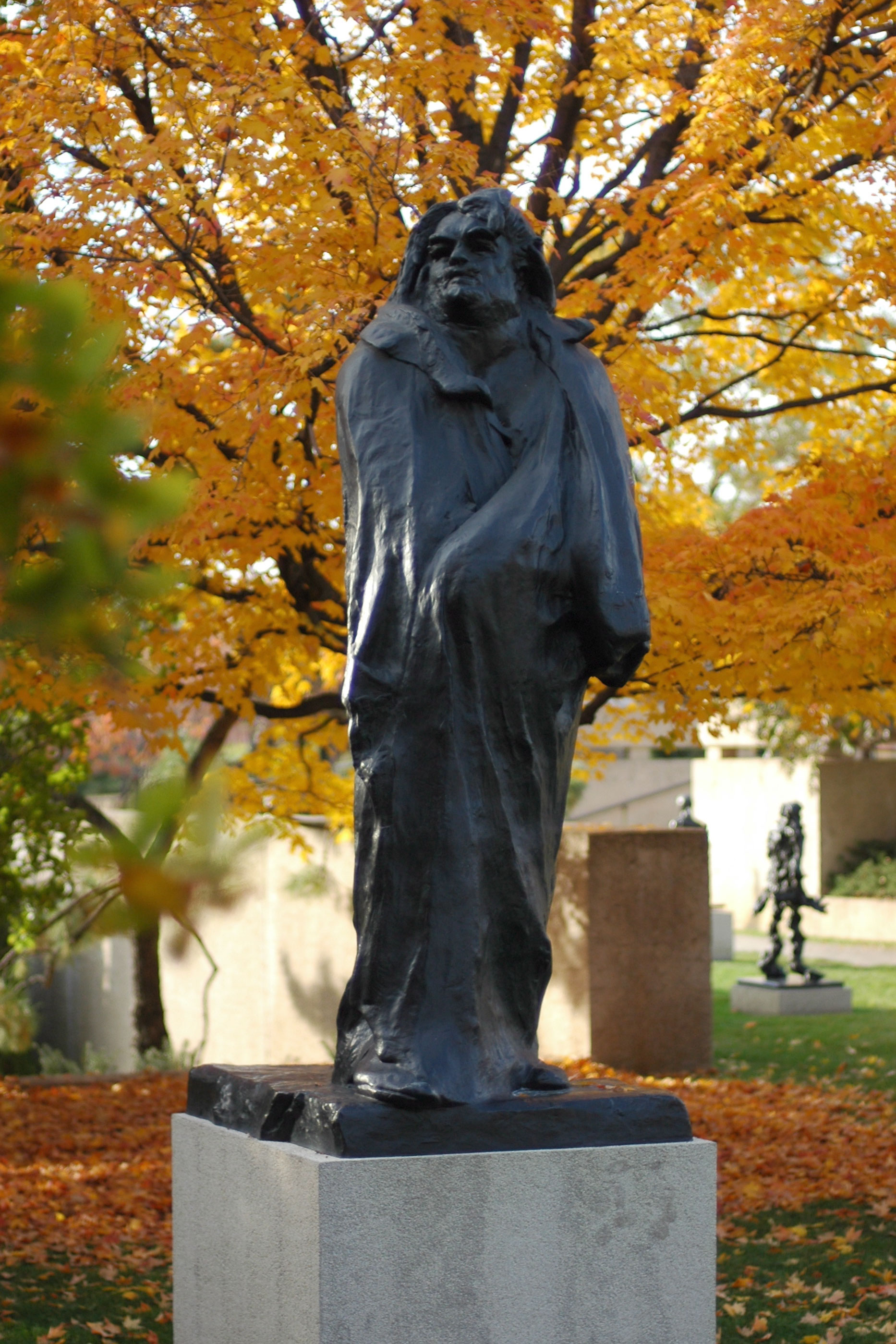
Rodin’s Monument to Balzac
Shea said in an interview that she contemplated Rodin’s monument, a turn-of-the-century marker of modernism in sculpture, as she thought about how to bring the figure back after a century of post-modern abstractions. She said of her “Post-Balzac”: “The coat is hollow–a metaphor of the condition of the spirit, for emptiness.”
Seeing the sculpture made me think about Balzac, the brilliant pioneer of realism who, with an inexhaustible attention to detail, portrayed the manners, history, philosophy, and social structure of 19th-century France in his novels.
Balzac’s La Comedie Humaine (The Human Comedy) is a cycle of approximately 90 novels, novellas, and short stories portraying French society during the 19th century period of Restoration and July Monarchy. In the late 19th century, Ellen Marriage translated most of them into English for a project edited by George Saintsbury. Although perhaps a dozen are available in modern translations, we must still depend for the majority on Marriage’s translations.
 Probably most of you have a copy of Pere Goriot (or Father Goriot, or Old Man Goriot).
I thought mine was in the back room, but I couldn’t find it.
Our book database said we had no Balzac.
It turned out Balzac’s books were catalogued under de Balzac. I’m sure that’s proper, but I just call him Balzac.
I started reading Pere Goriot Saturday night, and by Sunday night it had been deconstructed.
That may mean semiotic analysis to some of you. To me it simply means that the cover fell off.
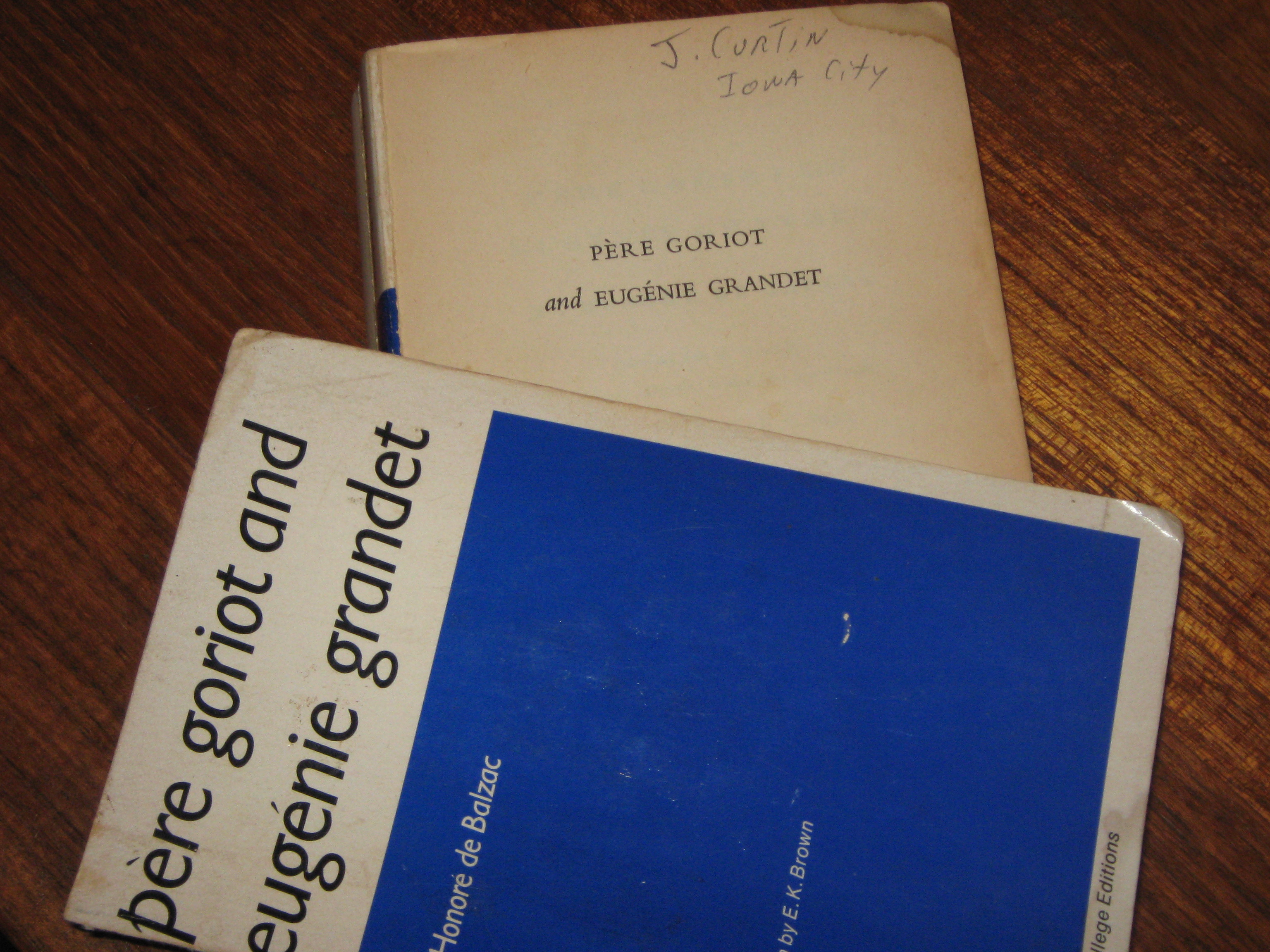
Pere Goriot Deconstructed
In this stunning, disturbing novel, we meet the widow Madame Vauquer and her seven lodgers at a cheap boarding house in a poor neighborhood in Paris. At first glance they are an unexceptional lot, but all have complicated pasts and financial problems: the best apartment is inhabited by Madame Couture, the kind widow of a commissary-general, and her ward, Victorine Taillefer, a schoolgirl whose father has disinherited her. In two suites on the third floor live Poiret, a colorless, dull old man, and Monsieur Vautrin, a brilliant, blunt, greedy middle-aged man who claims to be a retired merchant. On the fourth floor are a shrewd spinster, Mademoiselle Michionneau; Pere Goriot, a retired vermicelli manufacturer; and Eugene de Rastignac, a law student.
Overnight, the charming Eugene becomes obsessed with luxury and women. In the glittering upper-class society he suddenly aspires to, he finds incomprehensible social barriers, debts, and infidelity. He is infatuated with Countess de Restaud, a beautiful married woman whose manner changes after he mentions that he saw his fellow lodger Pere Goriot leaving her house on a private staircase.
He has no idea what he said to alienate the Restauds. He goes to his wealthy cousin, the Viscountess de Beauseant, and begs her to be his tutor in society.
“Yes, indeed. I am such an ignoramus that I will set everyone against me, unless you will help me. I believe it must be terribly hard to meet in this city any young, beautiful, rich, and elegant woman whose heart is free. I need someone to explain for me what you women understand so well: Life.”
The Viscountess explains that Goriot is the father of the Countess, who married “up,” and that her husband will not permit her to “receive” him. Pere Goriot’s other daughter, Delphine de Nucingen, also married up: her husband is a banker, and she, too, stays away from her father unless she wants money.
At the lodging house, people joke that Goriot has two mistresses: no one believed him when he said the well-dressed women who visited him were his daughters until Eugene interceded and confirmed it. Pere Goriot is so besotted with his daughters that he lives in dire poverty so he can pay their debts for diamonds and gold lame dresses.
On the Viscountess’s advice, Eugene pursues the beautiful Delphine de Nucingen amorously to break into Parisian society. When his fellow lodger, Monsieur Vautrin, proposes a horrifying financial scheme that will help Eugene but send him over the edge from immorality into criminality, Eugene staunchly tries to refuse.
Eventually he understands the true horrors of society in the form of Goriot’s two daughters’ exploitation of their father.
Near the end, Eugene says:
“I am in hell, and I must stay where I am. Whatever evil you hear of society, believe it; there is no one, not even a Juvenal, who could paint the horror of it, covered though it be with gold and precious stones.”
Such a great book: I loved E. K. Brown’s translation. And there is, I am afraid, lots to shock us even in the 21st century.
Balzac was hyper-realistic.
I haven’t read Teddy Wayne’s new novel, The Love Song of Jonny Valentine.
There are too many good rock novels to waste my time on a novel about a tween pop star.
Last year Wayne got off to a bad start with Baby Boomer feminists like me when Salon (a liberal magazine, right?) published his querulous, right-wing article claiming that male writers have a harder time than women. His irascible essay was triggered by best-selling author Jennifer Weiner’s blog about stats tracking reviews of books by gender. The numbers that irked him? Of 254 works of fiction reviewed by The New York Times in 2011, only 104, or 40.9 percent, were by women.
Wayne said:
“..and being a midlist male author who writes about males is a distinct financial disadvantage. Not only will you not get reviewed in the Times, but you won’t get reviewed in the women’s magazines that drive sales, like People and O, the Oprah Magazine. Book clubs will ignore you. Barnes & Noble will relegate you to the back shelves. Your publisher won’t give you much support — if it even publishes your book in the first place. As a book-editor friend once admitted to me, “When we buy a debut novel by a man, we view it as taking a real chance.”

Teddy Wayne’s anti-feminist article in Salon annoyed me.
Poor Teddy Wayne. What interests me is the incredible publicity machine that has won Wayne not just a single review in The New York Times, but triple coverage in a single week: he wrote an Opinionator humor piece, “Tips for Public Speaking,” published Feb. 23; Jess Walter’s review of Wayne’s new book was published in The New York Times Book Review Feb. 24; and today, March 1, Wayne’s essay, “By Any Other Name,”appears.
In “By Any Other Name,” he gives us a hint about his publicity savvy. He tells us, “Readers are much more likely to remember a byline with Teddy, my somewhat gravitas-deficient nickname since birth, than one with my more common legal name, Derek.”
I’m waiting to see what bloggers say before I write him off completely. At Tony’s Book World, a contemporary fiction blog, Tony has already written about the book: he didn’t like it. He writes, “The Love Song of Jonny Valentine” has been called the Justin Bieber novel. What ever possessed me to read this book? That is an excellent question.”
And now for a more important issue. Who has written the great rock novel? There are so many.
ROCK NOVEL LIST:
 Marcelle Clements’ Rock Me (1989). I LOVE Marcelle Clements’ writing: she is a journalist and a novelist. Her first novel, Rock Me, is perhaps not up to her later excellent novel, Midsummer, but it interests me because it is about a woman rock star (very few rock novels are about women). The heroine, Casey, is a rock star who needs some time to herself. She goes to Hawaii and… Grade: A-
Don Delillo’s Great Jones Street (1973). Rock star Bucky Wunderlick needs a retreat, but when Happy Valley Farms Commune finds him and drugs hime, everything goes downhill. Grade: A.
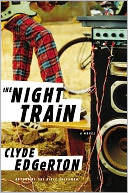 Clyde Edgerton’s The Night Train (2011). A beautifully-written, humorous novel about two boys, one black, one white, who perform rock and roll in a small Southern town in 1962. Jazz piano may be African-American Larry Lime’s ticket out of town, as he studies with a brilliant hemophiliac musician knows as the Bleeder; meanwhile, the privileged Dwayne, son of the owner of the furniture refinishing shop where the two boys work, learns the power of rock and roll through talented Larry Lime’s patient explication of James Brown’s “The Night Train.” Grade: A
Roddy Doyle’s The Commitments (1987). An Irish band wants to bring soul to Dublin. Grade: A
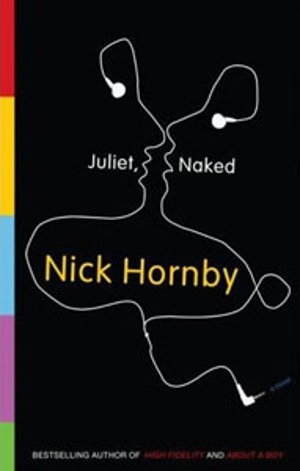 Nick Hornby’s Juliet, Naked (2009). The heroine, Annie, breaks up with her boyfriend, a middle-aged man obsessed with Tucker Crowe, a rock star who retired in 1984. After thye disagree about Tucker Crowe’s new album, “Juliet, Naked,” Annie posts a bad review on the website that sparks a friendship between Annie and Tucker. Grade: A
Dana Spiotta’s Stone Arabia (2011). The protagonist analyzes her relationship with her brother, a rock musician who has recorded his own original music at home, and distributed the limited editions of his records to his family. Grade: A-
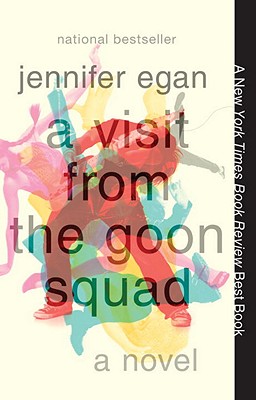 Jennifer Egan’s A Visit from the Goon Squad (2010). Beautifully written, interwoven stories about characters in the music business. The novel falls apart in the last few chapters, one done as a Power Point presentation, the other about a dystopian concert. Most loved this book. I did not. Grade: A-
Jonathan Lethem’s You Don’t Love Me Yet (2007). A very light novel about a Los Angeles alternative rock band, and, yes, there are women in the band. Lethem’s Fortress of Solitude and Chronic City are masterpieces, but I have to say this very short book is not his best. Lethem does long better. Grade: A-
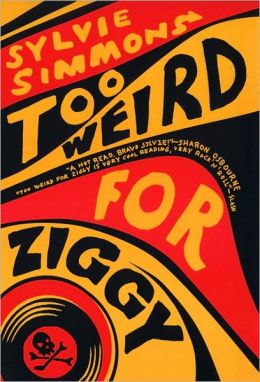
Sylvie Simmons’s Too Weird for Ziggy. A collection of linked short stories about rock musicians. In one of the stories, a male rock star grows breasts and likes them. Simmons is a British rock journalist. Grade: A-
Frederick Busch’s Rounds is a classic, or nearly one.
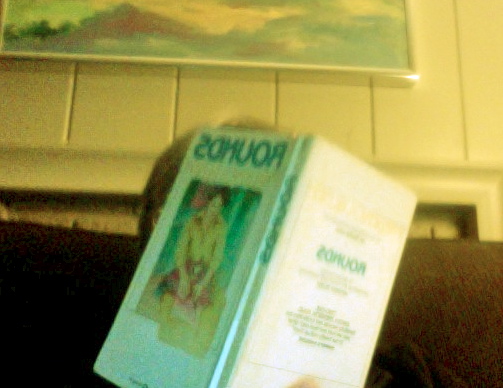
Reading Rounds.
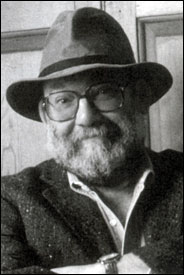
Busch (1941-2006), a critically-acclaimed writer who won the American Academy of Arts and Letters Fiction Award in 1986, and the PEN/Malamud Award in 1991, seems never to have been heard of. Like Andre Dubus, another neglected writer, Busch vividly chronicled love, loss, and the broken American family, often from the male point of view.
Busch’s beautifully-written novel, set in upper New York State, is both poetic and plot-driven.
A group of characters are linked by loss.
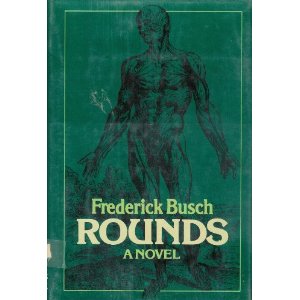 Eli Silver, a pediatrician, has lost his child in a car accident, and his wife has left him. He drinks too much: his only relationships are with his colleagues and patients. He tries to redeem himself by saving children, and much of it is by doing ordinary, superficially unheroic rounds. He diagnoses strep and bronchitis, gives allergy shots, counsels mothers on the common cold and hereditary insanity, and palpates lymph nodes of a little boy riding a tricycle at the hospital.
In the case of a young girl dying in pain of cancer, saving her means helping her die by secretly dumping out the nutriment IV bags and giving her more than the allotted pain meds. (The nurse, Ada, agrees with his decision.)
Silver is not the only sad character. Annie and Phil Sorenson have moved from New England to get away from the scene of Annie’s two miscarriages Tall, shaggy Phil, described by Busch as “a grammar jock,” has a new job teaching remedial writing at a college. Annie thinks about having children.
In the first chapter, “Manual Labor,” the Sorensons are described rebuilding their house and their lives.
They had moved through New England, owning land and bringing houses back to health from swayed beam, staggered sill, rot and roof leak. And here they were now, in New York State, not all that distant from New England and yet a place somehow more exhausted, a countryside of oxbow rivers and Indian mounds, more scabrous than New England, with a dull shimmer of what has failed.
While Annie is recovering from depression and repapering the walls at home, Phil is trying to form relationships with minority students who, recruited to play football, have few academic skills and are far from home in a white college town.
He assigned them textbooks they wouldn’t read, told them about essays they’d be unable to write, gave them his office hours, and suggested they all go home. The chairs scraped, notebooks with the college seal flapped shut, and Phil waited for someone to ask to be advised. No one asked….
 I don’t want to give away too much of the plot, but I’ll just mention a few other important characters: Lizzie Bean, a single college counselor who is pregnant; and two men linked by psychosis, Horace L’Ordinet, an English professor with a frightening chemical imbalance, and the college president’s son, Weeks II, driven crazy by drugs.
Busch writes about ordinary people who must confront tragedy and heal.
I found Rounds by chance at Brentanos when I moved to an eastern city for my first “real” job and had seemingly endless time to browse at bookstores. The endpage has my old address, and it occurs to me that I’ve lived so many places I could make a poem out of my addresses.
4700 Bradley Blvd.
(there are so many of them)
And frankly I can’t remember most of the street numbers.
I wrote a fan letter to Busch from this address. He answered.

Margaret Drabble: “I have had a weird feeling that I’m being dumbed down by my publishers.”
Yesterday I told you I thought writing and publishing had gone downhill.
I am not the only one who has noticed.
Margaret Drabble, my favorite writer, told The Telegraph last October that her new novel was unlikely to be published by Penguin, her publisher.
“I have had a weird feeling that I’m being dumbed down by my publishers and it’s interesting there’s an agenda of how it should be in the marketplace.”
She is one of the best writers of the 20th (and 21st) century, and if publishers are treating her with little respect, I can only imagine how they treat new writers. I hope Penguin publishes an intelligent edition of her novel, or that she finds a new publisher.
The critic Harold Bloom has long written about the “dumbing-down” trend, and in 2003, when the National Book Foundation gave a Medal for Distinguished Contribution to American Letters Award to Stephen King, he wrote a long op/ed piece for the Boston Globe.
Bloom wrote:
The publishing industry has stooped terribly low to bestow on King a lifetime award that has previously gone to the novelists Saul Bellow and Philip Roth and to playwright Arthur Miller. By awarding it to King they recognize nothing but the commercial value of his books, which sell in the millions but do little more for humanity than keep the publishing world afloat. If this is going to be the criterion in the future, then perhaps next year the committee should give its award for distinguished contribution to Danielle Steel, and surely the Nobel Prize for literature should go to J.K. Rowling.
We all know Stephen King is a good guy. He has given millions (more?) to charities. But is he a literary writer? No.
There has been a post-post-post-post-modern breakdown that tells intelligent readers to pretend popular and literary novels are the same–and they are not. The National Book Foundation has continued its dumbing-down trend in the Distinguished Contributions arena: last year they gave the award to mystery writer Elmore Leonard.
I read and like genre fiction, but I hate to see the National Book Foundation’s determination to attract attention (Hello! We’re a Celeb Prize!) cheat literary writers.
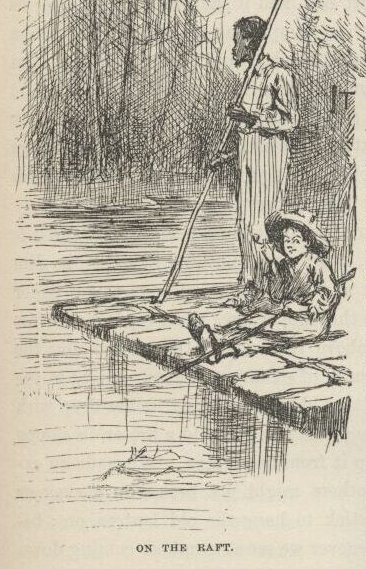
Huck and Jim on raft, 1884
Censorship has always been a problem in the U.S., and in 2011, a new low was reached by a publisher who wanted, yes, to censor and “dumb down” 19th-century literature. New South Books censored an edition of The Adventures of Huckleberry Finn, removing the word “nigger” from the text-a word used in the 19th-century dialect by Huck, which obviously he obviously rises above in his friendship with the escaped slave, Jim.
The writer David Matthews wrote for The New York Times:
Removing that single word from the text, while sparing those too sensitive to get past it, relieves the reader of doing any heavy lifting. Great books — or any work of art — require that the reader meet the author half-way. Huck Finn is a serious literary work. It is not a children’s adventure book, nor a Rockwellian portrait. As intended, it is a scathing indictment against slavery, hypocrisy, gender roles (sure, why not), and class.
What a century!
After rejecting many highly-touted novels, I am desperate to find a good new book.
Here is the challenge.
Find me a brilliant new novel.
It has to have been published in the 21st century.
It could have been reviewed in national book review publications, or even be one of the Best of the Month at Amazon, but if it is not, so much the better.
It can be in English or in translation.
Recommend something. Please leave a comment or I will know nothing is good!
I wrote Frederick Busch a fan letter and he wrote me a very nice reply, which I lost during a move.
I was in my forties when I began to doubt the quality of contemporary literary fiction.
For 20 years, I had read brilliant short stories and novels by Raymond Carver, Ann Beattie, Elizabeth Tallent, William McPherson, Douglas Unger, Frederick Barthelme, Rachel Ingalls, Robert Irwin, John Casey, Jay McInerney, and Frederick Busch.
I cannot say any of these writers had much in common.
But suddenly they seemed to be replaced by less good writers. The New Yorker dropped my favorites and published verbose writers I could not read. The Best American Short Stories was a joke: the same writers in every anthology, I swear. It became difficult to find good new fiction.
A friend who edited a literary newsletter pro bono felt the same way.
“I don’t know whom to read anymore.”
She hated reading new fiction so much she was always calling me to write articles for her.
“I’m sorry, but I have too much to do right now,” I would say.
“I’ve written practically the whole newsletter already. Couldn’t you interview somebody for me?”
No one would help her because the newsletter had no circulation and didn’t pay.
“You know I only do bubble-gum journalism.”
“PUH-LEEZE. You’re wasting your time with that.”
Bubble-gum journalism is fun. If you write about what restaurant serves the best pork chops in the Midwest, or the thrift shop where apocryphally Tom Petty bought a jacket, you can do interviews or not, and you can be blase and blessedly short.
“One more article about that Tom Petty jacket and you’re off my party list forever.”
She did give good parties.
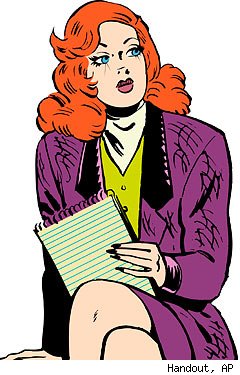
Brenda Starr could do it, and so can you!
She added, “And it will only take you ten minutes to do the interview.”
What interview ever took ten minutes?
But she was my friend.
I don’t know how many interviews I did for her–all I know is I wrote them up fast. Once I interviewed a famous person who actually WANTED to be interviewed for this little newsletter and I lost the notes.
I had to apologize to him. But I simply couldn’t bear to interview him again.
I really hated interviewing writers. I was either too awed or inarticulate to enjoy myself. I asked questions only if there was a pause. The famous people were used to being interviewed and knew what to say; the local poets were often rude and I had to dig everything out of them with questions.
“I didn’t think you’d pull it off but you did a very good job,” an obnoxious poet told me once after it was printed.
Duhhh…
“I didn’t even think you were who you said you were.”
And wasn’t it rude of him to call me like that? He had looked at my reporter’s notebook and suspiciously said that my handwriting wasn’t real writing.
“It’s my style of taking notes,” I said. “Like shorthand, you know.”
He was paranoid.
Of course now even The New York Times is doing e-mail interviews with Richard Russo, so the stress of the traditional interview is gone.
Diana Trilling wrote in her autobiography, Beginning of the Journey, that no one ever believed her, and I know that feeling. A couple of times I have had the eerie experience of not being believed that I am who I say I am. I mentioned at a conference some years ago that I had interviewed a certain well-known writer. Silence. I was asked later by a concerned woman if I “knew who I was.” She thought I was having a nervous breakdown.
I think in my case it’s a just a fatal shyness when I meet people for the first time. Once I get to know somebody, I chat non-stop and am “believeable.”
Much as I love to read, and I would rather read than anything, I finally said no to my friend and stopped interviewing writers. I had interviewed every local writer, and the novelists who came through on book tour didn’t interest me.
The brilliant writers don’t come here on book tour: I’m not talking about “brand-new” writers, but experienced writers. Even the experienced writers sometimes bore me now: every book is so long: where are the editors? Whatever happened to telling a story under 300 pages?
IIn this century, even great writers sometimes take a wrong path. Is it just me, or is there a surfeit of literary historical novels on the market? Did the brilliant Hilary Mantel and Julian Barnes need to impress us with their great research skills? Mantel is probably at the height of her powers, and though I loved Wolf Hall, I much prefer her contemporary women’s fiction: is there a chance she’ll go back to that? I enjoyed Julian Barnes’ Arthur and George, but who wasn’t relieved when he went back to the present?
The only person who should write historical novels is Sebastian Faulks.
Okay, I don’t mean that.
The U.S. actually has many innovative writers right now. I can’t get enough of Meg Wolitzer’s glorious comedies, Michael Chabon’s verbal pyrotechnics, Jonathan Lethem’s impossible-to-classify sometimes fantastic fiction, and Ursula K. Le Guin’s original, thoughtful novels: could they please write more quickly? (Well, actually, they’re doing a pretty good job: it’s not as though they’re making us wait 10 years, like Jeffrey Eugenides and Donna Tartt.)
Yet I can’t help but feel that some of the most popular literary writers are overrated. I preferred Franzen’s The Corrections, a very good novel about an American family, to Freedom, which seemed to ramble on and on and on. (Since Obama liked it, I doubt he cares about my opinion.) I also disliked Jennifer Egan’s well-written but glacial A Visit from the Goon Squad, which falls apart in the last few chapters, and I don’t know what the fuss is about. Although many loved Dave Eggers’s A Hologram for a King, I was disappointed. Yet he’s such a good person–I can tell from all the good work he’s done.
The other day I read Ian McEwan at The Guardian about moments when his faith in fiction wavers:
I confess, I’ve been on those panels with fellow believers as we intone the liturgy, that humans are fabulators, that we “cannot live” without stories. Priests, too, always imply that we cannot live without them. (Oh yes we can.) My doubter’s heart fails when I wander into the fiction section of a bookstore and see the topless towers on the recent-titles tables, the imploring taglines above the cover art (“He loved her, but would she listen?”), the dust-jacket plot summaries in their earnest present tense: Henry breaks free of his marriage and embarks on a series of wild …
And, yes, don’t we all know? (Except he’s also talking about its effect on writing fiction, too, and we don’t do that.)
I have mentioned many superb contemporary writers, after saying there are mostly bad ones, but…
There are some very bad books out there, and I don’t want to depress their writers.
 mirabile dictu