Barbara Pym Giveaway!

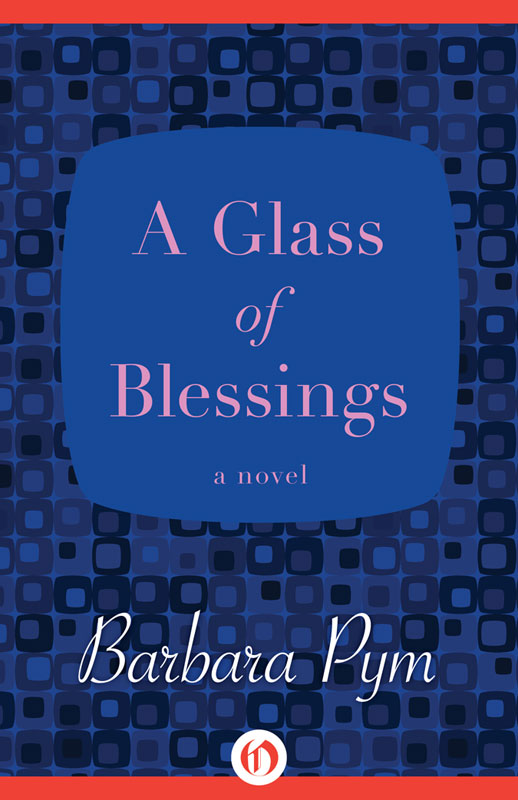
Pym_GlassBlessings-lowresWould anyone like a free e-book copy of Barbara Pym’s A Glass of Blessings?

The publisher Open Road Media has offered to give away one free copy to a Mirabile Dictu reader.

She is one of my favorite writers:  she often wrote about intellectual women who love vicars too much.   And this year is the centenary of her birth.

Just leave a comment and I’ll draw a name out of the hat on Monday.

Here is the Open Road Media synopsis of A Glass of Blessings:

Barbara Pym’s early novel takes us into 1950s England, where life revolved around the village green and the local church—as seen through the funny, engaging, yearning eyes of a restless housewife.  Wilmet Forsyth is bored. Bored with the everyday routine of her provincial village life. Bored with teatimes filled with local gossip. Bored with her husband, Rodney, a military man who dotes on her. But on her thirty-third birthday, Wilmet’s conventional life takes a turn when she runs into the handsome brother of her close friend. Attractive and enigmatic, Piers Longridge is a mystery Wilmet is determined to solve. Rather than settling down, he lived in Portugal, then returned to England for a series of odd jobs. Driven by a fantasy of romance, the sheltered, naïve Englishwoman sets out to seduce Piers—only to discover that he isn’t the man she thinks he is. As cozy as sharing a cup of tea with an old friend, A Glass of Blessings explores timeless themes of sex, marriage, religion, and friendship while exposing our flaws and foibles with wit, compassion, and a generous helping of love.

Well, to one

Whom Do You Love? Ford Madox Ford or Christopher in Parade’s End?

"Do you write on a typewriter or computer or with a pen?"  Silly interview question

“Do you write on a computer, typewriter, or with a pen?”

Did you ever fall in love with a dead writer?

It’s best not to bother with living writers,  even though Michael Chabon is handsome,  Jonathan Lethem is brilliant, and Dave Eggers is a political saint.

I’ve only read their books.

But even if you have a great conversation at a reading about HOW MUCH YOU LOVE A WRITER’S BOOKS, remember: He or she is dazed on a book tour and barely knows what city he or she is in. He or she is desperately hoping for a drink because he or she has given a reading, a Q&A session, and two interviews. And don’t despair:  he or she only wrote that very short thing in your book because the line was awfully long.

Writers are just people, if  more brilliant than we are.  We once had to chauffeur a couple of them around to some readings I had volunteered to organize.  (PR is not my strong suit.)  They often wanted a drink after the reading, just like ordinary folks.  If my husband and I didn’t have a drink with them, I assume they watched TV in their room until their plane left the next morning.

Nice, friendly people.  But, you know, not romantic.

Not like Ford Madox Ford.

Now where did I get the idea that he’s romantic?

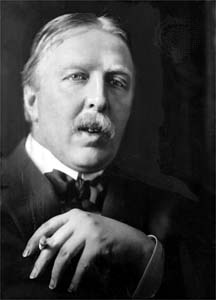
Ford Madox Ford:  Not cute, but probably sexy.

Ford Madox Ford: plain but probably sexy.

He’s not even handsome, but, yes, it’s that dazzling prose.

He’s dead, but oh, well…

I read in the Guardian about Tom Stoppard’s adaptation of Ford Madox Ford’s World War I tetralogy, Parade’s End, for a miniseries in the UK.  And so I decided to reread the book.  I just finished the  first of the tetralogy, Some Do Not…

And I am in love with Ford, or the hero, Christopher Tietjens.

Christopher has complicated mores.  He takes back his beautiful wife, Sylvia, who has been living abroad with a lover, because of his tortuous sense of honor, though he is not even sure if Sylvia’s son is his.  Sylvia won’t divorce him because she is Catholic.  Christopher won’t have sex with her anymore.  The immoral Sylvia, one of those beautiful women who looks like an angel, tries to foil his burgeoning affair with a schoolteacher/suffragette.  Christopher, who comes back shell-shocked on leave, tries to decide what to do.

And then I fell in love with Ford’s slow, erotic description of the evolution of Christopher’s romance with Valentine Wannop, a suffragette.

He meets Valentine when she and a friend demonstrate for suffrage at a golf course where important men play.    Some of the men chase and try to assault her friend, and she runs over to Christopher and asks for help.

“I say,” she said, “Go and see they don’t hurt Gertie. I’ve lost her…”  She pointed back to the sandhills.  “There looked to be some beasts among them….”

Noises existed.  Sandbach, from beyond the low garden wall fifty yards away, was yelping, just like a dog: “Hi! Hi! Hi!” and gesticulating.  His little caddy, entangled with his golf-bag, was trying to scramble over the wall.  On top of the high sandhill stood the policeman:  he waved his hands like a windmill and shouted.  Beside him and behind, slowly rising, were the heads of the General, Macmaster, and their two boys.  Further along, in completion, were appearing the figures of Mr. Waterhouse, his two companions and their three boys.  The Minister was waving his driver and shouting.  They all shouted.”

Parade's EndChristopher drops his golf clubs and throws his kitbag between the policeman’s legs to stop him.  And then he apologizes, though the policeman, who was reluctant to pursue the woman anyway, knows he did it on purpose.

Valentine and Gertie could have gone to prison.  Christopher saved them.

Then for the rest of the book the attraction grows between Christopher and Valentine.

Christopher finally asks Valentine to be his mistress.  She’s been fantasizing forever.

There are actually some quite erotic parts, though not much happens.

The next two books are about his war experiences.

I probably have mixed up Ford Madox Ford with Christopher.  Do I love Ford or Christopher?

And while I am reading, tell me this: Whom do you love?

Harriet Beecher Stowe’s Uncle Tom’s Cabin

It is an astonishingly various and complex book, simplified in the folk land, which has remembered in its place the dramatic version in which Mrs. Stowe had no hand and which she saw, secretly, only once.”—Leslie Fiedler, Love and Death in the American Novel

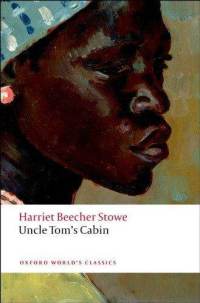
uncle-toms-cabin-harriet-beecher-stowe-paperback-cover-artHarriet Beecher Stowe’s Uncle Tom’s Cabin has a dicey reputation, though it was beloved in its day.  The anti-slavery blockbuster that helped promulgate Abolitionism and kick off the Civil War was praised by Abraham Lincoln and Dickens. When Stowe visited the White House, Lincoln said, “So this is the little lady who wrote the book that made this great war.”  Although Dickens praised both the execution of the novel and its anti-slavery message, Stowe was too radical for him:  he told her that she went too far in her veneration of the African race.

Stowe, the daughter of an abolitionist minister, the sister of six ministers, and the wife of an abolitionist professor at a seminary, helped slaves escape to Canada via the underground railroad.  She wrote Uncle Tom’s Cabin in reaction to  The Fugitive Slave Act of 1950, which  allowed runaway slaves in free states to be hunted, returned to their owners, or killed.

By the time I read Uncle Tom’s Cabin in the late 20th century,  Stowe was out of fashion.  In the wake of the Civil Rights Movement, Second Wave feminism, and other political movements, readers had trouble with the interpretation of radical Christianity.  Stowe’s portrait of Uncle Tom, a Christian slave who preaches against violence to his fellow slaves, was considered too simple:  he was too passive and sycophantic. (Readers forget that Tom radically advises the concubine slave Cassie to run away from the plantation with young Emmeline when Cassie says she will kill the sadistic plantation owner, Simon Legree.).  Readers often have trouble digesting ideas from another century,  and  their disapproval of Uncle Tom is very like the deprecation of the humble escaped slave Jim in The Adventures of Huckleberry Finn.  The historical context for these characterizations must be analyzed, and so this accessible novel is not accessible to some.

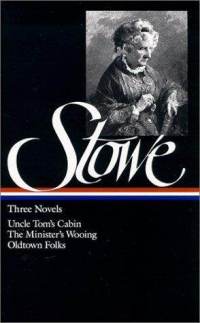
harriet-beecher-stowe-three-novels-uncle-toms-cabin-hardcover-cover-artIf you can get past the discomfort, it is worth it.  On a second reading, I am enthralled by Stowe’s graceful prose, pitch-perfect dialogue, and passionate preaching of Abolitionism.  The perfection and power of this novel escaped me on a first reading:  was I too concerned about the image of black Americans to appreciate her style?  Sometimes the book seems dated–there are many authorial asides –but if you are a fan of Louisa May Alcott’s Little Women, Stowe is Alcott for grown-ups.

Stowe’s fast-paced novel is a vivid and unflinching look at the horrors of slavery. The plot and characterization are equally vivid.  The novel begins with the sale of two slaves.  Although Mr. and Mrs. Shelby are Christians,  and treat their slaves like valued employees, Mr. Shelby  sells Uncle Tom and the house slave Eliza’s son Harry to pay off debts without telling Mrs. Shelby.  When she learns of the sale, she is appalled.

Then Eliza runs away with her son, and Mrs. Shelby makes it clear to two slaves assigned to help the tracker that she doesn’t want them to find Eliza.  They take the slave trader on a wild goose chase, but eventually find her on the border of Kentucky and Ohio.  There is a harrowing scene where Eliza escapes across the icy river, carrying her child, and jumping from ice cake to cake.  There is much drama after that as well, but at least the abolitionists are there to help.

Tom, though a husband and father, has not considered running away.  He believes it is his fate to be sold.  When a trader takes him down the Mississippi on a steamboat to Louisiana, an intelligent, compassionate rich little girl, Little Eva, becomes his companion.  She persuades her father, Saint-Clare, an outwardly languorous, extremely witty, but empathetic aristocrat, to buy Tom, and soon he is Saint-Clare’s trusted household manager.

But Stowe points out that slave ownership corrupts. Even kind slave owners don’t consider what will happen to the slaves after a sale or their death.  And when Saint-Clare dies, Tom is sold to a third owner, Simon Legree.

The torture scenes in this part of the book are so graphic I had to put the book aside from time to time. Tom amazingly helps the slaves cope–many have never heard of the Bible–and when he has a chance to escape, he doesn’t take it, because his work is among them.

He does, however, encourage Cassie, a brilliant quadroon slave who has been Simon’s mistress, and who has sometimes secretly ministered to the slaves when they have been beaten, to run away when she wildly plots his death.  She has been too afraid to run, seeing how they are tortured when they are found.

This is a great popular novel, and beyond that.  Stowe wrote it in serial form, and in book form it  sold 3,000 copies the first day and 300,000 copies the first year.

A classic!

The Challenge

I have inadvertently done the Europa Challenge.

This afternoon while I was reading blogs, I discovered the Europa Challenge blog.

I inadvertently did this challenge!

I inadvertently did this challenge.

Do you know what a Challenge is?

Here’s what you do.  You sign up at the sponsor blog.  Then you choose books to read from the challenge  “syllabus.”  And if you have a blog, you post your reviews, then post comments at the sponsor’s blog, then post links to your blog, and…

It’s confusing.

But I have always been amused, and if only the Japanese Literature challenge weren’t already over, I might have done it.

Guess what?  If I read two Europa books this year, I have completed the lowest level of the Europa Challenge.  And I have done it!  I wrote about Elena Ferrante’s My Brilliant Friend and Jane Gardam’s Crusoe’s Daughter without knowing there was a Europa Challenge.

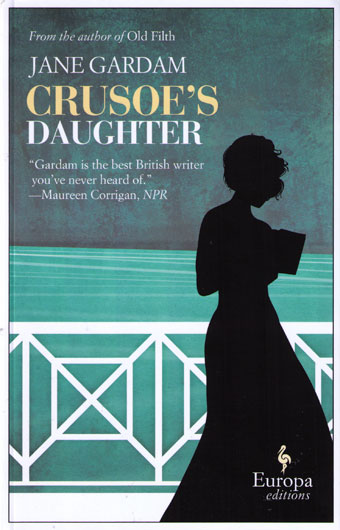
Crusoe's-Daughter jane gardamNow I have applied via email to see if I qualify for the Europa Challenge.  If so, I get to post their logo on my sidebar and my blog will be linked to theirs, along with  33 other blogs.

But, wait, I just read more carefully and learned,  “You may participate solely on your own blog, or post to this one. If you would like to become a contributor to this blog, please email the moderator.”

So I have officially done it.

Europa is the publisher of Elena Ferrante and Jane Gardam, two writers I love.  But whether I go on to a higher level will depend on what  I feel like reading this year.

Many readers are utterly loyal to small publishers, like Europa, Virago (an imprint of Little Brown), Persephone, or NYRB. I have read some remarkable books published by these excellent publishers, but I have also read some stinkers. Did I ever tell you about the ghastly translation of Dino Buzzati’s Poem Strip (NYRB), a graphic novel about Orpheus and Eurydice?  At least I’m hoping it was the translation.  I love Ovid’s version of the myth (Metamorphoses) and Virgil’s version (Georgics), but Poem Strip went promptly to the charity sale.

By the way, the Europa Challenge is not sponsored by Europa, but by two booksellers.

The Silent Land by Graham Joyce

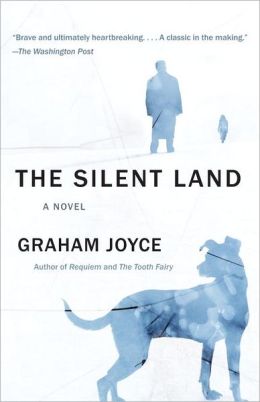
Although I do love Europa, I am still baffled by “challenges.”  No one is sponsoring a Random House challenge, though it published one of my favorite books,  Graham Joyce’s The Silent Land.  And how about Henry Holt and Company, the publisher of Hilary Mantel’s Bring Up the Bodies?  Open Road Media has published several of Barbara Pym’s books as e-books:  should we add them to our challenges?

Perhaps there is a Graham Joyce challenge somewhere, a Hilary Mantel one, or a Barbara Pym challenge.

I think these “challenges” are sweet, but I do better with online book groups.  There is more discussion.

Meanwhile, I am looking for interesting  blogs to add to my blogroll, so please let me know your favorites.

What to Read When You’re Sick: Jane Gardam’s Crusoe’s Daughter & Nick Hornby’s How to Be Good

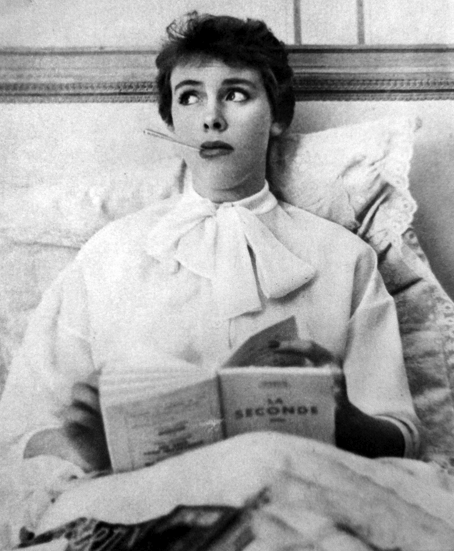
vintage sick woman with book

I was much sicker than this!  Why is her hair so tidy?

Shivering, sweating, sinuses bursting, aching joints.

I felt very ill, sitting in bed under five blankets, balancing Lucretius’ De Rerum Natura on top of a Latin dictionary propped on my knees.   If you think this inappropriate reading for the sickroom, you are  right. I wore two turtlenecks, two sweaters, a hoodie, corduroys, and two pairs of socks, but even so my Lucretius-covered knees were shaking with cold.

Some people go to the doctor when they’re sick.

I didn’t have flu.  Nothing respiratory, no fever. It wasn’t the kind of sickness you get antibiotics for.

I checked the CDC for outbreaks of mysterious viruses.  Nope.

Perhaps I should have read this while I was sick!

Perhaps I should have read this while I was sick!

Although I avoid pills whenever possible, I took an extra Advil on the second day for the joint pain.  Not an overdose, but not what I normally approve of.  Then I sent my family out for cold/flu medicine.

It wasn’t actually a cold/flu, but the cold/flu medication made me feel human again.

There was nothing for me to do for a few days except to nap and read.  One thing about being sick:  you can get some reading done.

WHAT TO READ WHEN YOU’RE SICK.

1.  Jane Gardam’s Crusoe’s Daughter.  I discovered Jane Gardam’s The Queen of Tambourine in a bookstore on a seaside vacation.  This poignant, comic epistolary novel about a woman who becomes obsessed with a neighbor was both sweet and shattering.

Crusoe's-Daughter jane gardamCrusoe’s Daughter, however, might have been more suitable for an island vacation.  It is narrated by Polly Flint, a woman whose life is determined from girlhood by her love of Robinson Crusoe.  Polly tells the story of her life, from age six in 1904 to age 86 in 1984.  And there is usually a subtext from Defoe.

When Polly’s father, Captain Flint, drops her off in 1904 at the yellow house to live with her two old-fashioned aunts, Polly doesn’t know what to expect:   her life while her father has been at sea has been dominated by a muddle of paid guardians, the most memorable of whom was a fat woman who often fell down drunk and spent her alcoholic days under the kitchen table.  Polly, who had nothing else to do, played under the table.

But now, like Robinson Crusoe, Polly is shipwrecked at the friendly yellow house, on a marsh, near the sea and the iron works, which eventually encroach upon the marsh.  Just as Robinson Crusoe’s landscape defined him, the landscape of the yellow house begins to mean everything to Polly.  She creates a life here on this island of a house of genteel women.  Aunt Frances is kind, Aunt Mary is remote and religious, and their mysterious live-in friend, Mrs. Wood in her knitted green suit, teaches Polly languages.  The servants are important, too:  impertinent Charlotte tells Polly the facts of life and equips her with rags for her period; after she leaves, Alice, a much friendlier and more sensible person, becomes Polly’s  good friend and equal.  She helps steer Polly’s career out of the mud.

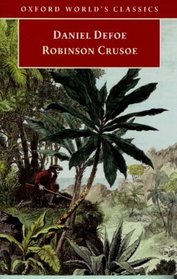
Robinson CrusoeThe discovery of Defoe’s Robinson Crusoe leads to Polly’s critical identification of herself with his character and heroism.  She has principles; she is not just an obedient girl. Polly does the accepted thing to a point–she goes to church with her aunts, but she refuses to be Confirmed. Your own book may not be Robinson Crusoe–it may be Jane Eyre, or David Copperfield–but nonetheless Gardam shows us how a book can shape a life.

At the yellow house, Polly’s future doesn’t matter much to Aunt Frances and Aunt Mary, both spinsters, who believe life will happen to Polly or not.  But after Aunt Frances marries the vicar and goes off to be a missionary, life at the yellow house changes Aunt Mary seems to have  a nervous breakdown and decides to go on a religious retreat.   And Polly goes to visit Mr. Thwaite, a Dickensian elderly gentleman and family friend, and his sister, Miss Celia,  a patron of the arts.

Miss Celia’s house seems like a lunatic asylum to Polly.  She meets some eccentric artists and writers who might be Virginia Woolf, Rupert Brooks, or at least very like them.  Some of the scenes and characters in Andrew Hollinghurst’s The Stranger’s Child also remind me a bit of Thwaite and Miss Celia’s sexually confused guests.

The more Polly sees, the more she  realizes the mores at the yellow house has been too restricted.

She writes to Aunt Frances,

The trouble, Aunt Frances, is perhaps that I am a girl.  Had I been a boy–your sister’s baby boy, some solid stubborn boy perhaps called Jack or Harry–how would you have done then?  You would have sent me away to school, and please, oh please forgive me for saying so, Aunt Frances, but the money would have been found.  It would have been a Christian sort of school like Rossall or Repton and you would all have prayed and prayed for me that I would become a priest.  But because I am a girl, Aunt Frances, I was to be stood in a vacuum.  I was to be left in the bell jar of Oversands.  Nothing in the world is ever to happen to me.  Since I hae met these people here at Thwaite I have begun to see what I have missed.

So a new stage of education begins for Polly.  Paul Treece, a poet of confused sexual identity, courts her, but even though she doesn’t understand his sexuality, she knows that something is wrong. She falls in love instead with an intense young Jewish man whose father owns the iron works.  She assumes they will marry someday, despite the Jewish problem.

But the aunts die, and Mrs. Wood has a stroke.  World War I intervenes.  Men go to war and some don’t come back.  Polly and Alice live together for years and get by, and at the lowest point, Polly becomes an alcoholic who works on a long scholarly study of Robinson Crusoe for years.

The form of the novel is a wonderful mix of traditional narrative, letters, and even a dialogue between Polly and Crusoe.  The language is razor-sharp, the characters are quirky yet sympathetic, and she is never sentimental.

The critically acclaimed Gardam has won the Whitbread Prize twice (The Queen of Tambourine and The Hollow Land), won The Prix Baudelaire (God on the Rocks), been a finalist for the Booker Prize (God on the Rocks ), and a finalist for the Orange Prize (Old Filth).

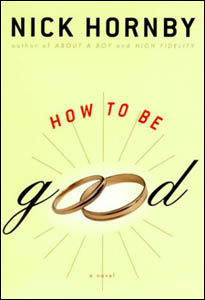
hornby how to be goodNick Hornby’s How to Be Good Nick Hornby needs no introduction.  He is one of my favorite writers, and I named his Juliet, Naked one of my favorite books of 2012.  At my old blog, Frisbee:  A Book Journal, I also raved about his new book, More Baths Less Talking, a collection of his columns from The Believer.

He is another award winner:  the E. M. Forster Award in 1999, the W. H. Smith Award for How to be Good, and the William Hill Sports Award of the Year for Fever Pitch.

I very enjoyed How to Be Good.

After only a few pages, my impressionable reader’s psyche became hopelessly entwined with that of the narrator, Katie Carr, a burned-out doctor who is married with two children, and lives in an expensive house in Holloway.  But she is not happy.  Her sarcastic husband is driving her crazy, she is annoyed at work when she can’t help some of the older chronic patients with their problems, and her friend Becca doesn’t listen when she tries to talk about her depression.   And so she finds herself having an affair, spending the night in Leeds with a man called Stephen.

Katie is a good person, and she doesn’t feel comfortable having an affair.  But we see that David is a mess.  He has a column for the local paper, “The Angriest Man in Holloway.”  And he never has a kind word to say about anyone.  Katie doesn’t read his column.

The last one I could bear to read was a diatribe against old people who have travelled on buses:  Why did they never have their money ready?  Why couldn’t they use the seats set aside for them in the front of the bus?

There is a very funny three-page rant (or maybe more; I was reading an e-book, so who knows?) about all the people and things David and a misanthropic friend hate.

And then the worst happens.  He is converted to do-goodism by a man called GoodNews, a healer who developed his healing gift while taking ecstasy at a club.  He cures David’s back problems and their daughter Molly’s eczema with his healing hands.

David gives away one of their computers and some toys to a battered women’s shelter, their son becomes a thief and the daughter a prig, and he invites GoodNews to live with them.

Hornby’s writing is deft and seamless, the witty dialogue is pitch-perfect, and the story is extremely fast-faced.  Like all of his books, there is a lot of depression underlying the humor.

Both Gardam’s and Hornby’s books are two of my favorite of the year.

Self-Reliant

Mason's book was originally self-published.

Mason’s book was originally self-published.

An array of slightly too-shiny paperbacks with offbeat covers winks from a back shelf at the local bookstore.  These memoirs, mysteries, family histories, and science fiction novels are by unknown writers…and you have never heard of the publishers.

You know what that means.

The nouveau self-published.

Until a couple of years ago, self-publishing was frowned upon.

Writers who published in traditional venues, whether in the New York Times or the most lacklustre local magazines, tended to despise those who publish their own work.

The rest of us are not snobs, but we know that editors have probably rejected the books before the authors go this route.

And when people give us copies of their self-published novels or poetry chapbooks, we are polite, but do we read them?

Attitudes are changing as new technology, like self-published e-books formatted for free at  Lulu and Smashwords, makes self-publishing almost trendy.

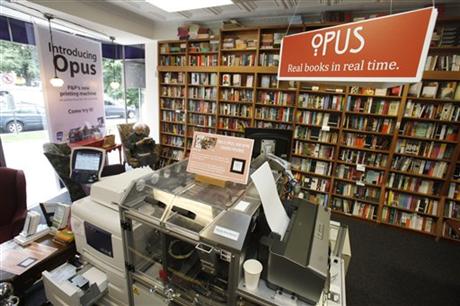
Opus Print on DemandNot long ago, journalists wouldn’t have bothered to report on the self-publishing trend.  But in I recently read a story in The Washington Post about an Open Mike party for self-published authors at Politics and Prose, a Washington bookstore that has printed 9,000 books by self-published authors via an Opus Espresso Print-on-Demand machine.

It’s not just the Washington Post that is softening up.  Michiko Kakutani, a  tough book critic at The New York Times, chose  Alan Sepinwall’s self-published The Revolution Was Televised, a book of TV criticism, as one of her best books of 2012.

In Forbes last August, David Vinjamuri mused about the potential of self-published e-books in the midst of an Old Media publishing slump.  He wrote about breakthrough “indie” novels by Hugh Howey, Amanda Hocking, and John Locke.

But he says self-publishing raises the hackles of major publishers and writers.  He quoted Sue Grafton, who had told LouisvilleKY.com:

“Self-publishing is a short cut and I don’t believe in short cuts when it comes to the arts. I compare self-publishing to a student managing to conquer Five Easy Pieces on the piano and then wondering if s/he’s ready to be booked into Carnegie Hall.”

Yes,  we’ve heard this kind of criticism before.  Last year several well-known journalists said that bloggers, tweeters, members of GoodReads, social media users, and others they perceive as online cranks have wrecked the sovereignty of editors, critics, and writers.

Howard Jacobson’s novel, Zoo Time, centers on the death of publishing.  It’s very funny, and perhaps it’s true.

Bur as long as E. L. James, George R. R. Martin, and R. K. Rowling… writers with initials instead of names…and, oh, yeah, Stephen King…continue writing, publishing will survive.  That is, if the publishers stop and publish a literary book occasionally.

Self-published authors are only a threat to traditional publishers insofar as they are better able to distribute their work than they were, say, 20 years ago.

A self-published science fiction book.

A self-published science fiction book.

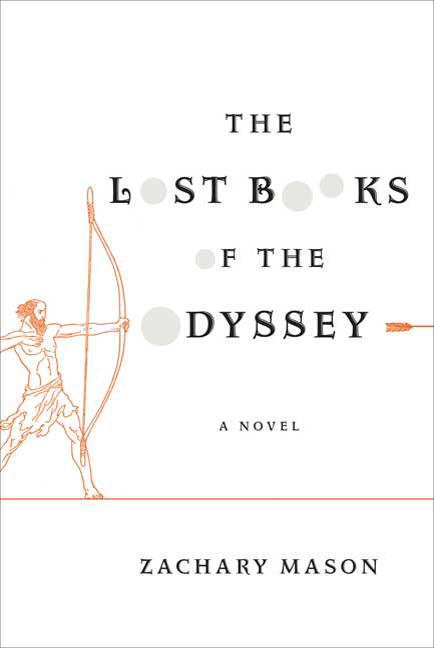
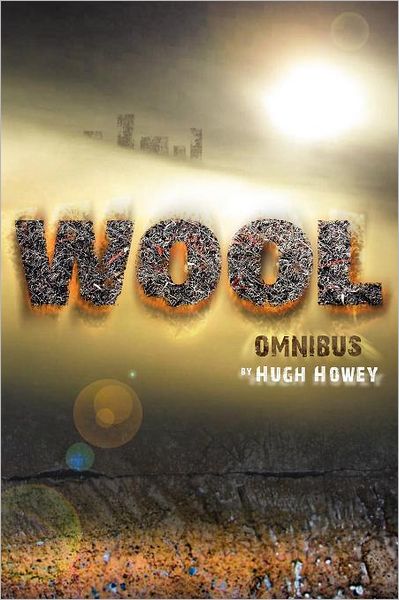
Naturally, some self-published writers get respect. Hugh Howey’s science fiction omnibus, Wool,  Amanda Hocking’s Y.A. books, Zachary Mason’s literary novel, The Lost Book of the Odyssey, and Collen Hoover’s romances have been picked up by major publishers.

Yet is this the point?  Do all self-published writers want money and celebrity?

I suppose it would be strange if they didn’t.

But perhaps some are doing it for fun.

Everyone in my family writes.  The older generation have been self-publishing books at Kinko’s for years, and I assure you that none of these books was submitted to a publisher first.  I have at least a dozen of their memoirs, poetry, family histories, genealogy (may I just say here I hated those trips to cemeteries off the interstate?), and The Kinfolk Cookbook, a collection of family recipes ranging from picnic hamburgers to peanut butter chicken (ugh!) to mustard pickles to crumb top rhubarb pie to Never Fail Syrup to soap.

I also have a book, kind of.  I wrote a number of light essays in my freelance days before I burned out and turned to blogging. The copyright reverted to me after three months.

Type them up and publish them in an e-book, my family says.

Well…

I described my  life without a car, how I lived in a rain forest of a leaky apartment, and bicycled long distances, even up mountains, on a fat-tired Schwinn.

If I self-publish it, I’ll let you know.

Poets are encouraged to self-publish their chapbooks.

Do you know a lot of poets?

Everyone’s a poet.

So many of my friends have self-published lovely chapbooks, small pamphlet-liked books, folded and stapled, with lovely covers.

Poets get respect.

They read their poems at Open Mike Night.

Some are good, some are bad.

I’ll stick to blogging.

The Jane Austen Workout

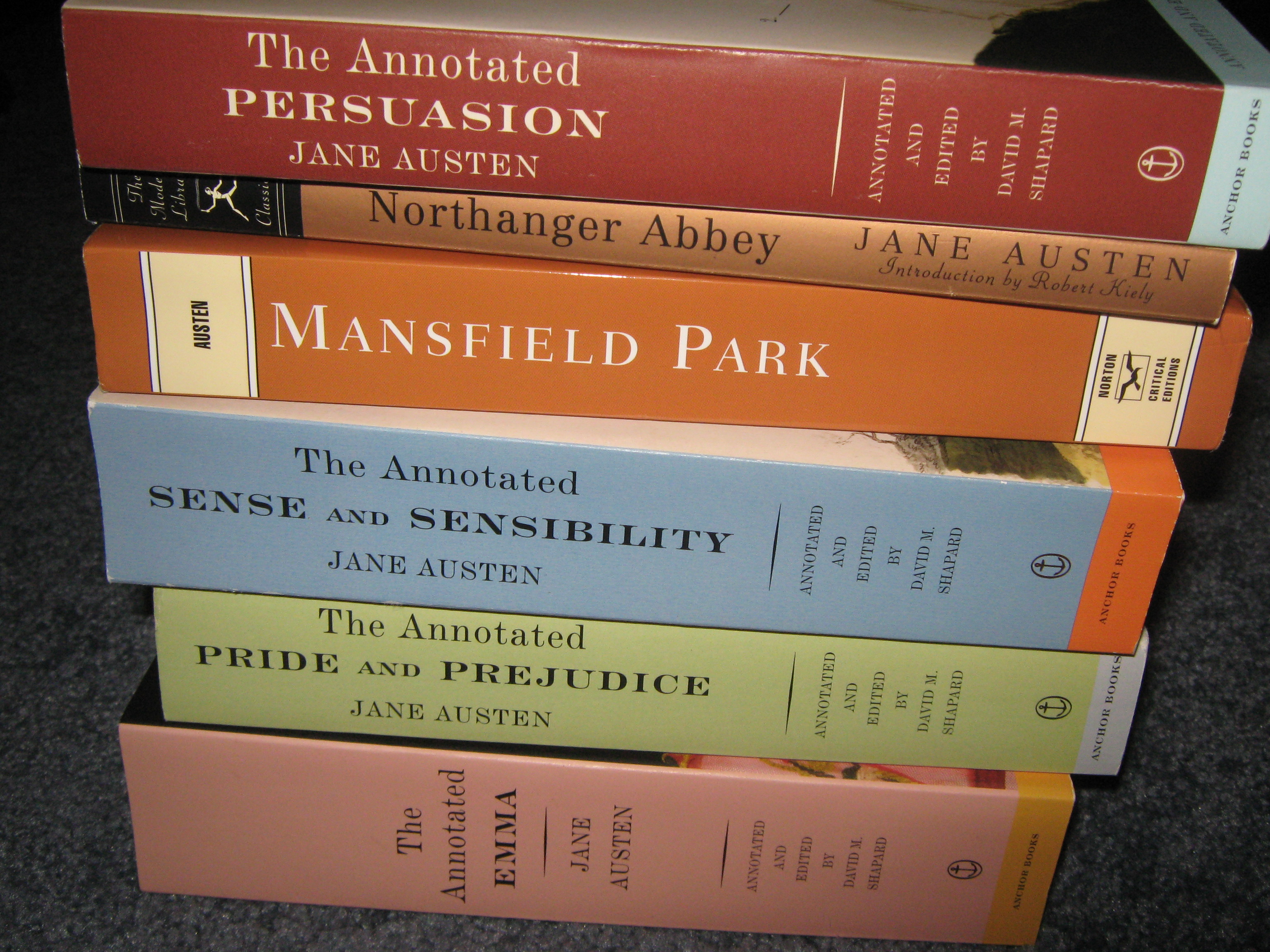
prideprejudice annotated shepard

“It is a truth universally acknowledged, that a single man in possession of a good fortune, must be in want of a wife.”

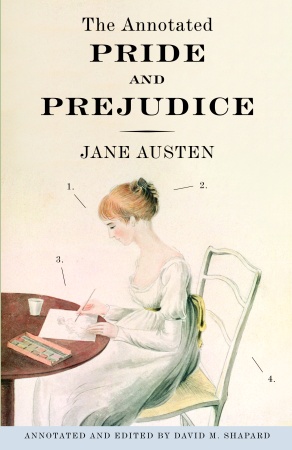
It is the 200th anniversary of the publication of Pride and Prejudice.

This would be my desert island book, if I didn’t practically know it by heart.

I celebrate instead with my favorite Austen novel,  Emma.

Later, when I put down my book to stretch to an old Jane Fonda workout tape,  I absent-mindedly asked, “Does anyone know where the Jane Austen Workout  is?”

There was much laughter, but I’m sure if we developed the Jane Austen Workout we would get rich.

S0 I have developed some archetypal Austen workout activities in honor of the bicentenary.

EXERCISE LIKE JANE AUSTEN, PART I

Lizzie and Wickham

Lizzie and Wickham

1. There is a hell of a lot of walking in Austen.

Do Emma and Harriet ever sit still?  Does a day go by when the Bennet sisters don’t take a walk?

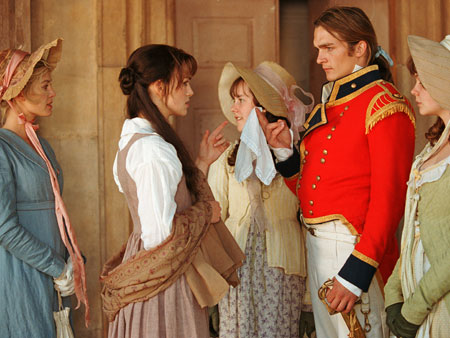
Take a walk when the characters in Austen’s novels do, and you will soon be physically fit.   If you read P&P, you may meet the cute, caddish Wickham, with whom giddy Lydia Bennet falls in love.  You may also meet sensible, dull Darcy, as Lizzie does when she walks through his park and decides he’s not so bad after all.  I would far rather converse with the delightful Wickham, though Darcy is the marrying kind.

And if you are Emma, and who wouldn’t rather be, you might meet Frank Churchill, so charming and funny, or Knightley, the stern advisor/friend with whom she is in love.  Frank is much more fun.

As you can see, I am into the bad boys of Austen.

2. Ride a horse when an Austen character rides a horse.  Think of the rivalry between Fanny and Mary Crawford in Mansfield Park.  Pert Mary Crawford keeps borrowing Fanny’s horse, and Edmund, who rides with her, forgets that shy, sickly Fanny needs her horse for her workout.  Why does Fanny martyr herself?

We want Fanny to get her horse back.  That Mary!

3.  Read any Jane Austen novel at a club, and dance every time a character dances.  The very sight of you with a Jane Austen novel will attract every man in the place, or…   Oh, well…  I’m only joking. No heterosexual man I know has ever read Jane Austen except for a class.

The Jane Austen Workout!

The Jane Austen Workout!

EXERCISE LIKE JANE AUSTEN, PART II:  ARDUOUSLY

Forget kickboxing!  The elliptical is for sissies!  Carry all six of Austen’s novels, which I’m sure you have, in a backpack or bike pannier, and if they’re the annotated editions, you’ll soon be exhausted. Add a couple of biographies to make it really tough.  Go uphill for a couple of miles, or climb a mountain with your Austen for a more strenuous workout.  DON’T DO THIS IF YOU’RE ON BLOOD PRESSURE MEDICATION.  Heck, I just made that up, but there has to be a warming with a workout.  For all I know, people with high blood pressure carry Jane Austen books up mountains all the time.

And then go home and go to sleep.

Now here are some links to a challenge and an article (not part of my workout).

1.  THE PRIDE AND PREJUDICE BICENTENARY CHALLENGE.  At Austenprose, a very good website, you can sign up to read P&P or related books and watch the movies during this anniversary year.  It is complicated, like all of these challenges, and involves putting a logo up at your blog, commenting, counter-commenting, and…but there are prizes.

2.  At The Guardian, several writers take a look at Pride and Prejudice.  (Some of them are men, which disproves my theory that men don’t read Austen.)  Sebastian Faulks says, “Mr Darcy may not be the first depressive to feature in an English novel, but he is almost certainly the first to be a romantic lead.”

Elena Ferrante’s My Brilliant Friend

The Italian writer Elena Ferrante’s new novel, My Brilliant Friend, the first of a trilogy, has been much lauded.  Publishers Weekly ran an interview with Ferrante in November, The New York Times praised the book (albeit in brief) in December, and a long essay by James Wood was recently published in The New Yorker.  If you didn’t know who Ferrante is, and no one knows who she is because she writes under a pseudonym, now you know, or rather don’t know, who she is.

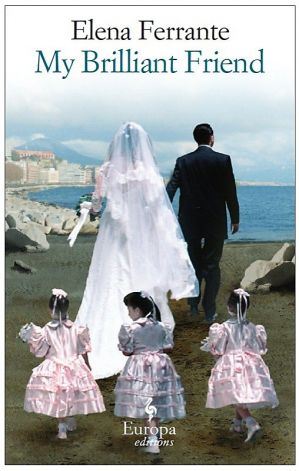
My Brilliant Friend ferrante

It is hard to imagine a more elegant stylist than Ferrante, at least in the translations of Ann Goldstein, an editor at The New Yorker. (I wish I could read the Italian, too, because the structure and sound of Italian are so different.)

I loved Ferrante’s 2002 novel, The Days of Abandonment, and described it (at my old blog, Frisbee:  A Book Journal) as “Kafkaesque, but crossed with the realism of Marilyn French and Doris Lessing.”  It is narrated by Olga, a housewife whose thoughts are tempestuous yet often comical after her husband of 15 years deserts her without explanation.  She had thought she and Mario were living happily ever after with their two children and dog, and cannot believe he is gone.  She stays up all night and writes letters to him.  She descends into sadness and craziness, and her cruel friends will not tell her for whom he left her.

I feel much compassion for Olga as she wonders what has happened.

“I spent the night thinking, desolate in the big double bed.  No matter how much I examined and reexamined the recent phases of our relationship, I could find no real signs of crisis.  I knew him well, I was aware that he was a man of quiet feelings, the house and our family rituals were indispensable to him. We talked about everything, we still liked to hug and kiss each other, sometimes he was so funny he could make me laugh until I cried.”

Part of the reason I liked this book so much was that she finally triumphs (well, in a way) over the man who leaves her for a much younger woman.

Ann Goldstein, Ferrante's translator.

Ferrante’s translator.

You will not necessarily love My Brilliant Friend if you appreciated the stream-of-consciousness of Abandonment. My Brilliant Friend is stunning in a very different way.  Rich in detail, it is a witty, moving, but very traditional chronicle of the friendship of two girls, Elena and Lila, who grow up in Naples in the 1950s.

Elena, the narrator, and her friend, Lila, are the two best students in school.  But Elena feels inferior to staunch, determined Lila, a prodigy who is always in trouble until the teacher finds she has taught herself to read.  Lila vanquishes everyone, even the older students, in academic competitions, initiates games, and teaches herself Latin from a library book. But ironically it is Elena, the second best, who continues in school, while Lila is yanked out after elementary school to work at her father’s shoe shop.

Life is violent in My Brilliant Friend, as it sometimes was in The Days of Abandonment.  Elena says she feels no nostalgia for her childhood in their poor neighborhood in Naples: parents beat their children, boys get into fights, someone gets murdered, and a fireworks competition ends in gunfire.

Yet Elena and Lila have rich imaginative and intellectual lives  apart from what happens in their neighborhood.  They are absorbed in their own world of study and play.

Lila is the leader.  At one point in their childhood, they trade dolls, and Lila throws Elena’s doll down a grate into a basement.  Elena does exactly the same, because she does not want to be outdone.  They cannot find the dolls, and Lila concludes that Don Achille, a man with a terrible reputation whom they are frightened of, has stolen them.  When they knock on his door and accuse him, he gives them money for new dolls.  But they don’t buy dolls:  they buy a copy of Little Women instead.

And since Little Women is one of my favorite books, I was delighted.

After Lila returns the borrowed copy of Alcott’s masterpiece to Maestra Oliviera, the teacher, she

“regretted both not being able to reread Little Women continuously and not being able to talk about it with me.  So one morning she made up her mind.  She called me from the street, we went to the ponds, to the place where we had buried the money from Don Achille, in a metal box, took it out, and went to ask Iolanda the stationer, who had displayed forever in her window a copy of Little Women, yellowed by the sun, if it was enough.  It was.  As soon as we became owners of the book we began to meet in the courtyard to read it, either silently, one next to the other, or allowed.  We read it for months, so many times that the book became tattered and sweat-stained, it lost its spine, came unthreaded, sections fell apart.  But it was our book, we loved it dearly.”

As they grow older, Lila becomes conventional, busy working for her father the shoemaker.  Eventually she stops trying to keep up academically with Elena.  Lila has taught herself Latin and the rudiments of Greek from library books. But then she starts dating, older men with money propose to her, and she begins to dress like a movie star.

But she still has artistic aspirations.  She designs a line of shoes, which her father refuses to make until her fiance, Stefano, the owner of a grocery store, insists.  The shoes are elegant.

Meanwhile, Elena takes on Lila’s role at school.  She studies endlessly, manages to be the best student, and writes, as Lila used to.  She loves The Aeneid, which she reads in Latin (it’s my favorite Latin poem, too), and talks often about Dido and Aeneas.   But she always misses Lila, who was her most brilliant friend.

Ferrante records in a literary way the coming of age of a woman in a poor neighborhood, with humor and without sentiment.

It feels like an important book, but someone who knows Italian literature would have to explain why.

Loved the book!

A Cattleman’s Books, Sensational Book Sales, & Arthur Schnitzler’s Vienna 1900

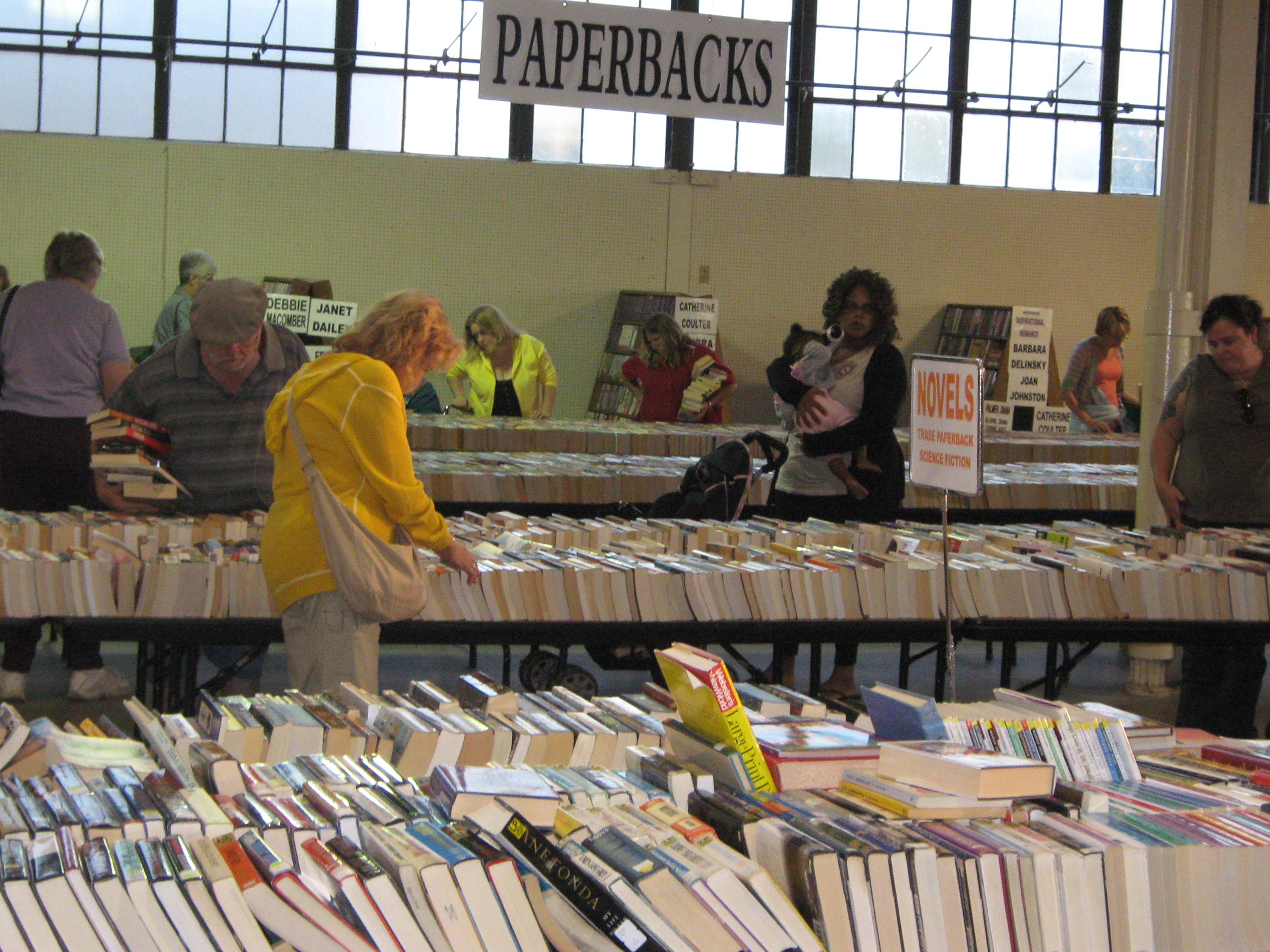
A fabulous book sale!

Used booksellers depend on fabulous book sales like this.

I found A Cattleman’s Books by chance while wandering through a city I didn’t know.

One window was boarded up, and the other impossibly dusty.  A few books had been dumped  in the window, apparently by someone who had forgotten to shelve them.  If you wanted a coverless copy of The Oxford Book of English Poetry, out-of-print science fiction by David Lindsay, or a wacky 1950s Big Book of Games, which emphasizes  games that require passing an apple from under your chin to another’s, this was the place for you.

In the damp, unheated store, the aged cattleman sat watching TV.  He  did not take care of the books.  He owned “24 head of cattle” on a farm, and opened the store to have someplace to go in the city.

There was no order to the books.

I asked if I could arrange the books in alphabetical order in exchange for free books.

There were some finds, a few rare books, mostly books I just wanted to read.

He introduced me to the wonderful world of used book sales, book fairs, and estate sales that used bookstore owners mine.

Over the years, at wonderful sales,  I have acquired almost new copies of Mrs. Oliphant and Fanny Burney, books by Ruth Suckow, Booker Prize-winning paperbacks, old farm cookbooks, and an SF series by Roger Zelzany.

It often takes years for me to get around to reading the sales books, which I park in boxes.

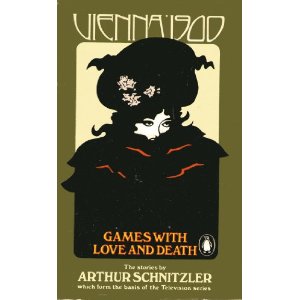
Vienna 1900 SchnitzlerAnd so I have just finished a breathtaking collection of  stories  by Arthur Schnitzler, Vienna 1900:  Games with Love and Death, which was published as a companion volume to a Masterpiece Theater series in 1974.  The four stories, “Mother and Son,” “The Man of Honour,” “A Confirmed Bachelor,” and “Spring Sonata,”  are available free at Project Gutenberg under different titles.

Schnitzler (1862-1930), an Austrian  Jewish physician, was the most famous Modernist writer in  Fin de Siecle  Vienna, a sophisticated member of a circle of artists and writers who knew the writings of Freud.  Schnitzler graduated from the University of  Vienna School of Medicine, which Freud also attended, and was familiar with the work of the psychiatrist Richard von Krafft-Ebing.  He also wrote a thesis on hypnosis and used it in his practice.

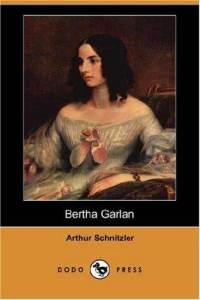
bertha-garlan-arthur-schnitzler-paperback-cover-artSchnitzler’s brilliant plays, stories, and novellas often recall the vivid, bold realism of Tolstoy and Flaubert.  Spring Sonata, published elsewhere as Bertha Garlan, is a pitch-perfect novella about a woman’s sexual blooming. Bertha, the heroine, is a repressed widow, a beautiful woman whose husband died after only three years of a loveless marriage.  She often visits the cemetery, though she did not love her husband, perhaps because there is so little to do.  And because the town is so small, lecherous men of her acquaintance hover around her, thinking her available, sometimes even flirting in the cemetery.  Her brother-in-law and nephew flirt with her.

Bertha has dignity.  She rejects the sexual overtures.  Her son is the center of her life.  She teaches piano to supplement her small income.  Hers is a world of women and children.

But when she learns that Emil Lindbach, her first love, a famous violinist, has recently returned to Vienna, her hometown, she feels restless.  She decides to go to Vienna with sophisticated Frau Rupius, the wife of a paralyzed man, who has beautiful clothes made for her in Vienna.

Schnitzler likes to write about art within art.  Herr Rupius shows his collection of engravings to Bertha, with no sexual connotations, because each is fixated on someone different.  But the engravings, one of which turns up in a museum, make an impact on her.

Her fantasies of Emil are rich.  She yearns to fall in love again, and to persuade him to play music only for her.  As a piano student in Vienna, she, too, was once artistic and unconventional.  In Vienna, she walks around the city fantasizing about love.

And when she finally meets Emil, we see in a thousand ways that her fantasies are more sensual and intrepid than his.  Bertha likes walking in the rain; he prefers a carriage. He does not dare take her to his own apartment–he says because of the press–and they make love in rented rooms.  Bertha represses her knowledge of what this means.

The art in the room is an important metaphor.  There is nothing that could possibly be the choice of sophisticated Emil.   There are  portraits of the Emperor and Empress, framed photographs, and a painting of a naked woman.

“What is that?” she asked.

“It is not a work of art,” said Emil.

He struck a match and held it up, so as to throw the light on the picture.  Bertha saw that it was merely a wretched daub, but at the same time she felt that the painted woman, with the bold laughing eyes, was looking down at her, and she was glad when the match went out.

She does not want to see who she is for Emil.  The art tells us.

When the fantasy ends, it could be the end for her.  I won’t give it away, but let me say that Schnitzler’s take on women is different from Tolstoy’s or Flaubert’s.

A great novella.

Mirabile Does Middlebrow: Emma Tennant, Hilma Wolitzer, Angela Huth, Sherry Jones, and Jo-Ann Mapson

“Mirabile Does Middlebrow” is a new bimonthly feature here.

Mirabile in 2000

I’d rather be reading middlebrow!

I  am a fan of middlebrow women’s fiction, and though I rarely write about it, I certainly read my share of popular novels.  With a cup of tea in the middle of the night and none of the men awake to tease me, I curl up with the novels of Mrs. Oliphant, Mrs. Gaskell, Monica Dickens, or Mary Stewart.

I also try lots of contemporary women’s fiction.

Sometimes middlebrow contemporary fiction is a good fit for me, sometimes not.  I can’t for the life of me read Jennifer Weiner or Joshlyn Jackson.

I intend to be honest, and hope you will find some good books here, some by famous people, some barely known.

And so here’s the round-up of middlebrow novels for January:

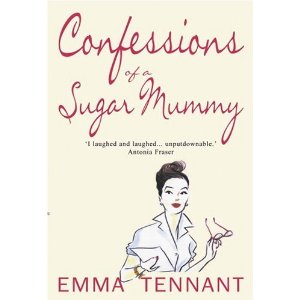
Confessions of a Sugar Mummy1.  Emma Tennant’s Confessions of a Sugar Mummy.  This delightful “chick lit” novel is for women of a certain age, or at least for women who know they may someday be that age.  The witty Confessions are narrated by a sixtyish interior decorator who falls in love with a 40ish man.   She tells us that Freud discovered the Oedipus complex, but failed to invent the Jocasta complex, “to look at the situation from the point of view of…his mother.”  In her work as an interior decorator, she meets the gorgeous French tile maker, Alain, and immediately wants to sleep with him.

But she gives us very good advice.

“On no account rush to the loo and apply Touche Eclat or whatever the ruinously expensive foundation is called, the one that claims to remove your wrinkles and fill in the vertical lines down to your mouth, the result of a fifty-year nicotine habit.  You will look strangely different, it’s true, but not for the better, as they claim.”

She considers trying Botox, settles for a new facial creme, and then resolves to interest Alain by making  a fortune selling her flat in her gentrified neighborhood.  She thinks she can buy a house for herself, Alain, and possibly his wife.  He is very interested.

Yes, she’s out of control, but she’s very, very funny.  B+

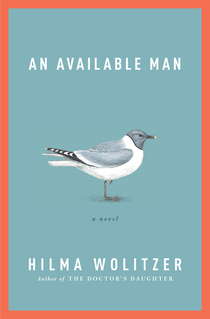
An Available Man wolitzer2.  Hilma Wolitzer’s An Available Man.  You might think it is no coincidence that I  read a novel about a man in his sixties after reading a novel about a woman in her sixties, but I assure you I’m still clinging to my spry half century.   Hilma Wolitzer is the mother of Meg Wolitzer, one of my favorite writers, and Hilma’s  light, romantic novels are usually quite good, so I picked up a copy.

When retired science teacher Edward’s children place a personal ad for him in NYR under the name Science Guy, he is annoyed, because he has not gotten over Bee, his late wife, and he doesn’t want to date.  But he goes ahead with it, and meets several women who are not quite right for him, among them a teacher who jilted him years ago; a beautiful older blonde whose extensive plastic surgery repulses him; and a widow whose insistence on showing him photos of her dead husband makes him feel he is at a bereavement brunch.

Edward is a kind, sensible, “nice” character, and this short entertaining novel is very “nicely” written. Occasionally an unpredictable moment redeems this novel as we see Edward change and grab life again.     B+.

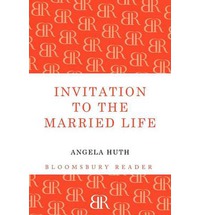
Invitation to the Married Life huth3.  Angela Huth’s Invitation to the Married Life.  This novel was compared to Margaret Drabble’s The Radiant Way, and though it was nothing like it, I very much enjoyed Huth’s shrewd observations of her characters’ rocky marriages and realignments of love.  My favorite character is Rachel, a charming woman who spends her days sleeping on 300+ count sheets in a beautifully redecorated bedroom, because there are certainly days when I, too, would like to dream all day.  Her husband, Thomas, who is quite nasty to her, has affairs with younger women and falls in love with an artist’s work and schemes to seduce her. Rachel embarrasses herself at a party making a pass at a man, but that is not the end of the world.

We meet other characters, among them unhappy Frances Farthingoe, who gives a lot of parties and decides she needs a custom-made gray awning at her ball, while her quiet husband takes refuge in studying badgers at night.

Marriage is not the end-all when you’re ill-suited, and that is what Huth shows us so charmingly.  Grade:  A-

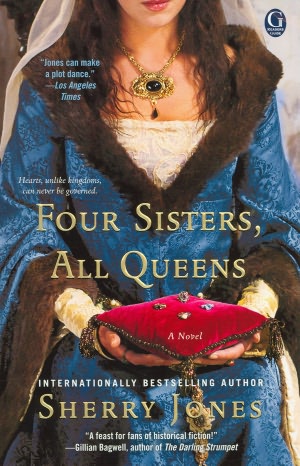
Sherry Jones four sisters4.  Sherry Jones’s Four Sisters, All Queens.  Sherry, a Friend of Our Blog , was kind enough to send me a copy of her historical novel, Four Sisters, All Queens.  As a  fan of Jean Plaidy, Anya Seton, and  Philippa Gregory, I knew  I’d enjoy this novel set in the 13th century about four queens.

I enjoy historical novels about queens to the point that I once considered spending a year reading only historical novels…but I did something else!

And I ended up racing through Sherry’s well-researched, deftly-written novel.  She spins the story of  the four daughters of savvy Beatrice of Savoy, the countess of Provence, who raised and educated her daughters as sons, ensuring that they would learn Latin, French,  history, and other subjects that would help them participate in the political process..  She was the “queen maker” though she would have preferred to make kings, and her four daughters were expected to make political marriages.  Indeed, Beatrice married them so well that it should have strengthened Provence.

The four sisters grew up to be Queen Marguerite of France, Queen Elenore of England, Queen Sanchia of Germany, and Queen Beatrice of Sicily.  Marguerite’s husband, Louis IX of France, is impotent.  His mother has a way of showing up in the garden as they are kissing.  Marguerite also has to contend with this evil queen politically, as she tries to edge Marguerite out of  meetings and sends Marguerite’s uncles home.

My favorite character, Eleanore, has to walk a treacherous path:  her coronation is crashed by a madman who claims the coronation is illegal because Henry is betrothed to his daughter. Henry was engaged to her, and broke it off, saying she was too closely related:  The Pope is  reviewing the document.   Marguerite tries to stay cool, and is astonishingly smart, managing to attract all the attention back to herself.

The other two queens, too, have problems, and as they grow older, the politics are even more complicated.

This novel is fascinating, great vacation reading, take it to the Caribbean (in my case the couch).  Sherry, a former journalist,  is an excellent writer.

Finding Casey

Grade:  B+

5.  Jo-Ann Mapson was kind enough to send me a copy of Finding Casey, the well-written sequel to her  award-winning novel, Solomon’s Oak. In Solomon’s Oak,  Mapson tells the story of Glory, a grieving widow who bakes pirate cakes and plans weddings to support her farm; Joseph, a retired wounded cop with pain management problems; and Juniper, a rebellious adolescent whose sister disappeared some years ago.  In Finding Casey, Glory and Joseph have married and adopted Juniper and moved to Santa Fe, and there isn’t at first much tension in their happy family life.  Glory is pregnant, Joseph volunteers on the board of a women’s shelter, and Juniper is in college.

But a new character is introduced, Laurel, a brainwashed young woman who has been horribly abused by a cult leader at “the Farm,”  and  when she secretly brings her daughter to a hospital against the wishes of the sadistic Seth, she finds help from a social worker.

Mapson has a calm voice and a simple, poetic style.  She understands suffering and describes it quietly.  I did figure out the plot almost immediately, but that isn’t a bad thing.  Though there is suspense, you know she will help her characters.

Finding Casey continues the story without much ado, and perhaps doesn’t quite stand alone.  Is is more loosely plotted, because we already know the characters.

So read Solomon’s Oak first. It’s just better to read them in a row.

Grade:  B+