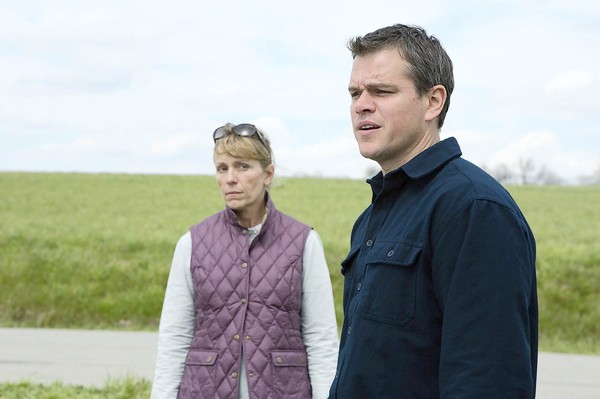
Promised Land: How I Raised My Carbon Footprint (Slightly) to Go to a Pretty Good Movie

Matt Damon and Frances McDormand in "The Promised Land"

Matt Damon and Frances McDormand in “Promised Land”

The serious movies, as opposed to the frivolous movies, have been out for a few months now.   If I want to bet on the Oscars, I need to get to a theater, right?

But the ex-urban mall, which opened on the county line and put the inner-ring suburban theaters out of business, has made it more difficult for us urban bicyclist to go to the movies.

We looked at the paper.

The Hobbit looks frankly horrendous, and anyway at age 11 I inscribed the end-paper of my paperback copy of The Hobbit  with the words A HOBBIT IS ROTTEN.

And I can’t imagine sitting for two and a half hours through Lincoln, with the brilliant Daniel Day-Lewis in a weird kind of Lincoln drag, though I’ve heard nothing but good about the film.

So what does it take to get me to a movie?

In this case it was a car, which raised my carbon footprint stats slightly.

We went to see Promised Land, starring Matt Damon, Frances McDormand, and John Krasinski.  Written by Matt Damon and John Krasinski, and based on a story by Dave Eggers, this simple but effective film, set in rural Pennsylvania, examines the environmental impact of “fracking,” or hydraulic fracturing, which is the process of drilling for natural gas by injecting water, sand, and chemicals into the ground.

And the movie has enough clout that one natural gas company, Marcellus Shale Coalition, is up in arms and has paid for a 15-second pro-fracking commercial to be shown before Promised Land in theaters in Pennsylvania.

Unprecedented, right?

So, yeah, we were there!

The premise of the story is simple:  Steve (Matt Damon) and Sue (Frances McDormand),  two soulless sales people for Global, a natural gas company, try to persuade the struggling poor farmers  of a small town in rural Pennsylvania to sell their land cheaply so the company can make millions off it.

Of course Steve and Sue are not soulless.  Steve, a bland young man from Eldridge, Iowa, thinks he knows inhabitants of small towns: his hometown died when the Caterpillar company closed, and he genuinely believes it is best for the farmers to sell and get out.  But we see him struggling to keep up to speed on environmental issues:  his research skills are nil, he depends on word of mouth, and is shocked to learn  that the articulate rabble rouser (Hal Holbrook) who has raised environmental questions at a town meeting is not “just a high school science teacher,”  but has a Ph.D. and was an engineer at Boeing.

Sue is  a down-to-earth woman with a wry wit and direct beyond-gender style  that works well in the small town, who talks to her kid by Skype and tries to keep Steve on track when his beliefs are shaken.
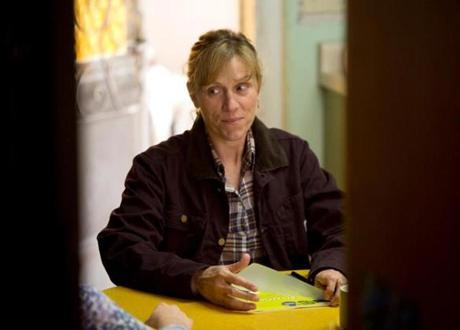
Frances McDormand in "Promsied Land"

Frances McDormand in “Promsied Land”

Both are complicating their lives with short affairs:  Steve is attracted to a teacher he meets in a bar and gets dead-drunk to impress her by playing a drinking game called “Absolute Madness.”   Sue  is attracted to the good-looking owner of the general store, and, without even being drunk,  sings a hymn at open-mike night at a bar, because he has suggested she should make a fool of herself to win friends.

Then the charming Dustin (John Krazinski), an environmentalist who has come to town to stop them, steps up to the mike after Sue’s performance and gives a speech about fracking.  Then he sings Bruce Springsteen’s “Dancing in the Dark” and gets everybody dancing.  The people are suddenly on his side.

You can imagine how unhappy Sue and Steve are.

But details are important.  Although Dustin educates us about the fracking issue, he enters the town in a truck, which struck me as very odd.  An environmentalist in a truck?

Get a small car at the very least!

And this detail turns out to matter.

John Krasinski

John Krasinski

Dustin plants anti-Global signs around town depicting dead cows on a farm that was polluted by fracking.  The farmers begin to realize this is about more than money.  And Dustin also  teaches an elementary school class the horrors of fracking with a demonstration of what happens to a toy farm when chemicals, water, and sand are dumped from a plastic bag:  the farm goes up in flames.

And Steve is wondering what is really going on.  He vulnerably asks Sue if there is any truth to what Dustin says about fracking.  She says no, but obviously doesn’t know any more than Steve does.

Steve is the character who undergoes the biggest change.  He is horrified when a poor man who has signed the contract to sell his land shows up at the bar in a convertible he has just bought.

He is beginning to learn the havoc he wreaks.

Now I can’t give away the ending, but let’s just say there’s a twist.  Fracking is horrible, but people are…

Well…

Also horrible.

At one point Dustin says to Steve something along the lines of, “You would be good at what I do.”

And we do see that.

This is not a great film, but it’s a good one.

The acting is exceptional.

Every word McDormand utters is perfect for her character, and I would give her an Oscar for this, though that probably isn’t in the cards for this movie.  She is a salesperson/mom on the road, doing the best job she can and killing time until she can get home to her son, and she means it when she tells Steve,” It’s just a job.”  Her mobile lined face is expressive.

Matt Damon is always deadpan, and sometimes he comes across as quiet and thoughtful, but in this case he does a good job of being bland and not too bright.  His face frowns and squints as he tries to come to terms with what is what.  He believes in his job, and when he suddenly doesn’t believe, it shakes up his whole life.

As for John Krasinski, I’m amazed.  I’m used to his smirking on The Office, a show that bores me so much it always seems to last far, far longer than half an hour, and I didn’t expect this level of charm and vitality.  He plays a different character here!  So that means he can act?  Blimey!

Yes, he can.

Fracking isn’t an issue in my area of the country, but it is one we should all pay attention to.   According to an article in Common Dreams, ” New York and Maryland have suspended fracking, in order to assess its environmental and health impacts.”

Let’s suspend it in Pennsylvania, too!

Go for the wind power and solar power, guys.  That’s where the future is.
Anthony Trollope’s Phineas Finn

I have an almost infinite capacity to lose myself in Victorian novels.

Glued to book:  “Oh, you’re going skiing/snowboarding/ice-fishing today?  Bye!”

Hours later I realize I don’t have the faintest idea where they went.

Anthony Trollope is one of my favorites. His style is so strangely modern that I forget that he is a Victorian.  His graceful sentences are long but plain and without rhetorical flourishes.

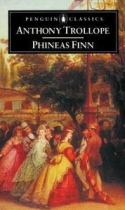
phineas-finn--anthony-trollope-paperback-cover-artTrollope is a brilliant writer–as good as Dickens, though in a very different style.  I started long ago with his two famous series, the Chronicles of Barsetshire and the political Pallisers novels. I am not sure which I read first, but I know I was so glued to The Pallisers  on TV that it is amazing I got any work done.  In addition to all those hours of watching, I read all six of the Pallisers books in record time:  Can You Forgive Her?, Phineas Finn, The Eustace Diamonds, Phineas Redux, The Prime Minister, and The Duke’s Children.

Phineas Finn is a perfect novel for those of you who like politics.  I figured that out when I read New York Times columnist David Brooks’s 2011 op/ed piece on Phineas Finn, “Politicians Behaving Well.”  Brooks is a conservative Republican and I am a radical Democrat, but both of us like Trollope.

Trollope is a universal taste.

We do, however, see the idealistic politician Phineas differently.

Phineas Finn parses politics, but Trollope also describes the hero’s idealism. He explores the way politics shapes not only the public good but personal character and happiness.

Phineas, an Irish doctor’s son, a handsome, earnest, charming young barrister, has many friends among the upper classes in London.  When an influential friend, Barrington Erle, urges him to stand as a Liberal for Parliament in Loughshane, Ireland, Phineas is very eager.  Although the Finns have no money, Phineas’s father, Dr. Finn, has influence with the Earl who controls the borough, and the Earl finances the campaign.

But 24-year-old Phineas doesn’t understand that even the Liberal party recruits candidates who will always vote with the party.

Phineas tells Mr. Erle proudly,

“Let me assure you I wouldn’t change my views in politics either for you or the Earl, though each of you carried seats in your breeches pockets.  If I go into Parliament, I shall go there as a sound Liberal–not to support a party, but to do the best I can for the country.  I tell you so, and I shall tell the Earl the same.”

And Mr. Erle tells him that won’t be acceptable.

Phineas FinnWhat do you do to get ahead in politics?  Must you be obsequious? Yes.  Phineas is politically savvy at first, doing what everyone tells him to do, but eventually it gets tiresome.  He wants to make a difference.   But he is caught in a political snare:  he owes too much to his backers to be independent. The final deal-breakers is a tenants’ rights bill which his party refuses to sponsor.  Phineas stands up.

But I’m getting ahead of myself.

Even one vote makes a difference, as I know from attending the Democratic caucuses, but I admit I am  most interested, and I won’t be alone in this, in  Phineas’s courtships of three women.  Trollope has a gift for drawing believable, lively, though not always likable, women characters, and he is particularly successful with Lady Laura and Violet Effingham.

Although Phineas has flirted with a lovely but apolitical young woman in Ireland, Mary Flood Jones, who thinks he may marry her, he is under the influence of Lady Laura Standish in London, a brilliant, vivacious, ambitious tall redhaired woman who is interested in politics.  Does Phineas love her, or does he love her connections? It is not clear. But when Laura ambitiously marries George Kennedy, a rich, chilly, domineering politician through whom she hopes to have political influence, she almost immediately realizes her mistake.  Kennedy tries to control her by narrowing her interests and cutting her off from friends.  Eventually she cannot live with him, and returns to her father.  She regrets having turned down Phineas.

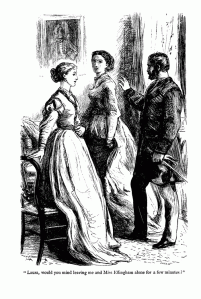
Laura, Violet, and Phineas-

Phineas with Laura and Violet

But Phineas has turned his affections from Laura to her friend Violet Effingham, a beautiful but eccentric heiress who talks flippantly about John Stuart Mill.  And this quasi-relationship–Violet isn’t particularly interested in him–causes problems, because Laura’s brother, Lord Chiltern, is in love with Violet, Laura’s father found Phineas a parliamentary seat after he lost his Irish one and believes Phineas owes him loyalty, and  jealous Laura says Phineas should forget about Violet for Lord Chiltern’s sake.

In the end, political integrity is Phineas’s saving grace. And I think this is why we so much like Phineas Finn. We would like to see this integrity in more politicians.

I look forward to rereading Phineas Redux.  Trollope’s detailed portraits of his characters’ obsessions with sex, money, and politics remind us that the world has not changed all that much.

Best of 2012: My Lucky Eleven & His Top Five

Happy New Year’s Eve!

Should old acquaintance be forgot…

And what are the rest of the words?

new year's eveAre you going out tonight?

I always thought I’d grow up and dance like my mom at the Elks a la ’60s.

I don’t have a party dress.

So I am cooking a delicious home-cooked dinner, baked chicken with garlic and apples (Laurie Colwin’s Home Cooking).

And we are writing our “Best of 2012” lists.

Here are my Lucky Eleven Best New Books of 2012, and I’ve added a couple of Special Categories for other older books.

I unwittingly included two rock and roll novels and one jazz novel on my list.  I’m not sure how that happened.

And after MY list, I am including my husband’s Top 5!  So enjoy our lists!

Top 11 New Books of 2012 (All Published This Century)

1.  Michael Chabon’s Telegraph Avenue, a superb novel about a used record store in Oakland faced with the prospect of a corporate media store moving in.

2.  Joydeep Roy-Bhattacharya’s The Watch, a retelling of Antigone set in the war in Afghanistan.

3.  Ruth Prawer Jhabvala’s A Lovesong for India:  Stories from East and West.  This stunning short story collection is divided into three parts, “India,” “Mostly Arts and Entertainment,” and “The Last Decades,” and is set in India and the U.S.  Jhabvala  won the Booker Prize for her novel Heat and Dust and two Academy Awards for best adapted screenplay for Merchant-Ivory films, A Room with a View andHowards End.   Isn’t it time she won an American award?

4.  The Night Train by Clyde Edgerton, a charming, humorous novel inspired by James Brown, Civil Rights, and the ’60s.  Edgerton describes a friendship between an African-American boy and a white boy in a small Southern  town.

5.  A. M. Homes’s May We Be Forgiven.  A brilliant, horrific, often funny satire of the American Dream.  Family prevails, but it is threatened by violence and trauma.  Were the Nixon years, bad as they were, more idealistic than the 21st century?  The main character is a “Nixonologist.”

6.  Scarlett Thomas’s enchanting novel, Our Tragic Universe, crackles with wit.   The narrator, Meg, is a waifish, depressed science fiction writer who is in love with a married museum director, has a psychic dog, B, and a close friend, Libby, a deli owner and inspired knitter whose life is equally complicated.  I loved this and must read another Thomas novel soon.

7.  Nick Hornby’s Juliet, Naked, his best novel.  The heroine, Annie,breaks up with her boyfriend of 15 years, Duncan, a middle-aged man obsessed with Tucker Crowe, a rock star who retired in 1984.   Their interests are oddly parallel:  she curates the town museum, he curates a Tucker Crowe website.  But she wants a child, and knows she will never have one with Duncan.   A disagreement about Tucker Crowe’s new record, “Juliet, Naked,” on the website eventually sparks a friendship between Annie and Tucker.  Kind of romantic, but not too-too.

8.  Zadie Smith’s NW.  Four characters from the same rough neighborhood in London (NW) manage to transcend class, or fall way, way down.  Sad and funny.  A lot about the internet culture.  I didn’t love this book, but it is very good.

LillianHellman A Difficult Woman9.  Alice Kessler-Harris’s A Difficult Woman:  The Challenging Lives and Times of Lillian Hellman.  A brilliant biography of Hellman, who was one of our best American writers, but has been denied her place in the canon because of accusations of lying, her politics, and her attacks of  leftists for their cowardice during the McCarthy era.

10.  Howard Jacobson’s Zoo Time, a satire of the publishing industry.  He is one of England’s most brilliant writers, and he is very funny.

11.  Will Self’s Umbrella.  Excellent Joycean novel, which I am rereading in 2013, and let me know if anyone is “sponsoring” a read of this.  A psychiatrist discovers that some of his patients were actually victims of an encephalitis lethargica epidemic.  Very sad, and I have to admit I was initially interested because of its relevance to my life:  I was hospitalized for a bug bite and almost died, and encephalitis was one of the illnesses they ruled out (though not this strain).

AND SPECIAL CATEGORIES OF OTHER BOOKS

BEST TRANSLATION

Lydia Davis’ translation of Madame Bovary

BEST OUT-OF-PRINT BOOK

Dear Beast by Nancy Hale.  A more “grown-up” American version of D. E. Stevenson’s Miss Buncle’s Book.  A woman’s novel about the small Southern town where she lives becomes a best-seller.

BEST NEGLECTED NOVEL

Margaret Wilson’s The Able McLaughlins.  Won the Pulitzer:  an excellent novel about pioneer farmers in Iowa.

AND NOW FOR AN UNPRECEDENTED ADDITION.  MY HUSBAND HAS AGREED TO LET ME PUBLISH HIS TOP 5 LIST:

My top five (in no order):
Melville:  One of His Favorites

Melville: One of “His” Favorites

1. The Passage of H.M. by Jay Parini – I would recommend this book to anyone. Dickens is a character in this book!

2. One of Ours by Willa Cather. One of the saddest books I have ever read.

3. Zeitoun by Dave Eggars.  I don’t know how this guy does it. A great and shocking story about the Katrina disaster.

4. The Yiddish Policemen’s Union by Michael Chabon. I listened to this book driving to Buffalo. It was great. They interviewed him on the last disk. He said he was inspired to invent this story when he came across the book “Teach yourself Yiddish” in a used bookstore.

5. The Sweetest Dream by Doris Lessing. I enjoyed all the Lessing books that I read, but this one was the best. I will read more of her.

Other very good reads: As I Lay Dying, Moby Dick, Big Breasts and Wide Hips (still reading).
Not a bad year at all.

See you next year!

My Funny-Sad Diary of the ’70s & How to Keep a Book Journal

Long ago, in a parallel universe in the ’70s, I kept a  charming diary.  It is the only diary I wrote that is enjoyable reading, and I would gladly burn my later sad-sack diaries, except that burning one’s journals in a bonfire is banned by the EPA (air emissions).

My girly vinyl-and-silk '70s diary

My girly vinyl-and-silk ’70s diary

Much of this charming, funny, girly vinyl-and-silk diary is about my student days.  I described the politics of the classics department, flirtations and friendships, my charming soon-to-be-ex-husband’s extravagant dinner parties, a never-ending paper on Jane Eyre, and going to bars to listen to Greg Brown (good) or Chickie and the Dipsticks (not so good).

Here is my mocking inscription on the first page of the diary.

A JANITOR’S JOURNAL:

A Useful Document for Janitors
Aspiring to be Classicists.
One woman’s story.
Her trials and tribulations.
Outer struggles with
clogged toilets reflect
inner mental crises.

I had a satiric outlook, but also described the ups and downs of everyday life.  My ex- was the most charming person I knew, but he and his friends were hard drinkers. We once spent Thanksgiving with an alcoholic friend who had lost his English professor job and who became drunkenly abusive to his wife at dinner.  But my witty husband, who, even when drunk, brought out the best in everyone, managed to divert him by describing something on PBS as “the Stratford-on-Avon picture torture.”   We all laughed, and the friend calmed down.

Occasionally I wrote about books.  Well, I must admit, I wrote about books all the time.  I loved Anna Karenina, and wrote reams about Levin, who was my favorite character.  I wrote about all kinds of books:  Edmund Gosse’s Father and Son, Dickens’s Hard Times, Cicero’s Pro Caelio (I was very indignant that Clodia Metelli, an older woman, was blamed for Caelius’s  problems), Euripides’s Medea, Colette’s Break of Day, and a trashy French romance series, the Angelique books.

Jane Austen’s Emma was my favorite book, but  I wrote disapprovingly of Pride and Prejudice.

Aug. 22

Am writing at the laundromat, drinking Pelican Punch tea from a defective Gunsmoke thermos purchased at a garage sale.  It leaked all over my purse.

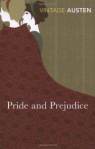
I am reading Pride and Prejudice, and am astonished that I could ever have read Jane Austen as a satirist.  For the first half of the book Elizabeth Bennet looks critically at the world; in the second half she learns her mistake and accepts traditional propriety.

pride-prejudice-jane-austen-vintage

There you have it:  Gunsmoke and Pride and Prejudice.

Surprisingly, my views on P& P have not changed much. I enjoy Lizzie’s sharpness and wit, but the last part of P&P still annoys me.  Lizzie doesn’t fall in love with Darcy until she sees his property, and Darcy, like so many Austen heroes, is a stiff, even if he’s played by Colin Firth.  Could anyone really fall in love with Darcy/Knightley/etc.?

But I’m really here to talk about:

BOOK JOURNALS.

I no longer keep a personal diary, but I love my book journal.   I recently filled a book journal of five years of my reading.  I need to pick a new notebook for my book journal.

Big or little?

So far the format has been easy.  It’s a list.  And if I want to keep this format, I have two small notebooks that will work.

NOTEBOOK CHOICE #1:  The novelty notebook

IMG_2257

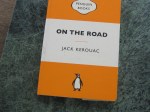
This small notebook looks like a Penguin edition of On the Road.  I’m not a big Kerouac fan, but I saw the exhibit of his typed scroll of the manuscript at the University of Iowa Art Museum.  A guard had to warn me not to lean on the glass case.  I was fascinated by the scroll.

All I can remember about On the Road is that “the prettiest girls in the world live in Des Moines.”  This struck me because I’m a Midwesterner.

NOTEBOOK CHOICE #2:  The Moleskine reporter’s notebook

IMG_2260I deliberately bought the reporter’s style notebook so I can flip it open and take notes.   You never know when Nick Hornby, Michael Stipe, or Dovegreyreader might walk down the street.  Of course I’d flip open my notebook and  ask them a few questions.

“Sir? Ma’am?”

NOTEBOOK CHOICE #3:  If I want to change the format to an actual journal with brief critiques of each book, this irresistible Miquerlius softbound journal might do.

IMG_2256No idea how many pages, but at least two-to-three hundred.

I bought most of my notebooks for occasional teaching, but as you know who know me from my previous blog, I have no students at the moment.  No one to study Wheelock or Catullus?  Dear me!

Do let me know what kind of notebook you use for your book journal.  And whether you list books or “journal.”

Best Book of the Year: Michael Chabon’s Telegraph Avenue

I had to start a new blog to escape my “debts” to charming publicists who kindly sent me new books I didn’t get around to reviewing at my old blog.

I’m joking.  I started a new blog because I felt constricted by the parameters of the old  (Frisbee:  A Book Journal).  I wanted to branch out and write at least occasionally about things mirabile dictu, “wonderful to say,” rather than horrendum dictu.  (N.B. And I will review some of those books publishers sent me.)

I am happy to say I’ve recently read one new novel so dazzling I am going to post a picture of it on my sidebar:

Michael Chabon’s Telegraph Avenue.

Telegraph Avenue Michael ChabonIf you know his work, you won’t be surprised that his new novel makes my “Best Book of the Year” list.  Chabon won the Pulitzer in 2001 for The Amazing Adventures of Kavalier and Clay (a novel about the comic book industry) and the Hugo, Sidewise, Nebula and Ignotus awards for The Yiddish Policemen’s Union (billed as an alternate history mystery set in Alaska). His gorgeous, convoluted, poetic sentences and intricate plots make him one of the best writers in America. (Other contenders are Ruth Prawer Jhabvala  and Jonathan Lethem.)

So, yes, now that I’ve read Telegraph Avenue, I’ll be reading more Chabon.

Set in 2004, Telegraph Avenue hinges on the fate of Brokeland Records, a used vinyl record store in Oakland whose future is threatened by the prospect of a corporate media store’s moving in.  The novel revolves around the different outlooks  of the two owners, one black and one Jewish, in a way that reflects counterculture life-styles in Oakland. Laid-back Archy Stallings, who borrows a friend’s baby to prepare for fatherhood, is a fan of Marcus Aurelius’s Meditations, which he constantly rereads, an amateur musician, and the son of Luther Stallings, a once famous Blaxploitaion film star of the ’70s.  His bipolar Jewish partner, Nat Jaffe, a hardcore vinyl fan who writes angry letters to the editor and often shows up for work in a volatile temper, “his bad mood a space helmet lowered over his head,” is ready to go into battle for the small business.  The partners are equally passionate about jazz, blues, and funk, but they disagree about what to do:  Nat snaps at Archy’s suggestion of selling espresso or chai in the store, and Archy is furious when Nat calls a neighborhood meeting without telling him.

Once a barber shop, Brokeland Records still has that social vibe going.  Neighbors and customers hang out at the store, among them Cochise Jones, an elderly musician accompanied everywhere by his parrot; Moby, a save-the-whales lawyer who wants to be black; Mr. Garnet Singletary, the King of Bling and their landlord; S. S. Mirchandani, a taxi driver; and Chandler Flowers, an undertaker and powerful if sinister city councilman with a lot of thuggish bodyguards.

When Mr. Singletary tells Archy and Nat they’re “fucked,” that Gibson “G Bad” Goode, a former quarterback for the Pittsburgh Steelers and owner of Dogpile, is breaking ground in a month for his Dogpile “Thang,” a mall with a three-story Dogpile media store, they hope the information is wrong.  They had thought Chan Flowers was sticking up for them at City Council and doing environmental impact studies.

But in a sense they know it’s really the end.

So many of the other used-record kings of the East Bay had already gone under, hung it up, or turned themselves into Internet-only operations, closing their doors, letting the taps of bullshit go dry.  Brokeland Records was nearly the last of its kind, Ishi, Chgachgook, Martha the passenger pigeon.

Michael Chabon

Michael Chabon

Telegraph Avenue isn’t just about Brokeland Records.  It’s about the survival of neighborhood, family, and individuality.  Archy’s pregnant wife, Gwen, and Nat’s wife,  Aviva, are midwives struggling to keep their jobs while doctors and hospitals barely tolerate them.  Nat and Aviva’s son, Julie, is having a gay affair with Archy’s illegitimate son, Titus, whom Gwen doesn’t know about.  And Archy’s father, Luther, whose life has been a struggle since his martial arts exploits in Blaxploitation film days, has come back to Oakland for shady dealings to try to raise money for a new film.   His longtime girlfriend, Valetta, loyally accompanies him, but is not afraid to tell him when he’s an asshole.

Chabon is fascinated by the ’70s and has done deep research on politics in the Bay Area in the ’70s, the Black Panthers, and Blaxploitation films. Part of the novel traces a violent adventure shared by Luther and Chan Flowers in the ’70s.  Luther drives the Toronado, and Chan carries a gun he borrowed from a Black Panters house and a mask and gloves from his younger brother’s Halloween costume:  his brother had been hit by a car.  At the bar Bit ‘o’ Honey, he goes in and shoots Popcorn.

Their young lives are like a Blaxploitation film.

Chabon’s prose is of transcendent beauty, the voices of the characters are pitch-perfect, and the dialogue is often very funny.  Those of us who are/were/have known people trying to live outside the of the corporate-defined-and-dominated society can empathize, even when the characters get a little strident or overwrought.

Easily the best new book I’ve read this year.

Holiday Musings: Gifts, Books, & Manners

Christmas in Connecticut

“Christmas in Connecticut”

Merry Christmas and a Happy New Year!

Are you breathing easier?

The big day is over.

Did you spend Christmas morning in bed with a heating pad for your lower back?

I got up later and did yoga.  Then I cooked beef stew. It is a family tradition.

Yet there was something about the day that didn’t feel right.

I know, I know.  We did everything.  We even went out in the  snow and looked at the beautiful blurry moon.  What could be better?

But…

It always feels empty to me.

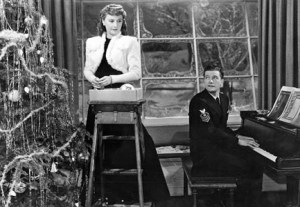
I should have watched Christmas in Connecticut before the holiday.  If you haven’t seen this romantic comedy, you need to find a copy and sit down and enjoy.   Barbara Stanwyck plays a columnist for a women’s magazine who pretends to her readers she is a farm wife, mother, and excellent cook.  In reality, she is an undomestic single New Yorker living in an apartment.  When her boss orders her to entertain a war hero (Dennis Morgan) for Christmas, she has to borrow a farm, a baby, and her restaurateur friend, Felix.  This brilliant movie is an excellent break from holiday disappointments.

christmas-gift-isolated-over-white-backgroundI know some of you enjoy the holidays.  For you it is not about materialism.  You go to Midnight Mass and watch A Christmas Carol. Your family gathers round the tree for a reading of William Dean Howells’s excellent anti-materialism short story, “Christmas Every Day.”

Holidays are far from unmaterialistic in my household. I want to say Christmas is all about peace, love, and understanding, but it doesn’t always turn out that way.  The volume of family misunderstanding can get turned way up when too many presents on the coffee table confront us like an accusation.

As I get older, the present-giving feels sillier and sillier.  Shouldn’t Christmas gift-giving cease now that we’re too old to want Barbies and Legos?  Aren’t we capable of loving our families without gifts?  But perhaps not.  We just had Thanksgiving.  Too much family in too short a time.

The materialism ruins it.

Last year I spent a lot of money on gifts and was very excited about my choices.  Finally I had it down:  I had researched the perfect gifts for everyone.  I gave an organic watch made from corn to an environmentalist:  he explained it wasn’t organic, and the process of manufacturing the material from corn pollutes.  I gave an adorable cream-colored pant suit to  a relative in a nursing home, and then realized the hue is far from practical:  they wear bibs in the dining room.

I planned this year to move the holiday away from materialism. I said I would give one book per person, and  would only accept one gift apiece from others, too.   I took requests.  One person requested a Library of America volume of Melville, and I bought it shortly after Thanksgiving.  I bought P. G. Wodehouse’s comedies for the others.

Shopping was all done, but I felt uneasy.  The books sat in a drawer like a ticking bomb.  I say like a ticking bomb, because on Friday, having noticed many, many packages arriving at our house, I bought more back-up books (National Book Award winners and finalists) in case there were dozens of packages for me on the coffee table on Christmas morning.

And there were.

When I saw the pile, I sauntered into the bedroom and got out  Kevin Powers’ The Yellow Birds, Louise Erdrich’s The Round House, and David Ferry’s Bewilderment as though I had meant to give them all along.  They weren’t wrapped. I had planned to give them for various birthdays if they weren’t needed for Christmas.

There were no gift faux pas.  Everybody was satisfied, and I received some lovely gifts.  There was perhaps a little edginess over my books-only policy, but I had mentioned it in advance.

There were some delightful moments before Christmas.  We made chocolate chip cookies instead of Christmas cookies because we really prefer them, and they are delicious.  We played cards with my relative in the nursing home.  And she loved her gift,  a stuffed snowman with an adorable sweater and scarf to display with her other winter decorations.  She has wonderful manners, and even if she had not liked it, she would have pretended to. I thought idly how my generation does not have wonderful manners.

92R9JK7SRRVC

The most astonishing thing about Christmas was thinking about how connected I am to all these people.  The bonds between us are strong and old.  The day itself is usually a disappointment, but I learn something from it about family this year.  I had an epiphany, which I won’t share with you, but am sure you had your own revelation anyway.

Dark Relief: Muriel Spark’s The Ballad of Peckham Rye

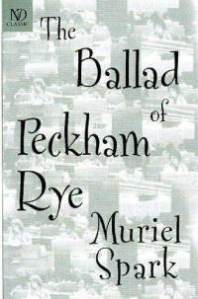
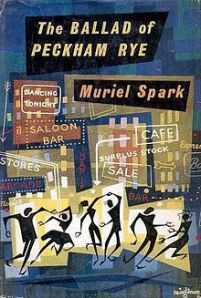
Muriel Spark’s mordant comedies are the flip side of P. G. Wodehouse’s featherlight farces.  After a Wodehouse Bertie-Wooster-and-Jeeves binge, I turned to Spark’s satires.  I happened to pick up her very funny early novel, The Ballad of Peckham Rye, the story of a wily bachelor who is the antithesis of Bertie Wooster.  Although Spark’s comedies take a dark turn, she, too, has a penchant for labyrinthine plots and silly names.

ballad-peckham-rye-muriel-spark-paperback-cover-artSpark’s spare, humorous, upside-down Ballad, published in 1960, makes you wonder who exactly the angels and the devils are in Spark’s fictional world. The hero, Dougal Douglas, a Scottish trickster, moves to Peckham and, without a twinge of conscience, accepts two jobs from rival textile companies.  The company directors, Mr. Druce at Meadows, Meade & Grindley, and Mr. Willis at Drover Willis, say they want him to bridge the gap between art and industry in his new position as assistant personnel manager.

But to what avail?

It is all about absenteeism.

Mr. Druce, a man who childishly spends Saturday mornings riding elevators at a department store, has already hired an efficiency expert from Cambridge to limit movements among the factory workers for optimum productivity. Dougal, hired because of his less intimidating background as a graduate of the University of Edinburgh, quickly recognizes Mr. Druce’s soulless fascination with limiting movement.  During the second interview, he “sat like a monkey-puzzle tree, only moving his eyes to follow Mr. Druce.”

Mr. Druce assures Dougal that he can define his job, but forbids lectures on art. Soon it becomes clear that art is a sop, and Dougal’s real job is to control.

” It will be my job to take the pulse of the people and plumb the industrial depths of Peckham.”

Mr Druce said:  “Exactly.  You have to bridge the gap and hold out a helping hand.  Our absenteeism,” he said, “is a problem.”

“They must be bored with their jobs,” said Dougal in a split-second of absent-mindedness.

Dougal’s absent-minded remark reflects his real attitude toward the workforce.  He rarely spends any time in the office, and he urges employees to take more days off.  Soon even Miss Merle Coverdale, head of the typing pool and Mr. Druce’s mistress, is calling in sick and taking walks in the park with Dougal.  Is absenteeism a bid for freedom from oppression, or a demonic joke on Dougal’s part?  Only Humphrey, a “refrigerator engineer” and Union member, resists absenteeism, and says it is unethical.

Ballad of Peckham rye first edition sparkDougal is so outrageous that the reader cannot feel sympathy for him.  Although he has a deformed shoulder–I kept thinking of Richard III– he uses it to get sympathy from women.   He has no compassion:  he refuses to visit his fiancee, Ginny, when she is ill, especially when she is in the hospital, because his “fatal flaw” is an intolerance of illness. Ginny doesn’t think much of his fatal flaw, and drops him. But Dougal uses this breakup with Ginny to get to know women at work:  he has a crying breakdown in the canteen, and the women pity him, comb his hair,  and tell him their stories.

Dougal has a third job:  ghostwriting a memoir for a retired actress, Maria Cheeseman.  He interweaves the Peckham women’s’ stories with her history.

Not only does he devilishly charm people, including his aged landlady, but he stirs people up, and his enemies equate him with the devil.   His initials, DD, are devilish, and he encourages them to think he is the devil by showing off bumps on his forehead which he claims were horns removed.

But there are plenty of other devilish characters:  Mr. Druce, an exploiter of labor, also has the D initial and his name rhymes with “deuce.”  And many characters have slightly devilish funny names:  Mr. Drover, the director of the rival company; Dixie (another D name), a 17-year-old bossy, avaricious typist; Mr. Weedin, head of persoonel; and Miss Frierne (think “fryer”), the landlady.

At one point, in a graveyard, Dougal “posed like an angel-devil, with his hump shoulder and gleaming smile, and his fingers of each hand spread against the sky.”

Is he an angel or a devil?  Well, he certainly is not an angel, but are all his messages about work injudicious?

The characters are flat:  Spark’s manipulations of her puppets are masterly, but we don’t care about them.  In her best books, this flatness works to the hone the narrative, but The Ballad of Peckham Rye is not as polished as, say, Memento Mori and A Far Cry from Kensington.  It is fun to read this from a devil-angel perspective:  is it a satire of capitalism or a tale of temptation?   Spark, a Catholic convert, often uses grotesque symbolism:  think of Catholic writers Flannery O’Connor, Walker Percy, and Evelyn Waugh.

I enjoyed this novel, but I wouldn’t recommend it as a starting place for Spark.

By the way, Merry Christmas!

A Man & Woman Discuss the Snowstorm, December 20, 2012

A very snowy day, December, 2012.

A very snowy day, December 21, 2012.

Dec. 19, 2012.  A man and woman discuss the snowstorm.

“I’m going to work.”

“But the snow.”

“The governor will never cancel.”

“They’re saying not to go out.”

December 20, 2012. I woke to a dazzling frozen world:  12.4 inches of snow had fallen.  It was our first real snowfall of the year.  We had a little mushy stuff one day.  That didn’t count.

I went to the kitchen to make tea.

Had my husband gone to work?

All the lights were on.

Perhaps he had to run for the bus.

No, he was out shoveling.  I counted three men with snowblowers, blasting up and down the block, helping neighbors dig out.  My husband prefers to shovel.

He took the day off.  The buses weren’t running.

I stepped outside and took a few pictures, then ran inside shrieking because it was so cold.

He walked to the gym.  It was closed.  There was a power outage.  He walked to the neighborhood store and bought noodles.  The lights were out, and they couldn’t sell refrigerated or frozen food, but they had a generator and the cash register was working.

I was content to hang out at home in pajamas, the ones with the dancing coffee cups.  I curled up and read Anthony Trollope’s Phineas Finn.

Dec. 21, 2012.  Today I actually went out on a walk.

In the middle of the street:  no traffic.

No traffic, Dec. 21, 2012.

I wore long underwear, a turtleneck, thick wooly sweater, jeans, parka (good for down to 10 below), a hand-knitted scarf, hat, headphones (grooving on the tunes), my hood, and boots.  The snow was deep.  I walked slowly.

Our block was shoveled, but elsewhere it was a bit wild.  Some trees were down.  I maneuvered around an evergreen tree whose snowy branches swept the ground like a dryad’s hair.  Sparrows chirped in a bush.  Occasionally I  had to walk in the street.

On the corner of a well-traveled, packed-down main street, the snow had been banked high by a snowplow, and I couldn’t climb over it.  The traffic was roaring.  People had lost a day of shopping.  They had to get to the mall. I finally found a gap in the bank and scuttled across the street.

I kept thinking about my bicycle.  As I admired the beautiful snow, I imagined coasting downhill in the bike lane.

I miss my bike. I miss the warmth.

I wanted to walk to Smokey Joe’s.

I couldn’t get there.

A few more months, I thought.

Winter is beautiful.
……………………………………………………………………………………..

In my constantly snowbound childhood, my mother wasn’t keen on winter.  She bundled us up in more wool than the average child had to wear, and anxiously made us promise to keep buttoned up.  “Don’t lose the mittens.” I always lost the mittens.

Sparrows in a bush.

Sparrows in a bush.

After one bad storm, my mother wanted to keep us inside as much as possible.  “The wool has to dry,”  she said wildly.  She promised us all kinds of  rewards if we stayed home.  I remember one especially bad blizzard, reading one Nancy Drew book after another.  Every time I finished one, she sent my dad out to buy more. After a while, I had almost a complete set.

One night my dad couldn’t stand it.  There we were, playing exactly the same board games over and over.

“We’re going to a movie.”

“I don’t think that’s a good idea,” my mother said.

“It’s okay out there.”

“It’s slippery.  It’s NOT safe.”

Another man and woman discussed a snowstorm.

But, as so often happens, she had no power.  And  she wouldn’t let him take us to a movie alone in this weather, so we all piled into the car. My dad drove badly on purpose, veering and sliding from one side to the other of the street, laughing.

Ha ha, we kids said.

My mother was worried.  “Stop it!”

I enjoyed the slipping, but saw her point of view.  I was beginning to think like a woman.  In other words, I was developing common sense.

We were the only people in the theater.  My mother made us take our coats off because she thought it was unhealthy to wear them  indoors. (I still think that when I see people in theaters sitting in their coats.)  We  had popcorn and Cokes.

There she was, a woman who hated snow, isolated in a cold theater with two children and a man.

The movie was very funny, and we were united again when we got home.

One day of a blizzard is just about all anyone can take.

Reading on the Number 6

“My e-reader is planning my future.”

Not possible, you say.

phineas-finn--anthony-trollope-paperback-cover-artPerhaps not, but it is reviving my ability to read long books in public.  I recently downloaded a free copy of Phineas Finn, the second novel in Anthony Trollope’s political Pallisers series, from manybooks.net to my e-reader.  At home I am reading Phineas Finn in a beautiful Oxford World’s Classics edition, but on the bus my e-reader is lightweight and a 700-page book is an invisible accessory to my stylish e-gadget.

I don’t like to be seen reading Victorian novels.  Odd, I know.  But  nobody reads Trollope anymore, except David Lodge, who recently wrote a piece for The Guardian on Trollope’s obscure SF novel, The Fixed Period; David Brooks, the conservative New York Times columnist, who wrote about Phineas Finn in 2011; and a few dozen members of a Trollope discussion group at Yahoo, who are always happy to chat about ideals of High Victorianism.

Does it matter if anyone sees what I’m reading?

Yes, perhaps it does.  When everybody else is on his Blackberry, phone, or  other unidentifiable object, I don’t want to step up to the bat with a book, and, like the old woman in the zealously book-banned society of Fahrenheit 451, say, “Play the man, Master Ridley. We shall this day light such a candle, by God’s grace as I trust shall never be put out.”

I prefer being seen in public reading the odd candy bar wrapper.

Actually, on this day of a Midwestern snowstorm, ten inches of snow make the streets impassable, branches, twigs, and wires are swathed in snow, and the buses won’t run till noon.  I am able to stay home and read my paperback.

I am in the world of Phineas Finn.

Phineas has made his maiden speech in Parliament.  It has not gone well.

Phineas Finn had sundry gifts, a powerful and pleasant voice, which he had learned to modulate, a handsome presence, and a certain natural mixture of modesty and self-reliance, which would certainly protect him from the faults of arrogance and pomposity, and which, perhaps, might carry him through the perils of his new position. …But he had not that gift of slow blood which on the former occasion would have enabled him to remember his prepared speech, and which would now have placed all his own resources within his reach.

Anthony Trollope

Anthony Trollope

His friend Monk tells him his speech was nothing great, but was on a par with other maiden speeches.  Phineas is miserable.

Lady Laura and her friend Violet wonder if Phineas’s speech were as bad as Lord Brentford said it was.

On the bus later today we will not be in the world of Phineas Finn.   The few people who chat are not politicians.  They are often just out of prison or  recently converted to a gushy brand of Christianity. Those who read will read “the paper,” which has gone to hell since it fired and early-retired so many staff members, and they talk about what is in the paper that has gone to hell, and how much better it used to be.

Nobody is reading the Oprah book on the bus.  Perhaps they are reading it on their ereaders.

In general, reading on the Number 6 is a private affair.  We stick to newspapers and  e-books.

P. G. Wodehouse’s Leave It to Psmith

Leave-It-to-Psmith overlook

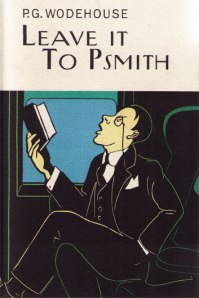
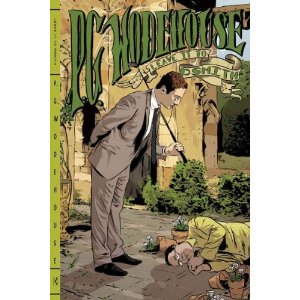
P. G. Wodehouse’s Leave It to Psmith saved my life.

It happened like this.

We were on vacation in the woods of Wisconsin.  I did not fish.   When fishing went on, I slept soundly, or if I woke up, I stayed indoors and read P. G. Wodehouse.

I left the cabin occasionally to walk the Birkie, slap bugs, and visit a fish museum. Then I slapped one too many bugs.  I got ill.

Imagine being rushed to the hospital with a puffy and infected ankle and clapped into the infectious disease ward.

Illness is mysterious.  Was it a spider bite?  Maybe. They didn’t know.   The edges of the bite were dark and necrotic.  The team of doctors couldn’t identify the infection.  They gave me X-rays, MRI, ultrasounds, blood tests, EEGs…

They gave me IVs; they tried different medications.  I tried to be brave, and then stopped being brave.  After a week, my arms were sore and bruised from IVs.  I argued with an intern on a weekend about the IV.  I was there so long they had finally put the needle in my hand.  There were no more veins.

“Change it NOW.  I’m in pain.”

“The only place left is the crook of your arm.  You won’t be able to bend it.”

“Fine.  Just change it.”

I was dazed and scared.  My arm ached, but anything was better than having the needle in my hand.

The nurses looked like aerobics instructors, bouncing into the room in white sneakers. I was disheveled in a pink bathrobe over scrubs, and  IV bags hung decoratively from my arm.  I would go out to the nurses’ station and say, “I can’t sleep.”  Finally they gave me Benadryl.

I got sicker and sicker.  I just lay there for days.  I couldn’t read my books.

Finally they gave me sleeping pills. And I got better from one of the medicines, though they never identified the illness.   And then a friend brought me P. G. Wodehouse’s Leave It to Psmith.

Leave It to Psmith Norton One day I was sitting up at dawn reading  Leave It to Psmith.  I had never read anything so funny.  It was astonishingly well-written, too.  I read it quickly and recovered in a day.  I SWEAR TO GOD.

If you’re not familiar with Wodehouse’s comedies, you must add them to your canon.  Tropes repeat, but never boringly:  in almost every novel there are cases of mistaken identity, impostors, thefts of jewelry or pigs, and accidental engagements. Wodehouse’s stock comic characters are stuck in an Edwardian, or possibly slightly later, time frame, where nothing very bad ever happens, but they never seem hackneyed.  Wodehouse’s pitch-perfect dialogue and flawless prose are mesmerizing.

The plot of Leave It to Psmith is very silly, thank God.  (I would not have liked to be “healed” at the hospital by something very serious.)  Lord Emsworth at Blandings Castle is concerned about his hollyhocks and roses, while his sister Connie insists on entertaining literary types.  She arranges for Lord Emsworth to meet McTodd, a Canadian poet scheduled to join them, and he sets off peevishly.

Here is an example of Wodehouse’s wit.

“He shuffled morosely.  It was a perpetual grievance of his, this practice of his sister’s of collecting literary celebrities and dumping them down in the home for  indeterminate visits.  You never knew when she was going to spring another on you.  already since the beginning of the year he had suffered from a round dozen of the species at brief intervals; and at this very moment his life was being poisoned by the fact that Blandings was sheltering a certain Miss Aileen Peavey, the mere thought of whom was enough to turn the sunshine off as with a tap.”

Meanwhile, Lord Emsworth’s son Freddy has hired, or tried to hire,  the clever Psmith, an upwardly mobile fishmonger-turned-jack-of-all-trades, to steal Aunt Connie’s diamond necklace for his uncle, who plans to give some money to his stepmother and to Freddy–it’s complicated. And Psmith, who falls in love with the young woman who has been hired to catalogue the Blandings library, decides to impersonate McTodd and…

Does that sound sufficiently silly?

Is it any wonder that it became one of my favorite books?

I asked the doctor, Did the reading help?  The doctor said it was hard to know how these things worked.

They found a medicine that worked.  They didn’t know what I had had to begin with.

May P. G. Wodehouse be read by all of us in need.