
 I read in PW Daily that Nook sales are down. Barnes & Noble will continue to manufacture e-readers like the GlowLight, but they are no longer designing new tablets. A spokesperson said,
The new Nook management team is focused on managing the business efficiently so that it becomes financially strong while at the same time aggressively moving to drive revenue growth.”
Whatever the f— that means.
And in January The New York Times reported that digital sales at B&N during the holiday season in 2013 dropped 60% from the year before. In 2009 the Nook had 25% of the e-market. Now it holds 20%.
The Nook is a very fast, good machine.
We have Nook HD tablets at our house. We deliberately didn’t buy Kindles, because we wanted to throw some of our business to B&N, our bricks-and-mortar store.
I have found so many books at B&N over the years: Peter Stothard’s On the Spartacus Road, Karen E. Bender’s A Town of Empty Rooms, Rebecca Mead’s My Life in Middlemarch, and, most recently, William Gibson’s Zero History.
And I wouldn’t necessarily find these books at Amazon. I’m not saying I couldn’t, but they probably wouldn’t come up on the screen.
If they stop making the Nook , will another company take it over?
But on another note, I buy too many e-books. Do you ever miss real books? I recently bought Marjorie Kinnan Rawling’s The Yearling as an e-book. It has the original paintings by N. C. Wyeth, and I was excited that I could see the illustrations on the Nook. But wouldn’t it really be nicer to have the book? I also recently purchased D. J. Taylor’s Kept as an e-book, and very much wish I’d bought the real book because I will reread ait. The same with Elizabeth Spencer’s novels: I should have bought the real books.
I wonder if others are feeling the same way.
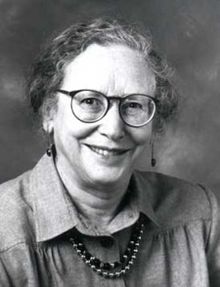
Carolyn G. Heilbrun, author of Writing a Woman’s Life & the Amanda Cross mysteries
Angela Neustatter vs. Carolyn G. Heilburn. At 50something, I am hardly a fashionista. If I want to wear trendy baby-doll frocks, I assure you I will, but if I do you’ll know I’ve gone insane. I’ve already worn low-cut t-shirts for the last decade (inability to find others with higher necks), and my dermatologist does not care for the sunburn.
One lovely thing about the turning point of fifty is the independence from fashion. You can grow your hair, stop dyeing it, throw out your designer dresses (since mine were from Younkers, they don’t qualify as designer), and wear whatever you want.
In other words, you can still have orgasms (have them daily, according to a very funny book I read on menopause), but you do not have to spend as much money to earn them.
Independence is the key word.
So I was annoyed to read an article in The Observer, “Forget beige – meet the women who are ageing with attitude.”
If we can’t wear beige, can we at least wear black?
Angela Neustatter, the 70ish author of The Year I Turn…: A Quirky A-Z about Age, does not believe in aging gracefully, i.e., growing gray, etc. She does look very young in her picture.
The article says, “Apart from a few “frumpy years” in her 50s, when she lost confidence in her right to wear leopardskin tights, author Angela Neustatter says she has never let age define her.”
And I thought, So I have to look ridiculous at 50, 60, and 70, too? Leopardskin tights do not look good on anybody.
Neustatter apparently believes aging women’s invisibility is caused by not following fashion.
Although, like all women, I suffer from fashion insecurity, I very much disagree that youth is the ticket to growing older. I prefer the philosophy of Carolyn G. Heilbrun in The Last Gift of Time: Life Beyond Sixty.
Trying to develop a crossroads–the point at which a woman has lived thirty years of adult life in one mode and must discover a new mode for the second thirty years likely to be granted her–I wanted to suggest, to (if I am honest) urge women to see this new life as different, as a time requiring the questioning of all previous habits, as, inevitable, a time of profound change.”
 mirabile dictu