
 The Barnes & Noble bags have undergone a redesign.
An illustration on one side depicts the Great White Whale diving into the opening paragraph of Moby Dick. (“Call me Ishmael.”) On the flip side, Huckleberry Finn sits against a tree and smokes a pipe. (“You don’t know about me without you have read a book by the name of The Adventures of Tom Sayer; but that ain’t no matter.”)
The good news: they’re pretty.
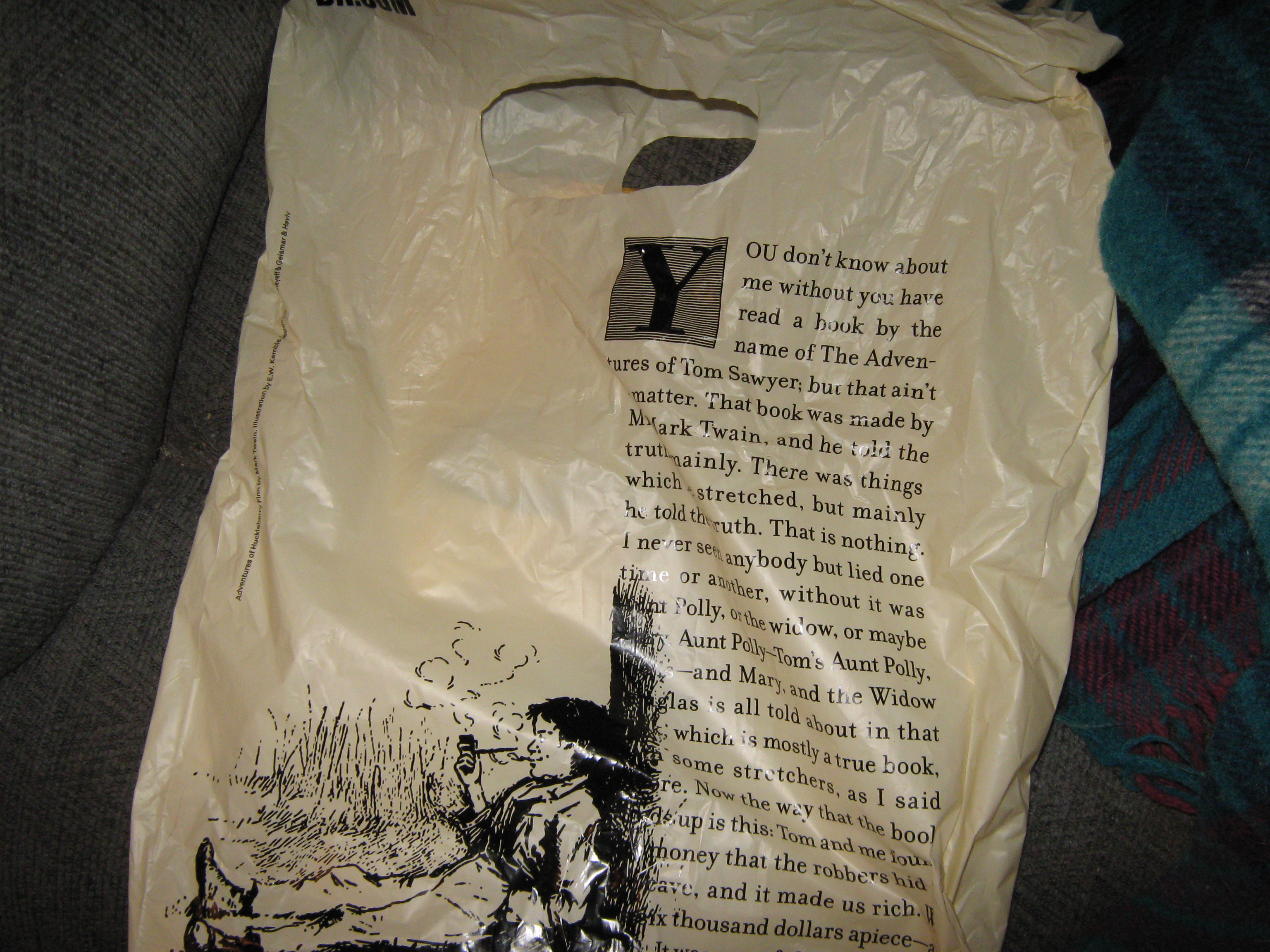 The bad news: they’re plastic.
“They’re not destroying the ozone layer,” said my go-to air pollution control engineer friend. “See that HDPE triangle? That stands for High Density Polyethylene. Yes, they are made from petroleum. That’s oil. That causes pollution. But this plastic is recyclable. And there are also issues with paper.”
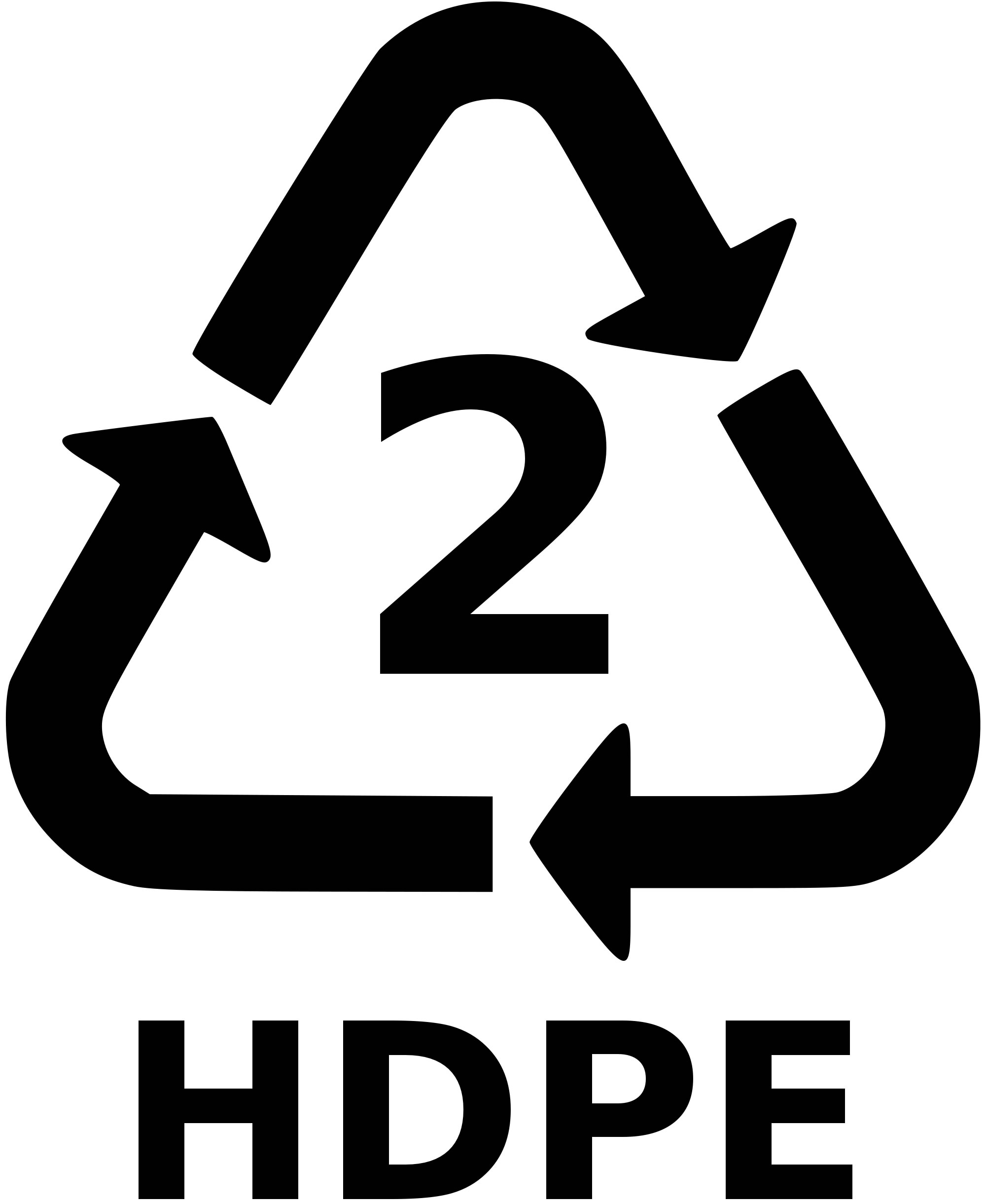 The B&N bag says, PLEASE REUSE OR RECYCLE AT A PARTICIPATING STORE. I hope my local store participates.
Meanwhile, I must remember to say I don’t need a bag. We already have a drawer full of plastic bags to return to stores.
************************************************
THE PENNY DREADFUL SCENE ONLINE.
Okay, they’re not really penny dreadfuls.
Do you every buy used books for a penny at Amazon?
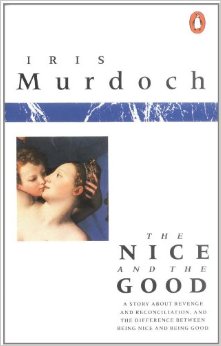 In recent months, I have paid a penny for a used hardback of Carolyn Heilbrun’s Writing a Woman’s Life and a paperback of Iris Murdoch’s The Nice and the Good. Both were in good shape. The trick is to know who is a reliable bookseller.
As far as my husband knows, every book I buy costs a penny. “I got a deal on that,” I say when a package arrives.
The shipping cost is $3.99, so a penny book actually costs $4. Still, that is very cheap when you’re able to track down a book you want but are not able to buy locally.
How do stores make money off penny books?
On April 14, The Guardian ran an excellent article on the subject. Calum Marsh reports that some of the huge online stores, like Thrift Books, cart away truck loads of books from Goodwill, public libraries, and charity shops. They sift through the piles and find some valuable books, sell others for a penny, and pulp the junk. They make only a few cents on penny books, but it is profitable if their volume is great.
The English bookseller Colin Stephens, founder and director of Sunrise Books, sends two vans out every day to charity shops to collect their unwanted used books. Stephens got his start in a very peculiar way. He
was thumbing through a charity shop’s bookshelf when the manager told him how much she’d come to hate used books. Every few days, she complained, she would have to load the trunk of her car with the shop’s excess donations and shuttle them to the landfill, in her own spare time and at her own expense
So that’s where penny books come from.
 mirabile dictu