
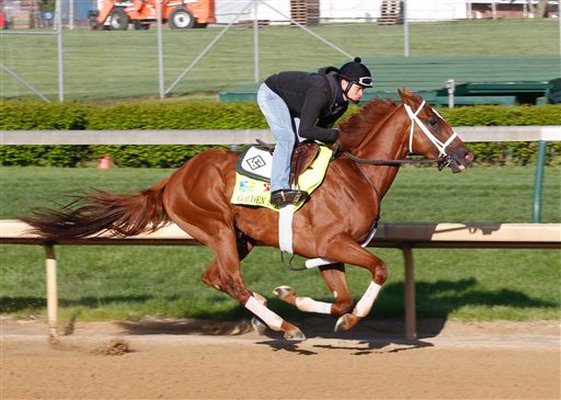
Golden Soul
Isn’t Golden Soul gorgeous?
We got home just in time to watch the Kentucky Derby. Every year it starts when–5:25?–and I watch the horses and jockeys and pick my winner. I picked Golden Soul minutes before the Kentucky Derby started.
He was such a long shot that everyone thought I was being stubborn for no reason.
“I like a long shot,” I said. “I just think he’s the most beautiful horse. I don’t care if he wins or not!”
He came in second!
Hurrah, Golden Soul.
Now if only I had bet–there’s win, place, or show–I could apparently have made some serious money!
RUSSIAN TRANSLATIONS: TOLSTOY AND DOSTOEVSKY
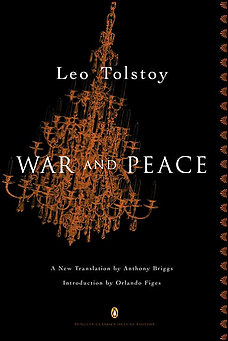 I am reading War and Peace for perhaps the seventh time.
I am delighted by Anthony Briggs’s wonderful 2005 translation, and recommend it to those of you who are making the difficult choice of which translation to read. Of course I have also enjoyed the Maude, the Constance Garnett, and the Pevear and Volokhonsky, so it’s safe to say I’m not fussy. (Or is there a bad translation of War and Peace somewhere?)
At my house the general opinion is that reading War and Peace may save my mind from the internet. Blogging is bad enough, they think, but far, far worse is Twitter.
“I don’t get it. You’ve read War and Peace six times and now you’re on Twitter?”
Am I on Twitter? I don’t know my Twitter address. (Far more likely that I’m on War and Peace.)
If you don’t believe I prefer Tolstoy to Twitter, let me tell you that I even love his shorter works. You think Tolstoy’s Resurrection is bad? Try me. I’ve read it and will be happy to read it again.
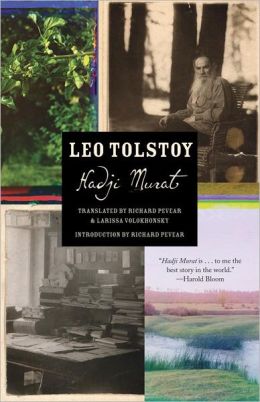 Many novels and stories by Tolstoy have been translated in recent years to great acclaim. When Oprah chose Richard Pevear and Larissa Volokhonsky’s Anna Karenina for her book club, no one thought anybody would read it. May I just say that my book group, who aren’t always reading Tolstoy, read and loved it?
In the March/April edition of of Humanities, Kevin Mahnken interviews Richard Pevear and Larissa Volokhonsky about their translations of Tolstoy and Dostoevsky. They have finished Tolstoy’s major works: Hadji Murat was the last they translated.
The married couple’s process is interesting: Volokhonsky, who is Russian, translates the Russian word for word, and then Pevear, who is American, smooths it out into literary English.
They started with Dostoevsky’s The Brothers Karamazov, because they thought a new translation was needed to convey the humor and irony.
The couple are thinking about translating Turgenev: I hope they do.
DICKENS AND DOSTOEVSKY.
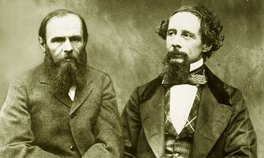 In the TLS, Eric Naiman’s article, “When Dickens Met Dostoevsky,” will divert both Dickens fans and Dostoevsky fans.
Did Dickens meet Dostoevsky?
Naiman begins his article, which actually reads like a mystery:
Late in 2011, Michiko Kakutani opened her New York Times review of Claire Tomalin’s biography of Charles Dickens with “a remarkable account” she had found in its pages. In London for a few days in 1862, Fyodor Dostoevsky had dropped in on Dickens’s editorial offices and found the writer in an expansive mood. In a letter written by Dostoevsky to an old friend sixteen years later, the writer of so many great confession scenes depicted Dickens baring his creative soul…
But it seems that no one quite knows where this letter is. Hmmm. Was it a hoax?
 mirabile dictu