
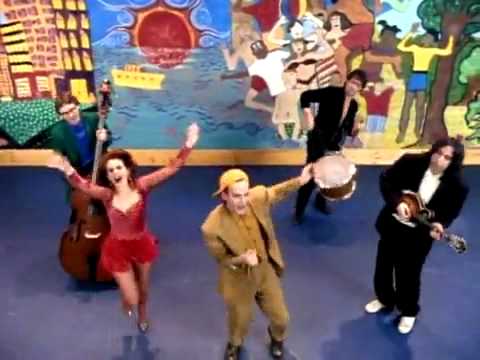
R.E.M. “Shiny Happy People”
Meet me in the crowd, people, people
Throw your love around, love me, love me–R.E.M., “Shiny Happy People”
When I check Twitter, an activity I limit to once a day, because otherwise it becomes one giant game of Mother, May I?, in which I jump from link to link to link, I am reminded of R.E.M.’s joyous but gently mocking song, “Shiny Happy People.”
In the effervescent “Shiny Happy People” video, Michael Stipe and Kate Pierson (of the B-52s) aerobically wave their arms and over-smile: they’re having fun but there is a hint of irony in their gesturing. By the time everybody joins the dance at the end, it’s clear that hyperbolic happiness has temporarily won out over facetiousness. They jump, wave and twirl and, though they know it won’t last, over and over they sing,
Shiny happy people holding hands
Shiny happy people holding hands
Shiny happy people laughing
We want to be those shiny happy people! On Twitter, some very shiny happy people (some really do need and get that oxygen) tweet, i.e., wave for attention, in the shiny happy Twitterverse.
I’m not a Twitter person. I have sent out 11 tweets altogether, none of the shiny happy people variety. I do so much of the love me, love me here at Mirabile Dictu that no other electronic colloquy is necessary. I write long, as I told a charming blogger/tweeter friend who writes short. I like to snap my laptop shut and go outside. Naturally there are some witty twitterers, but Twitter has not rocked my world.
Although we rather thought everyone was aware that the NSA and other spies scrutinize social media for information (they are particularly interested, I’ve heard, in what Mirabile Dictu is reading now), Dave Eggers’ new novel, The Circle, a satire of social media, has triggered a stream of solemn online confabulation about the dangers of Twitter. Apparently our brain capacity is so small from Twitter that we have forgotten that Gary Shtyengart also satirized the dangers of social media in 2010 in his dystopian comedy, Super Sad True Love Story. In other words, this isn’t new.
Twitter seems relatively harmless, as these things go, because there’s only so much you can say in 140 characters. Being a book nerd, I use Twitter to “stalk/follow” book review publications, which is not exciting, I assure you. The TLS conservatively raps out two perfect haiku tweets a day (perhaps they have a Department of the Tweet), while Ron Charles, editor of the Washington Post Book World, tweets nonstop, doing what it takes to sell his book page (and I hope it’s working). After I’ve decided The Telegraph tweets too much for me even to click on one link, I get offline.
Although I can’t imagine how they do this, apparently some souls carry on their entire social lives in 140-character tweets. In Michele Filgate’s poorly written, if heartrending and terrifying, article at Salon, “Dave Eggers Made Me Quit Twitter,” she implies that her day was one long tweet before Dave Eggers’ The Circle inspired her to take a break from social media. And though she stayed away for some absurdly short amount of time like a week, she had made some rules for herself.
No tweeting while walking. No checking the phone on the subway. No TweetDeck. It’s far better to check Twitter on the actual website instead of having it open and taunting me all day long. The biggest thing I’ve realized is that I can’t have social media open while I’m writing. I don’t want to become like Mae, sacrificing real-life friendships for the allure of the screen. I want to be aware of the world around me. I want to write about that world. I want to feel more alive, even if that means being lonelier in the process. It’s a book that connected me with myself again — just as books have always done, and always will do.
Filgate’s vocabulary is disyllabic, her prose social-media-esque, and her reasoning simple, but this is a tragic statement about how (youngish?) Americans are living their lives today.
Twitter has also made the news because of bomb threats against British women journalists and celebrities. Mary Beard, the classicist, author, and blogger, is quite breezy about the abuse she has taken. In “Why Tweet?” at her TLS blog, A Don’s Life, she explains why she won’t be driven off Twitter.
There is nothing inherently the matter with the medium itself; it’s us the users, and the uses to which it is put (and, to some extent, the moderation and reporting mechanisms provided by the company concerned). A few years ago we were hailing Twitter as the catalyst of the “Arab Spring” (the ‘Twitter revolution” we called it, remember?). Now we are slamming it as one of the forces of sexism and misogyny. It is and was, of course, neither.
I, meanwhile, am busy listening to “Shiny Happy People,” and realizing the blog is a better medium for wordy me.
 mirabile dictu