
 Sometimes I try to catch up with the latest fashionable books.
I am more comfortable with the classics, as many of you know.
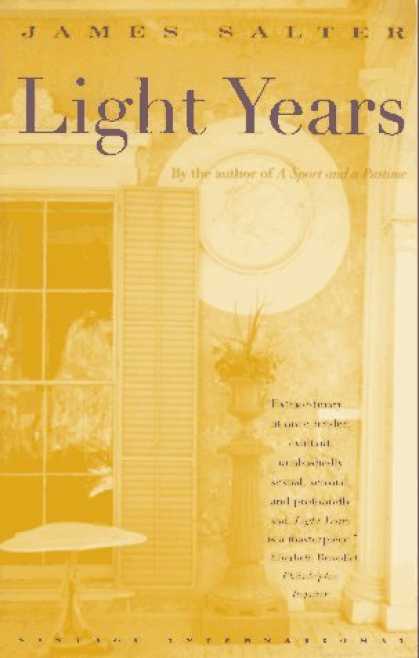
James Salter and Edward St. Aubyn are two brilliant, fashionable writers. I recently read Salter’s 1975 novel, Light Years, and St. Aubyn’s Booker Prize finalist, Mother’s Milk.
James Salter is the most remarkable novelist no one ever reads, I have recently heard. His prose is “brilliant,” “beautiful,” “luminous.” GQ recently called him an “icon.” The Guardian says he’s “The Forgotten Hero of American Literature.” The New Yorker published a very long essay last month, “Why James Salter Matters.”
Barnes and Noble has a James Salter section now.
I maintain that he isn’t forgotten, because every book review publication has reviewed his new novel, All That Is.
He can’t be forgotten, because he’s revered. And he can’t be forgotten, because I have read him.
“Light Years is my favorite book,” said a friend some years back.
I recently finished Light Years for the second time, and am on the fence about this beautifully-written, but also overwritten novel.
It is a novel about a marriage. Viri is an architect in Manhattan, and Nedra is a bohemian housewife. They have moved from their apartment in New York to a beautiful house by the Hudson River with their two children. They entertain friends with perfect dinners cooked by Nedra and perfect bottles of wine.
It’s too perfect.
Both Viri and Nedra have lovers. Viri’s is his assistant, a young woman he’s in love with, and Nedra’s is a friend of theirs whom she loves rather more lightly.
There is, as you might expect, a lot about light.
On the river, the color of slate, the light poured down. A soft light, God’s idleness. In the distance the new bridge gleamed like a statement, like a line in a letter which makes one stop.
If you admire this lyricism, there is a lot of it. He writes beautifully about the change of seasons: I prefer his concrete descriptions to his similes.
I was very moved by the story of the marriage. And though this creative couple seems impossibly wealthy, we are told that they struggle, despite the pony and the beach house. On a more human level, I recognize the dinner parties, the intelligent conversations, and the creativity of the parents (Viri makes an Advent calendar; Nedra writes a book about an eel).
Here is a quote I love:
There are things I love about marriage. I love the familiarity of it,” Nedra said. “It’s like a tattoo. You wanted it at the time, you have it, it’s implanted in your skin, you can’t get rid of it. You’re hardly even aware of it anymore. I suppose I’m very conventional.”
Nedra, who is talking about marriage to her lover, makes it clear that her marriage is somehow a part of the love affair.
Later, when her daughters are more or less grown up, Nedra decides to leave Viri and live by herself. He is shattered. It takes him a very long time to recover. And Nedra is happy, but she flounders. She auditions for a special life-acting group, where the actors live together and train together, but she is rejected. Yet she goes on.
Viri’s self-knowledge is more panicky than Nedra’s.
One of the last great realizations is that life will not be what you dreamed.
One cannot imagine self-sufficient Nedra thinking this.
Though I had my ups and downs with this novel, I cried over the ending. Nedra, a character I did not particularly like, dies before her time, and I miss her the way Viri did: she may have been exasperating, but she was fully alive.
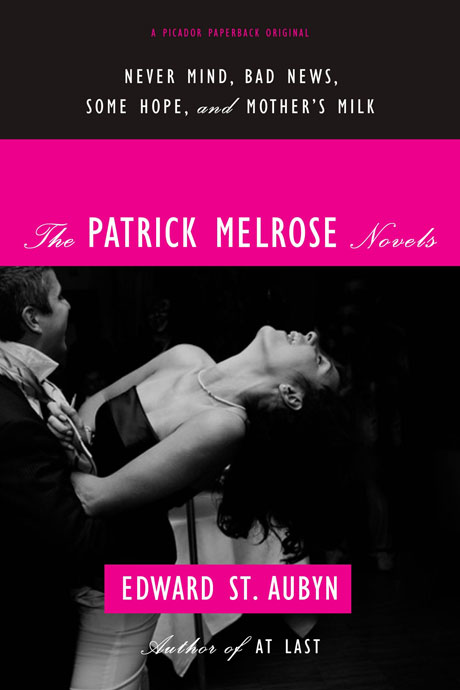 On to Edward St. Aubyn. I respect but do not love Edward St. Aubyn’s witty, disturbing Patrick Melrose series, about an abused child who grows up to be a heroin addict. In the first novel, Never Mind, Patrick is the abused and neglected child of drunken aristocrats: his father rapes him; his mother drinks in the car; he has no one to turn to. In Bad News, Patrick goes to New York to pick up his father’s ashes; he spends every free moment, abusing drugs; and heartbreakingly has inherited his father’s vicious wit, and so the cycle continues. In Some Hope, he is on the wagon and facing a clean life, albeit at a party.
And then I waited a year to read Mother’s Milk, a Booker Prize finalist.
Mother’s Milk is more ambitious novel than the other three, dependent on description of domestic scenes as well as witty dialogue: it describes Patrick’s solid but frustrating marriage to Mary, a woman who is obsessively child-centered. St Aubyn explores the points-of-view of Mary and the children as well as Patrick. Mary, a kind of Earth Mother, is devoted to her two children, particularly the younger one, Thomas. Patrick bitterly says Mary has left him for the younger child: she even sleeps with the toddler.
It’s not just Mary and the children who upset him. He rages because his own mother is dying and intends to leave the family house in France to a self-help charlatan who talks about Happiness, Peace and Prosperity. Later, after a fight with the guru, the Melrose family leaves the house and eventually goes to New York on vacation, where they encounter the nightmarish emptiness common in European films about America (Wim Wenders? I can’t remember).
Back in the UK, Patrick feels guilty about his dying mother. She says she wants assisted suicide.
I don’t understand Mary’s passion for Thomas: well, I don’t have children. But her musings on her lack of solitude illustrate one of the reasons I was afraid to reproduce:
As she hoisted ‘Thomas into her arms, she felt again the extent to which motherhood had destroyed her solitude. Mary had lived alone through most of her twenties and stubbornly kept her own flat until she was pregnant with Robert. She had such a strong need to distance herself from the flood of others. Now she was very rarely alone, and if she was, her thoughts were commandeered by her family obligations. Neglected meanings piled up like unopened letters. She knew they contained ever more threatening letters that her life was unexamined.
Mary is expected to stand for Woman in a way I don’t find altogether realistic. I’m sure mothers see her differently; but I don’t personally know any mothers who are as devoted as she is. Motherhood is, of course, sone way she can distance herself from Patrick.
Patrick’s wit is scary, and the children pick it up.
So there you have it: three generations of men/boys with scathing wit, and where will it take them?
 mirabile dictu