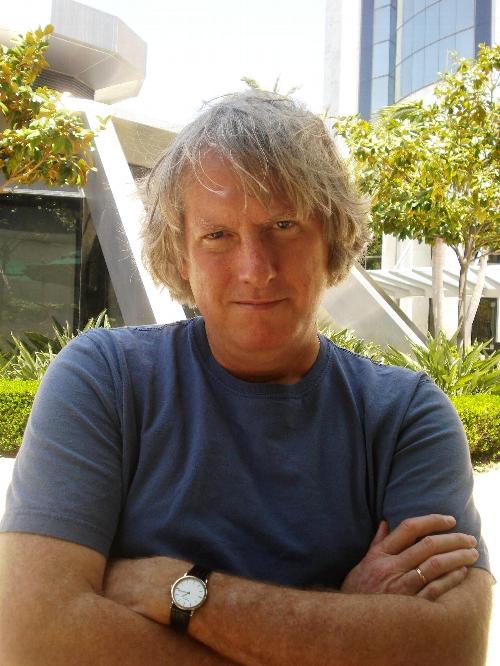
Steve Yarbrough’s Safe from the Neighbors

safe-from-the-neighbors-steve yarbrough

You have to understand that Loring, Mississippi, isn’t the kind of town people come back to, for any reason whatsoever.  It is, in fact, the kind they leave.  Very few of those I grew up with are still here…”–Steve Yarbrough’s Safe from the Neighbors

Steve Yarbrough’s Safe from the Neighbors is one of my favorite novels this year.

It is set in Loring, Mississippi, where his novel The End of California takes place.  Yarbrough, the son of Mississippi Delta farmers and now a professor in the Department of Writing, Literature and Publishing at Emerson College, creates a vivid, fully-realized small Southern town that will remind us of other small towns in the U.S.

In Safe from the Neighbors, the narrator, Luke May, is a historian and a high school history teacher.  He has tried to write, then abandoned, a book about a racial incident at the turn of the last century that caused Theodore Roosevelt to shut down the post office in Loring. He is also obsessed with the year 1962, when James Meredith was the first African-American to be admitted at Ole Miss (University of Mississippi); and Nadine, the sexy mother of his friend Maggie Calloway, was shot by her husband.

Although Luke likes teaching, he is in a limbo period of his life: his marriage to Jennifer, a poet, has  soured.  Yarbrough’s descriptions of marriage are hyper-realistic.  While their twin daughters were growing up, Luke and Jennifer gradually ceased to make love.  Now that the twins have gone to college, the marriage is still asexual.  He observes,

I imagine similar circumstances prevail for many married couples, though it’s hard to say because people don’t talk about this subject unless sitting across a desk from somebody getting paid one hundred seventy-five dollar an hour to listen sympathetically and nod every thirty seconds.

Yarbrough often describes disillusionment with marriage.   Sometimes marriages in his novels survive affairs, sometimes they don’t.  In The Realm of Last Chances and The End of California, characters have affairs with varying results.  In this novel the affair is tangled up with history.

When Luke’s old friend Maggie, now a widow, returns to Loring and works as a French teacher, it is not surprising that they have an affair. (The workplace is fraught with affairs, isn’t it?)  He’d always loved her mother, Nadine, a tall former high school basketball star who hugged him and told him not to mess with her in athletics:  she’d always win.  Although Maggie’s father Arlan was arrested for killing Nadine, he was never indicted.

And so Luke is astonished that Maggie has moved back. He and Maggie mesh sexually:  she tells him no one has made her feel that way except her late husband.  And he tells her that he has never made anyone feel that way.

But you can’t have an affair in a small town.  He doesn’t want to get caught.

The novel is also about history.  Luke is haunted by his memories of a 1960s childhood;  he conducts interviews to learn what really happened in 1962.  His father, a farmer who later maintained school buses, was peripherally involved with Arlan Calloway in wanting to protest the desegregation of Ole Miss; Arlan takes a gun.  Luke also learns the cause of the murder of Nadine Calloway.

I love contemporary novels filled with domestic details and descriptions of work.  It is no coincidence that four of the six books on my Best of 2013 list (see sidebar) deal with modern life: the other two are a history/memoir about Cleopatra and a counter-factual novel. I read mainly older books, and I have a possibly inaccurate impression that most contemporary novelists are busy writing blockbuster historical novels:  Wolf Hall, The Luminaries, Parrott and Olivier in America, Arthur and George, TransAtlantic, etc. These are mostly very good, but I read them with a different part of my brain.

Yarbrough is one of my favorites authors of the year.  I have also written about his novels The Realm of Last Chances and The End of Calfornia.  I also interviewed him here.
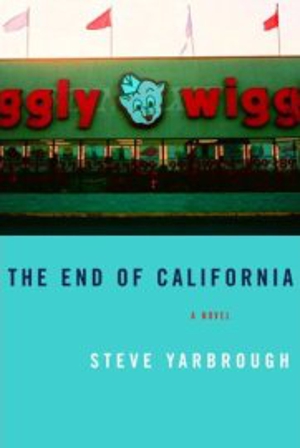
Steve Yarbrough’s The End of California

Steve Yarbrough’s brilliant new book, The Realm of Last Chances, a novel about dislocation, is my favorite novel of the year.  (I wrote about it here.)

steve_yarbrough_the_end_of_california_300x448And so now I am slowly making my way through Yarbrough’s oeuvre, and I just finished The End of California, a compelling novel about family, relocation, and the meaning of fidelity.

Yarbrough writes from multiple points of view, centering on Pete Barrington, a doctor who moves back to his hometown in Mississippi with his wife, Angela, and daughter, Toni.  An affair with a patient resulted in his leaving his practice in California.

It is a traumatic move for all of them.  Pete, a former high-school football star who left for California on a football scholarship, never expected to return and practice medicine in Loring.   His best friend, Timothy, a depressed lawyer and part-time assistant football coach whose ex-wife and daughter live in another town, finds him a part-time job as an assistant coach.  Tim and Angela also connect, partly because she and Pete have not been able to reestablish a caring relationship.  And so we have a triangle here, but it is not the triangle that destroys the family.

Yarbrough’s description of Pete’s discovery of the affair is sadly realistic, in that he knows before he knows he knows.   He notices that Tim has lost some weight and is dressing better and realizes he must have a woman.  “There must be a damn good reason why his friend of more than thirty years hadn’t told him about something this important.”

And then he watches Angela and everything becomes clear.

That evening Angela sat at her vanity looking at her face, as she often did these days.  At first she’d been startled that her appearance had not changed.  Visible evidence ought to accompany a transformation of the type she’d experienced, but no such evidence existed.  At least not to her eye.

His eye saw what her eye missed.  Normally, she did things while she sat there, examining her skin for blemishes, squeezing a pustule if she found one, rubbing cold cream on her neck, plucking her eyebrows.  But lately she just looked.  Her movements around the bedroom had grown languid too, and she no longer guarded her nakedness.  Right now, for instance, she wore a white silk pajama top but was naked below the waist.  Last night she’d stepped straight from the shower and walked over to the dresser with water dripping from her pubic hair.  If she was still ashamed of her thin legs, small breasts or the fold of fat below the transverse scar from her C-section, she no longer showed it.

The slowness and heaviness of Pete’s observations as he attempts to repress his own knowledge is the kind of thing that happens in every marriage at some time.

Oddly, it is not the triangle that catalyzes violence, but their daughter Toni’s relationship with her boyfriend, Mason.   Mason’s father,  Alan, the Christian manager of a Piggly Wiggly store, hates Pete, because in high school his mother, Edie, had affairs with boys who were seniors in high school; Pete was one of them. Alan tries to stop his son from seeing Toni.

Violence changes the course of the book.  Although it is not a mystery, and we know who committed the crime,  the police are involved and evidence slowly comes to light.

I admired this novel very much.  The Realm of Last Chances is a masterpiece; The End of California is merely brilliant.  Both are among the best novels I’ve read this year.

And you can read my interview with Steve Yarbrough here.

An Interview with Steve Yarbrough

Steve Yarbrough

Steve Yarbrough

I found Steve Yarbrough’s novel, The Realm of Last Chances, by serendipity.

His was the only book in the Y’s and I loved the title and the first paragraph:

They were both fifty when they moved to Massachusetts, settling in a small town a few miles north of Boston.  Like a lot of people around the country over the last few years, they’d recently experienced a run of bad luck.

Being in my fifties and seldom finding novels with middle-aged protagonists, I bought this book and rushed home and read it in one sitting.  It is powerful and moving, my favorite novel of the year.

And Steve Yarbrough, an award-winning novelist and a Professor of the Department of Writing, Literature and Publishing at Emerson College, generously agreed to be interviewed here.

Mirabile Dictu:  Your stunning new novel, The Realm of Last Chances, addresses the issue of dislocation in middle age.  Did you set out to explore this theme?   Or did it just come together?

Steve Yarbrough:  I consciously wanted to explore dislocation.  My wife and I had moved from one coast to the other twice: from east to west in 1988 and from west to east in 2009.  Both times, we wanted to make the move, and this last move in particular has led to great happiness, because we love New England.  But during the economic downturn a lot of people were uprooted against their will, and I wanted to see what it might be like for a couple like that.  The other themes, though, came to me during the writing process.  It’s always that way for me.  I find my path by groping in the darkness.

Mirabile Dictu:  How long did it take you to write the book?

Steve Yarbrough:  Well, from start to finish, about eighteen months.  But before I figured out what I wanted to write, I floundered for about a year.  That happens to me again and again.

Mirabile Dictu:   Which of your books is your favorite (besides Realm)?

Steve Yarbrough:  I guess I’d have to say my other favorite is probably Safe from the Neighbors–though, truly, I am fond of all my books, to varying degrees. They represented the best I had in me when I wrote them.

Mirabile Dictu:  Do you write on paper or a computer?

Steve Yarbrough:  I wrote my first book on paper and then typed it.  All the others have been written on the computer.

Mirabile: Who are your favorite authors?

Steve Yarbrough:  The list is long.  Here are a few names: James Salter, William Trevor, Alice Munro, Richard Yates, Elizabeth Spencer, Milan Kundera, Sandor Marai, Tolstoy, Faulkner, Chekhov, Austen, Graham Greene.

Mirabile Dictu:  Thank you for the fabulous interview!

And here are a few facts about Steve Yarbrough.

He is the son of Mississippi Delta farmers.

He is a Professor of Department of Writing, Literature and Publishing at Emerson College.

His novel Prisoners of War was a finalist for the 2005 PEN/Faulkner Award,  his 1999 novel The Oxygen Man  won the California Book Award, the Mississippi Institute of Arts and Letters Award for Fiction, and the Mississippi Authors Award.  In 2010, he won the Richard Wright Award for Literary Excellence.

His website is http://steveyarbrough.net/

And you can read my review of The Realm of Last Chances here.