Giveaway: Alice Kessler-Harris’s Biography of Lillian Hellman

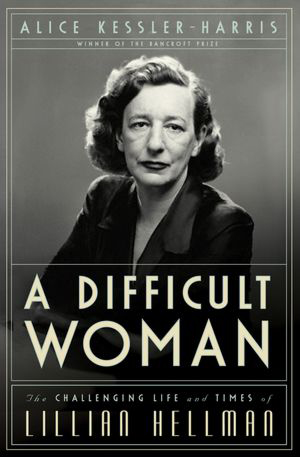
LillianHellman A Difficult WomanI loved Alice Kessler-Harris’s A Difficult Woman:  The Challenging Life and Times of Lillian Hellman, but, alas, there’s no room for superfluous books on our bookshelves.   If anyone would like the book, leave a comment.

I’ll check in tomorrow and see if there are any takers.


Thomas Hardy & the Apocalyptic Romance

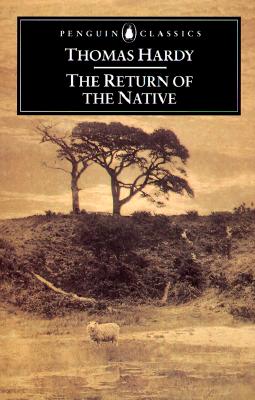
Return of the Native by hardy penguin Here is why you should read Thomas Hardy.

The novel is dead, e-books outsell real books, the famous Prairie Lights bookstore has ceased to carry Loeb classics, Apple has been declared guilty of e-book price-fixing conspiracy, the critic Lee Siegel claims studying literature doesn’t matter, and some Americans are wearing Google internet-connected glasses that take photos with a wink.

I turn to the pastoral novels of Thomas Hardy.

A few weeks ago I reread The Mayor of Casterbridge, a beautifully-written novel set in his fictional Wessex, and one of the most dazzling novels of his intricate multi-novel chronicle of town and rural life.  (I wrote about it here.)

The Return of the Native, another stunning Wessex novel, is an intense apocalyptic Victorian romance modeled on Greek tragedy, set against the gloomy, cataclysmic background of Egdon Heath.  If you are a fan of Twilight or Sophocles, of the Brontes or Death of a Salesman, you will admire Hardy’s lyrical prose and what D. H. Lawrence in his Study of Thomas Hardy calls “a constant revelation in Hardy’s novels:  that there exists a great background, vital and vivid, which matters more than the people who move upon it.”

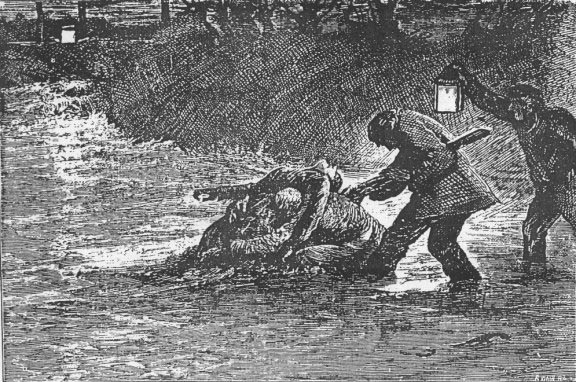
"All that remained of Eustacia Vye," illustration by Arthur Hopkins

“All that remained of Eustacia Vye,” illustration by Arthur Hopkins

In The Return of the Native, the unhappy wild characters who roam wild Egdon Heath and long for a glamorous unobtainable urban life meet their deaths, while the tame characters survive to rebuild and recivilize the post-wild society. There are five main characters of marriageable age:  two wild, two tame, and one outsider, balanced  between both states.   The wild, wretched, passionate Eustacia Vye and Wildeve (don’t you love the repetition of Vs, Vye/Eve?) long for what they can’t have and no longer want it when they have it.  Fast-forward to their apocalypse:  the two plan to run away, but drown in the river during a tumultuous storm, leaving their tame and mild spouses in desolate anguish:  Clym, a former diamond salesman who returned to Egdon Heath to teach but lost his sight after marrying Eustacia, and Clym’s practical cousin Thomasin, who married Wildeve with misgivings after he jilted her, grieve and gradually realign themselves with nature.

The outsider, Diggory Venn, a reddleman (he sells a dye called reddle for marking sheep, which has turned his skin red), is a minor god of nature, meddling in the lives of humans with varying results.  Unlike Pan or  other nature gods of myth, this former farmer, who is in love with Thomasin, is highly moral and just.  After the death of Eustacia and Wildeve, he gives up the reddle trade, buys a farm, and becomes a strong, buoyant figure in the reconstruction of Egdon Heath society.*

The motif of disguise is used but not overused (one can almost say that Venn is in disguise, because people only see the red skin and assume he is lower-class).  Disguise appeals to but is almost too exciting for Eustacia, a beautiful orphan who lives with her grandfather and longs for romance.  She takes long walks on the heath, intensely hates its remoteness from society, and lights bonfires to call her former lover, Wildeve, to rendezvous. When she hears Clym Yeobright has returned from Paris, she disguises herself as a boy so she can go with the mummers to perform a Christmas play at the Yeobrights’ party. She is exhilarated when Clym pays attention to her at the party,

…and yet not to her but to some imaginary person, by the first man she had ever been inclined to adore, complicated her emotions indescribably.  She had loved him partly because he was exceptional in this scene, partly because she had determined to love him, chiefly because she was in desperate need of loving somebody after wearying of Wildeve.  Believing that she must love him in spite of herself, she had been influenced after the fashion of the second Lord Lyttleton and other persons, who have dreamed that they were to die on a certain day, and by stress of a morbid imagination have actually brought about that event.  Once let a maiden admit the possibility of her being stricken with love for some one at a certain hour and place, and the thing is as good as done.

When Clym realizes she is a woman among the mummers, he is intrigued.

They talk about depression.

What depressed you?”

“Life.”

“That’s a cause of depression a good many have to put up with.”

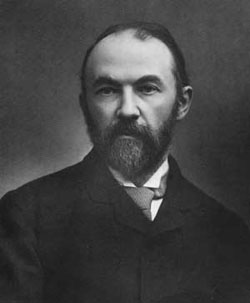
Thomas Hardy

Thomas Hardy

Perhaps it is not the most romantic conversation but when you are in the middle of Hardy, you don’t question it.

They marry against Clym’s mother’s wishes (so did his cousin, Thomasin).  Initially he and Eustacia are very happy. But when his eyes fail him and he can no longer study to be a teacher, he goes out to earn money as a furze-cutter.  She is appalled.  She feels degraded.  She has wanted above all to escape the heath, and longed to go with him to Paris, even though he said he wasn’t going back.

Egdon Heath is one of the main characters of the novel. In D. H. Lawrence’s Study of Thomas Hardy, he describes the importance of the background of Egdon Heath which produces the wild

What is the real stuff of tragedy in the book?  It is the Heath.  It is the primitive, primal earth, where the instinctive life heaves up.  There, in the deep, rude stirring of the instincts, there was the reality that worked the tragedy.  Close to the body of things, there can be heard the stir that makes us and destroys us.  The heath heaved with raw instinct.  Egdon, whose dark oil was strong and crude and organic as the body of a beast.   Out of the body of this crude earth are born Eustacia, Wildeve, Mistress Yeobright, Clym, and all the others.  They are one year’s accidental crop.  What matters is some are drowned or dead, and others preaching or married:  what matter, any more than the withering heath, the reddening berries, the seedy, furze, and the dead fern of one autumn of Egdon?  The Heath persists.

The structure of The Return of the Novel is a classical ring composition, with scenes in the first part repeated or balanced by similar scenes in the latter part.  The novel opens with Diggory Venn’s giving the humiliated, jilted Thomasin a ride home in his van. (The marriage certificate was wrong, and Wildeve isn’t sure he wants to go through with the marriage.)  Later in the novel, when Thomasin is carrying her baby in the rain, desperately thinking her husband Wildeve has run off with Eustacia, she again runs into Venn’s van, and he saves what can be saved.

Really a beautiful book.

*Hardy did not intend for Diggory Venn, the reddleman, to play a big part in the ending, but his editor wanted a happy ending.

The Real Story of How We Got Married: I Found My Journal!

Maid of the Mist at Niagara Falls

Maid of the Mist at Niagara Falls

I’ve been sorting through my journals.

I can skim one in five minutes.   Sadness:  skip.   Divorce:  skip.  Dates with fly fishermen and boat owners: skip.

But I am saving the lively pages, because very occasionally I wrote when I was happy.   I have found a charming and touching account of our marriage ceremony at the County Courthouse, which I wrote a version of here on our anniversary, July 2.

But now here is the journal entry.

July 3

B. and I got married yesterday morning.

We had to do a lot of waiting.  Walk up to one window, then wait for the certificate to be typed up.  Then up the elevator to the 12th floor and wait to be called into a small courtroom with the other couples.

The couples included a blind middle-aged pair with two little boys; all four held hands when the judge told the couple to hold hands.  There was a sweet  young couple dressed in traditional wedding outfits, the woman in a pink bridesmaid-type dress and the man in a gray suit.

The Judge said, “You win first prize.  You get to have your picture taken with me,” and the bailiff snapped a picture of the three of them.

B. and I were the only couple without rings.  We were very nervous, but we kissed sweetly, and then the Judge said, “And you’ve won the second prize.  You get the take the Judge on your honeymoon.”

We roared with laughter.

“Where are we going?” he asked.

“Niagara Falls,” B. said.

“I haven’t been there in years,” said the Judge.

Bicycling in the Country, Hogs, & the Gatorade-&-Pretzels Tip

Willow Pond

Willow Pond

Willow Pond is not Walden Pond.  It is pretty, but small and buggy, so we didn’t linger.

It is good occasionally to follow the signs that lead you off-trail to such local features.  These offshoots are the blue highways of the outdoors.

I am a slow bicyclist.  Heard of the slow living movement?  Well, I’m in the slow bicycling movement.  I ride for transportation, exercise, and fun.  There are so many trails in the Midwest that it is possible to take long, slow, safe bike rides without going on the roads.  And I am so accustomed to trails that I was apprehensive yesterday to find myself wobbling on the gravel shoulder of the road while a truck shot by as we rode into a small town looking for a place to get a cold drink.

We rode 28 miles yesterday.  While my friend Janet prepares to ride a six-day 468-mile cross-state bicycle ride, I take 20-30-mile rides. Longest ride ever:  11 days, no idea how many miles, but more than 600 miles.  Longest ride this summer:  40 miles.

I do not like organized group bike rides, so I have been sympathetic and amused by Janet’s plight:  she signed up for the ride last spring, but didn’t buy a bike till this weekend, let alone train.  But she’ll be all right on the ride.   Apparently there is a lot of partying:  some riders drink beer and eat pie along the way.

Until yesterday I was convinced I could easily ride one day of the big organized bike ride.  (You can buy a day pass.)

But yesterday it was so hot that I had to take a long break lying down on top of a picnic table.  No, I will not ride even one day of the long ride.

We decided this was the town.

We decided this was the town.

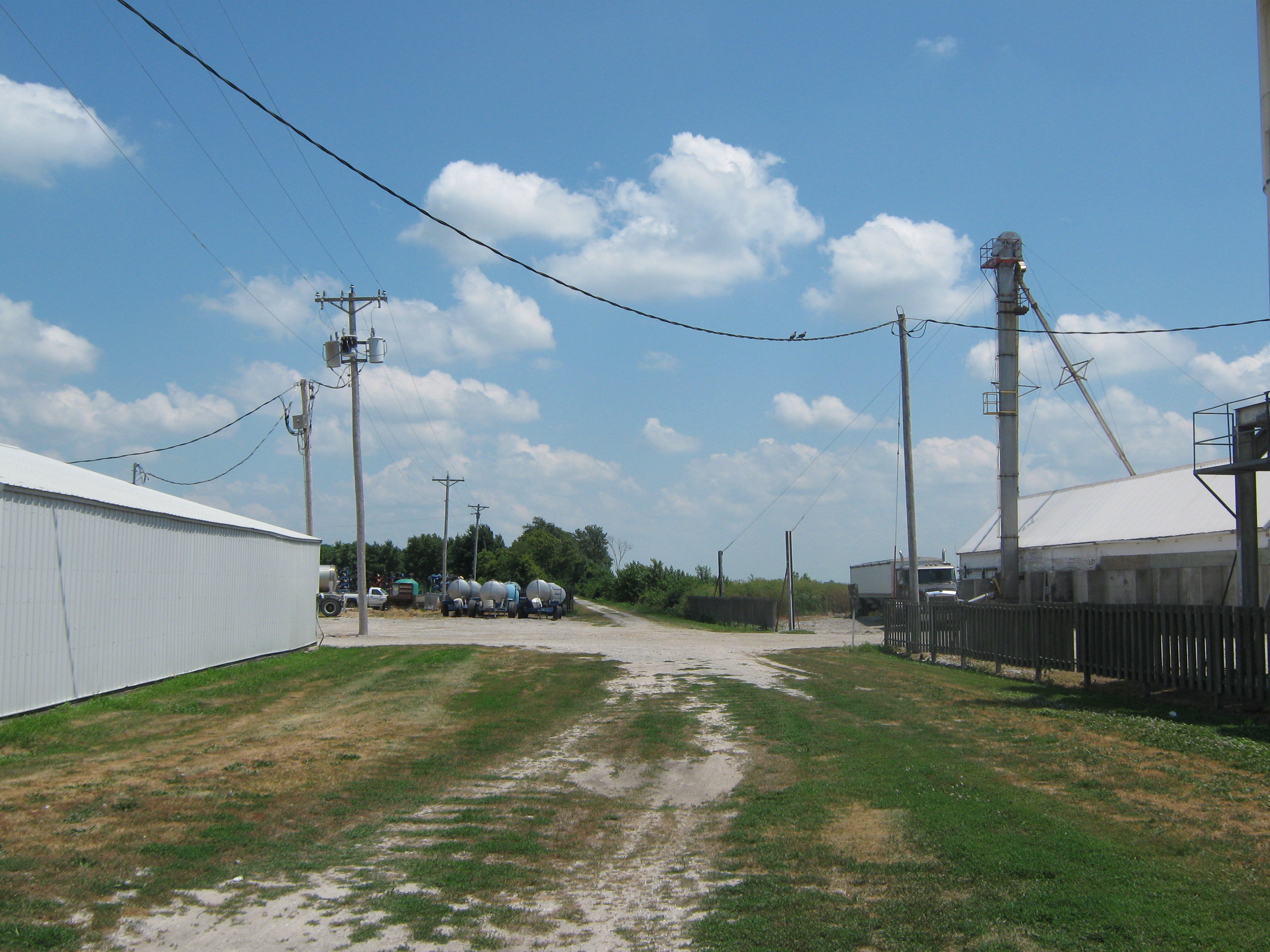
Country trails can be tough.  This trail starts in a small town we couldn’t actually find.  Where was the town?  We saw a grain elevator and a rough limestone trail overgrown with grass.

A rough beginning.

A rough beginning.

We got out of the car.   My husband called encouraging things while I simply stared and thought how  unbeautiful it was.

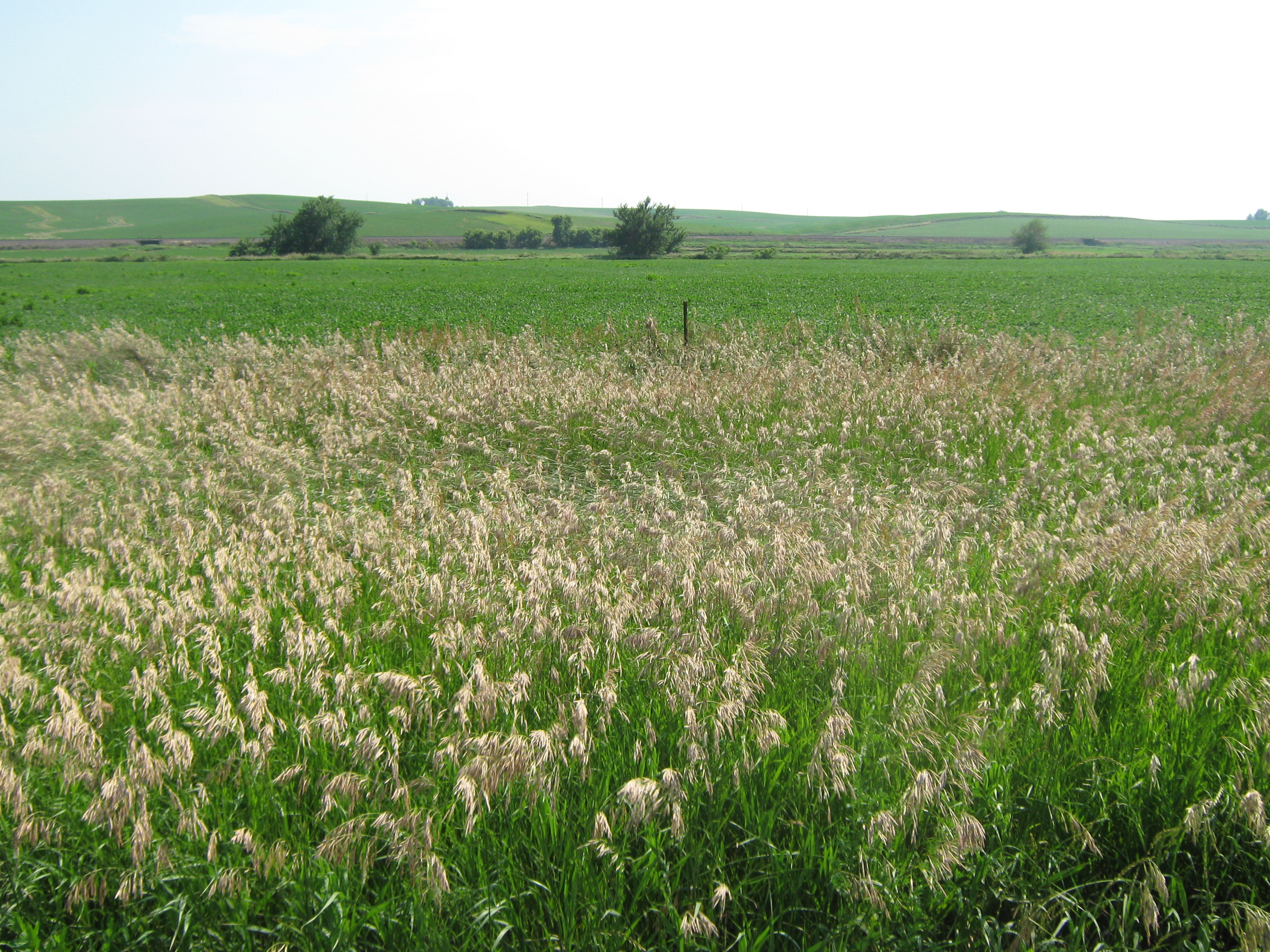
So we got on our bikes and rode.  Corn fields, soybean fields, prairie grass.   Very, very green.  The sun looked white.  It was that kind of hot day.

It is very, very quiet in the country.  No traffic.

We rode past animal confinement facilities and I felt stricken.  Twenty million hogs living indoors in metal buildings on concrete slats over a pit of their own manure.   The smell clung to our clothes and hair.  I hate the smell, but felt worse about the animals.  At the State Fair we have seen the intelligence in hogs’ eyes (“Human eyes,” we muttered).  After our trip to the State Fair, we stopped eating pork.

Perhaps real farms will come back someday: some corporations are saying no to the animal confinement facilities.  For instance,  Marriott International plans to stop purchasing  pork raised in animal confinement facilities by 2018, and to stop buying eggs from  animal confinement suppliers by 2015.

But then we stopped thinking about animals and just rode.

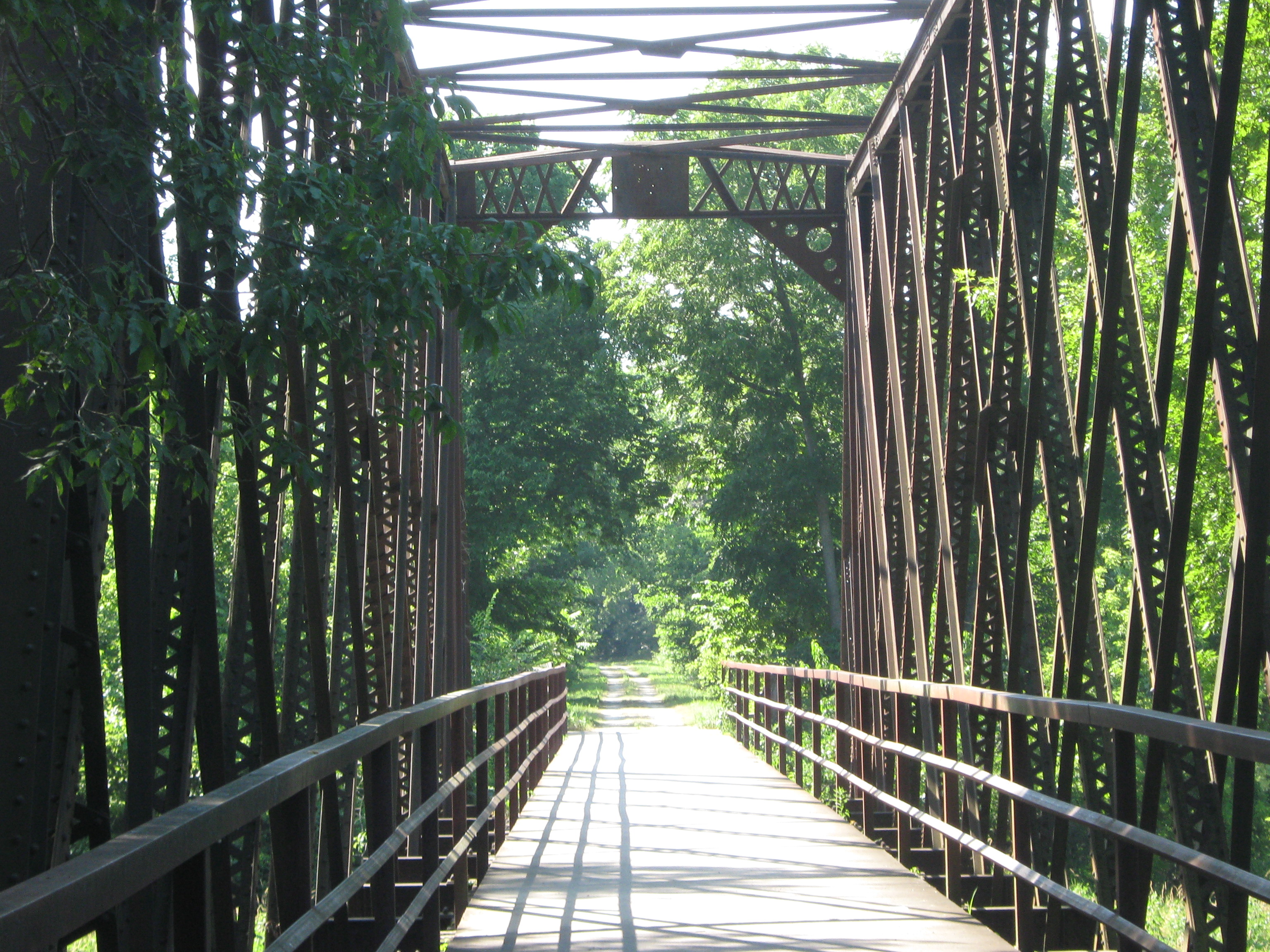
We approached the Crooked Creek Bridge.

IMG_2588

Then we crossed the bridge.

Crooked Creek Bridge

Crooked Creek Bridge

We stopped in a small town, where everything was closed except McDonald’s and Subway, and got a cold drink at a McDonald’s, but it wasn’t what we needed..

Without Gatorade to replace electrolytes, I cannot do these rides.  On the way back, I crashed on a picnic table in a shelter in the middle of nowhere.  I got up and finished the ride, but I had a headache from the sun.  Back in civilization, we bought a massive bottle of Gatorade and pretzels at a convenience store back, and I recovered.   Salt and electrolytes!  You need them.

Did I do any reading on this trip?  Very little.  My book?  Cathleen Schine’s Fin and Lady.  I bought an uncorrected proof for 25 cents, but McDonald’s and lying down on a picnic table are unconducive to reading.

Bicycles, Caffeine & Quick Oatmeal Cookies

woman drinking tea retroI drank tea while chatting on the phone to Janet, and that is what got me into trouble.   It was probably 9 a.m., and I was barely awake. There was a lot of chat about bicycling, yadda yadda yadda, then some frantic stuff about  not getting in her miles for the 468-mile cross-state bicycle ride she signed up for with her boyfriend.

And she wasn’t enjoying the literature class she was taking this summer. That was apparently my fault.

“I had to write a paper for your Aristophanes guy,” she said.

“He’s not my Aristophanes guy,” I said absent-mindedly.

“I thought you knew him.”

“I don’t know him at all.”

“I mentioned your name.”

“I can’t even spell his name.”

My thoughts were accelerating on caffeine and I decided to change the subject. “Here’s an idea.  Do your training  on the actual bike ride.  Or ride your bike over here at 4 and we’ll have tea.”

I am so flippant. By four I am definitely done drinking tea.  And Janet lives 150 miles away, so she couldn’t possibly come.

But Janet thought it sounded like fun.  She said she would be there.

Even at a very fast clip, it takes two hours, and more like two and a half hours to drive from Riverville.  Turned out she was coming to town to see her sister Agatha anyway, because they planned to buy a couple of Japanese bicycles and ride this weekend.

“I can definitely return your Schwinn,” she said.

“No rush.  We have four bicycles.”

So I got ready.  It was time to retire the Go Hawks t-shirt that doubles as a nightgown. I had to do laundry so I could wear my  mail-order t-shirt with the odd-looking glittery beads sewn around the neckline.  I cleaned the living room.  And then I baked some oatmeal cookies, because if someone comes all the way from Riverville, you  provide food.

I got a recipe off the internet.  The soft oatmeal cookie recipe didn’t require a trip to the store to get raisins or chocolate chips or something.  No, it was all about the oatmeal and the cinnamon.  Only after I mixed the dough did I discover I was supposed to refrigerate it for an hour and then mold it into little balls.

Who has time for that?  It was already three o’clock.

So I just baked them.  Here’s what worked.  Bake non-ball-shaped unrefrigerated dough for 8-10 minutes? Uh-uh.    I dropped them from an ice cream scoop and let them bake for 12 minutes instead.  They were still oatmeal cookies, even though they weren’t rolled into balls first.

What a chef I am.  Cookies fresh out of the oven.

Then Janet arrived.  She was huffing and puffing on a bicycle.  My old bicycle.  My old Schwinn.  Behind her a big car with a bike rack was honking and someone was waving.

“That’s my sister,” Janet said.  “I AM SO GLAD TO SEE YOU.  She is driving me crazy.”

Agatha is the opposite of Janet in every way.  Janet is blond; Agatha is dark.  Janet is very thin; Agatha is a little plumper and prettier.   Janet is a PR woman who loves literature; Agatha is a divorced emergency room nurse who sings in the chorus in community theater musicals.  I couldn’t swear to the kind of car Agatha was driving, but the licence plate said FASTLANE, FASSBINDER, or possibly FLASHDANCE.  I need new glasses.

Agatha got our of the car.  “Nice to meet you, Kat.  Want to see our new bicycles?”

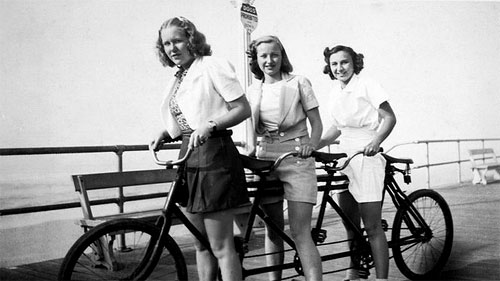
Women & Their Vintage Bicycles (7)I peered at two bicycles on the new bike rack on the car.
“Very nice.”

Janet and I sat in the back yard and drank several cups of Oolong tea.  Agatha would not eat cookies because of the sugar, nor drink tea because of the caffeine. I offered her lemonade.  She drank water from her own water bottle.

I raised my eyebrows.

Janet shrugged.

Agatha explained she is on a special bicycling diet because she has decided to go along on the 468-mile bike trip with Janet and her boyfriend.  Registration for the ride was closed, but Agatha knew someone who knew someone who knew someone who knew someone who was dropping out…

She has maps of the whole Midwest.  She says she and Janet will ride 100 miles this weekend.  “Then if Janet goes 25 or 30 miles a day next week in Riverville…”

Janet is looking tired.  Her high-powered boyfriend will fly in at the end of next week, and he and Agatha will have different ideas about the ride.  They will coach her so strenuously that she’ll just sit down by the side of the road and refuse to move.

Well, perhaps that’s the way out of the six-day ride.  It would be easier to say No, though.

“Cookie, anyone?”

“Yes, I think I really need a cookie,” said Janet.

A Virtual Walk & Marge Piercy’s Braided Lives

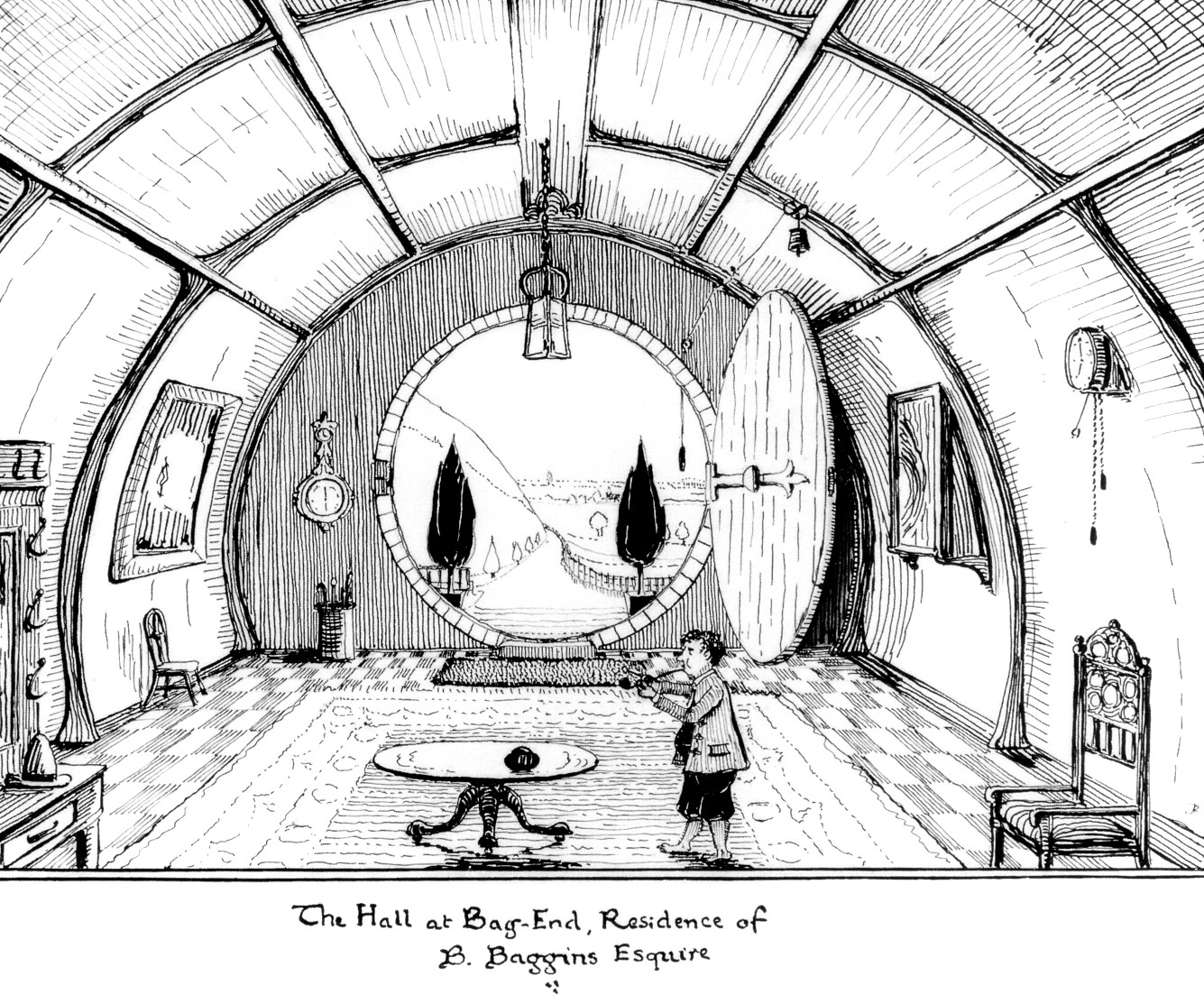
Oh, wait, that's not on Google Map!  That's Bilbo Baggins' house.

Oh, wait, that’s not on Google Map! That’s Bilbo Baggins’ house.

The other night we were playing with Google Map.  Not only did we look up our house, we managed to take a virtual walk up the driveway and peer into our back yard.

The Google Map picture is perhaps two years old, and we were delighted to see our big maple tree.  It was hit by a storm last year: the wind tore off a huge limb and dropped it in our neighbor’s driveway.  The severe wound in the trunk meant the tree had to come down lest it fall on our neighbors’ house in the next big storm.

“Oh my God, it was the biggest tree on the block.”

We stare mesmerized.  If only we could go back in time.  We loved that tree.

Then we took a virtual walk around the block, though it would have been much faster and better for us to go out of the house and walk.  The Google Map photo is green and lush, almost like our neighborhood today. But there is no human activity on Google Map.  Where are the annoying neighbors, the big dog prancing in the yard, the chickens pecking, the gardeners, and  ourselves sprawled in the Adirondack chairs?

I am relieved that the web cam (or whatever it is) isn’t on us 24/7.

Google Map is fun but invasive.

Gal Lit Week has gone fast.

I had a list of books to read.

Leslie Brody’s Irrepressible:  The Life and Times of Jessica Mitford,  F. Tennyson Jesse’s Beggars of Horseback,  Rona Jaffe’s The Best of Everything, and  Deborah Harkness’s A Discovery of Witches.

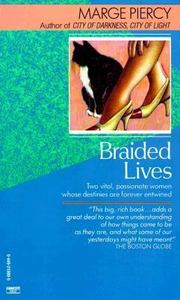
Braided Lives Marge Piercy new editionI have spent most of the week rereading Marge Piercy’s Braided Lives, a novel set primarily in Michigan about a woman struggling with studies, sex, leftist politics, and work in the 1950s.  (Although I didn’t realize this until I looked it up, this absorbing novel is being reissued in September.)

Piercy, a feminist poet and novelist, is a bold, inventive storyteller whose fast-paced work appeals to a wide range of women readers, even a couple of friends I suspect vote Republican. (I don’t want to know).  One charming, smart, if rather fragile, housewife friend, whose lawyer husband supports their sumptuous lifestyle in an enormous, richly furnished house, was intrigued but very upset by Piercy’s The Longings of Women, a novel about the destructiveness of marriage.  She identified with Mary, a middle-class housewife who bottoms out after her divorce and becomes homeless.

In Braided Lives, set in Detroit, Ann Arbor, and New York, Piercy tells the story of Jill, a successful poet and radical abortion rights activist who, having survived the age at which her palm-reading mother predicted she would die, is looking back at her younger self.

Too much self-regard has never struck me as dignified:  trying to twist over my shoulder to view my own behind.  And it is not a mirror I want but a long view back.  I feel as if I have come through rough terrain and across the wasteland around factories and down unmarked city streets without a map and I both know and do not want to know where I have been.

As young women at the University of Michigan in the 1950s, Jill and her friends must confront the demands of school, work, and sex, and the expectation that they will receive their “Mrs.” degree.  This earthy novel is reminiscent of  Mary McCarthy’s  The Group, a sexually explicit novel about eight Vassar graduates in the ’30s.  But unlike The Group, Braided Lives describes the lives of working-class students.

Jill grows up in a working-class neighborhood in Detroit, dominated by her manipulative, tea-leaf-reading, exotic Jewish mother.  She wants to go to the University of Michigan, the best school in the state, but her mother says she’d be better off staying home and taking a few classes at Wayne State until she gets married.  Since Jill has earned enough money to pay tuition at the University of Michigan, her aloof father  agrees to pay for the dorm if she will room with her cousin Donna.

Jill is dark, Oriental-looking, intense, a bibliophile and an outsider, while Donna is blond, brittle,  smart, much more interested in men than studies, and sexually experienced.  The two had a brief lesbian encounter when they were children, and Donna is still amused by the memory.  But while the brilliant Jill is committed to English literature, Donna changes majors as often as she changes men.

Jill is not eager for a boyfriend.  Back in Detroit, she’d learned that relationships can go south very fast:  she’s had friends on the streets and friends pregnant in their teens.  Her studies, her intellectual discussions with friends, and involvement with a political group that protests the The House Committee on Un-American Activities satisfy her.

But of course when Jill meets someone, things change fast.  Women’s lives are complicated in the ’50s.

Piercy describes the randomness of dating (which I vaguely remember:  it was all about whom you met at a party or bar).  Jill meets Mike, another student poet, and suddenly she is going out with him regularly even though her sexual “deflowering” in a car is painful, and he frequently denigates her intelligence. He is so competitive that when she is chosen to read at a poetry reading he says her work is naive and formless.

And then she gets pregnant.
braided lives by piercyThe problem of abortion is always lurking in Jill’s consciousness.  When Donna thinks she is pregnant, Jill collects the information about a doctor who is willing to perform abortions; fortunately it is a false alarm.  But then Jill gets pregnant, and he mother will not allow her to spend money on a doctor.  She tells Jill how to perform an abortion on herself with a knife, and Jill barely survives the bloody job.

From that time on she quietly obtains information about doctors who will perform abortions.  Jill also makes an appointment to get fitted for a diaphragm, but the doctor turns her away because she doesn’t have a wedding ring.  She and Donna eventually go together to get fitted, wearing rings from Woolworth’s so there won’t be a scene about their  being single.  There is a similar scene in McCarthy’s The Group.

I am fascinated by college novels, and this is the only one I know that depicts life at a state university. I recognized the juggling of work, studies, and relationships.  There’s nobody to pick up the pieces if you run out of money, so you’re always hoping a grant or scholarship will come through so you don’t have to work more than 20 hours a week.  Jill has to work.

Piercy’s description of Jill’s academic experiences are interesting, angry, and thought-provoking.  In her Metaphysical Poets course, she sits with two writer friends, Dick and Bolognese.

Partly our arrogance unites us, for English is a hierarchical department and as writers we talk with a fierce authority totally unrecognized by faculty and fellow students.  Literature is the stuff on which grades are honed to most of the class.  Every time papers or tests are returned, a bitter hush falls.  On the way out we’re sure to be stopped by better-behaved students clutching their typescripts or bluebooks with the hopeful sally, ‘What grade did you get?’  and the almost audible prayer, O Lord of Justice, let it be lower than mine!  We are taught the narrowly defined Tradition, we are taught Structure, we are taught levels of Ambiguity.  We are taught that works of art refer exclusively to other works of art and exist in Platonic space.  Emotion before art is dirty.  We are taught to explicate poems and analyze novels and locate Christ figures and creation myths and Fisher Kings and imagery of the Mass.   Sometimes I look up and expect to see stained-glass windows on our classroom.  Somewhere over our heads like a grail vision lurks a correct interpretation and a correct style to couch it in.  We pick up the irony in the air before we comprehend what here is to be ironic about.

I have very much enjoyed this “high middlebrow” pop-literary-political novel.

Mixed-Tape: May Sarton’s “Now I Become Myself” & Bonnie Raitt’s “I Can’t Make You Love Me

Bonnie Raitt

Bonnie Raitt

Which is the real soundtrack of our lives?

Poetry?

Music?

Both?

Bonnie Raitt’s rock blues have been with me for a long time.

May Sarton’s poetry struck the right note for me today.

May Sarton’s lovely poem goes out to Marilou, my roommate who scotch-taped art to the walls of our hospital “suite.”  Bonnie Raitt’s song goes out to all of us who have taped ourselves together with vinyl/tapes/CDs.  (Although the lyrics of “I Can’t Make You Love Me” no longer apply to me, I think it is her most beautiful song.)

First, the poem:

May Sarton’s “Now I Become Myself”

Now I become myself. It’s taken
Time, many years and places;
I have been dissolved and shaken,
Worn other people’s faces,
Run madly, as if Time were there,
Terribly old, crying a warning,
‘Hurry, you will be dead before-‘
(What? Before you reach the morning?
Or the end of the poem is clear?
Or love safe in the walled city?)
Now to stand still, to be here,
Feel my own weight and density!
The black shadow on the paper
Is my hand; the shadow of a word
As thought shapes the shaper
Falls heavy on the page, is heard.
All fuses now, falls into place
From wish to action, word to silence,
My work, my love, my time, my face
Gathered into one intense
Gesture of growing like a plant.
As slowly as the ripening fruit
Fertile, detached, and always spent,
Falls but does not exhaust the root,
So all the poem is, can give,
Grows in me to become the song,
Made so and rooted by love.
Now there is time and Time is young.
O, in this single hour I live
All of myself and do not move.
I, the pursued, who madly ran,
Stand still, stand still, and stop the sun!

And here is Bonnie Raitt’s stunning performance of “I Can’t Make You Love Me”

Colette’s The Shackle: A Feminist Predecessor of Fifty Shades of Grey

Renee Nere et Jean, illustration from 'L'Entrave' by Colette, Editions Mornay, Paris, 1929 (w/c on paper)

Renee Nere et Jean, illustration from L’Entrave’ (The Shackle) by Colette, Editions Mornay, Paris, 1929

Men don’t read Colette.

If you do, let me know.

Whenever I write about Colette, women chime in and comment that they love her work.  Of course I have no way of knowing if these commentors are really women, but I assume that most of them are.  All the stats collected by WordPress (and one thing I like about WordPress is that it limits the available stats, protecting our privacy to an extent) will not tell me if you are male or female.

At a dinner party one night a couple of male friends let me know how much they dislike Colette.  They began to discuss French philosophy and literature. When the name Michel Foucault came up, I practically put my head down on the table.  Women hardly ever talk about Foucault.  I had never been to a party where people talked about Foucault.  I have never read Foucault.  I will never read Foucault.

Then the discussion became a little more general.

Red-faced from bicycling in the sun and bored because I had gone half an hour without speaking, I suggested that Colette was one of the best French writers of the 20th century.  One man declared that her books are overwritten.  Another said they were too simple.  Another said he had disliked My Mother’s House in French.

And so I helped the women clear the table.  It is not that I gave up:  I just didn’t want to argue.

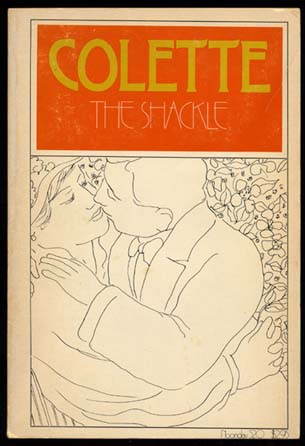
The Shackle ColetteI reread Colette’s The Shackle today partly because this is my Gal Lit week, partly because this erotic novel is short, and partly because it is a feminist predecessor of the Fifty Shades of Grey trilogy.  (N.B. I read 50 pages of Fifty Shades of Grey, and found this throwback S/M novel about a submissive virgin and her sadistic billionaire lover not only execrably written but actually sad:  self-respect is not a priority for heroines in chains and handcuffs).

Renee Nere, the narrator of Colette’s autobiographical novel, The Vagabond, is a strong, intelligent heroine who, after her divorce, gives up writing to work as a music hall mime.  In the sequel, The Shackle, Renee has inherited money, quit her job, and gone on vacation to the Riviera.  The novel begins with her seeing her ex-lover, Max (“Big Ninny”), strolling with his wife and child along the Promenade in front of her hotel.  She is not exactly jealous, but she is aware of her sexual frailty.  She had not imagined him married.

Renee loves her solitude but finds it hard to be alone.  She spends most of her leisure with friends she has met in the hotel:  a couple, Jean and May, who have a violent sexual relationship, and Masseau, an opium addict.  Renee herself abstains from both sex and opium.

Renee knows more about May’s sexual relationship with Jean than she wants to.  May comes to Renee’s room frequently to tell her about the latest “three o’clock…grand beating up.”

Look at that,” she said abruptly, thrusting her downy arm under my nose.  “That’ll be black tomorrow.”

I examined, with the proper interest, two yellowish-brown bruises cricling each of May’s arms like bracelets.

“The filthy brute!” she muttered, not without deference.  “And, you know, he ruined my dress, a dress that cost fifty louis–all because I felt in a lucky mood and I wanted to go and play at Monte Carlo.  He’s going to find out what it costs him, that dress!”

Thirty-six-year-old Renee considers twenty-five-year-old May very young and silly. At the same time she is aware that their fighting, which goes on in public as well as in private, is an integral part of their sex life.  When May moves into her own room after a fight, Jean admits his attraction to Renee; Renee wretchedly flees to “chaste Switzerland.”  Four days later he and Masseau track her down; Renee and Jean take the train to Paris.

Colette’s description of the consummation of their relationship in Jean’s house in Paris is both erotic and humorous.  Renee admits she likes a little bit of bullying.

Then I… reserved my strength to fight him off, for he had begun to overwhelm me; he was climbing round me, paralysing both my arms.  He made himself purposely heavy, he made himself as clinging as a tenacious weed.  I could not get up or even uncross my legs; I struggled conscientiously, half-pushed over backwards, supporting myself on one arm and muttering under my breath:  ‘This is idiotic…this is really too idiotic’ until my simple, female sentimentality suddenly burst into that resentful, indignant cry: ‘You don’t even love me!’

She finds it restful to give in to sex.  She enjoys but is also annoyed by his mastery.

Arrogant, completely assured of his triumph, he displayed a barbarous contempt of methods.  Hair, skirt, fine linen were all rumpled and crushed together as if he had not time to undress me.  It was I who muttered, in shame:  ‘Wait!’  It was I who undid buckle and ribbon and removed pins that might hurt; it was I, lying on my back on the carpet, who made my slightly bruised body a cushion for Jean.

Colette doesn’t take herself too seriously, and I much prefer her lyrical eroticism to James’s porn.

The novel is not just erotica: Renee also explores her fear to commit to a serious relationship. Although Jean wants her to move in with him, she finds solitude at her hotel a relief.  Anyway, they rarely talk.   Can a healthy relationship be based on physicality? she wonders.

Renee is also haunted by age:  her skin is no longer as beautiful as a young woman’s, i.e., as beautiful as May’s, her chin is no longer so firm, and she fears that Jean’s seeing her at her most imperfectly disheveled  will extinguish his love.  I find her vulnerability touching and very realistic

And so what will happen with their relationship?

You’ll have to read it to find out.

“Gal Up!”

Woman reading clip art vintageThis is Gal Lit Week at Mirabile Dictu.

What do I mean by Gal Lit?

It is a feminist thing.

Gal Lit embraces many genres.  It can be pop or literary women’s fiction that doesn’t get widely reviewed, a biography that falls out-of-print, or simply a book that doesn’t make The New York Times “Summer Reading” list.

Ideally fiction helps us identify and empathize with the problems of different kinds of people.  This year I have tried to read almost gender-blind:  male, female; who cares about the sex of the writer if the book is good?

Naturally I recognize elements of myself in my favorite women’s novels.   I am not a pantomime artist, nor do I have any dramatic talent, yet I  identify with Renee in Colette’s The Vagabond: I imagine myself chatting with her Music Hall Friends, walking the bulldog, Fossette, and her exasperation at the persistence of her fan, “Big Ninny.”   When I read Willa Cather’s tragic novel Lucy Gayheart, I understand the disconnect between living in Haverford, Nebraska, and Chicago. Lucy’s passionate devotion to her music in Chicago sets her apart from her friends in Haverford, and the depression that follows the death of a musician she loves is inexplicable to them.

Last year I read 68.5%  books by women and 31.5% by men.  This year, oddly, gender equity has struck.  I’m astonished to find that 44% of the books I’ve read so far are by men.  Perhaps it is related to my reading more reviews more carefully from a wider variety of publications, instead of just skimming book news and book gossip in Publishers Weekly and The Guardian.  (Usually I am better informed about the e-book price-fixing lawsuits than is strictly necessary for the common reader.  It’s far, far better to read reviews.)

I do like to declare a week of Gal Lit occasionally, even if there’s no reason, even if it’s just because it’s the second week of July, and what else do I have to do this week?  The post-feminist generations won’t have the faintest idea what I mean when I say I haven’t noticed significant changes for women  except in the workforceand that I believe women have moved sexually backwards, judging from the popularity of 50 Shades of Grey and Twilight.  Reading  Gal Lit can strengthen our understanding of the direction of our lives.  Doris Lessing’s Martha Quest books, Sheila Ballantyne’s short stories and novels,  and Erica Jong’s novels still have much to say to us.

As Erica Jong says in Parachutes & Kisses.

Things were tougher now, however, because the girls had more things to do, heavier responsibilities.  Babies to raise and incomes to provide.  Isadora’s generation of affluent Jewish girls from central park West had liberated themselves, she often thought, right into being as burdened as  the black women who took care of them in Central Park when they were kids.  They had to earn the bread, bear the babies, and at the same time pretend to their wandering studs that they were merely courtesans, hungry for love….The men hoped from flower to flower, and the women, having insisted on their right to be superwoman, now had that firmly thrust up their asses (or upon their breaking backs).

Please tell me about your own favorite Gal Lit.  And, just to get started, here are two Gal books I’ve very much enjoyed.

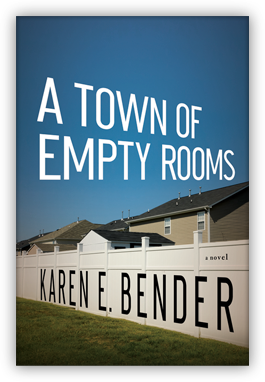
book-atownofemptyrooms Karen E. Bender1.   Karen E. Bender’s A Town of Empty Rooms. I wrote here:   “Bender’s poignant novel (is) about a Jewish family who moves from New York to a small town in the South,… After her father’s death she has a mini-breakdown and steals $8,000 worth of jewelry on her boss’s corporate charge card.  Fired from her job and blacklisted, she moves with her husband, Dan, and two children to Waring, North Carolina.  Everywhere there are signs like:  If God Is Your Co-Pilot, Switch Seats.  They are one of 100 or so Jewish families in town, and Serena is drawn to religion when she drives by the Temple.  But Dan, who doesn’t want to be viewed as Jewish, longs to be accepted and won’t go ro Temple.  He becomes a Boy Scout leader.”

The Mussel Feast by Birgit Vanderbeke2.  Birgit Vanderbeke’s graceful novel, The Mussel Feast, translated by Jamie Bulloch.  I wrote here:  The mercilessly observant teenage narrator, her brother, and mother await their father’s return from a business trip.  The mother is preparing a feast to celebrate his much-vaunted dream of promotion, which is expected to coincide with the trip.  And so Mum prepares a mussel feast, though she doesn’t much like mussels. The narrator dislikes mussels, too…  Time passes, and their father doesn’t come home. …They begin to drink the wine, and as the hours pass, they get drunk.  Gradually they express their hatred for the father.”

Bicycling with Janet, Who Is Reading Aristophanes

A Rails-to-Trail bike trail.

On a Rails-to-Trail bike trail.

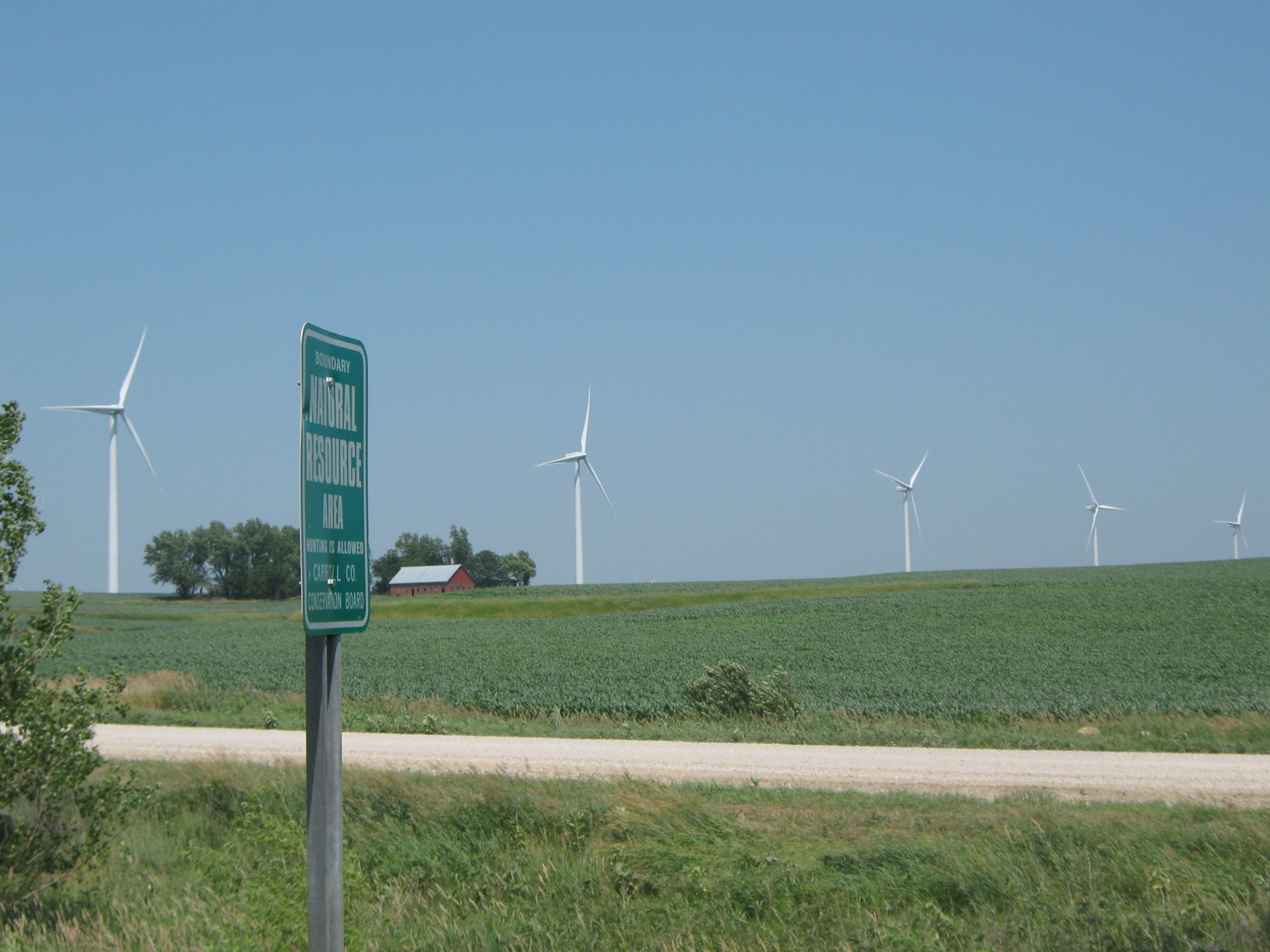
This trail is almost hypnotically flat. It is almost pretty.  Prairie grass grows on either side, and though the steel windmills in the background intimidate, they are our ecological future.

My friend Janet rode the trail with me today.  There are two reasons for this.  One is she lost her mind.

Her long-distance boyfriend flew in to visit on the Fourth.  While we sat in the back yard trying to glimpse the fireworks (we saw nothing), he asked if she still intended to go on the six-day cross-state bike trip they signed up for last spring.

I sipped iced tea. I was riveted by this scene.  I knew she didn’t have a bike.

“Of course, I’ve been riding with Kat, haven’t I?”

“Um-huh…” Somewhere between um-hm and huh-uh.   I went into the house to get the pitcher of iced tea.

Today she borrowed one of our bikes.  She bought some gear, so much gear, a cycling computer, heart monitor, a headlamp, and special sunglasses.  She has two weeks to train.

IMG_2545After 10 miles she sat down on the side of the trail and ate a protein bar.

“God, this is terrible.”

“Drink a lot of water.  And it’s really better to go slower.”

Biking is dull. It’s just hours of riding, eating, riding, eating, riding, and eating again, because you need fuel.

We were famished when we finally reached a small town.  The store was closed.  Everything was closed.  We found three pop machines, two of which were out of order.  While we huddled on a bench under an awning sharing the one Diet Coke we had coaxed out of the machine, she revealed her second reason for needing to talk to me. In her Classical Literature class, she is reading Lysistrata, the play where the women withhold sex as an anti-war tactic.  She hates her professor.

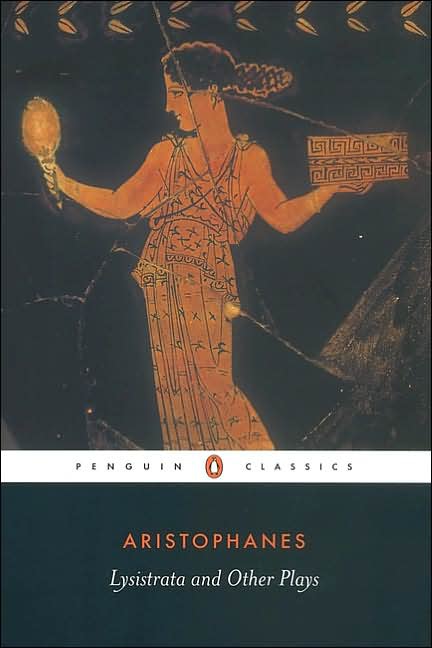
lysistrata aristophanesJanet and I are former hipsters.  We love Lysistrata.  She is surprised her aging hipster professor (whom I remember vaguely) dares in this day and age to say, “Lysistrata is a play about f—–g.”

I burst out laughing.  Yes, this is probably not allowed in the 21st century.

He also gave a lecture about the customs of ancient Greeks.  He said all Greek women had dildos and carried gigantic leather penises through the streets.  “I think he meant at festivals and plays,”  I said.

I am a Latinist, not a Hellenist.  In my Aristophanes class we read The Clouds and The Frogs.  The professor skipped Lysistrata altogether.

Janet’s prof also said some of the best translations of Greek and Latin poetry are by writers with no knowledge of the languages.  When one student protested that this was ridiculous, he said, “Some people look ridiculous when they take their clothes off, others look great.”

That student complained to the department chair..

Well, yes, this is 2013, not the Summer of Love (1967), so people are shocked.  He is unconventional.  Some of what he said was obviously misunderstood.

“Do you like the class?” I asked

“Moderately.”

He’s retiring next year.

She lies down on the sidewalk and says, “How am I going to ride 468 miles?”

“Maybe not do it?”

Her computer told us we had ridden 12.5 miles.  We turned back.  Altogether we rode 25 miles.