Fourth of July

We hold these truths to be self-evident, that all men are created equal, that they are endowed by their Creator with certain unalienable Rights, that among these are Life, Liberty and the pursuit of Happiness.–Declaration of Independence

Cars are lined up and down the street.

People are drinking and smoking in their back yards.

Some will go see fireworks later.

Some will twirl sparklers.

The nail salon sign says, “Close 4th of July.  Happy Independent Day.”

I barely think about the Declaration of Independence.

All men are expected to read Thomas Jefferson or biographies of Thomas Jefferson.

All women are expected to read Laura Ingalls Wilder (a children’s writer).

I read aloud parts of Reporting Vietnam (Library of America) to the English class I taught.

“They lied to us,” said General Westmoreland.

There were some Desert Storm vets in the class.

There were men and women who had served prison terms for drug possession.

Laura Ingalls Wilder wouldn’t have gone down well with these students.

9/11 burned while I was teaching.

We didn’t know what had happened.

My boss, upset about the jingoism, dropped one knee to the floor and pretended to cock a gun.

“I served in Vietnam,” he said.

He used to play in a band.

I was never in a band.

I once dated the manager of a band.

Bands define us.

I don’t remember the “Star-Spangled Banner.”

I dropped one knee to the floor and recited, arma virumque cano

It’s an anti-war poem.

If I see another Civil War artefact on Antiques Road Show, I am turning off the TV.

I have never been to Gettsyburg.

There are many military crosses in the cemetery.

The U.S. went to war in 2003.

I dropped a friend who watched it on TV and thought it was entertaining.

I taught some anti-war poetry.

It doesn’t take much to impress people.

I question how independent I’ve ever been.

I barely made a living off my liberal arts education.

It took me years to realize I would never make as much money as my husband.

Love and relationships have been more important to me than money.

Most of us have married.

Betty Friedan, Gloria Steinem, Doris Lessing and Erica Jong have made very little difference.

Most women have children, but very few of my friends do.

You are supposed to do everything if you are female.

Some of us had to read and write.

We couldn’t do everything.

When the waitress told me she was joining the Army, I felt numb.

pro patria mori?

Anniversary

I reminded my husband that it was our anniversary.

“What made you think of it?”

Slightly incredulous:  ‘The date.”

Two days before the fourth.   Okay, now we all remember.

I get roses on Valentine’s Day, nothing on our anniversary.

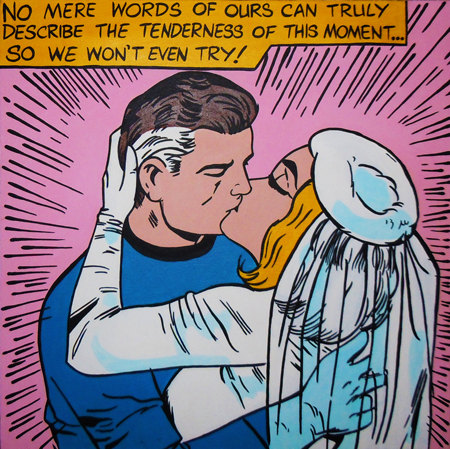
No words can describe the tenderness wedding comic bookI bought us an anniversary gift of a new novel, Andre Aciman’s Harvard Square, in case we run out of things to read.

Often we go to a restaurant to celebrate, and often it’s Red Lobster, but last night we ate a delicious salad with poached chicken, veggies, apples, and feta cheese in front of The Mary Tyler Moore Show.  (I was the chef and sous chef.)

We got married at the County Courthouse on a hot July morning.  I finished a freelance story an hour before the ceremony, not having the sense to tell the editor it was my wedding day.  Then I hopped into a skirt, a summer top, and sandals, and we rushed downtown, stopping at a copy place to fax my story before heading to the courthouse.

At least twenty couples crowded into the courtroom and sat on wooden seats like church pews.  Most were moderately dressed up, the women in dresses, the men in suits or button-down shirts and khakis; only one woman wore a wedding gown.  Judge Ralph J. Perk, Jr., the son of the Mayor whose hair caught on fire in 1972 , officiated over the group wedding.  (“That’s Ralph Perk, Jr.” we all whispered. “The son of…”) Did anyone know him for who he was himself?

There was something sweet about the wedding.  You concentrated on the words; there was not a formal party.  Everybody was happy; it’s not usually like that in court. We were one another’s well-wishers. So many people getting married!

Did  Judge Perk read out our names as he pronounced us man and wife?  Not that I remember.  There were too many of us.  But maybe.  My husband thinks he did, but he doesn’t remember, either.

Now, by the authority vested in me by the State, etc., I pronounce you to be husband and wife and extend to you my best wishes for a successful and happy married life together.

So charming! Just the words.

Some would be happy; some would have regrets and be back in court for a divorce, but for the moment everybody was thrilled.

Married in our thirties, in a photo booth on the boardwalk in Ocean City, Maryland,

Photo Booth, Ocean City, Maryland

The judge announced at the end that he only had time to be photographed with one couple per “session.”  He picked the cutest, youngest couple in the room, and his “assistant”  (bailiff?  what was he?) snapped the picture and gave them the Polaroid. Not that I had a camera, but I remember feeling annoyed, because, well, weren’t we the cutest couple?  Okay, so what, we were in our late thirties, maybe our faces were pointy now, maybe we would never be VERY young again, but it didn’t seem right that we weren’t photographed with the judge.

We didn’t have our camera with us, so we have no wedding picture.

A few months later we took the pic above in a photo booth on the boardwalk in Ocean City, Maryland.  It’s kind of dark, and was my face really that pointy? But at least we’re smiling and kissing!

Andre Aciman and Others: School Days in Literature

I enjoy novels about Yale, Brown, Princeton, the Seven Sisters schools, Oxford, and Cambridge.

But I never read novels about Harvard.  I don’t know a single person who went to Harvard.  It is the Ivy League school I consider the most elitist.

aciman-harvard-square-203x300So I am very surprised to find myself spellbound by Andre Aciman’s new  novel, Harvard Square.  It is beautifully written–I am going slowly because every word and sentence are so perfectly balanced–and it is possibly a classic about outsiders.  I’ll let you know when I’ve finished.

The narrator, a Jew from Alexandria, Egypt, is spending the summer in Cambridge.  He is lonely, has failed his comps, and his friends are gone.  He hangs out at Cafe Algiers, where he meets a contentious, politically aware Arab cab driver.

The narrator tells us:

Cambridge was a desert.  It was one of the hottest summers I’d ever lived through.  By the end of July, you sought shelter wherever you could during the day; at night you couldn’t sleep.  All my friends in graduate school were gone.

As he becomes more involved with Kalaj, the two of them earnestly discuss women and Paris, their favorite city, so very far away from Cambridge, and he becomes even more detached from Harvard. He reads and rereads seventeenth century lit for his comps, but he doesn’t believe he’ll pass. Does he like books at all?  Does he like many books at all, he wonders?

Aciman writes so gorgeously that I began to remember my university days, which, as Aciman’s narrator knows, are better when you look back than when you are there.  Here is a list of books about “school days.”  Please add your favorites!

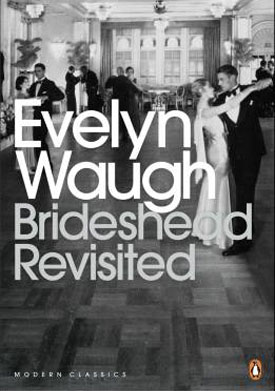
brideshead revisited waught1. The long, langorous first part of Evelyn Waugh’s Brideshead Revisited, set at Oxford and about Oxford, is my favorite university novel ever, and I know it’s yours, too.  Charles Ryder meets Sebastian Flyte one night when Sebastian, drunk, puts his head in the window of Charles’ first-floor digs and throws up.  The next day he apologizes with flowers; Charles begins to spend his days with Sebastian, eating strawberries, drinking wine, learning about art and decoration, and never thinking about work.  Sebastian is a Catholic, his family is very rich, and when Charles visits Sebastian at Brideshead, Sebastian fears he will lose his friend.  Sebastian does poorly at Oxford and his mother wants him watched:  Charles must take sides.

Tea at gunter's Haines2.  In Pamela Haines’ charming “middlebrow” novel, Tea at Gunter’s, Lucy, the narrator, occasionally accompanies her mother to Gunter’s, an old-fashioned tea room in London.  Her mother reminisces with her ex-fiance, Gervase, who was mentally shattered in the war, about Patmore, the estate where they grew up.  Later, when Lucy attends secretarial school, she has very funny adventures with the eccentric teachers.  She also meets Julia (think Sebastian’s sister in Brideshead Revisited), and before she knows it, she is involved in a whirlwind of aristocratic parties.

braided lives by piercy3.  Marge Piercy’s Braided Lives.  Much of Piercy’s remarkable novel is set in Ann Arbor, where the brilliant heroine, Jill, who grew up in Detroit, attends the University of Michigan in the 1950s with her blander cousin, Donna.  Later, in New York City in the 1960s, Jill becomes a radical, and must face the repercussions of needing an abortion before Roe v. Wade.

On my next two lunch hours I see a doctor a day.  Each gynecologist examines me, painfully, and tells me I am pregnant.  I try out my routine, including telling each of them I will kill myself.  They tell me they can call the police; they tell me I must have the baby; they charge me one ten dollars and one fifteen; they lecture me on morality.  I am late back to work both days.

night-and-silence-who-is-here-pamela hansford johnson4.  Pamela Hansford Johnson’s  Night and Silence Who is Here? is one of the  funniest academic  satires I’ve ever read.  An English playboy is offered a job at a New England college where he spends most of his time foraging for food, as there are no stores or restaurants and he can’t drive.  He is also determined to do no work.

foxybaby5.  In Elizabeth Jolly’s Foxybaby, the middle-aged heroine, Alma Porch, a writer, takes a job teaching drama at a “Better Body through the Arts Course”–an arts program with dieting– at an obscure college in an abandoned Australian town.  Very funny and strange.

6.  Charlotte Bronte’s Villette.  Lucy Snowe, the narrator, teaches at a girls’ school in Brussels in the 19th century.  She doesn’t attract the man she is in love with, but does fall in love with another man.  This is Bronte’s best book:  the realistic Jane Eyre sans Rochester.

ann-veronica h. g. wells penguin7.  Vance Bourjailly’s Now Playing at Canterbury.  A group of professors put on an opera at a Midwestern university.

8.  H. G. Wells’ Ann Veronica.  Ann Veronica, a biology student, seeks independence from her father and runs away to London, where she finds work in a biology lab to support herself, becomes involved in radical politics, and falls in love.

9.  Donna Tartt’s The Secret History.  Classics majors commit a crime.

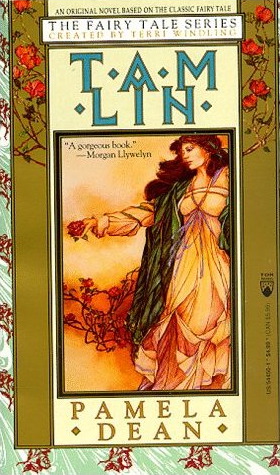
Tam_Lin_by_Pamela_Dean10.  Pamela Dean’s Tam Lin.  Pamela Dean’s novel Tam Lin, set at a small college in Minnesota in the ’70s, is a whimsical chronicle of an undergraduate education.  Part college novel, part offbeat fantasy, it is A Midsummer Night’s Dream crossed with  Donna Tartt’s The Secret History–with a dash of the ballad Tam Lin.

In Which I Read Thomas Hardy & Play Scrabble

Mayor of Casterbridge hardyThis weekend I reread Thomas Hardy’s The Mayor of Casterbridge.

Hardy’s six most dazzling Wessex novels, Far from the Madding Crowd, The Return of the Native, The Mayor of Casterbridge, The Woodlanders, Tess of the d’Urbervilles, and Jude the Obscure constitute a beauitfully-crafted chronicle of rural and town life.  Hardy’s lyrical style is so elegant that many years ago, when a famous writer asked me who my favorite writer was, I absent-mindedly said Thomas Hardy.

Our grandfathers liked him, he said.

I was mortified.  You can’t tell a famous writer you like Thomas Hardy.  You have to like William Gass or Georges Perec.

But who writes more beautifully than Hardy?

The Mayor of Casterbridge begins:

One evening of late summer, before the nineteenth century had reached one-third of its span, a young man and woman, the latter carrying a child, were approaching the large village of Weydon-Priors, in Upper Wessex, on foot.  They were plainly but not ill clad, though the thick hoar of dust which had accumulated on their shoes and garments from an obviously long journey lent a disadvantageous shabbiness to their appearance just now.

The opening is evocative of a tale, almost of a fairy tale, or a long narrative poem:  “”not ill clad” (litotes),  “the thick hoar of dust,” “a disadvantageous shabbiness.”
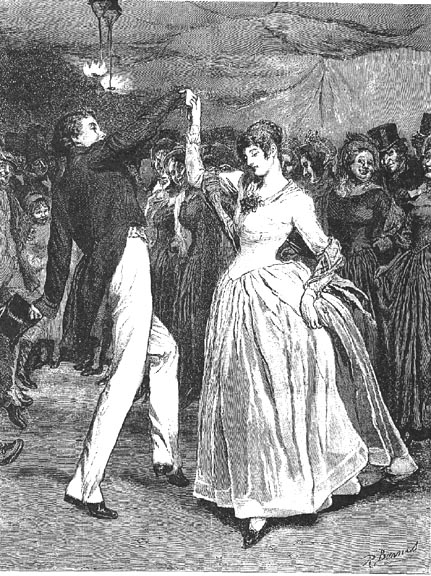
Farfrae dancing with Elizabeth-Jane

Farfrae dancing with Elizabeth-Jane

Hardy creates a beautiful ring composition in this exquisite novel about the rise and fall of Michael Henchard.  At the beginning, Henchard, a hay-trusser, has come to the large village of Weydon-Priors in Upper Wessex with his wife and child to look for work:  he gets drunk and sells his wife, Susan, to a sailor.  Many years later, when he has risen in the world as the Mayor of Casterbridge, Susan, widowed, and her daughter, Elizabeth-Jane, come looking for him.  Henchard and Susan pretend to be distant relatives and keep the secret of their original parting.   They remarry.  At the height of his powers, Henchard is a farmer as well as the mayor, but envy is his downfall when his esteemed manager, Donald Farfrae, begins to surpass him.  Donald wins the affection of Elizabeth-Jane, and later marries Henchard’s former mistress, Lucetta.  By the end, we have seen Henchard working again as a hay-trusser, because he has almost, if not quite, sold his daughter by a lie.

Novels of downfall are not the kind of thing you talk about in the back yard.   My cousin the librarian, who recently broke up with her boyfriend, chats by the hour and keeps me from reading novels of downfall.  If she can’t find me in the house, she knows I am reading in my chair by the hedge of bridal wreath.

Wonder woman, when are we going to be married?

She’s just not in love with him!

My cousin cannot stand to be alone.  She is so talkative that I find it difficult to get anything done:  even if I do the dishes she is somehow in the way.  She reminds me very slightly of myself during my divorce in my late thirties.  I spent a lot of at my friends’ houses, I was very sad, and I couldn’t meet the right men:  my friends all had stories about women who’d simply put ads in a local magazine and then married orchestra conductors  etc., etc., but I didn’t believe them (nor should I have).

My cousin picked up a new man a few weeks ago, a green construction remodeler.  He is charming and sweet, but somehow we all know he is just a date.  She needs someone almost manically charming, like the super-fast-talking “internet cloud” czar, as we called him, who kept cheating on her.

“We’re here!”  She and the green remodeler have brought fried chicken and coleslaw from the HyVee.

Usually she eats at French restaurants.

We have a little picnic.

Then they bring out the Scrabble game.  They play Scrabble for hours.  They play words like zuz, an ancient Hebrew coin.  They have apparently both swallowed a Scrabble dictionary.

They also change all the values for the Scrabble letters so that everything is worth about a million points.  They play for money.  Recently I found them playing strip-Scrabble in their underwear.

“For God’s sake get drunk if you have to but you can’t sit around naked in my back yard.”

My cousin begs me to play Scrabble with them.

“Only if you let me use Latin words.”  I say this to discourage them.

They’re not wild about that, but I do allow them to double-check them in the Latin dictionary.  I practically have to teach them Latin so they will understand that the endings I put on the words are legitimate.  I am so bored that I can only stand it for about half an hour.

And then one day it’s over.

He green-remodeled her tiny house.

He wanted to move in.

She said No.

She saw her old boyfriend at the HyVee.

He was charming.

She wonders if she should get back together with him.

I say he doesn’t play Scrabble.

She says she’s sick of Scrabble.

He’s unfaithful, but I can’t say that.

It is difficult to find a good boyfriend.  Even Donald Farfrae in The Mayor of Casterbridge rushes off with Lucetta, the mayor’s former mistress; Donald is easily discouraged by an abrupt note from the mayor from walking out with Elizabeth-Jane.

“Maybe you should read some Hardy.”  Am I thinking of Tess of the D’Urbervilles, or what?

But then her old boyfriend phones her, and she looks so happy.

TO BE CONTINUED…