A Different Island & the CIA in Iowa City

I fell down twice on my walk.

“Are you okay?”

It’s just snow.

I was, however, upset that my coffee cup splatted into the snow.  Plus yellowish snow–we’re talking dog pee–suddenly covered the lid.

So there I was with a disgusting cup of coffee to get rid of.  I tossed it in the trash can at the coffeehouse.

When I fell down again while punching the button on a traffic light, I was miserable.  It’s just snow and ice but I’ve had enough of it.  I decided to go off my diet.  I’ve been dieting since November, not so I’ll lose weight, which is impossible, but so I won’t gain 10 pounds this winter.  So I bought a malt cup at the Git ‘n’ Go, and at the counter we talked about our favorite ways of eating malt cups.  I use a spoon.  Someone said she let hers melt and drank it.

At home I told my husband I had fallen down and was sick of living in the Midwest and wanted immediately to take a vacation and get away from winter.

I wailed, “Why am I going to England?  Why aren’t I going to an island?”

“You are going to an island.  Just the wrong island.”

And it is quite possible he’s right.

Next year, a different island.

BECAUSE I’M FROM IOWA CITY..

I recently read the article,  “How Iowa Flattened Literature,” in The Chronicle of Higher Education, by Eric D. Bennett, an Iowa MFA, author of a forthcoming book called Workshops of Empire.  The subhead says, “With CIA help, writers were enlisted to battle both Communism and eggheaded abstraction. The damage to writing lingers.”
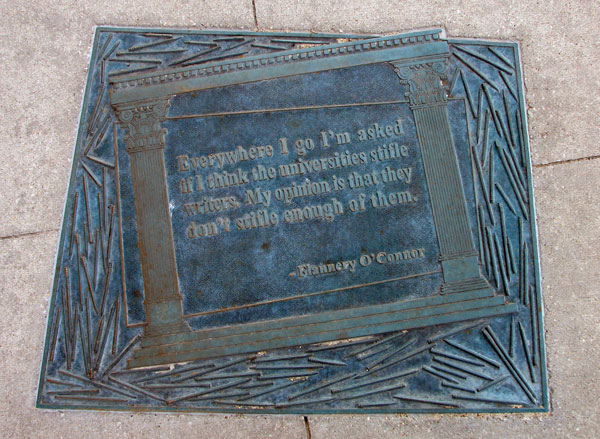
A quote on the "Literary Walk" in Iowa City

A quote on the “Literary Walk” in Iowa City

Growing up in Iowa City, we were proud of the Iowa Writers’ Workshop, the first MFA program in the nation, founded in 1936.  Whenever Kurt Vonnegut or John Irving or John Cheever or anybody who taught there published a book, there were big displays of the books in the window of Iowa Book and Supply.

As undergraduates at the University of Iowa my husband and I both took Fiction Writing multiple times (a fun, easy 3-credit course that could be repeated indefinitely).  One of the T.A.’s, T. Coraghessan Boyle, became famous, though most were never heard of again.  (What happened to Sara and Nancy?)  And I did take a course from Arturo Vivante, a doctor and fiction writer who seemed stunned and despairing to find himself teaching a summer course to undergraduates.  He was especially hard on two high school English teachers who were taking the course to learn to teach creative writing.

Am I surprised to learn that the CIA funded the Iowa Writers’ Workshop’s International Writing Program during the Cold War?  I would be more surprised if it hadn’t.

Call me psychic, but I sometimes joke about how all the writers in Iowa are “locked up” at the Writers’ Workshop in Iowa City.  I mean “locked up” in a lot of ways:  taught, controlled, and spit out into a network.

In the article Bennett talks a lot about the styles of writing that are encouraged and are not at Iowa.  He preferred Ethan Canin’s style to that of Marilynne Robinson and the late Frank Conroy, whom he deemed cold.

He writes,

At Iowa, you were disappointed by the reduced form of intellectual engagement you found there and the narrow definition of what counted as “literary.” The workshop was like a muffin tin you poured the batter of your dreams into. You entered with something undefined and tantalizingly protean and left with muffins. You really believe this. But you can also see yourself clearly enough: unpublished, ambitious, obscure, ponderous. In short, the kind of person who writes a dissertation.

My husband and I are laughing at this.  Muffin tins?  If they could get us all to write the same way, wouldn’t the world be a merry place?  Then we wouldn’t need workshops.

To write a whole book on this seems, well, perhaps revenge?

Perhaps the book is better than the article.

How to Be an American Woman: Sue Kaufman’s Falling Bodies

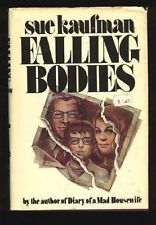
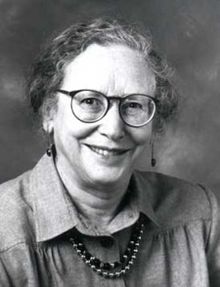
Sue Kaufman, author of Falling Bodies & Diary of a Mad Housewife

Sue Kaufman, author of  Diary of a Mad Housewife

Many onliners swear by Viragos and Persephones.

As I say often, I do not elevate name-brands to a cult.

But if I were going to pick one over the other, I would go with Viragos.  There are some real Virago classics.

Not always, though.  Anyone who has suffered through Mary Renault’s meritless, humorless, weirdly sentimental early novel, The Friendly Young Ladies (Virago), or Joanna Cannan’s equally meritless, poorly written and, by American standards, scandalously class-conscious novel, Princes in the Land (Persephone), will admit the fallacy of going for greens and greys.  (Okay, some of you will never admit it!  I getcha.)

American fiction is, alas, strangely underrepresented by Virago and Persephone, with sensational titles like the fun, trashy Valley of the Dolls and Beth Gutcheon’s mediocre best-seller, Still Missing. Of course, American fiction is not these publsihers’ forte.

We obviously have an advantage here in America in that we have access to more American fiction.

I am an Anglophile, but I do need to spend time with my homegirls: American voices are different.  In general I would describe American women’s fiction as grittier and sexier, closer to the raw work of Philip Roth than the elegance of Barbara Pym (Virago) or the sincerity of Dorothy Whipple (Persephone).

Falling Bodies sue kaufmanAnd if I had my own publishing company, I would instantly reissue the books of Sue Kaufman, the author of Diary of a Mad Housewife, an American classic.  Her 1974 novel, Falling Bodies, is a sad and often hysterically funny novel about a woman whose family is falling apart.  

I have been absorbed in Falling Bodies for two days, and I feel that Kaufman is writing about my own life, though the heroine Emma and I could hardly be more different.  I live a middle-class life in a house in the Midwest; she is the wife of a very well-off vice president of a publishing company in a huge apartment in Manhattan.

And yet… I understand Emma.

Every chapter starts with a day and time of day, like  Monday 8:21 a.m.  Sometimes we go through entire days, sometimes through just a few hours.

Emma has had a rough year.  Her mother has died of cancer, and she herself has been hospitalized for an FUO, a fever of unknown origin. (One year I almost died from blood poisoning from an insect or spider bite:  the doctors weren’t sure what.  And last year my mother died, and, like Emma, I was upset by the sub-standard care.)

In the hospital, she witnessed a suicide.  A man jumped out of a window and his body fell past her room.  Once home, she is  terrified that she will see another falling body crash on the sidewalk.

Slowly we go through Emma’s life from the time she gets out of the hospital and is so weak she can barely walk around the block; to encounters with a sexy, crazy friend from Radcliffe, Minda,who likes to talk about her analysis;  through a tense dinner party at which all the men fall all over Minda and the black caterer and Hispanic maid fight; through a huge blackout that affects the East Coast.

Emma’s family problems are paralyzing, partly because she cannot go back to her social worker job until she has fully recovered from the illness.  Since her hospitalization, her husband and son both seem to be having a nervous breakdown.  Harold, the vp of a publishing company, has a terror of germs and contamination.  And her son is bringing home mechanical parts he finds in trash cans.

Harold and Benjy think Emma is the one who has gone crazy. And she is upset:  her mother-in-law has hired a maid from Colombia.  And talk about crazy…

When she has finally recovered, she goes to a Laurel and Hardy revival.

She was striding briskly along, considering the comic aspects of Tepp’s telling her to pick off where she’d left off and to resume a ‘normal life’ (whatever that was)–when she passed a neighborhood theater , with a marquee announcing ‘LAUREL AND HARDY FESTIVAL–LOTSA LAFFS,’ and without a moment’s hesitation, bought a ticket and went in.   And for the next three hours sat, not thinking, not smiling, not laffing, watching Stan Laurel’s every move, watching every expression that crossed his Silly-Putty face.  Stan Laurel was, she realized, from the first moment he came shuffling and dipping onto the screen, her spiritual twin.  Her Doppelganger–to use the overworked kind of in-voguey word that drove Harold-the-ex-editor crazy.  That sad and infinitely rubber face….  That genius for flapping and stumbling and unfailingly doing the absolutely wrong thing….  The real Emma, the one hiding behind the “cool” blond facade everyone saw.

Who hasn’t felt like that?  Though in my case I might identify more with Amy Poehler in Parks and Recreation amd Jean Squib in Nebraska.

Parts of the novel are told from Harold’s and Benjy’s point-of-view.  Maria and Benjy deliver some entertaining monologues during the blackout.

This is a novel for any woman who has had a rough year. If, like Emma, you’ve told the nurse that your mother says she has not received her medication and the nurse has denied it, it is a short step to the doctor’s telling you that you are crazy and banning you from the hospital room for the night.  Emma’s mother reacted negatively to opium, as mine did.  And while no doctor told me off–there was no doctor, as far as I could see– she died before  the delivery of the medication that would have relieved her stertorous breathing.

I really loved this book,  My guess is that it’s more a women’s book–I can’t see my husband’s reading it–but it is a deftly-consctructed, often funny story of what happens to a woman under a lot of stress.

Happier Olympics & Blimey!

Torah Bright, silver medalist in half-pipe Sochi

Torah Bright won silver medal in the halfpipe, Sochi.

I love the internet.

Sometimes I tire of looking at the screen, though.

I was happier before the internet.

This evening I turned off the computer  to watch the Olympics.  I was waiting for the figure skating pairs.

First there was the snowboarders’ halfpipe.

“Torah Bright with a 93 sets the standard here,” a reporter said.

Torah Bright, 27, the Australian defending gold medalist, won the silver tonight.  There is always a story about a defending gold medalist: Bright crashed during her first halfpipe run in Vancouver four years ago, then came back in the second to win gold. This time she crashed and came back to win silver.  So many news segments about defending gold medalists–and then we’re despondent if they don’t win, as in the case of Shani Davis, the American speed skater.

I wish I were a snowboarder.  It looks like fun.

I am not athletic.  I can do your basics:  walk, bicycle, run.  My husband gave me cross-country skis and snowshoes.  I could not even stand up on the skis.

And I couldn’t even stay upright when I walked to the library this afternoon.  I was reasonably warm in my parka, I was carrying a big cup of coffee, I had actually left the house without R.E.M. on my portable CD player, so I could think my own thoughts…

…and then I fell on the ice.

I  was very annoyed that I spilled my coffee.  I brushed the dirty snow off the top, washed the lid at the library, and went home intending to transfer the contents to another cup.

Fortunately my husband was driving home and stopped to pick me up so I didn’t have to fall on the ice again.

AND THEN BLIMEY!

anna-karenina-leo-tolstoyI found a mistake in a scatty article, “The 10 Worst Couples in Literature,” in The Guardian.

Why bother with a trivial article?

But look at this line:

“…Anna and Vronsky would have had life a lot easier if they had just stuck to their marital partners – Anna especially.”

Yes, Anna especially, because Vronsky wasn’t married.

Now perhaps the writer is an idiot, or perhaps it’s the copy editor, but it is a good idea to read Anna Karenina before you decide both Anna and Vronksy have “marital partners.”  Do they mean spouses?

The Nook and Fashionistas

Barnes and Nobles EarnsI read in PW Daily that Nook sales are down.  Barnes & Noble will continue to manufacture e-readers like the GlowLight, but they are no longer designing new tablets. A spokesperson said,

The new Nook management team is focused on managing the business efficiently so that it becomes financially strong while at the same time aggressively moving to drive revenue growth.”

Whatever the f— that means.

And in January The New York Times reported that digital sales at B&N during the holiday season in 2013 dropped 60% from the year before.  In 2009 the Nook had 25% of the e-market.  Now it holds 20%.

The Nook is a very fast, good machine.

We have Nook HD tablets at our house. We deliberately didn’t buy Kindles, because we wanted to throw some of our business to B&N, our bricks-and-mortar store.

I have found so many books at B&N over the years:  Peter Stothard’s On the Spartacus Road, Karen E. Bender’s A Town of Empty Rooms, Rebecca Mead’s My Life in Middlemarch, and, most recently, William Gibson’s Zero History.

And I wouldn’t necessarily find these books at Amazon.  I’m not saying I couldn’t, but they probably wouldn’t come up on the screen.

If they stop making the Nook , will another company take it over?

But on another note, I buy too many e-books.  Do you ever miss real books?  I recently bought Marjorie Kinnan Rawling’s The Yearling as an e-book.  It has the original paintings by N. C. Wyeth, and I was excited that I could see the illustrations on the Nook.  But wouldn’t it really be nicer to have the book?  I also recently purchased D. J. Taylor’s Kept as an e-book, and very much wish I’d bought the real book because I will reread ait. The same with Elizabeth Spencer’s  novels:  I should have bought the real books.

I wonder if others are feeling the same way.

Carolyn G. Heilbrun, author of Writing a Woman's Life & the Amanda Cross mysteries

Carolyn G. Heilbrun, author of Writing a Woman’s Life & the Amanda Cross mysteries

Angela Neustatter vs. Carolyn G. Heilburn.   At 50something, I am hardly a fashionista.  If I want to wear trendy baby-doll frocks, I assure you I will, but if I do you’ll know I’ve gone insane.  I’ve already worn low-cut t-shirts for the last decade (inability to find others with higher necks), and my dermatologist does not care for the sunburn.

One lovely thing about the turning point of fifty is the independence from fashion.  You can grow your hair, stop dyeing it, throw out your designer dresses (since mine were from Younkers, they don’t qualify as designer), and wear whatever you want.

In other words, you can still have orgasms (have them daily, according to a very funny book I read on menopause),  but you do not have to spend as much money to earn them.

Independence is the key word.

So I was annoyed to read an article in The Observer, “Forget beige – meet the women who are ageing with attitude.”

If we can’t wear beige, can we at least wear black?

Angela Neustatter, the 70ish author of The Year I Turn…: A Quirky A-Z about Age, does not believe in aging gracefully, i.e., growing gray, etc.  She does look very young in her picture.

The article says, “Apart from a few “frumpy years” in her 50s, when she lost confidence in her right to wear leopardskin tights, author Angela Neustatter says she has never let age define her.”

And I thought,  So I have to look ridiculous at 50, 60, and 70, too?  Leopardskin tights do not look good on anybody.

Neustatter apparently believes aging women’s invisibility is caused by not following fashion.

Although, like all women, I suffer from fashion insecurity, I very much disagree that youth is the ticket to growing older.  I prefer the philosophy of Carolyn G. Heilbrun in The Last Gift of Time:  Life Beyond Sixty.

Trying to develop a crossroads–the point at which a woman has lived thirty years of adult life in one mode and must discover a new mode for the second thirty years likely to be granted her–I wanted to suggest, to (if I am honest) urge women to see this new life as different, as a time requiring the questioning of all previous habits, as, inevitable, a time of profound change.”

D. J. Taylor’s Kept

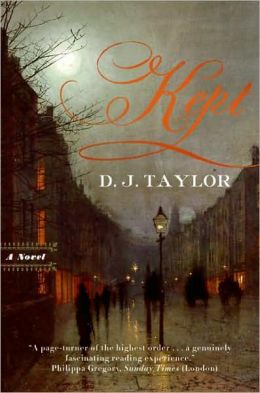
kept-victorian-mystery-d-j-taylor-132x200In D. J. Taylor’s Kept, a brilliant prequel to his novel Derby Day (which was nominated for the Man Booker Prize), many secrets are kept, and finally uncovered.

Set in the 1860s, this stylishly-written novel follows the arc of a well-plotted Victorian novel,  paying homage to Dickens, Thackeray,  Trollope, Mrs. Oliphant, Wilkie Collins, George Gissing, and other 19th-century writers.  Taylor expertly mimics Victorian language without losing his modern voice; in a sense, Kept is a meta-Victorian novel, with a mix of fictional characters, historical characters, and characters from other Victorian novels.

Taylor writes in a number of different styles here: traditional narrative, diary entries, even newspaper articles. He  interweaves a fictional diary entry of George Eliot’s with the musings of a mad woman in an attic with the double-dealings of out-of-pocket Londoners who turn to crime.

The characters are deftly-depicted and strikingly odd.  There is James Dixey, a collector of rare eggs and mounted animals, who has also collected and confined a mad woman, the quirky and sympathetic Mrs. Ireland (based on Thackeray’s mad wife).  A raging wolf prowls his estate; in a parallel but contrasting scene, another wolf benevolently and totemically stalks a cousin of Mrs. Ireland in Canada who is trying to find his way back from the wilderness to the city.  Then there is the criminal Mr. Perdew, a character in Derby Day, who keeps discounted bills, does odd tricks with money, and plans a theft of gold bullion (based on the Great Train Robbery).  And there is the maid Esther, who becomes a confederate of Mrs. Ireland, and later runs away to London.  All these people are connected, and some are kept by others.

There are occasionally authorial asides, at least fictional authorial asides.

I will own that I am a curious man.  And yet my curiosity is, as it were, of an altogether curious kind.  A sealed casket holds no charms for me.  A locked door seldom makes me yearn for a key and the right to admittance.  Rather, my fascination lies with great people and the moment when their greatness has, albeit temporarily, been put aside.  How does a bishop conduct himself when, retiring to the bosom of his family, he divests himself of his mitred hat?  What does Lord John, coming back from the Treasury chambers, say to his wife, his butler or the domestic who hands him his tea?  Half the charm of fiction resides in these imaginings.  Write a novel about a ploughman in his field or a City Croesus striding about the floor of ‘Change with his hands plunged into his trouser pockets and no one will read it, but let a distinguished nobleman, the heir to broad acres and the confidant of half the Cabinet, tell his wife that he has the gout or that he will lend no more money to her scapegrace brother and the public is instantly agog!

Many secrets have to be deciphered, among them the reason for Mr. Dixey’s locking up Mrs. Ireland after her husband’s death.  When Mrs. Carstairs, a relative, goes to Easton Hall to visit her, Mr. Dixey will not let her see her.

The mystery of Mrs. Ireland’s disappearance–to Norfolk, to Dr. Conolly’s establishment, to wherever it was that she might be lodged–seemed to her so obviously a mystery that she could not believe that any other person could not imagine it so.

Kept by D. J. TaylorThe police officer, Mr. McTurk, who is also a character in Derby Day, eventually solves the train robbery and some other odds and ends.

And characters from other novels appear.  One of Trollope’s characters, Rev. Josiah Crawley of Framley Parsonage and The Last Chronicles of Barsetshire, and a Miss Amelia Marjoribanks–perhaps a relative of Mrs. Oliphant’s Miss Lucilla Marjoribanks of Miss Marjoribanks?–play a part in the novel.

The rich texture and breadth of this novel would make a great BBC miniseries for those who like Downton Abbey.  (Victorian, but isn’t that really as good?)

Both Derby Day and Kept are excellent.  I don’t know which I enjoyed more.  Perhaps Derby Day is better-written; perhaps Kept is more fun.  Some may feel the opposite.

It is always wonderful to find a good contemporary writer, because, as some of you know, contemporary fiction is not always my thing.  My resolve this year?  Read more 21st-century novels.

How to Be an American Woman, Part 2: At the Gym

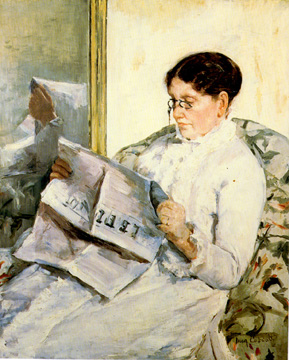
"The Mirror," Mary Cassatt, 1906

“The Mirror,” Mary Cassatt, 1906

Did I ever tell you that I studied classics long ago because I wanted a 19th-century English gentleman’s education?

I loved Victorian writers, and I thought if I had their education, I would be able to think as clearly as they did.  I would combine the English gentleman’s education thing with the American woman thing.

Years have passed, and I still read Victorian novels and classical literature.

There is something very classical about living on the prairie, where we are left to our own imaginations and have little culture.  Willa Cather loved Virgil, as we know from a zillion readings of  The Professor’s House.

I will read anything.  Did I just say that?  Well, it’s true.

I am currently reading, and I am not exaggerating, though this list may look a little long:  Pliny’s letters (in Latin), Jo-Ann Mapson’s Bad Girl Creek, Anthony Powell’s A Question of Upbringing, D. J. Taylor’s Kept, William Gibson’s Zero History, Sylvia Plath’s Letters Home, and Tolstoy’s War and Peace.

I look up from my book and am still in the Midwest, but my point of view is eclectic.

I think I read too much, though, and should be watching the Olympics instead.

Because yesterday I had a panic attack at the gym:  how can we American women cope with images of ourselves in the f—– mirror at the gym?

I was on the bicycle. Mirrors everywhere.  When I looked up, I was distressed by my uncombed hair and wrinkled hospital pants.  I thought,
 OH, GOD, I CAN’T DO THIS ANY MORE.

Never let it be said I am not competitive.

So I rode off a record number of calories on the bicycle.  I was still riding when the others gave up.

Yeah, well, I also needed to ride off a lot more calories than they did.

I went home and combed my hair.

And today I thought, Go back and get on the damned bicycle, Kat.

After reading half of Jo-Ann Mapson’s Bad Girl Creek, I was ready to get out there again.

It’s good to have a female point of view.

So I went back today and was again the only woman without a ponytail.

How to Be an American Woman: Jo-Ann Mapson, Sue Kaufman, Madeleine L’Engle, & Deborah Crombie

"The Mirror," Mary Cassatt, 1906

“The Mirror,” Mary Cassatt, 1906 (I love this, because it’s not idealized)

I love reading novels.  I read classics, I read Viragos.

I was on a bicycle at the gym, reading a Virago.  Suddenly I looked up.  It is not something you want to do at the gym after a certain age. There are mirrors everywhere, and who wants to look in mirrors?   My hair was uncombed,  I wore wrinkled hospital pants, I mean REALLY wrinkled, and the illusion that I look as I did as a young woman (which is anybody’s private image) popped.

Needless to say, I felt slightly annoyed.  I went home, changed my clothes, stuck a lot of pins in my hair, and put on lipstick.

My husband laughed at me.  Are you wearing lipstick?

I smeared it off with a Kleenex.

That’s better.

It is rather unusual to wear lipstick at home. The thing about being married for a long time is that you you’ve seen each other scruffy, been on camping trips where you’ve forgotten your toothbrushes and had to smear toothpaste on your teeth with your fingers.

None of it fazes my husband.

I am healthy, and that is what matters.

Usually I know this.

Sometimes I have to remember how to be an American woman.  And so I am reading some books by American women this weekend.

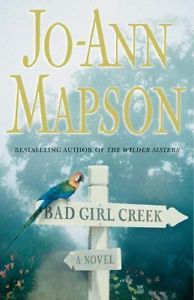
Bad Girl Creek Jo-Ann Mapson1.  Jo-Ann Mapson’s Bad Girl Creek.  Mapson writes beautifully, and has a smart perspective on the difficulties of women’s lives.  Her heroines are strong, sometimes they are wild, and they are always independent.  I have just barely begun this, and it is already fascinating.  Phoebe Thomas, who is in a wheelchair, has inherited her aunt’s flower farm. According to the cover, three other displaced women join her.

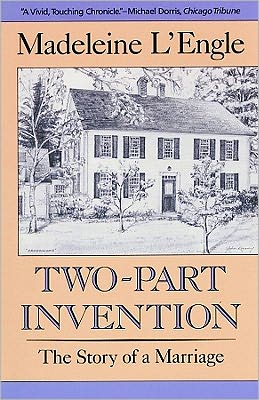
Two-Part Invention Madeleine L'Engle2.  Madeleine L’Engle’s Two-Part Invention: The Story of a Marriage.  Needless to say, I read her books as a child, but have also read some of her adult books in the last few years.  This is a memoir about her marriage to Hugh, an actor.

3.  Deborah Crombie’s A Share in Death.  Deborah Crombie is a Texan who has lived in the UK, and her mysteries are set in England.  So there we have it, an American writing a series about Scotland yard Superintendent Duncan Kincaid.  A mystery is always distracting, but is this cheating because it’s set in England?

4.  Sue Kaufman’s Falling Bodies. Kaufman wrote Diary of a Mad Housewife, one of my favorite novels, and, according to the cover flap, this is about a woman who lives in a book-filled apartment and has family problems in a rough year.

I can’t wait to read these!

What I’m Reading Now: D. J. Taylor’s Kept, Sylvia Plath’s Letters Home, & William Gibson’s Zero History

BookGroup

On AOL in the ’90s, before the blog was invented, we posted our thoughts on book boards. AOL hosted dozens of book groups at a site called Book Central.   One year many of us attended The Southern Festival of Books in Nashville, and it was delightful to meet online friends.  Although there were frequent “break-ups” on AOL–a reader’s trashing Margaret Atwood’s Oryx and Crake or Sebastian Faulks’s Birdsong could start a riot or a splinter group–I stayed in touch until AOL canceled Book Central and most of us changed internet servers.

The ’90s for me was the best time online, before the breakdown of groups into bloggers and Facebook users, and before the extensive distribution of review copies that occasionally compromise online integrity.

(Yes, I am part of this culture, too.  I have seen it, I have done it, and of course I love my blog.)

One thing I especially loved about the AOL groups was our “What I’m Reading Now” posts.

I usually wait to post about books after I’ve finished.  But why?

It’s time to revive the “What I’m Reading Now” feature.

Here goes:

kept-victorian-mystery-d-j-taylor-132x200D. J. Taylor’s Kept.  This is a prequel to his novel Derby Day, the 2011 novel which was nominated for the Man Booker Prize (I wrote about it here).  If you are mad about allusions to Victorian novels, as I am, you may like this even more than Derby Day. The vividly-drawn  character,  Isabel Ireland, is a Bronteish mad woman, based on Thackeray’s wife; Trollope’s Josiah Crawley and Mrs. Oliphant’s Miss Marjoribanks and her father the doctor make appearacnces;  and Taylor introduces us to Mr. Pardew, a fascinating con man, and Captain McTurk, a clever policeman, whom we meet again  in Derby Day.

I am amazed by the wealth of historical and descriptive detail, and his encyclopedic knowledge of literature.

He also includes historical characters, like Dr. John Connolly, who “advocated radical reform of the treatment of lunatics and a system of patient care…. ” (See Taylor’s endnotes.)

I am savoring the language.  I will write more about this novel later.

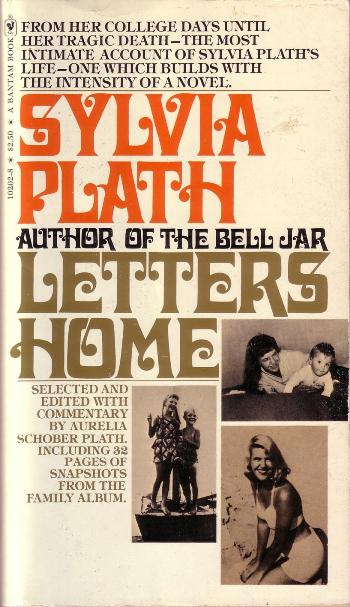
Letters_Home_ plathSylvia Plath’s Letters Home.  Inspired by Nancy at Silver Threads, who reviewed Janet Malcolm’s The Silent Woman:  Sylvia Plath and Ted Hughes, I got out my copy of Sylvia Plath’s letters.  She is mainly ecstatic during her first year at Smith in 1950. Even then, however, she has to be careful not to be overstimulated, and she has joked about suicide twice in the first 50 page. She writes to her mother, “By the way, do you suck those buffered penicillins or swallow with water?…  I don’t want to kill myself by taking them the wrong way!”

She is impressed by her teachers, and especially loves Miss Mensel, a charming woman who keeps in touch with all the scholarship students.  Sylvia writes, “I had to keep myself from getting tears in my eyes as I told her how happy I was….   I was afraid I would be stiff and nervous at first, but my enthusiasm washed that all away, and I just flooded over and told her how happy I was.”

Oh, Sylvia!

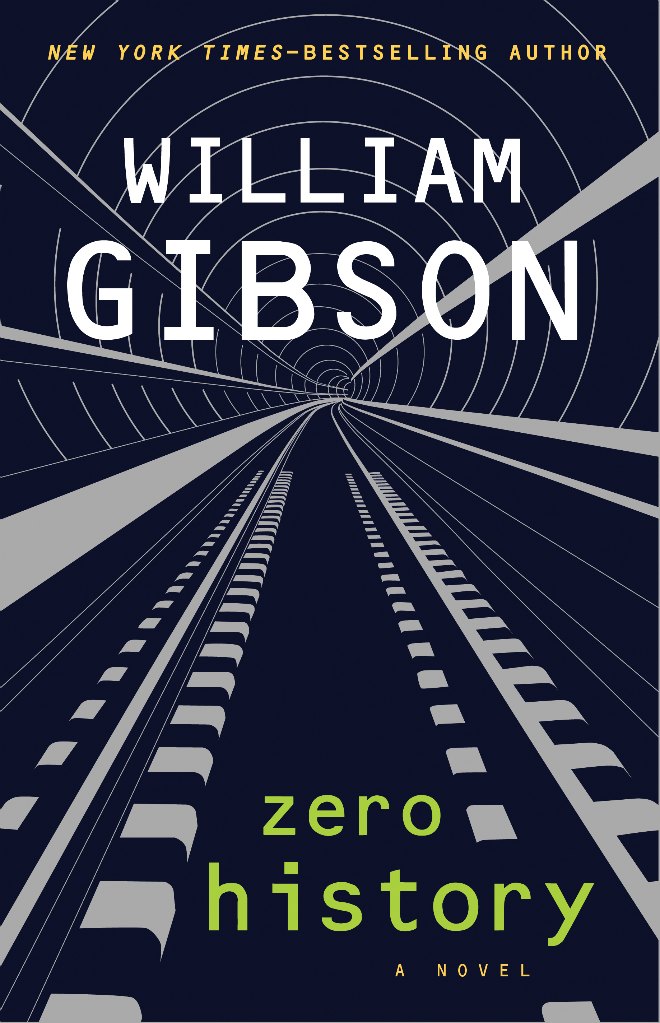
Zero-History-cover gibsonWilliam Gibson’s Zero History is a science fiction thriller, partly about fashion.  Hollis Henry, a former rock star, and Milgrim, a former drug addict, are hired to find out who makes “Hounds,” a beautifully-sewn line of denim jackets and jeans that turn up periodically at select fashion trade shows.  Their boss, Hubertus Bigend, is always looking for information, and wants a contract to design military wear in the U.S.

So fast, so fun, so clever!

And more later…

When I finish these, you’ll hear more.

Tomorrow’s Classics

A "Tomorrow's Classic" which is still around today.

A “Tomorrow’s Classic” which is still around today.

In the back of a Bantam paperback (1977), I found two wonderful lists.

Here’s the first one:

READ TOMORROW’S LITERATURE–TODAY

The best of today’s writing bound for tomorrow’s classics.

PORTNOY’S COMPLAINT    Philip Roth

BEING THERE    Jerry Kosinski

RAGTIME   E. L. Doctorow

THE SUMMER BEFORE THE DARK    Doris Lessing

MEMOIRS OF HECATE COUNTY    Edmund Wilson

ONE DAY IN THE LIFE OF IVAN DENISOVICH    Solzhenitsyn

THE END OF THE ROAD    John Barth

AUGUST 1914    Solzhenitsyn

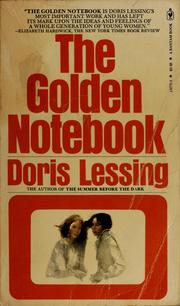
THE GOLDEN NOTEBOOK    Doris Lessing

AMERICAN REVIEW # 25    Theodore Solotaroff, ed.

THE SOT-WEED FACTOR    John Barth

THE PAINTED BIRD     Jerry Kosinski

GRAVITY’S RAINBOW    Thomas Pynchon

V    Thomas Pynchon

Most of these are still in print, and most are considered classics.

Here’s another fun list in the back of this paperback.

READ THE WOMEN WHO TAKE STANDS AND ACT ON THEM.

THE AMERICAN WOMEN’S GAZETEER   Sherry & Kazickas

THE DIALECTIC OF SEX    Shulamith Firestone

THE PSYCHOLOGY OF WOMEN, Volume I:  Girlhood.  Helene Deutsch

LESBIAN/WOMAN    Del Martin and Phyllis Lyon

THE DESCENT OF WOMAN   Elaine Morgan

THE GOLDEN NOTEBOOK    Doris Lessing

VAGINAL POLITICS    Ellen Frankfort

COMBAT IN THE EROGENOUS ZONE    Ingrid Benges

THE FEMALE EUNUCH    Germaine Greer

THE FUTURE OF MARRAIGE    Jessie Barnard

THE GENTLE TAMERS:  Women of the Old Wild West    Dee Brown

THE BELL JAR    Sylvia Plath

THE FEMINIST PAPERS:  FROM ADAMS TO DE BEAUVOIR    Dr. Alice S. Rossi, editor

I only know four of these, but Germaine Greer’s The Female Eunuch and Lessing’s The Golden Notebook are definitely classics.  It’s amazing how many feminist books were published in the ’70s.

Who are your Tomorrow’s Classics?  Or Women Who Make Stands and Act on Them?

Lists are so much fun.

Bifocals

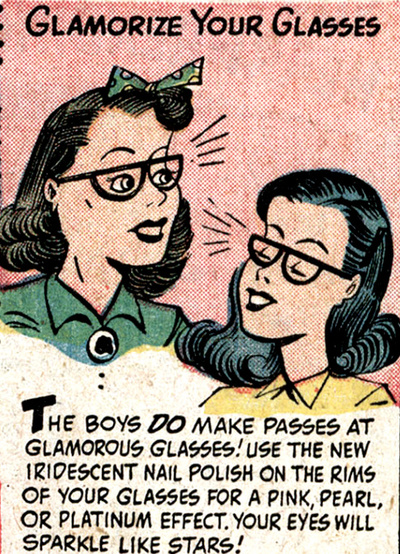
Glamorize your glassesI just got new bifocals.

I needed new glasses desperately.

I like my new glasses very much, but I look like a hipster/schoolmarm in a graphic novel by R. Crumb or Alison Bechdel.

I can see myself again.

Although I was fascinated when I recently mistook a black iron fence for a human being, I didn’t particularly want to end up in Oliver Sacks’ The Man Who Mistook his Wife for a Hat. Everything blurry, pretending not to care, pretending I was an Impressionist painter, I knew I needed new glasses, but you know how it is:  if you’re able to see at all, you’re too busy to go to the ophthalmologist/optometrist/optician or whomever you see.

And so I went to the “optical” guy.

And my vision has actually improved, so I needed new bifocals to reflect that.

When I picked out new frames, I held my old glasses up to get an idea what they looked like.

I didn’t know what they looked like until I picked them up.

It is amazing to be able to see again.

On a recent occasion, before I collected my new glasses,  I picked up my purse upside down from a counter at the supermarket.  Change, keys, and comb went flying.  Several people went down on their hands and knees to help me pick things up .  “Oh, a butterscotch candy,” I muttered in deep embarrassment.  I felt like Mr. Magoo, or Ms. Magoo.

So you can see why I’m happy to have new glasses.

There’s just one thing.  When I try to comment at blogs, I STILL can’t see those letters you have to type in first.  You know what I mean: tiny print all running together, and you have to type it in twice or thrice till you get it right.

I thought I’d be able to look at it and get it right the first time with my new glasses.

Nope.

Nobody can.