Alternate Histories: Jo Walton’s My Real Children & Bryce Zabel’s Surrounded by Enemies: What If Kennedy Survived Dallas?

Jo Walton's My Real ChildrenI have read several alternate histories this summer.

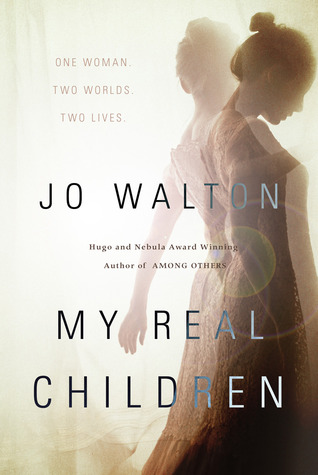
Jo Walton’s stunning new novel, My Real Children, is one of the best.  She is a literary science fiction writer who won the Nebula Award and  the Hugo Award in 2012 for her novel Among Others.  Her latest novel should appeal to readers of literature as well as science fiction fans.

The plot is as follows:  In 2015, the heroine, Patricia, is in a nursing home with Alzheimer’s disease.  She remembers two pasts:  in one she writes travel guidebooks in  Italy, spends every summer in Florence, and raises three children with her lesbian lover, Bee; in the other she is Tricia, the wife of a closeted gay man and mother of four who does not discover her vocation as a teacher or a satisfying heterosexual relationship until her husband leaves her.

Patricia is confused, the nurses say.

It was when she thought of her children that she was most truly confused. Sometimes she knew with solid certainty that she had four children, and five more stillbirths:  nine times giving birth in floods of blood and pain, and of those, four surviving.  At other times she knew equally well that she had two children, both born by caesarean section late in her life after she had given up hope.  Two children of her body, and another, a stepchild, dearest of them all.  When any of them visited she knew them, knew how many there were, and the other knowledge felt like a dream.  She couldn’t understand how she could be so muddled.

The novel spans her life from her childhood in the 1930s to the present.  After her father and brother die in World War II, she wins a scholarship to Oxford, where she makes friends in the Christian Union.  When a girl in the Union is falsely accused of having a lesbian relationship with a girl who suffers from post-traumatic stress disorder, Patty defends her.

The worlds diverge when Patty, teaching at a girl’s school, gets a call from her boyfriend Mark Anston, who has done very poorly in his exams. He says they must get married right away or end the relationship. In one timeline she says yes, in the other no. The one who says yes becomes known as Tricia, and her life is complicated and unhappy; the one who says no is Pat, and she has a happy, fulfilled life..

Even their worlds are different.  In one world Kennedy is assassinated, and in another he declines to run for a second term after the Cuban missile crisis.  In one world, one of Tricia’s children gets married on the moon;  in the other, Pat is frustrated because gay marriage is forbidden and the world is threatened by nukes and thyroid cancer.

A fascinating novel about two lives, different children and mothering styles, and different histories.
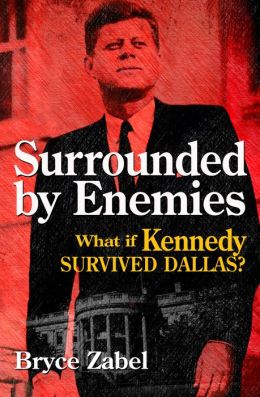
Surrounded by Enemies-  What If Kennedy... bryce zabelI am reading Bryce Zabel’s self-published novel, Surrounded by Enemies: What If Kennedy Survived Dallas?, which is nominated for the Sidewise Award for Alternate History.

Many, if not all, science fiction awards are now open to self-published novels.  Will any self-published books be included on the Man Booker Prize list?  I doubt it.

The premise of Zabel’s novel is that JFK survived the assassination attempt in Dallas. Zabel writes in a journalistic style:   the novel takes the form of a book based on articles from a fictitious magazine, Top Story.  Zabel, a TV producer, director, writer, and former CNN correspondent, perfectly mimics the slightly tabloid-like style.  (I know it well, because JFK meant so much to Catholics in the ’60s that my mother ordered every book about JFK.  Our favorite was The Torch Is Passed, by the Associated Press.)

In the introduction, Zabel explains,

Because Kennedy was the most mediagenic political figure of his time, and possibly of all time, I have created a media vehicle uniquely suited to tell his story.  Top Story magazine was, in this alternative historical reality, a struggling newsweekly routinely getting its lunch eaten by the publishing powers-that-used-to-be until it hitched its wagon to the charismatic young President’s star-crossed descent into scandal.

The scene of the attempted assassination is riveting, with its description of Secret Service Special Agent Clinton J. Hill’s leap into the car and throwing himself across JFK’s and Jackie’s bodies to protect them. In the book, he is hit and died; but in real life, Hill survived and jumped onto the back of limousine to escort them Parkland Memorial Hospital .)

Zabel writes,

As the presidential motorcade turned into Dealey Plaza, Secret Service Special Agent Clinton J. Hill did not like what he saw.  To the left of the President’s car was an open, landscaped area of the western end of downtown Dallas.  Hill, riding on the left running board of the follow-up car, felt his stomach tighten at the sight of so much open space. On the right, he saw the Texas School Book Depository, toward which the President was waving.  Hill glances up to the building’s higher floors.  The bodyguard’s reflex changed the course of history.

I am fascinated by the speculation about who plotted the assassination.  Kennedy had enemies in Cuba and the Soviet Union, the FBI, CIA, the Mafia, the Secret Service, everywhere.

In the novel, Kennedy’s secretary recalls that his first words to Robert when he came back were,

“We have to hit back, Bobby,” said the President.  “Whose side is Hoover on?”

At a private conference on the Kennedy compound with just a few trusted men, they decide to go along with with the cover-up accusation of Lee Harvey Oswald, because investigating the other leads could end in a military coup, a civil war, or a lost election.

This clever, solid, reasonably well-written novel will doubtless fascinate Kennedy fans, and though I am not a historian, I am certainly very interested in the details of the (fictional) cover-up. At the Kennedy Center last year on the 50th anniversary of JFK’s death, we milled and thronged in the lobby, looked at Kennedy’s rather overwhelming bust, and chatted about what Kennedy had meant to us and where we had been when he was shot.  We walked home from school early, a bit bewildered; then we sat in front of the TV for hours, and my grandfather gave us one of those lists of the similarities between Kennedy and Lincoln.  I had Jackie and Caroline paper dolls, which I was allowed to play with only in my room.

N.B.  I did not accept free copies of Surrounded by Enemies or D. J. Taylor’s outstanding novel, The Windsor Faction, also nominated for the Sidewise Award.   All for none, or none for all!  (Well, that’s not quite what I mean.)  I hope my ethics make sense to you.

Light Summer Reading: Elizabeth von Arnim’s The Adventures of Elizabeth in Rügen & D. E. Stevenson’s Gerald and Elizabeth

light summer-readingSometimes we like light reading.

We’re waiting at the doctor’s or the vet’s.  There are no magazines except People or Us.

A light novel is perfect while lounging under the linden tree.  I don’t want to read James Joyce outdoors.

Whether at the doctor’s or in the back yard, I can lose myself in Elizabeth von Arnim’s amusing novels or D. E. Stevenson’s light romances.

The Adventures of Elizabeth in Rügen (1904) is the third book I’ve read by von Arnim this summer.  It continues the exploits of the narrator of Elizabeth and Her German Garden (1898) and The Solitary Summer (1899).  It is really travel writing, with a slender plot.  According to Penelope Mortimer, author of the introduction to the Virago edition, von Arnim wanted to branch out from her meditations on the garden, nature, and solitude.

In 1901, the real Elizabeth traveled around the Baltic island of Rügen with a friend.  She wrote a kind of guide book, with a few charming characters and comic episodes to flesh it out.

In the novel, the narrator, Elizabeth, wants to be alone, so she travels only with her maid, Gertrud, and her coach driver, August.

There are many humorous scenes.  When a motorcar comes roaring by on the road, Elizabeth and Gertrud jump out of the carriage, sure that the horses will bolt.  The horses don’t bolt, but August keeps on driving, unaware that the carriage is empty.  The women are hungry and tired, but eventually they find the picnic basket, which also fell out of the coach.  They have several adventures before they finally catch up with August.

Later, Elizabeth encounters a cousin, Charlotte, on the beach.  Charlotte is married to a German philosopher, but after six years and babies who were stillborn or died shortly after birth, she went to England to become a feminist lecturer.  She is, alas, one of those obnoxious comic feminists, and yet Elizabeth also has sympathy for her.

…and the next I heard she was in England,–in London, Oxford, and other intellectual centres, lecturing on the cause of Women….  Charlotte’s family was so much shocked that it was hysterical.  Charlotte, not content with lecturing, wrote pamphlets–lofty documents of a deadly earnestness, in German and English, and they might be seen any day in the bookshop window Unter den Linden.  Charlotte’s family nearly fainted when it had to walk Unter den Linden.  The Radical papers, which were ony read by Charlotte’s family when nobody was looking and were never allowed openly to darken their doors, took her under their wing and wrote articles in her praise.

Charlotte is made ridiculous, but in von Arnim’s later novel, The Pastor’s Wife, another heroine, Ingeborg, is sympathetically portrayed when, after several pregnancies and a long illness, she announces to her husband that she will no longer have sex with him.  The doctor backs her up, and the heroine finally has time to read and study.  So by 1914, when The Pastor’s Wife was published, von Arnim was definitely a feminist.

There is another important subplot in Rugen.  When Elizabeth and Charlotte  run into Charlotte’s philosopher husband, Elizabeth devises a plot to get the two back together again.  Will it work?  It seems unlikely.

A very enjoyable novel.

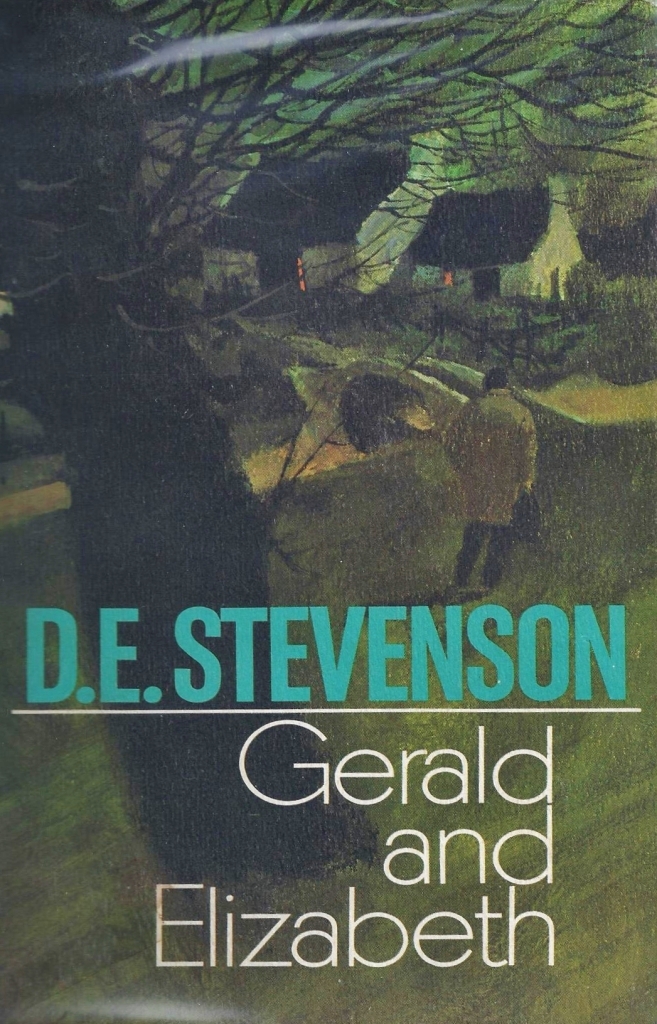
gerald-and-elizabeth-d-e-stevenson-001D. E. Stevenson has many fans. A few years ago, Sourcebooks started reprinting some of her books:  Miss Buncle’s Book, Miss Buncle Married, The Two Mrs. Abbots, The Four Graces, and The Young Clementina. My favorite,  Mrs. Tim of the Regiment (the first of four Mrs. Tim books), is available from Bloomsbury.

Stevenson is sometimes rated in the same category as Angela Thirkell, though Thirkell is a better writer.

I have very much enjoyed Stevenson’s books, though I must admit, some are better than others.  Gerald and Elizabeth is charming, but the plot is a utterly unbelievable.  The naive hero, Gerald, framed for the theft of diamonds, returns to England from South Africa, where he was an engineer in a diamond mine.  He has no money and no references.  But his sister, Elizabeth, a famous actress, sees him in the audience at the theater and insists he come live in her flat.  From there, everything slowly gets better, as you can imagine.

The book is feather-light, but I very much liked the characters.

Is there a sequel to this?  Because even though Elizabeth’s life is wrapped up, I didn’t feel Gerald’s was.

If you want to read Stevenson, I very much recommend the books in print, or The Baker’s Daughter.

What is your favorite light reading this summer?

Do Looks Matter?

Josh Weil

Josh Weil

I was gazing at The New York Times Book Review, not actually reading it, since I have perused my 10 free articles for the month.  The photo of Josh Weil, author of the new novel, The Great Glass Sea, caught my eye.

He certainly is a good-looking young man.

After I looked more closely at the photo, I realized he looked just normal.

But there is something glamorous about author photos.  A friend long ago explained that actors don’t look like their photos–how would I know?–and I admit I have never been swept away by a writer’s beauty at a reading.

When it comes right down to it, we care about their writing, not their looks, and let me just say I read a sample of The Great Glass Sea, and it looks like a novel I would actually enjoy.  Some Amazon reviewers say it’s an  alternate history with a Russian influence.

Once my shallow thinking about appearance got rolling, I considered whether looks mattered for any of my favorite dead writers.  Here are the shallow results.

1.  Charlotte Bronte

Charlotte_BrontëCharlotte, dear Charlotte!  You were one of the most brilliant writers of the 19th century, but definitely not glam. Jane Eyre and Lucy Snowe are so plain that I assumed you were, too.  You were actually kind of pretty.

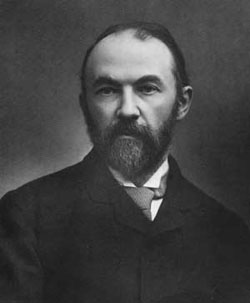
2.  Thomas Hardy

Thomas Hardy

Thomas Hardy

Another of the best writers of the 19th century, and, no, I don’t think anybody chose you for your looks.  But who of your rivals wouldn’t  have died to have written The Mayor of Casterbridge and Tess of the D’Urbervilles?

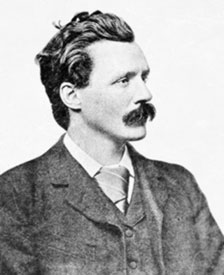
3.  George Gissing

George Gissing

George Gissing

What a glam photo!  I think this is the first time I’ve seen a picture of you, George.  I love The Odd Women and In the Year of Jubilee.  You’re a neglected great writer.

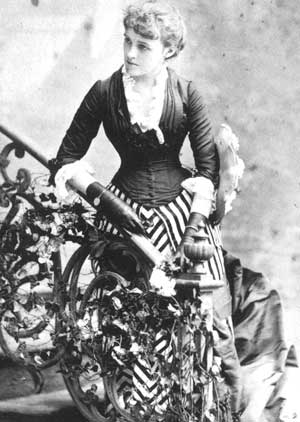
3.  Edith Wharton.

Edith Wharton

Edith Wharton

A few years ago Jonathan Franzen wrote that you weren’t pretty.  Indeed, you’re known for brilliance, not looks, though, and that’s best for your reputation, though I think you were pretty.  What novel is better than The House of Mirth?  And Franzen is also a big fan of your work.

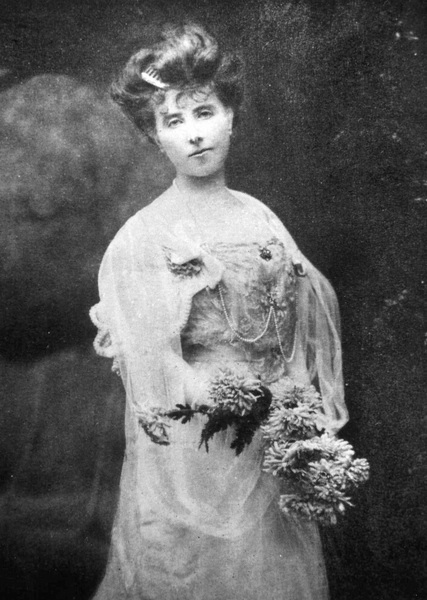
4.  Elizabeth von Arnim.

Elizabeth von Arnim

Elizabeth von Arnim

For light reading, your novels are incomparable, and I’m sure you were very charming. You had an affair with H. G. Wells, one of my favorites (though I understand it didn’t do much for you).  Vera is my favorite of your books.

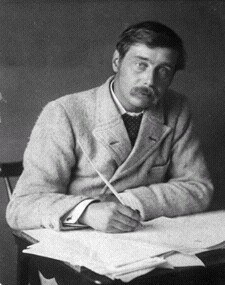
5.  H. G. Wells.

H. G. Wells

H. G. Wells

Not that good-looking, but undoubtedly sexy.  Affairs with Amber Reeves, Violet Hunt, Elizabeth von Arnim, and Rebecca West, and those are just the ones I know.   I love your realistic comedies,  especially The History of Mr. Polly.

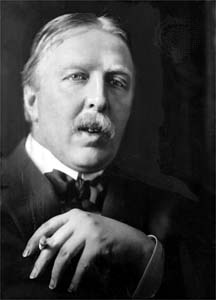
6.  Ford Madox Ford.

Ford Madox Ford

Ford Madox Ford

The same kind of sexy look as H. G. Wells, though this isn’t a great photo.   Tietjens, the hero of Parade’s End, is the only fictional character I’ve ever been in love with.  I must reread Parade’s End.

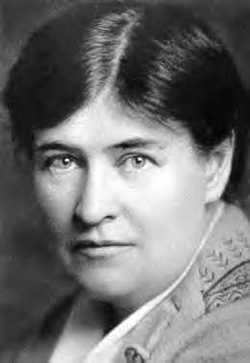
7.  Willa Cather.

Willa Cather

Willa Cather

Willa, you weren’t pretty, but you were the best Midwestern writer of all time.  I especially love The Professor’s House and Lucy Gayheart.  And you were a good role model for lesbians. You do a superb job writing about women from a male point of view:  A Lost Lady, My Antonia, and more.

8.  D. H. Lawrence.

D. H. Lawrence

D. H. Lawrence

D. H., where would we be without you?  Especially The Rainbow and Women in Love?  I can’t somehow separate you from your poetry, so I haven’t the faintest idea whether you were good-looking or not.

And that’s it for tonight, folks.  This is the most shallow thing I’ve ever written.

Everything Goes Wrong & Wait for the Paperback

Maria-Uszack-fever-cat-illustration

Illustration by Maria Uszck

You know how everything goes wrong at once?

1. Storm hits garage.

2. Cat gets sick.

3.  Toilet needs to be replaced.

The summer is my favorite time of year, but lately I’ve been taking care of the boring practical details of daily living.

I’m not in charge of the garage.  But I did chat with one of the contractors making an estimate.  Did we want windows?  One, I said firmly.  Did we want a garage door  opener?  I didn’t think so.   Was it all right if they cut down some of the bushes for the two-car garage?  Well, I wasn’t crazy about the idea…

This is not my project, I decided.

While all this was going on, a cat got sick. I walked her in her carrier to the vet.

ME-OW!  She loathes being in her carrier, and she wasn’t happy about being walked down the street. Everybody loves a cat, however, and a driver blocking the intersection mouthed, “Sorry.”  Walk a pet and you make friends fast.   She had to be left off for her tests, and, fortunately, nothing serious was wrong.   “She gave us heck,” they said when I picked her up.  Once home, she spent the evening marking an Amazon box, all tables, the TV, my legs… you name it.

Then there was the toilet shopping.  I was a little vague about the the rows of toilets at Lowe’s and Home Depot.  Would the cheapest do?  Or did we need an expensive one?  I  rode my bike out to a bathroom showroom to get an idea what was out there.  Their best toilet was of “comfort height” and had powerful jets to flush.  The other brand was shorter, so we had a pleasant conversation about how, as we aged, it would be possible to do yoga as we sat down.

Anyway, we ended up buying one at a box store.  I THOUGHT it was the same model I’d looked at, but it turns out you can only buy that one at the distributor.

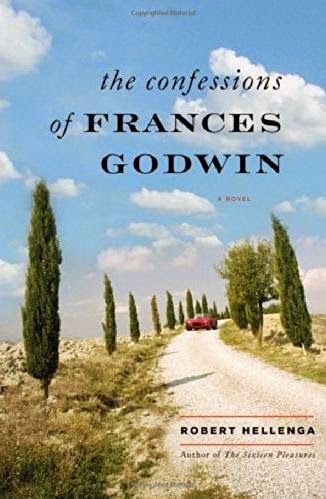
confessions of Frances godwin Robert HellengaI AM MUCH MORE COMFORTABLE GOING TO BOOKSTORES.  But here’s the good news:  It has been roughly two weeks since I bought a book.  I went to B&N just to get coffee, and found only one book I desperately need, Robert Hellenga’s The Confessions of Frances Godwin.  It is the fictional memoir of a retired high school Latin teacher.  As many of you know, I used to teach Latin.

But the book will be out in paperback next year.

I have so many books that I am finally learning:  WAIT FOR THE PAPERBACK.

World War I Reading: H. G. Wells’s Mr. Britling Sees It Through

An Excellent Book for Those Honoring the Anniversary of World War I.

An excellent anti-war book for the 100th Anniversary of World War I.

Last month a tree fell and smashed our garage in a storm that roared through with 70-mph winds.

This is the third time in 12 years a tree or a neighbor’s tree has fallen in our yard.

It is climate change.  No question.

In the past, if the tornado siren went off, maybe I’d go to the basement, maybe not.  Now when the sky turns dark green and the wind roars, I cower.

I have turned, if not exactly to “light” reading, to favorite authors for solace this summer.  I have especially enjoyed and been taken out of myself by some early 20th-century novels by H. G. Wells and Elizabeth von Arnim (once Wells’ mistress: I have written about her here and here.)

Sexy H. G. Wells had affairs with Elizabeth von Arnim, Rebecca West, Violet Hunt, and Amber Reeves.

H. G. Wells had affairs with Elizabeth von Arnim, Rebecca West, Violet Hunt, and Amber Reeves.  (N.B. He looks kind of sexy.)

If you haven’t read Wells’s almost-great, if neglected (at least in the U.S.), realistic comedies, Ann Veronica, Kipps, The History of Mr. Polly, and Tono-Bungay, you are missing out on some of my most beloved books. (By the way, D. J. Taylor’s Trespass is a contemporary retelling of  Tono-Bungay.)

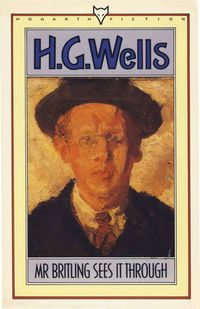
A few weeks ago I read Mr. Britling Sees It Through.  It has historical value, though it is far from his best.  Published in 1916, this is the quintessential anti-war book exploring the outbreak of World War I.  It is a jumble of narrative about life in Mr. Britling’s village, his dialogues and musings on nationality, letters from the front, and long anti-war essays. Though it is a bit of a mess, it will interest those who are honoring (or mourning) the 100th anniversary of World War I this year.

It starts with the visit of Mr. Direck, an American, to Mr. Britling, a famous writer, in Matching’s Easy, a village in Essex.

Mr. Britling invites Mr. Direck to spend the weekend:  there is an international cast of guests.  Mr.Britling, his wife, Edith, and their three sons enjoy the company of  Herr Heinrich, the German tutor; an Indian gentleman; the English secretary, Teddy;  and Teddy’s wife and sister-in-law.  The Britlings play hockey every Sunday.  Nationalities don’t matter in their teams.

But Mr. Britling also stands for Britain.

He criticized England himself unmercifully, but he hated tho think that in any respect she fell short of perfection; even her defects he liked to imagine were just a subtler kind of power and wisdom.

In the summer of 1914, everybody is thinking about war, but Mr. Britling doesn’t take it very seriously.

I used to be an alarmist about Germany…but I have come to feel more and more confidence in the sound common sense of the mass of the German population, and in the Emperor too if it comes to that.”

When war breaks out, he is shocked that Herr Heinrich is called home to fight; and that his secretary, Teddy, and his beloved son, Hugh, go to war.  The women are at first very much pro-war. Teddy’s wife steps into his secretary job, and Cissie, her sister, who is in love with Mr. Direck, cannot commit to a relationship with him because Americans are not yet in the war.

But then the men begin to die.  Attitudes change.

Hugh’s letters from the front appall and sadden Mr. Britling.

It came with a shock to him, too, that Hugh should see so little else than madness in the war, and have so pitiless a realisation of its essential futility.  the boy forced his father to see–what indeed he had been seeing more and more clearly.  The war, even by the standards of adventure and conquest, had long since become a monstrous absurdity.

Mr. Britling has much in common with Wells.  He is a Socialist, radically anti-war, and feminist.  His relationships with women are warm and sexy.

It is an important, but not a particularly good, novel.  Sometimes the plot is contrived and clumsy, and the long essay-like musings and writings of Mr. Britling slow the narrative down.

But Wells’s prescient, thoughtful novel can be paired with Vera Brittain’s World War I memoir, Testament of Youth, and her novel, Honourable Estate, about the impact of World War I on two generations of men and women.

And, of course, other war novels, poetry, diaries, and histories.

In Which My Cousin & I Read in the Backyard

anne taintor-i-believe-we-have-an-opportunity-to-make-somMy cousin and I spent an afternoon in the back yard reading.

Books, not e-books.

She started on her phone.  She wasn’t reading an actual book.

“That’s email.”

Whether I’m slapping mosquitos or looking at flowers, I like to experience nature without the benefit of going on the internet.

“Do you want to hang out, or look at your phone?”

I have too much email, too.  Most of it comes from Orbitz or Yahoo groups, but occasionally a publisher offers me a book, and then I must decide whether I want to read it, or whether I’m just looking for a gift. And my cousin’s life is on a whole different level. She is invited to a “Let’s Make a Deal” party.  I’ve never seen this game show, so I could not be excited for her, but apparently it involves dressing up, maybe like a lemon.

Here’s what we needed in the back yard to relax.

Colour Scheme Ngaio MarshIced tea.  Check.  Colour Scheme, a mystery by Ngaio Marsh (me).  Valley of the Dolls by Jacqlyn Susann (my cousin).  Check.

My cousin would rather go to the mall.

“No, you have to detox.  Read 20 pages first.” I can’t relax at the mall, and I’m into the zero spending thing this summer.

The truth is, we’re both slightly unraveled this summer.  Last month a tree fell and smashed the garage in our back yard and did other damage.  We are still picking up the pieces.

My cousin is tearful about her own back yard. When she moved to the suburbs, she wanted a garden, possibly a la Vita Sackville-West, but guess what?  Nothing actually grew except marigolds.  So she hired landscapers, and the yard now looks pretty, but she thinks they have hosed her lawn with poison instead of organic pesticide.

My cousin and I were raised by mothers who knew nothing about smashed garages or gardening.  Our fathers didn’t talk to us about smashed garages or gardens.  Our fathers didn’t talk to us at all.  All my life I have vaguely meant to learn how to take care of “things” in the house, but my reaction to the big storm is simply to sit around in my pajamas and make phone calls.

Ngaio Marsh’s charming, absorbing mysteries are a restorative.  I always find it bracing to spend time with Roderick Alleyn, my favorite detective in fiction.  And this is the first novel I’ve read by Marsh set in her native New Zealand, in a mud bath resort during World War II.

As you can imagine, my cousin became very involved with Jennifer, Anne, and Neely while reading this page-turner, Valley of the Dolls.  Their  problems are so much worse than ours.

“I feel just like Anne,” she said.

We ALL feel just like Anne.  She’s the smart one who stays off drugs.  The gorgeous Jennifer and the talented Neely are doomed.

I expected my cousin to like Neely instead, but you know what?  We Midwestern girls may not know how to fix garages or garden but we do have common sense.

Seneca on Blushing

Seneca Epistles 1-65I used to have a blushing problem.  The solution:  makeup.

Except I’m allergic to makeup.

I am slightly less allergic to makeup than sunscreen, so I slap on foundation before I go out on my bike.

And I no longer blush, except from food allergies.  No Kung Pao Tofu for me.

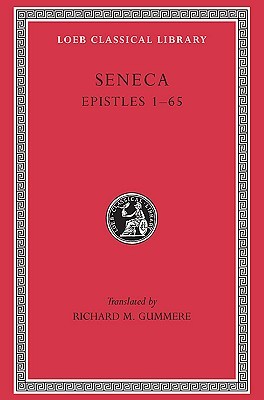
Seneca, the Stoic philosopher, doesn’t concern himself with makeup and sunscreen.  In Letter XI to his friend Lucilius, he does, however, talk about blushing.

Seneca meets a bright, talented, eloquent young friend of Lucilius’ whose face is suffused with redness as he speaks.

In other words, he blushes.

Seneca does not think this is a bad thing.

This blushing, I suspect,will follow him, even after he has strengthened himself and stripped himself of weakness–even when he is a wise man.  For the natural weaknesses of the body or the spirit are not subdued by wisdom:  whatever is implanted and inborn is attenuated by art, not conquered.”

Even some of the strongest, most powerful Romans have blushed, says Seneca.  He claims Sulla was at his most violent when “the blood had invaded his face,” that Pompey always turned red when he addressed the assembly, and Fabianus modestly blushed when he appeared as a witness before the Senate.

Seneca thinks you should accept blushing.  It is natural.

Too bad it’s such a pain.  Thank God for hypoallergenic makeup.

Classmates, The Flood, & Why I Preferred The Diaries of Anais Nin

My old high school.

My old high school.

After the flood in 2008 deluged my high school and destroyed several buildings in my hometown, I was grief-stricken.

I was briefly sentimental.

I joined Classmates.

The Classmates website lists high schools in the U.S. and their graduates.

I emailed a few old friends, and, yes, all of us were devastated about the flood.  But the person I most wanted to reach, it turned out, was dead.

I never made it to the annual picnic.

Though it’s been years and I don’t pay the fee, I still get email from Classmates.

Last week I received two.  One was entitled “Kat, see what’s compelling about these guys,” and the other “Kat, see what’s riveting about these people.”

I didn’t recognize the names of any of the compelling “guys.” Is it like a hook-up thing?  Statistically, aren’t most of us married?

I knew one of the riveting “people.”  She was a nice person.

This is what we do with our lives.  When we’re bored, we surf the net and track down old acquaintances.

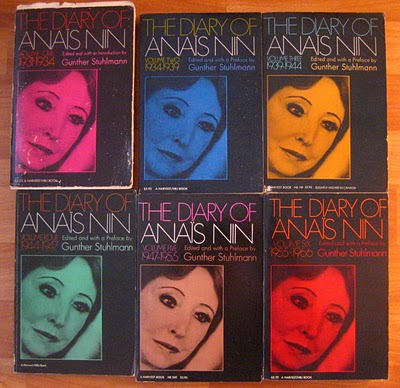
600full-the-diary-of-anais-nin-(box-set)-complete-in-4-volumes-coverI do not remember high school fondly.  Nice people, but I had things on my mind.  My parents got divorced and I had to attend my dad’s wedding in a church across state lines (he and his girlfriend would have had to wait a year in our state), I worked as an au pair girl for a neurotic hippie (you don’t want to know), and I was more intent on reading the Diary of Anais Nin and Mao’s The Little Red Book than studying math, history, or even English.

Naturally, the friends I hung out with don’t sign up for Classmates.

Do you remember the marijuana that wasn’t marijuana (and thank God for that!)?  Someone sold an adventurous friend some kind of herb.  Smoking “herb” did nothing.   And what a good thing that was!  I never liked drugs.  (As my late mother said, I had too much sense.)

But we were free spirits in other ways.  One night a friend and I, walking around the neighborhood, decided we wanted to take a bike ride.  I had a bike, but she didn’t. We knocked on a stranger’s door and asked  if she could borrow one.   “Fine, just bring it back.”

That was the ’70s.

What I really wanted then?  1.  A complete set of Thomas Hardy.  2.  A cape like Anais Nin’s.  3.  Cute little embroidered dresses. (The one I bought was too small, and I had to wear it over bell-bottoms.)   4.  Earrings.  (A friend pierced my ears with an ice cube for anaesthetic and a sterilized needle. )  5.  Indian food.  6.  Peter Max posters and Kahlil Gibran posters. 8.  More records by The Band.

Was I the most materialistic hipster in the universe?

I was young.

At the university, I discovered classics and recovered my academic skills.  Everything was much calmer.  I had a structure again.

I have not got a clue why Classmates has “rediscovered” me.

But I wish all those people very well.

Alternate History: Doris Lessing’s Alfred and Emily

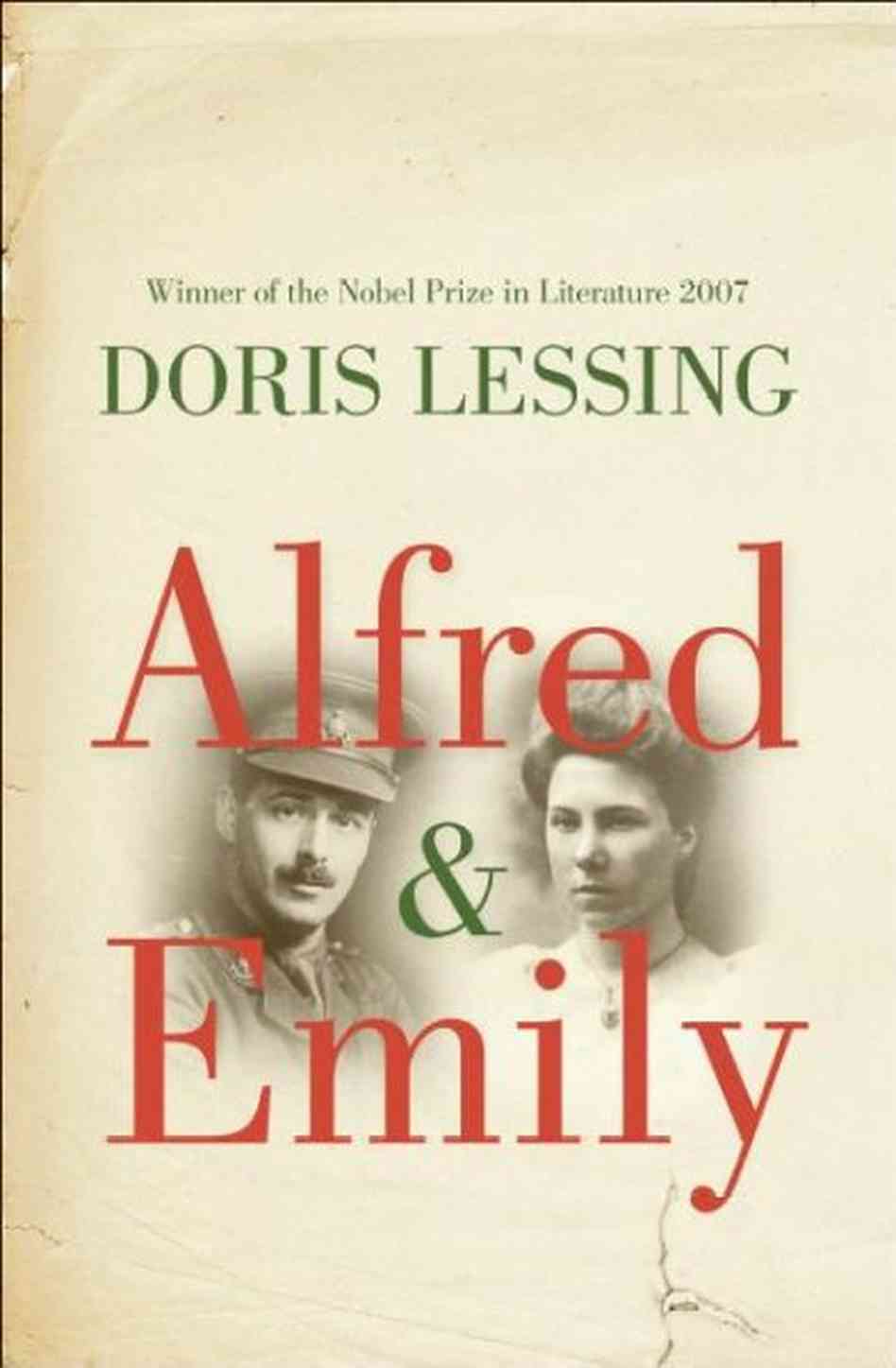
Doris Lessing alfred and EmilyDoris Lessing’s Alfred and Emily was her last book.

Lessing, a Nobel winner, is one of my favorite writers.  (I have many favorite writers.)  I have written many times of my love for her books, especially the Children of Violence series.

When she announced in 2008 that Alfred and Emily was her last book, I thought,  Oh no, please not.

I did not like to think of a future without Doris Lessing.

Lessing died last November.

I am reading the few Lessing books I never got around to, and just finished  Alfred and Emily. Lessing often experimented with science fiction, and the first half of the book is an alternate history about what her parents’ lives might have been like had World War I not happened

The war theme predominates in the alternate histories I have recently read:  in  Philip K. Dick’s complex science fiction classic, The Man in the High Castle, the U.S. is ruled by Germany and Japan after they win World War II ;  in D. J. Taylor’s brilliant novel, The Windsor Faction, a finalist for this year’s Sidewise Awards for Alternate History, he speculates about what might have happened in World War II if King Edward VIII had not abdicated the throne to marry his divorcee-mistress, Wallis Simpson (who, in the novel, dies in 1936); and Conqueror Fantastic,  an alternate history anthology, edited by Pamela Sargent, of 13 stories about conquerors such as Alexander the Great, Genghis Khan, the Kennedys, and Lyndon B. Johnson.

Lessing’s novel is a good match with the aforementioned.  In Alfred and Emily,  she experiments with genre and form, as she did in The Four-Gated City, the last book of the Children of Violence series, and Memoirs of a Survivor, a post-apocalyptic fable which, by the way, features a character named Emily.  The novella in Alfred and Emily is balanced in the second half of the book by a memoir/history about her parents’ actual lives.

Many of us know about Lessing’s parents from her autobiographical novels.  The heroine Martha Quest(COV) struggles to escape her domineering mother, a clever, controlling woman who does not have enough to do on their isolated farm in Africa.  Martha’s charming, likable father does his best with the farm, but he was shell-shocked and often ill.

In the novella, Lessing wanted to give them better lives.

She explains the purpose in the Foreword,

My parents were remarkable, in their very different ways.  What they did have in common was their energy.  The First World War did them both in.  Shrapnel shattered my father’s leg, and thereafter he had to wear a wooden one.  He never recovered from the trenches.  He died at sixty-two, an old man.  On the death certificate should have been written, as cause of death, the Great War.  My mother’s great love, a doctor, drowned in the Channel.  She did not recover from that loss.  I have tried to give them lives as might have been if there had been no World War One.

In the novella, there is no war.  England is prosperous.  Alfred plays cricket (he is a local star) and works  on the farm of his best friend Bert’s father.  (Lessing’s father had wanted to farm in Norfolk or Essex, but ended up in Africa). Alfred is treated as a son of the house, and eventually manages the farm because his friend, Bert, is an alcoholic, and he is in a way Bert’s caretaker.  Alfred marries Betsy, a plump, happy, sexy nurse who makes him happy.  (He and Emily were incompatible in real life.)  Life is difficult, but satisfying.

Emily, however, is the real star of the novella.  As a girl she rebels and goes to London to study nursing:  her father tells her “never to darken his doors again.” Emily becomes head nurse at a London hospital and then marries her doctor (the one who in real life died in the war).  Surprisingly, it is not a happy marriage:  she is a trophy wife and hostess without enough to do. After his death, she discovers a talent for storytelling  to children, and founds a charity to create schools for the poor.

And so her energy finds an outlet.  And so Lessing pays tribute to her mother, who introduced her to many books and stories.

Lessing’s alternate history, like Taylor’s, is not entirely different from history.  For instance, there is a servant problem.

She writes,

The plenitude and wealth of Edwardian England had not ended.  this was a time of great prosperity–well, it was for the said classes.  And the servants were deciding that to work in private houses with their restrictions and rules was not for them.  Within a mile or os of Clarges Street there were a new glove factory (‘French’ gloves), a French milliner, an upholsterer whose other shop was in Paris, a luxurious chocolate shop, a department store whose five floors were crammed with fashion and frivolity.  And the craze for everything Russian, Mir.  That was where Emily’s servants had gone.

Perhaps the memoir is the most poignant part of the narrative, but it might not have been as moving if we had not read first the alternate history.

Lessing’s father suffered from post-traumatic stress disorder, and her mother went to bed with a nervous breakdown, which she called a “heart attack,” after the family finally settled in Africa.

[Emily] had nursed the wounded of a world war, and now it is easy to see she was in a state of dreadful anxiety, she was full of panic, she could look ahead and she she was trapped, with no way out.

Lessing openly admits that she hated her mother from early childhood.  But she wonders, Could being stricken twice with malaria have been the cause of some of her parents’ problems?

She believes antidepressants would have helped them with their psychiatric problems.

She also writes about the role of antidepressants in helping people cope with old age.

This is an important book, a combination of speculative fiction and a speculative memoir.

The two halves of the novella and memoir are perfectly balanced, though this is on the surface a simple book.

And Lessing, though she said she was not a feminist, so very clearly was by my standards.  Her mother was clearly not meant to have children.  She writes, “And now there are women, more and more, who decide not to have children, and what a great thing that is.”

Alternate History: D. J. Taylor’s The Windsor Faction

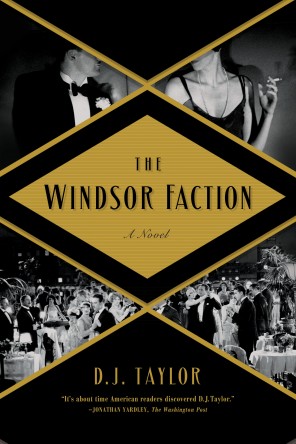
Windsor Faction d. j. taylorThis summer I have read several alternate histories (sometimes known as counter-factual histories).

It is a fascinating genre.  Both science fiction and literary novelists have experimented with this “what if” form, among them Philip K. Dick,  D. J. Taylor, Doris Lessing, Philip Roth, Jo Walton, Pamela Sargent, and Joanna Russ.

I have just reread D. J. Taylor’s The Windsor Faction, a finalist for this year’s Sidewise Awards for Alternate History.

Taylor, whose novel, Derby Day, was nominated for the Man Booker Prize in 2011 and whose biography of George Orwell won the Whitbread Biography Award in 2003, is a versatile, brilliant writer of fiction, biographies, and literary criticism.

In this elegantly-written, suspenseful page-turner,  set in England from 1936 to 1941, King Edward VIII did not abdicate the throne because his mistress, Wallis Simpson, whom he intended to marry, died in 1936.

And, at the beginning of World War II, the King has fascist sympathies.  A group of powerful men who oppose the war  and are mostly pro-Hitler call themselves “The King’s Party” or “the Windsor Faction.”

Taylor’s novel is told in multiple forms–traditional narrative, diary entries, notes, and newspaper articles.  His vivid understanding of the details of the period gives the book a striking hyperrealistic tone,  though, of course, the subtle changes of history are factored in to the plot.

The most sympathetic character is Cynthia Kirkpatrick, an intelligent young woman who is bored by  life in Colombo with her parents in the late 1930s.  When we first meet her, she is dreading a dinner party with her parents’ friends, the Bannisters, and knows she will be expected to entertain their son Henry, who has a reputation as an “awful young man.”

Taylor portrays the atmosphere perfectly:

There was not a great deal to do at the villa during daylight hours.  In fact, there was not a great deal to do at any time.  The garden, which had been cool and mysterious by night, turned hot and noisy, and the Bougainvillea burned so bright in the sunshine that it might have been overlaid with poster-paint.  Mr. Kirkpatrick went off to see his broker at Galle Face Green.  Mrs. Kirkpatrick had herself driven to Madame Bandaraike’s salon in Barnes Place, where the assistants had names like Evangeline and Margot and spoke in passable imitations of Home Counties accents.

Cynthia’s reluctant relationship with the Bannisters is cemented after the Henry dies in a car crash on an after-dinner drive.  This cements the reluctant Cynthia’s relationship with the Banniser family.  Back in England, Mr. Bannister joins the Windsor Faction.

In 1939, after the Kirkpatricks return to London, Cynthia escapes from the strict conventions of colonial life and is thrilled by her job at a literary magazine  in Bloomsbury, which is “bound to be a success, people said, because the cinemas were closed and there was nothing for pleaure-seekers to do in the evenings except read.”

Taylor writes sharp, funny office scenes:  Cynthia types, her friend and housemate Lucy translates French, and Desmond, the talkative editor, corners people to gossip about the glass panes of a dog track roof’s being painted over for a blackout.

But there is an office spy:  don’t all literary magazines have one?  (Well, I’m thinking about Peter Matthiessen, the CIA spy at the Paris Review.)  Anthea, a bright, bohemian woman who seems to know everybody, is a spy who casually, informally “conscripts” Cynthia to get information about the Windsor faction: Cynthia’s boyfriend, Tyler Kent, is a cipher clerk at the American Embassy; and then she also knows the powerful Nazi sympathizer, Mr. Bannister.

Beverley Nichols, the English writer of humorous garden books, journalism, and novels, is another vivid, often endearing, character, a Pacifist who collaborates with the King on his Christmas speech.  From Beverley’s diaries, we learn not just about his pacifist politics; he also shares literary gossip, and writes about his homosexual encounters with young men. Nichols is hilarious:  He says of the King’s room, covered with mementos of Wallis everywhere:  “Definite air of Miss Havisham in her chamber, so that one almost expected to see ancient wedding cake sunk under cobwebs.”

A fascinating unputdownable book:  really a great summer read, and if we Americans don’t all know our English World War II history  as well as we should, I recommend you start with the Author’s Note at the back of the book.

All will become clear.