The Blogger Rockers

When novelists say in the last line of the acknowledgements that they couldn’t have done it, i.e., written their books, without their supportive  warm-fuzzy spouse, I wonder what I was thinking of at my marriage ceremony.

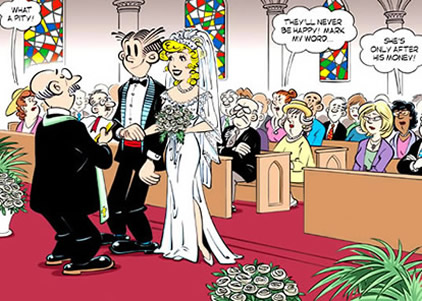
Blondie and Dagwood

We’re like Blondie and Dagwood, except at the far end of middle age.

For better or worse, for richer or poorer…but nothing about supporting my writing.   My husband never read my work when I freelanced (“too trite and bubbly,” he would say of my latest feature on diners or diaries), and he has particularly avoided my blog.  Not only my blog, but all blogs, are a huge waste of talent, he says.

We’re a little like Blondie and Dagwood, only at the far end of middle age.  In other words, we don’t always share each other’s interests.

I used to write fiction, and perhaps I’ll go back to it someday.  He was more supportive of that, but of course he never had to read it.  The problem is, if you get to page 91 without a plot, your novel, or in my case, novels, are in trouble.

Blogging is like playing in a loud, fun rock band.  We’re practicing in the basement, sometimes we’re on key and other times we’re discordant, and we never, ever do covers, because we want to be ourselves.

But when you get “discovered,” you sometimes stop saying what you mean.  I broke up with myself at Frisbee:  A Book Journal (my old blog) because  I was gobsmacked to discover that a few of the writers I’d panned had visited my blog. Why?  Why?  Why?  I asked myself.

Then I got back together with myself here at Mirabile Dictu, where I have been somewhat more cautious about what I say.  I have tried to be more positive.

But now I’m thinking I just want to blast a couple of  contemporary writers BECAUSE I’VE  BEEN SO F—ING NICE for so long.

Some blogs really do PR.  They’re so nice I wonder what they’re really thinking.  But I’ll tell you where they don’t do PR.  Goodreads.  I was there the other day, just looking around, reading some of the discussions, and they were really panning a very good writer of women’s fiction.  They were hopping mad, because they’d gotten review copies and wasted their time.  I had to laugh, because most of the bloggers I know tend to get a little syrupy about review copies.

I’ll be writing about books again soon, never fear.

I intend to go back to dead writers.

I will write about a few new books I’ve read, but I might have to be a tiny bit pessimistic again.

Alcott at the Movies: Why “Little Women” But Not “An Old-Fashioned Girl”?

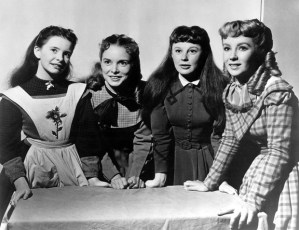
The 1949 Little Women:  Margaret O'Brien, Janet Leigh, June Allyson, & Elizabeth Taylor

The 1949 Little Women: Margaret O’Brien, Janet Leigh, June Allyson, & Elizabeth Taylor

I went to the movies with my mother.

My mother loved classic movies, and whenever there was a revival of Gone with the Wind or Lawrence of Arabia, we arrived at the theater early to hunker down in good seats with our popcorn and Coke.

The most thrilling cinematic experience of my childhood was a Saturday matinée revival of Little Women, the 1949 film starring June Allyson, Janet Leigh, Elizabeth Taylor, and Margaret O’Brien.

“This is an important movie,” my mother said.

I was enchanted by this mother-daughter outing. At seven, I was already a reader-writer like Jo, and, if not quite as tomboyish, strong-willed and a great believer in social justice.  Jo was the one who had adventures, even though she was plain:  I, too, wanted to whistle and interject, “Christopher Columbus!”

Not only did the sentimental scenes of 19th-century family life via Hollywood delight me, but Little Women pushed the boundaries of my moral imagination. When Amy burned Jo’s manuscript, I was stunned by this terrible deed.  But Jo must forgive her.   Sisterhood matters.   If the bond breaks, devastation follows.  Yet all these years later, I still find it unbearable to think of the destruction of Jo’s art.
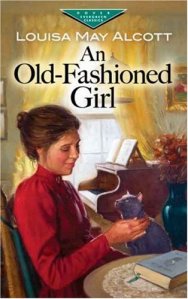
an-old-fashioned-girlMy mother gave me my own copy of Little Women, and I read everything else I could find by Alcott at the library. Although I have read Little Women countless times, I must admit that An Old-Fashioned Girl is my favorite.  And I often wonder, Why is one so famous and the other not?

An Old-Fashioned Girl is the brilliant, fast-paced, moving story of Polly Milton, whom we first meet as a cheerful, funny 14-year-old country girl who prefers sledding and hiking to gossiping and flirting with boys.  On a six-week visit to  her rich friend Fanny Shaw in the city, the values of her own practical, loving family are offset by the materialism and emptiness of the wealthy Shaw family.  Though Polly comes from a poor family, she is rich in imagination, kindness, and bravery.  Fanny is a typical teenager, who is concerned with the latest styles, hairdos, and boys.  It never occurs to her not to conform.

Although there are morals in every chapter, Alcott’s dashing, humorous voice and vivid portraits of the characters charm us (and, actually, as a child one doesn’t notice the moralizing). Alcott’s wit has me smiling from the beginning, when Fanny coaxes her brother Tom to pick up Polly at the railroad station.  Fanny doesn’t want to ruin her hair-do in the damp.

Tom grumbles, but doesn’t really mind the errand.

“Suppose she wears a top-knot and a thingumbob, like everyone else; and however shall I know her? Too bad of Fan to make me come alone!”

Tom can’t find Polly, because he’s expecting someone chic.  But Polly, a fresh-faced girl with curly hair, recognizes him and approaches him.  She is so competent that she has already found a hack to carry her boxes. Tom can’t help teasing her. Even though he likes her, he pretends the driver of the hack is tipsy, so that he will have an excuse to ride up front and eat peanuts.

From the beginning, clothes is an issue for Fanny. She is sometimes ashamed of Polly’s simple dresses, and explains she can’t fit in with Fanny’s set if she isn’t more stylish. When she persuades Polly to buy bronze boots, Polly realizes she cannot buy presents for her family.  With the help of Fanny’s grandmother, she makes presents for her siblings.  And her appreciation of Grandma’s funny stories bring Fan, Tom, and six-year-old Maud into a closer relationship with the neglected matriarch.

On this rereading, I discovered that Polly is a Latinist.  This amused me very much:  do you suppose this influenced my own choice of studies?  (Well, probably not.)  When Tom hurls his Latin book across the room, Polly offers to help.

“I like Latin, and used to get on well when I studied it with Jimmy.  Perhaps I can help you a little bit,” said Polly, as Tom wiped his hot face and refesehed himself with a peanut.

‘You?  pooh!  girls’ Latin don’t amount to much anyway,” was the grateful reply.

Polly’s Latin turns out to be quite good, by the way.

In the second part of the book, Polly returns to the city at the age of 20 to earn her living as a music teacher.  The description of her poverty, of the boredom and repetition of teaching, and her loneliness are very evocative.  One of Polly’s friends is a young seamstress who attempted suicide because of poverty.

I have to say that I love Fanny, who has matured and is a complicated young woman in unrequited love with an admirer of Polly.  Tom is a college student who runs into debt, and Maud prefers Polly’s poor rooms to their huge house.

Then the Shaws go broke….

According to Susan Cheever’s biography, Louisa May Alcott, Alcott tried to get her publisher to increase her royalty from 6.66 percent to 10 or 12 percent for An Old-Fashioned Girl, published after the successful Little Women.    He refused, but she was right about the success of An Old-Fashioned Girl.

Cheever writes,

An Old-Fashioned Girl reads as well as Little Women, and its narrative energy speeds it along.  Alcott’s growing public audience agreed, ordering 12,000 copies before publication and more than 24,000 afterward.  It’s written in simple, unaffected English, which was at the time a revolutionary way of writing that Alcott had really pioneered in Little Women.  In the book, she apologizes for the simplicity of her language, noting that she hopes her readers will not be able to say ‘it’s all very prim and proper, but it isn’t a bit like us.”  Instead, she hopes that the covers of her novel will be the dirtiest in the library.

By the way, Susan Cheever is also the editor of the Library of America’s second volume of Louisa May Alcott:  Work, Eight Cousins, Rose in Bloom, and Stories & Other Writing.  I just bought a copy and will write about it soon.

I loved every moment of rereading An Old-Fashioned Girl.

At the Indie

13898447-vintage-bookstore-backgroundOn a recent afternoon, I went to the neighborhood bookstore.  It was very hot outside, and I had intended to bicycle downtown to the library, but I biked to a nearby bookstore instead.  (Less sweat.)

I was the only one there, as usual.

I seldom find interesting books at this diminutive indie, but I struck gold with four paperbacks:  Richard Powers’s Orfeo, Ross MacDonald’s The Zebra-Striped Hearse, Betty Smith’s A Tree Grows in Brooklyn, and Emma Straub’s Laura Lamont’s Life in Pictures .

I put the books on the counter. The tweedy rail-thin employee, one of several who take turns frowning beside the cash register, looked askance.  Was she thinking, Is she crazy to buy all these books?

But no, I often binge on books, as some of you know.  I went ALMOST cold-turkey in July and August and am making up for it now.

“We don’t take debit cards,” she said.

“This is a credit card,” I said pleasantly.

Some people command respect. I don’t.

Oh well, at my age things won’t change.

Although I expected her to go down on her knees and thank me for buying, she took a phone call in the middle of the transaction.

I’m a polite Midwestern woman, and I waited.  I must say, there is one very good employee at this store, who obviously was not there that day.  Eccentric curmudgeons often work here, and once a very earnest woman tried to talk me out of buying a book she didn’t like, which I thought was sweet.  Over the years,  I’ve seen the whole spectrum of bookstore personalities: super-polite-to-effervescent-to indifferent-to-melancholy to-impertinent.

The thing is, when I’m ready to buy, I just want to pay and get going.

But I was very happy with my loot, because this is my Unintellectual Autumn, and contemporary books are easy to read.  Plus the Betty Smith and Ross MacDonald are supposed to be very good.

And Richard Powers’ Orfeo is on the Man Booker Prize longlist. I’m a big fan of the Orpheus myth, so I look forward to seeing what Powers does with it.

By the way, they’re announcing the  Man Booker Prize shortlist  tomorrow. Stay tuned…

Unintellectual Fall & What I’m Reading: Lena Divani and Elizabeth George

Dancing with the Stars

Dancing with the Stars

I’m planning an unintellectual autumn.

Throw out The New York Review of Books, put the TLS on hold, and only read the TV criticism in The New Yorker.

In general, it’s good to eschew anything with initials or New York in the title when you’re going pop.

Did you know that Antonio Sabato Jr., the underwear-model-turned-actor, will be paired with Cheryl Burke this fall on Dancing with the Stars?  Source:  Entertainment Weekly.

Then, most important: I plain to  break out the Jean Plaidy.

Jean Plaidy is a symbol at our house.  Whenever I need a comfort read, I read one of Jean Plaidy’s historical novels.

I lo-o-o-ve her Lucrezia Borgia books, Madonna of the Seven Hills and Light on Lucrezia.  I’m thinking of going Tudor this fall.  She wrote 10 or so  Tudor books.

But I haven’t gone pop yet, and it probably won’t last long, because I’ll get bored.  Meanwhile, here’s what I’m reading:

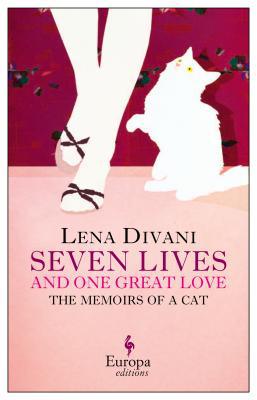
Seven Lives...Memoirs of a Cat divani1.  Lina Divani’s Seven Lives and One Great Love: Memoirs of a Cat.  This charming, comic novel, translated by Konstantine Motsukas and published by Europa, is strictly for cat lovers.  The narrator, Zach, a white cat with a shrewd knowledge of feline psychology, informs us that cats have seven lives, and they’re pretty dumb in the first few.  But fortunately he wised up, and  spent his sixth at the London National Library.  He informs us it “was the equivalent of the jackpot in the karmic lotto.”

In his seventh life, he has “picked” an unlikely parent, a hipster writer and historian who pretty much ignores him.  He adores her and spends a lot of time figuring out how to break into her study.  He spent his sixth life with books, and now he wants to understand writers.

She won’t let him into the bedroom, but later one of her boyfriends tries to sneak her in.

When she starts wearing black after breaking up with her housemate, he says:

She had the dress sense of an existentialist widow.  Lord have mercy!  You might think that it was handy, her being all black, me being all white, a fetching combination, right?  Not so!  I molted terribly you see, against the black background, to the point where she was beside herself with exasperation.

This is an enjoyable, rather sweet little novel.  Not great, but lots of fun.

2.  Elizabeth George’s Just One Evil Act.  Elizabeth George is my favorite contemporary mystery writer.  Her books, set in England, remind me of P. D. James’, only I actually prefer George’s.  Detective Inspector Thomas Lynley, 8th Earl of Asherton, and Detective Sergeant Barbara Havers are partners at New Scotland Yard:  they’re opposites, but have grown fond of each other over the years.    He is suave, brilliant, and tolerant, while Barbara is a rather rough, reckless woman who  annoys the Superintendent with bad fashion:   t-shirts with slogans like I’M HEAVILY MEDICATED FOR YOUR SAFETY and cartoon-character socks.

In this fast-paced thriller, Barabara breaks the rules even more than usual.  Her friend and neighbor Azhar’s child has been kidnapped by her mother, who has disappeared. Barbara helps Azhar track down his former partner and their  child through an unconventional private investigator, but things get wildly out of hand after the child is kidnapped from her mother’s house.  Lynley is assigned to to Italy, because the mother and child are British citizens,.  In Italy, an Italian officer has also gone slightly off the rails.

This is truly an excellent novel and I’ve had little time to blog because I’m so absorbed.

Elizabeth George is a brilliant writer.

Let’s hope I finish this tomorrow so I can get some things done around the house!

Fandom!

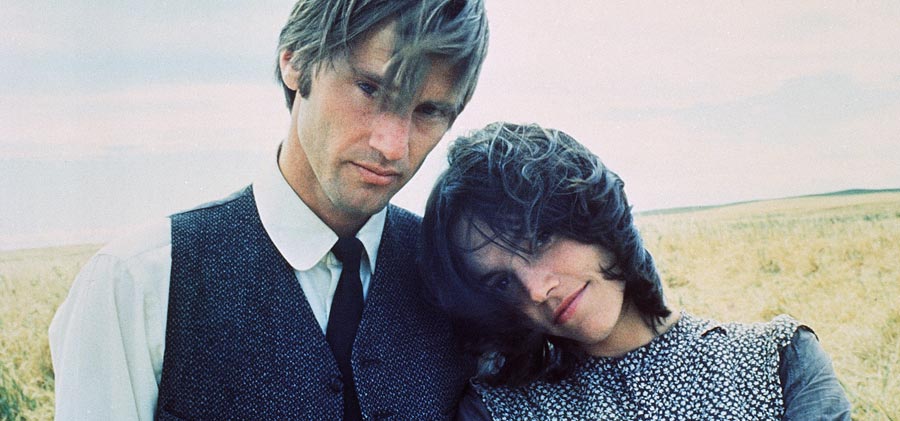
Sam Shepard and Brooke Adams in "Days of Heaven"

Sam Shepard and Brooke Adams in “Days of Heaven”

My friend Jane and I lived in the same dark, goblin neighborhood on the lake.  We rode the bus together to exercise class, where we listlessly did leg lifts and chatted about movies.

During months on the road with her husband’s rock band, movies saved Jane.  Occasionally she banged a tambourine onstage, but often she went to movies instead.

“It’s all quite boring really.  I couldn’t have gotten through without Sam Shepard.”

She was a huge fan of Sam Shepard.  Her husband thought it was very funny.

She said of Shepard:

1. He was “the best thing in Days of Heaven.”  (I’m more a Richard Gere person myself.)

2.  He was “the best thing in Frances.”

3.  He was “the best thing in The Right Stuff.”

You get the picture.

I knew Sam Shepard was the author of Buried Child, and that impressed me.  I used to think actors were idiots, and if an actor could write, ergo he was not an idiot.

I wonder if Jane ever wrote him a fan letter, or got to meet him.  Who knows?  She was poor, but moved in elite circles.

Click on the email link at Sam Shepard’s website and you get this:

“I don’t have a computer. I don’t have an Internet. I don’t have the
e-mail. I don’t have any of that shit.” …Sam Shepard

It certainly is funny, though I could not say whether or not it is true.

Although I am a fan of many writers, I’ve never written a fan letter to an actor or a musician. I love R.E.M. and Matt Damon, but they so obviously operate in a different sphere that it would never occur to me to write to them.

Now I do understand what writers do, so I’ve written a few fan letters to them.   In the age of snail mail,  I once wrote to Paul Fussell correcting a Latin error in his book Class:  A Guide Through the American Class System.  Charming, Kat!  I’m sure he would have been happier if I had simply said I loved the book.

E-mail makes writing fan letters easier.  If a writer’s name isn’t on his or her website, somebody will usually give you an address.  Last year for this blog I interviewed Peter Stothard, Karen E. Bender, D. J. Taylor, and Lionel Shriver, among others.  Just five questions by email, so I hope it didn’t take too much of their time.  If not for the internet, this would never have happened.  In my freelancing days, I wasn’t a big fan of the phone interview. But in the age of the internet, CLICK CLICK!

Will I do that again this year?  I don’t know.  Do you think Delia Ephron, Alice Hoffman, or Karen Joy Fowler would do an interview with a blogger?

It never hurts to ask!

Winner of Delia Ephron book

The winner is…Maeve!  Congratulations!  Send your address to mirabiledictu.org@gmail.com and I’ll mail it out Monday.

By the way, Tam Lin is still up for grabs.  If anyone wants it…

Giveaway of Delia Ephron’s Sister Mother Husband Dog etc.

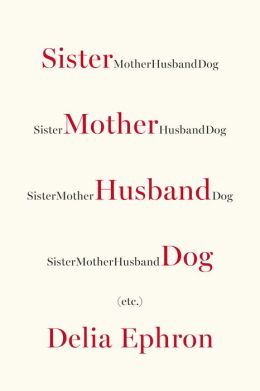
sister-mother-husband-dog1 delia ephronI loved Delia Ephron’s Sister Mother Husband Dog etc.  I wrote about it here.

If anyone would like this book, please leave a comment.

One must weed if one is to bring new books into the house!

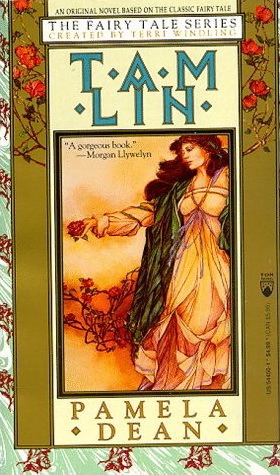
Giveaway of Pamela Dean’s Tam Lin

Tam_Lin_by_Pamela_DeanPamela Dean’s Tam Lin is one of my favorite books, and I happen to have an extra copy.  Does anyone want it?  Leave a comment if you do!

I’ve written about Tan Lin several times.  Here is a post about it from my old blog, Frisbee:  A Book Journal.

Pamela Dean’s novel Tam Lin, set at a small college in Minnesota in the ’70s, is a whimsical chronicle of an undergraduate education. Part college novel, part offbeat fantasy, it is A Midsummer Night’s Dream crossed with Donna Tartt’s The Secret History–with a dash of the ballad Tam Lin.

The heroine, Janet Carter, an English major at Blackstock College, arrays her children’s books and science fiction on the shelves in her dorm and makes friends on the basis of shared reading. One of her roommates, Molly, a Shakespeare-loving biology major, is a soulmate, but the other, Tina, a conservative pink-jacket-wearing pre-med major, annoys her by asking why she’s an English major.

Look,” said Janet, irritated, “if the thing you liked best to do in the world was read, and somebody offered to pay your room and board and give you a liberal arts degree if you would just read for four years, wouldn’t you do it?”

The three women befriend a group of male classics majors who not only translate Homeric graffiti without need of a dictionary, but mount an outrageous production of Christopher Fry’s The Lady’s Not for Burning that insults the head of the classics department. There’s never a dull moment. Janet can’t help thinking they seem more like theater majors than classics majors.

Although Janet takes Greek, she refuses to change her major to classics, and must struggle every term over this issue with her classics professor advisor. Much of the tension among her male friends emanates from echoes of mysterious clashes between students and the control freak department head, Medeous, a mad redhead who is rumored to seduce men and women, and who insists that the whole department go horseback riding on Halloween (they look more like elves than classicists.)

The Blackstock folklore also centers on the classics department: all classics majors are said to be crazy (well, they are, we know!), and the Fourth Erickson Ghost, tVictoria Thompson, a classics major who committed suicide in the late 19th century after learning she was pregnant, throws books out the window of a dormitory: her favorites are the Liddell and Scott Greek dictionary, Chase and Phillips (a Greek primer), and The Scarlet Letter.

Janet, the daughter of a romantic poetry professor and a townie, was prepared for eccentricities. She did not, however, expect an actual ghost.

What the hell is going on at Blackstock?

Odd though it may seem, I find Janet’s poetic descriptions of the midwestern weather and landscape soothing and remedial in the dark days of fall. She describes the “luminous grayish-yellow” skies after rain; “a small meadow of goldenrod on a dusty path” in fall; and a snowy day in March when “the sky had already lost the profound and chilly color it got in winter.”

This is one of my favorite books. It’s about what Janet reads, and how others respond to what Janet reads. It’s probably not for everybody.

P.S.  My husband read this recently and said, “It’s a great book.”  Our online friend Catherine also read it and liked it.


Links to Five Fabulous Blogs

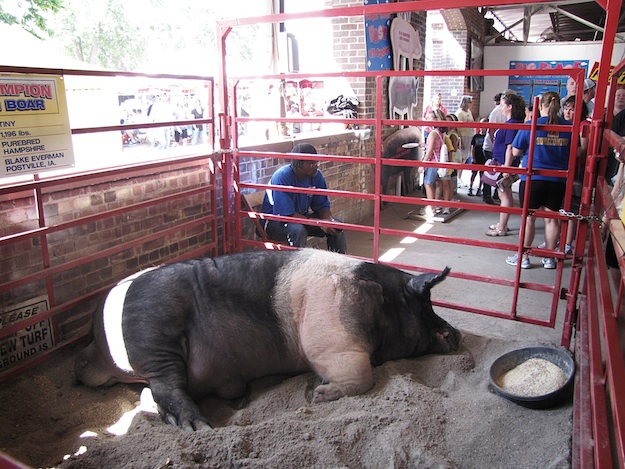
Tiny, the big boar, at the State Fair.

Tiny the Big Boar at the State Fair.

We rarely go to the State Fair, but we do love to see the cows, pigs, and horses.

We also go to free bluegrass concerts.

And in 2001, we saw Bob Dylan.  Despite the terrible venue–uncomfortable bleachers, Bob a tiny figure on a video screen, kids getting busted, and the smell of spilled beer–Bob gave it his all.

Sherry Thurner at Late B(l)oomer has described her State Fair experiences in a lovely post about the end of summer.  She begins:

Labor Day weekend has always meant the symbolic end of summer for me.  Since I was a Walworth county farm girl, that meant the fair.  The end of August seems to me to be the perfect time for a rural fair, since now is the high season for produce.  I still enjoy wandering through the agricultural building to see boxes of dented seed corn, onions, apples and various squashes.  Then there are the tall tall stalks of corn, and the giant pumpkins.  I also like looking over the floral displays, the little centerpieces all centered on some theme.  Who makes centerpieces any more? I didn’t see what I used to enjoy when I was a child, row upon row of gaudy gladiola spikes and giant dahlias.  Perhaps they were in another building I missed.  There is a lot to take in at the fair.

It will make you want to go the State Fair.

Books splayed open2.  What’s on the nightstand?  This is a game we love to play.

At The Millions, novelist Sonya Chung charmingly describes her book choice process.  She begins,

As usual, you’re talking with your friend about books.  “Have you read it?” she asks.  “No,” you say, “but it’s on the nightstand.”  It’s on the nightstand.  That’s code for, I’ve made mental note of it. Or It’s on my list but not a priority.  Or even, I actually own it, and I’ll be reading it next.  Regardless, for me, It’s on the nightstand has always been metaphorical — an abstract and elastic category of Books I Hope To Read.

3.  The Daily Glean considers “wild, wacky, and outré book titles.”

Goblinproofing One’s Chicken Coop: And Other Practical Advice In Our Campaign Against The Fairy Kingdom by Reginald Bakeley. How Tea Cosies Changed the World by Loani Prior. Raising Witches; Knitting Historical Figures; How to Make Love While Conscious; A Popular History of British Seaweeds. If none of these titles tickle your fancy, then perhaps one of the tomes illustrated below will. They’re from the ongoing “Weird Book Room” feature at Abe Books. And if you really want to delve into the arcane, have a look at The Toast’s ‘100 Actual Titles of Real Eighteenth-Century Novels.’ Among the offerings: The Book!! Or, Procrastinated Memoirs. Atrocities Of A Convent. He’s Always In The Way. Horrible Revenge, Or, The Monster Of Italy!! How It Happened That I Was Born. It Was Me, A Tale By Me, One Who Cares For Nothing Or Nobody. The Male-Coquette; Or, The History Of The Hon. Edward Astell. Memoirs Of An Old Wig. A Modern Anecdote Of The Ancient Family Of The Kinkvervankotsdarsprakengotchderns. The Peaceful Villa, An Eventful Tale.

4. Pages & Proofs, the Abebooks.uk blog, considers Camus’s The Plague.

“Should we all be reading The Plague by Albert Camus? NPR (National Public Radio) in the United States thinks so as the Ebola outbreak continues to dominate news headlines.”

5.  Julia Alvarez has won the National Medal of Arts.  She wrote at her website:

On July 28th, 2014, I was at the White House to receive the National Medal of Arts from President Obama. I was thrilled, but overwhelmed with big feelings. As I said to any number of people: by this stage in life, we know that we don’t get to be who we are without the investments and contributions of so many people, hundreds of “invisible hands,” helping us along the way.

I’ve always loved her books.