Mystery Weekend: Freeman Wills Croft’s Antidote to Venom, Lydia Adamson’s A Cat with No Clue, & Van de Wetering’s Tumbleweed

MYSTERY WEEKEND.  This weekend was not so much mysterious, as mystery-reading.  Great fun, and a nice “vacation” from reality.

antidote-to-venom-71plthdtf0l1. Freeman Wills Croft’s Antidote to Venom. Originally published in 1938 and reissued last year in the British Library Crime Classics series, it is an “inverted story,” told partly from the culprit’s point of view, partly from the detective’s.  It is a very fast read, the writing is good enough, and, oddly, it is more noir than Golden Age Detective story.  Croft wrote 30 detective novels, and Detective French was a recurring character.  What fascinated me most was not the detective work, but Croft’s understanding of  psychology.

George Surridge, the director of the Birmington Zoo, would seem an unlikely murderer, but, like so many murderers, he wants money.  He is unhappily married to Clarissa, a materialistic, brittle woman who always wants more money, and has a mistress, Nancy, who is a companion to an old woman.  George wants to buy a house for Nancy, and  envisions them living together cozily.  He will be the heir of his rich aunt–if only she would die!  She does die soon (of natural causes), and he borrows money on his expectations of the legacy.  Then his aunt’s barrister, Capper,  confesses he speculated and lost all her money.  But Capper has devised an ingenious murder plan that will bring them both money. And the zoo is imperative to the murder.

Loved the scenes at the zoo!  I raced through this book. The writing’s not in the same league as Dorothy Sayers or Margery Allingham, but the puzzle and the psychology are the thing!

2. CAT MYSTERIES.  Everybody loves Lilian Jackson Braun’s The Cat Who… books, but have you read Lydia Adamson’s cat mysteries?  The heroine, Alice Nestleton,  a New York stage actress, is a cat lover who supports herself by cat-sitting.

a-cat-with-no-clue-51ba-tes6slIn A Cat with No Clue, Alice investigates the murder-by-poison of her friends, Alex and Lila, an elderly English couple who used to be on the stage.  The two ex-actors owned a quirky restaurant, The Red Witch,where out-of-work actors congregated, worked, and sometimes were taken in to live rent-free in Alex and Lila’s apartment.  They also recently adopted two bouncy kittens, who tumbled around happily at the couple’s 55th anniversary party.  Who would want to kill these wonderful people?  Alice is a suspect, because the restaurant meal she ordered to be delivered to them after she left the party was poisoned with amphetamines.

Alice wants to know who did it more than do the police.  When Asha, the couple’s current lodger, shows her a bizarre poster sent in the mail to Lila, which depicted three kittens, one with the face of a gargoyle superimposed on its face, Alice and her friends connect the poster to an old kidnapping case.   The restaurant business is key to the crime, and I love Adamson’s insights into this fascinating world. Entertaining, well-written, funny, and full of cats.

tumbleweed-van-de-wetering-51efzixqqcl3. The Dutch writer Janwillem van de Wetering, a police officer and a Zen Buddhist monk, was a brilliant mystery writer. In  Tumbleweed, the second in his Amsterdam Cops series, the Detective-Adjutant Gripstra, a brilliant, overweight, middle-aged officer who plays the drums, and Sergeant de Gier, his handsome, moody, and much stronger young partner, a flautist, investigate the murder of Maria van Buren, a beautiful, intelligent prostitute, found stabbed in the back on her houseboat. They learn she also practiced black magic.  They investigate her three wealthy clients and come up with zilch.    Who was angry enough to kill Maria?

By the way, I wrote about Van de Wetering’s first novel here.
Booker Chat, Bets, & Latin Errors

A beautiful book and a safe choice.

The safe bet:  a stunning lyrical short novel

At our house we are reading the Man Booker Prize longlist. Not the whole list! Leave that to those who aren’t also finishing a huge book by Mr. Trollope.   But we have a stack of  Booker-longlisted  books, plucked from the library shelves with absolutely no waiting list, proving that no one in “X,” Iowa,  is overly excited about the finalists.

Hystopia David Means 51sgTORYDGL._SX331_BO1,204,203,200_

The risky bet: a stunning alternate history

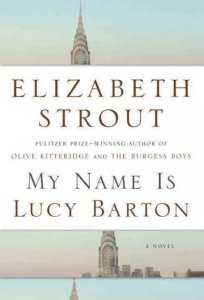
I loved Elizabeth Strout’s My Name Is Lucy Barton, a lyrical novel about a difficult mother-daughter relationship. This is a shoo-in if the judges are looking for a brilliant slender book along the lines of  Julian Barnes’ The Send of an Ending. I am equally thrilled with David Mean’s Hystopia, a  psychedelic alternate history of the ’60s about the effect of the Vietnam War on Americans, but it would be riskier:  it’s much more structurally complex, post-modern, experimental, outrageous, and, to be honest, it’s SF, so this would be a first for the Booker.

My husband has begun to weigh in on his reading.  He says of Ottessa Moshfegh’s Eileen, “It’s a first person letdown.”

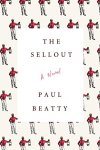
the-sellout-51vbrqyhpzlHe is currently reading Paul Beatty’s The Sellout, and is reserving judgment. Unfortunately, he has found Latin errors.  Yup, my husband and I met in an “Age of Cicero” class, went to grad school together, and taught Latin.  And these errors ARE the editor’s fault, because Latin is complicated, endings on adjectives depend on the gender, number, and case of the noun, but, for heaven’s sake,  my husband and I aren’t the only classicists who see these at a glance.  (Or are we?)  Anyway, Mr. Beatty  writes some very nonsensical Latin, and here he can’t get the adjectives to agree with the nouns. (The errors are in bold print.

unum corpus, una mens, una cor, unum amor  (translation: “one body, one mind, one heart, one love”)

The correct version is:

unum corpus, una mens, unum cor, unus amor

The mistakes occur in the third and fourth pairs:  cor (“heart”) is a neuter singular nominative noun, so the adjective should end in  -um. Amor (love) is a masculine singular nominative noun, so the ending is -us. Continue reading

Eve’s Hollywood by Eve Babitz & A Few Words about My “To-Read” Shelf

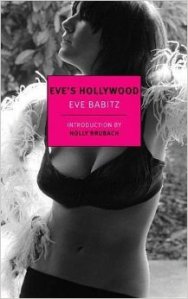
Eve's Hollywood 41LfGk35RaL._SY344_BO1,204,203,200_Eve Babitz’s self-described “confessional novel,”  Eve’s Hollywood, published in 1974, is not quite a novel.  The narrator, Eve, is of course the author, Eve Babitz, the daughter of Mae, an artist, and Sol, a contract musician at a film studio.  (She is also Stravinsky’s goddaughter.)  As Holly Brubach writes in the introduction to the NYBR edition, Babitz may have changed some names and enhanced some anecdotes but it can be read as a memoir.

In this brilliant collection of anecdotes, vignettes, and essays, Eve passionately defends  L.A. culture, which she says New Yorkers especially disdain. Her musings and sketches are hilariously vivid as she describes  growing up in L.A., where the colors of the sky are hypnotic, the seasons never change, her classmates are as beautiful as starlets (they include Yvette Mimeiux), and  she and her cousin hang out at Roadside Beach,  the haunt of “a lot of kids from West L.A….tough kids with knives, razors, tire irons and lowered cars,” rather than with their upper-class schoolmates at the posh beach.

So who exactly is Eve?  She is multi-talented and outrageously funny.  She meets rock stars and artists, designs album covers, loves Rome but not so much New York, where she works at an underground paper for a few months, returns to L.A., becomes a photographer, is addicted to the taquitas at a Mexican restaurant, and enjoys taking LSD.  She is glamorous– in Julian Wasser’s photograph, she is the naked woman playing chess with Marcel Duchamp–but she never loses her unpredictable sense of humor:  during a walk, when she stops to pet some kittens, a chicken scurries over to be petted, thinking he’s a kitten, too. How do you pet a chicken?

In the second half of the colorful narrative, she includes some short essays, in the literary style of New Journalism. Think Joan Didion, only comical. Babitz makes whimsical observations but also compassionately analyzes Marilyn Monroe’s suicide and delves into the tragic lives of wispy marginal people who are as lost as Marilyn.   In a charming essay about books and reading, “The Hollywood Branch Library,”she says she got her education at the library (she graduated from Hollywood High School and dropped out of an unprestigious college).  There is also a stunning  essay/article about the  premiere of a sold-out surfing film, attended by stoned surfers, who are, like Eve, riveted by the gorgeous men who ride the waves like gods.

So the form is not a novel, but it is a wonderful book.

Here are a few passages from her essay, “The Hollywood Branch Library.” The first is on reading as salvation.

“But my education has been through reading, which has been my salvation and backbone throughout life. The time I wanted to kill myself in New York, Dombey and Son saved me. Charles Dickens is perfect for accidental hit-bottom. Anthony Trollope is too, but he’s so divine that it’s a shame to waste him just because you’re in trouble.

And here’s one on M.F.K. Fisher

M.F.K. Fisher is becoming my favorite writer, even more favorite than Colette. I once wrote her a fan letter and told her that she was just like Proust only better because she at least gave the recipes. She wrote back that she supposed that someday someone would do their Ph.D. thesis on madelines. M.F.K. Fisher attends to ingestions and, not only that, she’s from Whittier and she grew up in L.A. when it was the farthest reaches of the civilized world. She describes eating peach pie with her father and sister in the sunset in the hills when she was about 5, which has always remained with me, as will the idea that to drive about 50 miles to their aunt’s peach farm they got 5 flat tires and it took about 4 hours, there were no roads. I take two M.F.K. Fisher books with my Colette book when I go anyplace.

I lookforward to reading her novel, L.A. Woman, which is also in print.

IS YOUR TO-READ SHELF AT GOODREADS OUT OF CONTROL? I have 120 books on my Goodreads “Want to Read” shelf.  Why?  I click on books and add them to the shelf and then Forget about most of them:  that’s the problem with lists. Here are five of the more interesting choices, with an analysis of the probablility of my reading them.

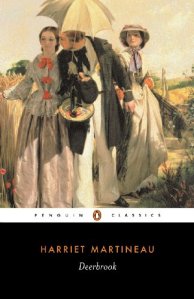
It is VERY PROBABLE that I will read Deerbrook by Harriet Martineau, which I can download free on my e-reader.  The description says it “prefigures the later Victorian novels of Elizabeth Gaskell, the Brontës, and George Eliot.”  How can I resist?

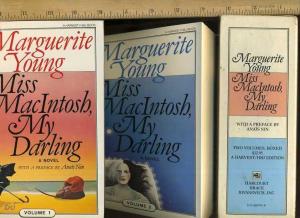
deerbrook-51ptu2iuvrlIt is EXTREMELY IMPROBABLE that I will read the 1,190 pages of Marguierite Young’s 1965 experimental novel, Miss MacIntosh, My Darling, though it has been reissued by the Dalkey Archive.  Do I want to read something that long, unless it’s my favorite book, War and Peace?  The Goodreads description sounds appealing:  “It is a picaresque, psychological novel–a novel of the road, a journey or voyage of the human spirit in its search for reality in a world of illusion and nightmare. It is an epic of what might be called the Arabian Nights of American life. Marguerite Young’s method is poetic, imagistic, incantatory; in prose of extraordinary richness she tests the nature of her characters–and the nature of reality.”

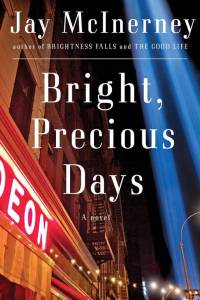
miss-macintosh-605070791IN PROGRESS:  Jay McInerney’s Bright, Precious Days, the third in a trilogy about Ray and Corinne Calloway, a glamorous couple in New York.  I have read a few bad reviews, but really don’t care.  Whether it as good as The Good Life, his 9/11 novel, or not, I want to know what happens to Ray and Corinne.

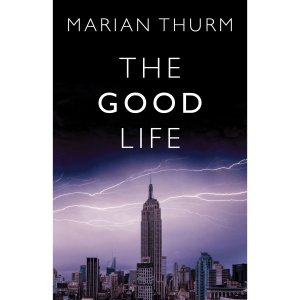
bright, precious days mcinerney BN-PE464_JAYjpg_MV_20160729171322It is PROBABLE that I will read Marian Thurm’s new novel, The Good Life  (if it shows up at the library.) She was one of the brilliant minimalist writers published in  The New Yorker, along with Ann Beattie, and then the editors changed in the ’90s and I no longer saw her work.   I very much enjoyed her brilliant 2015 collection of short stories, Today Is Not Your Day, and am glad to see she has yet another new book out.

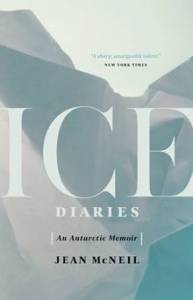
marian-thurm-the-good-life-28569823-_uy2606_ss2606_It is BARELY POSSIBILE that I will read Jean McNeill’s Ice Diaries: An Antarctic Memoir (if it shows up at the library).  It looks great, but I don’t read many memoirs.  The description says:  “A decade ago, novelist and short story writer Jean McNeil spent a year as writer-in-residence with the British Antarctic Survey, and four months on the world’s most enigmatic continent — Antarctica. Access to the Antarctic remains largely reserved for scientists, and it is the only piece of earth that is nobody’s country. Ice Diaries is the story of McNeil’s years spent in ice, not only in the Antarctic but her subsequent travels to Greenland, Iceland, and Svalbard, culminating in a strange event in Cape Town, South Africa, where she journeyed to make what was to be her final trip to the southernmost continent.”

ice-diaries-9781770413184_1024x1024Is your  TBR a out-of-control as mine?

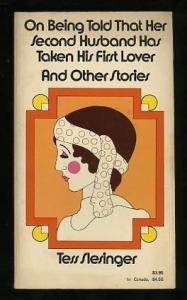
Tess Slesinger’s On Being Told That Her Second Husband Has Taken His First Lover and Other Stories

on being told that her second husband tess slesinger 253667

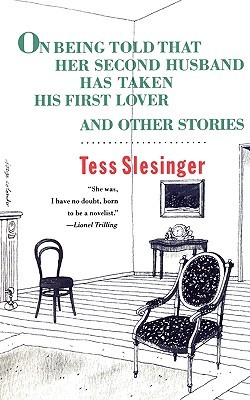
Tess Slesinger’s stunning collection of short stories, On Being Told That Her Second Husband Has Taken His First Lover and Other Stories, is a neglected classic. These witty stories form crystalline windows into her characters’ minds.  In her deft interweavings of comedy, lyricism, and stream-of-consciousness, Slesinger channels Dorothy Parker, Virginia Woolf,  Katherine Mansfield, and Dawn Powell.

Slesinger, who died of cancer at age 39 in 1945, wrote only two books, a novel, The Unpossessed (1934), and the story collection, On Being Told That Her Second Husband Has Taken His First Lover and Other Stories (1935). Born in New York and a graduate of Swarthmore College and the Columbia School of Journalism,  she married Herbert Solow, a political journalist, and moved in Jewish  intellectual circles. After her divorce in 1932, her career took off: she published one of her most important stories, “Missis Flinders,” about the effect of an abortion on a failing marriage, which  became the final chapter of her novel.  After her second marriage to producer and screenwriter Frank Davis in L.A., she wrote screenplays for A Tree Grows in Brooklyn and The Good Earth, but very little fiction.   (Another writer ruined by Hollywood?)  I do wish she had written more fiction.

on being told that paperback 253666Slesinger has an astonishing range:  she ambidextrously adopts different styles for different subjects.   The powerful title story takes the form of an ironic Dorothy Parker-esque monologue.  Written in the second person, it portrays a wife’s brittle attempt to minimize the pain of her second husband’s confession of infidelity.  As she says, you cannot feel it as deeply as your first.

Oh, you could talk about the thing, in  Proustian vein, forever.  Show him where he was weak, analyze his emotions for him, tear him to pieces like a female lion.  Time was, with Jimsie, (ah, that pain can still come, and it was not that Jimsie ever was to you more than Dill is now, it is because Jimsie was the first, and that pain was the first, his news was a blow the heart will never recover from–never) time was when you brilliantly talked, explaining away everything, for two whole days, while Jimsie stayed home from work to listen and neither of you so much as dressed or saw another person but the boy from the delicatessen bringing sandwiches and cigarettes at intervals, and at last vichy-water when you fell to drinking.

In the comical story, “After the Party,” Mrs. Colborne, whose socialist ex-husband  gave away all his money (fortunately Mrs. Colborne had her own money),  takes her analyst’s advice and finds a hobby.   He suggested writing, but she decides instead to give parties for writers.  She and her secretary skim reviews and gossip columns to figure out who the next big thing will be.  Their constant networking with publicists and publishers, their organizing “A” and “B” guest lists, is both realistic and ridiculous. When a writer makes fun of Mrs. Colborne, she doesn’t understand. She doesn’t actually read the books:  she just gets them autographed.   And her obliviousness makes it all somehow more poignant.

“Mother to Dinner” is my favorite story in the collection.    There is a hint of Mrs. Dalloway in Slesinger’s masterly stream-of-consciousness, as she portrays the heroine, Katherine Benjamin, “who had been Katherine Jastrow for something less than a year,” shopping for dinner and then feeling isolated in her apartment. Her husband won’t listen to her stories; she and her mother shared every little detail.   When she says  Goodafternoon instead of goodbye to the grocer, she can hear her mother saying the same thing.

And now Katherine, no longer in middies and broad sailor hats or accompanied by her mother but modestly wearing a ring on her left hand, heard herself kindly bidding Mr. Papenmeyer Goodafternoon, and feeling, as she said it, very close to her mother, feeling almost, as she said it, that she was her mother. (Gerald predicted with scorn that it would not be long before Katherine would speak of Mr. Papenmeyer as “my Mr. Papenmeyer,” and he suspected that she would even add, in time, ‘he never disappoints’; but she was not to suppose, he said, that he would glance benignly over his Saturday Evening Post, as her father did, and listen.)

Kaatherine longs to telephone her mother, but knows Gerald disapproves.     She loves Gerald, but despairingly realizes he doesn’t really know her; they have known each other two years and been married less than one.  It is her mother with whom she has most in common, but there is a barrier as she imagines the tension she will experience tonight when they entertain her parents for dinner.

“Jobs in the Sky” is a political story.  On Christmas Eve, the employees in t he book department of a department store prepare for the rush when the store opens at 9.  It is the Depression, and Joey, who is in charge of the biography section, used to be homeless and sleep in the park. They have been told that five people will be let go at the end of the day.  They suspect that Miss Paley, a retired teacher who reads Arnold Bennett’s The Old Wives’ Tale in her spare time, will be one of them.  But the others?  We get to know the clerks’ strengths and weaknesses through Joey’s eyes.  He is so grateful to have a job.

The Answer on the Magnolia Tree is a stunning novella, set in a girls’ boarding school, and Slesinger has an obvious first-hand familiarity with such schools.  She sketches the class differences between the rich students and the scholarship students; the condescension of the young teacher with a date to  the older teachers who have lived too long alone in dorm rooms.

The plot revolves delicately around a popular girl Linda’s transgression:  she stayed out all night on the golf course with a boy after a dance.  She would be expelled if she were not an alumna’s daughter, but that never occurs to her; instead, she admires the magnolia trees.

Linda is unaware that her wealth and manners are responsible for the scholarship student Natalie’s ratting on her.    Natalie  is smart enough to understand that if her own date had gone well (he didn’t fit in with the Harvard men) she wouldn’t have told on Linda.   We meet some of the other girls as they give the wrong answer in class, play sports, or giggle at lunch.  There are also Lindas and Natalies among the teachers:   when a young teacher prepares for a date, the other s help her get dressed, but lend her  all the wrong accessories, which she kindly accepts, planning to hide them later in her bag. Miss Engles, the socialist, despairs when a student dismisses the lower classes in her paper. What does she have to do to get the girls to think?   And the principal tells Linda, who is looking out the window at the magnolias, ‘You are not going to find the answer on that magnolia tree.”    But perhaps, as Slesinger hints, she is.

Slesinger is less successful when she delves into working-class lives:  in “The Mouse-trap,” a secretary from Topeka has a crush on her boss and approves his exploitation of his employees until the end; and in “The Friedmans’ Maid,” a German maid’s devotion to a manipulative mistress drives away her fiance.   Both stories are beautifully-written, but lack her usual subtlety and liveliness.

These stories from the thirties could just as easily have been written today:  they take on issues like abortion, race quotas, the formation of a union, and the problem homelessness.

This is a great book, and astonishingly it is still in print!  I loved, loved, loved it!

The American Voice: Henry James’s The Europeans

That is all I expect from them,’ said the Baroness.  ‘I don’t count on their being clever or friendly–at first–or elegant or interesting.  But I assure you I insist on their being rich.”
― Henry James, The Europeans

Henry James the europeans 1106872Lately I’ve been immersed in American literature.  It is a great change from my usual propensity for English novels.  And I’ll bet I could identify a writer as American or English by a “blind” test (title and author crossed out) perusal of a few pages.

There is a distinctive American voice, though it’s timbre is hard to describe: there is a rawness, a directness, a purely regional lyricism, and often a wildly  inappropriate humor, whether we’re talking about Faulkner’s The Hamlet, the first in a trilogy about the rise and fall of the trashy Snopes;  Louisa May Alcott’s witty coming-of-age novel, Little Women; or the surreal premise of  David Mean’s Hystopia, a meta-fictional alternate history about the effect of the Vietnam War on Americans, longlisted for the Man Booker prize.

There are exceptions.  Take Henry James.  I love him dearly, but he was an even bigger Anglophile than I.  His novels are basically English novels, and yet his heroes and heroines are often Americans who get duped by sophisticated Europeans.

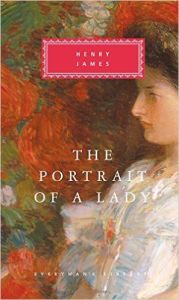
portrait of a lady james 247718ec278b1c1255ae9bbad67f280bI was introduced to James by Louise Fitzhugh’s children’s classic, Harriet the Spy.  Harriet’s nurse, Ole Golly, quotes James’ The Portrait of a Lady on the subject of afternoon tea. And so Portrait of a Lady was the first James I read. His exquisite prose was unlike anything I had ever read.  And I was fascinated by the heroine, Isabel Archer, because I thought I was just like her (I was not!):  she visits England with her rich Aunt Touchett, wins the affection of her invalid cousin Ralph, turns down the proposal of Lord Warburton (really, Isabel, why?), and has spirited skirmishes with Henrietta Stackpole, her feminist journalist friend, on the subject of whether she should marry the American suitor Caspar Goodwood, who has pursued her to England.  She becomes even more willful when she inherits money.  But the money is her downfall: watch out for mercenary Europeans and American expatriates!

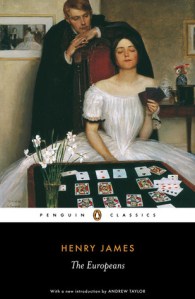
I have never cared as much for James’s early shorter works, but recently spent an evening with The Europeans.

The plot is Jamesian, but this is James before he smooths out his prose style. The theme is  his habitual contrast of national character.  Two European siblings, the children of American expatriates, visit America.  Eugenia, the Baroness Munster, separated from her German husband,  is determined to find a new husband among their rich American cousins, the Wentworths.   But the American landscape puts her off:  she despairs as she looks out a hotel window at the snow, finds the fire in their hotel room ugly, and says she wants to go back to Europe.  Her brother, Felix, an optimistic  artist with a sense of humor, tells her the weather will be better tomorrow.

henry james europeans BlackmurThe American cousins are not quite as Eugenia pictured them.  They are serious New Englanders, with strict morals and a simple country life.  Felix shows up a the Wentworths’ house before Eugenia to announce their arrival; all are at church except one of the daughters, Gertrude, who is avoiding Mr. Brand, a minister who wants to marry her.  She is immediately charmed by Felix, a great change from Mr. Brand.

James’ prose is wordy here, but I promise you he IS the master in later novels.

Now that this handsome man was proving himself a reality she found herself vaguely trembling; she was deeply excited.  She had never in her life spoken to a foreigner, and she had often thought it would be delightful to do so.  Here was one who had suddenly been engendered by the Sabbath stillness for her private use; and such a brilliant, polite, smiling one!  She found time and means to compose herself, however:  to remind herself that she must exercise a sort of official hospitality.

Although Eugenia charms the Wentworths and is invited to live in a small house on the property, she is soon bored.  Her cousins are not as easily manipulated as she’d hoped. Where is her new husband? In fact, she does better with their neighbor Robert Acton, who has a better sense of humor, than with Mr. Wentworth or his son. Gertrude, who is looking to break out of the American mold, is the Wentworth who most admires Eugenia’s manners.

The witty, outgoing Felix really likes the Wentworths, and he has a positive influence on them.

This gets more interesting as it goes along, but I have to say it is not his best.  Try The Portrait of a Lady or The Golden Bowl.  You’ll be much happier!

Literary Links: A Few Words About Tampons & Aristophanes in the TLS

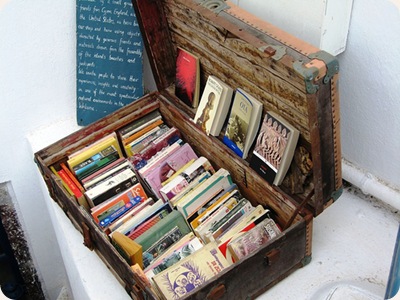
Not my suitcase, but it could have been!

The last bash of summer!

What are you reading?  Here are a few recommendations for the long, long (too long?) Labor Day weekend.

1. The Lenny newsletter, edited by Girls creator Lena Dunham and her co-producer Jenni Konner, is an online publication by and for Millennial women.  I’m a Baby Boomer, but one has to keep up with the culture, and the writers’ agenda are varied and often stylishly written.  I enjoy the “Lit Thursday” book recommendations and the  interviews with artists, actresses, and politicians   Dunham, author of the memoir Not My Kind of Girl, is a stunning writer, and sometimes the  unknowns will surprise you.  I enjoyed Sarah Konner’s essay, “Menstrual Cycling,” about a bicycle trip on which she and a friend gave away free  menstrual cups.

Konner writes,

In 2011, my dear friend Toni and I rode our bikes down the West Coast, living on $4 a day, camping in backyards, and giving away free menstrual cups. This was our second bicycle trip together. Our first trip was just a joy ride two years earlier. We tested how cheaply we could live, and in doing so, we discovered that bicycle travel is a very special way to have engaging conversations with people we would never meet otherwise. So, we planned another trip and organized it around our shared passion for menstrual cups! Menstrual cups reduce waste, save money, are safe for women’s bodies, and offer users an opportunity for a more intimate relationship with their cycle.

Menstrual cup, tampons, pads: the more methods, the better, I say.  Thank God I’ll never have to deal with that again.  My own periods were so heavy that I needed extra-large tampons, and even so,  I had to change them every two hours.   Women in the ancient world used tampons, so you can think of it as a witchy ritualistic wisdom passed down from the matriarchal goddesses to the priestesses to us.  And, remember, cotton tampons are biodegradable, too.

aristophanes wasp 97801996994072. Last year I wrote about “Filthy Jokes in Aristophanes’ The Frogs” after rereading the play in Greek.  The  jokes can be difficult, because the ancient world has its own zany wit.

In a review of three books about Aristophanes in the  TLS, Simon Goldhill writes about the perils  of translating Aristophanes’ jokes.

Translating Aristophanes’ comedies can be a right bugger. As early as the first century AD, the highly educated culture-hound Plutarch warned against reciting Aristophanes at a dinner party – an early version of doing the Monty Python dead parrot sketch for your friends – because each guest would need a personal tutor to explain the political references and obscure vocabulary. Between the gags about unknown politicians, fun with baffling names for sausages and bizarre puns about sexual parts, even a sophisticated Greek-speaking partygoer was likely to be desperately lost, and searching unsmilingly for the equivalent of the OED. What could ruin a good symposium more than a comic skit that nobody got?

Very articulate, fascinating article!

What are y’all reading this weekend?  Let me know!

Beyond Star Trek: Destination Des Moines

Spock (Zachary Quinto) in "Star Trek Beyond"

Spock (Zachary Quinto) in “Star Trek Beyond”

Where no man has gone before…”  (Not space, but Des Moines.)

It’s not Star Trek.

It’s the final frontier.

It’s Des Moines.

Even though it was MY birthday, my cousin Megan didn’t want to spend a “girls’ day” biking around  “Dead” Moines, her hometown.  She wanted to drive to a mall in Omaha, shop for designer stuff on sale, and then take me to “Star Trek Beyond.”

Are you a Star Trek fan? Me, not so much. I loved Patrick Stewart in Star Trek: The Next Generation, but never watched the other series. If Melissa McCarthy, Kate McKinnon, Leslie Jones, and Kristin Wiig starred as Spock, Captain Kirk, and whoever, I would see it.  (Surely Ghostbusters was not the final female frontier!)

Ghostbusters

                Ghostbusters

But Meg has a serious thing for Star Trek.

After a stint in the psych ward (stoned and unruly in public), she said the only thing that made her feel human was watching Star Trek in the common room.  “All the freaks knew everything about Star Trek, and I wanted to fit in.”

By fitting in, does she mean dressing up like a female Vulcan at Worldcon?  She does.  Does she write her own folk songs about the Enterprise?  She does.

“I really think Melissa McCarthy could play Spock,” I said.

“Well, if we’re not going to Star Trek…” She glared.

“We’ll bike from Adel to Des Moines.  That’s not too far.”

There is a huge radius of trails branching from various small towns in central Iowa to Des Moines, the capital of Iowa.  The Raccoon River Trail runs all the way from Jefferson to  Waukee, and then magically continues under the name Clive Greenbelt Trail, and, after changing names a few times,  takes you to downtown Des Moines.

We started in Adel, 27 miles away.

As Megan walked her bike up the hill that essentially extends all the way from Adel to Waukee,  she said, “This is a bad idea.”

Every time we passed a pub–there are pubs on the trail–she said, “Can’t we stop ?”

I really didn’t want to drink because my secret plan was to spend time inspecting the Iowa Collection at the Des Moines Public Library as well as trying to find the mural of Chris Soules from The Bachelor making out with Witney, the fiancée he broke up with shortly after the show’s end.

“We’ll stop for coffee soon.”

ritual cafe index~~element57FIRST STOP, COFFEE.

What could be better than coffee and a snack at Ritual Cafe,  two blocks from the Des Moines Public Library.  Meg vetoed it after she saw the word “vegetarian” on the chalk board out front.  She didn’t want “something vegan dropped in the drink.”  Solution:   Starbucks, right next to the Des Moines Public Library.

The downtown library.

Des Moines Public Library

SECOND STOP, THE IOWA COLLECTION AT THE DES MOINES PUBLIC LIBRARY.

Such a cool collection, guys!  Shelves and shelves of fiction and nonfiction books by Iowa writers.  Why oh why can’t one check them out?  One must read them while squirming in the most uncomfortable “comfortable” chairs ever purchased by a parsimonious librarian.

HERE ARE SOME OF THE BOOKS:

The Susan Glaspell collection

The Susan Glaspell collection

Pulitzer Prize-winning playwright and novelist Susan Glaspell (1876-1948) was born and raised in Davenport, Iowa, but after a stint at the Des Moines Register escaped to Provincetown, MA, where she founded the Provincetown Players.  Her short story, “A Jury of Her Peers,” about a battered woman, has been widely anthologized and is also the title of Elaine Showalter’s book about American women writers. Glaspell wrote many plays and novels, including Fidelity and Brook Evans, both published by Persephone.

Ruth suckow iowa collection aug. 31

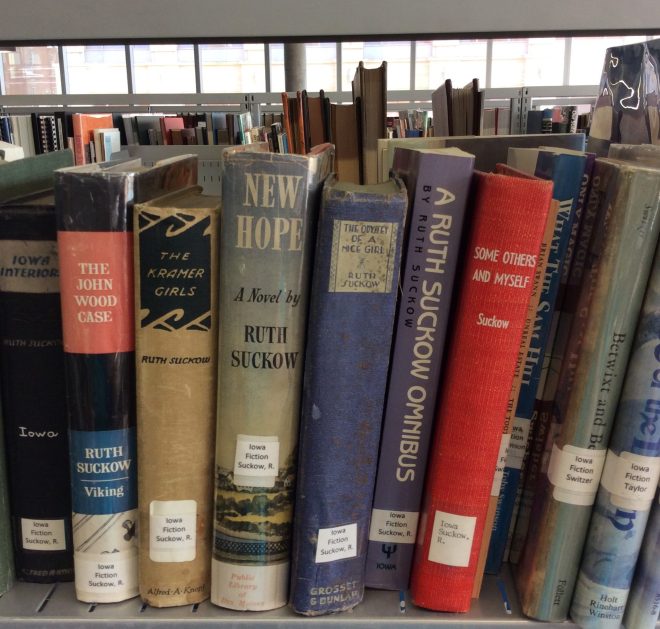
Ruth Suckow (1892-1960), a minister’s daughter, is known for her charming novels about the lives of people in church-centered small towns in Iowa.  Her best-known novel is The Folks, but my favorite is New Hope, a fictional account of life in Hawarden, her hometown.  By the way, you can visit her birthplace, a small pretty house in Hawarden, now a museum.

Stegner

Wallace Stegner

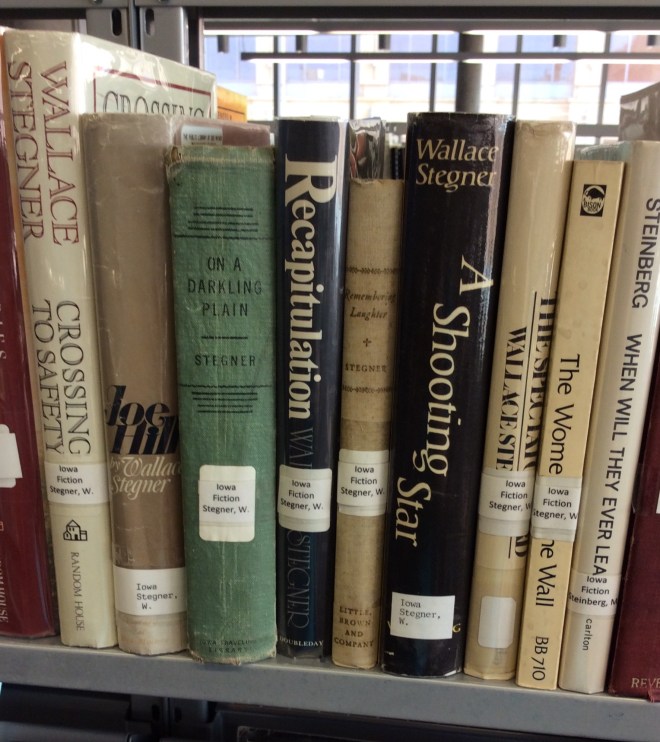
Who knew Wallace Stegner, the Pulitzer Prize and National Book Award-winning American novelist, short story writer, environmentalist, and historian,  was from Lake Mills, Iowa?  Not I.  He is best known for nature writing and  novels about the West.  My favorite of his novels is Crossing to Safety.

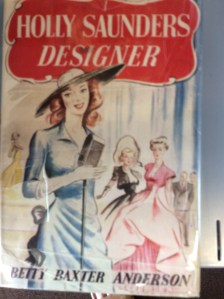
Iowa Collection holly designer Holly Saunders Designer by Betty Baxter Anderson?  Yup. I’m dying to read this novel “for older girls”  about a career girl in the fashion world!

Mildred Wirt series books iowa collection. aug. 31Nancy Drew fans, look at these!  Mildred A. Wirt, born in Ladora, Iowa, was the original Carol Keene, author of the Nancy Drew books, the Dana Girls, and others for the Stratemeyer Syndicate.   She also wrote many books under her own name, including the Penny Parker series, Penny Nichols, Madge Sterling, Trailer Stories for Girls, Flash Evans, Mildred A. Wirt Mystery Stories, Dot & Dash, Brownie Scouts, Dan Carter Cub Scout, Girl Scouts, and Boy Scout Explorers. It’s a strange little collection of books.  They look like fun!

Bess Streeter Aldrich

Bess Streeter Aldrich (1881-1954), is one of my favorite Midwestern writers.  Born and raised in Cedar Falls, Iowa,  she and her banker husband moved in 1909 from Iowa to  Elmwood, NE, where Bess not  only raised her children, but began to write. (The house in Elmwood is now a museum.)  She is best known for A Lantern in Her Hand, a forgotten classic (except, mysteriously, in homeschooling circles).

Although Aldrich’s mother, a pioneer herself in Cedar Falls, Iowa, told her family stories, Aldrich also interviewed early settlers in Nebraska and studied historical documents and letters before she began to write the  superb A Lantern in Her Hand. Theheroine, Abbie Mackenzie Deal, follows her husband, Will, a Civil War veteran, from Iowa to Nebraska, where he struggles to farm on the unforgiving prairie and, tragically, she never develops her singing talent, because she is too busy helping him and raising children.  There’s something Willa Catherish about this moving novel.

I’m so glad to see all these books by Aldrich in one place!

Mackinlay Kantor's "Author's Choice"

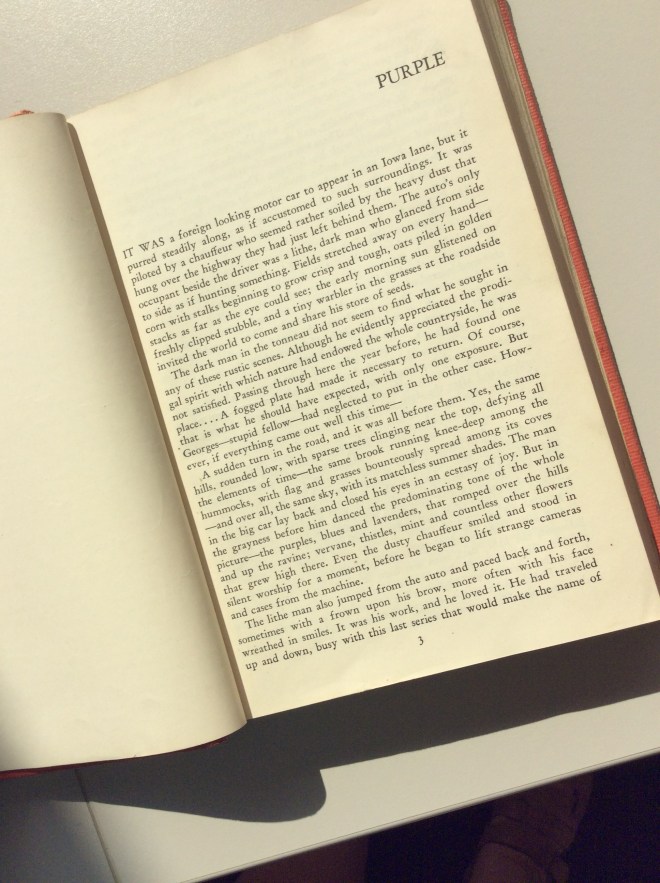
A page from a short story in Mackinlay Kantor’s “Author’s Choice”

Don’t forget Mackinlay Kantor, who won the Pulitzer for Andersonville, his novel about a Confederate prison during the Civil War.  He was born in Webster City, was a columnist for The Des Moines Register, was a war correspondent during World War II, and then wrote the screenplay for The Best Years of Our Lives.  He wrote many novels:  there are two shelves of them.  I have yet to read one, but my husband is a fan of Andersonille!

P.S. After a rollicking meal at Fong’s Pizza, we called a spouse to beam us up.  One of the bicycles had to be dismantled to fit in the car, I mean The Enterprise, but oh well…