
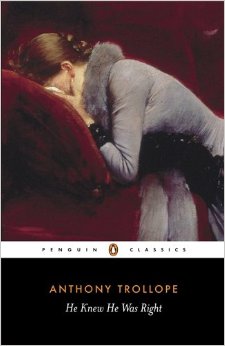
If you wonder why I’m not writing more on my reading lately, it’s because I’m in a Victorian phase. Some of the books are very, very, very, very long. And you do not want to read me every day on the Victorians, because so many excellent books have been written, there are scholarly introductions to all the books, and there is not much for us bloggers to do except enthuse or condemn. Since I am so chatty, you will soon know all.
MY READING THIS WEEK: I’ve been reading Swinburne’s poems, and I love his reinterpretations of myths, but mostly I let the poetry wash over me. Can I admit that? Does anyone know a good book about the pre-Raphaelite poets? I’m also reading Trollope, and of course I can drone on about Trollope, because he’s so accessible: we don’t really need notes on Trollope, who is one of the greatest storytellers of the nineteenth century. But I have read so many excellent introductions to his books, plus Glendinning’s biography of Trollope, that it’s overwhelming.
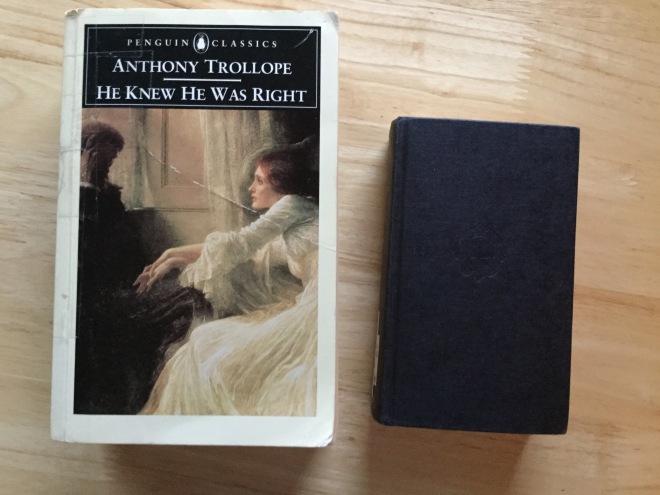
Last weekend I turned down a day trip to Iowa City and said I had do things around the house, which I did, but I actually was reading He Knew He Was Right, his brilliant retelling of the Othello story. This is my third reading of this stunning novel about Lewis Trevelyan, a jealous husband, and his strong-minded wife, Emily. They separate because he goes mad from jealousy of a flirtatious friend of Emily’s father’s, who does try to egg him on. (I did jot some notes about the book here in 2015.)
Since I love the Victorian novelists, whether they wrote short (Mrs. Gaskell’s Cranford) or long (Trollope’s He Knew He Was Right), I wonder why I don’t care much for today’s equivalent popular “literary” novelists. Were the Victorians better writers because they were better-educated, even if they were not formally educated? I have a theory about why we all love Trollope. It’s not just the engrossing stories and the vivid characters. He read Cicero every day–he even wrote a life of Cicero–and his style reflects Cicero’s rhetorical skill: for instance Trollope uses parallelism, tripartite structure, and anaphora (the repetition of a word or words at the beginning of successive phrases or clauses). Today’s stylists just don’t (can’t?) do that. Do they? Can they? There are some great writers out there, but literature is very different.
Some of today’s prize-winning literary writers seem overrated, among them Jonathan Franzen, Jeffrey Eugenides, Jennifer Egan, Donna Tartt, Elena Ferrante, and even Ann Patchett (by far the worst of this lot). It’s not that I dislike these writers–I don’t–but can we even begin to compare them to the great 19th-century novelists?
Perhaps these critically-acclaimed best-selling authors ARE the great writers of today. Who am I to say? But will they be read in 50 years? All right, my guess is yes, Franzen will be read, because he says something about American life. (He is not my favorite: it’s just a hunch.) Jeffrey Eugenides, ditto: I loved The Marriage Plot, with all its references to Victorian novels, though honestly found The Virgin Suicides misogynist. I think of Jennifer Egan as artsy dystopian–will that play in the future? Everyone loves Elena Ferrante, and she writes insightfully about women’s lives and Euripidean emotions, so how can she go wrong? But I prefer her earlier more “experimental” (if that’s the word) work. Picky, picky, aren’t I? I am just getting ready to read Tartt’s The Goldfinch and it looks very good. I waited for the hype to fade. I would say Patchett, who is really in the pop category, absolutely not will be read, unless everybody’s brains have caved in.
Do you read these writers? Whom should we read instead? Are any writers like the Victorians?
There are many excellent contemporary writers, and I PROMISE to write about them soon. I admired Laura von den Berg’s literary dystopian first novel, Find Me, though it is not a perfect book, but it probably deserves a better reception than it got. And I admired Elizabeth Tallent’s collection of stories, Mendocino Fires, last year, the first book she’d published in (I think) two decades. And she is undoubtedly at the height of her powers, even if the powers are very different from those of the prize winners.
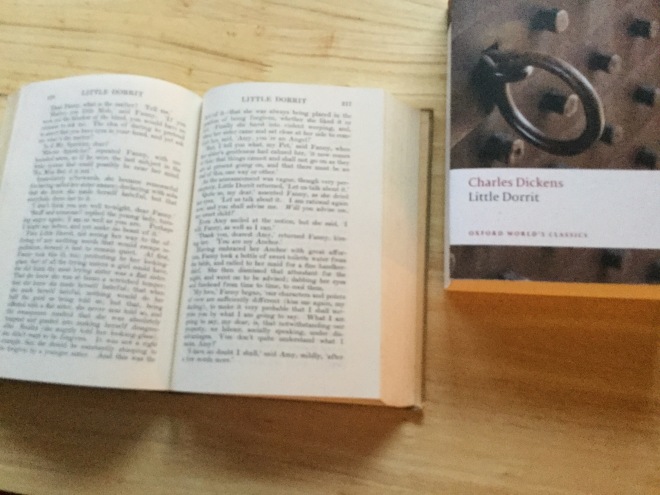
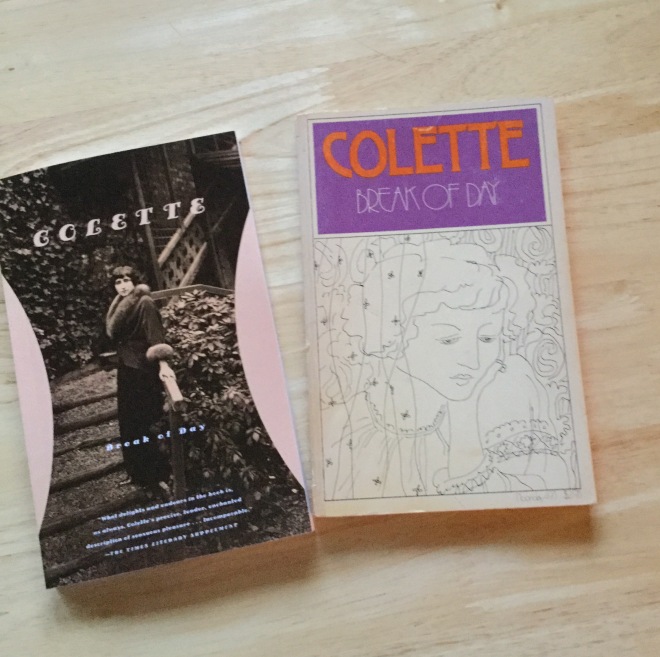







 mirabile dictu