Other

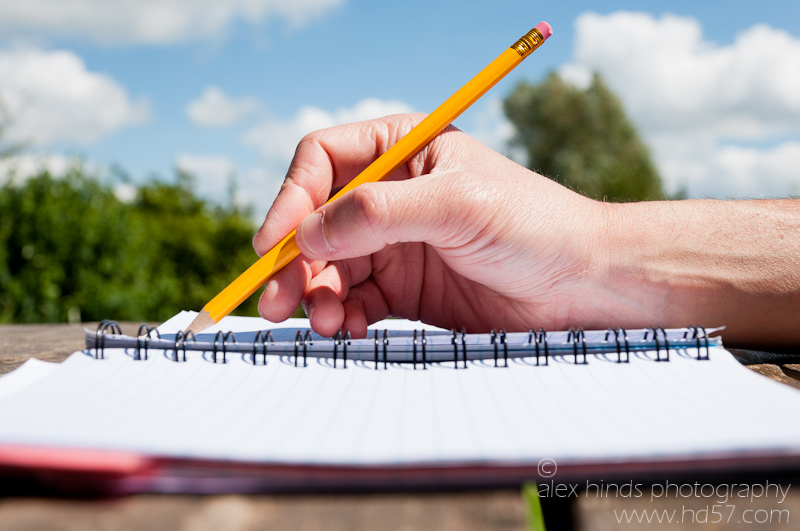
stock-photo-writing-notes-5822 writer with pencilI went to Iowa City to d0 research at the Women’s Archives at the University of Iowa Library.

You are not allowed to bring in your knapsack.  You are not allowed to write with a pen.  You are allowed to borrow a pencil.

Every visitor must fill out a form.   The questions are about identity and purpose.

Who am I?  I thought, amused, as I filled in my name and address.

In answer to the question about my reason for research, I eliminated the first several possibilities and checked the box,  “Other.”

A good reason, I think.

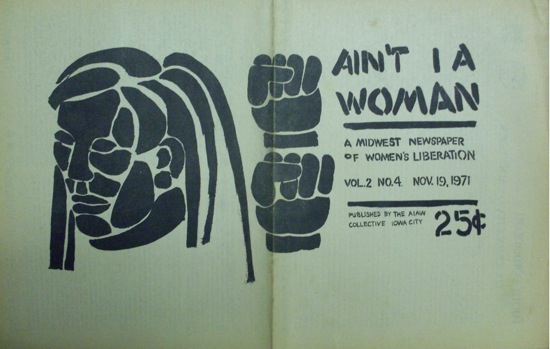
I was there to read Ain’t I a Woman?, a feminist newspaper published in Iowa City by a collective, 1970-74.

Where will my research go?

Perhaps I’ll write an essay.

Perhaps I’ll write an e-book.

I would self-publish an e-book rather than go through a mainstream publisher.

For one thing, I am doing this for fun.

I also have no contacts in publishing.  My few writer friends were dropped from publishers’ midlists long ago.

Old editors out, old writers out.  New editors in, new writers in.

I am due to self-publish an e-book next year, says my family.  Yup.  They scarcely care what it is about.  My parents’ generation self-published memoirs of small-town Iowa,  tedious books of genealogy (did we really have such splendid ancestors?), and cookbooks.

Now it’s time for our generation to take over.

Our experiences differed from those of our parents.  We taught Latin, traveled around the world, worked in retail, became computer techs, rode RAGBRAI, and worked in halfway houses. And is it my imagination, or do an unusual number of us work out of our homes?

Will I interview family for an e-book?

Will I write a memoir?

Will I write a novel?

I will not be writing a vampire novel.  Sorry, no werewolves, angels, centaurs, or mermaids either.

Of the otherworldly types listed above, I prefer mermaids.

“Iowa City has always been a death trip for me,” a woman told me back in the ’70s.

Not for me.

No vampires.

The ’60s?  Great.  The ’70s?  A little rocky at the start, but mostly good after that.

I won’t actually be writing about Iowa City.

Or at least not much.

I haven’t lived there in years.  I no longer know anyone.

The town was flooded in 2008 and Hancher Auditorium and the Music Building are being rebuilt.  The Art Museum is (temporarily, I hope) housed in the Student Union.  I don’t know what has happened to the Art building.

My city is gone.

It may not be my town anymore, but, nonetheless, it is fascinating, and I have great affection for it.

Ain’t I a Woman, Part 2: The Iowa City Haircut

Ain't I a Woman?  nov. 19 1971Recently I visited the Women’s Archives at the University of Iowa Libraries and read old issues of Ain’t I a Woman?, a feminist newspaper published by a collective in Iowa City (1970-74).

This well-written radical newspaper published articles on sexuality, class, race, health care, day-care, abortion, rape, self-defense, lesbianism, and other serious topics.

The AIAW collective also published some thoughtful personal essays, among them “Notes on Cutting My Hair”  (Vol, 1, No. 11, 1-29-71).

The anonymous writer of “Notes on Cutting My Hair” was not quite s Second Wave Feminist Delilah, but she analyzes the meaning of the length of women’s hair.  She begins by describing her own sensual waist-length hair, worn in three braids pinned up on her head.

Then feminists in Iowa City began to experiment with very short hair, changing their trademark look from feminine “freak” (“hippie” is the media word) to a bold statement about feminists defying fashion. Impressed by a friend (housemate?) who dared to cut off all her hair, the narrator had hers cut to her shoulders.  Then she attended a conference in Grinnell and noted, “Ann’s hair was really short,”  and everyone was talking about the “Iowa City haircut.” Then the scissors came out.

Her very short hair changed the way she related to others.  A male professor whom she disliked no longer counted on her half-flirtatious deference.

She wrote,

When I walk through the commons, I feel much less on display.  I’m freer to look for people I know, walking through is now more my business than the business of people who are looking at me, and if people watch me I don’t care.  I’m not touched by it…  Much less do I see myself as others see me, and operate either in agreement with that image or defensively against it.

I knew so many women with Iowa City haircuts.

I had an Iowa City haircut, too.  One day I was eating dinner with friends when a strip of fly paper fell from the ceiling into my hair.  It was agonizing, all that goop in my hair.  I had it trimmed to my shoulders.  Then, a few months later, when I noticed some stylish feminists wearing short hair, I  had it cut very, you know, pixieish.  Did I read this essay in AIAW?  I can’t remember.

I had very mixed feelings about my short hair.

My women friends approved of the new look:  both heterosexual and lesbian feminists understood the significance of flouting fashion.  Why should we spend all that time on our hair and clothes?

Sometimes I loved my short hair, sometimes I hated it.

Ssometimes, missing my long hair, I wondered if this fashion was a throwback from dyke- (a word the lesbians used a lot) to bulldyke-.

I didn’t say that aloud.

The anonymous writer of the article felt more confident with short hair, but I felt more vulnerable with men. One man told me, frowning,  “You really changed yourself.” On the other hand, a boy at school said he’d never noticed me before and now thought I was beautiful.  And when I told my husband about this AIAW essay, he speculated that the short hair might have backfired and men paid them more attention.  Well, I think in general not.  Confronted with a woman with long  hair and a lot of makeup, and a woman with an Iowa City haircut and no makeup, guess whom they’re more likely to pick?

I have grown and cut my hair and grown it back and cut it many times in my life.

Every woman, whether feminist or not, knows her hair can define her, and “Notes on Cutting My Hair,” about a specific moment in Iowa City women’s history, provides a feminist perspective.

A Rereading of Ain’t I a Woman?, Part One

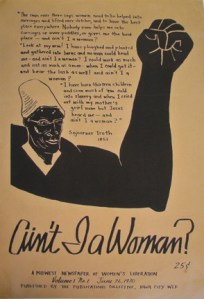
Ain't I a Woman?For years I’ve been interested in researching Midwestern women’s publications of the late 20th century.  I recently visited the Women’s Archives at the University of Iowa Libraries in Iowa City to read Ain’t I a Woman?, an underground feminist newspaper published from 1970-74 by the Publishing Collective, Iowa City Women’s Liberation Front.  (Later it was known as the AIAW collective.)

The paper peripherally influenced me when I was growing up in Iowa City in the 1970s.

It was a time of radical politics, feminism, consciousness-raising,  protests, underground papers, and experimentation with sex and/or drugs.  Describing the most insignificant political action requires much backstory. The volunteers and the kids from Dum-dum Day Care Center,  a co-op with no paid employees, participated in a takeover of the basement of Burge Hall to demonstrate the need for university housing of the day care co-ops.  (I was there.)  Yup, that’s the kind of thing that’s hard to explain in one sentence.

Reading AIAW was a gamble.  The language in some feminist books of the 1970s (try Shulamith Firestone’s The Dialectic of Sex) is stilted and incoherent, Marxist and strident.  I have a low tolerance for words like “elitism,” “”imperialist,” and “co-option.”

But AIAW supasssed my expectations.  It is a well-written newspaper. Many of the writers are talented, and I wonder if they went on to write elsewhere. The language is often rich, but also raw.  The writers experiment with language as they try to express their feelings about the changes they experience in the collective. There are  personal essays, long analyses of class and sexualtiy, and long articles reprinted from other underground papers

In the first issue of AIAW (June, 2, 1970), the collective speaks in an editorial about the beginnings of the paper.

There are special reasons, however, why we needed a paper for and by women.  All of us tend not only to be without confidence in this area but also without developed ability. We need to develop all kinds of abilities and know we have not been able to do this working jointly with men.  We would tend to do mostly shit work even if this wasn’t imposed on us.  We would volunteer for it since we don’t feel the confidence to do more statusy work.

I found this very touching.  I am more interested in narrative than political analysis, and much of what gives AIAW its clout  is the quality of the narrative.  Yes, it was common knowledge that women were not given top positions in the radical groups of the ’60s, but here it is, described clearly and plainly, not stridently, as I had feared, and later they elaborate on the theme through vulnerable personal writing as well as analysis of sex and feminism.

The first editorial page was signed by first names: Vickie, Pat, Debbie, Dale, Linda, Penny, Lori, Julie, Carol, Anne, Sue.  (And if I’ve missed anyone, blame my pencil-scribble notes..)  There is a fascinating article written, I think, by my friend’s mother (who was in the co-op until it morphed into a lesbian feminist paper) about the firing of Leona Durham, the editor of The Daily Iowan (the college paper) and three staff members after the Kent State riots.  Durham believed 50% of her staff should be women, complained about sexist ads, and after the riotings about the shootings at Kent State, was suspended because, they told her, “in times of crisis” they needed experienced staff.  She and the others were reinstated after an investigation.

Soon AIAW stopped printing even first name bylines for most of the articles.  Again, from the little I knew about this paper, this was partly from paranoia about the FBI and other organizations. Nonetheless, I can identify one or two of the writers by the contents of their essays.  Amazing, isn’t it?  Growing up in a small university town, knowing even one person in the collective led to acquaintanceship with one or two others?

Even the poetry illustrates the mood of confusion and depression.   In Vol. 3. No. 5, ( 7/20/73), there is a long, moving poem about sex and class:  Here is an excerpt (and the last five lines of the diaglouge should be indented, but I couldn’t format it correctly).

I tell her I want to be a carpenter
or a printer or mechanic-
and all she can say is
You’re not built to do that kind of work.
You think you’re a goddamn athlete?
You want a man’s job, that’s sick
When you’ve got some talent and creativity
You’ve got no business digging dirt!

Great poem!  Sorry I can’t print it all.  There again I was laboring with my pencil and hope I got my excerpts right.

The title Ain’t I a Woman? came from a speech in 1851 by Sojourner Truth, an African-American abolitionist and women’s rights activist.

That man over there says that women need to be helped into carriages, and lifted over ditches, and to have the best place everywhere. Nobody ever helps me into carriages, or over mud-puddles, or gives me any best place! And ain’t I a woman? Look at me! Look at my arm! I have ploughed and planted, and gathered into barns, and no man could head me! And ain’t I a woman?

I hope to write a couple of more short pieces about my reading of AIAW.

And if you know any former members of the collective who would be willing to be interviewed for my project, tell them to contact me at mirabiledictu.org@gmail.com

Summer “Light” Reading

Often I read classics in the summer.

So far, I admit it’s been light reading.

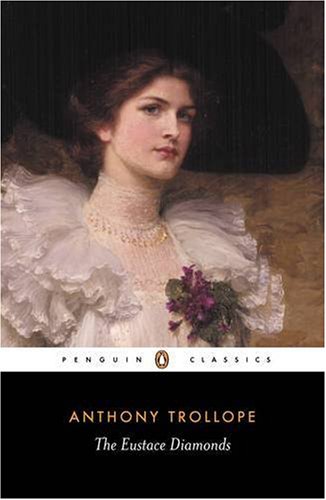
the eustace diamondsIf you’re looking for a charming, intriguing, light classic, try Trollope’s The Eustace Diamonds.  This is the third in the Pallisers series, but it is also a stand-alone novel.  The beautiful, charming, rich heroine, Lizzie Eustace, is not the gracious society hostess she seems:  she is a pathological liar and manipulator, who, after the death of her husband, Sir Florian Eustace, refuses to return a £10,000 diamond necklace to the family estate.  Is it a Eustace family heirloom, or is it hers?  The lawyers cannot decide.  And the scandal of her keeping diamonds dissuades her suitors from wooing her:  her fiance, Lord Fawn, drops her;  she proposes repeatedly to her cousin, Frank; and hopes Lord George, one of her guests, her “corsair,” as she calls him, will propose to her. And then the diamonds are stolen, and some think Lizzie stole them herself (she did not), and others think Lord George did.  There are many subplots, such as Lizzie’s cousin Frank’s engagement  to a very nice governess, Lucy Morris, but Lizzie and the diamonds are of paramount interest.

This is not my favorite Trollope, but it is fun to read, and qualifies as beach reading.

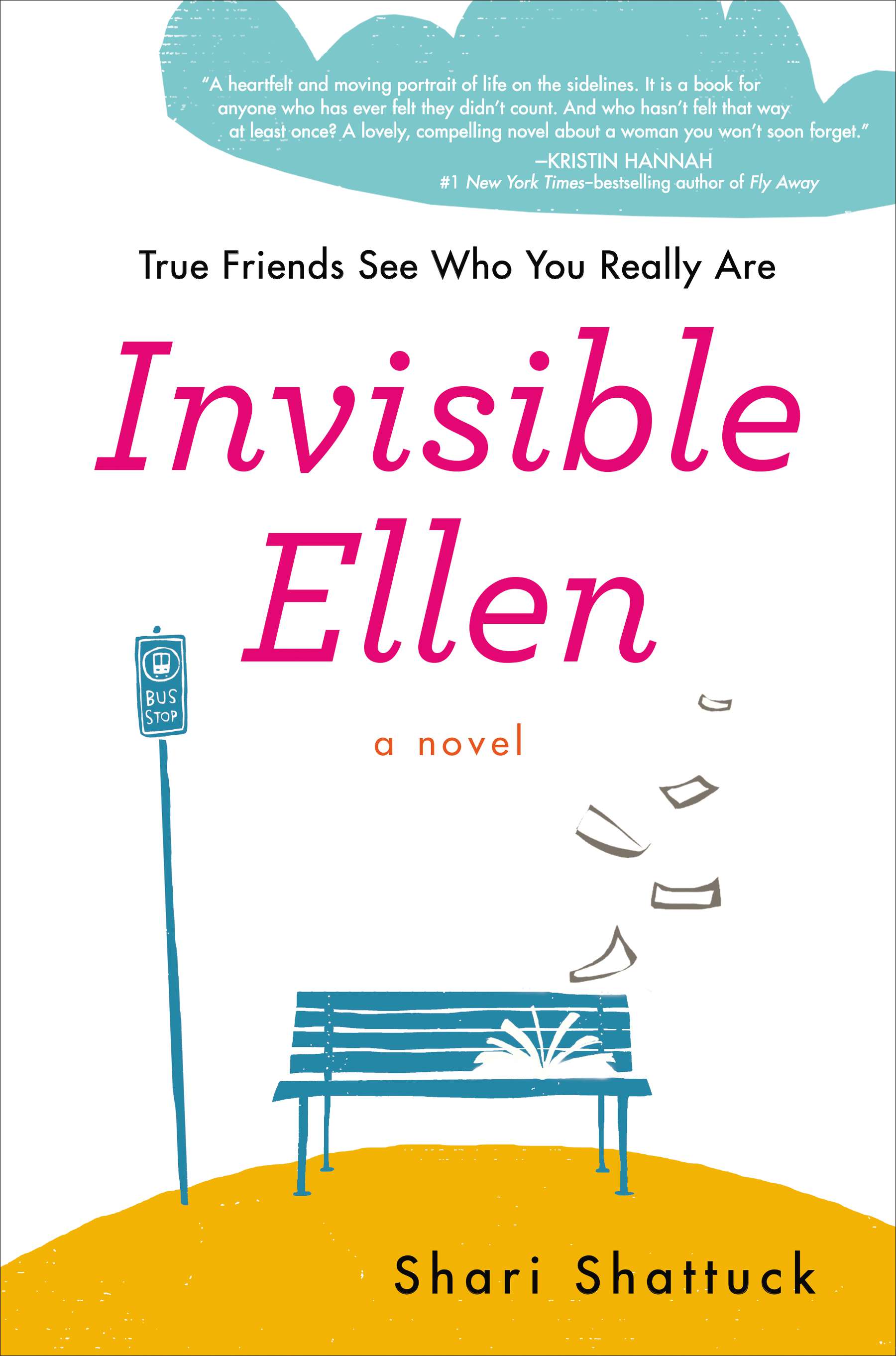
Invisible Ellen by Shari Shattuck2.  Shari Shattuck’s Invisible Ellen is “fat lit.”

Why would you want to read a novel about a fat person?

Try because 27.1% of American adults are obese.  And I’m still reeling from the guy at the British Museum who said, as though I were not right in front of him, that I was immense.  (I’m fat but fit.)

The first few chapters of this novel are controlled and taut, and are vaguely reminiscent of the opening chapters of John Kennedy Toole’s A Confederacy of Dunces. But unlike the colorful doughnut-popping character Ignatius Reilly in Toole’s novel, Shattuck’s Ellen is invisible.  This is partly metaphorical, but there is also a tad of magic realism here.  People do not see her.

Terrified of social contacts because of her past in foster care, she stays in her apartment, binge-eating all day, when she isn’t spying on her “pets,” neighbors who live across the way, a drug dealer and a single pregnant woman.  In the manner of Harriet the Spy, Ellen writes down her observations in her notebook.  And at night she works as a janitor at Costco, where she observes the sleazy boss sexually harassing a Russian immigrant.

But suddenly Ellen gets involved.  On the bus, a blind woman named Temerity sits beside her, and talks to her as though Ellen is not a freak.  Intrigued, Ellen gets off the bus and follows her.  And when two men attack Temerity and take her purse, Ellen trips up one of the thieves, pounds him, and gets the purse back.

And then the plot takes over, and the narrative rolls from serious literary fiction into likeable pop.  Ellen and Temerity become friends and get involved in doing good to Ellen’s “pets.”

The first third of this uneven novel is more enjoyable than the rest, but it is still a fun read.  And I must share some humorous quotes.  When Temerity and her twin invite Ellen to lunch, she shudders at the thought that they might serve her salad.

Normally, by this time in the a.m., she would hae consumed several times the recommended daily allowance of carbohydrates as determined by the, in her opinion, far too fervent Food and Drug Administration, whose tidings of gloom were constantly being broadcast on her little radio.  She’d listened with lukewarm interest to their warnings about calories per day, fat percentages, and fiber intake and had been left with a sense of indifferent futility.  Those limitations seemed more fantastical than the thrift-store paperbacks with the long-haired, half-naked supermodel pirates on the cover.  Neither the novels nor the labels on her food interested  her, and they struck her as equally absurd.

So funny!

It is feather-light summer reading.

Civility, Blog Comments, & Books by Women

be-nice-or-go-away civilityWhatever happened to civility?  Hospitality offered to visitors (tea and Pepperidge Farm cookies), please and thank you, no personal remarks (okay, I break that rule), and beneficence, if not positive doting, on bookstore clerks?

And then there are the comments at blogs.

If you’re obsessed with South Sudan, the Ukraine, or the Holocaust, your comment may be inappropriate for a post on garden literature. If you want to trash an author, this is neither the time nor the place.  Only I get to trash my favorite authors.  (I’m kidding:  I would never trash them.)  If you disagree with me about Jane Austen, I don’t want to alienate you.  I’ll probably allow that comment.

But it’s up to my judgement.  I delete inappropriate comments.

My own comments have (very occasionally) been deleted elsewhere, and why should I care?  Often these things are impulsive.  The bottom line is that the blogger has the right to delete it.

And if you care that much about the subject, you should start your own blog.

Civility is an issue everywhere.  Mark Nelson, a contributor at the blog, Heroines of Fantasy, recently complained about the lack of civility in the science fiction and fantasy arena (specifically at the SFWA, an organization for writers of science fiction and fantasy).  He tires of gender and race complaints.

I’m not seeing enough civility, people, anywhere.  What happened to our ability to engage in intelligent discourse without stooping to character assassination? What happened to telling a story to tell a story? It seems we have fallen into a deconstructionist pattern where every tale, essay, novel, film, speech or blog post is immediately set upon and examined from multiple perspectives by folks with pre-set agendas. This writer is a misogynist. That writer is a racist. This series doesn’t have enough people of color. That trilogy doesn’t have enough strong female characters. Not enough gay, not enough straight, not enough love, not enough blood, not enough real, not enough myth.  And so on…

I do know what he means about the endless deconstruction.

Speaking of gender, let me congratulate the New York Times Book Review on what looks like a record number of reviews of women’s books by women reviewers this week.  (I didn’t count the reviews, though.)   Seeing all those women’s names makes me think about how often I don’t see women’s names.

And here is a list of women’s books posted at the Bailey’s Women’s Prize website (I read about it at Reading Copy).  These are the books that have most influenced several (British?) celebrity women readers.  I have read all of them except three.

Baroness Amos – Beloved by Toni Morrison
Zawe Ashton – The Bluest Eye by Toni Morrison
Mary Beard – Jane Eyre by Charlotte Brönte
Edith Bowman – The Lovely Bones by Alice Sebold
Saffron Burrows – I Know Why The Caged Bird Sings by Maya Angelou
Shami Chakrabarti – To Kill a Mockingbird by Harper Lee
Gwen Christie – I Capture The Castle by Dodie Smith
Grace Dent – The Pursuit of Love by Nancy Mitford
Katherine Grainger – Behind the Scenes at the Museum by Kate Atkinson
Tanni Grey Thompson – Gone Girl by Gillian Flynn
Martha Lane Fox – Mary Barton by Elizabeth Gaskell
Caitlin Moran – Twopence to Cross the Mersey by Helen Forrester
Kate Mosse – Wuthering Heights by Emily Brönte
Dawn O’Porter – Oranges Are Not The Only Fruit by Jeanette Winterson
Susanna Reid – We Need to Talk About Kevin by Lionel Shriver
Jennifer Saunders – Dust by Patricia Cornwell
Sharleen Spiteri – To Kill a Mockingbird by Harper Lee
Sandi Toksvig – Cold Comfort Farm by Stella Gibbons
Joanna Trollope – The Towers of Trebizond by Rose Macaulay

A Scatty Introduction: The Summer of Herodotus

If you read science fiction,” she said, “you’ll like Herodotus.”–Pamela Dean’s Tam Lin

I didn’t read much science fiction until after grad school.

I was doing a crash course in classics, reading as much as possible in my years as a Latin T.A.

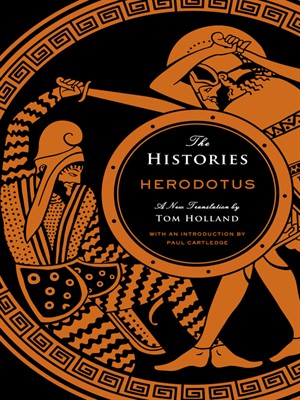
Herodotus Tom HollandI was halfway through my degree when the classics department added a mandatory Survey of Greek Literature class and a Survey of Latin Literature class.

In retrospect, it is obvious that the classes were developed for a few students with scatty backgrounds, i.e., one had only a year of Greek, and another had flunked out of an Eastern school.

It was a bit of a bore for some of us.

I had read everything on the Latin Survey syllabus:   Caesar’s Gallic Wars, Cicero’s Pro Caelio, all of Catullus except the epyllion, Horace, Propertius, Tibullus, Virgil…  the only thing I was spared rereading was that autobiography of Augustus carved on the bronze pillars, Res Gestae.

In the Greek Survey, however, I was introduced to Herodotus, the father of history.

So much fun.

I loved Herodotus.

The Histories are history, but they are also myth and legend, travel literature, oral histories, eyewitness accounts, and investigation of the causes of the Persian Wars.

Historia in Greek mean an “inquiry,” but it also means “story.”  Herodotus begins with myth, the abductions of Io, Europa, Medea, and Helen.  These, he says, are the beginnings of the conflicts and wars between the Hellenes and the barbarians.

A new translation by Tom Holland of The Histories has recently been published.  I’m waiting for the paperback (next summer, no?), but meanwhile I’m reading other translations, as well as a Greek edition.

Edith Hall, in her admiring review in the TLS last fall of Tom Holland’s translation, gives a much better introduction to Herodotus than I could:

He sought to explain the nature of the world he inhabited, in the mid-fifth century BC, from the events that had taken place across the Mediterranean and Black Sea regions during the reigns of four Persian kings – Cyrus, Cambyses, Darius and Xerxes. These culminated in the victory of Greece over Persia in 480–479 BC. Herodotus, the “father of history”, often uses rational explanations, backed up by evidence. But he also includes many traditional stories and legends, with patently fantastic elements, derived from poems, fables and oral tradition. Herodotus therefore needs a versatile translator who appreciates his hybridity.

Tom Holland in an interview told the Telegraph that in the final three books, The Histories are “The Lord of the Rings stuff.”

So is it SF or fantasy?

I will occasionally (very occasionally) chime in here with reports of my Summer of Herodotus.

Ruth Suckow’s Birthplace & Annual Meeting

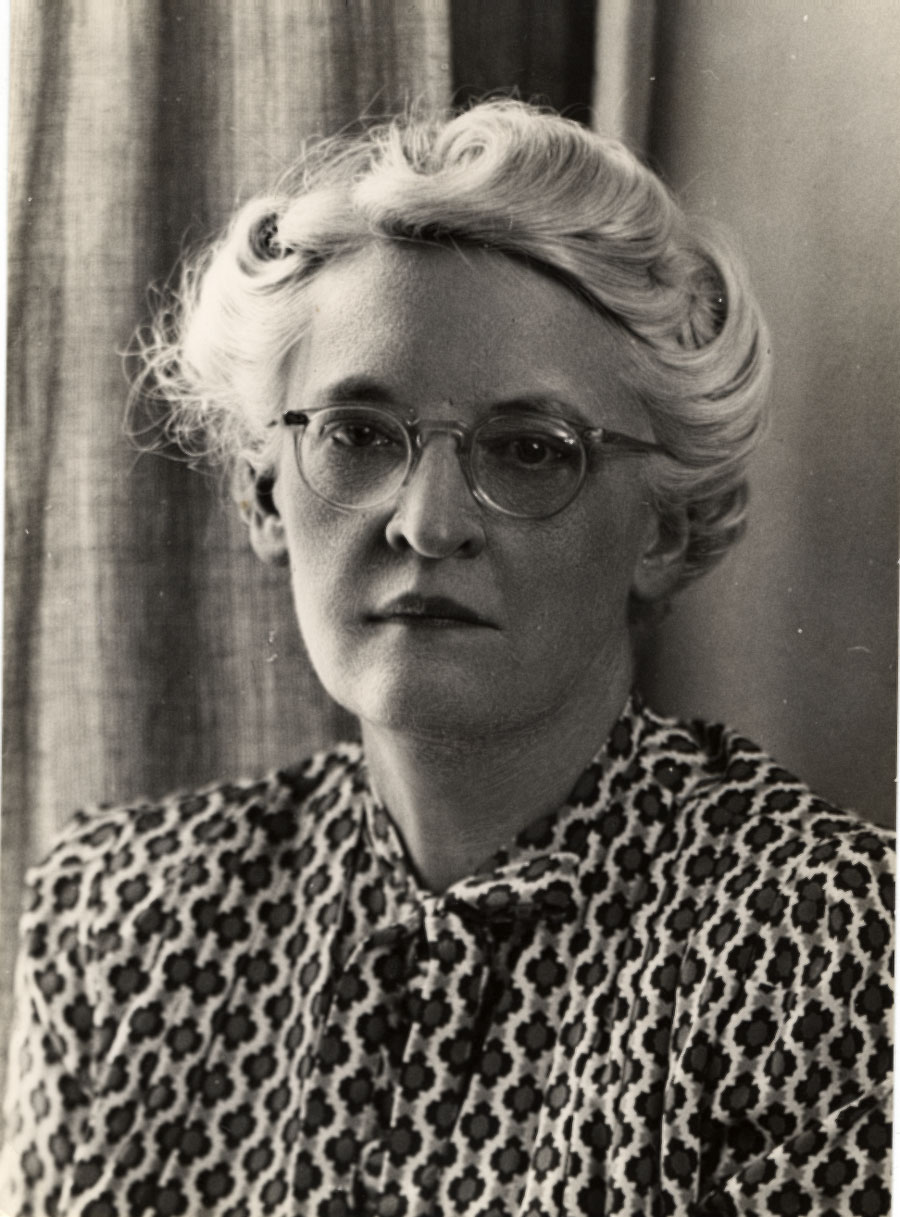
Ruth Suckow

Ruth Suckow, Iowa writer

Fans of Ruth Suckow, an Iowa writer, will want to attend the annual meeting of the Ruth Suckow Memorial Association this Saturday, June 7, at 10 a.m., at the Cedar Falls Public Library in Cedar Falls, Iowa.  The society will discuss business in the morning, and after lunch you can attend a free discussion of Ruth’s memoir, “Myself,” from her book, Some Others and Myself.

You can get more information from:  lounsberry@gmail.com or cheriedargan@gmail.com

Because I love Suckow’s work, I am reposting an old entry about Suckow’s birthplace from my old blog.

Here it is.

Ruth Suckow’s Birthplace, Hawarden, Iowa

If you don’t live in the Midwest, you don’t know who Ruth Suckow is. If you do live in the Midwest, you don’t know who Ruth Suckow is.

So who is Ruth Suckow?

(a) A wealthy farmer who invented a hybrid corn in Hawarden, Iowa?
(b) A folk artist from Hawarden, Iowa?
(c) A writer of novels about small-town life in Iowa?

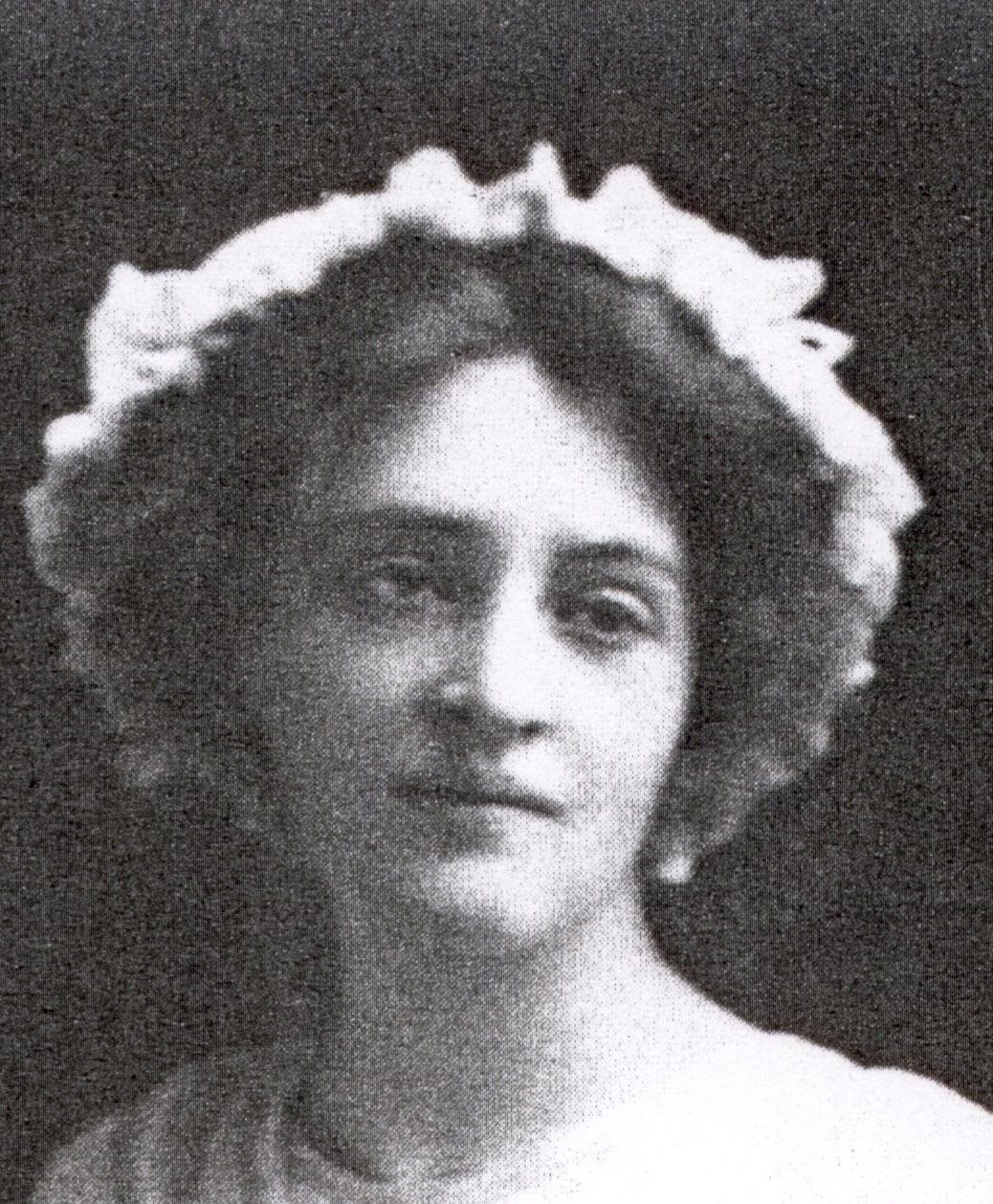
Ruth Suckow, Grinnel, Iowa, 1914

Ruth Suckow, Grinnell, Iowa, 1914

If you picked the last option, you are right. Suckow (1892-1960) was born in Hawarden, Iowa.  She  was a popular writer in the 1920s, ‘30s, and ‘40s. Her fictional chronicles of small-town Midwestern life are quiet, simple, and undramatic, yet astonishingly moving even today. If you like  the fiction of Bess Streeter Aldrich and Maud Hart Lovelace, you will enjoy Suckow’s famous novels, The Folks and New Hope, both in print (University of Iowa Press).

I didn’t discover Ruth’s work till I moved back to Iowa and began to collect her books at book sales. I was charmed by her 1942 novel, New Hope, a fictional account of Hawarden at the turn of the century.

Ruth Suckow's birthplace

Ruth Suckow’s birthplace, Hawarden, Iowa

When I learned that Ruth Suckow’s house had been restored, I knew I had to take the tour. On the long drive to Hawarden, a lovely small town in the Missouri River valley near the Loess Hills, I read aloud parts of New Hope to my husband/driver.

Our kind guide, who wore a Ruth Suckow t-shirt and gave us a Ruth Suckow bookmark, told us she was reading New Hope in preparation for the book discussion at the 2012 Ruth Suckow Memorial Society meeting.

She said it had taken volunteers 20 years to restore the house, and they had just refinished the floors and hung the lace curtains from a thrift shop. It was the parsonage for the Congregationalist church, where Ruth’s father was the minister.

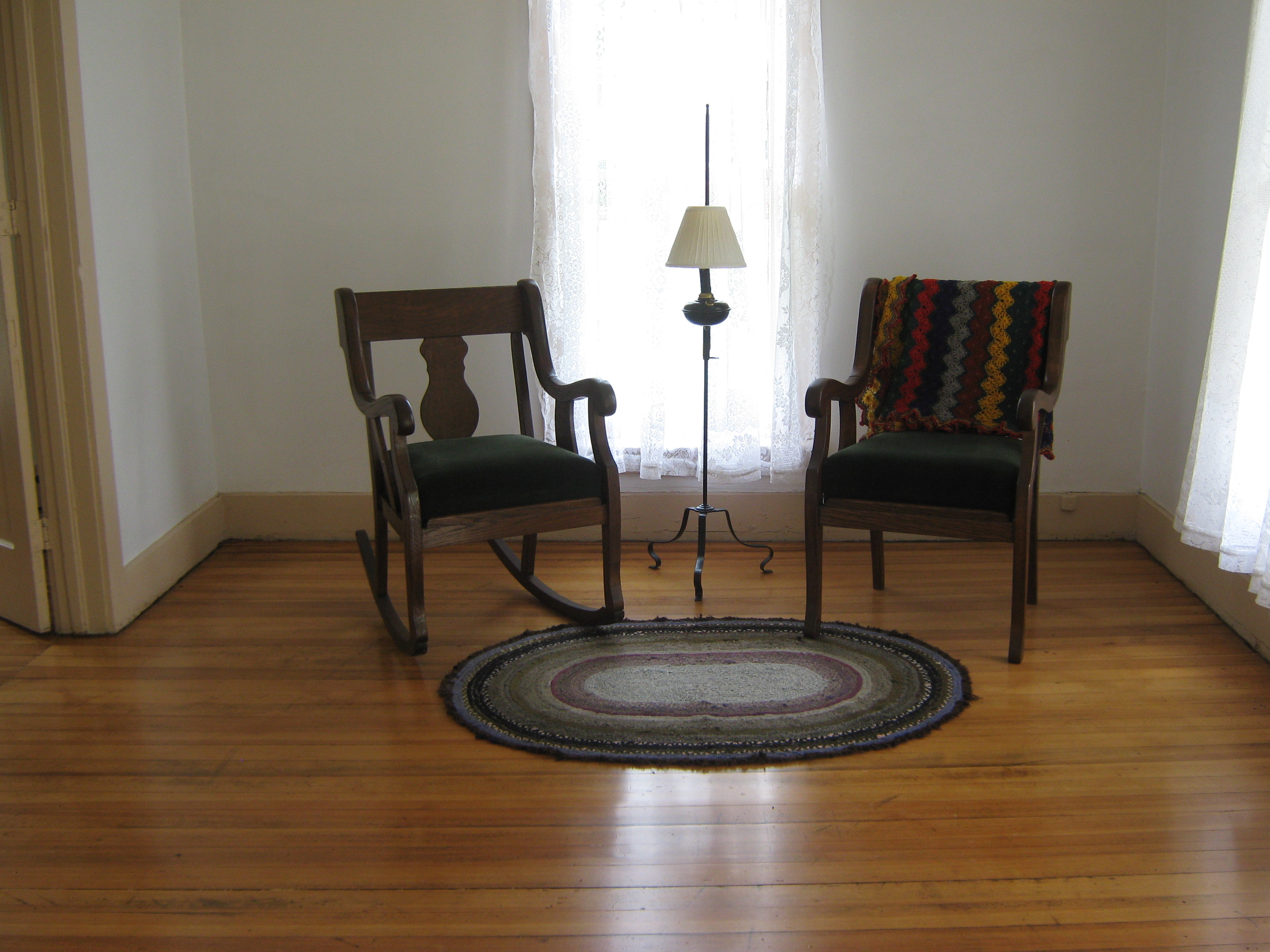
Suckow, front parlor

The front parlor

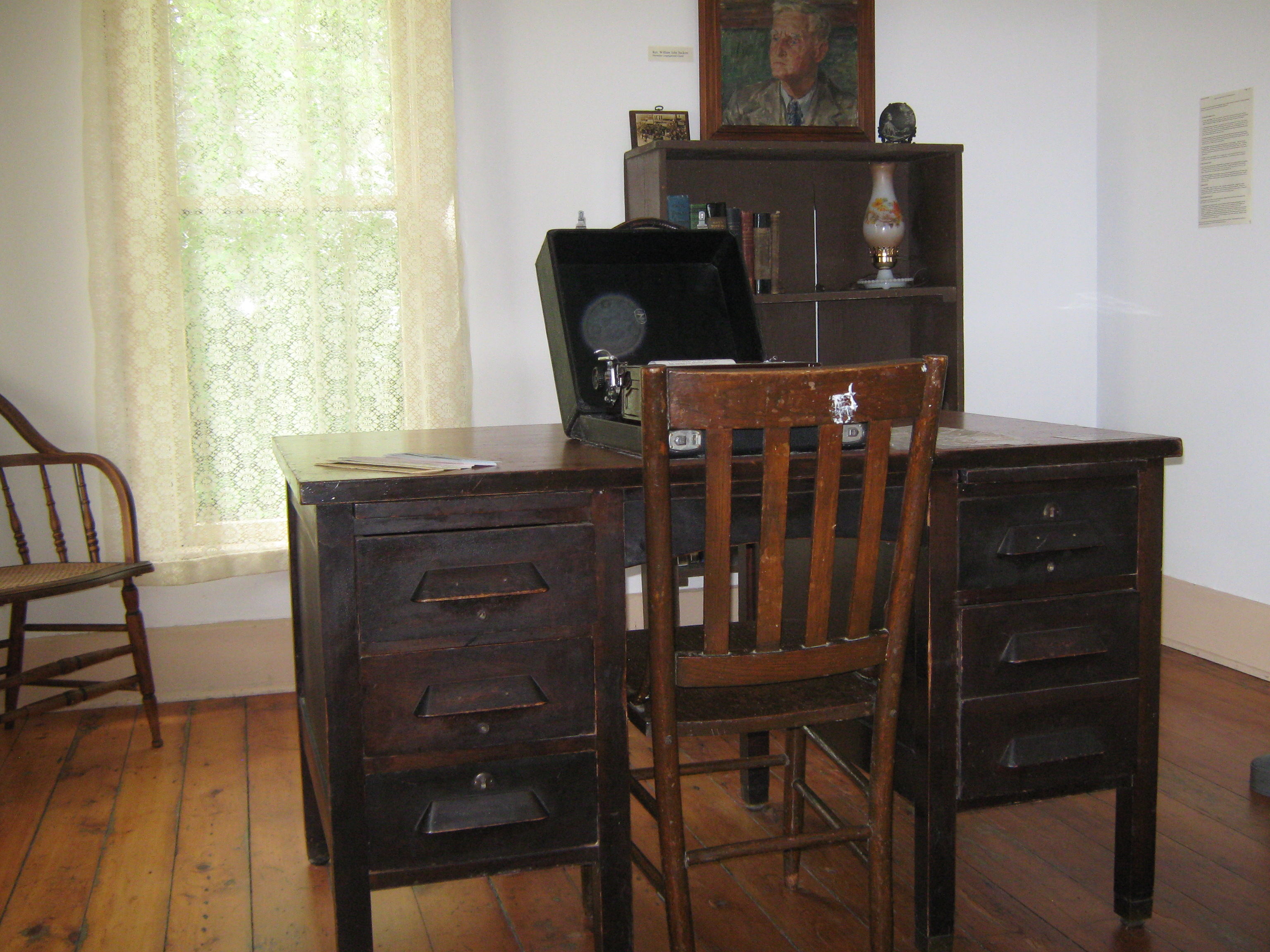
Ruth was an expert on church-centered social life in small towns. Her father’s work took the family to pastorates in Hawarden, Le Mars, Algona, Manchester, Grinnell, and Earlville. While her father wrote his sermons, she played in his study, where you can now see her typewriter and the desk her husband gave her.

Suckow's desk and typewriter

Desk and typewriter

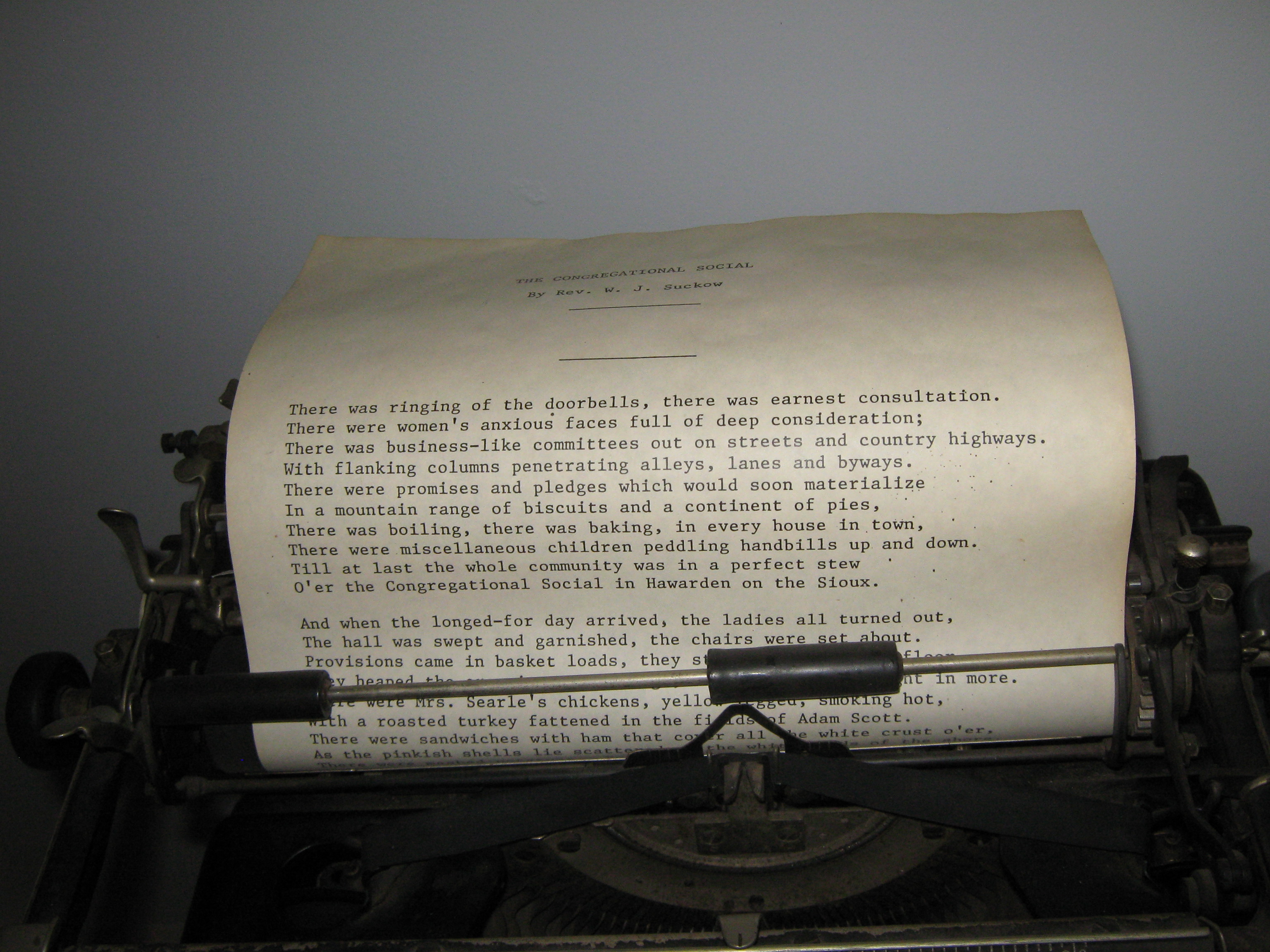
You can also see Ruth’s father’s typewriter. On the sheet of paper is a poem. His own interest in writing may have influenced her.

Ruth's father's typewriter

Ruth’s father’s typewriter and a poem

The six-room house is tiny from the outside, but inside it seems spacious. (We noticed this same phenomenon at Willa Cather’s house in Red Cloud, Nebraska.) There are high ceilings and lots of light from floor-to-ceiling windows. These days it is hard to believe a family could be comfortable here, but the quiet–no electronic diversions, no three-car garages, no expensive hobbies–may have nurtured creativity. How much easier to write when there are few distractions.

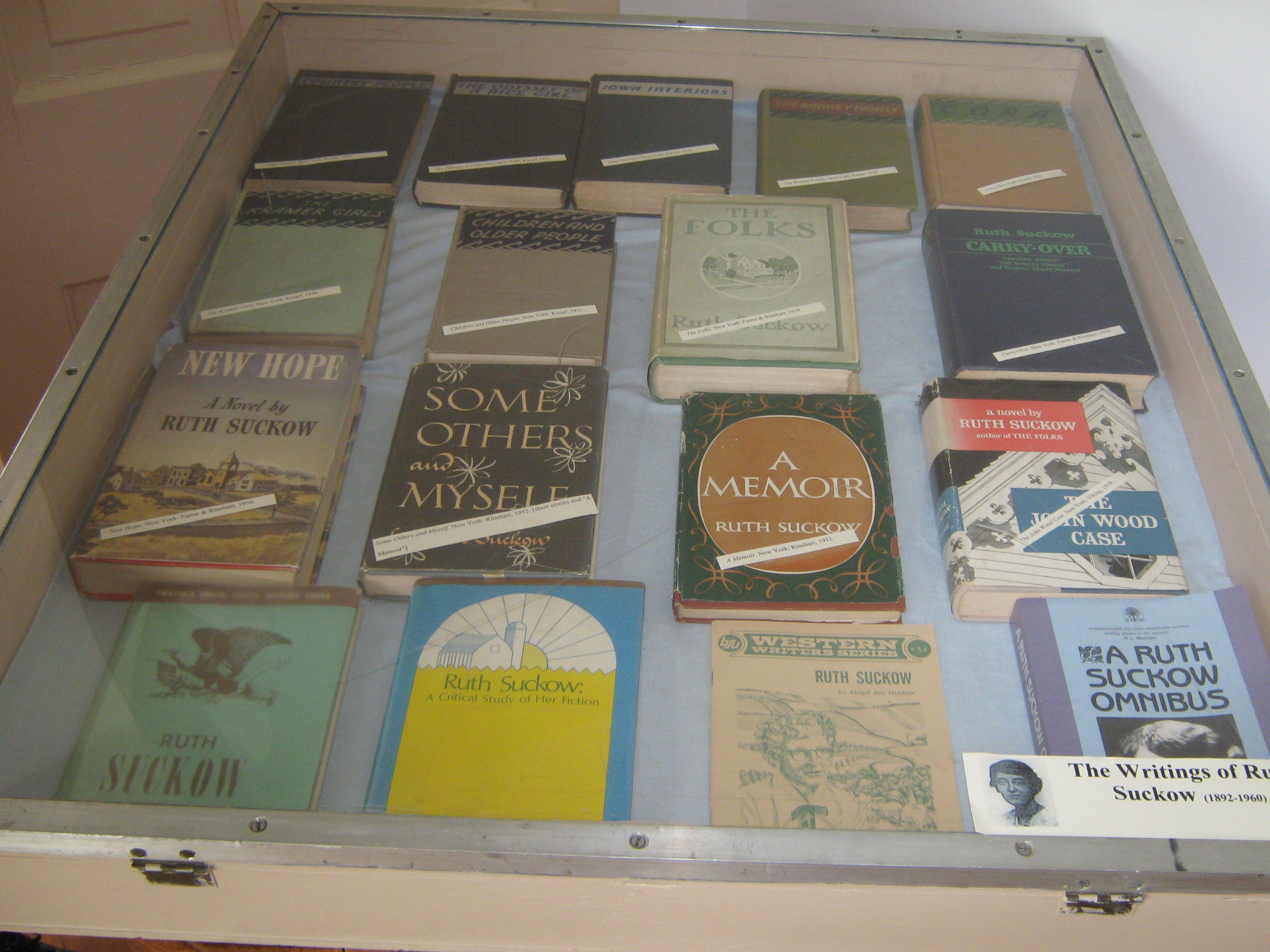
There are displays of her books, clippings and pictures…

Ruth Suckow's Books

Ruth Suckow’s Books

We loved our visit there, and it is definitely worth the trip. There are no books or t-shirts for sale–it’s totally uncommercial. In some writers’ museum-houses–I don’t mean commercial places like Mark Twain’s house in Hannibal, or even Louisa May Alcott’s Orchard House in Concord–I often feel I get to know the writers.

The Meaning of Amazon Customer Reviews: How Many Stars?

Books splayed openA while ago, a friend called to ask if I would write an Amazon customer review of her new book.

“Can there be any doubt in your mind?” I was the first reader for many of her short stories. I was happy to write the review.

But then it turned out her (small) publisher was also on the line, and I had no idea why.  Good God!  Was this a legal arrangement?

I gave her book a five-star review.  All of her friends did.  I don’t think anyone else ever found out about the book.

Such is the fate of small-press books.

Tonight I idly wondered how the classics are faring in customer reviews.  Tolstoy gets four out of five stars for Anna Karenina.  Charlotte Bronte gets four stars for Villette.

Tough reviewers!

Then I looked up 20 of my favorite contemporary writers, 10 women and 10 men.  Ann Beattie got an average of 2.5 stars for her gorgeous experimental novel, Mrs. Nixon: A Novelist Imagines a Life.

The 10 women I looked up fare on the average slightly better than the 10 men.  The women’s average star rating is 3.74.  The men’s average is 3.66

Sherman Alexie and Alice Hoffman have the highest ratings:  4.3 stars.

Not a big enough sample, though, is it?

Eighteen out of the 20 on my list are fiction, because this reflects my personal reading habits.  I would give five stars to every one of these books.

Here are my (unprofessional) stats.  (Any errors are due to my calculator.:))

10 Contemporary Women’s Books (in alphabetical order)

Ann Beattie’s Mrs. Nixon, 2.5 stars
Margaret Drabble’s The Pure Gold Baby, 3.4 stars
Karen Joy Fowler’s We Are All Completely Beside Ourselves, 4.2 stars
Alice Hoffman’s The Museum of Extraordinary Things, 4.3 stars
A. M. Homes’ May We Be Forgiven, 3.7
Michelle Huneven’s Off Course, 4.1 stars
Ruth Prawer Jhabvala’s A Lovesong for India, 4.2 stars
Alice Kessler-Harris’s A Difficult Woman: The Challenging Life and Times of Lillian Hellman, 3.3 stars
Barbara Kingsolver’s Flight Behavior, 4.1 stars
Meg Wolitzer’s The Interestings, 3.6 stars

***************************************************************

10 Contemporary Men’s Books (in alphabetical order)

Sherman Alexie’s Blasphemy, 4.3 stars
Michael Chabon’s Telegraph Avenue, 3.4 stars
Jim Crace’s Harvest, 4.1 stars
Clyde Edgerton’s Night Train, 3.6 stars
Howard Jacobson’s Zoo Time,  2.8 stars
Graham Joyce’s Some Kind of Fairy Tale, 4.1 stars
Joydeep Roy-Bhattacharya’s The Watch, 4.2 stars
Peter Stothard’s Alexandria:  The Last Nights of Cleopatra, 3.5 stars
D. J. Taylor’s Ask Alice, 2.8 stars
Steve Yarbrough’s The Realm of Last Chances, 3.9 stars

*************************************************************

I am so accustomed to reading between the lines of EVERYTHING, reviews, articles, blogs, you name it, that a few pages of the sample influences me more than any opinions.

There are some very thoughtful reviews, as well as cranky ones, and I love the idea of consumers saying what they want to say.

But there are problems, of course:  trolls, “sock puppets” (writers under other names raving about their own books and attacking other people’s), and, though I’m not sure if this is still the rule, writers are or were forbidden to comment on other writers in their genre.

And the star ratings can be a bit disconcerting. I never think star ratings are quite fair.   It’s a shock to see an award winner, Howard Jacobson’s Zoo Time, with a 2.8.

Better to read the text of the consumer reviews than look at the stars.

Favorite Garden Novels

What are your favorite garden novels?

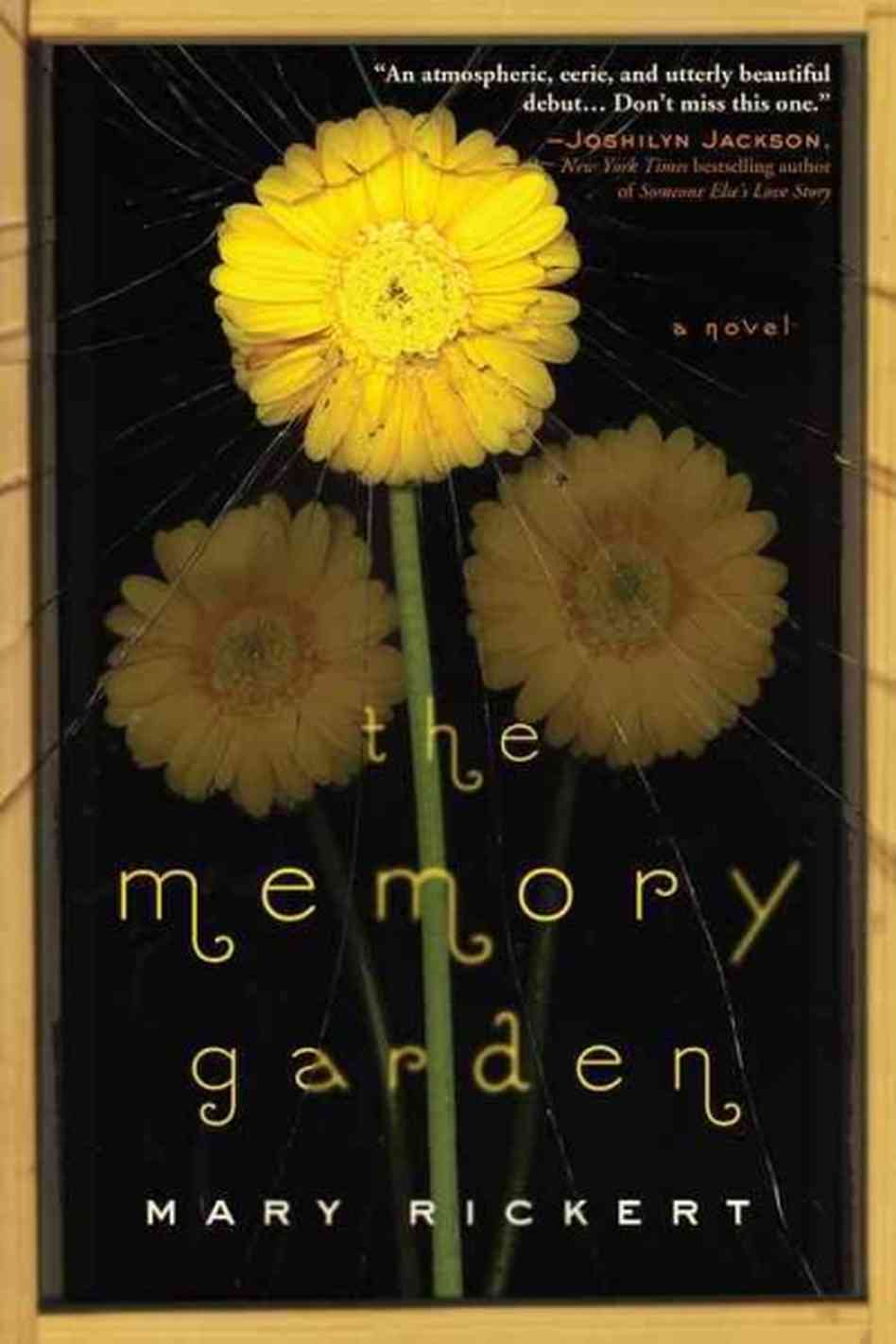
The Memory Garden by Mary RickertI am in the middle of Mary Rickert’s The Memory Garden, a stylishly-written literary fantasy about a garden, an old woman, a foundling daughter, friendship, witches, misfits, and ghosts.

One of the main characters, Nan, an old woman, is not only raising a teenage girl, Bay, who was left on her porch as a baby, but has planted a flourishing enchanted garden.  Rumored to be a witch, she is disliked by the locals, who sometimes throw shoes into the yard.  She plants flowers in the shoes.

Rickert is a lyrical, imaginative writer:

It was because of the shoe garden that the house became locally famous, though there had always been rumors about disturbing fertile elements in the soil.  The large elm tree, for instance, was not only unaffected by the disease that killed so many in the sixties, but also thrived, branching dark shadows across the entire left side of the porch, which did not impede the vigor of blue heaven morning glory or moonflowers trained to crawl up the railings.

Charming, isn’t it?

This is a good summer novel.  Most garden novels seem to be light, don’t they?

Here is a short list of my favorite garden novels.  Please tell me yours!

Secret Garden frances hodgson burnett2.  Frances Hodgson Burnett’s The Secret Garden.  In this children’s classic, the cross-tempered Mary Lenox and her cousin, a spoiled invalid, Colin, develop their creativity when they plant a secret walled garden on their uncle’s estate.  (It was my favorite book when I was seven.)

The Forgotten Garden Kate Morton3.  Kate Morton’s The Forgotten Garden.  A fascinating, if rambling,  pastiche of mystery and fairy tale, The Forgotten Garden is a pop-fiction sibling of A. S. Byatt’s beautifully-written The Children’s Book. (There really are resemblances, but I won’t get into that.) In 1913 a nameless child shows up alone on a dock in Australia. She has a fairy tale book in a suitcase, but no other personal belongings. When she grows up, she learns she is adopted and investigates her identity. Interspersed are tales of another orphan, an abused girl who grows up to be a fairy-tale authoress and lives in a cottage in a secret garden. Nell’s granddaughter mysteriously inherits the cottage and finds out more secrets.

hot-house-flower Margot Berwin4.  Margot Berwin’s Hot House Flower and the Nine Plants of Desire.  In this entertaining, light first novel, which I enjoyed a few years ago, one of the characters says, “The tropics can happen anywhere, you know. They’re a state of mind.”

The narrator, Lila Nova, is a divorced, confused, clever advertising executive who stumbles into a magical world of gorgeous tropical plants. In New York, she buys a Bird of Paradise plant at a market, and finds a laundromat decorated with tropical plants and moss. When she embarks on a quest to Mexico for the legendary Nine Plants of Desire, this slightly comic-book-ish adventure is equally dominated by good and evil gardeners.

an-episode-of-sparrows Rumer Godden5.  Rumer Godden’s An Episode of Sparrows.  I’ve borrowed the description from NYRB, which reissued this a few years ago.  (The cover is from Virago.):  “Someone has dug up the private garden in the square and taken buckets of dirt, and Miss Angela Chesney of the Garden Committee is sure that a gang of boys from run-down Catford Street must be to blame. But Angela’s sister Olivia isn’t so sure. Olivia wonders why the neighborhood children—the sparrows—she sometimes watches from the window of her house —have to be locked out of the garden. Don’t they have a right to enjoy the place, too? But neither Angela nor Olivia has any idea what sent the neighborhood waif Lovejoy Mason and her few friends in search of —good, garden earth.— Still less do they imagine where their investigation of the incident will lead them—to a struggling restaurant, a bombed-out church, and at the heart of it all, a hidden garden.”

And now tell me your favorites!

Mirabile Does Literary Fiction: Michelle Huneven’s Off Course

old-fashioned woman with computerLately I have been lazy about book-blogging.

Perhaps that is because I take books seriously. And perhaps it is because I need to pretend I am writing for somebody. I might be Rosalind Russell writing for her ex-husband/editor Cary Grant in His Girl Friday.  It takes less time to jot down an essay about bicycling, or a pop critique of Dancing with the Stars, than to scrawl even a short blog entry about books.

Some of us read books, others write them. When a friend was dying of cancer, bitter and in such pain that she would no longer receive her friends, she said on the phone that her whole life had been about reading.

“Do you think that’s good enough?”

Yes, I do.

She had regrets.

But perhaps being a reader is as important as being a writer.  If a writer’s work is not loved and kept in print, the pages soon disappear.

And here is a short digression. Our favorite book was Louisa May Alcott’s An Old-Fashioned Girl.  We once had an informal two-person book group discussion of it.  Both of us identified with Polly, the  country mouse who preferred simplicity to urban fashion, and who grew up to be an impoverished music teacher; we preferred her to Jo in Little Women, whom we loved, but…were we really tomboys?  And we were sure that reading Alcott had made us better people. Alcott’s novels are about making good moral choices.   Honestly, there is a difference between those who read Alcott and those who don’t.  (Can the same be said of today’s Harry Potter fans?)

This is a catch-up piece, dedicated to my friend.  “Do it,” she would have said. Oh, and she would have had her own book blog, too.

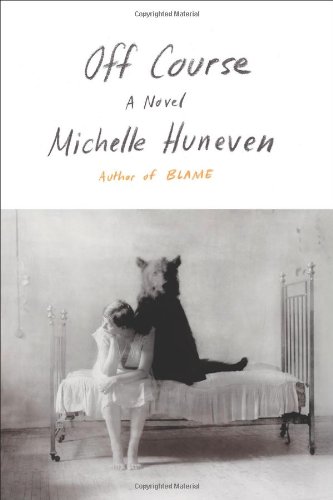
Off Course by Michelle HunevenMichelle Huneven’s Off Course, set in the 1980s, is a literary novel about a woman who cannot finish her dissertation.  Forget the fact that I am the kind of woman who finishes everything; I completely identify with Cressida Hartley.

Cressida Hartley moved up to her parents’ mountain cabin to finish her dissertation.  She would not become one of the aging lurkers around the Econ Department who hoped for sections of Intro to teach while the tenure track shimmered eternally on the far side of two hundred pages.”

A half-tame bear periodically visits the cabins.   Cress has to clean paw marks off the windows.  Nature is terrifying and yet domestic.  The episodes with the bear, and, later, with a bear rug which molds in the trunk of Cress’s car, reminds us that there is true wildness in the wilderness.  Not  even the bear rug is manageable.

Huneven’s writing is pitch-perfect:  few novelists write such graceful, unassuming, spare prose. And it is a quieter experience to read about the ’80s; I appreciated the time off from the 21st century.   Of course Cressida is distracted, but not by email, Facebook, or cell phones.   No, she is distracted by sex.  (We all were in the ’80s.)  She has a short relationship first with Jakey, the lodge owner. After he dumps her,  she has a long-term relationship with Quinn, a married carpenter, a semi-literate mountain man.  He asks her to marry him on the phone, and says he will divorce his wife; it is then that she falls in love with him.

Never trust a married man.  (Better:  don’t have a relationship with him.)

Cressida supports the sexual revolution, but some of her friends desert her because of her adultery.  This surprises her. And we do understand their harsh judgment of Cress: she is irresponsible at times.

But near the beginning of the novel, she wonders,

Wasn’t there romance that flowered differently, that didn’t morph right into marriage, pregnancy, childrearing, and monogamy for its own sake?  What was the sexual revolution for, if not to allow for more varied experiences, a wider range of happiness?  Cress was in no hurry to re-create family life–at least as she knew it.

The years pass, and she works as a waitress, always waiting for Quinn, who is sometimes there for her, other times with his wife.  Eventually Cress realizses nothing is going to happen and returns  to writing.  .

This is a very realistic novel, beautifully-written, and fast-paced. Yes, it makes my Best Books of 2014 sidebar.