Mirabile Does Middlebrow: Pamela Frankau’s Ask Me No More, Rumer Godden’s Dark Horse, & Samuel Hopkins Adams’ Wanted: A Husband

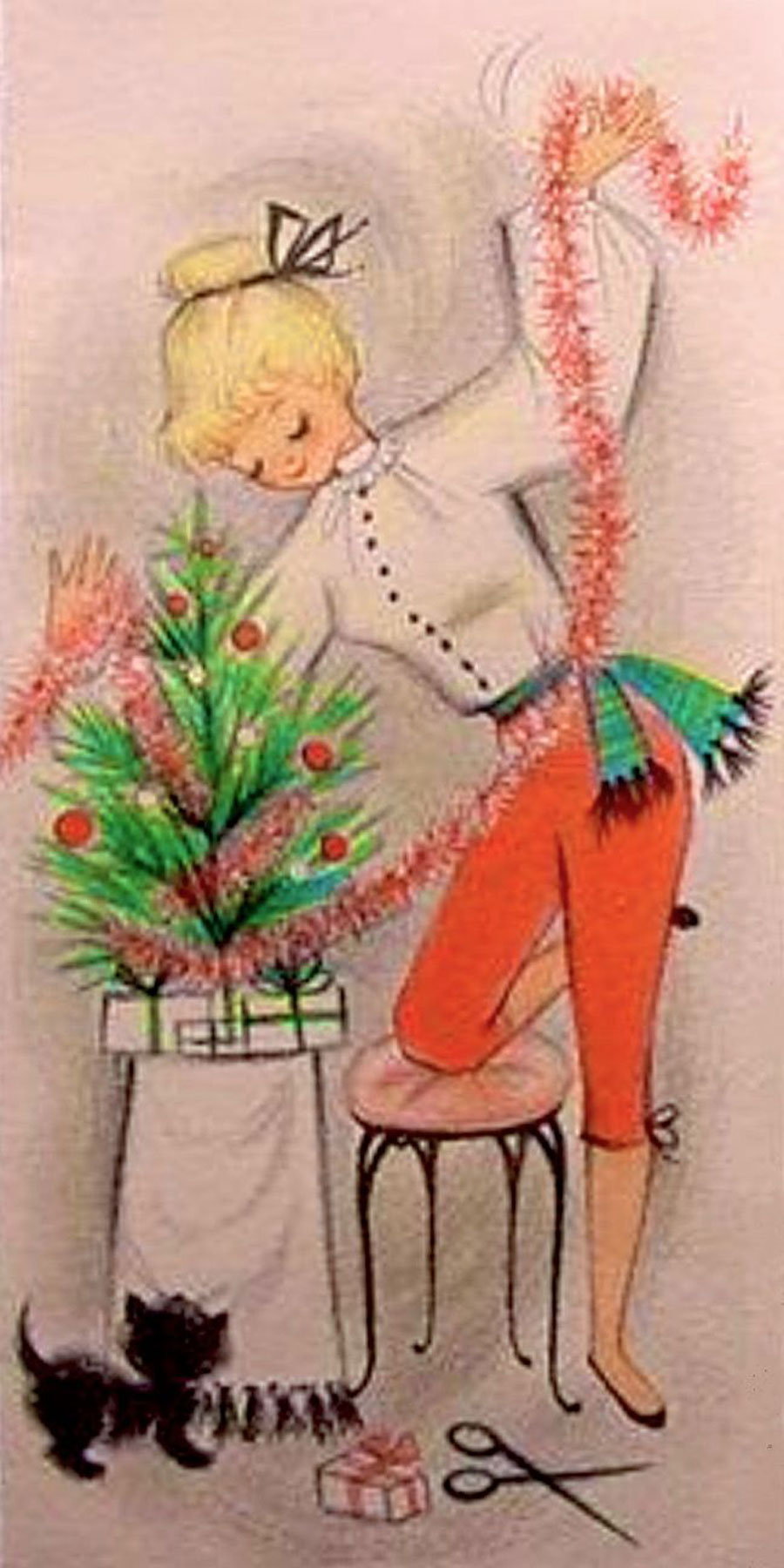
vintage christmas card woman in red pants christmas treeThe Christmas season brings out the “middlebrow” in me.

The red pants.  The artificial Christmas tree.

The cocoa. Well, Swiss Miss.

You would think I lived in a middlebrow novel.

I am thinking of Winifred Peck’s House-Bound.  Like the heroine, I have a servant problem.

Tsk, tsk.  I’m doing the housework myself.  Such a bore.  I mopped the kitchen floor three times (and it still looks grubby), baked gingerbread cookies (from a mix), and even polished the coffee table.

Now can I help it if I don’t know how to wax or polish?

How can I have a maid in if the house isn’t clean?

The cookies made me sick.  I ate too many.

I hate Christmas carols.  I’m listening to rock music.

And I plan to spend Christmas reading middlebrow novels.

I love middlebrow novels.  I use the word ironically and affectionately.  I think of well-written, astute novels by Pamela Frankau, which are not quite classics, but vivid and deftly-balanced; and Rumer Godden’s  whimsically-stylized novels, with their many flashbacks.  And I love the charming Frank Capra movie, It Happened One Night, based on a short story by Samuel Hopkins Adams, who is not a very good writer, but is very funny.
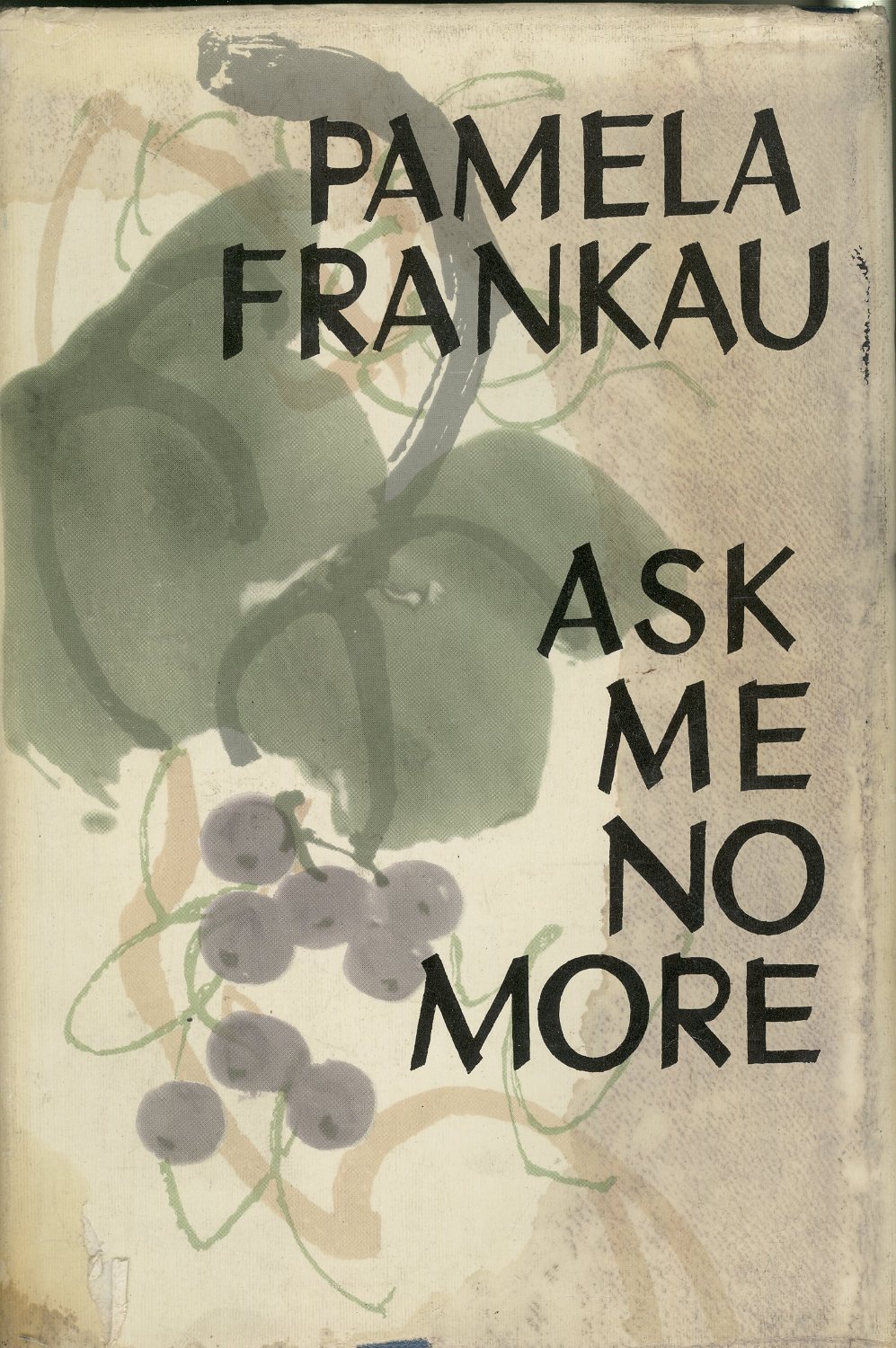
Pamela Frankau Ask Me No MoreFirst up:  Pamela Frankau’s Ask Me No More.  This English writer’s  novels are out-of print in the U.S.  Easiest to find are the three Viragos:   The Willow Cabin, A Wreath for the Enemy, and The Winged Horse.  I have slowly been collecting Frankau’s work, and recently acquired a copy of Ask Me No More, a riveting theater novel with a Catholic theme.  (Frankau was a Catholic convert.)

In this fascinating novel, Frankau portrays a group of characters involved with the theater.  The most sympathetic is Alex Wharton, the wry, brilliant, super-competent secretary of Geoffrey Bliss, a playwright who is a pathological liar.  He and Alex have been romantically involved for years, but he has other women friends.

And she doesn’t have a key to his house, though she works there.

Alex pressed the bell and waited. For nearly five years, she reflected, her employer had been saying, ‘You ought to have a latchkey,’ and then sighing as though fate were against it.

In the first chapter, we learn that she is his equal, really an advisor. When he reveals that his play in verse, Ludovic, which he’s tried to shop to theaters for six years, has finally found a producer and a theater,  Alex and Geoffrey’s agent, Peter, are not thrilled:  they know the play will flop. Gradually we learn that it is being produced by the rich husband of Geoffrey’s current lover, Perdita, so she can act the lead.

Perdita is a very spoiled wife who failed as an actress when she was young.  She has no clue that Alex is Geoffrey’s lover.  Alex figures out Perdita’s relationship to Geoffrey during one of Perdita’s phone calls.

The novel is divided into three parts, the Thirties, the Forties, and The Fifties.  The Forties and Fifties are much better than the first part of the book, so hang on.  Once into the Forties, I found Don’t Ask Me More impossible to put it down.

Although I am particularly fond of Alex, I like Perdita’s hissy fits.  In Washington, D.C., in the ’40s, she receives a letter about Alex’s marriage.  She is funny, but insightful.

Perdita, who had up till now been wrinkling her nose, felt better.  The determinedly middle-class, British humorous note in Alex’s voice broke there.  Perdita wasn’t sure what the last sentence implied; its hint seemed to be that Alex doubted the wisdom of the marriage.  But it was at least more sympathetic than the clipped sentences of the rest.  Alex’s letters, she thought, became more and more like the wartime pieces published by Englishwomen, describing desperate hours with a sunny meiosis.

In the last part of the novel, Ludo, Perdita’s son, plays a major role.  He lies, steals, snoops:  you name it.  When he finally does a good deed…

Some of the characters are asked too much.

Well, I’ll let you read it.

The Dark Horse Rumer GoddenRumer Godden’s The Dark Horse is not a very good book:  it is, however, very sweet.  It would be a perfect gift for the horse lover in your life, along with National Velvet and Black Beauty.

In the 1930s, a millionaire buys the Dark Invader, a beautiful horse that has failed as a racehorse in England; the horse and his groom are shipped to India to be given a second chance.  The groom, Ted, a jockey whose career was wrecked by alcoholism, reveals how the horse was ruined by a sadistic jockey.  Ted is hired to stay in Calcutta with the horse; the Mother Superior of a nearby convent proves to be very horse-smart; and everybody finds redemption.

It’s cute!

And then there’s Samuel Hopkins Adams Wanted:  A Husband.  (I found out about this courtesy of the blog Redeeming Qualities.)
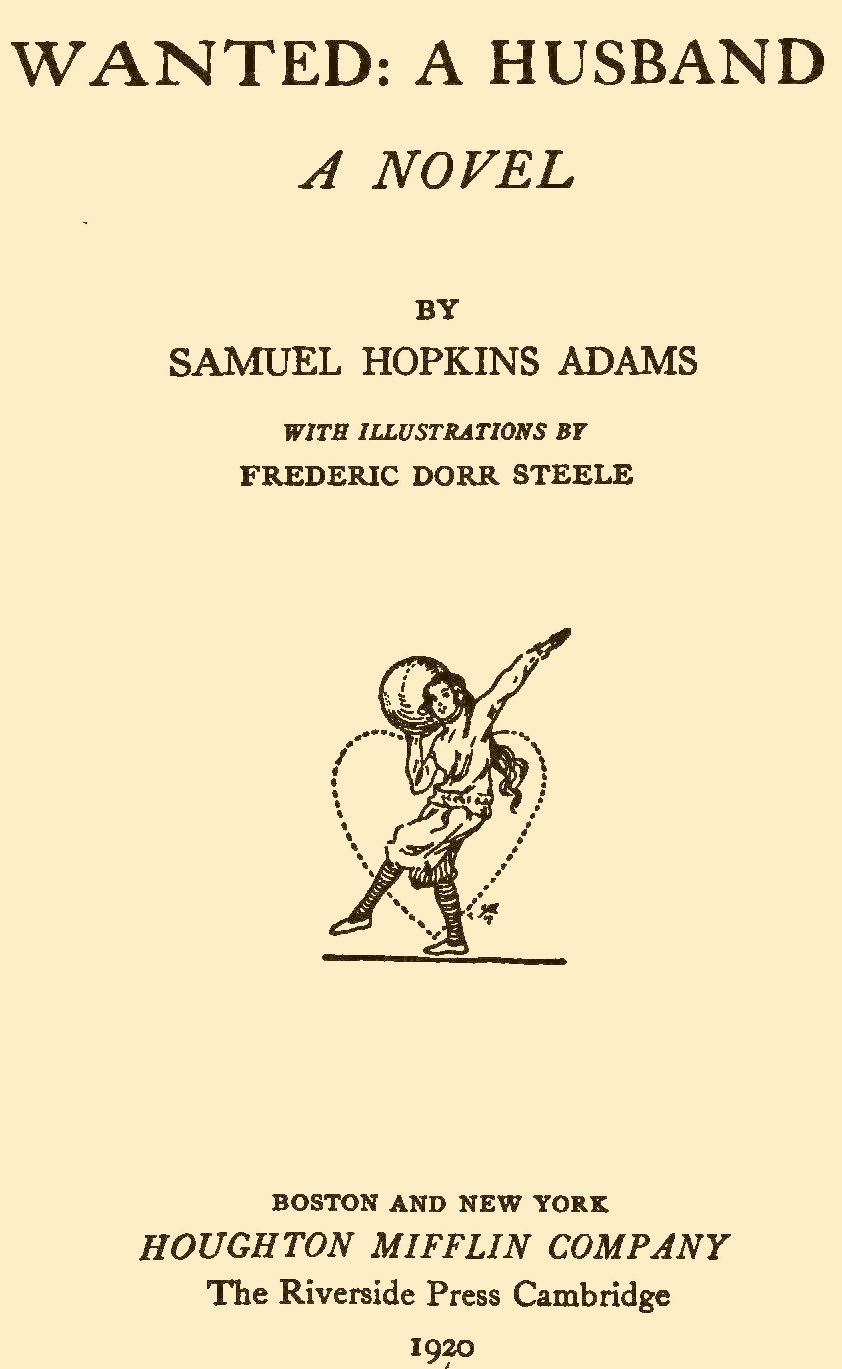
Wanted-  A Husband Samule Hopkins AdamsThis is a very charming, funny novel.  Why wasn’t it made into a movie?   Darcy’s roommates are having a double wedding.  Darcy isn’t attractive, her roommates despise her, and she lies that she, too, is getting married–to an English lord!  Her friend, Gloria, an actress, thinks it’s so hilarious that she takes Darcy in hand to turn her into beauty.

Gloria’s personal trainer soon has Darcy lifting weights and running through Central park; she becomes tough, strong, and confident.  And when she takes off on a train to a hideaway for her “honeymoon,” Jacob Remsen, a handsome friend of Gloria’s, is on the same train.  When Darcy’s roommates and their husbands show up , Darcy and Jacob pretends to be married.

It’s hilarious!

Not well-written!

Fun to read!

Free at Project Gutenberg.
To Fellow Bloggers: Achilles’ Heel

You’ve written your own directions
And whistled the rules of change.”
–R.E.M., “All the Way to Reno (You’re Gonna Be a Star)”

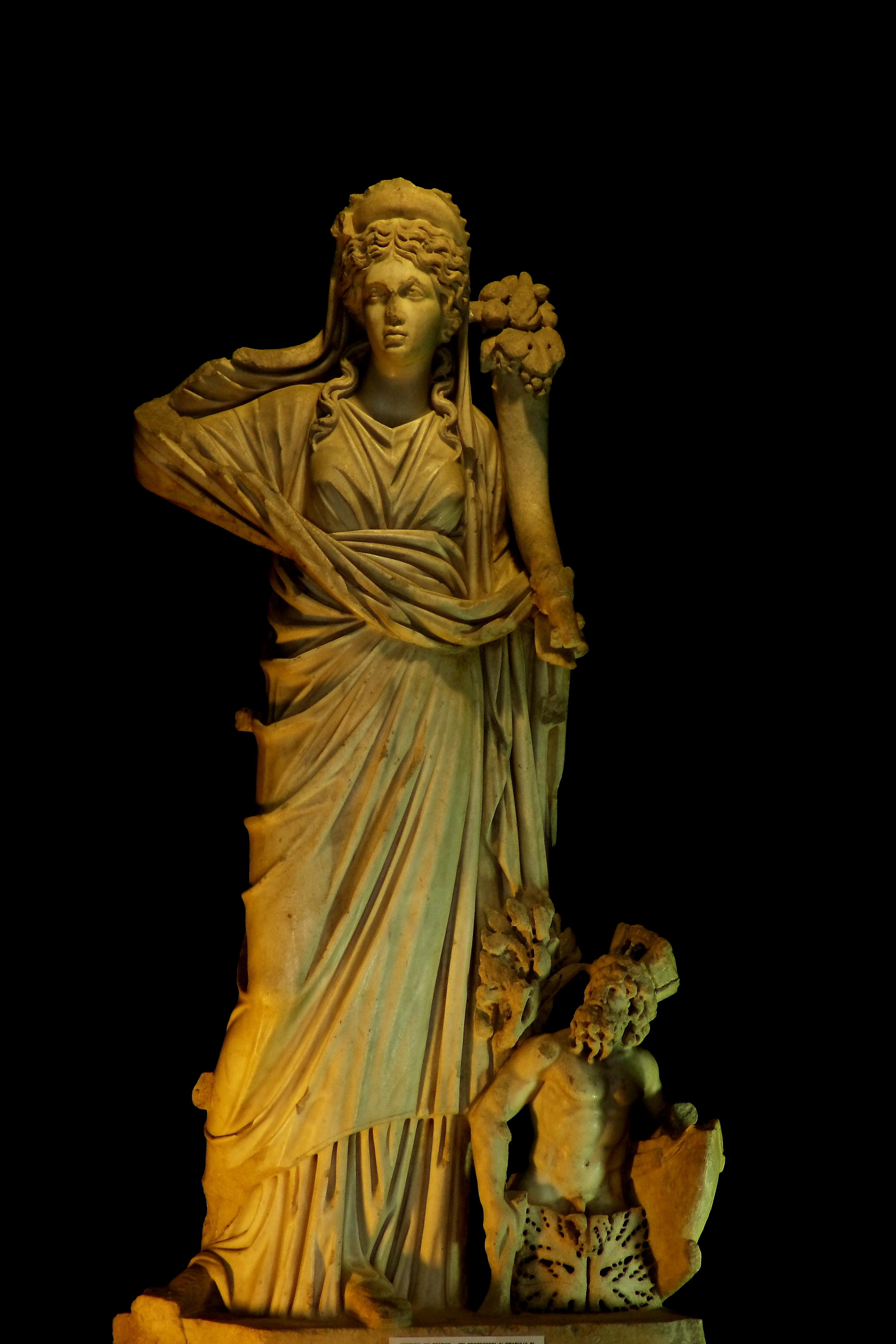
Fortuna (goddess of fortune, luck, chance)

Fortuna (goddess of fortune, luck, chance)

All the way to Reno.

We “challenged the laws of chance.

Maybe…

“You’re gonna be a star”

No, we’re not!

“You’re gonna be anonymous”

I made up that line.

Your achilles heel
Is a tendenc
To dream

Love the tendenc/tendons pun.  It might be a typo, though.

I’m postmodern-ing the song.

Is That a Hint? & THE List!

Since the roads are less ice-slick than the sidewalks, we decided to drive to Barnes and Noble.

Ahh, the smell of coffee!  I hadn’t been in a bookstore in three weeks.  And that had been a coffeeless bookstore.

“Do you want coffee?”  I asked.

“I have no money.”

“I have money.”

“You shouldn’t have coffee at night.”

“Why not?”

“It’s not good for you.”

Somebody has to end the senseless coffee war and make peace.  I will buy a huge coffee tomorrow.  Tonight I’ll concentrate on books.

In the fiction section I started laughing.

“I”m going to get you this,” I said, opening the cover of something by Stephen King.  “I think it’s a sequel to The Shining.”

“Ha!”

We aren’t King fans.  If we want pop, we’ll read stylish pop.  I am repulsed by King’s style.

In the history section, I  flipped through a copy of Alberto Angela’s  Reach of Rome: A Journey Through the Lands of the Ancient Empire, Following a Coin.

“Is that a hint?” he asks.

“No, I don’t want the Christmas insanity to start.”

Upstairs in the fiction section, some of the authors’ names click in his brain.  “Did you know there’s a new Margaret Drabble?”

“Yes, I read it a couple of months ago.”

“There’s a new Jonathan Lethem,” he says.

“It’s on our Nook.”

“My reading!” he says with regret.

I consider an SF/fantasy novel, Scott Lynch’s The Republic of Thieves.

“Do you want that?”

“I’ll read a sample on the Nook.”

“But maybe you want the book.”

“No, let’s get something else if we’re getting a book.”

Finally we buy two books we both want to read, Dave Eggers’ The Circle and Jayne Anne Phillips’ Quiet Dell.

And so are these Christmas presents?

Yes, I think they are.

They are a compromise. Like everything else in life.

I have no idea why I’ve been planning a trip to London, when I clearly should go to an island with a nice beach, bag of books, and caffeinated beverages.

Since I’m still here in freezing winterland, I’ve made a great TOP 10 of New-Old-Literary-Classics-Lite-Pop Books of 2013 for anyone who wants a shopping list for the next few insane days.  (Note:  On my sidebar, you can read a different list, the Best NEW books of 2013, i.e., Peter Stothard’s Alexandria:  The Last Nights of Cleopatra, Karen E. Bender’s A Town of Empty Rooms, etc..)

So here’s my rattletrap list, in no particular order.

1.  Barbara Kingsolver’s Flight Behavior.  A novel about climate change, love and work

2.  Harriet Beecher Stowe’s Uncle Tom’s Cabin.  The anti-slavery blockbuster that helped promulgate Abolitionism and kick off the Civil War was praised by Abraham Lincoln and Dickens.

3.  Barbara Pym’s Some Tame Gazelle.  In Pym’s witty, beautifully-crafted first novel, Some Tame Gazelle, the fiftysomething heroine, Belinda Bede, wears “suitable” dresses and sensible shoes, while her younger sister Harriet reads Vogue and insists that Miss Prior, the village seamstress, make her fashionable dresses with the latest sleeves.  The Bede sisters live next door to the vicarage, and since their lives revolve around the church, they are always planning what to wear to church functions:  garden parties, concerts, and lectures.  Incredibly witty and sweet.

Mrs. Caliban by Rachel Ingalls.  A sad, witty, moving novel about a desolate housewife who falls in love with a monster.

5.  The Rainbow by D. H. Lawrence.  A family saga, poetic, incandescent, and rich with adjective-and-adverb-heavy prose, Thomas Hardy on drugs.

6.  A Voice at the Door by Elizabeth Spencer.  This superb novel, set in Mississippi in the 1940s, is a gorgeously-written story of Southern politics, race, and romantic love triangles.  Although the Pulitzer Prize fiction jury recommended it for the prize in 1957, the board of directors chose not to grant the award that year. (Anyone who has read this astonishing novel knows how fatuous that decision was.)

Anna Karenina by Tolstoy.  The masterpiece:  everybody should read it.

8.  Stand on Zanzibar by John Brunner.  A postmodern science fiction classic.

9.  A Fan’s Notes by Frederick Exley.  In this fictional memoir, published in 1968,  the hero, also called Frederick Exley, cannot hold a job.  Exley, an alcoholic, is in and out of mental hospitals, sponges off his parents, or lives at a bachelor friend’s apartment where flamboyant, sad characters drop in all day, including an Italian who sometimes believes he is a hit man.  A magnificent book.

10  The Four-Gated City by Doris Lessing.  In this dazzling, urgent, neglected masterpiece, Lessing maturely shapes the themes she explored in The Golden Notebook:  breakdown of personality, sex, politics, madness, raising children, and the almost random quality of thoughts in different times and political eras.

Occupy Christmas! from the Christmas Letters

Christmas Again!This year we have banned Christmas gifts.

Gift-giving doesn’t work well at my house.  We are especially unimaginative when it comes to giving books  My husband has not yet read Kevin Powers’ The Yellow Birds from last Christmas;  I have not yet read Abraham Verghese’s Cutting for Stone from three Christmases ago.

In December I am so depressed from lack of light that finding Donna Tartt’s The Goldfinch under the tree might send me over the edge.  And don’t pretend you’re not giving it to everyone:  it’s the # 2 NYT best-seller and on many critics’ “Best of” lists.

It’s one more book to add to the Cutting for Stone pile.  We’re giving these to the Planned Parenthood Book Sale.

Though the family isn’t exchanging gifts this year, I still write the Christmas letter.  Here are a few choice passages from the Christmas letters of 2010, 2011, and 2012 to  amuse you.  (Nothing from this year:  you know all about this year from my blog.)

Anyway, here’s Christmas history!

CHRISTMAS 2010

This year we’re having a SIMPLE CHRISTMAS.  I feel like someone on Oprah.  I spilled half a cup of tea on the computer and it’s a sob story.

You’re not supposed to drink near your computer, but I’ve been drinking tea while I type for years.  The screen went sort of nuclear reactor–weird gray shapes– and the keyboard absorbed the tea.  I didn’t even have a chance to fetch a rag to wipe it up.  Tea–gone!  Computer–gone!

A trip to the genius bar at the Apple store.   I had a choice of (A) paying $700 to Apple to teach the computer to “communicate with its keyboard and battery,” or (B) buying and bonding with a new computer for $900.  After drying the distressed, memory-impaired beloved laptop in front of a fan for a couple of days (suggestion of the Genius Bar),  it regained sufficient intelligence to use the internet.  Gently.  But I would have had to send it to Apple for a couple of months to repair other functions and who knows if they could really fix it?  So we bought a new laptop.  Prices are lower than they used to be.

Spilling tea on a computer before Christmas means we can’t spend much on gifts.  …You know it’s actually nice not to worry about shopping.  I don’t recommend spilling tea on the computer–do you have a computer?–but the season isn’t as depressing and I think it’s the shopping thing.

CHRISTMAS 2011

My reading is whatever I feel like at the moment.  This year I’ve been reading books by Nick Hornby.  Do you know his work?  Several of his novels have been made into movies:  About a Boy, High Fidelity…  But my favorite is A Long Way Down, about four suicidal characters who meet on the roof of a tall building in London on New Year’s Eve, and then don’t commit suicide, because they form an impromptu support group.  It is very funny, though it has a serious, sad side.  I also love Hornby’s book columns.  He writes a book column for The Believer, and they have been published as collections.  The latest is More Baths Less Talking.  Probably my favorite is The Polysyllabic Spree.

We also have e-readers now!  I’ve been reading e-book “reprints” of English books published by Bloomsbury.  They include books by Monica Dickens, Angela Huth, and E. M. Delafield, and only cost $8 or so.   I can’t believe i”m in the e-reader generation.  I do prefer real books but…

We’re going for low, low materialism this year for Xmas.  I went overboard last year, and it ruined Christmas.  Too much stuff neither of us wanted!

Stay well, and I hope to write to you soon.  I am really bad at writing letters these days.

CHRISTMAS 2012

I’m so glad to get your letter before Thanksgiving!  I went to Caribou this afternoon and the pop Christmas carols were blaring.  I had planned to stay and read Aeschylus’s Agamemnon (the Greek continues after all these years and the plays are short), but I ended up leaving after a small coffee. Christmas should start later.   I hadn’t expected reindeer rock and Christmas blends.

We do have Occupy …!  That’s great that you marched with them.  I haven’t marched, because I seem to find out about their protests too late,  but I did see their encampment one day.  It was a weekday, and no one was there, but there were lots of tents: I was impressed.   The governor (Republican) kicked them off the Capitol lawn after a week, but the mayor (Democrat) offered them a small city park and they’re still there.  They marched last weekend on a Republican presidential candidate Family Values Fest at a church (Romney was the only Republican who wasn’t super-Christian and didn’t show, so I suppose he represents the voice of semi-sanity among them),  and some of the Occupiers also marched on the Democrats’ annual Jefferson-Jackson dinner.  I must admit, I didn’t like that at all.  Clearly some of the “Occupiers” are super-conservative.  The Dems need all the support they can get.

…………………..

And so that’s the Christmases past talking!  Have a happy one!

Satire of the London Guidebook

As a general rule, you won’t see too many people in the upscale London nightspots wearing jeans and sneakers.”–Fodor’s London

Fodors-2014-London-P9780770432157Fodor’s is an excellent guidebook.

That doesn’t mean I haven’t been laughing over it.

I love the quote above.  The idea of my going to any London nightspot, let alone not in jeans and sneakers, is surreal.

First, I must find a hotel.  According to Fodor’s, if it’s not next to Buckingham Palace, the neighborhoods are apparently (a) noisy (b) noisiest, (c) busy, noisy, and sketchy, (c) quiet as a tomb, (d) transitional and a bit dodgy, (e) near some of London’s dodgiest neighborhoods, (f) too quiet for some, (g) might be a flea pit, and (h) some distance from center.

I’ll go for the sketchy rather than the dodgy, or possibly the too-quiet-for-some.

Rather than hang out at nightspots, I must cram for my Dickens tour at night.  Finish The Pickwick Papers, reread all the other novels, skim the sketches, and peruse the biographies by Peter Ackroyd and Claire Tomalin.

And perhaps I’ll do a self-guided Dickens walking tour before the tour.

No, I’m joking.

But back to the guidebook:  I must never put down my purse in a restaurant.  AND I might want to disguise it as a shopping bag.

On the other hand, “London is a relatively safe city, though crime does happen…especially in built-up public project housing or tourist meccas.”

Below is a brief satire of a trip to London.  I do love Cornelia Otis Skinner and Emily Kimbrough’s humorous travel book, Our Hearts Were Young and Gay, and Emily Kimbrough’s Forty Plus and Fancy Free, so I’m taking a leaf out of their books to chronicle the trip I MIGHT take.
(DISCLAIMER:   I AM EXCITED ABOUT GOING TO LONDON AND NOT THIS CLUELESS.)

Day 1:  Take tube from airport to hotel.  If the tube station is 300 meters from the hotel, and a meter is 3.2808399 feet, is it times or divided by 80 or what?  If a 10 K race is 6 miles, then 200 meters is..?  Spend an hour walking around, ask directions, walk past the hotel, does it have a sign?, you don’t think you saw a sign,  you’ve been awake 30 hours, your laptop bag falls onto the sidewalk, and you still get to the hotel too early to check in.

ALTERNATIVE:  Take a hotel bus.  (Thank you, Fodor’s.)

Day 2:  Refuse to take your map out under any circumstances.  If a purse is dangerous, how dangerous will a map be? Instead, memorize your route before you leave the hotel.  Have the whole thing written in your notebook like a GPS. Walk, walk, walk.   Swallow the paper rather than divulge your sources…

ALTERNATIVE:  Take a BLACK cab (all the others are run by bandits) or the tube.

Day 3:  Get lost in the North Korean Socialist Realism Art gallery of the British Museum.  How did you get there?  Look at your map:  what’s that round thing in the middle with a fork and spoon?  You don’t Want to Go There.  Finally find the gallery you’re looking for and hope the placards are big enough to read…

ALTERNATIVE:  Ask the guard for directions.

Day 4:  Decide to go to the British Library and read about Emma Gifford Hardy, Thomas Hardy’s first wife.  (Must look up on the website and see if you can read there without getting a library card.)  You’ve always been sympathetic toward Emma, the model for so many of Hardy’s characters.    But you should  tour Hardy country first.  It’s 176.04 km. from London….  That’s 3.2808399 x or divided by  something.  No, that’s the wrong rule.

ALTERNATIVE:  Ask the hotel clerk.

Day 5:  Walk to used bookstores wondering if they’ll be snobbish.   In a very good used bookstore in Iowa, I couldn’t persuade the owner to part with a copy of Abdul Rahman Munif’s The Trench.  He said the first book in the trilogy was charming, but the second one wasn’t. I said I’d read the first and wanted the second.  Ended up buying it from Amazon. Will I go through such a fiasco in London?

ALTERNATIVE:  Remember that Fodor’s says, “American standards of customer service are rare in London…”  Wonder what those standards might be.

Day 6:  Decide to go to the Barfly:  “one of the finest in the capital, punk, indie guitar bands, and new metal rock attract a nonmainstream crowd.” No, I’m kidding.

ALTERNATIVE: No, I’m kidding.

No, I’m kidding.

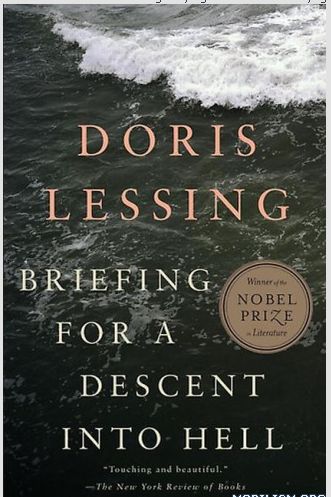
Doris Lessing’s Briefing for a Descent into Hell

briefing-a-descent-hell-doris-lessing-jul-There are very few of Doris Lessing’s books I haven’t read.

If I had not read The Golden Notebook, I might have become a different person.

Lessing’s brilliant depiction of the character Anna Wulf’s ironic stance toward politics, sex, and her lovers’ misogyny reflected not only her own generation’s struggles, but a later generation’s (mine).  Anna Wulf keeps notebooks–different notebooks for different parts of her life–and everything coheres in the golden notebook, a special notebook, a gift.  ( I am still waiting for my golden notebook:  I hardly think it is my blog.)

But when her novel, Briefing for a Descent into Hell, was published in 1971, I wasn’t interested.

The format put me off.  After the copyright page, there is a double-page spread with delicate elliptical swirls drawn around a black filled-in circle.  It says inside the inner ring and moving the circle:

CATEGORY:  INNER-SPACE FICTION

For there is never anywhere to go but in.

This experimental novel interweaves documents in a psychiatric hospital,  a patient’s alternate-universe memories, letters from his wife and friends, two doctors’ different ideas about treatment (and the treatment that turns out to be a terrible idea), and dialogue between the patient and the doctors.

Four decades later, I have finally read this powerful novel. As in The Four-Gated City, Lessing explores the  idea that not all mad people are mad.

In an interview with Joyce Carol Oates about Briefing in The Southern Review in 1973, Doris Lessing spoke of attitudes toward madness she shared with R. D. Laing:

Yes. We were both exploring the phenomenon of the unclassifiable experience, the psychological ‘breaking-through’ that the conventional world judges as mad. I think Laing must have been very courageous, to question the basic assumptions of his profession from the inside…. In America, the psychiatrist Thomas Szasz, in The Manufacture of Madness, has made similar claims. He has taken a very revolutionary position.

The hero of Briefing, Charles, a classics professor, has amnesia, but his experiences while mad have been the true experiences of his life.  During a shipwreck, his friend are swept up by a crystal disc.  He spends days on a raft, and finally lands near a beautiful ruined city.  In the central square, he sweeps away leaves and cleans it, believing that a crystal that swept up his friends one by one on a ship will come for him.

When I woke, as the sun came up shining from the blue-green sea, I knew quite clearly that I had something to do.   My friends were all about me.  I knew that, and in some way they were of the substance of this warm earthy stone, and the air itself, but it was not enough for me just to live here and breathe in air.  I sprang straight up when I woke, driven by this knowledge that I had work to do, and went to wash my face and hands in the nearest water channel….  I… walked out among the sky-roofed houses to see what I could see… it was very strange indeed that I had not noticed this before:  among the buildings, in what seemed like the center of the old city, what might very well have been the former central square, was an expanse of smooth stone which was not interrupted by flowers or by water channels.  The square was perhaps seventy or a hundred yards across, and in it was an inner circle, about fifty yards across.  It was a little cracked where earth had settled under it, and some grass grew in the cracks, but it was nearly flat, and it waited there for what I had to do.  I knew now what this was.  I had to prepare this circle lying in its square, by clearing away all the loose dirt and pulling out the grass.

When the disc finally comes, he is able to see an ideal city within a city.  But he is sent back to earth.

There is so much in this narrative:  the evolution of terrifying animals in the city who are similar to human beings; and later a meeting on another planet with the gods, who send envoys to Earth to prepare the people for a terrible catastrophe.  On earth they will be born, forget their mission, and, if they are lucky, remember it someday.

We understand Charles’ birth.

At a lecture he influences some other people who are trying to remember, though he does not himself remember.

It is very moving.

This is a character who should not be subjected to psychiatric treatment.

I must reread this to see exactly what Lessing means, if there are any doubts about the character (not that I think there are), and if there is any other way to interpret this.  I think not.

Briefing reminds me a bit of some of the science fiction of David Lindsay (Voyage to Arcturus)  and Anna Kavan (Ice).  It was nominated for the Booker Prize.

Lessing was unorthodox, brilliant, and brave.

As for madness?  Often the mad are brilliant. Often the mad are in terrible pain.  The psychiatric drugs are always inadequate, though perhaps better than they used to be.  A friend told me that Clozapine had changed his life for the better.  I have other friends who have struggled with antidepressants, unable to endure the side effects.  Very little money is spent on research for these drugs.  The mentally ill are throwaway people.

It’s a sad world, and Lessing knew about it.

The Bookstore Tour of London & Mrs. Miniver’s Green Lizard-Skin Appointment Book

stack_of_booksToday I thought of something that made me laugh while I was walking down the street.

On the Bookstore Tour of London, as I now call it, why not arrange to work for a day or two in a used bookstore?

I can’t look at culture all the time.

I would happily shelve books, catalogue books, do anything but handle money, which I probably won’t master in the UK.  And I would bet I could sell some hard-to-move book in return for a book. Or I would bet to sell a regional novel from the Midwest, something by Bess Streeter Aldrich, Wright Morris, or Ruth Suckow. And I have worked for books before.

When I first moved to this city, I worked at a used bookstore in return for books.  As I wrote here on January 25:

One window was boarded up, and the other impossibly dusty.  A few books had been dumped  in the window, apparently by someone who had forgotten to shelve them.  If you wanted a coverless copy of The Oxford Book of English Poetry, out-of-print science fiction by David Lindsay, or a wacky 1950s Big Book of Games, which emphasizes  games that require passing an apple from under your chin to another’s, this was the place for you.

There was no order.  I put books into the right sections, then alphabetized them.

But then the store shut down.  The owner, a cattleman who came in to the city occasionally, was sick.  His siblings decided to pulp all the books.

Yes, I am not joking.

Now I’m sure in London there is less book pulping.

Well, I may write to a bookstore and see if anyone will let me volunteer for a day.

Here is the list of bookstores I got from your comments on my “My Mother’s London” blog.

Persephone bookshop
Oxfam
Oxfambloomsburybookswordpress.com
Skoob Book
Any Amount of Books
Henry Pordes
Foyle Charing Cross
used bookstores Charing Cross
Daunt Books

Do any of these look like American-for-a-Day bookstores?

Ho hum.  I do like to entertain myself.

THE GREEN LIZARD-SKIN APPOINTMENT BOOK.  Jan Struther’s Mrs. Miniver, a collection of short columns about a housewife in The Times in 1937, is charming and entertaining, if much less witty than E. M. Delafiled’s comparable Provincial Lady books, written as columns for Time and Tide.

I particularly enjoy the  scene where  Mrs. Miniver  goes to a stationer in London, compares three appointment books, and buys a brown calf, “a pleasant little volume,” instead of the very expensive, gorgeous green lizard appointment book she wants.

Then on the bus:

Halfway down the Pimlico Road she suddenly pressed the button and jumped off the bus….

At this very moment, perhaps, the green lizard-skin diary was being bought by somebody else–some wholly unsuitable who merely wanted to get one in a hurry; a rich, earnest woman who would fill it with committee meetings, or a business man who would not even glance at the binding when he opened it to jot down the words “Dine George.”  While she herself with all her dearest activities soberly confined in brown calf would be thinking about it in an agony of regret.

She loves the lizard-skin diary.  And  she needs it.

What I was wondering is:  What is your green lizard-skin diary?  ANd have you ever had such an experience?

Cats!

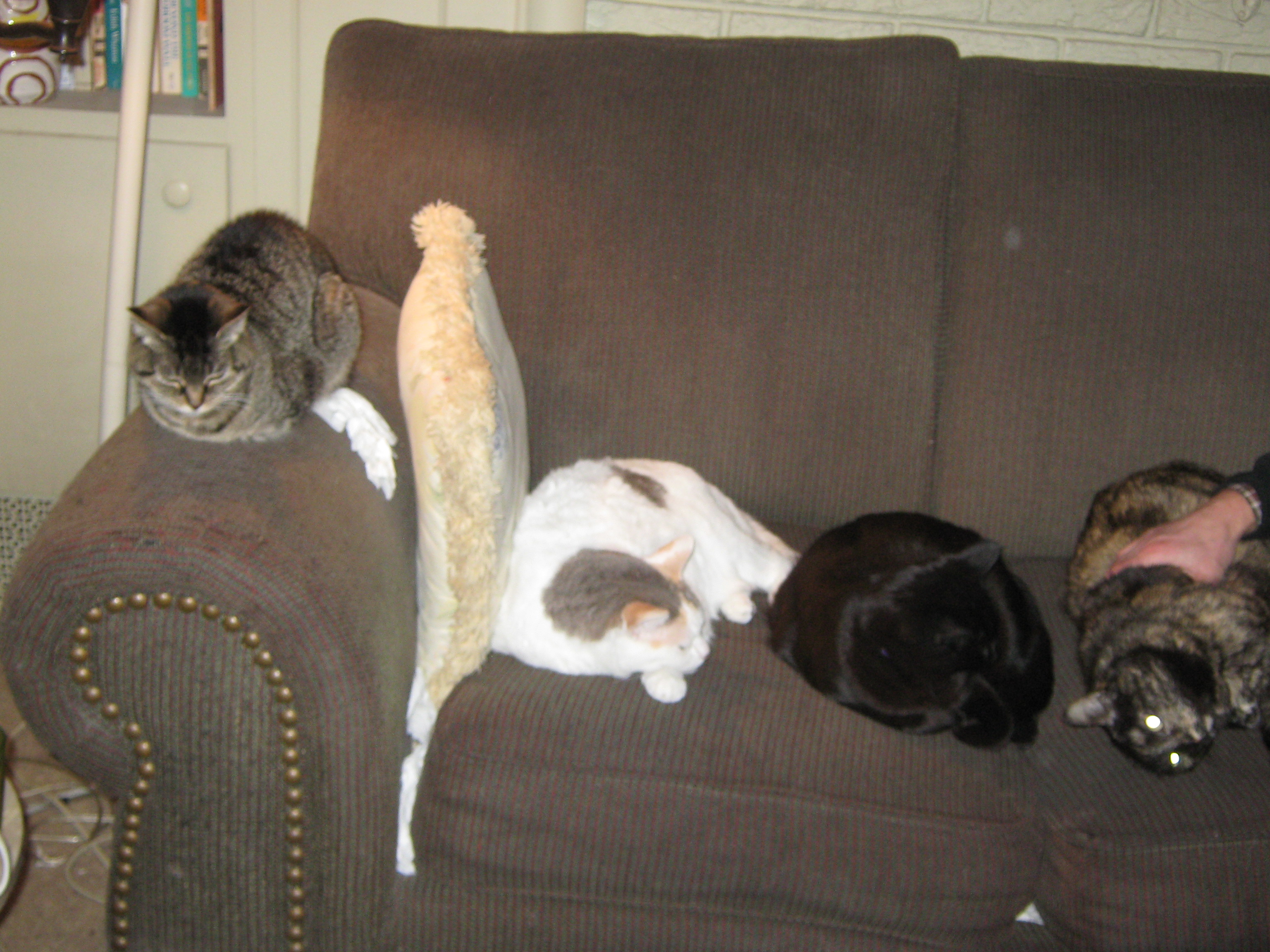
IMG_2280

The “third gen” of cats:  three on a bed.

We have raised three generations of cats.  All cats are different; even the different generations are different.

Our first cat, Chloe, was a Siamese.  She ate yogurt, balanced on the bathtub when I bathed (and often fell in), didn’t think much of books (why wasn’t I moving around?), and hung by the claws from a fiberglass ceiling in a cheap apartment.  “That cat’s crazy,” said a friend who looked after her over Christmas vacation.

She was very adventurous.

One day I came home from class and found a group of people gathered in front of my apartment building looking up at my third-floor window. Chloe was on the windowsill, having knocked the screen out.  There was much calling of “Don’t jump!”   She was doing one of her acrobatic feats.  She was, of course, fine.  I called the landlord and had the screen fixed.

Chloe and her gen loved dairy products and eggs.

The second generation of cats (the ’90s) and the third generation (the zips and teens) do not eat dairy or eggs.  Could it be the food is more processed?

One hates to speculate.

The nicest cat we’ve ever had, Emma, was a black cat of the second gen.  She escorted the elderly cat, Boss, to her food bowl, because the other cats picked on her.  Emma liked being read to, I swear.  When one of the cats was sick, I read a couple of pages of  whatever I was reading and she listened avidly.  She loved to “read,” in that whenever I read lying down, she would lie on top of me with her head facing the book.

The cats in the pictures are third-gen cats. They are very sleepy. Hullo, is it time to eat?  Time to play?  Unless it’s time to eat or play, they would rather be sleeping.

The third gen on their couch.  (Yes, it's a mess, but it's theirs.)

The third gen on their very own cat couch.

I try to shut them out of the bedroom at night, because they wake me up.  They like me to stay up till 3 a.m. and play what I call “kitty music” on the CD player.   Crosby, Stills, and Nash, that kind of thing.  They’re not too “rock”ish:  they like a softer tone.  The only R.E.M. song they really like is “At Your Most Beautiful.”

“Come on, guys,” I say.  “Time to leave.”

They meow: Oh, Mom, really?; why not let us stay in?; one sticks to the bed with her claws; another loves to play hide-and-seek.

I am glad to be the beloved, but I don’t like to wake up to find them purring next to my head.

So our schedule goes like this.

Midnight:  We close the “gate” in the hall to keep the  cats out.  Only Miss A is allowed to sleep with us, because she also sleeps.

12:30:  I can’t sleep, so I get up to get a glass of water.  Another cat, Miss B, runs into the bedroom and adorably hides under the bed.

12:35:  I go back to sleep. Miss B gets bored under the bed and decides she would prefer to go out into the living room.  Much scratching at the door.

12:40:  Miss A decides she wants to go out the gates and be with the other cats. This is the influence of  her sister, Miss B.

1:05.  I have just fallen asleep when I hear scratching on the door.  Miss A wants to come back in.

HOURS PASS…

6 a.m.  Meow!  I can’t remember if Miss A left in the middle of the night or not, but I think this is she howling.  No, Miss B is back!  She decided she would much prefer to be in here with Miss A.

6:30 a.m.  Miss A has sensed movement in the living room and is now fully awake.  Meow!  She needs to go out immediately.

8 a.m.  I wake up and Miss B is adorably sleeping.

I wonder:  Do I get any sleep at all?

That’s why I recommend Advil P.M.

How to Get Warm & Reading D. J. Taylor’s Bright Young People

It's not exactly Currier & Ives here.

It’s not exactly Currier & Ives here.

“It’s cold,” he said.

He had been outside at 6 a.m. How cold could it be at 1 p.m.?  The internet said 20.  I wore my warmest coat.  I wore a scarf, gloves, a hat, my hood, and my old Timberlake boots. You can’t get much warmer than that.  And I still couldn’t get warm.

My coat probably weighs 10 pounds, my boots five.  With every step I felt as though I were wearing ankle weights.

Surely I would warm up if I kept going.

Stopped at the Little Free Library.  There was a copy of Hilary Mantel’s Bring Up the Bodies.  I already have it on my e-reader.  There was my copy of D. H. Lawrence’s The Rainbow.  Nobody wants to read that.  There is a copy of Nathaniel Philbrick’s Mayflower.  Should I want to read that?  I know I will never read that.

My face was so cold.  It felt dry and stretched.  It’s wrecked anyway.  Bicycling long distances in the sun ruins your skin.

But, you know, who cares?  Some of the bicyclists are too drunk to notice:  they stop at all the pubs on the trail.

Keep moving, keep  moving.  I felt worse and worse.  There was nobody outside.  It was just too cold.   I saw one person with a big dog.  I hopped into the street so there would be plenty of room for the dog.  Sometimes big dogs on narrow sidewalks make me nervous.

Then I got home and coughed pathetically.  Went to bed with two boxes of Kleenex.  Can’t face Cold-eze or cold medicine yet.  Am drinking coffee instead of tea (probably a bad idea).

Bright Young People d.J. taylorAND HERE’S WHAT TO READ WHEN YOU’RE SICK.  I am reading D. J. Taylor’s Bright Young People:  The Lost Generation of the Jazz Age, a brilliant nonfiction book about the London socialites of the ’20s, among them Evelyn Waugh, Nancy Mitford, Michael Arlen, etc. Since I usually read fiction, I am most familiar with them as characters in Evelyn Waugh’s Vile Bodies or Michael Arlen’s collection of stories, These Charming People.

Taylor is a versatile, entertaining biographer, critic, and novelist, and makes this nonfiction book as interesting as a novel.   A few months ago I read his novel The Windsor Faction (wrote about it here and it makes my “Best of 2013” list on the sidebar)  and interviewed him (here).

I’ll  leave you with a quote from Bright Young People.

Some Bright Young People became successful writers, journalists or artists, while others plumbed the depths of drink, drugs and disappointment.  They were much written about and much misrepresented.  At an early stage their behavior acquired a generational focus, to the point where they were assumed to reflect the attitudes of thousands of people who barely knew they existed.  In the end, as the social historian Alan Jenkins noted, the words “Bright Young People” became a label for all the young in Britain who did anything unusual at all.  Given that many of the Bright Young People were artists, albeit sometimes in very minor and inconsequential ways, their spoor can be tracked across vast acreages of British cultural life.  Their style–brisk, affected, outwardly impersonal, inwardly often deeply vulnerable–influenced a host of descendants who knew noting of their ancestry, and their echoes can be found in the pages of books written long after the movement’s original members were gone.

My Mother’s London

When I win the Lottery, I can go to Italy on my own terms, and choose my own company.”–Margaret Drabble’s The Seven Sisters

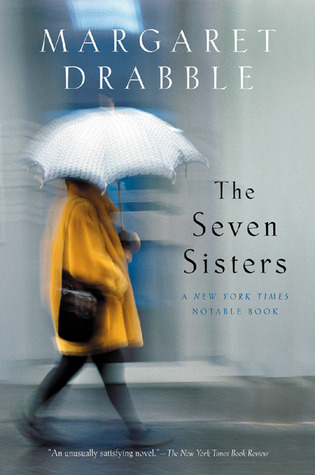
Seven Sisters margaret drabbleIn Margaret Drabble’s The Seven Sisters, the narrator, Candida, wishes she could win the lottery and go to Italy.   One day she receives a letter:  she has come into some money.

Like Candida, I recently received a letter. I  learned that my mother left me a tiny amount of money nobody knew about: it will pay for a trip to London!

I have never been so excited.

I  come from a family of aerophobes.   My mother never got on a plane.   She seemed wistful about my travel experiences.  (I am not an aerophobe.) Even a trip by car  from Iowa City to Des Moines seemed long to her.  Near the end of her life she’d say, “I’ve never flown.”   She wished…  And she knew that my living with another aerophobe had made it impossible to cross oceans on family trips.

And so I’m planning my own trip, without the aerophobes.   Suggestions, anybody?

MY PLANS SO FAR.

1. Reread a lot of Dickens so I can be overprepared for a Dickens walking tour.   Or should I just stick to the Dickens museum?

2.   I love looking at art.  Good art, bad art, old art, new art.  So I’ll be spending time at museums.  Do you have any favorites?  Any off the beaten track?

4.  Bookstores?  Used bookstores especially?  (And should I bring an extra suitcase, or mail the books home?)

4.   Can’t-miss plays, concerts, etc. for 2014?  Or theaters I should tour?  Or whatever….

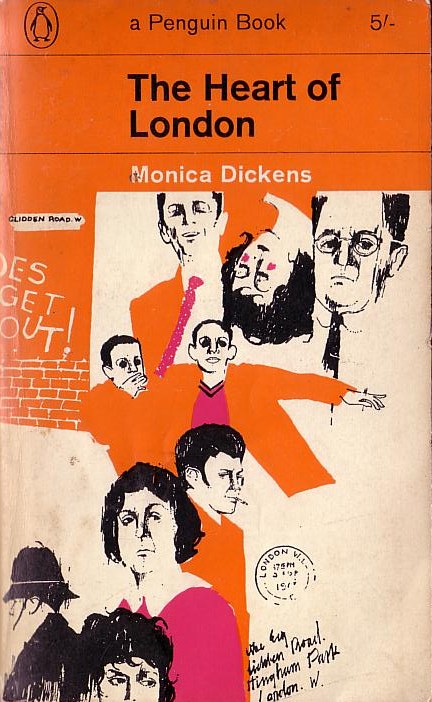
Heart of LondonAnd now here, in exchange for your suggestions, is a list of

TEN FAVORITE BOOKS SET IN LONDON.

1.  London Belongs to Me by Norman Collins

2.  The Heart of London by Monica Dickens

3.  Excellent Women by Barbara Pym

4.  The Needle’s Eye by Margaret Drabble

5.  The Provincial Lady in London by E. M. Delafield

6.  Lucia in London by E. F. Benson

7.  Mrs. Dalloway by Virginia Woolf

8. Keep the Aspidistra Flying by George Orwell

9.  The Portobello Road and Other Stories by Muriel Spark

10.  The Four-Gated City by Doris Lessing