At the Concert

No, I wasn't there (wherever there is.)

Random Grateful Dead concert:  I wasn’t there.

You can mourn only so long.

During my mother’s funeral, when the relatives on my mother’s side glowered at our “banned relative, i.e., the family outcast, I realized this would be our last get-together. I do not believe in the afterlife.  I will not meet them in the afterlife.  If there is an afterlife, the gods will be merciful to the “banned relative.”  If there is an afterlife, I will boycott their heaven-country club.

I thought of Michael Tolkin’s movie, The Rapture, in which the heroine refuses to join God on Judgment Day because God is cruel. “No, I don’t want to go.”

This weekend my cousin the librarian found me listlessly staring at my mother’s belongings when I was supposed to be at the Big Muddy Blues Festival in St. Louis.

She brought pierogi (her mother was Polish) and Vodka.  “Have a shot.  I don’t want to hear about your f—ing pills!”  Then she looked at my mother’s things. “Nobody will want this, or that, or that.  In fact, throw it all out.”

It is true:  nobody will want my mother’s Size Zero clothes (nobody is Size Zero), her framed photos of dogs (I’m keeping the photo albums, though), nor her collection of Bill and Hillary Clinton books and magazines.  (Yes, we like the Clintons–but not THAT much.)

We threw everything in boxes and went to Good Will.

It was obvious that I was exhausted. She looked in my medicine cabinet.  “I’d double the dose of this one at night.”

She told me we needed to spend Labor Day weekend as though we were at a concert.  Mellow, mellow, mellow.  We don’t have many blues CDs, so she chose a Grateful Dead theme.

There was a lot of “Sugar Magnolia” and “Walkin’ Blues.”

As usual, I realized how much I would like to play guitar.

She was (briefly) a Deadhead.  For a few months in her twenties, she and a boyfriend traveled from concert to concert in a van.  “It was too much sex and drugs,” she recalls.  “I couldn’t stand it after a while.”

So she went to library school.

“No reading,” she said when I opened a book.

By the end of Day One I was desperate to read and translated some Greek because she had not forbidden it.  She wasn’t happy about it.

On Day Two she allowed me to read a mystery by Sara Paretsky.

“I don’t want to spend a day with an unemotional female P.I.,” I told her.

“That’s exactly what you need,” she said.

I didn’t finish it.  I was finally allowed to read Agatha Christie’s The Mirror Crack’d, a Jane Marple mystery.

By Monday I was defiantly reading Doris Lessing.

I still have bags under my eyes, but she agreed I had mellowed. I wouldn’t have had the faintest idea how to be a Deadhead without her. She makes me laugh.

Doris Lessing’s Stories

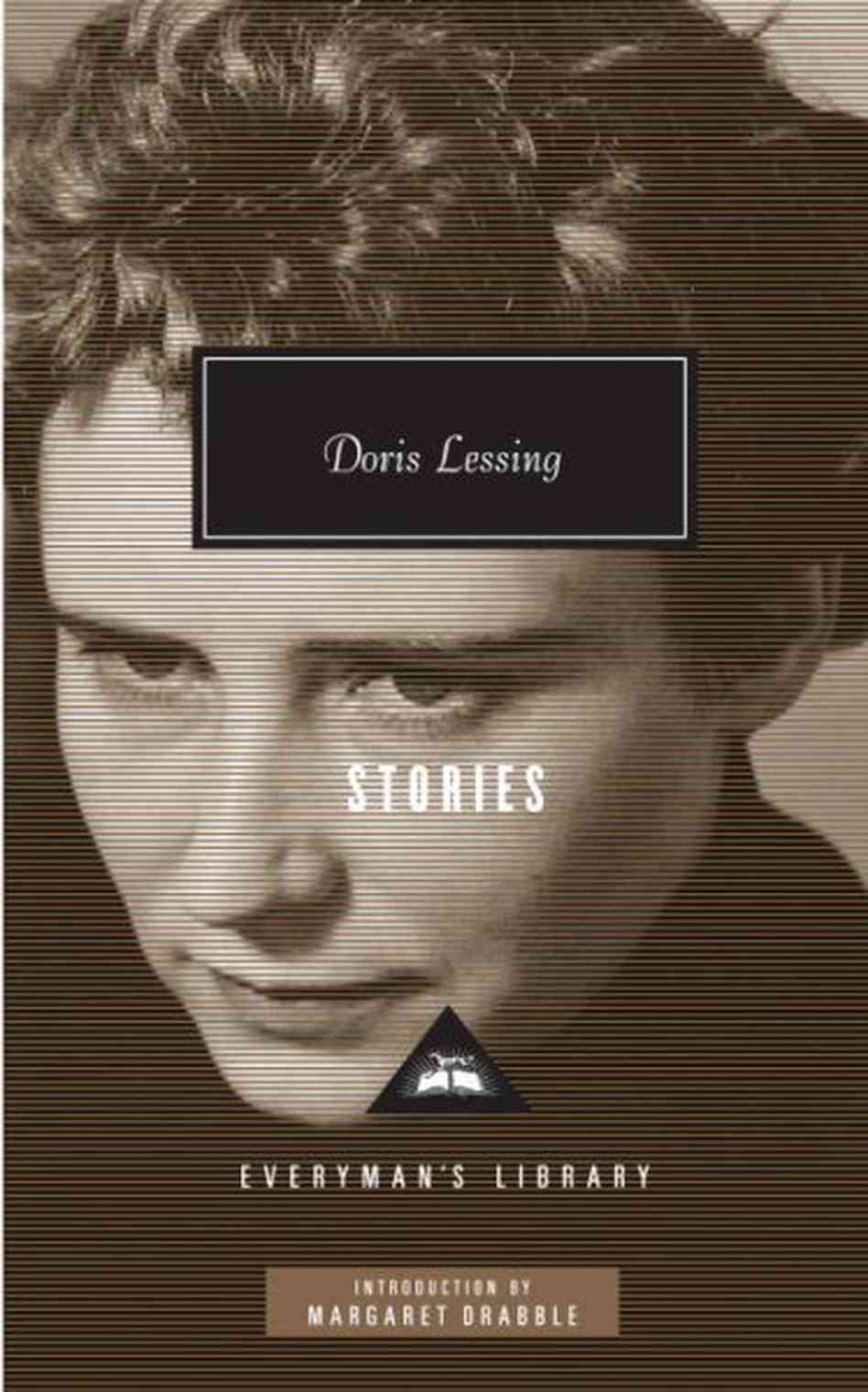
Doris Lessing Stories everymanIn the introduction to the Everyman edition of Doris Lessing’s Stories, Margaret Drabble writes,”Doris Lessing’s short stories, published over several decades, are among the most important in the English language.”

Lessing’s novels are dazzling, but her stories are also beautifully-crafted.

She is one of the most significant writers of the 20th century, a, bold, brilliant chronicler of women’s lives.  As a very young feminist reader of The Golden Notebook and the Martha Quest books, I felt, absurdly, that she had written my life.

Her characters were of an earlier generation (she was born in 1919), yet her accounts of women’s lives in her experimental novels, The Golden Notebook, The Four-Gated City, and Memoirs of a Survivor, fit the messiness of life in the late twentieth century: changing attitudes towards love, sex, independence, dependence, anger, pain, rebellion, war, cynicism, even a belief in “the revolution.”

In this collection of stories, even the shortest stories have depth and elaborate structures.

Lessing writes often about the working classes.  In my favorite story, “The Other Woman,” the heroine, Rose, who works at a bakery, is scornful of her mother’s accidental death:  she was hit by a truck, and Rose thinks it was a silly way to die. Unhealthily obsessed with caring for her father in their basement apartment, she breaks off her engagement to a loving man.  Years pass.

She and her father often argue. When he says she should quit her job, Rose says she likes her independence.

Jem said:  ‘Women.  They say all women want is a man to keep them, but you and your mother, you go on as if I’m trying to do you out of something when I say you mustn’t work.’

‘Women here and women there,’ said Rose.  ‘I don’t know about women. All I know is what I think.’

Independent Rose, who has no boyfriends, befriends her ex-fiance’s wife and daughter, wishing above all that she had children.  When World War II breaks out, the friendship between the women intensifies.  But she and her father, who reads about Hitler, continue to argue, because Rose thinks male aggression is the cause of war.

I’m not interested who started it.  All I know is, ordinary people don’t want war. And there’s war all the time.  They make me sick if you want to know–and you men make me sick, too.  If you were young enough, you’d be off like the rest of them,” she said accusingly.

Rose works for a munitions factory, knowing full well that the good wages will last only until the men come home.  When their house is bombed and her father dies, Rose finds the basement apartment intact; she refuses to leave.  Jimmie, a volunteer, convinces her to move: they become lovers and move into an apartment. When he tells her he is married and must go home to see his family for days at a time,  Rose is jealous and angry.  The story ends with a bizarre twist.

In the surreal story, “How I Lost My Heart,” the narrator writes flippantly about having lunch with A, her first true love, who devastated her when he left, and B, her second, who also shatterd her.  She has agreed to meet the man she calls C for lunch.  But when she finds herself remembering the agony of break-ups, she breaks the date with C.   And then suddenly she feels her heart in her hand.  She tries to roll it off her hand, but it is stuck to her fingers.  She wraps it in tin foil and a scarf.  And then…

Sometimes Lessing writes from a male point of view.  In “One off the Short List,” Graham Spence, a married journalist, is determined to have an affair with Barbara Coles, a stage designer.  Graham, who has written one book, writes book reviews and freelances for radio and the BBC.

He understood that he was not going to make it; that he had become–not a hack, no one could call him that–but a member of the army of people who live by their wits on the fringes of the arts.

He has an assignment to interview Barbara.  When he meets her at her workplace and sees that she is bound to her co-workers “by the democracy of respect for each other’s work,” he is envious and sad.  But his insistence on dominating her turns into hostility towards a successful woman.

Lessing and I, women of different generations, define the word “feminist” differently:  she does not consider herself a feminist.  But her short stories, feminist or not, are powerful.  I am halfway through them.  Perhaps more later.

Four Giveaways: Colette, Hemingway, Mary Hocking, & Cathie Pelletier

I have four books to give away.  If you’ve already won a book here, feel free to sign up anyway.  I LIKE giving away books to people I know…  And if you don’t want them, I’ll give them away to the charity sale (another good cause).

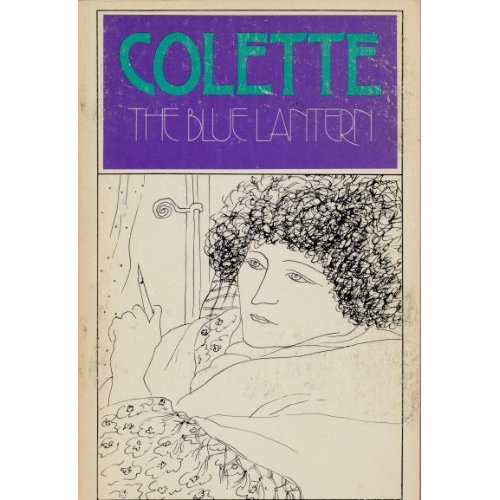
The Blue Lantern Colette1.  Colette’s The Blue Lantern. I wrote in April:  “Colette’s meditations in her seventies are just as sharp as ever….  She still visits vineyards and markets, still eats good food and drinks good wine.  She tells funny anecdotes about her famous friends, Jean Cocteau and Gide…”  (The edition is a hardcover ex-library book, not the one pictured here.)

2.  Ernest Hemingway’s A Moveable Feast.  Yes, we have two copies of this, both in excellent condition, and I don’t know WHY we have two.  Yes, I do:  I bought one not long ago thinking we did NOT have one.  You can have one if you want it.

One-Way Bridge3.  Good Daughters by Mary Hocking, the first volume of a family saga about three sisters growing up in London on the brink of World War II.  Really very good, available in a Virago, but mine is an Abacus edition.

4. Cathie Pelletier’s The One-Way Bridge.  A feather-light novel about eccentric characters in Mattagash, Maine, part of Pelletier’s series.  My mother very much enjoyed these books.  A good Labor Day weekend book, though it will be too late for that by the time you get it!

Leave a comment if you would like any of these, or more than one.  I will draw names out of a paper sack if more than one person wants one!  It has worked before…

Greek Lyric Poetry & The Glam Scale

Throned in splendor, deathless, O Aphrodite,
child of Zeus, charm-fashioner, I entreat you
not with griefs and bitterness to break my
spirit, O goddess–Sappho, tr. by Richmond Lattimore

Aphrodite of Melos (Venus de Milo), 130 - 100 BC

Aphrodite of Melos (Venus de Milo), 130 – 100 BC

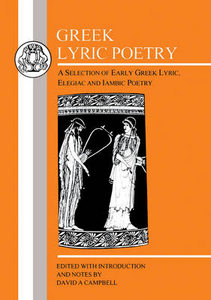
It is delightful in this hot weather to pore over my old school text, Greek lyric Poetry:  A Selection of Early Greek Lyric, Elegaic and Iambic Poetry, ed. by David A. Campell.  I translate the Greek with my Liddell and Scott dictionary and Smythe grammar, and have a freshly sharpened pencil and notebook by my side.

The lyric poets include Sappho (of whom you have all heard), Anacreon, Archilochus, Pindar, and Theognis.  The poetry, written between 650-450 B.C.,  is often personal, about love, death, and drinking.

The poetry was also political, reflecting the events of the 6th and 7th centuries B.C., David A. Campbell explains in the introduction.

Political revolutions resulted in the almost complete disappearance of hereditary kingship and the rise of the tyrants:  in the lyrics of Alcaeus we read the reactions of a man who took part in the struggle for power in Mytilene; his contemporary, Solon, used verse to record the aims of his legislation and to answer detractors in the years immediately before the establishment of tyranny in Athens; Theognis of Megara grumbles at the influx of peasants into the city, and exclaims against the new rich.

I am a Latinist, though I also studied Greek.  I know the Greek poets best through the borrowings of Roman poets, Catullus, Virgil (Eclogues), Tibullus, and Propertius.  One of Catullus’ most famous poems is a direct translation from a poem by Sappho.

Greek lyric poetryAs a young woman, when I first read Greek lyric poetry, I found love quite devastating.  I prayed to Aphrodite to keep far, far away: I prayed to Athena to let me focus on my work.  But  I was frequently enchanted by glamorous men.   (The word “glamour “originally meant magic or enchantment; a variation of “gramarye” or “grammar”: magic spells are related to spelling of words.).

One day Aphrodite cast a spell on me as a tall, dark, handsome, slightly unhygienic man (men somehow weren’t showering enough in those days) crossed the Pentacrest.  Why his appearance in a shabby tweed jacket, ancient khaki pants, and hiking boots illuminated him as the most beautiful person I had ever seen I cannot tell you.  Possibly I was dazed by having spent an hour in a bookstore.

We went out for coffee; when the coffee made me sick he accompanied me to Student Health; we took picnics in cow fields; lived on Ramen noodles; and we drank at George’s.  It was very nice.

Still, there was a certain insecurity.

If you are involved with a beautiful person when you are not beautiful (I was described, much to my annoyance in those days, as “a bubbly blonde,” or, even worse, “effervescent”) you sometimes do not set limits. If he is not available to celebrate your winning an award because he has decided to spend 12 hours watching a sports event, you will be annoyed, but will not break up with him.  Your women friends will shrug and say, “He is a handsome man, and he probably knows it.”  Gay men friends will say, “He’s handsome in a macho way, and that’s what happens.”

In other words, beauty itself can make people behave badly.

I came up with a glam scale eventually (far, far too late). If somebody is too glamorous, YOU HAVE TO STOP LOOKING AT HIM RIGHT NOW.  Come on, honey!  It’s like Cupid and Psyche.  Don’t light that torch and ogle.  Don’t cross that river and fetch golden wool from the fierce, monstrous sheep, or any of the other pointless tasks.  He’ll be doing what Venus says.

We each have our personal glam susceptibilities: long married, I no longer have a glam scale; marriage is a relationship with different rules and corallaries;  but the following glam items will come in handy for women coming up the ladder of glam.   (You can skip the glam scale and go right to the translations of three more Greek poems if you prefer.)

1. All classicists love Colin Farrell, because he hired a classicist to translate two lines of dialogue into Latin for a vampire movie (see Monica S. Cyrino’s “I Was Colin Farrell’s Latin Teacher,” Classical Journal, Feb./March 2012, Vol. 107/No. 3).   Uhhhhhh….but he’s too young…he’s already taken…and the Latin was cut.  Still, I can’t wait to see him in Winter’s Tale, a movie based on Mark Helprin’s novel.

2.  Do not date Republicans, even if they look like Democrats.  They will want to frack your back yard.

3.  If the Beautiful Man spends all his time sailing and you do not even know how to swim, or, worse, watches PBS Civil War shows round the clock when you are yearning for a sitcom or food porn,  you are probably not soulmates.

4.  Scrabble freaks, brain surgeons, marathon runners, and guys in bands are otherwise engaged when you need them to change a light bulb (the kitchen ceiling is just too high for me to reach.).

And now for more Greek lyric poetry:

Love, like a blacksmith, struck me with a giant
hammer, then plunged me in a wintry torrent.–Anacreon, translated by Kat

Here I lie mournful with desire,
feeble in bitterness of the pain gods inflicted upon me,
stuck through the bones with love.
–Archilochus, translated by Richmond Lattimore

The story is not true.
You never sailed in the benched ships.
You never went to the city of Troy.
–Stesichorus, “Palinode to Helen,” tr. by Lattimore

More soon!

Labor Day Weekend

Well the first days are the hardest days, don’t you worry any more,
cause when life looks like easy street, there is danger at your door.–“Uncle John’s Band,” The Grateful Dead

Grief can make you a little crazy.

Not full-fledged walking-down-the-street-naked-and-singing-Grateful-Dead crazy.

More like leaving comments at newspapers online.  (POINTless, Kat!  You lose a point.)

So we are hanging out.

Relaxing.

Iced tea.  Grateful Dead. Cherry Garcia.

I am turning myself into a Deadhead this weekend.

No books, just music.

That’s me in the back yard in sunglasses and iPod.

Oh, and maybe with my Nook.

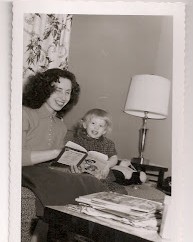
Mom and me.

Mom and me.

I am sorting through my mother’s things.

She died a few weeks ago, pointlessly.

At the funeral I felt like an envoy from another planet, gravely stepping back and declining to look at the open casket.

“The next time you see me I’ll be in my grave,” her friend said.

Aint no time to hate, barely time to wait,
Wo, oh, what I want to know, where does the time go?

Her house was sold two years ago.

We now have a few odds and ends from the nursing home.

A laundry basket with a Room 219 tag, cf. Doris Lessing’s “To Room 19.”  (Actually the number is 224.)

One sandal, Size 8.

Many, many matching pants and tops in Size X-Small.  She was anorexic the last few years of her life.

Eight leather handbags, Liz Claiborne, East West, etc.

A copy of The Des Moines Register, Aug. 6.

A copy of The New York Times, Aug. 4

A copy of Cathie Pelletier’s The One-Way Bridge, bookmark on page 180.

A copy of Elizabeth Goudge’s Green Dolphin Street, one of my mother’s favorite books.

A tiny little pair of pajamas with Scotties design.

A framed picture of a dog.

A wooden block calendar.

It is the detritus of a life.

You know the kind of thing.

Anybody’s choice, I can hear your voice.
Wo, oh, what I want to know, how does the song go?

Beautiful People Behaving Badly & Susan Choi’s My Education

Love, like a blacksmith, struck me with a hammer, then plunged me in a wintry torrent.–Anacreon, 413

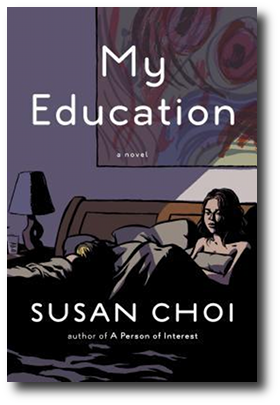
My-EducationIn Susan Choi’s elegant new novel, My Education, beautiful people behave badly.  A stunning woman devastates the lives of three characters who are  far from guiltless, but suffer disproportionately.

The narrator, Regina Gottlieb, a brilliant graduate student in English, is astounded by the beauty of Nicholas Broduer, an English professor who has been (falsely) accused of sexual harassment.  When Regina, baffled by his seminar, goes to his office, the reader wonders if she will seduce him.

She does not.

Nicholas is charming and recruits her as a T.A. for his Chaucer class:   though she has never read Chaucer, she is quick-witted. Her fellow T.A., the endearing Laurence, explains how little she needs to know to grade undergraduate papers.  Later, the three spend a quiet day together at Nicholas’ house, eating, drinking, and grading.  The highly organized Nicholas gives Regina all the data and tips she needs to  grade each paper in five minutes. (Sometimes she falls a little behind.)

Later, when Laurence and Regina are invited to a dinner party given by Nicholas and his wife Martha, Laurence tells her about Martha.

She’s very intrepid, Martha.  She lived on Madagascar for a year for some reason, and learned to cook something in a can.  Truly–she can cook you a multicourse meal with no more than a fire and a large-size tin can.  The first time I went to their house it was summer, and Martha had constructed a fire pit of stones in their backyard, and she’d set up a wrought-iron grill, and she served clams casino, wild-mushroom pizza, whole lobsters, a corn salad, and, I am earnest, a peach pie, all of which she produced from that fire without setting foot in her kitchen.  You know Nicholas almost can’t boil water.”

Martha is a blond, gorgeous, brilliant, sullen, outdoorsy professor with a baby she prefers to hand over to the nanny.   She is bad-tempered at the party, practically throwing parts of a stale baguette at her guests, and  she barely converses . But Regina, drunk and fascinated by Martha, finds her outside and initiates wild, quick sex with her. It seems that Martha and Nicholas have been sleeping in separate rooms for quite a while.  Both have had affairs.  But when Regina and Martha embark on an affair, it is dangerous for everybody.

Choi has an unerring ear for dialogue, tells a compelling story, and writes beautifully.

My favorite character is Regina’s housemate, Dutra, a witty ex-drug dealer who was kicked out of his prestigious school ,attended a community college for two years, and then transferred to the university in the small college town in New York, where he is now a medical student.  Dutra, like Nicholas and Regina, is struck by Martha.

Every perfect detail gives information about Regina’s charming outlook and the atmosphere of the university town.

Dutra drove a very old, very damaged Volvo sedan the color of calamine lotion where it wasn’t affected by rust. The car was so barely indistinguishable from the countless other aged, rusted, neutral-toned Volvo sedans living out their last days in that time it might have been part of a utopian experiment of ubiquitous, ownerless cars, as with bicycles in some parts of Europe and indeed even here in the seventies, when the university had apparently paid for a fleet of bicycles for public use on the campus, all of which had wound up within just a few days abandoned at the base of the hill.

All four of the characters end up in New York, though Martha moves west, leaving the others to recover from their suffering.  Regina is instrumental in putting things right years later when she is a mother and a writer.  And this remarkable last section of the book is in some ways the most interesting.  We get to see the characters indedependently of their love for Martha.

My only criticism is that Martha reminded me slightly of She-Who-Must-Be-Obeyed in H. Rider Haggard’s She.  She is a goddess with total control over everybody.  But I do know that beautiful people can control and devastate. I believed in her.

And I loved this book.  It’s brilliant, one of the best of the year.

My House Smells Like a Salad, and the Today Book Club Selection

tomatoes-01We have a garden:  the rabbits eat most of it.  We’re in a drought:  everything is burning out there.

We have dozens of tomatoes.  We have zucchini, so much zucchini.  Too bad you can’t give away tomatoes or zucchini this time of year. Everybody on our street has a garden.

Tomatoes are easy: sauce, soup, salsa, sandwiches, salads, tacos, quiche, chicken parmesan, chili, pizza.

We have State Fair-size zucchini.  It is huge by the time we remember to pick it.   Stir fry, stir fry…enough with the stir-fry.

And no one will eat my 10-minute tomato-zucchini sauce.  I invented it:  sautéed tomatoes in one pan, sautéed zucchini in another, and throw it all on pasta..

“No more,” everybody begs.

I don’t really want to cook when it’s 100 degrees.

And my house now smells like a giant salad.

You walk in and you are IN a salad.  The kitchen smells like a salad.  The sheets smell like a salad. My hair smells like a salad.  There is much washing of everything.

I spent the afternoon with the air conditioner off (it’s ONLY 98.1 degrees), windows open, and fans going.

It finally got rid of the salad.

Tonight we’re having bacon-lettuce-tomato sandwiches, and since I’m not cooking the tomatoes, it should be fine.

I have one fabulous recipe for a grilled cheese-zucchini sandwich, which you can find at the Big Girls Small Kitchen website.  It is the best thing to do with zucchini.

THE TODAY BOOK CLUB SELECTION.

I am not a snob about genre books.  I like good science fiction, fantasy, mysteries, and the Twilight books.  Graham Joyce’s Some Kind of Fairy Tale and The Silent Land are superb literary fantasies. (I wrote about The Silent Land here.) My favorite writer, Jonathan Lethem, is the author of brilliant literary novels with elements of magic realism (Chronic City and The Fortress of Solitude).  His early books were science fiction.

So I was willing to try The Today Book Club’s choice of  Samantha Shannon’s The Bone Trash, oh, I mean The Bone Season, a dystopian novel.

I read 75 pages of The Bone Trash incredulously.

Oxford beauty writes bad genre book.

21-year-old Oxford graduate writes best-seller.

Is the Today Show Book Club aimed at fifth-grade Harry Potter fans?

I thought it was probably for middle-aged people.

I cannot imagine who they think their audience is.

This book has been marketed the hell out of.  Shannon is a 21-year-old Oxford graduate.  Her novel is the first in a series of seven.  The movie rights have been sold.  It has even been translated into other languages.  (Why?  Haruki Murakami she’s not.)

I very much wish I had not downloaded it onto my e-reader, because it is simply dead space there.  I cannot GIVE it away.

Read Janet Maslin’s brilliant review in The New York Times to get an idea of just how bad this is.

P.S.  My husband wants to know who picked the book.  Samantha Guthrie?  Al Roker?  Matt Lauer?  According to the website, it’s the Today Book Club team.  Will somebody get fired for this?

My Classical Education and Six Books About Classical Educations

My classical education has been a boon and a burden.

Classics has always been about balancing literature and boyfriends.
A 1928 textbook:  still used, because there is  very little available for first-year Greek.

A 1928 textbook

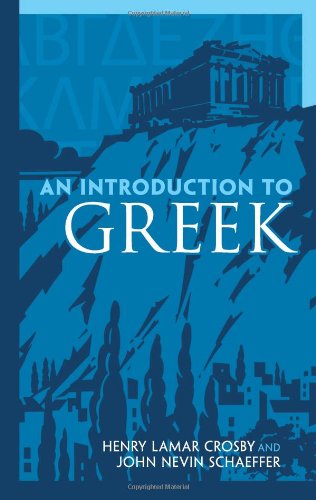
My charming first husband was a language major: give him a language and he could speak it.  I was a School of Letters major interested in dead languages.  Stultified by Lattimore’s lackluster, literal translations of Homer, I signed up for Greek, suffered through Crosby and Schaeffer, the cryptic 1928 textbook written for schoolboys who knew Latin, and then fell in love with Homer, Euripides, and the lyric poets.  I also adored my fellow Greek students.

I was encouraged to study Latin, but had no interest in it.  And yet I turned out to be a sort of Latin savant.  My great affinity is with Latin.  I love Roman poetry. I knew the structure from the Greek, so I didn’t have to waste time learning the grammar.  After a semester I was reading sexy Caesar, charming Catullus, brilliant Cicero (though I thought him a horrible sexist in Pro Caelio about Clodia, who classicists will continue to insist, with very little evidence, was Catullus’s lover, Lesbia), and the irresistible, erotic Ovid.  I won the Latin prize and wanted desperately to continue to study classics.  Just a few more years, I thought…I didn’t want to be a scholar…the idea bored me… I was really more into having boyfriends… I had a new boyfriend (soon to be my second husband) whom I had met in a Latin poetry class…  and I very much wanted to read more Greek and Latin poetry and to postpone getting a job.  I applied to only one graduate school, because I thought the $25 application fee was obscene (I lived on $125 a month) , and then one day in the spring received a letter saying I had an assistantship.

Virgil aeneid williamsGraduate school was also about juggling school and my boyfriend.  I had probably 12 hours of work a day, but I also had a relationship, an an apartment to clean, and cooking. I cut my studying time to eight hours a day.  Despite the graduate advisor’s insistence that we publish before we got out of grad school (publish what?  I wondered, since very few of the students had much of a grip on the languages), I stuck strictly to the languages and translation… oh, and teaching.   I didn’t have time to read articles on eye disease in Aristophanes, or anything that wasn’t written by Bernard Knox, because he was the only  classicist who could write, as far as I could see.  (Oh, and he also wrote about Virgil, my dearest love.)

I got a “high pass” on the Ph.D. Latin exam (I was supposed to take the master’s  exam but I was given the WRONG EXAM.  They were graded blindly and only two of us passed.)  The next year, I worked part-time for the department as a “visiting lecturer”, teaching first-year Latin and an independent study in Virgil while my boyfriend finished his master’s.

Teaching was probably the best thing that happened to me in graduate school.  I knew the Latin by heart after a year of teaching.    I could get a job teaching Latin at private schools anywhere in the country (and did).  Problem:  they paid very badly.  I took editing jobs.  Problem:  they paid badly.  I did freelance work.  Problem: it paid badly.  So I was essentially prepared NOT TO BE ABLE TO EARN A LIVING.

A feminist wife.

Nonetheless, no regrets!  I can’t imagine having done anything else.

Here is a list of six outstanding novels and memoirs about classical educations.
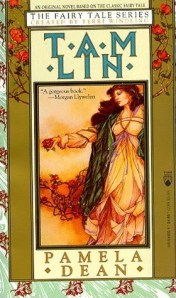
Tam_Lin_by_Pamela_Dean

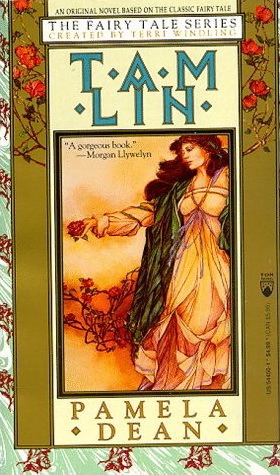
Ignore the cover:this i s actually a college novel.

1. BEST ALL-AGES BOOK ABOUT A CLASSICAL EDUCATON.  Pamela Dean’s Tam Lin, billed as retelling of the “Tam Lin” ballad, is not strictly a novel about a classical education.  Janet Carter, the heroine, is an English major at Blackstock College, a tiny college like Grinnell, or the “little” Cornell (in Iowa), or Carleton College in Minnesota (where Carter got her B.A.).   But from the opening pages we know that classics will be important in the novel:  all classics majors are rumored to be crazy, Chase and Phillips (a first-year Greek textbook) was just the right size to wedge the uneven wooden bookcases in the dorm rooms, and a ghost of a classics major haunts the dorm.

Precocious Janet decides to take Greek, after her pushy advisor, a classics professor, pitches it.  She and her roommates spend time with, and date, beautiful, precocious male  classics students who are oddly theatrical and know as much about Shakespeare as Greek (and they have a secret which I won’t reveal).  They constantly quote Greek and English poetry.    Even in the steam tunnels that connect buildings on campus, they find Homeric graffiti:  the first ten lines of The Iliad painted on a wall.

Dean provides us with three different translations of the 10 lines.  One classics major, Nick, translates a few lines, but another classciist, Robin, objects:  “Don’t give me these newfangled translations.”  Robin then recites the first lines of Chapman’s Homer. (Remember Keats?)  And then, when one of Janet’s roommates asks what the translation means, Robin translates it a third time in modern English.

This is a wonderful novel about an undergraduate education.
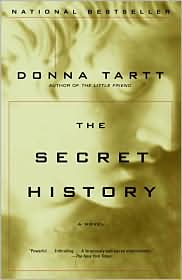
the Secret History2.  Donna Tartt’s The Secret History.  I adored this novel about classics majors who commit a murder, though Publishers Weekly was less enthusiastic.  Here’s an excerpt from the PW review:  “Despite their demanding curriculum (they quote Greek classics to each other at every opportunity) the friends spend most of their time drinking and taking pills. Finally they reveal to Richard that they accidentally killed a man during a bacchanalian frenzy; when one of their number seems ready to spill the secret, the group–now including Richard–must kill him, too. The best parts of the book occur after the second murder, when Tartt describes the effect of the death on a small community, the behavior of the victim’s family and the conspirators’ emotional disintegration. Here her gifts for social satire and character analysis are shown to good advantage and her writing is powerful and evocative. On the other hand, the plot’s many inconsistencies, the self-indulgent, high-flown references to classic literature and the reliance on melodrama make one wish this had been a tauter, more focused novel.

3.  Jude the Obscure by Thomas Hardy.  Jude is a stonemason who wants to study classics.  He struggles with Greek and Latin textbooks on his own.  I would love to reread Jude, but it can’t be done.  Two words:  “Father Time.”  (Jude’s son, Father Time, murders his siblings and kills himself.)  I love Thomas Hardy, but this one goes too far for me.

4.  David Grene’s Of Farming and Classics.  Grene was a classics professor at the University of Chicago, a translator of Greek, and editor with Richmond Lattimore of a series of translations of greek tragedy published by the University of Chicago Press.  (I haven’t read this yet, but it is highly recommended.)

5.  Peter’ Stothard’s Alexandria:  The Last Nights of
Cleopatra
.  Much of this brilliant book is a memoir of Stothard’s classical education, and his fascination with Cleopatra, the subject of his obsession, is rooted in it .
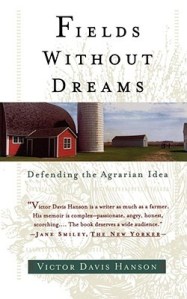
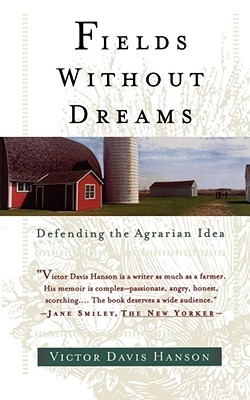
Fields without Dreams6.  Victor Davis Hanson’s Fields Without Dreams: Defending the Agrarian Idea.  Hanson, a classics professor and fifth-generation raisin farmer, has written an elegy to the American farm in this brilliant memoir.  He is so far right (a neoconservative who is a registered Democrat) and I’m so far left (I would vote socialist if I weren’t a little bit conservative) that we almost (but never, never will) agree.   Amazon review:  “Classicist, professor, and farmer Hanson chronicles the decline of small-scale agriculture in the Central Valley of California. He takes his classics seriously, likening the raisin farmers of Modesto to Aeschylus’ ideal virtuous man, who “did not wish to seem just, but to be so.” He takes modern cultural dictates less seriously: “Is it not odd,” he writes, “to rise at dawn with Japanese-, Mexican-, Pakistani-, Armenian-, and Portuguese-American farmers and then be lectured at noonday 40 miles away on campus about cultural sensitivity and the need for ‘diversity’ by the affluent white denizens of an exclusive, tree-studded suburb?” Hanson relates the life stories of his farmer neighbors, writing that their way of life will likely soon disappear, thanks in part to a federal system of agricultural subsidies that favors large-scale, industrial farm corporations over individual “yeomen.” This is a sobering and eye-opening book.”


The Colette Project: Claudine Married

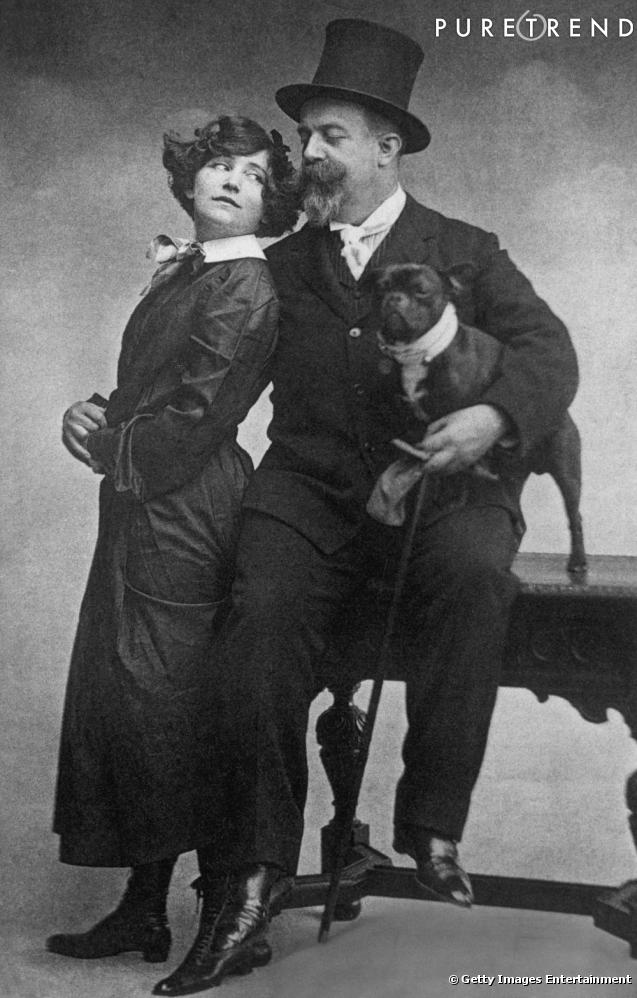
Colette and Willy

Colette and Willy

In January 2012 I announced my Colette Project.

Why I announce New Year’s resolutions I cannot say.  I never keep any of them.

I had intended to read or reread all of Colette’s books, and indeed I have read several in the last year and a half. But this weekend I picked up the project again, reading two of her novels and delving into three biographies, because it is 95 degrees, the brown back yard looks like a scene from a dystopian novel, and I wanted to forget global warming by losing myself in the short, witty Claudine novels.

I read Claudine Married, the third of the four Claudine novels, and Claudine and Annie, the fourth.  (Last year I read the first two, Claudine at School and Claudine in Paris.)

Colette fascinated biographers:  she was a great bisexual beauty, a writer of lyrical autobiographical masterpieces, a pantomime artist, and briefly a cosmetician with her own beauty salon and line of cosmetics.  I have three biographies of Colette on my coffee table:  Allan Massie’s Colette, Judith Thurmon’s Secrets of the Flesh:  A Life of Colette, and Creating Colette, Volume One, by Claude Francis & Fernande Gontier.

No one needs that many biographies of Colette.  But I read some of the chapters this weekend as background for her first novels, the Claudine books.

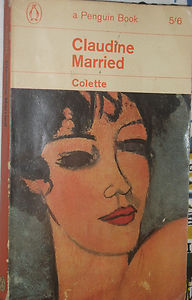
Claudine MarriedIf you don’t know the Claudine books, you are obviously not familiar with Colette.  They are charming, funny, gently autobiographical and slightly smutty, because she wrote them for her husband, Henri Gauthier-Willars (Willy), a well-known writer of soft porn books penned by ghostwriters.

Colette tells the story of Claudine:  her schooldays in Montigny; her late teens in Paris with her absent-minded father, a malacologist, and her romance with Renaud, her future husband; her marriage to Renaud and her lesbian affair with Rezi; and her friendship with Annie, a woman oppressed by a domineering husband.

There are two versions of how Colette came to write the Claudine books.  In the most famous, Willy told Colette to write down her memories of her schooldays, locked her up to write them, thought they were amateurish and put them away for five years, and then looked at them and realized they could earn him some money.

But Colette, in an interview in 1907, told a different version.

He (Henri) wrote books and that did interest me.  One day, I told him that I, too, could write a book.  He burst out laughing and made fun of my pretensions and inexperience. However, without saying a word, I jotted down whatever went through my mind; when there was enough material, I showed it to him; he was flabbergasted, amazed, dumbfounded.

Claudine Married, the third novel, is almost embarrassing after the charming originality of Claudine at School and the sparkling near-perfection of Claudine in Paris.  Colette attempts to titillate with some comic vignettes about Renaud’s attractions to the young  girls at Claudine’s old school (where the teachers are also lesbians, and, yes, this is all very boring but does not go on for very long ).  There are also many scenes of Renaud’s voyeurism when Claudine has an affair in Paris with a young woman, Rezi.  Oh, please! I thought.  But this latter was apparently based on Colette’s life.

Still, I kept wanting to edit out chunks of this short novel.

Claudine begins by telling us there is “definitely something wrong” with her married life.  Then she charmingly if wanderingly recalls her wedding.

What a fantastic comedy my wedding day was!  By the time that Thursday arrived, three weeks of being engaged to this Renaud whom I love to distraction, with is embarrassing eyes, his still more embarrassing (though restrained) gestures, and his lips, always in quest of a new place to kiss, had made my face as sharp as  a she-cat’s in heat.  I could make no sense of his reserve and abstention during that time! I would have been entirely his, the moment he wanted it, and he was perfectly aware of this.  And yet, with too epicurean concern for his happiness–and for mine?–he kept us in a state of exhausting virtue.

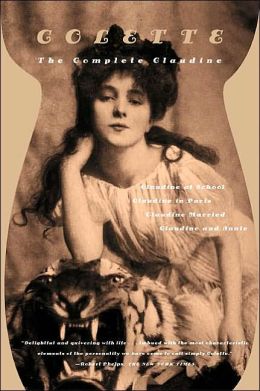
Colette the complete claudineWhen she longs to have an affair in Paris with Rezi, a young beautiful woman who flirts with everyone, it is Rezi who insists that Renaud be told so he can find them a love nest where they won’t be disturbed by anyone.  When Claudine learns that Renaud is also having an affair with Rezi, she leaves him.

In Montigny, she relaxes, meditates,  and finally realizes that she still loves Renaud.  This is realistic (isn’t marriage usually a recovery from this or that?) but somewhat disappointing, since I was waiting for Claudine to turn into Renee, the music hall artist-heroine of The Vagabond (one of my favorite books) who leaves her husband and is totally independent.  But before Claudine and Renaud get back together, they do agree that they will no longer have an open marriage.

Colette’s humorous sketches of the salons of Paris, the witty dialogue, and steamy descriptions of Claudine’s sexual desperation when she and Rezi have  nowhere to go (where would two women dependent on their husbands  at the turn of the twentieth century have gone to have sex?) are so fluently written that one races through the novel, despite a certain glibness.

Here is an example of Colette’s witty dialogue, when Claudine asks Renaud if he thinks Rezi is vicious and then defines viciousness.

I take a lover, without loving him, simply because I know it’s wrong…that’s vice.  I take a lover…”

“That makes two.”

“…a lover whom I love or whom I simply desire–keep still, Renaud, will you?–that’s just obeying the law of nature and I consider myself the most innocent of creatures.  To sum up, vice is doing wrong without enjoying it….”

This novel is fun, but far, far from her best.  I also read the fourth Claudine novel, Claudine and Annie, and it is so slight I have almost nothing to say about it.

Perhaps tomorrow…