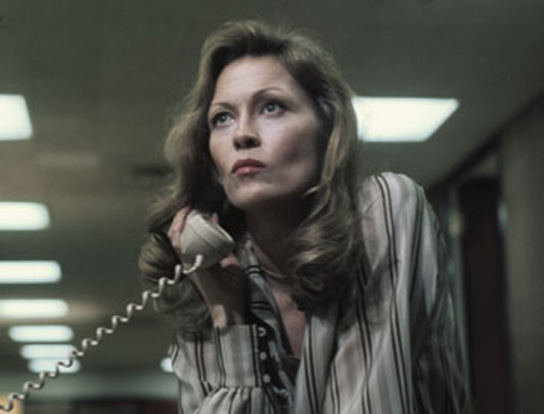
Network

Faye Dunaway in "Network"

Faye Dunaway in “Network”

My friend Janet the poet and I are both blessedly childless, so we haven’t shot our savings on a child’s college education (usually, to judge from our friends, a child who wants to go to a very expensive college). We have plenty of time and money to buy books, bicycle, and vacation in the Caribbean with our husbands/boyfriends.

But these days we spend a lot of time taking care of our parents.

Janet’s mother, Alabama,  calls her constantly at work.

Janet is in the middle of a meeting, preparing an annual report for a nonprofit, when Alabama calls to say that she has a pain “here.”

“Where?  I can’t see you.”

“It’s in my side.  It’s probably appendicitis.”

“Then call the hospital.”

“You know what happened to Kat’s mother,” Alabama says vaguely.  And then she says she needs Janet to bring chocolate chip cookies from Original Cookies, Chinese food from The Dragon, a new garden-theme mug from Ben Franklin, and a dress from Nordstrom’s she saw online.

“I’ll have to buy a cooler for the Chinese food.”  Janet lives 100 miles away.

“Just bring it in a sack.”

“The crab rangoon might go bad.”

I am, sort of, some of the time, taking care of Janet’s mother because we live in the same city, and she likes me.  I got her Chinese food at the Hy-Vee yesterday.  When Janet calls me in her car to say she is on the way to X City with Chinese food from The Dragon, I tell her Alabama had Empress chicken and crab rangoon yesterday.

“Damn her!”  Janet is exasperated.

Alabama is what we used to call a squeaky wheel.  Even ten years ago heads turned when she walked into a room.  She covered organic gardening, and then fashion, for a local newspaper, and then, rather suddenly, became a TV reporter.  It was all about the hair, she used to say.  She knew nothing about being a TV reporter.   Janet thinks it was perhaps all about sleeping with someone at the station.  Alabama dyed her hair white-blonde and tossed it all the time on air.  Her eyelashes were as big as butterflies. She fluttered them.  She says they are real.   Janet says they are fake.

“I hope you’re going to come with me to see her, because I’M REALLY MAD AT HER,” Janet says.

And so Janet and I both visit Alabama.

Alabama is a relatively healthy septuagenarian who still drives, shops, and reads the news all day on the internet.

She says we must go to several websites and read articles on….   Then unfortunately she zeroes in on Janet and trashes her looks.

She checks Janet’s hair and makeup and says she needs to dye her hair a lighter shade of blonde and wear darker foundation.

“I’m not doing that,” says Janet.

Alabama looks at me and says, “You need to lose weight, Kat.”

Janet is horrified.  “Mom!  You know she’s on those pills.”

“Yeah, I’ve got hypothyroidism but I’M IN BETTER SHAPE THAN YOU,” I say, laughing.  God knows, I’ve spent a lot of time with Alabama, and now she’ll change the subject.

Janet quotes her favorite movie, Network, which she grew up watching, due to her mother’s job. “And now we’re going to say, ‘I’m mad as hell, and I’m not going to take it anymore.'”

I just watched Network so I know some better lines.   “‘All I know is first you’ve  got to get mad.  You’ve got to say, I’m a human being, goddamn it.  My life has value.'”

Network?”  Alabama asks waveringly.
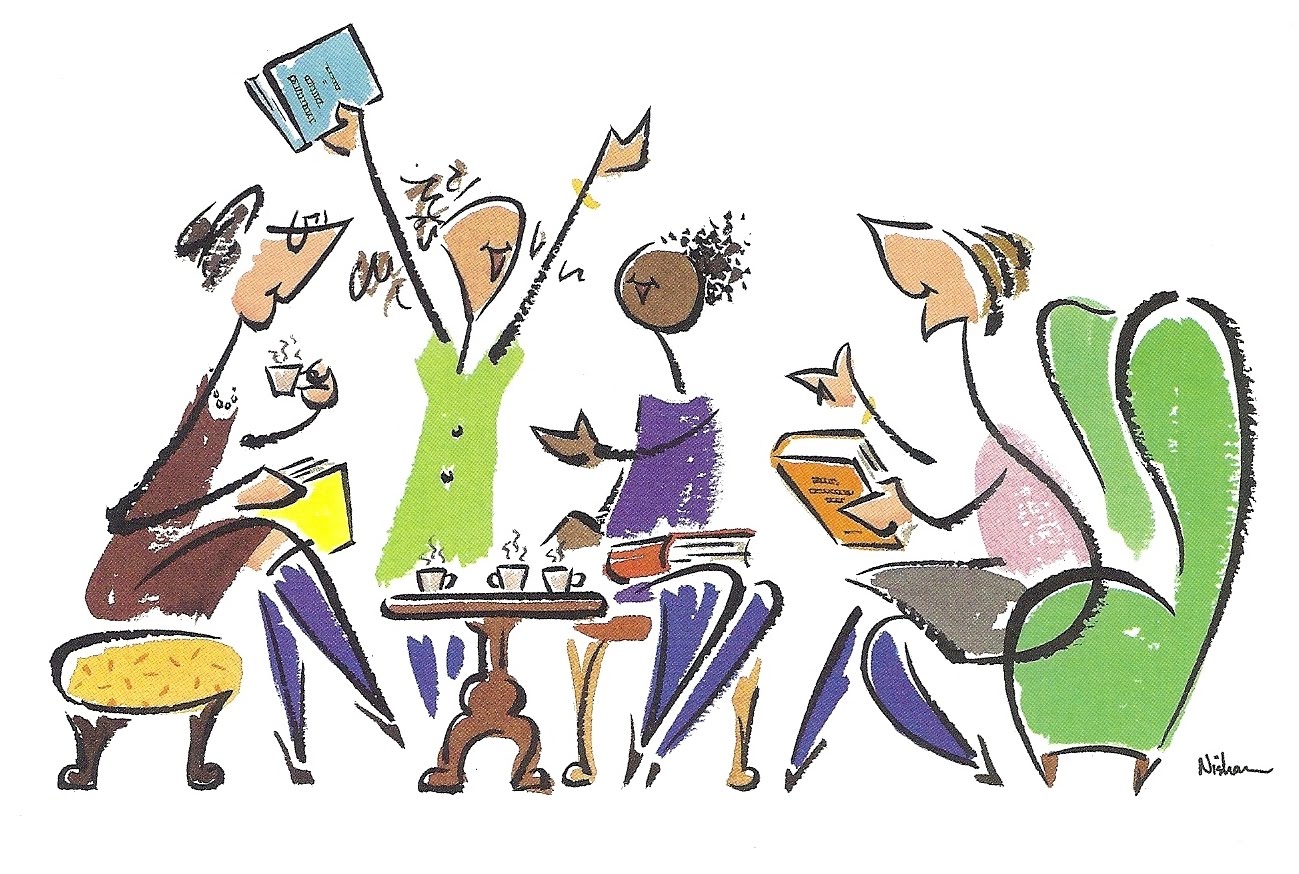
Are Book Reviews Too Conservative?

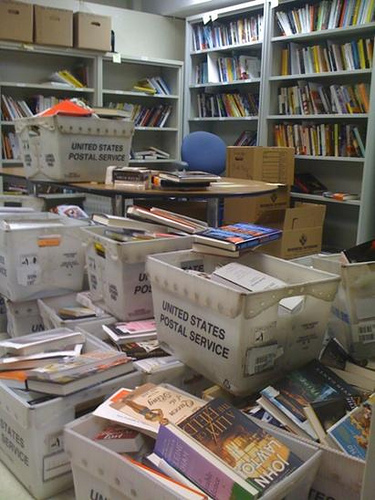
Perhaps book page editors all review the same books because their offices look like this!

A book editor’s office in the U.S.

Are book review editors too conservative?

Do all assign the same books for review?

Could they please tell us if they’re Democrats or Republicans?

If they’re more liberal, do they take more chances on little-known or small-press books?

As I cut back on traditional reviews and limit my online time to reading blogs, Goodreads, and other strictly internet publications, I ask myself questions about what gets reviewed or and what does not.

And so I gave myself a very enjoyable assignment today:  comparing book pages!  (And I got to catch up on reviews.)

Night FilmSadly I discovered that small press books and books in translation rarely get a break.   Only a few, very few, books published by traditional publishers (perhaps 100 a year?), make the cut at book pages.  I understand perfectly why that is:  book editors must keep up with the latest big books, and God help them if they miss the announcement of the new Today Book Club’s selection, Samantha Shannon’s The Bone Season!

Yes, most publications review many of the same books.  For example, here are four interesting books I might like to read, and they are reviewed everywhere.

George Orwell: A Life in Letters, ed. by Peter Davison, has recently been reviewed in The New York Times, The Wall Street Journal, The Boston Globe, and The Christian Science Monitor.

Roy and Lesley Adkins’ Jane Austen’s England has been reviewed or otherwise featured in the Washington Post, USA Today, The London Times, The Daily Mail, and The Huffington Post.

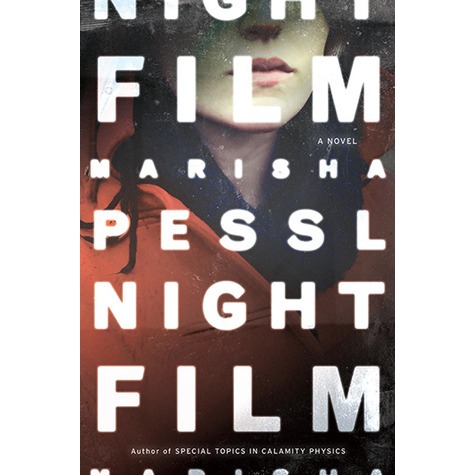
Marisha Pessi’s Night Film has been reviewed in The Washington Post, The New York Times, NPR, The L.A. Times, Elle, and USA Today.

Eugen Ruge’s In Times of Fading Light (translated from the German by Andrea Bell) has been reviewed in  the TLS, The New York Times, The Guardian, The Telegraph, The Boston Globe, and The Star Tribune.

Why should we worship at the shrine of “old media” if every book review publication features reviews of the same few books?  Do we rely on the judgement of the reviewers?  I  don’t.  I sift through reviews to find out what’s out there, and sometimes a bad review will send me rushing to a bookstore.   Ironically, I found my “best books of the year so far” (see sidebar) without reading any reviews.

It is soothing to read blogs because so few write about the same books at the same time, and, often they’re writing about older books. There are some traditional reviewers at blogs, like Kevin from Canada and Asylum.   But many (most?)  write book notes and book journals rather than review.

Provincial Lady in LondonTo give you an idea of bloggers’ interests, here are what some of my favorite bloggers are posting about (and the links are on my sidebar):

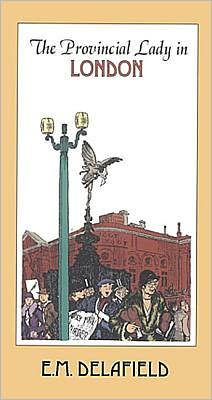
Vintage Reads recently reviewed E. M. Delafield’s  The Provincial Lady Goes Further, a delightful book originally published in 1932 and known in the U.S. as The Provincial Lady in London.

Blogging for a Good Book recently reviewed Robert Morgan’s Gap Creek (an Oprah selection).

Silver Season recently reviewed Philip Roth’s The Human Stain.

Asylum recently reviewed J. Robert Lennon’s Familiar.

The Book Trunk recently reviewed Kitchen Essays, by Agnes Jekyll.

Belle, Book & Candle recently wrote about Edna Ferber’s So Big.

Kevin from Canada recently reviewed Lisa Moore’s Caught.

Thinking in Fragments recently reviewed Elizabeth Kostova’s The Swan Thieves.

Random Jottings recently reviewed Fanny Blake’s The Secrets Women Keep.

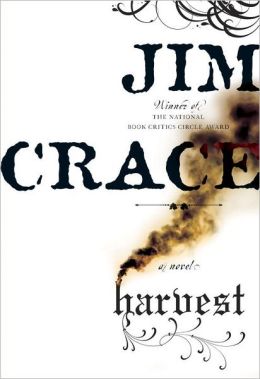
Tony’s Book World recently reviewed Jim Crace’s Harvest, a finalist for the Man Booker Prize.

And I must add, it is almost impossible to cancel subscriptions to “old media” book review publications (or anything else).  They don’t have my name as a subscriber, what’s my address?, did I sign up through Blah Blah Blah, they’ll forward my email to…

What can I say?  I’m “spending” less virtual time.  I will catch up on reviews from time to time.

Please let me know your thoughts:  any pet peeves? any recommendations?

Jim Crace’s Harvest

Every year fervent bloggers read the entire Booker Prize longlist.

I am lucky if I get through two.

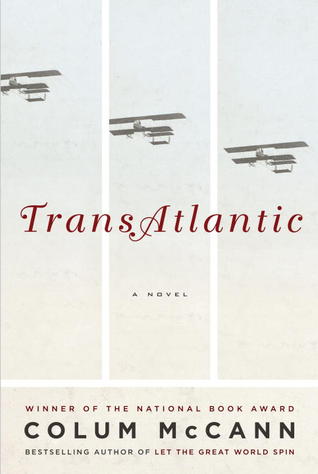
I tried  Colum McCann’s TransAtlantic.  It is elegantly written, but I am not a fan of historical novels, and I saw little connection among the historical characters, so I put it down regretfully after 160 pages.  (Most love this book.)

crace-jim-harvest-cover-022613-margJim Crace’s Harvest, another longlisted book, is a blessedly short, perfect novel.

Harvest begins and ends with fires.  The ring composition is absolute, creating a dizzying verisimilitude.

The narrator, Walter Thirsk, an intelligen farm laborer who loves his simple life, narrates the events that herald change and catastrophe in a feudal village. A dozen years ago, Walter came to the farm as Master Kent’s personal servant; after Walter married, he moved into his own house and  worked on the farm.  Since his wife’s death, Walter has stayed out of inertia.  But he is viewed as an outsider when a blaze disrupts the villagers’ lives.

On the day after the harvest, smoke awakens the villagers.  One twist of smoke indicates that newcomers have built a hut and lit a fire so they can stay; the other that Master Kent’s barn is on fire.  Walter knows, and is sure others know, that three men, the Derby twins and Brooker Higgs, irresponsibly ingested “fairy cap” mushrooms and then accidentally set the barn on fire.  They were trying, while high, to drive away some of the master’s doves that had been thieving the grain.

The barn smells of roasting birds.

Walter’s hand is wounded from the fire and he needs to tend to it. Like the others, he is looking forward to the harvest party and doesn’t want to get involved.  Life is good in the village under Master Kent.  So he doesn’t speak up.

Walter muses:

In any other place but here, such willful arsonists would end up gibbeted.  They’d be on hooks in common view and providing sustenance to the same thieving birds they’d hoped to keep from gleaning.  But, as I’ve said, these fields are far away from anywhere, two days by post-horse, three days by chariot, before you find a market square; we have no magistrate or constable; and Master Kent, our landowner, is just.  And he is timid when it comes to laws and punishments.  He’d rather tolerate a wrongdoer among his working hands than rob a family of their father, husband, son.

And so the newcomers, rather than the twins and Brooker Higgs, are scapegoated for their fire, supposed to have started the fire in the barn while stealing birds.  The two men are pilloried, and the woman disappears.

There are other newcomers:  Philip Earle, known as Mr. Quill, is a charming cartographer, who has come to make two maps:  one of the farm, and one of what it may become when the new owner, Master Jordan, turns it into a sheep farm.

Master Kent’s wife’s cousin is the rightful heir, and Master Kent must step down.  No more barley. Sheep-farming will change the villagers’ way of life.   When Master Kent’s horse is killed,  Master Jordan organizes a hunt for bloodied garments. He is happy to scapegoat women.  He is sadistic.

There are many “twists of smoke” in the plot, but Crace’s strength lies in the stark grace of the prose and the sharply-observed scenes that add up to more than the sum of their parts.  This is a brilliant novel,  worthy of the Booker Prize.

Blueberry Muffins

There was nothing in the fridge except eggs and milk.  I should have gone to the Hy-Vee.  I didn’t want to go, because I was in my housework outfit:  old gym shorts and a Freedom Run ’79 T-shirt. Going to the store would have meant donning a matron shirt  and a bicycle helmet, because after a certain age one does not bicycle to the store without wearing a matron shirt and helmet.

Actually, matron shirt, t-shirt?  Helmet, no helmet?  What does it matter?  But I’m thinking of my mother, who never left the house without wearing matching attire.  At the coffeehouse, she would eat a blueberry muffin without spilling a crumb on her linen pants and matching jacket.  (How she did that I don’t know.)

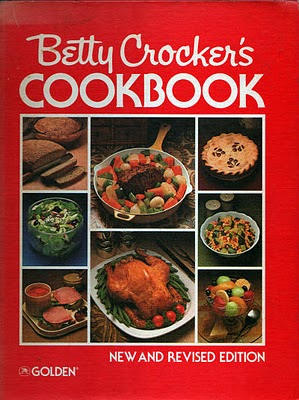
betty-crocker cookbookMom!  Blueberry muffins.

How peculiar that she is no longer here and that I can’t bake blueberry muffins for her.

I thought, Okay, I’ll make muffins.

My old muffin pan does not make those huge late-20th century coffeehouse muffins my mother loved, so I used the recipe in my old Betty Crocker’s Cookbook (1982), because it makes just the right amount of batter for an old-fashioned muffin pan.

The  great thing about muffins is that they’re quick.  You can finish reading Jim Crace’s Harvest while the muffins bake, because ONCE YOU GET OFF THE INTERNET (yes, I’m still cutting back on my time online),  you have more time for other things.

Here is the recipe:

Blueberry Muffins

INGREDIENTS

1 egg
3/4 cup milk
1/2 cup vegetable oil
2 cups flour
1/3 cup sugar
3 tsp. baking powder
1 tsp. salt
1 cup fresh or 3/4 cup frozen blueberries

Heat oven to 400 degrees.  Grease bottoms only of muffin cups (or in my case, a muffin pan).  Beat egg; stir in milk and oil.  Stir in remaining ingredients till the flour is moistened (batter will be lumpy).  Fill muffin cups 3/4 full.  Bake 20 minutes.

An excellent recipe!  I always over-stir the batter, though.  Doesn’t matter: it’s delicious!

Book Groups and Octavia E. Butler’s Parable of the Sower

I’ve belonged to many old-fashioned “real-life” book groups.  I used to lead a book group.  That was my favorite, of course.

book groupBut the popularity of book groups seems to be waning here in my Midwestern city.  The membership of one of my book groups has completely turned around in 10 years.  It is now a kind of lonely group, where older women chat about grandchildren (a stage of life I will never reach, because I didn’t “breed”) and the men talk about their odd hobbies, collecting The Smiths memorabilia or Civil War junk.  If only the women and men would get together…but I think the men are all gay.

The genre book groups I used to attend were more interesting, but have buckled with the closing of Borders. Believe me, mystery and science fiction fans know far more about their genres than the average literary fiction reader knows about contemporary literature.

The interactions at online book groups these days are often more intelligent than those in real-life book groups. Some group members write amazing essays on Trollope, Zola, Clyde Edgerton, Sandra Cisneros, or whomever they are reading.

The history of online groups goes back to the ’80s. When I got online in the late 1990s, AOL hosted dozens of book groups at a site called Book Central, where readers posted on “boards” about what they were reading and the books scheduled for monthly discussions.   One year many of us attended The Southern Festival of Books in Nashville, and it was delightful to meet online friends.   We also heard  Jill McCorkle, Susan Choi, Kaye Gibbons, Lee Smith, Madison Smartt Bell, Daniel Wallace,  and Elizabeth Spencer.

Eventually AOL closed down Book Central.  Many of us left AOL.  And I have to admit, we drifted apart.

And so I joined Yahoo book groups, which are conducted in email instead.  Many of these groups are terrific, but participation has waned over the years here, too.  I haven’t received an email from the Dorothy Sayers group since August 12.  I used to receive 70 or 80 a day.

Bloggers sponsor group reads, but that never works out well for me.  You sign up… you read the book… you blog about it… you go back to the original blog and post a link to your blog in the comments…  it’s kind of like an ad…  maybe two or three people come to your blog… and it doesn’t seem to be much of a discussion.  I am accidentally doing the “Virago All the Time” group read, because I have posted about a Virago, Mary Hocking’s Good Daughters.   I loved Good Daughters, but it’s a family saga, not literature.  I can’t commit to reading books by publisher!  (But don’t be upset with me, Virago fans:  I feel this way about NYRB and Persephones, too.  Some are good; some are crap.:))

A few days ago I announced I would spend less time reading traditional book review publications online like The New York Times Book Review.  With the death of my mother, I realized I don’t want to spend too much time online. I am going mainly to internet-only book sites now.

And guess what?  It works.  I am spending less time online.

But there are no untraditional book sites.  The internet is probably owned by Amazon and Google.

Goodreads (owned by Amazon), Shelfari (owned by Abebooks, owned by Amazon) and LibraryThing (40% owned by Amazon) are the natural places for online book groups now.  Goodreads looks by far the best for book discussions–in fact, it reminds me of the old AOL boards–and you can also set up individual pages about the books you read.  I also find it adorable that Goodreads hosts a 2013 Reading Challenge.  So far, 406,244 participants have posted the number of books they want to read this year.

All right, I’m not into things like that.  But I may join a book group discussion.

Let me know about your “traditional” online book groups, or any “untraditional”  book publications.

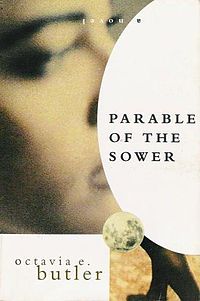
200px-ParableOfTheSower(1stEd) Octavia ButlerScience Fiction.  I just finished Octavia E. Butler’s very well-written, if uneven, novel Parable of the Sower.  Butler is an African-American science fiction writer (1947-2006), winner of the Hugo and Nebula Awards and the first science fiction writer to receive the MacArthur Fellowship.

Parable of the Sower, which I found shelved in the literature section of a bookstore, is a dystopian novel abouta future where (barely) middle-class and working-class people in the U.S. live behind walls, where they struggle to make enough money to buy water, where cities are trashed, and where pyromaniacs take a drug that makes watching fires feel like sex.

The narrator, Lauren, a Baptist minister’s daughter, has hyperempathy, a condition where she feels the pain that she witnesses.  When she bicycles with her family and neighbors to church in their small city in California, she tries not to look at people who are crippled or ill.

…most of the street poor–squatters, winos, junkies, homeless people in general–are dangerous.  They’re desperate or crazy or both.  That’s enough to make anyone dangerous.

Worse for me, they often have things wrong with them.  They cut off each other’s ears, arms, legs…. They carry untreated diseases and festering wounds.  They have no money to spend on water to wash with so even the unwounded have sores.

Lauren loves her father, but she does not believe in his religion.  She has made up her own belief system, Earthseed. She teaches that God is neither good nor bad, God does not care about people, God is change, and you can shape change, i.e., God.  Lauren wants to form an Earthseed community:  the goal will be eventually to travel to a planet where people can live.

Lauren foresees that the neighborhood walls will be destroyed.  But her father explains that you cannot give people too much terrifying information:  it is better to offer classes in self-defense and plant identification than say they will need it. Her father disappears a few days before the neighborhood is burned and looted.  Lauren is the only survivor of her family,

And then it becomes the usual dystopian fiction:  she and two survivors from the neighborhood travel north, hoping to find work.  On the road they make new friends and allies, camp in dangerous places, shoot pyromaniacs, and strip dead bodies of money and clothes. Much of it is quite gruesome.

I have read enough dystopian fiction to last a lifetime, but this is good as that kind of thing goes.  Fans of Peter Heller’s The Dog Stars and Suzanne Collins’ The Hunger Games will undoubtedly enjoy this.   There is a sequel, Sower of the Talents. Perhaps I won’t read the sequel, but I will read more Butler.

My Grandmother’s Letter

a-vintage-style-portrait-of-a-woman-writing-a-noteMy grandmother wrote this letter in 1943 to my aunt.   Those of  you who enjoy Laura Ingalls Wilder’s novels (recently reissued in a Library of America edition) may be reminded of the eighth novel in the Little House series, These Happy Golden Years, in which Alonzo Wilder courts Laura while she is working as a one-room schoolteacher.

December 22, 1943

Dear  Jean,

If you live to be a hundred you may never get another letter from me written in a hospital.

So, for that, and other reasons, this is going to be unique.  No present to send you this year.  Tears squeeze out when I think of it.  All I can do is write to you and Bill.

I thought in the night of a story to tell you.  A romance, if you please.  You’ll say, there is nothing in mother’s story could be like me because we are opposites: she was the timid kind and I’m a go-getter.  (Hard to write, keep watching the door for the doctor.  I’m going to be all relaxed with my eyes shut so he won’t think I’m making too much effort.)  Here it is.  Your father was the best-looking young man in the Wheelerwood neighborhood.  (Neighborhoods were only a few square miles in horse and buggy days.)  Father was the tallest, and handsomest, with dark hair like Bill’s, and had dandified ideas of dressing, and a good-looking horse and buggy to drive which was equal to a car nowadays.  A lady-killer he was, he’d gone with lots of girls and to dances and everywhere young people went to make big time.

Mostly his whoopee was harmless, but a few times he went too far and was ashamed.  I never had a fellow, went once with somebody and the boredom was mutual.  That was the way it was when I was 18.  I had admired Father from a distance since my first sight of him.  He had walked home from Sunday school with us girls once.  Sister Olive was the attraction.  She was thought to be the prettiest but she had a young man coming from Grinnell to see her, so Father dropped that lead.  I was fifteen then.  Later, he went with Estella a year or more, off and on.  Estella was a good dresser, like she always fixed her own girls.  Well, then it happened when I was 18, we had all gone to Wheelerwood S. S. and built a fire and crowded round it to get warm.  When the others scattered around the room I stayed by the stove and so did Father.  That seemed queer but, to be doing something, I opened the “hot blast” in the top of the stove, “so the fire would burn better.”  Dad promptly shut it and told me, “It burns better closed.”  He didn’t know any more than I do, I thought stubbornly and reached again.  Isn’t that silly, remembering every tiny detail.  well, while we lingered there he asked me to go to Fairview church with him that evening and I took the plunge.  I was never one to do things on the spur of the moment and to go with Dad was undreamed of.  We visited together like two people just made for each other.  In all my life I never had talked with anyone like we did.  The second time I went with Father he told me I was his girl and we were going to get married.   This is long in the telling, isn’t it, Jean, and what I just wrote is a proper ending.  But it took three years courting after that.  You see I had read many a story of girls who believed and trusted to their sorrow.  No gay young man was going to make a fool out of me.  So whenever Dad talked getting married (which was every blessed evening we spent together, ambling along country roads behind old Prince or Daisy), I was on my guard.  One Friday evening he brought me home from Wilson’s where I boarded and taught school and I had been doing some stern thinking–why does he go to all this trouble, taking me so far in this bitter cold weather (6 or 8 horse miles) every Sunday and Friday?  It isn’t possible that he loves me because I’m so dumb and homely.  Well, I can’t figure it out but I must say Thank You.  I did, just when Dad was putting his coat on after warming in the kitchen.  It made him angry and he made me take back that Thank You, incautious whispers so as not to wake the sleeping family.  “But I don’t know why you do it,” I told him and he answered, “You do, too, know why I do it” and kissed me and went home.  The second Christmas he gave me my ring.  I accepted it but with reservations in my own mind.  Used to give him back my ring every so often, and then we had to talk and talk for hours, ironing out all the misunderstanding, and then I’d have my ring back and everything was like heaven between us, all but that stubborn doubt I never could quite be rid of.  Remember once I planned to settle it, more matter of fact about breaking our engagement, only not give him back the ring at all.  Because he used to no pay much attention to what I said, only insist that I must keep wearing my ring.  This time he wouldn’t know until later when he found the ring in his breast coat pocket.  I got it slipped in there cautiously, and then I got scared for fear he might not find it and it be lost.  From somewhere about me I got hold of a safety pin–oh, goodness, was I a silly girl.

Jean, I always meant to tell my daughters about their father and mother, if they cared to listen.  But whether you read all this through or not it is a secret between us that I’ve told you.  We women ought to stick together.

Love,

Mother

Miss Manners, My Mother, & Doris Lessing’s The Diary of a Good Neighbour

Sleeping_Girl_crying source_cropped lichtensteinMy cousin complimented me on not wearing black to the funeral.

“Such a cliché.  Wear what you want!”

I raised my glass of tea ironically.  “Yeah!  Power to the people!  Smash the state.”

Miss Manners says you should wear something dark to a funeral, but f___ Miss Manners.  If you have a beautiful dress, you wear your beautiful dress.  If, like me, you haven’t worn a dress in 10 years, you wear trousers and a decent shirt.

I never wear black in the summer:  it’s just too hot.

My mother didn’t own anything black.  Not one thing.  Nor did her elderly friends wear black to the funeral.  They wore multi-colored trousers and tops.

My cousin made a point of attending  my mother’s funeral, but then had to drive 100 miles back so she could go to work at the library (1-8 shift).  I haven’t seen her since the funeral.  I haven’t answered  the phone.  Today she showed up with food, drink, and 10 genre books.

“I’m taking away that Latin dictionary,” she said.  “You are not to read more of that multas per gentes.”

“It would have been good at the funeral.”  I’m talking about Catullus’s elegy to his brother (101).  It begins, multas per gentes

“Yeah, good for whom?”

“My mother was the valedictorian.”

We laughed.   We think my sibling made that up for the obituary.  I certainly never heard it.  My mother used to tell us she got B’s.

“I couldn’t believe he put your name wrong in the funeral ‘program,'” she said.

I kept my maiden name, because I believe the name you are born with tells you who you are.  (In my case, from a family of eccentrics.)  But my sibling put my husband’s last name in the obituary and on the funeral program. The priest referred to me a few times by the name that is not my name.

“Want a drink?” my cousin asks.

“Oh, come on!  I’m on pills!”

We put her Dos Equis in the refrigerator.

I’ve been trying to sleep.  Ten hours if necessary. But I’ve been waking up very, very early.  I look at photo albums and her old yearbooks. So lovely!  The picture in the obituary was appalling:  a picture of her in old age.

Cheer up.

I watched part of M. Night Shyamalon’s Unbreakable, but I have to say it wasn’t very cheering.

Then there’s the mistake of the novel I’ve been reading.

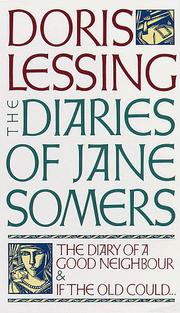
Diaries of Jane Somers Doris LessingI read Doris Lessing’s The Diary of a Good Neighbour, a novel she wrote pseudonymously under the name Jane Somers.  I did not know when I picked it up that it was a novel about a middle-aged woman’s friendship with an elderly woman. (It is appropriate, but I was looking for escape.)  Jane Somers, the narrator, an assistant editor of a women’s magazine, befriends Maudie, a ninetyish woman she meets at a pharmacy.  And she does things for Maudie that she had not done for her own dying mother.

It is the smell that gets to her.  Maudie is incontinent.

When I got home that evening I was in a panic.  I had committed myself.  I was full of revulsion.  The sour, dirty smell was in my clothes and in my hair.  I bathed and washed my hair and did myself up and rang Joyce and said, ‘Let’s go out to dinner.’  We had a good dinner at Alfredo’s and talked.  I said nothing about Mrs. Fowler, of course, yet I was thinking about her all the time.  I was looking around at the people in the restaurant, everyone well dressed and clean, and I thought, if she came into this restaurant…well, she couldn’t.  Not even as a cleaner, or a washer-up.

Lessing is always brilliant.  That is how it was when my mother got very old.  When I visited,  I washed her if she didn’t make it to the bathroom.  It was clear she could not manage at an assisted living facility, which does not supply services for the disabled or very ill, but it took many emails to relatives, her breaking a hip and lying all night on the floor unattended, and the intervention of my mother’s neighbor (who called the director and accused him of elderabuse) before she got out of there.

Twenty-four-hour care at home would have been best, and she could have afforded it, but she was put in a five-star nursing home, which at least was better than the ALF.  The care was adequate, but once I was hit with such a bad smell that I couldn’t sit in the room.  I demanded cleaning supplies and air freshener.

In Lessing’s book, Maudie is afraid of losing her apartment and being put into a home.  Jane makes it possible for her to stay by visiting every day, buying groceries, doing some cleaning, and eventually getting her to accept some social services.

Maudie, like my mother, was not ready to die when the time came.

Jane thinks:

Oh, God, if only she would die.  But of course I know this is quite wrong.  What I think now is, it is possible that what sets the pace of dying is not the body, not that great lump inside her stomach getting bigger with eery breath, but the need of the Maudie who is not dying to adjust–to what?  Who can know what enormous processes are going on there, behind Maudie’s hanging head, her sullen eyes.  I think she will die when those processes are accomplished.

“Help me,” my mother said.  I’ll always be haunted.  As my husband said, she took a sip of orange juice as soon as I sat down and held the cup with straw up to her mouth.

So if I had been there…?

One can’t think like that.  She lived a long life.

I was not her caregiver or heir.  I was the daughter who lived far away for most of her life.

I am sure she is at peace now.

Here is Catullus 101:  Adapted as an elegy for my mother, by changing endings from masculine to feminine.  The internet is sort of like the afterlife, don’t you think?

Multas per gentes et multa per aequora vecta
advenio has miseras, mater, ad inferias,
ut te postremo donarem munere mortis
et mutam nequiquam adloquerer cinerem,
quandoquidem fortuna mihi tete abstulit ipsam,
heu misera indigna mater adempte mihi.
nunc tamen interea haec, prisco quae more parentum
tradita sunt tristi munere ad inferias,
accipe pio multum manantia fletu
atque in perpetuum, mater, ave atque vale.

The Simple Life

library of america louisa-may-alcott-little-women-men-jos-hardcover-cover-artMy mother’s life was very simple.

No computer.  No answering machine.

My sibling claims she was valedictorian of her high school class, but I think he made it up for the obituary.

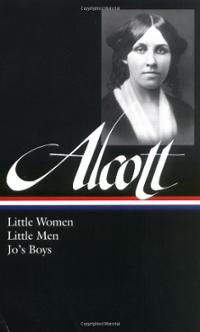
Out of the house every day. Dinner at my grandmother’s or Hamburg Inn.  Movies.  Made sure I had a copy of Little Women and a bicycle and then left me alone.

Squinting:  "Thanks for the bike, Mom!"

Squinting: “Thanks for the bike, Mom!”

I still read.  Obviously.  A hard-core environmentalist, I never learned to drive.  Deliberately.  I am still riding my bike.

But today I went to 36 sites online, most of them book-related, instead of biking.  (Well, I biked to the store, but that doesn’t count.)

Why didn’t I turn off the computer?

Much as I love book reviews, I am weary of them.

It happened this week.  Suddenly.  After the funeral.  I realized I need time, not online time.

Why go to The New York Times when I have already read my 10 free articles for the month?  Or The Washington Post Book World, where absolutely nothing looks interesting lately?  I can’t possibly read every book in translation I read about in the TLS.  I don’t need to read book review publications more than once a month.

I am cutting way, way back.  I will use my online time for internet-only features like blogs and internet magazines.

The internet is for the unconventional, right?  Or used to be.  So why use it for traditional stuff?

I have been uninterested in the new books reviewed lately.  No way am I reading the heavily-promoted Hothouse: The Art of Survival and the Survival of Art at America’s Most Celebrated Publishing House, Farrar, Straus, and Giroux, by Boris Kachka.

I don’t like that sucking-up of “Most Celebrated” in the title. And it so happens that none of the books I’ve loved this summer has been published By FSG.  Steve Yarbrough’s The Realm of Last Chances (Knopf).  Karen E. Bender’s A Town of Empty Rooms (Counterpoint).  Andre Aciman’s Harvard Square (Norton).  I pay no attention to publishers, but that’s the way it’s turned out.

Pamela Erens’ The Virgins (Tin House), yet another novel about an “exclusive boarding school,” received a rave review by John Irving in The New York Times.  It may be brilliant–I don’t know Erens’ work–but I gave up boarding-school lit after Ursula Nordstrom’s The Secret Language.

And I can’t read any more books about the Kennedys, even if Thurston Clarke’s JFK’s Last Hundred Days is good.

Here is a list of books I’ve read this month.  Only one new book, and I found out about none of them from reviews!

  1. Anna Karenina. A reread I started last spring and just finished.  One of my favorite books.
  2. Good Daughters by Mary Hocking.  Ad in back of Virago.
  3. The Realm of Last Chances by Steve Yarbrough.  At Amazon or Barnes and Noble website.
  4. No More Parades and A Man Could Stand Up–, by Ford Madox Ford.  Rereads.
  5. Cassandra at the Wedding by Dorothy Baker.  A reread, inspired by Emily Books.

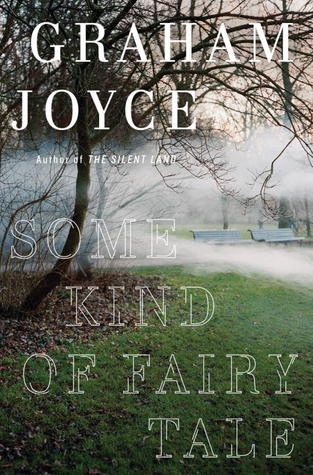
Some Kind of Fairy Tale graham joyceNot only do I not need reviews, I apparently no longer need award lists.  Today I discovered that I have read two of the finalists for the World Fantasy Award for Best Novel without reading any reviews.  Graham Joyce’s Some Kind of Fairy Tale is a brilliant novel about a woman who disappeared 20 years and returns saying she was abducted by faeries (or was she psychologically damaged?); and The Drowning Girl by Caitla­n R. Kiernan is a strange, lyrical, fantasy-cum-psychological novel.

My husband says I’m a book magnet, and I think it’s true.

I’ll still be blogging and reading your blogs, but I’ll be leading a simpler life online.  If you have any recommendations for internet-only sites–like book clubs at GoodReads–I’m game!

Ford Madox Ford’s Parade’s End

parades-end-ford-madox-hardcover everymanYes, Christopher Tietjens is my favorite character in literature.

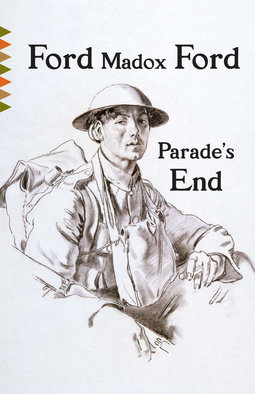
He is the hero of Parade’s End, Ford Madox Ford’s elegant Modernist tetralogy about World War I: Some Do Not…, No More Parades, A Man Could Stand Up–, and The Last Post.

There is no one like Tietjens, not in my life, nor in yours. We’ve all had smart, witty boyfriends and husbands, but is there anyone as honorable as Tietjens?  Not in the twenty-first century.  He is thoughtful, ethical, chivalrous, philosophical, decent, a brilliant statistician, almost soldier-like in his morality.  His society wife, Sylvia, a beauty whose son is probably not Tietjens’, though he is Tietjens’ heir, has affairs.  He declines to live with her, but because  Sylvia is Catholic, there can be no divorce.  He gives her money and the run of the estate, Groby.  And he enlists in the Army even though he is over forty (as Ford Madox Ford did), partly because he knows he can be a good officer, partly because there is no life for him in England.  Parades’ End is partly autobiographical, the critics say.

In the second novel, No More Parades, we see the extent of Sylvia’s depravity and viciousness:  she wants Tietjens back so she can humiliate him.  She ruins Tietjens’  reputation in the Army by lying about his politics (she says he is a socialist) and by claiming that he is having an affair with a young woman (she is the one having an affair, cruelly, with a man under Tietjens’ command). A general who is in love with Sylvia ships Tietjens to the front, believing he will die there.

In the third novel, A Man Could Stand Up– (which I have just finished), Tietjens waits for the war to end so “a man could stand up.” He is tired of crouching in the trenches, but standing up can get people killed.  The account of a day in the trenches is harrowing.  He is first in command by default, much loved by the men, but he has shell-shock and is afraid of going mad.  But he wants to keep the command for the money.

…Damn it, he was going to make two hundred and fifty quid towards living with Valentine Wannop–when you really could stand up on a hill…anywhere!

Parade's End Ford Madox Ford vintageBefore the war Tietjens met and fell in love with Valentine Wannop, a suffragette.  But he would not make love to her, because she was the daughter of his father’s oldest friend,  and he could not  marry her.

Valentine, however, looked at it differently and was insulted.  She muses about the fact that no one has ever gone mad for her freckled, sandy, snub-nosed looks.

A Man Could Stand Up begins with Valentine’s consciousness, and ends by alternating her point-of-view with Tietjens’.   Valentine hears from Lady MacMaster, a woman who is indebted to Tietjens because he chivalrously did work for her husband that MacMaster took credit for, that Tietjens is back in London, mad from the war and asking for Valentine.

And so Valentine thinks about her relationship with Tietjens.

She had never–even when they had known each other–called him anything other than Mr. So and So… She could not bring herself to let her mental lips frame his name…. She had never used anything but his surname to this gray thing, familiar object of her mother’s study, seen frequently at tea-parties…. Once she had been out with it for a whole night in a dogcart!  Think of that!… And they had spouted Tibullus one to another in moonlit mist.  And she had certainly wanted it to kiss her–in the moon-lit mists a practicality, a really completely strange bear!

A Man Could Stand Up– is a remarkable, harrowing novel about love and war.  In a different, modernist style, Ford’s book is as moving as War and Peace.

Ford considered himself an Impressionist writer, according an article by Max Saunders, Ford’s biographer, in The New Statesman (Sept. 7, 2012).  There is action, dialogue, and stream-of-consciousness punctuated with dashes, ellipses, and exclamation points.

I cannot tell you if I am in love with Ford or Tietjens, since I have not read a biography of Ford.

But I assume it is Tietjens.

Man Booker Prize Longlist 2013

Man Booker 2013 logoI have blogged about the Man Booker Prize every summer since 2009.  This year I haven’t mentioned it.

But I love awards.

Only I’m a little wary now.

I used to read a couple of the Booker longlisted books every year.  Occasionally, but not often, I got around to the winners.

Naturally, I complained a great deal.  My favorites never won.  What happened to A. S. Byatt’s The Children’s  Book?  Or Sebastian Barry’s On Canaan’s Side?

I couldn’t face Hilary Mantel’s Wolf Hall (the 2009 winner). I couldn’t even keep my Cromwells straight.  I thought her novel was about the other Cromwell, Oliver.  No, it was about Thomas.  No American would want to read about Oliver or Thomas Cromwell, I thought.  (I read it last year, however, and it was as good as everyone said.)

In 2010 I bravely read a few  inconsequential books on the Booker longlist, like Lisa Moore’s Feburary  (which I compared  to the episode of Friends where Rachel had the baby) and Alan Warner’s The Stars in the Bright Sky (surely a Y.A. book!)

In  2011 Dame Stella Rimington, the chair of the judges that year, emphasized the prize would go for readability.   I read a couple of very violent books on that longlist:  Yyvette Edwards’ A Cupboard Full of Coats  and Stephen Kelman’s Pigeon English (surely another Y.A. book!).  The literary novels, with the exception of the winner, Julian Barnes’s The Sense of an Ending, didn’t make the shortlist.

How about last year?  Sorry, I am so far behind I haven’t read any of them except Will Self’s Umbrella. But in 2012, Sir Peter Stothard, TLS editor, author of Alexandria:  The Last Days of Cleopatra, and chair of the judges last year,  said they were interested in literary fiction.  Writers and critics were pleased.

Last year I caught up with previous winners.  I finally read Mantel’s Wolf Hall (2009), and Howard Jacobson’s The Finkler Question (2010).

And so this year I am catching up with Julian Barnes’s The Sense of an Ending (2011) and HIlary Mantel’s Bring Up the Bodies (2012).  Then I will have read almost the complete list of Booker winners.

Where does this leave the 2013 longlist?

I have already read most of Colum McCann’s Transatlantic (beautifully-written, but disappointing: the historical transatlantic-in-Ireland segments don’t connect very well ).  I also have  copy of Colm Tóibín’s The Testament of Mary (written originally as a monologue, so I am doubtful, but I will read it).

Transatlantic colum mccann

I will decide whether to read the other longlisted books on a scale  of my own invention:

1.  The Basically American Scale”:  Jhumpa Lahiri, winner of the Pulitzer Prize

2.  The Most Interesting Scale:  Jim Crace

3. The Great Writer Scale:  Colm Tóibín

4.  The Best Little-Known in the U.S. English Writer:  Charlotte Mendelson

I’m sure many of these other writers are excellent, too, but I don’t know their work.

Here is the complete list.   And if you’ve read any of them and can recommend them, let me know.

Tash Aw – Five Star Billionaire
NoViolet Bulawayo – We Need New Names
Eleanor Catton – The Luminaries
Jim Crace – Harvest
Eve Harris – The Marrying of Chani Kaufman
Richard House – The Kills
Jhumpa Lahiri – The Lowland
Alison MacLeod – Unexploded
Colum McCann – TransAtlantic
Charlotte Mendelson – Almost English
Ruth Ozeki – A Tale for the Time Being
Donal Ryan – The Spinning Heart
Colm Tóibín – The Testament of Mary