
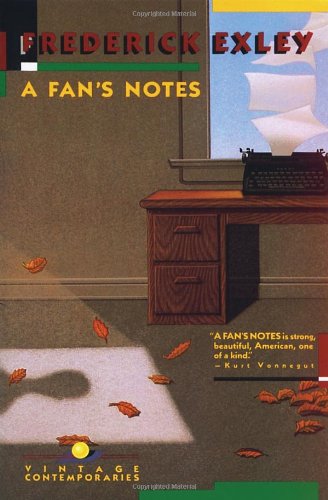
In Chapter One, the narrator criticizes book reviews.
Professional critics often write articles protesting that the internet has shattered literary criticism. Then they explain why we should read literary criticism.
There I am, reading these articles and wondering if they were written with someone else in mind. Perhaps these articles should be published in another section.
But the internet has destroyed the newspaper business, and I am anxious about the future of book reviews. For many years I didn’t bother with the news at all. I turned straight to the book reviews.
In The Guardian on July 19, Nicholas Lezard defended the role of the professional critic and explained why he despises Amazon reviews. He quoted Amazon reviews which are characterized by misspellings and unwitting ellipses, and wrote sic next to the errors.
Then he writes,
When I look on Tripadvisor to see whether I am going to be staying at Fawlty Towers or not, I consider most people are capable of spotting rats in the serving dishes. But I do not feel the same way about reactions to artistic endeavour.
He modestly says he likes to read reviews by people who are brighter than he is, but he lets us know that his are smart, too.
Not that mine are necessarily the shiniest and sharpest in the box; but they’re good enough to keep me in work, touch wood, for all that critics these days feel they’re the canaries in the cultural coal-mine.
Lezard’s essay is well-written, if a bit supercilious. But I enjoy Amazon reviews: they are refreshingly forthright.
Still, I love professional reviews: I even subscribe to book review publications that are clever enough not to publish all their articles on the internet.
But I don’t think reviews and criticism are interchangeable, and the nomenclature in these articles confuses me. Is there a difference between reviews and criticism, or do I imagine it? You will find lively pop reviews in Entertainment Weekly, The Chicago Tribune and The Miami Herald; but long, serious, critical essays in The New Yorker and The New York Review of Books.
How seriously should we take reviews? The novelist Frederick Exley and brilliant novelist and essayist George Orwell didn’t take them quite as seriously as some critics do. They were critical of the critics, or at least of book reviewers.
In Frederick Exley’s brilliant novel, A Fan’s Notes: A Fictional Memoir, the narrator, an alcoholic writer who has taken a job as a high school English teacher, spends the weekends in his hometown, Watertown, New York, getting drunk and watching the Giants games. But on Sundays he reads the book review sections.
I read them with nostalgia and remorse. There was a period when I had lived on book reviews, when I had basked and drawn sustenance from what I deemed the light of their intelligence, the beneficence of their charm. But something had gone sour. Over the years I had read too much, in dim-lighted railway stations, lying on the davenports of strangers’ houses, in the bleak and dismal wards of insane asylums. The reading had forced the charm to relinquish itself. Now I found that reviews were not only bland but scarcely, if ever, relevant; and that all books, whether works of imagination or the blatant frauds of literary whores, were approached by the reviewer with the same crushing sobriety. I wanted the reviewer to be fair, kind, and funny. I wanted to be made to laugh. I had no better luck that Sunday than on any other.
George Orwell in his essay “Confessions of a Book Reviewer” humorously describes a reviewer who must write on demand about subjects he knows nothing about.
Half hidden among the pile of papers is a bulky parcel containing five volumes which his editor has sent with a note suggesting that they ‘ought to go well together’. They arrived four days ago, but for forty-eight hours the reviewer was prevented by moral paralysis from opening the parcel. Yesterday in a resolute moment he ripped the string off it and found the five volumes to be Palestine at the Cross Roads, Scientific Dairy Farming, A Short History of European Democracy (this one 680 pages and weighs four pounds), Tribal Customs in Portuguese East Africa, and a novel, It’s Nicer Lying Down, probably included by mistake. His review — 800 words, say — has got to be ‘in’ by midday tomorrow.
Orwell says that no review should be shorter than 1,000 words. Do reviewers get even that much nowadays?
I love literary criticism, but I recently looked at a 2000 The New Yorker, and noticed reviews were longer then.
And just a note to show you all that I do take reviews seriously.
I don’t read many new books, but I’ve read nine this year because of book reviews: Some Kind of Fairy Tale by Graham Joyce; The Silent Land by Graham Joyce; Aeneid, Book XII, ed. by Richard Tarrant (Cambridge); Dante’s The Divine Comedy translated by Clive James; My Brilliant Friend by Elena Ferrante; The Mussels Feast by Birgit Vanderbeke; House Mother Normal by B. S. Johnson; Big Brother by Lionel Shriver; and Harvard Square by Andre Aciman.




 mirabile dictu