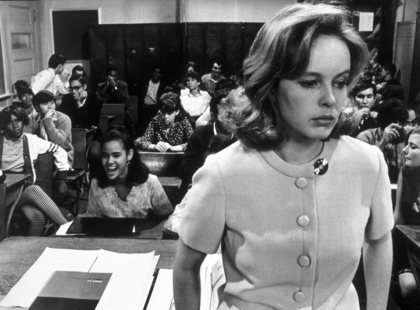
Work & Eight Great Novels of the Workplace

Up the Down Staircase:  A Really Bad Day in the Workplace

Up the Down Staircase: A Really Bad Day in the Workplace

According to a Gallup poll, 70% of American workers are ‘not engaged’ or ‘actively disengaged’ and are “emotionally disconnected from their workplaces’ and ‘less likely’ to be productive.

That means they don’t like their jobs.

I’m not surprised.

Women of my generation who earned liberal arts degrees from state universities didn’t think much about the looming spectre of the workplace.   The women who would be CEOs and the nation’s leaders graduated from other schools.

It was assumed we would teach.

We would teach the children of the CEOs.

We taught.

My first friend to earn a Ph.D. in English quit her job as a Visiting Lecturer after one year and went to library school.

My most brilliant friend taught at several colleges and was denied tenure.  He went to law school.

My first friend to teach at a boarding school wrote me a long heartbreaking  letter saying that she was wasting her life.  She quit to get married.

I taught for a few years, but like most of us found it so draining that I went on to other gigs.

The workplace can be an office, a factory, a store, a restaurant, an insurance company, a dot.com.

Since all of us work, have worked, or have calculated ways to work less or not at all, it is odd that work is not described in fiction more often.

Here is a  list of Eight Works of Fiction about the Workplace.  I need two more for a traditional ten, so please recommend.
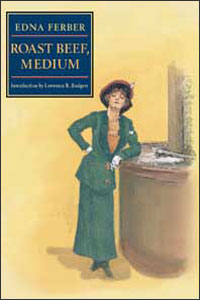
Roast Beef Medium edna ferber1. In Edna Ferber‘s brilliantly funny collections of career-woman short stories, Roast Beef, Medium, Personality Plus, and Emma McChesney & Co., the plucky heroine, Emma McChesney, is a very successful traveling saleswoman. She rises from traveling petticoat salesman – she has the much-coveted Midwest region – to partner of Featherstone Petticoats.

Sometimes when Emma is on the road, she is nostalgic for roast beef.

As Emma McChesney loitered, looking in at the shop windows and watching the women hurrying by, intent on the purchase of their Sunday dinners, that vaguely restless feeling seized her again. There were rows of plump fowls in the butcher-shop windows, and juicy roasts. The cunning hand of the butcher had enhanced the redness of the meat by trimmings of curly parsley….There came over the businesslike soul of Emma McChesney a wild longing to go in and select a ten-pound roast, taking care that there should be just the right proportion of creamy fat and red meat…. She ached to turn back her sleeves and don a blue-and-white checked apron and roll out noodles.
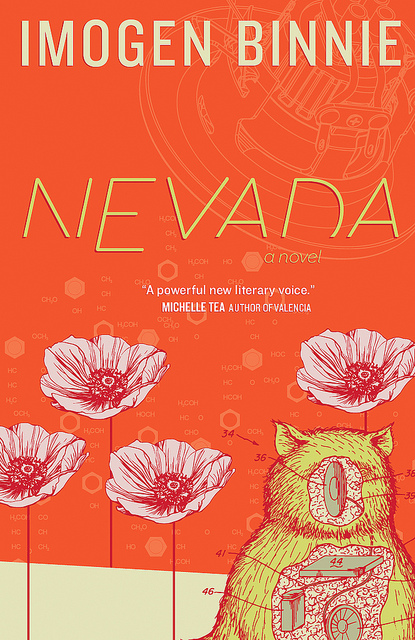
Nevada Imogen Binnie2.  In Imogen Binnie’s bold, if wildly uneven, new novel, Nevada (the selection of this month’s Emily Books club), the heroine, Maria, a transgender woman, works in a bookstore in New York City until she breaks up with her girlfriend and takes a road trip.  With the road trip the novel turns into a kind of Y.A. novel, but here Maria thinks about her job.

It is a bookstore, though, so she gets, like, I am looking for this book, it has a blue cover, a lot.  It’s supposed to be the worst annoying thing you can ask a book seller, but she’s into it.  People alays think they know less thatn they acutlaly do about a book.  She can usually draw it out of them and figure it out.  When did you see it?  Where did you hear about it?  Is it a happy book?  These conversations can almost be like a moment of actual human connection, except it’s basically a one-direction connection.  Maybe in another life Maria will be a therapist or a social worker or something.
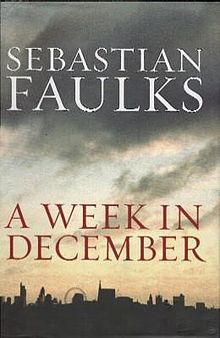
220px-WeekInDecember sebastian faulks3.  In Sebastian Faulk’s A Week in December his characters’ attitudes toward the workplace are brought into sharp relief the week before Christmas.  Jenni Fortune, an underground tube driver, loves her job but is being sued by a “jumper”;  Gabriel, a depressed lawyer, loves to read Balzac but is bored by his job;  Veals is an unscrupulous financier who likes to take phone calls in an alley; and Tranter is a freelance book reviewer interested only in bad reviews. “Crash was what he wanted:  crash and burn–failure, slump, embarrassment.”

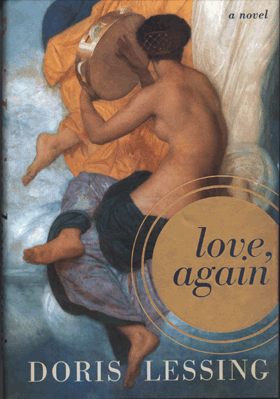
4.  In Doris Lessing’s Love, Again,  the 65-year-old heroine, Sarah, a powerful, busy playwright and manager of The Green Bird, a “fringe theater” in London, writes a play and song lyrics based on the journals and music of Julie Vairon, a French mulatto artist and composer.  When they rehearse the play in France  for a festival to be staged near Julie’s house in the woods, the atmosphere becomes romantic and enchanted; and the sexual tension is palpable.  People begin to fall in love, but the novel is also about the theater.
doris-lessing love, again5 & 6.  In William Cooper’s charming autobiographical novels, Scenes from Provincial Life and Scenes from Metropolitan Life,  the narrator, Joe Lunn, describes his work as a physics teacher in a boys’ school and a civil servant in London.
Scenes from Provincial life & Metropolitan life7.  H. G. Wells’ Kipps, a  charming fairy tale,  is the story of a draper’s apprentice whose life is magically transformed by a legacy.  Wells, who also worked in a draper’s shop, portrays  Kipps’s boredom and bewilderment during the long hours at this unfulfilling job.

His round began at half-past six in the morning, when he would descend, unwashed and shirtless, in old clothes and a scarf, and dust boxes and yawn, and take down wrappers and clean the windows until eight.  Then in half an hour he would complete his toilet, and take an austere breakfast of bread and margarine and what only an Imperial Englishman would admit to be coffee, after which refreshment, he ascended to the shop for the labors of the day.  Commonly those began with a mighty running to and fro with planks and boxes and good for Carshot the window-draper, who whether he worked well or ill, nagged persistently, by the reason of chronic indigestion, until the window was dressed.

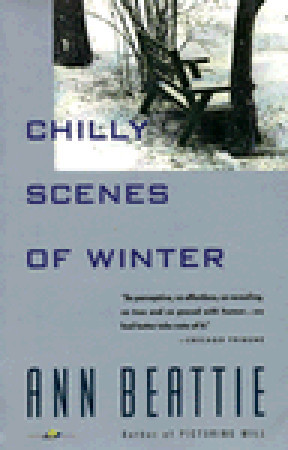
8.   Ann Beattie’s Chilly Scenes of Winter.  Charles works as a civil servant and pines for Laura, a librarian who used to be his girlfriend; his best friend Sam is an unemployed jacket salesman.  In the ’70s, when this novel is set, college graduates were as underemployed as they are now.  Beattie understands office life.
Chilly Scenes of Winter

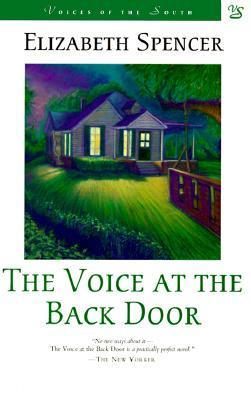
Mirabile Goes Southern: Elizabeth Spencer’s The Voice at the Back Door

Elizabeth Spencer The Voice at the DoorThere comes a time in summer when it is too hot to go to Shakespeare in the Park and I have already been to  all the bookstores and museums.  So I sit in my Adirondack chair in the back yard and look at my new trees (there was a bird in the linden yesterday). And then I pick up a copy of Elizabeth Spencer’s The Voice at the Back Door and that is the last you will see of me for days.

This superb novel, set in Mississippi in the 1940s, is a gorgeously-written story of Southern politics, race, and romantic love triangles.  Although the Pulitzer Prize fiction jury recommended it for the prize in 1957, the board of directors chose not to grant the award that year. (Anyone who has read this astonishing novel knows how fatuous that decision was.)

The novel begins (literally and figuratively) with a sheriff’s race.  In the small town of Lacey, Mississippi,  Sheriff Travis Brevard races his car from his African-American mistress’s house on the outskirts of town to the grocery store in town owned by Duncan Harper, a former college football star.  Travis is dying, but doesn’t want to die at his wife’s house.

To Duncan, Travis looks drunk.

The dialogue is pitch-perfect.

Duncan,” he said hoarsely, “I’m hot as a fox.  Cut out that damn gas and give me a cold Coke.”

“Sure,” said the grocer, thinking that if it were whisky he would surely have smelled it by now.  He pried the cap from the bottle and offered it doubtfully.  “Travis, you don’t look good.  Let me just ring and see if the Doc’s in his office.”

Travis says he wants Duncan to take over as sheriff when he dies because Duncan is too good to “sell Wheaties.”  He adds that the chief competition will be Jimmy Tallant, a war hero who is now a bootlegger. He recalls how Duncan’s football stardom used to bring the town “up.”

I used to go all the way up to the university on weekends to see you play.  I went over to Baton Rouge too and down to New Orleans more than once.  We would all go to see you play.  Then we would come home and read about it in the paper.  They called you the fastest running back of the year.  They named you ‘Happy’ Harper.”

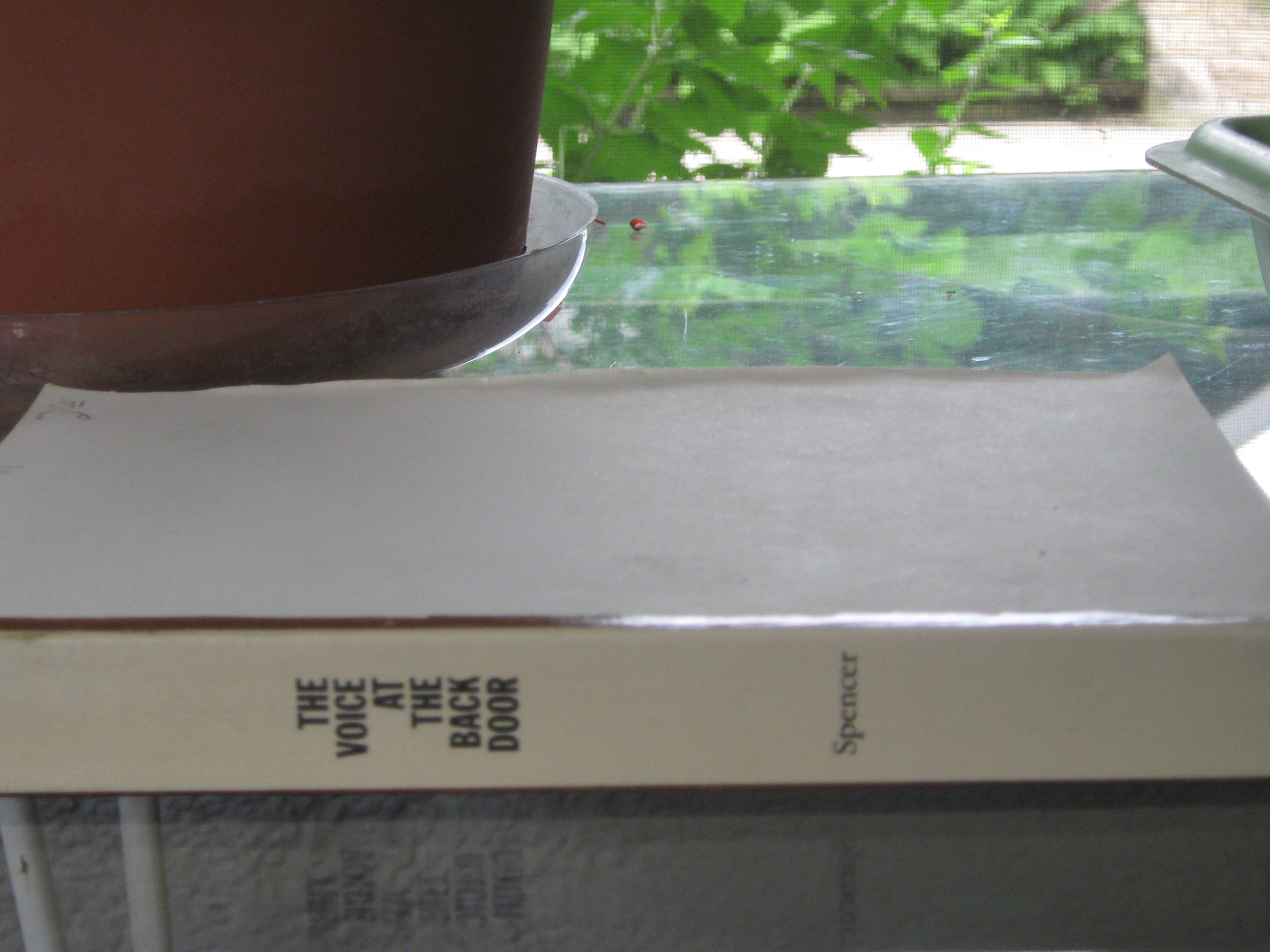
The cover fell off my book, but I kept reading.

The cover fell off my Time-Life paperback, but I kept reading.

Spencer’s bold characterizations of  Travis, Duncan, and Jimmy are stunning.   Travis is a” good ol’ boy” who turns to Duncan, shrewdly realizing that Duncan will protect the old values of the South (except perhaps on the “Negro Question,” but Travis may have also been thinking of his “Negro” mistress).  Travis dies in the store after asking Duncan to take his job.

Duncan, appointed temporary sheriff and intending to run for office, is an ethical man of letters as well as a former football star:  when there is a question after a fight about the safety of Beck Dozer, a brilliant African-American veteran of World War II whose teacher father was shot in the courthouse in 1919, Duncan claps Dozer in jail and sits beside him to make sure there isn’t another shooting.  Dozer said he had cut up Grantham, Jimmy’s bootlegging partner, with a razor after Grantham refused to sell him drink. Jimmy and some friends show up at the jail, toting guns, but they just take a snapshot:   the whole scene was cooked up between Jimmy and Dozer (who was paid hundreds of dollars) so that Jimmy could take a picture and send it to the paper saying Duncan is “a nigger lover.”

What many don’t understand is that Jimmy is bound to Beck Dozer, because Jimmy’s father  killed his father.  The two have a strange understanding of each other.

This is the kind of back-door politics that Spencer so exuberantly describes.  The back door is a literal symbol:  Dozer goes to the back door of Duncan’s house when he needs help; women go in and out the back door of Jimmy’s place when their husbands don’t know they’re there;  and drinkers also go out the back door.

Elizabeth Spencer

Elizabeth Spencer

When Spencer wants to shut down Jimmy’s bootlegging operations, Mr. Trewolla, the jailer, tells him it won’t happen.  “Don’t think you’ve cramped their style.  There’s just as much going out the back door as ever went out the front.”

The women, both at the front and back doors, are memorable. Tinker, Duncan’s tiny, beautiful, popular wife, hates politics but loves him desperately.  Duncan married Tinker because he was jilted by his lover, Marcia Mae, but half the town is in love with Tinker.  Jimmy has always loved Tinker, though he is married to Bella, his business partner’s sluttish daughter.  Marcia Mae, Duncan’s ex-fiancee, has recently come back to Lacey, a widow of a partying soldier.  She loves Duncan, but she cannot stay in Lacey:  she hates the small town; she hates the way Duncan won’t openly come back to her.  Bella, Jimmy’s wife, who has had affairs, is surprised when her baby doesn’t quite look like anybody. Lucy, Dozer’s wife,  is terrified when Dozer is accused of shooting Jimmy.

This novel is a classic:  I urge you to read it.  It reminds me very, very slightly of William Penn Warren’s All the King’s Men, only it is better-written and much more interesting.  At the Southern Festival of Books in 2001, I heard Spencer read from her collection of short stories, The Southern Woman.  I liked her very much, and I liked her cat totebag (a totebag with a cat design).

This is why we go to book festivals:  to discover writers we do not know.

And if you can recommend any good book festivals, let me know.  It’s time I attended one again.

My Cat Sent an E-Mail

I want the real life
I want to live the real life–“The Real Life,” John Mellencamp

Parody of Edward Hopper's Nighthawks

Parody of Edward Hopper’s Nighthawks

I love the internet.

An online book group I belonged to once gathered at The Southern Festival of Books.

I have done e-mail interviews.

I have written fan e-mails to favorite writers (though I think they would prefer real fan letters).

I have read blogs and international newspapers.

I have read approximately 40 books by Trollope as a longtime member of Ellen Moody’s Trollope19thCStudies at Yahoo Groups.

On the other hand, my family believes I should get offline because of the National Security Agency electronic surveillance program.

It is devastating to learn that this seven-year-old NSA surveillance program of metadata from cell phones and e-mail flourishes under Obama. According to Hendrik Hertzberg in The New Yorker (June 24, 2013), the information has not yet been used to abridge “any citizen’s freedom of speech, expression, or association,” as far as anyone knows.  But he adds,

The harm is civic.  The harm is collective.  The harm is to the architecture of trust and accountability that supports an open society and a democratic polity.  The harm is to the reputation, and, perhaps the reality of the United States as such a society, such a polity.

This is not why we voted for Obama.

The NSA surveillance may not affect us much so far, but what if a future government starts a Fahrenheit 451-style purge based on misinterpretations of the data (in Ray Bradbury’s book and Truffaut’s movie, the government favors book burnings and reports of subversion among readers and thinkers)?

There has been a kind of flatness about Obama’s presidency  It is not that he hasn’t done good:  no one else could have passed a Health Reform bill (people have tried), he got the troops out of Iraq, recognized climate change, and has supported gay marriage.

Still, there has been that shiftiness about Guantanamo.  We would have liked to see the Patriot Act revoked.

One can’t help but think the NSA agents and government subcontractors have us exactly where they want us on the internet.  Everything we do is here forever.

Most of us are boring.  I don’t have a cell phone.  My e-mail is hardly incendiary.  Three of the more riveting emails I’ve written lately?  “Have you seen Argo?”  “No, it’s not too bad out,”  and “My book hasn’t arrived.”

At my blog the “surveill-ors” can read about bicycling and novels.  Most disturbing is the fact that they will think I am a really bad writer.  If I’d only known, I would have written more carefully.  I’M JOKING!

E-mail is not the greatest invention.  I prefer to write real letters, though I seldom do it anymore.  In Nora Ephron’s book, I Remember Nothing and Other Reflections, she  wrote a funny list, “Things I Won’t Miss.” Third on the list was e-mail.

E-mail can get you into trouble.  Once I sent a personal e-mail to an entire group by mistake.  Worse, my cat once sent the rough draft of an email to my boss by jumping on the keys.  That did not end well.

And yet I love the internet.  I will continue blogging.

A Trip to the Joslyn Art Museum, Coffee, & The Bookworm

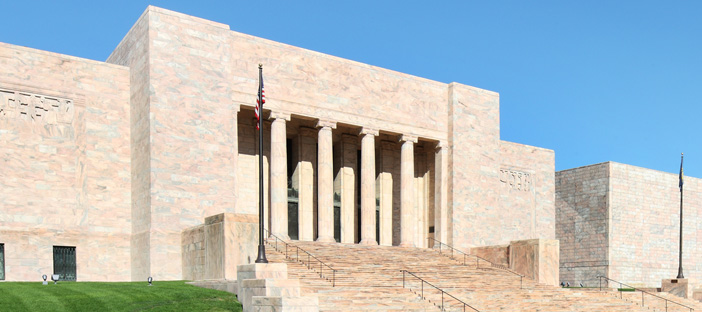
Joslyn Art Museum

Joslyn Art Museum

We went to Omaha.

We go to Omaha to see the art. Oh yeah, you say,  Omaha.  Are you sure?

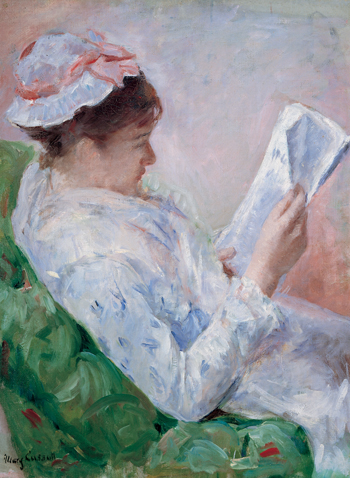
The Joslyn Art Museum, a beautiful Art Deco building, is one of the better museums in the Midwest. We know the permanent collection very well:  the Degas sculpture of the dancer, Mary Cassatt’s “Lydia Reading the Morning Paper,” Jules Breton’s “The Weeders,” Jackson Pollock’s “Galaxy,” the Native American collection,   and Jean-Léon Gérôme’s dreadful tiger painting, “The Grief of the Pasha.”

Mary Cassatt, "Lydia Reading the Morning Paper"

Mary Cassatt, “Lydia Reading the Morning Paper”

We were there for the new exhibition, “Renoir to Chagall:  Paris and the Allure of Color,” a collection of French paintings from the Dixon Galleries and Gardens in Memphis.

It is a remarkable show, and if you don’t live in a city with a great Impressionist collection (like Chicago), it provides a wonderful opportunity to spend time with Renoir, Matisse, Monet, Raoul Dufy, Gaston La Tuche, Toulouse-Lautrec, Bether Morisset, Degas, John Singer Sargent, and my new favorite painter, Jean-Louis Forain.

But can you talk about art? After reading a few placards, my husband can talk about brush strokes and color. I’m better at finding patterns in the exhibition (I call it the Carrie in “Homeland” thing).

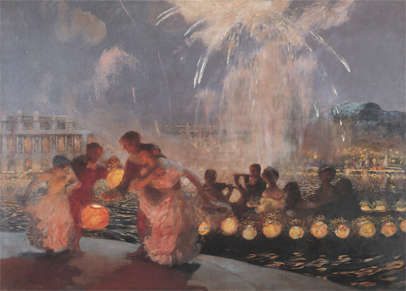
My only original observation was that many (at least three-fourths) of the paintings had a water theme.   Take Gaston La Touche’s “The Joyous Festival (1906), a water scene with four dancing figures, Chinese lanterns, musicians looking as though they are almost in the water, and fireworks (or are those fountains?  I need new glasses).  La Touche knew and was influenced by Degas and Jean-Louis Forain.  He also drew from the Rococo outdoor scenes of Fête Galante paintings.

Gaston La Touche, "The Joyous Festival"

Gaston La Touche, “The Joyous Festival”

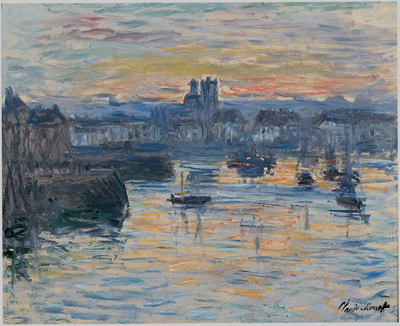
Monet’s “Port of Dieppe, Evening” (1882), a harbor painting, was a favorite of many of the women.  “I love that,” one woman said.  “I love that,” I said.  My husband liked it, but was more conservative about it.  Or I should say he was much more modern, because Chagall was his favorite.

Monet, "Port of Dieppe, Evening"  (much more beautiful when you see the painting)

Monet, “Port of Dieppe, Evening” (much more beautiful when you see the painting)

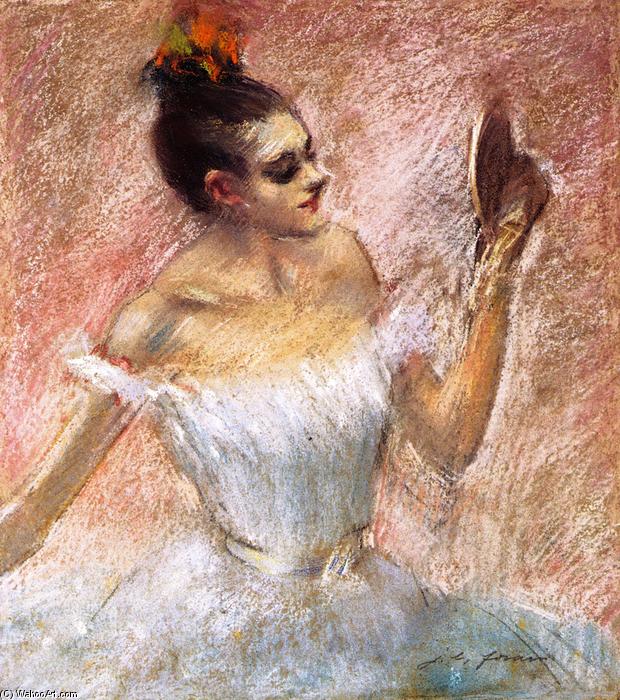
My new favorite painter, however, is Jean-Louis Forain.  I admired his watercolor on a linen fan, “Dancer with a Rose.”  His “Dancer with a Mirror,” pastel on wave paper with blue fibers, is even more beautiful.

Jean-louis-Forain-Dancer-with-a-Mirror

Jean-Louis Forain, “Dancer with a Mirror”

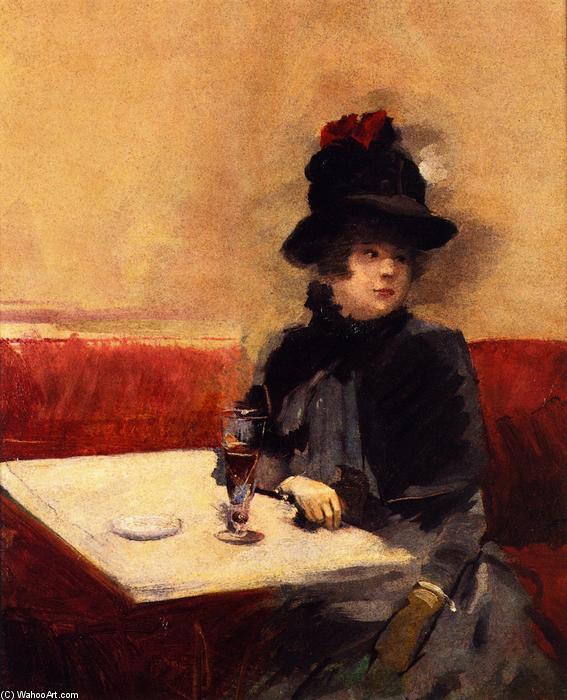
Forain’s “Woman in a Cafe” (1885) is the most interesting portrait in the exhibition.  Although I am not that woman in the painting (the placard said she was possibly a courtesan), I recognize the anxiety of waiting, the tiredness. She is no longer young.   Divorced in our late thirties and forties, we all used to look like that in coffeehouses.  (I’m sure you remember.)

Jean-Louis Forain, "Woman in a Cafe" (1885)

Jean-Louis Forain, “Woman in a Cafe” (1885)

 Forain liked to paint “the world of the café, brothel, racetrack, ballet and other aspects of modern Parisian life in the late nineteenth century,” according to the Joslyn Art Museum mobile tour.  (I don’t have an iPhone, so I couldn’t listen to this at the museum.)  I wish I knew more about the tradition of the courtesan in la vie moderne.

The exhibition will be there until September 1.

And then coffee and books.  I feel very guilty, but we had coffee at Starbucks.  We wanted comfortable chairs, to read our books, and to be ignored.  The patrons did seem to know the baristas, though:  it was like a neighborhood coffeehouse.

And then we went to an independent bookstore, The Bookworm.

The Bookworm, Omaha

The Bookworm, Omaha

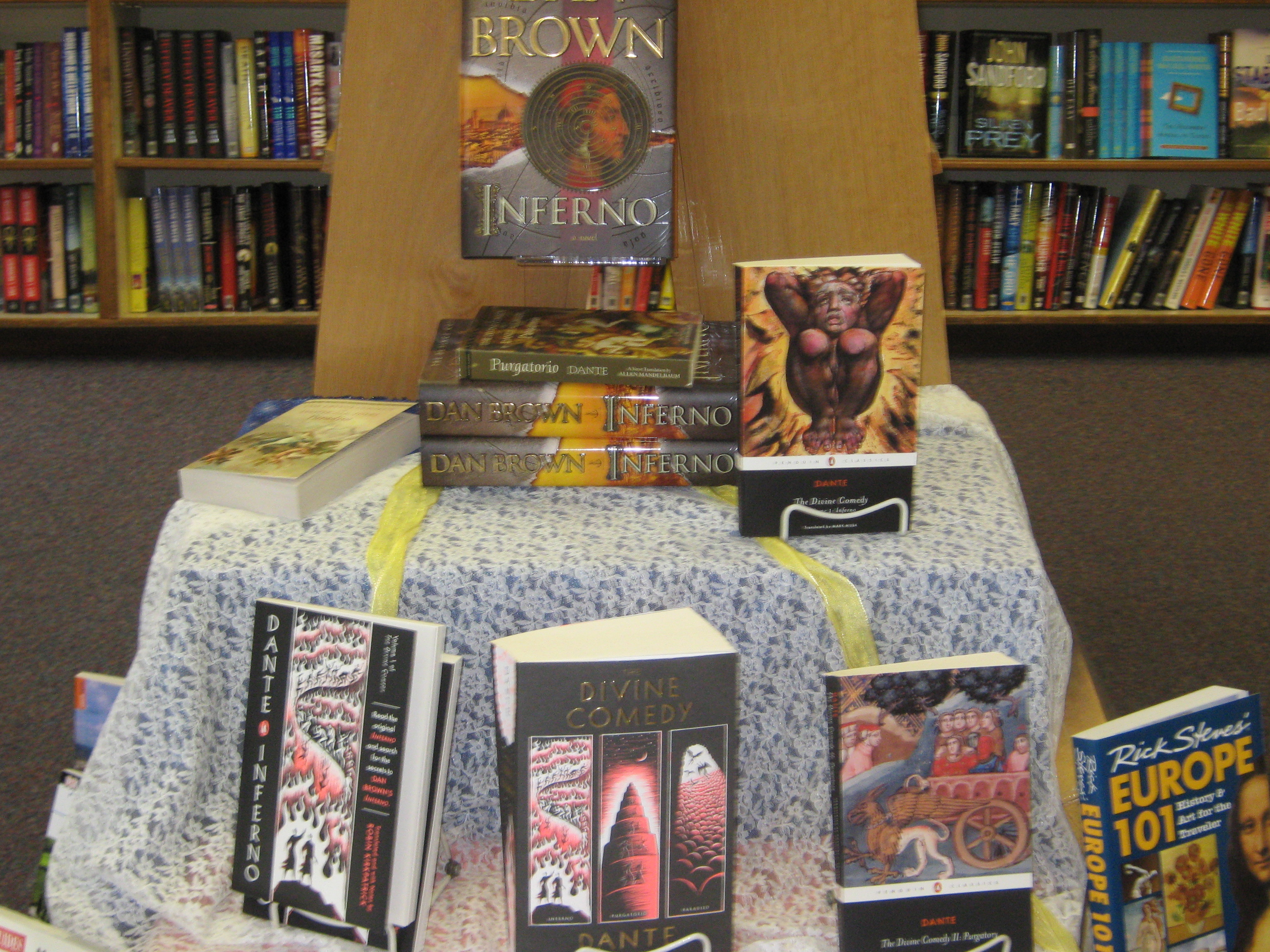
If you’re going to display Dan Brown’s Inferno, you might as well display Dante, too.  I was very interested in the Robin Kirkpatrick translation (Penguin Deluxe Classic edition) of The Divine Comedy, but realized that it would be ridiculous to buy it, since we already have a couple of good translations.  (The store has lots of Penguins.)

A display at the Bookworm.

A display at the Bookworm.

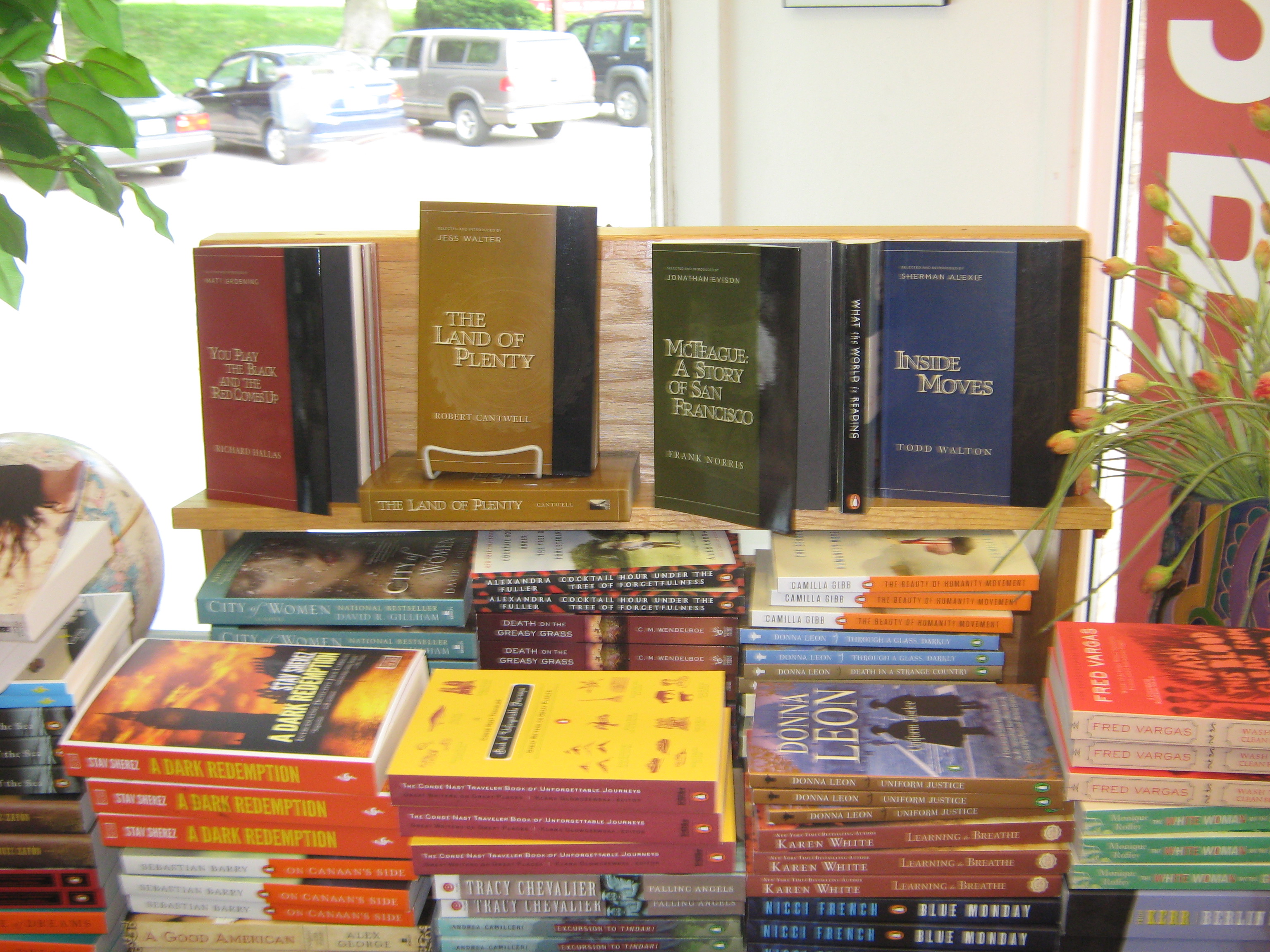
I liked this paperback display even more.  Everything from the new Pharos editions of “out-of-print, lost, or rare books” to David R. Gilham’s City of Women to Stav Sherez’s A Dark Redemption to Tracy Chevalier and Donna Leon.  Paperbacks for summer.

 We did not have time to stop at A Stitch in Crime (a mystery bookstore) or Jackson Street Booksellers (a used bookstore), but I already had God knows how many books on my e-reader that I didn’t run out of books on the way home.

A very nice day in Omaha.

Can a Book Inspire You to Read Latin?

Fuimus Troes, fuit Ilium et ingens gloria Teucrorum .–Virgil’s Aeneid, Book II

“We were Trojans; Ilium and the great glory of the Trojans are gone.”

Many years ago I read Virgil, Ovid, and Horace in translation.  I was puzzled:  why were these classics?  Somehow the poetry didn’t translate gracefully.  My friends and I gossiped:  “Men romanticize this so much.”  But I had a nagging sense that something was missing.  And so I studied Latin, learned that English and Latin have different structures, discovered I have a Latinate brain, went to graduate school, taught in private schools for a few years (like most of my fellow classicists), and have continued to read Latin poetry for decades.

Not everyone can study Latin, but books can  inspire you to read Roman authors, or to return to them.

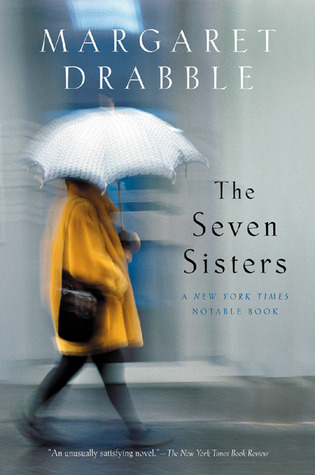
Seven Sisters margaret drabbleIn  Margaret Drabble’s extraordinary 2002 novel, The Seven Sisters, I was fascinated by the narrator’s fascination with Virgil’s AeneidThe Aeneid is my favorite poem, and I have tried in vain to get fellow bloggers to read it.  (You know who you are.)

Candida, the ex-wife of a headmaster who jettisoned her for the mother of a student who drowned in a pond on the school grounds, has moved to an apartment in West London.  She is solitary, almost friendless, and far from her family, and the big event of her day is swimming at a Health Club, which has not always been a health club:  it was converted from a College of Further Education that in the evenings held adult classes.  Candida had taken a Virgil class there, which involved not only reading Virgil in Latin but comparing translations by Dryden, C. Day Lewis, and others.

You wouldn’t think you could go to an evening class on Virgil’s Aeneid in West London at the end of the twentieth century, would you?  And if fact you can’t anymore as it’s closed. …Why did I join it?  Because its very existence seemed so anachronistic and so improbable.  Because I thought it would keep my mind in shape.  Because I thought it might find me a friend.  Because I thought it might find me the kind of friend that I would not have known in my former life.
Candida, who is obviously depressed, is obsessed with Book VI of The Aeneid, which describes the descent of Aeneas into the underworld, and dovetails with her own obsession with death.  Eventually she is inspired to organize a Latin class reunion and a life-affirming Virgilian trip  to Italy.

Drabble’s book influenced me to consider teaching again.  We had moved to a lovely, quiet city that “had no culture,” as I was told.  It definitely had no Latin.  I had no job.  I was hanging around the house, reading all of Virgil, when I wasn’t alphabetizing the books at a very messy used bookstore.  (I was paid in books.)

Why not get out of the house and teach adult ed?  I wondered.  And so I taught a very traditional Latin class, using Wheelock’s Latin as the text. We also translated a short Latin passage from The Aeneid every week, with a great deal of help from me in the form of vocabulary lists and worksheets.

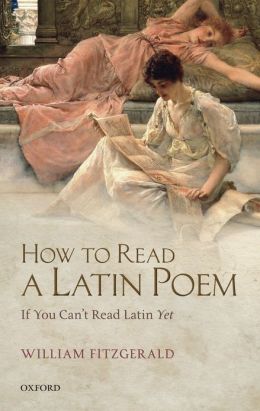
How to Read a Latin Poem William FitzgeraldI believed my idea of reading Virgil in Latin with students who knew little or no Latin was original (or perhaps I had borrowed from Drabble). But after reading Roy Gibson’s review of William Fitzgerald’s new book, How to Read a Latin Poem If You Can’t Read Latin Yet in this week’s TLS, I discovered that other classicists are doing this kind of reading.

Roy Gibson, the reviewer, is a classicist, who likes Fitzgerald’s book and is mostly positive.  He writes,

…it has a serious purpose:  to give the reader with little or no knowledge of Latin or the classical world a feel for the character of Roman poetry in the original language.  We are offered word=by-word analysis and translation of classic texts, with deft explanation of how meaning gradually emerges from a language which (unlike English) does not depend on word order to create sense. This is a necessary task.  Some ancient poets translate rather well into English (Catullus, Ovid), but readers who have encountered Virgil or Horace’s Odes only in translation can feel justified in wondering what the fuss is about.  Fitzgerald proves an inspiring guide to the richness and (rarely emphasized) strangeness of Virgil’s Latin.  He also offers stimulating asides on the stark juxtapositions of vocabulary that are inevitable in a language which dispense with definite and indefinite articles and has no need of many of the prepositions which litter English.

He says, however, that Fitzgerald glosses over the amount of work involved in reading Latin.  Professionals use commentaries and dictionaries, and some passages remain controversial or ambiguous.

Of course I haven’t read Fitzgerald’s book, but it is the kind of thing I would give to friends to help them understand Latin poetry.

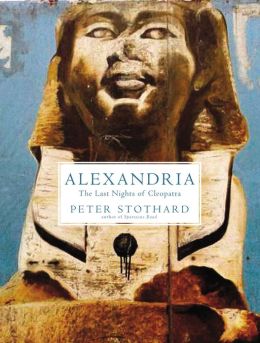
Alexandria peter stothardIn Peter Stothard’s Alexandria:  The Last Days and Nights of Cleopatra, a  brilliant memoir of his fascination with Cleopatra, he writes a few pages about reading Latin poetry with those who don’t know Latin.  Stothard, a classicist and the editor of the TLS,  chaired a panel on how to read a Latin poem, saying it is “the kind of appointment that come to an Editor of the TLS with interests in the ancient world.”  The panel read and discussed an ode by Horace addressed to Plancus, a shrewd man of middle rank  who was devoted to Marc Antony until the tides of politics changed. Stothard had extensively researched Plancus for his book about Cleopatra.

Stothard  writes:

The choice of poem was not mine.  Plancus followed me by purest chance.  ‘Laudabunt alii‘ we all began at 10.00 a.m.  A light-pointer identified each word:  ‘will praise’ was followed by ‘other men.’  Laudabunt alii claram Rhodon aut Mytilenen aut Ephesum bimarisve Corinthi moenia:  Others will praise bright Rhodes, or Mytilene, or Ephesus or the walls of Corinth on its two seas. The audience had come to read it in Latin–and it was my task to help them do just that.

Then there is classicist Mary Beard’s blog, A Don’s Life. She recently wrote a very interesting post about participating in a debate on The Future of Latin.
What came over most clearly — and clearer than I had ever seen it before — was the way we have projected onto Latin so many of our anxieties about privilege in education, teaching quality and the personality of the traditional teacher, ideas of utility, the control of the curriculum etc. Latin in other words is so much of a symbol that it is hard to discuss it without getting involved in series of much bigger debates, only symbolically connected with Latin.

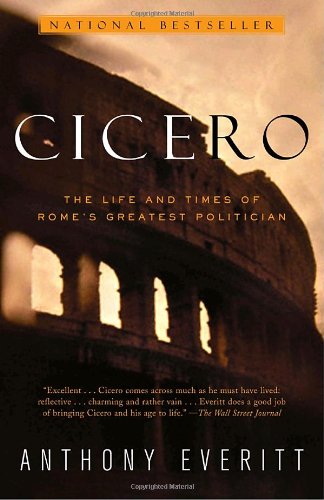
Cicero EverittAntony Everitt’s Cicero:  The Life and Times of Rome’s Greatest Politician is a fascinating biography of Cicero, and a very clear, accessible history of the politics of the first century B.C.

Everitt writes in the preface:

With the disappearance of Latin from the schoolroom, the greatest statesman of Rome, Marcus Tullius Cicero, is now a dimly remembered figure….

…nearly two thousand years after his time, he became an unknowing architect of constitutions that still govern our lives.   For the founding fathers of the United States and their political counterparts in Great Britain, the writings of Tully (as his name was anglicized) were the foundation of their education.  John Adams’ first book and proudest possession was his Cicero.

Professor's House catherLet me also mention Willa Cather’s The Professor’s House, which is not about Rome but nonetheless describes the life of Tom Outland, a student Latinist.   Professor St. Peter, a disenchanted historian of early Spanish explorers, camps out one summer in the old empty house, too depressed to follow his very conventional family to the new house they have built. And he often remembers his student Tom Outland, who died young; we learn in the middle part of the novel that during a summer in the Southwest Tom read all of The Aeneid in Latin.  St. Peter’s conversation with a greedy colleague who is about to benefit from Outland’s research causes him to connect Tom with Shakespeare’s Mark Antony.

 The university, his new house, his old house, everything around him seemed insupportable, as the boat on which he is imprisoned seems to a sea-sick man.  Yes, it was possible that the little world, on its voyage among all the stars, might become like that:  a boat on which one could travel no longer, from which one could no longer look up and confront those bright rings of revolution.

He brought himself back with a jerk.  Ah, yes, Crane; that was the trouble.  If Outland were here tonight, he might say with Mark Antony, My fortunes have corrupted honest men.
I recommend the Fagles translation.

Finally, let me recommend Virgil’s Aeneid in translation. This stunning epic poem about the founding of Rome is translated beautifully into English by Robert Fagles and Robert Fitzgerald, and this cannot be said about very much poetry in any foreign language.  This classic poem describes the fatigue of the depressed hero, Aeneas, forced by last-man-standing fate to lead the refugees from Troy, the allure of a foreign queen, Dido, who is really Cleopatra and Medea combined, and the gods that force him to continue his trip to Italy, which leads to yet another war.

A Sense of Flight: An Interview with James Dickey

James Dickey

James Dickey

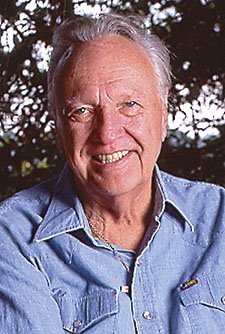
I have been weeding my papers–less is more–and rescued this 1987 interview with the poet and novelist James Dickey (1923-1997) from a filing cabinet.  If I may say so, I did an excellent job, though I had, alas, to write it up quickly.  Dickey was on a national book tour, promoting his novel Alnilam.

(Note: This charming, brilliant poet was desperate to escape the book tour and the hotel, and asked if he could have dinner at my house.  (It was the freaked-out from the tour vibe.)   I politely told him I had to write up the interview, but much later realized I should have brought him home and let my husband and a couple of friends (surely some friends would have wanted to meet him) entertain him while I worked.)

Here is the interview:

James Dickey

James Dickey

“It’s good, isn’t it?” said James Dickey, flipping through a copy of his newly published novel, Alnilam.

The National Book Award-winning poet and novelist who wrote Deliverance in 1970 strode across the hotel lobby, straw hat adding height to his already looming six foot three.  (“I picked this up in a resort for $2.75.”)  The biggest man in sight, he was also the only one dressed like a sportsman, the only one to have disembarked from a plane with a volume of Ruskin in his hand, and the only one who would ask you to read aloud the epigraphs to his novel.

“Did you like the part about skating?  he asked, turning to page 81.  “I worked hard on that because I like it myself.  I like the idea of skating not just in a roller rink but out on the streets.”

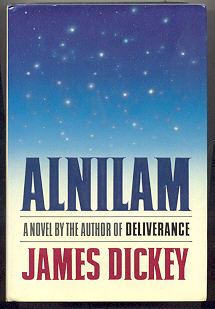
The characters in Alnilam (an Arabic word meaning string of pearls and the name of the central star in Orion’s belt) skate, swim, run, and, most important, fly.  In a poetic novel dense with allusions to myth, philosophy, and even Milton, the motif of flight emerges as the central theme.  When Cahill, the protagonist, learns that his son, Joel, has died in an Air Corps training accident, he travels to the camp to unravel the identity of the son he has never met.

“It’s really a book about the birth of a legend,” Dickey explained.  “Joel is an inexplicable creature of the air himself, a sort of Rimbaud of the air.  He’s a charismatic character for whom everyone has an explanation.

“One of the things I wanted most to do with this book is to restore the true sense of flight.  I just came up here on an airline, but being on an airline is like being in a hotel at 35,000 feet.  Man has been capable of true flight for less than 100 years, and these frail little trainers (planes) that these boys are in give the body the true sense of being caged in the air.”

Dickey’s own experiences during World War II in the Army Air Force indirectly led to his career as a writer.  Between flying missions over the South Pacific, he passed the time writing letters back to women in Atlanta.  “I think the magic moment came when I put something down and I looked at what I had said and thought, ‘That’s not bad.’  I got interested in the thing itself rather than my ulterior motives,” he said, claiming that before that letter he had been more interested in sports than in poetry.

After the war he continued writing while finishing school on the GI bill, and even during six grueling years in the advertising business.  “I did it at night, I did it on airplanes, I did it in restaurants.  The more I did, the more I saw I could do.  I knew that of all the things I had tried, this was the best for me.”

Eventually, as his reputation as a poet grew, he found more congenial work as a college English teacher.  “To a writer, any job is in the way, but no American poet is going to make enough to support himself, let alone anybody else,” he said.  And he loves his work at the University of South Carolina.  “I would never leave teaching.”

Although he admits that poetic language is the mainspring of his two novels, Deliverance and Alniham, he doesn’t insist on that aspect of his work. “Things written in prose, if they approximate poetry, can approximate poetry in a bad sense as well as a good sense,” he said modestly.

Alnilam james dickeyBut Alniham, 682 pages and 37 years in the writing, is stunning, innovative in form, and sharply attentive to prose rhythms.  Parts of the novel are told through the heightened, almost visionary sensibility of the protagonist, who has recently gone blind as a result of diabetes.  Dickey frequently splits the page into two columns, the left-hand side relating Cahill’s impressions and the right-hand side showing the actual scene.  Some reviewers have found this poetic device distracting.

“There’s no correct way to approach it,” said Dickey.  “Part of my intent was that everyone would have his way to deal with it.  Good Lord, is there no ingenuity among reviewers?  I would regard it as a challenge.  I would think I was the only one really capable of solving the true way, and that probably even the author himself didn’t know.”

He says he doesn’t worry too much about trying to please the public.  “If you’re a writer, you look at things from the standpoint of their intrinsic interest to you, whether it would be interesting to spend your time on it, and not necessarily whether it would hold other people.”

He likes to work on several projects simultaneously, booby trapping the house with typewriters and wandering from one to another.  He  is currently at work on two narrative poems.

In his free time, he plays tennis, plays guitar (he composed the guitar music for the movie, Deliverance), and spends time with his family.

During the interview, he charged a glass of wine to his account, slowly spelling out his name for the waitress.  “Dickey, James Dickey, D-i-c-k-e-y.”  Not a flicker of recognition.  Such is the obscurity of an American poet.

With and Without Narrative: Margaret Wilson, Willa Cather, & Bess Streeter Aldrich

A Midwestern masterpiece.

I often say there is no narrative in the Midwest.

Farm wife:  “Town is nicer.”

Worker: “Ate vanilla at Blue Bunny (an ice cream factory) every day for 40 years.”

It was very difficult to get hold of a story when I was growing up.

People need narrative.  At the University of Toronto, psychologist Maja Djikic and two colleagues did a study of 100 students indicating that those who have just read a short story are more comfortable with ambiguity than those who have just read an essay.

Midwesterners, too, are starved for narrative, even those who claim they don’t read fiction.  A Prairie Home Companion is popular on NPR.   Fans follow Garrison Keillor from Minnesota to Ames, Omaha, and Madison, wanting to hear his radio show live.  I once absent-mindedly said A Prairie Home Companion was sentimental, and had to renege when several people bristled and claimed our city was like Lake Wobegone.  (It is not.)

I turned to books long ago.

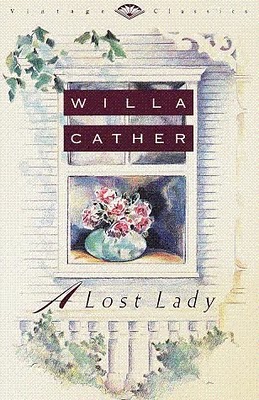
Some of the best Midwestern writers come from Nebraska.  Pulitzer Prize winner Willa Cather, raised in Red Cloud, Nebraska (a fascinating place to visit), had to leave Nebraska to write her masterpieces, The Professor’s House, the story of a disenchanted middle-aged professor, and A Lost Lady, a novel about a charming, if desperate, woman stuck in a small town after her husband’s bank fails.  These two novels are well-plotted but more ambiguous than Our Antonia, a book often chosen as a school text.

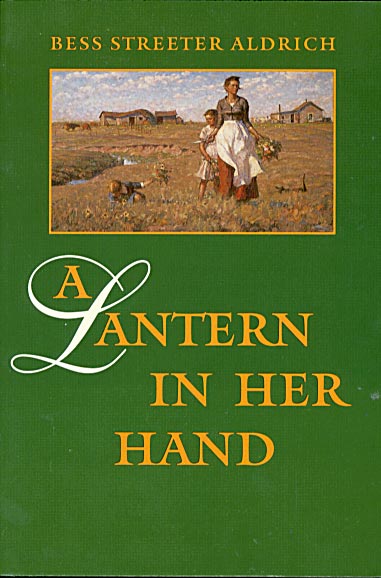
lantern_in_her_hand bess streeter aldrichBess Streeter Aldrich, who lived for many years in Elmwood, Nebraska, was a very popular writer of the 1920s and ’30s. The first few chapters of her best book, A Lantern in Her Hand, ramble a bit, but this excellent novel, a historical record of pioneer women’s lives, picks up momentum as it goes on.

Margaret Wilson, who was born in Traer, Iowa, won the Pulitzer in 1924 for her forgotten novel, The Able McLaughlins, a story of a rape and its consequences.  Wilson has a uniquely philosophical point of view:  she graduated from the University of Chicago, worked as a missionary in India, and returned to Chicago and attended Divinity School before she began to write short stories and novels in the 1920s.

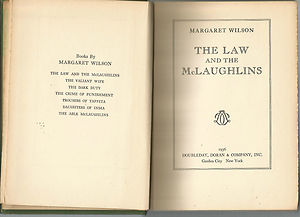
If Virago had an American imprint, Wilson’s books might well be revived.  Wilson’s  language, though unassuming and plain, is layered skillfully into the deft storytelling of her moving, radical novels as she reflects on social justice. Her 1937 novel, The Law and the McLaughlins, a sequel to The Able McLaughlins, is a fascinating moral consideration of capital punishment.  It is a Greek tragedy, set in Iowa.

In 1868 Willy McLaughlin, a farmer, is following wolf tracks when he finds two dead men hanging from a tree.   The woods are so far from any road that he thinks he is hallucinating. But he goes closer, and the bodies are real.

The Squire (his uncle),  the sheriff, the coroner, and his father (a Justice of the Peace) gather to  identify the corpses.  They want “justice”–to track down the killers, try them in a court, and hang them.

But no one can identify the dead.  Finally they learn the men had been horse thieves, and the three killers were the horse owners.

Law and th eMclaughlinsThe women are from the beginning appalled.  They think of the wives of the men lynched, and the wives of the criminals. Mrs. McNair, who with her husband had unwittingly fed and sheltered the killers during a rainstorm, refuses to identify them.  Like the women in a Greek tragedy, they lament, grieve, and repeat that killing more men will not bring back the dead.

The sheriff plans to catch the perpetrators at the funeral of the dying wife of  one of the men.  The men have been hidden by their community 50 miles away.

Jean, Willy’s sister, is particularly disturbed when she hears this plan.  When her brother says it’s a war between the law and evildoers,  Jean says,

Well, when we get the vote we’ll change all that!  We’ll arrange to let women die in peace, if their men do break the law….  If I thought they would do such an evil thing, I would write to the woman and warn her! ‘Plan to go away some place and die where the sheriff can’t see you,’ I’d write her.  I have a mind to do it!”

Throughout the book, women deplore the unfairness of capital punishment.  Jean takes a stand, hopes to help the men break out of jail, and learns the real story of the murder.  A  Congregationalist minister speaks out against capital punishment, pointing out that the Iowa pioneers, who came from Scotland, New England, and other places, have known civilization and justice, but the minds of the next generation will be poisoned if the law is not observed.

Graham Greene wrote in a review:   “She has an admirable gift for very simple direct narrative, and her theme has always been passionately realized in terms of human beings…. we are always aware of a writer of fine moral discrimination and a passionate awareness of individual suffering.”

Boxes and Boxes of Paper

IMG_2504_1

Should I throw it out?

We have boxes and boxes of paper.

Notebooks, newspapers, diaries, journals, letters, cards, essays, and college papers.

Do you have this much paper?

There are boxes and file cabinets I haven’t looked at in years.

And so I am looking through them, weeding what I don’t need.  I’ve emptied one drawer of a file cabinet, and must sort through some boxes.

College papers:  I once thought, Yeah, someday I’ll  reread my paper comparing Aeschylus’ Prometheus with Mary Shelley’s Frankenstein and The Six-Million Dollar Man. It is funny and charming, and my prof told me it earned “an unusually high grade for a paper in this class” (and shouldn’t it have been higher?).  He drew a picture of a monster on the back.  I still laugh when I see it, but I don’t want to read it.  Can I possibly throw this out?  No.

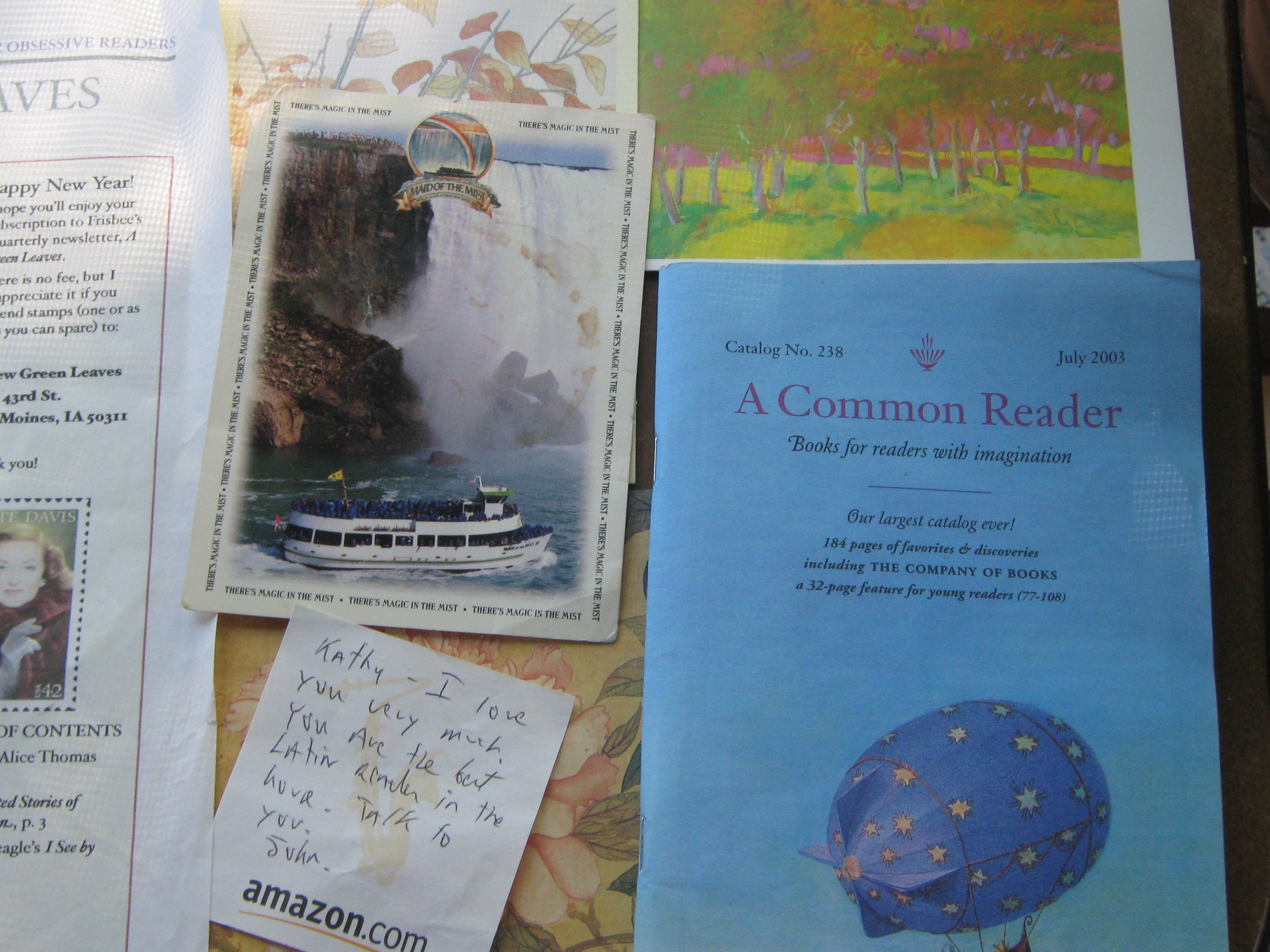
IMG_2505_1Catalogues:  I found an old book catalogue,  A Common Reader, July 2003. This charming book catalogue  was in business from 1986-2006, and I still miss it.  There is a whole section called “Oceangoing” in this issue:  The Journals of Captain Cook, Dudley Pope’s Lord Ramage series, and A. J. Mackinnon’s The Unlikely Voyage of Jack de Crow.

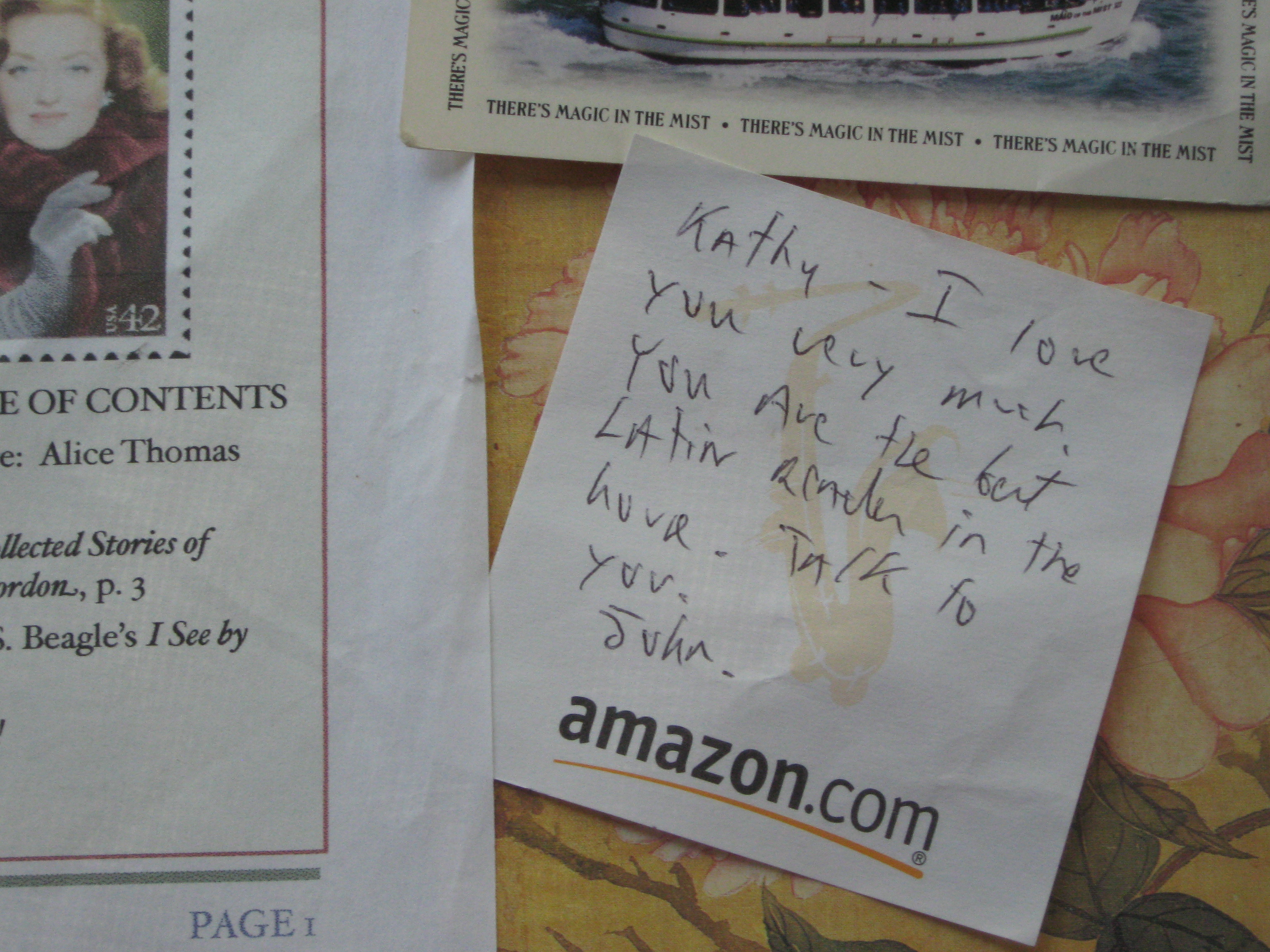
IMG_2508_1Post-its.  These free Amazon post-its came with a book I ordered from Amazon maybe a decade ago.   (The note is not from Jeff Bezos:  Don’t be silly!)  My husband wrote, “I love you very much.  You are the best Latin teacher in the house.  Talk to you.”  ( I was the best Latin teacher in the house, and the only Latin teacher in the house.)

Never throw out a piece of paper that says, I love you.

Journal of 11-day bike ride in the 1980s:  Pedal and eat, eat and pedal.  I feel like some sci-fi heroine welded to her zinging, creaky Schwinn machine…

In Pennsylvania the hills are incredible. Sci-fi heroine be damned–I should braid my hair and call myself Heidi…

Am hiding in the tent from packs of killer mosquitos.  The hotel last night was like a refrigerator, but if we turned off the AC there was no ventilation.   The campground is gorgeous, but unfortunately a breeding ground…

Outside a small town in New York, a sign proclaims:  CANDY, A GOOD SOURCE OF ENERGY. 

I can’t throw this journal out.

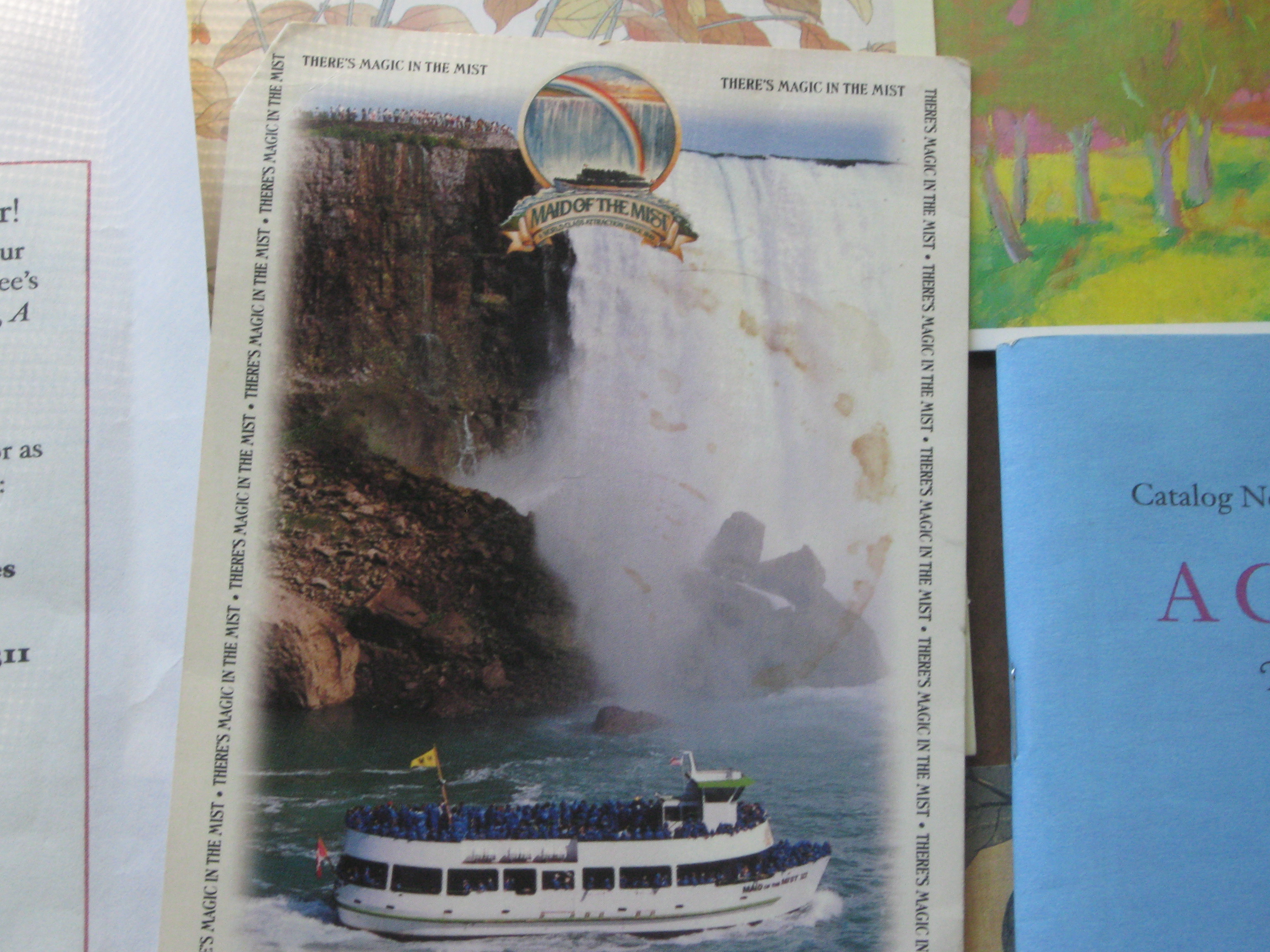
Postcards.  I found an old Niagara Falls Maid of the Mist postcard.  We once spent an afternoon at Niagara Falls. We rode the Maid of the Mist and wore the blue raincoats, and the boat took us through the mist right up to the falls.

Maid of the Mist

Maid of the Mist

I can’t throw this out.

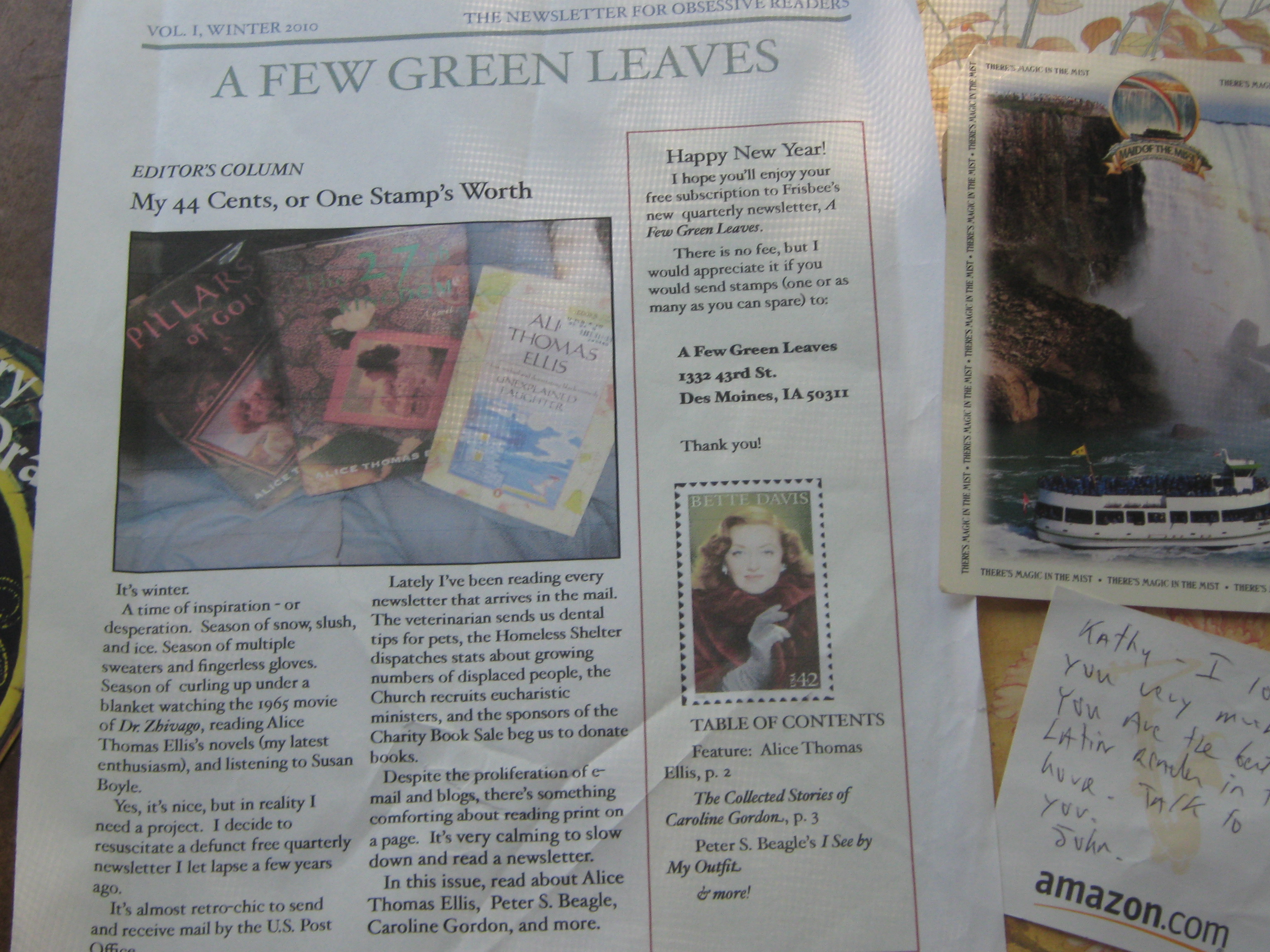
Newsletter, 2010:  I decided to write my blog as a “print” newsletter in 2010, thinking of some of my ancient relatives.  They said they’d rather read it online, so I never mailed it.  Should I throw it out?

IMG_2509_1Do you have trouble throwing out paper, too?

Finishing Peter Stothard’s Alexandria: The Last Nights of Cleopatra

Alexandria peter stothardI have very much enjoyed Peter Stothard’s Alexandria:  The Last Nights of Cleopatra. (I wrote a little about it here.)  Stothard, a classicist, the editor of the TLS, and a former editor of The London Times, has written a brilliant memoir about his lifelong fascination with Cleopatra.

I can see the structure more clearly now that I’ve finished the book:  not only is he writing about Cleopatra, but also about the parallels between Cleopatra’s Alexandria in the first century B.C., and the Alexandria of 2011 when the chaos of the Arab Spring  begins.

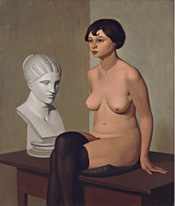
Some of the same photos and art appear and reappear in the book, presumably as part of the arrangement of  the text (unless I am becoming Carrie in a manic stage in “Homeland.”).  George Scholz’s “Seated Nude with Plaster Bust” appears three times, and captures Stothard’s image of Cleopatra more closely than the other art.

Georg Scholz, "Seated nude with plaster bust."

Georg Scholz, “Seated nude with plaster bust.”

Stothard had gone to Alexandria in 2011 to finish his book; he arrived on what happened to be the eve of the Arab Spring. He had made seven attempts to write about Cleopatra, beginning when he was nine in Essex (“Professor Rame and the Egyptian Queen”) and most recently in the 1980s when he was a business reporter for The London Times. And he writes so charmingly about his time at Oxford, his work for an in-house Big Oil magazine, and his beginnings as a business journalist at the Times ( mid-’80s?) that the book is worth reading just for that.

He has survived cancer, written two “diary” books, and is  no longer a working journalist (except in the literary sense).  He does not want to report on the bombings and riots of the Arab Spring. He kept his focus on Cleopatra.  Although there are few artefacts of Cleopatra’s Alexandria,  and little is known about her, he does not allow himself to be distracted from his goal.  And he absorbs the atmosphere of the city.

His friends from childhood and Oxford, Maurice, a gay writer in advertising who is dying of cancer, and V, the rebellious, questioning woman with whom he saw the movie Cleopatra in the ’60s when they were teenagers, have kept him focused on Cleopatra.  When Stothard visits Maurice when he is dying,  Maurice asks about Cleopatra.

So what did happen to Cleopatra in the end?  He asked the question again.  I was feeling defensive.  It was absurd that I had never finished my book.  I began a defence of how Big Oil, Mrs. Thatcher, the 1986 print revolution for the press, the editing of The Times and The Times Literary Supplement…and other books about Tony Blair and Spartacus, had all found a higher priority.

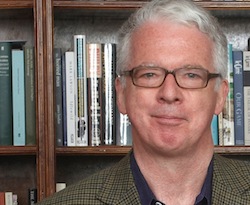
Peter stothard smiling in front of bookcase

Peter Stothard

This is strangely touching.  He knows he has accomplished a lot, but there is still this vulnerability with a friend who has always known him:  maybe this is not what he should have done?  He should have been writing a scholarly biography and editing a newspaper?  But it turns out Maurice isn’t interested in the book.  He wants to know about Cleopatra’s suicide (presumably not by an asp, probably a fast-working poison).

Stothard writes about the image of Cleopatra in literature and the arts:   Shakespeare’s Antony and Cleopatra, the Elizabeth Taylor movie, H. Rider Haggard’s historical novel, Cleopatra, a Dutch painting.  He says Plutarch’s portrayal of Marc Antony (which I haven’t read, because I have the wrong book by Plutarch) is the most reliable. He also includes a version of Horace’s Cleopatra ode,  Nunc est bibendum (“Now is the time for drinking…”)  and I’m not sure whose translation this is:  I assume it is Stothard’s, but perhaps not.)

James Holladay, an ancient history teacher at Oxford, advises him to concentrate on middlemen.

Bureaucratic power was always essential.  Never forget that.  Look at the men in the middle ranks.  remember their names:  Hirtius, Plancus, Celllius, Canidius.  Study them closely.  Don’t give up when the going gets tough.  Nil desperandum, as Horace says.  Read the poem in which he says it.”

Stothard is fascinating especially about Plancus, who changed sides,  and “was the closest man to Antony and then abandoned him.”  He tells us  about Cleopatra after the Battle of Actium.  She tries to change the story, and to convince people there was no Battle of Actium.  Of course it catches up with her.

There is a rich texture to his language, and a frequent lyricism: sometimes I could almost scan the prose rhythms (possibly Carrie in “Homeland” again) when he  is in Khat Rashid for a few day, out of the way of the terrorists in Alexandria.

Look harder, till the eyes hurt.  In the vacant dark the site of the sometime lighthouse is shining too, many miles and two thousand years away.  The sky is the color of bruises, a punched cheek, a prayer-beaten forehead, an eye becoming black.  This is not where I wanted to spend the night.  But it is a fine place to look back at Alexandria and consider the last hours of Marc Antony, the time when he knew he had lost, when he was abandoned by the city’s gods.  Any biography of Cleopatra is now in its final stage.

He also eerily discovers at the new Alexandrian library an Egyptian dialogue in French, Mort ou Amour, “in which a historian in an Alexandrian hotel room struggles to write a book about Cleopatra.  The dramatic hero does most of the things that I have done here since I arrived ruefully recalling past efforts, weighing fact against fiction, realism against romance, ‘la politique ou le coeur’ as motivation for peace and war.”

It made me oddly anxious, and I thought, This must not be real. But the author does exist:  I looked him up.   Stothard dismisses it as a coincidence but is it?

This work of literary nonfiction is a great jumble of history, travel, biography, memoir, and literature, and it should please a diverse audience:  historians, classicists, general readers, and memoir lovers. ( I fall into the last three categories.)  I have seldom read a nonfiction book so fast.  I read 300 page one day.

What a great book. A classic?   One of my favorite books this year.  And, by the way–I can do recommendations well as the Amazon computer–if you liked Stothard’s book, you will like his other book, Spartacus Road, and  Robert Dessaix’s Twilight of Love: Travels with Turgenev.

Mirabile Does Middlebrow: Too Many Books, Sorry, Publicists, & Susan Rebecca White’s A Place at the Table

Woman reading clip art vintage I have acquired approximately 60 books this year.

You’ll say, She probably doesn’t read these.

You would be wrong.  I have read a third of them, and will get to the rest.

And thank God for Amazon, because bookstores are not the strong suit of this part of the country.

The problem is that we have no place to put all our books.  We have many double-stacked bookcases, a china cabinet full of books, and  books in chests of drawers.

Bookcase sagging.

Bookcase sagging.

Okay, this  bookcase is made of  cheap laminate wood, and that second shelf is beginning to sag from the weight of double-stacked books.

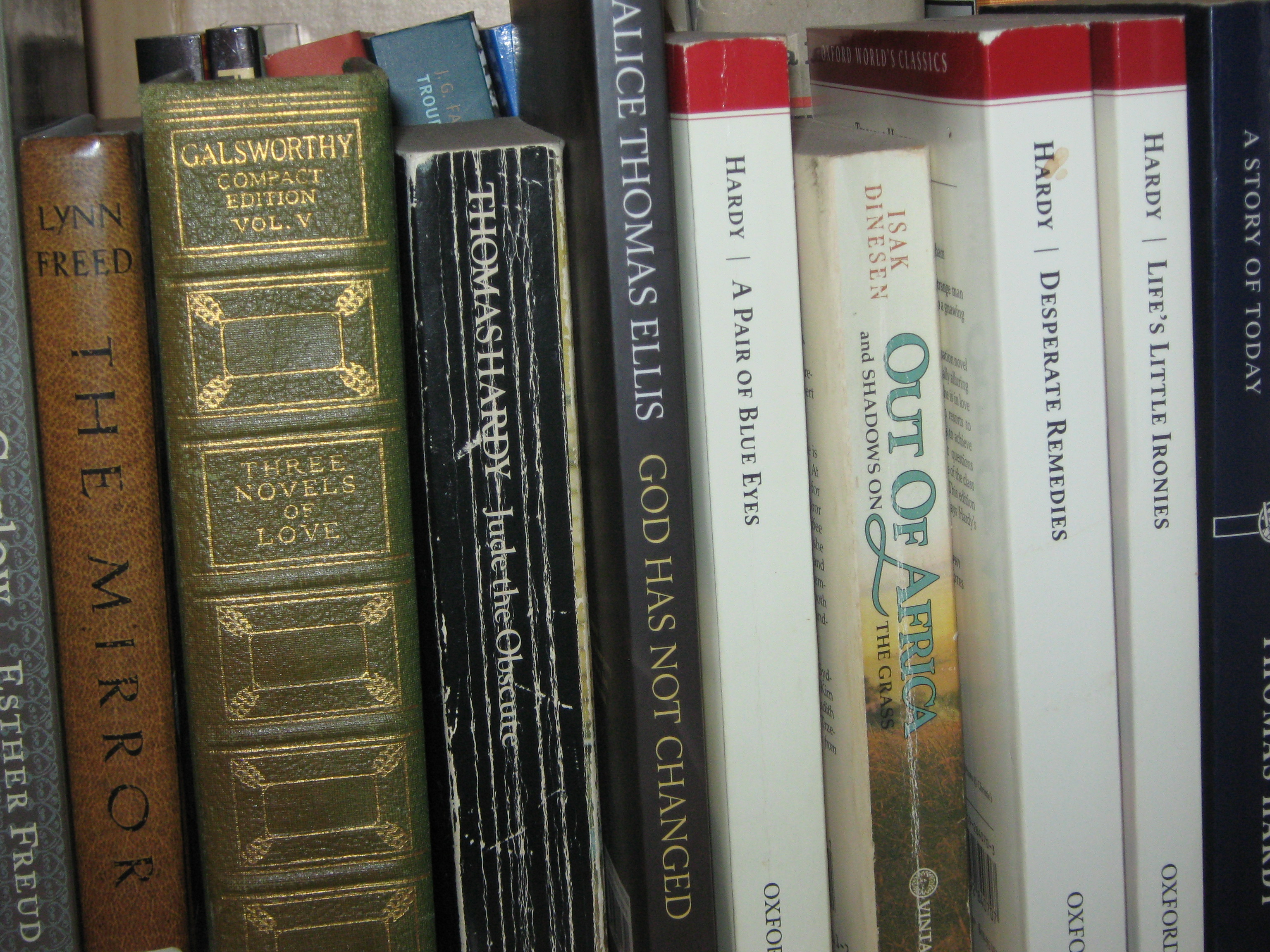
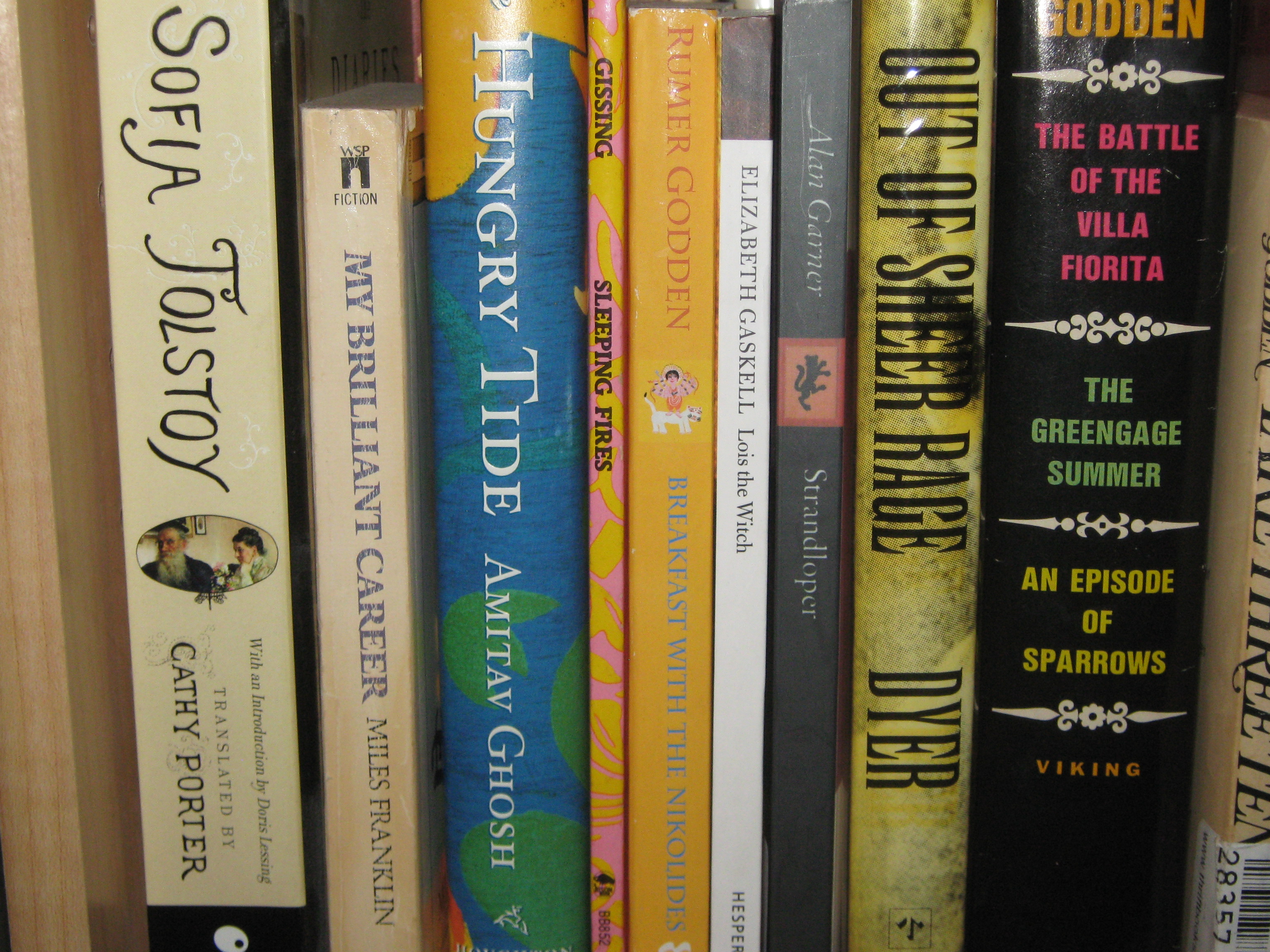
Guess how many books I’ve read on the shelf pictured below and you win… well, nothing, but it is a summer carnival game.

Picture # 1:

IMG_2498_1

I’ve read all of these except Lynn Freed’s The Mirror

Picture # 2:

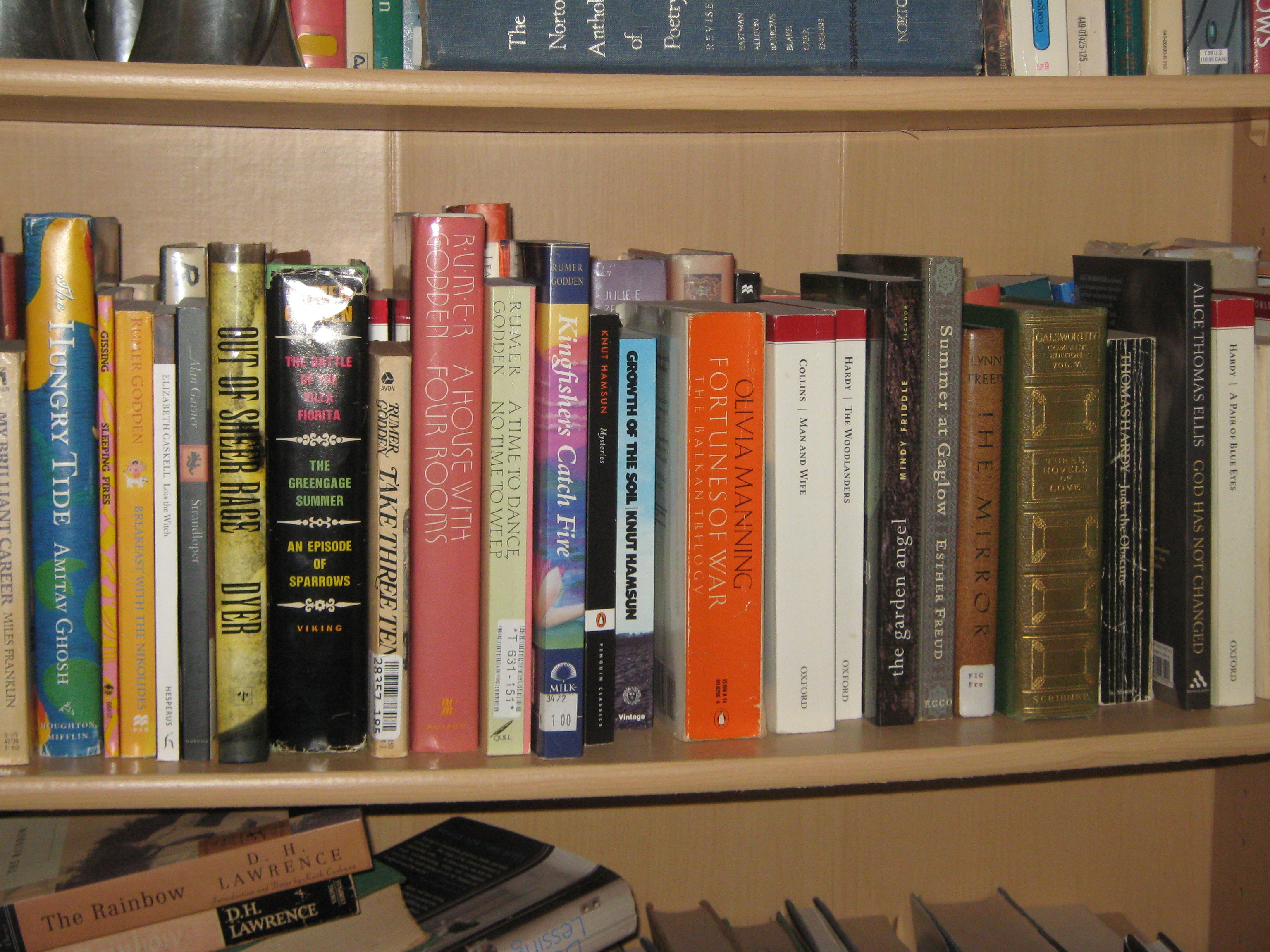
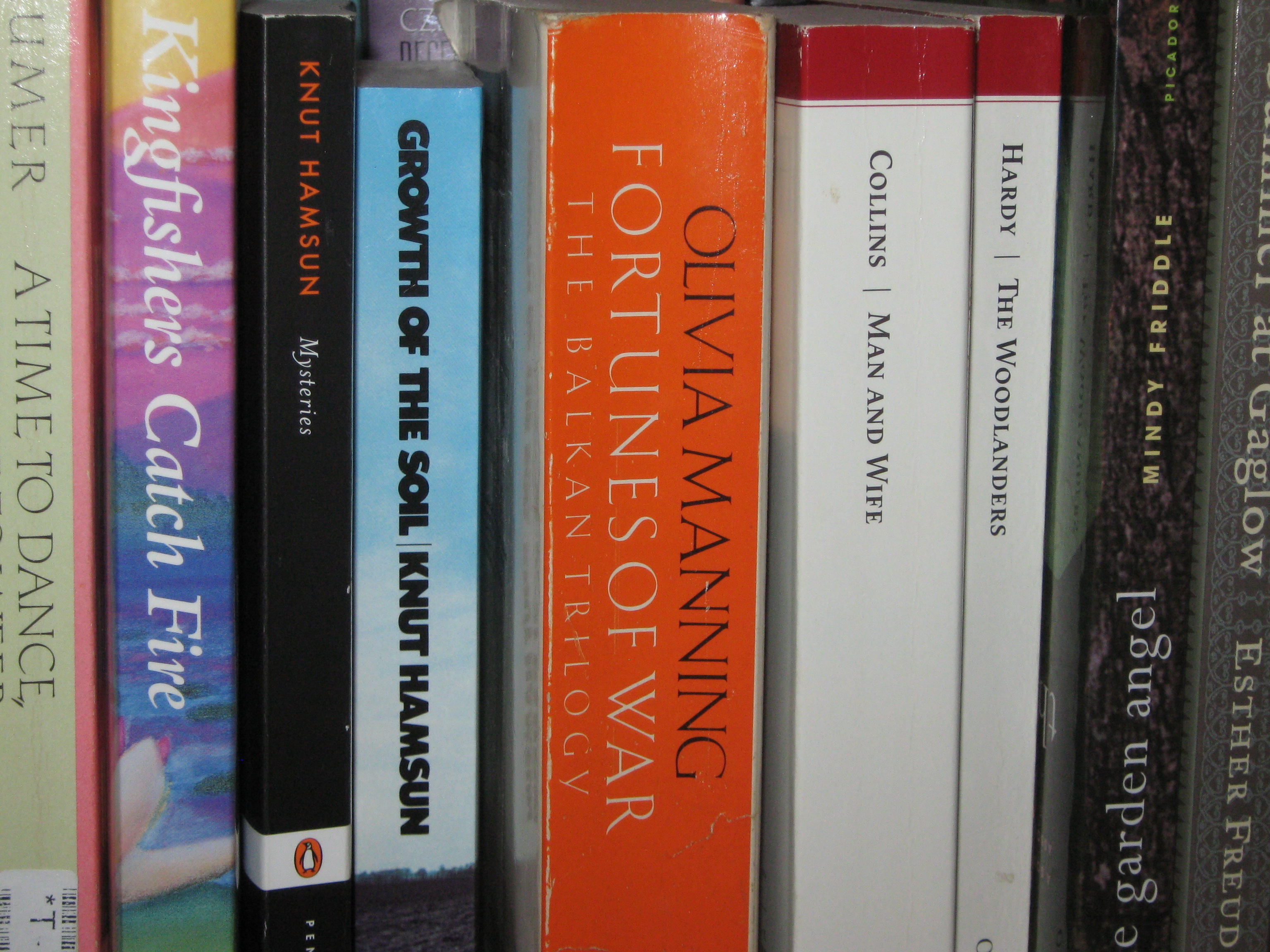
IMG_2502I’ve read all except Knut Hamson’ Growth of the Soil.

Picture # 3:

IMG_2500I’ve read only half of the Sofia Tolstoy and not read the Alan Garner yet.

We often talk about opening a used bookstore, but I would have to sell my own books.  I would probably be like the owner of a (now defunct) used bookstore who sometimes whisked books from the counter to his desk and refused to sell them.

I wanted to buy his copy of Abdelrahman Munif’s The Trench, the second book in a trilogy about the repercussions of American oil companies in a country “very much like Saudi Arabia or Kuwait,” as the book cover says.

The owner whisked it off the counter and told me I didn’t want to read that book.  “Cities of Salt is much more charming.”

No, I really did want to read that book, because I’d already read Cities of Salt.

I figured it was his book and he hadn’t gotten around to reading it yet, so I finally gave up.  He wouldn’t sell the books unless he felt like it.

I ordered The Trench from Amazon.  The great thing about Jeff Bezos is that he SELLS books.

SORRY, PUBLICISTS.  Bloggers are wild cards. Publicists don’t know us very well.  Sometimes we are good matches for their books, most times not.   Very few seem to know what we actually write about at our blogs, or the kind of books we read.  Because they would rather have their books reviewed than not reviewed,  they give gifts to or exploit bloggers, depending on your point of view.

Bloggers are often flattered when publicists approach them;  I have  been flattered occasionally when  publicists approach me.  But the truth of the matter is I seldom blog about the novels they send me.  I would not in the course of my real life read these books.  It’s like Book Club:  if it’s assigned, I don’t want to read it, and so have reviewed no “free” books this year. (I received a sports book once; why?)

And that’s why I prefer to choose my own books.

The following charming novel is the sole review copy I’ve  read this year. It isn’t quite for me, but I do know some people who will love it.

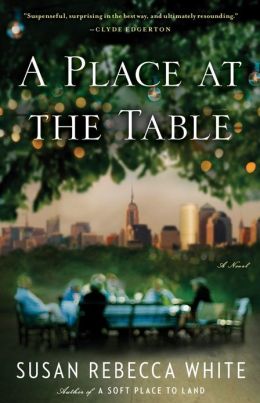
Mirabile Does Middlebrow:  Susan Rebecca White’s A Place at the Table.  This novel appealed to me because Clyde Edgerton, a A Place at the Table Susan Rebecca Whitewriter of charming Southern comedies, wrote a blurb for the book jacket.

In this lovely, entertaining novel, White tells the stories of three characters whose lives intersect over their love of food. Alice, a famous African-American chef and cookbook writer, lost her brother in 1929 when he was sent away by his family because they were afraid he would be lynched.  He and Alice had cut down a boy who was lynched, and this precipitated his rebelliousness and impertinence to a store owner.  Alice later moves to Manhattan, and her cooking makes the reputation of a small restaurant patronized by famous writers.

Bobby is a gay man, the son of a Baptist preacher and housewife in Georgia, and he lives in the 1970s with his Meemaw (grandmother)  after his parents catch him having sex with another boy.  When she dies and leaves him a little money, he goes to Manhattan and finds work as a chef in the once-famous restaurant where Alice used to cook.

Amelia, a Connecticut housewife who loves to cook and has built a life around her daughters, misses them badly when they leave for boarding school and college.  Her husband begins to have tantrums:  he screams at her for getting fat and not having sex with him.  Then she learns he is having an affair.  Amelia has to put her life together, and her Aunt Kate, an editor, introduces her to Bobby.

All these characters have family secrets.  Bobby is the important, vulnerable, charming, sympathetic character whose lover has died of “gay cancer,” and he accepts both of these women when they are most depressed.

The writing is richly colored.  Here is a passage about Bobby and Memaw.

Meemaw always ices her chocolate cake with cream cheese frosting.  It’s my favorite kind because Meemaw and me can dye it whatever color we want.  I like pink, but I can only color it that way if it’s just Meemaw and me eating it.  One time I brought home a batch of pink cupcakes for my family.  Hunter asked, “Why’d you choose that sissy color?’  Daddy said he bet I’d tried to make them ref for the Georgia Bulldogs but just hadn’t added enough food coloring.  ‘Isn’t that right, son?’  Daddy asked, and I answered, ‘Yes, sir,’ knowing that was what he wanted to hear.

White, an Atlanta native, has an MFA from Collins and teaches at Emory University, and this light, but moving, novel is her third book.