Vacation Day Two: Bicycling & Laura Lee Smith’s Heart of Palm

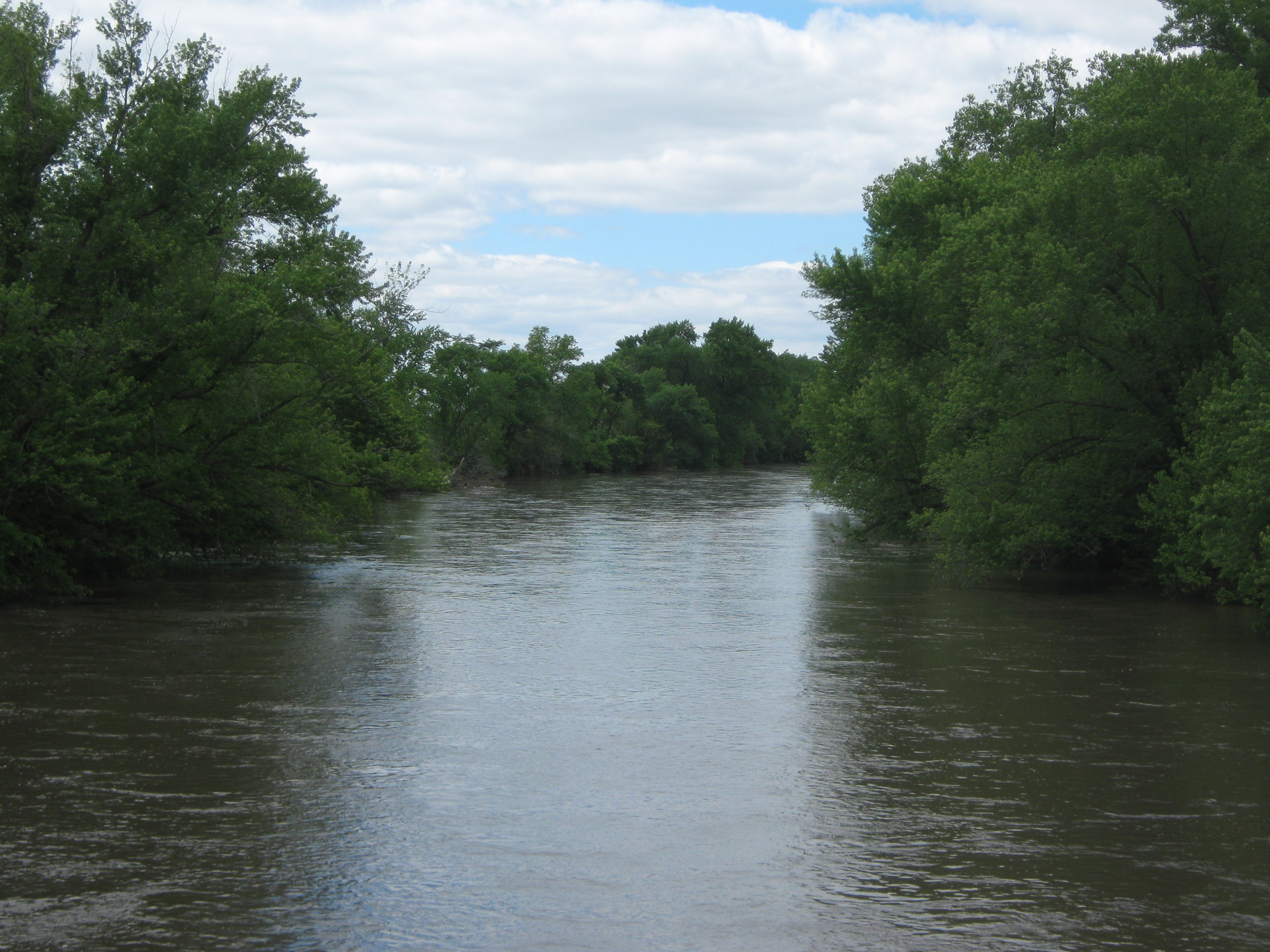
The river is rising.

The river is rising.

Vacation Day Two.  We bicycled 40 miles.

I am very slow.  To tell the truth, my husband could have ridden the trail in half the time.  Sometimes I tell him to go ahead so he will get a better ride.

I felt marvelous after 20 miles.  Twenty more miles and I felt very stiff.  First break:  Gatorade at a picnic table.  Second break:  I didn’t even get off my bike.  I just stood there, straddling the bike, and when my husband handed me the camera to put away, I said, “Uh-unh.  You do it.  I’m not getting off the bike.”

I used to be able to ride 80 miles in a day.  My goal this year is to do 50.
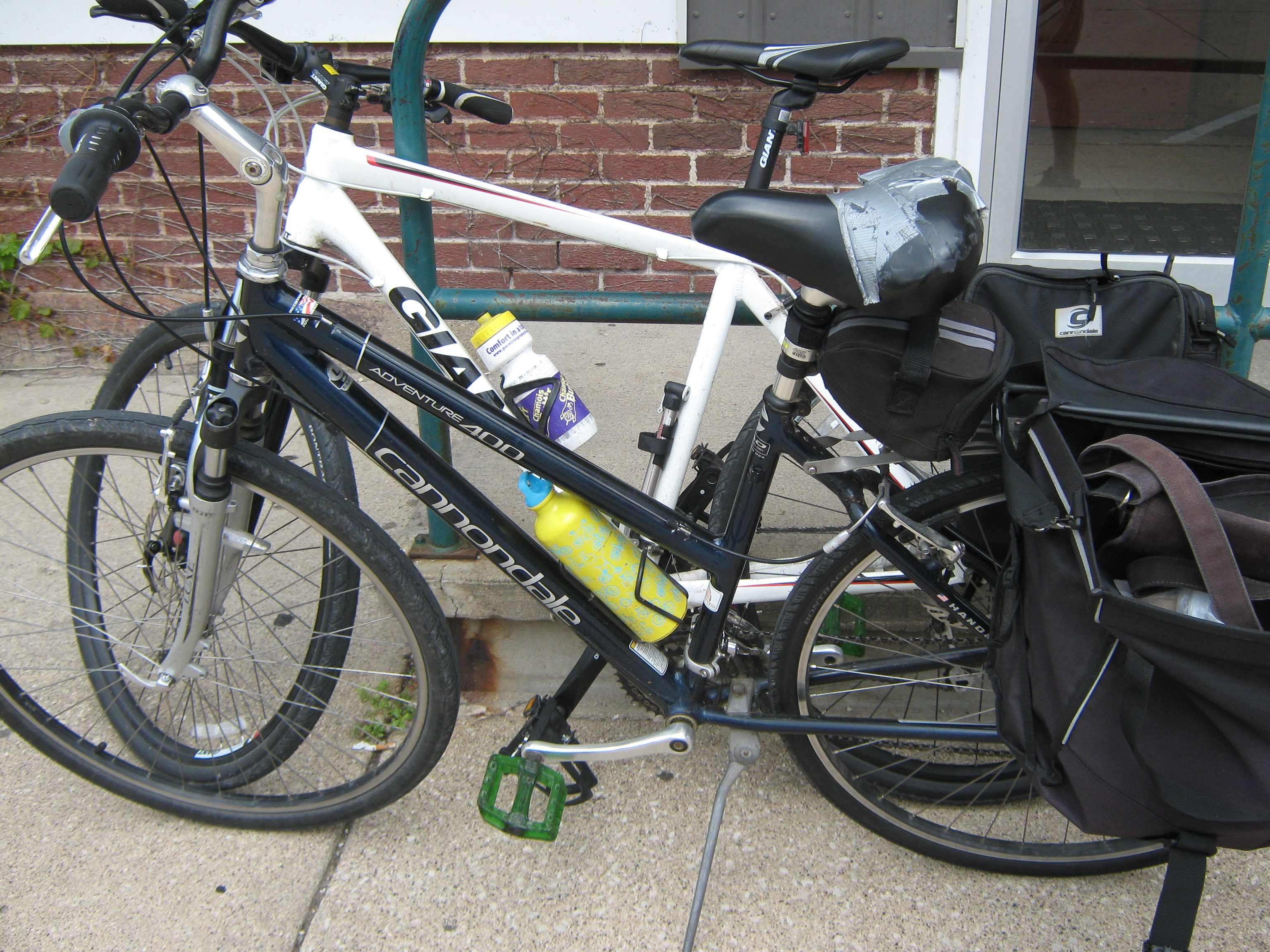
My bike

Mine is the blue bike.

My husband wants to buy me a new bicycle, but I love my Cannondale.   Made in the U.S.A.  I bought it 10 or 11 years ago, and I admit it has a few replacement parts. See the green pedals?  They were made for some super-mountain-bike off-trail event that I will never participate in, but were the only ones in the store.  See the tape on the seat? Last year it got so hot the gel started leaking out.  But the seat has since been replaced.

We love this trail.  For two years it was closed after the Flood of 2010.  A disaster.  Bridges out.

Now the river is rising again.

“She’s running wild,” a bicyclist said.

He was talking about the river, not me.

The river.

The river.

We’re all very concerned about the flooding.

Look at these photos of flooded fields on the trail.  Unbelievable.  This is not a lake.  This is a field.
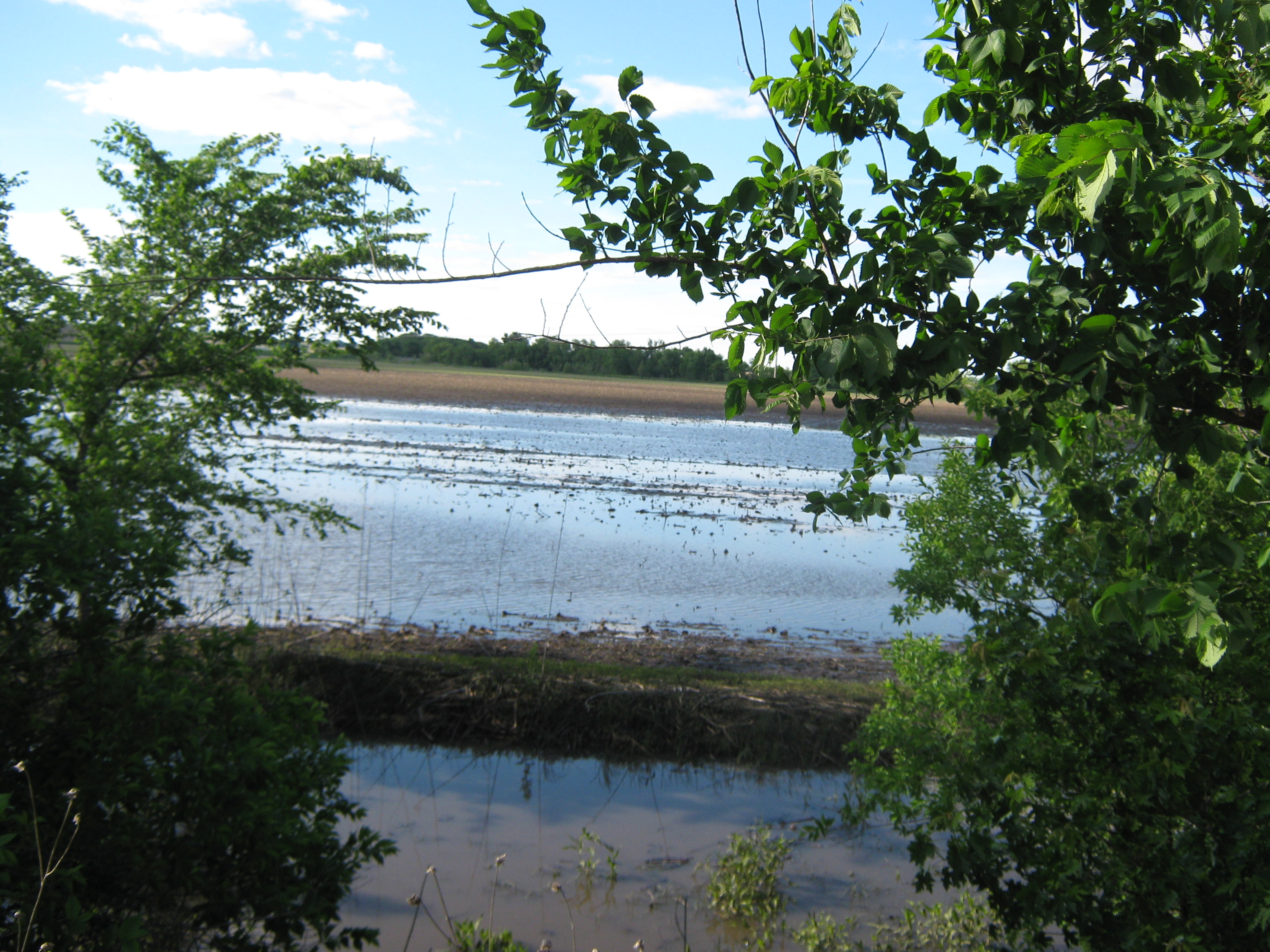
Flooded field

Flooded field

Here’s another picture.
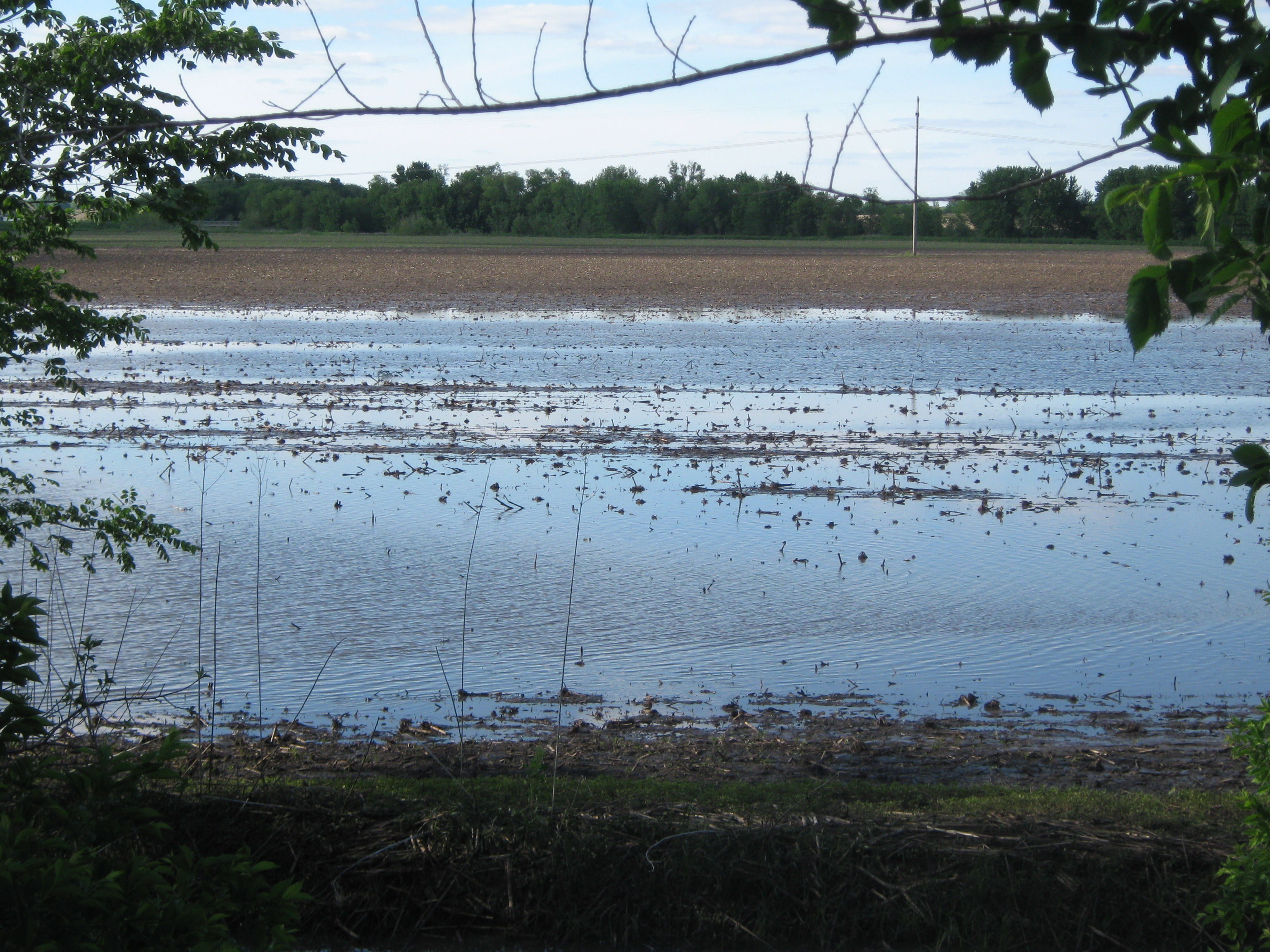
Flooded field.

Flooded field.

Not to lecture, but….  A gorgeous planet destroyed by burning fossil fuel.  Can’t you imagine the Zeus of Prometheus Bound, or Ovid’s Juppiter in the Deucalion and Pyrrha myth looking down?  “Thank you, human beings.”

Heart of Palm laura lee smithBest Vacation Reading: Laura Lee Smith’s Heart of Palm.  I adored Laura Lee Smith’s charming, comical, sometimes tragic, novel, set in Florida, the story of two generations of a redneck-on-the-way-up family, the Bravos. This is great vacation reading, what I call “high middlebrow.”

Arla Bolton is not a redneck.  Dean Bravo is.  Having broken up with her boyfriend, she is walking down the road in her bikini and sandals when Dean stops to see if she wants a ride.   He, of course, is driving a truck.  And of course she knows who he is.

The writing is simple but very fast.

You’re Dean Bravo,” she said simply.

“I am,” he said, surprised.  “How do you know?”

“We all know the Bravos.”

“Who’s we?”

“Me and my friends.”

After they get married, there is a tragic accident.  Dean takes Arla out in a boat with no one to spot her on  waterskis.  Dean is reckless.  He drives the boat like a maniac.  She falls in the water, and her left foot is cut in half.

And so she will walk with a cane the rest of her life.    She is no longer the beautiful rich girl:  she is as crippled as Utina, Dean’s hometown,  where nobody wants to live, and where Dean has bought a huge rambling house, Aberdean, near the sea.  And every time Dean looks at her, he remembers that he wrecked her life.  Dean works at a paper mill, breathing toxic fumes, and he is an alcoholic, but he usually does the right thing by his family until the youngest son, Will, dies in an accident.  Then he leaves.

Now, forty or fifty years later, a development company wants to build a marina in Utina.  They have approached Arla, now in her sixties, and her children about selling their land for millions.  Arla doesn’t want to sell;  the children are (mostly) ambivalent.

The novel is told from multiple points of view.   Frank, the middle son, the manager of a restaurant, is the most endearing and is at the heart of the novel.  He is always anxious about whether he left the fryer on at the restaurant; he drives everywhere with a sociable dog named Gooch; he tries to negotiate between Arla and his sister, Sofia, who has OCD and anxiety disorders and who still lives at Aberdeen, when they quarrel over whether a termite-laced piano should be moved out of the house or not; and he is secretly in love with Elizabeth, the wife of his sleazy financier brother, Carson.

It may seem that the other Bravos are just hanging around their Southern house like a family in a Tennessee Williams play, but they actually work.

Arla irons vestments and church linens for a living.

Today, in the living room, the ironing board stood in its usual place in front of the west-facing window, and three plastic laundry baskets of carefully folded clergy vestments were lined up in a row on the floor.  Since she quit coming to the restaurant regularly years ago,  Arla had methodically built up a small, strange business as a laundress of vestments and church linens, a sideline she started when the kids were still small and had continued all these years, servicing, by now, all seven Catholic parishes in St. Augustine….

And Sofia cleans the restaurant.

Carson is in so much trouble with his Ponzi scheme that if he doesn’t get that development money he’s going under.

I picked this up because Richard Russo has a blurb on the cover, and Smith’s spellbinding story does remind me of his early work.   I really enjoyed it.
Vacation Day One: Rain, Our Tree, & Iowa City

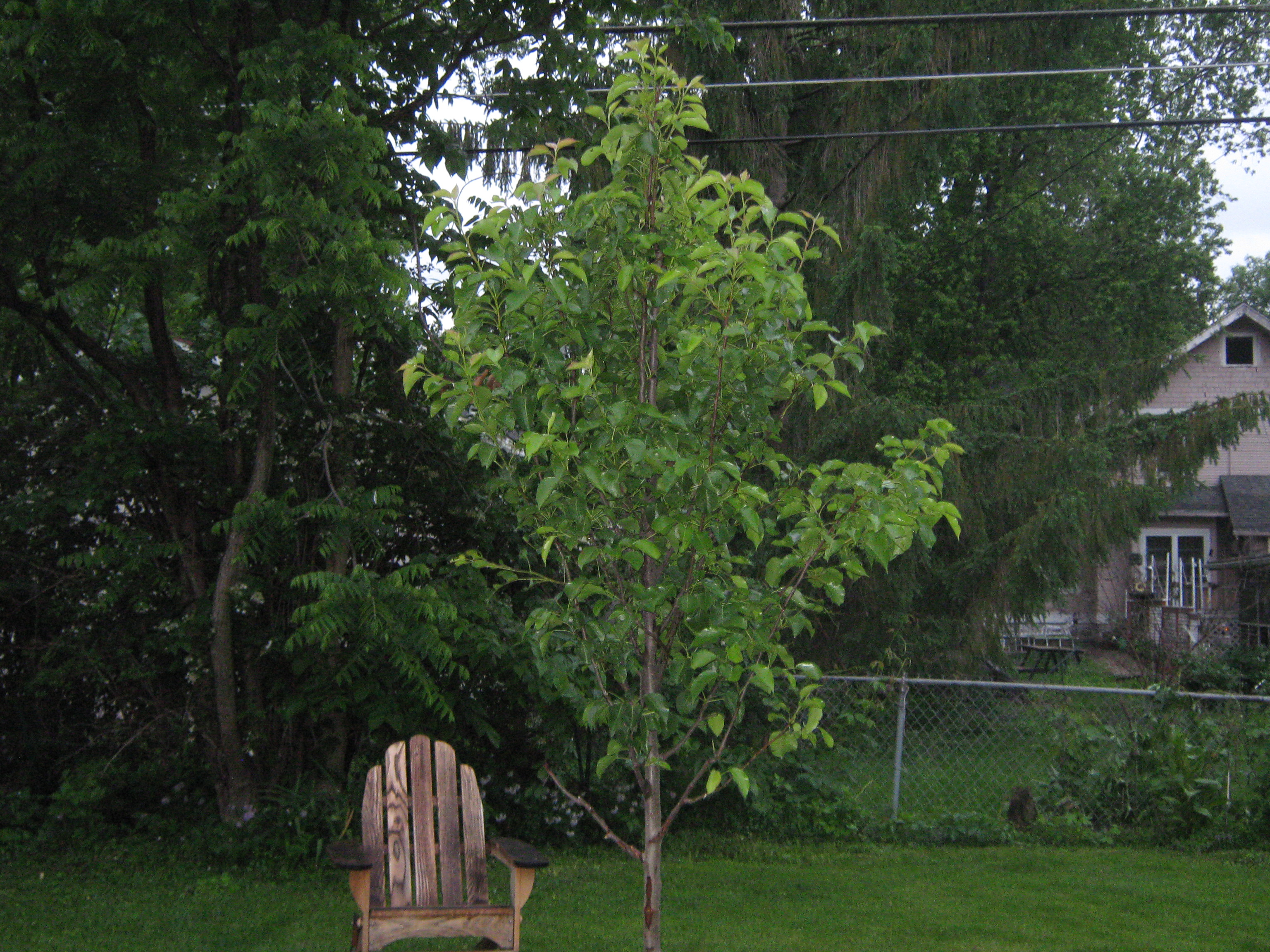
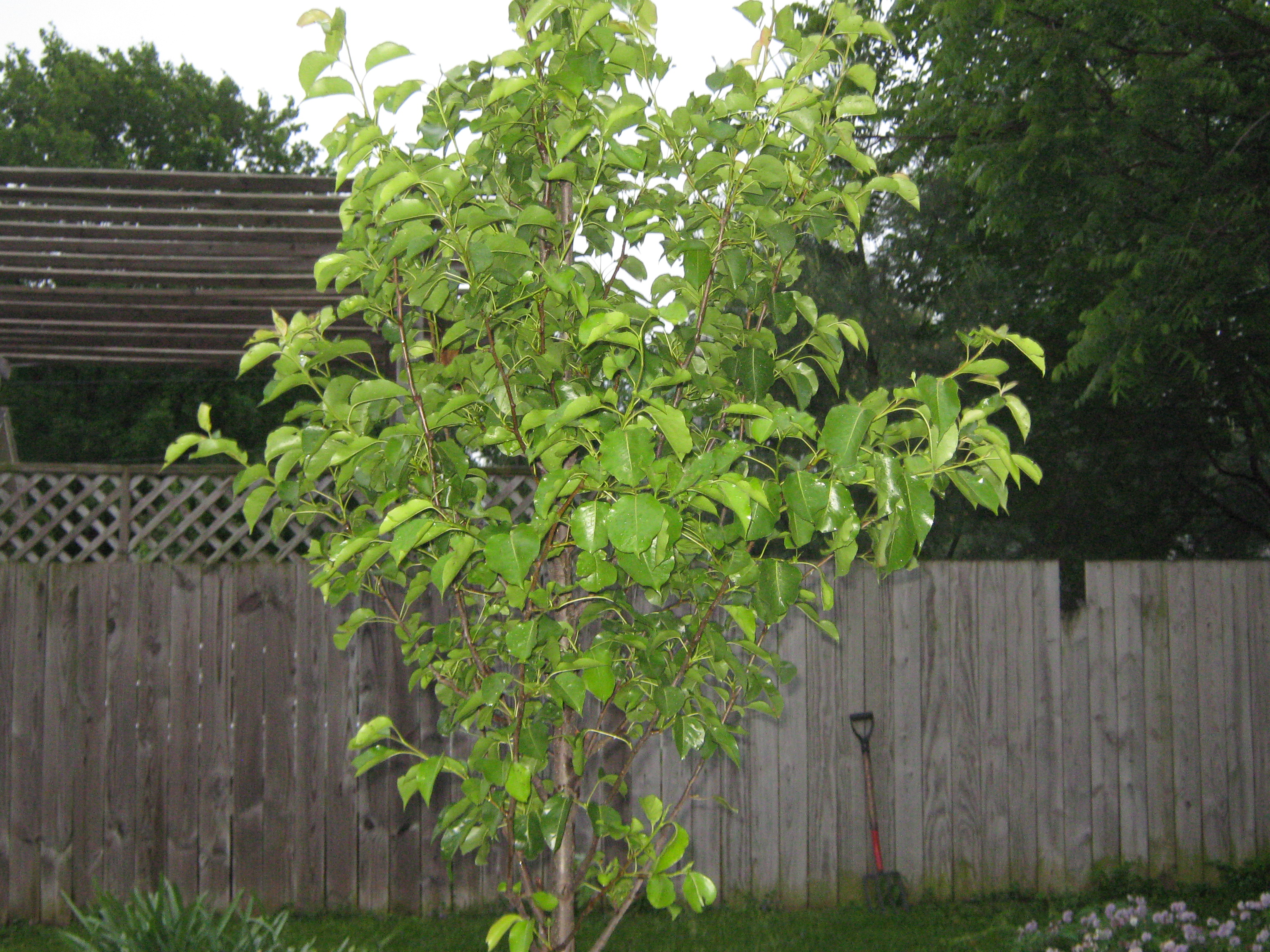
Pear tree.

Pear tree.

Our new tree is drowning.

It rained. Again.

It has been the wettest spring on record in our state, 17.48 inches of rain as of Thursday.  It was also the wettest May on record, with an average of 8.66 inches of rain.

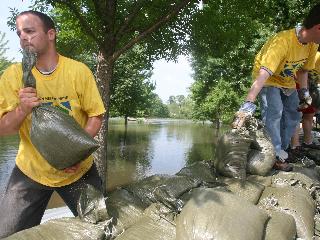
Today I wanted to go to Iowa City, my hometown, but they’re sandbagging again.  It is sad.  They haven’t recovered from the Flood of 2008, when the art museum and Hancher Auditorium were destroyed.  Now the water is rising again.

Sandbagging in Iowa City.

Sandbagging in Iowa City.

We have been lucky so far here.  Rain in the basement.

This poor tree.  I bicycled to a nursery and chose it.  I walked among the acres of trees.  Did I want an autumn blaze maple, a pear tree, a linden, or an aspen tree?

I decided I wanted at least one tree that blooms.

At our first house as adults, we had pin oaks and pine trees.  After a storm, an artist asked our permission to take  a big oak branch home.  We were flattered.

We live now in a neighborhood of maples, lindens, sycamores, oaks, apple, pear, evergreens.

Last year our maple was destroyed by a storm:  we had to cut it down so it wouldn’t fall on our neighbor’s house.

You cannot imagine how horrible it is to go out in the back yard on a sunny hot day with no trees:  well, there’s still one tree in the WAY BACK, as we call it.

All you can do is straighten your back and go buy a tree.

It is strangely exciting to buy trees. Expensive, though. My husband has said I need to stop blogging and write some articles. All right, send me to Afghanistan or Iowa City.  Give me a notebook and I’ll find a story.

Or maybe I can write about the nursery.  Forty-five acres, yes, of trees.  Interviews, interviews.

Thee nursery landscaping team came and planted our new trees .  I looked out the window and there they were.  I practically missed the planting because they were so fast.  They jumped on the rootballs, I swear.

We know exactly how much water they’re supposed to get each week.

And now this.  It looks green and beautiful, but the leaves are drooping.  Too much water.

Poor pear tree.

Poor pear tree.

I have tried sitting next to the tree to encourage it.  Yes, that’s my Adirondack chair.  I sit back there and read Anna Karenina.  I jump up and touch the leaves a lot.

On the other hand, the hostas are loving the rain.  But didn’t we used to have more hostas?

Hostas

Hostas

My 99-cent flowers are pretty much deluged.  I’ll have to plant more.

VACATION DAY ONE.

What am I doing blogging when I’m on vacation?

Well, it’s like this.  One year we were going to an island and there was a hurricane warning.  We ended up instead in Bloomington, Indiana.

So we might as well skip the island and go to Iowa City.  Great bookstores, a pedestrian downtown, and an excellent university library.

I would love to do some research in the archives at the university library.  Whatever happened to the underground papers of the 70s, The Oppressed Citizen and Ain’t I a Woman?, the paper that was eventually taken over by the lesbian feminists?

magic-mountain-2005But what I NEED in Iowa City is a copy of The Magic Mountain.  I looked for it at our B&N.  Uh-unh.  No Thomas Mann at all.

B&N has new books.  But if you want to buy Saul Bellow, there is no Saul Bellow.  If you want to buy Katherine Mansfield, there is no Katherine Mansfield.  They have a very poor backlist, which has recently gotten worse.

And there are strange errors.  You will find Lucan’s Civil Wars, an epic poem, in the ancient history section.  I could have told the know-all boss that it was in the wrong section, but she would probably have poisoned my coffee.   She follows customers around with her x-ray vision, hoping she can catch someone committing a crime.

B&N’s crime against me:  the bookseller’s pick this week is Dan Brown’s Inferno.

Taking a Break

I’m taking a short break.  (But do remember to sign up for the giveaway.)

R.E.M. said it best in “Driver 8.”

And the train conductor says
“Take a break Driver 8, Driver 8 take a break
We’ve been on this shift too long.”

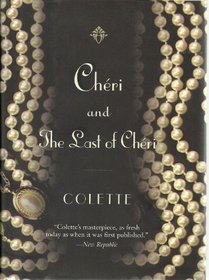
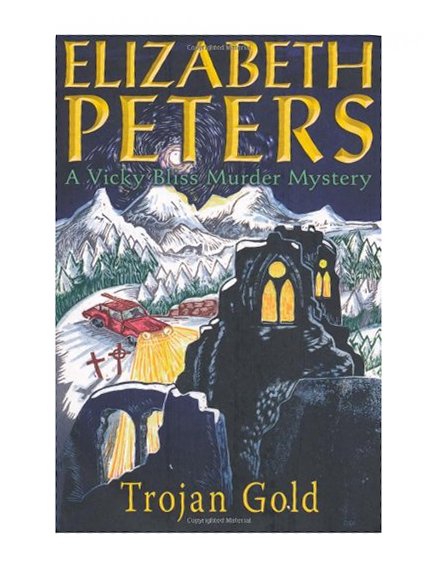
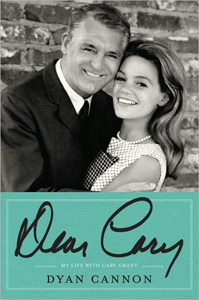
Super Giveaway: Colette’s Cheri & the Last of Cheri, Doris Lessing’s This Was the Old Chief’s Country, Hugh Walpole, Elizabeth Peters, & Dear Cary

Yes, it’s a giveaway.

Five books.

We’ll mail them to the U.S., Canada, or the UK.

Leave a comment if you’d like one, or more than one.

They are:

1.  Doris Lessing’s This Was the Old Chief’s Country:  Collected African Stories, Volume I

This was the old chief's country doris lessing2.  Hugh Walpole’s Mr. Perrin and Mr. Traill (Capuchin Classics )

mr-perrin-traill-hugh-walpole-paperback-cover-art3.  Colette’s Cheri and The Last of Cheri

Cheri and the last of Cheri (colette)4.  Elizabeth Peters’ Trojan Gold

Trojan Gold Elizabeth peters5.  Dyan Cannon’s Dear Cary:  My Life with Cary Grant

cannonDyan dear caryEnjoy!

I’ll draw names if more than one wants the same book.

If no one wants them, they go to the charity sale.

Sleeping with Knightley, Margaret Drabble’s The Waterfall, & Howard Jacobson on Jane Austen

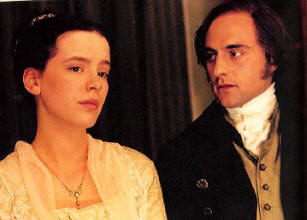
Emma (Kate Beckinsale) and Knightley (Mark Strong), not looking too sexy together.

Emma (Kate Beckinsale) and Knightley (Mark Strong)  in 1996 film.

Jane Austen’s Emma is the funniest book I have ever read.

Emma may be too clever for her own good, she may flirt too heedlessly with Frank Churchill, she may almost ruin her friend Harriet’s life by advising her badly on marriage, but I prefer her company to that of the more subtly bitchy Lizzie Bennet in Pride and Prejudice, the decorous Fanny in Mansfield Park, or the weak Anne in Persuasion (I love Anne, but she’s too passive, however hard Austen tries to explain it).  Emma is smart.  Emma says what she thinks.  She doesn’t want to marry, and she prefers the lively Harriet to the rigid Jane Fairfax.  Emma would destroy society in a moment, if Knightley weren’t there to criticize.

Knightley corrects all Emma’s mistakes, but he’s more like a father than a lover. I’ve always suspected he would be as tyrannical as Lucy Snowe’s unattractive fiance, M. Paul (her second choice when the man she loves chooses someone else), in Charlotte Bronte’s Villette.

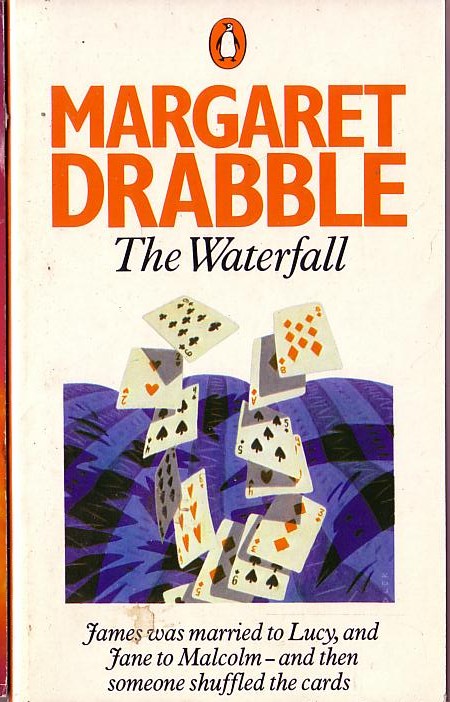
Margaret Drabble’s heroine, Jane Grey,  in The Waterfall particularly dislikes Knightley.

How I dislike Jane Austen.  How deeply I deplore her desperate wit.  Her moral tone dismays me:  my heart goes out to the vulgarity of those little card parties that Mrs. Phillips gave at Meryton, to that squalid rowdy hole at Portsmouth where Fanny Price used to live, to Lydia at fifteen gaily flashing her wedding ring through the carriage window, to Frank Churchill, above all to Frank Churchill, lying and deceiving and proffering embarrassing extravagant gifts.  Emma got what she deserved, in marrying Mr. Knightley.  What can it have like, in bed with Mr. Knightley.  Sorrow awaited that woman:  she would have done better to steal Frank Churchill, if she could.

the Waterfall Margaret Drabble penguinThe Waterfall is a remarkable novel, has some Austenish overtones, and Drabble knows it.  Her heroine Jane is a kind of anti-Jane Austen.  In the last weeks of pregnancy, Jane lives alone, her husband having left her and her son having been sent to stay with her mother.  She wanders around the house drinking coffee, shops only where no one will recognize her so she can be solitary, and reads an article about a woman who gave birth alone in a hut in Alaska.

Although Jane loves to be alone, she does call the midwife when she goes into labor.  Then her cousin Lucy and husband James take turns staying with her.  Handsome, sexy James, who owns a garage and fast cars, climbs into bed with her and sleeps with her chastely until she can have sex again.  Then they have a steamy affair.

It is Jane’s first real love affair.  She had married Malcolm, a musician, because she felt sorry for him, and they hadn’t suited one another in bed.  James is an ideal lover, and loves to sit around the house with her:  he doesn’t really work, he explains.  He takes her and her children on outings and to the racetrack.  The racetrack is too nerve-racking for her, though.

Jane doesn’t want much human contact except with James, and it is the fault of her neurotic family.  She very much dislikes the rigidity of anything that resembles Austen’s social code.  She hates the dissimulation and pretenses of her family:  her father, a sarcastic headmaster, bullied boys and was deemed a success; her mother was a hypocrite and social climber who pretended not to care about material things but spent all her time sucking up to the rich; and her aunt browbeat her inferior “husband in trade” until he became capable of  middle-class malice.

Drabble’s portrait of her parents does remind us of Austen’s world, and Jane inhabits a post-Austen world of the ’60s.

Some people conspire to deceive the world and find in their conspiracy a bond, but they did it, I think, with a sense of profound mutual dislike.  They presented a united front to the world, because their survival demanded that they should, because they could not afford to betray each other in public; but their dissension found other devious forms, secret forms, underhand attacks and reprisals, covered malice, discreet inverted insults, painful praise.

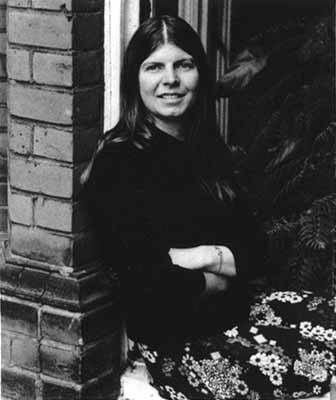
Margaret Drabble, the '70s

Margaret Drabble, the ’70s

Jane looks like Lucy, and does feel some guilt about her cousin.  And when there’s an accident…

The fascinating narrative is sometimes in the third person, other times first-person, with Jane trying in the first-person sections to explain how she has lied or exaggerated in the third person.

She even cites Jane Eyre, and muses how she could have rendered James impotent/crippled like Rochester had she felt like Charlotte Bronte (which she doesn’t).

This is possibly Drabble’s most difficult book:  it is beautifully written, but a humorless predecessor of The Needle’s Eye, one of her masterpieces.

By the way, I love Jane Austen, I read her books again and again, but I do understand Drabble’s Jane’s doubts.

For Jane fans, here is a link to Howard Jacobson’s fascinating speech on love and sex in Austen:  he gave it at the Telegraph Hay Festival last weekend.

Rejected & Memorial Day Break-Up

jonathn lethemThe other day I wrote about whether or not bloggers should accept review copies.  You said, “No.”

When one reviews for a print publication, an editor deals with the publicists and doles out the books to reviewers.  That makes it easier in some ways.

But I occasionally accept review copies, and don’t have a problem saying what I think at my blog.

The truth of the matter is that I read mainly my own books.

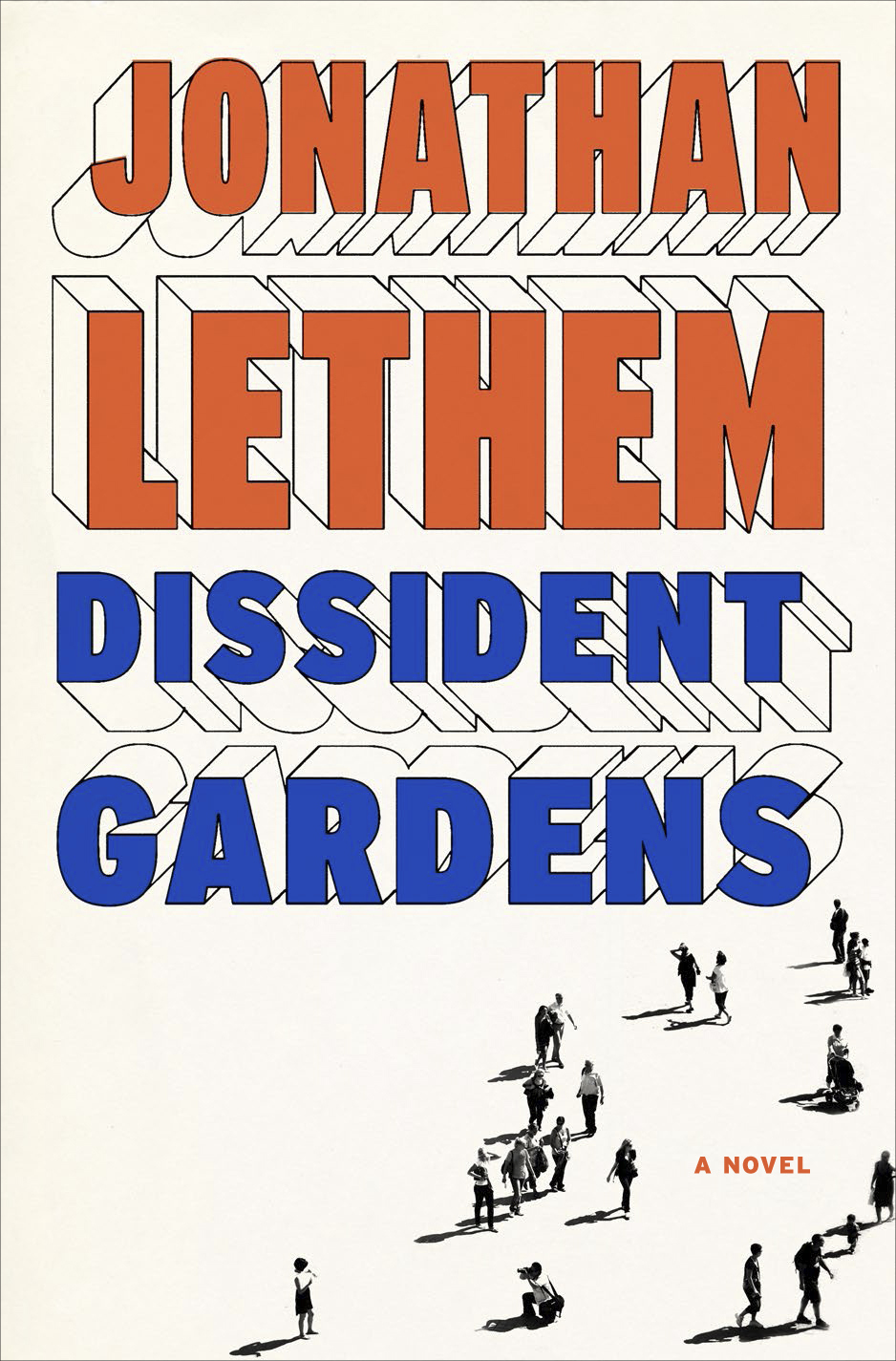
But let me explain.  Jonathan Lethem is my favorite American writer.   I recently read “The Grey Goose,” his story in the New Yorker, which seems to be an excerpt from his new novel, Dissident Gardens.

And so I requested the novel from the publisher.

I was rejected.

Moi?

I was surprised.

So here is the next step.  Get a name.  Yes, I will get a name of a publicist at Doubleday.  I will email that publicist.  I will explain that Lethem is my favorite writer.  I have already written this year about Lethem here and here.

And what if the publicist says no?

Then I’ll send snail mail.

No, I think that would be way too annoying.

The next step is to get an assignment to review it.  There must be some small free publication that could use a review of Dissident Gardens.

The next step is to give up and BUY the book.

I will be the first one at the bookstore to buy Dissident Gardens on Sept. 10 (the publication date).

And here is an excerpt from the description of the novel from Amazon

At the center of Jonathan Lethem’s superb new novel stand two extraordinary women. Rose Zimmer, the aptly nicknamed Red Queen of Sunnyside, Queens, is an unreconstructed Communist and mercurial tyrant who terrorizes her neighborhood and her family with the ferocity of her personality and the absolutism of her beliefs. Her brilliant and willful daughter, Miriam, is equally passionate in her activism, but flees Rose’s suffocating influence and embraces the Age of Aquarius counterculture of Greenwich Village.

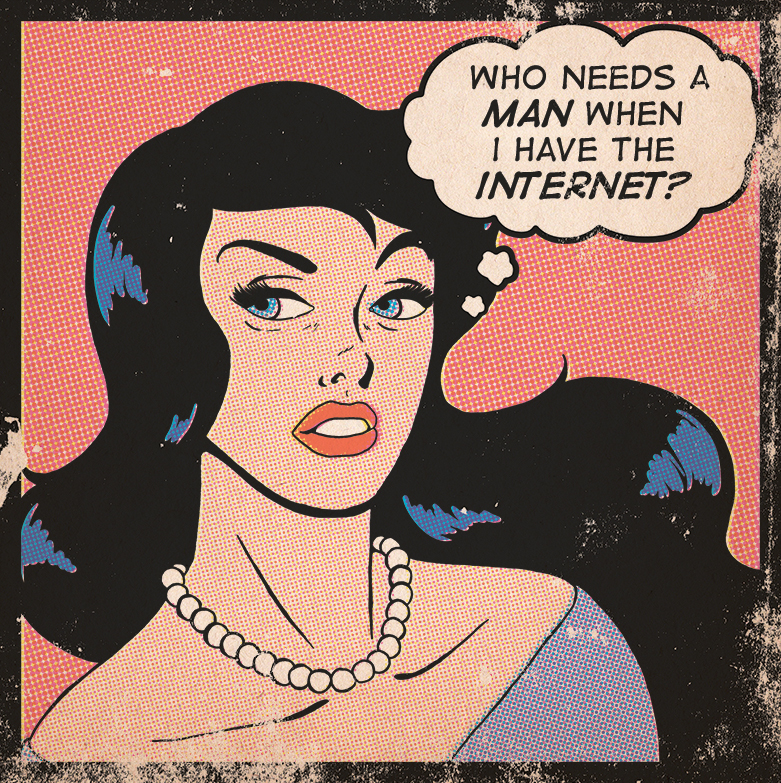
Who Needs a Man When I Have the Internet?MEMORIAL DAY BREAKUP.  Perhaps you remember my talking about my cousin, the librarian who drinks and loves Twitter.

Memorial Day is not her favorite day.

She broke up with her boyfriend.

It is not a great thing to break up with one’s boyfriend any time. I was stupefied during my divorce–I rode the same bus as my ex- on the way home after the finalization of the divorce in court, and was in tears for a year–and I attended all social events for months afterwards because I didn’t want to be alone.

On Memorial Day you go to the family party because you are sad and desperate.

“Is there drink?”

That’s the first thing on her mind.

There was a lot of wine.  I don’t drink, so I can’t say what wine it was.  It was picnic wine.  You know:  there you are at the park, barbecueing your chicken forever, and you have pretty much caught up with everybody, the aunts, the siblings, and then suddenly you’re drinking wine.

We took a walk to the store down the road, and she explained about her boyfriend.  He  kept getting phone calls at her apartment.  Eventually  she looked at his phone and read the texts.

I really am very sorry for her.  I don’t have a cell phone, and have never seen a text, but I imagine it’s much like other e-things.

iPhone, e-mail.  We all spend too much time on the “e.”

There’s nothing worse than a break-up, but my cousin is youngish and pretty, and she’ll find someone else.

She’ll have to play volleyball, go to dinners,  and the Sierra Club meetings.

It is very hard to meet men, even in one’s thirties.

God help her, she deserves better.

Bicycling on Sunday & Tolstoy’s Adulteresses on Monday

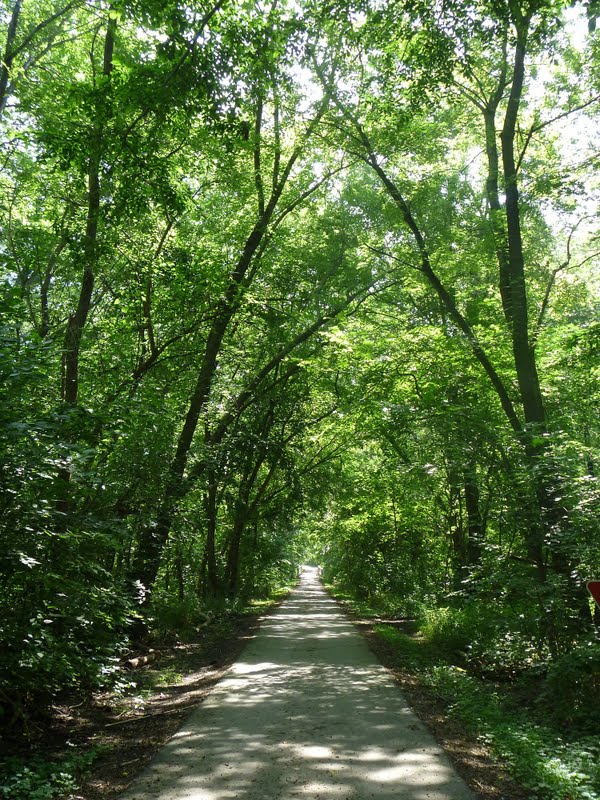
Raccoon River Trail,

Not my picture, but this  is my trail.

It rained, it rained, it rained, but then yesterday we bicycled 32 miles.  It is a lovely trail, and my husband always tells me to write about it. I tell him I have nothing to say about bicycling, and it is true.  What to say?  Pedal, glide, change gears, chain falls off, put chain back on, pass people on the trail, look at the brick factories, look at the grain elevators, stop and have a snack, sit at a picnic table and read.

Nothing really happens here–it is a tranquil place with very little going on–and bicycling is popular.  The bike trails in the city and country have changed lives:  it is possible to live without a car, we can get anywhere in our “big” little city by bike, and thousands of people from all over the country come for a cross-state bicycle ride (known for partying and sleepless nights).

When writing about bicycling, what to say?  We talk about the wind, where we’re from, cows ahead on the trail, and share our sunscreen.  At the depot the woman who sells the candy and pop wants to talk.

We ride to a small town, and want to take a break in the picnic shelter, but the sky turns blue-black and we have to go.  We coast downhill, then climb uphill for several miles, and beat the rain.  It is the first time in years we’ve bicycled this far without taking a break.

I feel very slightly sick afterwards and take Advil.

anna-karenina-leo-tolstoyAdultery in Anna Karenina & War and Peace Adultery has a high price for Tolstoy’s women.  We have only to compare the consequences for Anna Karenina, the beautiful, sympathetic heroine who falls in love with Vronsky, and Princess Hélène, the cheating wife of Pierre in War and Peace, to realize that Tolstoy disapproved of both.  Anna has a conscience and Helene has no remorse, but both die prematurely.   Anna commits suicide, and Helene is struck down by an unknown sickness.

Whether consciously or not, Tolstoy gave them names which, if not quite homophones, do sound similar:  Anna and Hélène.  (When you reread the books back-to-back, you notice other characters who are nearly doubles, though not in names: Kitty-Natasha, Levin-Pierre…)

Adulteresses often die in literature, especially in the 19th and early 20th century:  Emma Bovary in Madame Bovary and Edna Pontellier in Kate Chopin’s The Awakening of suicide; Mattie in Edith Wharton’s Ethan Frome, whom Ethan is in love with, does not die, but is crippled in an accident; refreshingly, Willa Cather allows adulteress Marion Forrester in A Lost Lady to get away from the small town by breaking the rules, investing money through a shady lawyer.

Anna Karenina was based partly on a real-life incident.  At an inquest, Tolstoy saw the corpse of Anna Pirogova, the rejected lover of one of Tolstoy’s neighbors, who threw herself under a train.

Tolstoy portrays Anna as a lively, brilliant, married woman.  When she dances the mazurka with Vronsky at a ball,  it shatters Kitty, who has expected Vronsky to propose.  Anna is infatuated with Vronsky, but decides to leave Moscow the next day, knowing she has erred in hurting Kitty; telling Dolly, her sister-in-law, that she has erred; and Dolly making light of it, saying she doesn’t want Kitty to marry Vronsky anyway.

Vronsky follows Anna on the train back to Petersburg, and after a year they become lovers. Anna’s husband, a sarcastic, cold-blooded bureaucrat, doesn’t want a scandal, but she is hopelessly in love with Vronsky and finally leaves her family. When Karenin won’t let her see her son, she agonizes.  And later, when Vronsky loses interest in her, and she is an outcast, she throws herself under a train.

In War and Peace, Helene is an unsympathetic character.  She is described as stupid and cruel, she marries Pierre for her money, and considers him foolish for interfering in her love life.  Pierre hates her, cannot believe he married her, and loves Natasha, who is engaged to his friend, Andrei.

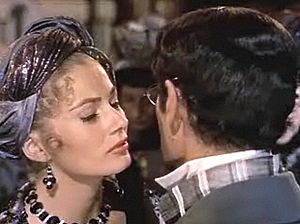
Helene in War_and_peace9

Anita Ekberg as Helene

The odd thing is that beautiful Helene, unlike Anna, does not lose her place in society.  She is considered a wit, and in sophisticated Petersburg everyone blames her husband, fat, smart, intense Pierre, for their marital difficulties.  He tries to leave her, and she continually follows him.

But Tolstoy kills her off, just the same.  She gets ill–everyone expects her to recover–and we are shocked when she dies, though she is a dreadful character.

Kitty in AK, a beautiful, happy young woman, is desperately in love with Vronsky, and becomes very ill after the non-proposal; her parents take her to a spa in Germany, where she recovers, partly by befriending a woman who does good to all the sick people, and trying to do good, too. Natasha in War and Peace also becomes ill after she and her fiance, Andrey, break up:  unlike Kitty, she has been almost unfaithful, and tried to elope with Helene’s brother.  Natasha recovers from her illness slowly, and for a while goes to church with a very religious woman.

I love both books so much that I could read them every year, but I am promising myself that I won’t read Tolstoy in 2014,

Why We Blog & Review Copies: Should We or Shouldn’t We?

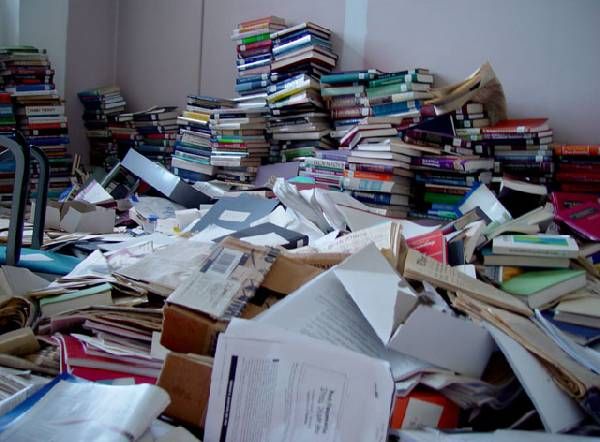
Does your book room look like this?

Does your book room look like this?

I am under the radar at mirabile dictu.

I can write what I like, post a rough draft if I like (and I do), re-edit it after publication if I feel like it, yank it, put it back or forget it.

There is something empowering yet cozy about blogging.  We have opportunities to write about books that journalists and reviewers ignore.   Professional writing is probably more satisfying, but in my experience the good professional pre-internet work always disappears, while the sloppily-written-on-the-computer stuff remains forever in cyberspace.  My ex- found the worst thing I have ever written, and then emailed me.  I was  glad to hear from him after so many years, but wanted to say, Couldn’t you have read this one instead?

Last December, I had to rethink what I wanted to do with my blog.  At my old blog, things had gotten beyond empowering.  I had a lot of traffic, a lot of spam, and a lot of unkind comments, which I didn’t enjoy waking up in the morning to delete.  I was and am, of course, always thrilled when writers drop by to comment to say they liked my blog, but am much less thrilled when writers whose work I’ve trashed come by.

Many came only for the post I wrote on the actress Elizabeth Taylor.  (They weren’t interested in the post about the writer Elizabeth Taylor.)   There was also the writer whose book I reviewed, who later plagiarized an anecdote from my blog in her most recent novel.

I decided to start a blog where I would be kinder, though still honest and occasionally fierce.  I wanted to start a blog where I would write of the mirablie dictu  more often than the horrendum dictu (though that is not forbidden). I wanted to start a blog where plagiarists would be less likely to spend time.  This latter, of course, is one of the big problems of the internet.

*******************************

Should we or shouldn’t we accept review copies?  Bloggers sometimes debate this.

The thoughtful blogger, Tom Cunliffe of A Common Reader, who reaches 10,000 readers a month, recently decided to stop accepting review copies.  He makes exceptions for European literature in translation from small publishers.

He explained,

This is an independent book review website and while I’ve only ever reviewed books I enjoyed reading, I find that by taking review copies I can’t plan my reading properly.  I’m passing over books I discover on my own in favour of books which I’ve agreed to take on review.

I very much respect his decision.  He is a serious reviewer.

My impression is that this problem is greater for English bloggers than it is for Americans.  Star bloggers Dovegreyreader and Random Jottings tell us how many boxes of free books they receive; some other bloggers tell us whether the books they review are review copies or not.  I do feel I trust these bloggers enough that I don’t need to know about their review copies, but perhaps it’s a kind of Caveat Emptor.  In the U.S. we are either receiving fewer review copies, or not worrying about it.

I do receive a few review copies.  Last year I packed up some of my review copies in a box and misplaced them.  I am now sorting through them.  Some go into the “read” pile, but what should I do with the others?   This year I have accepted very few books, and am beginning to make inroads.  I have perhaps ten excellent review copies waiting I will write about, but since I am in the middle of Anna Karenina….

I did at one point at my old blog have a no-review copy policy.  In April 1010, I said that I could no longer accept them because I could no longer shelve all my books.

Then a new unsolicited review copy arrives and suddenly I, too, am dismayed by the plethora of books. ..How did this new mysterious unsolicited book end up here?  A publicist got my name somewhere–I don’t remember dealing with this publisher before so it’s probably from a very old list. Alas, I don’t want the book. It doesn’t look good, it doesn’t look bad, someone’s going to love it, but I cannot accept more books from publishers.

So, what do you think?  Should bloggers accept free review copies, or not?  Does it affect the way the book is read and reviewed?

Mirabile Does the ’70s: Anti-Mass and Erica Jong

Going underground should not mean dropping heroically out of sight.  There will be few places to hide in the electronic environment of the future.–Anti-Mass:  Methods of Organization for Collectives

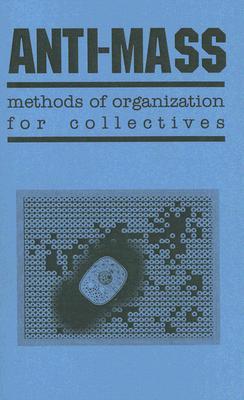
Anti-MassI recently ordered something from a catalogue, and now the retailer follows me around the internet with ads.

This is the electronic environment of the future.

Who would have guessed that Anti-Mass would be right?

I was not particularly radical in the 1970s, but I read the underground newspapers. One summer an anonymous essay, Anti-Mass:  Methods of Organization for Collectives, was reprinted in several papers. I read it with interest, probably at the Mill, where  I went for spumoni ice cream almost every night.

But the tone was officious.

The mass is an aggregate of couples who are separate, detached and anonymous.  They live in cities physically close yet socially apart.  Their lives are privatized and depraved.  Coca-cola and loneliness.”

I wanted to be a part of the aggregate of couples, Coca-cola and loneliness or not.  I was a romantic.  I wanted the opposite of Anti-Mass.  My favorite book was Wuthering Heights, weird and powerful, the story of the quasi-feral passion of Catherine and Heathcliff.   I date my detachment from my radical older friends from the summer I read Anti-Mass.

A few months later I enrolled at the university and was so busy studying classics that I had no time for politics.

How to Save Your Own Life penguinI had been an accidental radical. I came of age among Democrats, hippies, feminists, and liberals.   My best friend’s mother was a feminist; I became a feminist.  We read D. H. Lawrence, Doris Lessing,  Anais Nin, Sylvia Plath, Betty Friedan, and The Environmental Handbook.  We went to Robin Morgan’s poetry reading at the Women’s Center, but it was so crowded we didn’t stay to get an autograph.   After a strip of fly paper fell in my beautiful long hair and I had to cut it off, lesbian feminists started hitting on me and told me I had “confused sexuality” (meaning heterosexuality) because I didn’t sleep with them.

Those were strange times.

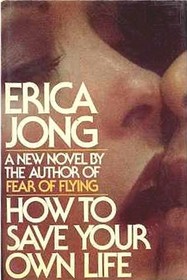
The language of the 1970s put me off politics as much as anything else.  Elitism, struggle, imperialist, co-option, anti-work attitude:  so much to be careful about.  The slang also was markedly of the times and I must admit I never used it:  “into,” “far out,” “right on,” “bummer,” “rip off.”  Lisa Alther’s Kinflicks, though the language seems a bit dated, is a hilarious novel about the ’60s and ’70s, making use of the lingo.  Sheila Ballantyne’s Norma Jean, the Termite Queen is the best mad housewife book of the ’70s  .And  one reason I’ve enjoyed Erica Jong’s novel, How to Save Your Own Life, is that she humorously captures the unique introspection and sexuality of the ’70s  Her heroine, Isadora Wing, writes honestly about her ambivalence not only towards sex with her  boyfriends and husband, but “the gay-chic phase of the Women’s Movement.”

It was stylish to have sex with a woman, and Isadora thinks she might want to write about it, but then she finds  she loathes cunnilingus.

Art and politics, politics and art. Strange bedfellows. Stranger still than Rosanna Howard and me. Can any feminist dare tell the truth about c***-eating in this day and age?..

I began to understand what it meant to be a man, fumbling around—is this the right place or is that?—getting no guidance from one’s subject (who is too polite and ladylike to tell) and wondering, wondering if she is going to come now, or now, or now —or has she already, or will she next summer, or what?

No, I don’t think anyone would write about this today, Erica!

And, by the way, I am pro-gay rights and gay marriage, but that doesn’t mean “the gay chic phase” of the ’70s was wonderful or perfect.

There was a lot of general kindness in the ’70s.  There were many very  kind, brilliant, magnanimous people who would feed you, let you stay the night, and help you with any problems.  There was much less fear.  Few people locked doors.  A friend and I in graduate school kept our back door open, and imagine how surprised we were one morning to find a possum in the kitchen eating the cats’ food.

My friend’s parents lived in a tiny collective, and, having reread Anti-Mass, I know why it was small:  “The collective should not be larger than a band–no orchestras or chamber music please.”

I’m not keen on the pro-ads, anti-books philosophy of Anti-Mass. “Don’t read any more books–at least not straight through.  As G. B. Kay from Blackpool once said (quoting somebody else), “Reading rots the mind.”  Pamphlets are so much more fun.  Read randomly, write on the margins and go back to comics.”

Collectives were hard on people.  How many divorces because a man or woman started having affairs with a woman or man in the collective?  My friend’s parents got divorced; she was depressed.  The divorce could have happended any time, you may say.  But it is somehow more traumatic if you’re all living together, and one half of a married couple starts having sex with a single woman.

Amazing time, amazing books and documents.  I’d love to interview everybody and write a book about it.  These times are forgotten.