Cards, or Eleven Percent

“We are the eleven percent.”

antidepressants a bunch

11% take antidepressants

Eleven percent of Americans now say they are on antidepressants, according to the Centers for Disease Control.  The depressed and their family members  should march and chant for better health care and education about depression.

I once decided against publishing an article on depression because I realized  some of the people I’d interviewed did not understand that public knowledge of their illness could lead to the loss of reputation or even of jobs.

So let’s say I know the eleven percent and recognize them among my friends and family members.

In 2006 I took my research and wrote a rough draft of a novel.

I called the novel Cards because the illness seemed so random.

I should probably change the name to Eleven Percent.

I have decided to post a chapter here in the spirit of writing about mental health (and will go back to my usual book talk tomorrow).  Most of the characters have depression, agoraphobia, or OCD.  The character, Dorrie, has anorexia and bipolar disorder.

Ready?

Cards

Dorrie was down to 90 pounds. The doctor told her to drink a nutritional supplement. She opened a can and drank it with a straw. If she lost weight, she would have to go back into the hospital. Anorexia. Three cans of Ensure a day and meals. It grew harder and harder to eat. A little yogurt, a little soup, some of Rose’s casseroles. The Ensure went down easy.

Ben and Rose kept bringing her milkshakes. It didn’t matter to Dorrie if they were from McDonald’s or the good diner. They were good and they kept on the weight.

Have you considered the eating disorders group?

Dorrie begged them not to make her go to group. Only young women went to group.  She didn’t want to know who threw up, who cut herself with knives. Her doctor agreed that the eating disorders group could be annoying. Most of them are borderline, he said. You’re not borderline. Oh, dear, thank God she wasn’t borderline. These women needed so much attention. All of them had read all there was to know about anorexia. “I called this expert, I called that expert.” What? Oh, they had to interview doctors: it wasn’t enough to read the articles. In Dorrie’s day she had done research from books and articles. Ever heard of a medical journal? she wanted to say. At the groups Dorrie said nothing. It was best. Sometimes she would say she forgot to eat. They would suggest she write it on her calendar. They passed around candy at the group: hard candy with no calories!

Check off three meals a day even if you have to eat them all at once.

Dorrie thought of her friends Rose and Megan, both fatt by Dorrie’s standards, size 12 and size 16, or at least she guessed so, eating all day long. She would look at them and want to be like them but she couldn’t eat . Something about it.

Dorrie kept her note cards on history in an old recipe box. Her cards. She alphabetized them. She might as well. She was writing the history of the world and her history.  She was the ideal librarian: a librarian who had never worked as a librarian. Alexa, Candi, Krista, Lola, Sandra, Susan. Alexa and Susan had been her roommates. Alexa had made phone calls all day long from the pay phone and walked up and down the halls with her iPod because she “had to lose weight.’ You only weigh 100, they tried to tell her in group. You’re 5 ft. 10. But Alexa continued to walk. And she made scenes.

Who’s been reading my journal?

It was supposed to be behind the nurse’s station. The nurses couldn’t find it.

Dorrie loved the way Alexa screamed. She never would make a scene like that. But Alexa explained that you might as well act crazy because they expected it. And she didn’t want the nurses reading her journal.

One of them had it. That’s why they couldn’t find it.

How do you know?

You’ll get to know after a while. The nurses are NOT your friends.

Well..

They’re NOT supposed to read your journal.

Alexa  had to go to groups and Narcotics Anonymous all day long. She explained to Dorrie that she had done so much coke that she couldn’t sit still any more. She got a lot of attention from everybody.

Dorrie didn’t go to many groups. She, too, was journaling like mad. It was the only thing that brought her back to earth since mature women like her were not expected to need much help. She read aloud from her journal to her doctor and he told her he thought it needed “editing.”

Dr. Navarro, you are such a drag, said Dorrie. The main thing is that I’m writing a journal at all, not that I need to edit! You should encourage me.

He smirked.  Some animals are more equal than others, he said.

Dorrie did not think that was exactly true. She thought he should not be a doctor. What kind of psychiatrist said things like that to his patients?

Stephen smuggled in a cube of coke (a cube?) and he and Candi got caught snorting it (on a greeting card that Candi had taped to her wall and taken down for the coke). Dorrie was a little scared after that. She didn’t know who these people were in the hospital. Stephen, it turned out, was some small-time dealer with a drug problem. He was there for rehab. He got kicked out. Where did he go? Dorrie didn’t know where they sent him. Candi was there because she had schizophrenia and had wanted to kill her boyfriend. They let her stay. Her boyfriend had committed her after she tried to bean him with a big Oxford English dictionary.

He was cheating on me, she said. If I COULD kill him, I would, she added cheerfully.

Everybody laughed.

Now that’s not really funny, said the social worker.

No.

Let’s talk about Candi’s real feelings.

I was very, very hurt. I could not believe it had happened. Really could not believe it. He said he loved me. I thought we were so happy.

Don’t you feel like crying? It’s safe here.

I’m on 100 milligrams of antidepressant. I can’t cry.

I can’t cry, either, several people said.

So there they were. Depressed. But on pills, pills, pills. If you go off the pills, you’ll be depressed, Dr. Navarro said.

Dorrie knew there was no point in explaining that she was depressed anyway.

Dorrie was in such pain in the hospital that she spent most of the day in bed. Her other roommate, Susan, never said a word. She would not go to the dining room and wrote notes asking Dorrie to bring her tea.

Out of the hospital Dorrie went to group for a while and was reunited with Alexa, Susan, Candi, and the rest.

Silently she collected their names. She didn’t want to do it. She wanted to forget. She remembered all of them. the names went on and on. It was a memorial to depression and eating disorders. No one was supposed to give last names but they all knew. She was afraid that someday she would have to bear witness. She could see it. Everybody she knew dead, a new revolutionary anti-psychotropic regime collecting history. And Dorrie had been there.

Her history: taped sessions in the psychiatrist’s office. Note cards. Computer data. All their histories would be there.

Dorrie looked at her note cards. Notes on World War I, World War II, and the years between, alphabetized and cross-referenced. Treaty of Versailles: “malignant & silly to an extent that made them obviously futile.” 1927: Wall Street Crash and worldwide reverberations. 1930: 2,300,000 unemployed in Germany. Flip, flip. The answers were in the cards.

She couldn’t keep diaries. She had done that once. Everybody knew she wrote.  Then a neighnor had broken into her slum apartment and read them. He had left some of them opened to what they supposed were significant pages. “Saw drug deal in street.” What was significant? They were always out there smoking by the busstop. She would have to be blind not to see them. The police knew. Who cared if Dorrie wrote it down? “Shut up,” somebody’d written.

Dorrie was spending too much time on index cards. She didn’t mind taking notes. They weren’t too organized, but were organized enough. French Navy, treaty limitations on. In case she ever wanted to know. She was learning so much about the art of war. It gave her a sinking feeling. Like the ships Britain and France agreed to sink after WWI. She was depressed. She realized there was not a single day when she had not seen war in the streets, in schools, in politics, in offices, in the hospital. If I do this, will he do this? That’s what everybody was thinking every minute. It got to be a bore. She would stand by the bus stop and somebody would come up to her and start a conversation. Was it all right to talk, or not all right to talk? Poor Dorrie didn’t know anymore. Until she’d attended some of these groups, she’d felt perfectly fine about talking.

Dorrie really didn’t care what another person would do if she said or did X. She didn’t care to manipulate people. Wasn’t the fun of things spontaneity? Why did everything have to be so “Animal Farm” these days?

She had to say it: Dr. Navarro had given her some useful hints. He thought of her as an animal!

History: the Turks thought the Armenians were animals. The Nazis thought the Jews, Catholics, and intellectuals were animals.

She had to drink Ensure. She thought she might eat an orange. If only it weren’t so hard to peel an orange. She went into the kitchen and sat at the table and concentrated. She cut the orange and then peeled it. The slices were good! She was surprised at how much she liked it. She wanted to eat another orange but she could not peel it. She just couldn’t. She was too tired. She drank the Ensure.

If only someone were here…Gabrielle…anybody…to peel her orange.

Could you peel this? she asked when someone came up the stairs.

Sure.
Awards and Quote of the Week

Winner of the Bollinger Everyman Wodehouse Award

Winner of the Bollinger Everyman Wodehouse Award

I love awards.  In the ’90s I loved them so much that I read the winners of the Booker Prize, PEN/Faulkner Award, and Nobel Prize Award, and the finalists and winners of the National Book Award.

I still follow them with interest.

Recent prize winners:

1.  Lydia Davis, an American short story writer, won the Man Booker International Prize.  It is always exciting when an American writer wins an international prize, because the Nobel Prize committee has neglected Americans so long (especially Philip Roth). I haven’t read Davis’s fiction, but I loved her translation of Madame Bovary. 

2.  Benjamin Alire Saenz won the PEN/Faulkner Award for  his collection of short stories, Everything Begins and Ends at the Kentucky Club.

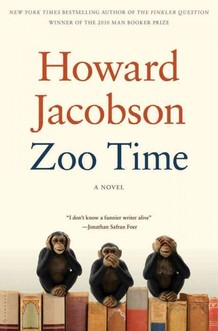
3.  Howard Jacobson won the Bollinger Everyman Wodehouse Prize for this novel Zoo Time, a  satire of the publishing industry, one of my favorite books in 2012.  Jacobson inveighs against book groups, three-for-twos, blogs, tweeting, and the death of reading.

QUOTE OF THE WEEK:

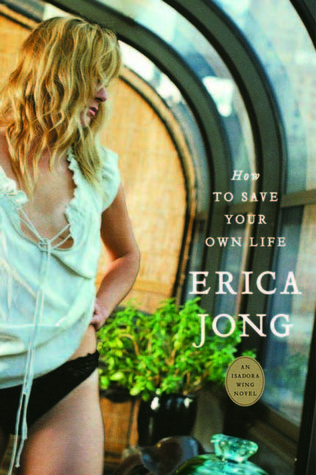
How to Save Your Own LIfe erica JongAnd now here is a quote from Erica Jong’s How to Save Your Own Life:  Isadora on the literary world vs. Hollywood.

Ah, the literary world.  They hate failure and despise success.  They have contempt for authors whose books go unread and sheer hatred for authors whose books are read too much.  Try to please the literary world and you will spend your life in a state of rage and bitterness. But Hollywood is simple, almost pure–if total venality is a form of purity.  There nothing at all matters but making money.

I don’t know Hollywood, but it sounds real.

Antidepressants in America

Sometimes I stare into space
Tears all over my face
I can’t explain it
Don’t understand it–“(Love Is Like a) Heat Wave,” Holland-Dozier-Holland

I own a Prozac clock, a souvenir of a pharmaceutical company. A friend who never prescribed Prozac (a drug that can cause mania) gave it to me.

Depending on the decade and the literature, taking Prozac (or another antidepressant) can mean: you have major depression or bipolar disorder (modern psychiatry); you are a madman or a madwoman (man on the street or 19th century literature); you have an Oedipal complex or an Electra complex (Freud); you are psychic,  or the only sane person in the room (Laing).

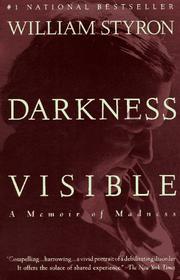
Darkness VisibleDepending on the decade and literature, it can also mean:  Mike Wallace, the great journalist who suffered from major depression; Kaye Gibbons, who is bipolar, the author of Sights Unseen, a novel about a girl coping with a bipolar mother; William Styron, author of Darkness Visible:  A Memoir of Madness, who suffered from major depression; Kay Redfield Jamison, author of An Unquiet Mind:  A Memoir of Moods and Madness, a psychiatrist who suffers from bipolar disorder; and Carrie Fisher, the author of The Best Awful, who suffers from bipolar disorder and used to have addiction problems.

Alex Preston’s recent article in The Guardian, “Does Prozac Help Artists?”, made me think of stories I’ve heard.

I’ve heard about the time you went manic on Prozac and couldn’t stop running around your neighborhood singing “Heat Wave.”  I’ve heard about the time you didn’t take your antidepressants and couldn’t leave your apartment for a month.  I know you never slept before you took antidepressants.  I know you lost your job.  I know you were homeless for a while. I know you finally got back on track (or didn’t).

No one likes to take psychiatric drugs– Zoloft/Seroquel/Prozac/Lexapro/Wellbutrin/Lithium/Depakote–but they can alleviate the symptoms.  There are different levels of  depression and bipolar disorder:  some feel very down for a while but get better on their own, others plunge into such a catatonic darkness they need medication; some spend a few dollars too much if hypomanic, but if manic try to buy a multi-million-dollar Lamborghini Reventon on a spree.  Studies show that psychotherapy and drugs are the best treatment for these biological brain disorders.    But many people do not have these options.

antidepressant_medications_signAccording to the National Institute for Mental Health, depression is the major cause of medical disability in the U.S. and Canada and accounts for 10 percent of all medical disability.  The data indicate that antidepressants are both overprescribed and underprescribed:  The Centers for Disease Control say that 11 percent of Americans aged 12 and older say they take antidepressants, yet 80 percent of antidepressants are prescribed by doctors who are not psychiatrists   (they have only a two-week residency in psychiatry in their training). Only twenty percent are prescribed by psychiatrists, who have the training to diagnose these illnesses.   But  large numbers of people go untreated because they do not want to go to a psychiatrist, or because there are no mental health facilities in their area:  great portions of the prairies and plains have few doctors.

Alex Preston’s rambling article in The Guardian is both good and bad.  Writing about depression is as difficult as it is to write about poststructuralism,  the 1970s, or some other subject with an abstruse lingo.  He is a novelist who took drugs in his teens, and spent his 20s on antidepressants (SSRIs), even though his GP at the unvierity told him to quit.  In London, he managed to find a pharmacy that would sell him antidepressants over the counter. The antidepressants blocked his creativity:   he finally got off the drugs and wrote two books.  Here is my problem with this story:  if the doctor did not recommend  the SSRI drugs, what did he need?  Did he need them at all?

The '90s memoir for the young.

The ’90s memoir for the young.

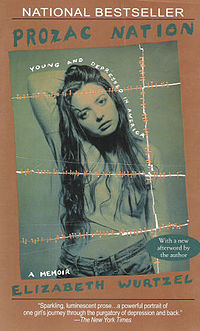
He summarizes various books and memoirs about depression, including some by Americans.  He writes favorably of the wildly out-of-date Listening to Prozac by psychiatrist Peter Kramer (1993),  and then attacks Elizabeth Wurtzel’s  Prozac Nation (1994), a kind of youth classic of depression, which he says “has not aged well – it is stuck in the 90s, po-faced and narcissistic. It lacks the note of authenticity that characterises the best books about mental illness.” (She also wrote a book on getting addicted to Ritalin, so I think we can see she has authentic difficulties,)

Of David Foster Wallace, he writes that he went off Nardil (which is not an SSRI) but  remained blocked “and, as his friend Jonathan Franzen put it, ‘when his hope for fiction died, after years of struggle with the new novel, there was no other way out but death’.”

He interviews some writers, artists, and musicians, including his brother, about the effect of Prozac and other SSRIs on their work,r.  Some say they have been hurt by SSRIs and got off them, others say they have been helped. Will Self, the author of Umbrella , had problems with addiction and was prescribed an SSRI.  He says, “Heroin, cocaine, marijuana and alcohol were really the drugs that ended up fucking my creativity; the Seroxat was just a way station on the escape ramp to abstinence.”

Mike Wallace

Mike Wallace

Whether to take drugs or not for depression can be an individual decision.  It can, however, be a necessity. One of the most articulate persons on the subject of depression and pills was the late Mike Wallace. He wrote for Guideposts:

Like most people, I’d had days when I felt blue and it took more of an effort than usual to get through the things I had to do.

But I always snapped out of it….

So my down times invariably passed. Until the fall of 1984, that is, when I found myself suddenly struck, then overwhelmed, by something—an emptiness, a helplessness, an emotional and physical collapse—I’d never experienced before.

Wallace, who attempted suicide, spent a week in the hospital.  The psychiatrist treated him with antidepressants and therapy.  The medication worked, but when he went off the pills, he fell into another major depression.  The antidepressants were necessary for him.

Let’s hope the National Institute for Mental Health gets money for research for better antidepressants.

Not Enough German Literature & Birgit Vanderbeke’s The Mussel Feast

Not enough German literature!

Not enough German literature!

I don’t read enough German literature.  Americans don’t read much German literature, or literature in translation, period.  According to the Economist’s blog, Prospero, only 3% of the books published annually in the U.S. and UK are translated from another language.

Universities have expanded their Spanish departments, shrunk or cut their German departments.  Spanish is practical, they say. I often wonder how practical it is:  do Spanish students rush out and converse with their Hispanic neighbors, do they read Bolaño in Spanish, or do they only remember a few words?  Aren’t German, Italian, French, Russian, and other languages important?

But how to learn about contemporary German literature when it’s not translated?

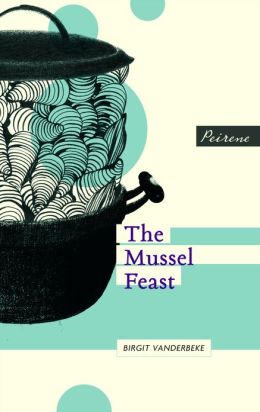
I learned about Birgit Vanderbeke’s graceful novel, The Mussel Feast, translated by Jamie Bulloch, from a review in the TLS, which I incidentally began to read after Ursula K. Le Guin gushed in January about the wit of  “‘NB,’ the reliably enjoyable last page of the London Times Literary Supplement.”

The Mussel Feast by Birgit VanderbekeThe Mussel Feast, published in 1990, won the German literature award, The Ingeborg Bachmann Prize.  It is published by a British press, Pierene, a publisher of European novellas, and has not yet been reviewed in the U.S.

It is a family story.  The mercilessly observant teenage narrator, her brother, and mother await their father’s return from a business trip.  The mother is preparing a feast to celebrate his much-vaunted dream of promotion, which is expected to coincide with the trip.  And so Mum prepares a mussel feast, though she doesn’t much like mussels. The narrator dislikes mussels, too.

The narrator describes in detail the messy cleaning of the mussels.

That evening my mother, alternating between the small kitchen knife and scrubbing brush in her bright-red hand, was holding the mussels one by one under ice-cold water, all four kilos of them, scraping and scrubbing and rinsing several times – since my father couldn’t bear the crunch of sand between his teeth – because he would be coming through the door with his promotion virtually in the bag; not officially of course,…

The mother’s hands are red and hard-worked:  she does the cooking and housekeeping.  Her hands are unlike the perfect hands of her husband’s much-admired assistant, who is unmarried, fashionable, and paints her fingernails red.  Sometimes the mother paints her fingernails shell-pink to please him, but only right before he comes home, because it chips off.  The narrator says her mother goes into “wifey” mode when he comes home, and she and her brother despise her for it.

Their mother is a good teacher–she is very strict at school–but when she comes home, she is a housewife, constantly working to please her domineering husband.

The narrator and her brother help their mother prepare the dinner (her chips are perfect, even if they don’t like the mussels).  They are happy and relaxed, but know it will end when the father comes home.

Suddenly there is an ominous noise.

The noise was coming from the mussels, which had already been cleaned and scrubbed; they were sitting in the large, black enamel pot that we always used, because it was the only one large enough to hold four kilos. My mother had fled from the East with this pot, she told us; it was indispensable for washing nappies, and she used to wash our nappies by hand, or rather with a wooden spoon.

The rattling is the sound of the mussels’ shells opening in the pot.  The narrator finds this “creepy,” and is also angry because she doesn’t want to think about their being alive when they are cooked.

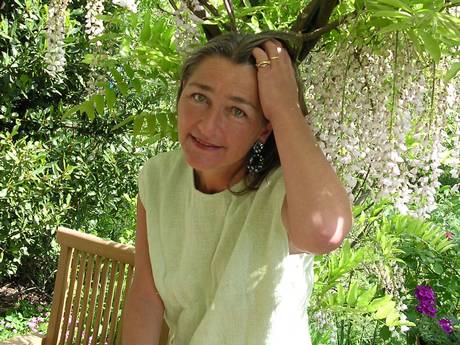
Birgit Vanderbeke

Birgit Vanderbeke

Time passes, and their father doesn’t come home.  Finally they cook the mussels, but don’t eat them.   They stare, repulsed.  They begin to drink the wine, and as the hours pass, they get drunk.  Gradually they express their hatred for the father.

The narrator, born with black hair all over her body (which fell out), was hated by her father from birth.   As a baby she didn’t sleep, and once he threw her against the wall. The violence and abuse have continued throughout her girlhood.  She is brilliant, and gets all 1s at school, but he says the standards are lower now. He equally dislikes her brother, who  is pretty,  who wanted to wear dresses when he was young, and who gets 4s at school.  They are forced to spend Sundays with him, listening to Verdi, whom the mother hates, and then to go out on walks in the afternoon.

Both parents grew up in east Germany, and the trauma of the escape has affected them differently.  The father needs total control:  they must be a “proper family.”  The mother had wanted to be a musician like her brothers, but the father won’t let her play the violin.  She admits to her horrified children that she  fantasizes that she is Medea, poisoning the family so she can have time alone.

Taut, pitch-perfect prose, riveting story, and an open ending that can be interpreted more than one way.  A great book:  hope I can find more by her.

Sex, Feminism, & How to Save Your Own Life

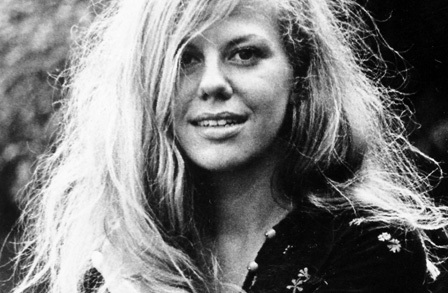
Remember this famous picture of the beautiful Erica Jong?

Erica Jong

Sometimes one wonders where feminism went.

We still spend hours listening to pop songs about the men who love us and dump us.  We still love rom/coms where the girl gets the guy, even if he’s obnoxious.  And we are supposed to want a romance with Edward in Twilight, a vampire, even though in Stephenie Meyer’s  fourth book, Breaking Dawn, Bella’s longed-for sex with Edward leaves bruises all over her body.  (Vampires and human aren’t meant to mate.)

How to Save Your Own LIfe erica JongI am reading Erica Jong’s How to Save Your Own life, the sequel to Fear of Flying.  Jong sensitively explores Isadora Wing’s alienation from her husband, her affairs with unattractive male friends she loves, and with attractive men she doesn’t love, and her feminist philosophy in progress.

I wonder if this novel might be too radical for today’s audience.  It’s not necessarily the sex.  It’s the ideology.

It’s refreshing to read Erica Jong in 1977 on shopping and makeup as a substitute for sex.   Feminists used to try to escape the sexist image of women as dolls who made up their faces, dyed their hair, and shopped for shoes.

Suddenly I had a vision of a whole world of women starved for sex and making do with all sorts of buyable substitutes. Making up. A woman who spent her afternoons with a lover would never again find herself in Bloomingdale’s fingering Mary Cunt or lusting after Elizabeth Ardent. She’d go barefaced as a baby and throw her charge plate in the nearest sewer. Isn’t that the problem? That women have been swindled for centuries into substituting adornment for love, fashion (as it were) for passion? The main floor of Bloomingdale’s by Hieronymus Bosch!

Very funny!  And many women of my generation thought this in the ’70s, ’80s, and ’90s,  and then we gave up.

What do you think about Jong’s radicalism?

The Summer of Aeschylus & Other Summer Reading

beach_books(2)I am always fascinated by summer reading articles.  They tell us that we won’t be able to read classics on vacation.  They tell us we have vowed to read Proust, but won’t do it.  They tell us we will apparently be too stoned on ganja on that island to read.

Well, they won’t tell us that.

I’m not going to an island this summer.

For me it will be the summer of Aeschylus.

My deepest regret is that I didn’t take that Aeschylus seminar in graduate school.  (Writing a freelance feature on my wedding day wasn’t a good choice, but it wasn’t life-changing.)

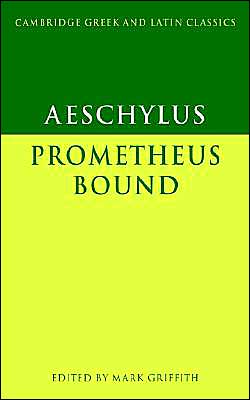
Aeschylus Prometheus BoundIf I could go back in time,  I would enroll in the Aeschylus seminar.

So now you see why I have to read Aeschylus.

I am making up for the semester that was my last chance to take an Aeschylus seminar.

This summer I will read parts of Aeschylus in Greek, parts in English.

I have begun with the David Grene translation of Prometheus Bound.

Bright light, swift-winged winds, springs of the river, numberless
laughter of the sea’s waves, earth, mother of all, and the all-seeing
circle of the sun:  I call on you to see what I, a God, suffer
at the hands of Gods–
see with what kind of torture
worn down I shall wrestle ten thousand
years of time–

As Grene says in the introduction,

We are never told why Zeus wished to destroy man.  There is no indication what sort of animal he wished to put in his place, but, insofar as Prometheus in disobedience to Zeus enlightened man by the gift of intelligence, it may be assumed that Zeus’s creation would have had no such dangerous potentialities of development.

Prometheus says:

In helping man I brought my troubles on me;
but yet I did not think that with such tortures
I should be wasted on these airy cliffs–

It is the Summer of Aeschylus.

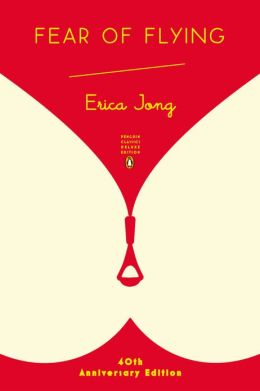
OTHER SUMMER READING.  It is the 40th anniversary of the publication of Erica Jong’s Fear of Flying. What do you think of the new cover for the Penguin Deluxe Classic edition of Fear of Flying?

Fear of Flying erica jong

Erica Jong’s heroine’s “zipless fuck” doesn’t look like much fun here, does it?  I mean, just lying there, unzipped?

I prefer the more feminist rendering of the “zipless” on the old cover art.

Erica Jong Fear of Flying originalAnd I prefer Jong’s narrative to the cover art.

What do you think?

I am now reading Jong’s fascinating sequel to FOF, How to Save Your Own Life, which has given me more ideas for summer reading.

How to Save Your Own LIfe erica JongThe heroine, Isadora Wing, now a famous writer, is stuck reading galleys of friends’ novels.

Reading was becoming more and more of a chore. I yearned for the days when I could sitdown with a copy of Bleak House or Tom Jones without thinking guiltily of the galleys on the floor by my desk.

Should I read Bleak House again?

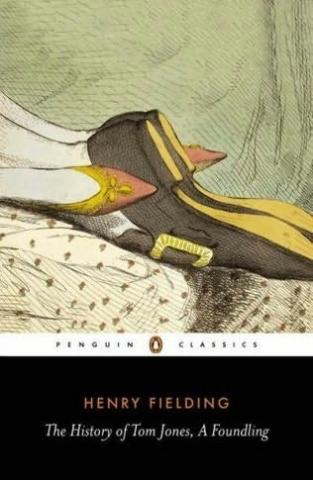
Perhaps Tom Jones is more in the spirit of Jong’s books.

Tom_Jones_by_Henry_FieldingI do like this cover.

Anthony Briggs’ Translation of War and Peace & Read What You Want to Read

war-and-peace-briggs-bigWe’re on the trail, preparing to ride 22 miles to a small college town. Click click click!  We’ll take pictures of the goldfinches, the llamas, and the cows along the way.

But first I have to load my book in the pannier, the Penguin Deluxe Classic edition of War and Peace, translated by Anthony Briggs.

“That’s too heavy.  That’s why you have back problems.”

“It’s a new translation, and it’s what I’m reading.”

” What’s wrong with the old Rosemary Edmonds?”

“We don’t HAVE the Rosemary Edmonds.”

We have the 1923 Maude translation.  He has read it once, and I have read it many times.

In 2005, Penguin published Anthony Briggs’ excellent translation.

Briggs’s translation is vigorous and compelling.  It was the first new translation in 40 years.  In his note on translation, he lauds earlier translations, mentions Constance Garnett, says that the Maudes’ version of War and Peace “is still read as a classic in its own right, and the errors are so few as to be negligible,” and that Rosemary Edmonds (1978) and Ann Dunnigan’s  are sound.

So why a new translation?  It is a way of finding a modern audience.  He points out that phrases from earlier translations like, “Can this be I?”, “in quest of fowls,” and “ejaculated with a grimace” seem dated.  If the Maudes’ dialogue seems  stilted at times, Briggs’ more colloquial language can be refreshing.

Then in 2008, a new translation by the award-winning Richard Pevear and Larissa Volokhonsky was published, and it eclipsed Anthony Briggs’ in the reviewers’ minds. How are they different?   Pevear and Volokhonsky include all the French, with pages of footnotes.  Briggs  translates it.  It’s a matter of taste.

war-and-peace-maudeAlthough Brigg’s translation is excellent, I am most familiar with the Maude translation.  Compare these two sentences translated by Briggs and Maudes and see which you prefer. Scene: The Rostovs are preparing to leave Moscow, because Napoleon and the French are coming to occupy it, and Countess Rostov has asked Sonya, a poor cousin, to write to her son, Nikolay, and free him from obligation so he can marry an heiress.  She is, as you can imagine despondent.

Here is Briggs’ translation:

“The ghastly upheaval of the Rostovs’ last days in Moscow had repressed all the dark thoughts that Sonya now found so burdensome.  She was glad to find temporary relief in practicalities.

Here is the Maude:

“The bustle and terror of the Rostovs’ last days in Moscow stifled the gloomy thoughts that oppressed Sonya.  She was glad to escape from them in practical activity.”

Different styles.  Do you prefer “ghastly upheaval” to “bustle and terror”? “Repressed” to “oppressed”?  “temporary relief in practicalities” to “escape from them in practical activity”? They mean the same thing.

War and Peace is such a fast-paced novel that it’s hard to stop and think about the language. No matter how often you read it, it is vivid and absorbing; you become anxious about the war and the foolishness of Pierre and Natasha; find yourself on General Kutuzov’s, because he knows that no military planning will affect what happens, and that it’s rare that the troops even to manage to be in the right place: and you hope against hope that this reading there might be a better outcome for Prince Andrey, Petya, Sonya, and Platon.

I have very much enjoyed the Briggs translation, as I have the others.

Briggs does, however, make an anachronistic statement about women translators that a Penguin editor should have omitted for the sake of not alienating his audience.  He writes:  “…from Constance Garnett onwards they have been produced by women of a particular social and cultural background (Louise having contributed more than Aylmer to the Maudes’ version), with some resulting flatness and implausibility in the dialogue, especially that between soldiers, peasants and all the lower orders.”

Being female has nothing to do with translating Russian.  Class, perhaps.

READ WHAT YOU WANT.  And now I am going to make an inquiry:  do men try to control women’s reading?

The canon sends strange messages to women.  Library of America, my favorite nonprofit publisher in the U.S., has made some strange choices about publishing women’s books.  A few years ago they published a volume of Louisa May Alcott’s children’s books:  Little Women, Little Men, and Jo’s Boys. Many thought these were not the most representative of her work.  Then  last year they published Laura Ingalls Wilder’s children’s books.

Women are underrepresented by LOA  (I looked up the stats and it was appalling).  They seem to be sending a message, particularly with their highlighting of Wilder, that women are children’s writers. I mean, why not publish Caroline Gordon or Hortense Calisher?  There must be some  first-rate women writers whose estates would  allow LOA to publish their work.

I love LOA, and don’t mean to insult their work in any way, and I own many of their books.  But….

MORE ON THE MEN’S CANON.  Boyfriends, husbands, ex-husbands, friends’ boyfriends, friends’ husbands, and friends’ ex-husbands can’t help making comments about my reading.

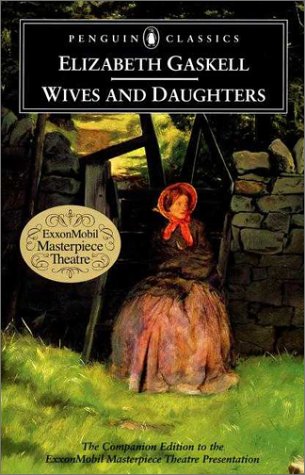
Wives and Daughters GaskellThere was the time I read Elizabeth Gaskell’s Wives and Daughters and a friend tried to persuade me it wasn’t in the canon.

“Why would you read that?”

“It’s a classic,” I said.

“Penguin is just trying to sell books.”

“No, it’s a really good book.”

There’s nothing you can do about it.  Some men don’t like women’s books.

I went back to my reading.

Men have a canon, a list of the Best 100 Books, which includes Tolstoy, so I can read War and Peace to my heart’s content, and Jane Austen, thank God.  Gaskell?  No.  They never heard of her, and maybe they don’t like the women in gowns on the cover.

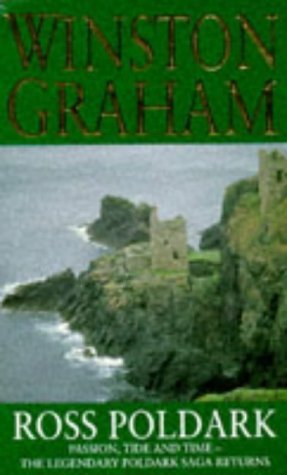
Ross Poldark“That’s a fusty-looking book.”

It’s a used copy of My Lady Ludlow.

But what if I want to read something pop? Ross Poldark?  Is that allowed?  Many of my friends are big Poldark fans.

“Why are you reading that?”

Much, much teasing.

How about Rumer Godden?  Not quite first-class, eh?  Kingfishers Catch Fire happens to be one of my favorite books.

So whom are you allowed to read, and how often?  Are the rules different for women?  Are we expected to read more mathematics or science?  Less?

Probably.

End of rant.

Fashionable Books: James Salter’s Light Years & Edward St. Aubyn’s Mother’s Milk

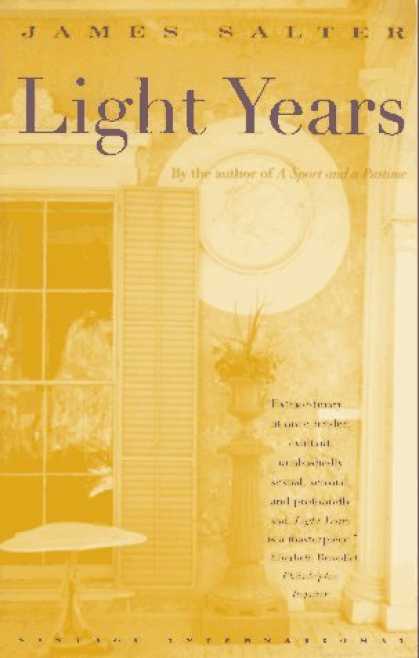
Light Years by James salterSometimes I try to catch up with the latest fashionable books.

I am more comfortable with the classics, as many of you know.

James Salter and Edward St. Aubyn are two brilliant, fashionable writers.  I recently read Salter’s 1975 novel, Light Years, and St. Aubyn’s Booker Prize finalist, Mother’s Milk.

James Salter is the most remarkable novelist no one ever reads, I have recently heard.  His prose is “brilliant,” “beautiful,” “luminous.”  GQ recently called him an “icon.” The Guardian says he’s “The Forgotten Hero of American Literature.”  The New Yorker published a very long essay last month, “Why James Salter Matters.”

Barnes and Noble has a James Salter section now.

I maintain that he isn’t forgotten, because every book review publication has reviewed his new novel, All That Is. 

He can’t be forgotten, because he’s revered. And he can’t be forgotten, because I have read him.

Light Years is my favorite book,” said a friend some years back.

I recently finished Light Years for the second time, and am on the fence about this beautifully-written, but also overwritten novel.

It is a novel about a marriage.  Viri is an architect in Manhattan, and Nedra is a bohemian housewife. They have moved from their apartment in New York to a beautiful house by the Hudson River with their two children.  They entertain friends with perfect dinners cooked by Nedra and perfect bottles of wine.

It’s too perfect.

Both Viri and Nedra have lovers.  Viri’s is his assistant, a young woman he’s in love with, and Nedra’s is a friend of theirs whom she loves rather more lightly.

There is, as you might expect, a lot about light.

On the river, the color of slate, the light poured down.  A soft light, God’s idleness.  In the distance the new bridge gleamed like a statement, like a line in a letter which makes one stop.

If you admire this lyricism, there is a lot of it. He writes beautifully about the change of seasons:  I prefer his concrete descriptions to his similes.

I was very moved by the story of the marriage.  And though this creative couple seems impossibly wealthy, we are told that they struggle, despite the pony and the beach house.  On a more human level, I recognize the dinner parties, the intelligent conversations, and the creativity of the parents (Viri makes an Advent calendar; Nedra writes a book about an eel).

Here is a quote I love:

There are things I love about marriage. I love the familiarity of it,” Nedra said. “It’s like a tattoo.  You wanted it at the time, you have it, it’s implanted in your skin, you can’t get rid of it.  You’re hardly even aware of it anymore.  I suppose I’m very conventional.”

Nedra, who is talking about marriage to her lover, makes it clear that her marriage is somehow a part of the love affair.

Later, when her daughters are more or less grown up, Nedra decides to leave Viri and live by herself.  He is shattered.  It takes him a very long time to recover.  And Nedra is happy, but she flounders.  She auditions for a special life-acting group, where the actors live together and train together, but she is rejected.  Yet she goes on.

Viri’s self-knowledge is more panicky than Nedra’s.

One of the last great realizations is that life will not be what you dreamed.

One cannot imagine self-sufficient Nedra thinking this.

Though I had my ups and downs with this novel, I cried over the ending.  Nedra, a character I did not particularly like, dies before her time, and I miss her the way Viri did:  she may have been exasperating, but she was fully alive.

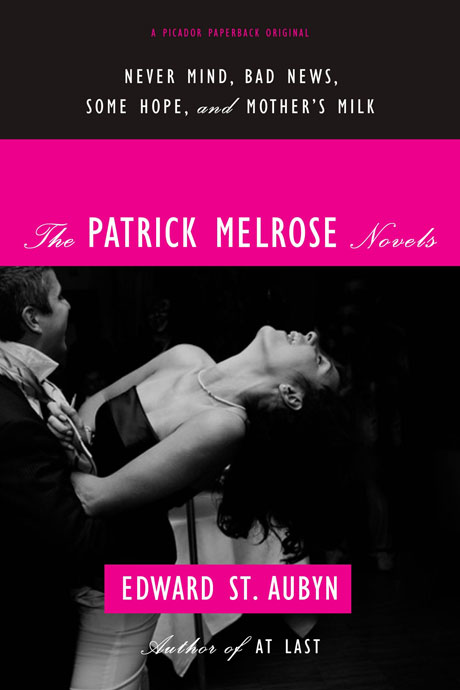
PatrickMelroseNovelsBookOn to Edward St. Aubyn.  I respect but do not love Edward St. Aubyn’s  witty, disturbing Patrick Melrose series, about an abused child who grows up to be a heroin addict. In the first novel, Never Mind, Patrick is the abused and neglected child of drunken aristocrats:  his father rapes him; his mother drinks in the car; he has no one to turn to.  In Bad News, Patrick goes to New York to pick up his father’s ashes; he spends every free moment, abusing drugs; and heartbreakingly has inherited his father’s vicious wit,  and so the cycle continues.  In Some Hope, he is on the wagon and facing a clean life, albeit at a party.

And then I waited a year to read Mother’s Milk, a Booker Prize finalist.

Mother’s Milk is more ambitious novel than the other three, dependent on description of domestic scenes as well as witty dialogue:  it describes Patrick’s solid but frustrating marriage to Mary, a woman who is obsessively child-centered. St Aubyn explores the points-of-view of Mary and the children as well as Patrick.  Mary, a kind of Earth Mother, is devoted to her two children, particularly the younger one, Thomas.  Patrick bitterly says Mary has left him for the younger child:  she even sleeps with the toddler.

It’s not just Mary and the children who upset him.  He rages because his own mother is dying and intends to leave the family house in France to a self-help charlatan who talks about Happiness, Peace and Prosperity.  Later, after a fight with the guru, the Melrose family leaves the house and eventually goes to New York on vacation, where they encounter the nightmarish emptiness common in European films about America (Wim Wenders?  I can’t remember).

Back in the UK, Patrick feels guilty about his dying mother.  She says she wants assisted suicide.

I don’t understand Mary’s passion for Thomas:  well, I don’t have children.  But her musings on her lack of solitude illustrate one of the reasons I was afraid to reproduce:

As she hoisted ‘Thomas into her arms, she felt again the extent to which motherhood had destroyed her solitude.  Mary had lived alone through most of her twenties and stubbornly kept her own flat until she was pregnant with Robert. She had such a strong need to distance herself from the flood of others.  Now she was very rarely alone, and if she was, her thoughts were commandeered by her family obligations.  Neglected meanings piled up like unopened letters.  She knew they contained ever more threatening letters that her life was unexamined.

Mary is expected to stand for Woman in a way I don’t find altogether realistic.  I’m sure mothers see her differently; but I don’t personally know any mothers who are as devoted as she is.  Motherhood is, of course, sone way she can distance herself from Patrick.

Patrick’s wit is scary, and the children pick it up.

So there you have it:  three generations of men/boys with scathing wit, and where will it take them?

American Blogger!

Ruth Suckow

Ruth Suckow

Regional women writers get short shrift.

I’m thinking particularly of Midwestern writers.  Perhaps you’ve read Pulitzer Prize winner Willa Cather’s My Antonia (I recommend her stunning novels, The Professor’s House and A Lost Lady), or Pulitzer and Orange Prize winner Marilynne Robinson’s Gilead or Home.

You are less likely to know Margaret Wilson’s Pulitzer Prize-winning The Able McLaughlins (1924), a chilling, compelling novel, set during the Civil War, about a woman who is raped  and how she and her fiance courageously deal with her pregnancy.  There is also playwright and novelist Susan Glaspell, who won the Pulitzer for her play Alison’s House, and whose collection of stories, Her America:  A Jury of Her Peers and Other Stories, was published by University of Iowa Press.

And then there are the Midwestern women writers who didn’t win the Pulitzer Prize.

Ruth Suckow (1892-1960), an Iowa-born novelist of the 20th century who wrote very quiet, simple novels about small-town life in the Midwest, has many devoted supporters.  The Ruth Suckow Memorial Society has worked hard to promote her books, and will hold its annual meeting on Saturday, June 8, at the Hawarden Public Library in Hawarden, Iowa, Suckow’s birthplace.  The business meeting starts at 10, and  the discussion of her novel, The John Wood Case, begins at 11.  Afterwards you can tour the six-room house where the Suckow family  lived.

Her novels are not classics.  I won’t lie to you.  She is, however, historically important if you’re interested in Midwestern women’s lives at the turn of the (last) century. The daughter of a Congregationalist minister, she followed her father to many towns in Iowa and even studied bee-keeping in Colorado.  In her novels, she describes the daily  lives of women whose  social lives revolve around the church, as her own life did growing up.  She details their preparations for Thanksgiving festivals, Christmas services, choir practice, kaffeeklatsches, fudge-making, church suppers, flirtations at choir practice, and marriage.

new-hope-ruth-suckow-paperback-cover-artI enjoyed The Folks and New Hope, two of Suckow’s novels reissued by the University of Iowa Press.  Some of her books are available as e-books.

LINKS TO AMERICAN BLOGS!

Yes, I’m an Anglophile. Yes, I read mostly English books.  Yes, I read many English blogs. But  last week some of my favorite English bloggers BEGAN  TO SOUND EXACTLY LIKE MISS READ.  I was reading Dovegreyreader and Mary Beard, and they sounded like the same person.

It’s disconcerting, so I am taking a short break from their blogs.

Anyway, I have gone all-American this week: here are a few links to American blogs.

I recommend:

1.  Ellen Moody’s beautifully written and intense blog about her husband’s cancer, “A Visit to the Surgeon” (Under the Sign of Syliva Two).

2.  D. G. Myers on Claire Messud, a novelist who replied angrily to a Publishers Weekly writer who asked if she’d want to be friends with the heroine of her novel, The Woman Upstairs (A Commonplace Reader).

3.  Borderline Ph.D. on “The Unthinkable Thought of Borderline Pride. ”  After a decade of publication of frank mental illness memoirs in the ’90s, the depressed, bipolar, and others have gone underground, leaving autism the most-written-about brain disease.  I don’t quite know how borderline personality disorder fits in, because I haven’t heard much about it, but Borderline Ph.D.states her case and good luck to her.

4.  The novelist Jay McInerney’s blog on the PEN Freedom to Write award and the award to Roth for service, “The Weight of the Word.”

Culture, Lost in the Scandinavian Section, & D. H. Lawrence’s The Rainbow

Willa Cather Memorial Prairie

Willa Cather Memorial Prairie,  Nebraska

When we moved, everybody warned me, “There’s no culture there.”

It is, however, a beautiful place to live.  We bicycle on the prairie, we ride by the Mississippi, we career over walnuts in the fall and almost fly off our bikes, we pedal through the woods, we fix tires beside lakes, we coast down hills, we ride past Amish farms, we avoid the bar on the trail (The Flat Tire), we stop to eat pie or grab a snack at Casey’s in small towns where there are cow statues.

When we want culture, we drive to Nebraska and visit Willa Cather’s childhood home in Red Cloud or Bess Streeter Aldrich’s house in Elmwood.

Or we go to a university library.

Without university libraries, I would go crazy.  All you fans of English literature, Canadian literature, American literature, German literature, Russian literature, know you can’t find every book you want at the public library.  The university library in Iowa City would let us check out books if we got photo IDs at the Union, but that is not possible on weekends, so we gave up.

There is another university library where we can check out books for $20 a year.  It is not a liberal arts school, but the library has a big literature section, always deserted.  During my Anna Kavan phase (it never occurred to me that I would shock my family on Thanksgiving with talk of “heroin addict lit”:  Kavan, Will Self, Edward St. Aubyn, William Burroughs), I found many of Kavan’s books, a biography, and even Rhys Davies’ novel about Anna Kavan, Honeysuckle Girl.

Last week I got lost in the Scandinavian literature section.

Lost in the Scandinavian Section

Lost in the Scandinavian Section

I picked up a book by Tove Jansson  before I found the American lit section and the new book club selection for Emily Books, Sarah Schulman’s Empathy.

WHAT I’M READING.  I’m reading D. H. Lawrence’s The Rainbow, the first in the trilogy which includes Women in Love and Aaron’s Rod.

The Rainbow is a family saga, poetic, incandescent, and rich with adjective-and-adverb-heavy prose, Thomas Hardy on drugs.

On the opening page, Lawrence describes the Brangwen family.

They were fresh, blond, slow-speaking people, revealing themselves plainly, but slowly, so that one could watch the change in their eyes from laughter to anger, blue, lit-up laughter, to a hard blue-staring anger, through all the irresolute stages of the sky when the weather is changing.”

Shouldn’t this be read aloud?

rainbow d-h-lawrence- modern libraryParts of The Rainbow are fascinating, parts are dull, parts are surprisingly erotic.  (The erotica was considered shocking, and the book was prosecuted in an obscenity trial in 1915, prefiguring the prosecution of Lady Chatterley’s Lover in obscenity trials in the UK and U.S.) Lawrence is lyrical about sex, except when he’s maundering about powerful women destroying men through sex:  Anna is somehow destroying Will’s supremacy through dancing around naked and pregnant.  It’s sort of a Gaia vs. Chronos thing, I suppose.  Anna is lost in her fecundity:  she has so many children that we don’t exactly know how many.

But on page 200, the powerful section about their daughter Ursula begins.

In The Rainbow, we follow Ursula’s story from birth through young womanhood.  She struggles as a student and a teacher to make her life mean more than the mechanization of society. (In  Women in Love, she is very much in control of her own life, negotiating a relationship with artistic Rupert Birkin, a school inspector.).  Ursula dreams about poetry and love, loves freedom, and dislikes the discipline of school until she becomes involved with a lesbian teacher who takes advantage of her.  (I had completely forgotten this lesbian relationship, which doesn’t last long:  Ursula fobs off her lonely, pathetic lover on her industrialist uncle.)

After matriculation,  Ursula hates staying home with her lax mother and all the undisciplined children, so she becomes a teacher at 17.

The school is horrible, as so often these places are.  Lawrence is brutally honest:  he was himself a teacher for a time and does not sentimentalize.   Ursula  has 60 students (an impossible number, as any teacher will tell you),  has no training, and barely knows what she is saying half the time.  Her view of education is artistic and Rousseu-like, but this is not suitable to the dynamics of the large group or the expectations of the headmaster.   She must learn to discipline the students mechanically, stop seeing them as individuals (which is difficult to do anyway in a huge group), and prepare them for tests.   Ursula learns she will lose her job if she doesn’t discipline the students:  her headmaster often grabs one of them, canes them, and says they are the worst group in the school.  After she has been so soft and sympathetic, the students despise her.  They taunt her, and some of the boys throw rocks at her as she walks home.  Finally she canes a boy and regains authority.  It is a horrifying experience.  But then she is accepted as a teacher.

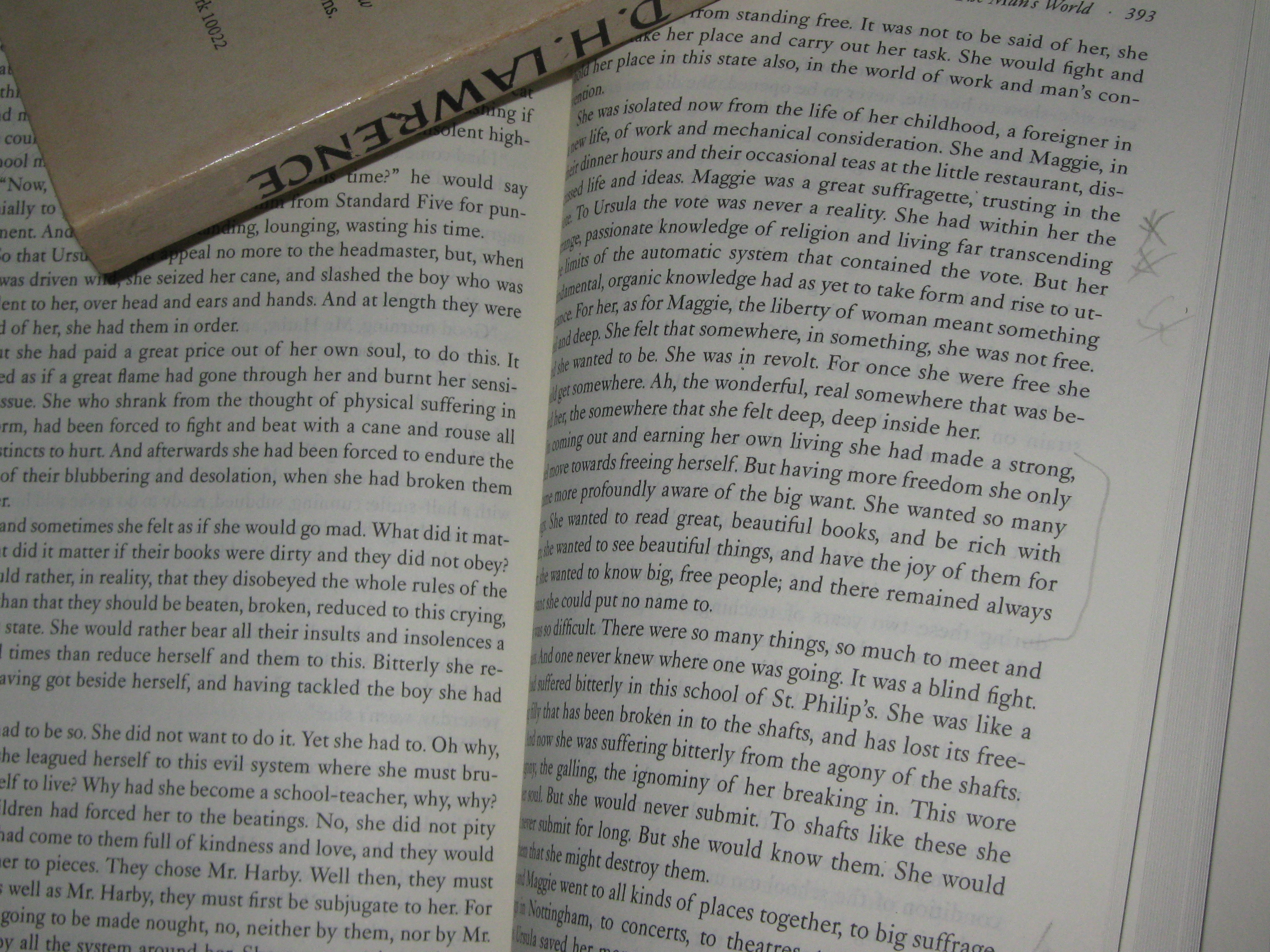
I star and bracket p. 393.

I star and bracket p. 393.

Her friend, Maggie, another teacher who does the job as a job and dislikes it, helps her survive.  Both love poetry and nature, and this time it Ursula has a straight relationship, a warm non-sexual friendship with a woman.

I used to teach part-time to eke out a living, and at one particularly horrible school (the only horrible one, to be honest), another rebellious teacher, a man who couldn’t believe FOR THIS HE’D GONE TO COLLEGE, respected the school so little that he turned in his grades only when it was convenient for him, and begged me to run away to San Francisco with him and teach at a hip school he’d heard of, which made me laugh very hard, because my particular subject wasn’t taught much out west, and did his girlfriend know about the proposed menage?  He was a good friend, and thought this was very funny, too.

I don’t usually write in books, but starred and bracketed page 393, fascinated by Lawrence on suffragettes, freedom, and work.

Here Ursula passionately denounces the workplace.

It was so difficult.  There were so many things, so much to meet and surpass.  And one never knew where one was going.  It was a blind fight.  She had suffered bitterly in this school of St. Philip’s.  She was like a young filly that has been broken in to the shafts, and has lost it freedom.  And now she was suffering bitterly from the agony of the shafts.  The agony, the galling, the ignominy of her breaking in.  This wore out her soul.  But she would never submit.  To shafts like these she would never submit for long.  But she would know them.  She would serve them that she might destroy them.

A very great book:  Lawrence is original, writes strangely but poetically, is often underestimated, and is sometimes sexist, occasionally absurd, but has created some of the best women characters in literature.