Jack Kerouac & The Other Middle-Aged Woman

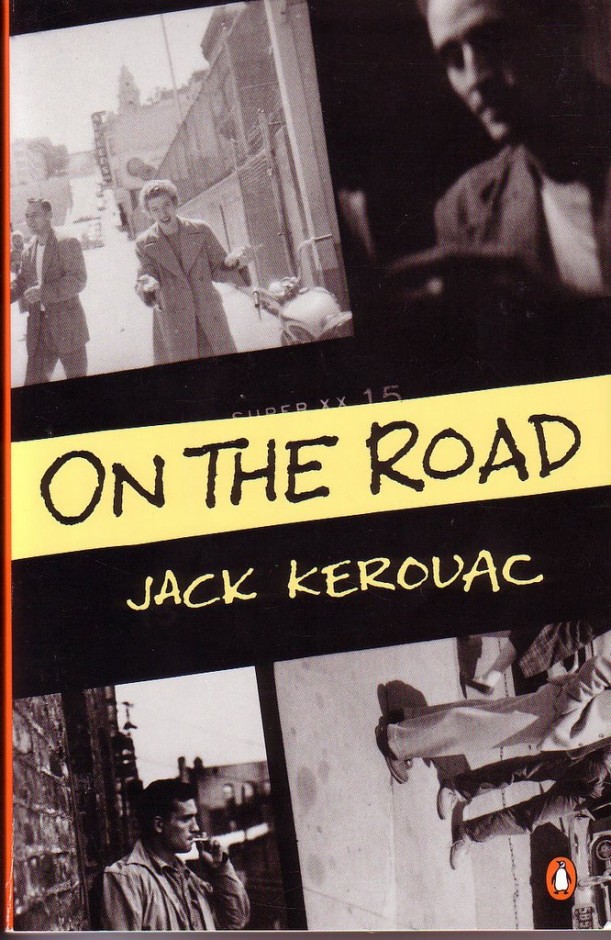
kerouac-on-the-roadI’m in an elevator in a bookstore with a middle-aged woman who’s carrying a Nora Roberts book, a student in a ‘clones T-shirt and pajama pants who’s looking at his phone, and a tall blond man in a tight herringbone sportscoat over tight faded jeans who is reading Jack Kerouac’s On the Road.

I wonder if he knows the prettiest girls in the world live in Des Moines.

That’s what Jack Kerouac said; I didn’t say it.

I’m a white-haired middle-aged woman who’s muddy from bicycling in the rain and my bicycle helmet is balanced on my basket of books.

“I hope we don’t get stuck in the elevator,” says the other middle-aged woman tossing her hair, staring at the blond man.

He says nothing.

“It’s a short ride,” I say.

She glares at me.

If you’re waiting for a punch line, there isn’t one.

Banter.   I am not that friendly.  I don’t often speak in elevators.  Her banter was aimed at him; my banter was a aimed at covering up her banter.

I am so glad the top book in my basket is Selected Stories of Philip K. Dick–let’s go with the science fiction if we’re in an elevator watching a plump middle-aged woman hitting on a beautiful younger man.  As the other middle-aged woman, I understand what she doesn’t want to understand:  he is seeing her/us as maternal.

As a bicyclist, I have chatted with, and let’s face it, lived with men who read On the Road and who, like Kerouac’s Sal, take cross-country trips to San Francisco, only on bicycles instead of cars, and with a bit more than $50 in their pocket. They want you to take their picture at the beginning and end of their trips. They courteously fix your flat tire and then insist you ride fifty more miles.  You camp and the bugs get in the tent while they update their Crazy Guy on a Bike page on their iPad, and then they say they’re too tired to ride back to the diner and isn’t there a can of soup?  And then you have to explain that you will ride back to the diner in the dark by yourself if you have to because you are not heating up a can of soup when what you want is a hamburger.

The other middle-aged woman makes a desperate move and sidles closer to him .  “What are you reading?”

DING.  The elevator door opens.

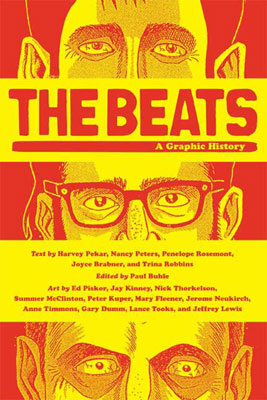
The Beats

Brilliant graphic history by Harvey Pekar, et al

He leaves.

Kerouac wrote, “I was surprised, as always, at how easy the act of leaving was, and how good it felt. The world was suddenly rich with possibility.”

And, “They have worries, they’re counting the miles, they’re thinking about where to sleep tonight, how much money for gas, the weather, how they’ll get there – and all the time they’ll get there anyway, you see.”

No worries.  The Beat women had to worry a little harder.

Mirabile Does Middlebrow: Girl Books!

Photo on 2013-05-07 at 20.18 #2

Mirabile Reads Girl Books!

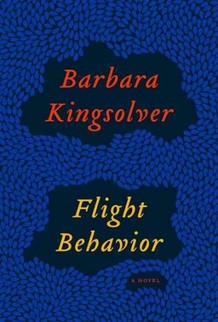
Getting lost in Barbara Kingsolver’s entertaining new novel, Flight Behavior, made me realize something is missing from my reading this year.

I’ve read classics by Balzac, Dickens, Tolstoy, D. H. Lawrence, and Virgil.

I’ve read Jonathan Lethem.  One can never read too much Jonathan Lethem.

I’ve read Tom Wolfe and Peter Stothard, journalists who have turned respectively to fiction and history/memoir/travel.

I’ve been moved and saddened by Kent Haruf’s lovely novel, Benediction, put my head down in exhaustion over Dave Eggers’s very masculine novel, A Hologram for a King, relished Nick Hornby’s humorous masterpiece, Juliet, Naked, and been stunned by the gorgeous prose of Graham Joyce in The Silent Land.

What is missing?

Girl books!

You know exactly what I mean if you are a woman.

Flight Behavior by Barbara KingsolverBarbara Kingsolver writes not just about climate change, but marriage, makeup, and hair.  I very much enjoyed Dellarobia and Dovey’s shopping trip to the secondhand store, and think I recognize that emerald-green jacket.

It’s not that I’ve ignored girl books.  I’ve loved Charlotte Bronte’s Villette (the book about the teacher who doesn’t get the man she loves), Harriet Beecher Stowe’s anti-slavery masterpiece, Uncle Tom’s Cabin, Elena Ferrante’s My Brilliant Year, the story of a girls’ friendship in the ’50s, and Barbara Pym’s Some Tame Gazelle, a novel about two unmarried sisters in their fifties.  I have read more books by women than men this year, but my relief when I read about Dellarobia’s doing dishes and eating at the Dairy Prince made me realize I NEED to read about women’s lives.

So I intend to add a lot of women’s books to my summer TBR.  Here is a list of 10, and please recommend others!

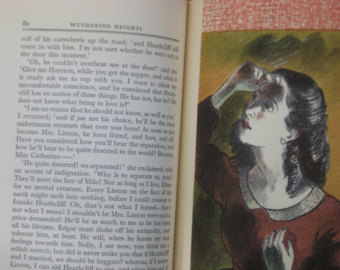
Wuthering Heights lithograph by Bartlett Freedman

Wuthering Heights lithograph by Barnett Freedman

1.  Emily Bronte’s Wuthering Heights.  This is my favorite book!  I’ve read it, reread it, reread it, reread it.   When the doctor saw me sitting up in bed, eating Junior Mints and reading Wuthering Heights, he decided I could go home from the hospital.  (He had not been impressed a few days earlier when he saw me reading Barbara Pym’s A Few Green Leaves.)  I own a charming Heritage Press edition of WH with Barnett Freedman’s lithographs, but it seems a little fragile, so I’ll have to be careful with it.  WH is the story of Catherine and Heathcliff, then Cathy and Hareton, narrated by Mr. Lockwood, a nondescript tenant who hallucinates when he stays overnight in Catherine’s room…   The Brontes have bad taste in men, but Heathcliff seemed appealing when I was 20.

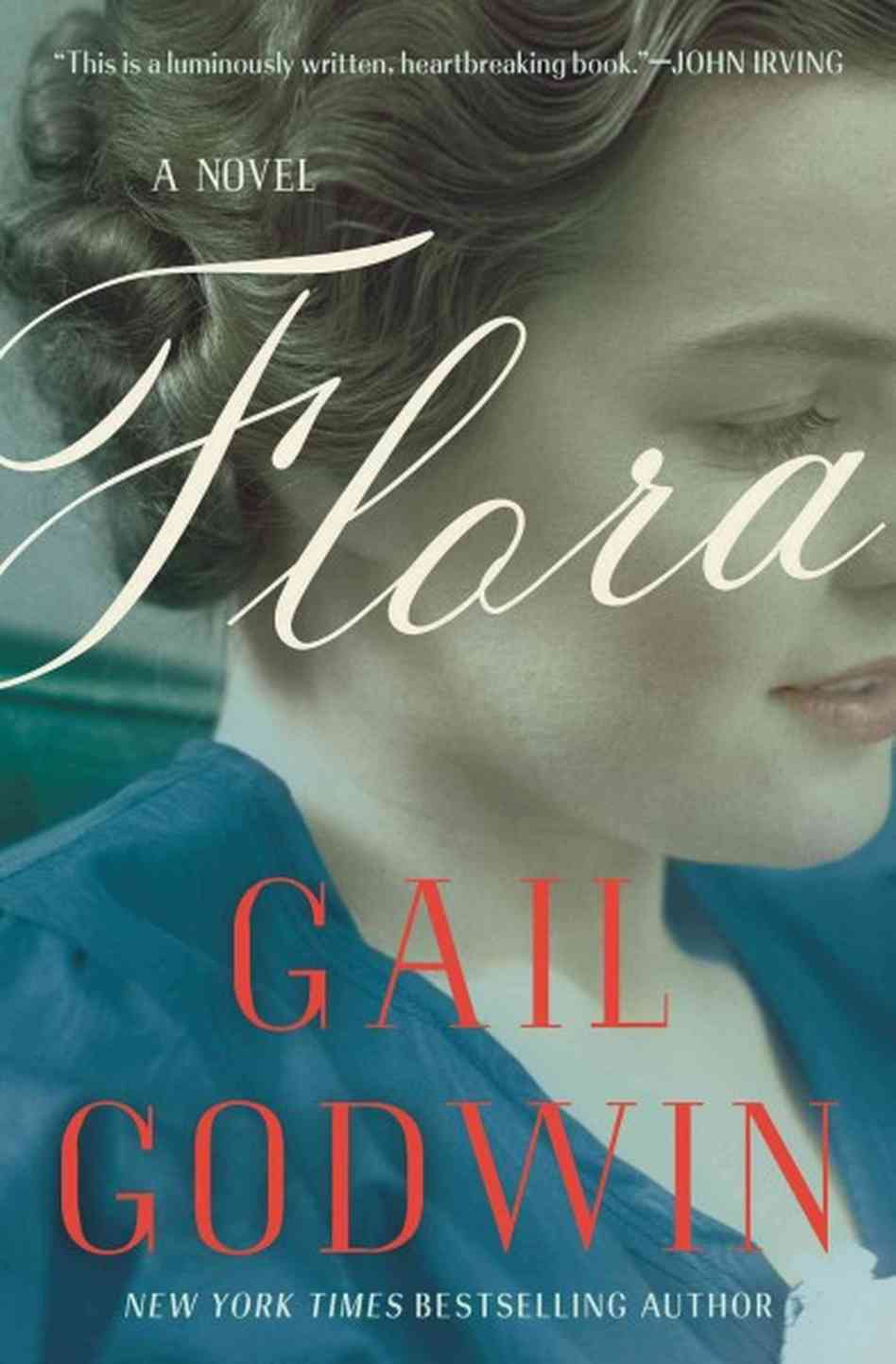
Flora by Gail Godwin2.  Gail Godwin’s Flora.  “She’s supposed to be good,” one of my friends said vaguely of Gail Godwin:  there was  a display of her book in the window of Iowa Book and Supply.  I loved The Odd Woman, her novel about a professor who is writing about George Gissing’s The Odd Women. Flora is supposed to be a variation on Henry James’s The Turn of the Screw.

3.  Elizabeth Gilbert’s Eat, Pray, Love.  Everybody else has read this, right?  I finally got a copy.  There was that birthday a couple of years ago when everybody refused to take me to the Julia Roberts movie, and I had to sit through a silly comedy about artificial insemination.  But now I have the book, and can travel by armchair to Italy, India, and Bali…

Rose in Bloom4.  Louisa May Alcott’s Rose in Bloom.  Alcott’s best novel by far is An Old-Fashioned Girl,  but this summer I want to catch up on Rose in Bloom.  In Eight Cousins, Rose Campbell is a teenage orphan, who loses her lady-like ways when her guardian, Uncle Alex, takes her to live among her male cousins.  In the sequel, Rose in Bloom, she is in love with Mac, the bookworm.  I was probably eight when I last read it.

5.  Edna O’Brien’s Country Girl:  A Memoir.  I can’t wait to read this memoir:  I loved her Country Girl trilogy, a lyrical coming-of-age story about Caithleen and Baba, two bickering, mischievous friends who contrive get expelled from a convent school and later move to Dublin and find love.

6. Sarah Waters’ The Little Stranger.  I am looking forward to this postwar ghost story in which Dr. Faraday is called to a patient at lonely Hundreds Hall and…

maddaddam margaret atwood7.  Margaret Atwood’s MaddAddam, the conclusion to her post-apocalyptic science fiction trilogy.  I’ll have to get ready by digging out my copies of Oryx and Crake and The Year of the Flood and rereading them.

8.  Nancy Mitford’s Frederick the Great.  NYRB is reissuing it, and guess who has a hardcover edition in the back room? I loved her biography of Madame de Pompadour; maybe I’ll get around to Fred.

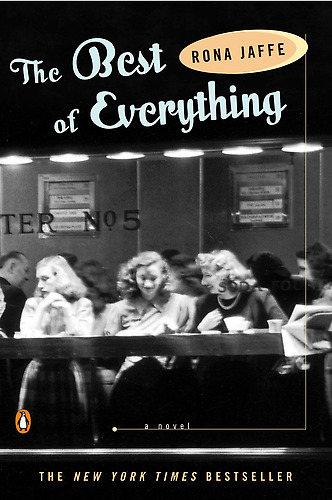
Best of Everything rona jaffe9.  Pamela Haines’ Tea at Gunter’s.  It has the word tea in it; that’s enough for me.  I have had good luck with the reprints in the Bloomsbury Reader ebooks series, and very much enjoyed Pamela Haines’s A Kind of War.  On to another good middlebrow novel…

10.  Rona Jaffe’s The Best of Everything.  It may be trash, but this 1958 novel looks like exactly my kind of thing: about five women employees of a New York publishing company, their love lives and dreams.

Please recommend your favorites!

Barbara Kingsolver’s Flight Behavior: Crushes & Climate Change

Flight Behavior by Barbara KingsolverWhen Barbara Kingsolver’s novel, Flight Behavior, was published last fall, critics asked if it was possible to write a good novel about climate change.  Having inhaled this stunning literary novel in two days, I can answer, Yes, it is.  Kingsolver boldly interweaves the science and politics of climate change with the everyday lives of a struggling family.  She creates a plausible fictional overview of a  problem that will not go away.

Not only is Flight Behavior a passionate novel about climate change,  it is  also a mad housewife novel. The 28-year-old housewife heroine is so desperate for fulfillment that she is willing to throw away her marriage for a powerful crush on a hot telephone man, a scientist, or almost anybody.

One has to laugh, though crushes are not necessarily funny. Kingsolver, who wrote brilliantly about sex in Prodigal Women, knows what goes through a woman’s mind when sex determines her flight behavior.  And whether she flies or not, Dellarobia views her crush object ironically.

The high incidence of fantasy in mad housewife novels is endearing.  What do mad housewives possess without their fantasies? This smart, often wickedly funny novel complements Rachel Ingalls’ Mrs. Caliban, Robert Irwin’s The Limits of Vision, Sheila Ballantyne’s Norma Jean the Termite Queen, and Sue Kaufman’s Diary of a Mad Housewife.

The heroine, Dellarobia, a smart, vivacious red-haired woman without a college education, has serious problems.  Stuck on a poor farm near Feathertown, Tennessee, with her dull husband, Cub, two young children, and in-laws next door, she has no money and no books. (The library in town has closed.)  She doesn’t love Cub, who is interested mainly in truck engines, but they married because she got  pregnant at 17.  The first baby was born dead, but she stayed:  now they have a kindergartener, Preston, and a toddler, Cordelia, and live in a ranch house her in-laws built for them on the farm.

Why fall for the telephone man?  Why not?  “She’d had crushes before, but this one felt life-threatening…” She drops off her children at her mother-in-laws, and then climbs the mountain to meet him wearing the uncomfortable genuine calfskin boots she found at Second Time Around.  The boots are her first purchase for himself in a year besides hygiene products

So why put them on this morning to walk up a muddy hollow in the wettest fall on record?  Black leaves clung like dark fish scales to the tooled leather halfway up her calves.  This day had played in her head like a movie on round-the-clock reruns, and that’s why.  With an underemployed mind clocking in and out of a scene that smelled of urine and mashed bananas, daydreaming was one thing she had in abundance.  The price was right.  She thought about the kissing mostly, when she sat down to manufacture a fantasy in earnest, but other details came along, setting and wardrobe.

It makes sense to me.

But then she sees something that looks like cornflakes on the trees. Then it seems to turn to flames. She thinks she is seeing a kind of orange burning bush, or burning trees.  And so she returns home, thinking it is a sign that she should not risk her marriage and children for a crush.

monarch butterfliesThe orange flames turn out to be butterflies:  monarch butterflies have veered off-course and flown to overwinter in Tennessee instead of Mexico because of climate change.  Dellarobia’s in-laws, Bear and Hester, who are struggling to support their farm and a machinist’s business,  want to sign a contract with loggers to clear-cut the mountain. But Dellarobia urges Cub to take his parents up and look around before they sign, and when they see the butterflies, Cub believes that Dellarobia  had a vision.  He stands up at church and testifies, and pretty soon people think the butterflies are a miracle.

Dellarobia has been on the news because of her “vision,” and it is all over the internet. She regrets having talked to the TV reporter.   Church groups and tourists begin to come, and often her mother-in-law, Hester, is the guide.

Barbara Kingsolver

Barbara Kingsolver

And then a gorgeous black man, Ovid Byron, shows up in a VW.  He is a scientist, here to study the butterflies.

And, yes, Dellarobia has an instant crush.  As she tells her best friend Dovey on the phone, he looks “like Bob Marley’s cute brother that avoided substance abuse and got an education.”

Soon Dellarobia becomes a fount of knowledge about butterflies and climate change., and perhaps she learns so much because her crush on Ovid is so great.  Yet it all seems perfectly natural:  she is very, very bright, and the scientific details are woven naturally into the story as she begins to work for Ovid and the students.

But even Dellarobia has a hard time accepting everything science tells her.  Ovid tells her that the butterflies will probably become extinct because the mountain in Tennessee is not like the ones in Mexico.

These insects have been led astray, for whatever reason. But breeding and egg-laying are still impossible for them until spring, when the milkweeds emerge.”

“So if they die here, they die.”

“That’s right,” he said.

She despised this account, the butterflies led astray. She’d preferred the version of the story in which her mountain attracted its visitors through benevolence, not some hidden treachery.

Different people view the butterflies differently.  To the scientists it’s not a matter of activism, it’s about observation.  Dellarobia refuses to give up, and her interactions with different environmental groups give her a different perspective on the science.

Dellarobia’s crush on Ovid is strong, but he works around it and doesn’t mention it:  this is a Barbara Kingsolver novel, not a romance novel.

And as a result of the work and new knowledge, we see Dellarobia’s life change rather abruptly, but satisfyingly.

It is  probably a little too perfect.

But we’re talking about the last 50 pages.  Kingsolver’s elegant, sometimes even exotic, writing actually reminds me a bit of Edith Wharton’s prose.  This is a very good novel.

My Horse Came in Second, Russian Translators, & Did Dickens Meet Dostoevsky?

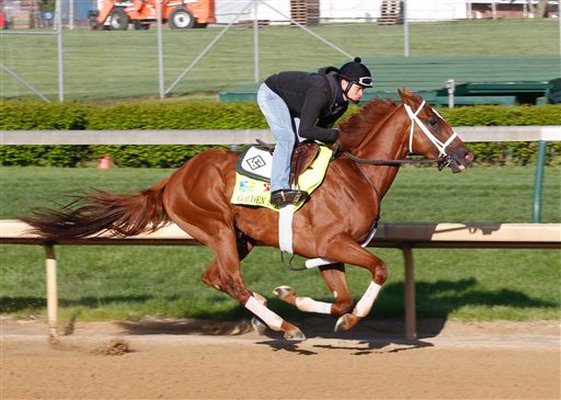
Golden Soul

Golden Soul

Isn’t Golden Soul gorgeous?

We got home just in time to watch the Kentucky Derby. Every year it starts when–5:25?–and I watch the horses and jockeys and pick my winner.  I picked Golden Soul minutes before the Kentucky Derby started.

He was such a long shot that everyone thought I was being stubborn for no reason.

“I like a long shot,” I said.   “I just think he’s the most beautiful horse.  I don’t care if he wins or not!”

He came in second!

Hurrah, Golden Soul.

Now if only I had bet–there’s win, place, or show–I could apparently have made some serious money!

RUSSIAN TRANSLATIONS:  TOLSTOY AND DOSTOEVSKY

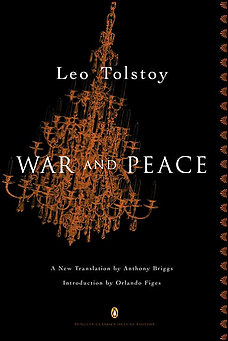
war-and-peace-briggs-bigI am reading War and Peace for perhaps the seventh time.

I am delighted by Anthony Briggs’s wonderful 2005 translation, and recommend it to those of you who are making the difficult choice of which translation to read.  Of course I have also enjoyed the Maude, the Constance Garnett, and the Pevear and Volokhonsky, so it’s safe to say I’m not fussy.  (Or is there a bad translation of War and Peace somewhere?)

At my house the general opinion is that reading War and Peace may save my mind from the internet.   Blogging is bad enough, they think, but far, far worse is Twitter.

“I don’t get it.  You’ve read War and Peace six times and now you’re on Twitter?”

Am I on Twitter?  I don’t know my Twitter address.  (Far more likely that I’m on  War and Peace.)

If you don’t believe I prefer Tolstoy to Twitter, let me tell you that I even love his shorter works.  You think Tolstoy’s Resurrection is bad?  Try me.  I’ve read it and will be happy to read it again.

Hadji Murat by tolstoyMany novels and stories by Tolstoy have been translated in recent years to great acclaim.  When Oprah chose Richard Pevear and Larissa Volokhonsky’s Anna Karenina for her book club, no one thought anybody would read it.  May I just say that my book group, who aren’t always reading Tolstoy, read and loved it?

In the March/April edition of of Humanities,  Kevin Mahnken interviews Richard Pevear and Larissa Volokhonsky about their translations of Tolstoy and Dostoevsky.  They have finished Tolstoy’s major works: Hadji Murat was the last they translated.

The married couple’s process is interesting:  Volokhonsky, who is Russian, translates the Russian word for word, and then Pevear, who is American, smooths it out into literary English.

They started with Dostoevsky’s The Brothers Karamazov, because they thought a new translation was needed to convey the humor and irony.

The couple are thinking about translating Turgenev: I hope they do.

DICKENS AND DOSTOEVSKY.

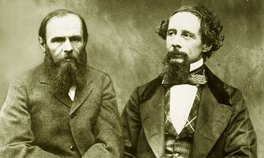
Naiman_Commentary_336746h Dickens and DostoevskyIn the TLS, Eric Naiman’s article,  “When Dickens Met Dostoevsky,” will divert both Dickens fans and Dostoevsky fans.

Did Dickens meet Dostoevsky?

Naiman begins his article, which actually reads like a mystery:

Late in 2011, Michiko Kakutani opened her New York Times review of Claire Tomalin’s biography of Charles Dickens with “a remarkable account” she had found in its pages. In London for a few days in 1862, Fyodor Dostoevsky had dropped in on Dickens’s editorial offices and found the writer in an expansive mood. In a letter written by Dostoevsky to an old friend sixteen years later, the writer of so many great confession scenes depicted Dickens baring his creative soul…

But it seems that no one quite knows where this letter is.  Hmmm.  Was it a hoax?

Bookless in Mexico: D. H. Lawrence’s “Strike Pay” and “What Is a Man Without an Income?”

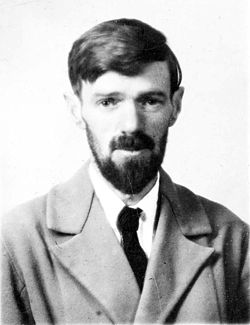
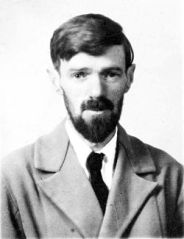
D. H. Lawrence

D. H. Lawrence

After I scribbled some notes about D. H. Lawrence’s Women in Love (at my old blog), a very kind writer emailed me and suggested that I might enjoy Lawrence’s poetry.

And now I am reading Lawrence’s poetry, and am awed by its odd grace.

I have also been reading Lawrence’s short stories. I feel considerably less awed by their equal grace, but only because reading fiction is my forte.

I have long been a fan of Lawrence. I read The Plumed Serpent in  Veracruz, relieved to have found an English novel in a Mexican bookstore.  (I had run out of things to read.)   It was a ghastly trip: I got bad sunburn and stayed in the hotel applying vinegar to my burns; I read all our books,  George Eliot’s Romola (which was supposed to last me a week), Gabriel Garcia Marquez’s A Hundred Years of Solitude, and my husband’s book, Zen and the Art of Motorcycle Maintenance.

And then we tried to trade books with some tourists at the hotel, but most of the tourists were German.  The American family was frankly unwilling to trade.  “I’ve read those,” the guy snapped, while his wife pleaded with him to give me a book.

Bookless in Mexico!  It was terrible.

I must say The Plumed Serpent is a very strange book.

I’m sure Lawrence would have written a book if he’d been bookless in Mexico, but I had to read one.
Out of Sheer Rage dyerCritics have vastly different views of Lawrence.  Kate Millett, in her feminist book of criticism,  Sexual Politics, hates his depiction of women, and I do know many women who feel the same; Geoff Dyer, in his witty  book, Out of Sheer Rage:  Wrestling with D. H. Lawrence, writes of traveling around the world trying, or not trying, to write a book about Lawrence, and often writing about himself.  He says of his delaying tactics that he had planned for years to write a homage to Lawrence and:

…as part of my preparation for realizing this cherished ambition I had avoided reading anything by Lawrence so that at some point in the future I could go back to him if not afresh the at least not rock-stale.  I didn’t want to go back to him passively didn’t want to pick up a copy of Sons and Lovers aimlessly, to pass the time.

I do know what he means about going back to the novels passively.  Sometimes they are overwhelming.

Not having any intention of writing a homage,  I will now dash off a few remarks about Lawrence’s short story, “Strike Pay.”

I am especially interested in strikes, not that I have ever had a chance to strike.  One day my father came home  and told my mother that the factory workers were going on strike. She entreated him not to strike.  “You won’t get your job back.”  They were of different classes:  she the daughter of a successful businessman, he the son of a poor farmer.  I never heard them talk about the strike again, but my mother usually had her way.   Either he didn’t strike, or the strike didn’t last long.

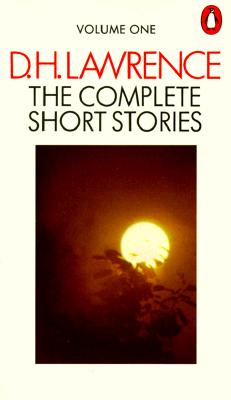
Complete Short Stories Volume One Lawrecne Lawrence, the son of a miner and an ex-teacher, did not work in the mines, but obviously knew them.  In  his story, “Strike-Pay,” a group of men collect their strike pay at the Methodist chapel, and then go off for a day of fun.  Lawrence crafts the nine-page story as  adroitly as an architect designs a building (or perhaps more as a writer crafts a novel than a short story), with dense background details and dialogue skillfully enhancing the form.  In fact he begins by describing a  building, the Primitive Methodist Chapel where the miners go to collect their weekly strike money.  The chapel is an enormous, ugly edifice “built, designed, and paid for by the colliers themselves.” It was so poorly designed that it threatened to fall down and they had to bring in an architect.

This seems a sad comment on the miners.  They want independence, they need to live like human beings, they need more money, yet they are bound to the pit.  They have no other work experience.   They cannot build.

The men and their families also live at the Square where the chapel is.

Forty years ago, when Bryan and Wentworth opened their pits, they put up the ‘squares’ of miners’ dwellings.  They are two great quadrangles of houses, enclosing a barren stretch of ground, littered with broken pots and rubbish, which forms a square, a great, sloping, lumpy playground for the children, a drying-ground for many women’s washing.”

Lawrence writes poetically, whether he is writing prose or poetry:  the transcendent beauty of the white clothes “waving in the wind from a maze of clothes-lines” on Wash Day, and the women calling to their husbands and children, is far too vivid to be merely lyrical.

And the banter of the men while waiting for their pay is pitch-perfect and very funny.    One man says to the union agent who distributes the pay:

Tha’rt hard at work today, Ben.”  This was sarcasm on the idleness of a man who had given up the pit to become a union agent.”

“Yes.  I rose at four to fetch the money.”

“Dunna hurt thysen,” was the retort, and the men laughed.
Lawrence-the-Complete-Short-Stories-of-D-H-9780140043822After the men get their pay, one group sets off on a nine-mile walk to Nottingham for a football match.  On the way they see the pit ponies in a field, inert and lazy, not knowing what to do above ground, missing the pits.  Young Ephraim, 22 and only two months married, says, “It’s like a circus turned out.”  He and his friend Sam decide to ride the horses; Ephraim is thrown twice.  Afterwards, he realizes he has lost his money, but when they go back to the field they cannot find it.  Each man gives Epraim two bob.  They stick together.

They go to a bar, bet on  a skittles game, and then go to the football match.  But even the match does not make Ephraim happy.  He sees an accident near the football field, where a man working on drainage problems falls through a crust of ooze and is killed.  The horse is saved, but its neck nearly broken by being pulled out.  Ephraim goes home “with a sense of death, and loss, and strife.”

And at home there is more strife.  His mother-in-law is furious because he has brought home such a small amount of money.  His wife, however, says nothing, and it is clear that at least these two are amicable.  This is not one of Lawrence’s stories where the men and women struggle in love.

So there is a kind of peace, but it is tenuous.  There is too much going on, the strike in the background, the unsettled feeling of agitation.

All of Lawrence’s stories are brilliant.  There is a kind of romantic sensuality about many of them.

Although I am not writing about poetry today, here is Lawrence’s poem, “What Is Man Without an Income?”, which complements the short story very well.

“What Is Man Without an Income?” by D. H. Lawrence

What is man without an income?
–Well, let him go on the dole!

Dole, dole, dole
hole, hole, hole
soul, soul, soul–

What is man without an income?
Answer without a rigmarole.

On the dole, dole, dole
he’s a hole, hole, hole
in the nation’s pocket.

–Now then, you leave a man’s misfortunes alone!

He’s got a soul, soul, soul
but the coal, coal, coal
on the whole, whole, whole
doesn’t pay,
so the dole, dole, dole’s the only way.

And on the dole, dole, dole
a man’s a hole, hole, hole
in the nation’s pocket
and his soul, soul, soul
won’t stop a hole, hole, hole
though his ashes might.

Immortal Caesar dead and turned to clay
would stop a hole to keep the wind away.

But a man without a job
isn’t even as good as a gob
of clay.

Body and soul
he’s just a hole
down which the nation’s resources roll
away.

Library Books I Won’t Read & The Cats Who Love Them

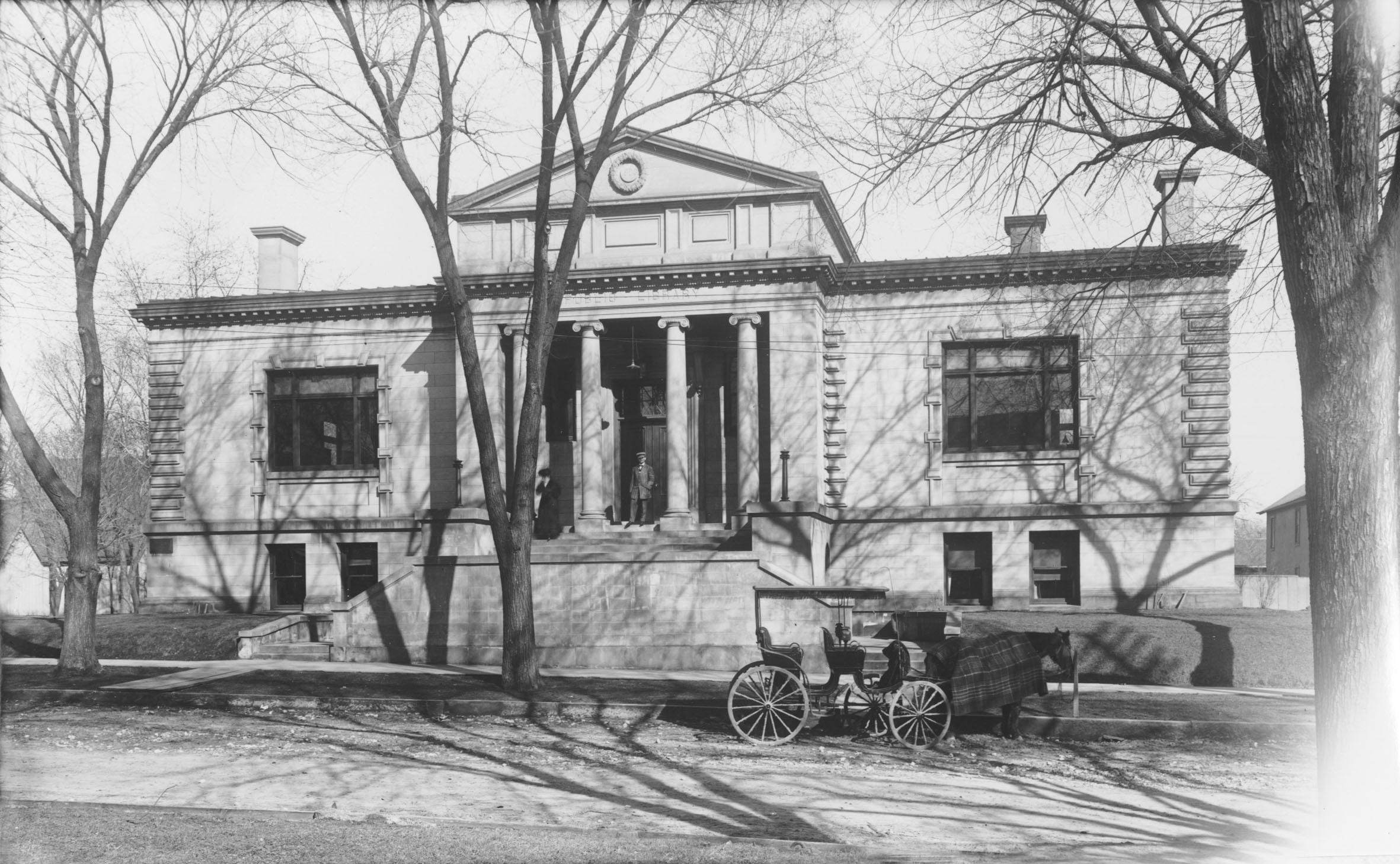
My hometown library, long before my time!

My hometown library.

Books may look good, and turn out to be or not to be.

Although I buy classics, I am dismayed when I buy a bad new novel, or even a very good one that I won’t reread.  Much as I enjoyed Kent Haruf’s quiet novel, Benediction, I could have saved myself a “giveaway” and trip to the post office had I borrowed it from the library. Annabel Lyon’s The Sweet Girl, a  well-written novel about Aristotle’s daughter, is less than compelling, and I will probably not finish it. And  Ann Beattie’s Mrs. Nixon is brilliant, but I am not that keen on metafiction.

I should have borrowed these three.

And so I have finally developed a practical system, which most of you have employed for a very long time.  I make lists of books I read about online and check them out of the library, because  no matter how much I enjoy the reviews and blogs, I may not necessarily enjoy all the books.

I check out way, way, way too many library books.  There is a box of library books in our computer room, many by very good authors, but I can’t possibly read all of them.

My cats  also enjoy library books.

My cats are readers.  I even have read to them on occasion.  They love The Princess and Curdie and The Beastly Feast.  They sit on my lap and mark the books after they’ve marked me.  The books are their books, and I am their human being, except when they claw the Library of America edition of Willa Cather’s novels, and then I say, “No no!” Sometimes they push a book off  the coffee table when they want attention.  “No no no no no!”

Tonight I encouraged them to prophesy whether I should or should not read my library books.

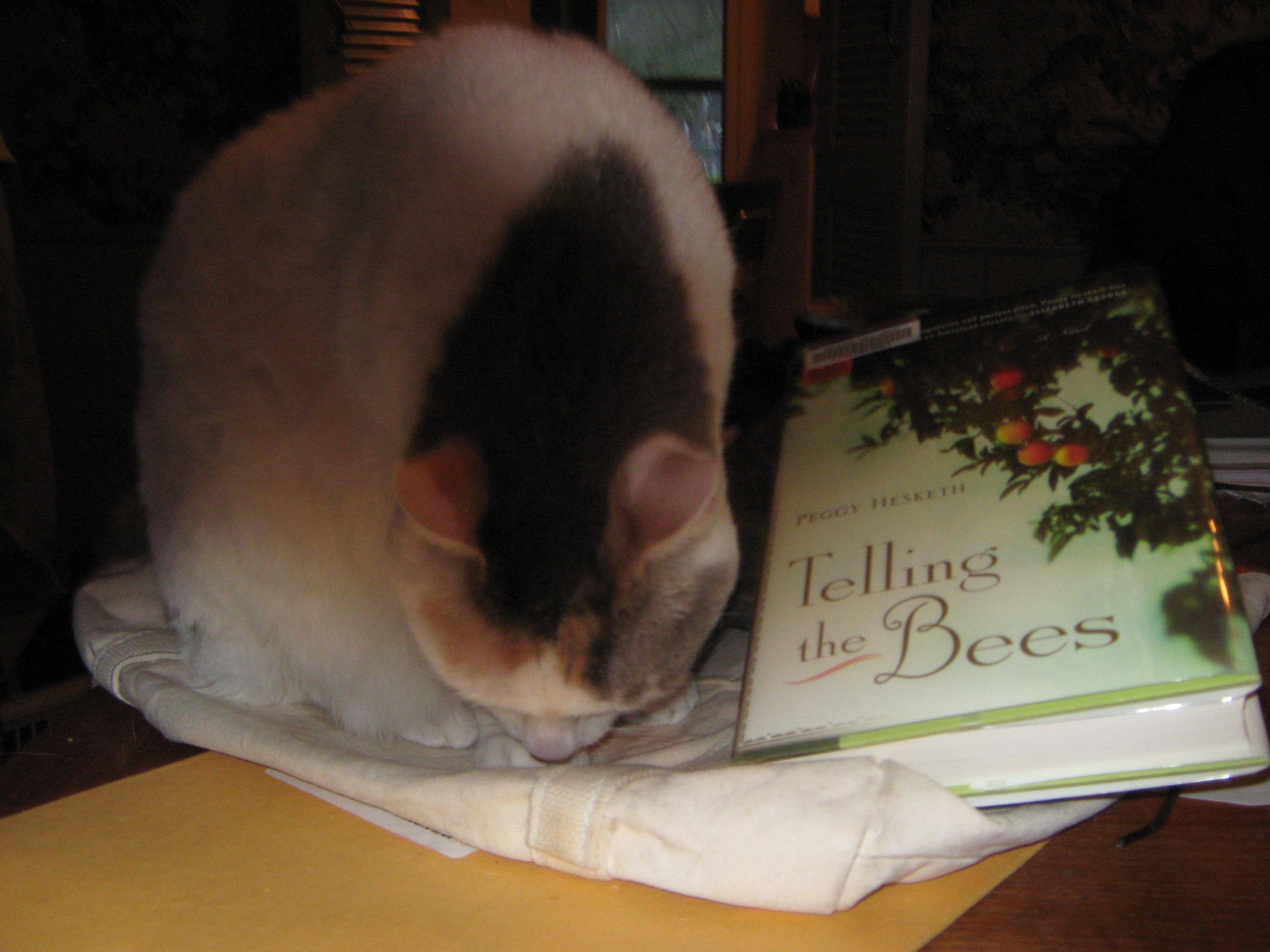
My cat Clodia is not quite sure about the well-reviewed new novel by Peggy Hesketh,  Telling the Bees.  She might enjoy it, but is more interested in the book bag.

She might read this, but she's more interested in the book bag.

She might read this, but she’s more interested in the book bag.

I have read 70 pages of Hesketh’s charming, well-written mystery, which is told from the old-fashioned point of view of a refined, elderly beekeeper.  The narrator, Albert,  has been a beekeeper all his life, and though the orchards in the once beautiful neighborhood have been bulldozed and housing developments have taken over, he is surprised by the intensity of young new neighbors who drink beer in their “garage workshop” and protest the electric overhead wires, which they believe are  responsible for  deaths in the area.   (Albert thinks they’re crazy, but admits he has heard the bees humming through the wires.)   Then he considers the past, and recalls his discovery of the murder of two beekeepers in 1992, on an unseasonably warm Sunday morning.  A policeman tried again and again to persuade him to talk about the two spinsters, but mostly he told him about bees.

Many people will love this book, possibly even the same people who liked The Secret Life of Bees, which I disliked.  But here’s the problem.  I don’t really like mysteries.  And I didn’t quite understand that it WAS a mystery until I started to read it. It’s shelved in the literary fiction section.

I went back to the review in The Washington Post and discovered that the reviewer DID compare it to an Elmore Leonard book, though she said others are comparing it to The Remains of the Day.  I simply didn’t remember the Elmore Leonard part.

And so…I’m tempted to skip to the end and see whodunit. Oh, I just did.

Now I don’t have to finish it.

Again, many of you will love it.  It’s just not for me.

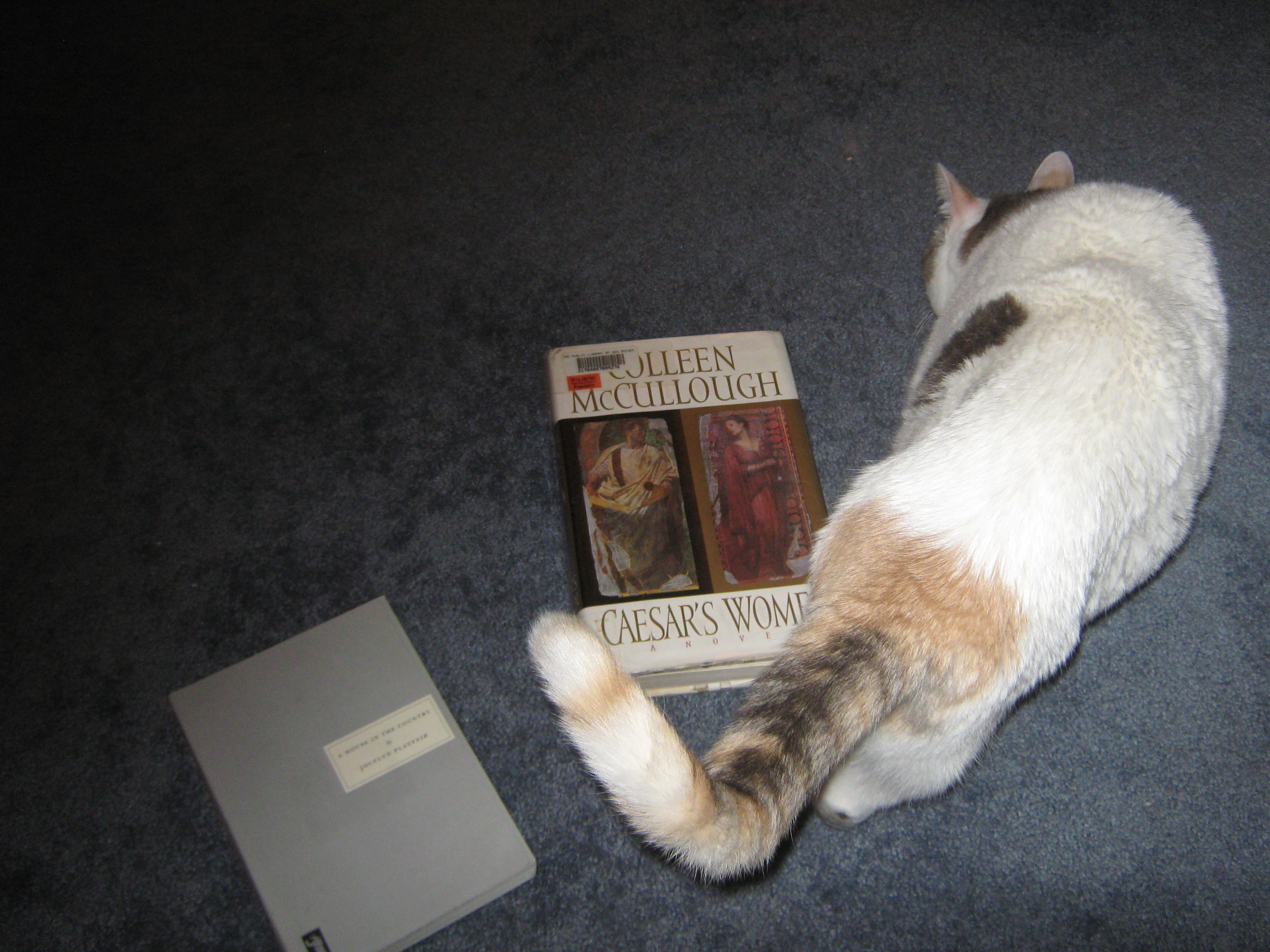
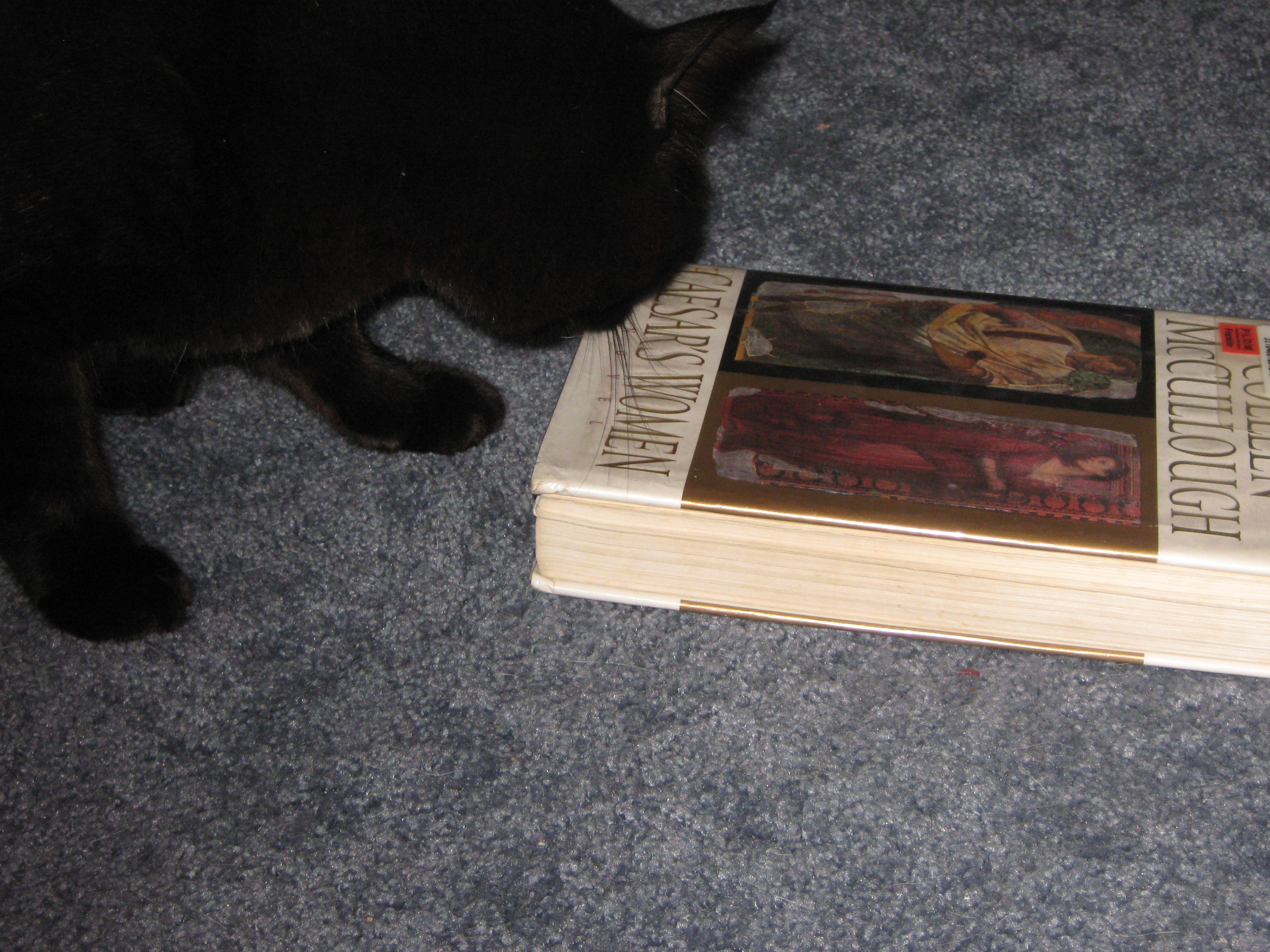
IMG_2351 Clodia seems very keen on Colleen McCullough’s Caesar’s Women, which was an impulse check-out.  When it’s between reading a Persephone and a historical novel, she’ll go for the historical novel every time.  I would very much like to get hooked on the Master of Rome series, because there are so many, but these are very long beach books:  I’d be better off rereading War and Peace.  (If anyone knows the Master of Rome books and thinks they’re worthwhile, please tell me.)

Look at this dialogue following the scene in which Clodius Pulcher dresses up in women’s clothes and crashes the Bona Dea festival.

I mean, it’s only some silly old women’s binge–everyone gets stinking drunk and makes love or masturbates or something…”

“Clodius, the Bona Dea isn’t like that.  It’s sacred!  I can’t tell you what exactly it is, I’d shrivel up and give birth to snakes.  Bona Dea is for us!”

Sometimes I love bad-good historical novels, but I don’t expect to read this.

Dee also picks Caesar's Women.

Dee also picks Caesar’s Women.

I was also pleased to find a Persephone, Jocelyn Playfair’s A House in the Country.  The preface is fascinating, but the novel looks less than brilliant. As I have already read one extremely bad earnest novel by Perephone author E. F. Delafield this year, Faster!  Faster! (though this one was published by Bloomsbury Reader), I am a little hesitant to take on another lacklustre middlebrow women’s novel.  So this will go back to the library unread, and I’ll try it another time..

So do your cats influence what you read?

Mine also make me drink out of a cat mug ($3 at the HyVee).

Love, Not Drinking, & Cyberaddictions

My cousin, a librarian whose social calendar is filled by drinking in a bar with her latest boyfriend, dropped by to see me because he was “at a training session” out of town.

She wanted to go to a bar.

“Impossible.”

I mean it is impossible. I don’t drink.  I can’t drink.  I take meds that preclude drinking. Meds that could kill me if I drink.  Meds that people take to commit suicide.  I am liberal with my meds, and have always sympathized with House, but overdosing on drugs and alcohol is a “no.”  Thank God for relief from pain, but why don’t they invent a pill that allows one to drink?

The last time I had a beer was 1993, the day I rode the Maid of the Mist at Niagara Falls.

At Thanksgiving and Christmas we drink sparkling non-alcoholic wine.  It is really terrible.

“But don’t you have something to drink?”  she asked despairingly.

Read and grow cup“I have nothing to drink.”

I offered her a drink of green tea.

“Don’t you have anything to smoke?”

“Are you kidding?”

“Isn’t marijuana legal?”

“I haven’t any idea, but I don’t smoke it.”

She turned on her phone.  Who you gonna call?  I listen to my messages later, much later.

I understand cyber-addictions.  But not phones.

The only thing that worked for her when not drinking was a little cyberstalking.  She started talking about Twitter, and showed me her boyfriend’s tweets.  He didn’t answer her tweet, and that upset her.  She’s cyberdrunk@cyberdrunk, or something like that.  He’s cheatonyourmate@cheatonyourmate, or something.

Maybe he’s in a meeting.

Then she cyberstalked some authors.

Did you know that Gail Godwin has a new book coming out this spring?  That Amy Tan has a new book coming out this fall?  That Ann Hood is giving a reading in Massachusetts?  That Brett Easton Ellis is gay?  That Karen Thompson Walker  is not on Twitter?  That Peter Stothard has a new book out this summer?  That Jennifer Weiner has a giveaway?  That Penguin Books has a giveaway?  That…?

We waited for more tweets.

Then she found a picture of her boyfriend with “some whore Lancome clerk” somewhere, possibly at Facebook.

“How does he know some whore Lancome clerk?  Don’t let it bother you.”

I do understand this kind of cyber-addiction. Cyber-life blurs with real life.   I used to get very bored when I started to write the same articles on the same subjects again and again, and I was online while I wrote.  I still check my email too often.

But I don’t like real life to interfere with my cyber-life.  I have cried over old friends after googling them and discovering they are dead.  I have repeatedly googled my old friend, Linda, hoping if I do it often enough the obituary will be a fake and she will be alive.

Linda is survived by her mother.  That struck me as tragic.  Did she ever marry?  Was she gay?  What happened?  Why didn’t she write the damned book?

I thought about writing to her mother, but in the end one doesn’t.

For me, finding Linda’s obituary was the equivalent of my cousin’s finding that picture.

Angela Thirkell, Snobbery, The War, & the Delectable Private Enterprise

AugustFolly thirkell

A friend enthusiastically recommended Angela Thirkell in 2000, and at first I just PRETENDED to like her books.  I  started with The Headmistress, one of the few the library had, and found it rambling and clumsy.  Why did my friend, the radical Jane Austen fan who got us all off pharmaceuticals and  inspired us to do yoga,  Zen meditation, and make our own yogurt, enjoy these snobbish comedies?

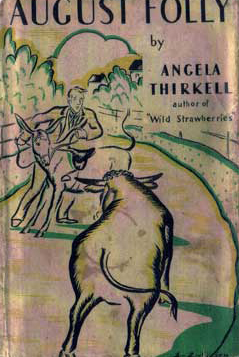
But then I read August Folly and loved it. I went on (out of order) to High Rising, Pomfret Towers, and on and on…

There are 29 books in Thirkell’s Barsetshire series, set in Anthony Trollope’s fictitious county.  Her characters are magnificently quirky.  They keep poultry, pigs, and dogs;  Lord Pomfret shows off the trompe l’oeil books in his study;  they tweedily (and tweely) converse at tea parties about archaeological societies and petrol shortages;  they revel at fetes and amateur theatricals;  they have misunderstandings in love; and they rant against the government and lost civility.

My favorite character, Mrs. Morland, the heroine of High Rising, is a novelist and Thirkell’s alter ego. Her hairpins fall out as she tries to plot her novels, or, indeed, engages in any kind of thinking, and people are forever picking them up for her.

I am fond of Lydia Merton and her muddled classical allusions.  “It’s just like Horace,” she’ll say, and you’ll have no idea what she means.

In Thirkell’s last book, Three Score and Ten, Mrs. Morland said, “I’ve written the same story so many times that I’m never quite sure which book I’m in, and I find I’m always making people the wrong age, or mixing up their names, or forgetting whether they know one another or not.”

One knows that Thirkell felt much the same.

Anyway, I am definitely a fan.

So is Verlyn Klingenborg.  In an op/ed piece in The New York Times in 2008, he wrote that he had recently reread nine of Thirkell’s Barsetshire books,would probably reread all 29 and then start over again.  “When I first came upon Thirkell, nearly 30 years ago, she seemed like a diverting minor writer. Minor now seems too slight a word to me for the purveyor of such major pleasures.”

Robert McCrum of The Observer was not exactly a fan  in 2005 (though he may be by now).  He briefly upset the Angela Thirkell Society when he joked that no one read Thirkell anymore. “In a reckless moment during the summer I asked, ‘Who reads Angela Thirkell?’ and ignited a firestorm of protest from across the known world,”wrote McCrum in December 2005, and mentioned that he had a couple of her books to read over Christmas.

I just hope they were her prewar books.  Honestly, her 1930s novels are the best.

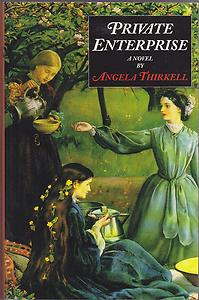
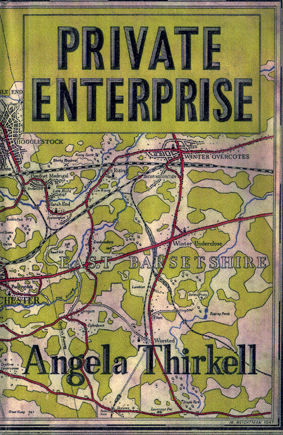
Private Enterprise by Angela Thirkell I have recently made an exception for her 1947 novel,  Private Enterprise, a comical, charming novel which I admire, though it does ramble a bit.

In Private Enterprise, peace is proving more difficult than war for the residents of Barsetshire, says Lydia, one of the main characters.  Thirkell paints a fascinating portrait of post-war England, wherein rationing is more severe than ever, everyone is indignant about “them” (the government), nobody understands the points on the ration forms, and the queues get longer and more ridiculous when the government rations bread.  On Saturday mornings, children on the way to the movies hog the bus and buy all the cakes before the housewives can get them.

The housewives, a hopeless minority among these young pests, had to trudge farther afield almost crying with fatigue to find bread, and when their second or third round of shopping was accomplished, for all the shops opened at different times and if one went to the grocer who opened at 8:30 to get a place in his queue one was too early for the fish that didn’t open till 10 or the second delivery of bread that wasn’t in at any specified time, and they wearily trailed home for what they’d hoped was the last time that day, the dear little children coming yelling and pushing and fighting out of the cinemas stormed the ‘buses for a half-mile ride at half-fare, and heavily laden mothers of families had to drag their baskets home as best they could, while each child occupied a grown-up person’s seat.”

Private Enterprise angela thirkell hardbackWe’ve met most of the characters in other Barsetshire books.  Lydia Merton (nee Keith) is married to Noel Merton, a barrister who returned  from the Army a year ago.  She is a happy housewife, and he is charming and very smart but bored, and the arrival in the neighborhood of Mrs. Arbuthnot, a beautiful widow, and her smart, homely sister-in-law,  a birder, threatens their  happiness.  Lydia’s brother, Colin, also a barrister, is in love with Mrs. Arbuthnot, and is surprised that she is not more grateful that he found her a cottage.  She sees him as just another guy with a crush on her.  And she finds it much more fun to flirt with Noel, Lydia’s husband, who is not so serious, or the sophisticated Francis Brandon. Susan Dean, a sensible librarian who had been dating Francis, is also annoyed.  Poor Lydia pines without knowing she’s pining.

Other characters include teachers, a retiring headmaster, and a new headmaster who talk about Latin grammar grammars.  I got a big kick out of the following:

“A good Latin grammar is a permanent source of income if properly handled.”

First I heard of that!

Very enjoyable, though there is a lot of snobbery about one’s “inferiors” and “the empire.”  Well,  we just ignore those parts.  We get it that Thirkell is having a rough time and life is not as smooth as it used to be.

Love & Twitter

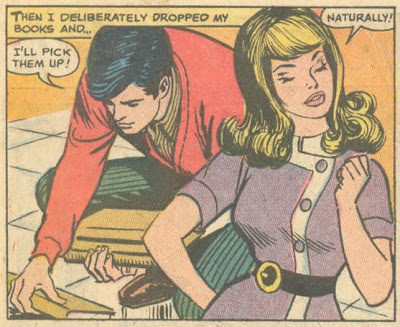
Doormat for Love_Girls Love Stories 148_ dropped books

Unnatural librarians!

My cousin stopped by to tell me about a sale. Fifty percent off.  Drone drone drone.

“I’ve got to work.”  That was a lie, but I typed a few words.

She proffered a thermos of fresh Starbucks.  “Want some?”

“Of course.”

Chat chat chat.  Her boyfriend’s going to a training thing this weekend.

On the weekend?  I doubt it.  And now I have to be nice.

She met him at the reference desk.  She meets a lot of men that way.

He needed to know everything about film noir.

They retired to the storage room to check out the Patricia Highsmith.

She’s in love.  Except…  He’s not…  Well, her sister-in-law can tell you about that.

She’s not really spacey.  Not Phi Beta Kappa, but honors. Bored at her  job, and if you don’t want her blabbing about what you check out, you might as well buy the book.  I prefer to own the omnibus edition of the Works of Mary Stewart to hearing at a party that I’m reading Airs Above the Ground.

She hopes to marry this guy.

She is also addicted to Twitter.

“He has sent ten tweets today.  Isn’t that cute?”

He’s such an e-slut.  He gives out his personal email address, and no doubt his Twitter, to the more attractive minimum-wage employees at the mall.  (Ask my cousin’s sister-in-law.)

She was in tears last time I saw them at the grocery store, and I hardly  blame her.  I gave him a cross look, but he paid no attention.

Fortunately she has $500 of Lancome in her bag, so she can hide her feelings.

She offers to give me a makeover.

“I’m beyond help.”

“Just a little lip gloss.”

“I’m allergic.”

Then she showed me his tweets.

She couldn’t believe I don’t have Twitter.  So she signed me up.

I am now a follower of Lydia Davis (I like her translation of Madame Bovary), Jo-Ann Mapson, Sherman Alexie, Natalie Merchant, Ron Charles, Jay McInerney, and Salman Rushdie.  Lydia was saying something profane, which made no sense out of context.  Jo-Ann recommended a book.  Natalie is against fracking (I agree).  Ron sent a link to one of his video reviews.   Jay was talking about food.

I tried to follow Pevear and Volokhonsky, but they don’t have Twitter.

Twitter thinks I should follow Jennifer Lopez and Ellen Degeneres.  Why?

I didn’t send a tweet, because I need 500 words to say nothing.

And I should unsubscribe from Twitter, because it is just one more silly thing.

Karen Thompson Walker & The Age of Miracles

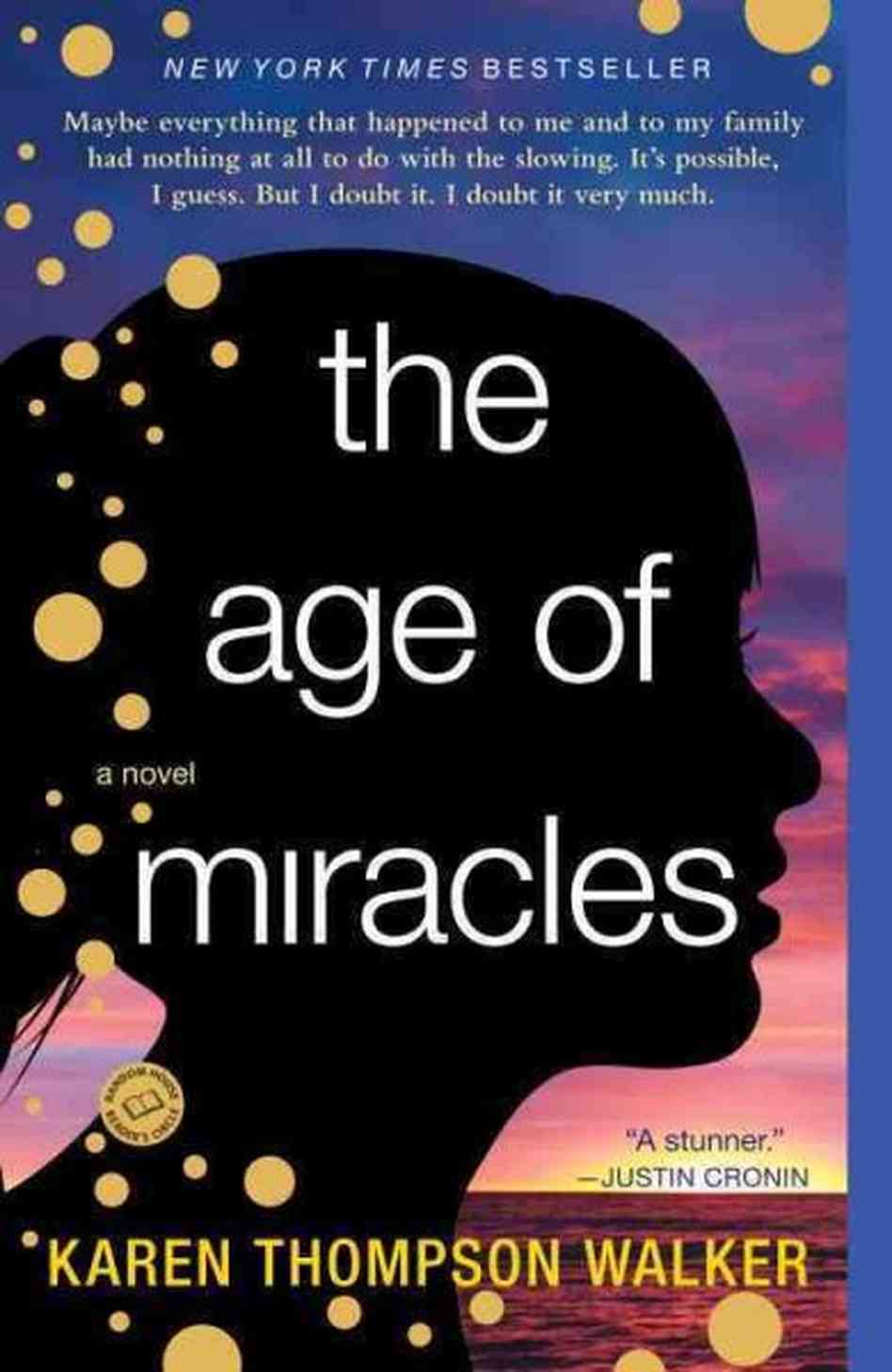
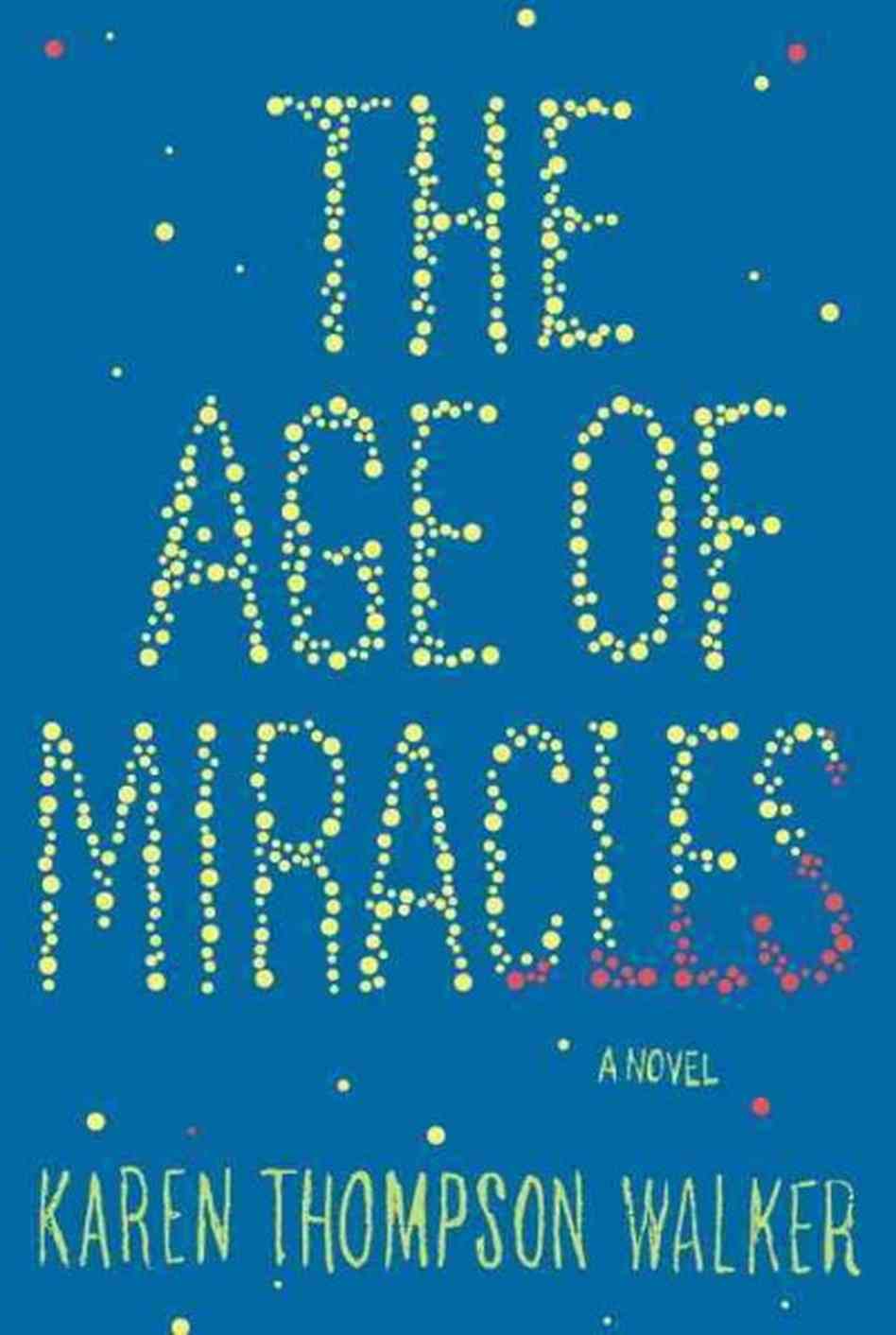
Age of Miracles by Karen Thompson WalkerIt is seldom spring, and I seldom have a chance to wear my out-of-fashion spring sweater with the asymmetrical flower print.   But it was spring last night, and I wore it to Karen Thompson Walker’s talk about her lyrical first novel, The Age of Miracles.

In Walker’s gracefully-written apocalyptic novel, set in California in a not too-distant future, the earth’s rotation slows and shatters the basis for the 24-hour day. Sometimes sunrise is at noon, sometimes at night. Sometimes the hours of daylight are long, other times short.  The cycle of light and darkness may mean a 26-hour day, or a 60-hour day. The government says the country will remain on a 24-hour clock, but a few rebels are “real-timers,” waking in the light and sleeping in the dark.

The slowing also affects gravity and the earth’s magnetic field.  Trees fall down. Plants die.  Birds die. Whales are beached. It becomes harder to kick a soccer ball across a field.  People get sick.  Their circadian rhythms are off.

The novel is narrated by Julia, an adult looking back on the first year of the catastrophe from the perspective of her 11-year-old self.

This is the second apocalyptic novel I’ve read this spring from the perspective of an adolescent, the first being Jonathan Lethem’s Girl in Landscape.  Lethem’s Pella is more rebellious than the shy Julia, but both girls must face a reality of  a bleak planet, viruses, death, mass suicides, and rednecks who target people who are different.

I was very curious to see what Walker would have to say about her book.

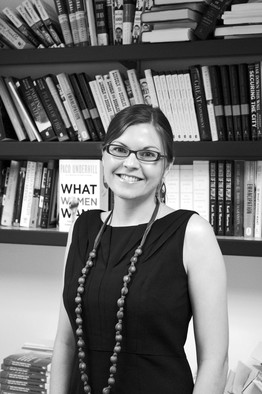
Walker, a smiling young woman in a floaty peasant top and casual trousers, began her talk breathlessly, but soon gained confidence and charmingly read from the opening pages of her book.

Much of the novel is written in the lyrical first-person plural:

We were distracted then by weather and war.  We had no interest in the turning of the earth.  Bombs continued to explode on the streets of distant countries.  Hurricanes came and went.  Summer ended.  A new school year began.  The clocks ticked as usual.  Seconds beaded into minutes.  Minutes grew into hours.  And there was nothing to suggest that those hours, too, weren’t still pooling into days, each the same fixed length known to every human being.”

Walker, a native of San Diego and a graduate of UCLA, wrote a short story while in the MFA program at Columbia about the slowing of the earth’s rotation.  After reading  in 2004 that an earthquake in the Indian Ocean had affected the earth’s rotation, she was fascinated by the ramifications. Her other stories had been realistic, so this was a challenge.

Karen Thompson Walker

Karen Thompson Walker

“It was the first time I experimented with a fantastical premise,” she said.

After graduate school, she worked as an editor at Simon and Schuster, and did not have leisure for writing.  At 9:30 or 10 she went to work, took phone calls, wrote jacket copy, and met with authors.  At night she did her reading and editing.

But she wanted to turn the short story into a novel, and began to write 45 minutes or an hour every morning before work, sometimes on the subway.

She set the book in California where she grew up, because she knew the threat of earthquakes and the puzzlement or fear of children who must bring a three-day supply of non-perishable food to school every year in case of disaster.

She remembers a day when there were two earthquakes and a 50% chance of  another big one.  Like Julia and her mother in The Age of Miracles, she went to the grocery store with her mother and “it was swarming with people.”

Walker interweaves ordinary life with catastrophe.

“I wanted the book not to be just about how people panicked but about how they went on in normal living day by day,” said Walker.

The novel explores the emotions of Julia as she sees the world fall apart.  She also records in minute detail the beauty of the dying world.

Walker read aloud from a section about beached whales.  Julia and her friend Seth go to the beach to see the beached whales and help the rescuers.  They pick up two plastic cups and rush to the ocean, thinking the water will keep the whales alive until they can be moved.

We ran barefoot down to the water, cups in hand.  It was a long run.  The mud sucked our feet.  Creatures slithered unseen beneath my toes.  Dead fish sparkled in the sun as my hair whipped in the wind. When we reached the lapping water and looked back, the humans on the beach were barely visible.  Their hairline arms and hairline legs fluttered soundlessly around the whales.  The only noise was the churning of the ocean.”

Age of MiraclesWhen they return, they pour water over a dry whale with flies on its eyes.  They want to help, but then a man tells them, “That one’s already dead.”

And that is more or less what is going to happen.  People, too, will die.

The novel is a hybrid of literary fiction and science fiction, though Walker doesn’t mention science fiction.  But she says she loves Nobel Award winner Saramago’s Blindness, a novel about a plague of blindness in a modern city, and Jeffrey Eugenides’ The Virgin Suicides, the story of five sisters who commit suicide.

She admits she likes apocalyptic novels.  “It’s sort of a secret pleasure to read a novel about ordinary life falling away.  It makes us realize how extraordinary ordinary life is.”

She mentions some apocalyptic films people like, the TV show “Walker” and the new Tom Cruise movie, “Oblivion.”

She didn’t consult a scientist until she sold the book.  “I didn’t want to bother anyone about a book that would never leave the computer,” she said.  The scientist corrected a few errors and explained that gravity would be stronger rather than lighter if the earth’s rotation slowed.

Will wonders never cease?  Katherine Hardwicke, the director of Twilight, has signed on to direct the film version of The Age of Miracles.

An excellent novel, and a lovely evening in the company of Karen Thompson Walker, who currently lives in Iowa City with her husband.