Dickens without Notes

I am reading the Vintage edition of Dickens’s Our Mutual Friend.
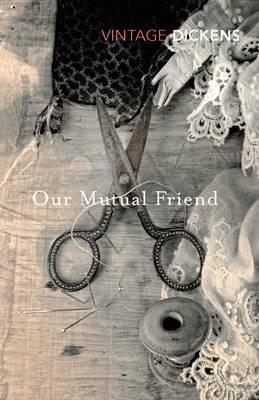
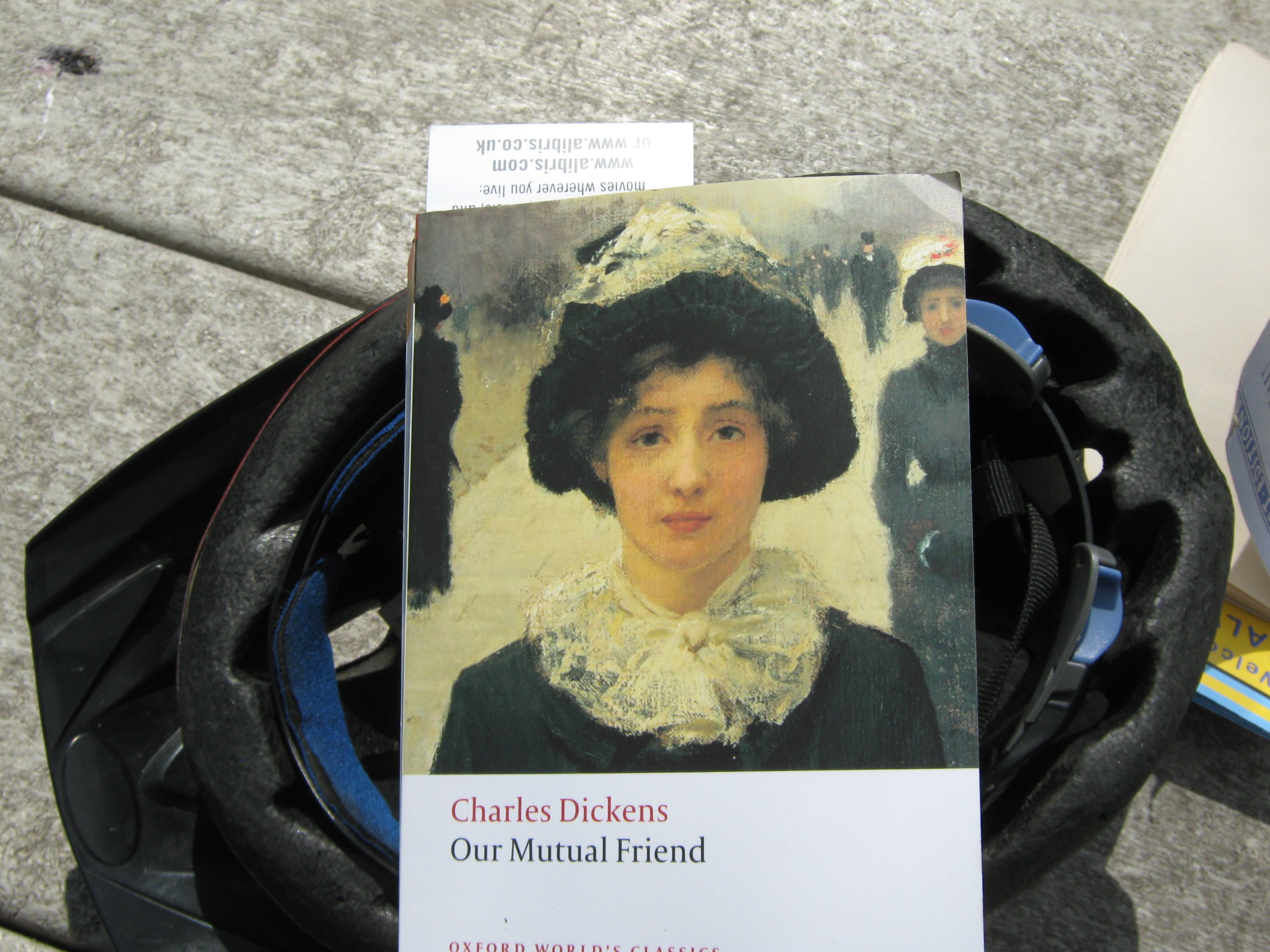
Our Mutual Friend DickensI bought it because of the beautiful cover and the introduction by Nick Hornby. If you are a notes aficionado, however, you’re out of luck:  there are no notes.  But that hasn’t made the slightest difference to me, because I am on my fourth reading of the novel, and I am enjoying it so much more than when I dutifully perused every note that I am not sure this isn’t the best way to do it.

If you aren’t constantly checking the endnotes, you notice patterns you might not otherwise perceive.

For instance, many of the characters in Our Mutual Friend have doubles.
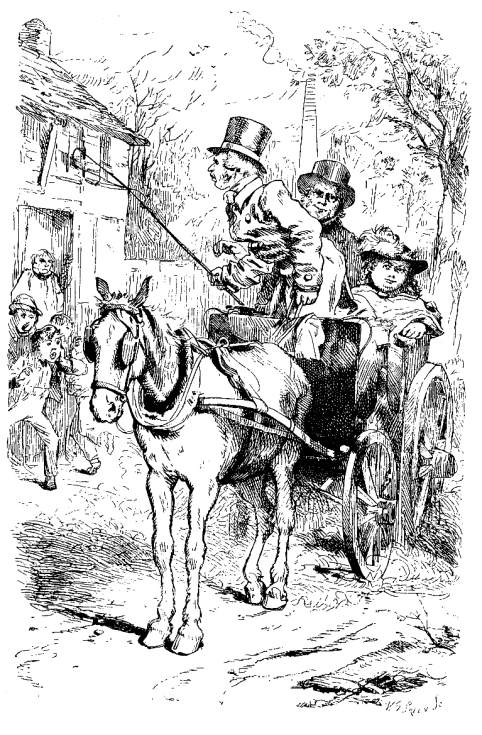
"The Boffin Progress" by Marcus Stone

“The Boffin Progress” by Marcus Stone (Mr. and Mrs. Boffin)

Literacy is an important issue.

And a fortune deflected has a domino effect on a huge cast of Londoners.  After the supposed murder of a rich dustman’s heir, two of the dustman’s employees, Mr. and Mrs. Boffin, inherit.

The financial corruption starts with the discovery of the body supposed to be John Harmon’s:  it is actually his double’s.  Gaffer Hexam, the waterman who found the corpse in the Thames, is paid a fee for it by the police; Gaffer’s doppelgänger and ex-partner, the dishonest Riderhood,  tries to sell out Gaffer for a reward by claiming Gaffer is the murderer. After Gaffer’s death, the accusation leaves a stain on the character of his beautiful daughter, Lizzie, and his son, Charley.

And literacy is tangled up with all of this:  when Riderhood tries to collect the reward, he insists that two lawyers “take down” his account of Gaffer’s alleged murder of John Harmon:  he believes writing will protect him.  Lizzie makes sacrifices to send Charley to school, against the wishes of her father; later, two of Lizzie’s aspiring boyfriends want to educate her, and they are each other’s doubles: languid but good-natured Eugene Wrayburn, and intense, violent Bradley Headstone.

After the innocent, illiterate Mr. Boffin, the Golden Dustman, inherits the fortune, he becomes obsessed with books.  He buys a set of Gibbon’s The Rise and Fall of the Roman Empire and hires a one-legged balladmonger and fruit stall owner, Silas Wegg, to read aloud to him in the evening.

Wegg is semi-literate, and there is much comedy as Wegg reads the verbose Gibbons.  Wegg pronounces Polybius as Polly Beious, “supposed by Mr. Boffin to be a Roman virgin.”
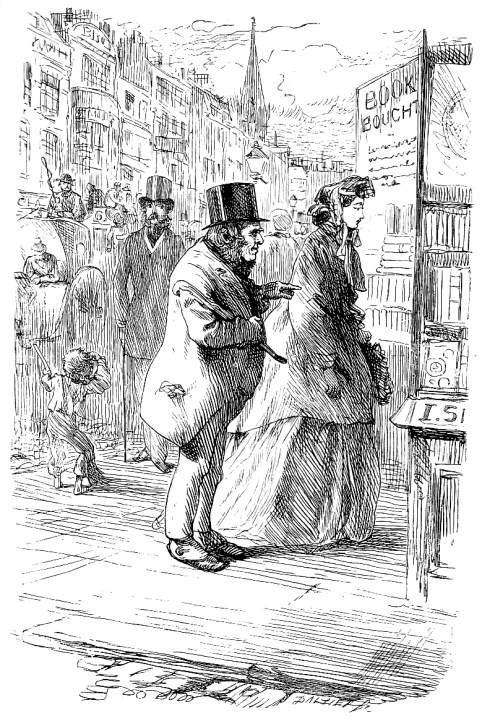
"The bibliomania of the Golden Dustman,"  by Marcus Stone

“The Bibliomania of the Golden Dustman,” by Marcus Stone

When the money begins to corrupt Mr. Boffin, he goes to bookstores with his informally adopted daughter, Bella Wilfer, and asks her to pick out all the books about misers.  His corruption actually improves Bella:  she realizes how ugly her own obsession with money has been.

The one-legged Wegg’s double is Jenny Wren, the doll’s dressmaker, a 13-year-old crippled girl who sews doll clothes for a living and takes care of an alcoholic father.  She is eccentric, sharp-tongued, witty, and absolutely principled:  she calls herself “the Person of the house” and her father her “child”; she  insists that he hand over his wages, and sends him to a corner or his room if he has  spent them.  Her back is crooked and she has trouble walking, but she is very brave, and her friendship with Lizzie, who comes to room with them, softens her.

A great book, one of my favorite Dickens!

Reading Virgil Again

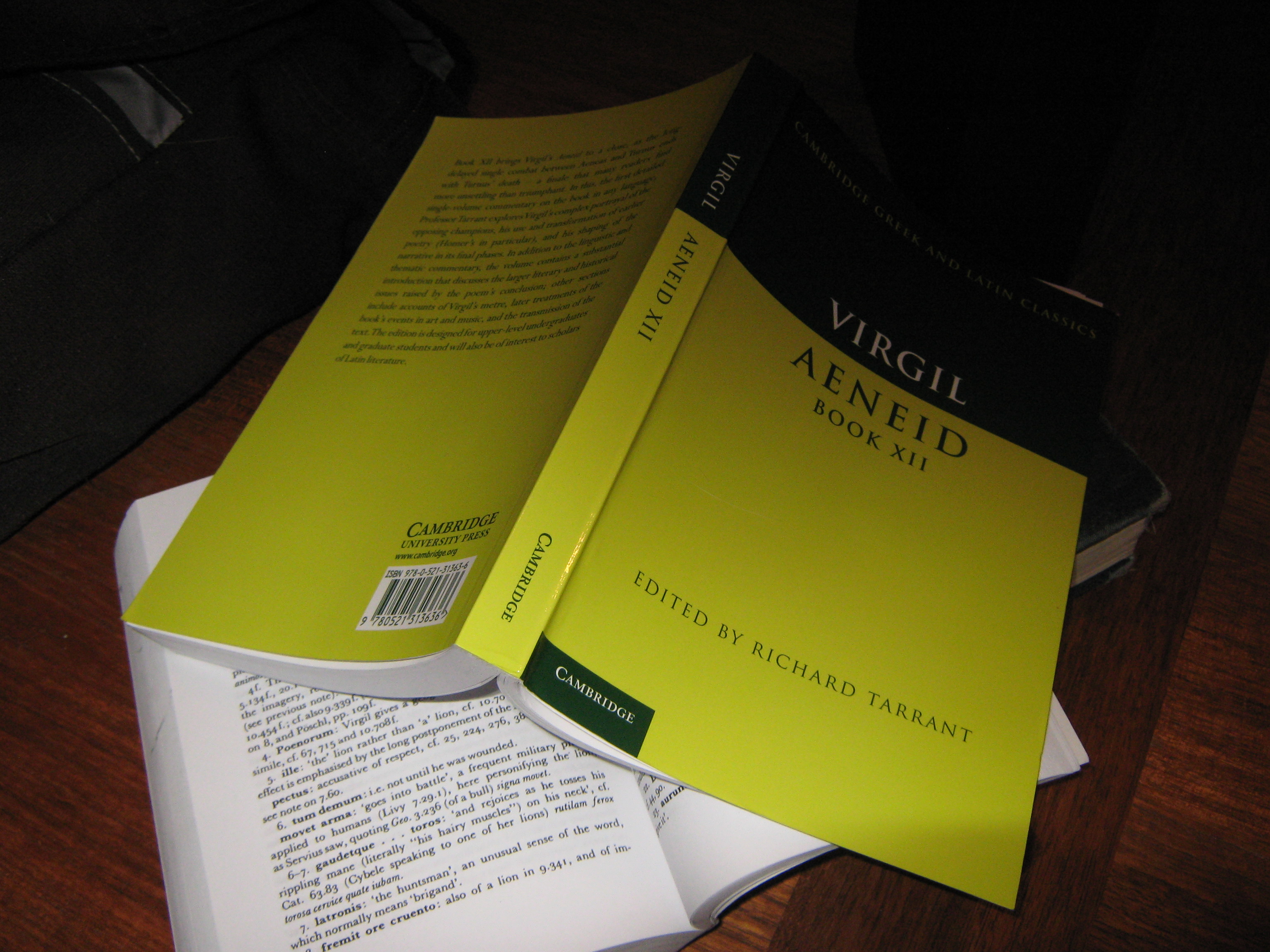
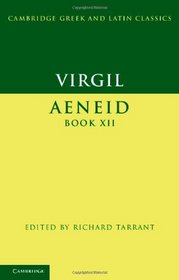
This week I mentioned my astonishment that the TLS reviewed a new Cambridge edition of Virgil’s Aeneid Book XII with a commentary by Richard Tarrant.  No American book review publication would take on a Latin text.

I was delighted. I have a degree in classics and can read Latin poetry and chew gum at the same time.

IMG_2287If you mention the Aeneid to your friends, they beg you not to get up on Slam Poetry Night and recite “that hysterical Amata speech, for God’s sake!”

You just read it on your own.

I have many editions of the Aeneid already–I taught it as an independent study for two students in my T.A. days, and most recently in adult ed.  But I had to order the new edition from Amazon.

My copy has already arrived in the mail and I am comparing the new Tarrant to the 1973 R. Deryck Williams commentary.

For my purposes, my old two-volume Williams edition of the Aeneid serves very well.   But Tarrant’s extremely focused 258-page commentary on only Book XII, the first single-volume commentary on Book XII, according to the publisher, elucidates just 952 lines, and is naturally much more detailed for those who plan to reread and study this book.

Comparing the Tarrant with the Williams commentary.

Comparing the Tarrant with the Williams commentary.

Williams and Tarrant concur in many of their notes. Both commentaries help with translation and identify obvious literary precedents.  But Tarrant is more detailed and goes further.  When Virgil compares Turnus to a lion shaking his comantis toros,  ” hairy muscles,” both commentators tell me to translate it as “mane.”  But Tarrant goes on to explain “V. is evoking Catullus 63.83, addressed to one of Cybele’s lions, where the lion’s ‘muscled neck’ and its mane are neatly separated and has produced a more suggestive , visually less clear-cut image in which waving hair and rippling muscle merge into a single motion.” I’m fascinated by Virgil’s brilliant allusiveness.

Certainly it is a treat for those of us who live in cities without university libraries to have these commentaries:  it is like taking a private class from Williams and Tarrant.

Before I go, let me recommend that you read The Aeneid in English, if you don’t know Latin.  (The translations of Robert Fagles and Robert Fitzgerald are both good.)  Now I will tell you why you haven’t read it, if you haven’t.

American schools have dropped Latin and many other languages from their curriculum in the last 50 years.  Even some universities have cut their language requirement.  So if you didn’t study classics, or take a course in classical literature in translation from the classics department, you probably missed it.  Many English departments have ceased to teach The Aeneid in translation because it requires so much background.

It wasn’t always this way.  The Aeneid, as T. S. Eliot tells us, is a true classic,  written by a mature poet at the height of his powers at the apex of Roman civilization.   And it influenced Dante, Milton, Dryden, Alexander Pope, Henry Purcell, Thomas Jefferson, Willa Cather, and Margaret Drabble, among others

You do need some background to appreciate it fully.  The struggle of the hero, Aeneas, who must sacrifice his personal life to lead the Trojan refugees to Italy, is utterly incomprehensible and unhip without understanding pietas, a Roman virtue that has to do with fulfilling one’s duty to the gods, country, and family.

It also helps to know the history of Rome in the first century B.C., and to know Homer’s Iliad and Odyssey.

Buty ou can read The Aeneid like a beach book:  I have done so and enjoyed it.

Ramblings about Dickens and Literacy: Our Mutual Friend

Our Mutual Friend Dickens

My new paperback of Our Mutual Friend: I’ve worn out two.

Bored by a few 21st-century novels that turned out to be not quite great literary fiction, I have turned to the classics.

Specifically, to Dickens.  I mean, what contemporary writer is better?

That’s a tough one.  Perhaps Michael Chabon, Jonathan Lethem, and Nicola Barker are his equals.

But you have to read Dickens anyway.

In my teens I devoured Dickens. David Copperfield changed my life.  It made me see the mix of grotesquerie and vulnerability that characterized people I loved.

I simply couldn’t resist a man who said,

“Barkis is willin’.”

(Married at 19!  Well, that was silly, Ms. Mirabile.)

I sent a copy of David Copperfield to a friend in a mental hospital whose parents had her committed for lesbianism (it took exactly three signatures, her parents’ and a family doctor’s, to commit her for what was then considered a mental illness).   My friends and I, furious and sad, talked to  a free lawyer who agreed to visit her and tell her her rights.  She called us from a pay phone and said they were watching her all the time now.  She said I shouldn’t send her any more books.  Reading was considered anti-social, so she had to play cards and wait till she was out (but not”out”) a year later to read Dickens.

When she got out of the hospital, she became a huge David Copperfield fan.  She chortled over Peggotty and Barkis.  And wasn’t it sad about Little Em’ly?

My  first husband wouldn’t read Dickens, but he liked the Micawber scenes (W. C. Fields?) from an old movie of David Copperfield.

He liked to be dramatic in public.  When I said good-bye to him after a lunch at the Burger Palace, he would clap me against the wall outside and proclaim for passers-by, “You’re always leaving me!’  Then I would mutter,  “I will never desert you, Mr. Micawber.”

He was easily amused.

My favorite Dickens novel?

Bleak House.

But “Dombey and Son is also pretty good,” a friend and I agreed.

Our Mutual Friend is a masterpiece.

In the introduction to the Vintage edition of Our Mutual Friend, Nick Hornby says he prefers David Copperfield  and Great Expectations.  But he admits to the genius of a scene in OMF in which a semi-literate owner of a fruit stall, Weggs, struggles very funnily to read  aloud The Rise and Fall of the Roman Empire to  the wealthy, illiterate Mr. Boffin, the Golden Dustman.

I’ll quote Hornby because he’s so articulate.

  “Dickens is on sensational comic form here:  there are great one-liners, fantastically complicated set-pieces, characters whose peculiarities and weaknesses are sufficiently surreal as to intimidate any real human from attempting to portray them on screen…”

There are many ways to interpret Dickens.  I read OMF in 2010 as a book about money.  It is a book about money.  But this time I am reading it as a book about literacy.  It is a book about literacy, too. Literacy and money are all tied up together, but the aspiring illiterate are sometimes better than the snobbishly corrupt literate.

The main plot, the money version, of Our Mutual Friend proceeds like this:

My constant companion on bicycle trips, Summer 2010

My constant companion on bicycle trips, Summer 2010

John Harmon, the heir of a rich, miserly dustman, is ostensibly found dead in the Thames.  The body is retrieved by Gaffer Hexam, a waterman who earns a fee from the police for recovering corpses from the river. John is actually alive, as we learn shortly, but, meanwhile,  a naive married couple, former employees of the Dustman, inherit the valuable dust heap in his absence:  Mr. Boffin, now known as the Golden Dustman, and his sweet wife, Mrs. Boffin, become preys of swindlers and social climber. When the Boffins offer a reward for John’s murderer, Gaffer’s ex-partner, Riderhood, vengefully claims Hexam was the murderer.  But Hexam is found dead in the Thames.

Literacy is an extremely important issue in Book I of Our Mutual Friend. Literacy divides the Hexam family:  Gaffer Hexam is illiterate, though he prides himself on knowing what the different police posters say attempting to identify dead bodies; but is furious that his son, Charley, can read.  His beautiful, smart, illiterate, diplomatic daughter, Lizzie, makes sure Charley gets an education, but insists that he not say much about it.  Stay illiterate and you’ll be stuck being a waterman, and so she helps him.  As for herself?  She doesn’t learn to read because she loves her father so much.

Mr. Boffin, the Golden Dustman, also struggles with illiteracy.  He hires Wegg, a man with a wooden leg who keeps a fruit stall, to read aloud The Rise and Fall of the Roman Empire, which he bought, thinking it was about the “Rooshan” empire.

He is terribly excited about finding a reader.

“I shall have no peace of patience till you come.  Print is now opening ahead of me.”

Illiteracy can be a disadvantage.  For Lizzie’s brother, Charley, now at school, it has become a class issue:  he is embarrassed by Lizzie’s illiteracy.  He also finds her in low circumstances, renting a room in the house where brilliant, crippled Jenny Wren, a doll’s dressmaker, lives.   Lizzie and Jenny are great friends:  Lizzie is one of those rare people who can see the good in a strange person.  But upwardly mobile Charley wants everything to be conventional. Convention makes him comfortable.

Later,  Eugene Wrayburn, a lawyer without work who is in love with Lizzie,  wants to hire someone to teach Lizzie and Jenny to read.  Clearly, he feels illiteracy divides them.  Lizzie declines at first, knowing that literacy can be used to give you control over your world, or to give control of your world to someone else.  But she accepts Eugene’s offer after Bradley Headstone, Charley’s teacher, decides he wants to superintend her learning.

I will have  more to say about this as I go on.  I’ve finished Book  I and am into Book II.  Look for other installments.

Classics All the Time: In Which I Read Julie Otsuka, Muriel Spark, & Dickens

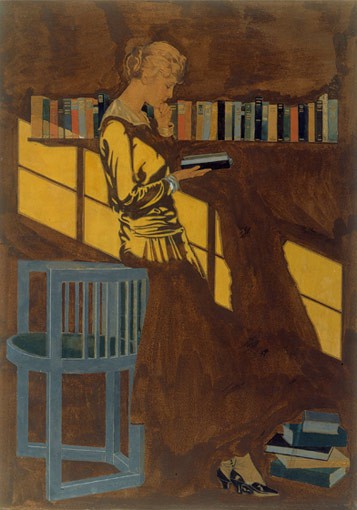
"Girl Reading," by Coles Phillips

“Girl Reading,” by Coles Phillips:  A cover for Good Housekeeping magazine

It is gray out there.  It will never stop being gray, I’m convinced.

I want to set up my Christmas tree again for the LED lights.

I’ve given up my housewife duties until I see the sun again.

Tonight I flatly refused to parboil potatoes for a roasted vegetable dish.

“You’re on your own.”

There was much concern.  “You never refuse to make dinner.”

That is pretty much true.  I don’t mind cooking. Last night I chopped some vegetables, threw them in canned broth, and called it soup.

Tonight I was simply stumped.  What had I meant to do with that zucchini, tomato, cauliflower, and sweet potato?

Make no mistake, February is the worst month.  You don’t want to leave the house, you’re wind-burned from your walks, and you don’t want to make any more Earth Mother meals.   Every warmish, sunny day is negated by the warning of the meteorologists, “A snowstorm is coming!   A snowstorm is coming!”

And so I made a resolution to battle the desolation of February by reading classics all the time.  (Oh, and I’m also forcing myself to get out of the house:  I WILL go to some meetings)

Some of you made the resolution on New Year’s Eve to read classics. You said, “I will read The Tale of Genji this year.”  I didn’t say this because I happen to know I will never finish Tale of Genji, having already read one-fourth of it twice (it is 1,216 pages long).

I happened to be reading a lot of very high-quality books anyway .   Michael Chabon’s Telegraph Avenue, the best novel I read in 2012, is the brilliant, comical story of a dying vinyl record store.  Ovid’s Metamorphoses, the delightful epic poem that is the source of our knowledge of Greek and Roman myths, is boldly funny: gods and goddesses behave badly without compunction, and transformations, good and bad, happen for no good reason, as they do in life, as they did in Ovid’s life (he was banished to an island).

But suddenly I’ve  switched from long classics to short, and I’m feeling a bit in limbo.  Yes, I really need to add a long classic to my TBR pile. But first I will write up a couple of short books I’ve been meaning to talk about.

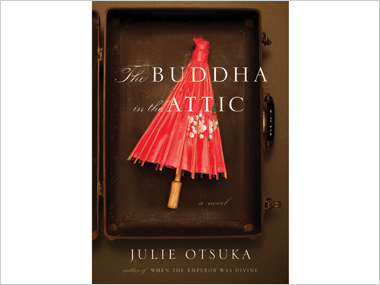
the-buddha-in-the-attic-091411-SF-3801.  Although The Tale of Genji is a hyper-joy for those of you who like hyper-long books, I prefer the brevity of Julie Otsuka’s superb novel, The Buddha in the Attic, which won the PEN/Faulkner  Award in 2011.  This stunning, lyrical novel, written mostly in the first person plural, tells the story of a group of Japanese “picture brides” who travel to San Francisco in the early 20th century.  Many of the men lied in their letters to their brides about their success or glossed over unimaginable circumstances: instead of a life of leisure in America, the men are poor and the women work as cooks,  sharecroppers, maids.

The women’s collective voice awakens our empathy.

We lived in a dirt-floored shack beneath a willow tree in the middle of a wide, open field and slept on a mattress stuffed with straw.  We relieved ourselves outside, in a hole in the ground.  We drew our water up from a well.  We spent our days planting and picking tomatoes form dawn until dusk and spoke to on one but our husband for weeks at a time.  We had a cat to keep us company, and chase away the rats, and at night if we stood in the doorway and looked out toward the west we could see a faint, flickering light in the distance.  That, our husband told us, was where people were.  And we knew we should have never left home.

Later, their children reject the Japanese languauge and are ashamed of their mothers’ halting English. And then World War II begins, and the Japanese, young and old, American citizens or not, are interned in a camp.

Otsuka’s style is exquisite, and the novel is poignant, a record of the struggles of Japanese immigrants in the face of prejudice and tragedy.

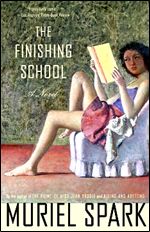
The_Finishing_School_ spark2.  Some of Muriel Spark’s novels are classics, others not.  The Finishing School, her last novel, is the gracefully-written story of Rowland Mahler’s envy of the talent of his 17-year-old creative writing student, Chris Wiley.  Publishers and editors are already courting the insouciant Chris for his offbeat historical novel about Mary Queen of Scots; the struggling Rowland, who occasionally writes a few pages, is furious.  He and his wife, Nina, run an untraditional finishing school for wealthy students, but Nina certainly never anticipated Rowland’s envy of Chris, and increasingly looks for fulfillment outside of the school.  When Rowland begins to snoop in Chris’s room, we know it’s a matter of time before he implodes.

I liked it, but is it a classic?  I think not.

Although the style is polished, there isn’t much to this burlesque of creative writing programs.  Not one of her best, but even her worst is better than most people’s bests, so…

AND NOW FOR SOME DICKENS.

Our Mutual Friend DickensI pulled a copy of Dickens’s Our Mutual Friend off the shelf.  The Vintage edition has no notes, but that is fine because my old falling-apart Penguin has notes.  The Vintage has a beautiful but strange cover and an introduction by Nick Hornby.

If you like Hornby’s columns from The Believer, and I do, you will enjoy this.

“Great writing is all about what you cut; everybody knows that,” Hornby wittily begins.

And of course we have to laugh, because Dickens never seems to have cut anything and of course when you take a writing class they tell you to pare your writing down.

Hornby doesn’t like Our Mutual Friend as much as I do.  He is more a David Copperfield and Great Expectations Man.

Our Mutual Friend is Dickens’s last finished novel, and very, very dark.

It is one of my favorite books.  Sometimes it is my favorite Dicken.  It just depends on which Dickens book I’m reading at the moment.

I last read Our Mutual Friend in 2010 and wrote at my old blog, Frisbee:  A Book Journal:

“The plot of OMF revolves around money:  the effect of the Boffins’ inheritance of the Golden Dustman’s riches on sundry characters, including themselves, after his son, John Harmon is murdered.  Members of the Boffins’ circle include John Rokeman, the mysterious secretary who dedicates himself passionately to their interests; the beautiful, greedy, witty Bella, whom the Boffins informally adopt; poisonous Wegg, the one-legged con man who hopes to blackmail Mr. Boffin;  and Betty Higden, the independent old woman who refuses to accept money from the Boffins because she wants to stand on her own two feet and, by her own money, keep out of the workhouse.”

I will check in periodically and tell you about my rereading.

My Secret Obsession with Virgil’s Aeneid

New Virgil paperback reviewed in the TLS!

New Virgil paperback!

I don’t usually read the TLS (Times Literary Supplement).

I skim newspaper reviews to find out what’s being published.

I don’t need anything too intellectual.

I once canceled my subscription to The New York Review of Books because the long political essays bored me to death.  I preferred the shorter, more straightforward reviews in The New York Times Book Review and Washington Post.

I am not a scholar, but, yes, I admit I have a degree in classics and I read Latin poetry.

“Sickening,” a friend said  as we sat on a park bench on our lunch hour when I told her this was something I enjoyed.

I recently turned to the TLS because of its pro-classics bent.  It actually printed a review of a new edition of Virgil’s Aeneid Book XII.

I reread Virgil’s Aeneid (in Latin) every year. I recently taught excerpts, in Latin and in translation, to an adult ed Latin class.   After the director of adult ed decided I was teaching too much grammar (though Latin students prefer ablative absolutes to hearing me drone on about Roman culture), I amused myself by adding bits and pieces of Virgil to the curriculum.  Virgil made easy!  By dint of spending entire days making worksheets, I was able to teach my beginning students to translate some famous lines.

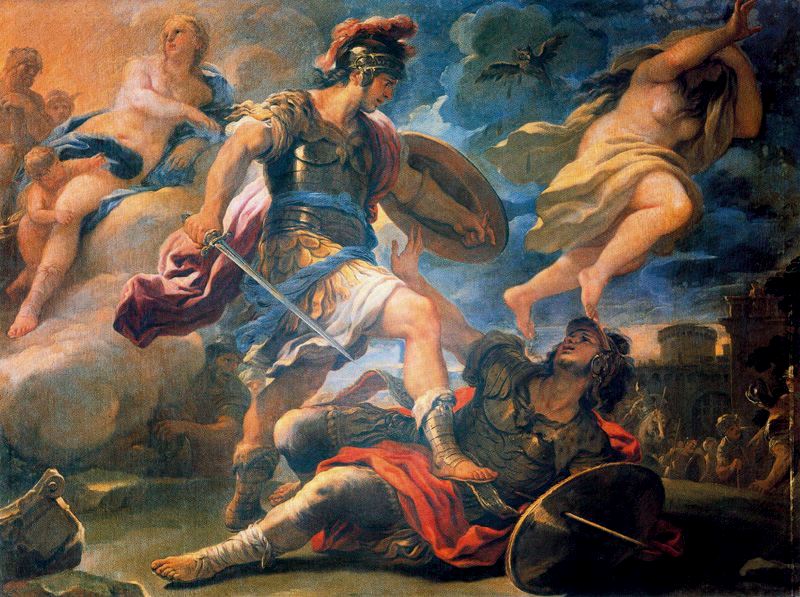
Aeneas and Turnus, by Luca Giordano (17th century)

Aeneas and Turnus, by Luca Giordano (17th century)

Anyway, it was  a matter of duty (very big in ancient Rome) to introduce them to the great epic.   I am shocked when I meet someone who has not read Virgil’s  Aeneid, which, as T. S. Eliot pointed out in his essay, “What Is a Classic?”, is probably the only classic in Western literature, the only perfect meeting of a language and literature at the height of civilization.

The TLS caught my eye this week because of Denis Feeney’s review of new Cambridge editions of Virgil’s Aeneid Book XII and Horace’s Satires Book I.

It is unprecedented for a mainstream publication to review scholarly editions of Roman poets.  Or at least it would be in the U.S.

The reception of new classical commentaries is usually lukewarm.  When Richard Tarrant’s new commentary on Virgil’s Book XII was published last fall,  Harvard’s classics dept. website was about as good as it gets:

Congratulations to Professor Richard Tarrant for the September release of his commentary on Book XII of Virgil’s Aeneid, the first ever single-volume commentary to be published on Book XII alone. It is available in paperback and hardcover through Cambridge University Press.

Inspired by the TLS–oh my God, another commentary!–I have secretly ordered Tarrant’s  edition of Book XII.  Horace’s satires are good, but frankly I need to replace ALL of my Horace, since my book is falling apart…

The Virgil is a secret gift to myself.  I already have, yeah, the scholarly Williams, the accessible Pharr, and far too many other editions.

But it is always fascinating to read new commentaries, which help with interpretation, philology, and history.

I am looking forward to what Tarrant has to say.

I was going to buy some pasta jars, but oh well…

Reading in Bed & Norman Collins’s London Belongs to Me

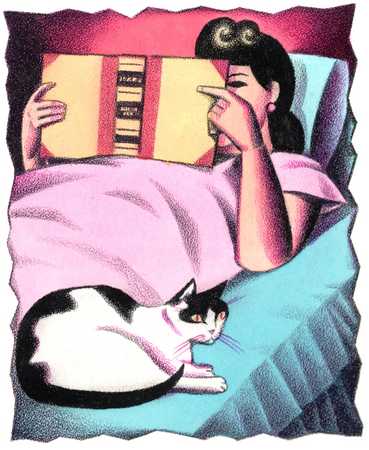
Reading in bed illustrationI’ve been on a break, and it’s been fabulous.

Why write ever?   That’s what I’ve been asking myself.

It’s much more fun to spend Saturday reading in bed.

There are strict rules for reading in bed.  First, you must pick out five or six books and arrange them near your pillow. Miss Buncle’s Book might be good for the first hour, but what if you suddenly crave Vanity Fair or Casino Royale?  Second, set your tea tray on the bedside table.  You’ll need  tea and snacks:  I had to make do with a stale piece of fudge from Christmas, because I didn’t feel like getting out of bed to bake Our Famous Weekend Oatmeal muffins. (“You bake them.”  “No, you bake them.”)  Third, close the bedroom door:  you don’t want those pesky family members or pets interfering with your reading.

It’s nice to take a day off.

Photo on 2013-02-16 at 22.43 #2

Reading in bed.

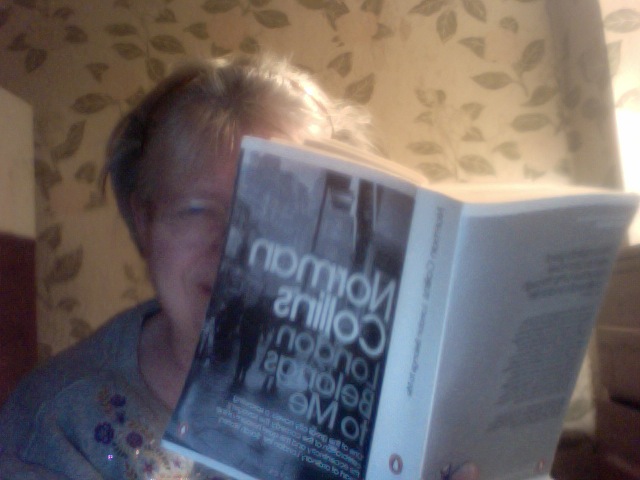
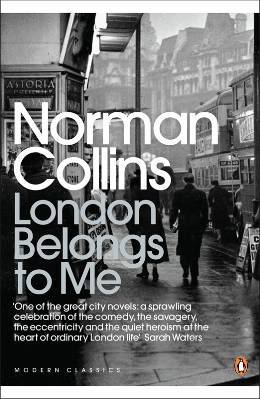
Yes, I finished Norman Collins’s charming, funny, sad, albeit very long, novel, London Belongs to Me.  It is not quite a classic, but is a rambunctiously entertaining middlebrow novel.  It is the kind of book  Virago or Persephone readers might enjoy.

In this moving novel, Collins interweaves the stories of the motley lower-middle- and lower-class residents of Number 10 Dulcimer Street in London.  Their stingy landlady, Mrs. Vizier, broods in her basement apartment, wondering if any of her tenants are bringing the tone of her house down.

But her tenants are a plucky lot, and they support one another through innumerable troubles, including a murder trial.

London Belongs to Me Norman CollinsIn the preface, which is a paean to the city,  Collins describes London architecture, from shabby cathedrals, mansions, and crowded markets to “mile upon mile of little houses, most of them as shabby as St. James.  If you start walking westwards in the early morning from somewhere down in Wapping or the Isle of Dogs by evening you will still be on the march, still in the midst of shabby little houses–only somewhere over by Hammersmith by then.”

Then he moves on to people:  “Real Londoners who sleep the night in London as well as work the day there.”

And of course this is a novel about real Londoners.

Collins’s quirky characters are reminiscent of Dickens’ Londoners.  Mr. Josser, a retired clerk, dreams of moving to a rural cottage, but first must battle his sharp-tongued but compassionate wife’s prejudice against the country.  Connie, a former actress who works as a cloakroom attendant at a night club, ignores old age by perkily insinuating herself at parties, crime scenes, and other dramas.   Percy, a mechanic and thief, gives stolen rugs to his mother, Mrs. Boon, who has no idea he is a criminal.  Mr. Squales is a medium who cons Mrs. Vizier, the landlady, a spiritualist, into supporting him; and Mr. Puddy, a night watchman,  is a canned food gourmand whose whole night is ruined when a can opener fails.

The novel begins with Mr. Josser’s retirement from Battlebury and Sons on Christmas Eve in 1938.  They give him a gift of a “handsome clock, a mammoth marble affair with an eight-day movement.”  Mr. Josser comically and precariously lugs it on the tram and to the wine shop and then home.  After he stops at a shop to buy a bottle of wine and Christmas crackers, he can’t seem to balance clock, umbrella, rolled-up coat, and shopping.

“The clock itself was extraordinarily difficult to pick up–difficult that is for a man who is already carrying his office coat, an umbrella and a box of crackers.  He would never have managed it, in fact, if a passer-by hadn’t come along and offered to help him.  With his aid, Mr. Josser finally got the clock up–there were queer jangling noises inside it as he moved it–and then the stranger piled the box of crackers on top of everything else.  Mr. Josser was simply a pair of legs walking along under a large and awkward load.”

Once home, Christmas turns into the  kind of long family party we all recognize.  But this isn’t a cozy family book.  There is lots of action.

Connie is arrested in a raid at the night club, and would have been evicted if the Jossers hadn’t supported her.  Percy has a tremendous crush on Doris Josser, which luckily she doesn’t return:  he ends up killing a blonde during an argument while he speeds through London in a stolen car.  Again, Mr. Josser is the paterfamilias:  he spends hundreds of dollars in savings to hire a lawyer for Percy in the murder trial.

And London is getting ready for war:  the Jossers’ son, Ted, and Doris Josser’s fiance, Bill, a young doctor, enlist:  who will look after Ted’s hapless wife, Cynthia, and Baby?

I cried over Dunkirk:   that tragic scene alone is worth reading the book for.

Londoners go on, even in wartime.

By the end of the book I felt a part of London, too, though I live in a city on the prairie.

A very good read!

Mirabile Recommends: Books for Both Genders

exhausted-woman“Reading books by men exhausts me,” I told my husband crossly.

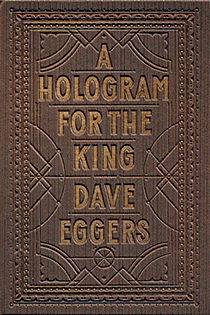
I am in the middle of Dave Eggers’ Hologram for the King, a beautifully-crafted novel about a failed Schwinn bicycle salesman/executive turned IT  salesman in Saudi Arabia; he spends his days waiting for a meeting with the king in a city barely under construction.

Eggers is a brilliant writer, the founder of McSweeney’s, and the winner of countless awards.  This book was recommended by many readers I respect.

A-hologram-for-the King Dave EggersIt is not that I don’t admire Eggers’s fascinating, multi-layered novel, which required enormous research and is yet a very fast read.  Eggers explores the consciousness of Alan Clay, a divorced 54-year-old American who has lost his dream of manufacturing and selling beautiful bicycles.  He has made and lost a fortune over the years, is in debt and about to lose his house, and cannot pay the college tuition for his daughter if he doesn’t make the deal in Saudi.

The scenes are very vivid:  the desert, the drives, the sea, the drinking in hotel rooms, the lack of a sense of time, the surreal embassy party, and a road trip with his taxi driver.  Eggers seamlessly weaves history and politics into the elegant narrative: a  history of Schwinn, the history of American manufacturing being transferred to China, the politics and culture of Saudi Arabia.

It is a very well-written, architecturally solid book, but the very breadth exhausts me.  And I do feel the male voice is sometimes draining.  It’s not just Alan:  it’s many male characters in many books by men.  Hemingway, Fitzgerald, Delillo, Tom Wolfe, etc.

Let’s just sit down and have a cup of tea with Barbara Pym before I get back to Eggers.   Since Thursday is Valentine’s Day, I am recommending Eggers’ Hologram and four other unromantic novels as gifts for both men and women.

Scenes from Provincial life & Metropolitan lifeWilliam Cooper’s Scenes from Provincial Life and Scenes from Metropolitan Life.  These charming autobiographical novels about a physics-teacher-turned-civil-servant are the first two in a series of five autobiographical novels praised by such “angry young men” as Kingsley Amis and John Braine.

The narrator, Joe Lunn, a novelist, is quietly rebellious.  In Scenes from Provincial Life, published in 1950 and set in the ’30s, he describes the boredom and the politics of teaching at a boys’ school, a job he takes strictly to support his writing.  He is having an affair with Myrtle, an advertising illustrator who wants to marry him, and he loves to go to bed with her, but cannot imagine being married.  Their hours at a weekend cottage sometimes overlap with those of Joe’s pushy gay friend, Tom, an accountant who insists that he needs more time with his lover, Steve.  Tom’s overwrought relationship with Steve is observed with some amusement by Joe, but his own with Myrtle is equally complicated.  There are many scenes between men and women, and men and men.  And the relationships change as time passes.

In Scenes from Metropolitan Life, a post-war novel I really think is a minor classic, Joe is  a civil servant in London, working in a government office with his friend, Robert, a novelist we know slightly from Provincial Life.  The descriptions of the politics of the workplace are superb, and  the mechanizations of Dr. Chubb, an engineer transferred to their department, to usurp Joe’s job, are funny, horrendous, and suspenseful.  (Dr. Chubb reminds me of Widmerpool in Dance to the Music of Time.)

Love affairs are at the heart of the book:  Joe again meets Myrtle, who is married to a soldier still not demobilized, and they embark on an affair; Robert has an affair with the beautiful, neurotic Julia, who claims to be married to a Polish officer.  The men want to marry, and the women sometimes do, sometimes do not.  Very funny, very realistic, and worth reading on its own.

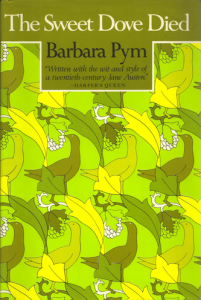
Sweet-Dove-Died- pymBarbara Pym’s The Sweet Dove Died.  This sophisticated novel is not your typical in-love-with-the-vicar kind of Barbara Pym novel.  When the heroine, Leonora Eyre, faints after buying a book about the language of flowers at an auction,  Humphrey and his nephew, James, both antique dealers, help her outside, take her to lunch, and befriend her.  Leonora, a middle-aged beauty, falls chastely in love with the sexually ambiguous Ned, while Humphrey falls more sexually in love with her.   Leonora’s dislike of sex precludes consummation of either relationship.

And when Leonora learns that James is having an affair with a young woman, she schemes wickedly to get her out of the picture.  Then an American assistant professor, Ned, who has seduced James on vacation, proves to be Leonora’s match.

Funny and so beautifully written.

left hand of darkness3.  Ursula K. Le Guin’s The Left Hand of Darkness.  I recently reread this science fiction classic, which won both the Hugo and the Nebula Awards in 1969;  alas, I had to return it to the library before I wrote about it, so I’m afraid this will be sketchy.  Set on the planet  Winter,  Genly Ai, an envoy, must try to persuade the inhabitants that other solar systems and species exist and that it will be to their advantage to join an inter-planetary coalition.  His main contact, Estraven, the king’s chief advisor, falls out of favor, and after he is banished, Ai, too, must leave.  Both end up across the border in the same surfacely reasonable but actually cruel country,  and Estraven saves Ai from a concentration camp.  The two dangerously escape by sled across glaciers.

Le Guin describes the cold so sharply that I had to put on more blankets.  She obviously knows a lot about winter camping.  The escape scenes are full of practical details about how much weight to carry and how much or little food one must eat.

The novel is complicated by the concept of kemmer:  people on Winter do not have one sex.  They go into kemmer, taking on the characteristics of either a man or a woman, and can be biologically both mothers and fathers.  Genly Ai’s close relationship with Estraven raises sexual questions.

LeGuin writes beautifully, and the book is written as an anthropological report containing  Ai’s observations, Estraven’s journal entries, tales, etc.

Time: A Decade of Walks

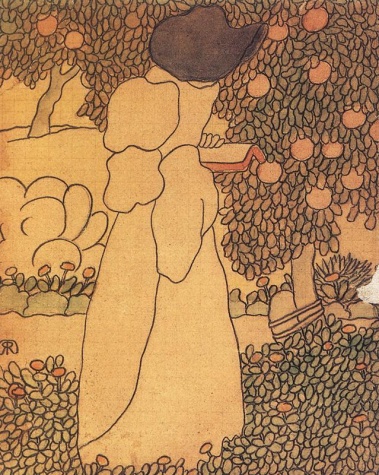
"Woman in the Garden," Jószef Rippl-Rónai

“Woman in the Garden,” Jószef Rippl-Rónai

I know my urban neighborhood by heart.  I walk it, I bicycle it.

I am outdoors.  I feel the cold air.  I trudge, I skim the pavement, I am bored or happy according to the weather.  It was brown and windy today and I sat on the steps of the Greek Orthodox church to adjust my hood.  I took off my gloves to pull my hood up over my hat, but it fell down too far over my face and made me claustrophobic, so I took it off again.

Tree-lined streets, Arts-and-Crafts bungalows, the meridians with flowers in the spring time (brown dirt or snow this time of year), the neighborhood grocery store, the good indie coffee houses, the hardware store, the health food store, and the library.

There have been a lot of changes in the neighborhood in the last 10 years.

The clock speeds up and the years pass rapidly some time after the age of 40.  Businesses come and go.  The bagel store has closed (weren’t you eating cinnamon bagel bites just yesterday?), a gym has closed, a used bookstore, a record store, an Italian restaurant, and an entire strip mall is empty except for the odd tattoo parlor and DUI counseling office.

Another gym has opened, a small indie bookstore, a cheese store, a candy store, a consignment shop, and a bar.

The neighborhood public library has been renovated. It is now a spacious building with a tower, fireplace, and comfortable chairs.  The old overcrowded library had buzzing fluourescent lights, few chairs, and not enough books.  Now there is room for books and people, too.  Old books have been brought out of storage and reshelved.  I am delighted to find such great browsing.

Then there’s nature.  Nature is the biggest consideration on walks, don’t you think?  There are some beautiful gardens in our neighborhood.  You can’t tell much this time of year, but that scraggy-looking brown wispy twiggy area is a wild flower garden in summer.  See those sycamore trees?   They’ve grown tall in just a few years.  They’re not my favorite, but a very smart buy for a family in need of shade in a treeless yard. See over there? In a few months the crab apple trees will be blooming.  You will walk down the street and the branches of flowers will brush you.

But nature has suffered in the last decade.  Many trees have fallen in devastating storms.  A neighbor’s tree split and crashed on to our roof, the bulk of it falling across the driveway.  A huge branch from our tree fell  across another neighbor’s driveway, extending from the garage in the back yard to the street. You see the wounded trees, the trees cut down, branches dragged to a truck, then the stumps, then the wood chips, then the holes where the trees were.

Future generations, beware of the weather.

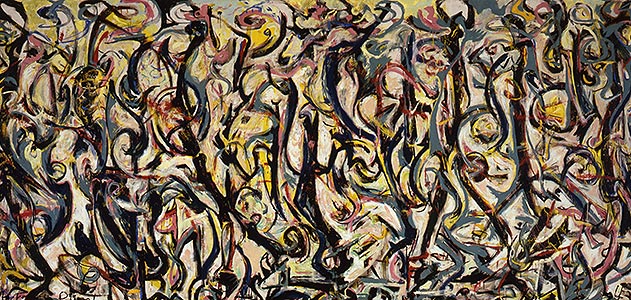
The weather has changed in the Midwest. My hometown is a good gauge of climate change.  The Catholic church where my mother went her whole life, St. Patrick’s, was destroyed by a tornado in 2006.   Jackson Pollock’s  painting, “Mural,” had to be moved when the University of Iowa Art Museum was evacuated during the flood of 2008.  It went first to the Figge in Davenport, then to the Des Moines Art Center, and is now being restored at the Getty Museum in L.A.

Jackson Pollock, Mural, 1943

Jackson Pollock, Mural, 1943

The Neal Smith trail on the Des Moines River was closed for a few years due to flooding in 2010.  It had to be repaved and the levees rebuilt.  Bridges on the Chichaqua Valley Trail were wiped out and were not rebuilt until last summer.

If I think about all the changes in my lifetime, it is too much to take in.  When too many businesses close, we worry that people will pack up and move to the suburbs.  When bookstores move to the internet, we are not able to browse and miss items we might have seen in physical stores.  When cities lose population and stores, we lose part of our culture.

We are also seeing a civilization in flux as the climate changes and storms and floods wreck our environment.  There will be rock concert benefits in New York, but not for the rest of us.

And so we cope by walking around the neighborhood.  Know your neighborhood, know the changes.

Barbara Pym & Unsuitable Fashions: I Go to the Joslyn Art Museum

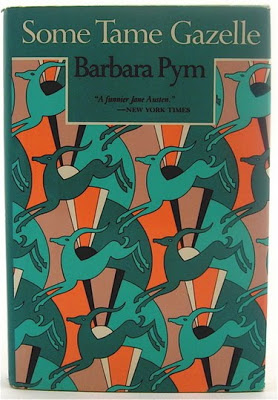
some-tame-gazelle pymI read Barbara Pym on the way to Omaha.  It’s not a very long trip.  Bounce into the car at 9 a.m., open your copy of Pym’s first novel, Some Tame Gazelle,  and a few hours later you look up and find yourself in the city.

You probably know nothing about Omaha.  It is actually a very nice city, as we discovered when we moved to this area.  Right now there is a wonderful exhibition at the Joslyn Art Museum, “Ten Masterworks from the Whitney Museum,” and if you don’t live in New York, as we don’t, it is a great opportunity to see modernist paintings  by Robert Henri, Georgia O’Keefe, John Sloan, Thomas Hart Benton, Max Weber, Reginald Marsh, Gerald Murphy, William J. Glackens, John Steuart Curry, and Maurice Prendergast.

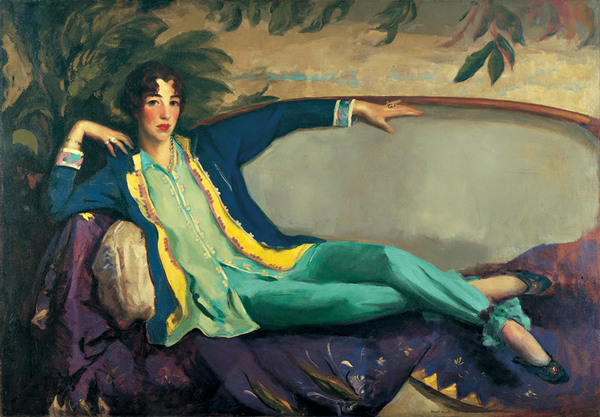
Robert Henri's portrait of Gertrude Vanderbilt Whitney, founder of the Whitney Museum

Robert Henri’s portrait of Gertrude Vanderbilt Whitney, founder of the Whitney Museum

I especially admired Robert Henri’s portrait of Gertrude Vanderbilt Whitney, the founder of the Whitney Museum of American art. Her husband thought her pants so outrageous that he refused to hang the painting in their mansion.

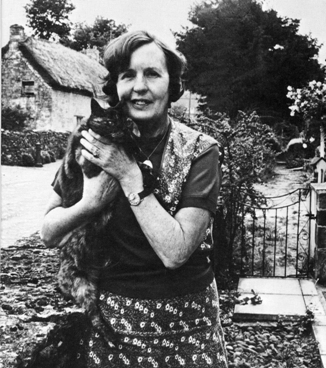
You may wonder what Gertrude’s unsuitable pants have to do with the novelist Barbara Pym.  She was nothing like Gertrude Vanderbilt Whitney, as you can see from the photo of Pym below.  While Gertrude, a wealthy sculptor and lover of modern art, lounged in a beautiful blue silk embroidered jacket and teal pajama pants, Barbara wears a down-to-earth print vest and skirt that no cat’s claws will pill.

Barbara Pym

Barbara Pym

But Pym is obsessed with fashion in her books.

In life she was also besotted by fashion, according to many entries in A Very Private Eye:  An Autobiography in Diaries and Letters by Barbara Pym and edited by Hazel Holt and Hilary Pym.

In her witty, beautifully-crafted first novel, Some Tame Gazelle, the fiftysomething heroine, Belinda Bede, muses endlessly about clothes.  Belinda wears “suitable” dresses and sensible shoes, while her younger sister Harriet reads Vogue and insists that Miss Prior, the village seamstress, make her fashionable dresses with the latest sleeves.  The Bede sisters live next door to the vicarage, and since their lives revolve around the church, they are always planning what to wear to church functions:  garden parties, concerts, and lectures.

Pym SomeTameGazelle- open roadBut all is not perfect in this seemingly rather asexual world. Belinda is in love with the Archdeacon, her old boyfriend at Oxford, whom she lost to a snobbish medievalist, Agatha, now his suitable wife;  Harriet is obsessed with whoever the curate is of the moment, and entertains the very young Mr. Donne with meals of boiled chicken and pudding. Even Harriet’s quasi-romance is imperiled:  there is a possibility that Mr. Donne is in love with an older woman, a medievalist at Oxford.

Belinda has frequent clashes with Agatha.  When Belinda hangs green festoons around a stall for the vicarage garden party, Agatha takes them down and redoes them.  Agatha is threatened by her rival Belinda’s seemingly endless ability to listen to the Archdeacon quote poetry.

But back to clothes:  before the vicarage garden party, Belinda is sewing.  She knows she will wear a crepe de Chine dress and coatee with sensible shoes that are a little too heavy for the dress.  But what will the others wear?

“Agatha Hoccleve would of course wear a nice suitable dress, but nothing extreme or daring.  As the wife of an archdeacon she always had very good clothes, which seemed somehow to emphasize the fact that her father had been a bishop.  Then there was Edith Liversidge, who would look odd in the familiar old-fashioned grey costume, whose unfashionably narrow shoulders combined with Edith’s broad hips made her look rather like a lighthouse.  Her relation, Miss Aspinall, would wear a fluttering blue or grey dress with a great many scarves and draperies, and she would, as always, carry that mysterious little beaded bag without which she was never seen anywhere.”

Harriet, who wears high heels to the garden party, though Belinda wondered if they were comfortable, buys Vogue patterns a size or two too small so she can just squeeze into her tight-fitting clothes.  Sensible Belinda believes that she and Harriet should be beyond fashion at their age, but Harriet debates whether she should wear her white fur cape or a gold lame jacket to a church concert.  In the end she goes with the cape.  Unlike Belinda, Harriet has suitors:  an Italian count who lives in the village courts her.

Sewing and knitting are constant activities.  The women are always letting out seams, knitting pullovers, and darning sock. When Miss Prior, the seamstress, comes to the Bedes to sew clothes, chair covers, and bathroom curtains, you would expect her to be stylish, but “her dress was drab and dateless.”  Important though she is in village life, her status is surprisingly low.  Belinda wants to give her a good lunch, but Harriet insists on feeding Miss Prior cauliflower cheese and saving the meat for dinner for the curate, Mr. Dunne.  When the caterpillar cheese has a caterpillar in it, Belinda is even more embarrassed, and suggests that Miss Prior must get better meals at the Archdeacon’s.  But Miss Prior, giggling, confides that the food is terrible there.

This brilliant first novel, published in 1950, is utterly charming.   I very much enjoyed Pym’s descriptions of what people wear as well as who they all are, and, yes, this novel actually is Austen-ish, unlike many of the novels described so.