Latin Unbound

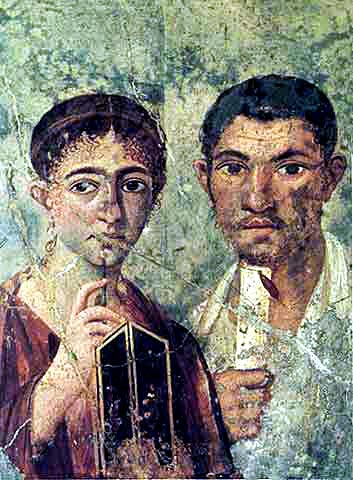
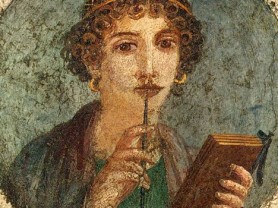
couple_w_stylus ancient rome

A Roman pair with stylus and scroll.

I taught a Latin class through adult education.  Had I known how much work it was, I might not have done it.

I spent a full day each week typing worksheets.

If you’ve been out of the work force for a while, as a housewife or, God forbid, unemployed, you lose touch with the culture.  You don’t have the faintest idea how people think or talk . They walk down the street staring at their apparati (Gary Shteyngart’s word for phones/Blackberry/tablets/gadgets) and rarely look at the scenery.  But do they procure Clozapine secretly from their sister the doctor so the CIA won’t realize they’re bipolar (Homeland), or chat about squalid love scams to Dr. Phil (Dr. Phil)?

That’s just TV.

And do they say “awesome” all the time?

That’s real.

Latin is not a spoken language, so I don’t teach fun phrases like,  “Want a drink?”  I did, however, teach the phrase in vino veritas,  “There’s truth in wine.” Far be it from me not to prepare them to drink in bars in ancient Rome.

Mostly I kept the tone up with drills on Latin vocabulary and grammar.

They will never make a mistake about “who” and “whom” again.

We did exercises in Wheelock (our textbook), read Pompeiian graffiti (pages of which I photocopied from books), and studied English derivatives.

I explained that we studied Latin to read the literature, and brought in passages from different poets,  Virgil, Catullus, Ovid.

Then I had a problem.  My  books started to fall apart.  One day I was holding Wheelock when part of the cover fell off.  The pages were already smeared with the marker pens for the whiteboard.

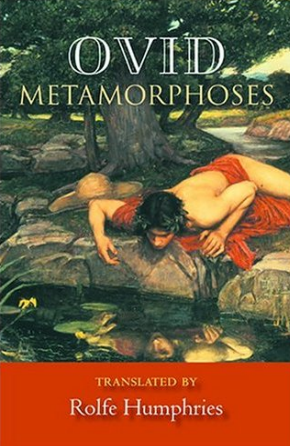
Ovids-MetamorphosesOther books began to disintegrate.  Take my Lewis and Short Latin dictionary, which I bought long ago for $30 in a used bookstore, and which now costs $198 at Amazon.   I was telling my students lore about some of the rare words used in Latin poetry.  Ovid, for example, is the only Roman poet to use the word agitabilis, an adjective which means “light” or “easily moved,” and which he used to describe air.

The binding of Lewis and Short suddenly cracked.

Then I read them the passage in Rolfe Humphries’s translation of Ovid’s Metamorphoses.  He translates agitabilis aer as “the moving air.”

“and shining fish were given the waves for dwelling
And beasts the earth, and birds the moving air.”

Then pages started falling out.

Poltergeist!

Fortunately we got kicked out of adult ed the third term when we didn’t have enough people for a class and the poltergeist didn’t follow us to the coffeehouse.

But seriously, my Latin books are old.  I have had to replace several of them.

If I lived in an ideal blog world, publicists would offer me copies of Latin books.  They would replace my mildewed Catullus, and send me Ciceror’s Pro Caelio.

Meanwhile, I am investigating ways of cleaning mildew, and am pretty darned good with tape.

Biking, Birthdays, and Barnes & Noble

It was the first spring-like day of the year.  I rode my bicycle.

I coasted in the bike lane down Ingersoll.

I stopped at the grocery store to buy a small birthday cake for my mother.  A  “slice” of sheet cake was enormous.  The cupcakes were almost the size of the cake.  The half-cakes had too much frosting.

Hello, world, do we need such huge cupcakes?

cupcake chunky monkey

Could a cupcake get any bigger?

She has a tiny appetite.  The problem is she makes faces at any food bigger than a morsel.  I figured I would buy the slice and tempt her with a small portion.  Of course I would have to use a fork to cut it, since knives are not allowed at the nursing home.

You don’t ask about the rules after a while.  If they’re all on suicide watch, you don’t want to know.

I carried the cake in a huge knapsack.  I didn’t want it to get smooshed in my bike pannier.  I took off happily on my bike again.   It is my primary form of transportation five or six months of the year.

I was halfway to the nursing home when the back tire rumbled.

Flat tire.

I tried to keep going.  Sometimes I can ride on it flat.  No, it was totally deflated.   I parked the bike at a bike rack and hurried to the bus stop.  I had no idea if it was the right bus stop.   It used to be, but the routes have just been revised.  Finally a bus came, though not the one I was waiting for.

“Do you go to…?  And how much is it?”

The bus did, and charged me only 75 cents. And then it was another 10-minute walk.  I was late.   I wanted to jog.  Careful, careful, don’t shake up the cake.

I got there, and, as usual, most of the residents were sitting in their wheelchairs in front of the elevator.   I found my mother sitting in her room with a towel on her head,  just out of the shower.  The blinds were drawn.

“Happy birthday!”

“How old am I?”

I quickly opened the blinds.  We ate cake.

“It’s awfully sweet,” she said.  Nonetheless she ate about one-fourth of it.

The nursing home has taken good care of her, but it is not a nice place.  Her room is tiny and narrow.  There’s barely space for the bed, her chair, and the chest of drawers.  One has to move the walker to scootch the “guest” chair out of the corner over to her tray table.

We ate cake and played cards.

Growing up on a farm, she played gin rummy, whist, bridge with her parents in the evening.  After they moved to town for my grandfather’s business,  she joined many bridge clubs.  When she owned her own house, she often gave bridge parties.  Two or three card tables would be set up in the basement, snacks of nuts and mint, and coffee in the percolator:  she hated to make coffee, because she never knew whether it was good or bad.  She didn’t drink it.

I am bad at cards, but we played for a couple of hours, and she did pretty well until she obviously got tired and couldn’t remember how to play.

Then we put away the cards and turned on the TV.  That’s what it’s for.

No, she hates the news, and it did seem to be about something horrifying in the Middle East, and whatever that dismal show was on Lifetime, I wasn’t going to let her watch it.   Seinfeld, yes.  It’s the one with the cantaloupe and George’s break-up with Marlene.

I guess it was a happy birthday, considering.

I gave the rest of the cake to the nurses.

………………………………………………………………..

IN WHICH BARNES AND NOBLE BECOMES A GHOST STORY.

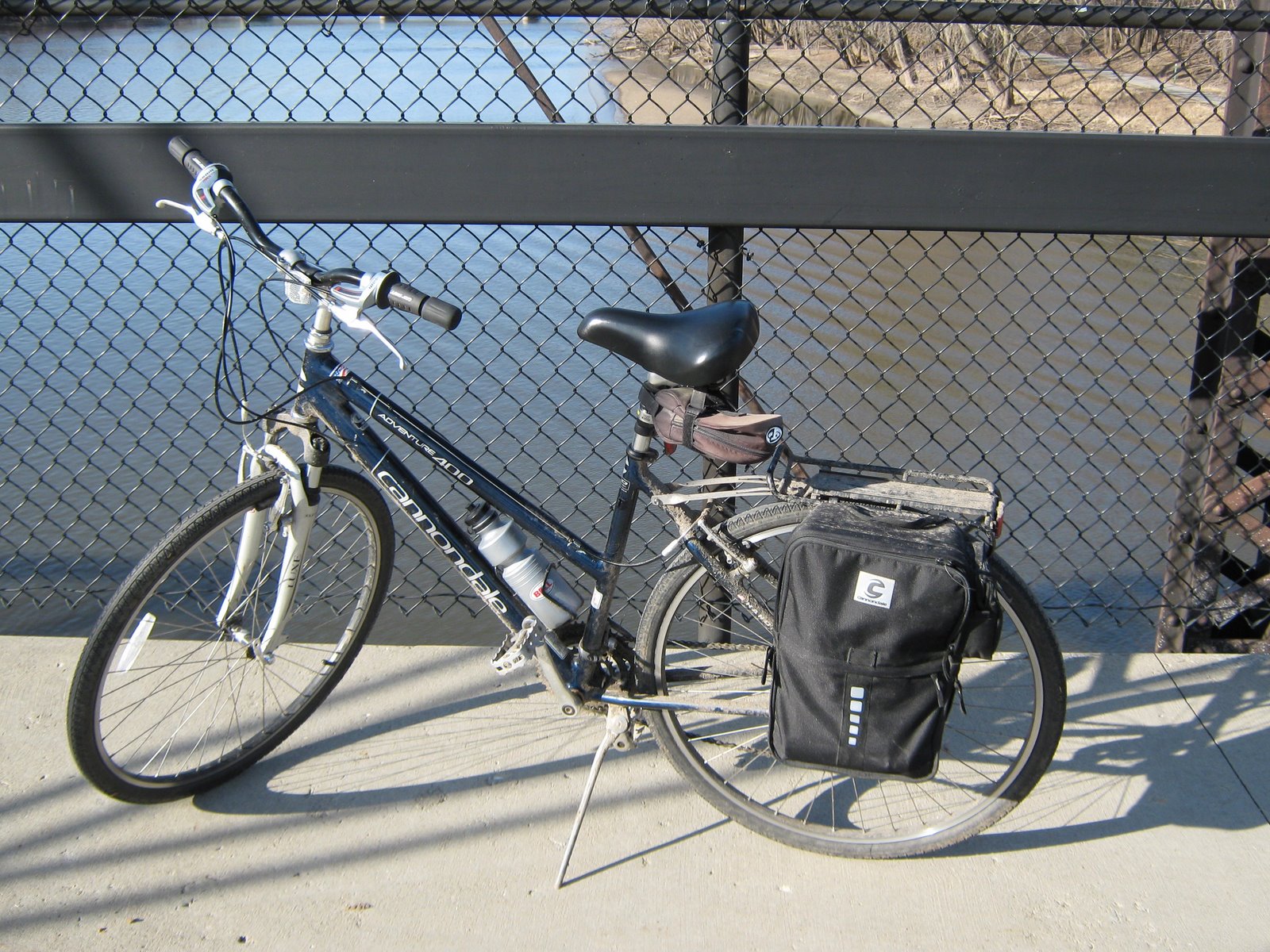
my bicycle on bridgeOn Saturday I biked to Barnes and Noble.

Another lovely day.  Sun and wind. Well, riding into the west wind was hard.

Barnes and Noble is the last real bookstore.  Our city is big by wide-open-spaces standards, but 12 bookstores have closed since the ’90s.  Two diminutive indies remain, but I cannot support them.  They stock nothing I want, and if I have to order I use Amazon.

Barnes and Noble, the last big chain, is struggling.  I recently read at knowledge@wharton:  “The company said its holiday sales for the nine-week period ending December 29 were $1.2 billion, down 10.9% from a year ago. Same-store sales for the period were down 3.1% due to “lower bookstore traffic.” Nook product sales fell 12.6% from a year ago.”

Some experts suggest B&N needs to hire help that knows books.  They also need to make it a “destination,”  like Starbuck’s.

You would think the closing of Borders would have spurred Barnes and Noble to greater excellence.  Instead, the eight comfortable chairs have been removed and replaced by wooden chairs.  There are no more book groups.  One wall of  literature and science fiction is now devoted to teen lit.  There is no longer a new paperbacks table.

My student, Doug, a bookseller who died of cancer last year, predicted this would happen. “It’s a different culture from Borders.  Barnes and Noble discourages its employees from talking to customers.  And they don’t want people to hang out there.”

Most of the people who work here are nice, but you have to watch out for a few of them.  The new cashier was bitchy to my husband:  she wouldn’t acknowledge him, and just kept chatting on the phone when he asked a question about whether she needed his signature.

And then I looked over and…

If I’m not mistaken, she was the manager several years ago. The store was dreadful then, and improved under the next manager.

She’s a big genre person, and I like genre books, too.

But she’s an enemy of literature.

And now…

She’s ba-a-a-ack.

She must be here to reduce the literature section.

She must be here to close the store.

I hope not.

I hope it’s not she.

TO BE CONTINUED…

Beyond Gender

“Mirror, Mirror on the wall,
Who’s the fairest of them all?”

I often use the phrase “beyond gender.”  I originally did it to be funny.  I hoped as I grew older to inhabit a genderless world. I would be the equal of all human beings.

I would no longer be Snow White or the Evil Queen.  I would be both.

snow-white-mirror mirror

The women in my family are spectacularly pretty for a short time and then lose their looks completely.

What’s a mirror?  It’s not who we are.

Since we’ve been plain for so long, aging is easy.

I had an early menopause.  Such prettiness as I had faded into gray hair, wrinkles, and weight gain.

There were advantages.  I no longer had to rush out of meetings because my sticky period had started.  I no longer had to use tampons.   All those boxes and boxes and boxes of tampons!  Thousands of tampons!   Tens of thousands of tampons!

All that bleeding.  Gone.  Dried up.  Years of too-frequent periods.  Stopped.  No hot flashes.  No transition.

My friends would say they hadn’t reached menopause yet.

I would say, Thank God I have!

Why are we so proud of menstruating?

Fertility.

I have always been  in favor of zero population growth.

With climate change spitting in our faces, we hope Z. P. G. will again be proselytized.

W. C. Drupsteen, 1885, snow white

Illustration by W. C. Drupsteen, 1885

In middle age, you can take extra good care of your looks or let them go.  At a certain age I desisted from the “blonding” process.  Friends who blonded their hair had  insisted it would give me an advantage.  I’m not sure what they had in mind, but it didn’t keep me young.  Certainly I had little concern about wrinkles, but apparently there were things I could do to prevent them.  If only I still bought Elizabeth Arden or Clinique and went on a diet…well, I’d look better!

My emphasis is on health, bicycling, and eating lots of vegetables.

With age, I rather hoped my relationships with men would be on a par with my friendships with women.

I hadn’t counted on the invisibility factor.

The other day I found myself at the grocery store striding up to the counter with my two items.  Just as I was about to put them down, a man rushed past me with his three items.

“Sorry,” he said.

Sorry?

Were they emergency items?  Wine, cake, and a carton of chocolate milk?

Was I invisible?

Why did he cut in front of me?

When I was young and briefly pretty, they were falling over themselves to let me go first in line.  I guess it wasn’t a courtesy thing.  It was sex.

Are people ruder now?  Or is it to do with aging?

Most say I have avoided this extreme rudeness by not going to the store at peak times.

I don’t expect etiquette, but I do expect manners, yes.

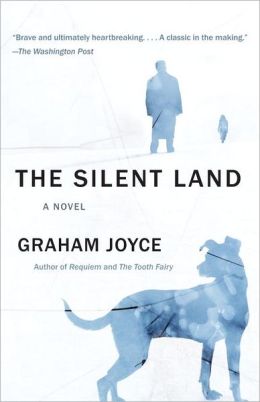
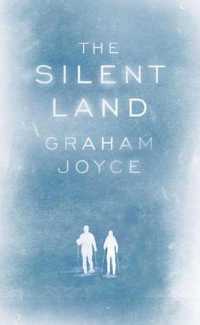
Graham Joyce’s The Silent Land

The Silent Land by Graham Joyce

Graham Joyce’s The Silent Land is a beautifully-crafted novel.

It would give Michael Chabon’s stunning novel, Telegraph Avenue, my favorite book of 2012, a run for the money had I read it last year.

Picture a world of snow.

It was snowing again.  Gentle six-pointed flakes from a picture book, settling on her jacket sleeve.  The mountain air prickled with ice and the savor of pine resin.  Zoe pulled the air into her lungs, feeling the cracking cold of it before letting go.  And when the mountain peak seemed to nod and sigh back at her, she almost thought she could die in that place.

Joyce’s lyrical descriptions of snow are gorgeous.   Every snowflake is perfect as it falls onto Zoe’s husband’s eyelashes.  Zoe truly loves Jake, is charmed by everything about him from his beautiful eyes to his big ears, and describes his breath in the cold as “a faint oyster-colored mist.”  The nature of love shapes this luminous novel.

But the plot is as uncanny as that of C. S. Lewis’s The Great Divorce, a fable about the afterlife.   Zoe and Jake are on an expensive skiing holiday.  One morning they are on the mountain before anyone else when the powder of the snow is undisturbed.  It is Paradise.

Then there is an avalanche.  Zoe is buried upside down and there is only a small pocket of air.  Jake made it to the trees and clung to one.

silent land by graham joyce ukWhen Jake digs her out, they find themselves alone.  The hotel is empty.  The village is empty.  They believe everyone has been evacuated because of the avalanche.

But they cannot leave the village.  They reach a certain point in the road and the car stubbornly stops working.

They have all the food they want at the hotel.  They have all the things they want in the village stores.  But their phones do not work.  They cannot find other people.

So there they are, in the Golden Age of Ovid and Hesiod turned nightmare, when all they want is their Iron Age back.  They think they are dead.  Joyce’s version of the myth, and allusions to the Golden Age, is fascinating.

The question of what to do with their time was a pressing one.  It seemed to both of them that they had landed the ultimate dream of affluence, one that they weren’t sure they wanted…. What’s more, they didn’t ever have to work to maintain this dizzy standard of affluence.  Death had delivered to them an idle abundance.

Joyce writes not just about snow, but about the nature of silence.  What does  silence mean?  Under a clump of trees in the snow, the couple hears true silence.  “The freezing of all sound.”  There is only real silence in death.

It is Zen-ish.

Then Zoe hears the snow singing to her.

Zoe is terrified of separation from Jake.   Every time he goes out of the hotel without her, she is frightened.  She fears there will be another avalanche.

I couldn’t help but cry over Zoe’s nightmare of separation.  Don’t mistake me:  I am well beyond the age of romance. I am gray-haired, sensible, and see love from an older, more experienced point of view.  But as a young woman, deeply in love as only women can be who put their relationships ahead of careers, I had a recurring dream in which the detonation of a nuclear bomb separated me from my husband.

And then there was an actual slight earthquake. I was teaching Latin when the rumbling began, and I thought it was a nuclear power accident.  (Perhaps it’s my generation:  I have always been terrified of nuclear power plants and nuclear bombs.)   And I couldn’t leave, my duty was obviously to my students, and I had to stay calm.

Not a very dramatic incident, but always the fear of separation.

This is a deeply romantic novel.  Every word of it is for a reason.  If you know what to look for, which you don’t until the end, there is much foreshadowing, even in the imagery.  This is a classic.

Graham Joyce is an amazing writer.  He has won the World Fantasy Award and the British Fantasy Award five times.  His novels “cross over” from literary fiction to science fiction to fantasy, and I am pretty sure this one was shelved in the literature section.  The Guardian calls his work “dark fantasy.”

He grew up in a mining village, failed his “eleven-plus,” and got a degree in education in Derby, and eventually a master’s in English and American Literature at Leicester University.  He wrote his first book, Dreamside, during a year on Lesbos and in Crete with his wife.

Is he the only writer in the UK who didn’t graduate from Oxford or Cambridge?  Sometimes it seems that way!

You can read all about him at his website:  http://www.grahamjoyce.co.uk/

I also recently read his stunning new novel, Some Kind of Fairy Tale, which, if possible, is even better than this one.  His books are overwhelming, so I will write about it another time.

I find it interesting that, after years of reading women’s literature, I have added two male writers, Joyce and Michael Chabon, to my canon.

Have I finally moved beyond gender?

More on that later!

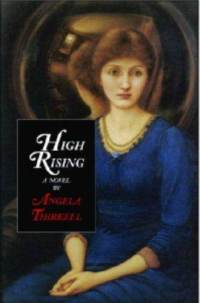
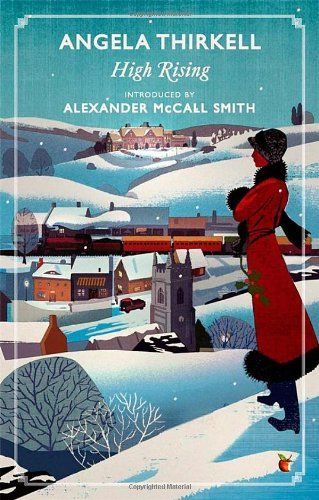
Angela Thirkell’s High Rising

high-rising-angela-thirkell-paperback  Moyer bell-cover-artI have an almost complete set of Angela Thirkell’s Barsetshire series.

It started when a friend shrieked,  “Pomfret Towers!” 

We were at a bookstore.

She wanted to know if I had read Angela Thirkell.

“Yes,” I said vaguely.

I had tried something by Thirkell when I was about fifteen, expecting a cross between Jane Austen and Georgette Heyer.  Her style was too prolix for me.

In 2000, however, I read and enjoyed Thirkell’s interwar novels, though I found her later novels badly organized and disappointing. (True Thirkellites don’t think so.)  The American publisher Moyer Bell reissued many of Thirkell’s books In the ’90s and the early 21st century, and Virago has just reissued the first two of her Barsetshire series.

Thirkell’s unique sensibility occupies a zone between the sharp wit of Nancy Mitford and the silliness of P. G. Wodehouse.  Her world of upper-class England is sympathetic, if snobbish, and she paints her endearing characters with a kind of droll detachment. She thrills us with witty dialogue about peculiar subjects like folk-dancing, bad poetry, and “why on earth headmasters’ wives in novels fall in love with assistant masters, or assistant masters with them, for that matter.”   Thirkell, the granddaughter of Burne-Jones, and a widow with children, wrote her humorous Barsetshire series, set in a fictional county based on Trollope’s Barsetshire, to support her family.

In a recent rereading of High Rising, the first novel in the Barsetshire series, I enjoyed Thirkell’s verbose, artificial, but engaging style.  After a few pages, I was hooked on the fascinating intrigues of her eccentric characters.

high rising VMCWriters have fun writing about writers, and Thirkell’s heroine, Mrs. Morland, is her alter ego.  Laura Morland, a widow with four children, writes thrillers about a fashion designer named Madame Koska, who is forever finding cocaine, or worse, in her shop.  Laura’s hairpins fall out as she tries to plot her novels, or, indeed, does any kind of thinking, and people are forever picking them up for her.  Her secretary, Anne Todd, who also cares for a mentally ill mother with a bad heart, loves to read about fashion, and when Laura is overwhelmed, Anne sometimes writes the fashion magazine articles for her from Mrs. Morland’s notes.

It is a good secretary-bad secretary kind of novel.

Anne is the good secretary, but Una Grey, the evil, dominating, neurotic, perhaps  lower middle-class  (anyway, she’s not acceptable) secretary of George Knox, the biographer, is trying to seduce and marry her boss.  Laura, Anne, and even the servants are up in arms, and are terribly worried about Sibil, George’s silly daughter.

And I must say Una is very unlikable, though she is portrayed as competent, and even sometimes charming.

Thirkell is brilliant here.  The juxtaposition of good secretary-bad secretary is fascinating.  Does it have something to do with class?  The secretaries rule behind the scenes. Anne is Laura’s equal, though poor:  they were friends before she began to work for her.  But Una is nobody’s friend, and is much condescended to.

There are, of course, other subplots.

Family is a very important theme.  Three of Laura’s four sons are grown up, but Tony, the youngest, is at boarding school.  When she fetches him from school for Christmas, he jabbers for hours about his model railroad, and asks repeatedly if he should buy the Great Western model engine for seventeen shillings, or the L.M.S. for twenty-five shillings.  Confident Tony is unperturbed when his mother finally snaps over his moving his railroad into the main part of the house, but Thirkell shows how characters should behave:  adults should have their own lives, and children should not be allowed to impinge on them.  Laura oes to Tony’s prize-givings at school, makes sure he washes his hands, and listens to his poems, but she is not a soccer mom.

Weddings take place in all of Thirkell’s books.  People are always proposing to Laura, but she doesn’t want to get married.  Laura’s publisher, Adrian Coates, who published a volume of poetry as an undergraduate and still shudders when anyone mentions it, is a frequent visitor at Laura’s house in the village High Rising, and at one point he proposes marriage to her.  At another point, the voluble George also proposes, and this strikes Laura as ridiculous:  he is as loquacious as Tony.

Anyway, Adrian is really in love with Sibil, George’s daughter.  She has been throwing them together.  And George is interested in…you’ll never guess!

I love all the gossip about publishing.  Here is Laura on her books, when she first meets Adrian at a dinner party and he asks to see her book.  She says,

“It’s not highbrow.  I’ve got to work, that’s all.  You see, my husband was nothing but an expense to me when he was alive, and naturally he’s no help to me while he’s dead, though, of course, less expensive, so I thought if I could write some rather good bad books, it would help with the boys’ education.”

I know exactly what she means.  I love good bad books!

Anyway, these are very light novels.

Don’t worry. I don’t read just good bad books. I’ll write about a classic soon.

The Amateur

pompeifresco-278x208 roman writerI dropped out of my writers’ group after I stopped writing my novel.  As with so many of my writing projects, I spent a month polishing the first chapter, then wrote the next nine chapters in nine days.  It’s far more fun to write, write, write than to polish.

But I love writers’ groups. I miss the excitement of the rustle of paper as the copies of manuscripts are breathlessly distributed. I miss the diverse population of the shaggy ex-freaks, the chic professionals, the retired women with their graceful novels-in-a-drawer, and the talented slackers with their drug memoirs.

Stories are not attacked in writer’s groups.  The feedback is kind.

It isn’t school.

Nobody’s going to tear your story apart.

An editor is not going to reject you.

I still remember my friend, Cassandra, rolling back and forth over a rejection letter from a poetry editor in her wheelchair.

“My poetry is goddamned better than theirs!”

And, yes, it really was.

I am a dilettante.  My husband says, “Get offline and write that book that will support our retirement.”  (But haven’t all the vampire books been written?)

Anyway, I enjoy blogging.  I write whatever I want, personal stuff, book notes, and mini-essays.

But “blog” is a disparaging word, and bloggers should find another word for their writings.

In 2012, Sir Peter Stothard, editor of TLS, Dwight Garner, a critic for The New York Times, and Jacob Silverman, a freelance writer for Slate, attacked amateur online writers, claiming that the blog and social media have weakened traditional criticism and publishing.   Even the novelist Howard Jacobson mocked blogging in his novel, Zoo Time:  “The blog is yesterday,” the hero wants to tell his gloomy publisher, who believes the blog “is the end of everything.” He says the problem lies with “myBlank and shitFace and whatever else was persuading the unRead to believe everybody had a right to his opinion.”

What they don’t understand is that blogging is very much about voice.

The blogger, D. G. Myers, an intelligent writer whose conservative views are usually very different from my own, articulately championed blogging recently.

Blogging is not merely an amateur’s medium. It is a dissent from the professionalization of literature, where professionalization is represented by English departments and creative writing workshops and print magazines and large publishing houses which are subsidiaries of even larger conglomerates. What Jacques Barzun calls the professional’s fallacy (namely, the superstition that understanding is identical with professional practice) has transformed the institutions of literacy into closed shops. If you’re not employed in the literature racket, you might as well, in literary terms, not exist.

Although there is much mockery of the blogger who announces, “Peter Buck is a god!” there are many gifted amateurs who write thoughtful, interesting essays and reviews.  Are novelists and nonfiction writers professional?  Not until they’ve published.  And there are not enough traditional publishers anymore to support talented amateurs.

There are many different style of blogging.  There are the intellectual bloggers, like Ellen Moody and D. G. Myers, who write scholarly notes and reviews.  Ellen often writes about women’s books, Myers about Jewish literature.

Blogger Pioneer Woman now has a cooking show on the Food Network.

Blogger Pioneer Woman now has a cooking show on the Food Network.

Then there are the domestic bloggers: Pioneer Woman intersperses her stories of an impossibly interesting ranch family with recipes, and is so popular she has published cookbooks; Dovegreyreader, though billed as a book blogger, is also domestic, pulling us into her world with anecdotes about her family and pets.

Some women bloggers on my “sidebar” are not what I’d call domestic writers: they intersperse personal writing with musings on books, but they do not sentimentalize family life (something I have been guilty of occasionally).  Among these areBelle, Book, and Candle and Thinking  in Fragments.

Most of the male bloggers on my blogroll are remarkably impersonal.  I know only the sketchiest details about the personal lives of Asylum, Kevin in Canada, and Tony’s Book World.

Two exceptions to this rule of the Impersonal Male are A Common Reader and Stuck in a Book.  A Common Reader writes good book reviews, but he has occasionally mentioned his music and included a video of his performance of one of his songs (excellent), which made me think very well of him.  Stuck in a Book focuses on middlebrow women’s books, but he also writes comically about bookstores, baking, and outings with his twin, who is apparently his opposite in matters of reading tastes.

One does not need to don the “professional” journalist’s or scholar’s voice to write a book blog.  And even if the blogs read like rough drafts, it is easy to see the talent, intelligence, or humor between the lines.

I don’t know how long blogs will last as a genre.  It seems to me that people are turning to shorter and shorter forms, like the tweet.  Blogs are part of what I call the “long-attention-span indoor culture.”  As our climate changes and society fragments (looting after Hurricane Sandy:  you know the kind of thing), huge numbers of people will stay indoors, addicted to the internet.  The more they can get us to blog and tweet and stay indoors, the less trouble they’ll have.

And, yes, I’d better go write that vampire novel, because I’ve got Climate Change blues.

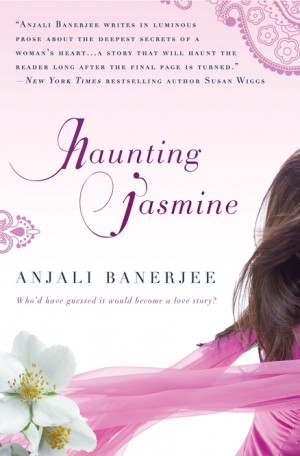
Middlebrow American Women’s Pick # 1: Anjali Banerjee’s Haunting Jasmine

Ignore the violet cover with glitter.

Think Virago of tomorrow.  Someone can design a better cover.

Imagine a better cover.

Imagine a better cover.

I am reading several middlebrow American women’s novels this year, and my  Pick of the Week, or maybe two weeks,  is Anjali Banerjee’s charming novel, Haunting Jasmine.  If you haven’t worked in a bookstore, it will make you wonder why you didn’t abandon your profession to open people’s lives with books.

Two-thirds well-written comedy and one-third romance, Banerjee’s feather-light novel describes the transformation of unhappy Jasmine Mistry, a beautiful Eastern Indian woman raised in the Pacific Northwest whose divorce has left her emotionally numb and insecure about her high-powered financial job.  When her aunt asks her to mind her bookstore for a month on Shelter Island while she goes to India, Jasmine jumps at the chance.

But Jasmine needs a cell phone connection for her job at all times, hard to get on the island, and believes a bookstore is a business.  She thinks she can increase her aunt’s profits by soulless business practices.  She tells us:

“[My aunt] promised me refuge among the classics, although I haven’t had time to read a novel in years…. The weight of technology pulls on the shoulder strap.  I barely have room for the usual supplies–compact, lipstick, tissue, aspirin, allergy pills, charge cards, receipts, and a bundle of keys, including the one that opens the exercise room at the office.  Not a single novel, and yet, what do I have to lose?  How hard can it be to sell the latest Nora Roberts or Mary Higgins Clark?”

Books are just entertainment, she thinks.

She says the dusty, shabby store needs bright lights and best-sellers.  Tony, her fellow bookstore clerk, tries to explain that the customers like the antiques and eclecticism.

Her aunt proudly explains a desk belonged to E. B. White, the candle-holders to Jane Austen, and the mirror to Dickens.

What Jasmine doesn’t understand is that the bookstore is haunted.

And after she stays the night at her parents’ instead of at Auntie’s, the ghosts show they’re disturbed.

Gradually, Jasmine begins to understand what a bookstore is, and realizes that voices are telling her what the right book is for the individual customer.

Tony says she has to moderate the book group, and she thinks the women are very silly, but suddenly comes up with just the right question about Pride and Prejudice, which she hasn’t read in years.  The women thanks her.  She is also a success with the children’s story group after  she switches from The House at Pooh Corner, which makes them cry, to The Tale of Peter Rabbit and dons bunny ears.

But the most important thing?  She falls in love with Connor Hunt, a doctor who has worked in Africa. When she finds a memoir with a photo of Connor Hunt who looks just like him, she assumes it is his father.

But…

The last third of the novel, the romance part, is a little hesitant and less compelling, but overall I enjoyed this moving novel a lot.  I love Jasmine’s voice and her bookish transformation.

And if you have a favorite bookstore novel, let me know.

Nancy Mitford’s The Pursuit of Love

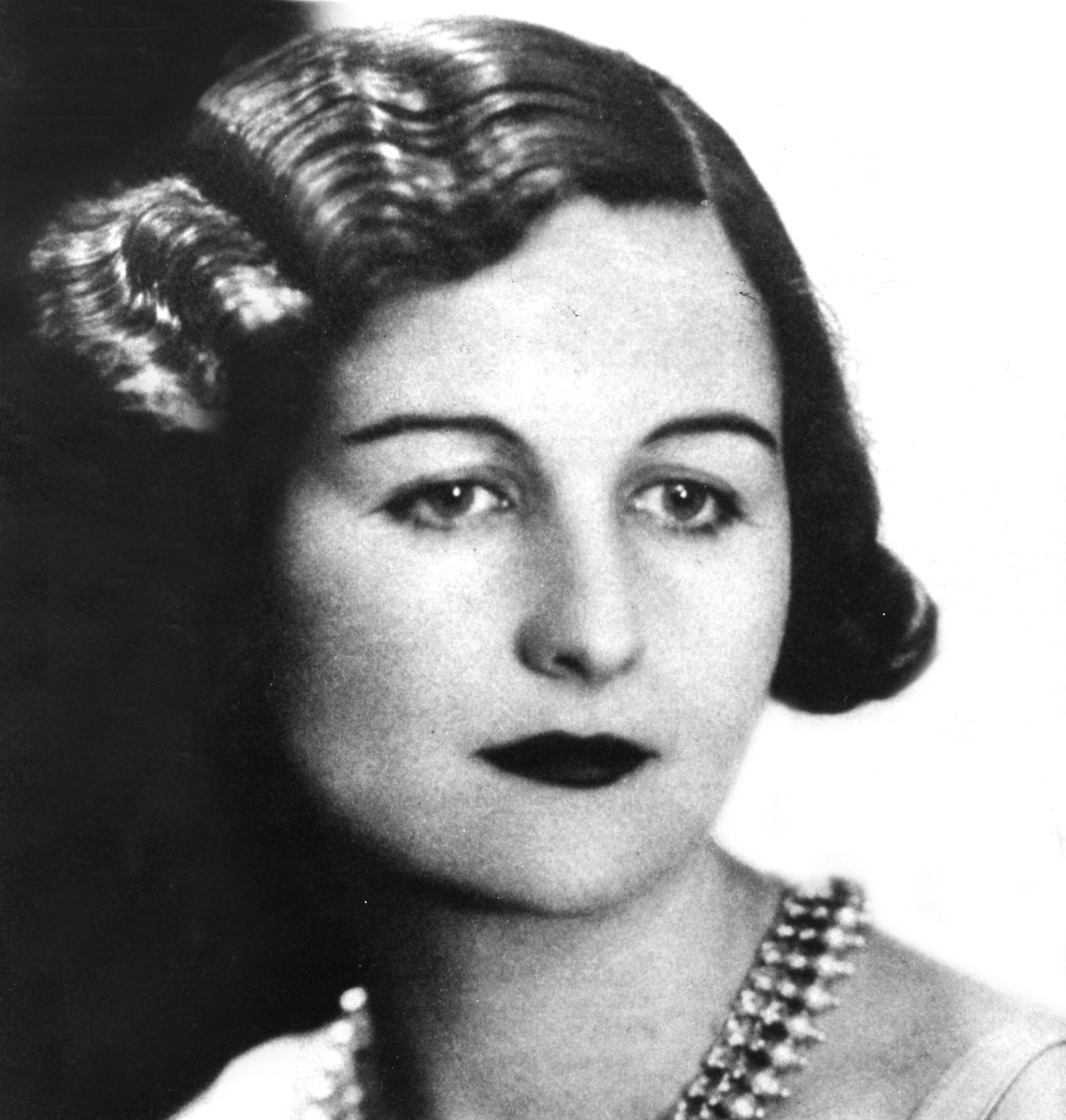
The beautiful Nancy Mitford

Nancy Mitford

I love Nancy Mitford’s charm, wit, and intelligence.  I have read and reread The Pursuit of Love, Love in a Cold Climate, and Don’t Tell Alfred, her three novels narrated by the charming Fanny (and surely they should be collected in one volume, but only the first two ever make it into an omnibus).

Nancy, a friend of the comic writer, Evelyn Waugh, is an extremely funny writer, but, unlike my other humor idols, P. G. Wodehouse and Angela Thirkell, she has a serious side.   Her heroines fall headlong into a consuming romantic love that leaves time for little else, and isn’t this the way we all feel about love when we are young?  In The Pursuit of Love, Linda needs love so much that she keeps falling in love with the wrong men until finally by chance she meets Fabrice, a charming rich dilettante, who, after finding  her crying at the railroad station in Paris, installs her as a mistress in a very modern apartment.

Love in a cold climate and pursuit vintage

I have recently read reviews of Lisa Hilton’s The Horror of Love, about Nancy’s relationship with Colonel Gaston Palewski, the French commander and associate of Charles de Gaulle who inspired the character of Fabrice in The Pursuit of Love, .

pursuit-love-nancy-mitford-paperback-cover-artSince I don’t have a copy of  the The Horror of Love, I did the next best thing:  I reread Mitford’s autobiographical The Pursuit of Love. The novel is narrated by charming Fanny, the outsider, who was deserted long ago by her mother to be raised by her Aunt Emily, and is a frequent visitor of her cousins, the Radletts.  She describes the eccentricities of the flamboyant Radletts with grace and humor.  Fanny is a quiet presence in this book, and she and the outgoing Linda are one another’s alter ego. Fanny spends long vacations at the Radletts’, and Linda is her best friend.

The Radletts live at Alconleigh, one of the coldest houses in literature:  the central heating doesn’t work very well, and the fireplaces are ineffective.  The linen closet is the warmest room in the house, and that is where they spend their time.  But the “violent, uncontrolled”  Uncle Matthew is too busy to notice the chill:  he spends much time hunting, discussing animals with the gamekeeper, and rages when the children free animals from traps.

It is said that Uncle Matthew hates Fanny, because she is the daughter of an old Eton rival; he also hates her mother, “the Bolter,” a very funny character who frequently leaves her husbands for new lovers, and whose marriages nobody can quite keep track of. When the Bolter first left with one of her lovers, Aunt Sadie wanted to adopt Fanny, but Uncle Matthew informed Aunt Sadie that he hated children.  (They had only two then.)  Fortunately there was Aunt Emily, a single woman, to care for her.

But Uncle Matthew has his good side:  he organizes child hunts, giving the children a head start and then hunting them with bloodhounds, and Fanny and Linda adore it (as did Nancy and her sisters in real life).  And he also entertains Linda in later life, making a speech at the House of Lords about not letting women in because of the restroom facilities.  (I think it was the House of Lords:  I’m not British!)

Eventually, the children grow up, and Fanny concentrates on the vivacious Linda in love.  Linda is obsessed with love even in her teens, and spends all her time daydreaming, until an eccentric aristocratic neighbor, Lord Merlin, insists that Linda develop her intellect or she will bore people.

the-pursuit-of-love-by-nancy-mitfordLove happens when Linda meets Tony, a banker, and, though Lord Merlin knows it will be a disaster, she marries him.  His conservative life-style is not for her, but fortunately, she meets a bunch of chatty socialites, some of them gay men, it would seem, who wait for Tony to leave the house and then spend all day chatting to Linda.  Next she marries Christian, an absent-minded Communist who barely notice her.  But life among the Communists is amusing for us.  When Linda works at the red bookstore, it finally makes a profit.  Mitford writes:

It was run by a huge, perfectly silent comrade, called Boris.  Boris liked to get drunk from Thursday afternoon, which was closing day in that District, to Monday morning, so Linda said she would take it over on Friday and Saturday morning.  An extraordinary transformation would then occur.  The books and tracts which mouldered there month after month, getting damper and dustier until at last they had to be thrown away, were hurried into the background, and their place taken by Linda’s own few but well-loved favorites.  Thus for Whither British Airways? was substituted Round the World in Eighty Days, Karl Marx, the Formative Years was replaced by The Making of a Marchioness, and The Giant of the Kremlin by Diary of a Nobody, while A Challenge to Coal -Owners made way for King Solomon’s Mines.

When Linda meets Fabrice, it is true love.  Both know at once that there is something different about their lvoe.  They love to chat, they both love Paris, they have good times together, and she adores being his mistress.

Then the war comes.

Excellent book.

ON THE MITFORD INDUSTRY. Many bibliophiles, including me, cannot get enough of the Mitford sisters:There is “Mitford Industry,” as Jessica Mitford calls it in the introduction to the 1982 Vintage edition of Nancy Mitford’s The Pursuit of Love and Love in a Cold Climate.  Because of Nancy’s autobiographical novels, readers are obsessed with the family to the point that not only have there been biographies, memoirs, letter collections, and BBC adaptations, but even a musical, The Mitford Girls.

The six sisters are  Nancy, the great writer; Jessica, the Communist and great journalist; Diana, imprisoned for fascism; Unity, the Nazi; Deborah, the duchess; and Pamela, the rural one.

Jessica writes:

It was, of course, Nancy who started it.  Without her, there would be no Mitford industry.  If only she could have lived to see the unlikely fruits of her early endeavors.  “How I shrieked!” she would have said.

I would love to read all the Mitford industry books, and have so far read two biographies and two collections of letters.

Gladys Taber’s Country Chronicle & Surveillance in the ’70s

Stillmeadow

Stillmeadow

I discovered Gladys Taber’s The Stillmeadow Road, a charming book about country life, at my mother’s house.  It seemed I had given it to her for Christmas one year, and like so many presents we give others, it was the perfect gift for me.   I read it during a blizzard, while my mother was in the hospital, and soon I was deep in Taber’s beautiful Connecticut winter of birds, beauty, cooking, shoveling, and frozen pipes.  It gave me courage to face the next day, wading through thigh-high snowdrifts to get to the hospital.

Taber, who graduated from Wellesley and earned a master’s at Lawrence College,  wrote cookbooks, the Stillmeadow series, and fiction.  She was also the author of the  “Diary of Domesticity” column for the Ladies’ Home Journal and  the “Butternut Wisdom” column for Family Circle.

Taber and her husband bought Stillmeadow, a 1690 Connecticut farmhouse, as a vacation home with another couple in 1943.  Taber and her friend Jill had been roommates in college, and desperately wanted a country getaway.

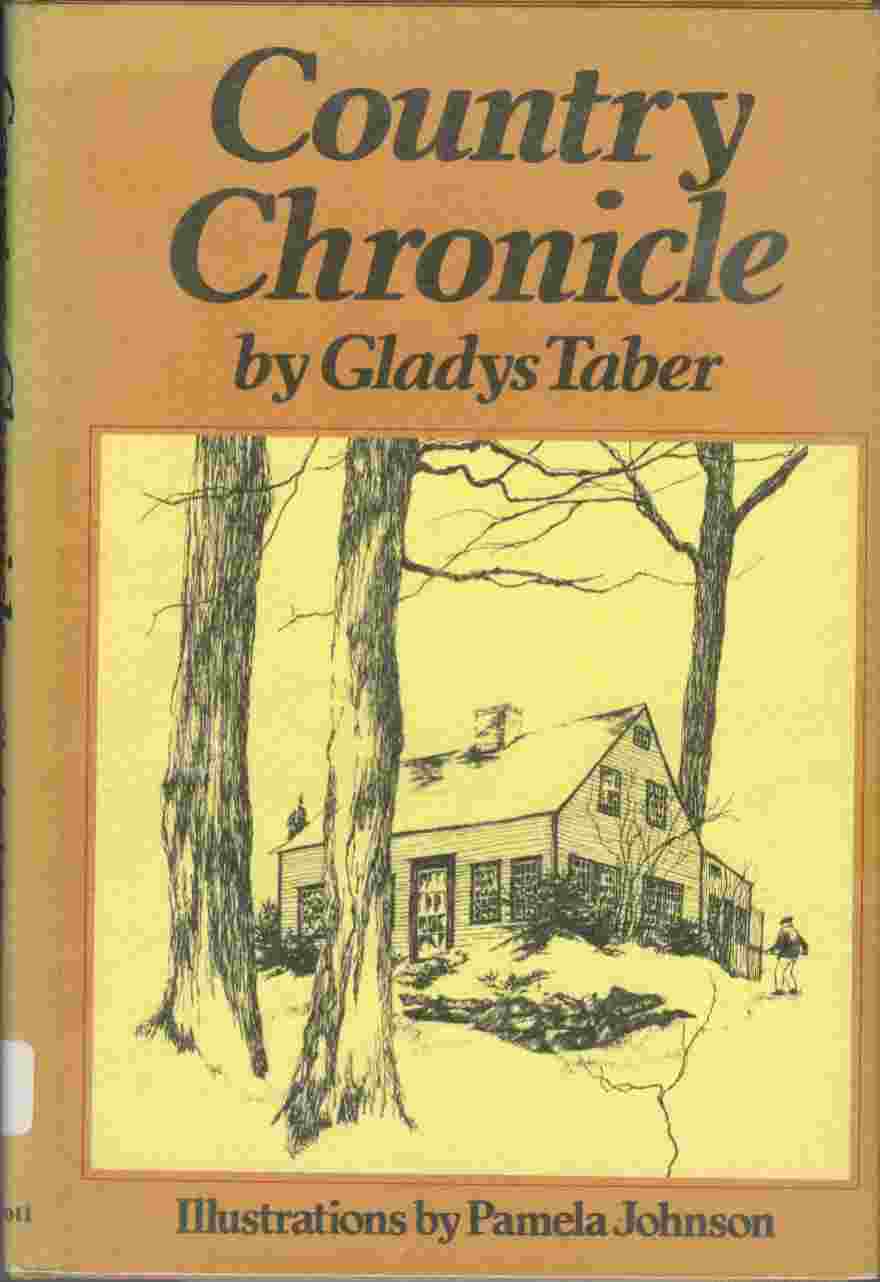
Country Chronicle by Gladys TaberIn Country Chronicle, published in 1974, she retells the story of buying Stillmeadow.  Taber writes:

“Eventually both families came to the city and faced the smog and noise and confusion and the problems of raising three children in gloomy apartments.  Jill’s son, David, was four, her daughter, Barbara, six, and my daughter, Connie, eight.  And one day as we walked the children along Central Park West, I looked up at the hazy sky and said, ‘If only we could get to the country for a weekend, a real weekend!’

‘Even a small piece of land we could put tents on,’ said Jill.

There was so much wrong with the house that they did camp in it at first.  Gradually, they fixed the leaking pipes and replaced primitive appliances.  After their husbands died, Gladys and Jill moved from New York City to Stillmeadow permanently.

Country Chronicle is one of her more charming books.  Her reminiscences of family, neighbors, and pets are endearing.  I love her tales of cats and dogs:  Amber, the tiny cat with intestinal problems, grew up to be a gourmet who liked asparagus tips and fried shrimp; Silver Moon, a dog, needed a glass of tomato juice every day; and Sister liked beef stew, but disliked carrots, and picked the carrot out and arranged them around the plate.

Taber also writes thoughtfully about the environment, electric clocks, and our “push-button culture”:   “When power fails, as it sometimes does even in summer, we do not know how to manage.”

One of the most surprising features of the book is her musing on  the lack of privacy in the U.S.  One spring she was chosen “to be investigated by the Census Bureau.”

“It’s strictly confidential, I was assured, for the census bureau is airtight against snoopers.”

“…But suddenly I began to wonder, and I did not want to fill all those pages about my way of living.  We live in a climate of fear nowadays, second only to Communist countries.  Newsmen go to jail rather than divulge the source of their special information.  Houses are wired, telephones tapped, and the FBI has millions of names, innocent or not.  The Watergate incident came to my mind as Mrs. S. took out her pen.”

The census woman asked Gladys idiotic questions about when she last bought sheets, how old her toaster was, and how much she spent on food.  (She had no idea.)   She wanted Gladys to keep notes on how much she spent for the next three months.  Gladys “began to wonder how much 17,000 of these elegant portfolios, complete with pad and pencil and glossy pockets, must cost our rich government and how much the investigation cost and how far the money would go for food in poverty areas.”

Today our world is much less “snoopproof” than Gladys Taber’s in the ’70s.  The Internet provides marketers with  information gratis (and sometimes government agencies, though I know the internet corporations protect people to an extent).  There are shopping records, and then there are our beloved e-mails, blogs, Twitter, and Facebook.  Even if we are writing for ourselves,  we all have the experience at least once of being read by someone who dislikes us. A divorce lawyer, or an employer can take things on Facebook out of context.  (I’m always reading iabout people who have lost their jobs because of what they said on Facebook.)

Even our e-readers track information about how fast we read, how long we read, and what we highlight.  And, lord knows, I love my e-reader.

Our computers are our friends:  we keep in touch with family and friends, organize political meetings, or read newspapers.  We write.  We make friends.

But it is disconcerting to think that all of it can be used for surveillance.

Calendars, “Just Not Trying Hard Enough,” & Ursula K. Le Guin’s Superb Stories, The Unreal and The Real

I can't forget it's January!

It’s January!

Some bloggers have calendars.  They mention on their sidebars what they’ll be reviewing when.

I have a calendar, but I’m not very organized.  I use it mainly for notes on what to chat about to my doctor.

Note:  Tell Dr. that I saw Iowa City Crash.

The Iowa City Crash

The Iowa City Crash

The Iowa City Crash is a rugby team.  I don’t know my doctor well–it’s usually, “You’re doing well and keep bicycling!”–but he has rugby paraphernalia in his office. Last summer I saw a Crash game.  I must admit I paid little attention because I was finishing something on my laptop.  Nonetheless, it was something to chat about.

Note.:  Learn the names of a few players and ask your husband to describe a couple of the “episodes” in the game, or whatever you call them. 

I learned Brad Fuhrmann, a coach and player, is Australian, and there are also four or five Irish players.

And I found a quote from Brad Fuhrman in a newspaper:  “We expect to win at least one game; otherwise we’re just not trying hard enough.”

Aren’t sports adorable?

If I could just use my calendar wisely, perhaps I could organize my blog along the same principle as chats with my doctor.

Tell blog audience that I read Ursula K. Le Guin’s The Unreal and The Real:  Selected Stories of Ursula K. Le Guin, Vol. Two, Outer Space, Inner Lands.

I do intend to write about it.  The thing is, I am writing about it in this very post.

Jan. 28I have one other thing planned, though I so far show no sign of writing it.

On Jan. 28, a round-up of Middlebrow American Women’s Literature: Jo-Ann Mapson’s Finding Casey, the sequel to the award-winning Solomon’s Oak; The Painted Girls by Cathy Marie Buchanan, author of The Day the Falls Stood Still); Whitney Otto’s Eight Girls Taking Photos; Sherry Jones’s Four Sisters, Four Queensand Haunting Jasmine by Anjali Banerjee.  

You’ll love my upcoming Middlebrow Women’s Lit post:  “otherwise I’m just not trying hard enough.”

And now on to:

left hand of darkness URSULA K. LE GUIN’S The Unreal and The Real:  Selected Stories of Ursula K. Le Guin, Vol. Two, Outer Space, Inner Lands. 

Ursula K. Le Guin was the first science fiction/fantasy writer I read as an adult.  Growing up, I read E. Nesbit’s books, Jonathan Key’s The Forgotten Door, and A Wrinkle in Time over and over, but then I gave up genre fiction. Later, in my twenties, a friend recommended  Le Guin’s The Left Hand of Darkness, and I was amazed to discover parallels between her work and literary writers like Borges and Calvino.  Several of her novels and story collections are also reminiscent of Doris Lessing’s, or vice versa.

And many of you know that.  But for those of you who don’t, I would put her in line for the Nobel Prize for Literature, except that it seems no American writer will ever win the Nobel again.
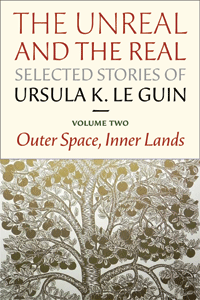
Unreal And Real outer space, inner lands le guinSmall Beer Press recently published two volumes of Le Guin’s stories, and I was eager to read them.  I read the second volume first, because it is a collection of her science fiction and fantasy stories, selected by Le Guin herself, while the first volume, Where on Earth, spotlights her more “realistic” fiction.  (And perhaps I’m not quite as interested in that.)

Le Guin writes in the introduction of Vol. 2:  Outer Space, Inner Lands about the blurring of boundaries between genre fiction and literature.  She writes about the  relationship between myth, legend, science fiction, fantasy, and magic realism.

She says of genre:

“Genre, a concept which could have served as a useful distinction of various kinds of fiction, has been degraded into a disguise for more value-judgment.  The various “genres” are now mainly commercial product-labels to make life easy for lazy readers, lazy critics, and the Sales Departments of publishers.”

“It’s not my job as a writer to make life easy for anybody.  Including myself.”

Many of Le Guin’s powerful books could be cross-listed as SF/fantasy and literature, but, with the exception of Lavinia, her historical novel about he Italian princess who marries Aeneas (in The Aeneid), I have found all of them in the SF section.  Booksellers shelf Doris Lessing’s science fiction in the literature section, because she began as a literary writer, but Le Guin, best known as an SF writer, and remarkably fluent,  doesn’t get the same courtesy.

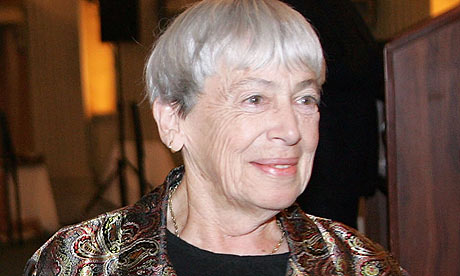
Ursula K. Le Guin

Ursula K. Le Guin

There are many different kinds of stories in Outer Space, Inner Lands. Some of them take the form of ethnological reports on other planets.  In “Solitude,” an ethnologist and her two children, Borno and Serenity, spend several years on Eleven-Soro.  Narrated many years later by the ethnologist’s daughter Serenity in the form of a report, the story melds Serenity’s happy memories of her own coming of age with her mother’s sadness and isolation.  Serenity, who was a young child when they moved there, was accepted by the inhabitants of the “aunt-ring,”  learned the songs and stories the women told, and had an opportunity to “make her soul.”  Her mother was not allowed to attend their singing/storytelling sessions.

Serenity learned above all to avoid magic, tekell, “an art or power that violates natural law”:  the technology on her home planet, or even just one person trying to dominate another.   Her mother calls this superstition, but to Serenity it is common sense: even in marriage, there is tekell, because one person can control the other.   “You have no power over me,” she says to her mother when they want to take her back to their home planet.

The family cannot stay together on the planet.  Borno must leave with the other boys in adolescence to live away from women and jostle for power.   He sticks out the violent life for one year, then comes home and tells his mother he wants to go back to their planet.  Serenity’s dilemma is that she loves her family but utterly believes in the society she has been brought up in.

In another thoughful,  gripping story, “Nine Lives,” two men, Pugh and Martin, have been alone on Libra Exploratory Mission Base for years.  Their first glimpse of a member of an incoming support team on a video communicator floors them:  “Do they all look like that?  Martin, you and I are uglier than I thought.”

Le Guin writes about the difficulty of meeting strangers.  It is particularly tough for Martin and Pugh, alone for so many years.

“It is hard to meet a stranger.  Even the greatest extravert meeting even the greatest stranger knows a certain dread, though he may not know he knows it.  Will he make a fool of me wreck my image of myself invade me destroy me change me?  Yes, that he will.  There’s the terrible thing:  the strangeness of the stranger.”

But it is even more disturbing when  a support team emerges from the ship, and they are shocked to see  five men and five women clones–a tenclone. Later, nine of the clones die in a horrible earthquake, and the tenth, who almost dies, is in deep shock. He gradually learns from Martin and Pugh that doing the safe thing is not always the wise thing.  Breaking the rules can help one survive.

In my favorite story, “Betrayals,” an elderly woman has retired to a hut outside a remote village to meditate and learn to die.  She reads about a planet where there is always peace,  takes care of a dog and cat, and allows a Romeo-and-Juliet-type couple to take refuge in her house occasionally for love. But then she discovers that her neighbor, the Chief, a former tyrannical revolutionary leader who served time in prison, is ill with a cough that develops into pneumonia.  She doesn’t want to help him–she doesn’t care for him–he is there to die–but a lifetime of habit makes it necessary to do all she can.  She learns about the versatility of human beings, and that neither she, nor the chief are ready to die.

Great stories.  I like some better than others, but there is not a dud among them.

Now I must get my copy of Volume One.