Dystopia and the Planned Parenthood Book Sale

Last week the Iowa House passed a bill canceling funding for Planned Parenthood.  The Des Moines Register reports,

The bill calls for Iowa’s Department of Human Services to discontinue the federal Medicaid family planning network waiver, foregoing about $3 million in federal funding. Instead, the state will use about $3.3 million to recreate its own family planning network so that it can prohibit the funding of clinics that provide abortions.

Very depressing news: a bunch of political yahoos legislating a women’s reproductive dystopia on an overpopulated planet. As we will not be moving to Mars after all, despite the pulp science fiction dreams of the ’50s, which didn’t turn out so well in Ray Bradbury’s The Martian Chronicles, access to information about birth control (not just “family planning”) and abortion might slow population growth and extend human life on a ravaged Earth. Why not pass a law requiring birth control and limiting the number of children each woman can have? No, of course I don’t support such a law, but it is no more absurd than canceling funding for Planned Parenthood. Seriously, rich women will continue to find good health care and abortions, while the middle-class and lower-income women pay the price. Back to the ’50s, honey, in an apron!

Well, on a lighter note, we went to the Planned Parenthood Book Sale, which is held twice a year on the Iowa State Fairgrounds.  And so we did something to support women’s health.

We didn’t go on the first day, and the tables were picked over by the time we got there.  But we enjoyed ourselves, and came home with many books.
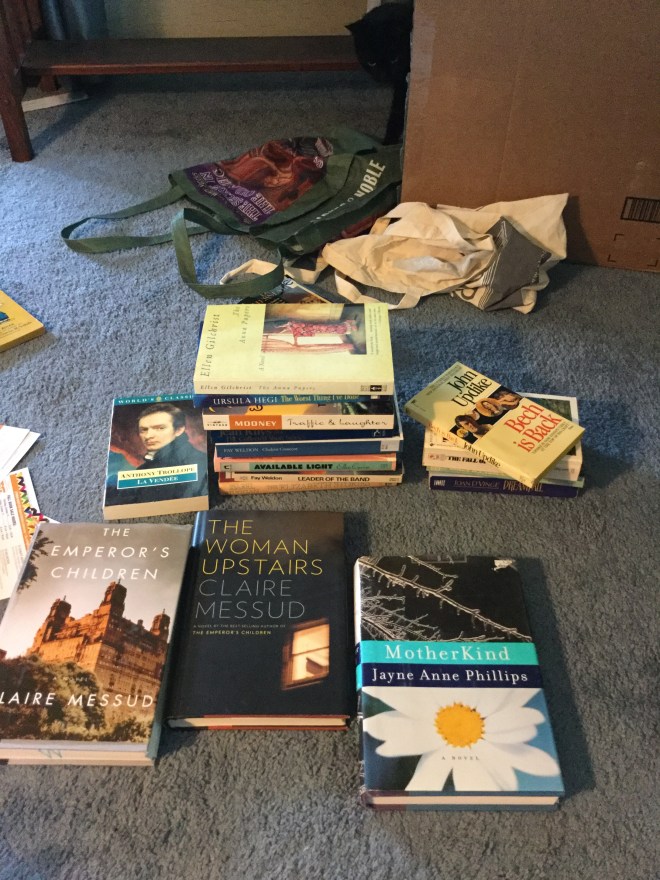
The classics were picked-over, but I did find a copy of Trollope’s La Vendee, John Updike’s Bech Is Back, and The Collected Stories of Jean Rhys.

Because the books on the tables were thinned, I spotted more contemporary fiction than usual.  Many people have recommended Claire Messud so  I picked up The Emperor’s Children and The Woman Upstairs. And I was thrilled find Jayne Anne Phillips’ MotherKind (2000), a novel that tells the story of a woman caring for her dying mother and giving birth to her first child.  Phillips truly is a great American writer.  So many don’t hold up, but she gets better and better.
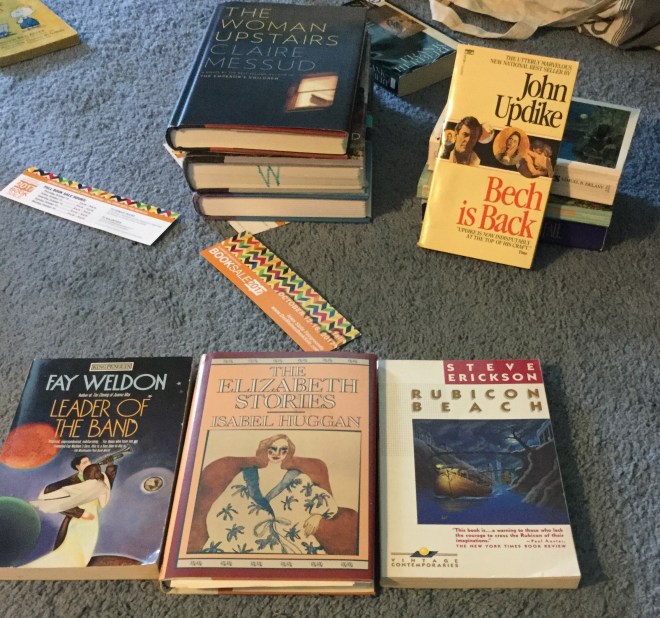
I love Fay Weldon, and should never have weeded her books, because I now have an urge to reread them.  I was pleased to find Leader of the Band.  Isabel Huggan is a Canadian writer:  I actually reviewed The Elizabeth Stories in the ’80s and have a vague idea of having been very kind.  So will it be as good as I thought or said?    (I shall find out.)  Steve Erickson’s Rubicon Beach is described as “part science fiction, part surrealist love story, part political fable.”  Sounds like my thing.
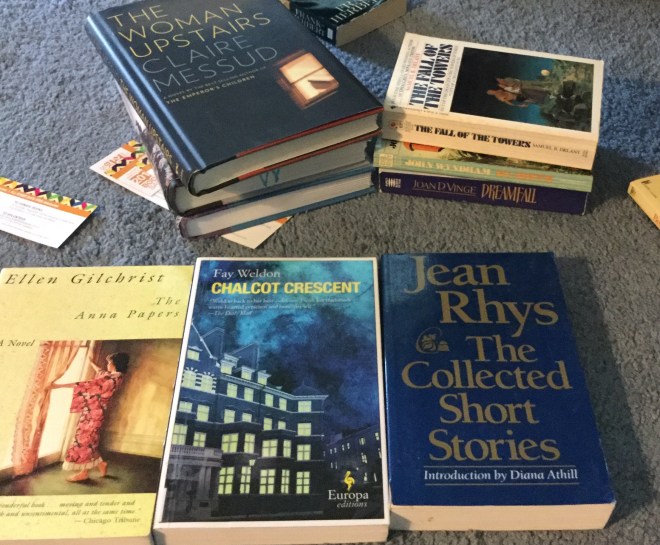
You can’t go wrong with Ellen Gilchrist, a stunning Southern writer who won the National Book Award for her collection of stories,  Victory over Japan.  I found another Fay Weldon, Chalcot Crescent, published by Europat.  And of course there’s the Jean Rhys.  In the background of this pic on the right are three mass market science fiction books, Samuel R. Delany’s The Fall of the Towers, John Wyndham’s Rebirth, and Joan D. Vinge’s Dreamfall.  I know these authors but not these particular books.
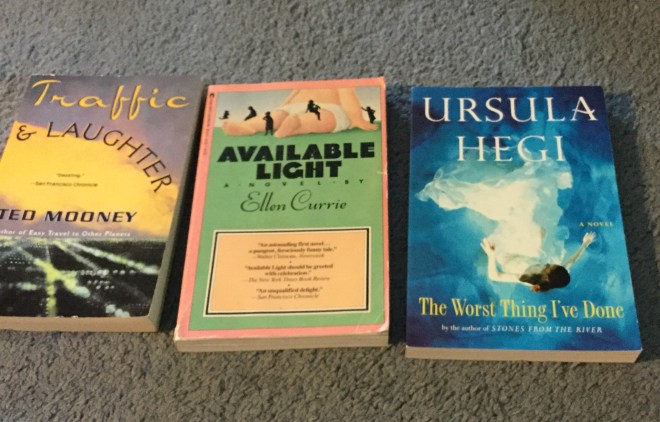
I used to be a fan of Ted Mooney and suspect I may have read Traffic and Laughter,  but I picked it up for $1.  Ellen Currie was very popular and well-reviewed in the ’80s but this book does look a little dated.  We shall see.  We all read and loved Ursula Hegi’s lyrical novel, Stones from the River, which was an Oprah selection, but I missed this 2007 novel and it looks very good indeed.

It’s fair to say we had a good day at the sale.
Notes from the Stacks: Rereading Habits & Rituals

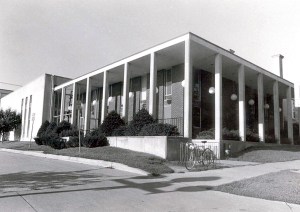
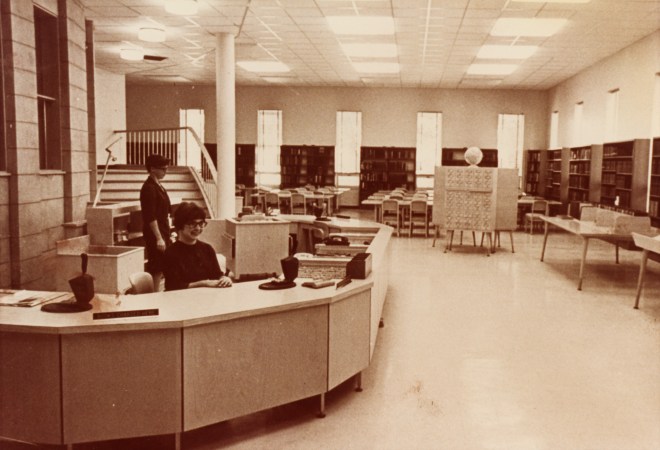
The reference room in the “new addition” of the old public library, circa 1963

The library was a sanctuary, rather like the Drones Club in P.G. Wodehouse, minus the leather chairs and drinks.

It was a mile from our house.  It was a Carnegie library with an ugly brown brick addition,  built in 1963 and known as “the new addition” for almost 20 years, until the library moved across the street in 1981.

The “new addition”of the public library

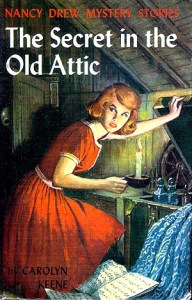
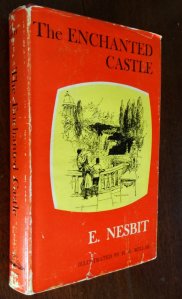
The library was a  place to hang out.  My friends and I went there after school.  I was too chatty  to be a favorite of taciturn Miss W., the librarian who is now an Iowa City legend, but I loved her collection of books, and repeatedly checked out The Enchanted Castle, the Betsy-Tacy books, Elizabeth Goudge’s novels,  and all of Eleanor Estes and Elizabeth Enright.  My mother  “did not care for” Miss W:  they  had clashed over her refusal to order the Nancy Drew books, which Miss W. told my mother were “badly-written.” My mother said that, badly-written or not, my friends and I read them, and they were very expensive.

My mother was ahead of her time.  Was she a legend?  No, she was a housewife.  Nowadays librarians order series books, doing whatever it takes to get kids to read, and my hometown library stocks Nancy Drew.  And you know what?  I have reread a few Nancy Drew books, and they are not bad at all.

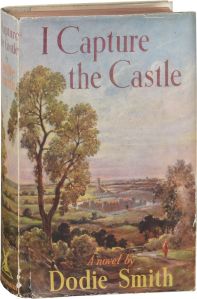
I have always been a big rereader.  I love rereading Dodie Smith’s I Capture the Castle  (I bought a copy in a thrift shop, and my husband once read it to me when I was very sick), Angela Carter’s The Magic Toyshop (the first book I checked out on my adult card),  anything Victorian, Mary Stewart’s Gothics,  and  my favorite, Tolstoy’s War and Peace.

But I don’t enjoy rereading children’s books.  It took me a record two years to reread The Enchanted Castle–a chapter every month or two–because I now prefer Nesbit’s realistic novels to her fantasies.  In my twenties I  sold my collection of hardcover E. Nesbit books with illustrations by H. R. Millar.  Foolish, foolish, foolish!

We all return to favorite books occasionally.  A recent essay in the TLS, “Déjà lu” by David Collard, got me thinking about rereading habits. Collard says that, since coming across a New York Times piece on rerading by Verlynn Klinkenborg, he has borrowed the idea that rereading is “a refuge.” Some of his favorite books to reread are The Otterbury Incident, The Land of Green Ginger, Alice Through the Looking-glass, Dickens, Cyril Connolly’s The Rock Pool., and Moby-Dick.  But some, he says, do not hold up.

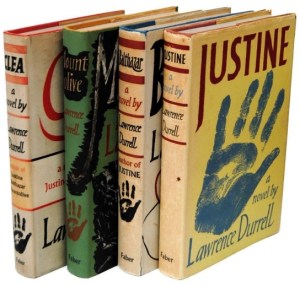
I must have read around fifty novels a year for the past forty years (and other books, of course), amounting to about 2,000 works of fiction. Some stand up well on re-reading; others do not; Durrell’s Alexandria Quartet, for instance, which I once thought wonderful and now find unreadable. Some novels I’ve read twice, a handful many times and one in particular more than any other.

I reread The Alexandria Quartet a few years ago, and it is rather weird, but I still enjoyed. In fact, reading about his rereading, even though he didn’t like it, makes me want to reread it.

These are first editions. I wish I had these…

Almost anything can spur a rereading. I recently got out my copy of Marjorie Kinnan Rawling’s Pulitzer Prize-winning novel The Yearling (1939), the story of a boy who raises a deer as a pet. We were watching Everwood, a charming TV show in which widowed neurosurgeon Andy Brown (Treat Williams) moves from New York to Everwood, CO, with his children to start a new life and opens a free family medicine clinic. They come home one day to find a deer has broken in and is nibbling on the garbage:  Andy and his son take a trek through the wilderness to return it to the wild.  (It is not a happy father-son trek.)

My husband did not believe the deer would  eat out of Ephraim’s hands.

“Didn’t you  read The Yearling?”

No, they did not read it in Catholic school.

This book is nightmarishly sad, and I hated it as a child. The hero Jody, a young boy, lives in the backwoods of Florida. The fawn, Flag,  is motherless because Jody’s father Penny was bitten by a snake and Jody shot the doe because they needed the deer liver as an antidote–or something!  The fawn is like a dog, so sweet.  But you know animal stories.  They’re tragic.

I still find the dense dialect a bit ridiculous, so I probably will just skim.

Jody said, “You shore kin figger what a creetur will do.”

“You belong to figger.  A wild creetur’s quicker’n a man and a heap stronger.  What’s a man got that a bear ain’t got?  A mite more sense. He cain’t out-run a bear, but he’s a sorry hunter if he cain’t out-study him.”

Well, it is far from my favorite reread.  But am I missing something?  It won the Pulitzer.  Why did they like this in 1939?

What books do you like to reread?

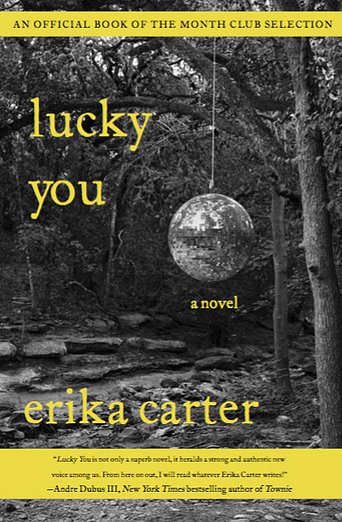
Erika Carter’s Lucky You

“What if we’re just idiot robots, with no souls, being controlled by some outside force? What if we’re just, like, medicated zombies?”
—Erika Carter’s Lucky You

Erika Carter’s debut novel, Lucky You, is very strange.

Three young women live chaotically in Fayetteville, Arkansas. They have sex with country singers, unfaithful husbands, and nutty environmental cult leaders. All have substance abuse problems.  Ellie drinks herself into oblivion, Rachel smokes weed, and unstable Chloe joins in.

It’s Valley of the Dolls in the Ozarks.

Though as racy a read as Valley of the Dolls, Erika Carter’s debut novel is well-crafted and often exquisite.  Carter has more in common stylistically with Mary Gaitskill, the prima donna of dysfunction, than with the potboiler writer, Jacqueline Susann.

Nonetheless, when I tell you that Carter’s character Chloe, who has trichotillomania (hair-pulling disorder), seems the least self-destructive of her three heroines, you may wonder, as I did, why one reviewer considered this novel “charming.”

Carter is in control of her harrowing narrative, and her graceful writing seems effortless as she switches points-of-view so we can see the three heroines inside-out. We’re supposed to get the idea that their inability to find good jobs makes them passive, but I don’t buy it. (When have liberal arts students ever found good jobs?)  Ellie and Rachel are recent graduates of the University of Arkansas, and Chloe dropped out before graduating.   Ellie and Chloe are waitresses at the Viceroy, a sleazy bar, and Rachel also worked there before she and her boyfriend moved to the Ozarks.

The book starts and ends with beautiful Ellie, who majored in English and still reads haiku.  But she watches TV all day and drinks while she waits  for her country musician boyfriend Jim to come back from touring in Texas.  After a while it’s clear he isn’t coming back.

The novel begins with gorgeous, wryly humorously writing. I love the repetition, the anaphora, and the vivid images.

An ice storm just knocked the electricity out, like the weatherman said it would–but did she listen?  She didn’t listen.  She didn’t prepare.  She had flashlights with dead batteries, candles but no matches.  A fireplace full of plants.

Erika Carter

In a way, this is Ellie all over.  She has a wry sense of humor, but doesn’t channel it as a saving grace. She drinks so much that she’s barely conscious.  When she’s walking down the icy street alone after a night drinking at a bar, she’s not adverse to letting three black guys pick her up and inviting them to her apartment for shots and sex. In fact, she’s so drunk that she thinks there are four of them. And she doesn’t remember the sex until she finds the empty box of condoms under her bed.

Chloe, another waitress at the Viceroy, hates Ellie, who confides in her about Jim. It seems to Chloe, who is going bald from her disorder, that Ellie has everything.  Chloe is   in danger, as far as her mental health goes:  she doesn’t mind the repetitive work at the bar, but lives next door to a noisy fraternity, where the obnoxious boys have loud parties and do unspeakable things, such as spray-paint a cat and it dies.  And she has no relationships.  After Ellie disappears (she moves to Bentonville without telling anyone and has S/M sex with her boss), Chloe and Jim become friends, and then live together.  But Jim tours a lot.  Chloe is alone.

Rachel claims she and  her boyfriend Autry are saving the environment by living in his parents’ house in the Ozarks, where they never flush the toilet, and though they aren’t very good gardeners and are incapable of living off the land,  she invites her friends to live with them.  Eventually, Ellie and Chloe are so down-and-out they move in.  And autocratic Autry demands they stay together for a year so he can write a book about living off the grid.

Well, things don’t go very well.  And I kept wanting to say, Get out now!

In a way this is a coming-of-age novel:  a late coming-of-age novel.  I do recommend this book–it is a lightning-fast read–but I wonder:  why so many talented young women writing about self-destructive heroines?  There’s Emma Kline’s The Girls, Natasha Stagg’s Surveys, Catherine Lacey’s Nobody Is Ever Missing.

I prescribe for these young writers a strong dose of Dorothy Richardson, Erica Jong, Margaret Drabble, and Doris Lessing.

P.S.  Fayetteville is a lovely university town.  I once bought a straw safari hat at a bridal shop there!

The Complete Edition of Trollope’s The Duke’s Children & Three Literary Links

Are you a Trollope fan?  Do you prefer his long, rambling novels to his shorter books? Do you wonder why The Duke’s Children, the sixth book in the Palliser series, is shorter than the other five?

Well, it was an editing problem.  Charles Dickens Jr., editor of the periodical All Year Round, thought the book too long, so Trollope cut 65,000 words.  But the good news for Trollope fans is that Steven Amarnick, a scholar, with  a team of researchers,  restored the original text from the manuscript in the Yale library

The complete edition is available from two publishers.  In 2015, The Folio Society published the complete edition in  two volumes ($330), ” and this month Everyman Library published a less expensive hardcover ($27.50).

Do we need a “complete edition of The Duke’s Children? I love Trollope’s long books:  the longer the better.   But the shorter version has  been around since 1880, so isn’t that the actual book?  (I had the same feeling when it turned out Raymond Carver wasn’t a minimalist: it’s just that Gordon Lish cut out all the words.)

In 2015, Adam Gopnik mentioned the Folio Society complete edition of The Duke’s Children in an essay on Trollope at  The New Yorker: 

Much matter that had been cut by Trollope for practical reasons has been restored, but the truth is that the editing does not actually change the contents significantly. Trollope is not a sentence-by-sentence writer, or even a scene-by-scene writer; really, he is a character-by-character writer. We finish his books with portraits of people, and a few sentences added or subtracted don’t alter our feelings about the book.

The Trollope group on Yahoo (trollope@yahoogroups.com) is interested in the affordable new Everyman complete edition.  They plan tentatively to discuss the complete Everyman edition in November.  Clinton Hall writes,

If we decide as a group to read this revised novel after we complete our readings of the three novels on our to-read list, we would start the read about early November, by which time there will possibly be used copies available for less at Abebooks and other online retail outlets.

But in the meantime I do hope at least a few of us on our list will read the book independently in the next month or so and then pass on their recommendations to Natalie or me, or to the list itself, as to whether they think it would be a worthwhile group read on list this year.

AND NOW FOR THREE LITERARY LINKS.

1 At the Tea and Tattle podcast, Jane Austen fans and other readers will enjoy a  conversation between novelists Diana Birchall, the author of Mr. Darcy’s Dilemma, and Janet Todd, author of A Man of Genius.  These two witty writers discuss how and when they began reading Jane Austen, how they became friends at the first Jane Austen conference (of about nine people!) in the ’80s, and what inspired them to write novels expanding or reworking Jane Austen’s novels.

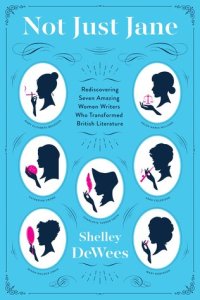
2 At the TLS, in a review entitled “Shivering in Stockings,” Caroline Franklin takes issue with Shelley DeWees’ new book, Not Just Jane: Rediscovering seven amazing women writers who transformed British literature.

She writes,

It seems that collective amnesia at HarperCollins has wiped a whole generation of enthusiastic feminist scholarship from its ken. Do they think that American universities still teach a 1950s canon, dictated by Ian Watt’s The Rise of the Novel (1957) or A. D. McKillop’s The Early Masters of English Prose Fiction (1956)? DeWees is young, so perhaps does not remember those Virago reprints (utterly necessary before e-texts and Google books) of classic but out-of-print fiction by women, or Dale Spender’s polemic Mothers of the Novel: 100 good women authors before Jane Austen (1986) and the Pandora Press series it introduced. Yet approving quotations from those same feminist pioneers, Professors Janet Todd and Amanda Foreman, for example, enhance the HarperCollins publicity. Indeed, DeWees’s endnotes attest to her not only knowing but drawing on and synthesizing the spadework that has already been done over the past thirty years.

What I like about Franklin’s contentious approach is that she talks about other books about women’s lit.  What I don’t like?  I can just see men going “RAH–Cat Fight!”  (You would be surprised at how many times I have heard those words, usually about something on a TV show, not in the TLS.)

3. And there is a fascinating article at The Barnes and Noble Review about science fiction writer Samuel R. Delany, winner of four Nebulas and two Hugos and the Lambda award twice.  T. W. O’Brien writes,

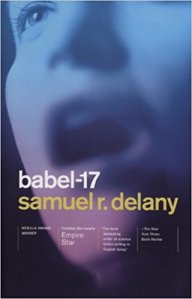
Delany grew up in Harlem, back when it was the epicenter of black culture in America. He has described having had one set of friends on the streets of Harlem, and a completely different set of friends at Dalton, the private, primarily white school he attended on New York City’s Upper East Side. He went on to the Bronx High School of Science, then to City College of New York. But he dropped out of college after only one semester to write (at age 19) his first novel, The Jewels of Aptor (recently reissued with two other early Delany novels under the title A B C: Three Short Novels). He also married the poet Marilyn Hacker in 1961. Between 1962 and 1968, he published a total of nine sci-fi novels and a number of short works, including his four Nebula Award winners, Babel-17, The Einstein Intersection, “Aye, and Gomorrah”, and “Time Considered as a Helix of Semi-Precious Stones” (which also won the Hugo Award, and is one of my favorite SF story titles of all time).


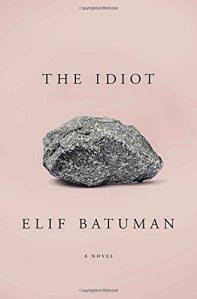
Elif Batuman’s The Idiot

Elif Batuman is on my radar. I enjoyed her entertaining bibliomemoir about her fascination with Russian literature, The Possessed: Adventures with Russian Books and the People Who Read Them.

And her debut novel, The Idiot, is charming and very, very funny. It charts the coming of age of Selin, a freshman at Harvard who is the daughter of Turkish immigrants (she was raised in New Jersey). Harvard, as she describes it, is just so weird: if  you went to a state university,  Batuman’s intellectual but naive virgin heroine will make you chuckle—she is very smart but we were worldly in comparison!

The narrator, Selin, a nerdish freshman, is baffled by the underpinnings of language in context: she is perplexed by the discourse of her eccentric roommates, the nuances of e-mail (which is new in 1995), and the intentions of Ivan, a charming Hungarian student, who sends her intense e-mails.  Does he like her?

Elif Batuman

The culture of Harvard is very demanding:  when  Selin learns that everyone applies and interviews for seminars, she tentatively sets out on a quest.   After many rejections she is accepted in a nonfiction film seminar,  because, she believes, the professor had an even worse cold than she did during the interview. And then there’s her art studio class, “Constructed Worlds,” in which Gary, a visiting artist, incites them to visit museums and demand to see what’s not on display. (Turns out what’s not on display isn’t interesting.)

But it is verbal language that most interests Selin: she takes  linguistics, Russian, and a disappointing course in the 19th-century novel and the city in Russia, England, and France.

She likes Russian very much, but the  textbook tells the eerie story of a character named Nina who travels to Siberia in search of an engineer who disappears. They enact the stories in class, but what do they mean?

As for  literature classes, Selin says,

I wasn’t interested in society, or ancient people’s money troubles. I wanted to know what books really meant. That was how my mother and I had always talked about literature. “I need you to read this, too,” she would say, handing me a New Yorker story in which an unhappily married man had to get a rabies shot, “so you can tell me what it really means.” She believed, and I did, too, that every story had a central meaning. You could get that meaning, or you could miss it completely.

Her professor talks about the inadequacies of translation (there is a lot of Balzac), and reads to them from Russian and French, but she doesn’t understand a word. During the question periods at the end of class, he claims he cannot understand the students’ dumbest, most obvious questions. Selin observes, ”The breakdown of communication was very depressing to me.”

In many ways, the novel is about the breakdown of communication. Ivan already has a girlfriend, but he also more or less dates Selin, and what DOES he mean?  Ivan will be in Hungary for a short time during the summer and he suggests she might enjoy teaching English in a Hungarian village.   She jumps at the chance.  But it is not what she expected–she gets along with her host families, but never has a moment alone.  And does she see Ivan?  Hardly ever.

The book is beautifully-written, and my only criticism is that the college parts go on a little too long.  I was fascinated by her teaching experience in Hungary.  But it all dovetails, and  If you like college novels, this is great summer read. Warning: Batuman’s Harvard is nothing like the Vassar of Mary McCarthy’s The Group, the Radcliffe of Alice Adams’ Superior Women, or the University of Michigan of Marge Piercy’s Braided Lives.  She has her own voice, and her own ideas.

Batuman’s Harvard is very different from Marge Piercy’s University of Michigan.

Am I a Literary Blogger? Janet Todd’s “Aphra Behn: A Secret Life”

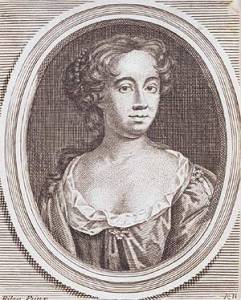
Aphra Behn engraving by Robert White after a lost portrait by John Riley, c. 1680

Am I a literary blogger?

Well, perhaps not.

Unfortunately, I  can’t read every review copy, even if it is addressed to “Literary Blogger.” Isn’t that the most endearing title ever?

I’d love to be a literary blogger.  But  I resolved not to accept any review copies this year: I just don’t have time.  After a landmark birthday, my white hair and  shockingly sun-striated face convinced me to rethink my reading and set a “syllabus” for myself.

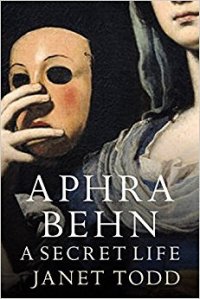
But the book in question, a reissue of Janet Todd’s biography, Aphra Behn: A Secret Life, with a new preface, looks fascinating. According to the Goodreads description, “Aphra Behn (1640-1689), poet, playwright, novelist, traveller and spy, was the first woman to earn her living as a writer: her works include The Rover, The Fair Jilt, Love Letters Between a Nobleman and his Sister, and The Forc’d Marriage. ” Todd, a  Professor Emerita of the University of Aberdeen and an Honorary Fellow of Newnham College, Cambridge  has written biographies of Jane Austen, Mary Wollstonecraft, and Mary Shelley and is also the General Editor of the 9-volume Cambridge Edition of the Works of Jane Austen.

Impressive credentials, no? I’ll read it slowly over the next month and post periodically about this biography, and then when I’m done give it away to whoever wants it:  leave a comment or write me at mirabiledictu.org@gmail.com

And ‘fess up:  who gave my name to the publishing company?  Or am I just twirling in cyberspace now?

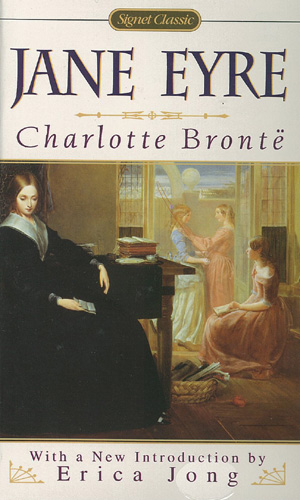
Rereading Jane Eyre, Which Are the Best Illustrations?, & Why Used Books Are Dicey

I’d love to read Erica Jong’s introduction!

I’m racing through Jane Eyre, and of course it is a masterpiece, but I have read it too many times. As I wrote here in 2013:

Jane Eyre is serious.

That’s why we loved her when we first read the novel. After I saw the old movie starring Orson Welles and Joan Fontaine at school, I begged my mother to take me downtown immediately to buy the book. (I still have my original 50-cent copy.) I didn’t just read Jane Eyre, I was Jane Eyre.

Did this apply to all women? Or do some reject Jane Eyre?  I first read Jane Eyre at 12, when I was very intense and rebellious; and this is (I think) my fourth reading, at what has turned out to to be a very slightly mellower but still rebellious age.  (We shall skip the number.)

But I also agree with this observation from my 2013 post:

[At 12] I loved Mr. Rochester, the dark, almost sadistically flirtatious character, and then in my thirties said, “Oh no, I’m done with that.” The Byronic heroes are mad.

And this still applies.

The orphan Jane’s horrifying childhood world is  peopled by sadists: she lives with her Aunt Reed and three cousins, who dislike her:  John Reed hits her and draws blood; Mrs. Reed locks her in the terrifying red room and poor Jane screams to be let out and then faints in a fit; and she is dumped at Lowood School,  a charity school run  on principles of humiliation and starvation by rich, pompous Mr. Brocklehurst.

But not all is grim.  The years pass.  The school is reformed after Mr. Brocklehurst is fired:   Jane gets proper nutrition, becomes Head Girl, and is later a teacher at the school.  But as a governess for Mr. Rochester’s bastard child Adele (though he denies she is his), she finally is in control and happier–for a while.  She loves ugly Mr. Rochester, who is witty and charming, though his teasing is sometimes sadistic.  Still, It’s nothing Jane hasn’t seen or heard before.  By her standards, he is totally benevolent.  But I do think it is cruel to insist she attend his evening parties, even though she does sit in the corner.  His  houseguests are insensitive:   the upper-class Ingrams are  a variation on the monstrous upper-class Reed family.  Blanche Ingram, the buxom brunette assumed to be Mr. Rochester’s future bride, launches a tirade against governesses in front of Jane (does she view Jane as an inanimate doll, or as a threat?). She suggests Mr. Rochester should practice economy and send Adele to school.  In other words, he should fire Jane, because governesses are useless.

“No, you men never do consider economy and common sense. You should hear mama on the chapter of governesses: Mary and I have had, I should think, a dozen at least in our day; half of them detestable and the rest ridiculous, and all incubi—were they not, mama?” …

“My dearest, don’t mention governesses; the word makes me nervous. I have suffered a martyrdom from their incompetency and caprice. I thank Heaven I have now done with them!”

And the tirade continues.

I’m not all about Power to the People every single minute of the day, but I have had a Jane Eyreish moment. I once attended a a country club dinner the night before a boring conference I was writing about. I was sitting with the other writers at our end of the table, and we quickly learned we needn’t ask the aging ex-debutantes to pass the bread or butter because we did not exist for them!  They literally did not answer!   They were the Ingrams/Reeds, and we were the Jane Eryes. They must have thought of us writers: “half of them detestable and the rest ridiculous, and all incubi—were they not, mama?”

Now let me entertain you with all my copies of Jane Eyre.

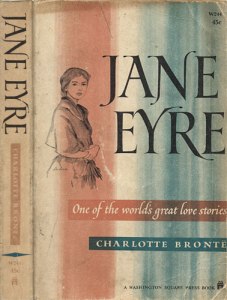
MY FIRST EDITION OF JANE EYRE was a Washington Square paperback.  Inside I scrawled my name in very fat penmanship.

THEN WE USED THE PENGUIN IN COLLEGE.  (First we read Jane Eyre as autobiography and then Mrs. Gaskell’s marvelous biography.)

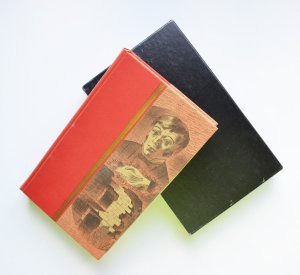
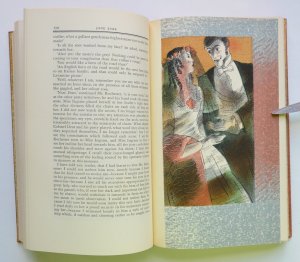
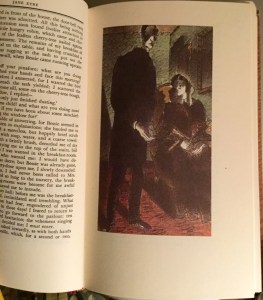
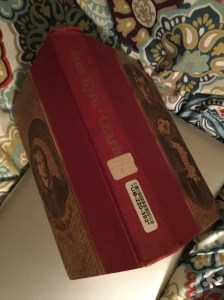
Then I acquired an ex-library book copy of the Heritage Press edition of Jane Eyre (1975) with lithographs by Barnett Freedman from the original 1942 Heritage Press edition.  Oh, dear, I bought it for the pictures!  Do I need pictures?  I LIKE pictures!

Lithographs by Barnett Freedman

THE DOWNSIDE TO BUYING AN EX-LIBRARY BOOK?  YOU WILL NEVER BE ABLE TO PEEL THESE STICKERS OFF THE SPINE.  THEY ARE SUPER-GLUED ON, I SWEAR!

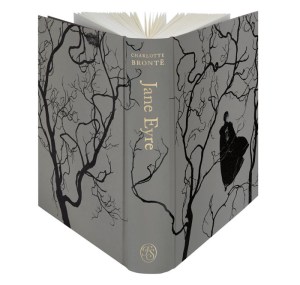
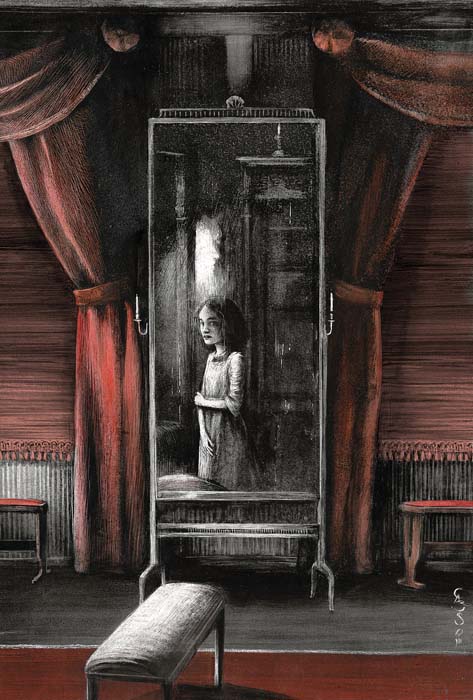
Now here is the luxury edition.  MY FAMILY AND I BOUGHT THE FOLIO SOCIETY EDITION OF JANE EYRE (2014) AND ARE SHARING IT:  a month here, a month there.  Beautiful paper, and the  strange illustrations by Santiago Caruso are very effective:  they capture the grotesqueries of  the Reed household and Lowood School from the child Jane’s point of view.  Everything looks so big to her!

© Santiago Caruso, 2014 – Jane Eyre

And here Jane and Mr. Rochester are FINALLY equals in this love scene.

There are so many editions of Jane Eyre:  something for everybody!  I recommend buying new books if you can afford them. The problem with used books:  sometimes they ARE in excellent shape, but other times you’ll find tea or chocolate stains (usually on the first pages, and then the person abandons the book!), and it is just not nice.  According to the Date Due card in the back of my Heritage Edition, no one in Rome, Georgia, ever checked it out! And yet there are coffee and chocolate stains on the first five pages.

Well, it’s only five pages…

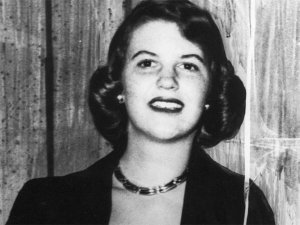
Sylvia Plath

Every morning, when my sleeping pill wears off, I am up about five, in my study with coffee, writing like mad—have managed a poem a day before breakfast. All book poems. Terrific stuff, as though domesticity had choked me.

—Sylvia Plath, letter to her mother, October 12, 1962

Sylvia Plath was the first woman poet I read, after Emily Dickinson: few women were in the canon, and Plath, a brilliant confessional poet, was not.  I discovered Ariel after I read her autobiographical novel The Bell Jar, which was a best-seller in 1971.  When I mentioned my enthusiasm to a professor, he disparaged her poetry as “second-rate.”  In retrospect, he was a terrible teacher.  The idea is to encourage interest in poetry, not squelch it.  I mean it was Sylvia Plath, not Ogden Nash.

But my taste has changed, and I much prefer Emily Dickinson and Elizabeth Bishop these days, though Plath earned her place in the canon.

That said, there was a strange feminist suicide cult in the ’70s surrounding Plath (and the poet Anne Sexton, who also killed herself). Plath was a feminist icon: her life and death were used to illustrate the evils of “male oppression.”

Plath struggled with bipolar disorder and attempted suicide in college. She responded to therapy, medication, and shock treatment and went on to write poetry. She married the glamorous poet Ted Hughes, and they were a gorgeous couple.

But after Plath discovered Ted Hughes’ affair with their friend Alissa Wevill in 1962, he left her with their two children and lived with  Wevill.   Plath spiraled into manic-depression but did  write Ariel.  Then, in 1963, at the age of 30, she killed herself.  And in 1969 Wevill killed herself and the four-year-old child she had with Hughes.

That is three too many deaths, isn’t it?

The biography of Plath at Poem Hunter says,

Feminists portrayed Plath as a woman driven to madness by a domineering father, an unfaithful husband, and the demands that motherhood made on her genius. Some critics lauded her as a confessional poet whose work “spoke the hectic, uncontrolled things our conscience needed, or thought it needed,” to quote Donoghue. Largely on the strength of Ariel, Plath became one of the best-known female American poets of the 20th century.

Sylvia Plath

I no longer believe that women’s “madness” is a consequence of sexist society (chemical imbalance is often the problem), but I am horrified that two women involved with Hughes killed themselves.

And today I read a shocking article in The Guardian.   In unpublished letters to her American psychiatrist and friend,

Sylvia Plath alleged Ted Hughes beat her two days before she miscarried their second child and that Hughes wanted her dead, unpublished letters reveal. The two accusations are among explosive claims in unseen correspondence written in the bitter aftermath of one of literature’s most famous and destructive marriages.

I do not jump to conclusions on the basis of an article in The Guardian.  What she wrote in the letters may have been true, or she may have been in a psychotic state.  There will be arguments on both sides.  And I do not know enough about her or Hughes.

But it is very disturbing, and so I hunted up a poem by Plath, in honor of National Poetry Month. .

“Lady Lazarus” by Sylvia Plath

I have done it again.
One year in every ten
I manage it——

A sort of walking miracle, my skin
Bright as a Nazi lampshade,
My right foot

A paperweight,
My face a featureless, fine
Jew linen.

Peel off the napkin
O my enemy.
Do I terrify?——

The nose, the eye pits, the full set of teeth?
The sour breath
Will vanish in a day.

Soon, soon the flesh
The grave cave ate will be
At home on me

And I a smiling woman.
I am only thirty.
And like the cat I have nine times to die.

This is Number Three.
What a trash
To annihilate each decade.

What a million filaments.
The peanut-crunching crowd
Shoves in to see

Them unwrap me hand and foot——
The big strip tease.
Gentlemen, ladies

These are my hands
My knees.
I may be skin and bone,

Nevertheless, I am the same, identical woman.
The first time it happened I was ten.
It was an accident.

The second time I meant
To last it out and not come back at all.
I rocked shut

As a seashell.
They had to call and call
And pick the worms off me like sticky pearls.

Dying
Is an art, like everything else.
I do it exceptionally well.

I do it so it feels like hell.
I do it so it feels real.
I guess you could say I’ve a call.

It’s easy enough to do it in a cell.
It’s easy enough to do it and stay put.
It’s the theatrical

Comeback in broad day
To the same place, the same face, the same brute
Amused shout:

‘A miracle!’
That knocks me out.
There is a charge

For the eyeing of my scars, there is a charge
For the hearing of my heart——
It really goes.

And there is a charge, a very large charge
For a word or a touch
Or a bit of blood

Or a piece of my hair or my clothes.
So, so, Herr Doktor.
So, Herr Enemy.

I am your opus,
I am your valuable,
The pure gold baby

That melts to a shriek.
I turn and burn.
Do not think I underestimate your great concern.

Ash, ash—
You poke and stir.
Flesh, bone, there is nothing there——

A cake of soap,
A wedding ring,
A gold filling.

Herr God, Herr Lucifer
Beware
Beware.

Out of the ash
I rise with my red hair
And I eat men like air.

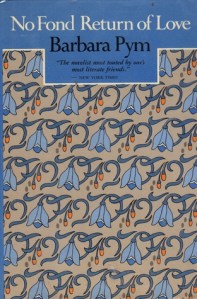
Another Novel by Barbara Pym: No Fond Return of Love

“There are various ways of mending a broken heart, but perhaps going to a learned conference is one of the more unusual.”–Barbara Pym’s No Fond Return of Love

I recently went on a Barbara Pym bender.

Last spring I binged on Anita Brookner; this year it is Barbara Pym.  Do they have anything in common? Their voices and themes are very different, but both are stereotyped as spinsters writing about spinsters. As I happily reread Brookner’s dramas and Pym’s comedies, I was surprised to find their perspectives much more varied than they are given credit for.

Pym’s novels are a delight. I love her whimsical humor, especially concerning anthropologists and indexers:  as I’ve said before, she is the only writer who can make me burst out laughing at the mere mention of these professions.  In No Fond Return of Love  (1961),  the Oxford-educated heroine, Dulcie Mainwaring,  is an indexer, not a scholar (typical for women of the ’60s). When her younger fiance, Maurice, breaks off their engagement, she philosophically decides to attend a conference, and while not looking forward to talks on “Some problems of an indexer,” it provides a change.

In the dorm, she introduces herself to Viola Dace, who regards Dulcie with horror as “already halfway to being a dim English spinster.”

Every line of dialogue reflects Dulcie’s wry humor and perspicaciousness.  Snobbish Viola is horrified by Dulcie’s tweeds, and regards her  black dress as the mark of a bohemian.  Dulcie, on the other hand, is skeptical of Viola’s claim to have been involved with one of the lecturers.

“It’s an unusual idea having a conference of people like us,” said Dulcie.  “Do we all correct proofs, make bibliographies and indexes, and do all the rather humdrum thankless tasks for people more brilliant than ourselves?”

Viola does not like this description at all.

“Oh, my life isn’t at all like that,” she said quickly.  “I’ve been doing research of my own and I’ve already started a novel.  I’ve really come here because I know one of the lecturers and…”

Love doesn’t conquer all, but it certainly can make a fool of us.  Viola has a crush on Aylwin Forbes, the editor of a literary journal, who is speaking on “some problems of an editor.”  Other women have crushes on him, too:  one  older women with low expectations of the conference jokes that he’s “so good-looking, and that always helps.”  Dulcie is stunned by his beauty, but when he faints during the lecture, she is the knight in armor who comes to the rescue with smelling salts.

Pym writes from different points of view:  although Dulcie is my favorite, we also have glimpses into the characters of Viola and Aylwin.  Viola is neurotic and restless, living in a very messy bed-sitter;  and selfish, egotistical Alywin is disturbed because his wife Marjorie has left him, and his mother-in-law calls him a “libertine.”

Dulcie hilariously becomes mildly obsessed with Aylwin. She methodically looks him up at the library.  But her quiet life is disrupted when her 18-year-old niece Laurel (taking a secretarial course in London) and Viola move in with her. Dulcie and Viola chat about Aylwin (Viola is doing his index for free), and when Dulcie’s library research reveals that Aylwin’s brother Neville is a clergyman, they attend a service at his church but learn he has gone home to Mother (who owns a hotel) to escape the attentions of a female parishioner.

Are Dulcie and Viola really in love?  Well, they are smitten, in an adolescent way. They  invite Aylwin to a small dinner party, after he gives flowers to Viola, but does he love either of them?  No, he  is smitten by teenage Laurel (who finds him very old).

The two women mischievously spend a weekend at Aylwin’s mother’s hotel, and find solutions to the mysteries of Aylwin’s relationships.

And love proves more unpredictable than their fantasies.  Don’t feel sorry for Dulcie and Viola:  men have noticed them by the end of the book.  The ending is not neatly tied up, but their expectations become more realistic. Even Aylwin is not romantic once you get to know him.

The whole book is extremely funny!

Note:  Some Goodreads reviewers misread No Fond Return of Love  as a comic novel about a stalker! Trust me, no reviewer in 1961, or in 1982, when it was published in the U.S., considered gentle Dulcie a stalker.  She is not pursuing a quarry stealthily, hunting an animal, or walking stiffly and angrily.  Isn’t it typical that in the age of  obsessive Googling someone would think Dulcie is a stalker?

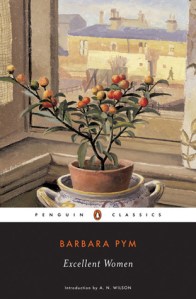
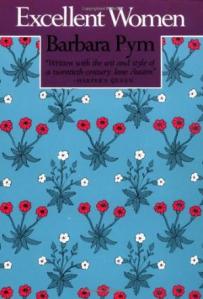
Barbara Pym’s Excellent Women

Like all of us prim-yet-not-so prim bachelor girls of the late 1970s, I used to read The New York Times Book Review cover-to-cover.  I lived above a bookstore, and around the corner from another bookstore, so sometimes I strolled downstairs  and bought the books.  One weekend I was thrilled to read about the revival of a neglected writer Barbara Pym.  Philip Larkin’s praise of her in the TLS  in 1977 had triggered American interest:    in 1978, Dutton simultaneously published two of her novels., Excellent Women and A Quartet in Autumn.

There’s something about spinster lit. I did of course buy both books, and read them in the company of my Siamese cat, a suitable familiar for a spinster.  But during a recent binge rereading of  Pym, I realized that Pym’s heroines are not all spinsters.  They may be spinsters at the beginning, but they are often attractive to men, despite their tweedy clothes, and sometimes they marry, or we learn in a later book that they have married:  for instance,  in An Unsuitable Attachment, we  hear secondhand that the heroine of  Excellent Women has married an anthropologist.

In Excellent Women, first published in 1952, the narrator, Mildred Lathbury, a clergyman’s daughter, works part-time for an organization which helps distressed gentlewomen.  She is astonished that “I should have managed to make a life for myself in London so very much like the life I had lived in a country rectory when my parents were alive.”  As you might expect, she is active in a neighborhood church, St. Mary’s, and is a friend of  Father Mallory and his sister, who live next door.  But she resents being viewed as one of those excellent women who are expected to put others’ interests ahead of their own.  And she is annoyed when one of the churchwardens teases her for watching the furniture movers in front of her house.  “I expect you know all about it.”

She muses,

I suppose an unmarried woman just over thirty, who lives alone and has no apparent ties, must expect to find herself involved or interested in other people’s business, and if she is also a clergyman’s daughter then one might really say that there is no  hope for her.

Her new neighbor, Helena Napier, is the object of Mildred’s curiosity.  She has moved into the flat downstairs, and they will have to share a bathroom.  Helena is an anthropologist whose husband, Rockingham, a naval officer, is still in Italy,  where she claims he has  nothing to do “but be charming to a lot of dreary Wren officers in ill-fitting white uniforms…”  But he will join her in London soon.

The small events of Mildred’s daily life are richly observed.  She is slightly scandalized that Helena stays out late with another anthropologist, Everard Bone, with whom she is writing up their notes from 18 months in Africa.  Helena is out with Everard Bone the evening the charming Rockingham arrives, so Mildred gives Rocky a cup of coffee and soon they are gossiping about their shared love of Victoriana.  In subsequent chapters, Helena admits she is in love with Everard Bone, who does not return her affections. Rockingham is furious after Helena puts down a pan on a valuable wooden table and scorches it.  Helena moves out,  and   Mildred  washes all the dishes she left behind.  And then Everard loiters outside her office and asks her out for lunch.

Then there are parish troubles:  Mrs. Allegra Gray, a clergyman’s widow, moves into the flat in Father Mallory’s house and vamps him.   Before you can blink she is engaged to Father Mallory, and poor Winifred learns Allegra intends to throw her out of the house after the wedding.  She wonders if she could live with Mildred. (It’s not an option.)

Oddly, Mildred becomes the confidant of Rockhingham  and Everard Bone; she also occasionally hears from a school friend’s brother, William Caldicote (he seems to be gay).  And, annoyingly, everyone believes Mildred is in love with Father Mallory.  Surprises lie ahead for all:  when Allegra and Father Mallory break up, and smug Father Mallory approaches Mildred flirtatiously, she is happy to tell him that she was never in love with him.

Pym  is often compared to Jane Austen, but that is not quite accurate. The marriage plot, such as it is in Pym, is different, important, but not the be-all and end-all. And Pym’s gentle, whimsical humor falls somewhere between the spiky wit of Austen, the offbeat hilarity of Nancy Mitford, and the gentle charm of Dodie Smith. Pym is subtle and offhand in a droll way that always makes me smile.  And Pym is the only writer who can make me burst out laughing with the use of the words “anthropologist”  and “indexer.”   Even “researcher” can cause a chuckle.

I love Pym’s books, and Excellent Women is a gem.  More on the  Pym binge later.