
 Karen of Kaggsysbookishramblings is a voracious reader, a sociable blogger, and an indefatigable co-organizer of “The 1947 Club.” What is the 1947 Club? Bloggers and other readers agree whimsically to read and post on books published in 1947–any and all books published in 1947!
It is not so much that I’m unsociable as absent-minded, so I was pleasantly surprised this year when I managed to read a couple of Viragos for Virago month and two books for Women in Translation Month. “So, Go for it, Kat! You can read a book from 1947,” I told myself. So It’s halfway through the 1947 week, and I was about to embark on a book published the wrong year. Yup. I have this thing: dyslexia with numbers.
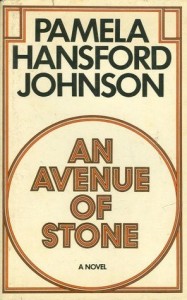
Now that I’m on the right year, I would like to recommend one of my favorite books of 1947 (and of all time), An Avenue of Stone by Pamela Hansford Johnson.
If you don’t know Pamela Hansford Johnson’s stunning novels, you are missing out. Best known as Dylan Thomas’s girlfriend and C. P. Snow’s wife, she had enough talent and merciless observations to put those two boys in the shade. A few years ago I interviewed her biographer Wendy Pollard here. I appreciated Pollard’s serious work and hope it revived interest in Johnson. And it is a very good sign that Bello Pan has reissued Johnson’s books in paperback and as e-books. (Unfortunately the e-books aren’t available in the U.S.)
 And now I am going to cheat a bit by posting old notes on An Avenue of Stone from 2009.
Pamela Hansford Johnson’s Helena trilogy, of which An Avenue of Stone is the brilliant centerpiece, shows Johnson at the height of her powers. The first book in the trilogy, Too Dear for My Possessing (1940), is a coming-of-age novel: Claud, the narrator, bickers with and competes against his beautiful, controlling, often wicked stepmother Helena. After his father’s death, his life is inextricably intertwined with Helen’s, for better or worse.
 To read the second novel first, An Avenue of Stone (1947), is both an advantage and a liability. Each novel is self-contained, so the order doesn’t matter. And I loved An Avenue of Stone so much that I went on to read the other two. Johnson says in the introductions to the American reprints that she was learning her craft when she wrote the first book, Too Dear for My Possessing (1940). The second and the third novels, An Avenue of Stone and A Summer to Decide, published in 1947 and 1948 respectively: “So, between books 1 and 2, I had seven years of learning to write…
She continues in the intro to Avenue, “I was no longer giving way to a too-easy romanticism; I was able to give the book a rather more solid structure.”
An Avenue of Stone is an unforgettable masterpiece. In this brilliant novel, set at the end of World War II, the narrator, Major Claud Pickering, an art historian and writer, describes the volatile relationships of his stepmother, Helena, amidst the deprivations of rationing and the disintegrating class boundaries of the postwar society.
The novel begins with Helena’s ramblings about class.
“As a class,” Helena said, “we are doomed…”
 Helena, a former chorus girl who married into the upper class and has established herself as a glittering hostess, loves to talk about the rebellion of the proles. As the novel begins, the sixty-something Helena is entertaining guests with outrageous complaints about the collapse of society, illustrated by exaggerated anecdotes about rude bus conductors and insolent shop girls. After her second husband, Lord Archer, dies, leaving the majority of his money to Helena’s daughter, Charmian, and, shockingly, to his former lovers, Helena can no longer live on the grand scale to which she is accustomed. She is persuaded to let her hunky chauffeur go and move into an apartment with Claud and Charmian. Helena, unused to living without admiration, becomes vulnerable to a kind of asexual love affair with Johnny Field, an irritatingly self-denigrating young man, whom Claud introduces into the household, assuring her that Johnny needs rest and “does nothing but read.”
At first she uses Johnny as a lackey to pass appetizers at parties and install linoleum at her cottage , but later she is fascinated by him and insists that she can’t live without him. Claud and Charmian can’t bear the situation and move out. Johnny the unlikely gigolo, is, surprisingly, a magnet to older women. One of Lord Archer’s former lovers, Mrs. Olney, a lamp shade maker, also tries to lure him to live with her.
Claud’s observations of this unlikely triangle are the center of the novel. But his wry observations keep him in the forefront, and it is for his voice that we read. This very slightly reminds me of Anthony Powell’s novels.





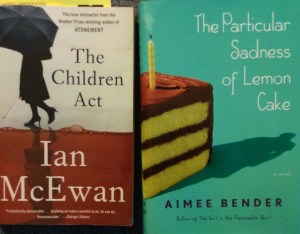
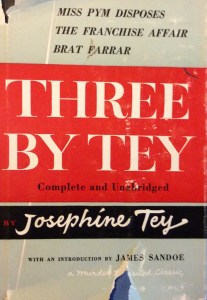
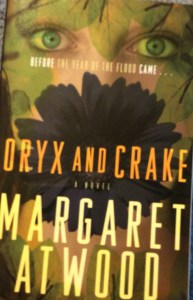
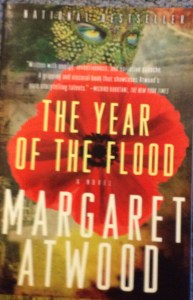



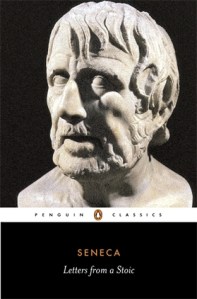 In Letter II in the Penguin edition of Seneca: Letters from a Stoic (translated by Robin Campbell), Seneca says,
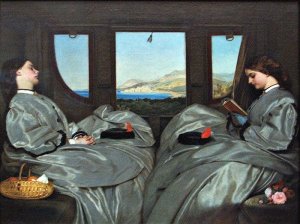
 1. Muriel Spark’s Robinson. The incomparable Spark is bold, witty, and acerbic, one of the most polished stylists of the twentieth century. I recently discovered her novel Robinson, a modern riff on Robinson Crusoe, which is so blessedly short (178 pages) that I earmarked it for vacation.
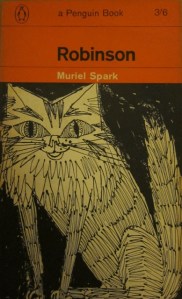 The problem with being stranded is not so much the loneliness as the fellowship. January is a devout Catholic with a sense of humor who often prays with her rosary, while strict Robinson grimly disapproves of religious relics. Suave Jimmie, another survivor, is a charming conversationalist who shares his secret flask of brandy with January and obligingly helps out with chores. Odd man out is Tom Wells, the survivor we love to hate as he plots to gain ascendancy in the hierarchy on the island.
 What do you do with that kind of loss? It is a trauma to lose a husband or father, let alone under these cirumstances. Julius’s two daughters shore each other up by sharing a flat in London. Twenty-seven-year-old Emma, a quiet woman who has carried on the tradition of being an editor in the family publishing company, spends her weekends reading and washing her hair at her mother’s country home. At work she fumes that she would like just once to see a really good manuscript on her desk instead of all the junk. (And we sympathize!) She has never had a boyfriend and does not want a boyfriend, because she as nearly violently date-raped when she was 19. Though she got away, she has never recovered.
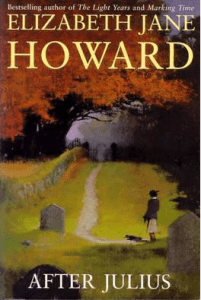 Esme, Julius’ widow, seems to have the hardest time, though she is the best-adjusted: she gardens, reads, and does volunteer work, but she is alone. She was unfaithful to Julius, and then her much younger lover, Felix, dumped her after Julius’ death. It’s not that she feels guilty about Julius. She didn’t realize that she was just a fling for a younger man. She didn’t want to marry anyone else. But now Felix, a doctor in early middle age, is back from the Near East and plans to stay in England. After staying with a doctor friend and his lovely family, he impulsively asks Esme if he can come for the weekend and… What on earth is he doing?




 mirabile dictu