
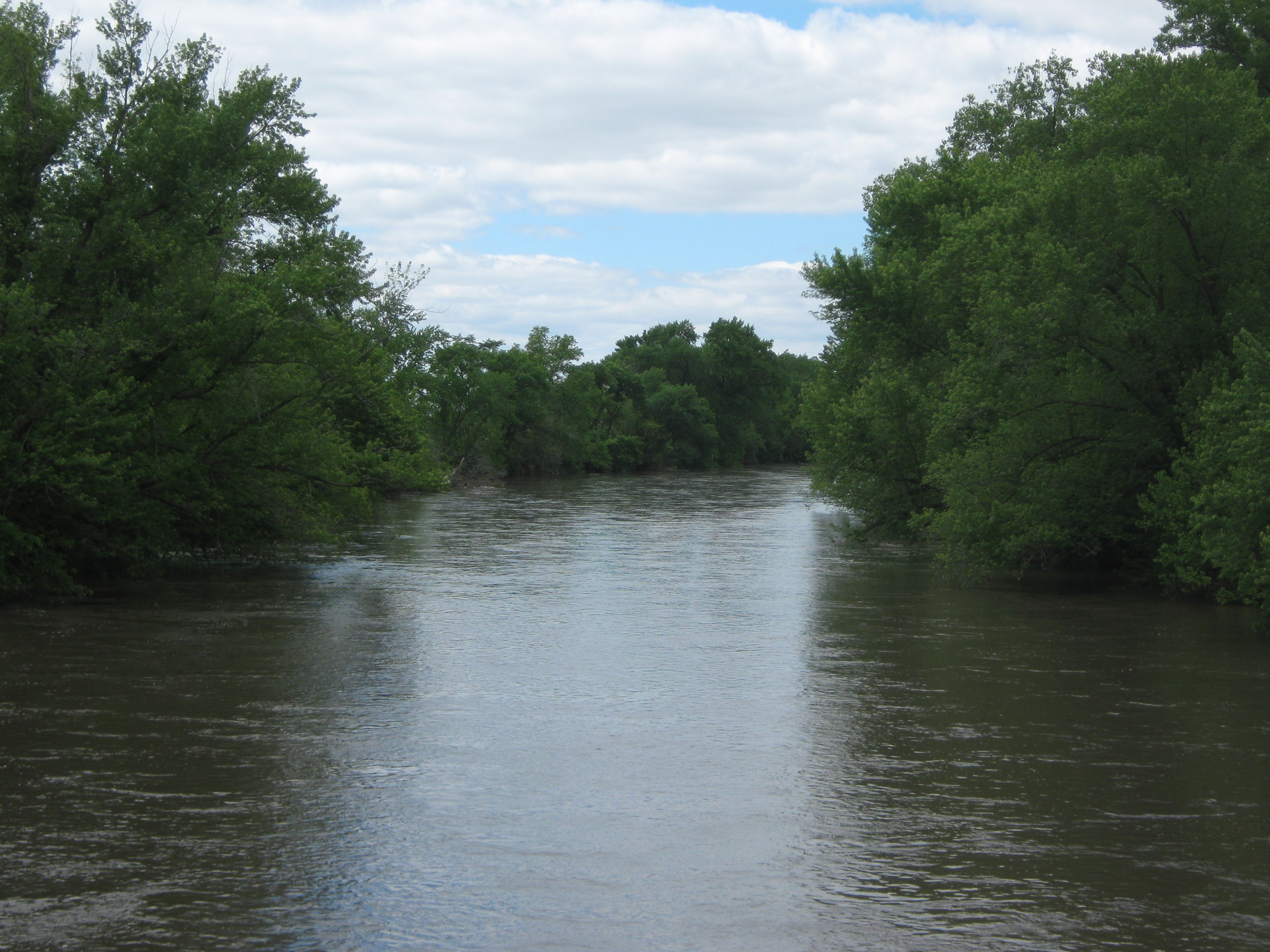
The river is rising.
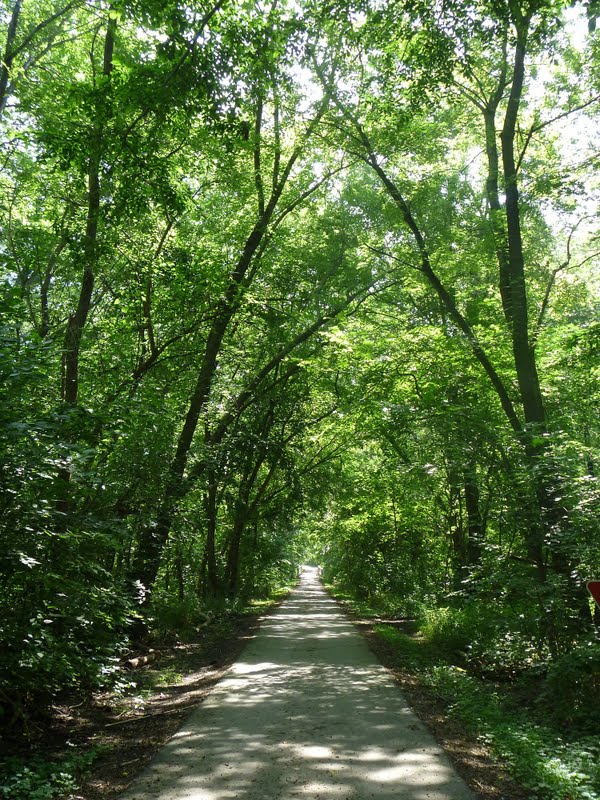
Vacation Day Two. We bicycled 40 miles.
I am very slow. To tell the truth, my husband could have ridden the trail in half the time. Sometimes I tell him to go ahead so he will get a better ride.
I felt marvelous after 20 miles. Twenty more miles and I felt very stiff. First break: Gatorade at a picnic table. Second break: I didn’t even get off my bike. I just stood there, straddling the bike, and when my husband handed me the camera to put away, I said, “Uh-unh. You do it. I’m not getting off the bike.”
I used to be able to ride 80 miles in a day. My goal this year is to do 50.
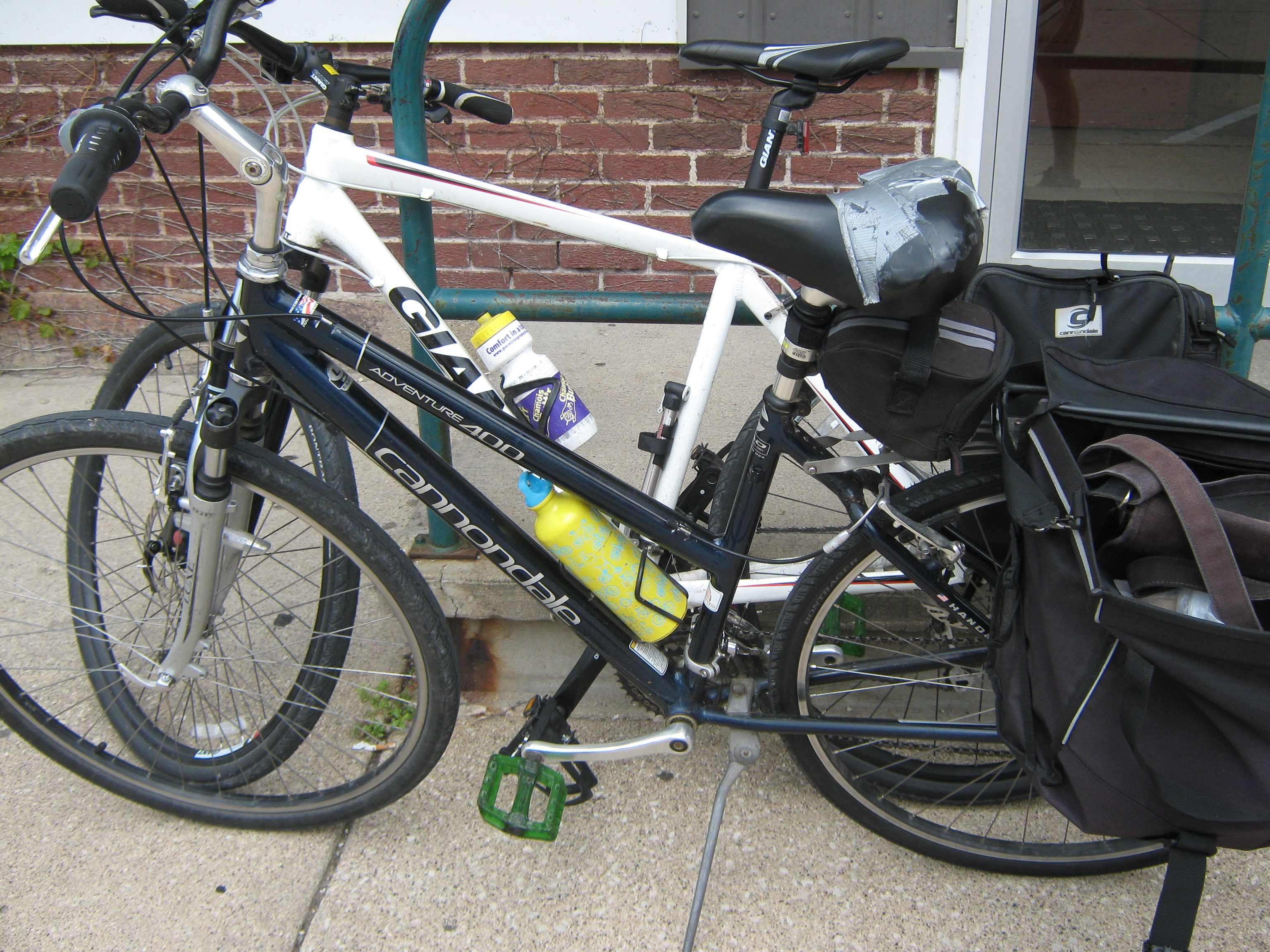
Mine is the blue bike.
My husband wants to buy me a new bicycle, but I love my Cannondale. Made in the U.S.A. I bought it 10 or 11 years ago, and I admit it has a few replacement parts. See the green pedals? They were made for some super-mountain-bike off-trail event that I will never participate in, but were the only ones in the store. See the tape on the seat? Last year it got so hot the gel started leaking out. But the seat has since been replaced.
We love this trail. For two years it was closed after the Flood of 2010. A disaster. Bridges out.
Now the river is rising again.
“She’s running wild,” a bicyclist said.
He was talking about the river, not me.

The river.
We’re all very concerned about the flooding.
Look at these photos of flooded fields on the trail. Unbelievable. This is not a lake. This is a field.
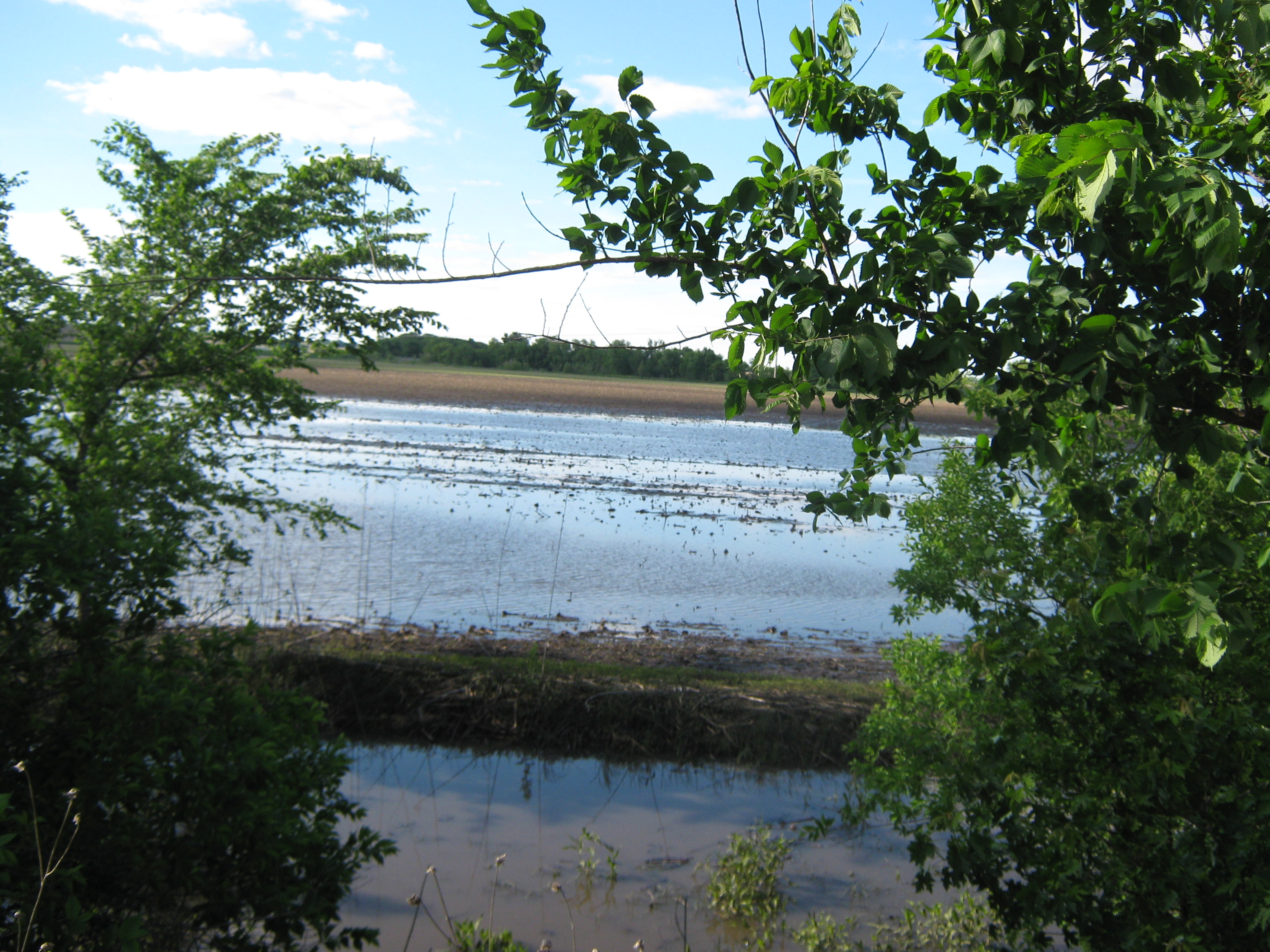
Flooded field
Here’s another picture.
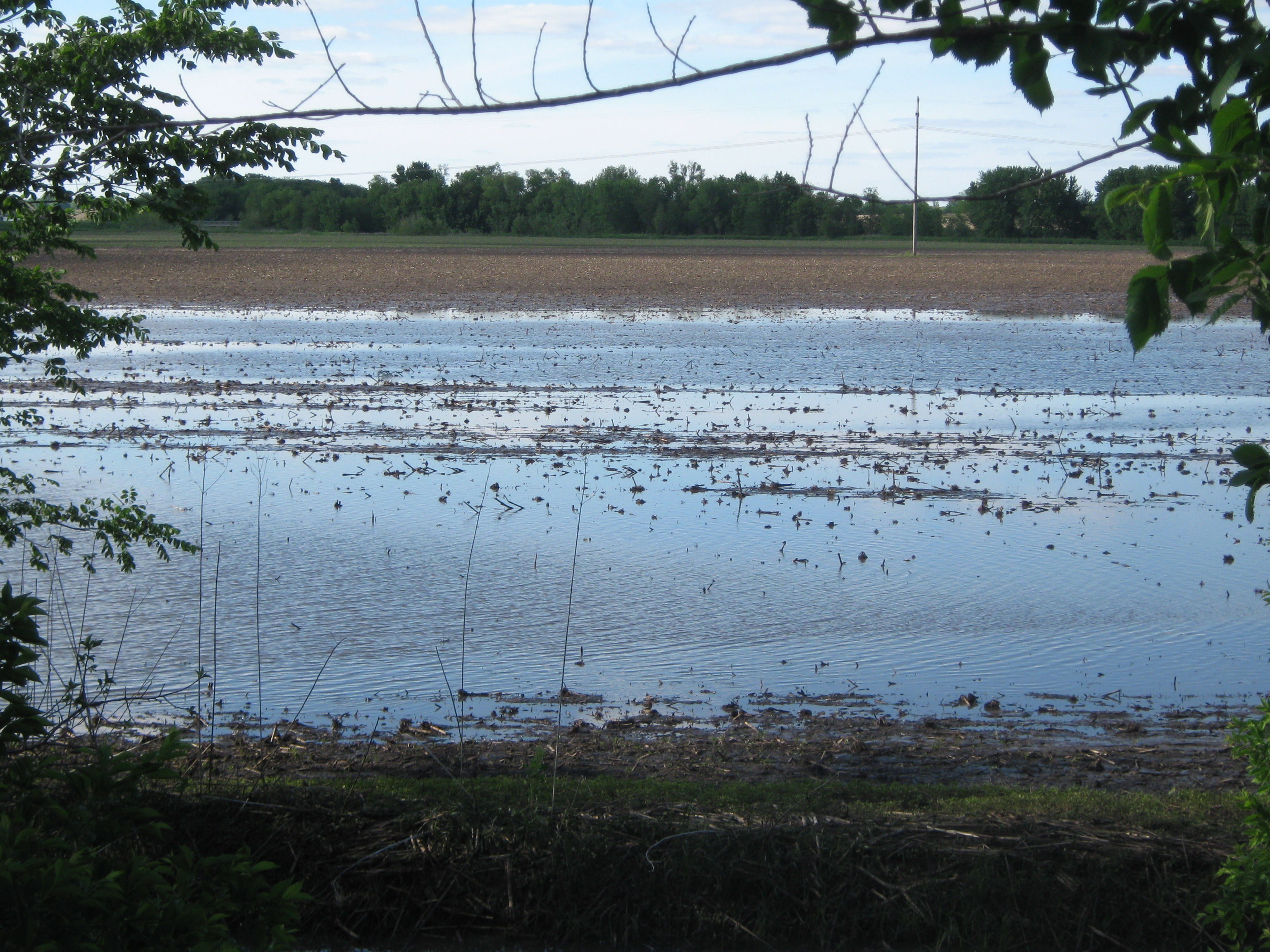
Flooded field.
Not to lecture, but…. A gorgeous planet destroyed by burning fossil fuel. Can’t you imagine the Zeus of Prometheus Bound, or Ovid’s Juppiter in the Deucalion and Pyrrha myth looking down? “Thank you, human beings.”
 Best Vacation Reading: Laura Lee Smith’s Heart of Palm. I adored Laura Lee Smith’s charming, comical, sometimes tragic, novel, set in Florida, the story of two generations of a redneck-on-the-way-up family, the Bravos. This is great vacation reading, what I call “high middlebrow.”
Arla Bolton is not a redneck. Dean Bravo is. Having broken up with her boyfriend, she is walking down the road in her bikini and sandals when Dean stops to see if she wants a ride. He, of course, is driving a truck. And of course she knows who he is.
The writing is simple but very fast.
You’re Dean Bravo,” she said simply.
“I am,” he said, surprised. “How do you know?”
“We all know the Bravos.”
“Who’s we?”
“Me and my friends.”
After they get married, there is a tragic accident. Dean takes Arla out in a boat with no one to spot her on waterskis. Dean is reckless. He drives the boat like a maniac. She falls in the water, and her left foot is cut in half.
And so she will walk with a cane the rest of her life. She is no longer the beautiful rich girl: she is as crippled as Utina, Dean’s hometown, where nobody wants to live, and where Dean has bought a huge rambling house, Aberdean, near the sea. And every time Dean looks at her, he remembers that he wrecked her life. Dean works at a paper mill, breathing toxic fumes, and he is an alcoholic, but he usually does the right thing by his family until the youngest son, Will, dies in an accident. Then he leaves.
Now, forty or fifty years later, a development company wants to build a marina in Utina. They have approached Arla, now in her sixties, and her children about selling their land for millions. Arla doesn’t want to sell; the children are (mostly) ambivalent.
The novel is told from multiple points of view. Frank, the middle son, the manager of a restaurant, is the most endearing and is at the heart of the novel. He is always anxious about whether he left the fryer on at the restaurant; he drives everywhere with a sociable dog named Gooch; he tries to negotiate between Arla and his sister, Sofia, who has OCD and anxiety disorders and who still lives at Aberdeen, when they quarrel over whether a termite-laced piano should be moved out of the house or not; and he is secretly in love with Elizabeth, the wife of his sleazy financier brother, Carson.
It may seem that the other Bravos are just hanging around their Southern house like a family in a Tennessee Williams play, but they actually work.
Arla irons vestments and church linens for a living.
Today, in the living room, the ironing board stood in its usual place in front of the west-facing window, and three plastic laundry baskets of carefully folded clergy vestments were lined up in a row on the floor. Since she quit coming to the restaurant regularly years ago, Arla had methodically built up a small, strange business as a laundress of vestments and church linens, a sideline she started when the kids were still small and had continued all these years, servicing, by now, all seven Catholic parishes in St. Augustine….
And Sofia cleans the restaurant.
Carson is in so much trouble with his Ponzi scheme that if he doesn’t get that development money he’s going under.
I picked this up because Richard Russo has a blurb on the cover, and Smith’s spellbinding story does remind me of his early work. I really enjoyed it.

 mirabile dictu