
 I have been trailing around Iowa with a very bad cold for a couple of weeks. Actually, I don’t so much trail as look wistfully out the door.
Life consists of hacking open cold medicine packets with sharp objects, applying Vicks Vaporub (one of my sweaters is now a wearable form of Vicks), and sleeping on the sofa. I do hope no one else has this cold, but if you do, I wonder, what are you reading?
I have been reading light, short books. Here are recommendations: a mystery and a ghost story.
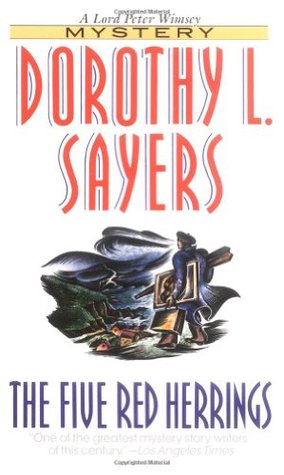 1. Dorothy Sayers’s Five Red Herrings. I love Golden Age Detective Stories of the 1920s and ’30s, and Dorothy Sayers’s Lord Peter Wimsey novels are especially charming and elegantly written. Set in Scotland, Five Red Herrings is a whodunit about the murder of an obnoxious artist. The hero, Lord Peter Wimsey, an eccentric, witty, affable amateur sleuth, is vacationing in Galloway, accompanied by his valet, Bunter. The scenery is beautiful, and everyone “either fishes or paints.” Wimsey has a way of fitting in wherever he goes.
Into this fishing and painting community, Lord Peter Wimsey was received on friendly and even affectionate terms. He could make a respectable cast, and he did not pretend to paint, and therefore, though English and an ‘incomer’, gave no cause of offence. The Southron is tolerated in Scotland on the understanding that he does not throw his weight about, and from this peculiarly English vice Lord Peter was laudably free.
When Campbell, an artist who has quarreled with everyone in the community, is found dead in a pool at the bottom of a steep granite slope, it looks like an accident. His easel is at the top of the slope, and the police think he stepped back to examine his painting and fell. It is Wimsey, of course, who realizes Campbell was murdered when he notices something crucial is missing from the artist’s bag of supplies. Six artists are suspected, and the mystery involves a stolen bicycle, train time-tables, and the personal painting styles of the suspects.
This is one of Sayers’s most enjoyable books. I must admit I just let the train time-tables wash over me, but the puzzle is clever, the information about art is fascinating, and I enjoy the company of Peter Wimsey.
2. R. A. Dick’s Th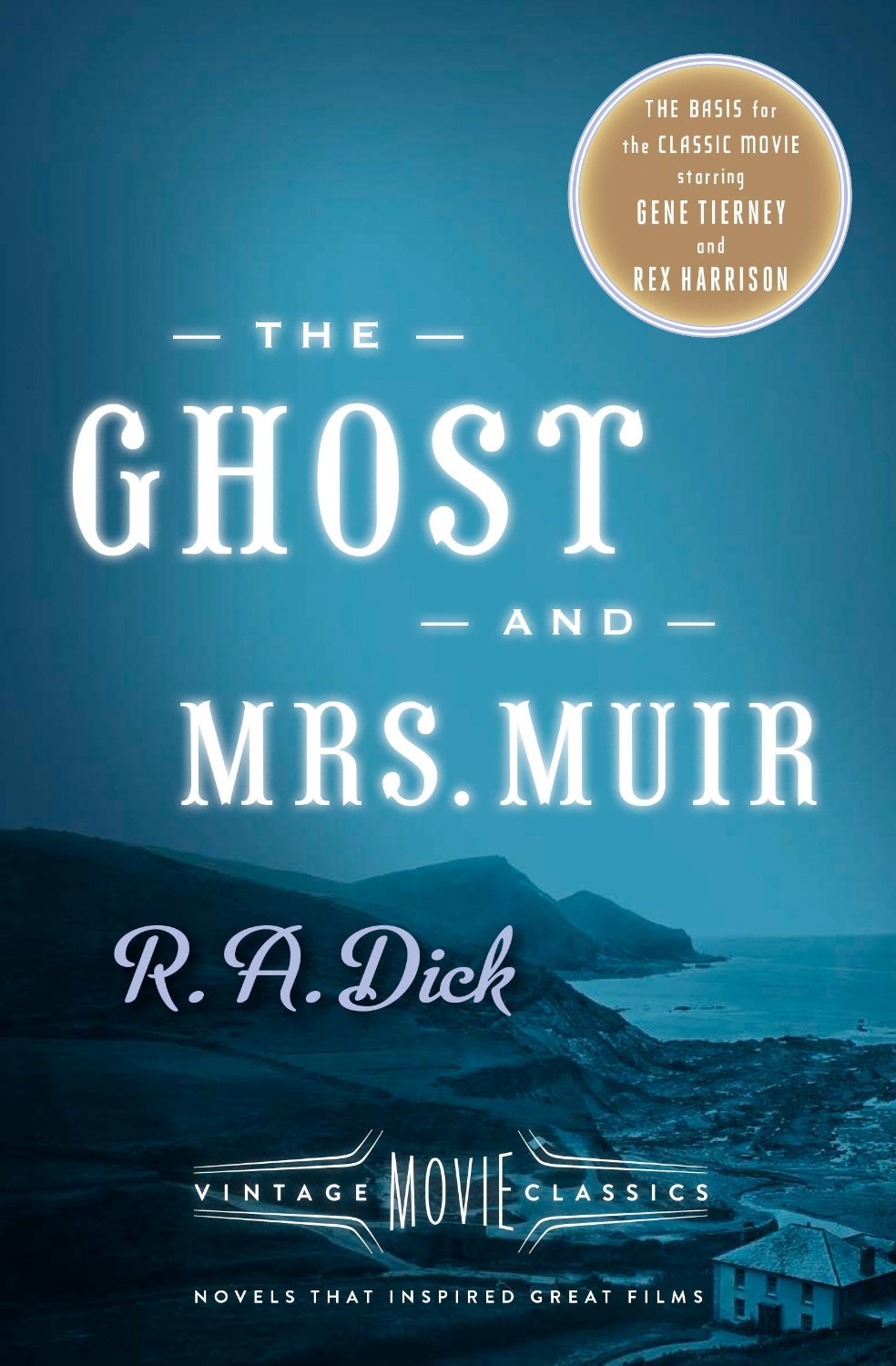 e Ghost and Mrs. Muir is the latest in the Vintage Movie Classics series of reprints of books that inspired famous movies. Among the books recently reissued in this series are Booth Tarkington’s Pulitzer-winning Alice Adams, Edna Ferber’s Cimmaron, and Fannie Hurst’s Back Street (which I wrote about here).
I couldn’t resist The Ghost and Mrs. Muir, because I am a fan of the movie with Rex Harrison and Gene Tierney. Guess what? This light, graceful novel, published in 1945, is even better than the film. It is spare, very funny, and a joy to read. The Irish writer Josephine Aimee Campbell Leslie wrote under the name of R. A. Dick, believing that a man’s name might help sales, according to the introduction.
The premise of the book is simple. Mrs. Muir is a lovely, gentle widow who was dominated by her husband and his family, Now that her husband is dead, she is determined that she and her two children will be independent. They will live at Gull Cottage in the seaside village of Whitecliff, far from all relatives. The realtor is reluctant to show her the house, because, yes, Gull Cottage is haunted, but Mrs. Muir soon befriends the ghost, Captain Daniel Gregg, and he agrees not to make himself known to the children. He will restrict his hauntings to her bedroom, where they have many spirited conversations and disagreements. When she runs low on money, he dictates his colorful memoir to her, Blood and Swash, which, anonymously published, becomes a best-seller. The book is so fascinating that Lucy’s publisher reads it in her presence and forgets she’s there. It is a subject at a stuffy dinner party where Lucy’s son, a pompous curate, the Bishop, and other members of prominent society condemn the book. And this is a very funny scene, because none would ever suspect of Mrs. Muir’s role in the writing.
Charming, funny, and gracefully-written. I am likely to read this again soon.
 mirabile dictu