Oh, Come on! The National Book Award Fiction Finalists

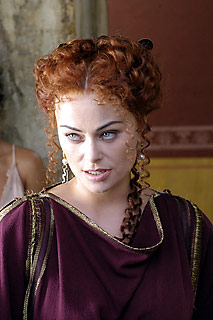
Atia (Octavian/Augustus' mother) in "Rome" (played by Polly Walker)

Atia (Octavian/Augustus’ mother) in “Rome”

When I saw the announcement of the National Book Award fiction longlist in the Washington Post this morning, I thought, Here’s something I can get behind.  But then I nearly spit out my tea.

“This is a f—–g starf—-ers’ list!  The trollops!”

Excuse the f- words. I’m watching the second season of the HBO series, Rome, and every other word is f—.  “Very British,” my husband says.  “Very HBO,” I say.  I also now call everyone a trollop, because Atia, Octavian/Augustus’s mother (played by Polly Walker), uses the t-word.

The National Book Award has long been the equivalent of the Man Booker Prize, to my mind:  I’ve never taken the Pulitzer seriously, what with their occasionally refusing to award it.  Now the NBA has a longlist-shortlist system, just like the Booker.  The poetry longlist was announced on Tuesday.  The nonfiction yesterday.  Today the fiction.

I don’t mind that my favorites of the year (see sidebar) didn’t make the longlist.  What I do mind is that there are only four writers on this list whose work I’ve never read.

Come on, give me something to work with here! I like to discover something new.

The list:
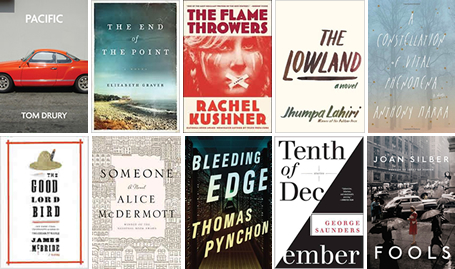
National Book Awards fiction 2013 lonTom Drury, “Pacific” (Grove).
Elizabeth Graver, “The End of the Point” (Harper).
Rachel Kushner, “The Flamethrowers” (Scribner).
Jhumpa Lahiri, “The Lowland” (Forthcoming from Knopf on Sept. 24).
Anthony Marra, “A Constellation of Vital Phenomena” (Hogarth).
James McBride, “The Good Lord Bird” (Riverhead).
Alice McDermott, “Someone” (Farrar Straus Giroux).
Thomas Pynchon, “Bleeding Edge” (Penguin).
George Saunders, “Tenth of December: Stories” (Random House).
Joan Silber, “Fools: Stories” (Norton).

I’ve read reviews of every book on this list except Pacific.

I’ve read all of Alice McDermott’s books.  I’ll read this one, too.  She won the National Book Award in 1998 for Charming Billy.

I admire Joan Silber, George Saunders, Jhumpa Lahiri, James McBride, and Thomas Pynchon (who won the NBR in 1974 for Gravity’s Rainbow).

And so there are only four I’ve never read a word of.

“Is something wrong?” a family member asked.  He had spilled coffee all over his tie so wasn’t in the best of spirits.

“They’re trollops!”  I answered.

“Trollope?”  he asked.

“The judges!”

“Trollope?”

He went out the door.  I know I will have better luck discussing this online.

The judges are:  former New York Times Book Review editor Charles McGrath (chair), Charles Baxter (a brilliant novelist and short story writer),  Gish Jen (ditto),Rick Simonson, a bookseller at Elliott Bay Book Company in Seattle, and René Steinke (a novelist I haven’t read).

Perhaps all these books are masterpieces.

Perhaps the judges have their eye on one of the few, very few, longshots.

It’s always wonderful when the award goes to someone unknown, though of course the unknowns are no longer unknown:  Lily Tuck, Andrea Barrett, Jaimy Gordon.

Perhaps the judges should develop a narrative about the writers for us so we’ll have something to care about.

MEANWHILE, EVERYONE IN THE UK is raging because the Man Booker Prize has been opened up to Americans.  They much prefer the Commonwealth, they say.

What is the Commonwealth?  one wonders.  O Can-a-da!  India, South Africa, Australia… is the “wealth” really “common”?

The Americans revolted long, long ago.  “We hold these truths to be self-evident…,” etc., etc.

There is no reason for the Booker to be open to Americans.

Americans do qualify for the Orange Prize/Women’s Prize, and often win it.

And so the Brits and I are steaming about different awards.
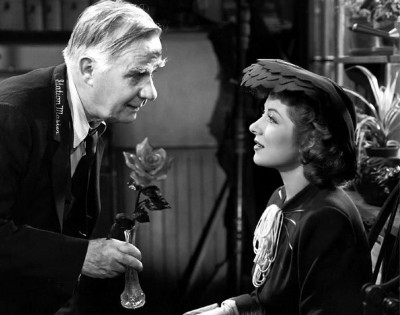
Mrs. Miniver, Middle Age, & Matron Clothes

Greer Garson as Mrs. Miniver

Greer Garson as Mrs. Miniver

Mrs. Miniver suddenly understood why she was enjoying the forties so much better than she had enjoyed the thirties: it was the difference between August and October, between the heaviness of late summer and the sparkle of early autumn, between the ending of an old phase and the beginning of a fresh one.

I very much enjoyed reading Jan Struther’s Mrs. Miniver, a collection of charming columns she wrote in the 1930s for the London Times.  Mrs. Miniver is a fictional character based on Struther.  In 1939 the columns were published as a novel (you can read the entire book at this website.)

As a housewife/cook/bicycling blogger, I think it would be lovely to be Mrs. Miniver.  In the very first chapter, when she is musing about being in her forties, she comes home to a fire in the fireplace and tea laid out on the table by the servant:   “…there were honey sandwiches, brandy-snaps, and small ratafia biscuits; and there would, she knew, be crumpets.”

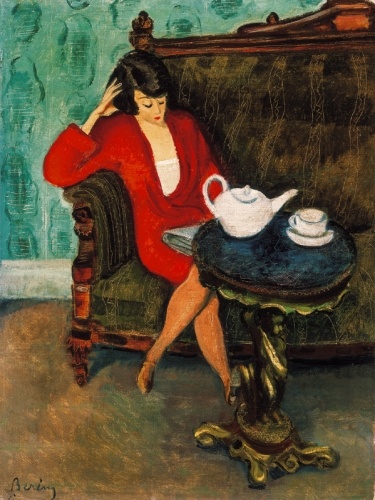
"Red-dressed Woman in a Green Room" by Róbert Berény

“Red-dressed Woman in a Green Room” by Róbert Berény

Perhaps it is easier to examine the vicissitudes of life wisely if one has servants.  She loves her three children but is not trapped by them (her oldest son is at Eton), one of her greatest problems is getting used to a new car, she endearingly buys an expensive green lizard engagement diary instead of a new hat, and she does not need romance:  she describes marriage as two crescents bound at the points, with a leaf-shaped space in the middle “for privacy or understanding, essential in a happy marriage.”

The forties…  All gone!  Mrs. Miniver had better circumstances. The fifties have been better for me.  The forties were a time of heartbreak, of working for an unstable boss, and coping with an early menopause.  For almost a year I actually missed menstruating.  Tampons.  The stain of blood on a white skirt on the bus.  (A whispered “Miss!  Your period.”)  Then there were hot flashes.   There was blushing. I refused to support the pharmaceutical companies by taking hormones (which was brilliant, since they were shown to cause cancer).

Finally, in my  fifties, I began to feel the “sparkle of early autumn” Mrs. Miniver writes about.  There is a confidence in one’s fifties, a cessation of trying too hard to please, and a willingness to try new things.

Of course you miss your younger body.

But you can, if you want, let go of:

  • dyeing your hair blond
  • baking eggplant parmesan in a small kitchen where every surface is covered with ingredients and you must move into the dining room to put it all together–probably in tears!
  • saying “Have a nice day!” to the guy who plays his drums late at night
  • pretending you will bicycle 100 miles with your husband/boyfriend/girlfriend (35 is my limit)
  • saying you’ll read James Joyce’s Ulysses
  • wanting a large leather hobo bag that costs $1,495 (throw out your TV!  That’s where you saw it.)

You will, on the other hand, need more makeup and a better wardrobe.

The Loved and Envied enid bagnold beautiful coverIs aging the last frontier for women in literature?  Certainly many honest, bold writers have written about sexuality in middle- and old age. Lessing’s The Summer Before the Dark, a novel about a woman’s coping with midlife, is one of my favorite books.  Her novel Love Again is about love at the wrong time of life:  a 65-year-old theater manager and writer, who hasn’t had sex in 20 years or missed it, falls in love with a flirtatious American actor in his twenties.  Erica Jong is the author of the memoir, Fear of Fifty.  Virginia Woolf writes about the 50ish Mrs. Ramsay in To the Lighthouse.  Elizabeth von Arnim’s Mr. Skeffington is a coming-of-middle-age story about a beautiful woman turning 50.  Enid Bagnold’s The Loved and Envied tells the story of a group of friends who are dealing with aging.  May Sarton published diaries on aging.

And of course there are many more.

Which writers do you recommend on aging?  And what are your thoughts on different decades of life?

BOOKS & MATRONS. I was recently treated with respect at Barnes and Noble.  Why?  Because I wore MATRON CLOTHES.

Some of you may remember that I bought “matron clothes” for my mother’s funeral in August.  I rushed into a department store, took a jumble of suitable tops into the dressing room, and bought the first five that fit. In my feminine top over stretchy jeans, I was  promptly served my latte at B&N in about 30 seconds.  When I bought a book, the clerk did not a smile–that would have been going too far–but there was courtesy.

The moral?  Dress up!

Who’s Anne?

IMG_2669I took notes on our Persuasion salon.

Few occasions are more amusing than the meeting of my cousin, my friend Janet, and myself to decide which of us most resembles Anne, the heroine of Austen’s Persuasion.

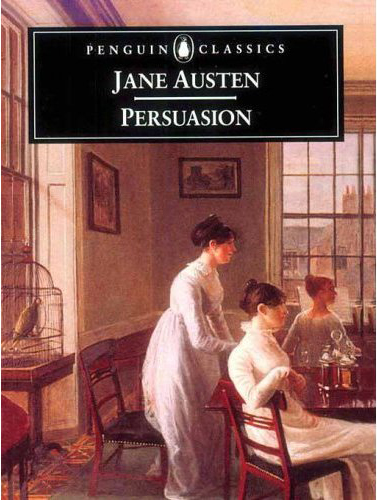
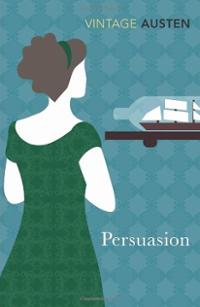
Persuasion Jane Austen PenguinMany of you have read Persuasion, and I am sure, like us, you are interested in the question of whether you are  Anne. She is the most sympathetic of Austen’s heroines.

It’s simple on the surface:  a matter of ABC, or 1 + 2.  Anne, the quiet, charming 27-year-old  middle daughter of a baronet, is not esteemed by her family, and are you as highly regarded as you should be?  Formerly very pretty, she has lost her bloom over the years, and is a bit of a Cinderella figure.  At 19, she refused Frederick Wentworths’ proposal, because Lady Russell, her late mother’s best friend, advised her to.  She regrets having parted with Captain Wentworth, her true love, and has turned down the suitor who later married her sister, Mary.

It’s all about m-o-n-e-y with Lady Russell.  (And with Jane.)

Austen tells us,

Captain Wentworth had no fortune.  He had been lucky in his profession, but spending freely, what had come freely, had realized nothing.  But, he was confident that he should soon be rich;–full of life and ardor, he knew he should soon have a ship, and soon be on a station that would lead to every thing he wanted.

Bad enough that he’s a naval officer:  he has no cash.   Lady Wentworth cannot approve such an unequal match.  We know that Jane Austen usually cannot approve such a match.

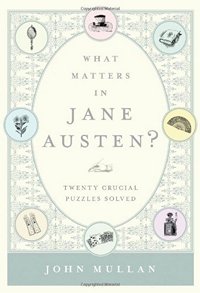
what-matters-in-jane-austen-john-mullan-2013-x-2001John Mullan says in his brilliant book, What Matters in Jane Austen?  Twenty Crucial Puzzled Solved (Ch. 13, “How Much Money Is Enough?”):

What is extraordinary about Austen is not her candour but the precision with which she shows the influence of particular sums on particular people.  Most of her major characters come with income tickets attached, not so much because the novelist wants us to notice how important money and lack of money might be, but because she wants us to see her characters noticing these things.

Unable to reduce his spending to pay his creditors, Anne’s father, Sir Walter, is persuaded to rent out his house (to Captain Wentworth’s sister and husband) and move to Bath with his oldest daughter, Elizabeth. Anne stays behind for a few months with her sister Mary (and later with Lady Russell), is appreciated by Mary’s in-laws, meets Captain Wentworth again (who now has 25,000 pounds), and is admired by two other men.

She gets her bloom back.

“I’ve got my bloom back, too, like Anne,” my cousin protests when we say she can’t be Anne.

It is a bit of a bore when someone who’s only 37 claims she has got her bloom back.  She has never lost her bloom, as Janet and I point out.

Then we remind her that she doesn’t WANT to be Anne anyway.

She wants to be Louisa Musgrave.

Louisa, who is 20, pretty and bossy, claims brazenly that she is not easily persuaded. Captain Wentworth admires her.

“It is the worst evil of too yielding and indecisive a character, that no influence over it can be depended on.  You are never sure of a good impression being durable; everybody may sway it.  Let those who would be happy be firm.

Poor Anne overhears this.

Then when they go to Lyme, Louisa is jumping off the steps and he doesn’t catch her and she is unconscious and they don’t know if she’ll recover or not… and Anne starts to look good to him again.

I don’t want to be Louisa, but what are the choices?  Having married three times, I can hardly pretend that I would have been single at 27.

Janet has never been without a boyfriend, either, or at least a date.  “How about Mrs. Clay?” she asks.

Mrs. Clay has a wayward tooth and freckles, but is charming enough that Anne’s sister Elizabeth invites her to Bath.  The daughter of Mr. Shepherd, Sir Walter’s lawyer, she is of the wrong class, and everyone is terrified that she will persuade Sir Walter to marry her.

Then there’s Mrs. Smith.  We ALL like Mrs. Smith, Anne’s old school friend.  When Anne and Lady Russell go to Bath, Anne meets Mrs. Smith, now an invalid.  Mrs. Smith makes the best of things, has a positive attitude, but also is worldly, and knows all about Mr. Elliot, Anne’s father’s heir, who wants to marry her.

Lady Russell tries to persuade Anne… but Anne is true to Captain Wentworth.

Mr. Elliot, a highly intelligent, sophisticated widower, genuinely admires Anne, but has no principles.

Lady Russell is always wrong, though she is charming and reads a lot.

The plot of Persuasion is typical of Jane:  a true man and a false man pursue the heroine (sometimes even more pursue her).  In Emma, we have Mr. Knightley and Frank Churchill (Mr. Elton doesn’t count), but Frank isn’t really after Emma at all, and Mr. Knightley, a lifelong friend, isn’t considered a beau till the end of the novel.  In Mansfield Park, Fanny loves Edmund but is pursued by Mr. Crawford, a rich, licentious young man who is suddenly struck by Fanny after she blooms into prettiness.  Eventually Edmond goes after her, too.

Captain Wentworth is the only Austen hero I like.  All three of us agree that he is very sexy.

We also like the funny details in Persuasion:  one day Anne runs into Admiral Croft, Captain Wentworth’s brother-in-law, and he is staring at a painting in a shop window.  He wonders who on earth designed this ship, which would capsize immediately.

What a lovely novel!  Anne Elliot is now my favorite Austen heroine, surely the most sympathetic of them.

And now here we have both a Persuasion playlist and a movie list.  Enjoy!

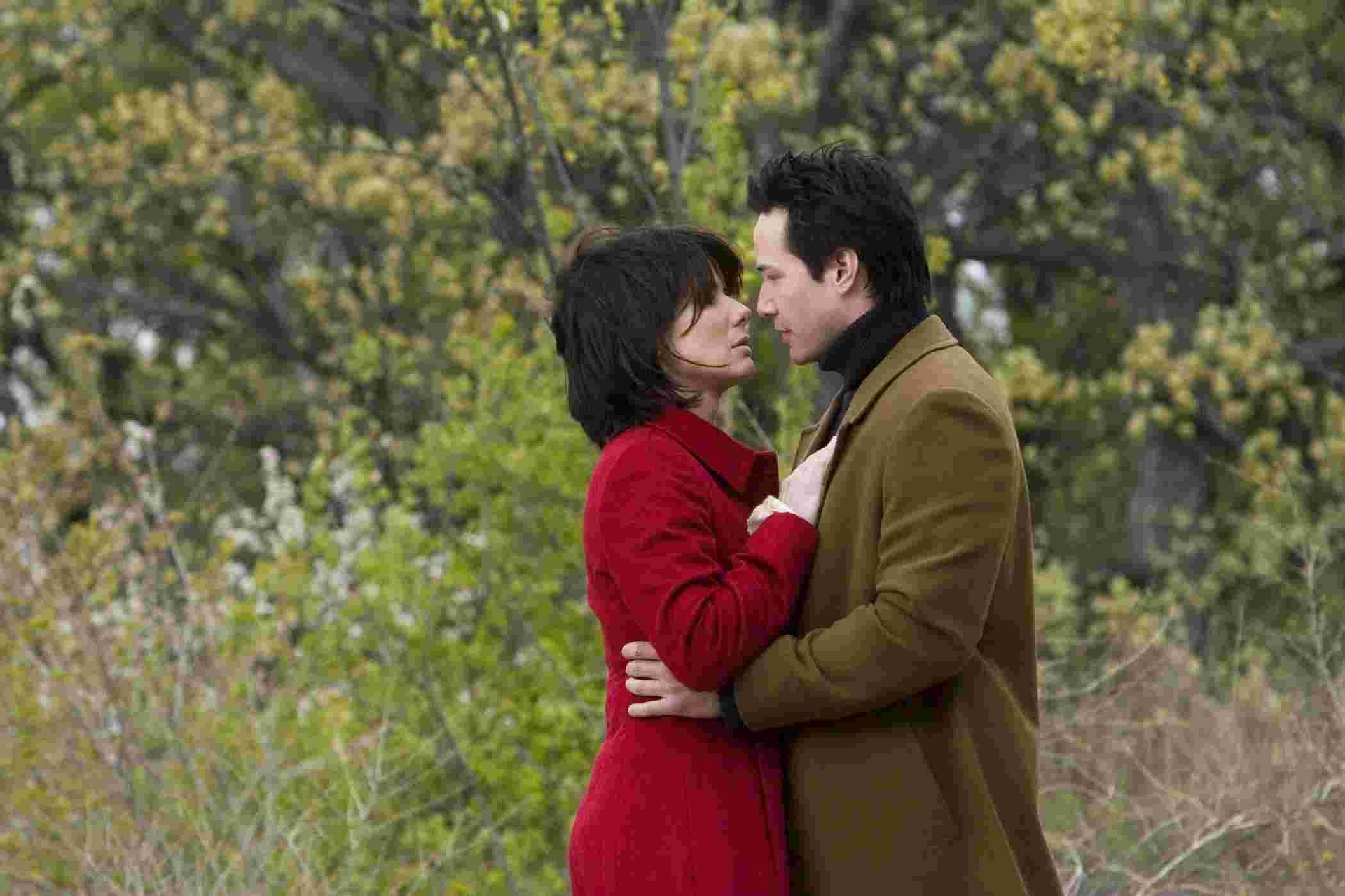
"The Lake House":  the heroine's favorite book is Persuasion.

In “The Lake House,” the heroine’s favorite book is Persuasion.

PLAYLIST

“Persuasion,” Richard Thompson

“Pretty Persuasion,” R.E.M.

“Friendly Persuasion,” Pat Boone

“Persuasion,” Santana

“Crystal Blue Persuasion,” Tommy James and the Shondells
MOVIES & TV

The Lake House, with Sandra Bullock and Keanu Reeves.  Actually, this is a time-travel romance, and has nothing to do with Persuasion (as I remember) but the heroine’s favorite book is Persuasion.

Persuasion (2007)
And there are many other versions of Persuasion at IMBD.

Reading Old Books, Reading New Books & Callie Wright’s Love All

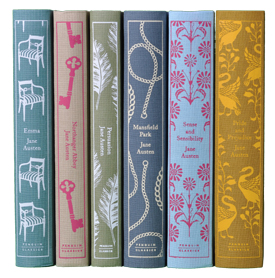
jane-austen-penguin-front setOnce a year I declare that I will read more new books.

One new book a week, I say.

When I mentioned this in a comment recently, a blogger wittily said, “And how many old books do you read?”

I do read a number of old books, don’t I?

With the exception of Penguin Classics and Oxford World Classics, I do not support the publishing industry.  I’d rather be reading Jane Austen.

The new books often sound good, and occasionally are good, but most are crap.  Life’s too short.

And I’m an Anglophile. I prefer Austen, Dickens, and D. H. Lawrence to most American writers.  I would be delighted to “sleep on Christopher Tietjens’ lawn,” except that he’s a fictional character, so does he have a lawn?  (For more on my doomed love affair with Christopher, the hero of Ford Madox Ford’s Parade’s End,  go here.)

Although I prefer English contemporary novels, too,  I have had excellent luck with new American fiction this year:  Barbara Kingsolver’s Flight Patterns, Karen E. Bender’s A Town of Empty Rooms, Steve Yarborough’s The Realm of Last Chances, and Susan Choi’s My Education.

I skip most historical novels, and read contemporary American fiction to find out what American life is like.  My life is about bike rides, books, the internet, Master Chef, cooking Mollie Katzen’s recipes, and hanging out with the cats.  But what is it like for others?  Based on fiction, it is about extra-marital affairs.  Infidelity is at the heart of three of the four aforementioned American novels.  Quite a lot of fiction IS about extramarital affairs, if you think about it.

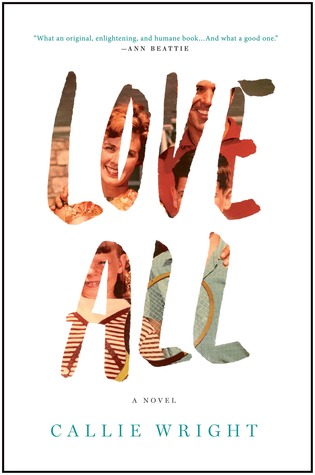
Love All by Callie WrightTake Callie Wright’s new novel, Love All, which I must admit I read because of a blurb by Ann Beattie.

Triangular relationships dominate this charming, if uneven, first novel, set in Cooperstown, New York, in the 1990s.   Hugh, the principal of Seedlings, a pre-school, is unhappily married to Anne, a chilly, almost OCDish lawyer.  But when a Seedlings student, Graham Pennington, has an accident on the monkey bars and his mother, Caroline, cannot be reached,  Hugh nervously accompanies the boy to the hospital in loco parentis.  Hugh and Caroline, an artist, bond immediately in the hospital, almost as though he is Graham’s other parent; one thing leads to another, and they have sex.  This couple seems made for each other, and we can’t help but cross our fingers for them, though that isn’t usually our reaction to infidelity.

Hugh is not the only one who has affairs.  Although Anne’s 86-year-old father, Bob, is devastated by his wife Joanie’s recent death, he had many discreet affairs during their marriage.  When a local writer in the ’60s, Elaine Dorien, published a roman a clef, The Sex Cure, about the sex lives of the town’s inhabitants, Joanie began to notice her husband’s predilections for other women.   Even Anne, a teenager at the time, read the novel and understood what was happening.  And It had a lasting effect on Anne.

It is Wright’s unadorned writing that makes the novel so readable.  She pays attention to detail, but doesn’t attempt the poeticism that some writers try too hard to achieve.

From time to time, when Joanie noticed he was staying late at work or had made Saturday plans with Charlie, she would pull the novel off her bookshelf and read a chapter or two before bed, and Bob would break off whatever insignificant dalliance he’d been involved in and return to his wife.

Even Julia, Hugh and Anne’s fifteen-year-old daughter, is in a triangle:  her two best friends are Sam and Carl.  She has a crush on handsome Sam, but cute, curly-haired Carl “likes” her.  After she  reads The Sex Cure, found under her grandmother’s mattress, she wonders if she can write something to alienate Carl.

Thinking about The Sex Cure, I opened my journal and flipped to a clean page.  All the narrow lines–between truth and fiction, want and need, friendship and love–seemed suddenly traversable:  Elaine Dorian had done it.  By the stroke of her pen, she had roiled and rippled the town with one story, a story everyone believed, so much so that she may have made it true.

There are a couple of problems with this enjoyable novel:  Wright shifts from one point-of-view to another, and she succeeds better with some characters than others.  Julia’s is the most original voice because Wright switches from third to first person narration: it allows her to tell the story less formally and more quirkily.

Anne, the cold lawyer, and her teenage son, Teddy, a jock, are stick figures.  The sections devoted to these characters are short, but the prose is very flat here, as if Wright were just getting it done.

And the ending is unsatisfying.   During a tennis exhibition between Julia and Carl, all the important characters gather.  But what happens doesn’t even quite happen.  It is an open ending.  There’s the trajectory of the ball…and the trajectory of the future.

There is some very graceful writing in Love All, and maybe next time Wright will perfect the characterizations and the ending.

If I were going to “star” it, I’d give it three out of five.  (Well, I guess I just starred it.)

Radical with a Notebook: Persuasion & The Free Little Library

She did not blame Lady Russell, she did not blame herself for being guided by her.”–Jane Austen’s Persuasion

I am the only person at the coffeehouse with a notebook.  Everyone else has a laptop.

I scribbled notes at a glass table filled with coffee beans.

persuasion-jane-austen-paperback-cover-artAlthough the Persuasion Book Club could be a full-time job–more articles have been written on Austen than I could read in a lifetime–I will not trivialize the experts by summarizing their theses.

No, I am dashing through Persuasion, loving every word of this classic, enthralled by Austen’s romance about an older heroine (the only romance Austen wrote, in my opinion).

Anne Elliot is only 28, not 40 or 50something, as I suspect many of us are. Austen never married.  Her heroines are under 30, or they’d never have a conjugal chance.

Few are as fascinated as I am by Austen’s middle-aged characters, from silly Miss Bates in Emma to Mrs. Bennet in Pride and Prejudice.  In Persuasion, Lady Russell, Anne’s late mother’s best friend, is a kind, devoted, thoughtful, if conservative, widow.   She does not marry Anne’s father, as everyone expects. Instead, she advises Anne on marriage.   Badly.

We are more liberal than Lady Russell.  Live with him, we might have said.  Men come and go:  husbands disappear in their 40s only to resurface after midlife crises, or, if we divorce them, we go on blind dates, walk out on men who make racist remarks, and indignantly trudge the three miles home in very uncomfortable shoes. Fortunately, a friend of our fix-us-up friend is so delighted by the story he asks us out…  and three months later we’re married!  (This stuff happens.)

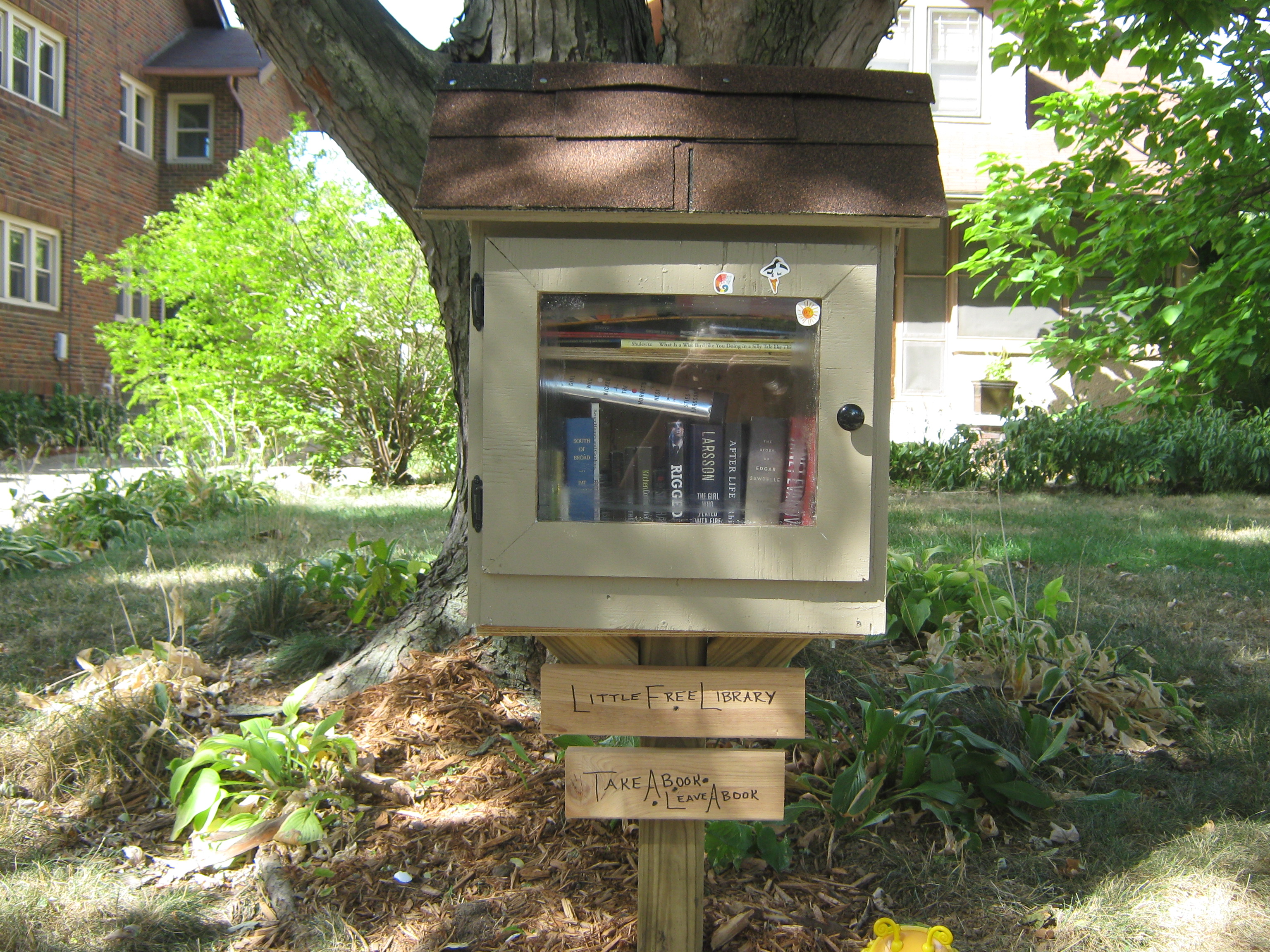
THE OPENING OF THE LITTLE FREE LIBRARY is the big event in our neighborhood this week.

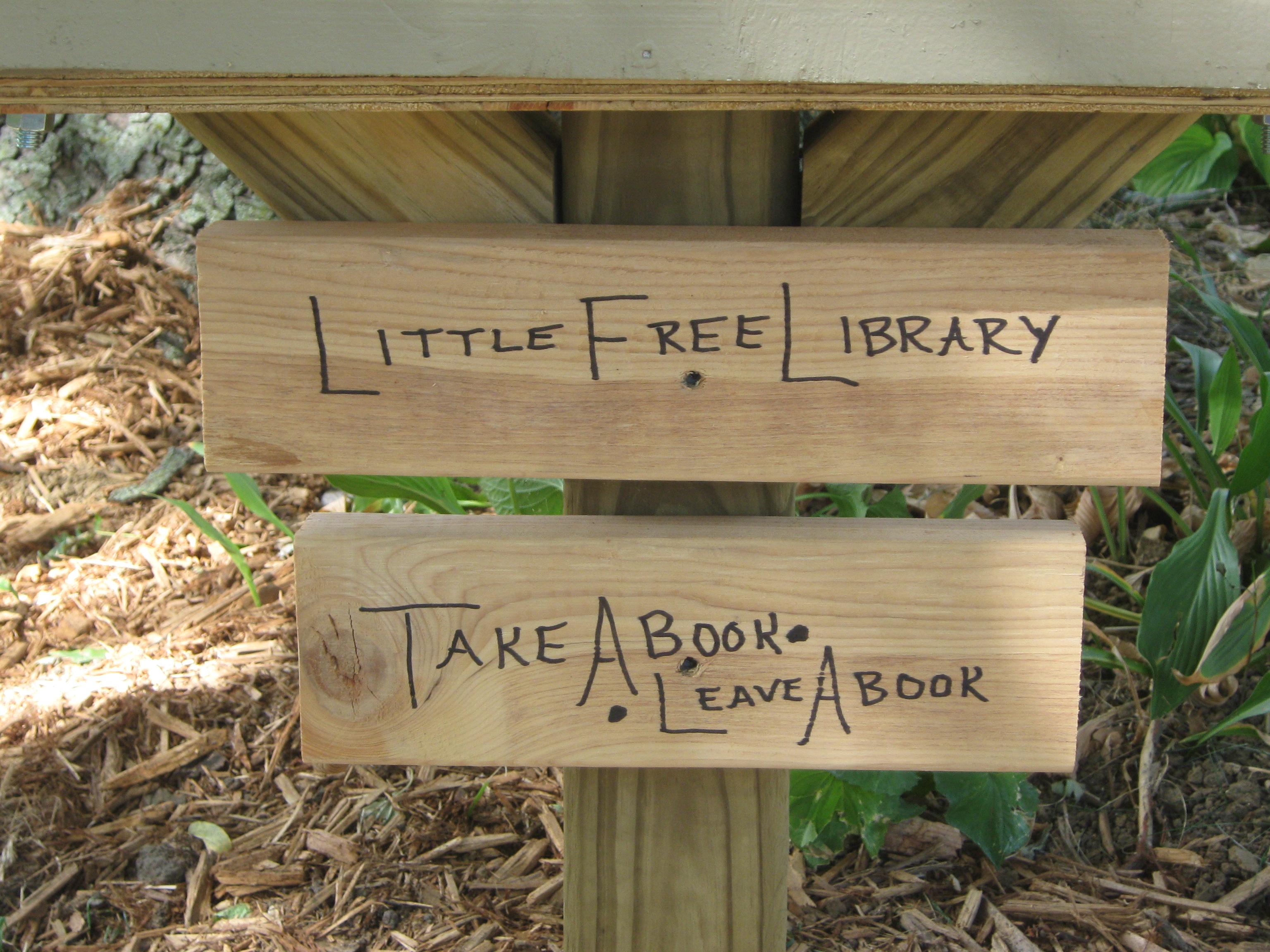
It is part of a literacy movement.  You can build or order a little house-on-a-stick from Little Free Library and plant it in your yard.

Little Free Library

Little Free Library

Fill it up with old books.  Then neighbors can open the hinged window to borrow a book, or exchange one of their own for a free library book.

Little Free Library

Little Free Library

I walk down this street almost every day.  “Have you seen the Little Free Library?” everyone wants to know.

Yes, yes.

The selection could be better.  There’s  Janet Evanovich, Michael Connolly, Edward Sawtelle, Stieg Larsson.  Enjoyable books, but the only one I approved was Jack Kerouac’s On the Road.  He said, and this is appropriate:

…the prettiest girls in the world live in Des Moines.

He also praised the pie and ice cream in Iowa.

I saw the travelling exhibit of Kerouac’s scroll (the typed pages taped together) of On the Road at the University of Iowa Art Museum.  The long glass case was endless; I peered too closely and accidentally touched the glass.  The guard came.  “Don’t touch the glass.”  Okay!

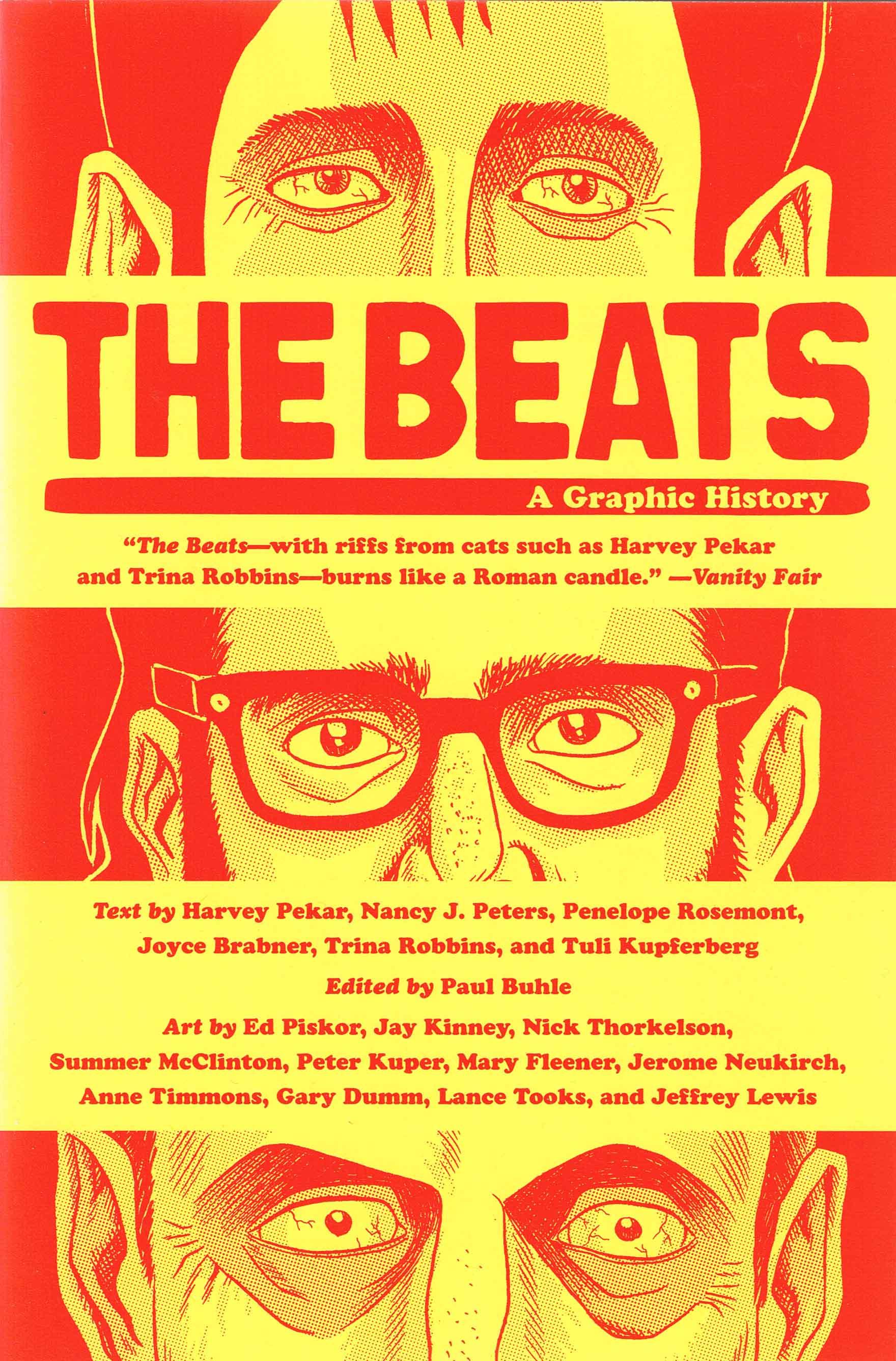
The beats pekarEverything you need to know about Kerouac can be found in Harvey Pekar’s The Beats:  A Graphic History.

We should all go on the road.

It is September.

It’s cooler.

Good road trips taken in the past:  Iowa City to Bloomington (many times),  Bloomington to Washington, D.C., (twice), D.C. to Buffalo, Buffalo to Toronto, Des Moines to Omaha, Lanesboro to Winona, Princeton to New York City.

Will I ever make it to Kansas City?

Can’t go, because I’ve been told I’d have to sit through a Kansas City Royals game.

I like baseball, but only at World Series parties.

Anyway, I’d prefer to ride my bicycle.

Too late in the season.

Tomorrow I’ll tell you about a couple of books I’ve been reading.

The Persuasion Book Club

She had been forced into prudence in her youth, she learned romance as she grew older–the natural sequel of an unnatural beginning.”—-Jane Austen, Persuasion

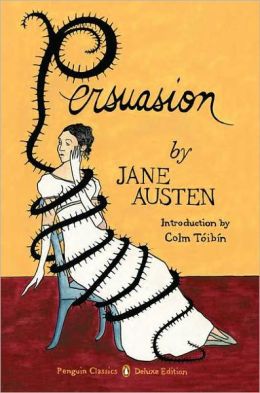
Persuasion by Jane Austen Penguin Deluxe Edition

Heavens, what’s with this cover? Do you like it?

My cousin and I have formed a Persuasion book club.

We are doing this for you.

Yes, we’re grateful for your consternation over the fact that (1)  she was called an idiot by a private online Austen book group; and (2) you don’t entirely dismiss her view that Anne Elliott, the heroine of Persuasion, was a wimp.

And so I suggested that I reread the book, and that she and I discuss it next week.  Possibly Wednesday, possibly Thursday:  it depends on when I finish.  There will not be a video:  I will write from notes in my reporter notebook.  I am a good note taker.

I have read Persuasion many times, and of course am on the side of Anne Elliott, the smart, quiet, charming heroine who behaves so beautifully with her ex-boyfriend.

My cousin thinks Anne is a wimp, and I think that point can be argued.  As I put it, some of us are Annes, some of us are not.

I fear that in my youth I was like Louisa Musgrave, the gregarious, bright 20-year-old rival who jumps off walls on walks to get attention.  Far worse, I wore leotards without a bra and made out with Captain Wentworth, oops, I mean So and So, on the stairway at work.

But a modern Anne might well have done the same.  She probably made out with Captain Wentworth, don’t you imagine?  Or did she have to wait till the official engagement?  We are not scholarly here, and we want to know.

May I say that Captain Wentworth is Austen’s sexiest hero?  Don’t you love it when he wordlessly picks up Anne and puts her in the carriage?

Now, guys and gals, I am PRETENDING to be a hip, silly reader. (Perhaps like the heroine of a Tama Janowitz story.)  I am hip, but not dumb, and I am not a blonde, though that might be a good idea.  Perhaps I WILL dye my hair before the book group.  But last time I dyed it I had an allergic reaction.

My cousin is occasionally blonde, and she is not dumb: she just doesn’t read many novels.  She wants me to add that her favorite book is Lytton Strachey’s Eminent Victorians.  Now she wants me to tell you that she made that up because she knew we would enjoy that comment.  Her favorite book is Barbara Tuchman’s The Guns of August.  She also likes Diana Gabaldon’s romances.

We will find at least one sequel to Persuasion.  (We will comb Jane Austen websites for suggestions.)

We will post a playlist.  (The video of Richard Thompson’s song, “Persuasion,” appears at the bottom of the post.)  Please contribute songs to our playlist.

I look forward to the discussion and your comments.

The Loneliness of Online Life

Photo illustration by Justin Metz (The Daily Beast)

Photo illustration by Justin Metz (The Daily Beast)

We don’t often talk about the loneliness of online life.

For months we don’t notice it.

If my mother hadn’t died, perhaps I wouldn’t have noticed it at all.

We blog, we email, we post, we comment.

My cousin and I were sitting in the back yard, drinking tea.  Electronic devices littered the table:  laptops, phones, e-readers.  She opened her laptop and checked her email.  She started crying.   An online friend at a Jane Austen fan group had posted a 1,000-word tirade calling her an idiot.  My cousin, a scatty reader who prefers history to fiction, had written that Anne Elliott, the heroine of Persuasion, was “a wimp” for not having married the love of her life, Captain Wentworth.  She said Anne shouldn’t have obeyed her silly father and the conventional Lady Russell, her late mother’s best friend.

“This is an ignorant misreading of Austen’s morals and manners,” her online friend wrote.

persuasion-jane-austen-paperback-cover-artAll right, not the end of the world, you say.  Any of you who belong to  Janeite groups know quite well that they quarrel all the time.  They know tiny things about Austen’s books that my cousin would never dream of.  They argue for days about minuscule details.

She knows this friend from online poker. Yes, that’s the internet for you.

I know how she feels.  Many years ago I shut down the computer during a discussion of The Aeneid in a chatroom on AOL .  “Are you crying?”  my husband asked incredulously.  Yes, I was.  I can’t remember what was said to me, but it was vicious.

There is an emptiness and deep sadness in this kind of online fighting.  You don’t choose to participate in it, and then there it is.  Didn’t you go online to get away from this?  Aren’t you seeking “purer” relationships?  Since my mother’s death, I have spent less time online, more time outdoors.  I don’t want to miss  “real life.”

I’m also reading better books now. The time that’s left should be well-spent.

I do intend to join at least one new online reading group this fall.  Winter is coming.

I love my online life, and I do appreciate my cyberfriends.  Online life can complement real life.

It’s time to reread Jane Austen.  Maybe not Persuasion.  Anne is a bit wimpish, whatever the Janeites say.

Don’t say I said, so, though.

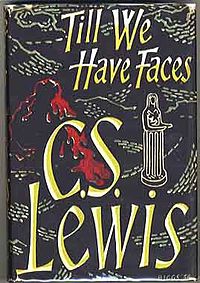
C. S. Lewis’s Till We Have Faces: A Novel of Cupid and Psyche

Till We Have Faces C. S. LewisAlthough I loved the fantasy novels of E. Nesbit and J. R. R. Tolkien as a child, I was bored by C. S. Lewis’s Christian Narnia allegories.

And so I have come to C. S. Lewis late. I admire his gracefully-written, sometimes humorous, fable about the afterlife, The Great Divorce.

Even more gorgeous is his novel Till We Have Faces, a retelling of the Cupid and Psyche myth.

In Till We Have Faces, Lewis turns the myth inside out.  He focuses not on the beautiful Psyche but on her ugly older sister, Orual. Faces have been their destinies:  Psyche’s beauty has won her the hatred of Ungit (Aphrodite);  Orual’s ugly brilliance has also won Ungit’s hate.

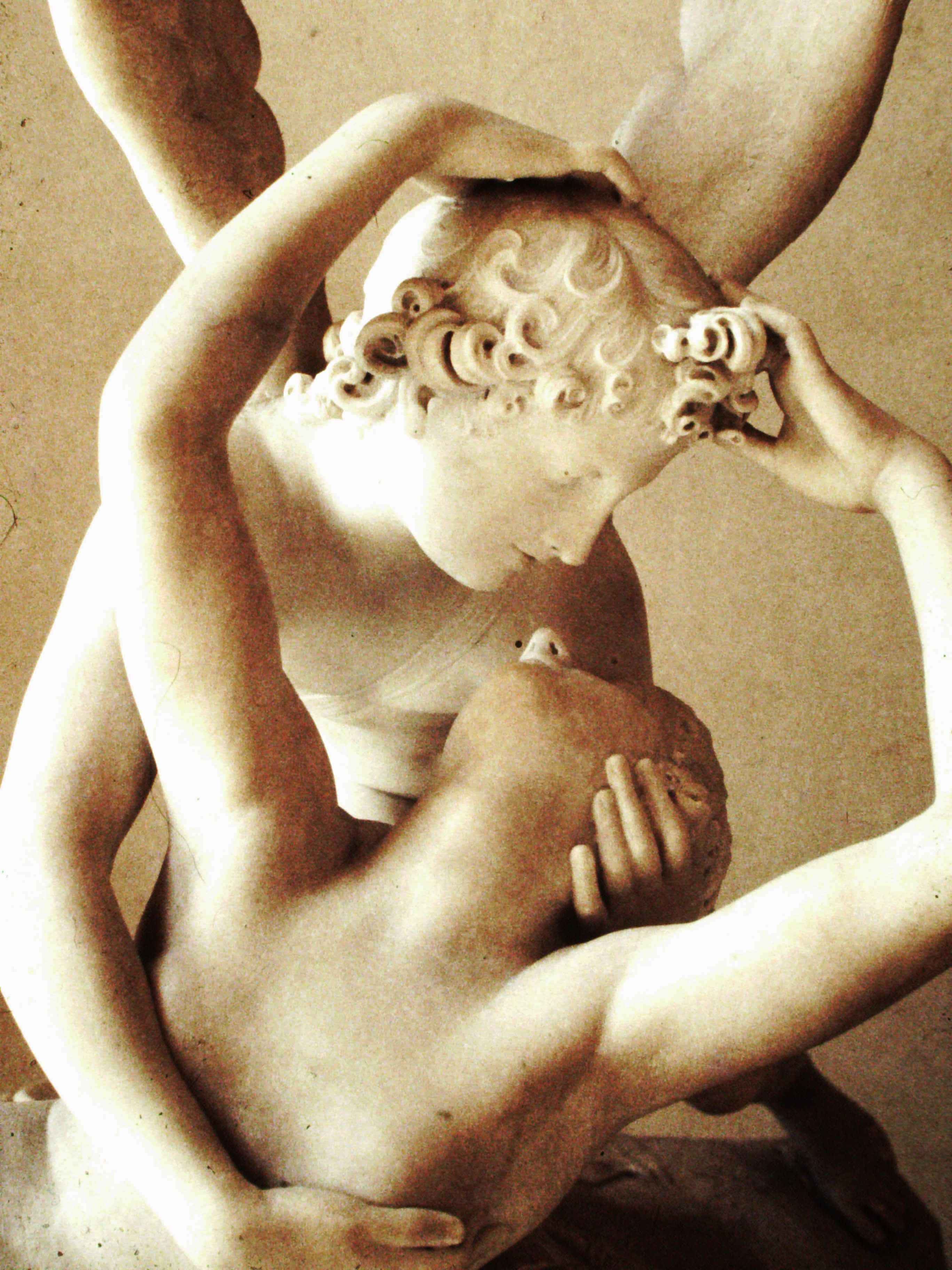
The Cupid and Psyche myth, a love story that goes awry, was a godsend when I was a Latin teacher. M. G. Balme’s Latin adaptation of Apuleius’s Cupid and Psyche inspired many to hang on through Caesar’s Gallic Wars (“Just a few more chapters and we’ll read Cupid and Psyche!” I’d say. ).  We’d read a few pages of C&P weekly as a treat; once we’d gone on to Ovid, they were in love with Latin again and the C&P could be put away.  The myth is one of the many tales inserted in Apuleius’ picaresque novel, Metamorphoses, or The Golden Ass (the only Latin novel that survives whole).  In the tale, Psyche (meaning “soul”), the youngest daughter of a king, is exposed on a mountain because of an oracle of Apollo:  though her two older sisters have husbands, it is Psyche’s fate to be married to a non-human.  Venus, jealous of Psyche’s beauty, sends Cupid to poison her with the love of a monstrous man. (Yes, all gods are psychotic.)  But Cupid falls in love with her and rescues her from Venus’ fury.  He visits her for  passionate nights of love in a hidden palace, but forbids to look on him.

"Cupid and Psyche" by Antonio Canova

“Cupid and Psyche” by Antonio Canova

As is so often the case in fairy tales, the jealous sisters destroy the beautiful sister.   On a visit to Cupid’s palace, they tell her to look at her lover by lamplight while he sleeps, because he might be a monster.  Poor, Psyche!  Struck by his beauty, she stares so long that a drop of oil falls on him.  He leaves her because she has disobeyed, and Venus assigns her impossible tasks (such as gathering the wool of human-killing monstrous sheep) before she is reunited with Cupid.

Lewis’s rendition of the myth is written more like a historical novel than a reinterpretation of myth.  As a girl, brilliant Orual, the narrator, adores her half-sister, Psyche, whose mother died in childbirth.  Orual has no envy of the child’s beauty.  She brings her up with the help of the Fox, the Greek tutor/slave who teaches them both.  During an epidemic, the common people believe goddess-like Psyche’s touch can heal them:  this brings trouble from the gods, as you can imagine.  Eventually the middle sister, pretty, envious Redival, brings Psyche to the attention of the priests of Ungit (Aphrodite), who  insist that she must be left on the mountain as a sacrifice to end an epidemic and famine.

Orual, with the soldier Bardia, rides to the mountain to bury Psyche.  When she discovers Psyche has survived, Orual’s disbelief in the gods ruins Psyche’s life.  She cannot see Cupid’s palace and Psyche appears to be dressed in rags:  she thinks Psyche is psychotic.  She suggests Psyche look at Cupid with the lamp.  There is a huge storm:  Cupid appears as a beautiful passionless face in the sky, telling Orual that he can no longer hide Psyche from Venus, and that she, too, will be Psyche now.  Orual knows, at least at the time, that he is a god.  Later, she is not so sure.

200px-Till_We_Have_Faces(C.S_Lewis_book)_1st_edition_coverOrual goes on with her life:  she studies fencing with Bardia, and falls in love with him, but he is married, and though he is her counsellor when  she becomes a warrior queen, she is aware that he does not think of her as a woman.

One of her great strengths is wearing a veil.  She never takes it off in public once she understands the power it gives her.

I could never have believed, till I had proof of it, what it would do for me.  From the very first (it began that night in the garden with Trunis) as soon as my face was invisible, people began to discover all manner of beauties in my voice.  At firs tit was “deep as a man’s, but nothing in the world less mannish,” later, and until it grew cracked with age, it was the voice of a spirit, a Siren, Orpheus, what you will.  And as years passed and there were fewer int he city (and none beyond it) who remembered my face, the wildest stories got about as tot what that veil hid.  No one believed it was anything so common as the face of an ugly woman.  Some said (nearly all younger women said) that it was frightful beyond endurance….  The best story was that I had not face at all….

There is a long scene in the Underworld, where Orual learns about faces and not having faces.  I could write an entire essay on just that.  This is a great book.

Bookish 2: Comments & Stats

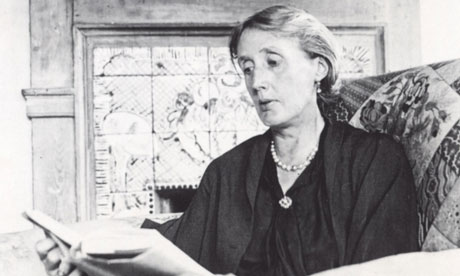
It is fair to say that Virginia Woolf was bookish.

It is fair to say that Virginia Woolf was bookish.

Who’s bookish?

On Sept. 6, when my post, “Bookish & Unbookish: Rock Stars & Writers,” appeared here, a few readers chimed in to say they were bookish, too.

Like me, Ellen Moody can’t leave home without a book.  She wrote, “I feel lost if I go somewhere and realize I will have waiting time (there is always waiting time) and find I forgot to take my book.”   Clare Shepherd wrote:  “I don’t believe one can be too bookish, so back to my book lol.”  Sherry Jones, author of the lively historical novel,  Four Sisters Four Queens, commented on the “unbookish” part of the post, my new rock groupiedom:  “Make sure to see only bands you really love. Otherwise, you’ll wish you’d brought a book.”

We bookish people are a minority.   According to the Statistical Abstract of the United States published annually by the U.S. Census Bureau (2010), “37.9% of the American population, or approximately 87 million adults, read books for leisure in the previous 12 months.”

Actually, I’m surprised the numbers are that high.

It’s not just reading.  It’s also book-buying.  According to the Book Industry Study Group, book sales are down.

“Sales from adult hardcover, paperback and mass market; children’s hardcover and paperback; downloadable audiobooks and e-books–were $2.19 billion for the first half of 2011, compared to $2.39 billion for the first half of 2010.”

I spend most of my money on books.  “Have you ever heard of the library?”  one friend asked when I bought three hardcovers at B&N.

Most of my housekeeping money goes towards books.  I can make do with vinegar and water as a cleanser if it means saving a few dollars. As for dinner, why not cook the dregs of the garden and bits and pieces of other things in the refrigerator?  I call it soup!

And then I can buy a book…

I read the books I buy.   I check out way, way, way too many library books that I don’t read.  Right now I have:

J. P. Donleavy’s The Ginger Man

Laura LIppman’s The Most Dangerous Thing

Andrea Barrett’s Archangel

Tan Twan Eng’s Garden of the Evening Mists

Will I read any of them?

COMMENTS.  Recently a friend emailed me to say that she had not been able to comment on my blog.  I have no idea how, but sometimes this happens.

If your comment isn’t coming through, email me at mirabiledictu.org@gmail.com

Unfortunately the spam does come through!

Retold Myths & NANOWRIMO

………………………….Run a little slower
And I will run, I promise, a little slower.”– Apollo to Daphne, Ovid’s Metamorphoses

I love retold myths.

John William Waterhouse: Apollo and Daphne - 1908

John William Waterhouse’s Apollo & Daphne

If I find a novel that retells, say, the Daphne and Apollo myth, I’ll read it.

Oh, wait.  That’s the one I’m writing.

Yes, I’m writing a novel for National Novel Writing Month (NANOWRIMO), an annual project that brings people together to write their own 50,000-word novels between November 1 and November 30.

You can read about this enjoyable project here. A group started it in San Francisco in 1999 for the same reason people start bands, they say at their website:

Because we wanted to make noise. Because we didn’t have anything better to do. And because we thought that, as novelists, we would have an easier time getting dates than we did as non-novelists.

One reason it’s fun and sweet is that members in your area meet twice or thrice a week at coffeehouses or Panera. (You don’t have to go, of course.)   It’s kind of like AA or Weight Watchers, only you are trying to do something, rather than not do it.  A bunch of people get together with their laptops…and write.

I am not a novelist, but I once won a scholarship to a writers’ conference on the basis of the first chapter of a novel I was writing.  Did I go home and write Chapter Two?  No, I did not.   When it came to writing Chapter 2, I discovered that I’d rather be reading a book.  Any book.

NANOWRIMO means all kinds of things.  It can mean participating in online forums.  It can mean shopping.  I intend to buy a new black sweater and black jeans (I wonder if it’s tax-deductible to buy writing clothes?) which I will don one minute before I leave the house, because otherwise they will be covered in cat hair.

NANOWRIMO is such a charming idea, and Erin Morgenstern did start her best-selling book, The Night Circus, there.  Now I have signed up twice, and never finished.  I enjoy the first couple of days, but then I fall behind on my word count.  Everything I write needs revision, and NANOWRIMO is not about revision.  It’s about getting something down on paper.

I hardly think my retelling of Apollo and Daphne will take up the space of a whole novel, but that’s my idea of the moment.

In Ovid’s comical version in his brilliant poem, Metamorphoses, Cupid wickedly fires an arrow at Apollo to make him fall in love with Daphne, and fires one at Daphne that drives all love away.  When Apollo chases the nymph, he begs her not to run so fast; she prays to her father, the river god, “to change and destroy the body/which has given too much delight” (Rolfe Humphries’ translation).  Her father turns her into a laurel tree, and Apollo  will not let her go.  He claims the laurel for himself.  It is an aetiological myth:   it’s why he wears a laurel wreath, and why Roman victors wear laurel wreaths.

The description of Daphne’s changing into a tree is simultaneously dazzling and nightmarish.

…her limbs grew numb and heavy, her soft breasts
Were closed with delicate bark, her hair was leaves,
Her arms were branches, and her speedy feet
Rooted and held, and her head became a tree top,
Everything gone except her grace, her shining.
Apollo loved her still.  He placed his hand
Where he had hoped and felt the heart still beating
Under the bark; and he embraced the branches
As if they still were limbs, and kissed the wood,
And the wood shrank from his kisses…

Metamorphoses, Rolfe Humphries translation

Read on!  It’s a very great poem.