Cute Cats! & Colette’s Cats and Cats of Paris

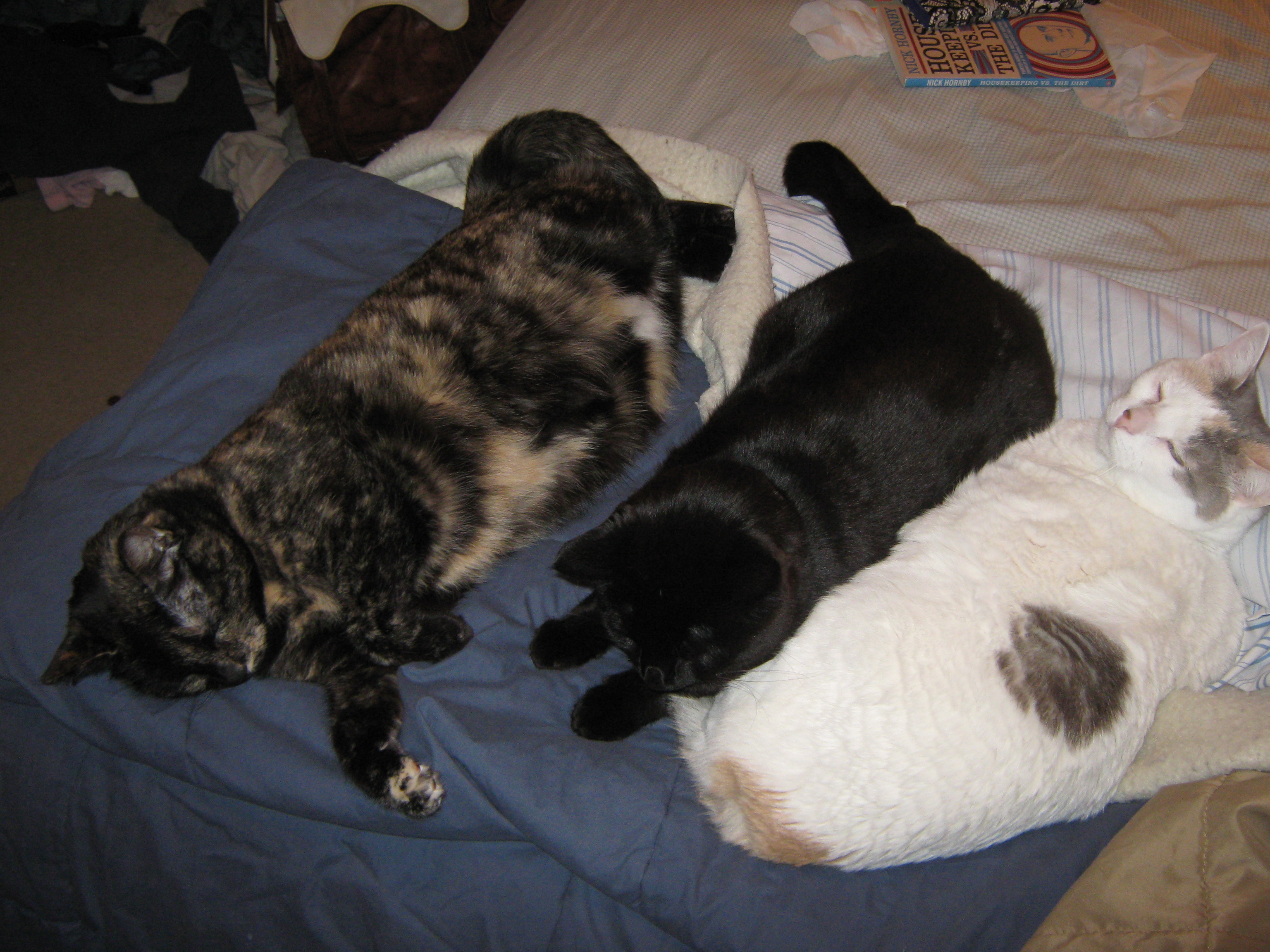
Cats Take Over Bedroom!

The house was quiet.

Husband:  business trip.  Friends:  banned (temporarily).

A few days of solitude.

You’re not alone if you have cats.

Thirty years ago I adopted my first cat, a free Siamese kitten.  Since then we’ve had tabbies, black cats, calicos, tortoiseshells, white cats…

All are from the “pound” or the APL.
Very laid-back!

Very laid-back!

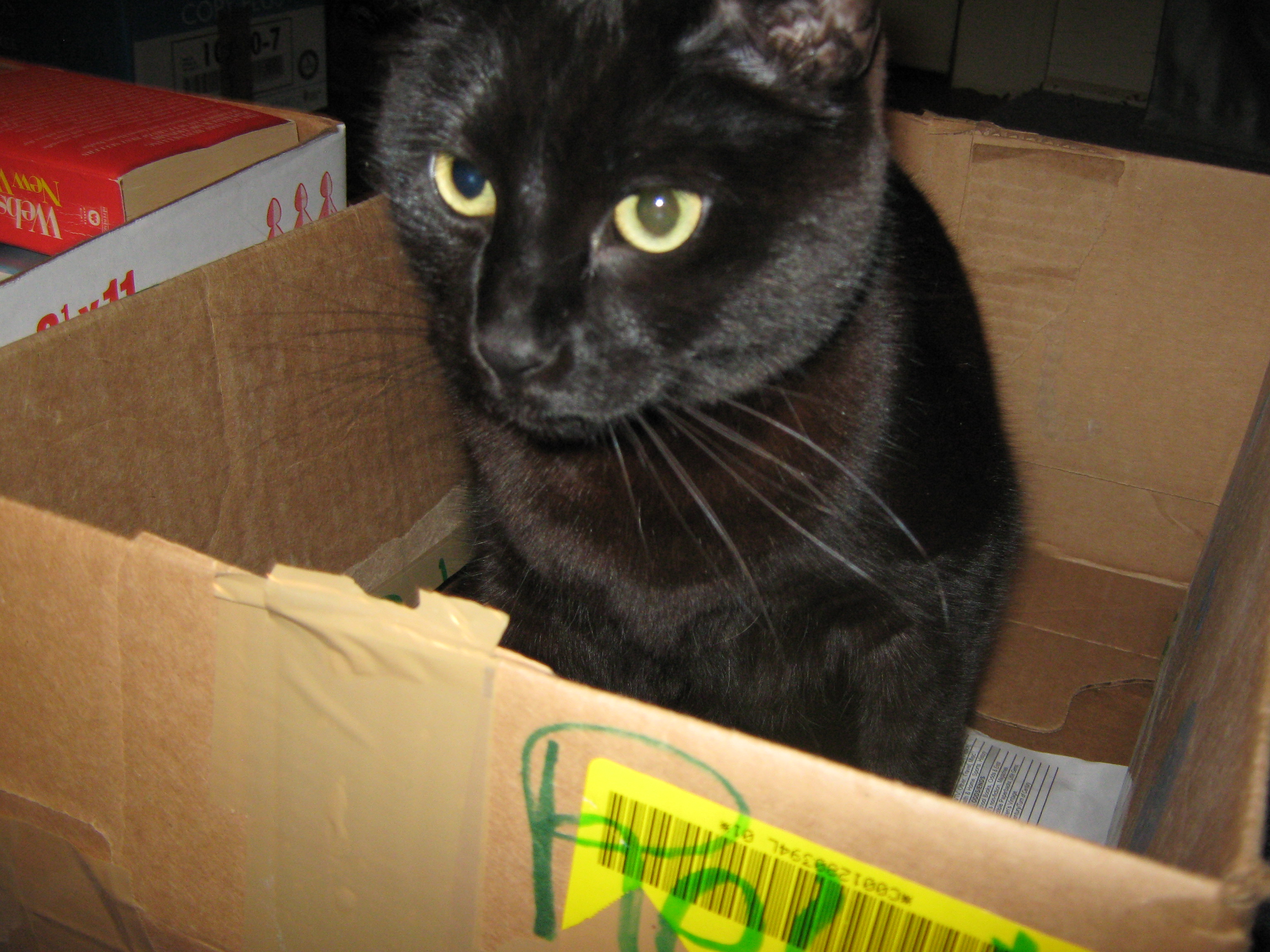
This adorable cat came from the APL:  endless paper work and very expensive, but a sweetheart. Black cats are  always laid-back. She has a lovely temperament and likes everybody, though she was so wild as a kitten that she destroyed the living-room curtains and two computer cords. (Really.)  She likes UPS packages, birds, and The New Yorker (delicious!  she chews bits occasionally).  Her favorite person: me.  Her second favorite person:  the white cat below.
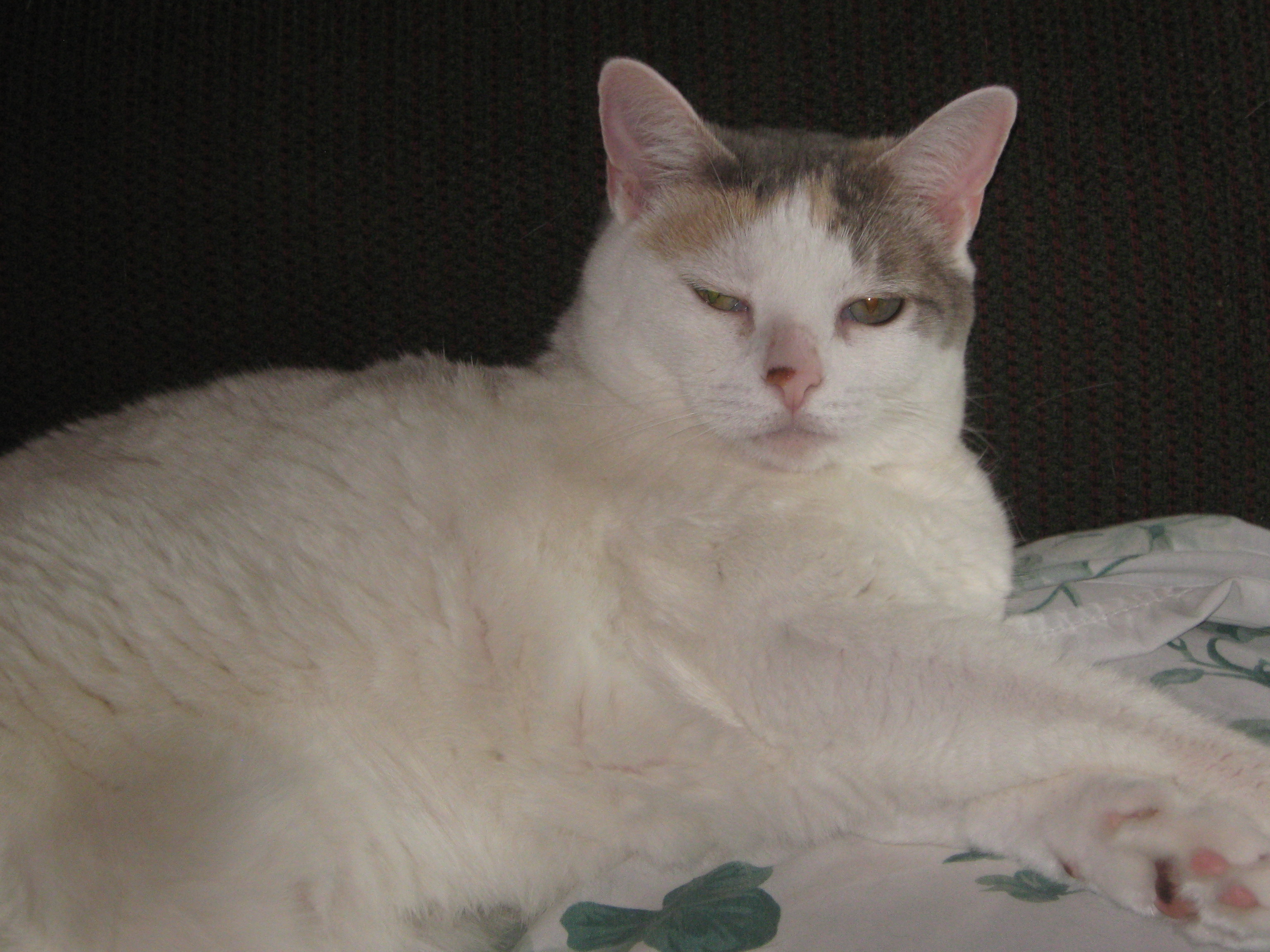
A hippie cat.

A hippie cat.

Like the black cat, the white cat is a hippie.  She looks as though she ought to wear a beret, doesn’t she?  When we brought her home she didn’t know how  to jump.  We worried that perhaps she had been in a cage too long.  Anyway, she learned from the others.  They learn EVERYTHING from each other.
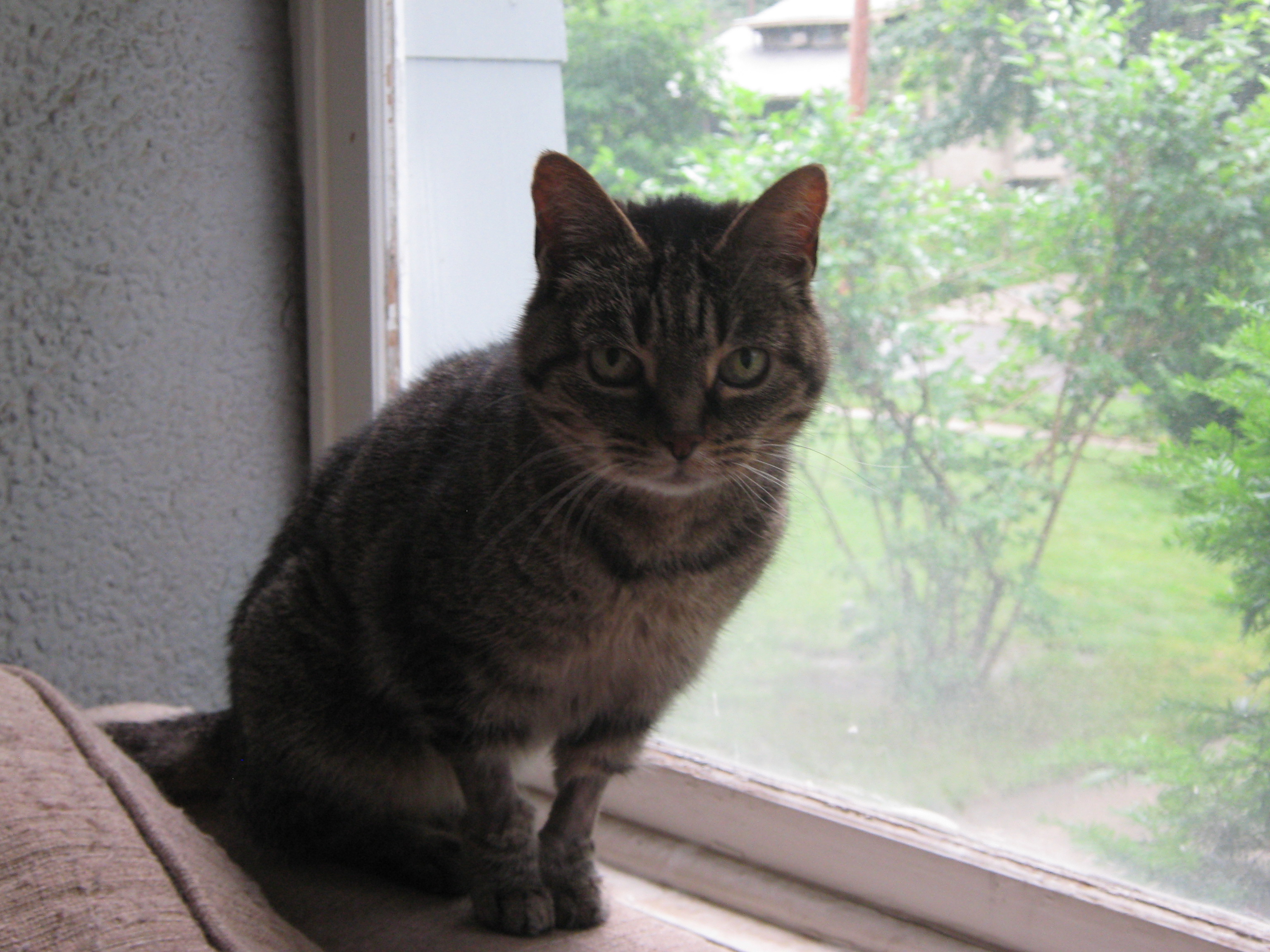
Smart:  likes computers!

Smart: likes computers!

See this darling tabby?  She is the matriarch.  In our fax days, we would wake up in the night and hear her faxing in the study.  God only knows whom she was calling.  She is VERY smart.  Her hobby is  computers.

The beautiful tortoiseshell (below) was, according to the “pound,” picked up walking down the street with a Siamese and a calico. She has survival skills.  She drinks out of the tub.  The tap isn’t on:  she just licks it.  Now all the cats prefer to drink out of the tub or out of one of my cups.  Their cat bowl doesn’t interest them!
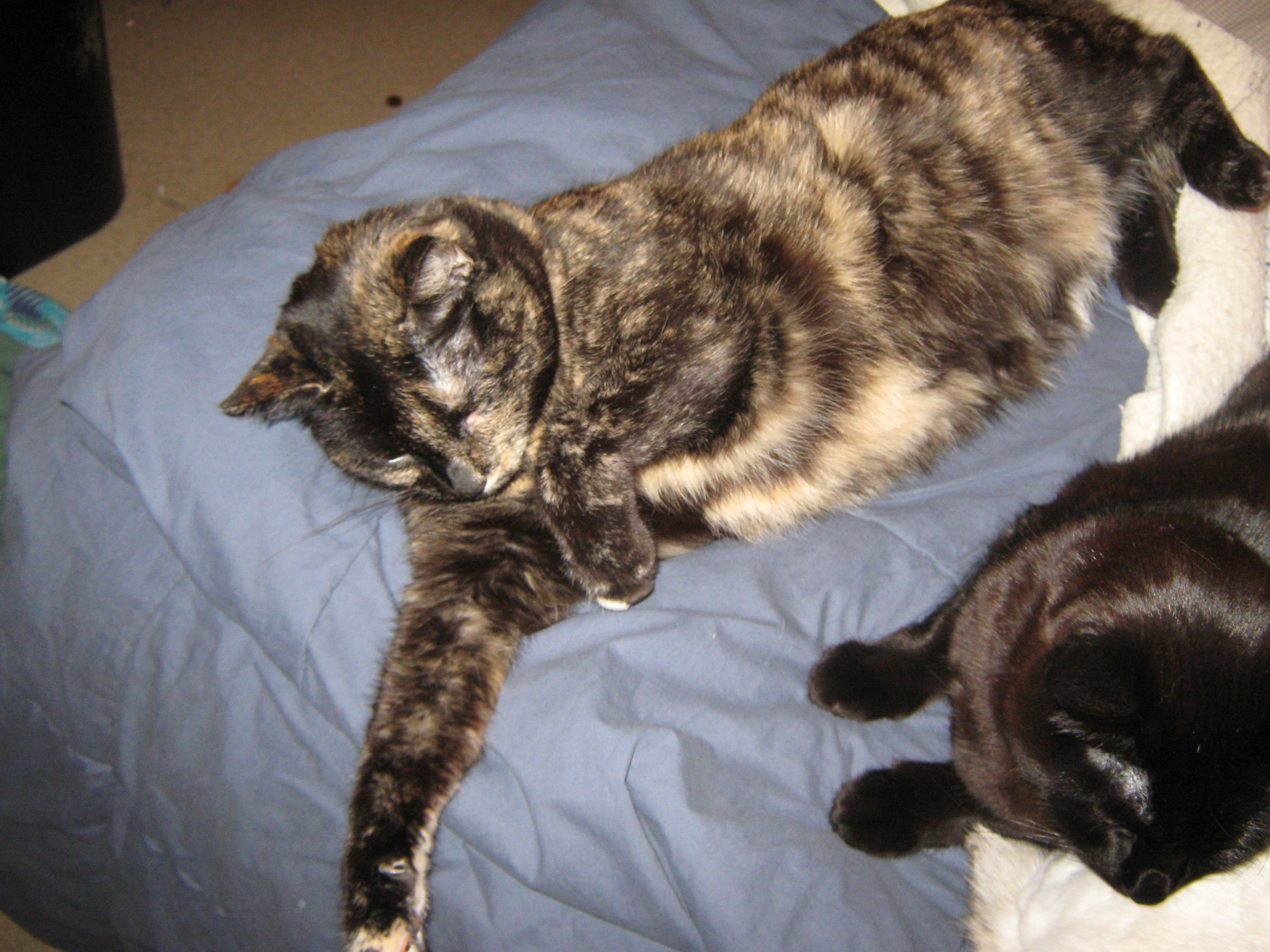
Our beautiful tortoiseshell!

Our beautiful tortoiseshell!

If your cats tell you it’s time to watch TV (they’re very fond of Master Chef), line up by the CD player to hear their favorite record (James Taylor’s “Fire and Ice”), bring their feather-toy-on-a-stick to you, and insist on their meal an hour early, you are probably a Cat Person.

Now how do the cats fit into a book blog?  Well, today I read Colette’s Creatures Great and Small, a collection of dialogues, vignettes, and essays about animals.   I have very much enjoyed the sections, “Cats” and “Cats in Paris.”

Here is a very short vignette,”The She-Cat in the Mirror”:

Is she prettier than I am?  I don’t think so.  Come to that, what cat is?  I should like to have a good look at this interloper when she has her back turned to me.  But eery time that happens, just at that very moment, at the exact same time as I…she turns round again and looks at me.”

What are your favorite cat books?
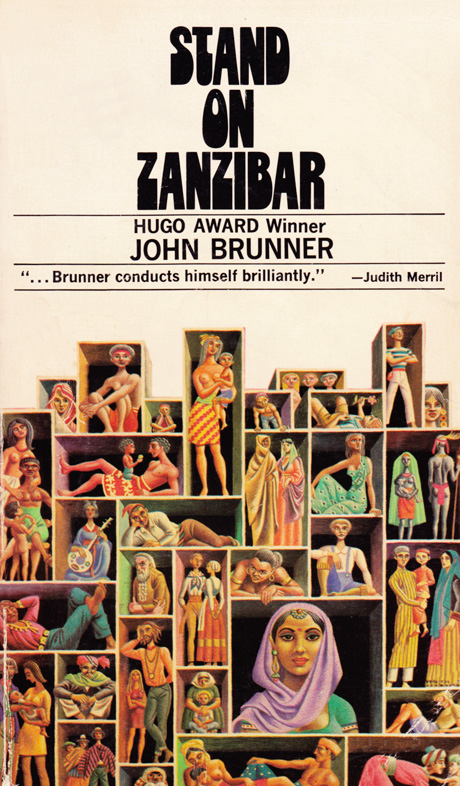
John Brunner’s Stand on Zanzibar & What Do We Want?

I’ve been reading science fiction.

After the Today Book Club fiasco (If you recall, I couldn’t read The Bone Season), I wanted to read something good.

Stand_on_Zanzibar_workingI just finished John Brunner’s Stand on Zanzibar (1968), a post-modern science fiction classic.  Set in 2010, it is a brilliant book, the story of a future dominated by a giant too-smart computer, geneticists’ control of reproduction, and miserable citizens who hate their work.   Women don’t always have permanent homes: “shiggies” stay with men who pick them up, sometimes for a night, sometimes longer.  “Dicties” (addicts) wander the streets, and “muckers” kill people at random.

The  narrative is broken up by quotations from radical sociologist Chad Mulligan (who is rather like Marshall McLuhan) and TV blurbs from news and rumors on Scanalyzer.

Here is one of the definitions from Chad Mulligan’s book, The Hipcrime Vocab:

Hipcrime:  you committed one when you opened this book.  Keep it up.  It’s our only hope.

Here is an excerpt from Brunner’s futuristic New York Times editorial:

Like living creatures, automobiles expired when their environment became saturated with their own excreta.  We ourselves are living creatures.  We don’t want the same to happen to us.  That’s why we have genetic legislation.

The novel follows two main threads: Norman, an African-American executive in New York, is wretched and lonely.  But eventually he is chosen to rule Benini, an African country whose president, Obami (I am not kidding!), is dying and wants to hand this small, peaceful country over to someone who can unite it with the West.

Donald’s fate is much worse.  He is a spy paid to read obscure journals and books to spot trends.  Finally he is activated to be a killing machine and assassinate an Asian  geneticist who has threatened the Western world by scientific discoveries.

I’m not going to write about this at length:  it is a very complicated book.  But if you like science fiction, you will be impressed by Brunner’s writing.  Some of it is very like our present.

IN WHICH WE DECIDE WHAT WE WANT AND WHEN WE WANT IT.

What do we want? Peace!
When do we want it? Now!

I was listening to Woodstock when my friend Janet dropped in. Pure nostalgia: Arlo Guthrie, Jefferson Airplane.  I was too young for Woodstock, but did you see Ang Lee’s movie, Taking Woodstock, about the making of the rock festival?

I was still in my pajamas.  Do you have days like that?  I had showered, but then jumped into a pair of FRESH pajamas.

It’s the weekend.

Husband outside, doing husband things.  Woman inside, reading.

There might have been cat hair on my pajamas.

DID my hair stick up as I suspected?

HAD I shaved my legs this month?

“Come in,” I said sleepily.  “Have breakfast.”

She helped herself to tea while I changed into something less comfortable (jeans).  I made faces in the mirror.

“Well–l-l,” I said.

I had been doing the dishes in shifts:  glasses last night, dishes this morning.  Janet was laughing at me.  “No bowls?  How can I eat cereal?”

“I’ll wash you a bowl.”

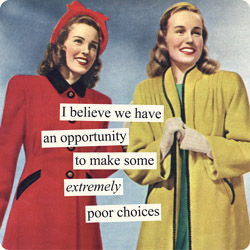
anne taintor-i-believe-we-have-an-opportunity-to-make-somShe doesn’t clean much either.  She works, goes to the opera, and has a poetry group.  She is going to the Poetry Sucks! event at The Southern Festival of Books next month.

She begged me to attend Poetry Sucks! with her.  Her boyfriend, whom she broke up with after the cross-state bike ride in July, was supposed to go.

“Please.  You’ll love it,” she said.

I can’t go to Poetry Sucks!  I went to the Southern Festival of Books one year and I loved it, but you don’t want to go to an event like that with Janet.  Within two hours she will have taken up with a man. This has happened many, many times.  There you are, in a bar alone.  And you go back to the hotel and God knows where she is.

“Janet, no.”

“I  might read at Open Mic.”

“No.”

“No, really, I’m chaste now,” she said abruptly. “I’m even menopausal.  And I’ve stopped dyeing my hair.”

Hm.  A few gray hairs.  That WAS new for Janet.  She has been dyeing her hair since I’ve known her.  But frankly what does that mean?  Gray hair, menopause.  It’s all the same.  You do not lose your sex.

“Well, how about your poetry group?” I said vaguely.

“No, they’re worried about the same thing you’re worried about.”

I got the blueberries out for the cereal and sat down.  “Granola, anyone?”

I want a peaceful weekend.

Bookish & Unbookish: Rock Stars & Writers

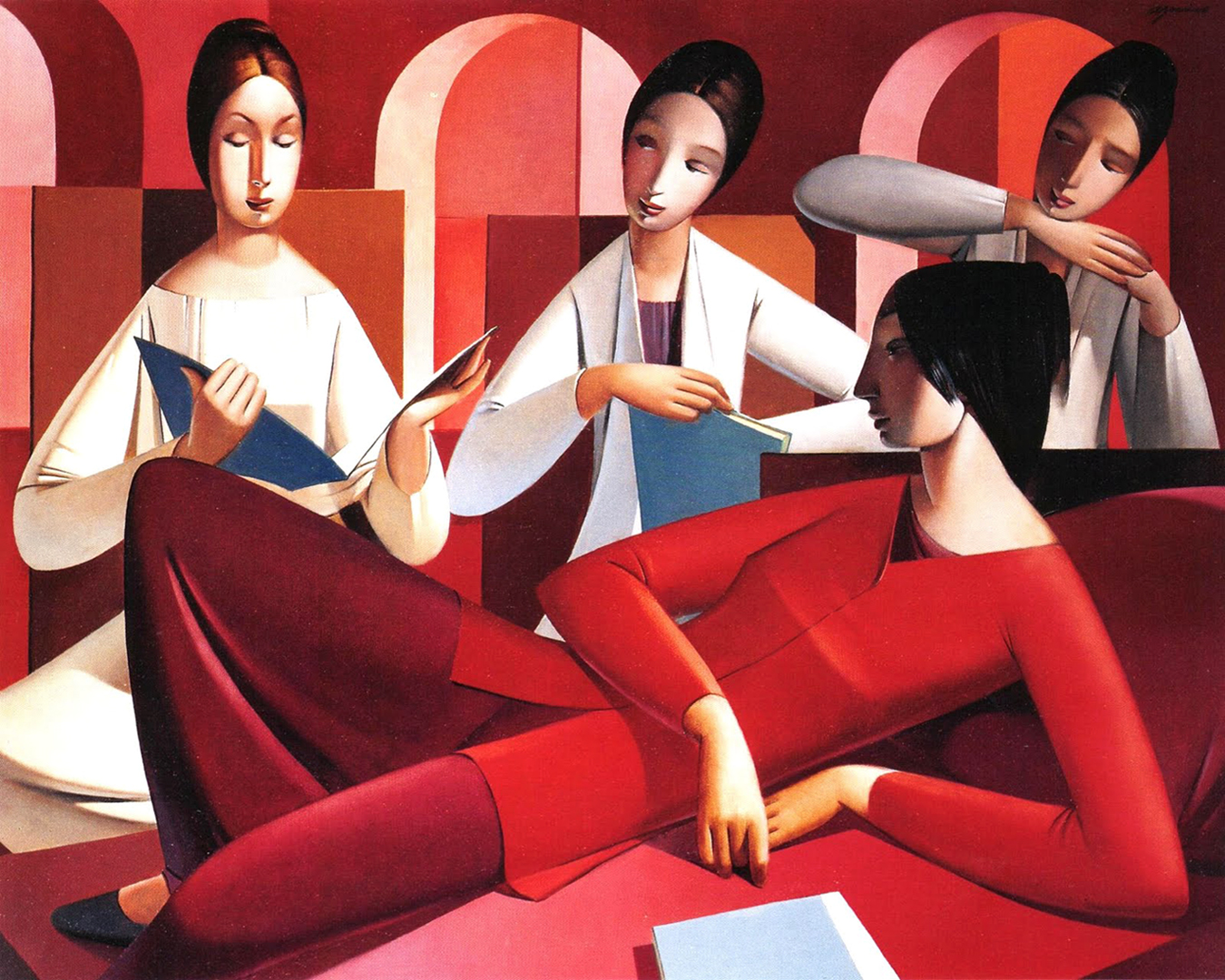
Women by Armando Barrios (1920-1999)

Painting by Armando Barrios (1920-1999)

Bookish people read books. Bookish people attend readings and book festivals.  Bookish people are disappointed when Will Self, Jeffrey Eugenides, and Mary Robison cancel.   (Yes, that really happened.)

But one can be too bookish.

I am too bookish.

It means that I carry a book everywhere, even shopping.  Today I panicked because I was waiting for a beverage without a book. I was running errands.  One doesn’t usually read while running errands.   I’d have read the labels on the coffee beans if I hadn’t found a newspaper.

I said to myself, “You are too bookish.”

I have been told this many times.

The most recent “too-bookish” episode was when I listened to the Grateful Dead for 48 hours. It was a good remedy for grief, but after the first day I HAD to read:  my cousin said I couldn’t because I had to be mindless. She said I wouldn’t have wanted to read if had had more than one shot of vodka. Having Ambien in the cupboard didn’t count, since it is a sleeping pill.

“Now if you combine it with…”

“Don’t be ridiculous!”

I have decided to prove that I am unbookish.  I will go to rock concerts and book festivals.

Now this isn’t as silly as you might think.

You can’t read at either.

We are all rapt when we listen to rock music except when we have to do it for the entire Labor Day Weekend.

At rock concerts we wear black and sway.  If our hair is long enough, we flip it around.  We can do the same kind of thing at a book festival.  Only less swaying and flipping.

The  Zombies are on tour and will play within the 400-mile radius designated for my new rock thing.  I would love to hear them sing “The Time of the Season.”

It’s the time of the season
When love runs high
In this time, give it to me easy
And let me try with pleasured hands

We’re never too old for that!

Bonnie Raitt is touring in a city near me. “Put your hands together for the one and only Bonnie Raitt!”  She sings better than anyone about love and work.  During an unhappy work experience I listened to her version of “Angel from Montgomery” again…again…again…and again…

How the hell can a person
Go to work in the morning
And come home in the evening
And have nothing to say

rolling stones beast of burden 1978

Rolling Stones, “Beast of Burden,” 1978

How could I possibly have missed the Rolling Stones in Chicago in June?  I could have taken the train to Chicago. Perhaps they sang “Beast of Burden”!

Am I hard enough
Am I rough enough
Am I rich enough

Yes, I think you probably are.

Couldn’t R.E.M. get back together just long enough to sing my favorite song, “Driver 8”?  I respect their breakup, because why perform if you don’t want to, but I miss them.

And the train conductor says
“Take a break Driver 8, Driver 8 take a break
We can reach our destination, but we’re still a ways away”
But we’re still a ways away

Can one be a groupie at book festivals?

On my sidebar I have listed the four best new books of 2013.  I sincerely do doubt that any of these writers will come here on tour.

One gathers that Sir Peter Stothard, author of Alexandria:  The Last Nights of Cleopatra, might be too busy editing the TLS or judging awards or something to go on tour in the U.S.   I googled “Peter Stothard book tour” but nothing came up.   Too bad!  Wouldn’t it be great to have an autographed copy of his book? Just his name would be fine.  “To Kat” isn’t necessary.

Karen E. Bender, author of A Town of Empty Rooms, wrote me a lovely email when I wrote about her book.  She is a graduate of the Iowa Writers Workshop, so she might come to the Midwest sometime.  But in the  2013-2014 academic year, she is teaching creative writing at Tunghai University in Taiwan.

Steve Yarbrough, the author of the brilliant novel, The Realm of Last Chances, has been one of my great “discoveries” of the year. But he teaches at Emerson College, and it looks from his tour schedule as though he’s not coming anywhere near here.  What a pity!

Susan Choi, author of My Education, is giving readings in Brooklyn and Portland this fall.  A long way away…

It’s much easier to see a rock band than a writer!  See you in black at the concert.

Starfruit and the Humanities

Starfruit

Starfruit

I ate my first starfruit today. It tasted like an apple.  Not knowing how to eat it, I munched on the wings.  There’s a core inside!  Well, it’s actually seeds.

I had long intended to try starfruit.

I wanted some other exotic fruit, too, like dragonfruit.

I decided to go to the Hy-Vee to buy fruit.  It has been very hot, and fruit seemed the thing.   I ride my bike every day unless it’s ridiculously hot, like 100 degrees (it was only 90), and the Hy-Vee was a destination. I carried a huge knapsack, because I know from experience that fruit, like Chinese food and deli coleslaw, explodes in my bike pannier.

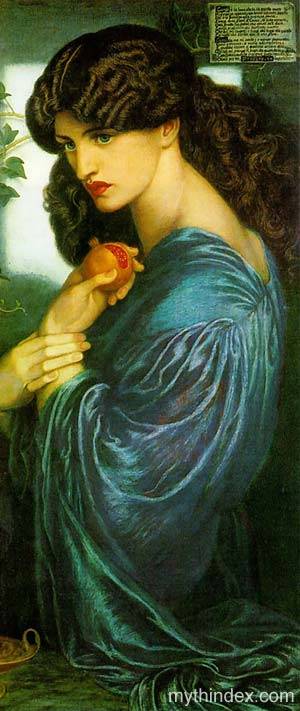
"Proserpine" by Dante Gabriel Rpssetti

“Proserpine” by Dante Gabriel Rossetti

The “new” Hy-Vee is acres and acres of food.  It was built to compete with Whole Foods, which moved in a year ago. I meant to buy dragonfruit, but picked up plums and a pomegranate instead.  The pomegranates remind me of Persephone, the goddess who spends six months a year in the Underworld because she ate pomegranate seeds there after Hades abducted her.  She’s out now, by the way:  it’s summer.

Do not eat pomegranate seeds!

The Hy-Vee can be overwhelming.  I passed the Asian food station, Starbucks, the bakery, and the beautiful fresh fish.  No, No!   The idea was to get out of there without spending a fortune.   But then I bought expensive shampoo, and I almost bought Vitabath.  A bubble bath!  How wonderful in this weather.

It was hot, my knapsack stuck to my back as I rode, I stopped to admire Bounnak Thammavong’s fish sculpture in a park, I rode through construction on Washington, I made it up the big hill, the branch library was closed, and finally I was home.

THE HUMANITIES. This summer, many essays have been published in newspapers and magazines on the demise of the Humanities major.

Happens every year, doesn’t it?  Something to work us up.

I am, however, calm from bicycling.

A new report from The American Academy of Arts and Sciences says that college students are choosing vocational majors rather than majoring in the liberal arts.  Verlyn Klinkenborg in The New York Times says,

In other words, there is a new and narrowing vocational emphasis in the way students and their parents think about what to study in college. As the American Academy report notes, this is the consequence of a number of things, including an overall decline in the experience of literacy, the kind of thing you absorbed, for instance, if your parents read aloud to you as a child. The result is that the number of students graduating in the humanities has fallen sharply.

Only 16 English majors graduated this year at Klinkenborg’s alma mater, Pomona College, where the most popular majors were economics and mathematics. Among Yale graduates in 2013, the most popular majors were economics and political science.

Some of us have seen this coming. People are too plugged-in:  even Gary Shteyngart says he’s not reading as much as he used to.  On the rare occasions when I take the bus rather than bicycle,  almost everybody is plugged into a phone.  A teacher friend tells me no one is majoring in English. “Business majors, engineering… It’s a f—–g trade school,.”

It is fashionable to pretend that literature won’t make you a better person. I say it can at least make you look at life form a different angle.  Take Aeneas, the exhausted middle-aged hero of Virgil’s Aeneid.  Why was he so querulous?  It is his fate (the gods tell him this again and again) to lead Trojan refugees to Italy to  found Rome when all he he wants is a domestic life.  All he is given is pietas (duty to the gods, country, and family).

Sounds like American life, doesn’t it?

I am  schoolmarmish when it comes to the study of Humanities. I majored in School of Letters (a major that no longer exists), a combination of English classes, literature in translation, and the study of two languages.  Could I have read English lit on my own?  Yes. But could I have studied classical languages?  NO.  The study of classics, which I continued in graduate school, was life-changing.

Lee Siegel in The Wall Street Journal saysit is absurd to think humanities majors “recognize truth, beauty and goodness.” He doesn’t think the demise of humanities majors is the end of the world.  He adds, “These solemn anxieties are grand, lofty, civic-minded, admirably virtuous and virtuously admirable. They are also a sentimental fantasy.”

Naturally, I disagree.  “Sentimental fantasy?” I’m too weary to take that on.

Adam Gopnik wrote a fascinating response to the Academy Report, “Why Teach English?”,  in The New Yorker’s blog.  

I loved my education.

No regrets!

Willa Cather’s My Mortal Enemy

Willa Cather's home

Willa Cather’s home

In 2009 we drove to Willa Cather’s hometown, Red Cloud, Nebraska, population 1,020.  I am a Cather enthusiast, and if you’re living in the Midwest, why not visit Red Cloud? We decided to drive all day and spend a few hours there.

As we drove down the highway through wheat fields and prairie, we saw some very rough towns.  But Red Cloud is different, tiny but groomed. Many of the buildings have been restored, among them the Opera House, now the headquarters of the Willa Cather Foundation, and the Farmers’ and Merchants’ Bank, which was founded and built in 1889 by Silas Garber, the fourth governor of Nebraska and the model for Captain Forrester in A Lost Lady.  We visited her childhood home, a small house with 14-ft. ceilings that made it seem spacious, which has some of the original furnishings, described in Song of the Lark and “Old Mrs. Harris.”  We saw Cather’s desk in her tiny room in the attic.

When I read Cather’s books, I always see Red Cloud now.  But somehow I never read her short stories or novellas.

Kevin Neilson at his brilliant blog, Interpolations, inspired me to read Cather’s novella, My Mortal Enemy.  Kevin writes, “Published in 1926, Willa Cather’s slim 85-page novella, My Mortal Enemy, packs some serious heat. We’re talking Rim Fire at Yosemite heat. The title alone hints at passionate depths.”

my-mortal-enemy-willa-cather-paperback-cover-artKevin beautifully captures the tone of Cather’s writing and explores the meaning of the phrase “my mortal enemy.”

I love this novella.  It is one of Cather’s masterpieces. The narrator, Nellie Birdseye, tells the story of Myra Henshawe, a cultured, charming woman who many years ago eloped from Illinois to New York with Oswald Henshawe, a Harvard graduate.  Myra’s uncle, her guardian, forbade the marriage and threatened to disinherit her.  He left his money to the Catholic church.

When Myra returns to visit her friends in Illinois, she is not what 15-year-old Nellie expected:  she is middle-aged and plump, charming but rather intimidating.

Nellie assumes Myra and Oswald are very happy.  Her Aunt Lydia tells her,

Happy?  Oh, yes!  As happy as most people.”

The answer was disheartening; the very point of their story was that they should be much happier than other people.

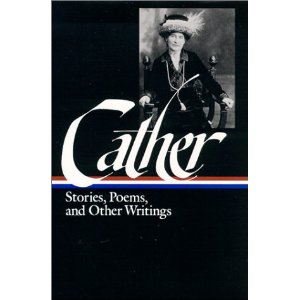
My Mortal Enemy is in this Library of America volume.

My Mortal Enemy is in this Library of America volume.

Marriage is difficult.  Marriage is unhappy.  Cather has described marriages before, and I cannot think of one happy one. When Nellie and Aunt Lydia visit New York, Myra and Oswald are charming at first: they introduce them to people in the arts and go to the theater.

But the Henshawes also have friendships with younger people.  Myra has a young man friend whom she advises not to give opals to the woman he wants to marry: opals are unlucky.  Oswald has a young woman friend who gives him beautiful topaz cuff buttons.  Different jewels.

One assumes that Myra advises the young man because he is attractive; one assumes Oswald is acting on his attraction.  Oddly, it is Oswald who wins Aunt Lydia’s sympathy when he asks her to pretend to give the cuff buttons to him on Christmas so Myra is not upset by the young woman’s gift.  Aunt Lydia is very sympathetic to Oswald, and one assumes she envies Myra.

But when Myra makes a scene, Nellie is also dismayed:  Myra has found out about the young woman’s gift of topaz buttons, and discovered a key that Oswald will not account for.

Ten years later, when Nellie meets the Henshawes again in a western town, they have lost their money and Myra is dying.  Myra is still charming and fascinating, but the rooming house is badly-built; the noisy neighbors upset her.

And she refers to Oswald as her mortal enemy.

“Oh, if youth only knew!” She closed her eyes and pressed her hands over them.  “It’s been the ruin of us both.  We’ve destroyed each other.  I should have stayed with my uncle.  It was money I needed.  We’ve thrown our lives away.”

Again, Oswald has a young woman friend, and Nellie approves:  Oswald charms women.

Cather often uses the  viewpoint of a young narrator to tell a story: think My Antonia and A Lost Lady. Nellie’s quiet account of difficult, fascinating Myra is affectionate but ambivalent.  Myra is so passionate that we (in a way) understand why Oswald is her mortal enemy.  Myra is deeply flawed, but also brave.

What a great book.

At the Concert

No, I wasn't there (wherever there is.)

Random Grateful Dead concert:  I wasn’t there.

You can mourn only so long.

During my mother’s funeral, when the relatives on my mother’s side glowered at our “banned relative, i.e., the family outcast, I realized this would be our last get-together. I do not believe in the afterlife.  I will not meet them in the afterlife.  If there is an afterlife, the gods will be merciful to the “banned relative.”  If there is an afterlife, I will boycott their heaven-country club.

I thought of Michael Tolkin’s movie, The Rapture, in which the heroine refuses to join God on Judgment Day because God is cruel. “No, I don’t want to go.”

This weekend my cousin the librarian found me listlessly staring at my mother’s belongings when I was supposed to be at the Big Muddy Blues Festival in St. Louis.

She brought pierogi (her mother was Polish) and Vodka.  “Have a shot.  I don’t want to hear about your f—ing pills!”  Then she looked at my mother’s things. “Nobody will want this, or that, or that.  In fact, throw it all out.”

It is true:  nobody will want my mother’s Size Zero clothes (nobody is Size Zero), her framed photos of dogs (I’m keeping the photo albums, though), nor her collection of Bill and Hillary Clinton books and magazines.  (Yes, we like the Clintons–but not THAT much.)

We threw everything in boxes and went to Good Will.

It was obvious that I was exhausted. She looked in my medicine cabinet.  “I’d double the dose of this one at night.”

She told me we needed to spend Labor Day weekend as though we were at a concert.  Mellow, mellow, mellow.  We don’t have many blues CDs, so she chose a Grateful Dead theme.

There was a lot of “Sugar Magnolia” and “Walkin’ Blues.”

As usual, I realized how much I would like to play guitar.

She was (briefly) a Deadhead.  For a few months in her twenties, she and a boyfriend traveled from concert to concert in a van.  “It was too much sex and drugs,” she recalls.  “I couldn’t stand it after a while.”

So she went to library school.

“No reading,” she said when I opened a book.

By the end of Day One I was desperate to read and translated some Greek because she had not forbidden it.  She wasn’t happy about it.

On Day Two she allowed me to read a mystery by Sara Paretsky.

“I don’t want to spend a day with an unemotional female P.I.,” I told her.

“That’s exactly what you need,” she said.

I didn’t finish it.  I was finally allowed to read Agatha Christie’s The Mirror Crack’d, a Jane Marple mystery.

By Monday I was defiantly reading Doris Lessing.

I still have bags under my eyes, but she agreed I had mellowed. I wouldn’t have had the faintest idea how to be a Deadhead without her. She makes me laugh.

Doris Lessing’s Stories

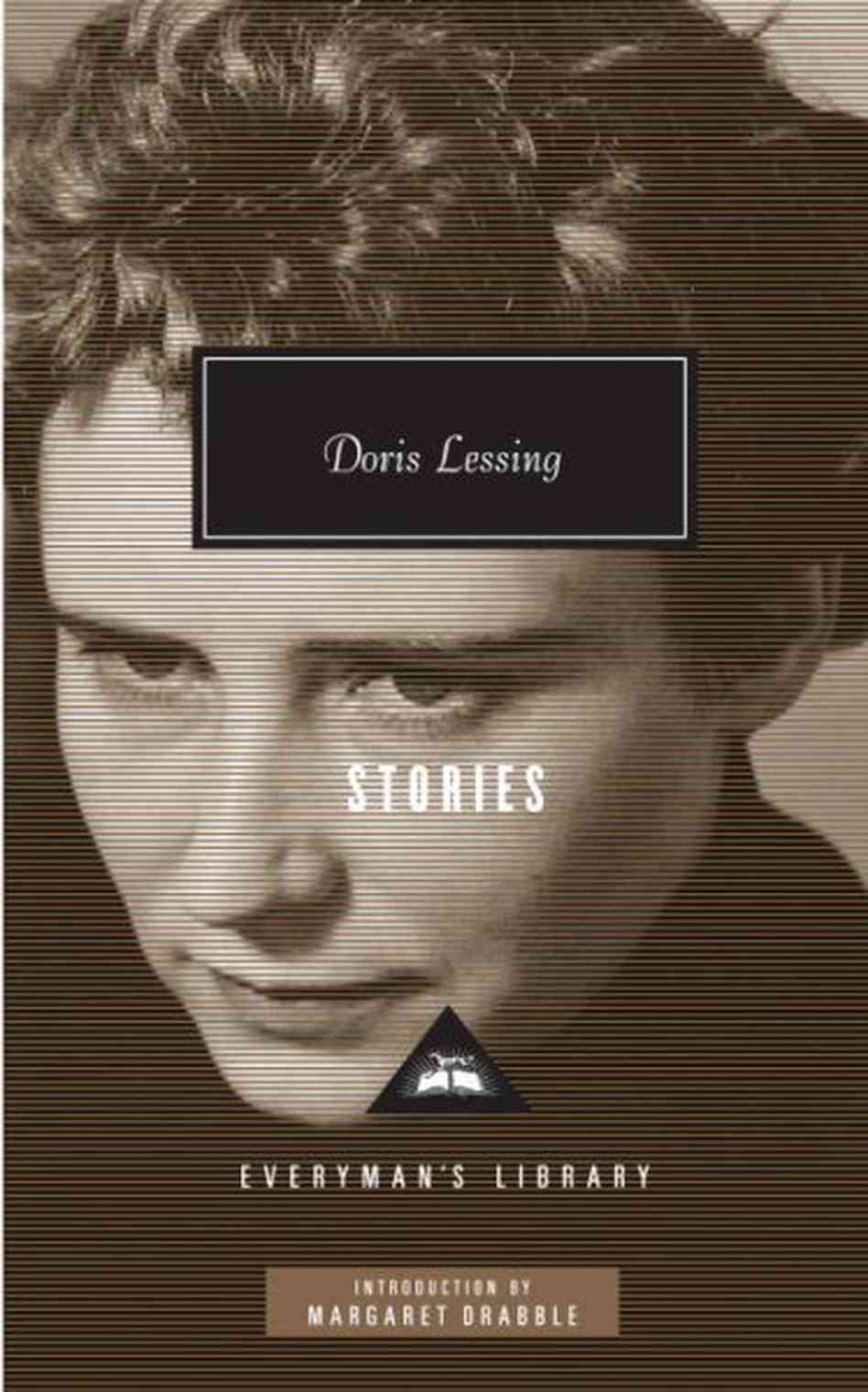
Doris Lessing Stories everymanIn the introduction to the Everyman edition of Doris Lessing’s Stories, Margaret Drabble writes,”Doris Lessing’s short stories, published over several decades, are among the most important in the English language.”

Lessing’s novels are dazzling, but her stories are also beautifully-crafted.

She is one of the most significant writers of the 20th century, a, bold, brilliant chronicler of women’s lives.  As a very young feminist reader of The Golden Notebook and the Martha Quest books, I felt, absurdly, that she had written my life.

Her characters were of an earlier generation (she was born in 1919), yet her accounts of women’s lives in her experimental novels, The Golden Notebook, The Four-Gated City, and Memoirs of a Survivor, fit the messiness of life in the late twentieth century: changing attitudes towards love, sex, independence, dependence, anger, pain, rebellion, war, cynicism, even a belief in “the revolution.”

In this collection of stories, even the shortest stories have depth and elaborate structures.

Lessing writes often about the working classes.  In my favorite story, “The Other Woman,” the heroine, Rose, who works at a bakery, is scornful of her mother’s accidental death:  she was hit by a truck, and Rose thinks it was a silly way to die. Unhealthily obsessed with caring for her father in their basement apartment, she breaks off her engagement to a loving man.  Years pass.

She and her father often argue. When he says she should quit her job, Rose says she likes her independence.

Jem said:  ‘Women.  They say all women want is a man to keep them, but you and your mother, you go on as if I’m trying to do you out of something when I say you mustn’t work.’

‘Women here and women there,’ said Rose.  ‘I don’t know about women. All I know is what I think.’

Independent Rose, who has no boyfriends, befriends her ex-fiance’s wife and daughter, wishing above all that she had children.  When World War II breaks out, the friendship between the women intensifies.  But she and her father, who reads about Hitler, continue to argue, because Rose thinks male aggression is the cause of war.

I’m not interested who started it.  All I know is, ordinary people don’t want war. And there’s war all the time.  They make me sick if you want to know–and you men make me sick, too.  If you were young enough, you’d be off like the rest of them,” she said accusingly.

Rose works for a munitions factory, knowing full well that the good wages will last only until the men come home.  When their house is bombed and her father dies, Rose finds the basement apartment intact; she refuses to leave.  Jimmie, a volunteer, convinces her to move: they become lovers and move into an apartment. When he tells her he is married and must go home to see his family for days at a time,  Rose is jealous and angry.  The story ends with a bizarre twist.

In the surreal story, “How I Lost My Heart,” the narrator writes flippantly about having lunch with A, her first true love, who devastated her when he left, and B, her second, who also shatterd her.  She has agreed to meet the man she calls C for lunch.  But when she finds herself remembering the agony of break-ups, she breaks the date with C.   And then suddenly she feels her heart in her hand.  She tries to roll it off her hand, but it is stuck to her fingers.  She wraps it in tin foil and a scarf.  And then…

Sometimes Lessing writes from a male point of view.  In “One off the Short List,” Graham Spence, a married journalist, is determined to have an affair with Barbara Coles, a stage designer.  Graham, who has written one book, writes book reviews and freelances for radio and the BBC.

He understood that he was not going to make it; that he had become–not a hack, no one could call him that–but a member of the army of people who live by their wits on the fringes of the arts.

He has an assignment to interview Barbara.  When he meets her at her workplace and sees that she is bound to her co-workers “by the democracy of respect for each other’s work,” he is envious and sad.  But his insistence on dominating her turns into hostility towards a successful woman.

Lessing and I, women of different generations, define the word “feminist” differently:  she does not consider herself a feminist.  But her short stories, feminist or not, are powerful.  I am halfway through them.  Perhaps more later.

Four Giveaways: Colette, Hemingway, Mary Hocking, & Cathie Pelletier

I have four books to give away.  If you’ve already won a book here, feel free to sign up anyway.  I LIKE giving away books to people I know…  And if you don’t want them, I’ll give them away to the charity sale (another good cause).

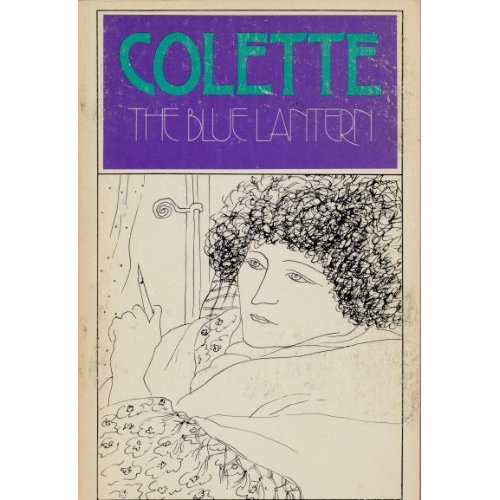
The Blue Lantern Colette1.  Colette’s The Blue Lantern. I wrote in April:  “Colette’s meditations in her seventies are just as sharp as ever….  She still visits vineyards and markets, still eats good food and drinks good wine.  She tells funny anecdotes about her famous friends, Jean Cocteau and Gide…”  (The edition is a hardcover ex-library book, not the one pictured here.)

2.  Ernest Hemingway’s A Moveable Feast.  Yes, we have two copies of this, both in excellent condition, and I don’t know WHY we have two.  Yes, I do:  I bought one not long ago thinking we did NOT have one.  You can have one if you want it.

One-Way Bridge3.  Good Daughters by Mary Hocking, the first volume of a family saga about three sisters growing up in London on the brink of World War II.  Really very good, available in a Virago, but mine is an Abacus edition.

4. Cathie Pelletier’s The One-Way Bridge.  A feather-light novel about eccentric characters in Mattagash, Maine, part of Pelletier’s series.  My mother very much enjoyed these books.  A good Labor Day weekend book, though it will be too late for that by the time you get it!

Leave a comment if you would like any of these, or more than one.  I will draw names out of a paper sack if more than one person wants one!  It has worked before…